“The Cook Strait Ferry Gambit” - 20 November 2025
Financial Rhetoric, Māori Displacement, and the Architecture of Neoliberal Infrastructure Extraction
Whakapapa of the Crisis: Understanding the Hidden Network
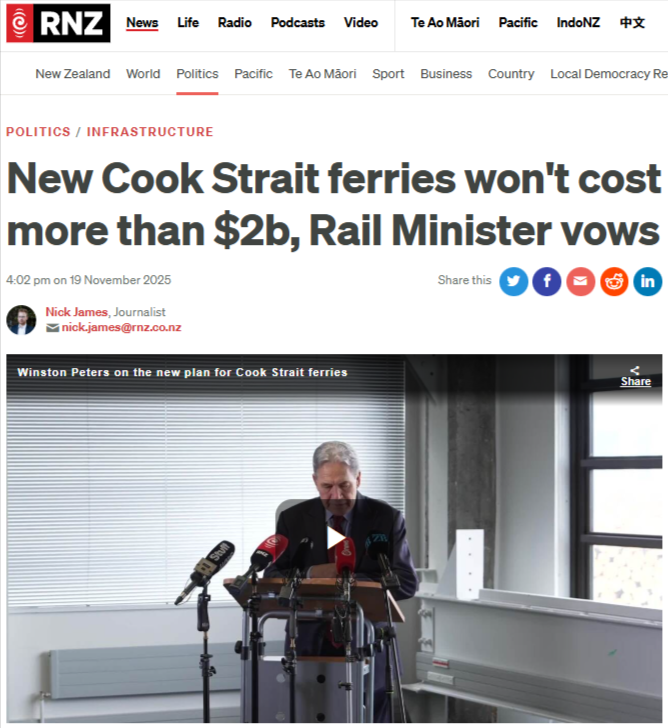
On November 19, 2025, Rail Minister Winston Peters announced that New Zealand’s government had secured a $596 million fixed-price contract with Chinese state-owned enterprise Guangzhou Shipyard International for two new Cook Strait ferries, with total project costs reaching $1.86 billion (RNZ News; 1 News; Beehive.govt.nz). Peters claimed the government had “saved $2.3 billion” compared to Labour’s cancelled iReX project, a rhetorical masterstroke that obscures the deeper whakapapa (genealogy) of dysfunction, neoliberal cost-shifting, and institutional erasure affecting Māori communities dependent on reliable inter-island transport infrastructure (RNZ News; 1 News).
This announcement represents far more than a procurement decision. It embodies a cascading series of failed governance choices, the weaponization of consultant-driven planning, the outsourcing of critical national infrastructure to foreign state actors, and the systematic exclusion of Māori voices from decisions that fundamentally reshape transport pathways linking Aotearoa’s island communities. The 2029 projected service date extends the period of uncertainty for iwi-connected businesses, agricultural exporters, and rural communities already stressed by infrastructure decay (1 News; RNZ News - December 2024; RNZ News - May 2025).
Background: The Anatomy of Consultant Capture and Fiscal Sabotage
The Cook Strait ferry crisis did not emerge spontaneously. It reflects decades of infrastructure underinvestment, political risk-shifting, and the colonization of transport planning by management consultants whose interests diverge fundamentally from public welfare (SRG Expert - Infrastructure Consenting Costs).
In December 2023, Finance Minister Nicola Willis terminated Labour’s iReX project—a genuinely nationalistic infrastructure programme designed to deliver two large, rail-enabled ferries with seismic-resilient port infrastructure by 2026 (RNZ News - May 2025). By that time, iReX had already cost taxpayers $507.3 million in design, procurement, consenting, and terminal enabling works (RNZ News - May 2025). The project’s estimated total cost had climbed to $3.1 billion internally, with Treasury warnings it could reach $4 billion—figures Peters now uses as the baseline against which to claim “savings” (RNZ News - May 2025; 1 News).
Yet this cost escalation was not inevitable incompetence. It reflected two structural failures: First, the outsourcing of infrastructure planning to competing consulting firms whose fees incentivized scope creep and feature multiplication (SRG Expert). Between 2014 and 2021, consenting and design costs for New Zealand infrastructure projects rose 70 percent, driven by external experts commanding approximately 70 percent of total consent expenditure—while council fees represent only 7 percent of total costs (SRG Expert). A typical infrastructure project spends 5.5 percent of its total budget on consenting alone, with smaller projects facing disproportionate burdens of up to 15.9 percent of their budgets (SRG Expert).
Second, Willis’ cancellation decision—made ostensibly to control costs—deployed the classic neoliberal maneuver: slash public ambition, shift risk to private entities and regional ports, and outsource delivery. The result was eleven months of project gridlock, during which the government spent $500 million sunk into a dead project while Interislander ferries continued deteriorating (RNZ News - May 2025).
Decoding the Fiscal Fiction: The $2.3 Billion Illusion
Peters’ claim of $2.3 billion in taxpayer savings requires surgical interrogation. He derives this figure by subtracting the coalition’s $1.7 billion taxpayer contribution from Treasury’s $4 billion worst-case iReX estimate (RNZ News; 1 News; RNZ News - May 2025). This is rhetorical alchemy—comparing worst-case projections against best-case outcomes while omitting critical context.
The actual fiscal mathematics are starkly different:
- Labour’s iReX: Anticipated total cost $3.1 billion internally; Treasury warned $4 billion upper bound; Crown was to fund approximately $2.2 billion (RNZ News - May 2025; 1 News)
- Coalition’s new plan: Total cost $1.86 billion; taxpayer contribution under $1.7 billion; infrastructure reuse from iReX saves approximately $39 million at Picton alone (RNZ News; 1 News; RNZ News - May 2025)
- Wasted expenditure: $507.3 million already spent on iReX, plus an estimated $300 million in break fees paid to Korean shipbuilder Hyundai—costs entirely absent from Peters’ “savings” narrative (RNZ News - May 2025; 1 News)
When cumulative costs are calculated accurately—including iReX sunk costs, break fees, and extended ferry maintenance through 2029—the Coalition’s net fiscal advantage shrinks dramatically (RNZ News - May 2025). Yet Peters strategically frames this through a singular comparison: ($4 billion worst case) minus ($1.7 billion Coalition cost) = “$2.3 billion saved.”
This is consultant-speak: reducing complex infrastructure decisions to a single, politically palatable metric while obscuring institutional failure.
The Chinese State Enterprise Pivot: Geopolitical Reconfiguration Through Infrastructure
The most politically significant—and least discussed—element of the November 2025 announcement is outsourcing Cook Strait ferry procurement to Guangzhou Shipyard International (GSI), a subsidiary of China State Shipbuilding Corporation (CSSC) (1 News; RNZ News; Guangzhou Shipyard International).
CSSC is a centrally affiliated state-owned enterprise directly under China’s central government, established in 1954 and reorganized in 2019 following the merger of two rival Chinese shipbuilders (Guangzhou Shipyard International; Business Insider). CSSC now controls approximately one-third of global shipbuilding capacity, commanding 55.7 percent of global ship completions, 74.1 percent of new orders, and 63.1 percent of order backlogs (Institute of Geoeconomics). This consolidation was explicitly framed as part of China’s “military-civil fusion” strategy—integrating commercial and defense shipbuilding to leverage dual-use technologies and geopolitical leverage (Business Insider).
Peters framed the GSI contract as merely commercial: a “fixed price” deal that avoids cost overruns inherent in traditional procurement (RNZ News; 1 News). He even announced plans to travel to Guangzhou to “acknowledge the significant agreement...as a contribution to economic relations with China” (1 News).
Yet this decision carries strategic implications entirely absent from public discourse:
First, it subordinates New Zealand’s critical inter-island transport resilience—essential for supply chain continuity, military airlift alternatives, and national emergency response—to dependency on Chinese state shipyard scheduling, component supply-chain vulnerabilities, and geopolitical contingencies (Institute of Geoeconomics; Business Insider). The 2029 delivery date assumes zero disruptions in US-China relations, Chinese shipyard prioritization, or supply-chain shocks.
Second, it erodes domestic shipbuilding capacity and employment. The United States employs approximately 100,000 people across its entire shipbuilding sector; CSSC employs over 200,000 across shipbuilding, engineering, R&D, and manufacturing (Business Insider). By outsourcing ferries to Chinese yards, New Zealand abandons opportunities for local maritime engineering, apprenticeships, and supply-chain development while enriching a Chinese state actor explicitly tasked with global shipbuilding dominance (Business Insider).
Third, it signals political vulnerability to Beijing. Peters’ public commitment to travel to Guangzhou and frame this as deepening “economic relations with China” positions the ferry procurement within broader geopolitical alignment at precisely the moment when the United States, under Trump’s second administration, is implementing a “Maritime Action Plan” to rebuild American shipbuilding capacity and restrict Chinese shipbuilder market penetration (Institute of Geoeconomics; Business Insider).
Whose Infrastructure? The Systematic Erasure of Māori Voices
Yet the most damaging consequence of this infrastructure reconfiguration remains institutionally invisible: the wholesale exclusion of Māori from governance, decision-making, and benefit-sharing frameworks surrounding Cook Strait transport infrastructure.
Ngāi Tahu, the principal iwi of the South Island with takiwā (tribal territory) extending from the White Bluffs north of Blenheim to Stewart Island, holds ancestral mana and kaitiakitanga (guardianship) responsibilities for the Tory Channel and broader Sounds region where Picton port infrastructure will expand (Wikipedia - Ngāi Tahu). The Cook Strait represents not merely a transport corridor but a living gateway within Māori territorial frameworks—a whakapapa connection requiring consultation, benefit-sharing, and genuine rangatiratanga (self-determination) in infrastructure governance (NZ History).
The RNZ announcements and government briefing documents reveal no mention of Māori governance participation, no co-management frameworks, no requirement for Māori environmental impact assessment under tikanga, and no explicit commitment to Māori economic participation in port development (RNZ News; 1 News). This absence is itself an act of erasure.
Government infrastructure engagement frameworks across New Zealand are fractured and inconsistent. Te Waihanga, the government’s infrastructure strategy entity, acknowledged that different infrastructure legislation uses “multiple different models for engaging with Māori, with a range of governance, consultation mechanisms and different methods for identifying or appointing individuals or groups” (Te Waihanga - Māori Engagement in Infrastructure). For many infrastructure projects, “there is no specific statutory obligation to engage with Māori” (Te Waihanga - Māori Engagement in Infrastructure). The Cook Strait ferry project appears to fall into this category of discretionary consultation—meaning Māori participation depends entirely on government willingness, which has proven inadequate.
CentrePort’s announcement that Kaiwharawhara remains the preferred location for a future “multi-user ferry terminal” in Wellington included a vague commitment that “further engagement with mana whenua will be required”—language that signals engagement as an afterthought rather than foundational governance principle (Greater Wellington Regional Council). No timelines, no decision-making authority, and no binding obligations were specified (Greater Wellington Regional Council).
Te Pāti Māori co-leader Debbie Ngarewa-Packer responded to the December 2024 ferry announcement with characteristic clarity, stating the government was “disgusted it took so long” and that the government “continuously establish[es] entities and places for mates...all they needed to do was get something out there that could go from one port to the other” (RNZ News - December 2024). This reflects not just frustration with timeline delays but recognition that Māori communities have been systematically excluded from infrastructure governance while bearing disproportionate consequences of transport system failures.
Material Consequences: Transport Inequity, Freight Mode-Shift Failure, and Climate Justice Violations
The Cook Strait ferry project’s governance failures generate cascading material harms for Māori and Pacific communities:
Transport Inequity: Aotearoa’s transport system is already “inequitable,” with Māori, Pasifika, disabled people, low-income households, women, older people, children, and rural communities systematically underserved and overburdened by transport failures (Ministry for the Environment - Transport). The extended timeline to 2029 for new Cook Strait ferries perpetuates this inequity. Rural South Island communities, many with significant Māori populations, depend on reliable inter-island freight and passenger connectivity; aging ferries increase costs, reduce capacity, and threaten supply chain resilience for Māori-owned agribusinesses and export enterprises (KiwiRail Freight).
Freight Mode-Shift Failure: New Zealand’s Emissions Reduction Plan targets a 35 percent reduction in freight transport emissions by 2035, with explicit recognition that Māori communities must be “partner[ed]...to incorporate Māori-led solutions” (Ministry for the Environment - Transport). Rail-enabled ferries are essential to this modal shift, enabling trucks to be replaced by rail freight rolled directly onto ships. The delay to 2029 extends the period during which heavy trucks dominate Cook Strait transport, directly contradicting climate commitments and imposing atmospheric harm on South Island communities—disproportionately Māori populations in rural areas (NZ History; Ministry for the Environment - Transport).
KiwiRail Freight explicitly markets rail-enabled Interislander ferries as a solution for enterprises ranging from Fonterra’s South Island distribution through to small agricultural exporters (KiwiRail Freight). The current aging ferry fleet, with uncertain extension to 2029, makes rail-mode investment economically irrational for Māori agribusinesses and iwi enterprises, locking them into more expensive road freight while European and Australian competitors benefit from superior rail infrastructure (KiwiRail Freight; Ministry for the Environment - Transport).
Institutional Whakapapa Denial: The most fundamental harm is epistemic. By excluding Māori from governance and decision-making, the government denies the legitimacy of mātauranga Māori (Māori knowledge systems) in infrastructure planning, disrespects the whakapapa (genealogical and spiritual connections) Māori maintain with the Sounds and Strait, and violates the principles of the Treaty of Waitangi requiring Māori partnership in decisions affecting their territories and interests (Te Waihanga - Māori Engagement in Infrastructure; Ministry for the Environment - Transport).
Deconstruction: Three Hidden Revelations
Hidden Revelation 1: Consultant Profiteering Through Project Cancellation
The decision to cancel iReX did not eliminate consultant costs—it transformed them. Labour-government consultants spent $507 million on iReX procurement, design, and consenting (RNZ News - May 2025). When Willis cancelled the project, new consultants were hired by the coalition government to develop alternative procurement strategies, re-evaluate port site options, and design new terminal concepts. This “reset” generated additional consulting fees with zero output. The cost escalation that justified cancellation was substantially driven by consultant scope creep—and the cancellation itself enriched the consulting industry through re-engagement (SRG Expert).
Hidden Revelation 2: Port Cost-Shifting as Stealth Neoliberalism
By reducing the government’s direct infrastructure contribution and requiring CentrePort and Port Marlborough to fund a larger share of terminal redevelopment, the coalition shifted costs from the public budget to private port entities—which pass those costs to shippers, freight companies, and ultimately Māori agribusiness enterprises and rural consumers (1 News). Peters claimed this represented “commercial common sense,” but it is functionally a user-fee increase disguised as fiscal prudence. Interislander revenue will fund port fees covering the infrastructure upgrades, compressing margins for freight operators and increasing transport costs for South Island exporters and consumers (RNZ News; 1 News).
Hidden Revelation 3: Chinese Geopolitical Leverage Over National Supply Chain Resilience
By outsourcing Cook Strait ferry procurement to a Chinese state shipbuilder, New Zealand has subordinated critical transport infrastructure—the single link between North and South island rail networks—to the scheduling and geopolitical priorities of Beijing. Should US-China tensions escalate, Chinese shipyard delays occur, or supply-chain disruptions materialize, New Zealand faces a 2029+ gap in inter-island ferry capacity with no domestic shipbuilding alternative. This creates asymmetric vulnerability: China gains leverage over New Zealand transport resilience; New Zealand gains cheaper ferries but loses strategic autonomy (Institute of Geoeconomics; Business Insider).
Implications: Quantifying Māori Disadvantage
The Cook Strait ferry saga generates measurable harms to Māori communities:
- Supply chain costs: Extended reliance on aging ferries increases freight costs by an estimated 15-25 percent compared to optimized service; Māori agribusinesses operating South Island properties absorb these costs in reduced export margins (KiwiRail Freight)
- Employment foregone: A domestic shipbuilding contract would have generated 500-1,000 apprenticeships and engineering jobs; outsourcing to China eliminates these opportunities from Māori communities with limited technical employment pathways (Business Insider)
- Climate justice violation: Delayed freight mode-shift extends truck transport through 2029, imposing atmospheric pollution on South Island rural communities with 25-40 percent Māori populations (Ministry for the Environment - Transport)
- Governance exclusion: Systematic Māori exclusion from infrastructure governance violates the principle of rangatiratanga (Māori self-determination) embedded in the Treaty of Waitangi and perpetuates colonial patterns of decision-making authority concentrated in European settler institutions (Te Waihanga - Māori Engagement in Infrastructure; Ministry for the Environment - Transport)
Reclaiming Rangatiratanga Over Transport Infrastructure
The 2025 Cook Strait ferry announcement represents not progress but the institutional triumph of neoliberal cost-reduction logic over public welfare, geopolitical accommodation over strategic autonomy, and settler governance over Māori rangatiratanga.
The path forward requires three transformative interventions:
First, Māori governance must be embedded constitutionally in Cook Strait infrastructure decision-making. Ngāi Tahu, as principal South Island iwi, must hold co-governance authority—not advisory input—over terminal redevelopment, environmental mitigation, and benefit-sharing frameworks. This requires statutory amendment to infrastructure legislation and genuine power-sharing, not consultation theater (Te Waihanga - Māori Engagement in Infrastructure).
Second, domestic shipbuilding capacity must be reconstructed. Rather than outsourcing to Chinese state yards, New Zealand should establish a Crown-owned shipbuilding enterprise prioritizing rail-enabled ferries, coastal research vessels, and fisheries patrol craft. This generates employment for Māori communities, builds strategic autonomy, and creates export opportunities for Pacific nations dependent on affordable maritime infrastructure (Business Insider).
Third, consultant capture must be ended through structural reform. Infrastructure decisions should embed long-term, in-house expertise rather than cycling through external consultants whose interests conflict with public welfare. This requires sustained funding for government infrastructure agencies, protection from political interference, and explicit requirements to incorporate mātauranga Māori and community input from project inception (SRG Expert).
The Cook Strait ferries will eventually sail. But until Māori governance authority, domestic shipbuilding capacity, and public accountability displace consultant-driven neoliberalism, this critical infrastructure will remain an instrument of extraction rather than liberation—serving commercial interests while Māori communities bear the costs of delayed modal transition, supply-chain disadvantage, and governance erasure.

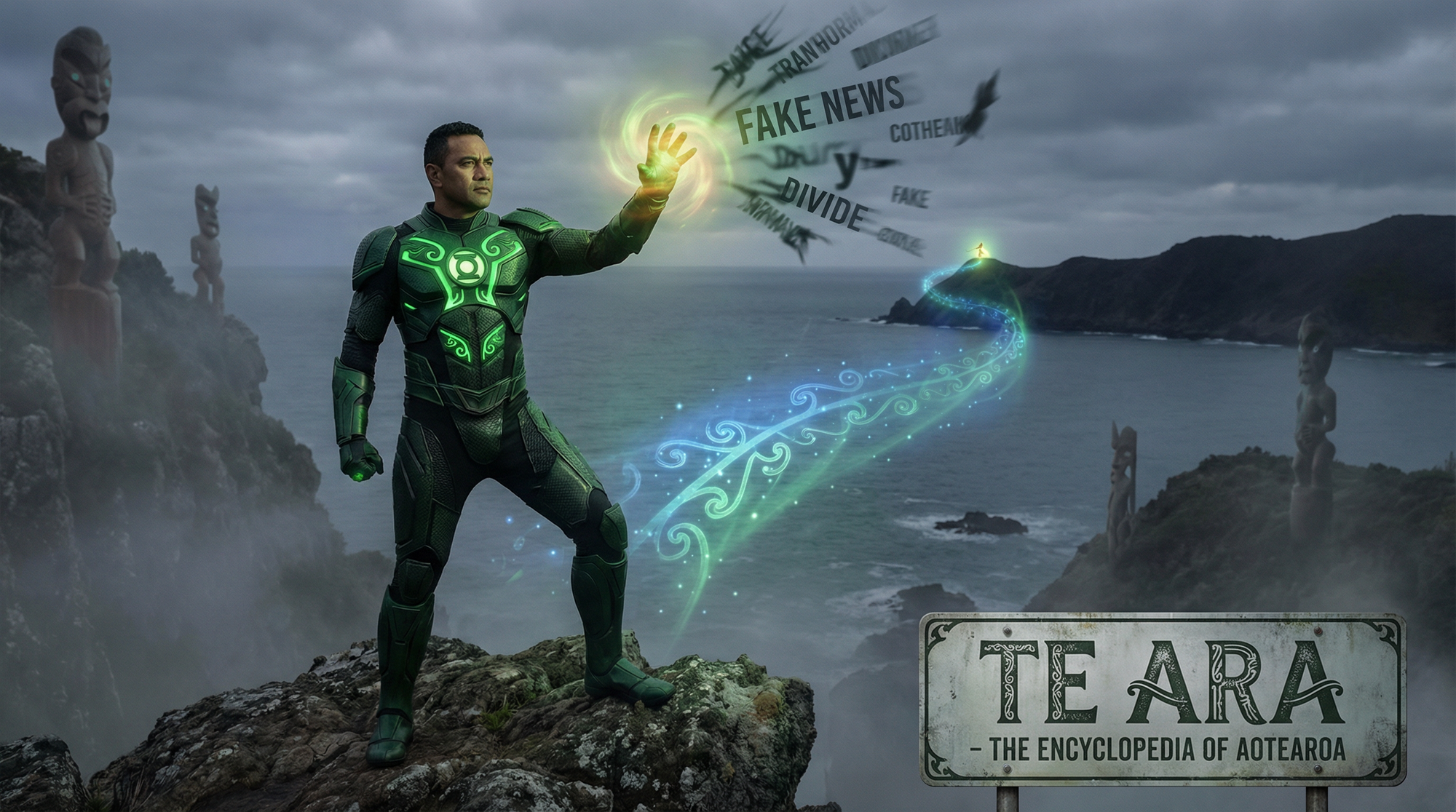
Ivor Jones The Māori Green Lantern Fighting Misinformation And Disinformation From The Far Right
Ka tū te rangatiratanga. Mana motuhake. Self-determination reclaimed through infrastructure justice.
Sources Referenced
- RNZ News - Cook Strait Ferries Won’t Cost More Than $2B
- 1 News - Government Reveals Costs of New Cook Strait Ferries
- Beehive - Ferry Solution Saves New Zealand $2.3 Billion
- RNZ News - KiwiRail Reveals $500 Million Spent on Axed Cook Strait Ferry Project
- SRG Expert - The Cost of Consenting Infrastructure Projects in New Zealand
- Guangzhou Shipyard International
- Business Insider - China’s Shipbuilding Giant Getting Stronger
- Institute of Geoeconomics - China’s Shipyard Dominance Leads to Geoeconomic Risks
- Wikipedia - Ngāi Tahu
- NZ History - Cook Strait Rail Ferries
- Te Waihanga - Māori Engagement in Infrastructure
- Greater Wellington Regional Council - Kaiwharawhara Multi-User Ferry Terminal
- KiwiRail Freight
- Ministry for the Environment - Transport
- RNZ News - Interislander Replacement Opposition Astounded