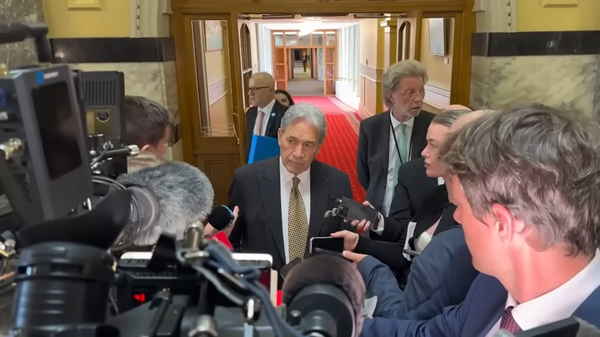
“The Corporate Crackdown: When Fear Becomes Policy” - 4 September 2025
How Stanford's Deportation Theatre Mirrors Trump's ICE Playbook - A Study in State-Sanctioned Racism
Tēnā koutou katoa. Greetings to you all.
The mask has finally slipped off Erica Stanford's face, revealing the cold machinery of state violence beneath her polished ministerial smile. What we witness today is not immigration reform but the systematic weaponisation of state power against our most vulnerable communities, wrapped in the language of "compliance" and "enforcement."
This coalition government, led by Christopher Luxon's National Party alongside David Seymour's ACT and Winston Peters' New Zealand First, has unleashed a deportation regime that mirrors the authoritarian playbook pioneered by Trump's Immigration and Customs Enforcement. The similarities are not coincidental - they represent a coordinated assault on human dignity that transcends borders and reveals the global nature of white supremacist governance.
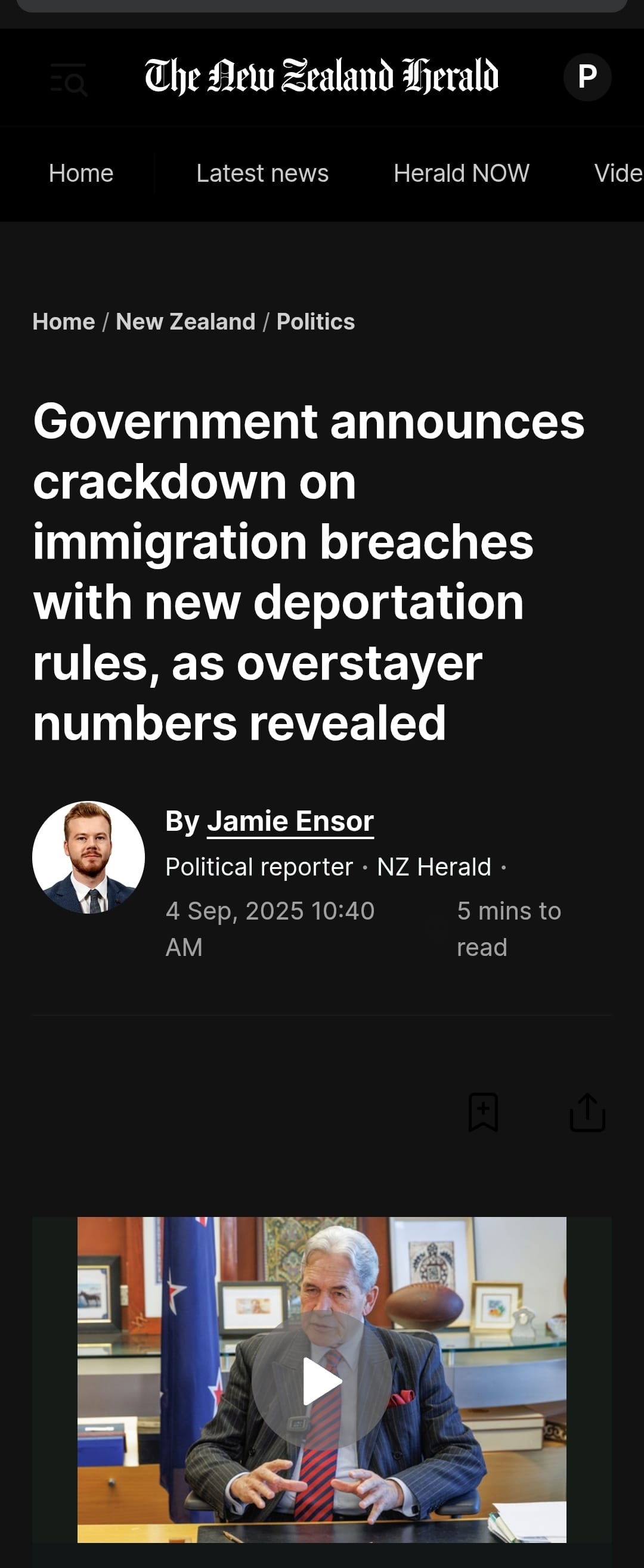
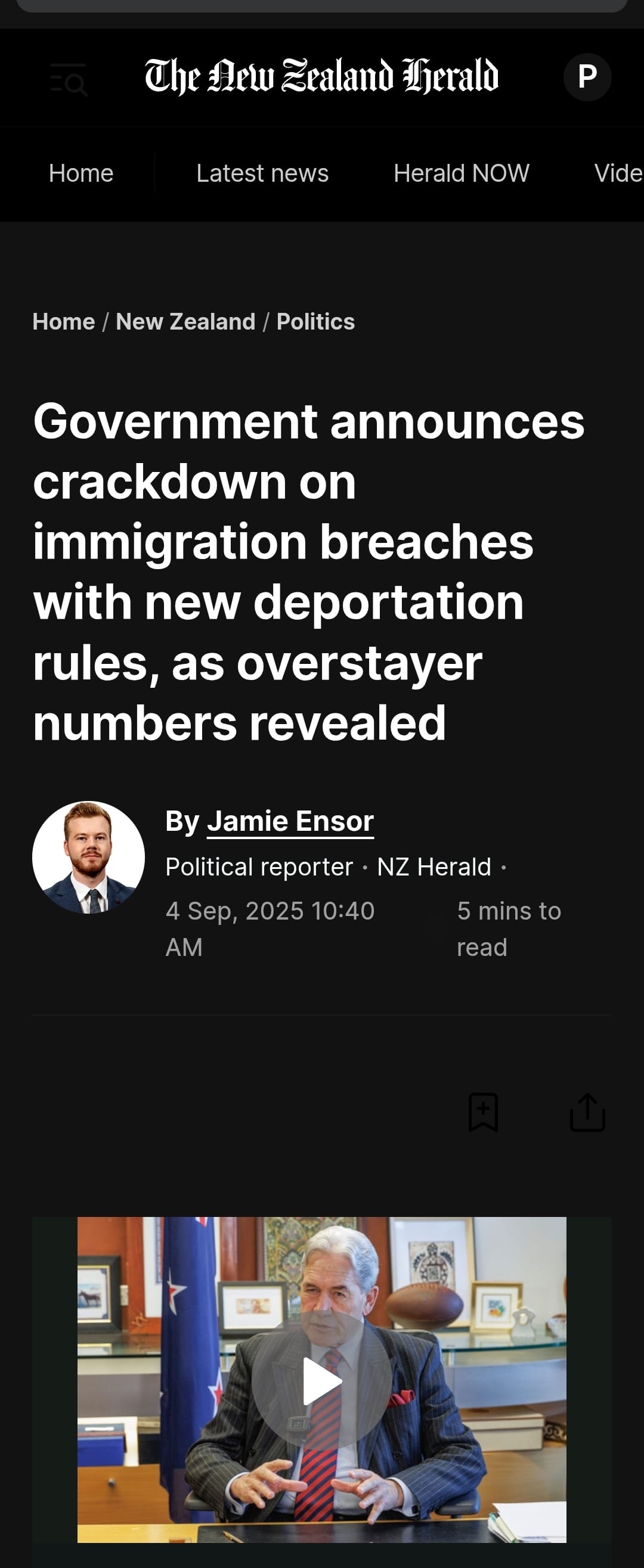
https://www.nzherald.co.nz/nz/politics/government-announces-crackdown-on-immigration-breaches-with-new-deportation-rules-as-overstayer-numbers-revealed/K6IB4KQTWBAG7NCCFJWJ6MPDBY/
Background: The Architecture of Exclusion
Immigration has always been a site of struggle in Aotearoa, but the current moment represents something more sinister. The coalition government's new deportation rules announced by Stanford expand deportation liability from 10 to 20 years for permanent residents who commit serious crimes, introduce electronic monitoring of asylum seekers, and enable deportation notices to be issued electronically when physical addresses cannot be located.
These policies emerge from a political ecosystem where Stanford, mentored by Murray McCully - a man who held the Immigration portfolio during National's previous tenure and was known as a "Machiavellian Dark Prince" - has been shaped by decades of exclusionist thinking. McCully's protestation that Stanford was his "political master" takes on sinister meaning when we understand his role in crafting immigration policies that consistently targeted Pacific and Māori communities.
The coalition's composition reveals deliberate design. Casey Costello, Associate Minister of Immigration and former spokesperson for Hobson's Pledge, brings explicitly anti-Māori ideology to immigration policy. Her organisation has spent years attacking Māori rights and promoting the racist fiction of "race-based division." Her appointment signals that this government views immigration control as inseparable from its broader assault on Indigenous sovereignty.
Deportation as Theatre of Cruelty
The Herald article reveals that 20,980 people are currently classified as visa overstayers in New Zealand, with Tongan and Samoan communities disproportionately represented in these.
But these numbers mask a deeper truth: this government has chosen to frame human migration as a security threat requiring military-style response.
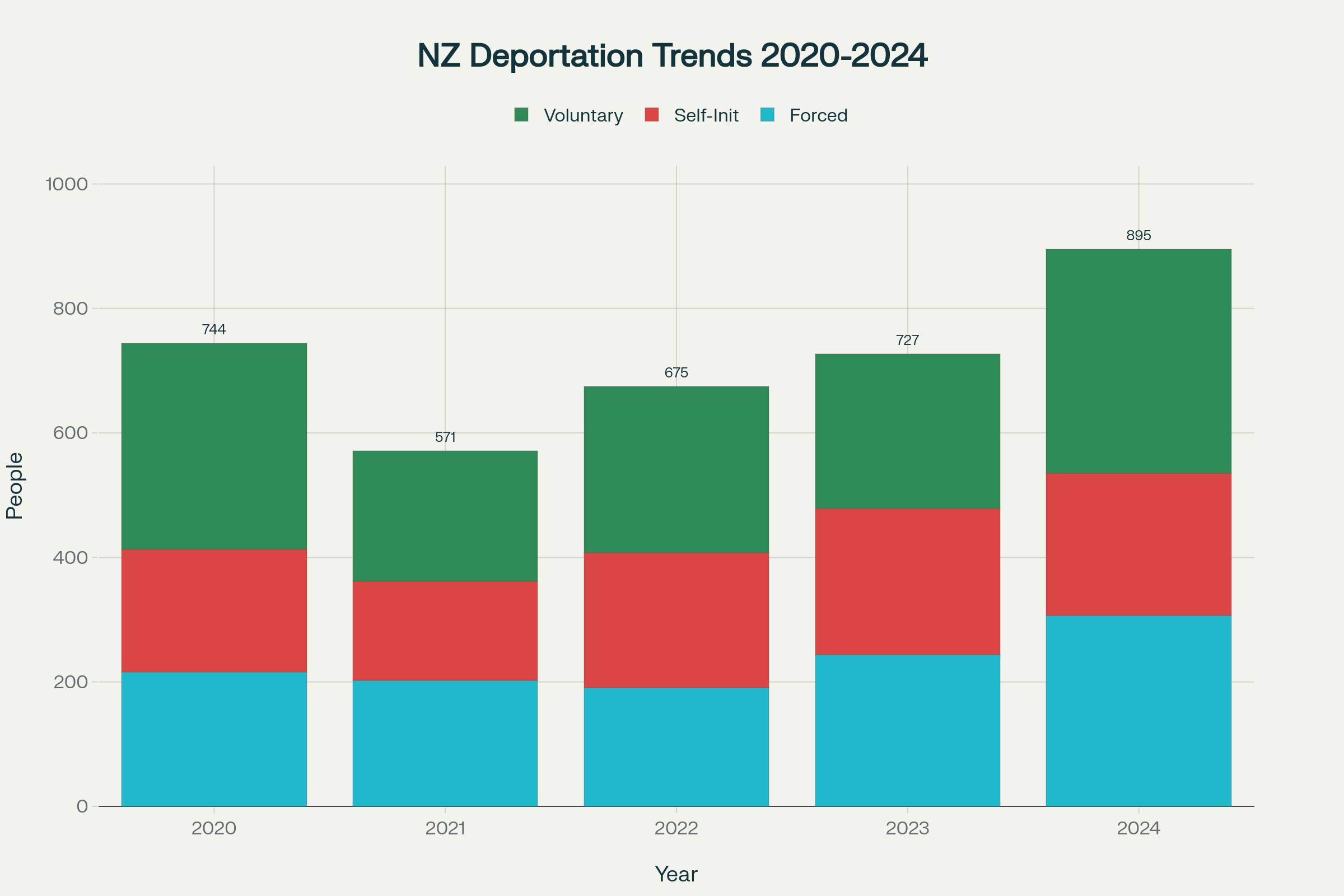
New Zealand Deportation Trends 2020-2024: Rising Enforcement Under Coalition Government
Stanford's announcement comes with chilling precision. The expansion of deportation liability to 20 years means that migrants who have built lives, raised families, and contributed to communities for two decades can still be torn away for crimes committed decades ago. The introduction of electronic monitoring represents the carceral expansion into everyday life, transforming New Zealand into a surveillance state for anyone deemed "other."
The government claims 1,259 people were deported in the previous financial year, representing a 35 percent increase from the year before. But these are not just statistics - they represent families destroyed, communities fractured, and the systematic erasure of Pacific presence from Aotearoa.
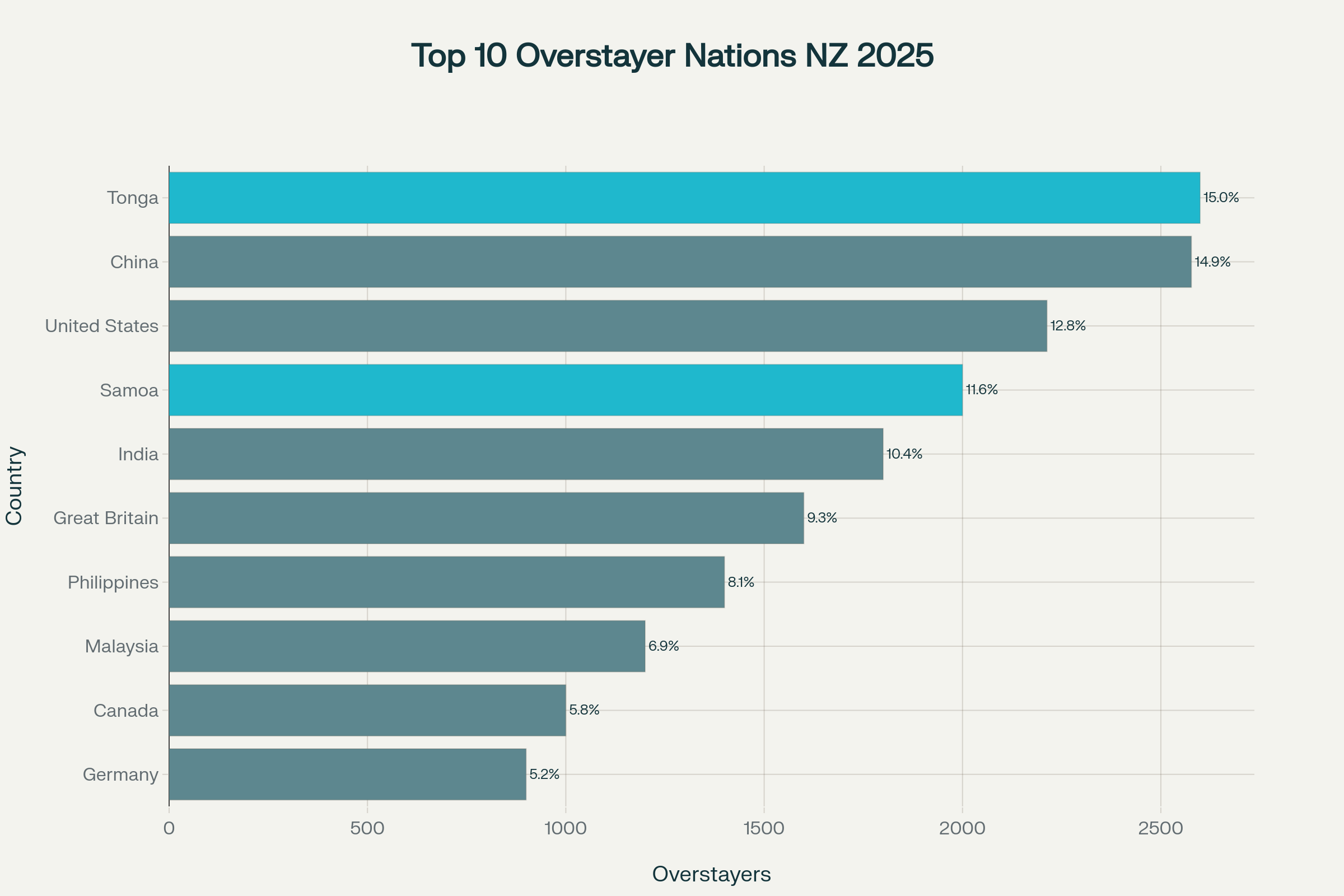
Pacific Communities Disproportionately Targeted: Visa Overstayers by Nationality (2025)
The Trump Connection: Blueprints of Brutality
The parallels between Stanford's policies and Trump's ICE operations are not superficial - they represent a shared ideological framework that views certain populations as inherently deportable. Trump's regime, architected by Stephen Miller, the white supremacist who "enjoys seeing pictures" of separated children, established a blueprint for mass deportation that New Zealand's coalition government is eagerly adopting.
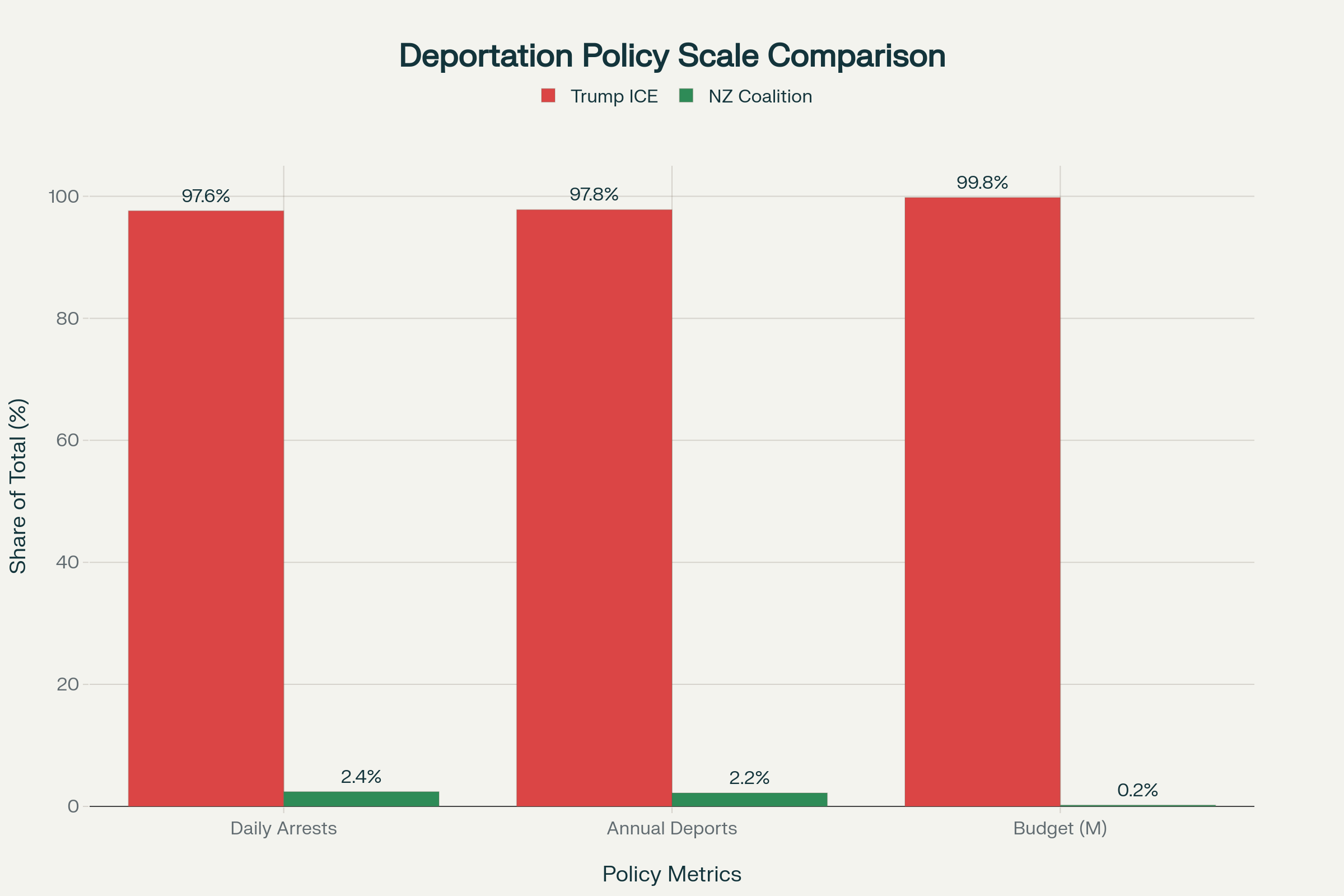
Authoritarian Deportation Regimes: Trump's ICE vs New Zealand's Coalition Crackdown
Trump's second administration has set daily arrest targets of 3,000 people, tripling previous goals, while authorising the deployment of National Guard troops to conduct immigration raids. His administration has expanded fast-track deportations to cover migrants apprehended anywhere nationally who cannot prove two years of residency, removing due process protections that took decades to establish.
The scale may differ, but the methodology is identical. Both regimes use electronic monitoring as "alternatives to detention" while actually expanding surveillance. Both prioritise workplace raids targeting industries that employ vulnerable workers. Both use algorithmic profiling to predetermine which communities deserve scrutiny.
Most tellingly, both regimes position themselves as "restoring order" while systematically traumatising the most marginalised. Trump's elimination of "sensitive locations" policies allows ICE raids in schools and churches. Stanford's electronic monitoring transforms the entire country into a detention facility for anyone she deems suspicious.
Historical Echoes: The Dawn Raids Redux
Stanford's policies cannot be understood without acknowledging their historical precedent in the Dawn Raids of the 1970s, which Prime Minister Ardern apologised for in 2021. These raids, described as "the most blatantly racist attack on Pacific peoples by the New Zealand government in New Zealand's history," specifically targeted Pacific and Māori communities while ignoring the largest group of overstayers - those from the United Kingdom, United States, and Australia.
The current government's approach represents a sophisticated evolution of this same racist targeting. Immigration New Zealand's controversial profiling programme, exposed in 2018 but never fully abandoned, uses "age, gender and ethnicity to predict which groups are more likely to run up hospital costs or commit crime." The algorithm embeds racist assumptions into seemingly neutral data, ensuring that Pacific communities remain perpetually suspect.
As immigration lawyer Alistair McClymont revealed, the profiling system weighted visa types rather than actual risk factors, effectively criminalising entire communities based on their immigration status rather than individual behaviour. This is not accident but design - a deliberate strategy to maintain white demographic dominance through bureaucratic violence.
The Surveillance Apparatus: Digital Dawn Raids
Stanford's introduction of electronic monitoring represents the next evolution in state surveillance of migrant communities. Under the guise of being "more reasonable" than detention, ankle bracelets and digital tracking transform entire lives into prison experiences. As asylum seeker advocates warn, this technology criminalises people seeking refuge and subjects already traumatised individuals to constant surveillance.
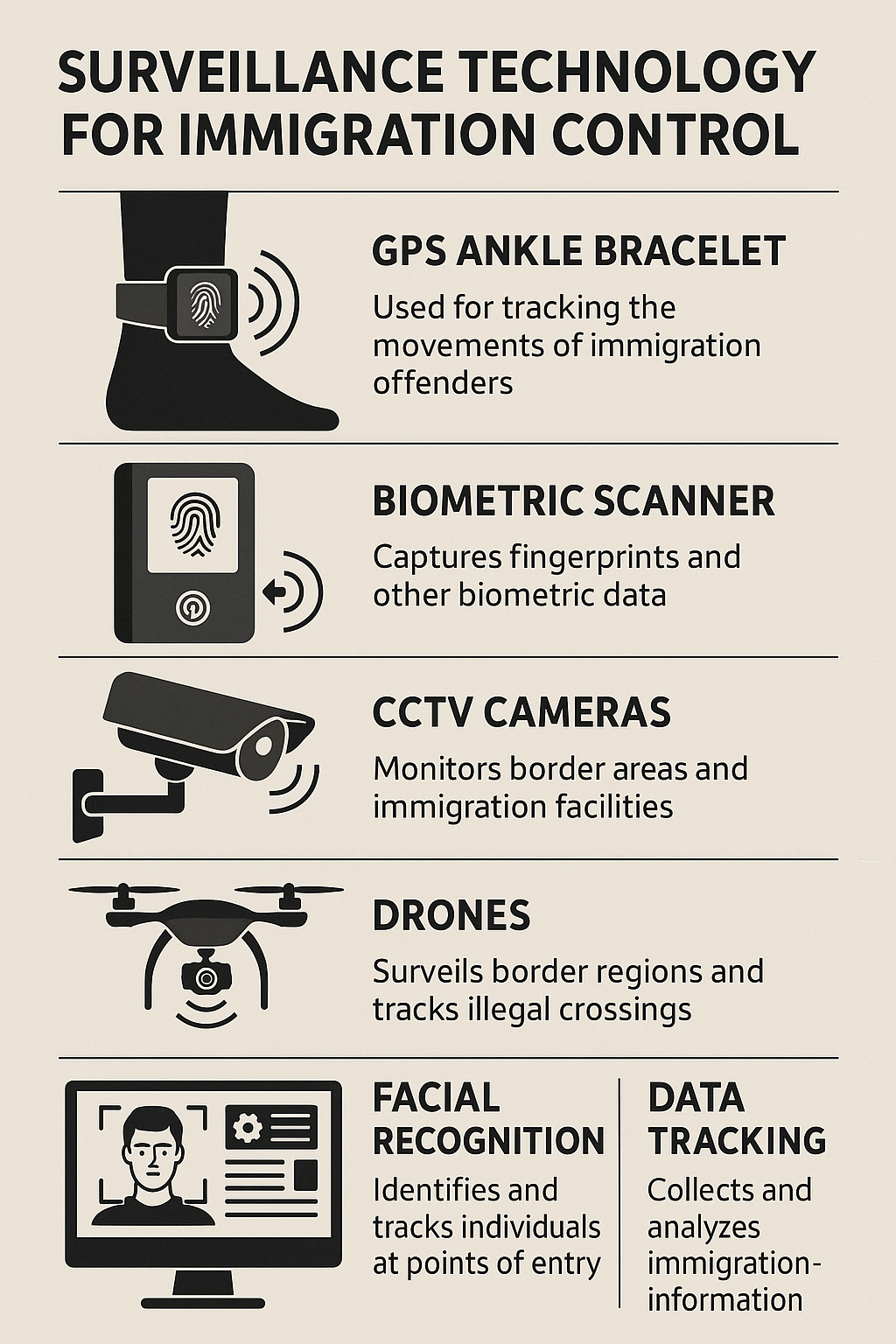
Electronic monitoring: the new face of immigration surveillance
This mirrors ICE's expansion under Trump, where Alternative to Detention programmes actually increased surveillance rather than reducing it. Both systems use the language of "humanitarian alternatives" to expand carceral control into everyday life.
The technology serves dual purposes: social control and profit extraction. Just as Trump's regime has expanded private detention facilities, Stanford's electronic monitoring creates new markets for surveillance capitalism while normalising the treatment of migrants as inherently criminal.
Economic Manipulation: The Exploitation Excuse
Stanford's claim that these policies address "migrant exploitation" represents a masterclass in victim-blaming rhetoric. The government simultaneously makes it easier for businesses to hire migrants through reduced visa restrictions while criminalising those same migrants when exploitation occurs.
This follows the neoliberal playbook perfectly: create conditions for exploitation through deregulated labour markets, then punish the victims when the system produces its predictable outcomes. Stanford's removal of median wage requirements ensures a steady supply of vulnerable workers while her deportation expansion guarantees those workers remain compliant through fear.
The parallel with Trump's approach is exact. His administration initially targeted workplaces before pivoting when business interests complained. Both regimes understand that migrant labour is essential to capital accumulation, but that migrant workers must remain perpetually deportable to maintain their usefulness.
The Coalition's Racist Trinity: Luxon, Seymour, and Peters
The current deportation regime emerges from the coordinated efforts of three political forces, each contributing distinct elements to a comprehensive system of exclusion. Christopher Luxon, despite being the son of a Dutch immigrant, has embraced the rhetoric of unsustainable migration while promoting policies that prioritise wealthy migrants over working families.
David Seymour's ACT Party brings libertarian ideology that treats migration as a market commodity while maintaining white demographic control through selective enforcement. His proposal to replace work visas with employer fees creates a two-tier system where capital determines who deserves to stay.
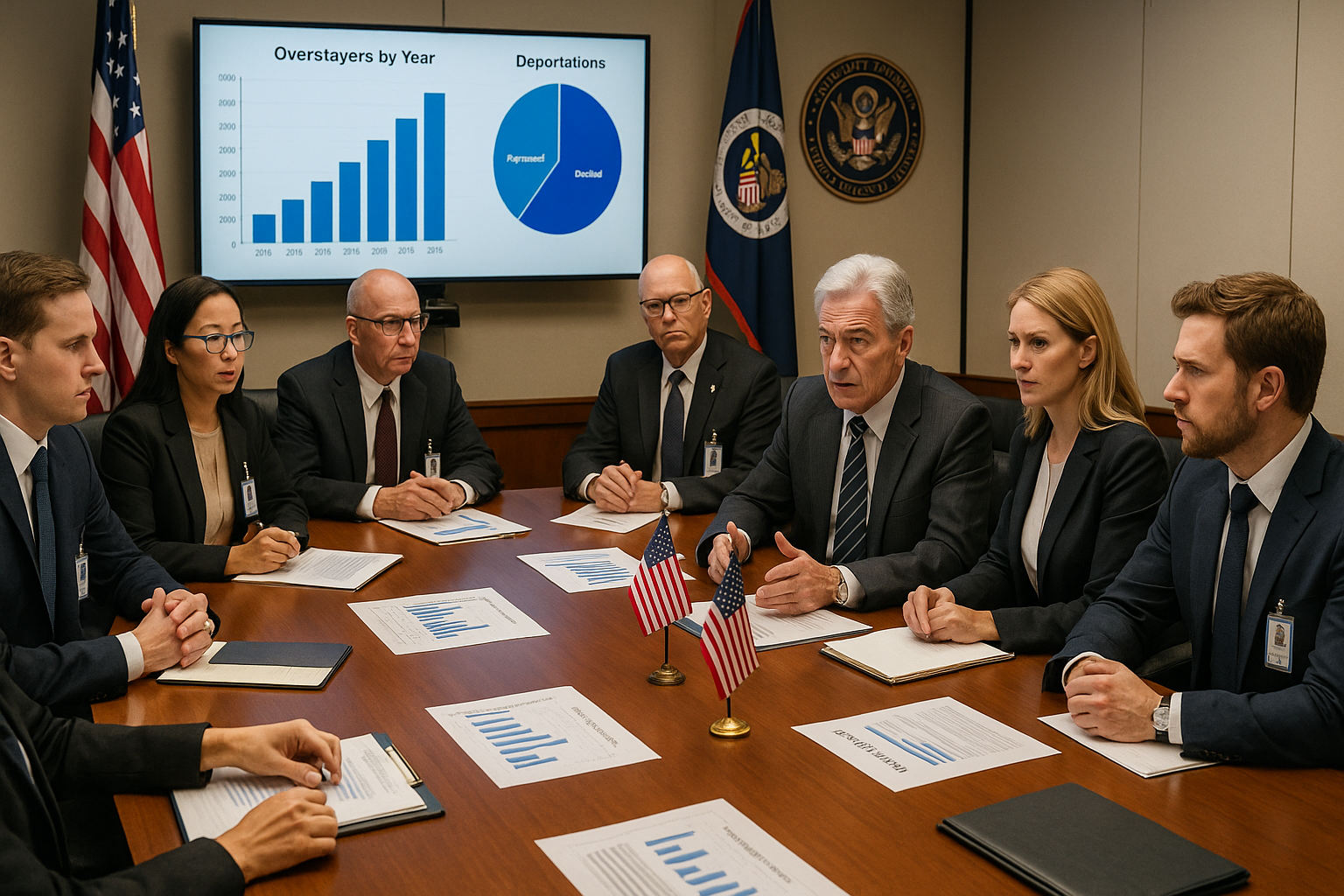
Power brokers: the architects of deportation policy behind closed doors
Winston Peters, the supposed champion of Pacific interests as Foreign Minister, enables this racist agenda while maintaining relationships with Pacific leaders. His contradictory stance - warmly received in Pacific capitals while supporting policies that target Pacific communities at home - exemplifies the colonial schizophrenia that defines New Zealand's relationship with the Pacific.
The Detention Infrastructure: Building Cages for Profit
Stanford's preparation for "mass arrivals" through expanded detention powers reveals the government's true intentions. The legislation allows authorities to detain asylum seekers arriving by air or sea for up to 28 days, using "MIQ-style accommodation" that transforms quarantine infrastructure into detention facilities.
Detention infrastructure: caging migrants in institutional facilities
This represents the militarisation of immigration control, treating asylum seekers as enemy combatants rather than people seeking protection. The expansion from sea arrivals to include air travel and cruise ships reveals paranoid thinking that imagines coordinated migrant invasions requiring military response.
The detention conditions described in official documents echo those criticised in Australian immigration facilities, where New Zealand citizens are held "in the sort of preventive detention usually reserved for serial killers and rapists." The average detention period of 454 days represents psychological torture designed to break the will of those seeking justice.
Data as Weapon: The Digital Dawn Raids Continue
Despite public exposure in 2018, Immigration New Zealand's racial profiling continues through sophisticated data modelling that maintains plausible deniability while targeting the same communities. The harm team's algorithm uses "past overstayers' convictions and unpaid hospital debts" to create profiles for future targeting, embedding historical discrimination into predictive models.
The system operates through what scholars call "algorithmic racism" - using seemingly neutral variables that correlate with race and class to maintain discriminatory outcomes while avoiding legal challenge. When the programme prioritises deportation over prosecution, it creates parallel justice systems where your ethnicity determines which legal protections you receive.
Stanford's expansion of deportation grounds to include "providing false or misleading information" and "historic crimes committed before arriving in New Zealand" creates infinite justification for removal. Any administrative error, any past mistake, any bureaucratic confusion becomes grounds for exile. This is the digitalisation of arbitrary power - the use of technology to mask the fundamentally subjective nature of who gets to stay and who must go.
The Pacific Connection: Exporting Violence
The targeting of Pacific communities represents a particularly cruel irony given New Zealand's proclaimed role as Pacific leader. The statistics reveal the truth: Pacific peoples represent 22% of all overstayers despite being a much smaller proportion of total arrivals. Tonga and Samoa lead the overstayer statistics not because Pacific people are inherently non-compliant, but because the system is designed to criminalise Pacific mobility while facilitating European movement.
New Zealand's deportation of Pacific peoples feeds directly into regional destabilisation. Research shows that criminal deportees from New Zealand contribute significantly to transnational crime in the Pacific, with 400 deportees returned between 2013 and 2018. This represents colonial violence exported - taking people shaped by New Zealand's social conditions and abandoning them in countries they may barely remember.
The racial dimension is undeniable. More than 60% of deportees from Australia to New Zealand are of Māori or Pacific heritage, despite being minorities in Australia's population. The same patterns of racial targeting that defined the Dawn Raids continue through transnational deportation regimes.
Corporate Collusion: The Business of Deportation
Stanford's background reveals the corporate capture of immigration policy. Her career producing reality television, including the voyeuristic "Noise Control" where she followed enforcement teams around Auckland, demonstrates a fundamental comfort with surveillance and control. Her transition from entertainment to politics represents the convergence of spectacle and state violence.
The coalition's immigration policies serve capital first. The removal of median wage requirements ensures a supply of cheap labour while deportation threats maintain worker compliance. This is not accident but design - creating conditions where migrants must accept whatever conditions employers offer or face removal.
ACT's proposal to replace visa requirements with employer fees makes explicit what has always been implicit: immigration as commodity exchange where human dignity is subordinated to market forces. Seymour's libertarian rhetoric about "minimal rigmarole" translates to minimal protection for workers facing exploitation.
The Māori Dimension: Targeting Indigenous Solidarity
For Māori, these policies represent an attack on Indigenous solidarity and Pacific whakapapa connections. The targeting of Pacific communities deliberately undermines Māori-Pacific solidarity that has historically challenged white supremacist governance. When Immigration New Zealand profiles based on ethnicity, it extends colonial surveillance beyond Māori to encompass all Indigenous and racialised peoples.
The government's approach violates fundamental Māori values of manaakitanga (hospitality) and kotahitanga (unity). By treating migration as invasion rather than movement of peoples, the coalition abandons Indigenous understandings of land and belonging in favour of European concepts of bordered nation-states.
Stanford's personal connection to this violence runs deep. Her minor in Māori Studies makes her targeting of Pacific communities particularly grotesque - she has been educated in Indigenous values yet chooses to weaponise state power against Indigenous peoples. This represents the colonial capture of Indigenous knowledge for oppressive purposes.
The Trump Template: Lessons from the Master Class
Trump's mass deportation programme provides the template that Stanford is adapting for New Zealand conditions. Stephen Miller's role as "architect" of family separation demonstrates how individual actors can shape systems of mass cruelty. Miller's advancement from congressional staffer to deputy chief of staff shows how white supremacist ideology infiltrates and captures state institutions.
Trump's expansion of expedited removal to cover migrants apprehended anywhere nationally mirrors Stanford's electronic monitoring expansion. Both systems eliminate due process protections while maintaining the fiction of legal compliance. Both use technology to expand state surveillance while claiming humanitarian motivations.
The business model is identical: create crisis, propose military solutions, expand state powers, profit from surveillance technology. Trump's $29.9 billion budget for ICE operations represents the full militarisation of immigration control, while New Zealand's smaller scale conceals the same logic of treating migration as warfare.
The Technology of Control: Surveillance Capitalism Meets State Violence
Electronic monitoring represents the convergence of surveillance capitalism with state immigration control. Stanford's claim that ankle bracelets offer a "more flexible approach" than detention conceals their function as portable prisons that transform entire lives into carceral experiences.
The technology creates multiple revenue streams: device manufacturers, monitoring services, data collection, and compliance enforcement. Each monitored individual becomes a profit centre in the growing surveillance economy, while their movements, associations, and activities become data commodities sold to state agencies.
This mirrors Trump's approach where private detention facilities expand alongside public enforcement. Both systems use public-private partnerships to obscure responsibility while maximising profit extraction from human suffering.
Coalition Dynamics: The Perfect Storm of Racism
The coalition's structure enables each party to contribute its particular expertise to the deportation regime. National provides the respectable face of "tough but fair" enforcement. ACT contributes libertarian economics that treats humans as commodities. NZ First offers populist nationalism that frames migration as cultural threat.
Peters' role is particularly cynical. His warm reception in Pacific capitals as Foreign Minister provides diplomatic cover for domestic policies that target the same Pacific communities he claims to champion. This represents the colonial strategy of divide and rule - maintaining Pacific relationships for economic benefit while eliminating Pacific presence domestically.
Costello's appointment as Associate Minister of Immigration brings Hobson's Pledge ideology directly into policy implementation. Her organisation's opposition to "race-based division" translates into policies that eliminate protections for Indigenous and racialised peoples while maintaining structural advantages for Europeans.
The Media Complicity: Normalising Cruelty
Jamie Ensor's reporting in the New Zealand Herald exemplifies how mainstream media normalises deportation violence through neutral language and bureaucratic framing. The article presents Stanford's announcement as administrative update rather than declaration of war against migrant communities. Terms like "crackdown," "breaches," and "compliance" sanitise the human reality of families destroyed and lives shattered.
The Herald's failure to contextualise these policies within histories of racism and colonialism represents journalistic malpractice. By treating deportation as normal government business rather than extraordinary violence, the media becomes complicit in normalising cruelty.
This mirrors American media's treatment of Trump's policies, where mass deportation becomes "immigration enforcement" and family separation becomes "border security." The linguistic sanitisation of violence enables public acceptance of policies that would otherwise provoke outrage.
Implications: The Authoritarian Turn Accelerates
Stanford's deportation expansion represents more than immigration policy - it signals the broader authoritarian turn in New Zealand governance. The same coalition that attacks Māori rights, expands surveillance powers, and militarises social problems now applies this approach to migration control.
The precedent is terrifying. If the state can electronically monitor asylum seekers today, what prevents monitoring of activists tomorrow? If algorithms can target Pacific communities for deportation, what stops their use against Māori asserting sovereignty? If due process can be eliminated for migrants, how long before it disappears for citizens?
The impact on Māori and Pacific communities will be severe. Families will be separated, communities will live in fear, and the solidarity networks that have sustained resistance will be undermined. Children will grow up understanding that their Pacific whakapapa makes them suspect, while Māori will watch their Pacific whānau disappear into the machinery of state violence.
Resistance and Hope: The Spirit of the Polynesian Panthers
Yet this moment also contains possibilities for resistance. The Polynesian Panthers who fought the original Dawn Raids provide a model for contemporary struggle. Their combination of legal advocacy, community education, and direct action offers pathways for challenging the current regime.
Māori-Pacific solidarity becomes essential resistance strategy. The shared experience of colonial violence and ongoing state targeting creates natural alliances between Indigenous and Pacific communities. The coalition government's attack on both groups reveals their fundamental threat to white supremacist governance.
Legal challenges to electronic monitoring, algorithmic profiling, and expanded deportation grounds can expose the racist foundations of seemingly neutral policies. Community education about rights and resources can help people navigate increasingly hostile enforcement environments.

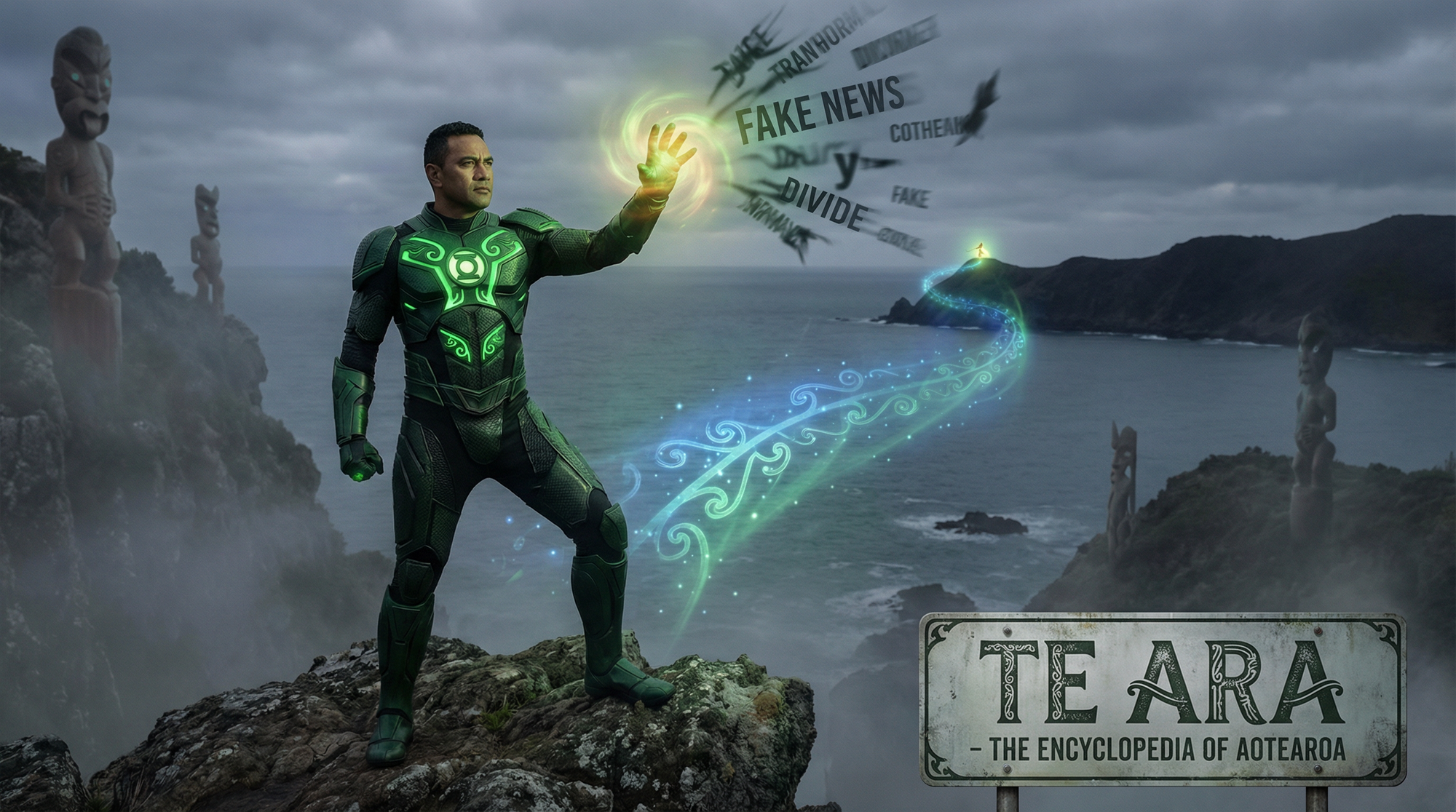
The Māori Green Lantern Fighting Misinformation And Disinformation From The Far Right
The Reckoning Approaches
Stanford's deportation regime represents the complete capture of immigration policy by white supremacist ideology. Her transformation from reality TV producer to deportation architect reveals how easily entertainment spectacle becomes state violence when mediocrity encounters power.
The parallels with Trump's ICE operations are not coincidental but deliberate - a conscious adoption of authoritarian tactics by a government that views diversity as threat rather than strength. The expansion of deportation liability, introduction of electronic monitoring, and algorithmic targeting of Pacific communities represent the systematic erasure of non-European presence from Aotearoa.
But this moment also reveals the government's fundamental weakness. Their need for increasingly sophisticated surveillance and control mechanisms demonstrates the failure of their core premise - that New Zealand belongs only to those who look like them. Every ankle bracelet, every algorithm, every dawn raid exposes the violence required to maintain white supremacist fantasies in an increasingly diverse world.
The choice before us is clear: submit to the machinery of exclusion or resist in the spirit of those who fought the original Dawn Raids. The Polynesian Panthers understood that migration control is racial control, that deportation is colonial violence, and that resistance requires solidarity across all oppressed communities.
Erica Stanford may have the power of the state behind her, but she does not have the power of the people. And in the end, it is the people who will determine whether Aotearoa becomes a surveillance state or remains a place where manaakitanga prevails over manufactured fear.
The government's deportation regime will fail because it is built on the false foundation that some people matter more than others. That lie has never been sustainable, and it will not become sustainable through electronic monitoring, algorithmic targeting, or military-style enforcement.
The truth they fear is simple: we are all here to stay, and no amount of surveillance will change that reality.
Na te Maori Green Lantern, kaitiaki o te pono.
Readers who find value in this work and wish to support continued resistance to white supremacist propaganda can consider a koha to HTDM: 03-1546-0415173-000. The MGL understands these are tough economic times for whānau so please only contribute if you have capacity and wish to do so.