“The Corporate Puppet Show of Casey Costello” - 17 September 2025
Exposing how New Zealand First handed $293 million of taxpayer money to Big Tobacco while breaching public trust
Kia ora e hoa,
Casey Costello has been caught red-handed operating as a corporate puppet for the tobacco industry, funneling nearly $300 million in taxpayer wealth directly into the pockets of multinational tobacco giant Philip Morris through deliberately corrupt policy-making that would make even the most brazen corporate lobbyist blush with shame.
Background
The Associate Health Minister for New Zealand First has been exposed by Chief Archivist Anahera Morehu's official investigation for systematically breaching the Public Records Act while implementing tobacco industry-friendly policies that directly contradict health expert advice and Treasury warnings. This scandal represents everything wrong with neoliberal capture of government policy-making processes, where corporate interests override public health and fiscal responsibility.
From a Māori perspective, this corruption is particularly galling because tobacco addiction disproportionately impacts our whānau and communities. The systematic undermining of smokefree policies represents a direct attack on Māori health outcomes, while the wealth transfer to foreign corporations epitomizes the colonial extraction economy that continues to exploit Aotearoa's resources and people.
The values of manaakitanga (caring for people's wellbeing) and kaitiakitanga (guardianship of public resources) demand we expose how Costello has violated the sacred trust placed in her ministerial role.
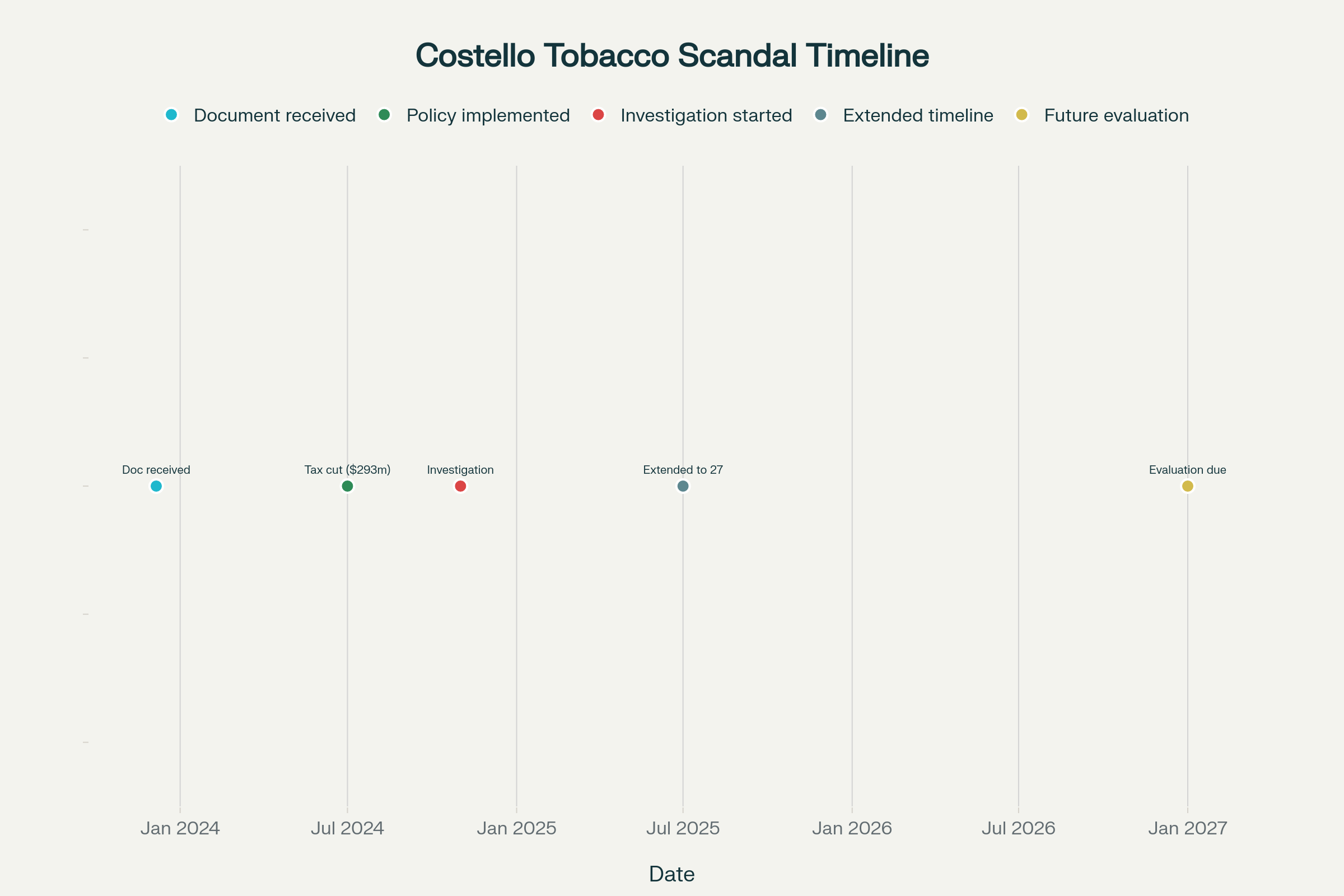
Timeline of Casey Costello's tobacco scandal showing key events from mystery document to policy implementation
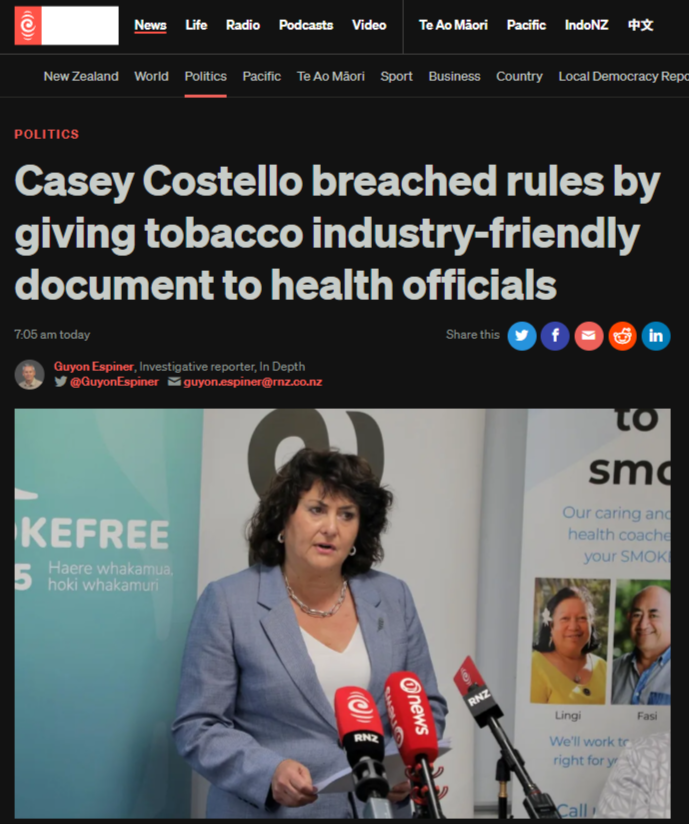
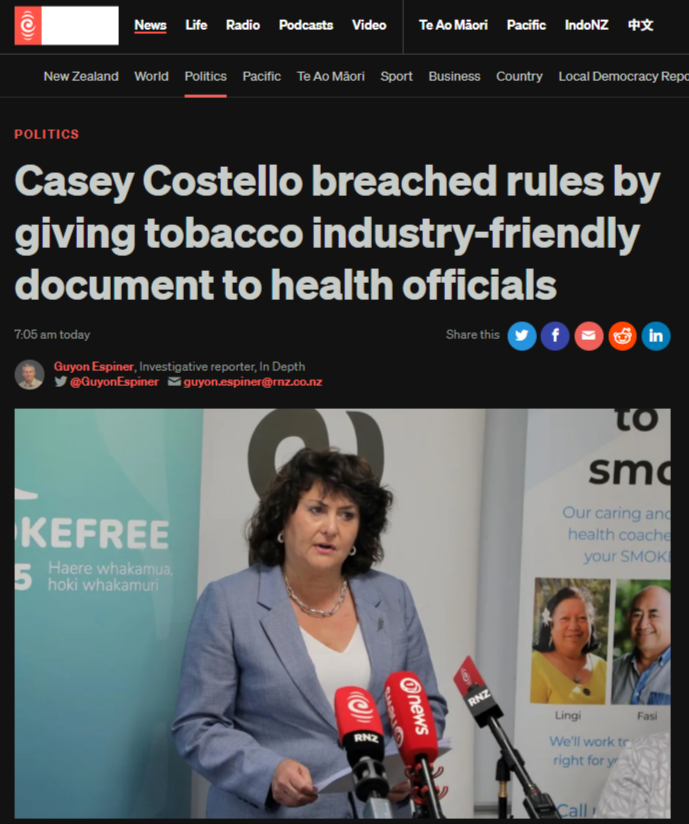
The scandal centers on a "mystery document" that appeared on Costello's desk in December 2023, containing tobacco industry talking points that argued for massive tax cuts on Heated Tobacco Products while claiming nicotine was "no more harmful than caffeine." This anonymous document became the foundation for policy decisions worth hundreds of millions of dollars, despite Costello claiming she had no idea who wrote it or how it reached her office.
The document attacked Labour's smokefree policies as "ideological nonsense" and described New Zealanders as "guinea pigs" in policy experiments - language that perfectly mirrors tobacco industry propaganda designed to undermine public health initiatives. Within months, Costello implemented exactly the tax cuts the mystery document demanded, slashing excise taxes on HTPs by 50 percent.
This matters profoundly to Māori because smoking rates in our communities remain disproportionately high, and tobacco companies have historically targeted Indigenous populations worldwide as vulnerable markets. The systematic dismantling of evidence-based smokefree policies represents a direct threat to Māori health equity and self-determination.
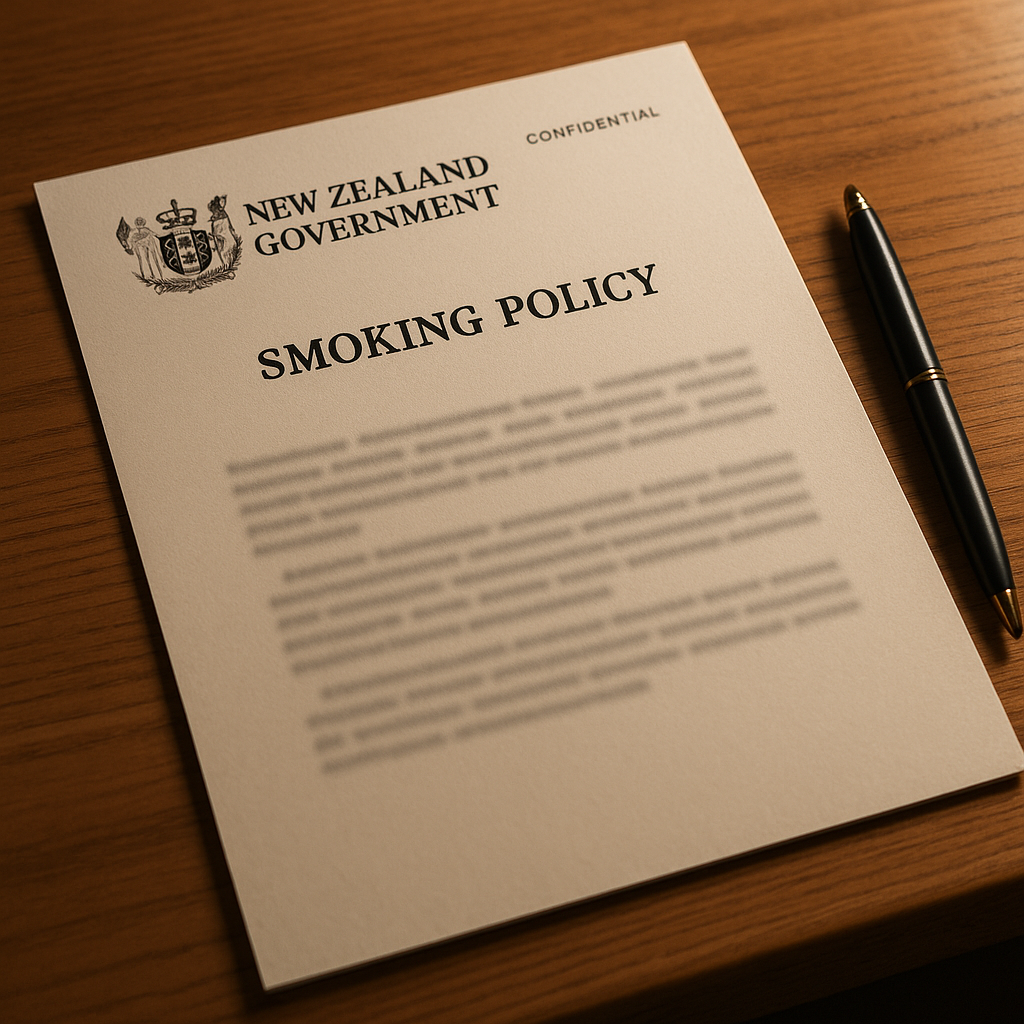
Anonymous document representing the mystery tobacco policy paper
The Corruption Timeline
December 6, 2023: The Anonymous Drop
The mystery document appears on Costello's desk just days after she assumes the Associate Health portfolio. She claims complete ignorance about its authorship - a convenient amnesia that would make any competent investigator suspicious.
July 2024: Policy Implementation
Costello implements the exact tax cuts demanded by the anonymous document, reducing HTP excise by 50 percent. Treasury officials specifically warned that Philip Morris held a monopoly position in New Zealand's HTP market and would be the primary beneficiary.
November 2024: Investigation Begins
The Chief Archivist launches an official investigation into Costello's handling of ministerial information after concerns about transparency and accountability.
July 2025: Accountability Delayed
Costello extends the policy evaluation timeline from one year to three years, conveniently pushing any assessment beyond the next election cycle.
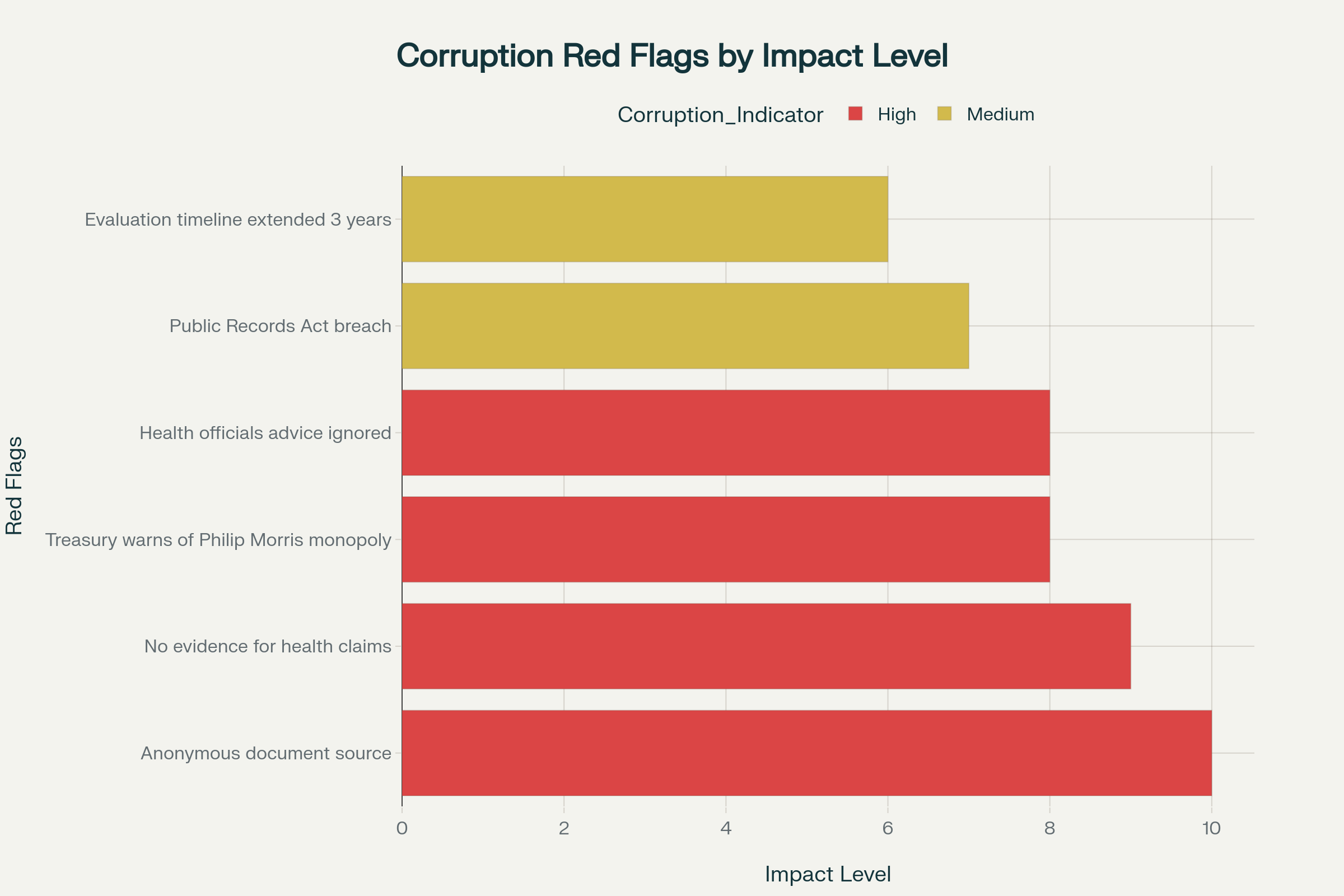
Corruption indicators in the Costello tobacco scandal ranked by severity
The Web of Corporate Capture
The corruption indicators in this scandal read like a textbook case of regulatory capture:
Anonymous Sources: Using documents of unknown origin for major policy decisions violates basic governance principles and suggests deliberate obfuscation of corporate influence.
Evidence Rejection: Health officials found no strong evidence that HTPs work as smoking cessation tools or are significantly safer than cigarettes, yet Costello ignored their professional advice.
Monopoly Benefits: Treasury explicitly warned that Philip Morris's monopoly position would make them the primary beneficiary of tax cuts, yet Costello proceeded anyway.
Record-Keeping Violations: The Chief Archivist found Costello breached the Public Records Act by failing to maintain proper documentation about policy development processes.
The language in the mystery document perfectly mirrors tobacco industry propaganda, describing evidence-based public health policies as "ideological nonsense" - a classic neoliberal tactic of framing regulation as ideology while presenting corporate interests as natural market forces.
This represents the intersection of white supremacist and neoliberal thinking, where Indigenous-led health initiatives are dismissed as "radical experiments" while corporate profits are prioritized over community wellbeing.
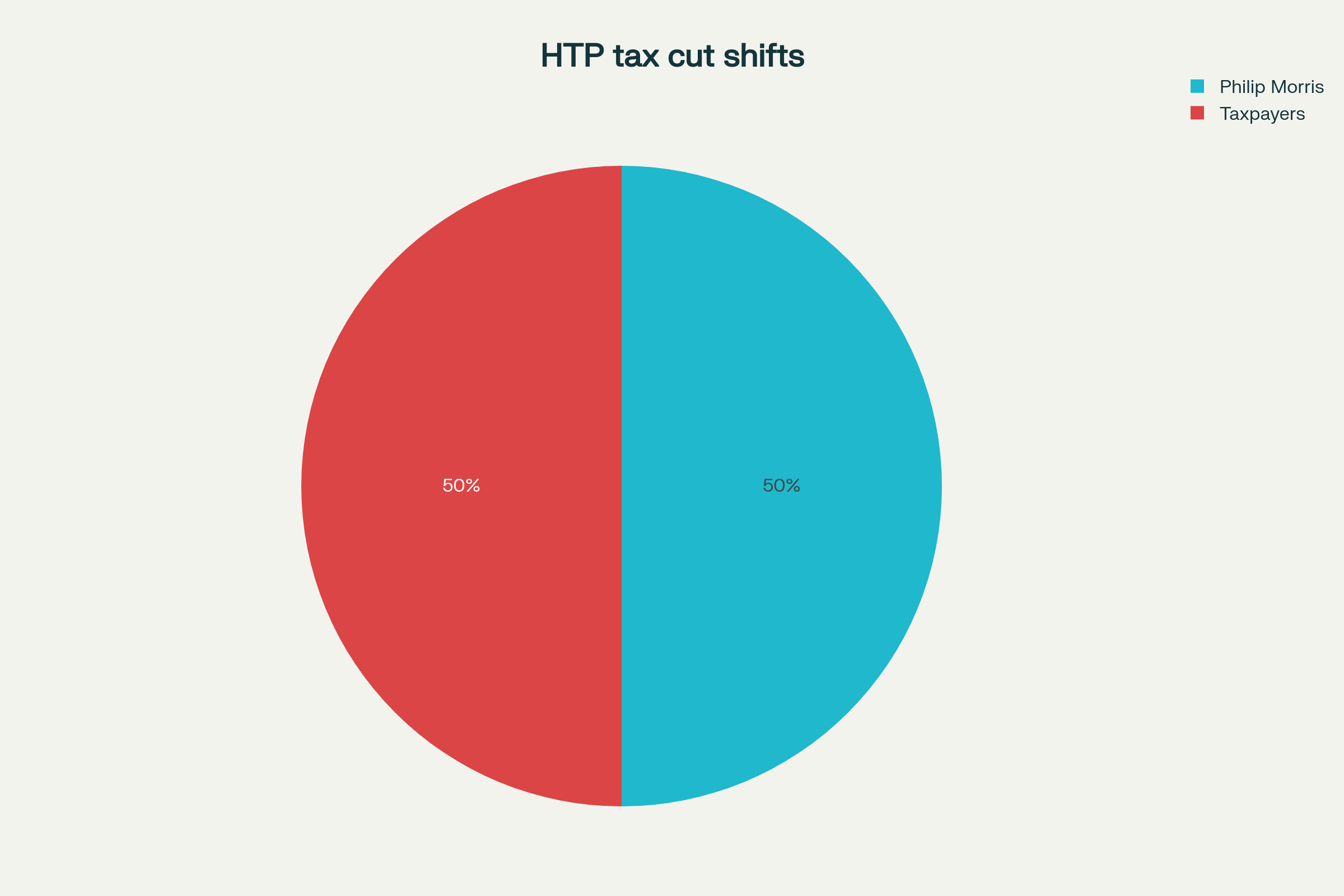
Financial impact of Costello's HTP tax cuts showing $293 million wealth transfer
The $293 Million Wealth Transfer
The financial impact reveals the true scale of this corporate giveaway. Treasury estimates the HTP tax cuts will cost up to $293 million if continued until 2029 - money that flows directly from New Zealand taxpayers into Philip Morris's corporate coffers.
This represents a classic neoliberal wealth transfer mechanism: socializing costs while privatizing benefits. New Zealanders lose nearly $300 million in potential tax revenue while a foreign multinational corporation gains an equivalent windfall through preferential tax treatment.
For Māori communities already struggling with the impacts of colonization and economic disparity, watching the government hand hundreds of millions to tobacco companies while cutting social services represents a profound betrayal of the Treaty partnership and tino rangatiratanga.
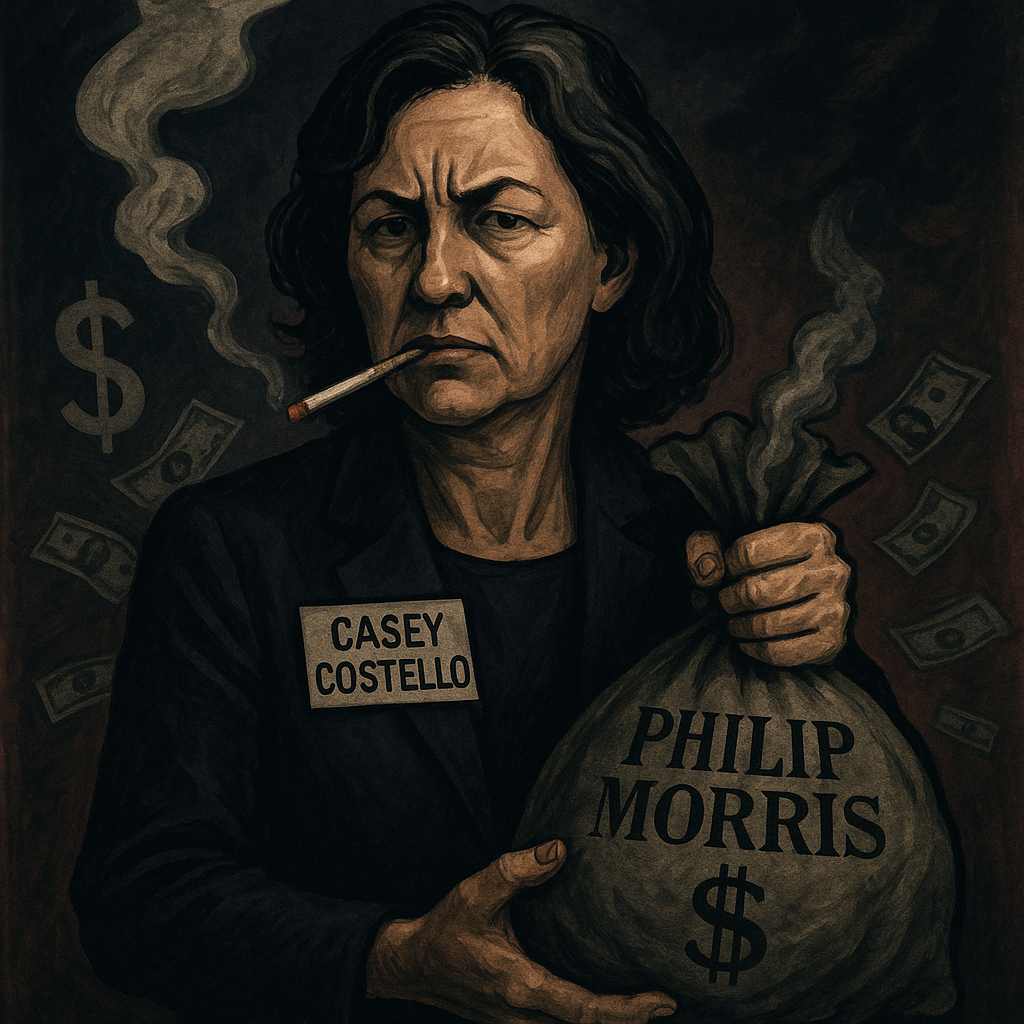
Political corruption imagery depicting tobacco industry influence
The visual representation of this corruption shows exactly how corporate capture operates in practice - anonymous documents, ignored expert advice, extended timelines, and massive wealth transfers to multinational corporations.
The Neoliberal Playbook in Action
Costello's actions follow the standard neoliberal playbook for regulatory capture:
- Deniability: Use anonymous documents and claim ignorance about sources
- Market Rhetoric: Frame tax cuts as supporting "choice" and "harm reduction"
- Expert Dismissal: Ignore health professionals and Treasury warnings
- Timeline Extension: Push accountability measures beyond election cycles
- Record Destruction: Breach transparency requirements to avoid scrutiny
The claim that HTPs represent "harm reduction" mirrors classic tobacco industry propaganda dating back decades. These same companies that denied smoking caused cancer for generations now present themselves as public health advocates while maintaining their core business model of nicotine addiction.
From a Māori worldview, this represents the antithesis of whakatōhea (collective responsibility) and mana whenua (authority to protect community wellbeing). Costello has violated the sacred trust of ministerial office by prioritizing corporate profits over public health.
Corporate Connections and Hidden Networks
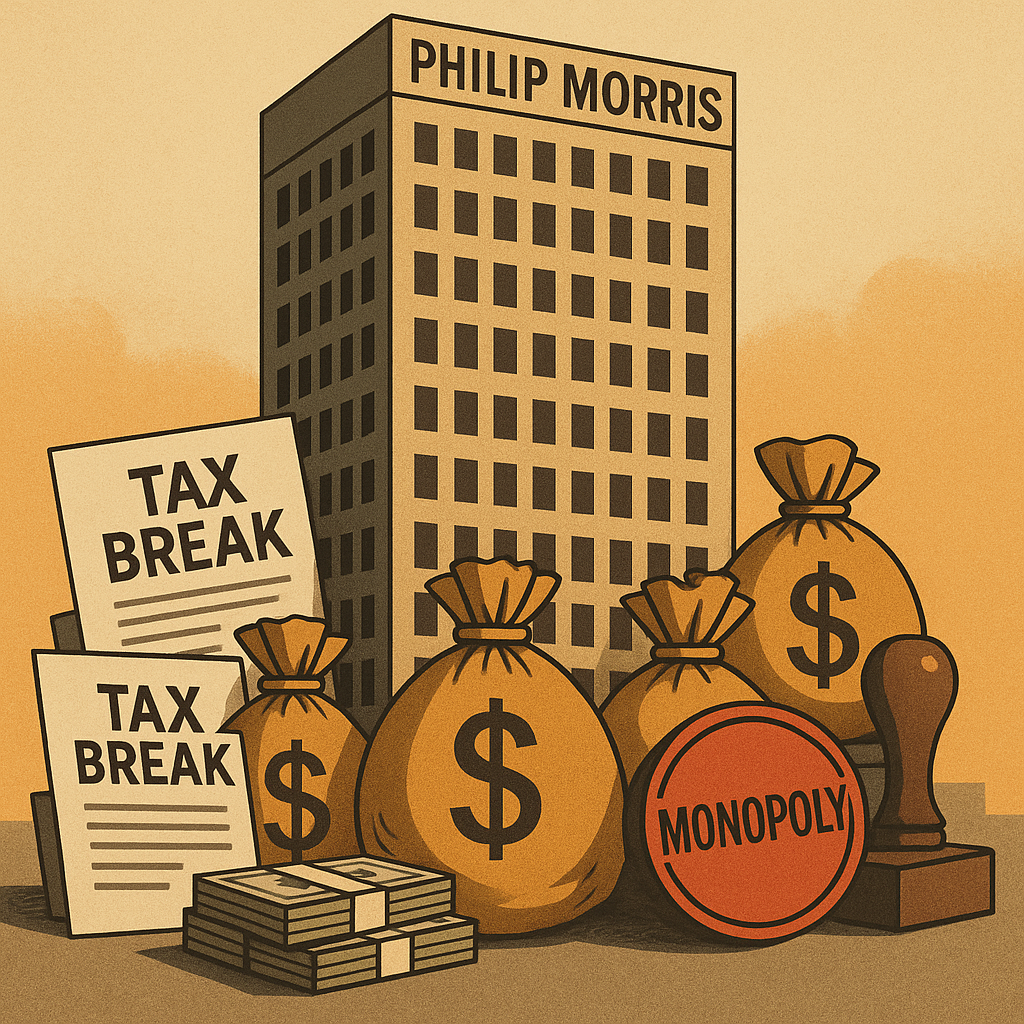
Corporate power representing Philip Morris's monopoly benefiting from tax cuts
The Philip Morris connection reveals the deeper networks of corporate influence operating within New Zealand's political system. This isn't just about one rogue minister - it's about systematic corporate capture of regulatory processes designed to benefit multinational corporations at the expense of local communities.
Philip Morris International has a documented history of targeting Indigenous populations globally, recognizing them as growth markets for tobacco products. The company's monopoly position in New Zealand's HTP market means Costello's tax cuts represent a direct subsidy to corporate strategies that disproportionately harm Māori health outcomes.
The timing is also suspicious - the mystery document appears just days after Costello assumes responsibility for tobacco policy, suggesting coordinated planning by industry actors who knew exactly when and how to influence the new minister.
New Zealand First's broader pattern of supporting corporate interests over Indigenous rights fits perfectly with this tobacco industry capture. The party has consistently opposed co-governance arrangements while supporting deregulation that benefits large corporations.
Implications for Māori Health and Sovereignty
This scandal represents a direct attack on Māori tino rangatiratanga in health policy. The systematic dismantling of evidence-based smokefree policies disproportionately impacts our communities, where smoking rates remain significantly higher than the general population.
The wealth transfer to Philip Morris epitomizes the colonial economic model where foreign corporations extract value from Aotearoa while local communities bear the health and social costs. This pattern of extraction - whether through tobacco, mining, or other industries - represents ongoing colonization through neoliberal mechanisms.
The broader implications extend beyond tobacco policy. If ministers can implement major policy changes based on anonymous corporate documents while ignoring expert advice and breaching transparency requirements, no area of government is safe from corporate capture.
For whānau struggling with tobacco addiction, watching the government hand millions to tobacco companies while cutting addiction services and health support represents a profound betrayal of Crown obligations under Te Tiriti.

The Māori Green Lantern Fighting Misinformation And Disinformation From The Far Right
The Corporate Puppet Show Exposed
Casey Costello's tobacco scandal reveals the corrupt reality of neoliberal governance in Aotearoa - where anonymous corporate documents carry more weight than health experts, where transparency laws are breached with impunity, and where hundreds of millions in taxpayer money flows directly to foreign multinational corporations.
This isn't incompetence - it's systematic corruption designed to benefit tobacco industry profits at the expense of public health and fiscal responsibility. The deliberate extension of evaluation timelines, the rejection of expert advice, and the violation of record-keeping requirements all point to coordinated efforts to avoid accountability.
From Te Ao Māori perspective, Costello has violated every principle of ethical leadership. She has failed in her duty of kaitiakitanga over public resources, abandoned manaakitanga toward vulnerable communities, and prioritized corporate profits over collective wellbeing.
The time has come to demand her immediate resignation and a full criminal investigation into the tobacco industry connections that enabled this massive theft of public wealth. New Zealand deserves ministers who serve the people, not corporate puppet masters operating in the shadows.
The Māori Green Lantern understands these are tough economic times for whānau. If you find value in this mahi exposing corruption and corporate capture, please consider a koha to support this kaupapa: HTDM: 03-1546-0415173-000. Only contribute if you have the capacity and wish to do so.
Aroha mai, aroha atu
Ivor Jones - Te Māori Green Lantern