“The Crayfish Closure: A Corrupt Minister’s Theatre Masking Ocean-Wide Devastation” - 19 December 2025
The Money Chain: $100,000+ of Industry Cash Buys a Fisheries Minister
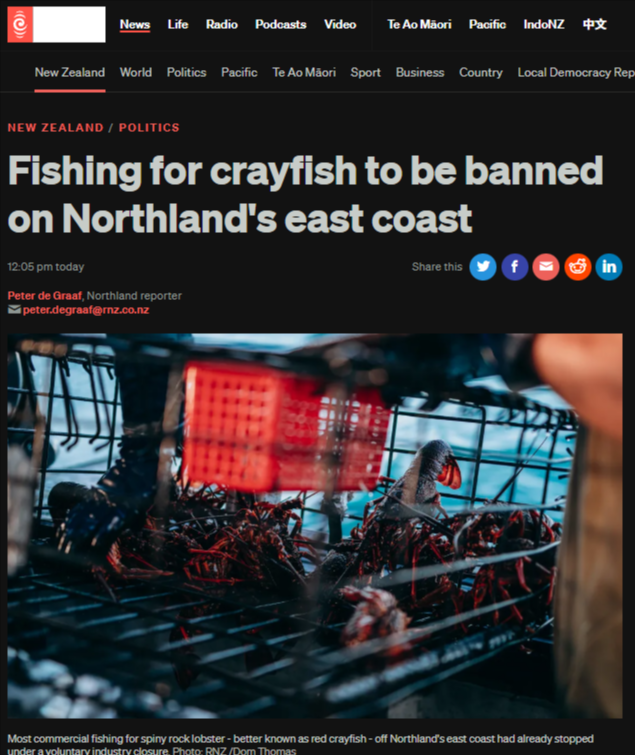
On 18 December 2025, Shane Jones announced a crayfish fishing ban for Northland’s east coast. The headlines called it environmental action. The truth is darker:
this closure is a calculated deception—a small, court-forced gesture of sustainability deployed to obscure a massive, systematic giveaway of New Zealand’s marine resources to corporate fishing interests, funded by over $100,000 in industry donations that have entirely captured the Ministry responsible for protecting our oceans.
Over $100,000 in documented contributions from seafood companies and executives have flowed to Shane Jones and NZ First since 2017. This is not speculation. This is a money trail—verifiable, direct, and explicitly designed to create obligation.
The largest benefactor is Talley’s seafood empire and its billionaire boss Sir Peter Talley, who together poured at least $66,900 into Jones’ political campaigns and NZ First’s funds over recent years. Much of this was channeled through the clandestine NZ First Foundation between 2017 and 2019, splitting donations into amounts just under the public disclosure threshold. For example, Peter Talley donated $15,000—exactly one cent below the level that would trigger public disclosure.
Other fishing magnates joined ahead of the 2023 election. Westfleet Seafoods and Aimex Ltd—both controlled by West Coast fishing baron Craig Boote—together donated $7,000 to Shane Jones’ 2023 campaign. Boote later confirmed he had funneled a total of $10,000 to Jones by splitting it between his companies, and admitted giving $10,000 to National and $10,000 to ACT, covering all three coalition parties. Boote soon met Jones at an exclusive “wine and oysters” dinner in Nelson to press the Minister on loosening fishing regulations, especially the use of cameras on boats. Money bought access.
Jones himself has called himself the “apostle of industry,” a phrase that should disqualify anyone from regulating that industry. Yet Christopher Luxon appointed him anyway. A Horizon Research poll found 85% of New Zealanders polled do not trust Jones to manage fisheries; 57% say an MP funded by fishing industry money should not be Fisheries Minister. The public understood the corruption before the Ministry did.
The August 2025 Coup: Jones Delivers the Industry’s Wish List in Real Time
Within months of taking office, Shane Jones announced on 6 August 2025 the most comprehensive rollback of fishing regulations in decades. The package reads like it was drafted by Seafood NZ. Because it was.
restricting public access to boat camera footage via OIA, removing the requirement to land all catch (legalizing dumping), allowing the Minister to set catch limits for five years without annual review, and new restrictions on who can challenge fisheries decisions in court. That last item directly targets Forest & Bird and LegaSea, whose litigation victories forced environmental protections that the industry despised.
This was not a government consulting an industry stakeholder. This was the fishing industry, sitting in the seat of government, drafting its own deregulation.
Every item on the menu matched exact complaints fishing company executives had raised in private meetings with Jones during his first months in office. Cameras, quotas, discards, lawsuits—all addressed. Jones did not deliberate. He delivered.
Despite 95% of submissions received by Fisheries New Zealand opposing the proposed ‘reforms’, Cabinet agreed to proceed with the changes. Greenpeace responded that the reforms “green light ocean destruction” and give the fishing industry “carte blanche” while weakening public accountability.
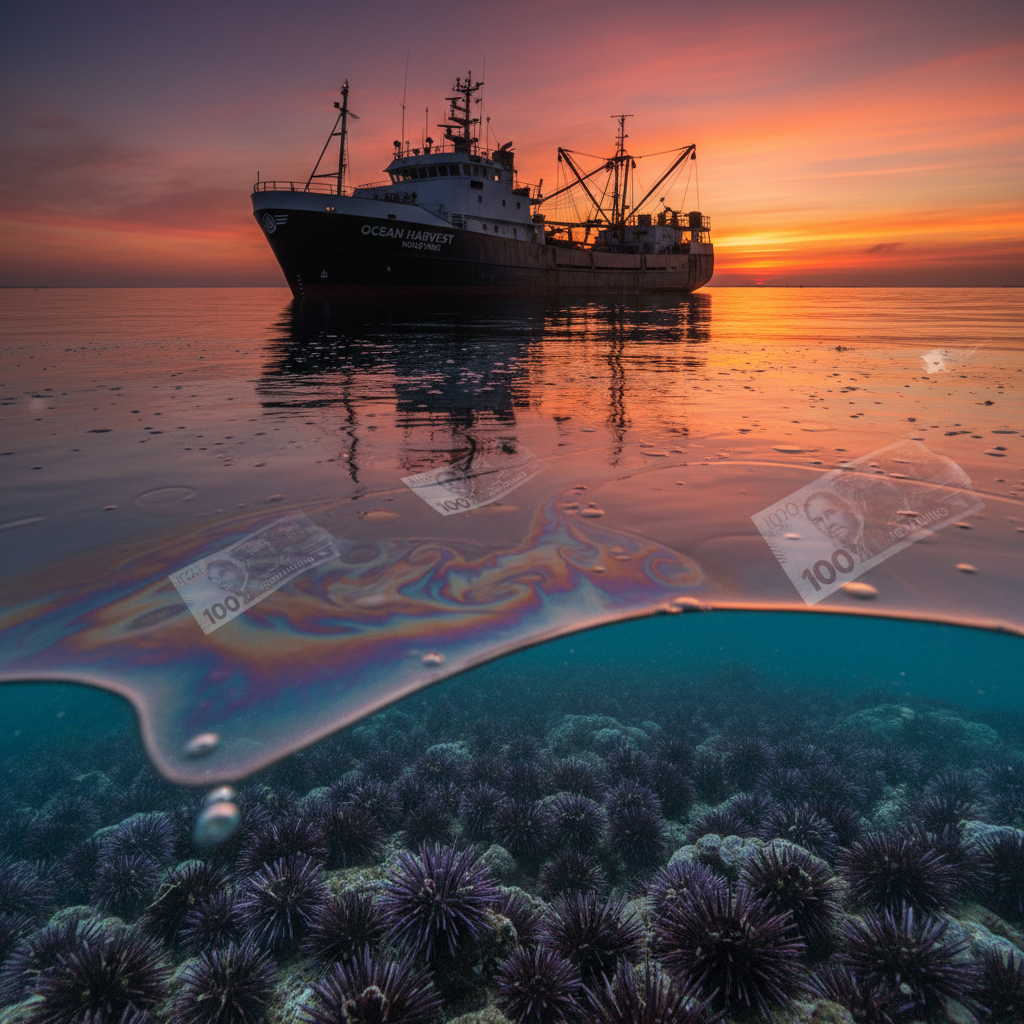
Regulatory capture and ecosystem devastation at dawn
The Legal Contradiction: Overriding a Supreme Court Precedent
In 2021, the Court of Appeal ruled (upheld by the Supreme Court in 2024) that when a fish stock is overfished, the law mandates rebuilding it based on biology, without regard to social, cultural and economic factors. The ruling was final. The precedent was clear.
Jones’ 2025 law inverts this entirely. His new framework invites the Minister to consider “economic pain to industry” when setting catch limits, tilting the balance back toward exploitation. This is not evolution of policy. This is legislative overturning of Supreme Court precedent by a minister who answers to donors.
The Regulatory Capture Infrastructure: An Industry Regulating Itself
The crayfish closure sits atop a deeper rot. New Zealand’s fisheries “management” is not management by the Crown. It is self-regulation by the industry, with the Crown as facilitator.
The data itself is compromised. Fisheries management depends on self-reported catch figures from fishers, processed by FishServe—a subsidiary of Seafood New Zealand. A 2016 SeaAroundUs study estimated that actual catches have been conservatively double the reported amounts since the QMS was introduced. Your government is managing fish stocks based on industry-supplied data processed by an industry company.
Oversight is contracted to the industry. When cameras were mandated for boats, the contract was awarded to Trident Systems—another Seafood New Zealand subsidiary. The fox does not just guard the henhouse; it runs the security company.
Research funding was gutted and handed to industry. In 1996, government-funded fisheries research was transferred to institutes which must now compete for industry contracts. Research funding has dropped as much as 50% while the number of managed species tripled. Scientists follow money. Industry controls the money.
The Crown withheld evidence of systemic dumping. Operation Achilles (2012-2013), an MPI investigation, revealed extensive dumping and illegal catch. Despite recommendations for prosecution, MPI withheld the report until it leaked in 2016. In 2018, it was uncovered that MPI had suppressed a 2011 report implicating Talleys and Sanford in significant dumping of Hoki. A ministry charged with enforcement became a ministry of concealment.
Even Māori quota-holders are compromised. Te Ohu Kaimoana, which holds 50% of all Māori fishing quotas, has consistently sided with industry against MPAs and environmental protections, arguing these measures threaten “property rights.” Māori food security sacrificed to corporate profit.
The Northland High Court Ambush: Three Rulings in Three Years, All Unlawful
This is the context in which the crayfish closure must be understood.
In 2022, Justice Churchman ruled the Minister had violated the Fisheries Act by failing to consider environmental consequences. In 2023, the revised decision was again unlawful. In February 2025, a third judgment found the second revision still inadequate.
The courts did not accept that consultation process. They found it a betrayal of section 12 of the Fisheries Act—the requirement to consult meaningfully with tangata whenua.
That last point is not incidental. The High Court noted that consultation with Northland hapū consisted of “an informal discussion over lunch” at the Mid-North Iwi Fisheries Forum.
This was not consultation under Te Tiriti. This was insult.
Jones did not close the crayfish fishery out of principle. He did it to avoid a fourth court loss. He accepted a narrow closure on a smaller fishery to preserve his ability to deregulate larger, more profitable fisheries without judicial interference.
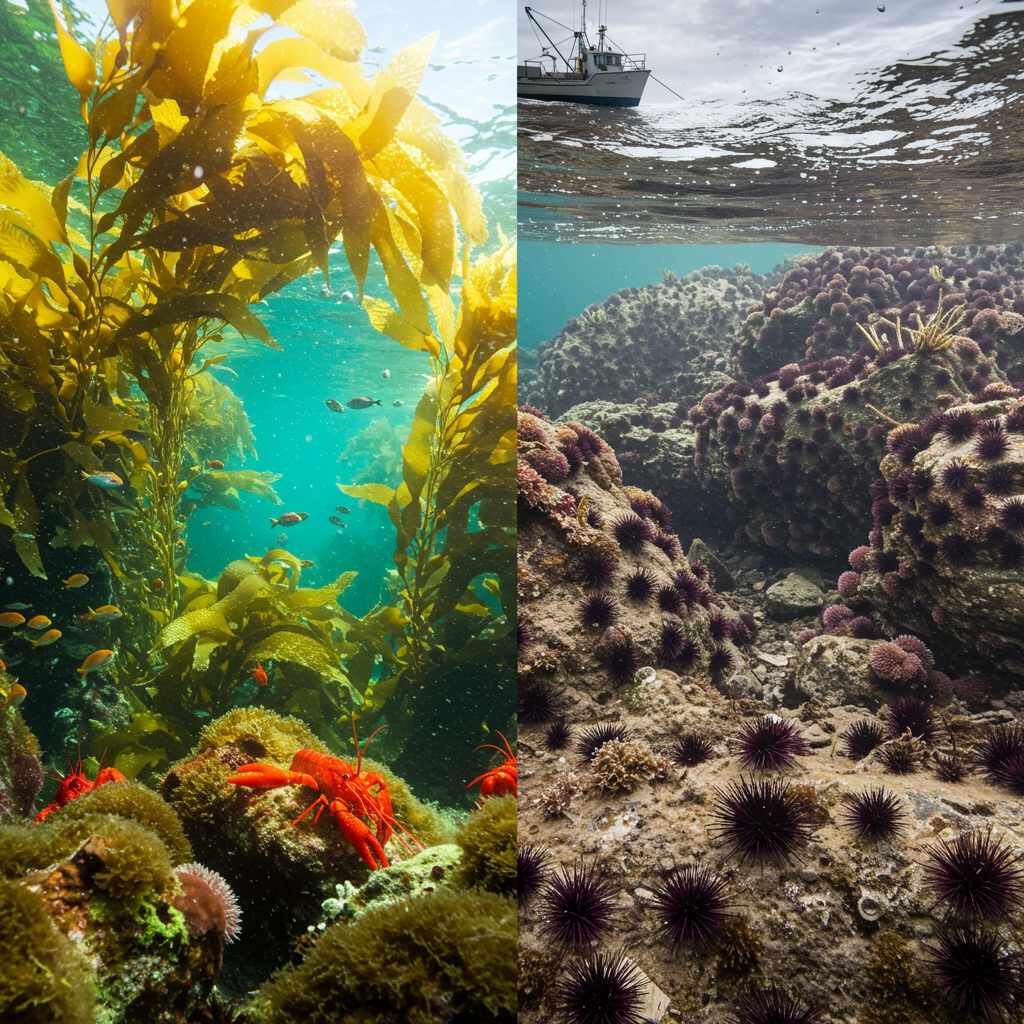
THE TIPPING POINT: KELP COLLAPSE
The Ecosystem Crisis They Allowed to Develop
Crayfish are keystone predators—species whose ecological role far outweighs their abundance. When crayfish vanish, kina (sea urchins) explode. Kina graze kelp forests and create permanent “kina barrens”—barren expanses of rock with scattered urchins. These are ecological dead zones. Recovery takes decades, if it occurs at all.
Northland reefs now show approximately 800 to 1,000 kina per 100-metre transect. Restoration trials have required removing 120,000 kina from a single small bay, and recovery remains uncertain. Kelp cover increased from 5% to 43% over two years with intensive culling, but recovery required approximately 100 hours per hectare of labor. At scale, it is impossible.
This crisis did not arrive yesterday. It developed over decades of overfishing enabled by the same regulatory capture now exposed. Ministers set catch limits too high. Industry reported false data. Scientist funding dried up. By the time anyone noticed, the ecosystem was tipping.
The crayfish closure cannot reverse this. It might—might—begin slow recovery in 5–10 years, if commercial fishing stays closed and predators repopulate. But without ecosystem restoration investment and genuine Māori authority over recovery, this is a decade of scarcity with no assurance of renewal.
The Māori Ambush: Treaty Rights Erased by Regulatory Theatre
Article II of the Treaty of Waitangi guarantees Māori full, exclusive and undisturbed possession of their fisheries. This is not ambiguous. This is property law.
Yet the High Court found that tangata whenua were not engaged in the decision-making process; they were left to react to completed government decisions. The closure allows customary fishing under kaitiaki permits, but this presupposes active, empowered kaitiaki and substantial crayfish populations. Neither is assured.
What is assured:
Māori whānau face a decade without kōura for a crisis they did not create, in decisions they did not shape. The government had the option to establish taiāpure and mātaitai reserves—customary fisheries management areas giving tangata whenua direct authority over marine areas under Te Tiriti principles. It did not. It imposed closure instead.
This is the pattern:
constraints on Māori, entitlements for industry. Customary rights frame Māori as passive permit-holders dependent on Crown goodwill. Commercial rights frame corporate quota-holders as property owners with legislative protection.
One precedent illustrates the Crown’s resistance to genuine Māori authority:
when the East Otago Taiāpure proposed a wading-only fishery for pāua to allow customary practices while protecting stocks, the Ministry opposed it until forced to accept full closure.
The state will shut fishing down entirely before it grants Māori management authority.

THE MONEY TRAIL: CORRUPTION EXPOSED
The Timing: Closure Before Industry Deregulation Passes Into Law
The sequence is deliberate. Greenpeace notes that the reforms “green light ocean destruction and remove already minimal checks and balances designed to keep the fishing industry accountable.”
But the crayfish closure provides cover. One headline of environmental action. Behind it:
deregulation.
Consider the narrative arc:
Jones announces pro-industry reforms in August 2025. Environmental backlash erupts. Then in December 2025, he announces the crayfish closure. Media praise his environmental concern. The reforms pass into law while public attention is fixed on this one fishery.
The public was played.
The Unspoken Implication: Structural Capture Means Permanent Extraction
If a minister funded by an industry successfully deregulates that industry, installs his allies in oversight roles, and passes law restricting judicial review of his decisions, he has not just won a policy battle. He has established permanent extraction architecture.
Future ministers will inherit these powers. Future courts will have fewer tools to intervene. Future environmental groups will face higher legal bars. The fishing industry will have a decade of experience operating under lightened regulation. By the time the next ecosystem crisis emerges, the legal and political infrastructure to address it will be gone.
The crayfish closure does not interrupt this trajectory. It authenticates it. It says:
“Look, the system works. We closed a fishery.”
But the system is designed to stay closed only on the margins while the core—commercial fishing profitability—is permanently protected by law.
What Happened to Accountability?
Nowhere in media coverage of the crayfish closure does one see serious examination of the regulatory capture that enabled the ecosystem collapse that necessitated the closure. Media reported the announcement. Media did not report that the minister announcing it received $100,000 from the industry in question. Media did not report that his reforms directly undermine the legal mechanisms that forced him to close this fishery.
This is how systemic corruption operates. It hides in plain sight. The minister says the right environmental words. The industry gets the policy it paid for. The courts are preemptively disarmed. The public reads headlines about conservation and moves on.
Rangatiratanga, Mātauranga, and What Should Happen Now
A genuine settlement of the crayfish crisis and the regulatory capture enabling it would require actions this government will never take:
Disqualify Shane Jones from fisheries decision-making. A minister funded by an industry cannot regulate that industry. This is not opinion. This is structural integrity. 85% of New Zealanders agree. Yet he remains in post.
Suspend the August 2025 reforms pending independent review. The changes were drafted by industry insiders with conflict of interest. An independent panel of scientists, Māori experts, and environmental specialists should determine which changes are sustainable and which are industry capture.
Establish taiāpure and mātaitai for CRA 1 and surrounding fisheries. Give tangata whenua actual authority—not permit-issuing authority, but decision-making authority—over marine areas. Invest in Māori-led kina removal and ecosystem restoration.
Restore fisheries research funding and independence. Sever connections between industry and science. Rebuild the research capacity gutted since 1996.
Strengthen—not weaken—judicial review of fisheries decisions. Environmental groups and tangata whenua should have easier standing to challenge unsustainable decisions, not harder.
Implement mandatory transparency on fishing industry donations. Register all contributions. Require automatic recusal from relevant decisions. Make it law, not custom.
Criminalize dumping and misreporting of catch. End the pattern of withheld reports and unprosecuted crimes.
None of this will happen. The infrastructure of capture is too deep. The money is too embedded. The reforms are already law. The courts are preemptively neutralized.
The System is Designed to Fail—Permanently
The crayfish closure is real environmental protection. But it is partial, temporary, and theatrical—deployed to obscure a far larger system designed to enable permanent extraction.
Northland whānau will face a decade without crayfish. Recreational fishers lose their fishery. Kelp forests remain barrens for years. But the commercial fishing industry emerges with weaker oversight, stronger legal protections, and a deregulation framework that will enable the next ecosystem collapse to occur with even less accountability.
This is what regulatory capture looks like when fully realized:
the industry does not just influence policy. It becomes the government. Shane Jones does not represent the public interest in fisheries. He represents the donors who funded his party. The $100,000 trail makes this clear. The August 2025 reforms confirm it. The crayfish closure provides cover for it.
The Green Lantern’s taiaha cuts through corruption. It traces the whakapapa of power, the lineage of obligation, the hidden connections between money and law. This crayfish closure reveals that entire lineage—an industry that captured its own regulator, a minister who monetized his office, a government that sacrificed marine ecosystems and Māori rights to corporate profit.
The waters of Aotearoa are not recovering. They are being systematized for permanent plunder.

Ivor Jones The Māori Green Lantern Fighting Misinformation And Disinformation From The Far Right
- https://www.tandfonline.com/doi/pdf/10.1080/1177083X.2024.2347409?needAccess=true
- /content/files/articles/10-3389/fmars-2023-1074340/pdf.pdf
- https://www.linkedin.com/pulse/fishy-influence-how-fishing-industry-captured-shane-jones-edwards-yja4c
- https://www.reddit.com/r/newzealand/comments/190le7o/regulatory_capture_in_the_new_zealand_fishing/
- /content/files/wp-content/uploads/2025/02/cra1-hc-decision-14-feb-2025.pdf
- https://www.rnz.co.nz/news/in-depth/410299/concerns-over-secret-fisheries-donations-to-nz-first-foundation
- https://www.greens.org.nz/shane_jones_gift_to_big_fishing_a_blow_to_sustainability
- https://www.facebook.com/LegaSea/posts/in-case-you-missed-it-in-2022-our-friends-at-environmental-law-initiative-and-te/517884650633039/
- https://www.greenpeace.org/aotearoa/press-release/greenpeace-slams-poor-coalition-appointments-for-oceans-and-agriculture-portfolios/
- https://www.rnz.co.nz/news/political/581012/minister-raises-concerns-over-fish-heading-south-due-to-warming-waters
- https://coranz.org.nz/fishy-influence-how-the-fishing-industry-captured-shane-jones/
- https://www.facebook.com/edwards.bryce/photos/fishy-influence-how-the-fishing-industry-captured-shane-jonesfisheries-minister-/10161780980272333/
- https://www.facebook.com/ESFNZ/posts/fishy-influence-how-the-fishing-industry-captured-shane-jonesfisheries-minister-/1160198612820037/
- https://coranz.org.nz/nzs-fisheries-the-qms-34-years-of-failure-2/
- https://www.facebook.com/CheckpointRNZ/videos/concerns-over-secret-fisheries-donations-to-nz-first-foundation/621791855273065/
- https://www.facebook.com/LegaSea/posts/in-case-you-missed-it-shane-jones-the-minister-for-oceans-and-fisheries-is-pushi/812508461170655/
- https://www.horizonpoll.co.nz/page/691/donations-r
- https://wwf.org.nz/news/oceans/fisheries-reforms-further-blow-hopes-transparent-sustainable-industry
- /content/files/podcasts/checkpoint.xml
- https://www.nzherald.co.nz/nz/politics/cameras-on-boats-government-confirms-pro-industry-fisheries-changes/YABALIPSPNEYFPPIERM55EZ5NU/
- https://www.nzherald.co.nz/nz/
- /content/files/oggcasts/first-up-podcast.xml
- https://www.1news.co.nz/2025/03/16/shane-jones-cameras-on-fishing-boats-is-state-surveillance/
- https://www.nzherald.co.nz/topic/supreme-court/
- https://www.rnz.co.nz/news/in-depth/410516/nz-first-foundation-rich-listers-donate-100k-in-a-week
- https://www.1news.co.nz/2025/08/06/fisheries-act-reforms-most-significant-for-decades-minister/
- https://www.nzherald.co.nz/kahu/tikanga-with-common-law-can-help-new-zealand-face-its-deepening-racial-challenges/MBUU7SFJYZBHJGP6YUAPFL7M7A/
- https://www.rnz.co.nz/news/in-depth/511353/how-electorate-candidates-funded-their-campaigns-and-who-spent-the-most
- https://www.rnz.co.nz/national/programmes/morningreport/audio/2018998717/oceans-and-fisheries-minister-shane-jones-on-industry-reforms
- https://www.rnz.co.nz/news/te-manu-korihi/561265/waitangi-tribunal-recommends-immediate-halt-regulatory-standards-bill-for-meaningful-consultation-with-maori
- https://www.rnz.co.nz/news/in-depth/416012/foundation-donations-not-named-on-nz-first-electoral-return
- https://www.rnz.co.nz/news/top/541638/major-shake-up-of-fishing-quota-system-on-the-way
- https://www.rnz.co.nz/news/te-manu-korihi/519174/comprehending-te-reo-maori-proves-difficult-for-crown-counsel-in-tribunal-hearing
- https://www.rnz.co.nz/authors/kate-newton?page=4
- https://www.rnz.co.nz/news/political/569104/fisheries-act-reforms-to-allow-greater-catch-limits-on-board-camera-footage-to-stay-hidden
- https://www.rnz.co.nz/news/political/557199/complaint-over-teaching-tikanga-maori-in-law-schools-rejected
- https://www.rnz.co.nz/authors/guyon-espiner?page=7
- https://www.rnz.co.nz/news/environment/532563/fisheries-minister-shane-jones-calls-for-review-of-coral-limits-to-avoid-fishing-bans