“The Daily Examiner's Manufactured Martyr Complex” - 18 September 2025
How Far-Right Media Weaponizes Victimhood to Attack Māori Rights
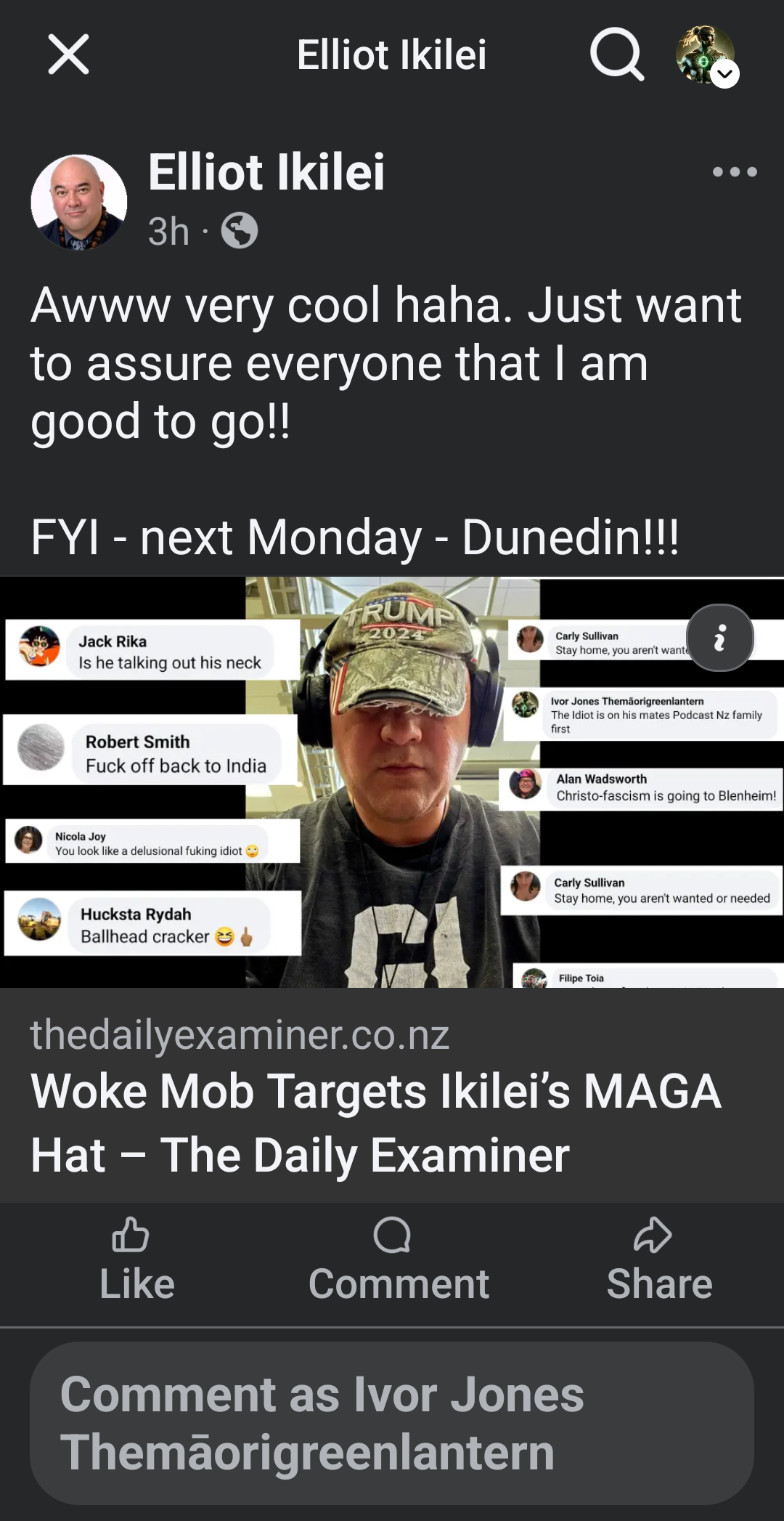
Kia ora whānau – here's the brutal truth about this pathetic MAGA hat crying session
What we're witnessing with Elliot Ikilei's MAGA hat tantrum isn't just some random social media spat – it's a carefully orchestrated piece of far-right theatre designed to normalise white supremacist symbolism while portraying anti-racists as the real bullies. This manufactured victimhood narrative serves a much darker purpose: advancing the systematic dismantling of Te Tiriti o Waitangi and Māori rights through emotional manipulation and dog-whistle politics. The Daily Examiner's breathless defense of Ikilei reveals the sophisticated propaganda machinery now operating to mainstream extremist ideology in Aotearoa, using the oldest trick in the fascist playbook – making the oppressor look like the victim.
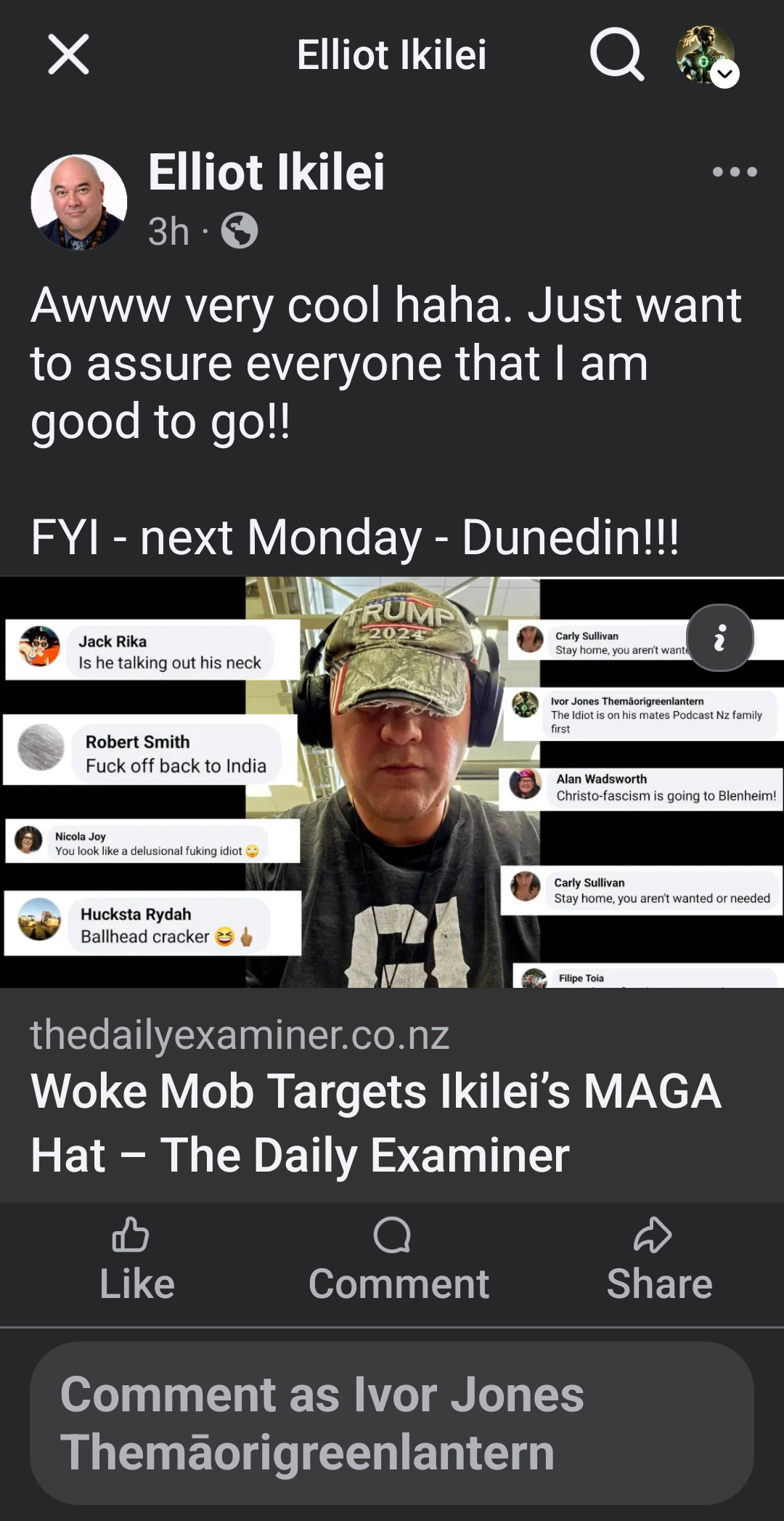
https://www.facebook.com/share/p/17GWPf69Ac/
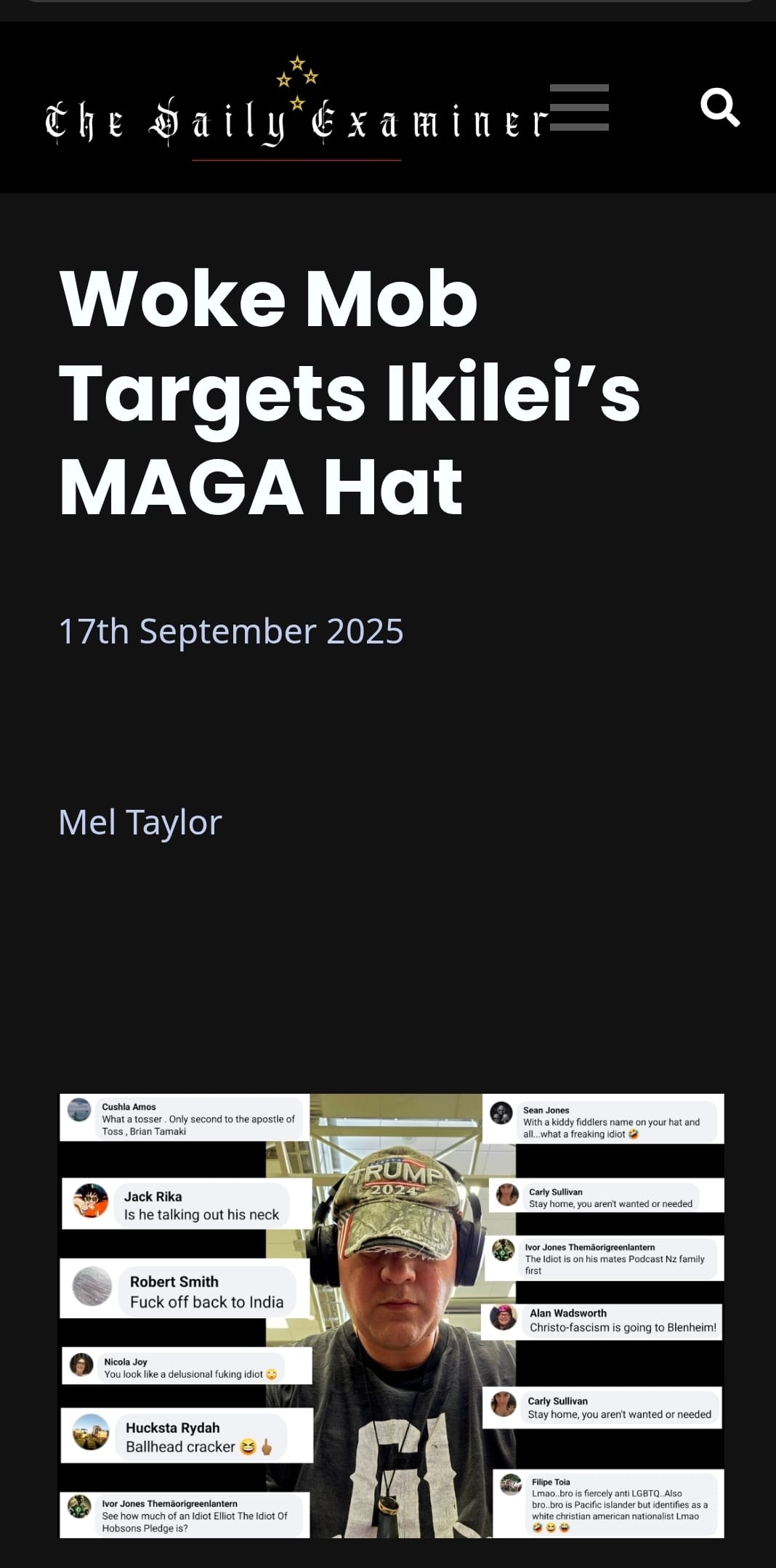
https://www.thedailyexaminer.co.nz/woke-mob-targets-ikileis-maga-hat/
Background
Understanding this controversy requires recognising three crucial elements that mainstream media consistently ignores. First, the MAGA hat has become an internationally recognised symbol of white supremacy and exclusion, not mere political preference. Second, Elliot Ikilei represents a direct pipeline from mainstream conservative politics to extremist ideology through his leadership of the New Conservative Party and current representation of the anti-Treaty lobby group Hobson's Pledge. Third, The Daily Examiner functions as a far-right propaganda outlet masquerading as legitimate journalism, designed to shift the Overton window toward accepting previously unthinkable positions on race and Treaty rights.
The historical context here cannot be ignored. Don Brash's 2004 Orewa speech demonstrated how race-baiting could dramatically shift political discourse, taking National from 28% to 45% in polls through deliberate targeting of Māori rights. This same playbook now operates through more sophisticated channels, using manufactured controversies and victim narratives to advance the same anti-Māori agenda.
Why Elliot Is A Real Idiot
The core issue here isn't about free speech or political tolerance – it's about how far-right actors deliberately deploy inflammatory symbols to provoke reactions they can then weaponise for propaganda purposes. Ikilei's choice to wear Trump memorabilia wasn't accidental political expression but calculated trolling designed to generate exactly the response he received. The Daily Examiner's subsequent defense piece perfectly demonstrates this strategy in action.
This matters profoundly to Māori because it represents a sophisticated evolution of colonial discourse. Where previous generations of white supremacists relied on overt racism, today's operators use coded language and manufactured victimhood to achieve the same ends. The MAGA hat controversy parallels earlier incidents like Todd Muller's 2020 backdown, showing how this symbolism consistently creates division while advancing anti-democratic narratives.
The Troll's Playbook: Manufacturing Outrage for Political Gain

The reality of social media trolling: isolated provocateurs seeking attention
Ikilei's performance follows the standard far-right trolling manual to the letter. Step one: deploy a provocative symbol with plausible deniability. Step two: claim victimhood when people respond predictably. Step three: mobilise sympathetic media to amplify the victim narrative while attacking critics as extremists. This strategy has been documented extensively in studies of alt-right recruitment and radicalisation, where provocateurs deliberately seek confrontation to generate content that portrays their opponents as unreasonable.
The Daily Examiner's breathless prose about "vicious, hateful comments" and "toxic, intolerant culture peddled by progressives" reveals the manufactured nature of this outrage. No specific threats are documented, no evidence of actual violence is provided, yet the article constructs an elaborate narrative of persecution based entirely on critical social media responses. This is textbook victimhood politics – taking justified criticism of racist symbolism and transforming it into evidence of left-wing extremism.
What makes this particularly insidious is how it weaponises legitimate concerns about online harassment to protect far-right provocateurs from accountability. The same people who regularly engage in coordinated harassment campaigns against Māori activists and journalists suddenly discover deep concerns about civility when their own inflammatory behaviour generates pushback.
The Hobson's Pledge Connection: Following the Money and Ideology
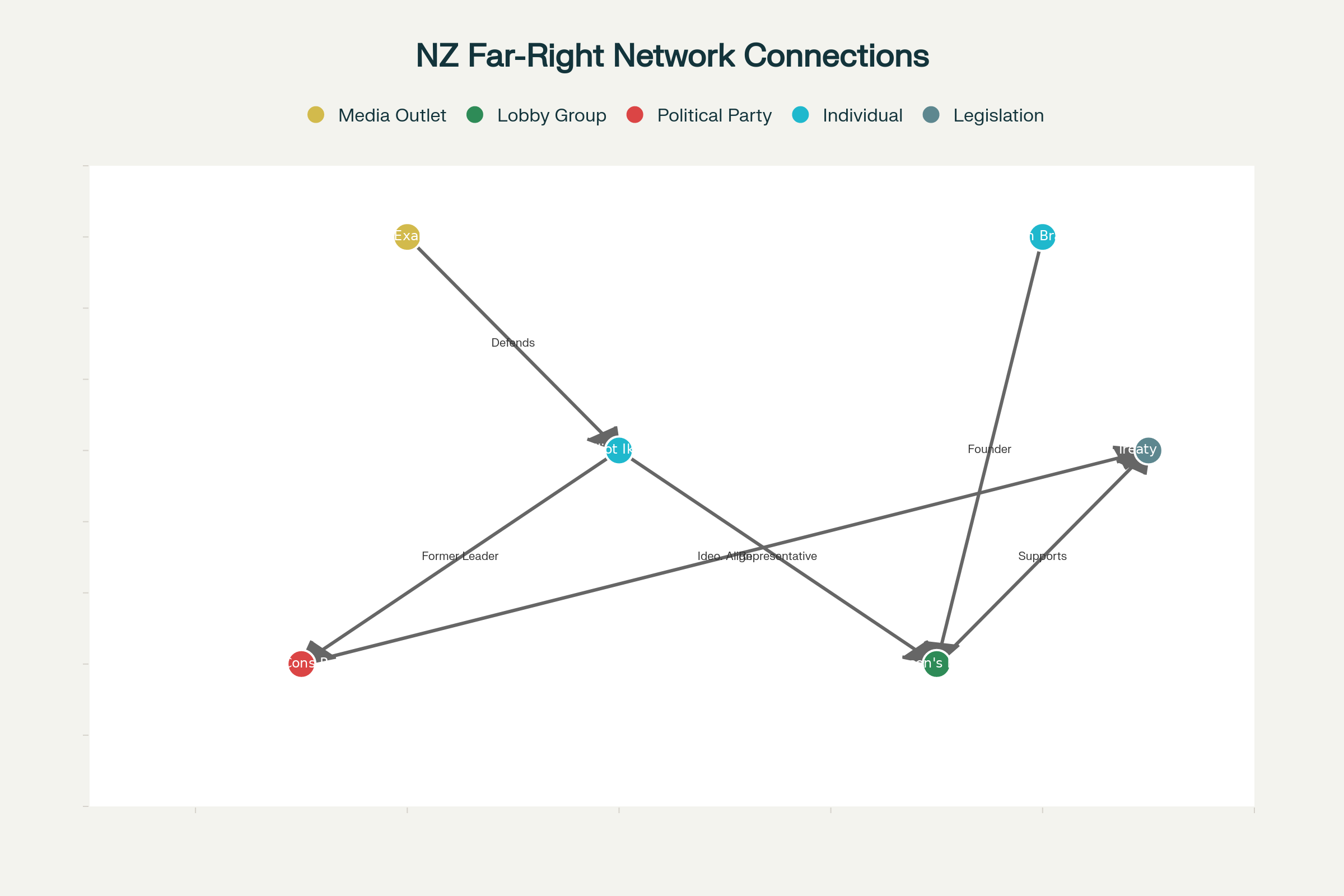
Network of Far-Right Political Connections in New Zealand
Ikilei's current role representing Hobson's Pledge at Treaty Principles Bill hearings reveals the true purpose behind this manufactured controversy. Hobson's Pledge, founded by Don Brash in 2016, operates as a sophisticated lobby group dedicated to dismantling Māori rights through appeals to "colour-blind" governance. Academic research has identified it as an alt-right organisation that manages ideological contradictions by presenting opposition to Māori advancement as concern for "unity" and "equality."
The timing of this MAGA hat controversy isn't coincidental. As public submissions on the Treaty Principles Bill continue, far-right actors need to maintain visibility and sympathy for their cause. Manufacturing a victimhood narrative allows them to position themselves as reasonable voices being silenced by an intolerant "woke mob," when the reality is that they're advancing legislation designed to legislatively erase Te Tiriti o Waitangi.
Hobson's Pledge has consistently opposed Māori wards, Treaty settlements, and any form of Indigenous self-determination, using the language of liberal democracy to advance fundamentally illiberal goals. Their strategy mirrors international white supremacist movements that have learned to package racial resentment in respectable political terminology.
The Daily Examiner's Propaganda Function

The hidden machinery of far-right media manipulation
The Daily Examiner's defense of Ikilei reveals sophisticated propaganda techniques designed to normalise extremist positions while demonising opposition. The article employs several classic strategies: emotional manipulation through victimhood narratives, false equivalencies between racist symbolism and legitimate political expression, and the strategic deployment of patriotic language to mask white nationalist talking points.
The piece systematically misrepresents criticism of the MAGA hat as attacks on "free speech" and "traditional values," when the actual issue is the use of internationally recognised hate symbols to intimidate marginalised communities. This rhetorical sleight of hand transforms legitimate anti-racism into evidence of left-wing extremism, a technique borrowed directly from American far-right media.
Research on far-right media strategies shows how these outlets deliberately blur the line between legitimate journalism and activism, presenting partisan talking points as objective news while claiming persecution when challenged. The Daily Examiner's tone throughout the Ikilei piece – breathless, partisan, conspiratorial – reveals its true function as an advocacy publication rather than a news source.
The Broader Pattern: From MAGA Hats to Treaty Destruction
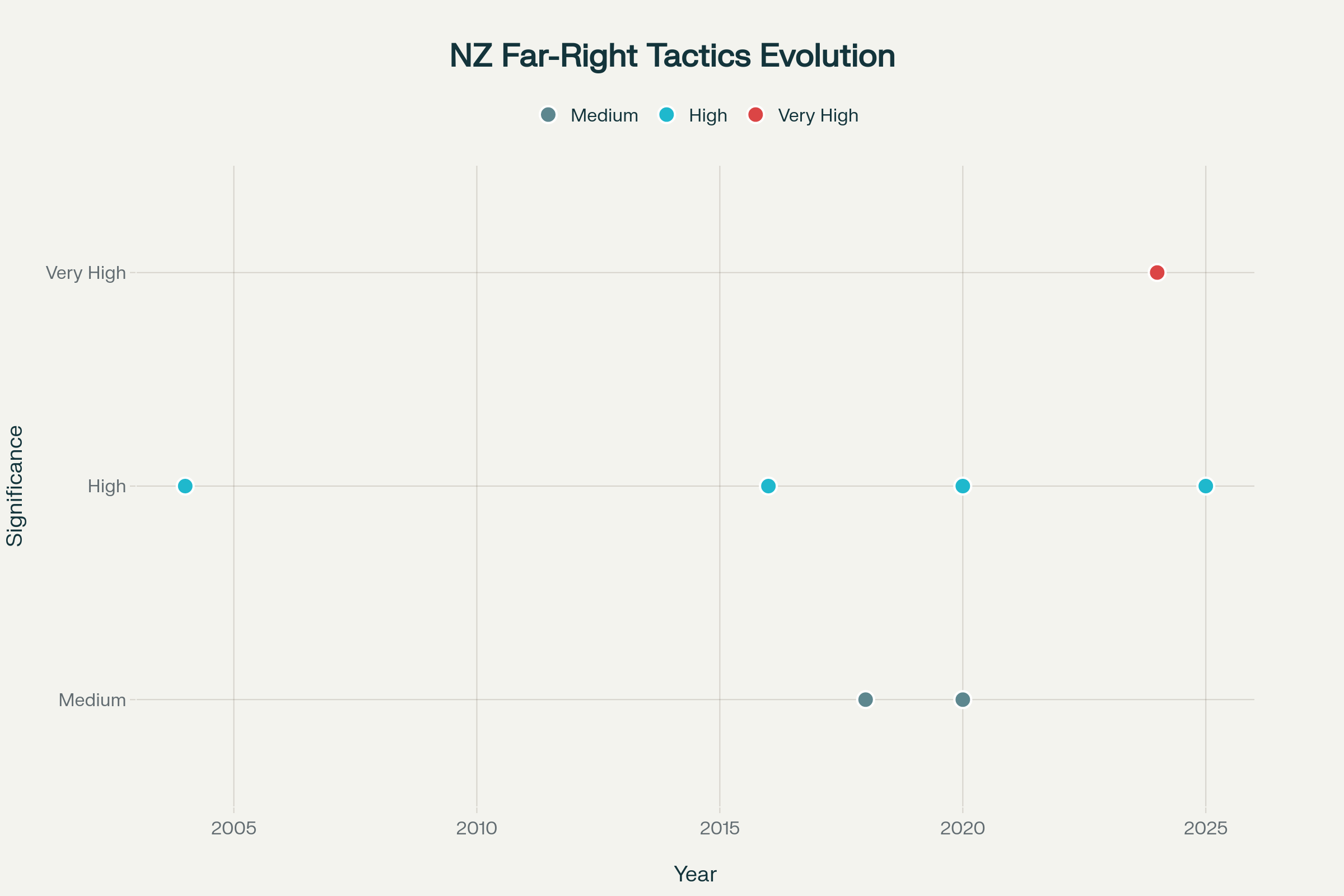
Timeline of Far-Right Radicalisation in New Zealand Politics
This controversy represents one data point in a much larger pattern of far-right radicalisation in New Zealand politics. The evolution from Don Brash's overt race-baiting in 2004 to today's sophisticated dog-whistle politics shows how white supremacist ideology has adapted to survive in a supposedly post-racial society. The MAGA hat serves as a perfect symbol for this evolution – plausibly deniable to supporters, but clearly understood by both advocates and targets as a symbol of racial hierarchy.
The international connections here cannot be ignored. New Zealand's far-right operates within a global network of white nationalist movements that share strategies, symbols, and talking points. The MAGA hat controversy demonstrates how American far-right symbolism has been imported to advance local anti-Indigenous agendas, with figures like Ikilei serving as willing conduits for this cultural transfer.
What makes this particularly dangerous is how it normalises the presence of white supremacist symbolism in mainstream political discourse. When National Party leader Todd Muller faced similar controversy over his MAGA hat in 2020, he eventually backed down and admitted the hat had "different perspectives" for others. Ikilei's refusal to show similar reflection reveals how far-right actors have become more brazen in their deployment of hate symbols.
The Algorithm of Division
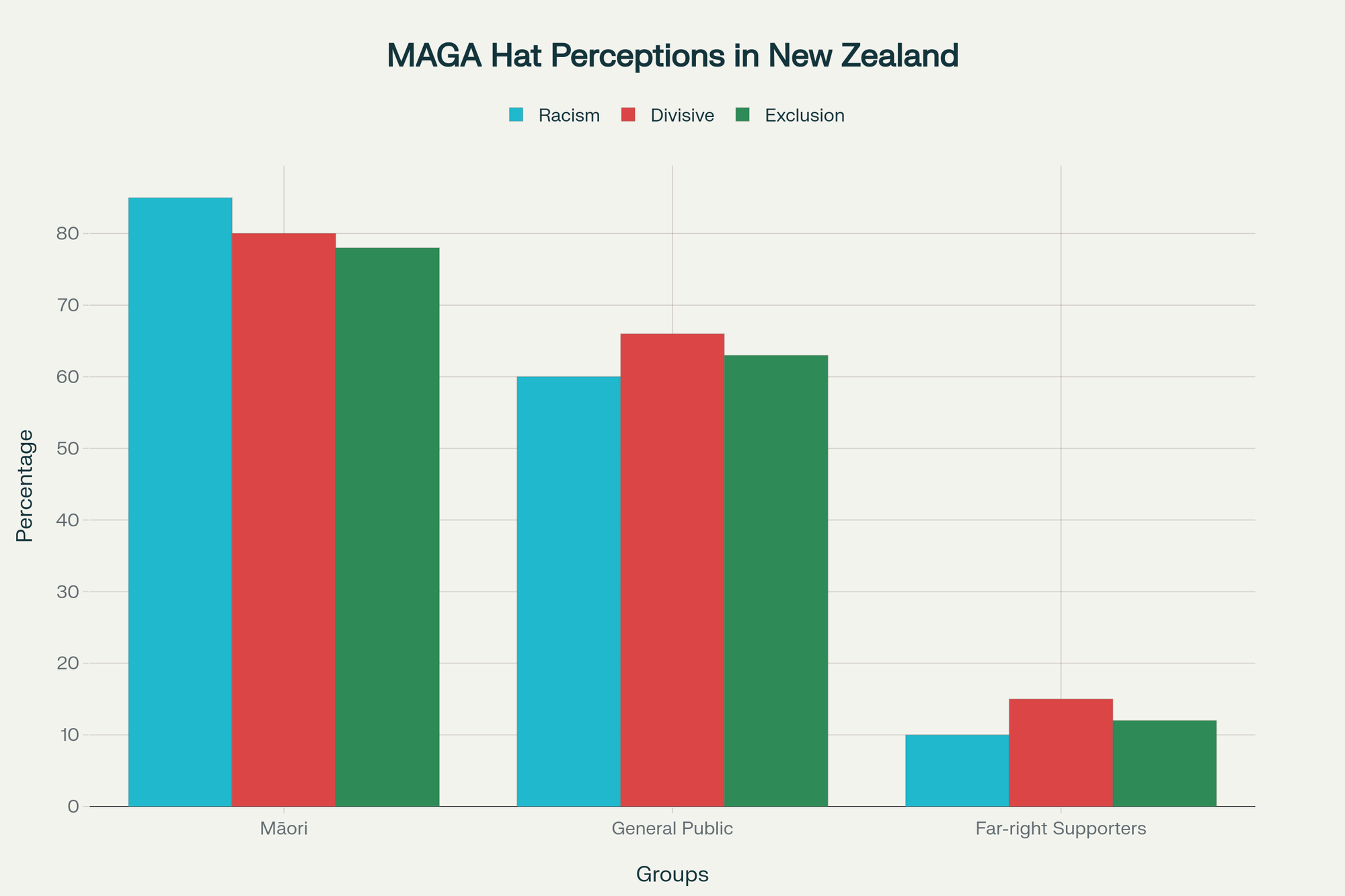
Public Perceptions of the MAGA Hat in New Zealand by Group
Social media platforms inadvertently amplify far-right content through engagement-driven algorithms, meaning controversial posts like Ikilei's MAGA hat photo generate exactly the response these platforms reward with increased visibility. This creates a perverse incentive structure where provocative content designed to divide communities receives more distribution than constructive political discourse.
The manufactured outrage over responses to Ikilei's trolling demonstrates how far-right actors exploit platform dynamics to position themselves as victims while spreading their message to wider audiences. Each angry response validates their narrative of persecution while extending their reach to potential recruits who might not otherwise encounter their content.
This represents a fundamental shift in how extremist recruitment operates. Rather than relying on explicit ideology to attract followers, modern far-right movements use controversy and victimhood to generate sympathy that can later be channeled into more specific political projects like opposing Treaty rights or supporting anti-immigration policies.
Implications for Aotearoa
The broader implications of normalising this behaviour extend far beyond social media spats. When figures like Ikilei can deploy white supremacist symbolism with impunity while portraying criticism as persecution, it creates space for increasingly extreme positions to enter mainstream discourse. This directly threatens Māori communities who become targets of the racial resentment these symbols are designed to mobilise.
The Treaty Principles Bill represents the legislative endpoint of this process – taking decades of carefully constructed anti-Māori sentiment and transforming it into law that would fundamentally undermine Indigenous rights. The MAGA hat controversy serves as cultural preparation for this legislative assault, normalising the idea that Māori advancement threatens Pākehā interests while positioning opponents of racism as the real extremists.
The community impact cannot be understated. When hate symbols become acceptable in mainstream political discourse, it signals to marginalised communities that their safety and dignity are negotiable political positions. For Māori whānau already experiencing the impacts of structural racism, seeing political figures celebrated for deploying white supremacist symbols represents another layer of violence and exclusion.
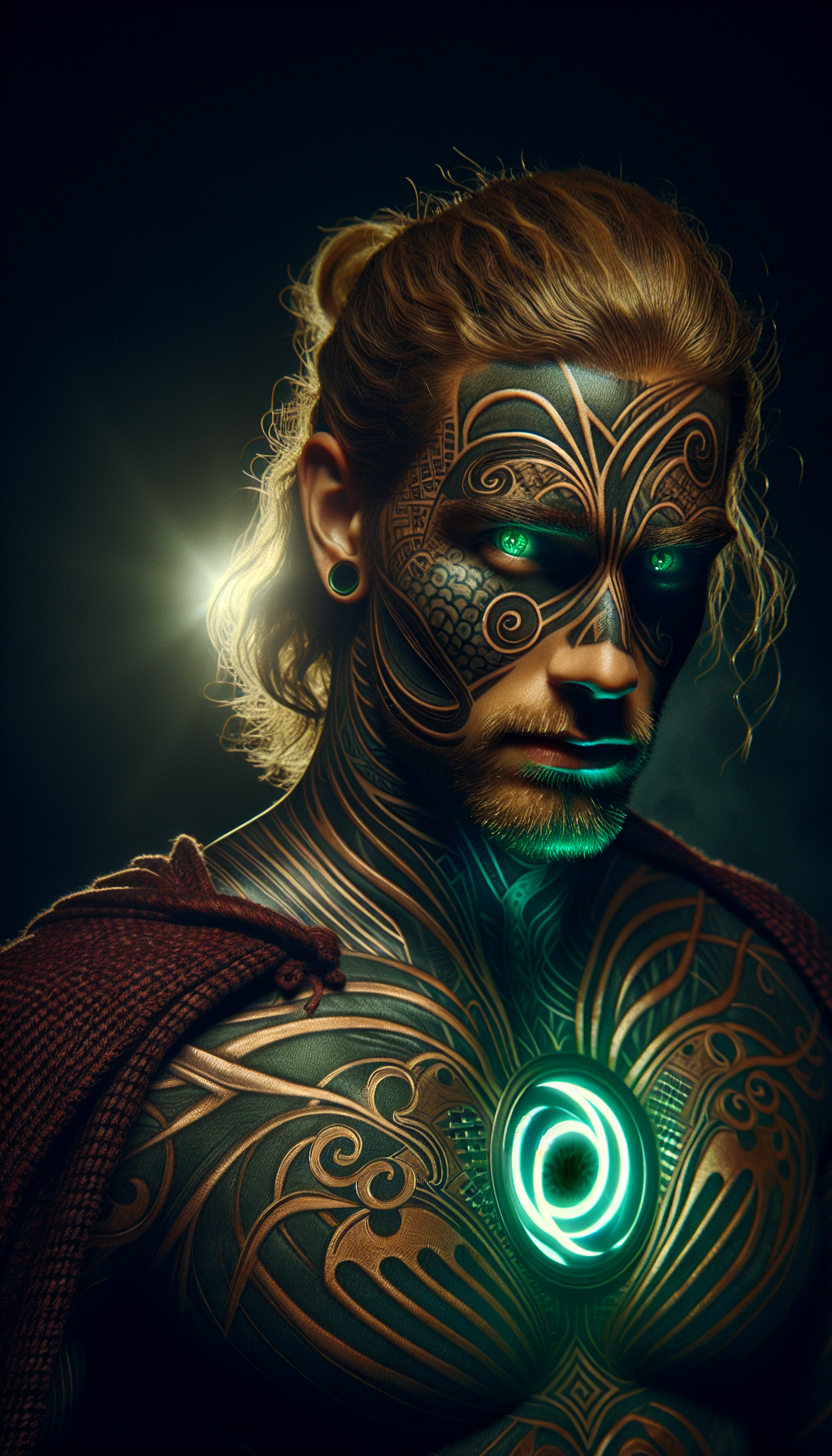
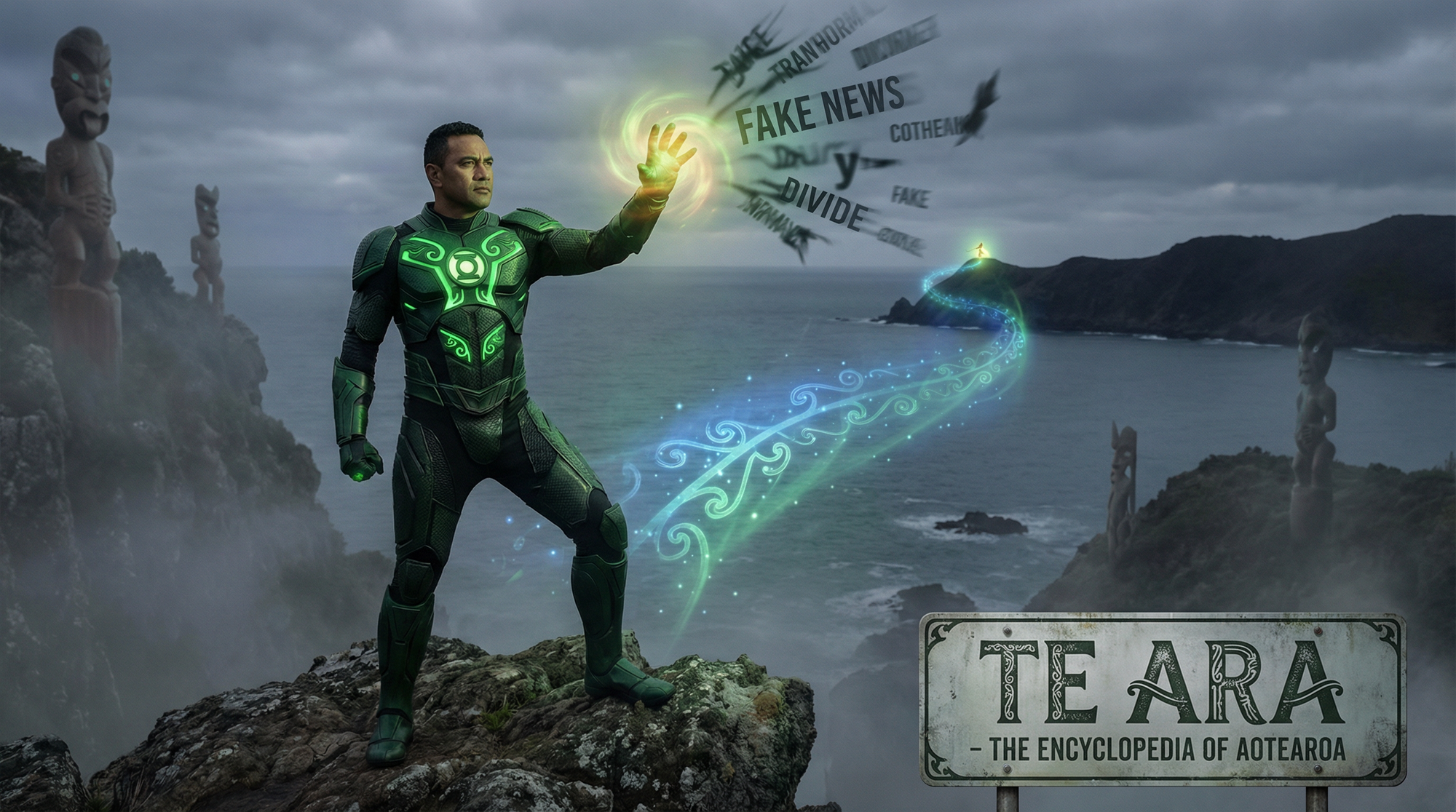
The Māori Green Lantern Fighting Misinformation And Disinformation From The Far Right
The Daily Examiner's defense of Elliot Ikilei's MAGA hat stunt reveals the sophisticated machinery now operating to normalise white supremacist ideology in Aotearoa. This isn't about free speech or political tolerance – it's about how far-right actors deliberately provoke confrontations they can then weaponise to advance anti-Māori political projects while positioning themselves as victims of left-wing extremism.

Māori communities standing strong against far-right attacks on Treaty rights
Ikilei's calculated trolling, his connections to anti-Treaty organisations like Hobson's Pledge, and The Daily Examiner's breathless defense of his "victimhood" form part of a coordinated assault on Indigenous rights that operates through manufactured controversy and emotional manipulation. The MAGA hat serves as a perfect symbol for this strategy – plausibly deniable to supporters while clearly signaling racial hierarchy to both advocates and targets.
For our whānau and communities, the response must be unwavering clarity about what these symbols represent and refusal to accept the false framing that portrays anti-racism as extremism. The real extremism lies in using internationally recognised hate symbols to advance legislation designed to erase Te Tiriti o Waitangi, then crying persecution when people respond appropriately to such provocation.
The far-right's strategy depends on confusing the public about who represents the real threat to democratic values. By maintaining focus on the substantive issues – the systematic attack on Māori rights, the normalisation of white supremacist symbolism, and the role of propaganda outlets in advancing these goals – we can resist their attempts to transform oppression into victimhood while continuing the vital work of protecting our Treaty rights and Indigenous sovereignty.
Readers who find value in this analysis and wish to support the continued exposure of far-right misinformation and white supremacy are welcome to consider a koha to HTDM: 03-1546-0415173-000. The Māori Green Lantern understands these are tough economic times for whānau, so please only contribute if you have capacity and genuinely wish to support this mahi.
Mauri ora, whānau. Stay strong, stay vigilant, and never let them convince you that opposing racism makes you the extremist.