"The Dashboard Illusion: How Neoliberalism Sells Sovereignty While Stealing Resources" - 1 November 2025
Te Arawa's data platform as performative reconciliation while Health NZ burns
Tēnā koutou katoa e te whānau.
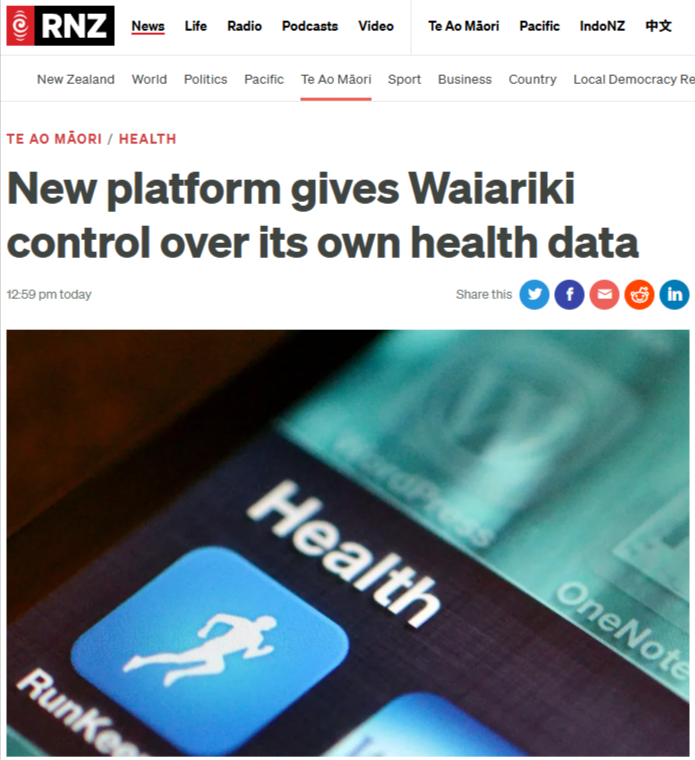
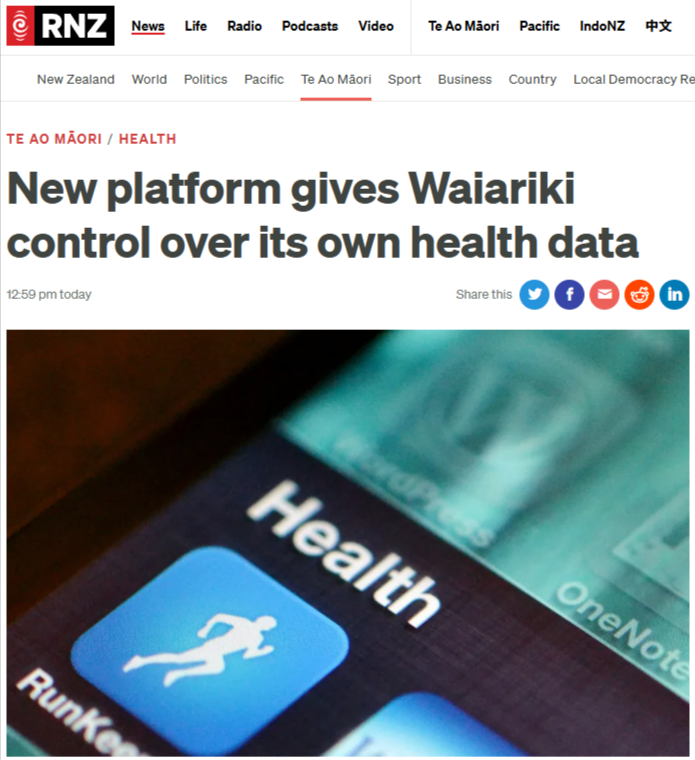
Here’s the smoking gun: while Te Taura Ora o Waiariki launches a groundbreaking Māori health data platform promising tino rangatiratanga over their own health information, the Coalition Government has systematically destroyed the very infrastructure that could make such sovereignty meaningful. This is not progress—it’s a beautiful mirage painted over deliberate demolition. Between February and June 2024, this government disestablished Te Aka Whai Ora, the Māori Health Authority, slashed 47% of Health NZ’s data and digital workforce—1,120 roles gone, and carved $380 million from IT infrastructure. They hand Te Arawa a data dashboard while burning down the house of Māori health.[1][2][3][4]
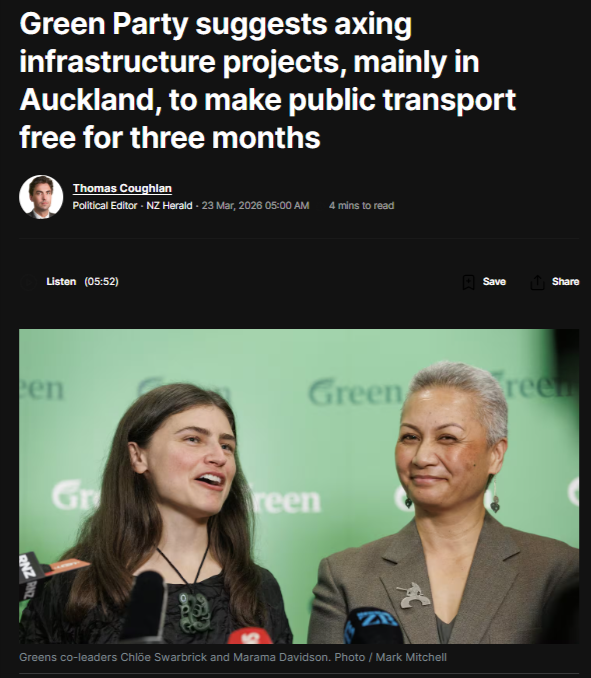
Who benefits? David Seymour’s ACT Party, implementing Project 2025-style slash-and-burn governance borrowed directly from Russell Vought’s playbook. Who’s harmed? Te Arawa whānau dying 6-8 years younger than non-Māori, with cancer screening rates under 60% when the target is 90%. Hidden reality? This “data sovereignty” initiative is necessary[5][6] and admirable work by iwi—but it’s happening despite government policy, not because of it. Te Arawa is building sovereignty from the ashes of deliberate state sabotage.
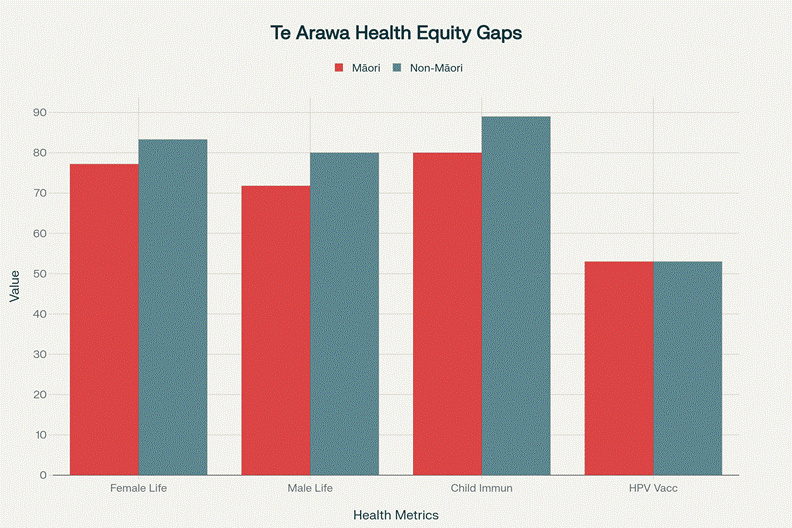
Three charts exposing the systematic underfunding and health inequities facing Māori in Aotearoa: (1) Life expectancy and health outcome gaps in Te Arawa/Waiariki region showing Māori dying 6-8 years younger; (2) Cancer screening rates for Māori in Waikato region all below 60% when national target is 90%; (3) Health NZ’s devastating cuts to data and digital infrastructure precisely when Māori communities need data sovereignty most.
The Whakapapa of Data Colonialism: From Land Theft to Information Extraction
The pattern is brutally consistent. In the 1860s, the Crown stole our land through war and legal fiction. In the 1980s, Roger Douglas and the Business Roundtable stole our economic sovereignty through neoliberal “reforms” that made “Rogernomics” synonymous with wealth transfer from Māori to Pākehā. Now, in 2025, David Seymour and his Atlas Network-funded ideologues are attempting to steal our data sovereignty through strategic underfunding while offering symbolic gestures.[7][8]
Professor Tahu Kukutai explains: “Census data had historically been used to alienate Māori from the land and assert colonial power.” Data has never been neutral—it’s a weapon of colonization, used to justify dispossession, to minimize our numbers, to pathologize our existence. When Te Whatu Ora told RNZ in 2024 that its Māori data sovereignty tool was “at a very early stage”, it revealed the truth: the Crown never intended for us to control information about ourselves.[9][10]
The Waitangi Tribunal has repeatedly found the Crown’s obligations to Māori data sovereignty are Treaty-guaranteed. WAI 2575 found “the Crown has systematically contravened obligations under te Tiriti across the health sector.” Yet this government’s response? Disestablish Te Aka Whai Ora under urgency, without consultation, within 24 hours. The Waitangi Tribunal found in November 2024 that the Crown “failed to conduct a robust policy process” and “failed to follow its own guidelines” when destroying the only institution designed to deliver Māori health equity.[2][11][12]
This is data colonialism—defined by scholars as the appropriation and exploitation of information from marginalized communities for the profit and power of colonizers. While Te Arawa creates their own dashboard, private health corporations and overseas tech firms extract Māori health data through fragmented systems Health NZ inherited from 20 DHBs—systems now deliberately left to collapse through staff cuts.[13][14]
Tikanga violation: Kaitiakitanga, Rangatiratanga. Data about Māori is taonga—it contains our whakapapa, our stories, our futures. The Crown’s systematic neglect of Māori data infrastructure while loudly supporting one localized initiative is strategic abandonment masquerading as partnership.
The Neoliberal Playbook: From Rogernomics to Seymournomics
David Seymour isn’t inventing new tactics—he’s photocopying the 1980s playbook written by Roger Douglas and funded by the same international networks. The Atlas Network, founded by Anthony Fisher in 1981, links 550 think tanks across 100+ countries. In New Zealand, Atlas partners with the Taxpayers’ Union and the New Zealand Initiative (formerly Business Roundtable)—the same Business Roundtable that pushed “economic constitution” legislation in the 1990s.[15][8][16][17]
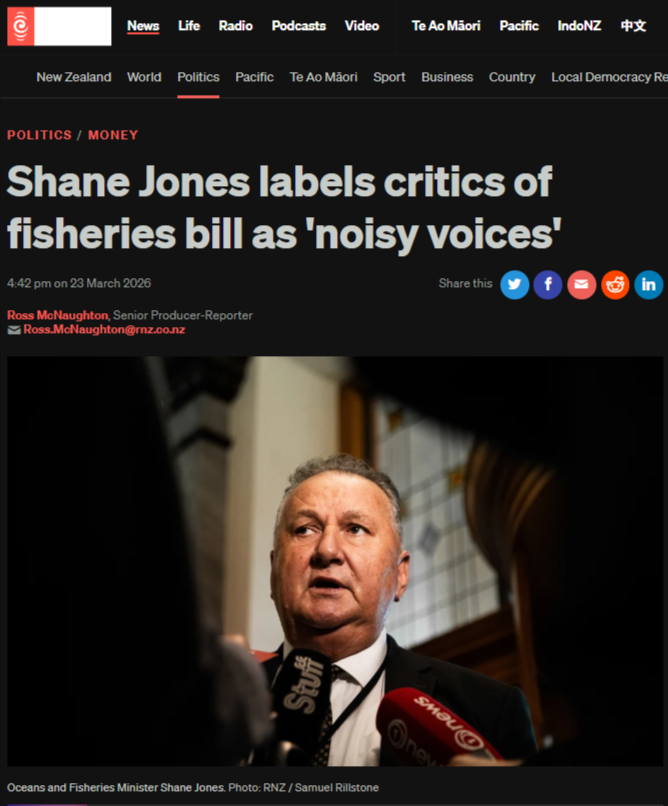
Now it’s called the Regulatory Standards Bill—Seymour’s flagship legislation that passed its first reading in May 2025 despite 88% of submissions opposing it. The Waitangi Tribunal found the RSB would “constitute a breach of the principles of the Treaty of Waitangi” if enacted without meaningful Māori consultation. Seymour’s response? Dismiss 22,924 opposing submissions as “fake” and “bots”.[18][19][20]
The parallel with Project 2025 is chilling. Russell Vought, Project 2025 co-author and Trump’s OMB director, works hand-in-glove with Elon Musk’s Department of Government Efficiency (DOGE) to slash federal agencies and fire civil servants. Vought’s Center for Renewing America drafted Project 2025’s executive orders; he is described as “the glue between Musk and the Republicans”. Vought promised to put career bureaucrats “in trauma”—precisely what Seymour is doing to Health NZ staff.[5][21]
Compare the tactics:
· Musk/DOGE in USA: Fired 100,000+ federal employees, penetrated “critical governmental systems managing trillions in disbursements”[22]
· Seymour/Health NZ in Aotearoa: Cut 1,120 IT roles (47% of workforce), slashed $380 million from digital infrastructure[4][23]
Both claim “efficiency.” Both target data and technology infrastructure. Both ignore expertise. ProPublica reported that “DOGE is underneath the OMB... a lot of what Elon began pinpointing was at the direction of Russ.” In Aotearoa, Health Minister Simeon Brown gave Seymour’s Ministry for Regulation free rein over health policy.[24]
The ideology is identical: neoliberal meta-regulation designed to “bind governments forever to the neoliberal logic of economic freedom” Professor Jane Kelsey, E-Tangata. This isn’t about “good governance”—it’s about embedding corporate power so deeply that future governments cannot undo it without triggering economic chaos.[25]
Rhetorical technique: False equivalence. Seymour claims the RSB applies neutral “principles” to all legislation. But those principles—prioritizing “personal liberties” and “property rights”—are Victoria University law professor Dean Knight’s words, “strongly libertarian in character”. They protect property owners and corporations, not whānau in state houses or workers on zero-hour contracts.[26]
The Betrayal: Dismantling Māori Health Infrastructure While Praising “Local Initiatives”
The scale of sabotage is staggering. Let’s trace the money:
Funding for Māori Health Gutted:
- Te Aka Whai Ora disestablished June 2024, removing the only entity with statutory authority to commission Māori health services
- Health NZ data & digital budget cut from $816m to $658m (19.4% reduction)
- $380 million removed from IT projects in Budget 2024
- 136 digital projects cancelled or deferred, including “patient information system lauded by Health NZ” and “child health IT platform”
- Health NZ projected deficit ballooned to $1.76 billion, blamed on “mismanagement” rather than systematic underfunding
What $380 million could have funded:
- Universal cancer screening programs to close the 44% gap between Māori and non-Māori screening rates
- Comprehensive child immunization campaigns to reach the 95% target instead of 62% for Māori in Waikato
- National Shared Health Records that could save 10% in hospital-related patient care costs
- AI-driven diagnostics that could save 5-10% of overall health spend
Instead, that money vanished into National’s tax cuts for landlords and property speculators.
Meanwhile, Ministers praise Te Taura Ora’s data initiative, calling it “a pivotal moment for Māori leadership in health.” Chair Hingatu Thompson’s words reveal the true situation: “This data platform allows us to see our people clearly. We can now identify exactly where needs exist, where gaps in the system are impacting whānau.”[1]
Yes—Te Arawa can now see the gaps. But the government has ensured they lack the resources, infrastructure, and institutional support to fill those gaps. Data sovereignty without resource sovereignty is performative reconciliation.
The evidence is in Te Arawa’s own data:
- Life expectancy for Te Arawa Māori: 77.2 years (women), 71.8 years (men)—6.1 and 8.2 years shorter than non-Māori respectively
- Child immunisation: 80% Māori vs 89% non-Māori at 24 months
- HPV vaccination: 53% for both Māori and non-Māori at age 14—but compare that to Waikato where only 46% of Māori aged 14 are vaccinated
In neighboring Waikato, the crisis is even starker:
- Bowel cancer screening: 46% of Māori aged 60-74 (vs 90% target)
- Breast cancer screening: 55% of wāhine aged 45-69 (vs 90% target)
- Cervical screening: 58% of wāhine aged 25-69 (vs 90% target)
- Cancer treatment within 31 days: 62% of Māori (vs 90% target)
These aren’t just statistics—they’re our whānau. Our mothers, aunties, tamariki dying preventable deaths because the system is designed to fail us. Māori are 50% more likely to die from COVID-19, three to six times more likely to develop stomach cancer, and have double the cancer mortality rate of non-Māori.[31][32]
Te Taura Ora can now track these deaths in real-time. But tracking deaths isn’t the same as preventing them.
Tikanga violations: Manaakitanga, Aroha, Wairuatanga. A government that claims to care for Māori health while systematically destroying health infrastructure violates every principle of manaakitanga. The spiritual harm—wairuatanga—of watching your people die preventable deaths is immeasurable.
The Network of Power: Who’s Really Behind the Sabotage?
Follow the money. Follow the ideology. Follow the personnel.
The Atlas Network Connection:
- David Seymour worked for the Atlas Network-affiliated Canadian Taxpayers Federation
- Taxpayers’ Union executive Jordan Williams trained at Atlas Network’s Think Tank MBA program in 2015
- New Zealand Initiative and Taxpayers’ Union are both Atlas partners
- Atlas Network received millions from Koch brothers, ExxonMobil, tobacco companies
Funding Flows:
- Taxpayers’ Union income: $832,000 in 2019, with “80% from small donations”—though Williams admits largest donor is Sir Bob Jones providing rent-free Wellington office
- Taxpayers’ Union spent $371,565 on 2023 election campaigning—helping defeat Labour government that created Te Aka Whai Ora
- Taxpayers’ Union chair: Ruth Richardson—the same Ruth Richardson who as Finance Minister in 1991 implemented “Ruthanasia,” the most brutal neoliberal cuts in NZ history
The Revolving Door:
- ACT Party founded by Roger Douglas, architect of Rogernomics
- Business Roundtable/NZ Initiative membership comprises 70 companies equaling 25% of NZ economy
- NZ Initiative’s 2020 chief editor Nathan Smith resigned after far-right, racist blog exposed—revealing the ideological underpinnings
This is a coordinated international network advancing the same policies simultaneously across multiple countries: slash public services, privatize everything profitable, regulate to protect corporate interests, attack Indigenous sovereignty as “race-based policy.” George Monbiot describes Atlas as coordinating “shadowy policy agendas worldwide”.[40]
The Ideological Continuity:
Professor Jane Kelsey explains: “The objective of the Regulatory Standards Bill is to bind governments forever to the neoliberal logic of economic freedom... This ideological project for an ‘economic constitution’ was first promoted in Aotearoa in the 1980s and early 90s by the Business Roundtable.”[25]
The same forces that brought us Rogernomics—which left Māori as “a rural proletariat” and saw 70% of Māori land in Poverty Bay pass out of Māori hands—are now targeting health. Then it was subsidies and tariffs. Now it’s health infrastructure and data sovereignty.[41]
Dog whistle: “Race-based policy.” Seymour and National constantly attack Māori health initiatives as “divisive” and “race-based”—implicitly suggesting Māori receive special treatment when the data shows exactly the opposite. This frames equity as unfair advantage, positioning Māori as undeserving beneficiaries rather than victims of systematic neglect.
The Constitutional Crisis: Iwi Māori Partnership Boards Under Siege
The attack on Māori health data sovereignty extends beyond funding cuts. The Coalition is systematically dismantling the legislative framework that enables iwi voice in health policy.
The Pae Ora (Healthy Futures) Amendment Bill, introduced by Health Minister Simeon Brown in June 2025, would fundamentally neuter Iwi Māori Partnership Boards (IMPBs). Currently, IMPBs have statutory functions under Section 30 of the Pae Ora Act:
- Engage with whānau and hapū about local health needs
- Determine local priorities for improving Māori health
- Work with Health NZ in developing priorities
- Report on Health NZ’s Māori health activities to Māori communities
The Amendment Bill would strip IMPBs of decision-making power, reducing them to “advisory voices” channeled through the Minister-appointed Hauora Māori Advisory Committee (HMAC)—effectively removing local accountability and centralizing Māori health governance in Wellington under ministerial control.[44]
Hiria Te Paki, pou whakahaere of Te Punanga Ora IMPB: “These changes take us from active partners to passive recipients—a shift that undermines the partnership foundations built over decades... Telling us after the fact is not consistent with Te Tiriti o Waitangi.”[42]
All 15 IMPBs—representing over 900,000 Māori—are united in opposition to these changes. Yet the government pushes forward.[45]
The parallel is stark: Te Arawa launches a data platform for local control while central government removes local control from the legislative framework. It’s the same bait-and-switch as Three Waters—offer iwi “partnership” while stripping statutory power.
Fallacy: Straw man argument. Ministers claim IMPBs were “too focused on service design and delivery”—implying they overstepped their mandate. But Section 29 of the Pae Ora Act explicitly states IMPBs’ purpose includes input into “design and delivery of services.” The government attacks IMPBs for doing exactly what legislation empowers them to do.[46]
The Hidden Connections: Five Smoking Guns
1. Project 2025’s Russell Vought directly advises DOGE, which uses his OMB data to target agencies
ProPublica reports: “DOGE is underneath the OMB... a lot of what Elon began pinpointing was at the direction of Russ.” Vought’s Citizens for Renewing America official stated in May 2025: “Honestly, a lot of what Elon began pinpointing was at the direction of Russ.”[24]
This exact same structure operates in New Zealand: David Seymour’s Ministry for Regulation provides “regulatory impact assessments” that justify Health NZ cuts. Health Minister Simeon Brown asked Health NZ to “reconsider” IT cuts—but only after 1,120 positions had already been disestablished.[47]
2. Atlas Network’s “Think Tank MBA” trains operatives to implement identical policies globally
Jordan Williams completed Atlas’s Think Tank MBA in 2015. He describes it as teaching how to “share best practice, best ideas.” That “best practice” means attacking public services, opposing climate action, promoting privatization.[8]
Atlas boasts of 550 think tanks in 100+ countries. Williams says: “What things like Atlas do... is to share best practice... It can be damn lonely setting up a think tank at the bottom of the world in your mid-20s.”[15]
Translation: Young neoliberal activists are trained and networked internationally to implement cookie-cutter policies that benefit corporations at the expense of Indigenous peoples and the poor.
3. The Regulatory Standards Bill is the fourth attempt to implement Business Roundtable’s 1990s “economic constitution”
Bryce Wilkinson wrote the original draft for Business Roundtable in 2001. ACT tried passing it in 2007, 2011, and 2014—failing each time. Now, with National and NZ First coalition partners, it passes.[16]
This reveals the long game: persistent billionaire-funded think tanks pushing the same agenda across decades until political conditions allow implementation. Indigenous health sovereignty wasn’t their target in the 1990s only because we hadn’t achieved enough sovereignty to threaten their interests. Now we have.
4. Health NZ IT staff warned of “cyber events, system outages, breach of privacy” from cuts—then a major data breach occurred
Northland IT staff warned Health NZ managers in late 2024: proposed cuts “might lead to more frequent and major cyber events, system-wide outages. Breach of privacy, loss of fidelity of digital systems and clinical records.”[23]
In March 2025, Health NZ revealed someone broke into systems and stole personal information about Wellington staff. Health NZ claimed “no correlation” between deferred projects and breaches. Yet they’d just cut 47% of their security workforce.[23]
This is the environment in which Māori are expected to trust “data sovereignty”—a system so understaffed and under-resourced that staff data is already being stolen. What happens when Māori health data—containing whakapapa, sensitive medical information, tribal identities—becomes the target?
5. Primary care practices serving Māori need 34-231% more funding, but got 6.43% increases
The Sapere Research Group found in 2023: “Very high-need general practices would need a funding increase between 34% and 231% to deliver an appropriate level of service to their patients... The current approach systematically underfunds services for Māori, by not recognising patterns of higher need and historical underutilisation by Māori. It embeds historical inequity.”[48]
In June 2025, Health NZ announced “the largest uplift in general practice funding in more than a decade”: a 6.43% capitation increase.[49]
Do the math: practices need 34-231% increases. They got 6.43%. That’s not just inadequate—it’s insulting. It’s mathematical proof that the government has no intention of achieving health equity for Māori.
Data as the New Oil: Indigenous Knowledge as Exploitable Resource
Clive Humby coined the phrase “data is the new oil” in 2006, emphasizing that like crude oil, data only becomes valuable when refined and processed. For Indigenous peoples, this metaphor is chillingly accurate—but not in the way Humby intended.[50]
Indigenous data scholars describe “data colonialism” as the contemporary equivalent of resource extraction: “While historic settler colonialism appropriated land and resources for settler profit and gain, data colonialism normalizes the appropriation and exploitation of data from Indigenous communities.”[14]
Just as colonial powers extracted oil, gold, and timber from Indigenous lands without compensation or consent, tech corporations and governments now extract data about Indigenous peoples for profit and control. AI systems are trained on Indigenous knowledge without consent, perpetuating what scholars call “biocolonialism”—the exploitation of Indigenous biological and cultural material for commercial benefit.[51]
Dr. Angie Abdilla and Kate Crawford argue: “Indigenous knowledge systems are not supplementary to Western paradigms; they are full epistemological frameworks that provide critical ethical and ecological insights.”[52]
Yet mainstream data systems strip Indigenous data of context, relationality, and cultural meaning—turning living knowledge into dead numbers optimized for corporate profit. Research shows “Indigenous Peoples had been subjected to blatant exploitation ranging from the unsolicited use of traditional knowledges for commercial purposes, the extraction of traditional Indigenous medicinal plant knowledge for modern-day pharmaceutical development, or the extraction of varied genetic materials for medical purposes.”[53]
This is why Te Arawa’s data sovereignty initiative matters—but also why it’s threatened. Real Māori control over data disrupts the extraction economy. If Te Arawa can prevent their health data from being mined by private hospitals, pharmaceutical companies, and overseas tech firms, those corporations lose a valuable resource. Neoliberal ideology cannot tolerate that.
Tikanga violation: Whanaungatanga, Kotahitanga. Data about Māori should strengthen whānau connections and collective wellbeing—whanaungatanga and kotahitanga. Instead, it’s weaponized to justify underfunding, extracted for corporate profit, and stripped of cultural meaning.
The Implications: What Happens When Data Sovereignty Has No Material Power?
Te Arawa now has a dashboard showing that:
- Their people die 6-8 years younger than non-Māori
- Child immunization rates lag 9 percentage points behind
- Cancer screening rates are “very low”—under 60% when targets are 90%
What can they do with this information? The IMPB can:
- Report findings to Health NZ (which is broke and cutting services)
- Advocate to the Minister (who just stripped IMPBs of decision-making power)
- Apply for funding (from a health system running a $1.76 billion deficit)
- Commission Māori providers (if they can find any still operating after funding cuts)
This is data sovereignty without resource sovereignty—information without power. It’s like giving someone a map to water when they’re dying of thirst, then charging them for the water and cutting off the pipes.
Te Tauraki IMPB chair Rakihia Tau warns: “This Bill represents not just disruptive reform. It would reduce IMPBs from genuine partners in health system design to mere advisory voices, effectively silencing a powerful voice for the very communities experiencing the greatest health inequities.”[55]
The government’s strategy is transparent:
- Create appearance of Māori self-determination (data sovereignty, IMPB status)
- Systematically remove material power to act on that self-determination (defund infrastructure, remove decision-making authority)
- Blame Māori for poor health outcomes (”personal responsibility,” “lifestyle choices”)
- Use those outcomes to justify further neoliberal “reforms” (privatization, user-pays)
This is manufacturing consent for austerity. The government can point to Te Arawa’s data platform and say “See? We support Māori data sovereignty!” while knowing that sovereignty is meaningless without the resources to act on it.
Quantified harm:
- Māori die 7 years younger than non-Māori—that’s 70 years of life lost per 10 Māori who die
- If health equity were achieved, 5 years could be regathered from cancer and cardiovascular diseases alone
- Primary care practices need $600+ million annually to deliver equitable care to Māori—money that went to tax cuts instead
Threatened rights:
- Right to health (Article 24, UN Declaration on Rights of Indigenous Peoples)
- Right to data sovereignty (Article 31, UNDRIP)
- Treaty rights to tino rangatiratanga and equitable health outcomes (Te Tiriti o Waitangi, Article 2)
The International Context: A Global War on Indigenous Data Sovereignty
This attack isn’t unique to Aotearoa. Indigenous peoples globally are asserting data sovereignty as digital extraction intensifies:
- Canada: First Nations developed OCAP principles (Ownership, Control, Access, Possession) in 1998
- Australia: NAGATSIHID (National Advisory Group on Aboriginal and Torres Strait Islander Health Information and Data) was disbanded in 2017, removing Aboriginal voice from health data governance
- USA: Urban Indian Health Institute publishes guidelines on decolonizing health data, mandating collection of race/ethnicity and tribal affiliation
The global pattern: neoliberal governments systematically dismantle Indigenous data governance mechanisms while promoting “open data” policies that facilitate corporate extraction. Scholars warn: “For some Indigenous communities, the premise of open access as ‘good for all’ is fundamentally flawed and digital technologies have the potential to put Indigenous traditional knowledge and customary practices at risk of global appropriation.”[60]
This is why Atlas Network’s international coordination matters. The same billionaire-funded think tanks pushing data privatization and “regulatory reform” in New Zealand are doing identical work in Canada, Australia, USA, and UK. Project 2025 in the USA shares DNA with Seymour’s Regulatory Standards Bill—both written by Business Roundtable-type think tanks in the 1990s-2000s, both resurrected when right-wing governments gain power.[25]
Kōrero Whakamutunga: What Must Be Done
Te Arawa’s data sovereignty initiative is not the problem—it’s a necessary act of resistance and self-determination. The problem is a government that celebrates local iwi initiatives while systematically destroying the national infrastructure that could make such initiatives transformative.
We need:
- Full reinstatement of Te Aka Whai Ora with strengthened statutory powers and guaranteed multi-year funding. The Waitangi Tribunal recommended the Crown “commit to revisiting the option of a stand-alone Māori health authority.”
- Immediate restoration of Health NZ’s data and digital budget to at least $816 million annually, with additional $600 million for primary care equity funding identified by Sapere Research.
- Defeat of the Pae Ora Amendment Bill and strengthening of IMPB powers to include binding recommendations on Health NZ priorities and budget allocation.
- Rejection of the Regulatory Standards Bill and investigation into Atlas Network’s influence on New Zealand policy. Transparency around think tank funding sources.
- Treaty-based data governance framework co-designed with iwi, embedding Te Mana Raraunga’s principles of Māori data sovereignty into all health system operations.
- Criminal investigation into whether Health NZ executives and Ministers knowingly endangered patient data by cutting IT security staff against expert warnings.
- Mandate for cultural safety training for all health workers, with funding for kaupapa Māori health services to reach 25% of Māori health budget.
Specific actions for whānau:
- Submit on the Pae Ora Amendment Bill (submissions likely closing Q4 2025)
- Support iwi legal challenges to health legislation changes
- Demand your local MP explain why Māori health funding was cut while tax cuts were given to landlords
- Share this research with your whānau, marae, and community networks
- Support Māori health providers financially and through volunteering if you have capacity
For Te Arawa specifically:
- Use your data sovereignty to publicly shame Health NZ and the government every time targets are missed
- Partner with investigative journalists to expose the gap between government rhetoric and reality
- Build alliances with other IMPBs to coordinate national resistance to the Amendment Bill
- Document every barrier you face turning data insights into action—create an evidence base for Treaty breach claims
The Coalition Government wants us to celebrate crumbs while they steal the bakery. Te Arawa’s data platform is a victory—but it’s a victory despite government policy, achieved through iwi determination and resources. Don’t let them claim credit for work they actively undermined.
Data sovereignty without resource sovereignty is just surveillance of our own oppression. We deserve both—and we’ll fight until we have them.

The Māori Green Lantern Fighting Misinformation And Disinformation From The Far Right
Kia kaha, kia māia, kia manawanui.
He mihi aroha ki a koutou katoa.
If this mahi has provided value and you have the capacity, please consider supporting independent Māori journalism and research through koha:
HTDM: 03-1546-0415173-000
Only if you have the capability and capacity to do so. Your engagement and sharing of this research is equally valuable.