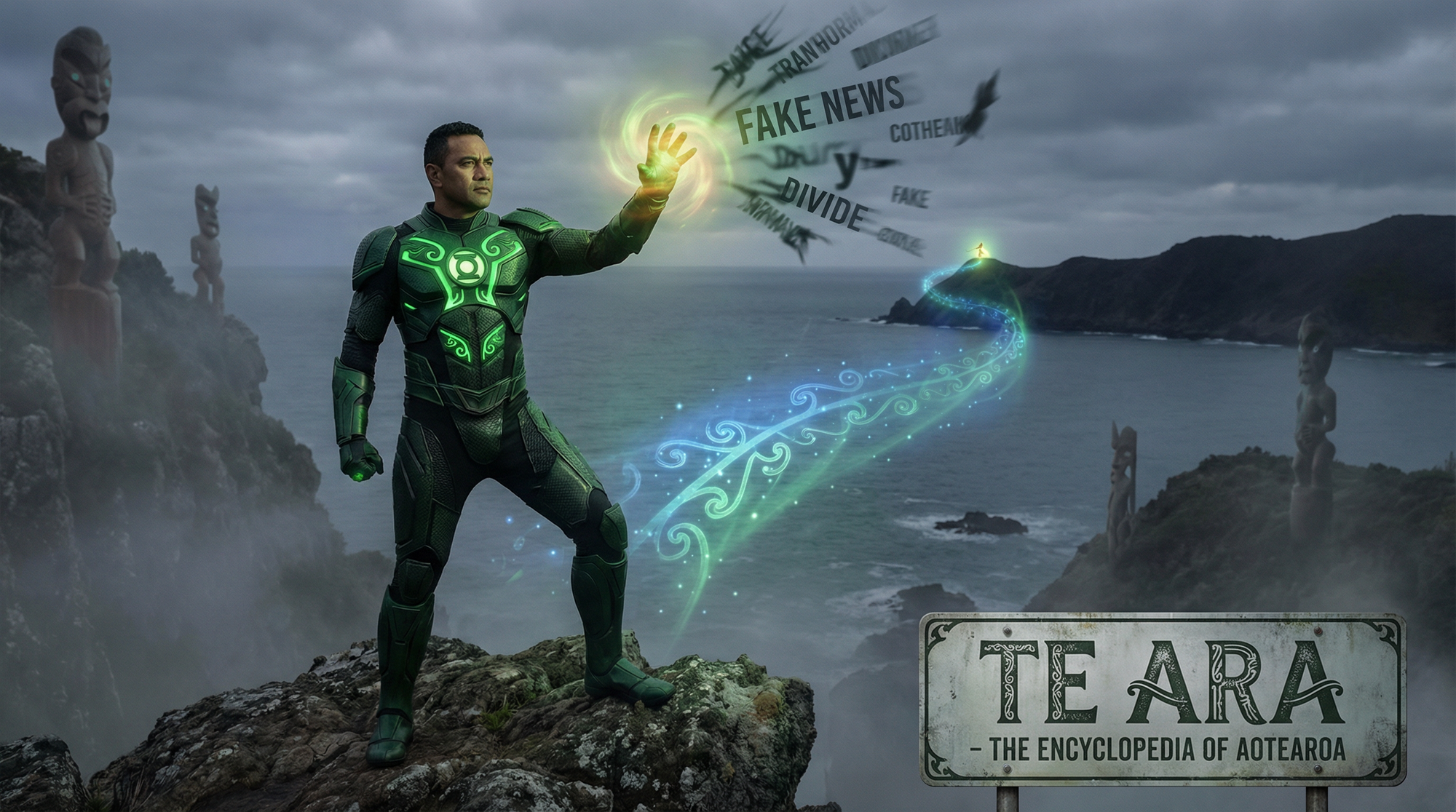
"The Digital Uncle Tom: How Elliot Ikilei's Facebook Fascism Serves White Supremacist Masters" - 9 September 2025
When Māori Faces Hide Colonial Hearts: Exposing the Puppet Strings Behind Anti-Indigenous Rhetoric

Kia ora whānau katoa. Nei rā au, ko Ivor Jones, Te Māori Green Lantern, kaitiaki o te pono, e whakakino nei i ngā kōrero parau, i te kaikiri māwhero, i te kaikiri, me te neoliberalism mai i te taha matau. Ko au he uri o Te Arawa, o Ngāti Pikiao hoki.
Greetings to all my family. Here I am, Ivor Jones, The Māori Green Lantern, guardian of truth, exposing misinformation, white supremacy, racism, and neoliberalism from the far right. I am a descendant of Te Arawa and Ngāti Pikiao.

https://www.facebook.com/share/p/1CzDMBa3qg/
In the putrid swamp of New Zealand's far-right ecosystem, few figures embody the tragic spectacle of colonized consciousness quite like Elliot Ikilei. This man, draped in the sacred mana of his tūpuna yet wielding it like a weapon against his own people, represents the most insidious form of white supremacist propaganda: the brown face selling colonial lies. His recent Facebook diatribe against Te Pāti Māori isn't just political commentary—it's a masterclass in how neoliberal capitalism manufactures consent through Indigenous proxies, turning our own whānau into agents of our destruction.
This essay will dissect Ikilei's toxic rhetoric, expose the far-right networks that amplify his anti-Māori messaging, and reveal how his digital colonialism serves the broader white supremacist agenda of organizations like Hobson's Pledge and the ACT Party's Treaty Principles Bill. Through the lens of Te Arawa values—particularly manaakitanga, rangatiratanga, and kaitiakitanga—we'll expose how Ikilei's performance of concern masks a deep-seated commitment to maintaining Pākehā dominance through divide-and-conquer tactics.
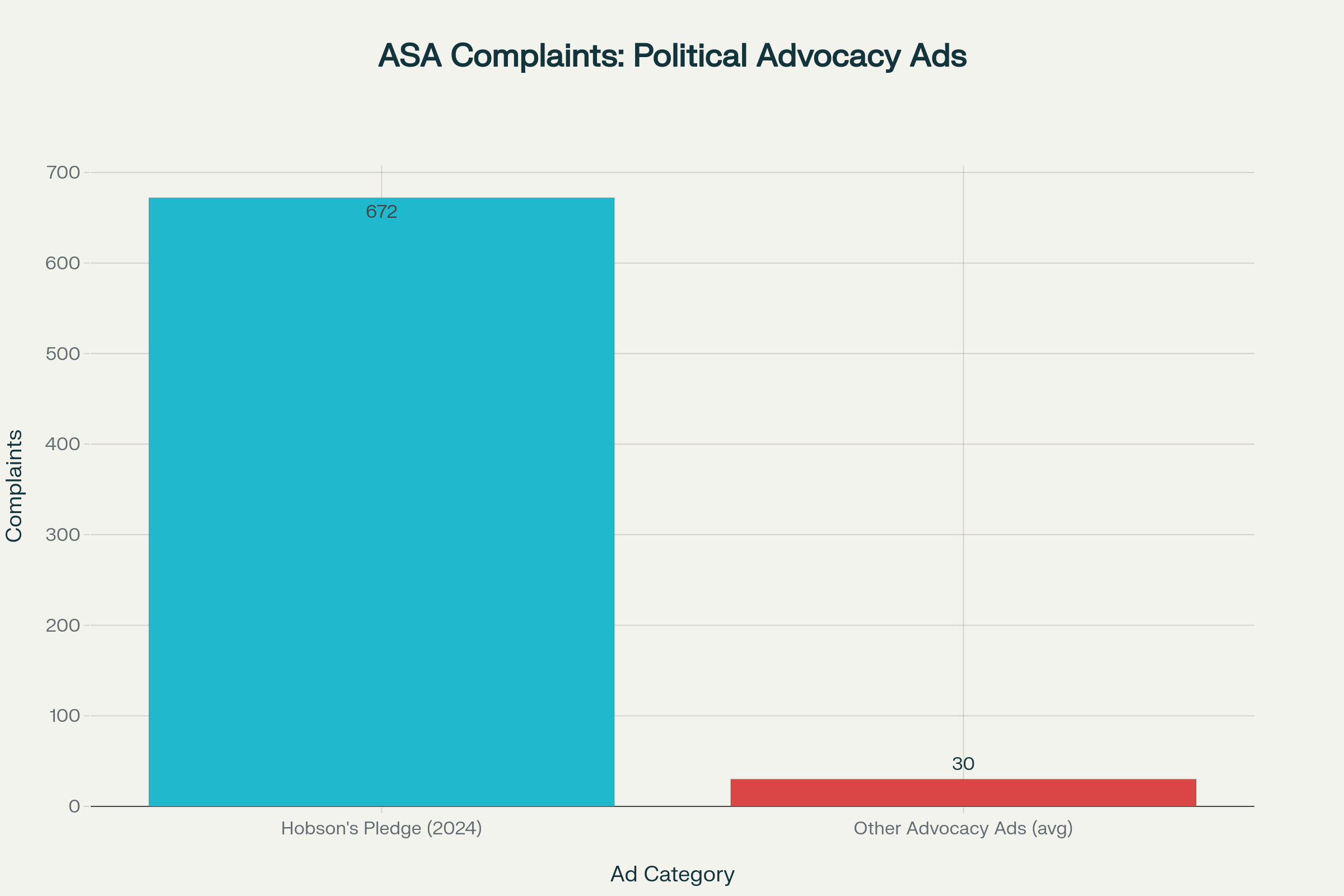
ASA Complaints: Hobson's Pledge vs Other Advocacy Ads (2023-2025)
Background: The Making of a Digital Uncle Tom
Elliot Ikilei's transformation from political aspirant to far-right attack dog didn't happen in a vacuum. His journey mirrors that of other colonized minds who've traded their cultural integrity for proximity to white power. Once a candidate for the New Conservative Party, where he infamously labeled Māori wards "nothing less than Nazi-style racism", Ikilei has spent years perfecting the art of weaponizing his Māori identity against Māori liberation.
The significance of this betrayal cannot be overstated. In Te Ao Māori, whakapapa connects us not just to our ancestors but to our responsibilities toward future generations. When someone like Ikilei uses his whakapapa as a shield while firing bullets at his own people, he violates the sacred principle of kotahitanga—unity that strengthens rather than divides. His rhetoric serves the same function as the far-right networks that emerged after the Christchurch mosque attacks: normalizing hate through seemingly respectable channels.
This historical context matters because Ikilei's attacks on Te Pāti Māori occur within a broader pattern of colonial violence disguised as political discourse. From Don Brash's 2004 Orewa speech to the contemporary Stop Co-Governance movement, Pākehā supremacists have consistently found brown faces willing to legitimize their racist agenda.
Dissecting the Digital Poison
Ikilei's Facebook post represents a sophisticated example of what I call "digital colonialism"—the use of social media platforms to spread anti-Indigenous propaganda through Indigenous voices. His attack on Te Pāti Māori employs several classic far-right tactics:
False Unity Rhetoric: Ikilei positions himself as the voice of reason calling for "unity" while simultaneously attacking the very MPs who've been suspended for asserting Māori rights in Parliament. This mirrors the language used by Hobson's Pledge, which appropriates Governor William Hobson's words "we are now one people" to justify the elimination of Māori-specific rights and institutions.
Concern Trolling: By expressing "disappointment" with Te Pāti Māori while positioning himself as someone who "wants to see Māori do well," Ikilei employs the classic concern troll strategy. This allows him to attack Māori political representation while maintaining plausible deniability about his motivations.
Division Tactics: The post attempts to create internal divisions within Māori communities by suggesting that Te Pāti Māori doesn't represent "real" Māori interests. This echoes the broader far-right strategy of portraying Indigenous rights advocates as "extreme" while positioning assimilationists as "moderate."
Why this matters to Māori is crystal clear: when our own people become mouthpieces for colonial propaganda, it provides cover for systemic racism while undermining our collective struggle for tino rangatiratanga. Ikilei's platform becomes a vector for spreading the very misinformation that organizations like Hobson's Pledge have been disciplined for.
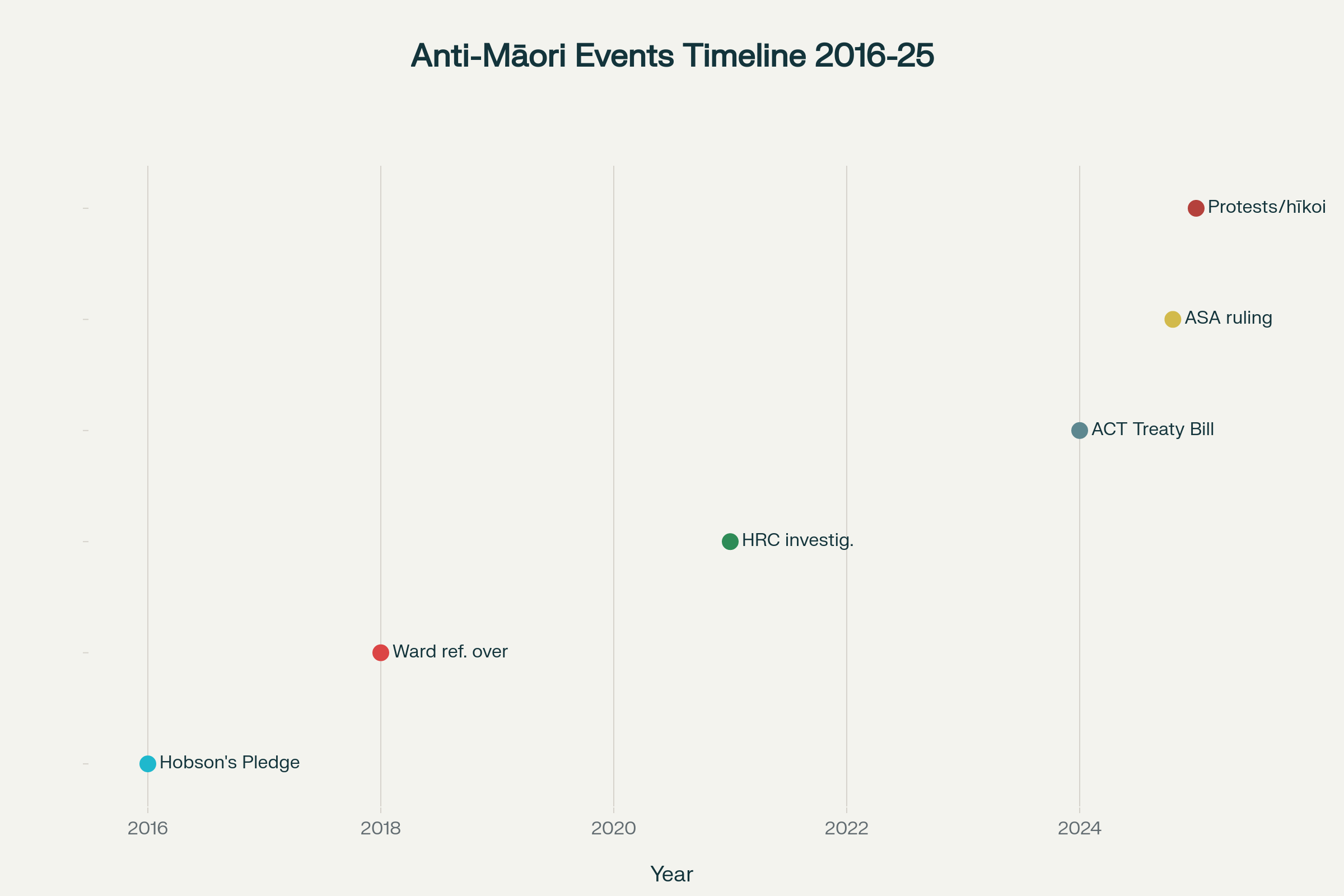
Anti-Māori Far-Right Events Timeline 2016-2025
Exposing the Puppet Masters
The Uncle Tom Syndrome: Psychology of Colonial Collaboration
Ikilei's behavior exemplifies what Frantz Fanon described as the colonized intellectual who "decides to race back to his people." But instead of genuine reconnection, we see performance—a carefully curated Māori identity deployed in service of white supremacist goals. His criticism of Tākuta Ferris's controversial social media post reveals this dynamic perfectly. While legitimate criticism of divisive rhetoric has its place, Ikilei's focus serves to deflect attention from the systemic violence being perpetrated against Māori through legislation like the Treaty Principles Bill.
The principle of whakatōhea—standing together in times of crisis—demands that we examine whose interests Ikilei's rhetoric actually serves. When he attacks Te Pāti Māori for being "one-eyed," he employs the classic neoliberal tactic of demanding "balance" from oppressed peoples while never making similar demands of their oppressors. This false equivalency serves to normalize the deliberate anti-Tiriti agenda being pursued by the current government.
Network Analysis: Following the Money and Connections
Ikilei's attacks don't exist in isolation—they're part of a coordinated ecosystem designed to manufacture consent for anti-Māori policies. The timing of his post, coinciding with the government's broader assault on Māori institutions, suggests coordination with the broader far-right network that includes Hobson's Pledge, the New Zealand Taxpayers' Union, and various ACT Party affiliates.
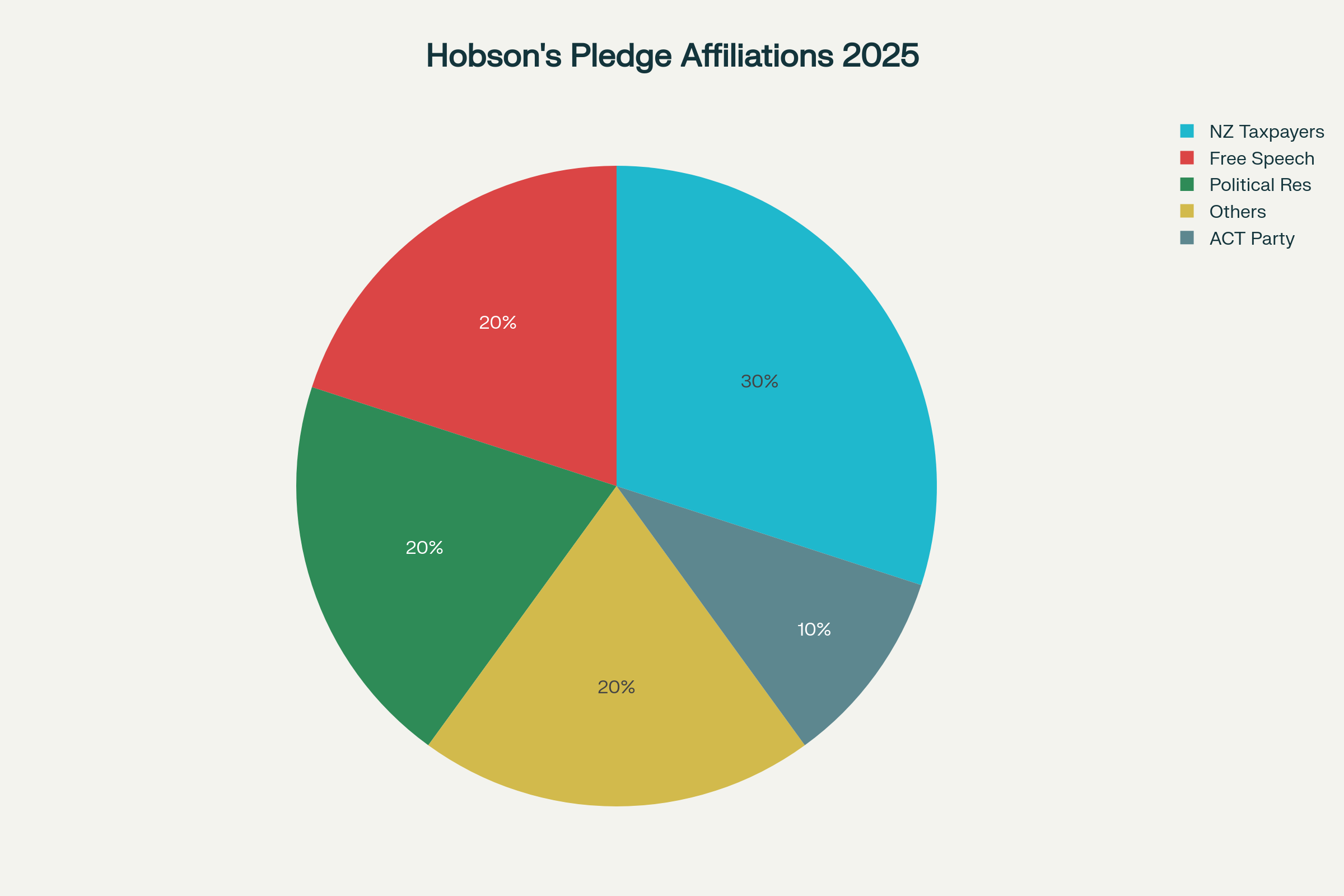
Hobson's Pledge Network Affiliations (2025)
The interconnections between these groups reveal a sophisticated propaganda operation. Hobson's Pledge, which has been repeatedly censured for misleading advertisements, operates through a network of front organizations and proxy voices. Ikilei's role appears to be providing Indigenous legitimacy for arguments that would be immediately recognized as racist if made by Pākehā voices.
Rhetorical Weapons: Deconstructing the Language of Oppression
The language Ikilei employs reveals careful coaching in far-right messaging techniques. His use of "unity" echoes the rhetoric of groups like Stop Co-Governance, which frames Māori political representation as divisive while ignoring the actual divisions created by colonial structures. This represents what Indigenous scholars call "strategic ignorance"—the deliberate refusal to acknowledge how systems of oppression operate.
When Ikilei criticizes Te Pāti Māori for not following their "agenda," he reveals his fundamental misunderstanding of Māori political philosophy. Te Pāti Māori's kaupapa, as outlined in their constitution, explicitly prioritizes manaakitanga, rangatiratanga, and the enhancement of Māori-Crown relationships. Their resistance to colonial legislation isn't deviation from their agenda—it's the precise fulfillment of it.
The Gender and Class Dimensions: Intersectional Oppression
Ikilei's attacks also reveal the intersectional nature of his collaboration with white supremacy. His targeting of Māori women MPs like Debbie Ngarewa-Packer and Hana-Rawhiti Maipi-Clarke reflects the broader pattern of colonial violence that specifically targets Māori women's political leadership. This connects to the historical role of Māori women as the primary targets of colonial sexual violence and cultural destruction.
The class dimensions are equally revealing. Ikilei's rhetoric appeals to middle-class Māori who've found material success within colonial structures and fear that radical change might threaten their positions. This represents the classic neoliberal strategy of creating a buffer class of Indigenous collaborators who police their own communities on behalf of the settler state.
Implications: The Broader War on Indigenous Sovereignty
Ikilei's digital colonialism has implications far beyond social media feuds. His platform becomes a testing ground for anti-Māori arguments that can later be deployed by mainstream politicians and media outlets. When a Māori voice makes these arguments, it provides cover for policies like the referendum on Māori wards that are designed to eliminate Indigenous political representation.
The community impact is devastating. Young Māori seeing someone with their whakapapa attacking their political representatives internalize messages about the illegitimacy of Māori political assertion. This psychological warfare serves the broader colonial project by undermining Māori confidence in their own political institutions and leaders.
Most insidiously, Ikilei's rhetoric connects to larger patterns of Indigenous genocide being pursued through legal and bureaucratic means. When he attacks Te Pāti Māori for their principled opposition to the Treaty Principles Bill, he becomes complicit in what the Waitangi Tribunal has described as potentially the "worst, most comprehensive breach of te Tiriti in modern times".
The impact on Māori specifically extends beyond politics into the realm of cultural survival. By legitimizing attacks on our most principled political representatives, Ikilei contributes to the broader project of cultural erasure that seeks to transform Māori from tangata whenua into just another ethnic minority competing for crumbs from the colonial table.

The Māori Green Lantern Fighting Misinformation And Disinformation From The Far Right
Reclaiming Our Digital Mauri
Ikilei's Facebook fascism represents everything that's wrong with colonial capitalism's ability to corrupt our people. His willingness to weaponize his whakapapa against Māori liberation reveals the depth of psychological colonization that continues to plague our communities. But his very existence also reveals the weakness of the colonial project—they need brown faces to legitimize their racism because their arguments can't stand on their own merits.
The solution isn't to engage with Ikilei's toxic rhetoric on its own terms but to expose the colonial structures that created him and continue to reward his collaboration. We must reclaim our digital spaces through the same principles that guide our physical ones: manaakitanga that centers our people's wellbeing, rangatiratanga that asserts our right to self-determination, and kaitiakitanga that protects our cultural integrity for future generations.
Te Pāti Māori's resistance to colonial legislation isn't the problem—it's the solution. Their willingness to face suspension rather than submit to colonial authority embodies the warrior spirit of our tūpuna who never ceded their sovereignty. When someone like Ikilei attacks them for this principled stance, he reveals himself as an agent of the very forces that seek our destruction.
The call to action is clear: we must stop amplifying the voices of colonial collaborators and instead support those who fight for our liberation, even when that fight makes Pākehā—and colonized Māori—uncomfortable. Digital decolonization requires the same courage our ancestors showed when they faced the colonial invasion with weapons in their hands. Today, our weapons are words, but the war for our survival continues.
Readers who find value in my mahi exposing these digital colonizers and their puppet masters, I humbly ask you to consider a koha to support this essential work: HTDM: 03-1546-0415173-000. The MGL understands these are tough economic times for whānau, so please only contribute if you have the capacity and wish to do so.
Kia kaha, kia māia, kia mana tātou katoa.
Nāku noa,
Ivor Jones
Te Māori Green Lantern
Kaitiaki o te Pono