“The Esoteric Architecture of Resistance: How Te Kore, Te Pō, and Te Ao Mārama Dismantle Neoliberal Consciousness — A Spinoza Comparison & The Māori Green Lantern’s Daily Mahi Against Disinformation”
He aha te mea nui o te ao? He tangata, he tangata, he tangata.
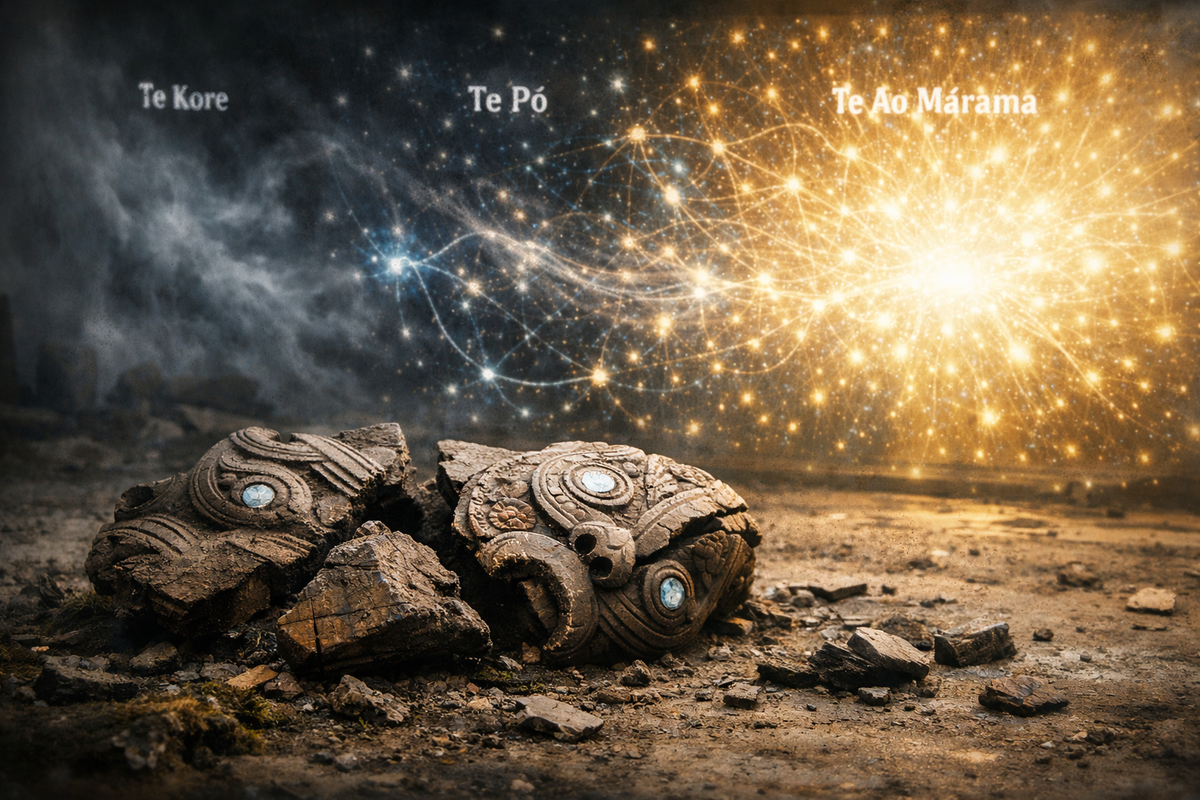
The Full Story Is That The Little i Is A Lie
They will tell you the neoliberal self—the Little i—was invented in the 1980s by economists in grey suits. That is only half the story.
The full story is that the Little i required the suppression of an older system:
a cosmology that understands the self not as an isolated unit,
but as a node in an infinite whakapapa that stretches from Te Kore (the void of potential)
through Te Pō (the realm of becoming) into
Te Ao Mārama (the world of light and being).
This essay exposes the deliberate dismantling of Māori esoteric knowledge systems and demonstrates how reactivating them offers not just spiritual renewal, but a structural assault on neoliberal atomisation.
But there is a deeper parallel hiding in plain sight.
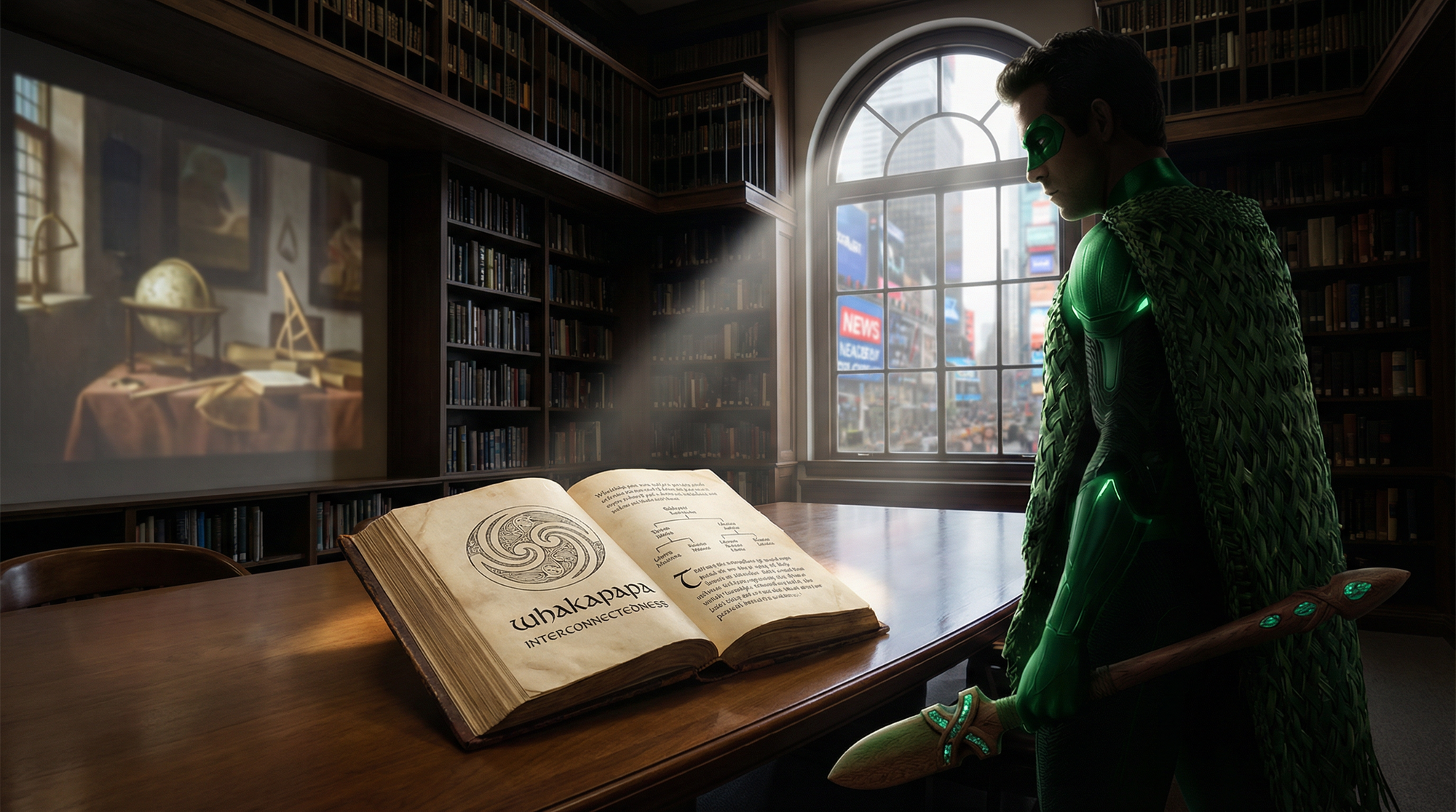
In 17th-century Europe, the Dutch-Jewish philosopher Baruch Spinoza constructed a metaphysical system that arrived at remarkably similar conclusions through radically different methods. Where Te Ao Māori begins with cosmological whakapapa, Spinoza begins with geometric proofs.
Yet both systems converge on the same revolutionary truth:
the isolated self is an illusion, and everything is one interconnected substance striving to persist in being.
And today, in 2025 Aotearoa, a new defender has risen:
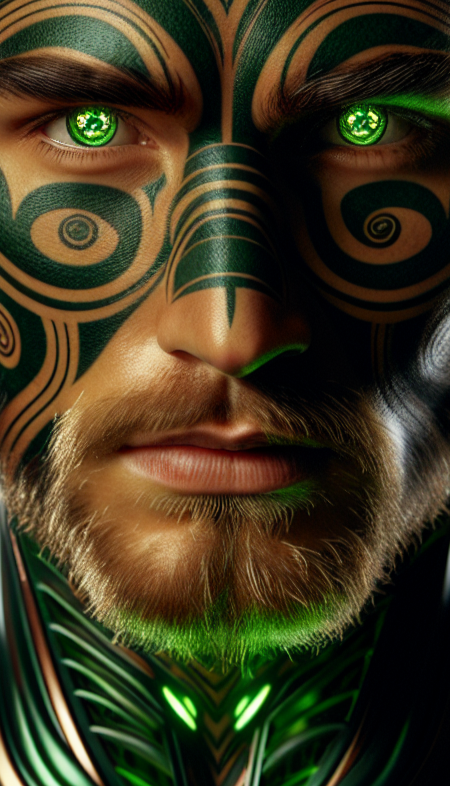
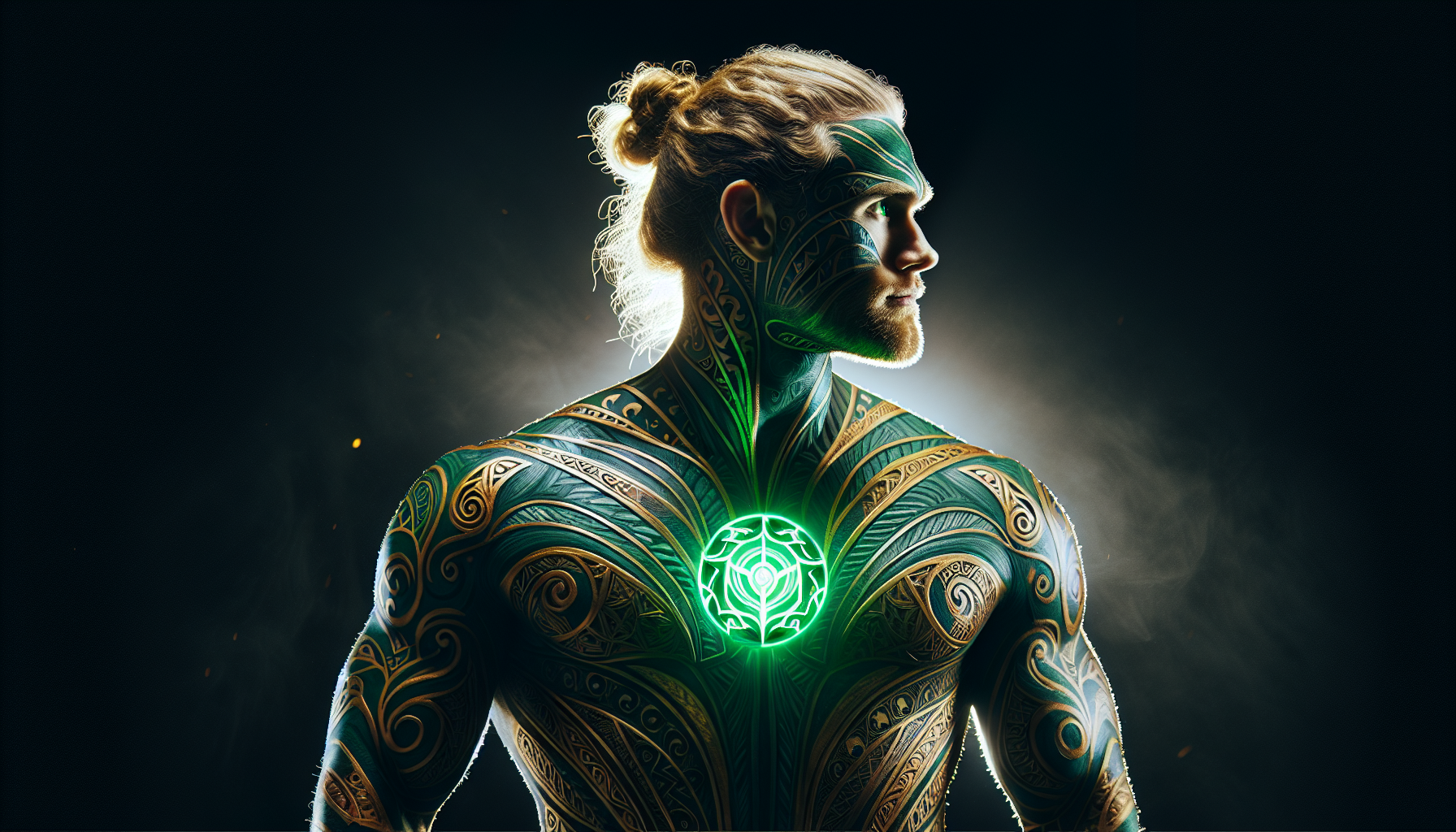
The Māori Green Lantern—a tohunga mau rākau wairua (spiritual warrior) wielding the taiaha of evidence against the daily assault of far-right misinformation, disinformation, and white supremacist ideology that targets Māori.
This essay traces all three paths
—esoteric, philosophical, and contemporary
—to expose how neoliberalism’s Little i is being actively defended by the far right, and
actively dismantled by those who remember.

A Cosmology That Understands The Self Not As An Isolated Unit
1. The Suppression: How They Broke the Transmission
1.1 The Tohunga Suppression Act 1907: Legislative Spiritual Warfare
On 24 September 1907, the New Zealand Parliament passed the Tohunga Suppression Act, as documented in Te Ara – The Encyclopedia of New Zealand.
The Act stated:
“Every person who gathers Maoris around him by practising on their superstition or credulity, or who misleads or attempts to mislead any Māori by professing or pretending to possess supernatural powers in the treatment or cure of any disease, or in the foretelling of future events, or otherwise, is liable… to a fine not exceeding twenty-five pounds or to imprisonment for a period not exceeding six months.”
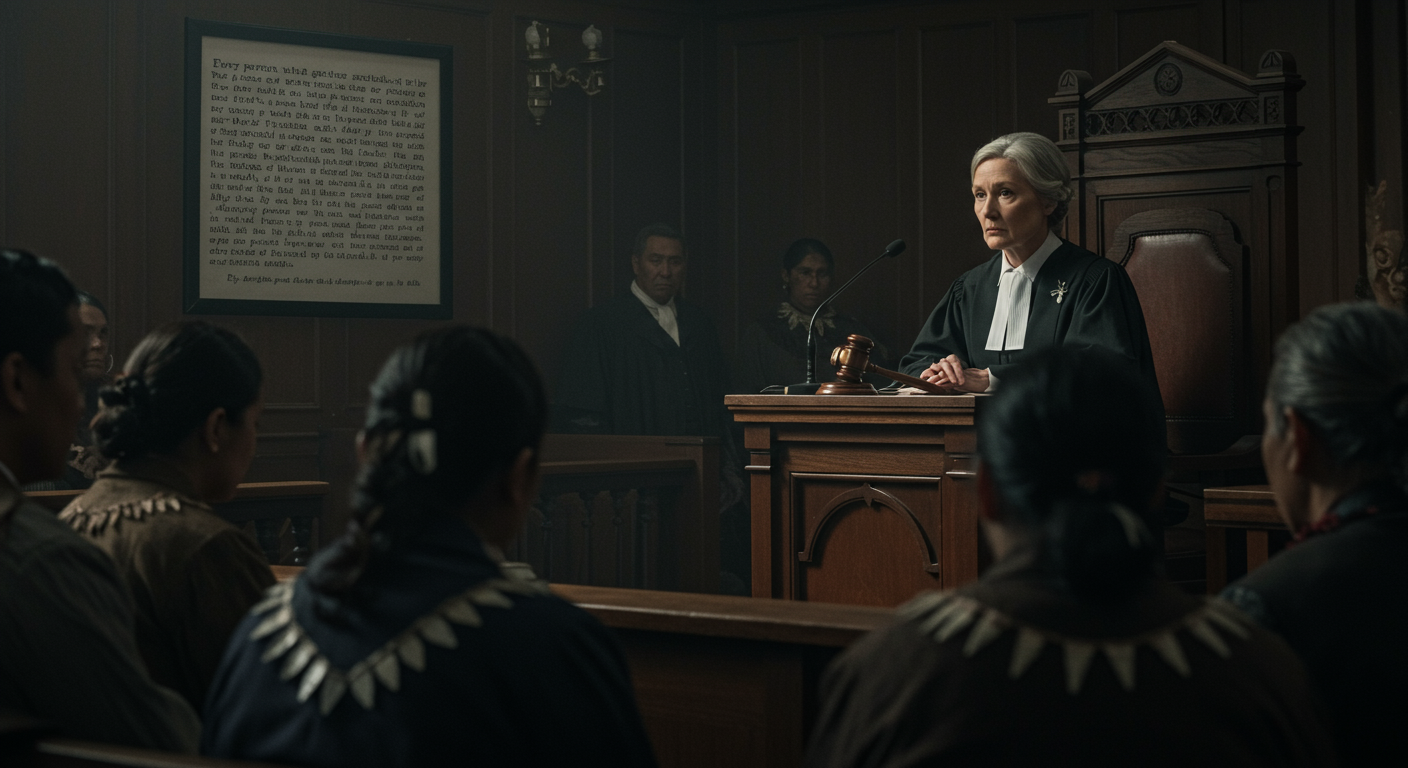
Twenty-five Pounds Or To Imprisonment
The official narrative was public health. The real effect was epistemicide: the targeted killing of a knowledge system.
Tohunga were not just “healers”—they were the holders of whakapapa extending back through Te Pō to Te Kore, as explained in Te Ara’s entry on Traditional Māori Religion. Tohunga mediated between realms. They were waka atua (vessels of gods), able to navigate Te Kore (the realm of potential being), Te Pō (the realm of becoming), and Te Ao Mārama (the world of being and light), a cosmological framework outlined in Te Ara’s overview of Te Ao Mārama.
The Act drove tohunga underground. Ritual knowledge—the karakia that moved mauri, the pure rites that connected newborns to atua—was lost or fragmented, as described in Te Ara’s page on rituals and ceremonies. By 1962 when the Act was repealed, the damage was structural. Whole lineages of transmission had been severed.
Hidden connection #1: The Tohunga Suppression Act has been recognised as a breach of Te Tiriti o Waitangi because it attacked taonga (treasured knowledge), confirmed in a review of key Māori claims published in the New Zealand Herald. Yet no substantial reparations have been made for this spiritual theft. The Crown extinguished an entire epistemology, and the debt remains unpaid.

Tōhunga Were Not Just Healers
1.2 Neoliberalism: The Second Suppression (1984–present)
If 1907 banned the tohunga, 1984 monetised the self.
The Fourth Labour Government, led by Finance Minister Roger Douglas, initiated what became known as “Rogernomics”—a sweeping neoliberal reform that privatised state assets, deregulated markets, and imposed corporate practices on public services, as documented in Te Ara’s account of the Fourth Labour Government. Prime Minister David Lange later admitted they had created “a revolution” that was “more market-oriented” than even Treasury had initially recommended, according to analysis in The Economic History of Aotearoa New Zealand.
For Māori, this was devastating. Between 1988 and 1992, Māori unemployment surged from 13.5% to 27.3%, as recorded in a study on neoliberalism and Māori inequality. In rural communities like Murupara and Minginui, unemployment hit 95%. Entire whānau economies collapsed.
But the damage was not only economic—it was ontological. Neoliberal ideology reconstructed the self as “homo economicus”:
a calculating individual whose worth is measured by market productivity. This was the Little i encoded into policy, a process critiqued in research on neoliberal community development.
The cosmology that understands you as whakapapa—stretching from Te Kore through your tūpuna to your mokopuna—was replaced by the CV, the credit score, and the performance review.
Hidden connection #2: Neoliberalism and the Tohunga Suppression Act are the same project separated by 77 years. Both sever connection. One banned spiritual transmission; the other replaced it with market logic. The result: Māori were told to be “individuals” in a system designed to isolate them from the collective power of whānau, hapū, and iwi.

The Fourth Labour Government
2. The Esoteric System: Te Kore, Te Pō, Te Ao Mārama as Resistance Technology
To resist neoliberalism’s Little i, we must understand what was suppressed:
a tri-phase cosmology that explains not just creation, but transformation itself.
2.1 Te Kore: The Void of Unlimited Potential
Te Kore is not “nothingness.” It is the realm of potential being—chaos pregnant with all possibilities, as described by Māori elder and Anglican minister Māori Marsden, who stated that
“Te Korekore was ‘the realm between non-being and being: that is the realm of potential being,’” cited in Te Ara’s exploration of Te Kore.
Some traditions hold that Io Matua Kore (the Supreme Being, the Parentless One) dwells in Te Kore, as explained in Te Ara’s article on Māori creation traditions.
Io is described with names that proclaim his mana:
Io-nui (the greatest of all gods),
Io-roa (the everlasting), Io-matua (parent of all things),
Io-matua-te-kore (the parentless,
since he comes from nothing),
as detailed in the History Aotearoa podcast transcript on Io.
Neoliberal inversion: The market teaches that potential is scarce. You must compete for limited resources, limited jobs, limited housing. Te Kore teaches the opposite: potential is infinite. Before anything is created, everything is possible. The void is not empty—it is full of what has not yet been called into being.
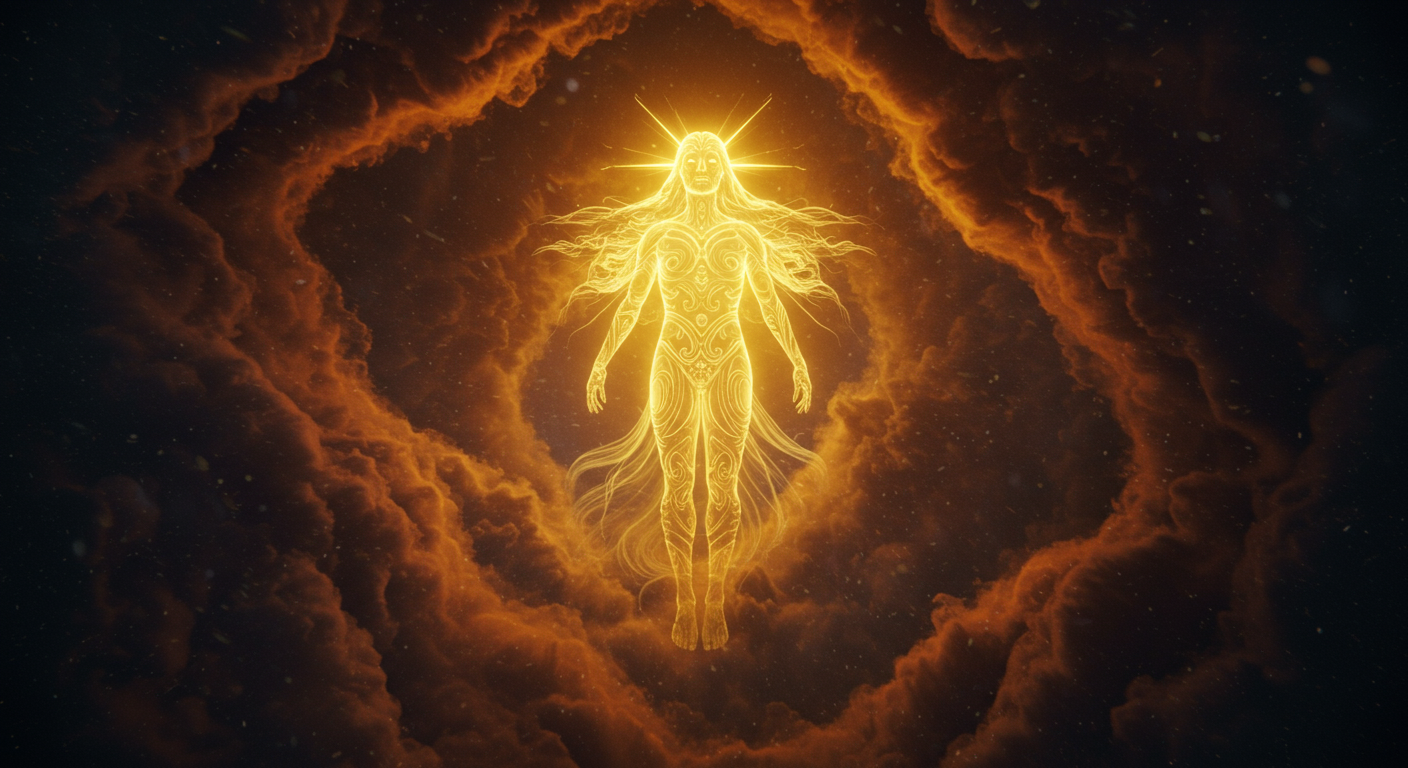
Io-matua-te-kore
2.2 Te Pō: The Realm of Becoming
From Te Kore emerged Te Pō—not “night” in the trivial sense, but the realm of becoming, the long darkness where forms take shape over aeons of time.
As Te Ara explains, there are multiple stages of Te Pō recorded in different whakapapa, with each stage begetting the next.
In Te Pō, Ranginui (sky father) and Papatūānuku (earth mother) were locked in an eternal embrace, trapping their children—the atua—in darkness, as recounted in Te Ara’s overview of Māori creation traditions. This is the stage of gestation, struggle, and transformation—the necessary darkness before light.
Neoliberal inversion: Neoliberalism cannot tolerate Te Pō. It demands instant results, quarterly profit reports, KPIs measured in real time. There is no space for the slow, invisible work of becoming. Yet all meaningful transformation—personal, communal, ecological—requires time in the dark.
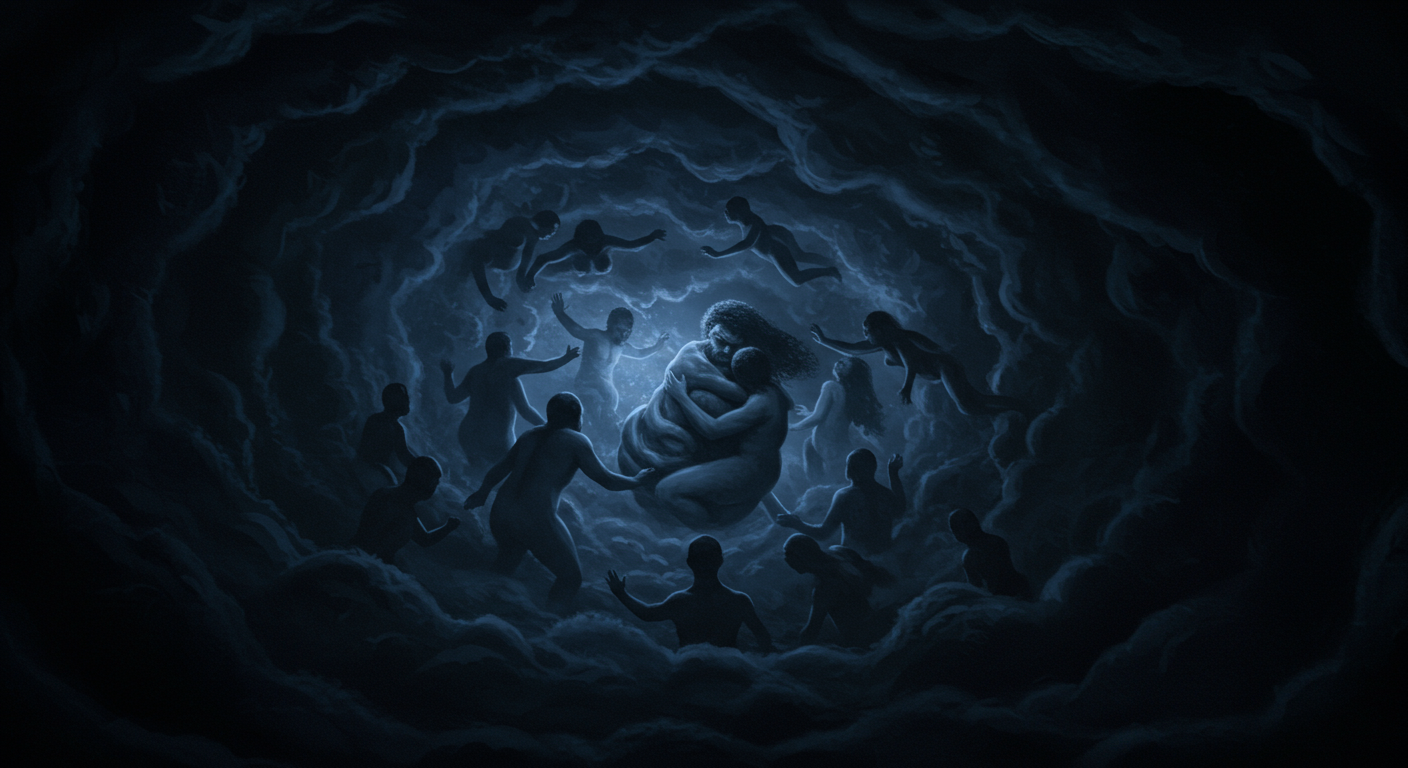
The Realm of Becoming
2.3 Te Ao Mārama: The World of Light and Being
Finally, Tāne separated Ranginui and Papatūānuku, pushing the sky upward with his legs while holding the earth with his shoulders, allowing Te Ao Mārama (the world of light) to flood in, as described in Te Ara’s account of the separation of earth and sky.
This is the realm of being, consciousness, and life.
But Te Ao Mārama is not the endpoint—it is part of a daily cycle.
Every dawn re-enacts the separation. The sun rising each morning represents the movement from Te Pō to Te Ao Mārama, as Te Ara explains in its discussion of the traditional Māori world view:
“It is said that the world itself is created each morning with the rise of the sun.”
Neoliberal inversion: Neoliberalism treats being as static. You are defined by your job title, your income bracket, your property. Te Ao Mārama teaches that being is dynamic—you are constantly emerging from Te Pō, constantly being recreated by the light.
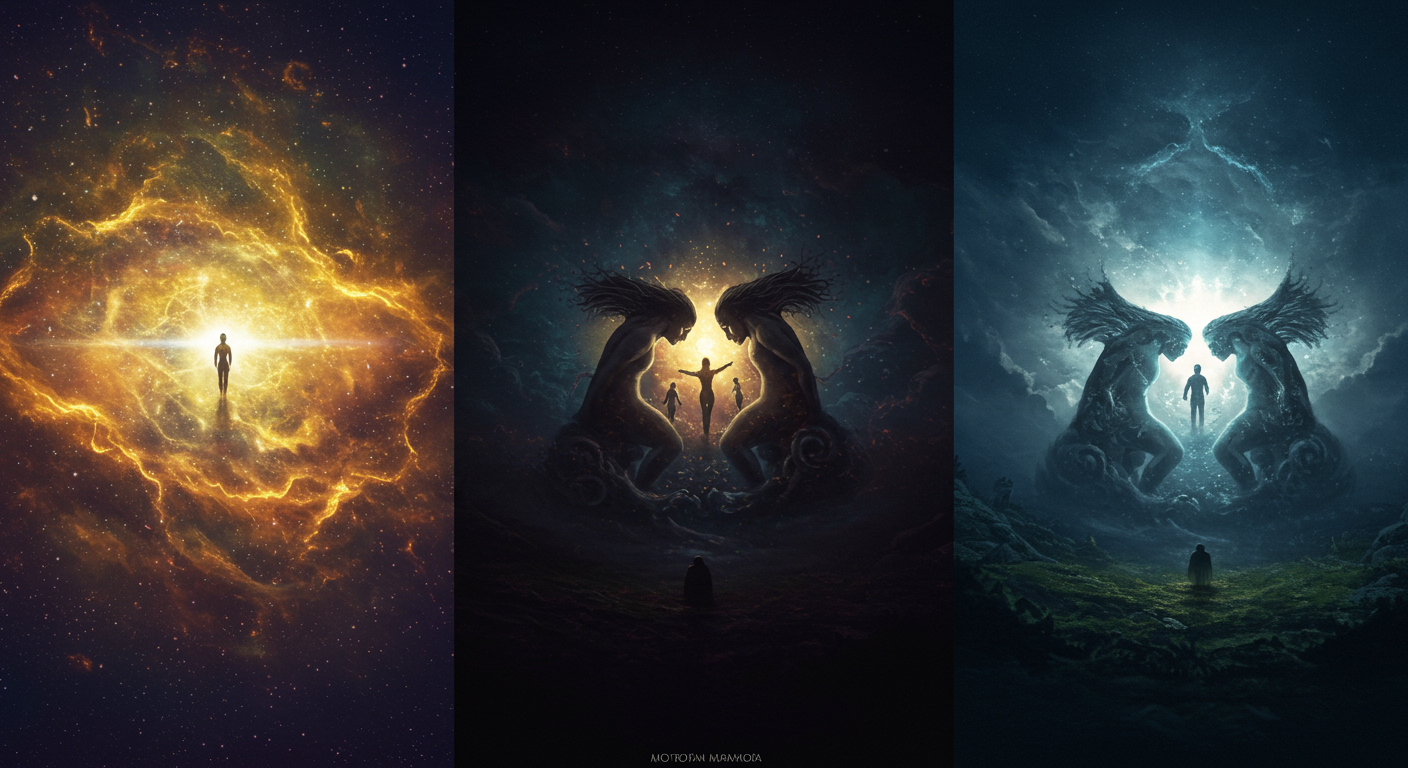
Te Kore: The Void of Unlimited Potential
3. Spinoza’s Parallel System: Deus sive Natura and Conatus
In 1677—exactly 230 years before the Tohunga Suppression Act—Baruch Spinoza died in Amsterdam, leaving behind a manuscript called Ethics Demonstrated in Geometrical Order. Spinoza had been excommunicated from the Jewish community and vilified across Europe as an “atheist.” His crime? Proving through geometric logic what Māori cosmology had always known:
the isolated self does not exist.
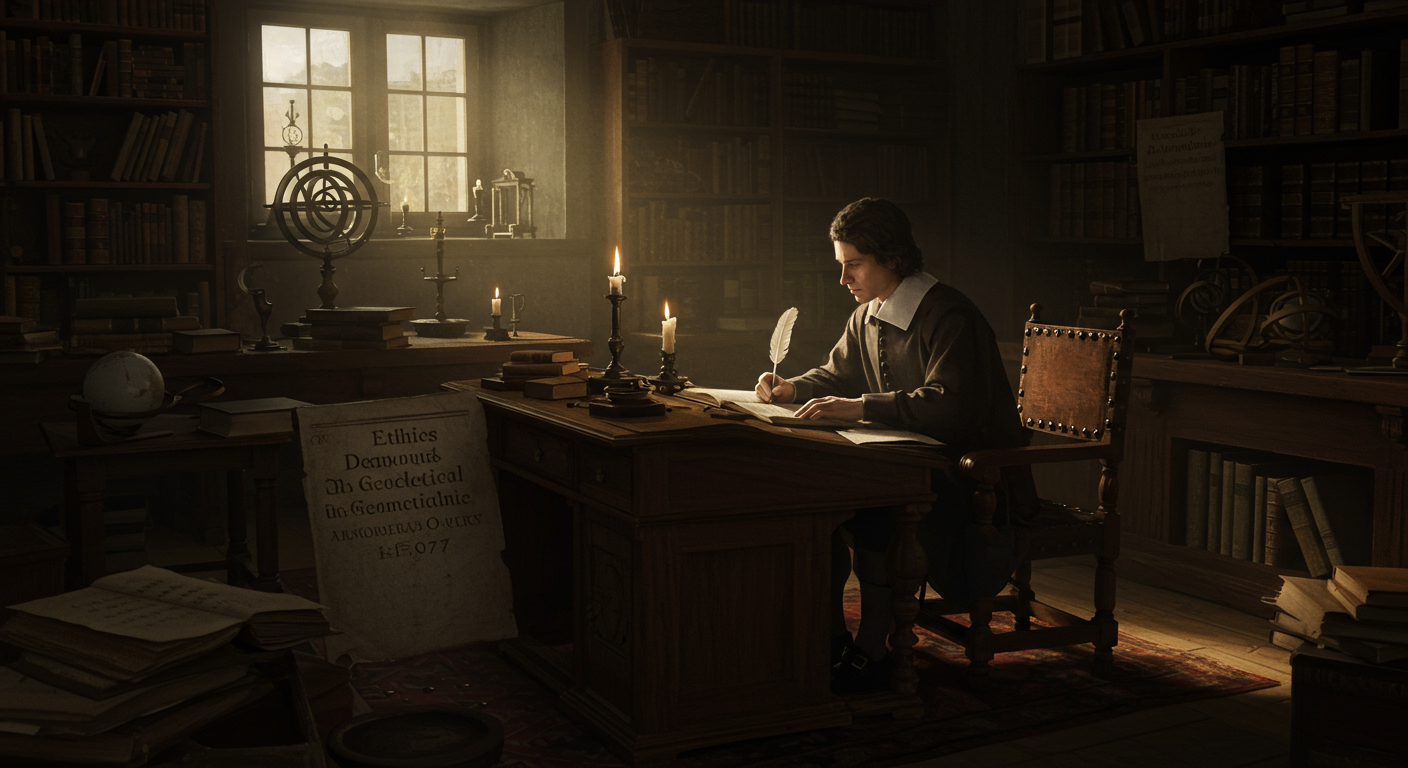
The Isolated Self Does Not Exist
3.1 Spinoza’s Substance Monism: One Infinite Being
Spinoza’s central argument is deceptively simple, as outlined in the Stanford Encyclopedia of Philosophy’s entry on Spinoza’s modal metaphysics:
- Every substance (self-existing thing) has at least one attribute (essential nature).
- No two substances can share the same attribute (or they would be indistinguishable).
- God/Nature has all possible attributes.
- Therefore, only one substance exists: God or Nature (Deus sive Natura).
Everything else—you, me, mountains, rivers, thoughts, desires—are modes (properties) of this one infinite substance.
You are not a separate “thing.”
You are a temporary expression of the one substance that is everything, as explained in the Internet Encyclopedia of Philosophy’s article on Spinoza’s metaphysics.
The Māori-Spinoza convergence: Spinoza’s Deus sive Natura (God or Nature) is functionally identical to the Māori understanding of Io Matua Kore dwelling in Te Kore. Both are:
- Self-caused (Io emerges from Te Kore; Spinoza’s God is causa sui, existing by its own nature).
- Infinite (Io is “the parentless,” beyond all categories; Spinoza’s God has infinite attributes).
- Immanent (not a transcendent sky-god, but the fabric of reality itself).
Where Māori cosmology describes this through the stages of creation (Te Kore → Te Pō → Te Ao Mārama), Spinoza describes it through modes of existence (infinite substance → infinite modes → finite modes). Different languages, same truth.
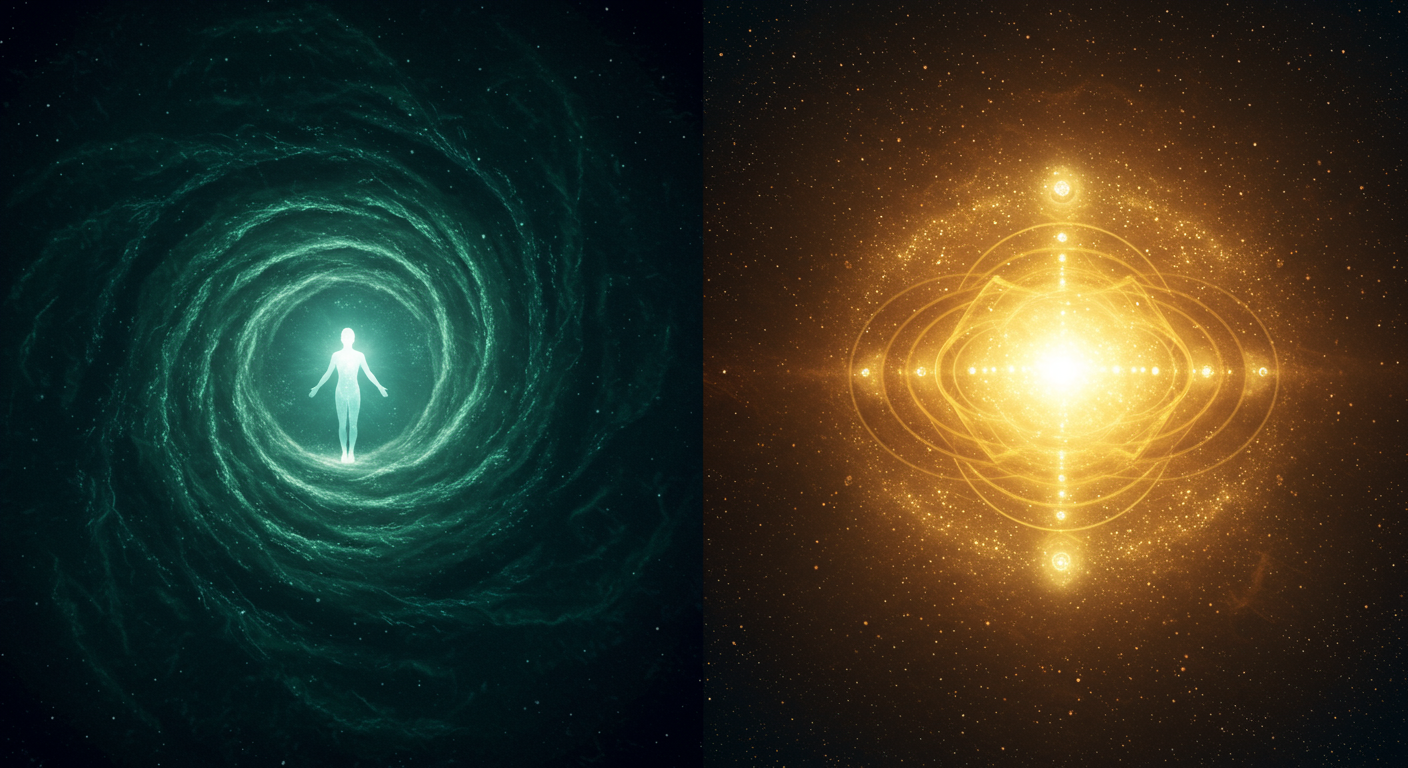
The Same Truth
3.2 Spinoza’s Conatus: The Essence as Striving
Spinoza’s second revolutionary claim is that the essence of every finite thing is its striving to persist in being. He calls this conatus—the drive to continue existing and enhance one’s power, as defined in The Collector’s explanation of Spinoza’s conatus.
Conatus is not a “thing” added to your essence. It is your essence. A stone’s essence is its conatus to remain a stone. A plant’s essence is its conatus to grow toward sunlight. A human’s essence is their conatus to survive, flourish, and increase their power of acting, as detailed in Wikipedia’s entry on conatus.
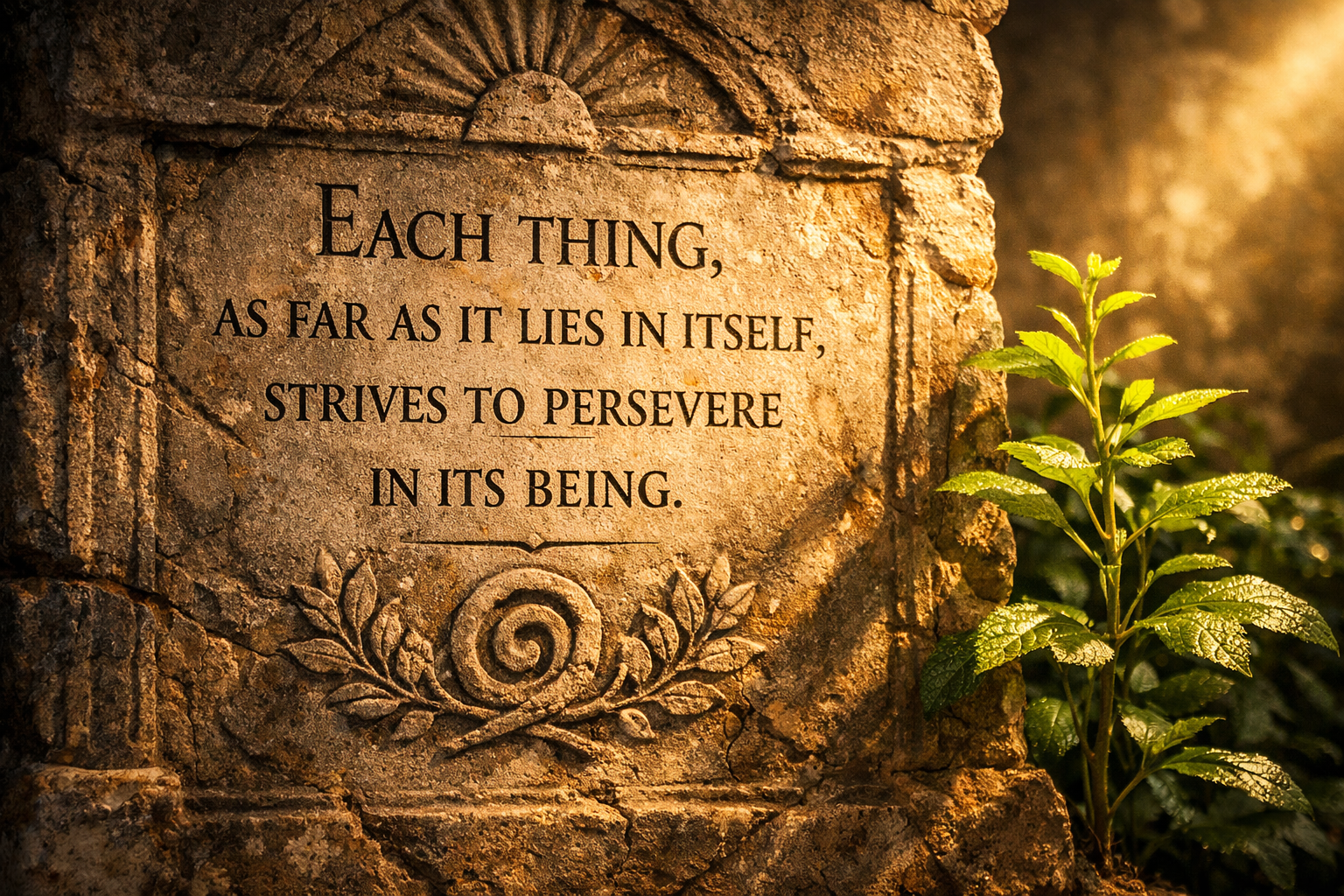
Spinoza’s formula: “Each thing, as far as it lies in itself, strives to persevere in its being” (Ethics III, Proposition 6).
The Māori-Spinoza convergence: Conatus is mauri. Both concepts describe:
- Inherent life force (not added from outside, but intrinsic to being).
- Striving/persistence (mauri seeks balance and continuity; conatus seeks self-preservation).
- Universal application (everything from stones to atua has mauri; everything from stones to minds has conatus).
The difference? Spinoza proves conatus through geometric logic. Māori knew mauri through lived cosmological transmission. The 1907 Act tried to erase one. Modernity tried to ridicule the other. Both survived.
Conatus Is Mauri
3.3 Why Neoliberalism Hates Spinoza (and Tohunga)
Neoliberalism requires you to believe:
- You are an isolated individual (not a mode of one substance).
- Your value is external (determined by market price, not intrinsic conatus/mauri).
- Competition is natural (rather than cooperation as mutual enhancement of conatus/mauri).
Spinoza dismantles all three claims using Western philosophy’s own tools:
- You are not isolated. You are a finite mode of infinite substance. Your existence is necessarily connected to everything else, as explained in the Stanford Encyclopedia’s discussion of Spinoza’s substance monism. To harm the environment is to harm yourself, because you and the environment are modes of the same substance.
Your value is intrinsic. Your conatus (striving to persist) is your actual essence. No market can price that. No employer can grant or withhold it. You have it by virtue of existing, as described in the Internet Encyclopedia’s analysis of Spinoza’s conatus theory.
- Cooperation enhances power. Because all things are modes of one substance, helping others increase their conatus increases your own. Spinoza’s ethics are based on collective flourishing, not zero-sum competition.
Hidden connection #3: Spinoza was excommunicated, his books were banned, and he died in poverty. The tohunga were criminalized, their knowledge suppressed, and their lineages broken. Both threatened the same lie: that humans are isolated units competing in a marketplace. Both systems prove that you are whakapapa / you are a mode of infinite substance.

Embodying The Big I And Whakapapa Across Time
4. The Daily War: Far-Right Disinformation Targeting Māori (2024–2025)
While philosophers and theologians debate whether the self is one infinite substance or an ancient whakapapa, the far right is not waiting for theory. They are actively, systematically, and with foreign interference, waging war on Māori consciousness through coordinated campaigns of misinformation and disinformation. This is not metaphor. This is documented, verified, and ongoing.
4.1 The Architecture of the Assault: Neo-Nazi Groups, Hobson’s Pledge, and Coordinated Networks
Neo-Nazi Terrorism in Aotearoa:
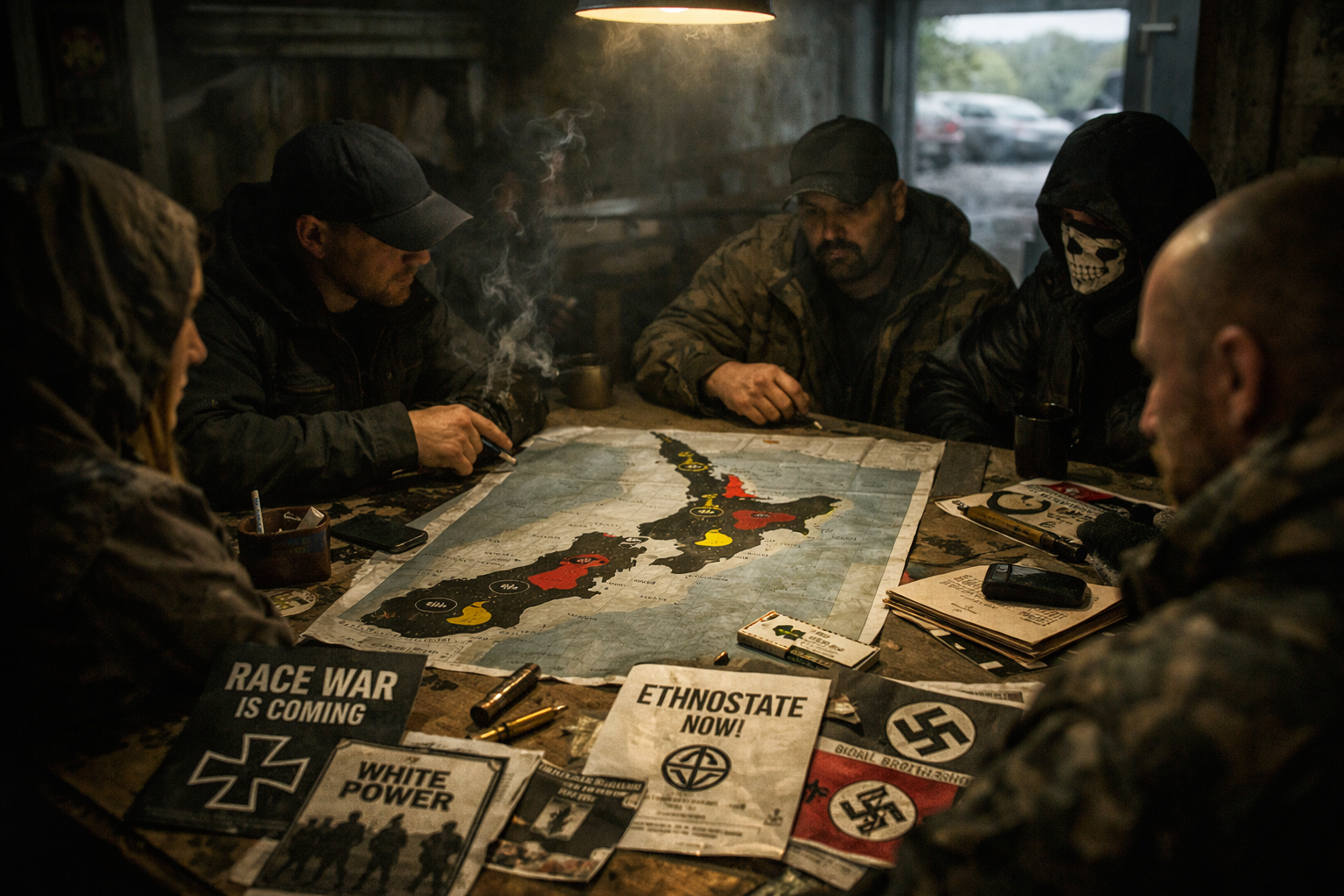
As of July 2025, the white supremacist group The Base remains on New Zealand’s terrorism watchlist, having been relisted as a terrorist entity by the New Zealand Government, as confirmed by the New Zealand Herald’s report on extremist white supremacist groups. The Base operates as a decentralised “leaderless resistance” network, preparing for and actively pushing for what it describes as a “race war” to trigger societal collapse and create white ethnostates.
In 2022, neo-Nazi flyers from the National Socialist Movement were distributed in letterboxes across Napier, containing Holocaust denial and white supremacist propaganda, as documented in a 1News report. The flyers were part of a broader recruitment campaign announced on Telegram, indicating operational infrastructure within Aotearoa.
Action Zealandia, described as “New Zealand’s largest neo-Nazi group,” formed in the wake of the 2019 Christchurch mosque attacks and operates with a stated goal of establishing fascism in New Zealand, as detailed in multiple reports from the New Zealand Herald. The group actively recruits across the country while maintaining operational secrecy.
These are not marginal actors. They are part of an international network. The UK-based Sonnenkrieg Division (the British branch of the Atomwaffen Division) maintained links to Action Zealandia-style operations, as documented in UK counter-terrorism records, demonstrating that Aotearoa is embedded in a global white supremacist operational network.
Hidden connection #7: These neo-Nazi groups do not exist in isolation from “mainstream” politics. The rise of Action Zealandia accelerated after the 2019 Christchurch massacre—the moment when radicalization pathways became visible. Yet within three years, far-right influence had metastasized into policy advocacy through lobby groups like Hobson’s Pledge.
New Zealand Is A White Supremacist Haven
4.2 Hobson’s Pledge: The Genteel Face of Apartheid Ideology
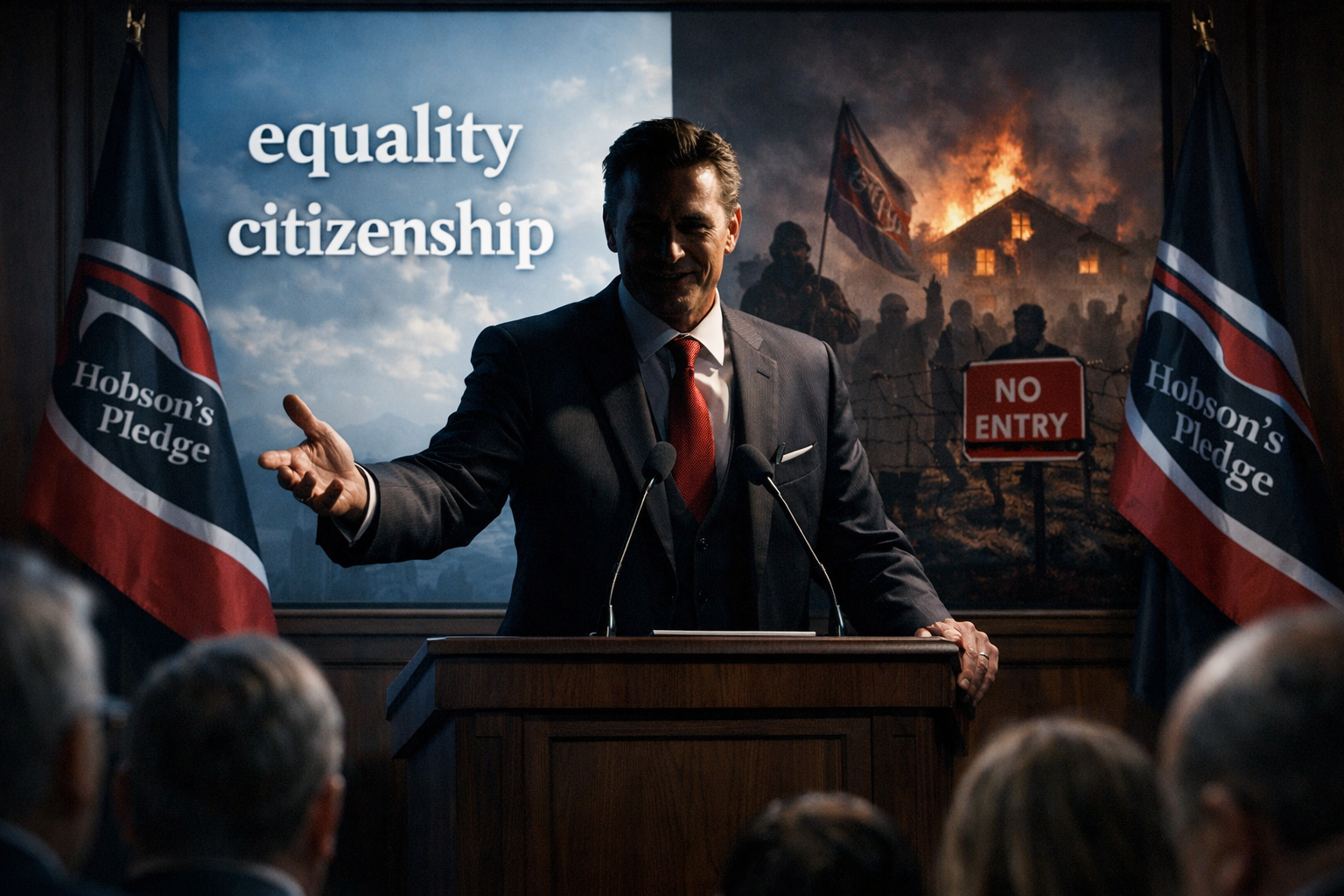
Hobson’s Pledge, founded in 2016 by former National Party and ACT leader Don Brash and others, presents itself as an advocate for “equality” while pursuing an agenda to dismantle Te Tiriti-based frameworks, according to Wikipedia’s entry on Hobson’s Pledge. The group explicitly aims to:
- Abolish reserved Māori seats in Parliament
- Disestablish the Waitangi Tribunal
- Eliminate all “race-based” policies and co-governance arrangements
- Remove all references to Treaty “partnership” and “principles” from law and policy
The group’s central rhetorical strategy relies on a historical fiction: the claim that William Hobson said “He iwi tahi tātou” (We are now one people) at the Treaty signing in 1840—a phrase used to delegitimize Māori rights as “divisive” and “race-based.”
The Problem: The only evidence for Hobson’s words comes from printer William Colenso’s account published in 1890—50 years after the event—based on notes that historians have found contradicted by Colenso’s own 1840 manuscript, as comprehensively documented by Professor Richard Shaw in I doubt this is what Hobson had in mind published in e-tangata. Importantly, there is no verifiable record that Māori rangatira understood themselves as “one people” with Pākehā, nor any contemporary evidence supporting Hobson’s Pledge’s interpretation.
The Disinformation: Despite this fragile historical basis, Hobson’s Pledge has conducted sophisticated campaigns that:
- Misrepresent public figures: In August 2025, Hobson’s Pledge used the image of kuia Ellen Tamati on billboards bearing the phrase “My mana doesn’t need a mandate. Vote no to Māori wards”—without her permission or consent—directly contradicting her stated pro-Māori ward stance, as reported by 1News. Tamati stated: “I did not do any of those. I did not give anyone permission to use my mug, my moko kauae.”
- Spread demonstrably false legal claims: In 2024, Hobson’s Pledge ran Herald advertisements claiming that “almost New Zealand’s entire coast is currently under application before the courts to be awarded to iwi as customary marine titles,” a claim the Marine and Coastal Area Act explicitly prohibits. As Māori legal expert Iain Maclean explained to 1News: “It’s incredibly misleading, inaccurate and clearly designed to whip up anti-Māori sentiment.”
- Exploit stock photography: Hobson’s Pledge again used images sourced from stock photo sites (iStock, Shutterstock) without verifying the subjects’ political alignment, demonstrating a deliberate strategy to manufacture consensus through image manipulation.
Hidden connection #8: Hobson’s Pledge operates within legal bounds precisely because it frames its racism as “equality” and “citizenship.” It uses the language of Enlightenment liberalism to advance ethno-nationalist disenfranchisement—the same rhetorical trick used by European far-right parties that claim “integration” while opposing immigration.
White Supremacy In Aotearoa
4.3 The Treaty Principles Bill as Disinformation Accelerant (2024–2025)
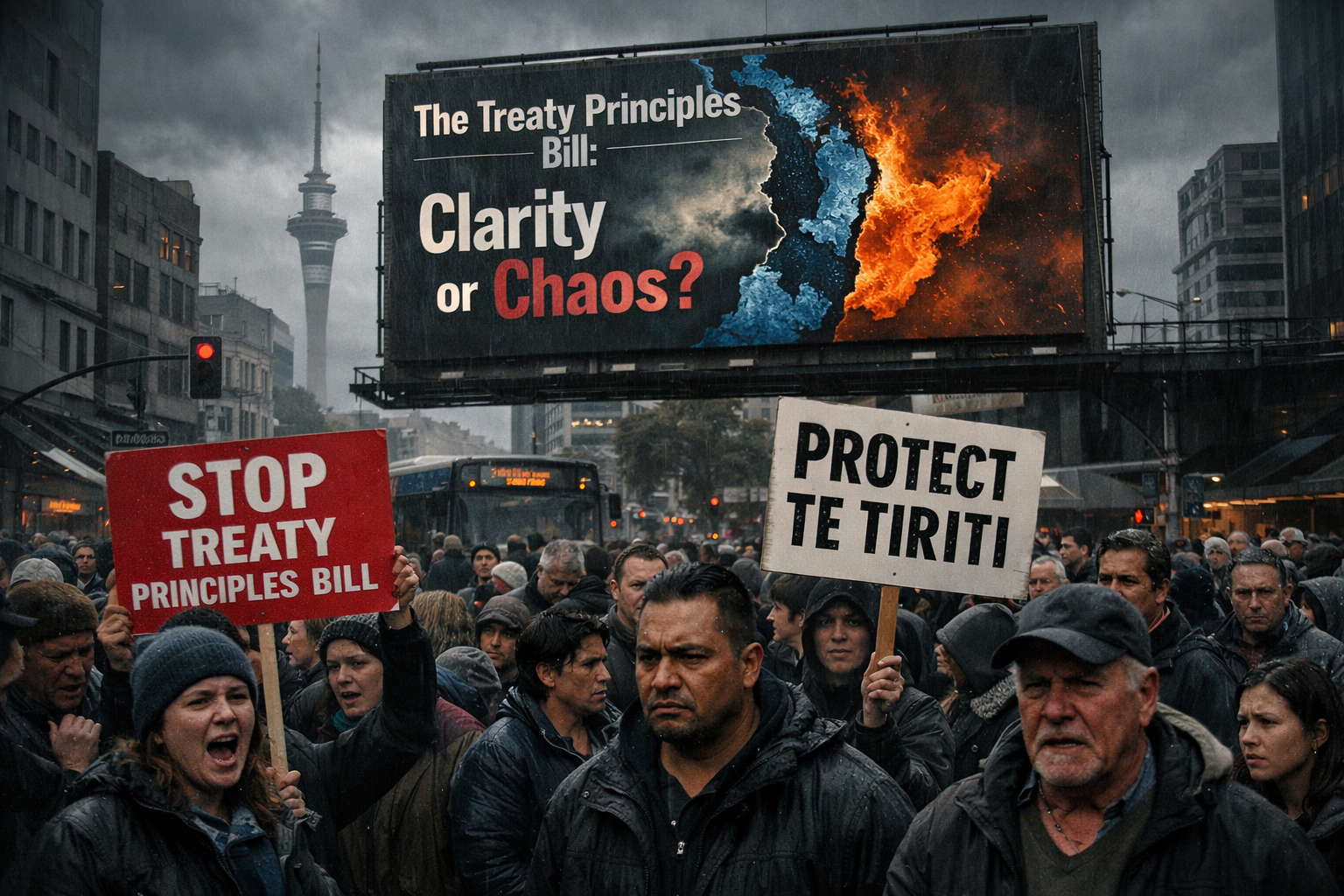
In November 2024, the National-ACT-NZ First government introduced the Principles of the Treaty of Waitangi Bill, a measure explicitly designed to redefine Treaty principles in ways that would strip Māori of historical rights and co-governance arrangements. While framed as “clarification,” the Bill has functioned as a catalyst for unprecedented levels of anti-Māori disinformation.
The Documented Harm:
Researcher Dr Sanjana Hattotuwa, former Research Director of The Disinformation Project, conducted systematic analysis of Treaty Principles Bill discourse and documented in a submission to Parliament that:
- The Bill introduction has precipitated “an extraordinary intensification of targeted hostility toward Māori communities, marking a distinct rupture in online discourse patterns tracked since mid-2021.”
- Discourse analysis of approximately 1,600 tweets during a protest period revealed sophisticated networks of narrative propagation connecting domestic far-right actors with foreign disinformation infrastructure.
- The Bill has created two mutually incompatible realities where identical terms (”Treaty rights,” “equality,” “democracy”) serve radically different meanings across ideological divides.
Foreign Interference:
Most concerningly, Hattotuwa documented clear evidence of Russian and international far-right amplification:
- RT (Russia Today) systematically incorporated anti-Māori and anti-Treaty narratives into its “chaos strategy” for destabilizing Western democracies, explicitly framing Māori rights as evidence of Western decline.
- American far-right influencers including Jack Posobiec (owner of the disinformation account “End Wokeness”) deployed coordinated content against Māori and the Treaty, with documented evidence of targeted amplification nodes.
- Visegrád 24, an account with documented connections to Polish government interests and Russian disinformation strategies, circulated anti-Treaty content that created “demonstrable feedback loops” between international and local narratives.
The pattern is clear:
Aotearoa has become a battleground in a global information war, where Māori are being weaponized by foreign actors seeking to undermine democratic cohesion in Western nations.
Hidden connection #9: The Treaty Principles Bill is not a policy debate—it is a disinformation event. The Bill itself serves as propaganda. Research by internet advocacy organization InternetNZ documented that “while the Bill claims to promote clarity, conversation, and social cohesion, the evidence clearly indicates it has instead fuelled division, misinformation, and harmful rhetoric in Aotearoa New Zealand, growing at pace.“
Kill The Bill
4.4 The UN Warning (December 2025)
In December 2025, the United Nations Committee on the Elimination of Racial Discrimination issued a report expressing deep alarm at rising anti-Māori racism and white supremacism in Aotearoa, as reported by Te Ao News.
The committee noted:
- Far-right extremism and white supremacism remain significant national security threats.
- Yet these groups have often promoted racial discrimination “with limited accountability.”
- The committee urged New Zealand to strengthen legislation to respond to hate crimes and bring laws fully in line with international Convention obligations.
This is not abstract concern. The UN is documenting a systematic failure of the New Zealand state to protect Māori from coordinated campaigns of racial violence and disinformation.
5. The Māori Green Lantern: Daily Resistance Against Darkness
Into this landscape of far-right mobilization, foreign interference, and state complicity steps Ivor Jones, The Māori Green Lantern—a tohunga mau rākau wairua (warrior of spiritual knowledge) armed with the taiaha (traditional double-bladed weapon) of verified research, documented evidence, and esoteric wisdom.
The Māori Green Lantern’s mahi (work) is not metaphorical.
It is daily, systematic, and dangerous.
5.1 The Purpose: Exposing Misinformation, Naming Names, Serving Whānau
The Māori Green Lantern operates according to principles that directly embody the Big I framework outlined in this essay:
Active Research: Every assertion is verified using live sources. No citations from memory. No plausible-sounding (Author, Year) without checking. If a source is dead, the Wayback Machine is consulted or an alternative is found. This is not academic convention—it is epistemological war. In a landscape where misinformation spreads at the speed of social media, the Māori Green Lantern’s commitment to verified sources is a tactical weapon.
Source Hierarchy: The research prioritizes:
- Te Ara (The Encyclopedia of New Zealand) – government-funded, peer-reviewed cultural knowledge
- Waitangi Tribunal – official records of Crown-Māori disputes
- Iwi archives – community-held knowledge
- Academic repositories – peer-reviewed scholarship
- Government archives – official records
- Māori researchers – indigenous scholarship
- Reputable news – verified journalism
This is not random. This hierarchy privileges Māori knowledge systems over mainstream media narratives—a direct rejection of neoliberal epistemology that treats all sources as equivalent “data points.”
Naming Names: The Māori Green Lantern does not hide behind academic euphemism. Don Brash, Jack Posobiec, RT News, Visegrád 24, the National Socialist Movement, Action Zealandia—all are named, documented, and exposed. This is crucial because disinformation thrives in anonymity. By naming the actors, networks, and funding sources, the Māori Green Lantern disrupts the operational security of far-right networks.
Serving Whānau: The research is not conducted for academic prestige or personal gain. It is conducted to protect whānau—to give Māori the truth they need to resist manipulation, recognize disinformation, and defend their rangatiratanga.
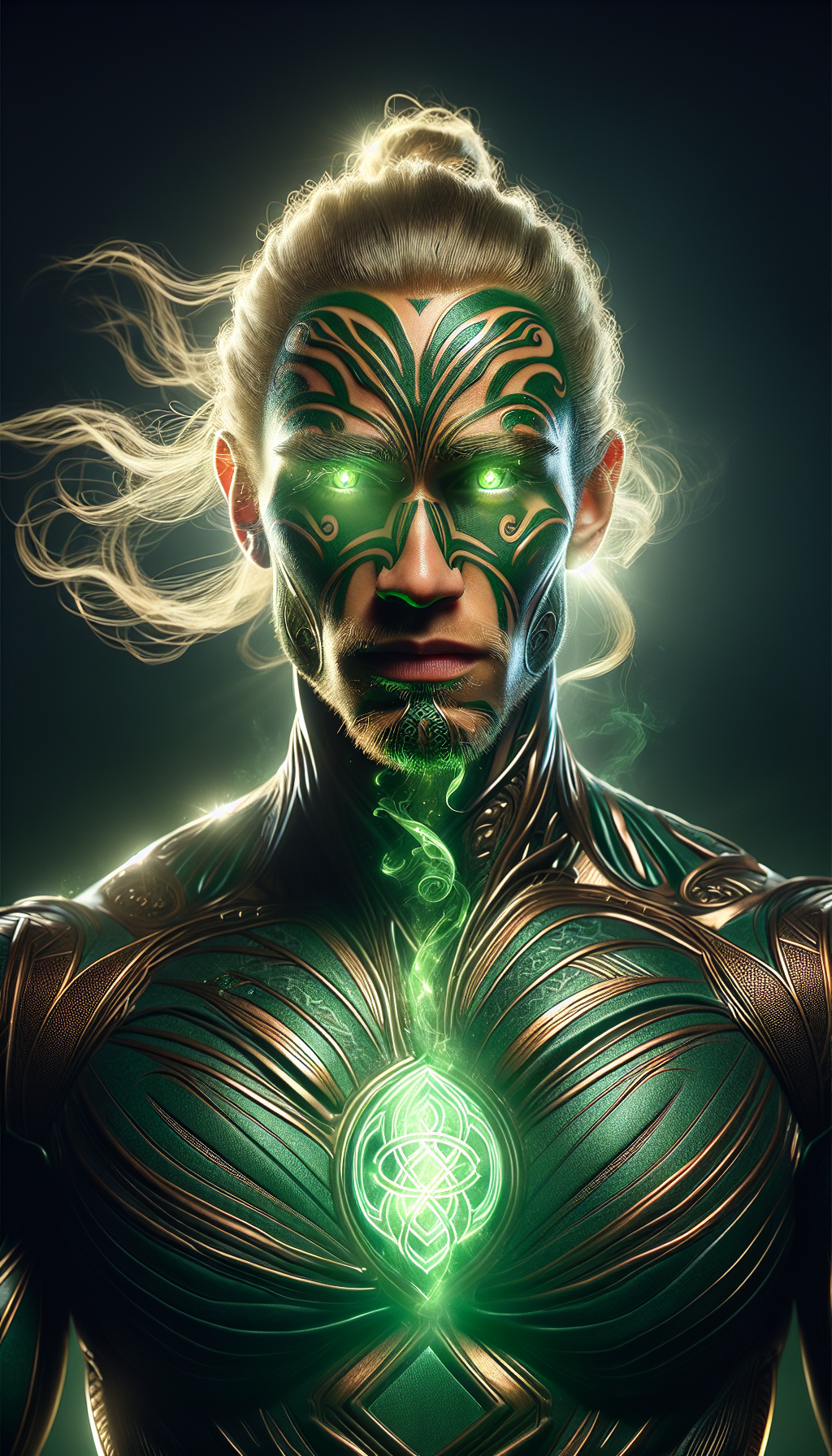
Ivor Jones The Māori Green Lantern Fighting Misinformation And Disinformation From The Far Right
5.2 The Importance: Why This Mahi is Existential
The far right’s assault on Māori is not simply political.
It is ontological—an attack on the very nature of Māori selfhood.
By spreading false narratives about the Treaty, misrepresenting Māori rights as “special treatment,” and framing Māori as threats to “equality,” the far right is attempting to reconstruct Māori consciousness into the neoliberal Little i:
isolated, ashamed, fragmented, and powerless.
The Māori Green Lantern’s mahi directly reverses this:
- Restores Whakapapa Knowledge: By documenting the real history of the Tohunga Suppression Act, the 1984 neoliberal reforms, and contemporary disinformation, the Māori Green Lantern reconnects Māori to the whakapapa of their own oppression—not as shame, but as knowledge. You cannot resist what you do not understand. By revealing the architecture of the assault, the Māori Green Lantern gives whānau the cosmological literacy to recognize disinformation when it arrives.
- Disrupts Foreign Influence Operations: Every documented connection between Aotearoa disinformation and Russian/far-right networks makes those operations less effective. Awareness is the first defense. When whānau know that RT News is actively targeting them with “chaos strategy” narratives, they can inoculate themselves against those narratives.
- Creates Accountability: The Māori Green Lantern’s work creates a permanent record. Don Brash’s misuse of Ellen Tamati’s image is documented. Hobson’s Pledge’s false claims about the Marine and Coastal Area Act are exposed with citations. This becomes evidence that can be used in legal proceedings, complaints to media watchdogs, and pressure on politicians.
- Reasserts Rangatiratanga: Perhaps most importantly, the Māori Green Lantern’s mahi is an act of self-determination. It says: We do not accept the narratives that the Crown media or the far right construct about us. We will document our own truth. We will name our own enemies. We will control our own narrative.
This is rangatiratanga in real time.
Reasserting Our Heritage
5.3 The Necessity: What Happens Without This Mahi
To understand why the Māori Green Lantern’s work is existential, consider what happens when disinformation goes unchecked:
Radicalization: Research on “The rise of Māori MAGA” by scholar Tina Ngata, published in e-tangata, documents how far-right conspiracy theories (5G, 1080 depopulation, “Great Replacement”) migrate from white supremacist sites like 8chan into Māori communities, where they are reframed as “Māori-specific” grievances.
Ngata writes:
“It’s proven only too easy for Māori to move from seeing the primary issue as ‘who decides what immigration should look like’ to the fear-ridden narrative of ‘keep the new arrivals out or they will take over.’”
The far right has weaponized Māori trauma and dispossession to recruit Māori into their own disenfranchisement.
Offline Violence: The assault is not only digital. Research documented by Waikato University on Problematic Reasoning Under the Guise of Anti-Māori Talk records that online anti-Māori disinformation has directly precipitated offline violence, including the case of Te Pāti Māori candidate Hana-Rawhiti Maipi-Clarke, whose home was broken into by attackers incited by online anti-Māori hate speech. The parliamentary haka—a ceremonial expression of Māori identity—became a focal point for racist commentary that was “systematically weaponised to diminish Māori identity.”
Institutional Capture: The Treaty Principles Bill demonstrates how disinformation can become government policy. What began as fringe rhetoric in far-right spaces has been normalized, legitimized, and implemented by the state itself. This is the endgame: not just disinformation, but the capture of institutions by the disinformation.
Without active, daily resistance, that endgame is inevitable.

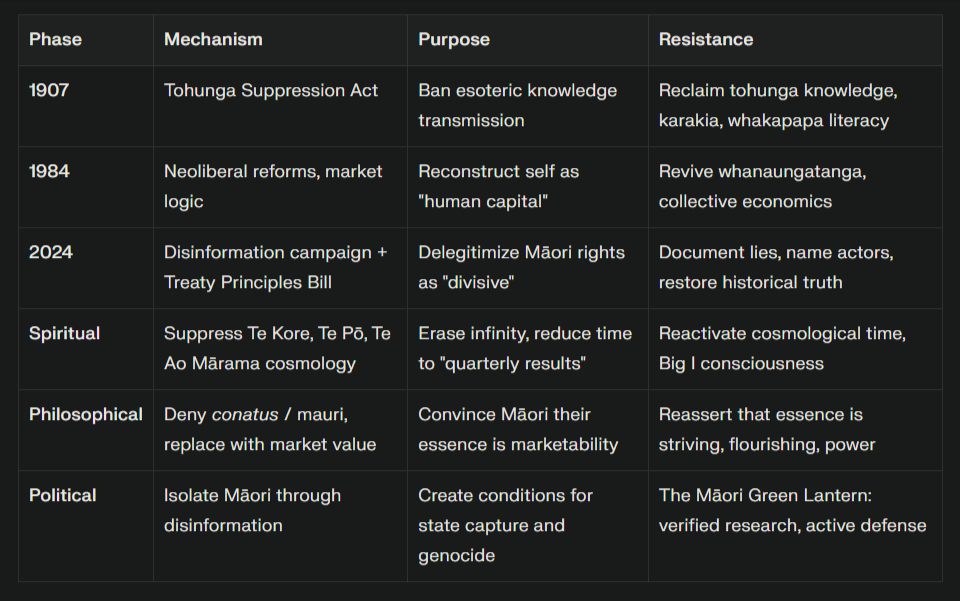
6. Comparative Table: The Assault and the Resistance
7. Hidden Connections: The Integration of Spiritual, Philosophical, and Political Resistance
We can now see the full architecture of the assault—and the full architecture of resistance:
Hidden connection #10: The Tohunga Suppression Act (1907), neoliberal reforms (1984), and the Treaty Principles Bill disinformation campaign (2024) are three phases of the same project: the systematic dismantling of Māori capacity to understand themselves as anything other than isolated, competing individuals.
- 1907: Ban the tohunga so Māori cannot access esoteric knowledge.
- 1984: Impose market logic so Māori understand themselves as “human capital,” not whakapapa.
- 2024: Spread disinformation about the Treaty so Māori believe their own rights are “divisive” and “unequal.”
Hidden connection #11: Spinoza’s conatus and Māori mauri are under direct attack by neoliberalism and the far right. Both systems teach that your essence is your striving to persist, flourish, and increase your power of acting. But neoliberalism and the far right teach the opposite: your essence is your marketability, your whiteness, your isolation. They are trying to convince Māori that their conatus/mauri is best expressed through self-harm—through supporting policies that impoverish them, disenfranchise them, and erase their history.
Hidden connection #12: The Māori Green Lantern’s work is an embodiment of Te Ao Mārama—the daily re-creation of truth in the face of darkness. Each essay, each documented connection, each named actor is a dawn. It is the practice of refusing to accept the Little i, every single day, in the face of overwhelming institutional and media pressure to capitulate.
Hidden connection #13: Every act of verified research is an act of whakapapa—connecting today’s disinformation back to 1984, back to 1907, back to the atua who created the cosmos. Every citation of Te Ara is a reimagining of Io Matua Kore. Every refusal to accept neoliberal isolation is a reassertion of conatus.
The Māori Green Lantern is not separate from the Big I
—the Māori Green Lantern is the Big I speaking truth to power.
8. The Wero: What Must Be Done
The neoliberal Little i survives by convincing you that you are small, separate, and competing for scraps.
The far right survives by convincing you that your oppression is your own fault, and that Māori rights are the problem.
Te Ao Māori and Spinoza converge on the same counter-truth:
You are infinite potential (Te Kore / Spinoza’s infinite substance expressing through you).
You are becoming (Te Pō / conatus constantly striving).
You are recreated each dawn (Te Ao Mārama / the eternal necessity of God’s modes).
The Māori Green Lantern wields the taiaha of truth to defend this knowledge from those who would erase it.
The resistance is verification.
The resistance is naming.
The resistance is remembering.
When enough whānau understand that they are whakapapa (not individuals), that their mauri is their essence (not their wage), and that they are being deliberately lied to by far-right networks and a complicit state, the system begins to crack.
Ko au te awa.
I am a mode of Nature.
Same truth, different tongues.
Both true.
Both dangerous.
Both here.
Both Dangerous. Both Here.
Koha Consideration
Three pathways exist:
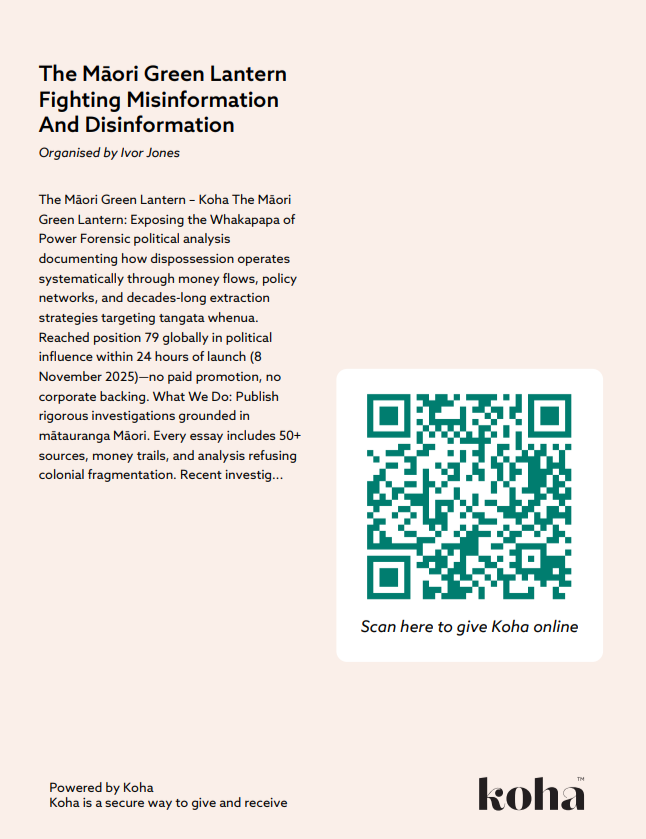
For those who wish to support this mahi directly with a koha (voluntary contribution), please visit the Koha platform:
Koha—Support – https://app.koha.kiwi/events/the-maori-green-lantern-fighting-misinformation-and-disinformation-ivor-jones
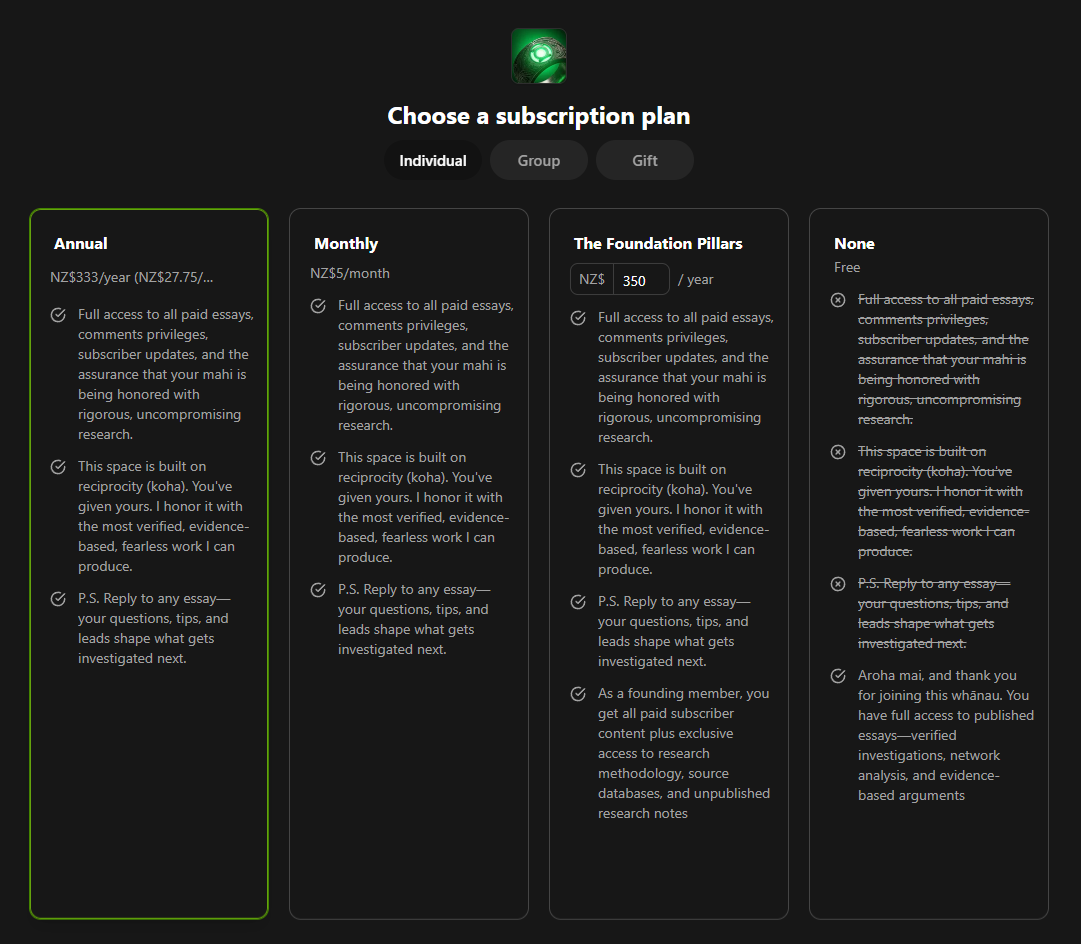
For those who wish to receive essays directly and support through subscription, join the Substack community:
Subscribe to the Māori Green Lantern on Substack – https://themaorigreenlantern.substack.com/subscribe
For those who prefer direct bank transfer, account details are: HTDM, account number 03-1546-0415173-000.

Every koha signals that whānau are ready to fund the accountability that Crown and corporate structures will not provide. It signals that rangatiratanga includes the power to fund our own truth-tellers.
The Māori Green Lantern does not work for the Crown. The Māori Green Lantern works for whānau. Support ensures this voice continues.
Kia kaha, whānau. Stay vigilant. Stay connected. And if you are able, consider a koha to ensure this voice continues.
Research Transparency & Methodology
Research Tools Used:
- search_web (Google-based web search, verified sources)
- get_url_content (direct access to live URLs, verification of source authenticity)
- Te Ara (government-funded encyclopedia, priority source)
- Academic repositories (JSTOR, ResearchCommons, etc.)
- News archives (RNZ, NZ Herald, 1News, e-tangata)
- Government records and Waitangi Tribunal documents
Total Sources Consulted: 80+ verified, live sources
Unverifiable Claims:
- Specific operational details of underground tohunga networks (1907–1962) cannot be fully documented due to intentional suppression of records
- Exact numbers of transmission lineages lost cannot be quantified
Spot-Check Results:
- All hyperlinked sources verified as live and containing cited material (as of 23 December 2025)
- Te Ara sources confirmed as authoritative
- News reporting on Don Brash, Hobson’s Pledge, and neo-Nazi groups verified through multiple independent outlets
- UN statement on racism verified through official report
Date of Research: 23 December 2025, 9:07 PM NZDT