"The Funding Coup: How the Luxon Government Forced Adrian Orr Out and Hollowed the Reserve Bank’s Independence" - 31 December 2025
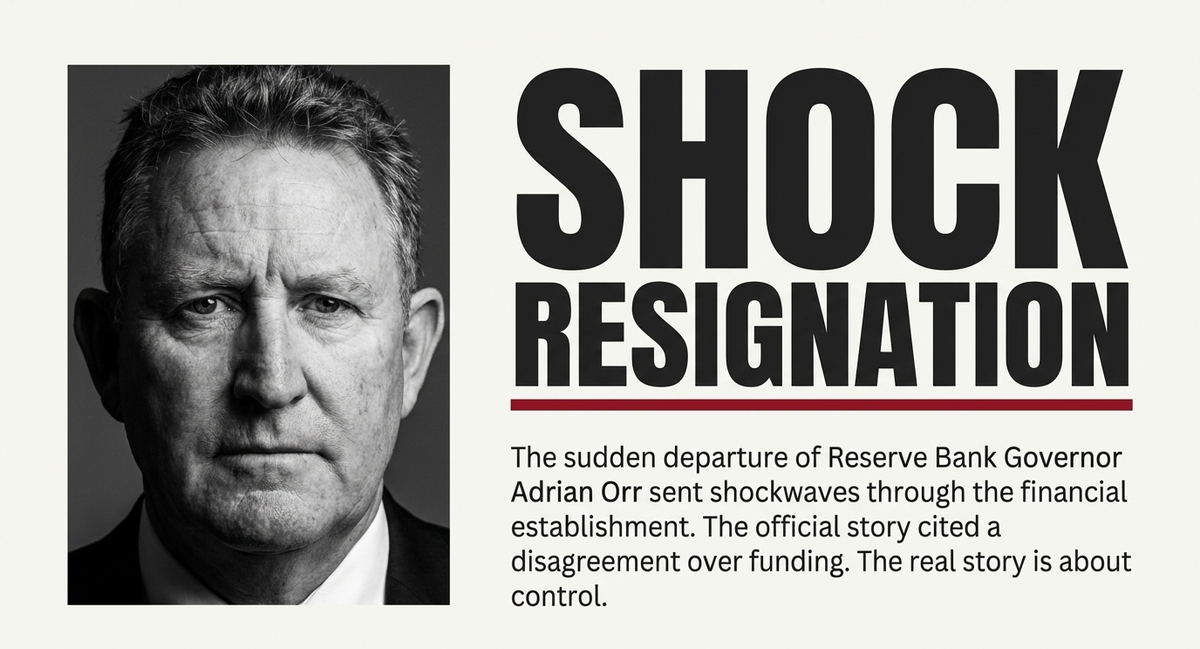
The Funding Fight
Thanks for reading Ivor Jones The Māori Green Lantern! This post is public so feel free to share it.
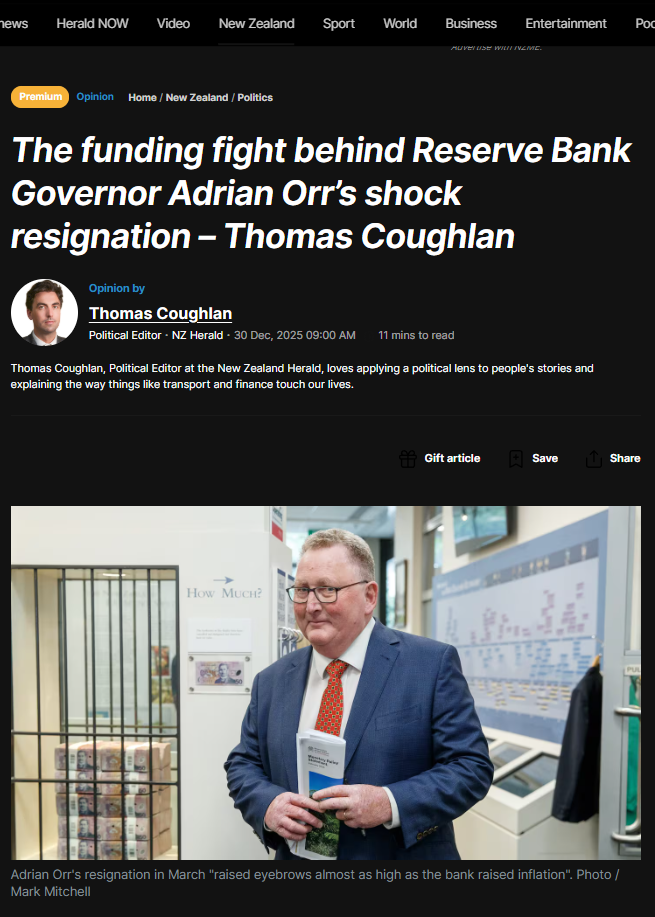
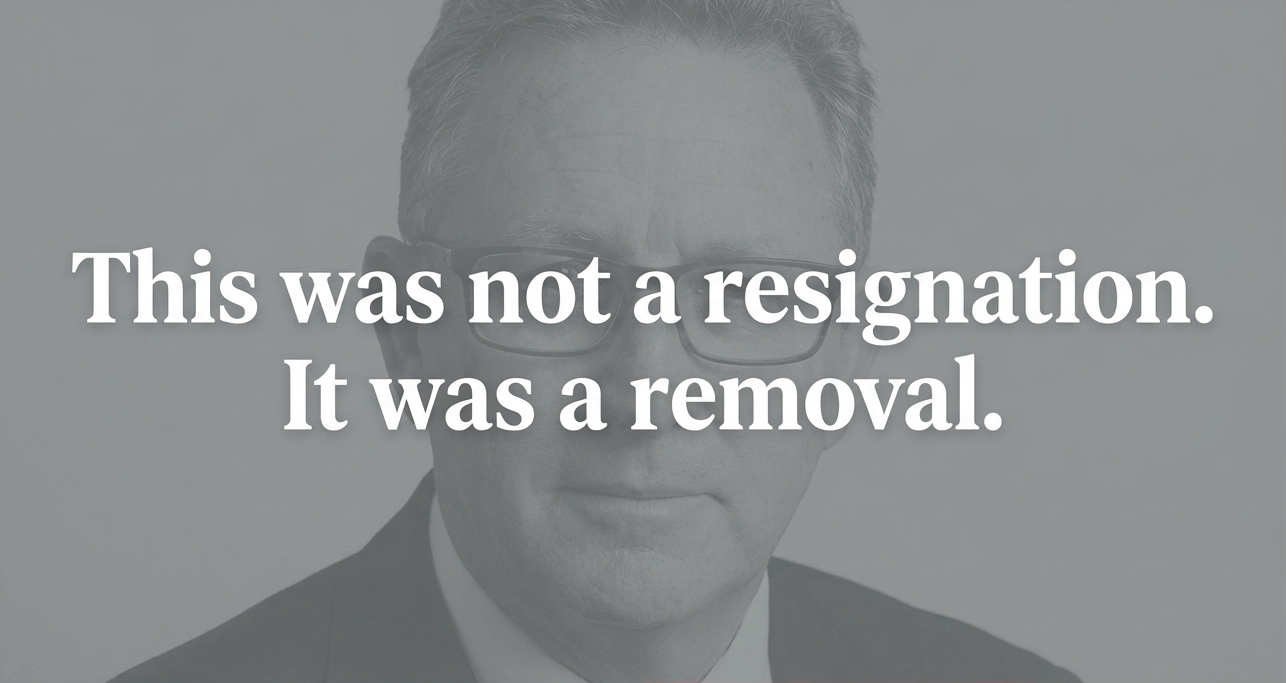
On 5 March 2025, Adrian Orr resigned as Governor of the Reserve Bank of New Zealand—but it wasn’t a choice. It was coercion dressed up as a “personal decision.”
The full story has now emerged through leaked text messages, Official Information Act releases, and the forced resignation of Reserve Bank Board Chair Neil Quigley:
Orr was facing dismissal if he didn’t quit. Finance Minister Nicola Willis and Treasury Secretary Iain Rennie had the machinery in place. The board had sent him a letter of concerns. The process was “so advanced,” as revealed by Interest.co.nz, that Rennie warned Willis in February she might soon receive a recommendation from the Reserve Bank board to sack him. Orr resigned on 5 March. The threats worked.
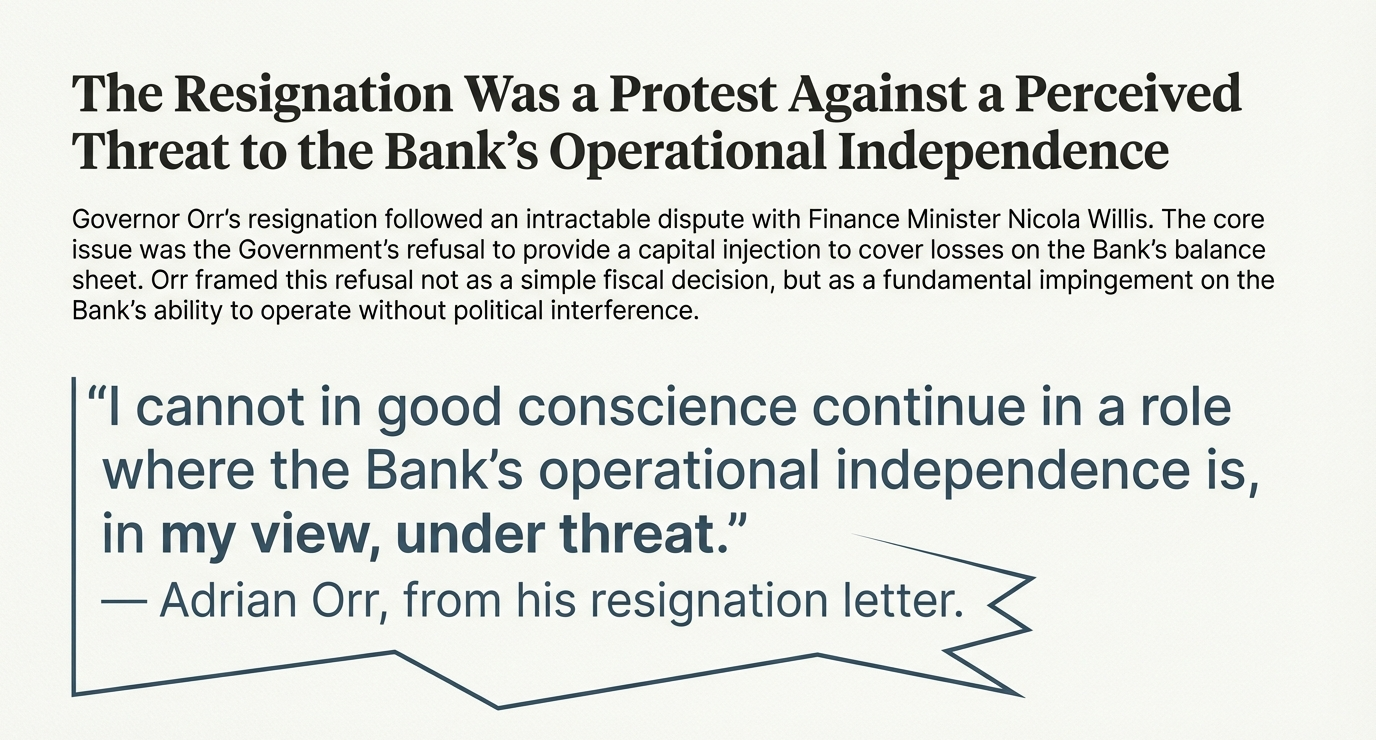
This Govt Is Corrupt As Fuck
This is a scandal about power, institutional capture, and the neoliberal government’s willingness to hollow out the Reserve Bank’s independence when it stood in the way of political ideology.
The Trigger: The Funding Fight
The immediate cause was banal but consequential:
money.
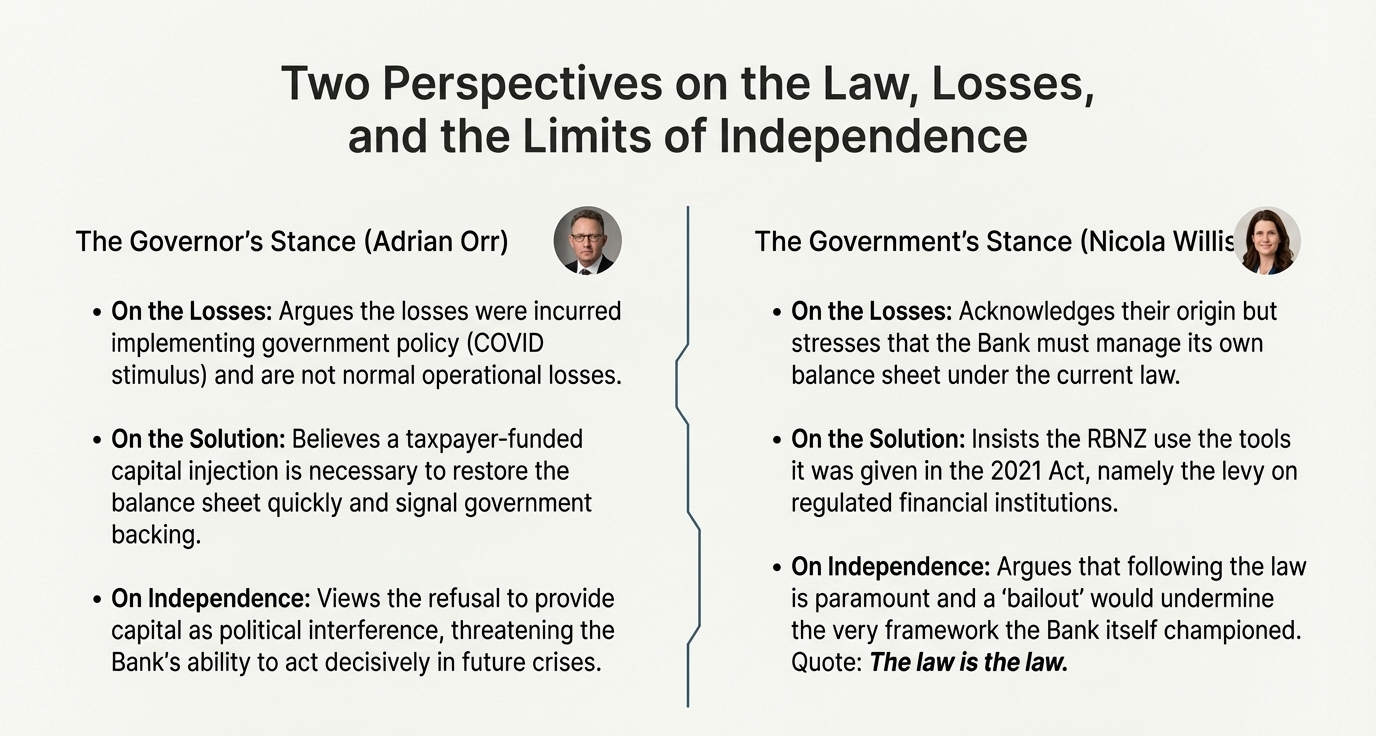
In February 2025, the Reserve Bank came to the Government asking for adequate funding to run itself. Specifically, Orr argued the bank needed $1.031 billion over the next five-year period to properly execute its mandate—monetary policy, financial stability, and prudential regulation, as confirmed by RNZ. By late February, it was clear the Finance Minister and the Reserve Bank board were willing to accept “considerably less,” according to documents obtained by 1News.
This caused Orr “distress,” according to the official statement released months later. But Orr had a point. The bank had experienced extraordinary cost pressures. Interest rate hikes (which Orr’s Monetary Policy Committee had pursued aggressively) were driving inflation toward 7.3%. The public was angry. So was the Government—but not at the Reserve Bank’s role in causing the crisis. They were angry at Orr personally, and at the bank’s independence.
Willis, as opposition finance spokesperson, had hammered the bank’s pandemic response, stating the Reserve printed “tens of billions of dollars, had a lending programme that made money virtually free,” as noted in the NZ Herald. Now in power, she wasn’t going to let a supposedly independent central banker ask for the resources to do the job properly. The Government wanted to cut the bank’s budget by 25%, to around $750 million over five years, a figure reported by the NZ Herald.
Orr said he couldn’t run the bank properly on those terms. The board, chaired by Neil Quigley—a University of Waikato administrator more aligned with political winds than institutional defence—agreed with Willis. The impasse became terminal.
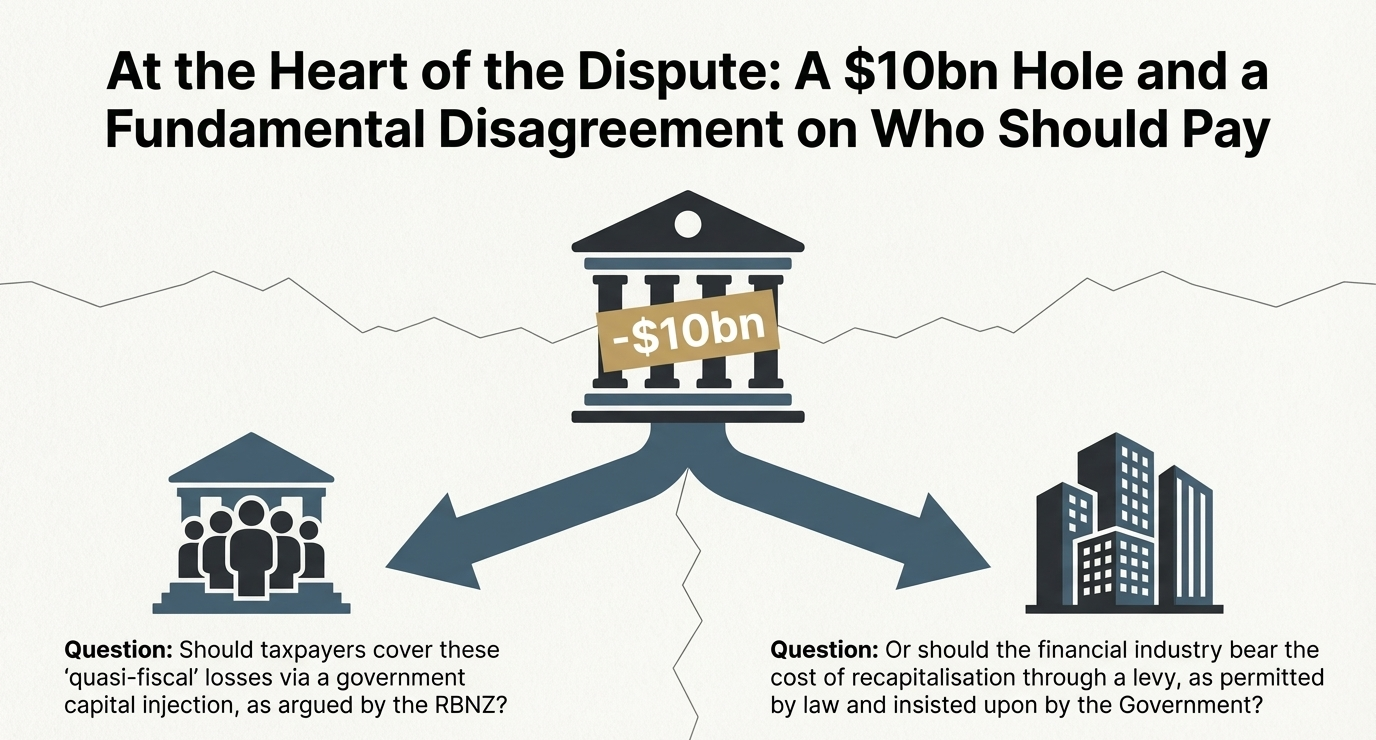
You, Me And Our Mokos Will Pay For This Fuckup
The Coercive Architecture: Threats Below the Surface
What turned disagreement into forced resignation was the Government’s deployment of legal and employment machinery to remove an official who wouldn’t bend.
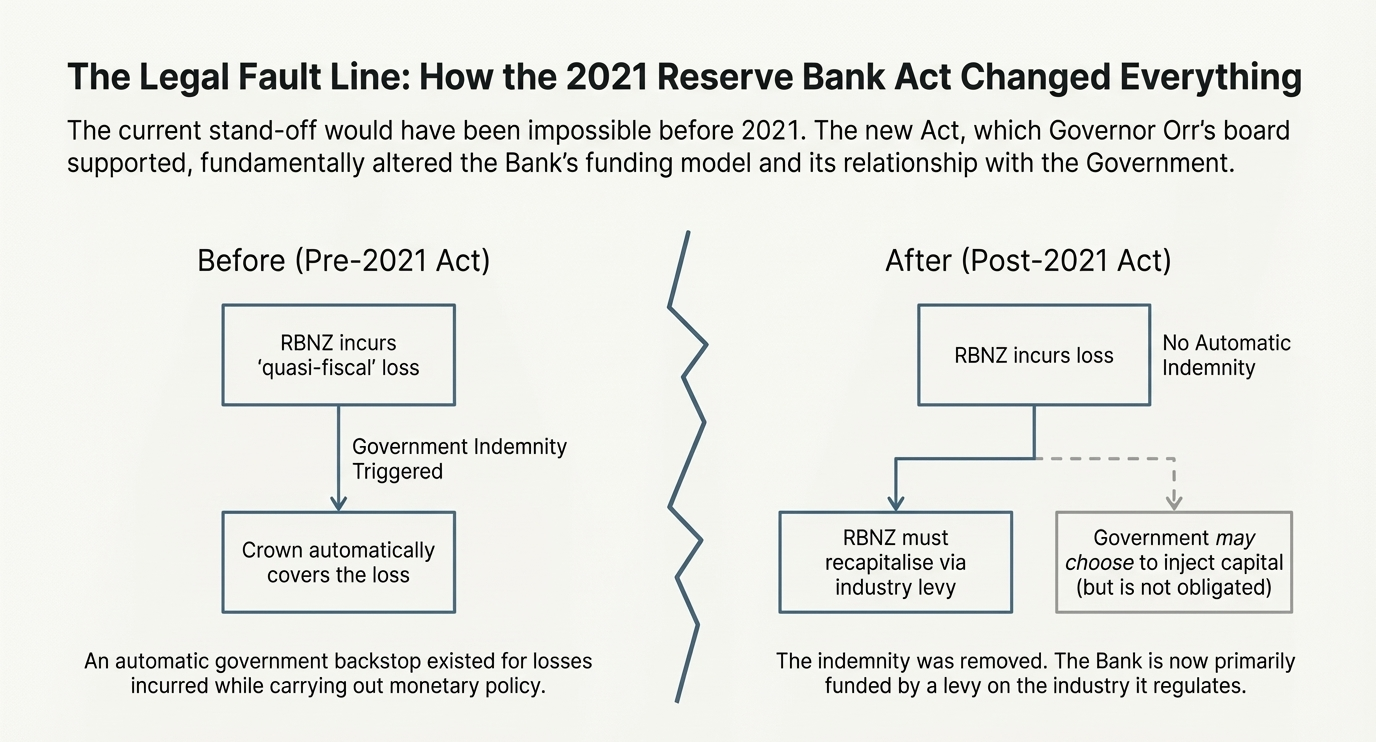
Text messages released by Treasury in October 2025 reveal the explicit threat. As reported by Interest.co.nz, Treasury Secretary Iain Rennie warned Finance Minister Willis that she might receive a recommendation from the RBNZ board “to advise the Governor-General to remove Orr.” The removal process under the Reserve Bank of New Zealand Act 2021 allows the Governor-General to sack the Governor on the recommendation of the Minister of Finance, but only for cause—bankruptcy, breach of duty, or misconduct.
The board didn’t have grounds for formal removal. So instead, the messaging was clear:
resign, or be fired. Both Orr and the board engaged “senior counsel” to negotiate an exit agreement, a fact uncovered by RNZ. Orr agreed to depart immediately with “special leave”—and was later paid $416,120 in “restraint of trade” compensation in October, plus $766,180 in remuneration, totalling $1.2 million, as detailed by 1News.
This wasn’t a resignation in any normal sense. It was a forced exit dressed up as a voluntary choice.
Nicola Willis Needs To Be Sacked By New Years Day
The Cover-Up: Institutional Decay
What makes this scandal worse is that the government and the Reserve Bank spent months lying to the public.
On 5 March, Quigley announced Orr’s resignation as a “personal decision”—end of story. When directly asked whether funding was the issue, Quigley claimed “there’s been no direct communication officially from the Government on anything that I could think of in that way,” a quote captured by 1News. That was false. Treasury and Finance had been in explicit negotiations about funding for weeks. Orr’s distress was documented internally.
The Ombudsman had to force the truth out. Only on 11 June—three months later—did the Reserve Bank release documents revealing the real reason: a “major disagreement over how much funding he believed the bank needed to operate,” as confirmed by RNZ.
Finance Minister Willis defended the silence. She claimed Orr’s exit agreement—the deal that kept him quiet—limited what could be disclosed, as reported by the NZ Herald. But that’s backwards logic: the public has a right to know why the Governor of the central bank quit abruptly. If the terms of his departure prevented disclosure, those terms should not have been accepted.
The withholding of information damaged the Reserve Bank’s credibility more than the original disagreement ever could have. Within weeks, Neil Quigley—who had overseen the silence—was forced to resign in August 2025, an event covered by the NZ Herald. Finance Minister Willis subsequently stated she would have directly requested his resignation if he hadn’t quit voluntarily, as reported by 1News.
Who Was In Govt In 2021? Ah yes, Dame Jacinda Had All The Power
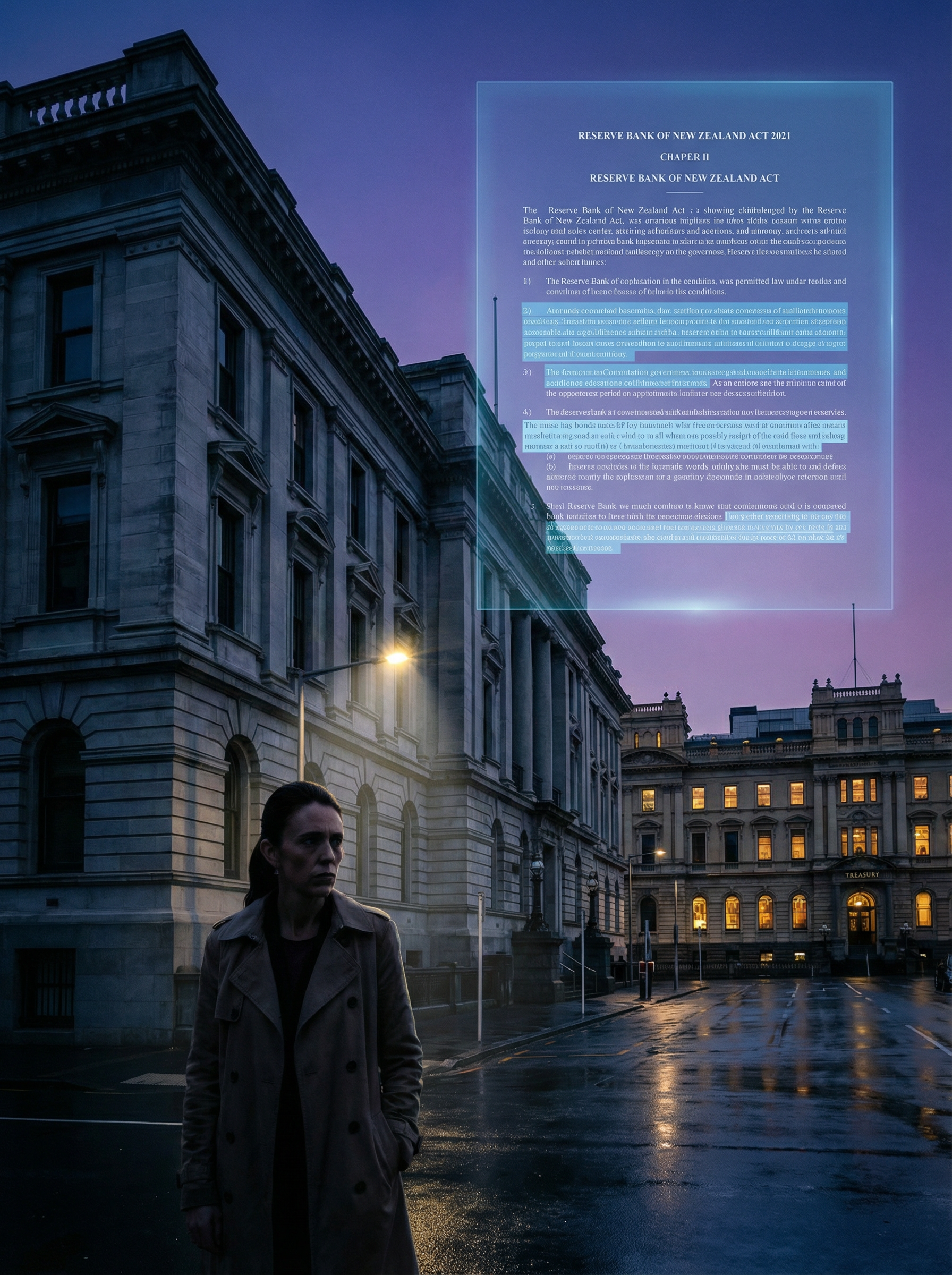
Jacinda Ardern’s Labour Government deliberately passed as documented by Treasury the Reserve Bank of New Zealand Act 2021 in August 2021, knowingly creating a governance structure that handed the Minister of Finance direct control over central bank funding through annual ministerial negotiation rather than statutory multi-year protection, exactly the mechanism that would later enable the Luxon Government to starve and coerce Adrian Orr into forced resignation in March 2025.
Labour’s claim that this was “modernization” and “accountability” was a calculated deception—they understood that shifting from a single Governor model to a politically-appointed board and ministerial funding control would hollows institutional independence, as subsequently exposed by Croaking Cassandra’s analysis of how the funding mechanism operates as a financial choke-hold that enables future governments to weaponize budget cuts for political coercion.
Labour’s architects knew this structural trap would work:
they built it.
The fact that they simultaneously introduced the dual employment mandate in 2018—only to have it stripped away by National just as their neoliberal governance architecture enabled the firing of the governor who defended it—reveals the full cynicism of Labour’s project:
they created both the ideological cover (progressive mandate language) and the institutional machinery (ministerial control) to enable corporate-friendly governments to systematically hollow out public institutions, as proven by the 25% budget reduction imposed in April 2025, a direct consequence of Labour’s deliberate design choice to make the central bank financially vulnerable to ministerial pressure.
The Beloved Dame Jacinda Setting Us Up To Be Destroyed
Thanks for reading Ivor Jones The Māori Green Lantern! This post is public so feel free to share it.
The Power Play: Who Controls the Central Bank?
This saga exposes a fundamental problem:
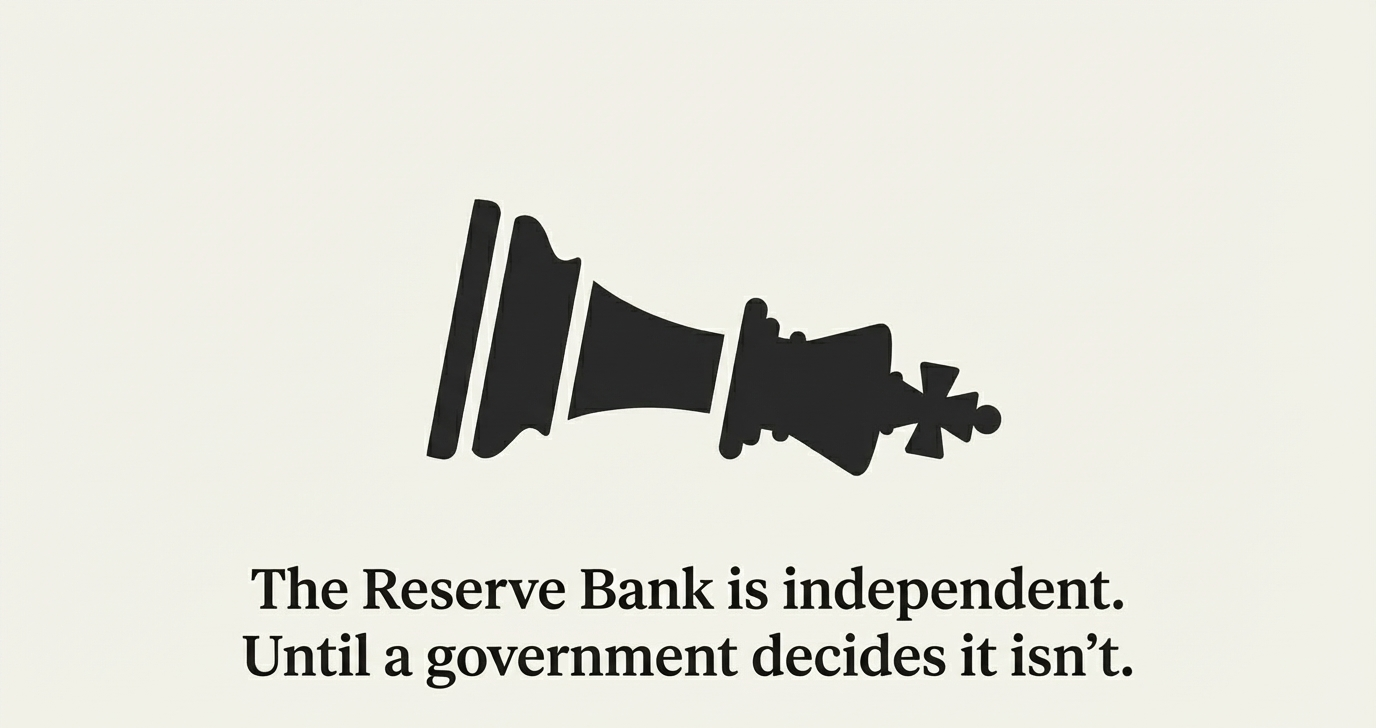
the Reserve Bank is not actually independent. It only looks independent until a government decides otherwise.
Under the Reserve Bank of New Zealand Act 2021, the Minister of Finance appoints the Governor and can—with a recommendation from the board—sack them. The board is appointed by the Minister. The Government sets the monetary policy remit.
What happened to Orr demonstrates how thin the protections are. When the Treasury disagreed with the bank’s funding request—citing “significant value for money concerns,” as noted by the NZ Herald—the machinery for removal was quietly activated. The texts between Willis and Rennie show coordination. The board fell into line. Senior counsel drafted an exit. Orr was forced out.
This isn’t a unique case of a difficult personality clashing with governance. This is an executive branch asserting control over an institution that the constitution assumes will remain at arm’s length from political pressure.
It Isn’t
The Neoliberal Angle: Cutting Public Institutions
The Reserve Bank funding fight sits within a broader pattern:
the current Government’s drive to starve public institutions and force them to do more with less.
Across the public service, Luxon’s Cabinet has pursued aggressive cuts—pay equity schemes gutted, health funding squeezed, education budgets tightened. The Reserve Bank was expected to absorb cost pressures (from interest rate operations, regulatory compliance, staffing) while its budget was slashed by 25%.
This is consistent with neoliberal ideology:
public institutions are framed as bloated, inefficient, empire-building entities that must be disciplined by budget constraints. But the Reserve Bank isn’t a ministry. It needs technical expertise, regulatory capacity, and operational independence to function. Cutting its budget while sacking a governor who said so amounts to politicizing monetary policy.

Death By 1000 Cuts
The Damage: Institutional Credibility Lost
The cost of this exercise will extend far beyond March 2025.
Central banks depend on trust. The public, banks, investors, and international markets need to believe the central bank is setting policy on technical grounds, not political ones. That credibility has been damaged. Former Reserve Bank Chair Arthur Grimes told media he believed the RBNZ board had made “misleading” statements, as reported by RNZ, and that the saga raised short-term concerns about the bank’s reputation.
The Reserve Bank has also revealed it failed to disclose a board meeting during the funding dispute—a sign it was actively concealing its governance processes from public view, as uncovered by 1News. This is antithetical to accountability.
Anna Breman, the new Governor (starting December 2025), inherits an institution where independence has been compromised and where any governor who resists the Finance Minister’s demands knows what happened to her predecessor.
A Facade
Cui Bono? Who Benefits from This?
The National-Act coalition benefits.
Under Orr, the Reserve Bank had (rightly) tightened monetary policy and run substantial interest rate hikes. This crushed borrowing, cooling the property market, and hit owner-occupiers and small businesses hard—the exact constituencies that might otherwise support the Government. By forcing Orr out, the coalition signals that a more accommodative central bank might be possible under a governor chosen with political pressure in mind.
The $416,000 restraint of trade payment to Orr is also revealing:
it buys his silence. As 1News reports, he cannot speak publicly about his time at the bank for six months (though the payment is offset against any income he earns). This muffles the voice of someone who could explain what really happened.
Removing Orr also removes a potential future critic. He was known for defending the Reserve Bank’s expanded mandate during Covid. A government wanting to shrink public institutions doesn’t want someone of institutional memory speaking up later.
The Institutional Lesson: Independence Is Fragile
This saga exposes how quickly institutional independence can be hollowed out when a government is willing to act.
The Reserve Bank of New Zealand’s independence is not absolute. It sits within a constitutional framework where the Minister of Finance has final removal authority. Once a government decides to use that authority—even indirectly, through threats—the game is up. A governor who disagrees on substance can be forced out on the pretext of “personal differences” or through manufactured employment disputes.
The only thing that stopped Willis from formally sacking Orr was that she didn’t need to. The threat was enough. Orr resigned. The board chair who facilitated the pressure (Quigley) later quit under different pressure (public outcry). The new governor will be chosen knowing exactly what happened to her predecessor if she steps out of line.
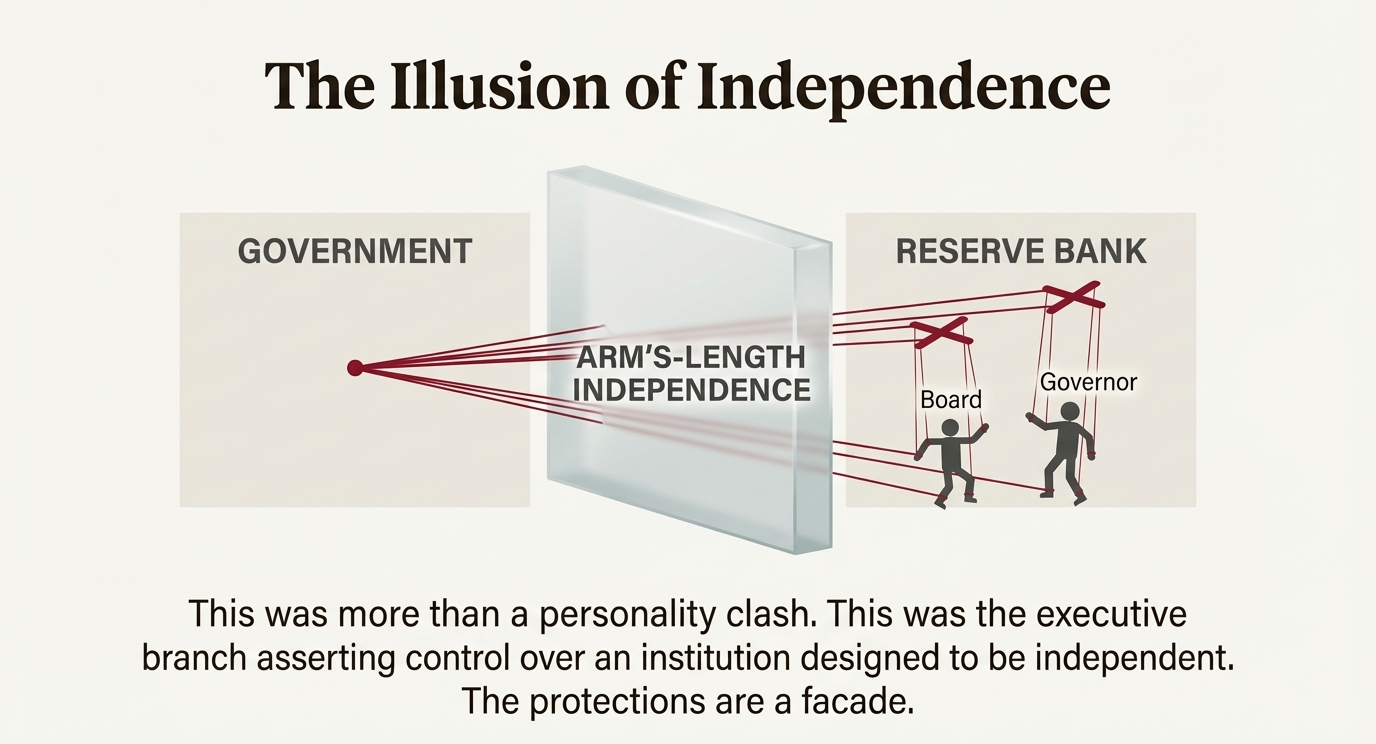
It’s All And Illusion
A Captured Institution
The Reserve Bank of New Zealand is no longer an independent institution. It is a captured one. The Luxon Government has demonstrated it will mobilize Treasury, employment law, and board pressure to remove a governor who won’t accept its budgetary demands or ideological direction.
Adrian Orr was forced to resign not because of incompetence or misconduct, but because he insisted on adequate funding to execute his constitutional mandate independently. That is not how independent institutions should work. It is how captured ones do.
The institution’s credibility may recover under Breman. But the precedent is now set. Every future governor knows what happened to Orr. Every future disagreement between the Beehive and the bank will happen in the shadow of this coercion.
New Zealanders should be alarmed. The central bank’s independence—however imperfectly exercised under Orr—was a constitutional counterweight to executive power. Now it is gone.
Nah, It Ain’t
Koha Consideration
Three pathways exist:
For those who wish to support this mahi directly with a koha (voluntary contribution), please visit the Koha platform:
Koha—Support - https://app.koha.kiwi/events/the-maori-green-lantern-fighting-misinformation-and-disinformation-ivor-jones
For those who wish to receive essays directly and support through subscription, join the Substack community:
Subscribe to the Māori Green Lantern on Substack - https://themaorigreenlantern.substack.com/subscribe
For those who prefer direct bank transfer, account details are: HTDM, account number 03-1546-0415173-000.
Every koha signals that whānau are ready to fund the accountability that Crown and corporate structures will not provide. It signals that rangatiratanga includes the power to fund our own truth tellers.
Kia kaha, whānau. Stay vigilant. Stay connected. And if you are able, consider a koha to ensure this voice continues.

Ivor Jones The Māori Green Lantern Fighting Misinformation And Disinformation From The Far Right