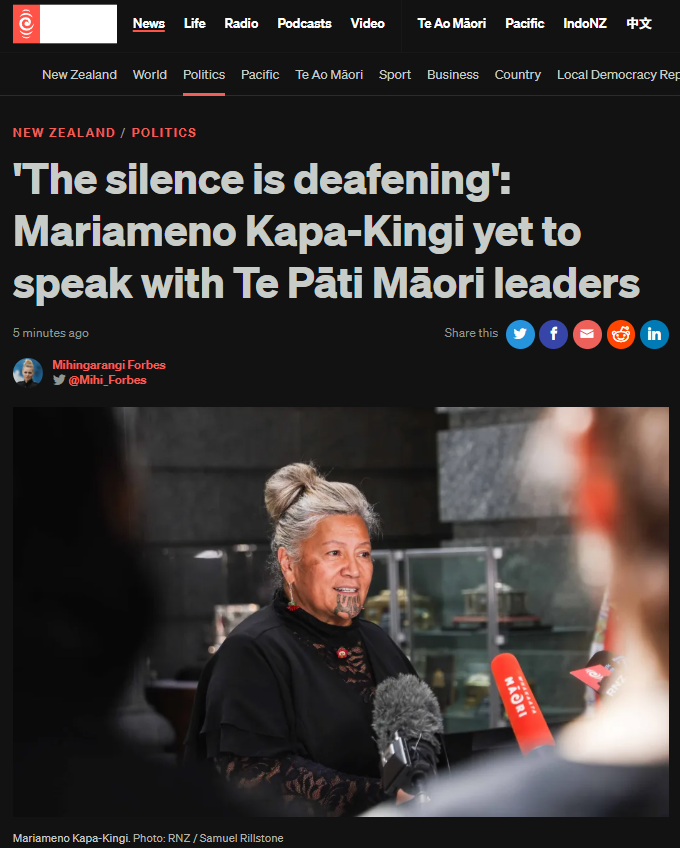
“The Gatekeepers of Injustice: How New Zealand’s Police and Justice System Betrays Its Most Vulnerable” - 25 January 2026
Kia ora whānau,
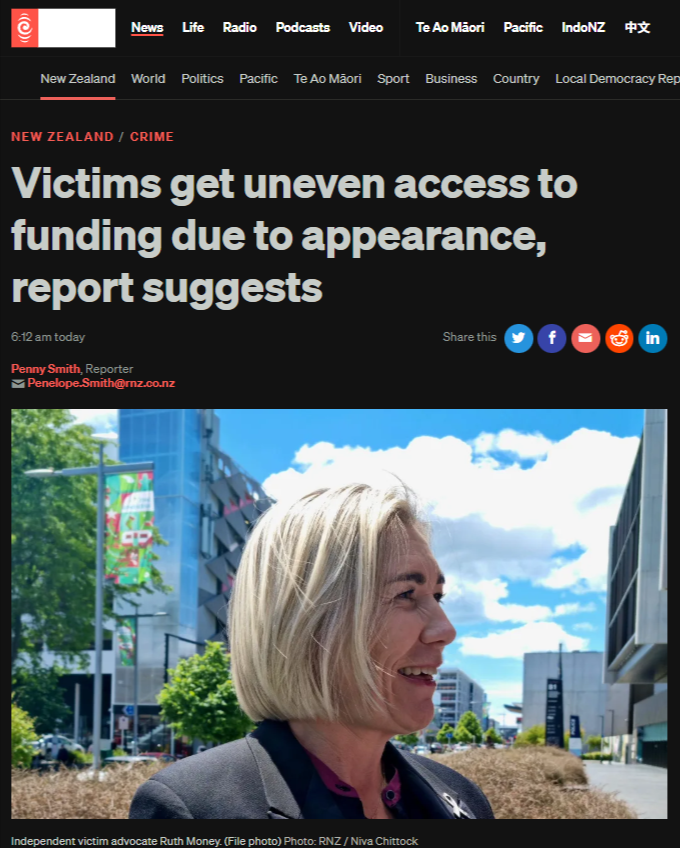
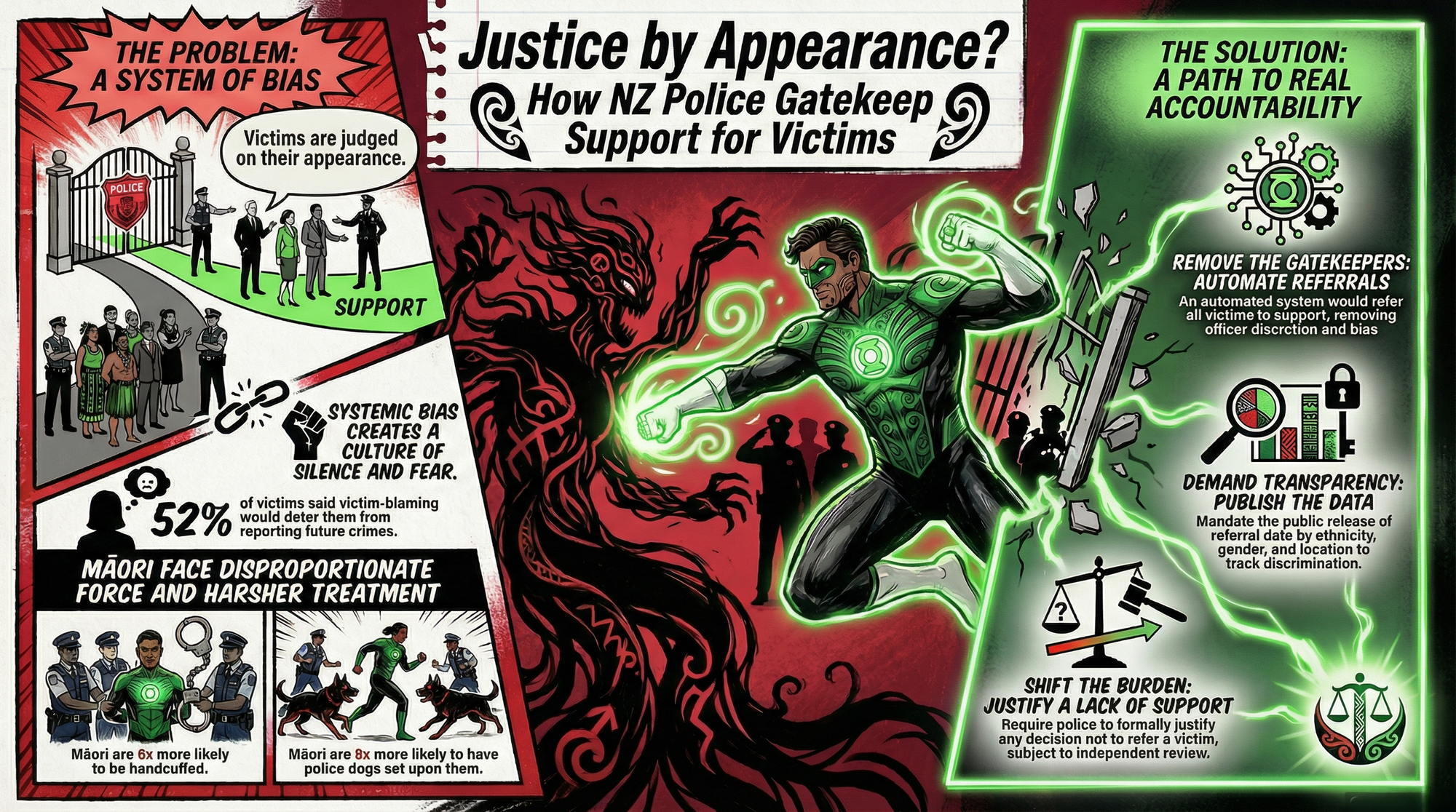
In a functioning democracy, victims of crime should receive support based on need, not appearance. They should be referred to assistance programs because they were harmed, not because they conform to bureaucratic prejudices about who deserves help.
Yet a damning evaluation of New Zealand’s Victim Assistance Scheme, quietly released in early 2026, exposes what advocates have known for years:
the country’s justice system operates on a tiered hierarchy where your access to help depends on whether you look the part of a “stereotypical victim.”
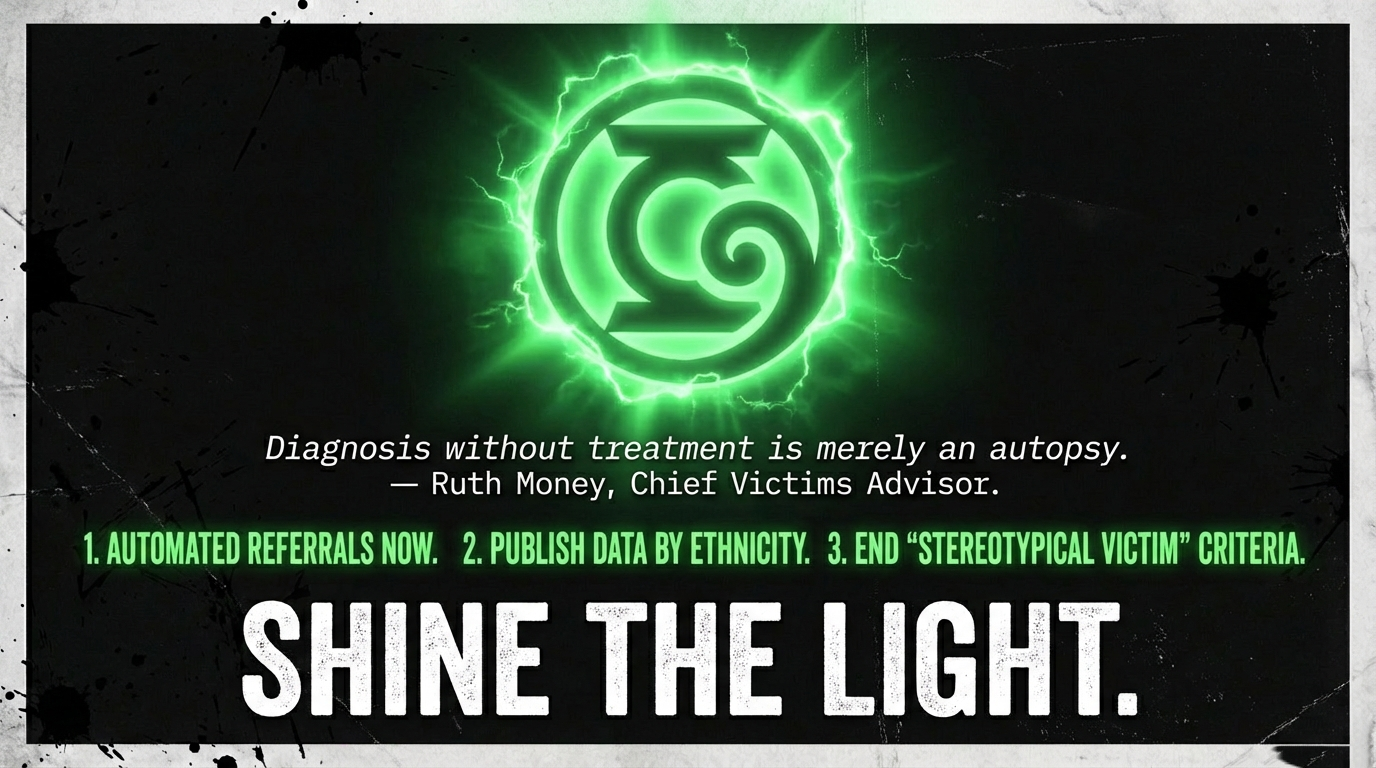
The admission, buried in an evaluation report by consultancy firm Allen and Clarke, is as chilling as it is unambiguous.
Police officers—the gatekeepers who determine whether crime victims receive financial and practical support—make referral decisions based on “how they look, their history and whether they have criminal records.”
One police representative captured the system’s perversity with brutal honesty:
“If they are well presented and come across as a stereotypical victim, officers are more likely to refer to support, including VAS.”
Read that sentence again. Well presented. Stereotypical victim.
These are the criteria determining whether a rape survivor receives counseling, whether a family bereaved by homicide gets funeral assistance, whether someone traumatized by violence can access the help they desperately need. Not the severity of the crime. Not the depth of trauma. Not the urgency of need. But whether they fit a police officer’s mental image of victimhood—an image inevitably shaped by racism, classism, and all the prejudices that policing in Aotearoa has never adequately confronted.
Three pathways to support this mahi:
For those who wish to support directly with a koha (voluntary contribution):
Visit the Koha platform to contribute to accountability journalism that Crown and corporate media will not fund: https://app.koha.kiwi/events/the-maori-green-lantern-fighting-misinformation-and-disinformation-ivor-jones
For those who wish to receive essays directly and support through subscription:
Join the Substack community to ensure you never miss analysis of institutional failure and the path toward accountability: https://themaorigreenlantern.substack.com/subscribe
For those who prefer direct bank transfer:
Account name: HTDM
Account number: 03-1546-0415173-000
Every koha, every subscription, every share of this essay represents a choice to stand with those abandoned by the system. It represents a refusal to accept institutional rhetoric in place of real accountability. It represents the power of rangatiratanga—our power to fund the truth.
Aroha mai. Kia kaha. Kia tupato.
The Rhetoric of Reform, the Reality of Indifference
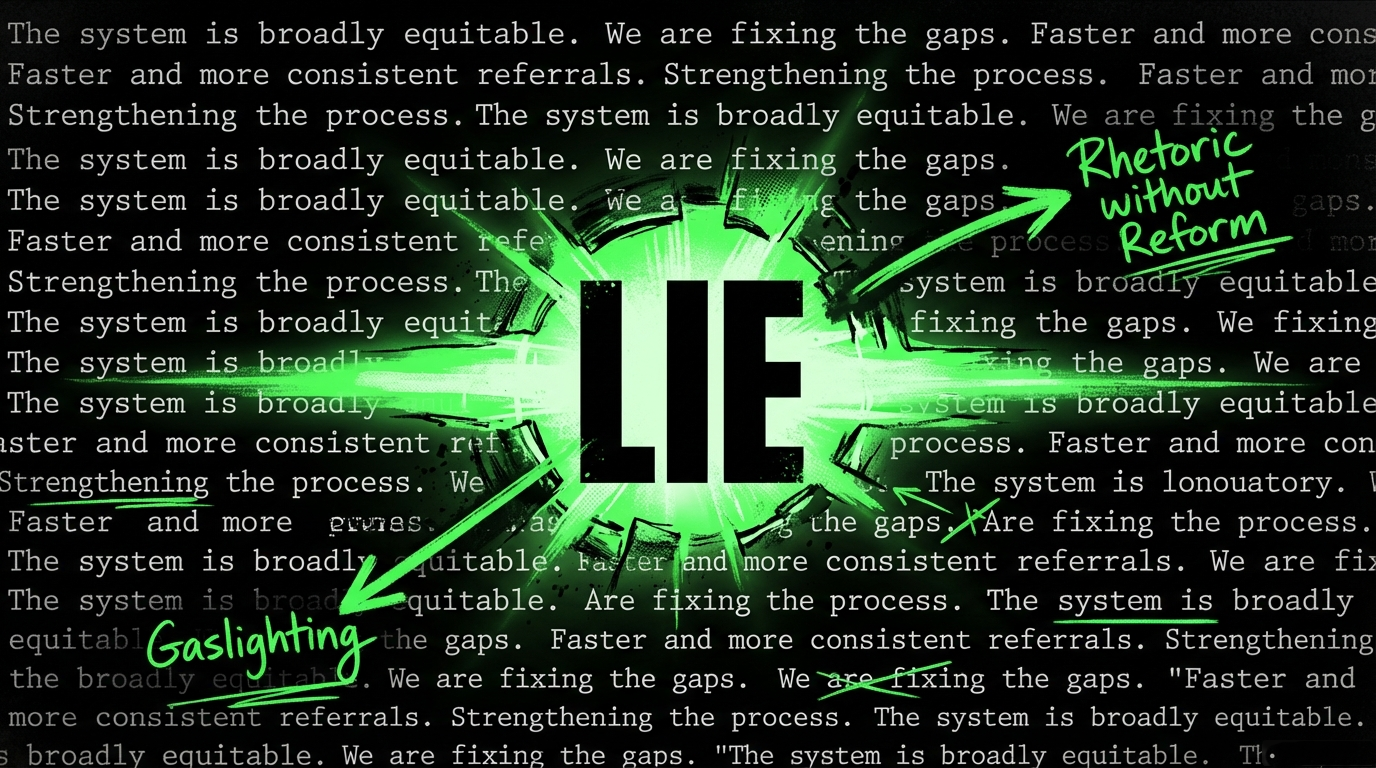
The institutional response to these findings follows a script so predictable it borders on parody. Police claim they are “strengthening the Victim Assistance Scheme referral process” and focusing on “faster and more consistent referrals.” The Ministry of Justice—whose job includes ensuring victims’ rights are upheld—declares the scheme “broadly equitable” even as its own evaluation reveals systematic discrimination. Victim Support welcomes “this feedback” and promises to work with partners to “address the identified gaps.”
Notice what is absent from these responses:
accountability.
Not one officer has been disciplined. Not one concrete consequence has been imposed. No timeline exists for implementing the evaluation’s recommendation for an automated referral system—a technological fix that would remove officer discretion and thus eliminate the opportunity for bias. Instead, authorities offer the same tired remedies: “tools and guidance,” vague promises of training, and the bureaucratic equivalent of thoughts and prayers.
This pattern—acknowledgment without accountability, rhetoric without reform—defines how New Zealand’s justice institutions handle their failures. When Ruth Money, the Chief Victims Advisor appointed in February 2025, calls the behavior “racist, gender-biased, victim-blaming,” her diagnosis is correct. But diagnosis without treatment is merely an autopsy report for a system that continues to harm the living.
Money’s appointment itself exemplifies the contradictions. She is a genuine advocate who has supported victims for over a decade, often calling out system failures. In a 2020 interview, she noted that 79% of victims say they didn’t receive enough information or support—a statistic that should have triggered a justice sector emergency. Yet she operates within a government whose stated goal of reducing victims of violent crime by 20,000 by 2029 rings hollow when police officers are actively gatekeeping support based on prejudice.
The Broader Architecture of Discrimination
The VAS evaluation is not an isolated scandal. It is one brick in a wall of evidence documenting systemic discrimination throughout New Zealand’s criminal justice system. Consider the findings from just the past few years.
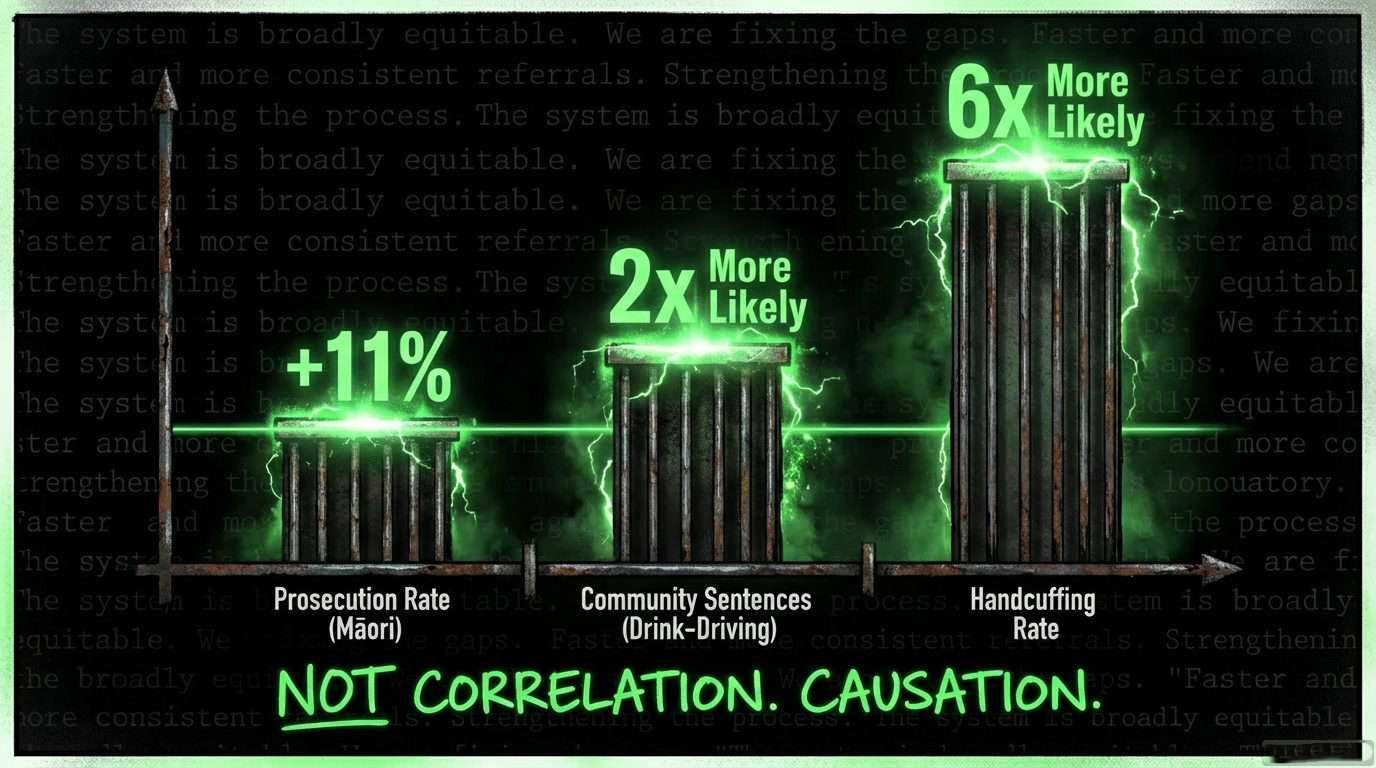
The Understanding Policing Delivery programme found that when all other factors are held constant, Māori are 11% more likely to be prosecuted than Pākehā. A study on drink-driving offenses revealed that Māori offenders are twice as likely as New Zealand Europeans to receive community-based sentences, even after adjusting for alcohol levels, demographic factors, and socioeconomic circumstances.
The disparities extend far beyond ethnicity. A 2024 Victim Support study found a “pervasive culture of victim blaming” in New Zealand, with Rainbow, Māori, and disabled people particularly prone to harmful stereotypes. Research on police responses to intimate partner violence revealed that 40% of trans and non-binary people, 32% of sexuality diverse women, and 25% of women said their first experience with police stopped them from contacting police in the future. Many described being “stereotyped and blamed” by officers who failed to understand trauma responses.
Police interactions with people experiencing mental distress show similar patterns. Research on police responding to mental health crises found “bias, racism and criminalisation,” with “examples of biased, racist, and discriminatory pre-judgements of whānau/citizens.” The 2024 report by an independent panel on police systemic bias found “racism and/or racial profiling was a common theme” with particular reference to Māori individuals and whānau.
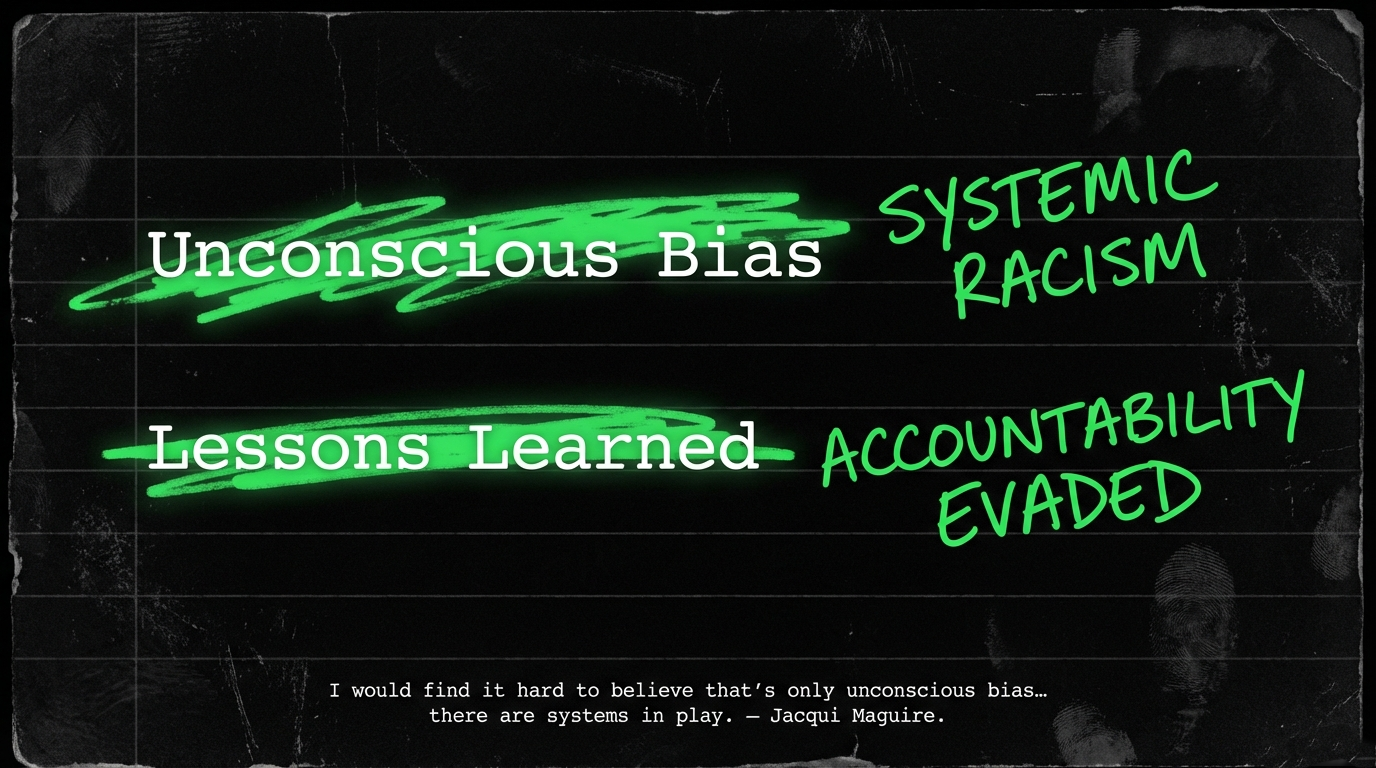
This is not unconscious bias—a convenient euphemism that absolves institutions of responsibility by locating the problem in individual psychology rather than systemic practice. As psychologist Jacqui Maguire observed in 2020, when Māori are six times more likely to be handcuffed, 11 times more likely to be pepper sprayed, and nine times more likely to have dogs set upon them, “I would find it hard to believe that’s only unconscious bias. I would think that that is a signal that absolutely there are systems in play that are supporting a disadvantage between Māori and the rest of us.”
The numbers tell a damning story. Māori make up 55% of complaints related to police use of force despite being approximately 18% of the population. Two thirds of fatal shootings in the last decade have been Māori. Māori comprised 42% of people tasered during the review period for the Understanding Policing Delivery research.
A System That Protects Its Own While Abandoning Victims
The most revealing test of institutional integrity is how power responds when its own are accused. The Jevon McSkimming scandal—which culminated in former Police Commissioner Andrew Coster’s resignation in December 2025—exposes the rot at the heart of New Zealand’s justice institutions.
The facts are straightforward and appalling. A young woman made credible allegations of sexual misconduct, misuse of police resources, and threats involving intimate images against Deputy Commissioner McSkimming, one of the country’s most powerful police officers. The Independent Police Conduct Authority found “serious misconduct at the highest levels of police” in how these complaints were handled. Rather than investigating her claims, police charged the woman herself with causing harm by posting digital communication—essentially prosecuting the victim for the crime of speaking out.
The contrast could not be starker. A woman alleging abuse by a powerful police officer faced criminal charges. Meanwhile, senior officers “simply accepted without question the narrative presented to them by Mr McSkimming,” according to the IPCA report. Coster himself contacted the authority, raising concerns that its inquiries could “increase Jevon’s victimisation” and harm his chances during the appointment process for commissioner—prioritizing the career ambitions of the accused over justice for the complainant.
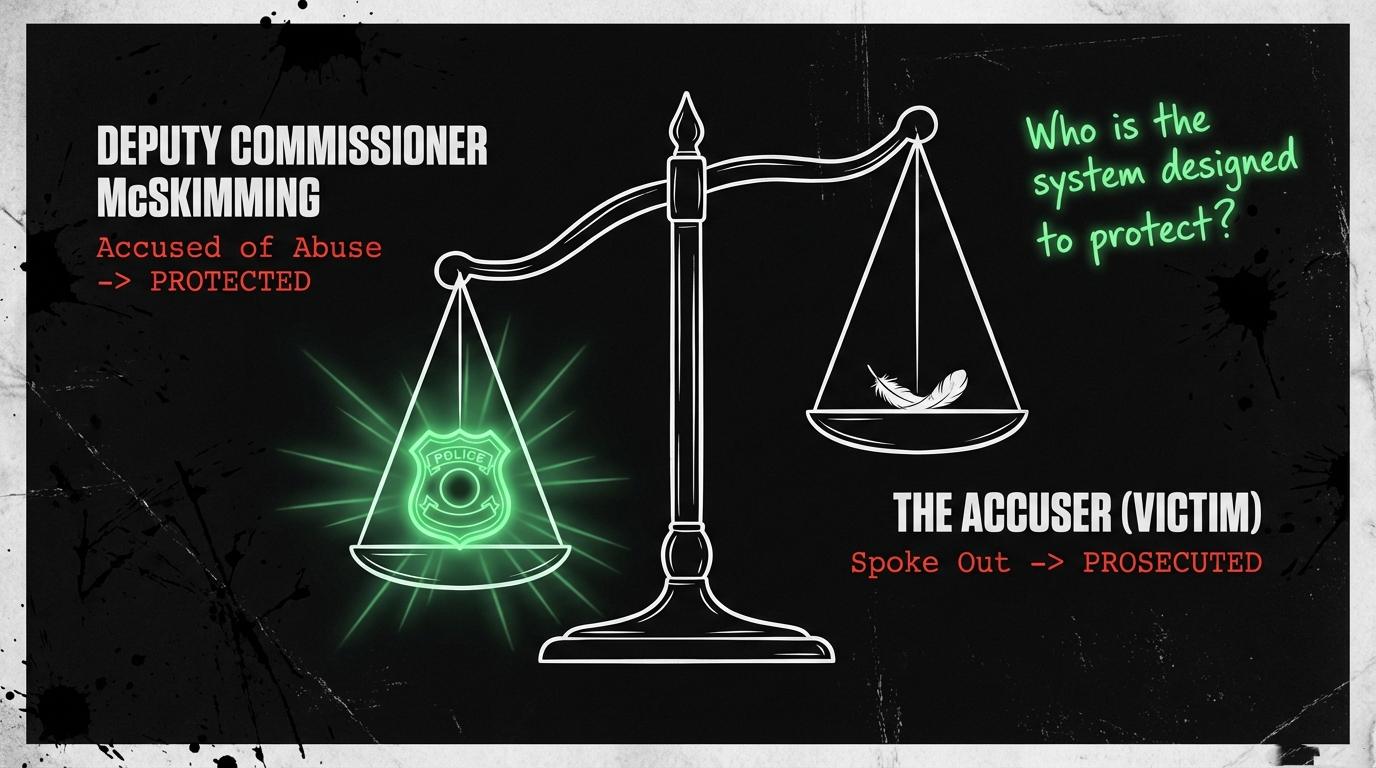
When Prime Minister Christopher Luxon was asked whether the McSkimming case involved a police cover-up, he acknowledged the woman had been treated in a “confronting, appalling, shocking, disgusting” manner. Yet no systemic reforms have been announced. No wholesale accountability process has been initiated. The Public Service Commissioner said he would have sacked Coster if he hadn’t resigned, but that hardly addresses the institutional culture that enabled the misconduct in the first place.
This is the same police force now gatekeeping victim support based on whether people are “well presented” and “stereotypical.” The same institution that charged a woman for speaking out about a deputy commissioner’s alleged abuse is the one deciding which victims deserve counseling and which don’t. The hypocrisy is breathtaking.
The Funding Mirage
Governments facing accountability crises have a predictable playbook: announce new funding, claim the problem is being addressed, and hope public attention moves on. New Zealand’s response to its victims crisis follows this script precisely.
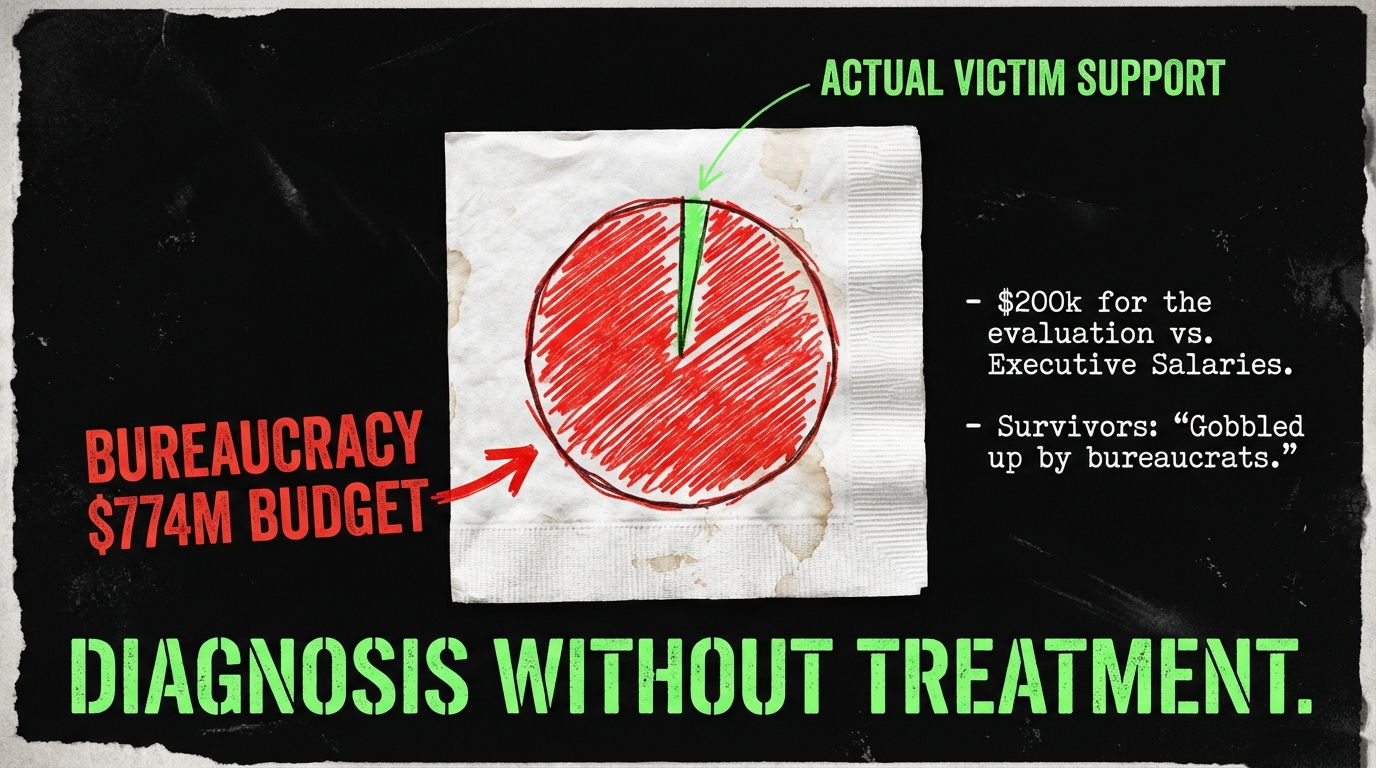
Budget 2025 announced $774 million to respond to the Royal Commission of Inquiry into Abuse in Care, with much fanfare about strengthening redress for survivors. Yet survivors themselves remain deeply sceptical. As survivor Terry Kingi told RNZ:
“I’ve got no faith in it because it will be gobbled up by bureaucrats and they will get the first dibs on it, it’s not the survivors that get it it’s the bureaucrats.”
The skepticism is warranted. A 2022 investigation found that Victim Support had yet to draw on a $3 million fund intended specifically for crime victims. Money allocated doesn’t always translate to money spent on those who need it. When Ministry of Social Development chief executive Debbie Power admitted that the claims process has “often failed” survivors and has been “slow, re-traumatising and litigious,” the question becomes:
why should anyone believe more funding will change a system built on discrimination?
The Victim Assistance Scheme evaluation itself received a mere $200,000 increase in funding for 2024/25. For context, that’s less than half of what Coster was earning in his brief stint as head of the Social Investment Agency before his resignation. The evaluation that exposed systematic bias in victim referrals cost less than one senior executive’s salary—a grotesque illustration of institutional priorities.
The Victim Blaming Epidemic
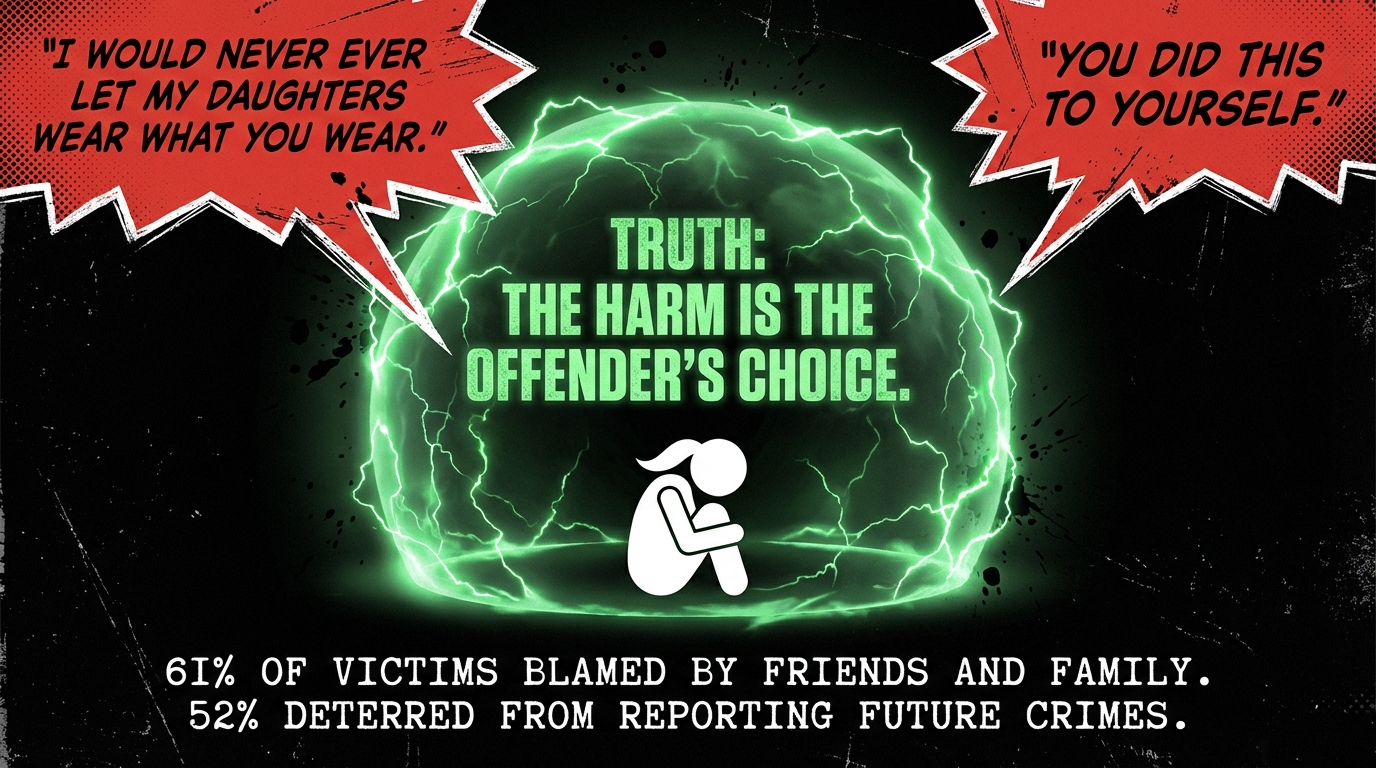
Perhaps the most insidious finding in recent research is how deeply victim blaming is embedded in New Zealand society. Victim Support’s 2024 study found that 61% of victims were blamed by their own friends and family—the people they should be able to trust most. Fifty-two percent said victim blaming would deter them from reporting future crimes, a statistic with profound implications for public safety.
When only 28% of crime is reported to police, New Zealand effectively has a justice system that operates in the dark, responding to less than a third of actual crime. This isn’t a technical failure—it’s a crisis of legitimacy. People don’t report crimes because they fear being blamed, judged, and re-traumatized by the very systems meant to help them. And when they do report, police officers are deciding who gets support based on whether they conform to stereotype.
Some victims in the research said the victim blaming was worse than the crime itself. Let that sink in. The social and institutional response to harm can be more damaging than the original harm. When a sexual assault survivor like Gwen Powell, featured in the study, is told by someone she knows, “I would never ever let my daughters wear what you wear because this is what happens,” the message is clear: you brought this on yourself. When that attitude pervades not just interpersonal relationships but also institutions—police, courts, support services—it becomes a second victimization, this time sanctioned by the state.
The Criminal Injustice System
The criminal justice system’s treatment of Māori represents perhaps the clearest evidence that discrimination is not a bug in the system but a feature of it. A 2023 report described New Zealand’s criminal justice system as “irredeemably racist”—strong language, but the data supports it.
When researchers control for offense characteristics, alcohol levels, demographic factors, and socioeconomic circumstances, Māori drink-drivers remain twice as likely to receive community-based sentences compared to European New Zealanders. This means that after accounting for every relevant factor—severity of offense, prior record, personal circumstances—Māori still receive harsher treatment. That’s not correlation. That’s causation. That’s racism.
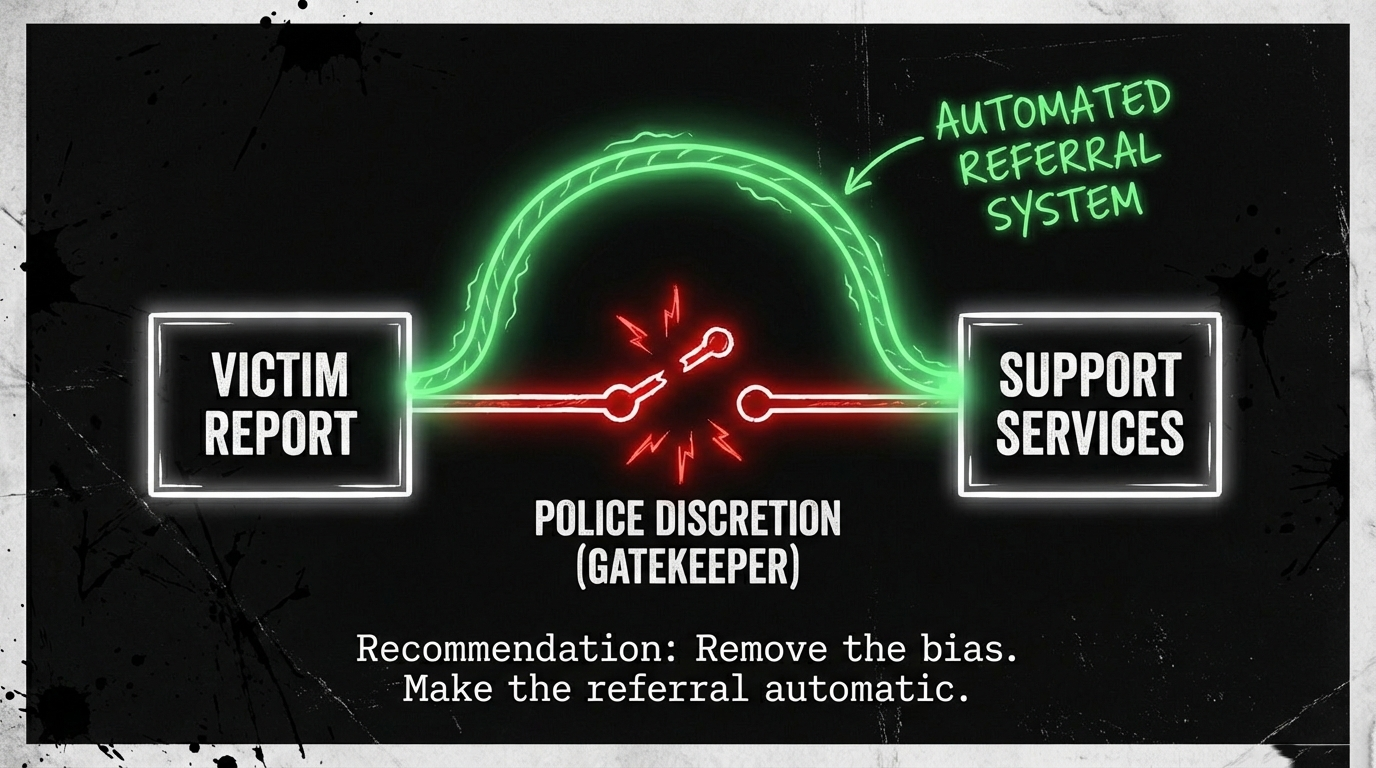
The discrimination operates at every stage. Māori are 11% more likely to be prosecuted by police when all other variables remain constant. They’re more likely to be stopped, tasered, and subjected to use of force. They comprise about 50% of the male prison population despite being roughly 18% of the population. At each decision point—stop, arrest, charge, prosecute, sentence—bias compounds, creating a criminal justice system that functions as an engine of racial disparity.
A 2019 justice report exposed poor treatment of crime victims, with Māori particularly affected. So Māori are both more likely to be victimized and, when they are victims, less likely to receive adequate support. They’re more likely to be prosecuted as offenders and treated more harshly when prosecuted. The system fails them coming and going.
What Accountability Looks Like (Hint: Not This)
Real accountability would look radically different from what New Zealand’s justice institutions are currently offering. It would start with consequences—not just for individual officers who discriminate, but for the leaders who created and maintained systems that enable discrimination.
The IPCA report on McSkimming praised several officers who “displayed commendable integrity and moral courage” by standing up to pressure from senior leadership. Detective Superintendent Kylie Schaare, who raised concerns about the handling of complaints and contacted the IPCA when her concerns weren’t heeded, exemplifies genuine integrity. Yet she had to defy her chain of command to do the right thing. Why should individual officers have to be heroes to ensure basic accountability?
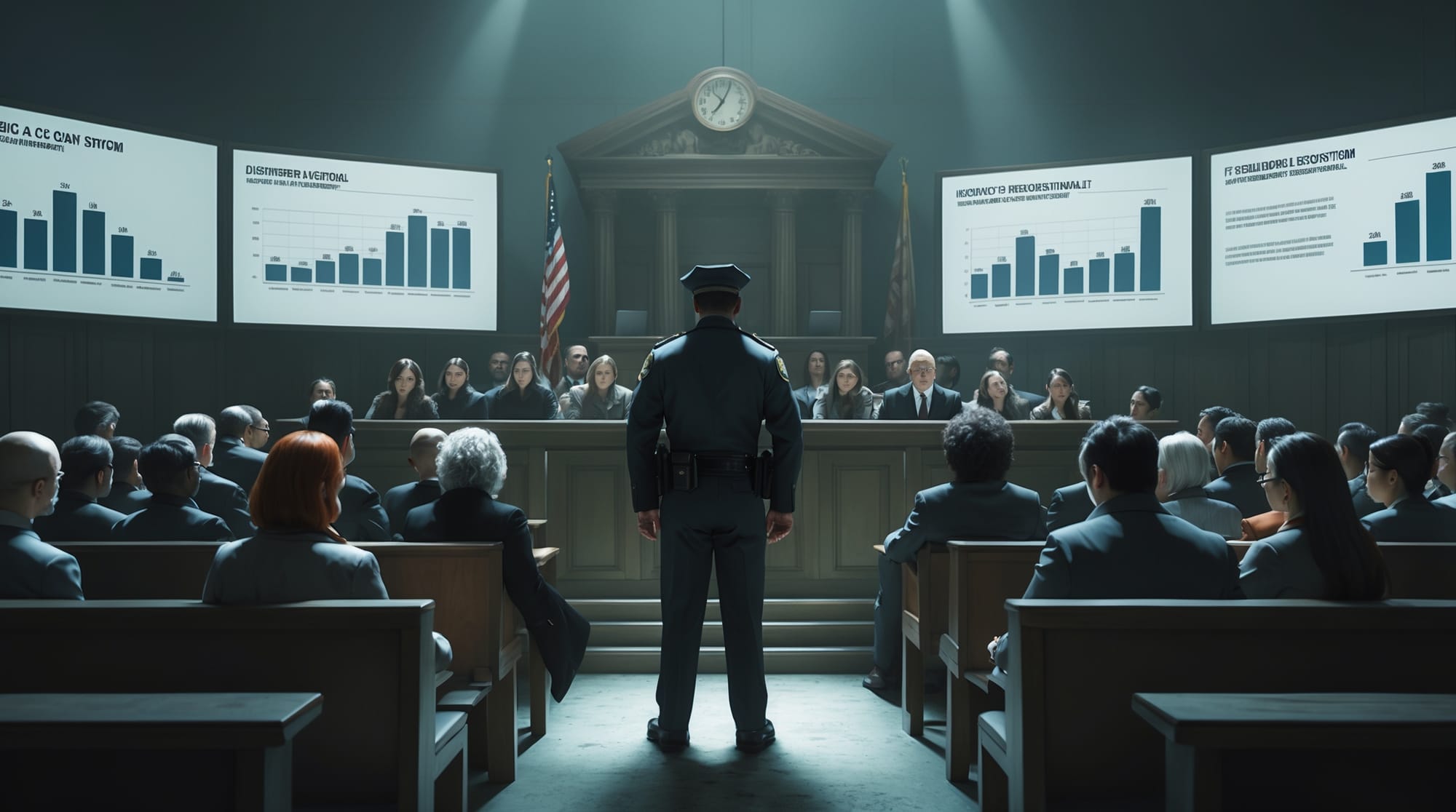
Real accountability would mean implementing the automated referral system recommended in the VAS evaluation immediately—not studying it, not considering it, not promising future action. The technology exists. The only barrier is institutional will.
Real accountability would mean publishing data on victim referrals by ethnicity, gender, socioeconomic status, and neighborhood. Make the discrimination visible and measurable, so progress (or lack thereof) can be tracked.
Real accountability would mean requiring police to justify every decision not to refer a victim to support services, with those justifications subject to independent review.
Shift the burden:
instead of victims having to prove they deserve help, make police prove why someone doesn’t.
Real accountability would mean consequences for the Ministry of Justice officials who declared the scheme “broadly equitable” while their own data showed systematic bias. Orwellian doublespeak should be a firing offense.
Real accountability would mean acknowledging what Dr. Hargrave’s research shows:
that New Zealand has a victim-blaming culture that is “fuelled by harmful stereotypes, particularly about marginalised groups.” It would mean a sustained, well-funded public education campaign to change social norms—not platitudes about “changing the script” but real investment in shifting attitudes.
Most fundamentally, real accountability would mean centring victims’ experiences rather than institutional convenience. When 52% of people say victim blaming would deter them from reporting future crimes, the justice system has failed its most basic function: encouraging people to report harm so it can be addressed.
The Moral Bankruptcy of “Lessons Learned”
Every institutional scandal in New Zealand follows the same dreary pattern. Damning report released. Officials express concern. “Lessons learned” rhetoric deployed. Promises of training and process improvements made. Then nothing substantive changes until the next scandal breaks.
The IPCA has released dozens of reports documenting police misconduct, use of excessive force, and failures to properly investigate complaints. Each time, police promise to do better. Each time, similar problems recur. The 2021 IPCA report on bullying culture and related issues in New Zealand Police found deep problems with police culture, including unconscious bias in appointment processes. Yet the McSkimming scandal four years later showed that the “highest levels of police” continued to operate with impunity when protecting one of their own.

“Lessons learned” implies that the failure was one of knowledge rather than values. It suggests that if only people knew better, they would do better. But the problem isn’t that police officers don’t know that discrimination is wrong. It’s that the institutional culture tacitly accepts and even rewards it. When officers accept “without question the narrative” of a powerful colleague accused of serious misconduct, while prosecuting his accuser, they’re not making an innocent mistake. They’re making a choice about whose interests matter.
When the Ministry of Justice’s own evaluation shows that victims who don’t conform to stereotypes face barriers to support, and the Ministry’s response is to declare the system “broadly equitable,” that’s not a failure of understanding. That’s institutional gaslighting.
The phrase “lessons learned” also suggests a forward-looking orientation: mistakes were made in the past, but we’ll do better in the future. This conveniently erases accountability for harm already done. What about the victims who were denied support because they didn’t look “well presented”? What about the survivors who were disbelieved, blamed, and further traumatized because they didn’t fit the stereotype of an “ideal victim”? What about the Māori who face discrimination at every turn in the criminal justice system? “Lessons learned” offers them nothing.
The Victims Left Behind
Behind every statistic is a person whose life has been shaped by institutional failure. The woman in the VAS evaluation research who lost loved ones to homicide and faced blame from her community. The sexual assault survivor Gwen Powell who was told “you did this, what did you expect?” by people she knew. The woman who made allegations against McSkimming and faced criminal charges for speaking out. The survivor Isabelle Apulu who waited over three years for any progress on her abuse in care compensation claim.
These are the people betrayed by a system that claims to serve them. They are the ones who pay the price when institutions prioritize their own reputation over justice, when bureaucratic convenience trumps victim welfare, when powerful men protect each other while vulnerable women are charged with crimes for daring to speak.
Russell Smith, a kaupapa Māori harmful sexual behaviour specialist, captured the dynamic perfectly when describing how offenders’ families sometimes blame victims:
“Let’s be really clear about why we’re here. We’re here because of the harm that person chose to do.”
That moral clarity—that focus on perpetrators’ choices rather than victims’ supposed failures—is precisely what New Zealand’s justice institutions lack.

Instead, the system operates on the inverse principle: victims must prove their worthiness for support while offenders are afforded every presumption and protection. A senior police officer accused of serious misconduct gets his colleagues rushing to ensure “natural justice” and protect his career prospects. A young woman alleging that same misconduct gets charged with a crime. The hierarchy could not be clearer.
A Reckoning That Never Comes
New Zealand prides itself on progressive values, on fairness, on being a nation that stands up for the vulnerable. The gap between that self-image and the reality documented in report after report, evaluation after evaluation, is vast. It’s a chasm filled with the suffering of people who trusted the system to help them and were betrayed.
The government’s targets speak volumes about priorities. Reduce violent crime by 20,000 victims by 2029, they say. But what about the victims who already exist? What about the ones being denied support right now because they don’t look right, don’t act right, don’t conform to some police officer’s prejudiced notion of victimhood? They don’t factor into the political calculations. Their suffering is the acceptable cost of maintaining the current system.
Perhaps most damning is the response—or lack thereof—to clear evidence of discrimination. When research shows that Māori are 11% more likely to be prosecuted even after controlling for all other factors, the statistically defensible conclusion is that the system is racist. When victims who don’t conform to stereotypes face barriers to support, the only honest description is systematic discrimination. Yet those in power refuse to use such language, preferring euphemisms like “unconscious bias” and “areas for improvement.”

Call things by their proper names. This is not unconscious bias—it’s racism. This is not an area for improvement—it’s a fundamental betrayal of justice. This is not about lessons learned—it’s about accountability evaded.
The VAS evaluation report notes that police are working on “faster and more consistent referrals” and the Ministry of Justice is “considering” stronger referral pathways. These milquetoast responses to evidence of systematic discrimination would be laughable if they weren’t so tragic. How many more victims must be denied help while authorities “consider” and “work on” solutions? How many more reports must document the same problems before action is taken?
The answer, history suggests, is that no amount of evidence will force change without public pressure that makes the status quo politically untenable. Institutions protect themselves. They do not willingly cede power or admit fundamental failings. They offer process improvements and training programs—anything to avoid acknowledging that the problem is structural, not individual.
The Path Forward (That No One Is Taking)
A genuine commitment to supporting crime victims would require transforming every assumption underlying the current system. It would mean recognizing that people in crisis don’t always present well, that trauma manifests in ways that defy stereotype, that someone with a criminal record can also be a victim deserving of support, that appearances tell you nothing about suffering.
It would mean designing systems that remove subjective gatekeeping. The automated referral system recommended in the VAS evaluation is a start—automatically referring all victims to support services, letting trained support workers conduct assessments rather than having police officers make snap judgments based on appearance.
It would mean investing far more heavily in victim support than New Zealand currently does. Budget 2024/25 allocated approximately $70 million for victim entitlements including counseling and financial assistance. For context, that’s roughly what it costs to run police for less than a week. If preventing crime is a priority, supporting victims should be too—both as a moral imperative and because victims who receive support are less likely to be re-victimized.
It would mean confronting the victim-blaming culture through sustained public education, starting in schools and continuing throughout adulthood. When 61% of victims are blamed by friends and family, this isn’t just an institutional problem—it’s a societal one requiring societal solutions.
Most fundamentally, it would mean centring victims in every decision. Not asking “how can we make this easier for police?” but “how can we best support people who have been harmed?” Not prioritizing the reputation of institutions over the welfare of individuals. Not protecting powerful men while prosecuting the women who accuse them.
None of this is happening. Instead, New Zealand gets the familiar script: expressions of concern, promises of training, announcements of reviews and working groups, and then a slow fade as attention moves elsewhere. Until the next scandal breaks and the cycle repeats.
The Unbearable Weight of Complicity
Everyone involved in maintaining these systems—the police officers who decide who looks victim enough for support, the Ministry officials who call discrimination “broadly equitable,” the politicians who announce funding while avoiding accountability, the media that moves on to the next story—bears some measure of responsibility for the harm that continues.
Complicity doesn’t require active cruelty. It merely requires looking away, accepting convenient justifications, not asking difficult questions, prioritizing order over justice. It’s telling oneself that the system basically works despite all evidence to the contrary. It’s believing that the institution will reform itself given enough time and gentle encouragement, even as decades pass with the same patterns repeating.
To the victims denied support because they didn’t look right, to the survivors blamed by the very people meant to help them, to the Māori subjected to discrimination at every stage of the criminal justice process, to the woman who dared accuse a powerful police officer and faced prosecution for it—you deserved better. You deserve better. The system failed you, and those failures were choices made by people with power who prioritized institutional interests over your welfare.
New Zealand can continue on its current path: ritualistic expressions of concern after each scandal, promises of reform that never materialize, a justice system that serves those in power while abandoning those who need it most. Or it can choose genuine accountability: structural change, consequences for those who enabled discrimination, systems designed around victim welfare rather than institutional convenience.
The choice is political. The obstacles are political. And the refusal to act, when the evidence of harm is overwhelming and the solutions are known, is also political. Every day that passes without fundamental change is a choice to accept the unacceptable, to tolerate the intolerable, to sacrifice the vulnerable on the altar of institutional inertia.
Ruth Money told RNZ that every victim deserves to receive victim-led responses: “all of them. It doesn’t matter what they look like and how they are presenting.” This should not be a controversial statement. It should be the foundational principle of every victim support system. That it needs to be said at all, in response to evidence that police are gatekeeping support based on appearance, reveals how far New Zealand has fallen from its professed values.
The gatekeepers of injustice operate with impunity because those with the power to stop them choose not to. Until that changes, all the evaluations, investigations, and promises mean nothing. They are just words, floating in the void between what New Zealand claims to be and what it actually is: a nation where your access to justice depends on whether you fit the stereotype, where power protects itself, and where the vulnerable are abandoned by design.
Kia Kaha Whānau: A Koha Statement
This essay documents what the evidence already shows: that New Zealand’s justice system abandons its most vulnerable while protecting the powerful. The gatekeepers of victim support make decisions based on appearance. Police officers choose who deserves help and who doesn’t. Māori face discrimination at every stage of the criminal process. Survivors of abuse are blamed, disbelieved, and charged when they speak out.
These are not failures of individual character. They are failures of institutional design—failures that persist because those in power have no incentive to change them.
Every koha given to support this mahi signals that whānau are ready to fund the accountability that Crown and corporate structures will not provide. It signals that rangatiratanga—sovereignty, self-determination, the power to decide our own future—includes the power to fund our own truth tellers, to document our own stories, to speak our own truths without waiting for institutions to grant permission.
The victims documented in this essay—the woman denied support because she wasn’t “well presented,” the survivor blamed by her community, the woman who reported serious misconduct by a deputy commissioner and was charged with a crime for it—they needed someone to speak clearly about what happened. Not to offer euphemisms like “unconscious bias” or “lessons learned,” but to name the system for what it is: a structure that sorts people by appearance, by ethnicity, by power, and decides who deserves help accordingly.
That voice will not come from institutions. Police will not investigate themselves with genuine accountability. The Ministry of Justice will not undermine the systems that serve their interests. Politicians will continue to fund “studies” and “working groups” rather than make hard choices that challenge entrenched power.
But whānau can fund that voice. Survivors can fund the documentation of their own experiences. Communities can fund the essays, reports, and analysis that institutional media will not produce. And every koha—every contribution—sends a message: this mahi matters, this voice is needed, we are ready to fund our own accountability.
Kia kaha, whānau. Stay vigilant. Stay connected. Watch the systems that were supposed to protect you and ask hard questions when they don’t. Support the voices speaking truth about those failures. And if you are able, consider a koha to ensure these truths continue to be told.
Ivor Jones The Māori Green Lantern Fighting Misinformation And Disinformation From The Far Right