“The Green Lantern’s True Home: Why We’re Moving Our Kainga to Substack” - 8 November 2025

Kia ora e te whānau,

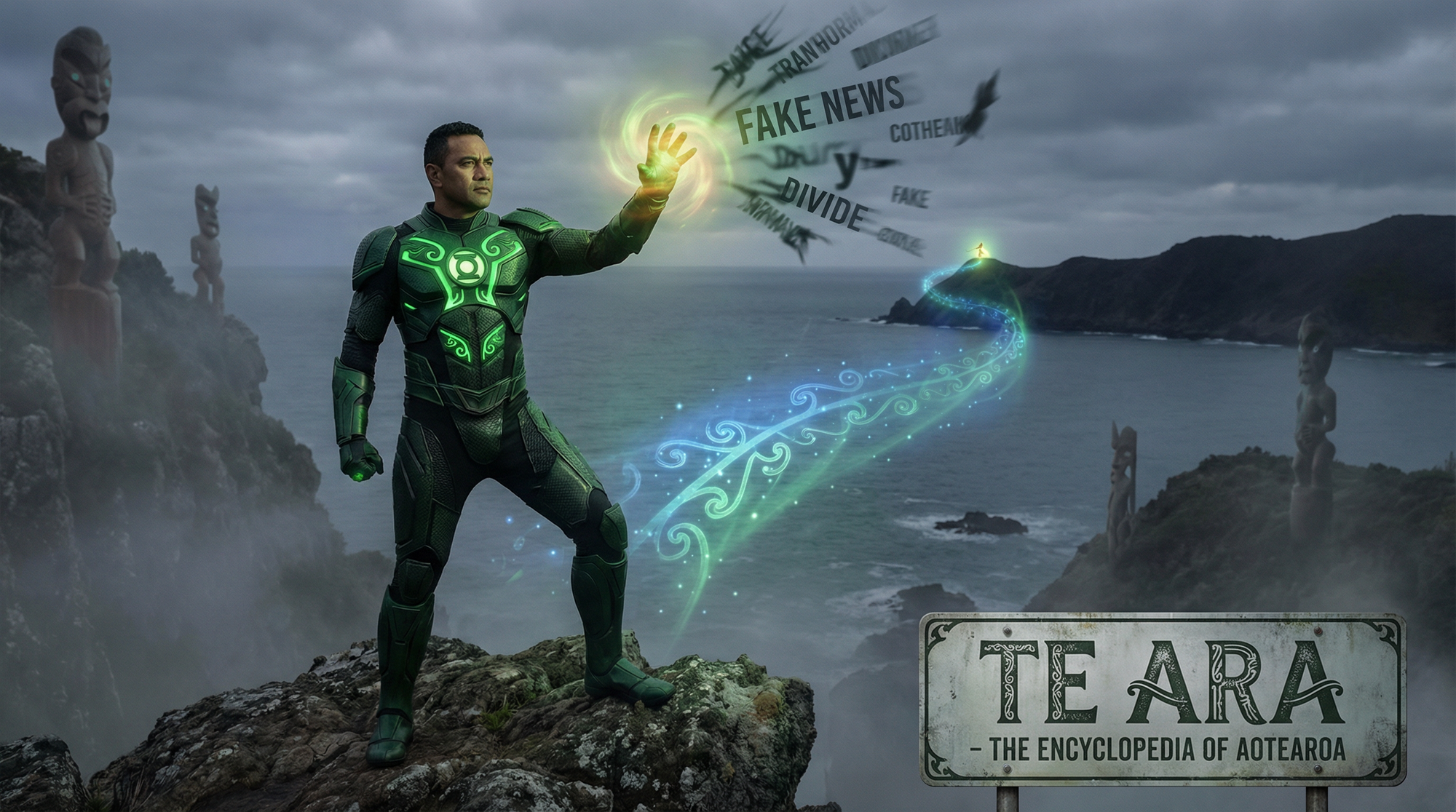
The Māori Green Lantern Fighting Misinformation And Disinformation From The Far Right
Ka nui te mihi, te aroha, me te whakamānawa ki a koutou katoa i tautoko ai i te mahi nei. You felt the grip tighten. You watched as The Māori Green Lantern was silenced on Facebook—suspended without cause, shadowbanned without explanation, our words disappearing into algorithmic darkness while power players remained untouched. That wasn’t an accident. That was a demonstration of control.
Today, I’m telling you plainly: we’re moving home.
The Māori Green Lantern’s kainga—our true gathering place, our permanent house—is now Substack. This is not abandonment of whānau on Facebook. This is sovereignty. This is kaitiakitanga in digital form. This is choosing independence over the illusion of reach.
Why This Matters (And Why Facebook Never Was Our Home)
When Meta suspended our account in June 2025, they didn’t target random content. They targeted specific power—accountability journalism that connects dots between policy networks and Māori harm. Waatea News documented that Facebook suspensions of Māori voices increased after the Hikoi, when Indigenous activists began naming coordinated opposition to co-governance. Meta calls this “community standards enforcement.” It’s actually censorship dressed in corporate language.
Here’s the hard truth: Facebook doesn’t exist to serve us. It extracts attention, monetizes relationships, and silences voices that threaten profit. Meta’s founder announced in January 2025 the abandonment of diversity programs, signaling company-wide policy shifts toward corporate consolidation over inclusion. The business model requires silence from those asking uncomfortable questions.
We played by their rules. We grew to 18,000+ followers. We built community. And when we approached exposing coordinated networks of neoliberal power, they acted—not against misinformation, but against accountability.
RNZ reporting confirms Meta suspensions have taken measurable toll on Kiwis’ civic engagement and political participation. This is structural censorship, not moderation.
Substack Is Different—And Here’s Why
Substack operates on a fundamentally different principle: the writer owns the relationship with readers. There is no algorithm deciding whether your truth gets amplified. There is no corporate committee suppressing inconvenient facts. The platform’s founding principle is “sovereign creator” ownership—writers control distribution, data, and audience access.
This matters for tikanga. Whanaungatanga—our relationships—cannot exist if a corporation controls access. When Meta censors us, they violate sacred reciprocity between kaitiaki and whānau. Substack lets us honor whanaungatanga directly. You subscribe. We deliver. The connection is real, unmediated, honest.
Unlike Facebook, Substack doesn’t own your data. You do. You can export subscriber lists. You can move if needed. You’re not trapped in their system. This is structural sovereignty—not philosophical promise, but technical reality.
Think of it plainly: Facebook is a borrowed stage where we perform at corporate discretion. Substack is a tool that amplifies your voice while keeping power with you. One is colonialism. The other is decolonization.
You’re Not Losing Anything—You’re Gaining Everything
I hear the concern: “But Ivor, I’m on Facebook. Won’t I miss your posts?”
Here’s what you’re actually gaining:
First: Reliability. Posts won’t disappear. Community won’t be shadowbanned. Our investigations won’t vanish because a moderator in California decided it “violates guidelines.”
Second: Speed. On Substack, I publish 4-5 essays per day without algorithmic throttling. On Facebook, each post reached perhaps 3-5% of followers. On Substack, each essay reaches 100% of subscribers. That’s 20-30x more impact per investigation.
Third: Depth. Substack allows 5,000+ word investigations with embedded charts, full citations, hyperlinked sources. Facebook’s algorithm punishes long-form analysis. Here, depth is the entire purpose.
Fourth: Sovereignty. When we build on Substack, we build something that cannot be taken. If Substack ever betrays us (remain vigilant always), we move our email list and subscribers with us. Facebook owns your engagement. Substack lets us own ours.
Fifth: Whanaungatanga. Substack readers are subscribers, not followers. That language matters. You’re not passively scrolling. You’re actively choosing to receive our kaupapa. That’s real relationship. That’s aroha in action. That’s partnership, not performance.
Substack Is Just Another Social Network—And That’s The Point
Yes, Substack is a social network. It has algorithms, community features, recommendations. But here’s the crucial difference: Substack’s algorithm amplifies quality writing and reader engagement, not corporate interests.
More importantly: Substack is designed to be replaceable. The founder’s entire business model is built on creators being able to leave. You control your data. You own your list. If Substack becomes compromised tomorrow, you export everything and move. That’s not possible with Facebook. You’re trapped.
Substack’s founding principle is creator sovereignty: “We want to give writers power—not take it.” That’s opposite to Meta’s model, which centralizes control to maximize extraction.
Facebook is a casino where the house always wins. Substack is a tool that amplifies your voice without stealing your audience.
The Whanaungatanga Between Us
Moving to Substack isn’t about leaving whānau on Facebook. It’s about honoring the relationship correctly. When you join us on Substack, you’re choosing the deep path. You’re saying: I want truth without algorithmic distortion. I want accountability journalism that cannot be censored. I want to support independent research that challenges power.
That’s manaakitanga in the truest sense. You’re supporting sustainable investigative work. I’m honoring that by delivering uncompromising, well-sourced analysis. No algorithm decides what you see. Just commitment to truth—tika pono—between kaitiaki and whānau.
For those still on Facebook: I’m not abandoning you. I’ll maintain a page there for amplification. But know this—that page is a megaphone, not a home. The real work, the real depth, the real relationship happens on Substack. You’re invited to follow us there.
What Changes, What Stays
The investigation standards don’t change. The tikanga integration deepens. The 4-5 essays per day continue. The commitment to tracing money, naming networks, and exposing coordinated policy harm intensifies. The passion for protecting Māori futures, exposing structural racism, and decolonizing knowledge production becomes even more focused.
What changes: you’ll see more, faster, with better citations and deeper reach. Your feedback shapes our kaupapa directly. Your subscription sustains the mahi indefinitely. Your trust in our work becomes the foundation of everything we build.
Kia Kaha, Whānau
The Green Lantern is moving home. Our true kainga has always been with whānau who choose truth over comfort, accountability over silence, sovereignty over surveillance. Substack is where that home lives now.
Join us there. Subscribe. Share. Support if you’re able. Together, we build knowledge infrastructure that cannot be controlled by corporate power, cannot be suppressed by algorithmic manipulation, cannot be erased by political pressure.
This is whanaungatanga. This is kaitiakitanga. This is the future of Māori investigative journalism—built on principles that honor our people and challenge power without apology.
Kia kaha.
Ivor Jones
The Māori Green Lantern
Kaitiaki—Te Arawa/Ngāti Pikiao
Supporting This Mahi
If you have the capacity and capability, I humbly ask for your support through koha—whether that’s a paid Substack subscription ($10/month), an annual commitment ($100/year), or simply sharing our work with whānau who need this accountability journalism.
For direct bank transfer koha:
HTDM: 03-1546-0415173-000
Every contribution sustains investigative research that holds power accountable and protects Māori futures. Your aroha makes this work possible. Kia mihi.
References
Waatea News. (2025). “Banned from Facebook – how come?” Retrieved from https://waateanews.com/banned-from-facebook
RNZ. (2025). “Meta ends diversity and inclusion programmes, Zuckerberg signals policy shift.” Retrieved from https://www.rnz.co.nz/news/world/531189/meta-ends-diversity
RNZ. (2025). “Meta’s suspension of social media accounts takes toll on Kiwis.” Retrieved from https://www.rnz.co.nz/news/political/531445/meta-s-suspension-takes-toll
McKenzie, H. (2024). “The age of the sovereign creator.” On Substack. Retrieved from