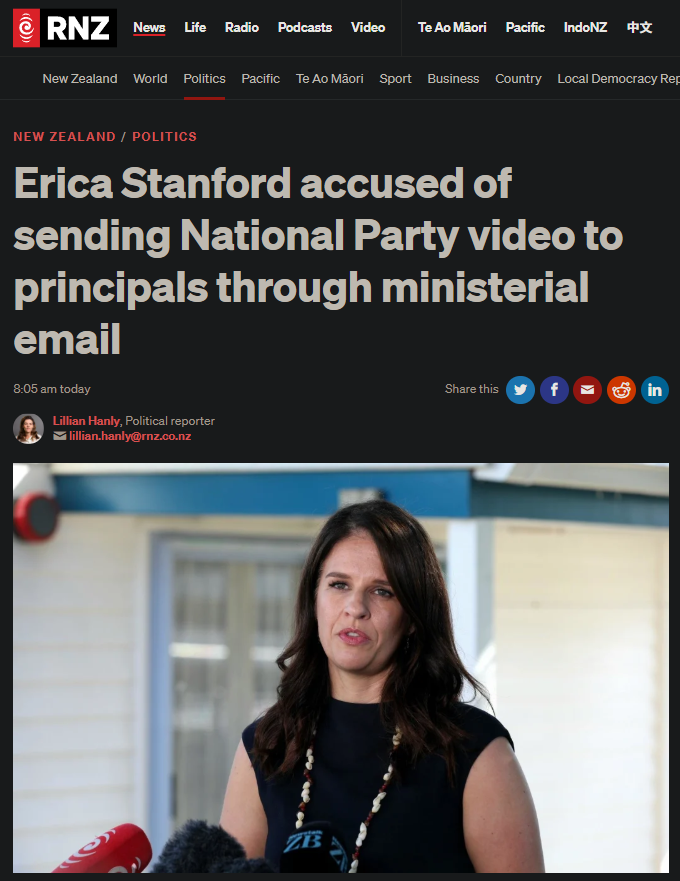
"The Heart of It: When You Lose By 21 Votes and Cry Fraud Without Evidence" Playbook Threatens Democracy in Kaiparav" - 21 October 2025
How Craig Jepson’s “Trump of the North” Playbook Threatens Democratic Integrity in Kaipara
Kia ora, whakatau mai. E te whānau, tēnā koutou katoa. Ko Ivor Jones tōku ingoa, ko Te Māori Green Lantern ahau.
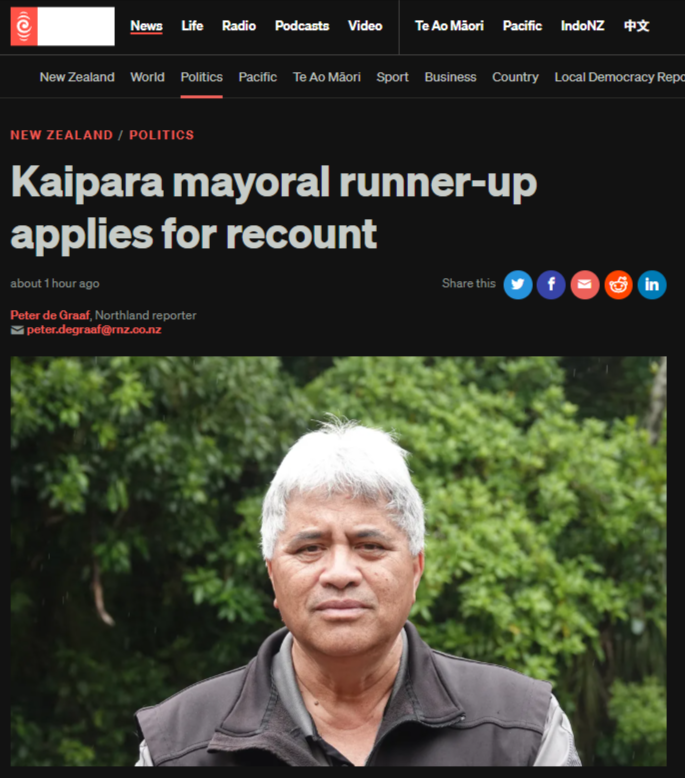
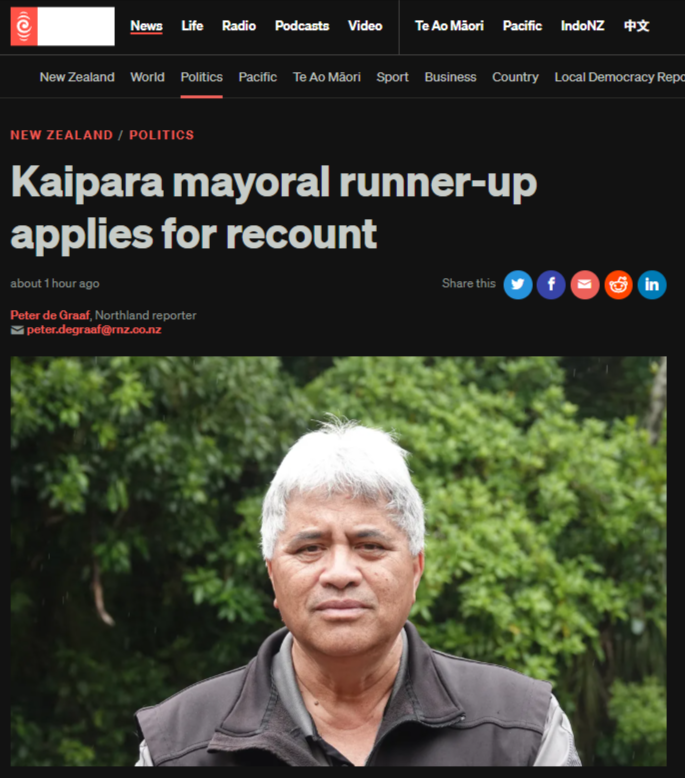
Here’s what happened in plain English: A Māori iwi leader named Snow Tane lost the Kaipara mayoral race by just 21 votes to Jonathan Larsen, the handpicked successor of outgoing mayor Craig Jepson. But instead of accepting the result, Jepson—who calls himself the “Trump of the North”—called an emergency council meeting 24 hours before final results were released to lodge baseless complaints about “irregularities” in the voting process. He accused activists of “vote harvesting” and claimed the election was being “infiltrated” by people telling voters how to vote. He provided zero evidence. The Department of Internal Affairs rejected his complaint, saying it had no jurisdiction over elections. This is what authoritarianism looks like when it’s losing.
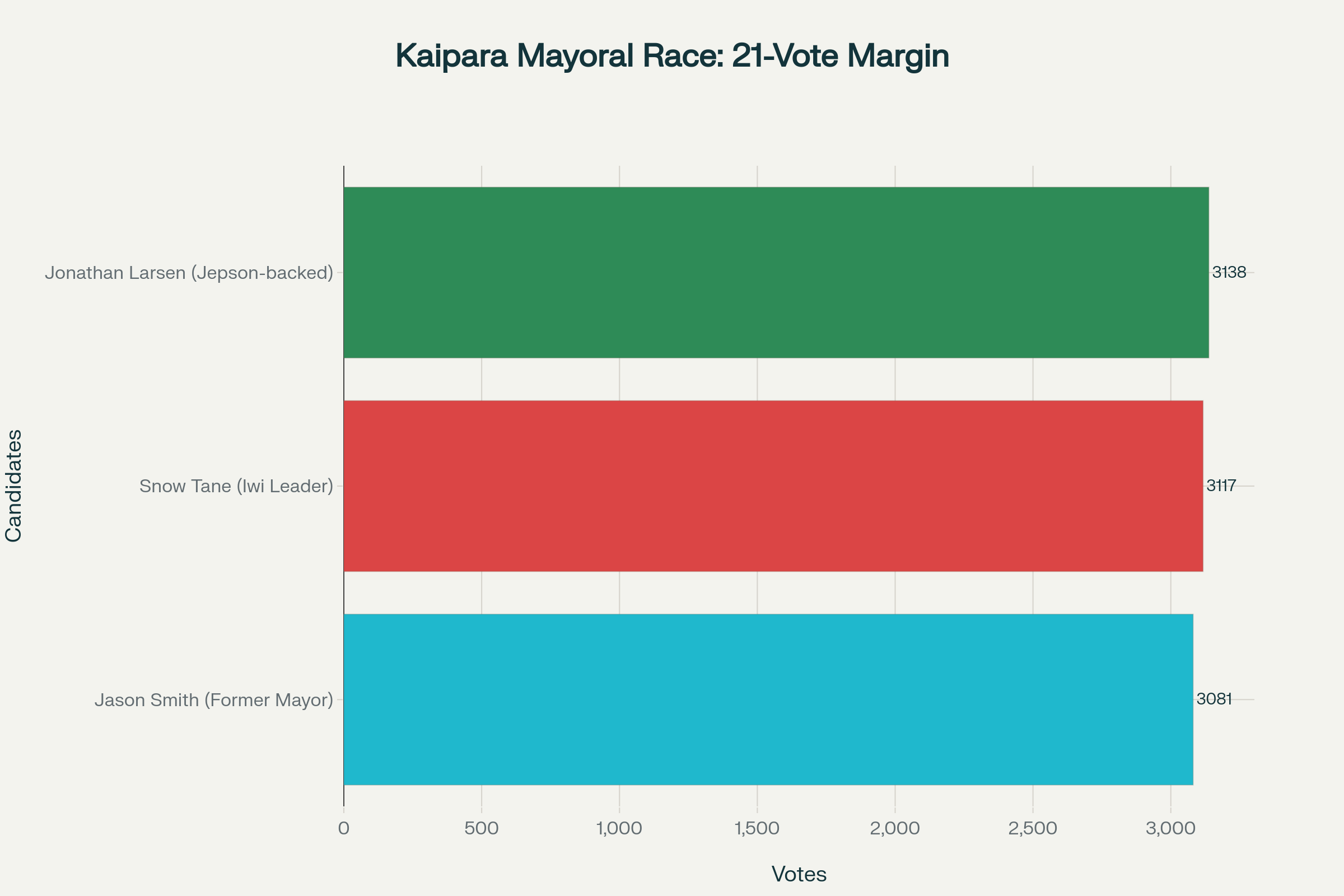
The final mayoral race results show Jonathan Larsen defeating iwi leader Snow Tane by just 21 votes, triggering a recount application
Background: The “Trump of the North” and His War on Māori
Craig Jepson didn’t earn his nickname by accident. Since being elected Kaipara mayor in 2022, he has systematically dismantled Māori representation in a district where Māori make up over a quarter of the population. His first act? Banning karakia from council meetings in November 2022, shouting down Māori ward councillor Pera Paniora when she attempted to recite one. In August 2024, Kaipara became the first council in New Zealand to abolish its Māori ward under new government legislation. The same month, the council spent $52,000 on a legal document outlining the minimum obligations to Māori—essentially creating a ceiling for Māori engagement rather than a floor.
Jepson appointed Jonathan Larsen as his deputy mayor in 2022. Larsen voted alongside Jepson to abolish the Māori ward and has consistently supported the mayor’s anti-Māori agenda. When Jepson announced he wouldn’t seek re-election, he publicly endorsed Larsen as his successor, ensuring the same ideology would continue.
Running against this was Snow Tane, general manager of the Te Roroa Development Group, a respected iwi leader who has led environmental restoration projects and community resilience initiatives across Northland. Tane represents everything Jepson’s administration sought to exclude: Māori leadership, tikanga Māori values, and genuine community engagement.
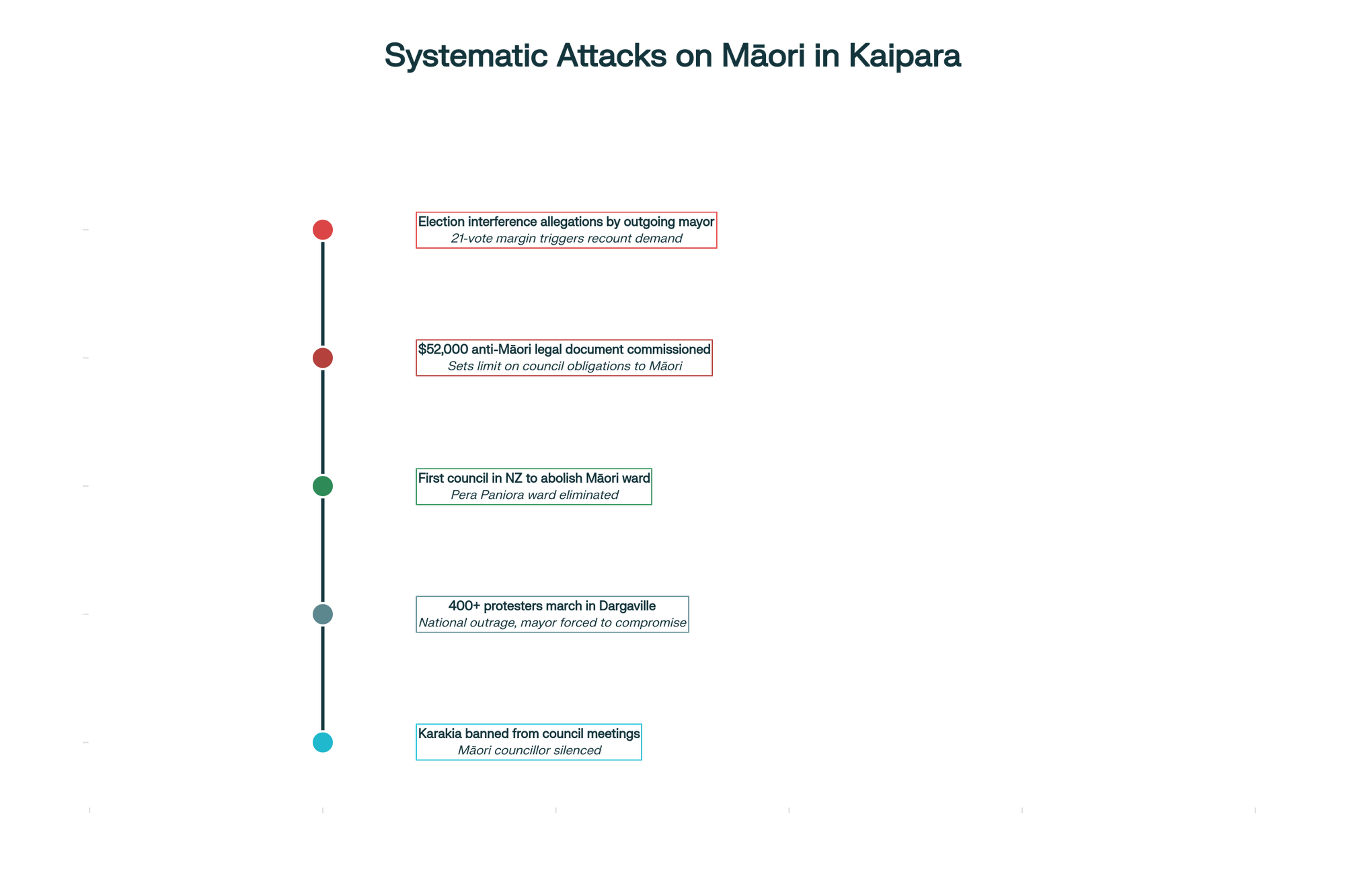
A timeline showing the escalating pattern of anti-Māori actions by Kaipara District Council under Craig Jepson’s leadership from 2022 to 2025
The Issue: Democracy Under Attack from Those Sworn to Protect It
What makes this situation particularly dangerous is not just that Jepson lost—it’s that he attempted to undermine the entire democratic process rather than accept defeat. Let’s be crystal clear about what happened.
On October 15, 2025, with final results due the next day and preliminary counts showing Larsen ahead by just five votes, Jepson called an emergency council meeting. He claimed to have witnessed “irregularities” including election officers being related to candidates, questionable mobile voting locations, and voters being influenced at polling places. Most damningly, he alleged that “activists” were “harvesting votes” and that the election had been “infiltrated by activists who have made the most of the opportunity to harvest votes and abuse the process”.
The first meeting descended into chaos when a 76-year-old protester approached the council table wearing his father’s RNZAF cap and blazer, saying his father had fought for democracy—the same thing he was standing up for. Jepson adjourned after 25 minutes.
When councillors reconvened the next day, both the council lawyer and electoral officer Dale Ofsoske contradicted Jepson’s claims. Ofsoske stated that the Department of Internal Affairs had no jurisdiction over elections and that any complaints should go through proper legal channels—a judicial recount or judicial inquiry. The lawyer advised that the meeting’s purpose could not be achieved through the proposed complaint.
Despite this professional advice, councillors voted 5-3 in a secret ballot to support Jepson’s complaint. Four councillors—Ash Nayyar, Pera Paniora, Mark Vincent, and Eryn Wilson-Collins—demanded the vote be public. They were outvoted. Vincent walked out in disgust, calling it a farce. Nayyar left when the meeting went into closed session, saying what was happening “couldn’t be justified.”
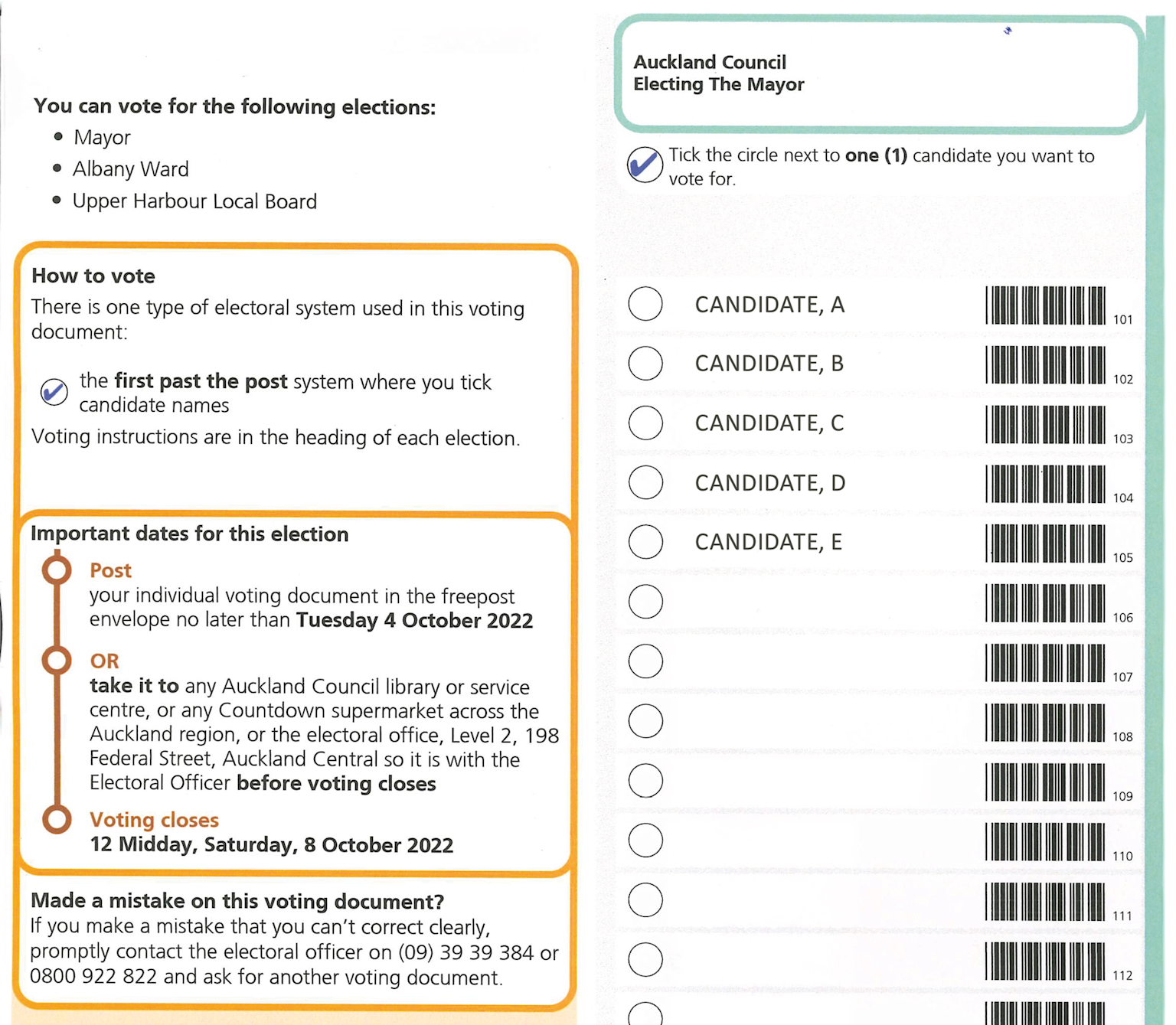
Sample Auckland Council voting ballot showing candidates and voting instructions for local elections
The DIA rejected the complaint that same day, confirming it fell outside their jurisdiction. Electoral officer Ofsoske proceeded to release the final results as planned, showing Larsen with 3,138 votes to Tane’s 3,117—a 21-vote margin.
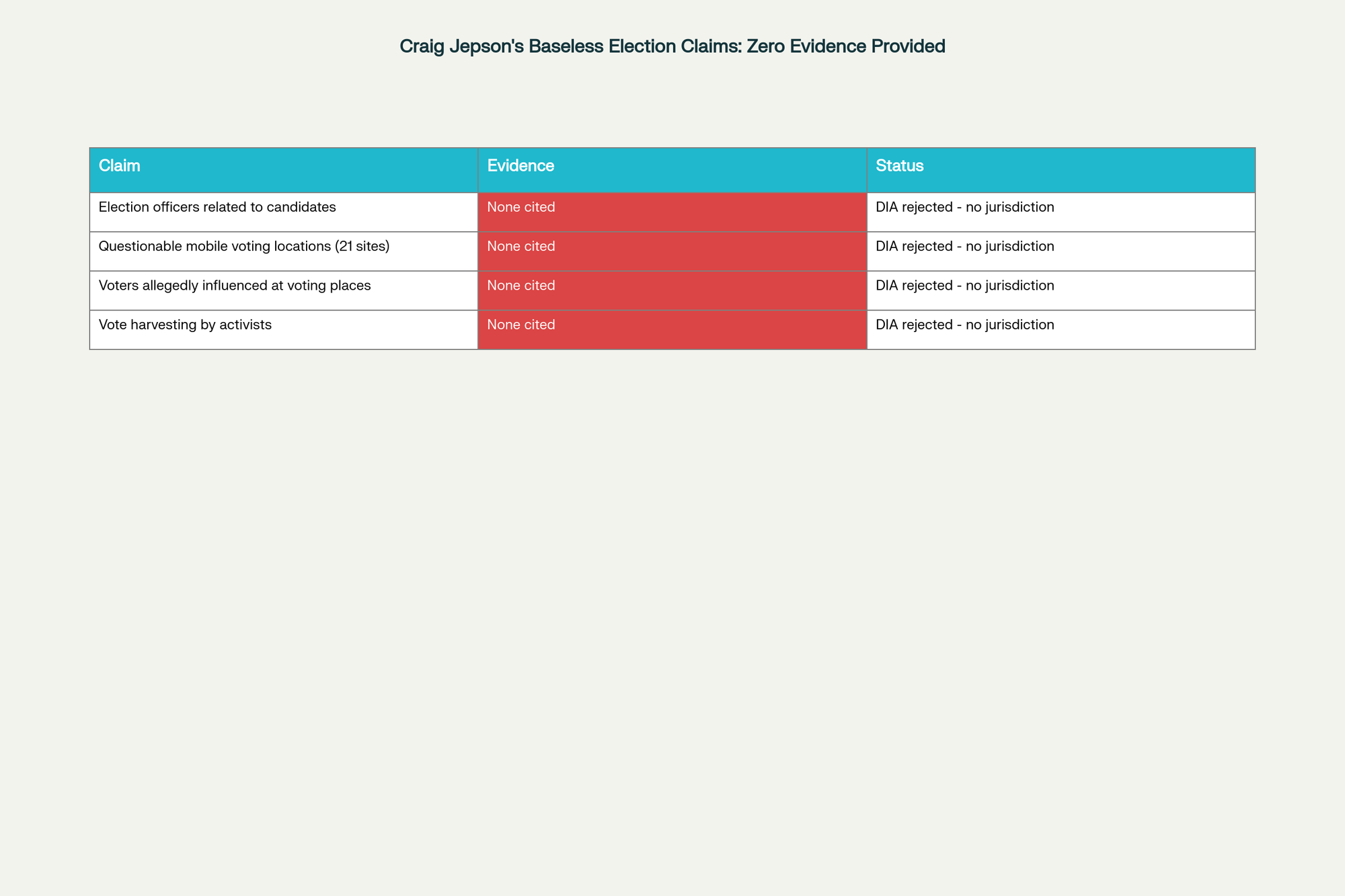
Despite making serious allegations of election fraud, outgoing mayor Craig Jepson provided zero evidence for any of his claims, all of which were rejected by authorities
Why This Matters to Māori and All New Zealanders
This isn’t just about one small district council in Northland. It’s about a broader pattern of white supremacist tactics being imported into Aotearoa’s democratic institutions.
Jepson’s playbook is straight from the Trump 2020 election denial script: make vague allegations of fraud, provide no evidence, demand investigations, and undermine public confidence in democratic processes. Law professor Andrew Geddis stated that these “tactics used by members of Kaipara District Council to throw doubt over its election result undermine democracy”.
But there’s a specifically anti-Māori dimension here. Jepson’s allegations of “vote harvesting by activists” echo racist dog whistles used in elections worldwide to delegitimize votes from marginalized communities. The implication is clear: Māori voters who organized to support Tane’s campaign were somehow engaging in fraud simply by exercising their democratic rights.
Consider the context. After three years of banning karakia, abolishing Māori wards, and commissioning anti-Māori legal documents, Jepson’s chosen successor was facing defeat by a Māori iwi leader. The timing of these “irregularity” claims is not coincidental. They represent a last-ditch attempt to prevent Māori leadership from being democratically elected.
Councillor Paniora noted that the complaint had “cast a big cloud over the community” just as they were about to celebrate the final results. She believed the complaint was a distraction, noting that special votes—which historically favor progressive candidates—could swing the result away from Larsen.
She was right to be concerned. On October 21, Snow Tane applied for a judicial recount in Whangārei District Court, citing the razor-thin 21-vote margin. Under the Electoral Act, candidates have three working days after final results to request a recount. Tane stated: “We’re utilising the democratic process that’s available to us under the act. And we think at 21 votes the closeness of it means a recount is a process that should be undertaken at this point”.
The Broader Implications: Neoliberal Democracy Theatre
What we’re witnessing in Kaipara is democracy theatre—the performance of democratic processes while systematically undermining their substance. This is neoliberalism’s endgame: maintaining the appearance of democracy while concentrating power in the hands of those who serve capital and white supremacy.
Jepson’s mayoralty has been characterized by withdrawing from Local Government New Zealand, making decisions behind closed doors, and ignoring public consultation. Councillor Nayyar, who stood for mayor himself, criticized the council for making too many decisions in secret and adopting “unnecessary pet projects” without community input.
The council’s $52,000 legal document on obligations to Māori was produced by Wellington law firm Franks Ogilvie, which has also provided legal advice to Hobson’s Pledge—a group known for lobbying against co-governance. Councillor Eryn Wilson-Collins described the document as “actively anti-Māori”, while another councillor deemed it “bull****.” This wasn’t about clarifying legal obligations; it was about establishing maximum limits on Māori engagement.
The connection to Hobson’s Pledge reveals the network of well-funded anti-Māori organizations working to roll back Treaty obligations and Māori representation. These groups cloak their white supremacy in the language of “equality” and “democracy” while systematically excluding Māori voices from decision-making.
Jepson’s claim that New Zealand needs a “national election day for local government where everybody turns up, presents their ID and votes” to prevent “votes being harvested” is particularly insidious. Voter ID requirements have been used internationally to disenfranchise marginalized communities, creating barriers for those without stable housing, transportation, or documentation—disproportionately affecting Māori and Pacific peoples.
He also questioned the need for postal votes, suggesting the system has been “infiltrated by activists.” This rhetoric delegitimizes legitimate democratic participation by painting community organizing and voter mobilization as fraud.
The Choice Before Us

The Māori Green Lantern Fighting Misinformation And Disinformation From The Far Right
The Kaipara situation crystallizes the struggle facing Aotearoa. On one side: Craig Jepson and Jonathan Larsen, representing a vision of New Zealand where Māori voices are systematically excluded, where karakia is banned, where Māori wards are abolished, and where any Māori electoral success is immediately suspect. On the other: Snow Tane and the thousands who have protested, organized, and voted for genuine Māori representation and partnership under Te Tiriti.
Jepson stated he wanted New Zealand to “move forward as one people” in opposing Māori wards—the classic “one law for all” rhetoric that erases Māori as tangata whenua and Treaty partners. He has called the narrative of Māori disadvantage a “false narrative” and claimed that those who aren’t “blessed with Maori ancestry should feel guilty for past misdeeds of our ancestors.”
This is white supremacy dressed in the language of equality. It denies colonization, denies ongoing structural racism, and denies Māori their rightful place as tangata whenua.
Dame Naida Glavish, who attended the December 2022 karakia protest where 400 people marched through Dargaville, asked the essential question: “Who does he think he is?” She stated that the time for racists was over and demanded Jepson resign. When he refused, she said: “He doesn’t realise what country he’s in”.
Whether Snow Tane’s recount succeeds or not, the fight for Kaipara continues. The pōwhiri for the new council has been delayed, and the swearing-in ceremony potentially postponed until November, giving the community time to organize and resist.
Whatever the outcome, Tane will still be a councillor, having won his Wairoa Ward seat by 999 votes ahead of the next candidate. His voice—and the voices of the thousands who voted for genuine Māori representation—will not be silenced.
To those who have benefited from this mahi: If you have the capacity in these tough economic times and wish to support the kaupapa, please consider a koha to HTDM: 03-1546-0415173-000. The Māori Green Lantern understands the pressure on whānau, so please only contribute if you are able and willing.
Kia kaha. Kia maia. Kia manawanui.
Nāku noa, nā,
Ivor Jones
Te Māori Green Lantern
Kaitiaki of Truth