‘The Heart of the Matter: New Zealand Has Built a Surveillance State Against Its Own People” - 17 September 2025
Surveillance Without Borders: The Corporate Police State
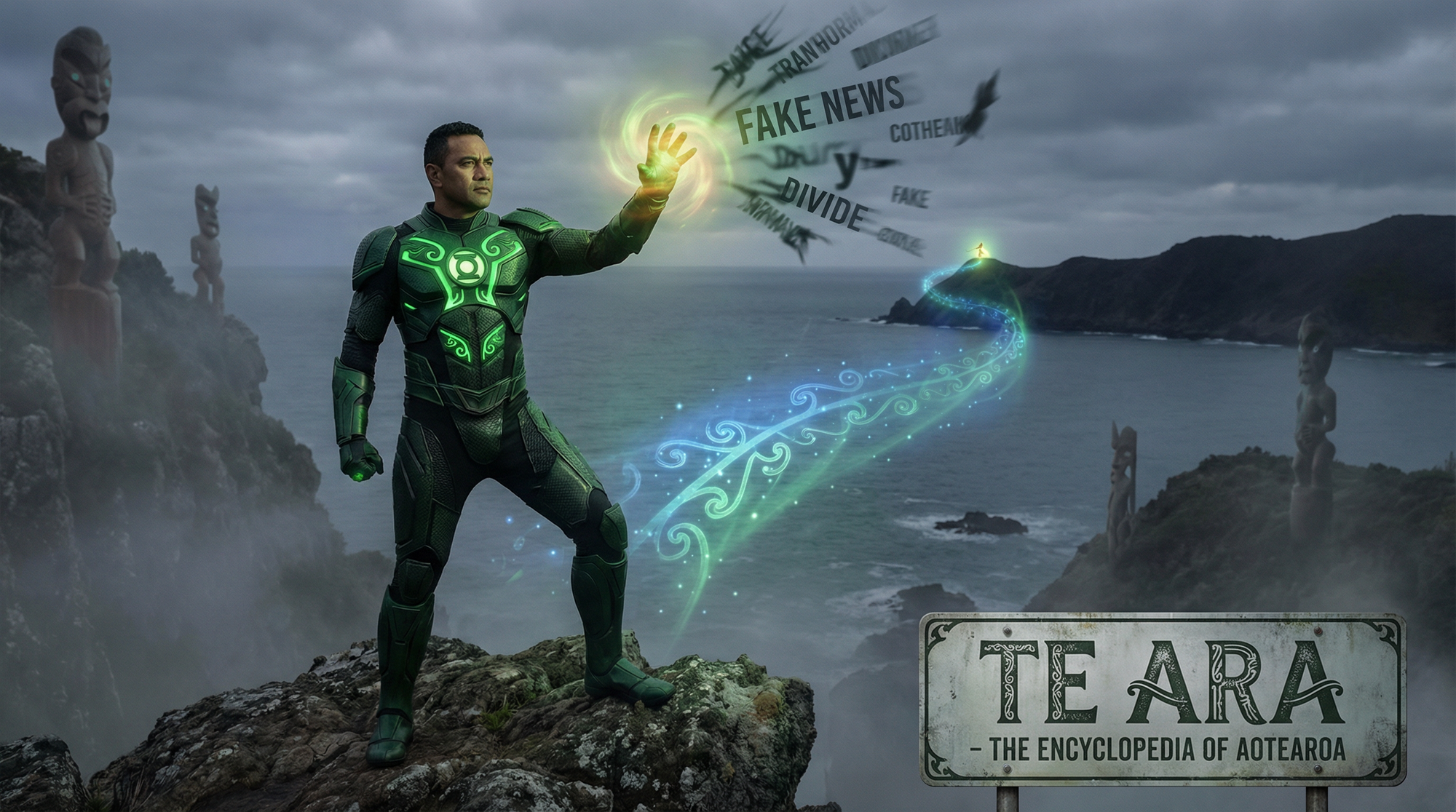
Kia ora koutou. Ko Ivor Jones ahau, The Māori Green Lantern, kaitiaki exposing the whakapapa of state oppression.
Here's what every New Zealander needs to understand straight up: your government has built a massive surveillance network that tracks every car you drive, every shop you visit, and every move you make - all without needing a warrant, without judicial oversight, and without your knowledge or consent. This isn't some dystopian future nightmare. This is happening right now, today, and it's being run by a private Auckland company called Auror in partnership with New Zealand Police.
The scale is staggering. Over 700,000 warrantless surveillance searches per year, up from just 64,000 searches in 2020. That's nearly 2,000 searches every single day. 8,600 police officers now have access to track any vehicle's movements over the past 60 days at the push of a button.
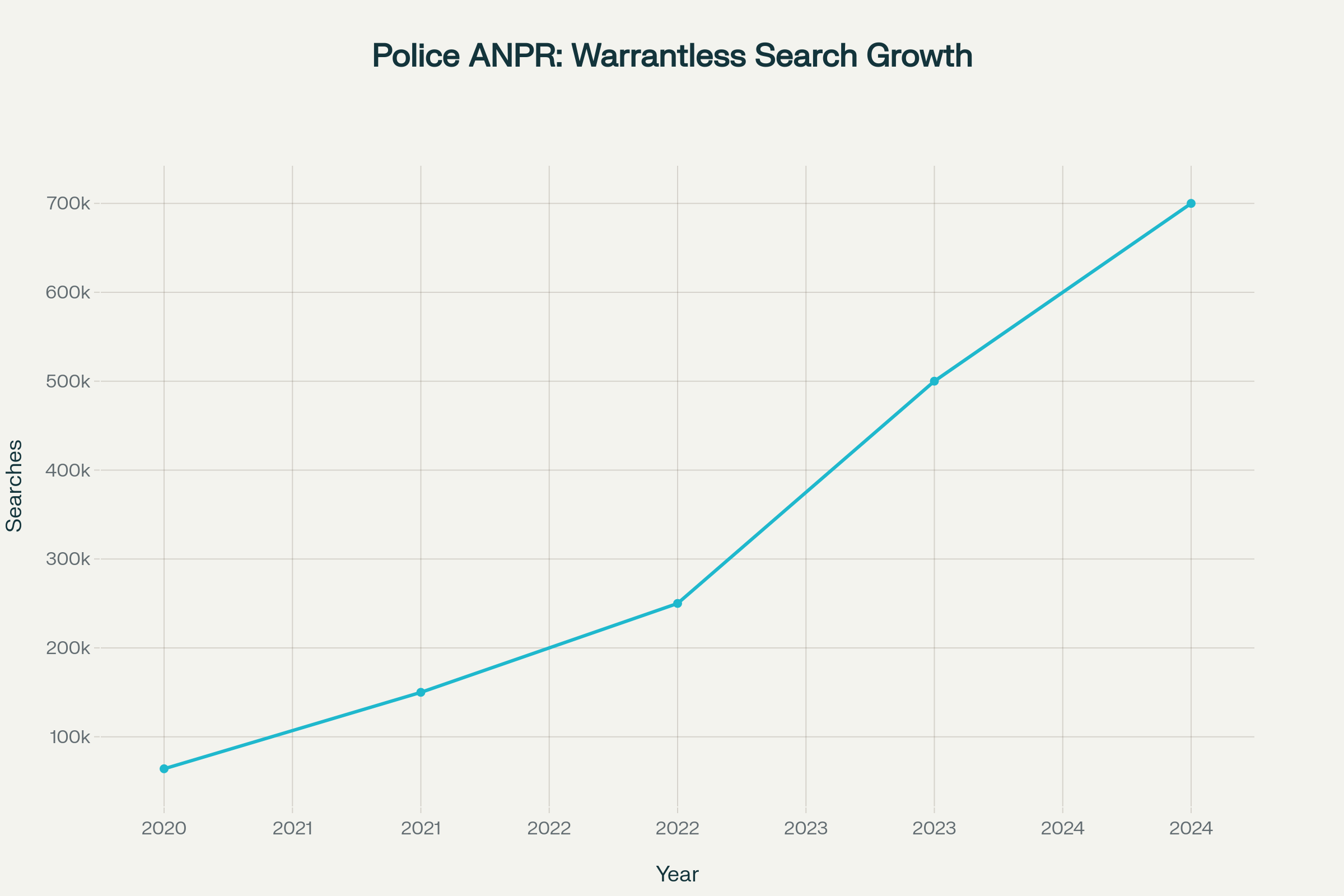
Police ANPR surveillance searches have grown exponentially from 64,000 in 2020 to 700,000 in 2024, with over 8,600 officers now having warrantless access to track any vehicle's movements over 60 days
The Māori Experience: History Repeating
This isn't happening in a vacuum. As tangata whenua, we know this surveillance apparatus disproportionately targets our communities. The data is clear: Māori experience privacy breaches at 19% compared to 13% for the general population. We express major privacy concerns at 79% compared to 66% for others.
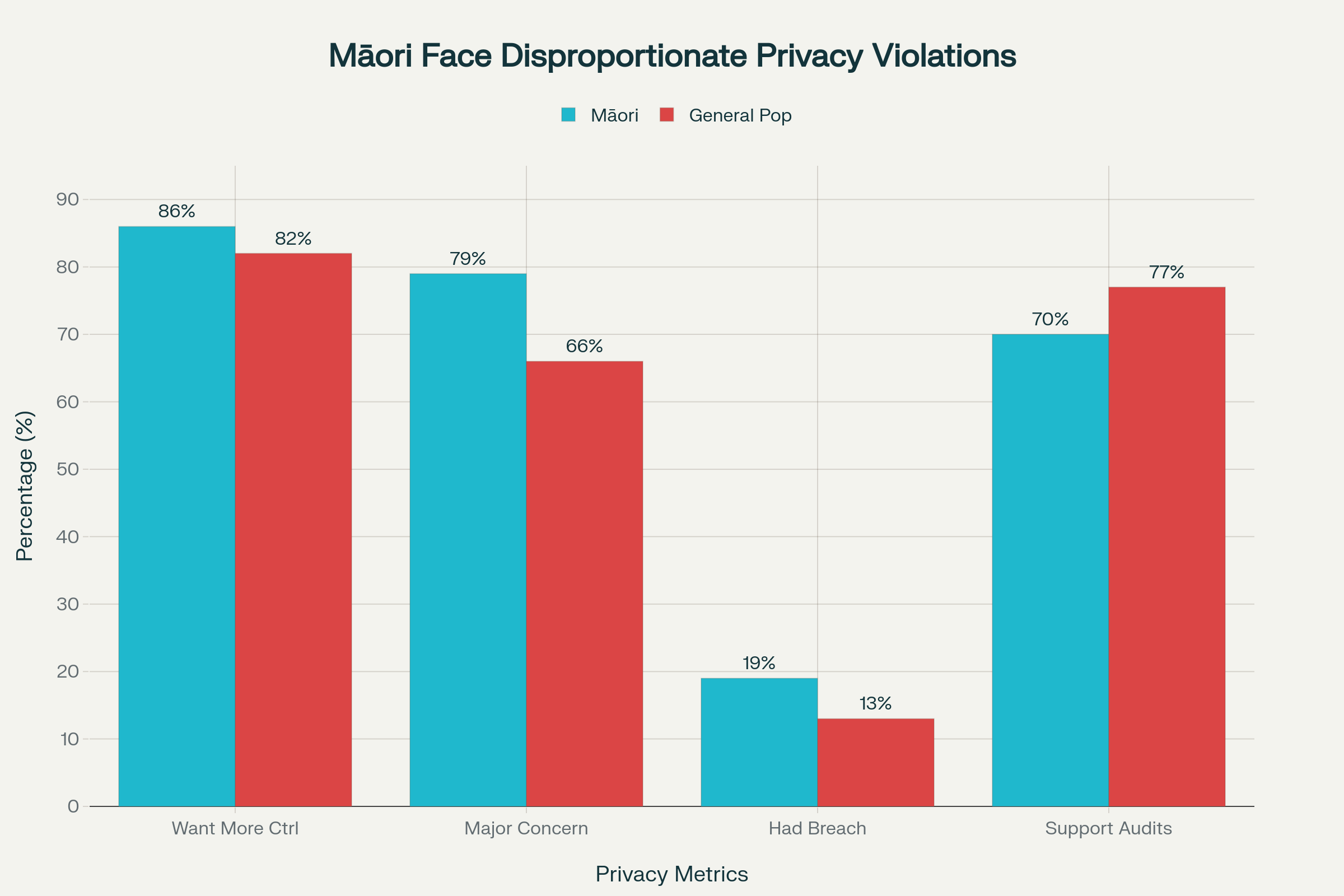
Māori experience privacy breaches at higher rates (19% vs 13%) and express greater privacy concerns (79% vs 66%) than the general population, yet have less faith in official oversight mechanisms
Why? Because we remember the 2007 Tūhoe raids, when police used the Terrorism Suppression Act to carry out massive surveillance operations against Māori activists. We remember when police illegally tracked vehicles using COVID-19 powers. We remember the systemic photographing of young Māori without cause.
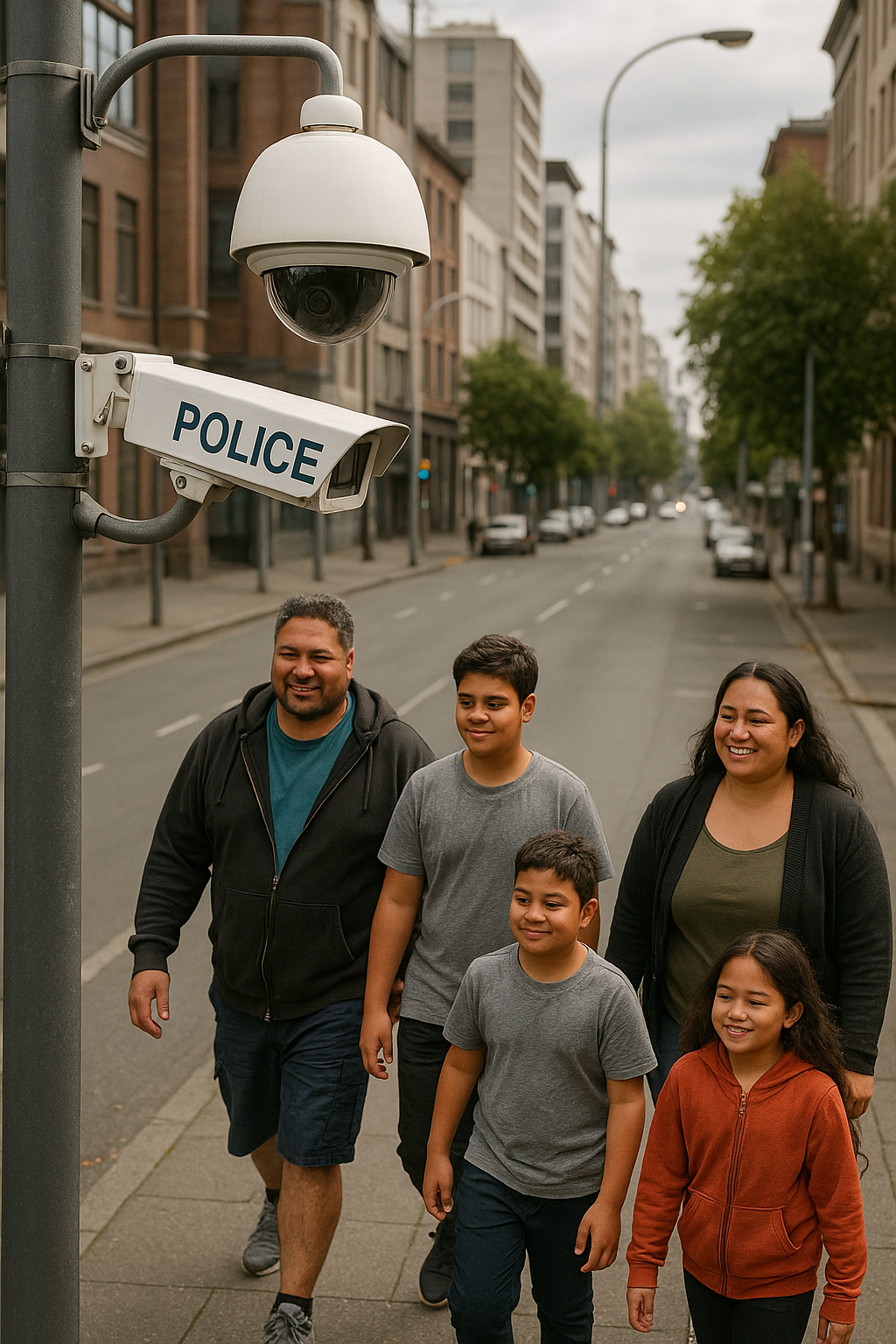
Police surveillance camera monitoring a Māori whānau in public space
This surveillance state is the digital continuation of colonial control mechanisms that began with the Native Land Court in 1865. Just as that court was designed to "destroy the principle of communism which ran through the whole of Māori institutions", today's surveillance network targets collective resistance and indigenous organizing.
The Auror Empire: Surveillance Capitalism in Action
Let's examine who's really running this show. Phil Thomson, Auror's CEO, is a former privacy lawyer who co-founded the company in 2012. The timing is crucial: police signed their partnership with Auror in 2015, just as the company was expanding internationally.

ANPR camera capturing vehicle data at retail location
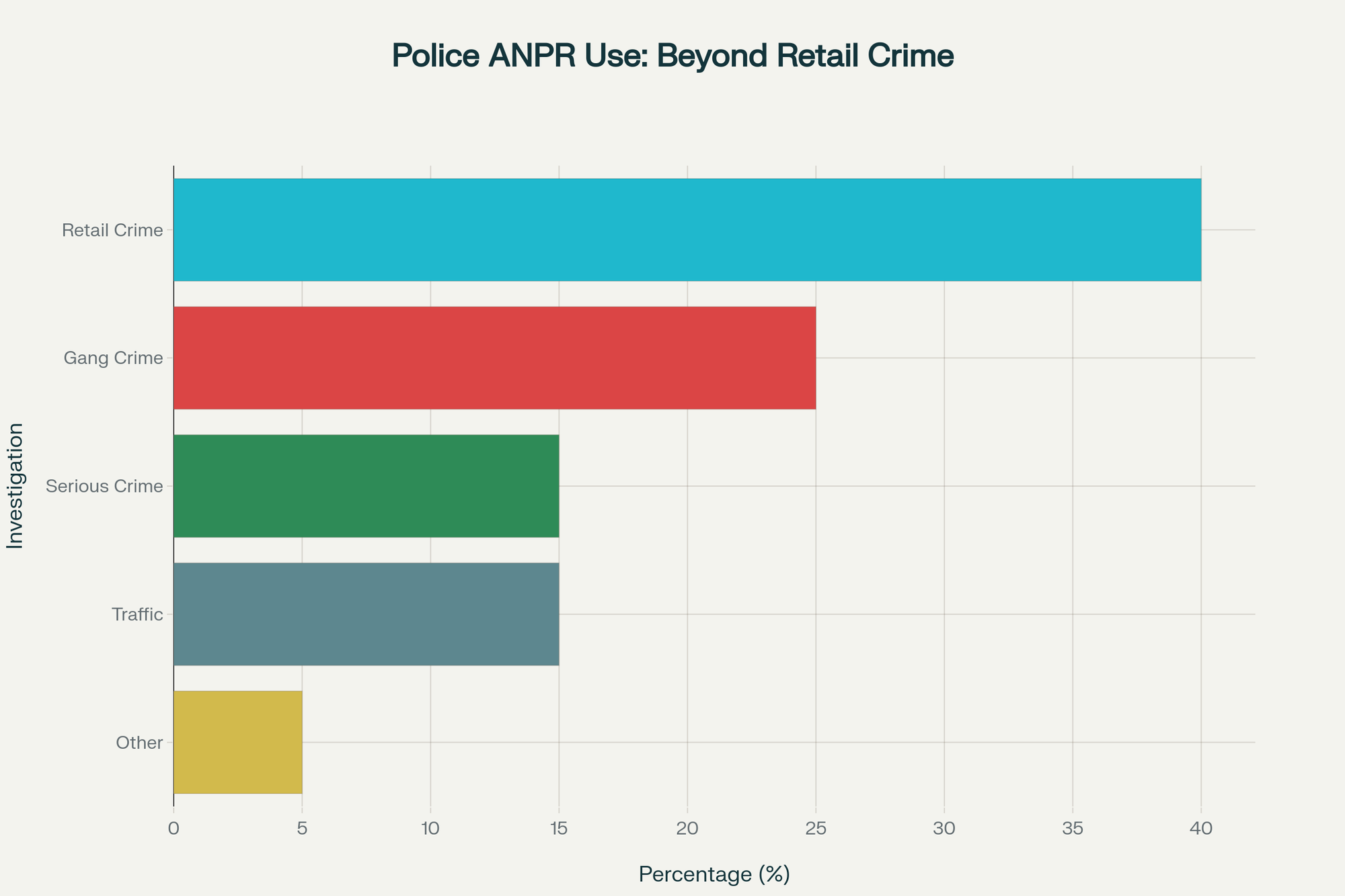
While marketed as a retail crime tool, police use ANPR for gang investigations (25%), serious crime (15%), and traffic offences (15%), showing significant scope creep from its original purpose
The company has grown explosively, recently raising $82 million at a valuation over $500 million. The new investors are particularly revealing: Axon Enterprise (the Taser company) and W23 Global (backed by major grocery retailers). This isn't about crime prevention - it's about social control and profit extraction from surveillance.
The Web of Deception
Here's where it gets really insidious. While Auror markets itself as a "retail crime" solution, the reality is vastly different. Police use ANPR for:
- Gang investigations: 25% of usage
- Serious crime investigations: 15%
- Traffic offences: 15%
- Only 40% for actual retail crime
The system has grown so pervasive that even the courts acknowledge they don't know its full scope. When judges demanded information about Auror's network, the company refused to provide details about camera numbers or locations, citing "commercial sensitivity".
The European Standard We're Failing
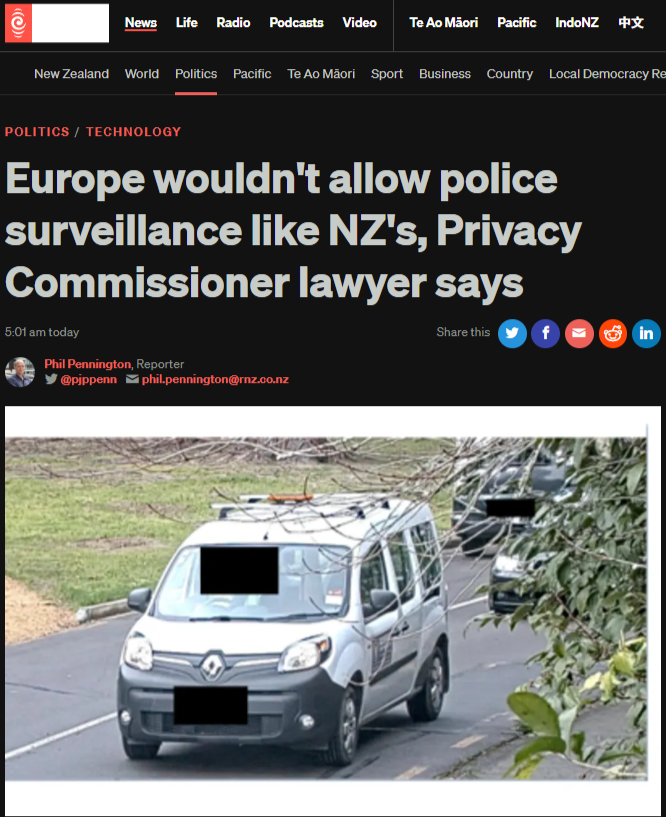
The Privacy Commissioner's lawyer was clear in the Court of Appeal: "You couldn't have a suspicionless database like this under EU or European convention law". Europe wouldn't allow this level of warrantless surveillance because they understand it's "dangerous to democracy itself".
Yet New Zealand has built exactly what European human rights law prohibits: a mass surveillance system that tracks every vehicle movement for 60 days without any judicial oversight or reasonable suspicion.
The Whakapapa of Surveillance
This isn't new for Māori. The colonial state has always used surveillance and data collection to dispossess and control indigenous peoples. The Native Land Court required Māori to "appear in person whether they wanted to or not", creating detailed records that facilitated land theft.
Today's digital surveillance serves the same function: creating comprehensive records of indigenous movement and association that can be weaponized against collective organizing. When Māori assert tino rangatiratanga, the surveillance state activates.
Corporate Profits from State Power
The financial incentives driving this system are staggering. Auror claims to save police $92 million annually, equivalent to adding 450 officers. But this "productivity gain" comes through warrantless mass surveillance that would be illegal in any democratic country that actually protects civil liberties.
The company now operates in over 45,000 retail stores worldwide, exporting New Zealand's surveillance model globally. Thomson boasts that Walmart is a "flagship customer", showing how colonial surveillance techniques developed in Aotearoa are now being imposed on communities worldwide.
The Failure of Democratic Oversight
The system has grown with virtually no democratic oversight. Police didn't complete a privacy impact assessment until late 2023, years after implementation. When they finally did an audit, they found officers had misused the system, but faced no meaningful consequences.
The Privacy Commissioner has repeatedly raised concerns, but lacks the power to stop this surveillance juggernaut. Māori are less likely to support Privacy Commissioner audits precisely because we understand that official oversight mechanisms protect the system, not the people.
Te Ao Māori Values Under Attack
This surveillance state fundamentally violates core Māori values:
Manaakitanga - the obligation to care for and protect people - is destroyed when the state treats every citizen as a potential criminal requiring constant surveillance.
Whakapapa - our connections to each other and the land - is commodified and exploited by corporate algorithms that map our relationships for profit.
Tino Rangatiratanga - our right to self-determination - is undermined when every movement is monitored and recorded by the colonial state.
Kaitiakitanga - our role as guardians - is perverted into a justification for mass surveillance, as if watching and controlling people protects them.
The Road Ahead: Resistance and Solutions
This surveillance state didn't emerge overnight, and it won't disappear without sustained resistance. We need:
- Immediate legislative action to require warrants for all ANPR surveillance
- Democratic oversight of all police technology contracts
- Indigenous data sovereignty protections that recognize Māori rights over surveillance affecting our communities
- Corporate accountability for companies profiting from mass surveillance
The Court of Appeal decision on this case will determine whether New Zealand continues down the path of surveillance authoritarianism or returns to democratic principles. But regardless of that outcome, the fight for digital sovereignty must continue.

The Māori Green Lantern Fighting Misinformation And Disinformation From The Far Right
The Choice Before Us
We stand at a crossroads. Down one path lies a future where every movement is monitored, every association is recorded, and every act of resistance is surveilled by algorithms designed to protect corporate profits and state power.
Down the other path lies tino rangatiratanga - true self-determination where indigenous peoples and all communities have the right to organize, resist, and build alternatives without constant state surveillance.
The choice is ours, but only if we act now. The surveillance state grows stronger every day, processing 2,000 warrantless searches while we debate and delay.
For those who find value in this analysis and wish to support continued exposure of surveillance state expansion, please consider a koha to HTDM: 03-1546-0415173-000. The MGL understands these tough economic times for whānau, so please only contribute if you have capacity and wish to do so.
Kia kaha, kia māia, kia manawanui.
Nāku noa,
Ivor Jones - The Māori Green Lantern