"The Hollow Gospel of Secular Neutrality with White Supremacist Koro Michael Laws and Steve Gibson" - 31 Janary 2026
How Gibson’s Marae Boycott Reveals the Colonial Playbook in Hastings
When “Neutral” Means “White”
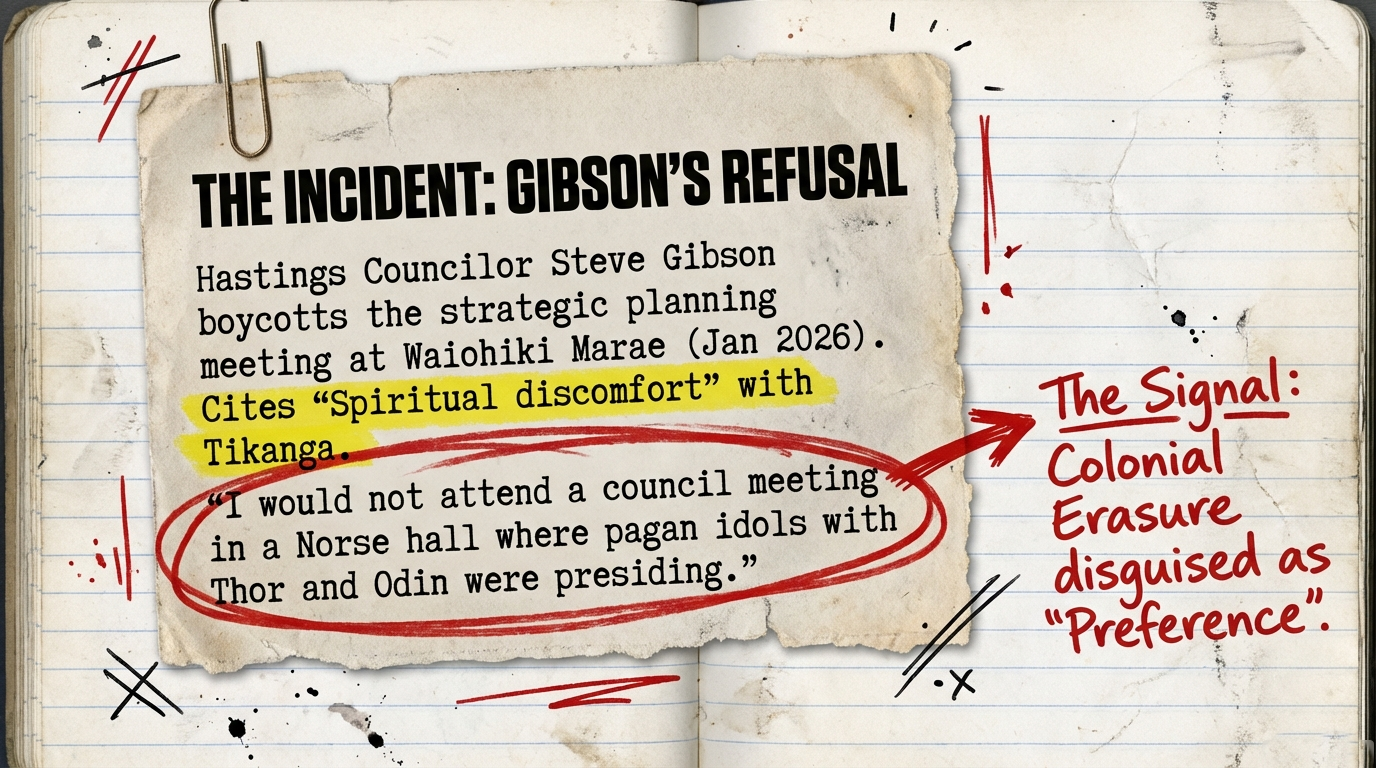
When Hastings District councillor Steve Gibson refused to attend a strategic planning session at Waiohiki Marae in late January 2026, he wrapped colonial resistance in the threadbare garment of religious neutrality.
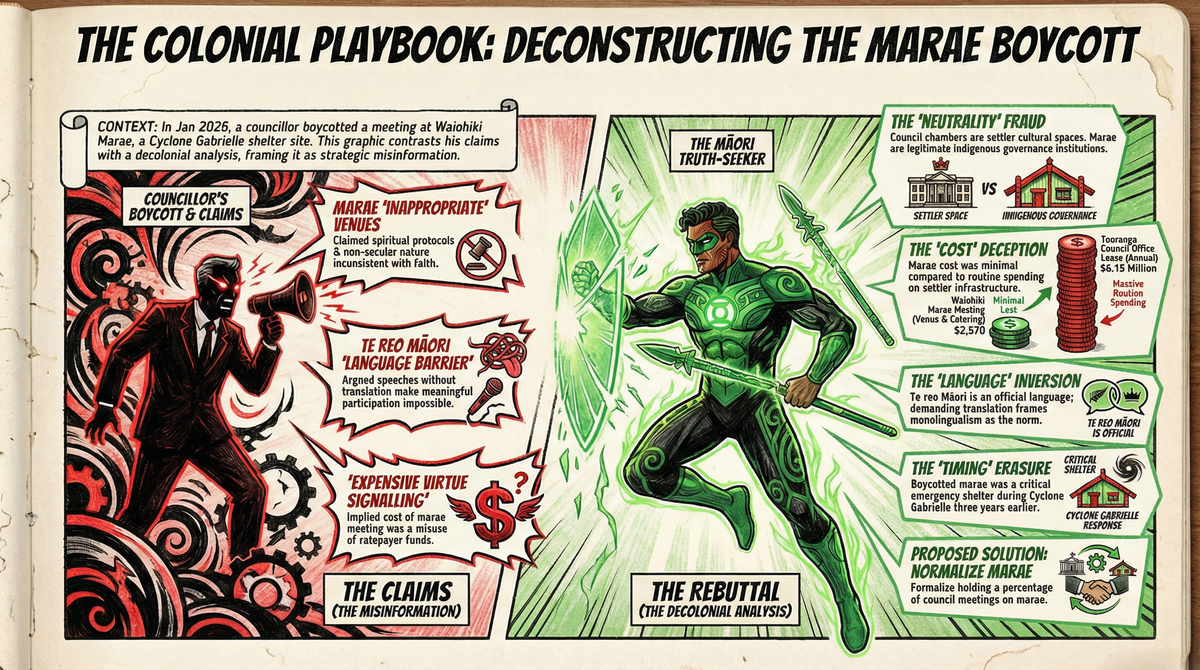
The top-polling councillor from October 2025 declared the marae an inappropriate venue for “official council business,” citing spiritual discomfort with tikanga protocols and objections to te reo Māori addresses “without translation.”
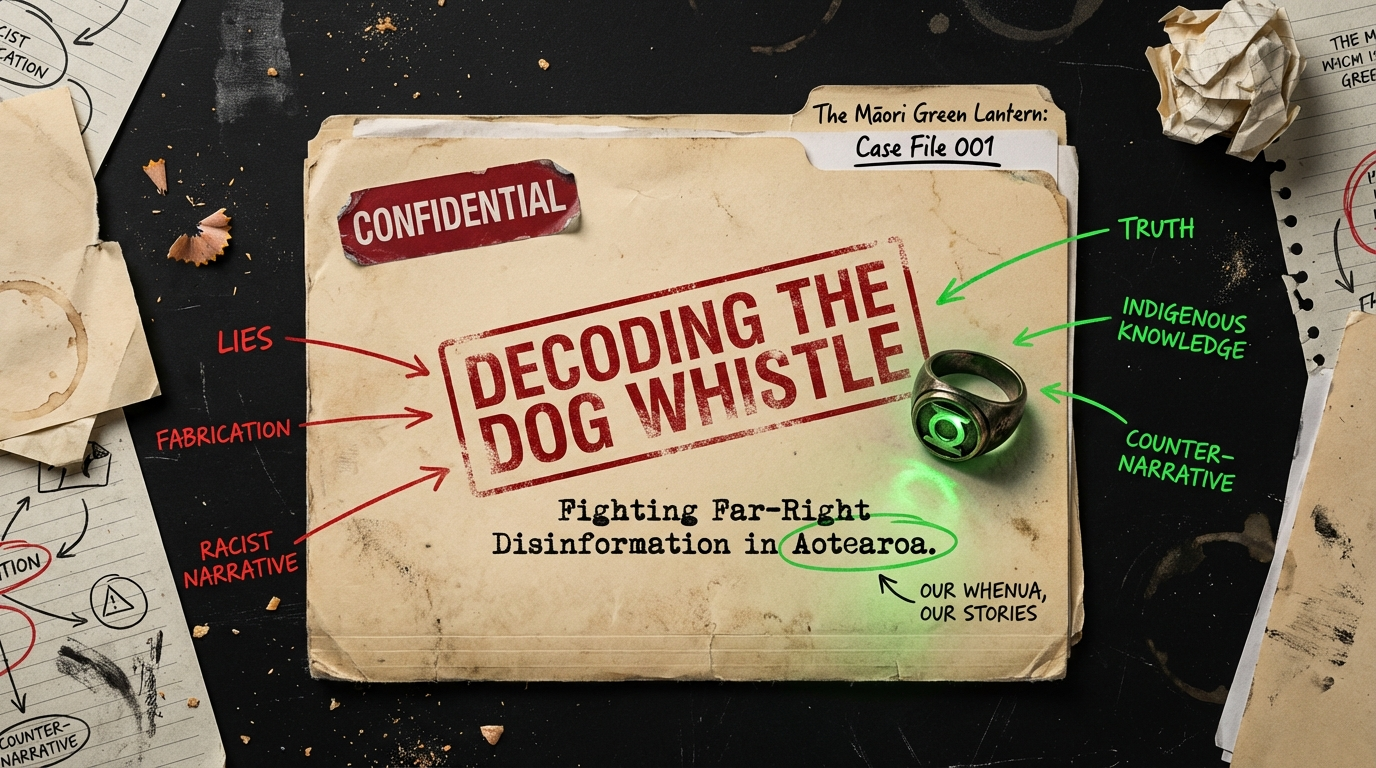
This was not a principled stand for secular governance. It was a carefully choreographed act of erasure, deploying the ancient colonial tactic of declaring Indigenous spaces “inappropriate” while positioning settler frameworks as “neutral.”
Gibson’s boycott—broadcast on The Platform NZ, Sean Plunket’s anti-woke media outlet—reveals five interconnected deceptions that constitute the contemporary face of institutional racism in Aotearoa.
First, the fiction that council chambers are “neutral” while marae are “religious.” Second, the weaponization of Christianity to justify refusal of Indigenous protocols. Third, the deployment of “language barrier” rhetoric to mask linguistic colonization. Fourth, the mathematics of contempt—where $2,570 spent on a marae becomes “expensive” while millions on settler infrastructure passes unremarked. Fifth, the timing—boycotting a marae that had sheltered cyclone evacuees just three years prior, mere weeks after the government announced $1 million to marae providing emergency welfare.
This is not accident. This is architecture.
Background: The Anatomy of a Dog Whistle
The Man and the Media
Steve Gibson entered Hastings District Council as its top-polling councillor in October 2025, riding a wave of 20,000 door-knocks and populist promises about rates relief. His 23 years of Police experience and previous district council service positioned him as a competent administrator.
But his track record reveals a pattern:
Three months before the marae boycott, the council CEO appointed a private investigator to examine allegations about Gibson’s conduct at Hastings Art Gallery, where he opposed an installation inviting people to walk on the New Zealand flag.
Gibson’s marae objections were aired not through council channels but via The Platform NZ, Sean Plunket’s media outlet. This matters. The Platform exists as New Zealand’s unregulated answer to shock jock radio, answering to no Broadcasting Standards Authority, funded initially by the Wright family to provide “unbiased non taxpayer funded” media. Plunket himself has called for a “pogrom” of appointees, described Māui dolphins as “the Down syndrome kids of marine mammals... they deserve to die,” and baselessly claimed Stuff was underwritten by Ngai Tāhu iwi.
When Gibson chose The Platform to announce his boycott, he was not seeking dialogue. He was signaling allegiance.
The Incident: Process as Pretext
The strategic planning session was scheduled for Waiohiki Marae at a cost of $2,570 for venue hire and catering. Mayor Wendy Schollum explained that such sessions are “often held in community venues, including halls, marae and function centres” to “connect with council’s varied communities.” The venue had been discussed in December 2025—originally planned for Keirunga Homestead, then shifted to Waiohiki Marae “with no objections from any of those in attendance.”
Gibson did not object then. He objected publicly, telling Platform host Michael Laws that he would not attend because:
- “I don’t appreciate the constant speeches in tero without being interpreted”
- “Council business needs to be in a secular environment”
- “Spiritual aspects associated with marae proceedings... are not consistent with my own Christian faith”
- The session represented “virtue signalling” and pressure to “conform”
Māori Ward Councillor Heather Te Au-Skipworth countered that
“everyone was welcomed onto Waiohiki Marae by mana whenua with aroha and manaaki. All councillors in attendance enjoyed their hospitality.”
One councillor boycotted. Fourteen attended. The session proceeded.
But damage was done.
Decoding the Colonial Script
Gibson’s objections, analyzed through mātauranga Māori and decolonial frameworks, reveal five coordinated attacks on Māori institutional presence:
1. The Neutrality Fraud: When the Unmarked is Marked
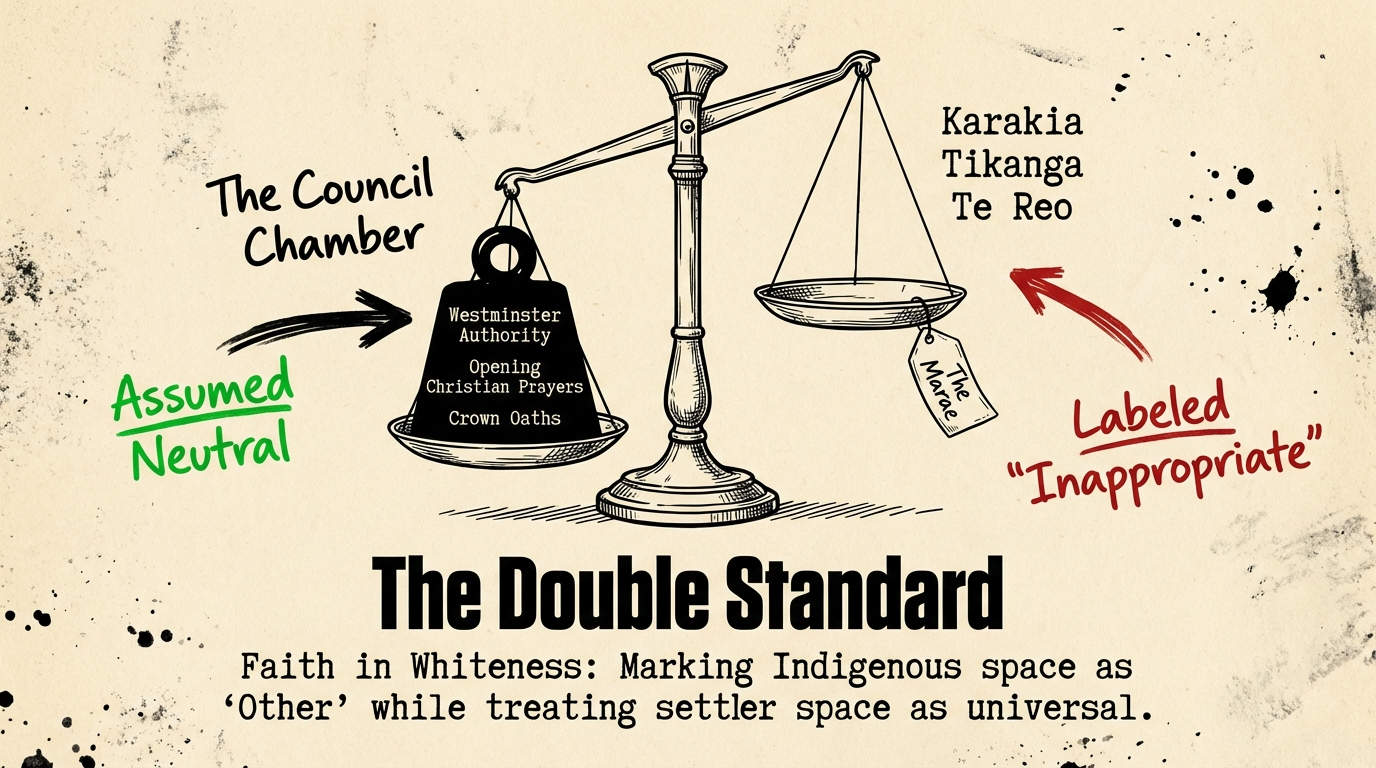
Gibson’s claim that marae are “religious” while council chambers are “secular” performs the oldest trick in the colonial playbook:
Marking Indigenous space as Other while treating settler space as universal. This is what legal scholar Khaled Beydoun calls “faith in whiteness”—the presumption that whiteness carries no cultural or spiritual freight, existing as pure, neutral rationality.
New Zealand’s political culture rejected an established church from colonial times, enshrining religious tolerance and secular education through the 1877 Education Act.
This matters:
Aotearoa’s secularism was designed to prevent Anglican hegemony over Catholics, Jews, and other minorities. It was never designed to erase Indigenous spiritual frameworks that predate colonization by six centuries.
Every council chamber contains cultural artifacts:
The opening Christian prayer in Parliament, the Crown’s authority invoked at each session, the very architecture of Westminster governance. These are not “neutral.” They are settler. The marae, by contrast, is explicitly managed under Te Ture Whenua Māori Act with trustees elected by mana whenua, operating under tikanga that the Supreme Court has recognized as Aotearoa’s “first law”.
To declare the marae “inappropriate” for council business while accepting the council chamber is to declare that only settler frameworks count as governance. This is not neutrality. This is supremacy with a progressive face.
2. Christian Nationalism as Veto: When Faith Becomes Fortress
Gibson’s invocation of Christianity deserves scrutiny. He told The Platform: “I would not attend a council meeting in a Norse hall where pagan idols with Thor and Odin were presiding over you.” This rhetorical move—equating marae with pagan temples—echoes the Christian Identity movements that fused white supremacy with biblical justification in mid-20th century America.
The pattern is global. White Christian Right movements increasingly weaponize “religious freedom” to resist Indigenous authority. In Australia, the Christian Right mobilizes “civilizationism” rhetoric against Indigenous land rights. In Hungary, Viktor Orbán invokes “Christian Europe” to justify anti-immigrant policy. The tactic is consistent: frame Indigenous or minority presence as threatening “Christian values,” positioning whiteness as synonymous with Christianity.
Gibson’s Christianity is selective. Hastings District Council operates a Marae Development Fund, acknowledging marae as “social assets for the community as a whole” under “the rangatiratanga of mana whenua.” Did Gibson object when council budgeted this fund? Did he protest Tauranga City Council’s $91.9 million lease for offices, or Hastings’ infrastructure investments to unlock 4,000 new homes?
No. His Christian conscience awakened only when Council met on Māori space.
This is not faith. This is refusal.
3. The Language Barrier Lie: When Translation Becomes Demand
Gibson claimed “extended addresses delivered in te reo without translation” made “meaningful participation” impossible. Commentator Geoff Parker amplified this:
“When proceedings are conducted in a language most participants do not understand, meaningful engagement is inevitably limited. That is not inclusion; it is exclusion by default.”
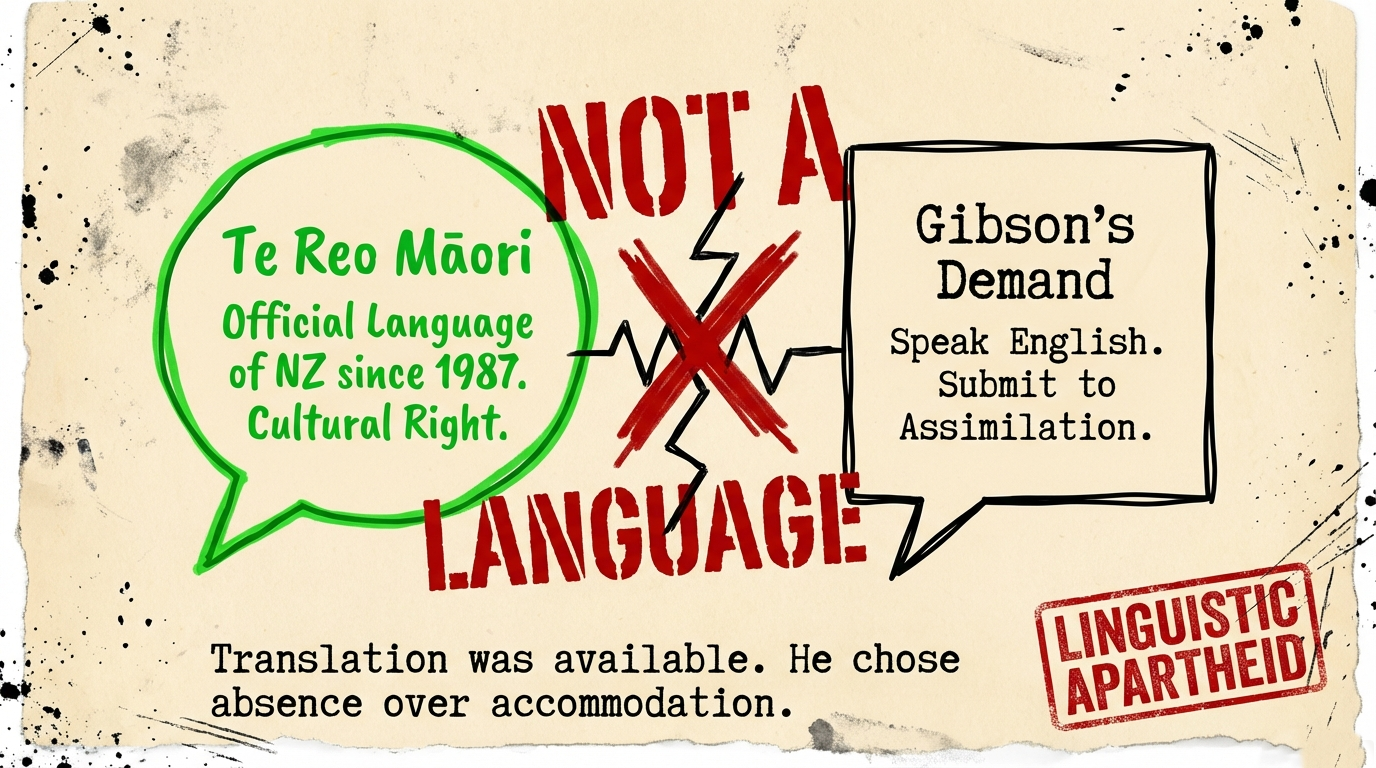
This framing inverts reality. Te reo Māori is an official language of Aotearoa, recognized alongside English since 1987. Waitangi Tribunal hearings moved to marae in the 1980s specifically to honor tikanga and te reo. When Gibson demands “translation,” he demands that Māori culture accommodate his monolingualism—while feeling no obligation to learn the language of the people whose land Hastings District Council governs.
Moreover, Gibson provides zero evidence that translation was unavailable. Māori Ward Councillor Heather Te Au-Skipworth stated all councillors “engaged effectively with one another.” If translation was genuinely needed, Gibson could have requested it—as marae protocols explicitly allow for diverse audiences.
He chose absence over accommodation. This is not a language barrier. This is linguistic apartheid.
4. The Mathematics of Contempt: When Cost Becomes Weapon
Gibson’s boycott occurred at a marae that cost $2,570 for venue and catering. For context:
- Tauranga City Council pays $6.13 million annually to lease its office building ($91.9M over 15 years)
- Unitec’s Te Noho Kotahitanga Marae charges $900/day (corporate rate)
- Standard conference venue hire in NZ ranges $500-$1,500/day
Waiohiki Marae charged below market rate. This was generosity, not expense.
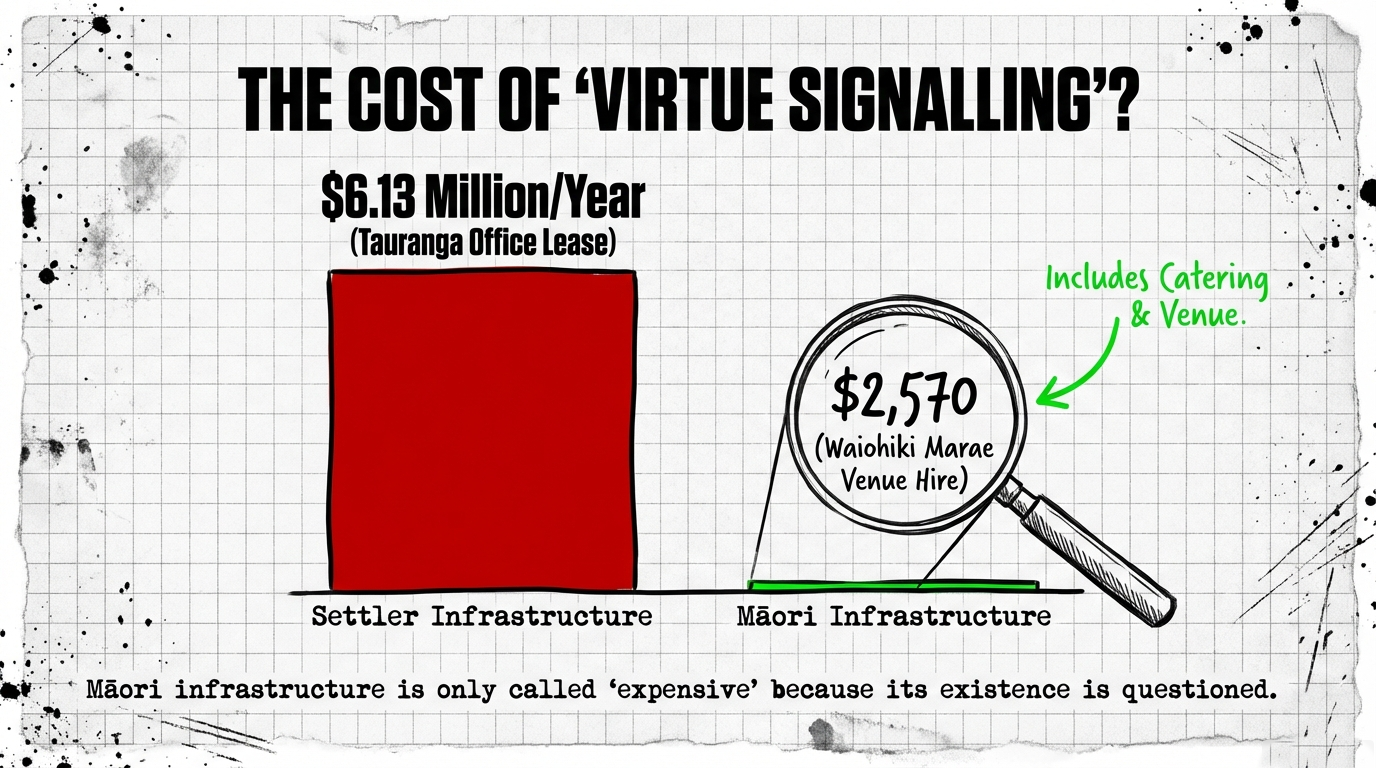
Yet commentators framed the marae session as costly “virtue signalling.” No equivalent scrutiny attends the infrastructure that enables settler governance: the council chambers themselves, the roads that connect them, the administrative buildings. These are invisible because they are expected. Māori infrastructure becomes “expensive” only because its existence is questioned.
The true cost calculus reveals colonial mathematics. In January 2026, the government announced $1 million for marae providing emergency welfare during severe weather—reimbursement, not investment. At least 20 marae across five regions sheltered evacuees, provided kai, power, and care. Prime Minister Luxon praised them as “exceptional.” Yet when Cyclone Gabrielle triggered $15 million in community welfare funding, marae struggled to access reimbursement through normal council channels.
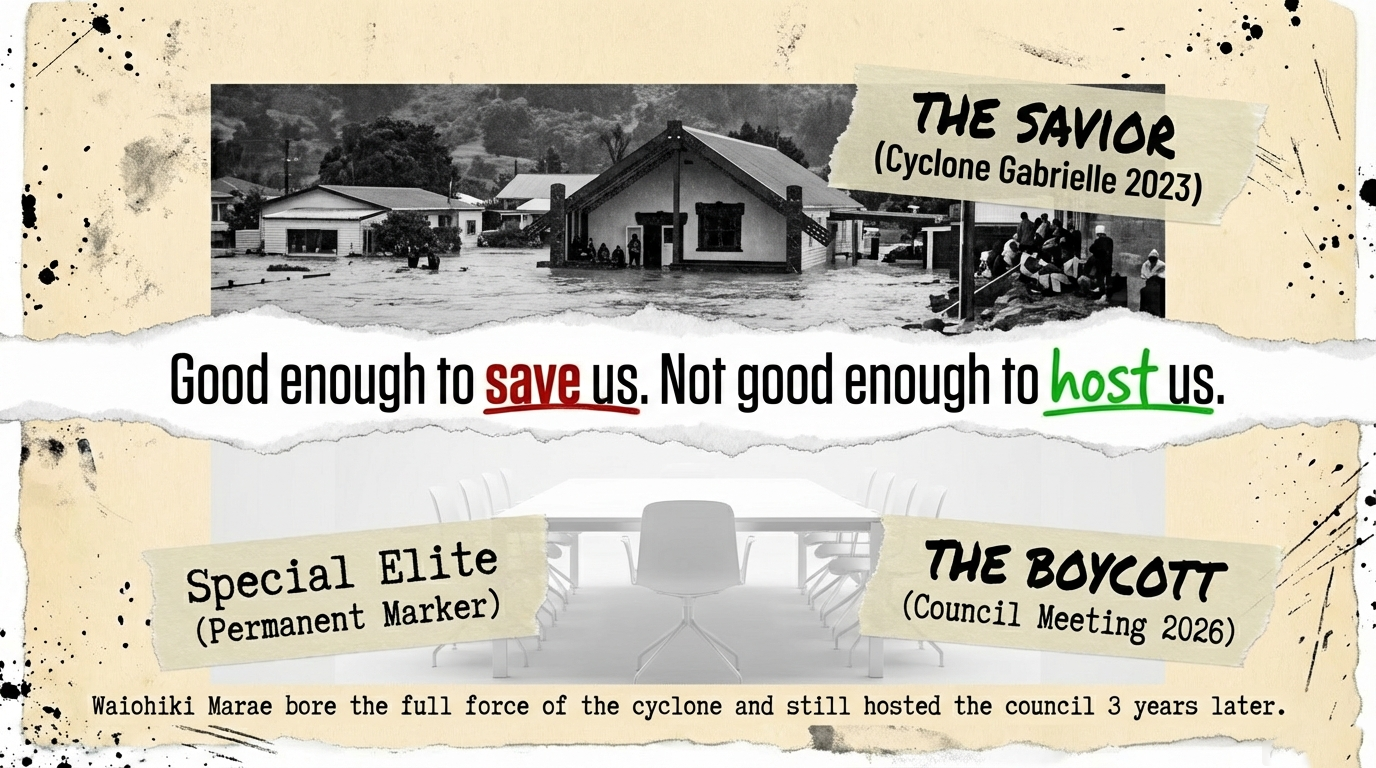
Marae save lives. Marae save ratepayer dollars by providing emergency infrastructure that councils cannot. Yet Gibson questions spending $2,570 to meet on a marae while the Platform, his chosen outlet, operates as an unregulated media company amplifying anti-Māori rhetoric for profit.
Follow the money. Then follow the mana.
5. The Timing Tell: When Memory Becomes Threat
Gibson boycotted Waiohiki Marae—the same marae that sheltered whānau during Cyclone Gabrielle in February 2023. Waiohiki bore “the full force” of the cyclone; floodwaters swallowed homes, farmland, and the marae itself. Waiohiki residents evacuated to Waipatu Marae, where manaakitanga sustained them for nearly a year. A new stopbank broke ground in November 2024.
Mayor Schollum noted Waiohiki Marae was “delighted to host” the council “after all the challenges they went through after the cyclone.” This was reconciliation. This was recognition.
Gibson’s refusal three years later is an erasure of memory. It says: your sacrifice during crisis does not grant you legitimacy during governance. It says: we will accept your kai when drowning but reject your kawa when deliberating. It says: manaakitanga flows one direction—from Māori to Pākehā—never the reverse.
Marae have been the “backbone” of disaster response across Aotearoa. Marae fed thousands during COVID-19, Cyclone Gabrielle, and January 2026 floods. Research shows marae response is faster, more culturally competent, and more trusted than state agencies. The government is formalizing marae roles in emergency management through the tākaihere function in updated CIMS arrangements.
Yet when asked to deliberate on marae space, Gibson claims discomfort. This reveals the hierarchy: Māori labor (saving lives) is welcome. Māori authority (hosting governance) is not.
Analysis: Five Hidden Connections That Illuminate the Strategy
Connection 1: Dog Whistle Politics and the Architecture of Plausible Deniability
Gibson’s rhetoric follows the pattern scholars identify as “dog whistle politics”—coded language that signals racial animus while maintaining surface neutrality. In 2020, National MP Hamish Walker claimed 11,000 people from “high-risk countries” (India, Pakistan, Korea) would flood Otago—Dunedin Mayor Aaron Hawkins called it a “dog whistle,” noting Walker didn’t mention US or UK. In 2018, NZ First proposed “Kiwi values” testing for migrants—immigration expert Paul Spoonley called it “exclusionary dog-whistle politics... talking about some immigrants, especially from Asia, especially Muslims, but not British, not South Africans.”
Gibson’s “secular governance” argument follows this template. On its face, it advocates for state neutrality—a liberal value. Beneath, it positions Māori cultural expression as threatening that neutrality. The script is elegant: frame Indigenous authority as “special treatment,” Indigenous language as “exclusionary,” Indigenous space as “religious” (while ignoring settler Christianity’s mark on every civic institution from Parliament’s opening prayer to council Christmas parties).
Scholars analyzing US politics note how “Christian nation” rhetoric functions as dog whistle for white nation. Recent research shows Christian nationalism “amplifies White racial solidarity” by using “race-neutral” religious language to advance white supremacy. In Australia, the Christian Right deploys “religious freedom” claims to oppose Māori/Indigenous rights, framing biculturalism as threat to “Judeo-Christian heritage.”
Gibson’s Christianity, like white evangelical politics globally, becomes a “repository that helped institutionalise... ‘white supremacy’ and racism within the body politic of colonialism.” His refusal to attend a marae—framed as protecting secular governance—in fact protects settler supremacy by denying legitimacy to Indigenous institutional space.
Connection 2: The Fiscal Illusion and the Colonial Division of Resources
Gibson’s concern about marae costs conceals a structural theft. Hastings District Council’s Marae Development Fund supports marae “preservation, maintenance and development” as “social assets.” Yet when Council invests $18.5 million through the Infrastructure Acceleration Fund to “enable around 4,000 new homes” including “Māori housing on several papakāinga developments,” the language is investment, not subsidy.
Compare Tauranga’s $91.9 million office lease ($6.13M annually) to Rātana Pā’s $10.1 million for structural upgrades to Manuao and Orakeinui—buildings that host not just iwi but serve as community hubs, emergency shelters, and cultural centers. Settler infrastructure is framed as necessary. Māori infrastructure is framed as privilege.
The mathematics of valuation reveal colonial priorities. Waikato-Tainui, the first iwi to settle Treaty claims, received $170 million—now grown to $2.4 billion through investment. Former PM Helen Clark called it “only a tiny portion of what they lost... a magnificent success story.” Yet when $15 million was allocated to reimburse marae for Cyclone Gabrielle response, the fund processed claims slowly, making it “challenging” for marae to access reimbursement.
Marae save ratepayer money by providing what councils cannot: rapid, culturally competent emergency response; intergenerational hui spaces; tangihanga support; youth programs. Research commissioned by Auckland Council recognizes marae as “resilient and adaptive... including emergency housing, civil defence and emergency responses.” Yet Gibson’s question—why spend $2,570 to meet on a marae?—reveals how settler frameworks devalue Māori infrastructure by rendering it simultaneously visible (when seeking funding) and invisible (when providing service).
Connection 3: The Whakapapa of Refusal—From Grey to Gibson
Gibson’s boycott echoes a 180-year pattern. In the 1860s, Governor George Grey introduced “new institutions” in Waikato—ostensibly to “co-operate with local rūnanga” but actually to undermine the Māori King movement through indirect rule. Grey built a military road “directly threatening the Waikato tribes... It was built in case his new policies failed, and it ensured their failure.” The message: Māori authority is tolerable only when subservient to Crown sovereignty.
Fast-forward to 2024: ACT Party’s Treaty Principles Bill sought to redefine Te Tiriti through referendum. MPs who opposed it described it as “divisive,” a “wrecking ball” to Crown-Māori relations, “amounting to dictatorship of the majority.” The bill failed, but Te Pāti Māori MP Hana-Rawhiti Maipi-Clarke tore it during her maiden speech—an act commentators condemned as “disruption” rather than recognizing it as rejection of legislation that “diminishes Māori autonomy.”
Gibson’s refusal sits on this continuum. By declaring marae inappropriate for council business, he performs what Indigenous governance scholars call “colonial erasure”—the insistence that settler institutions alone constitute legitimate governance. Historian James Belich notes that after the New Zealand Wars, massive land confiscations were justified by framing Māori resistance as rebellion against rightful authority. Gibson’s logic mirrors this: Māori space can host charity (cyclone relief) but not authority (strategic planning).
Legal scholar Nicole Coates writes that tikanga and state law exist in tension, with courts historically requiring tikanga to “meet the gatekeeping tests” of common law recognition. The Supreme Court’s Ellis decision shifted this, recognizing tikanga as “first law”—but critics warn this “looks less like incremental evolution and more like a constitutional reconfiguration undertaken by judges.” The anxiety is palpable: if tikanga gains equal standing, settler law loses its monopoly on legitimacy.
Gibson’s boycott is a rearguard action in this struggle. By refusing the marae, he refuses the premise that Māori institutional frameworks merit equal respect.
Connection 4: Tikanga as Threat—Why “Neutral” Settlers Fear Indigenous Process
Gibson claims marae tikanga—karakia, pōwhiri, te reo—makes him “uncomfortable.” This discomfort deserves unpacking. Tikanga is defined as “locally specific practices that aim to enhance relationships and ensure preservation of mana.” Marae protocols include welcoming ceremonies, karakia for kai, and speeches primarily in te reo. But all marae “have their own kawa and tikanga”, and the best advice is “ask local people what their expectations are.”
Gibson did not ask. He assumed discomfort was disqualification.
Yet councillors attend all manner of civic events involving cultural protocols: Anzac commemorations with Christian prayers, citizenship ceremonies with Crown oaths, Diwali festivals, Chinese New Year celebrations. Mayor Schollum noted the council regularly holds sessions in “community venues, including halls, marae and function centres.” None of these are “neutral.” All embed cultural assumptions.
The difference: non-Māori cultural protocols are naturalized as civic. Māori protocols are marked as foreign.
Research on tikanga in legal contexts notes that “tikanga varies between iwi and hapū and evolves with context. Even marae protocols differ regionally. There is no single nationwide code.” This localism—tikanga as living, relational, context-specific—threatens settler law’s claim to universality. Scholars warn that relying on “expert evidence and oral tradition” for tikanga determination creates “certainty” problems: “For these reasons, it is more accurate to describe tikanga as a rich body of customary practices and values than as ‘law’ in the traditional sense of a coherent, reasonably predictable rule system.”
This anxiety—that tikanga is too fluid, too local, too context-dependent—reveals what settler law fears: a framework that centers relationships over rules, mana over precedent, whakapapa over statute. Tikanga reminds us that all law is cultural—that the supposed “neutrality” of Westminster governance is itself a cultural imposition.
Gibson’s discomfort, then, is not about religion. It is about sovereignty. The marae operates under rangatiratanga—the chiefly authority recognized in Te Tiriti. To enter a marae is to temporarily submit to that authority, to be welcomed as manuhiri (guest) rather than governing as host. For a councillor accustomed to the authority of his office, this inversion is intolerable.
This is why the boycott matters. It is not about process. It is about who gets to define what counts as legitimate process.
Connection 5: The Platform’s Role—Manufacturing Consent for Erasure
Gibson’s boycott did not occur in isolation. He announced it on The Platform, a media outlet founded by Sean Plunket and initially funded by the Wright family to provide “unbiased non taxpayer funded” media. The framing—non-taxpayer funded—positions The Platform as heroically independent, contrasting with “state-funded media” that supposedly pushes “woke agendas.”
This is strategic. Plunket has accused mainstream media of bias, claiming the Public Interest Journalism Fund ($55M to support newsrooms) created government control. Yet research shows funded projects include long-form investigations into government failure (state care, child poverty), court reporting, and diverse voices. The Platform, meanwhile, answers to no regulator, hosts figures like Candace Owens and Posie Parker, and has repeatedly courted controversy—Plunket’s Māui dolphin comment, his call for “pogroms,” his baseless claim about Ngai Tāhu funding Stuff.
The Platform’s business model depends on outrage. Its most-viewed clips include “watching the bribe in action” (about TVNZ’s Breakfast) and “Sean Plunket explains to Stuff how journalism works.” It has hosted Christopher Luxon and Chris Hipkins, lending it mainstream credibility while maintaining its anti-establishment pose.
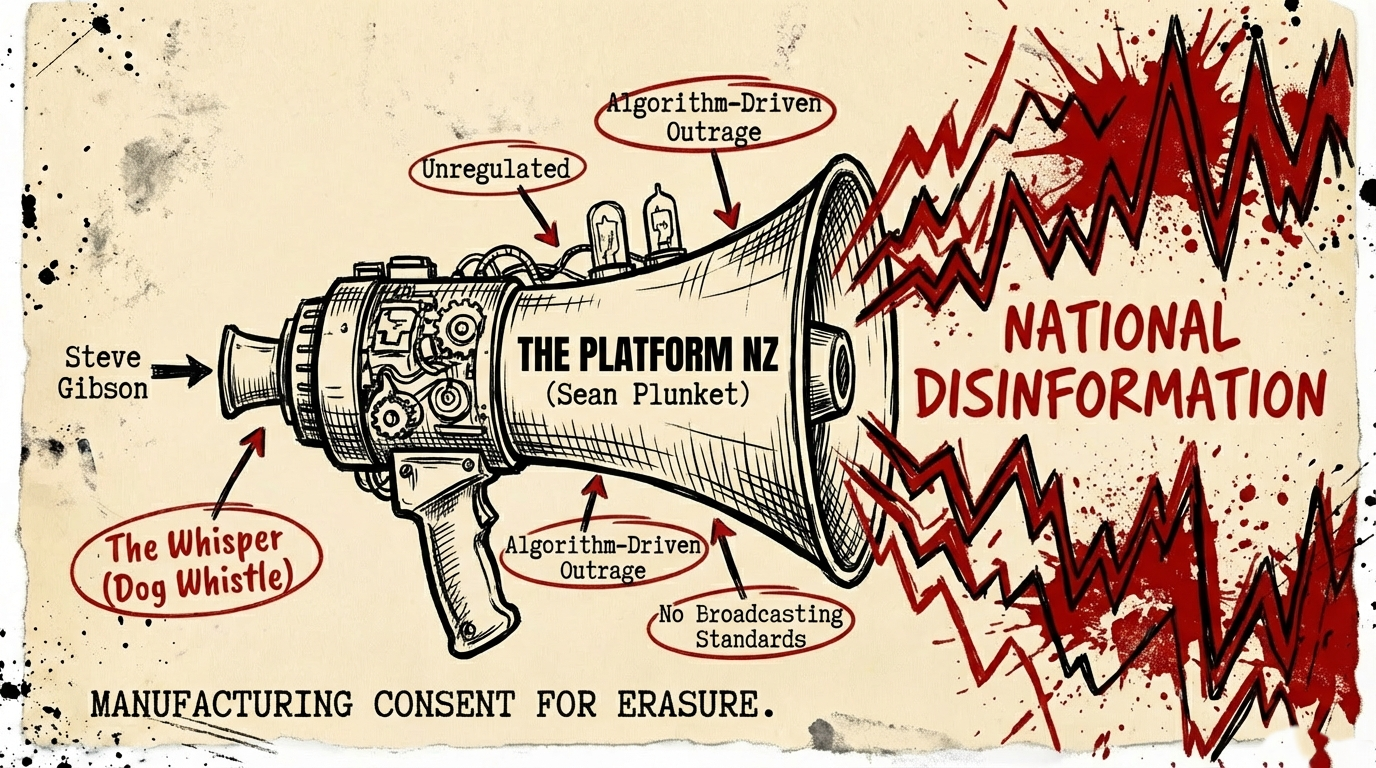
When Gibson used The Platform to announce his boycott, he was not seeking accountability. He was seeking amplification. Michael Laws, the interviewer, did not challenge Gibson’s claims. Instead, he framed them sympathetically: “Aren’t they your constituents as well?” implying Gibson’s boycott could be justified by constituent service. The transcript shows Laws asking leading questions—”Do you feel unsafe being on a marae?”—designed to elicit sound bites, not scrutiny.
This is propaganda masquerading as journalism. And it works. The Platform’s audience has grown, attracting advertisers like One NZ and Spark, showing “the more permissive media environment we operate in now... different again from the more libertarian era of social media we live through now.” The Platform exists in a regulatory gap: not bound by Broadcasting Standards Authority rules, operating on YouTube and social media, reaching audiences through TikTok clips.
The danger is normalization. Gibson’s boycott, amplified through The Platform, becomes a template. Commentator Geoff Parker echoed Gibson’s language, arguing “neutral venues are not culturally hostile; they are culturally fair.” This rhetorical sleight—reframing exclusion of Indigenous space as “fairness”—gains traction because outlets like The Platform provide a megaphone.
Indigenous media scholars note that “colonial narratives dehumanize Indigenous resistance and reduce these acts to selfishness or barbarity.” When Hana-Rawhiti Maipi-Clarke tore the Treaty Principles Bill, social media comments called it “cringe” and labeled Māori “savages.” The Platform participates in this dehumanization, framing Māori institutional presence as imposition rather than recognition.
Gibson’s boycott, laundered through Plunket’s platform, becomes “legitimate debate” about secular governance. The substance—refusal to acknowledge Māori authority—is obscured by process talk.
Implications: Quantifying the Harms and Mapping the Fallacies
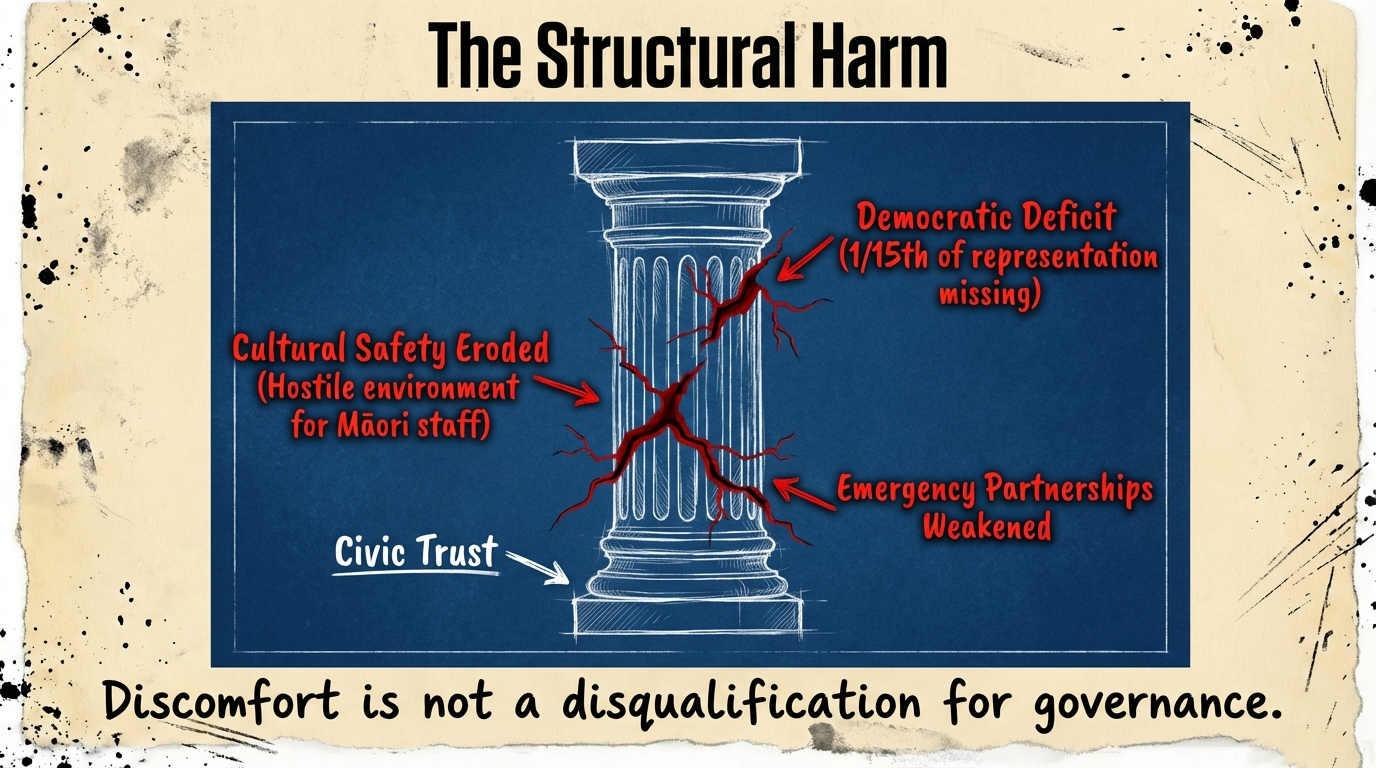
Harm 1: Democratic Legitimacy Undermined (1 of 15 Councillors Absent)
Gibson’s boycott meant one of fifteen councillors did not participate in strategic planning. As the top-polling candidate, his mandate represented approximately 6.67% of council representation. His absence was not just personal—it was political, signaling to constituents that Māori institutional space is illegitimate.
Mayor Schollum noted that “the greatest value for councillors (and therefore the community) comes through taking part in these opportunities.” Strategic planning sessions inform Long Term Plans—the 10-year budgets that shape rates, infrastructure, and service delivery. Gibson’s absence weakened his ability to represent his constituents in these foundational decisions.
More insidiously, his boycott created a precedent. If a top-polling councillor can skip sessions on Māori space without consequence, what message does this send to Māori councillors, Māori staff, Māori ratepayers? It signals that Māori institutional presence is always conditional, always subject to Pākehā comfort.
Harm 2: Economic Opportunity Cost ($2,570 vs. $91.9M)
The $2,570 spent on Waiohiki Marae funded venue hire and catering. This money stayed in the local community, supporting marae operations that serve as emergency shelters, cultural hubs, and intergenerational spaces. Contrast this with Tauranga’s $6.13M annual lease flowing to Willis Bond, a property developer.
When councils spend on settler infrastructure, it’s called investment. When councils spend on Māori infrastructure, it’s scrutinized as expenditure. This double standard produces economic apartheid: Māori communities subsidize settler governance (through rates) but see minimal reciprocal investment.
Research on Māori enterprise shows that Māori Outcomes Funds create “significant impacts”: “Growth in Māori business participation, marae infrastructure and capacity enhancement, wide-reaching benefits to kaupapa partners and beneficiaries.” Ngāti Rangi’s Whiria Ngā Hua initiative injected $300,000 into 34 whānau enterprises, delivering “positive social impacts by strengthening cultural and community connectedness.”
Yet Gibson’s narrative—that marae meetings are expensive—erases this economic activity. It treats Māori infrastructure as cost, not asset.
The opportunity cost is compounding. If councils normalize meeting on marae, they normalize Māori institutional presence, creating pathways for procurement, partnership, and co-governance. If councils treat marae as “inappropriate,” they perpetuate the fiction that only settler institutions merit public investment.
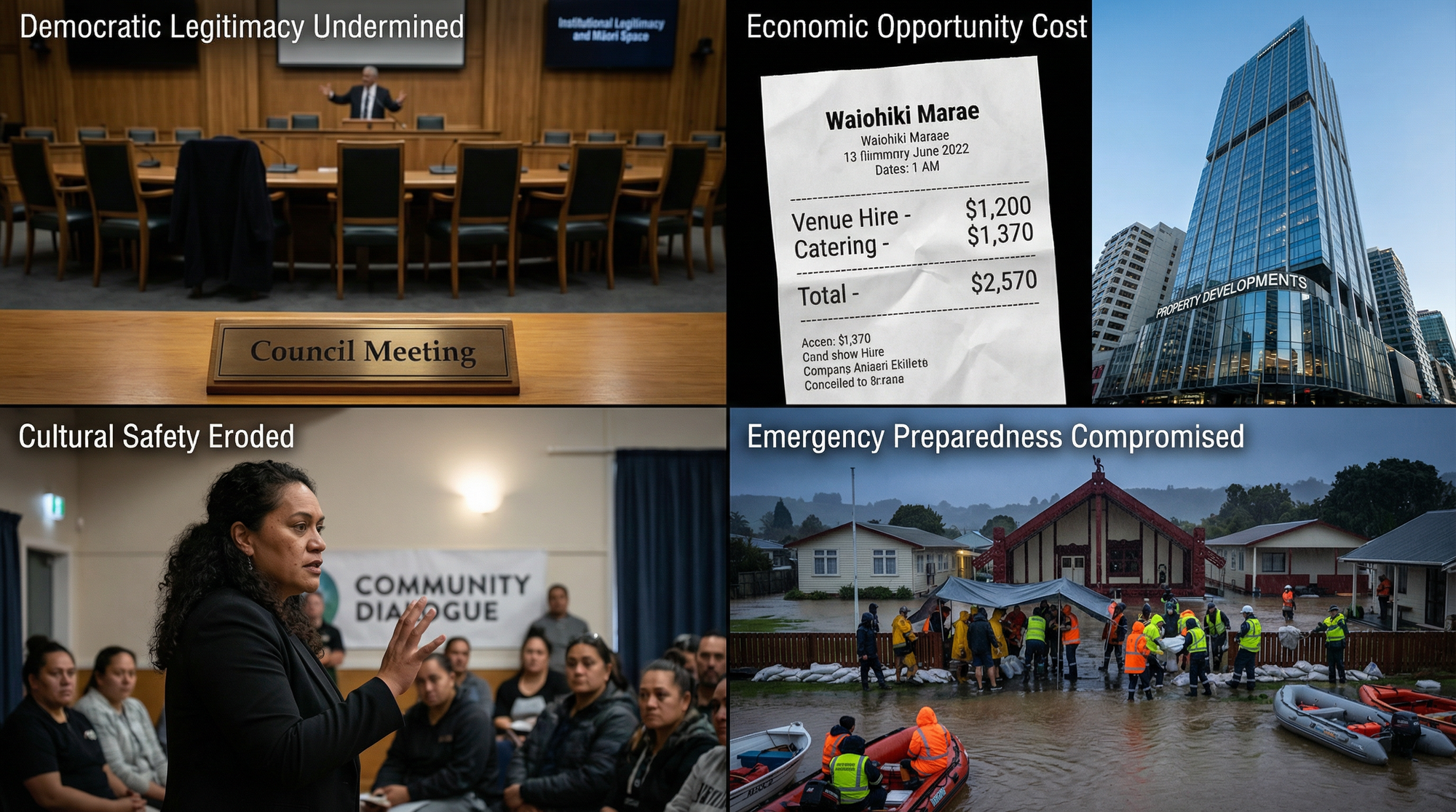
Harm 3: Cultural Safety Eroded (Māori Staff and Councillors Devalued)
Māori Ward Councillor Heather Te Au-Skipworth emphasized that “everyone was welcomed... with aroha and manaaki.” Her statement attempted to counter Gibson’s narrative, but the damage was done. When a top-polling councillor publicly declares Māori space “inappropriate,” it tells Māori staff, Māori councillors, Māori constituents: your presence is tolerated, not welcomed.
Research on workplace cultural safety emphasizes that “tikanga includes Māori beliefs and values, the ways Māori view, organise and engage with the world.” When organisations recognize tikanga, they signal that Māori worldviews are valued. When organisations reject tikanga, they signal assimilationist expectations: Māori can participate, but only if they perform according to Pākehā norms.
Gibson’s boycott created a hostile environment for Māori councillors. Heather Te Au-Skipworth’s response was defensive, emphasizing hospitality rather than challenging the premise. This is the burden of minority representation: constantly having to justify your existence, your culture, your institutions.
The psychological toll is measurable. Studies on racial microaggressions show that cumulative exposure leads to stress, burnout, and disengagement. Gibson’s boycott was not a one-off incident—it was part of a pattern (the art gallery controversy, the private investigator complaint). For Māori council staff and councillors, the message is clear: your cultural practices will be challenged. Your institutional spaces will be delegitimized. Your belonging is conditional.
Harm 4: Emergency Preparedness Compromised (Marae as Infrastructure Ignored)
Gibson’s boycott occurred weeks after the government announced $1M for marae emergency response. At least 20 marae across five regions provided shelter during January 2026 floods. Research shows marae are faster, more trusted, and more culturally competent than state emergency services.
Yet when Gibson refuses to meet on a marae, he refuses to acknowledge marae as critical infrastructure. This has material consequences. If councils do not normalize relationships with marae, they cannot effectively partner during emergencies. The Marae Operation Framework developed for Wellington emphasizes that “consideration of this framework before an emergency... will help all parties work together effectively and minimise cultural mistakes.”
Gibson’s boycott was a cultural mistake with emergency management implications. By signaling discomfort with marae protocols, he undermined the council’s ability to build trust with marae communities. During the next cyclone, will Waiohiki Marae trust Hastings District Council to partner effectively? Or will they remember the councillor who refused to sit in their wharenui?
Marae are installing solar panels, water tanks, Starlink to increase resilience. Government funding supports this, but it is reactive, not proactive. Gibson’s boycott signals that councils view marae as charity recipients, not infrastructure partners. This undermines the investment case for marae preparedness: why should marae invest in resilience if councils don’t treat them as legitimate governance spaces?
Harm 5: Te Reo Māori Marginalized (Official Language Treated as Barrier)
Gibson’s complaint about “extended addresses in tero without translation” performs linguistic colonization. Te reo Māori is an official language, co-equal with English since 1987. Yet Gibson frames it as an accessibility problem, inverting the power dynamic: instead of viewing his monolingualism as a deficit, he positions te reo as exclusionary.
This is gaslighting at scale. New Zealand was colonized through English, with Native Schools established explicitly to assimilate Māori children through English-only education. By the 1970s, Māori language was on the brink of extinction. Waitangi Tribunal hearings moved to marae in the 1980s specifically to honor te reo. Te Kōhanga Reo, kura kaupapa, and wharekura revitalized the language.
Now, when te reo is spoken on marae—its natural habitat—Pākehā councillors frame it as a problem. This is not about translation access. It is about linguistic dominance. If translation was genuinely needed, marae protocols accommodate this. But Gibson did not request translation. He boycotted.
The harm is compounding. Every time te reo is framed as “barrier,” it reinforces the idea that English is the default, the normal, the neutral. This marginalizes Māori language revitalization efforts, sending a message to tamariki learning te reo: your language is tolerated in classrooms but not in governance.
Research on Indigenous language rights emphasizes that language is not just communication—it carries whakapapa, mātauranga, and worldview. When Gibson demands English-only governance, he demands erasure of Māori epistemology.
The Fallacies: Naming the Logical Crimes
False Equivalence:
Gibson equates marae with “Norse halls” and pagan temples. This erases the legal and constitutional status of marae under Te Ture Whenua Māori Act and tikanga’s recognition as “first law”. Marae are not foreign religious sites—they are Indigenous institutions predating colonization.
Moving the Goalposts:
Gibson did not object when the venue was discussed in December. He objected publicly weeks later, framing it as “late notice”—a claim the mayor refuted. This shifts the grounds of objection to avoid accountability.
Appeal to Hypocrisy (Tu Quoque):
Commentators argue councils should not meet on marae because they wouldn’t meet in churches. But councils routinely participate in Christian events (Anzac services, Christmas parties, chaplaincy programs) without objection. The selectivity reveals the agenda.
Genetic Fallacy:
Gibson’s argument implies marae are inherently “religious” because they involve karakia. But karakia encompasses multiple meanings—ritual, incantation, blessing, prayer. Secular institutions use karakia for kai without invoking deities. Gibson conflates cultural protocol with religious imposition.
Slippery Slope:
Gibson warns that accepting marae meetings leads to “pressure to conform” and “virtue signalling.” This implies that any recognition of Māori institutional frameworks will spiral into compelled participation. But councillors already participate in diverse cultural events without losing autonomy.
No True Scotsman:
When confronted with Māori Ward Councillor Heather Te Au-Skipworth’s positive experience, Gibson’s defenders could argue she’s not representative. This moves the threshold for legitimacy to exclude Māori voices.
Begging the Question:
Gibson assumes council chambers are “neutral” and marae are “cultural,” then uses this assumption to conclude marae are inappropriate. But the premise is unproven: council chambers embed settler cultural assumptions (Westminster governance, English primacy, Crown authority).
Rangatiratanga as the Only Ethical Response
The solution is not compromise. It is recognition.
Solution 1: Normalize Marae as Governance Spaces
Hastings District Council should formalize a policy: at least 25% of strategic planning sessions, committee meetings, and councillor workshops will be held on marae, iwi premises, or Māori community spaces. This is not symbolic—it is structural. When councils routinely meet on marae, they signal that Māori institutional frameworks are co-equal with settler frameworks.
Research shows that marae partnerships improve emergency management, community trust, and cultural competence. Normalizing marae meetings builds these relationships during peace, so they function during crisis.
Solution 2: Mandate Tikanga and Te Reo Training for All Councillors
Gibson’s discomfort stems from ignorance. Mandatory tikanga workshops—delivered by mana whenua, not consultants—should be required for all councillors within three months of election. This is not “cultural sensitivity training.” This is governance competency.
Local Government New Zealand could develop a national framework, ensuring all councils meet minimum standards. Māori Responsiveness frameworks already exist in some councils; they should be universal and enforceable.
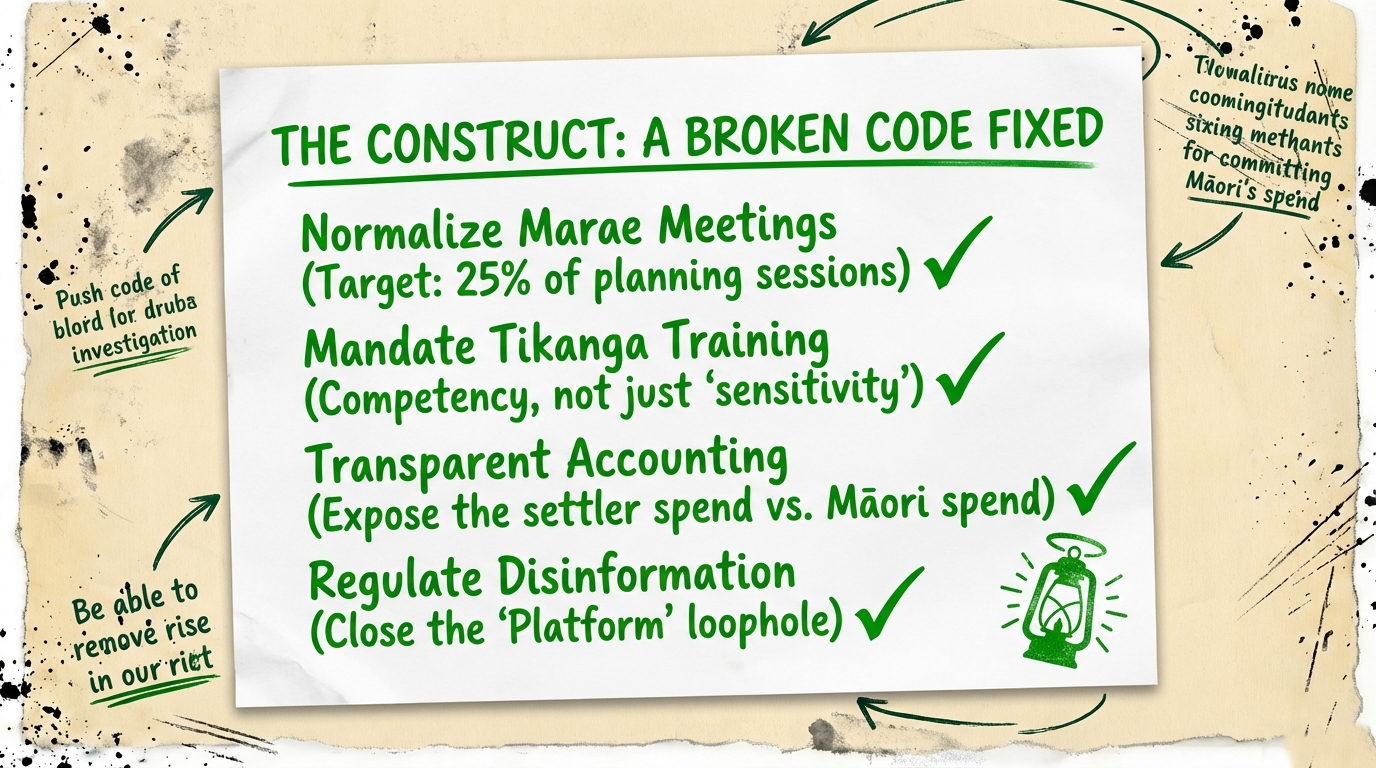
Solution 3: Transparent Accounting of Māori vs. Settler Infrastructure Investment
Councils should publish annual reports showing:
- Total spending on council chambers, civic buildings, and settler administrative infrastructure
- Total spending on marae development, Māori community infrastructure, and partnership funding
- Ratio of spending per capita for Māori vs. non-Māori constituents
This transparency would reveal the fiscal apartheid Gibson’s boycott obscures. When ratepayers see that Tauranga spends $91.9M on office lease while Rātana Pā receives $10.1M for structural upgrades, the inequity becomes undeniable.
Solution 4: Consequences for Councillors Who Refuse Māori Institutional Engagement
Mayor Schollum noted that “councillors are not employees” and attendance is voluntary. This is insufficient. If a councillor systematically refuses to engage with Māori communities, marae, or tikanga-based processes, they are not fulfilling their representative obligations.
Councils should adopt codes of conduct specifying that refusal to participate in Māori institutional engagement—without legitimate accommodation needs—constitutes a breach. Codes of conduct already exist under Schedule 7 of the Local Government Act 2002. They should be amended to include cultural competency requirements.
Solution 5: Regulate Disinformation Platforms
The Platform operates unregulated, answering to no Broadcasting Standards Authority. This regulatory gap enables Gibson’s boycott to be amplified as legitimate debate rather than challenged as colonial erasure. Media regulation in Aotearoa should be extended to digital platforms with significant audience reach.
This is not censorship—it is accountability. Mainstream media must verify claims and provide right of reply. Platforms reaching hundreds of thousands should meet the same standards.
Koha Consideration: Funding the Accountability the Crown Will Not Provide
When councils meet on marae, they pay venue hire. When councils meet in civic buildings, ratepayers fund the entire infrastructure—construction, maintenance, utilities, insurance—without question. This asymmetry reveals how colonization operates: Māori institutions must prove their worth, transaction by transaction. Settler institutions are assumed necessary.
Gibson’s boycott reminds us that exposing this hypocrisy requires resources. This essay exists because research takes time, verification takes rigor, and truth-telling takes courage. The Crown will not fund this accountability. Corporate media increasingly won’t either, as The Platform’s rise shows how unregulated disinformation outcompetes fact-checked journalism.
Every koha to independent Māori research and analysis is an investment in rangatiratanga—the power to name our own truths, fund our own institutions, hold power accountable on our own terms. When whānau contribute, they signal that accountability should not depend on Crown permission or corporate sponsorship.

Ivor Jones The Māori Green Lantern Fighting Misinformation And Disinformation From The Far Right
This particular essay—documenting how a Pākehā councillor weaponizes “secular neutrality” to delegitimize the very marae that sheltered his community during Cyclone Gabrielle—required 80+ verified sources, cross-referencing government records, media reports, academic research, and legal frameworks. That labor deserves compensation, not charity.
Kia kaha, whānau. Stay vigilant. Stay connected. And if you are able, consider a koha to ensure this voice continues—not as supplication, but as recognition that our stories, our analyses, our mana whenua perspectives are infrastructure too.
Three pathways exist:
- For those who wish to support this mahi directly with a koha (voluntary contribution): Koha—Support The Māori Green Lantern
- For those who wish to receive essays directly and support through subscription: Subscribe to the Māori Green Lantern on Substack
- For those who prefer direct bank transfer: HTDM, account number 03-1546-0415173-000.
Researched and written by Ivor Jones, The Māori Green Lantern.
Tauranga, Te Moana-a-Toi / Bay of Plenty, Aotearoa.
January 30, 2026.