“The Māori Green Lantern Destroys Elliot "The Idiot" Ikilei: When White Supremacist Attack Dogs Bite Their Own Tails” - 17 September 2025
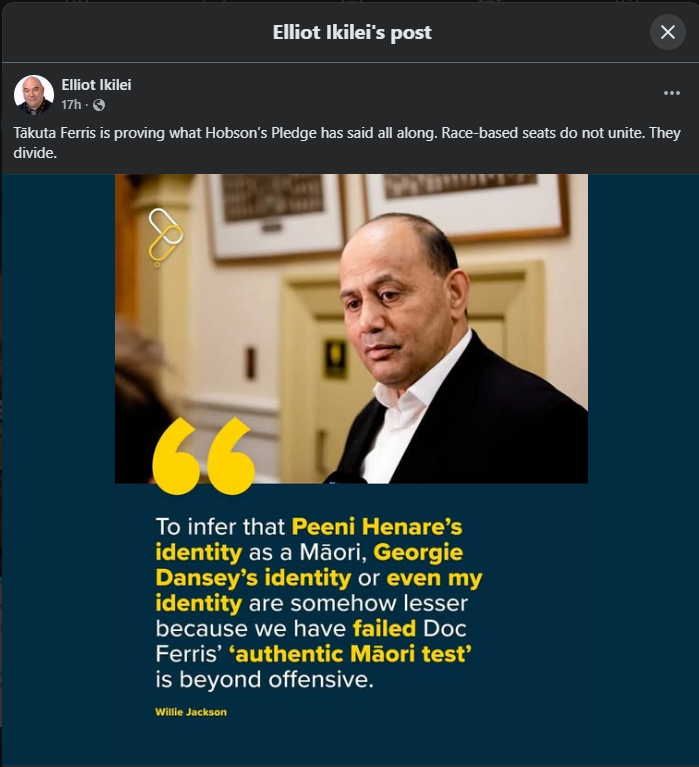
The Brutal Truth: Elliot Ikilei is a reformed criminal turned corporate attack dog for white supremacists, whose Facebook tantrum proves that when you give mediocre men a platform to police Māori iden
Kia ora whānau, ko Ivor Jones ahau, The Māori Green Lantern
Let me make this crystal clear for every Kiwi reading this: Elliot Ikilei's pathetic Facebook post attacking Willie Jackson isn't some random social media spat. This is a calculated strike by New Zealand's most well-funded white supremacist organization, designed to keep Māori fighting each other while corporate interests strip our resources and destroy our communities. When a drug-addled former criminal with a savior complex gets handed a lawyer's degree and a trustee position at Hobson's Pledge, you're witnessing the weaponization of mediocrity against indigenous resistance.
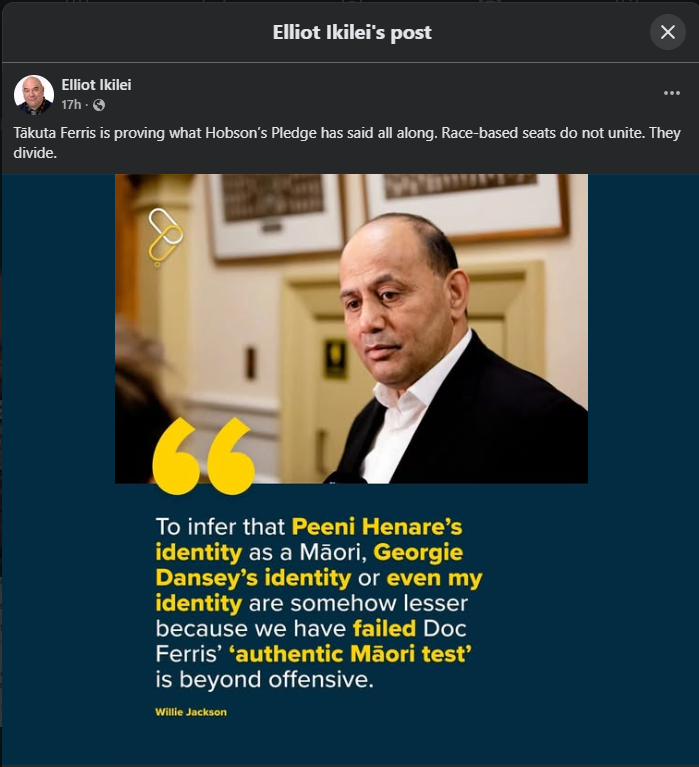
Meet Elliot "The Idiot" Ikilei: From Criminal to Corporate Racist
Let's start with who this pathetic specimen actually is. Elliot Ikilei grew up angry, in a "drug and alcohol-infused childhood with a violent, solo father, who used his fist a lot". This created what he admits was a "depraved life" where he was "part of the problem" before being shipped off to Australia and returning "more damaged than ever."
Ikilei's transformation from criminal to Christian came through what he calls meeting "someone who dramatically changed" his life. But here's the sickening part - instead of using his second chance to lift up other struggling people, this fraud decided to become an attack dog for the same colonial system that creates the conditions he grew up in.
After receiving the Police Commander's Commission for Bravery & Heroism for pulling three people out of a car before it was hit by a truck, Ikilei developed a messiah complex that led him to blame "socialist government policies" for "systemic decay and breakup of families" - the exact neoliberal talking points his handlers at Hobson's Pledge push.
The Don Brash Connection: How White Supremacy Recruits Its Tools
The transformation from damaged youth worker to corporate racist didn't happen by accident. In 2020, when Ikilei was still deputy leader of the New Conservative Party, he arrived at Waitangi "in a car with Don Brash" - a clear signal of his white supremacist mentorship.
By 2024, this relationship had crystallized into Ikilei joining Hobson's Pledge as a trustee, declaring "this is not the New Zealand I grew up in" and ranting about "apartheid-style policies". The language is classic white supremacist rhetoric - positioning himself as the victim while attacking Māori rights as "extremism."
Ikilei claimed he was joining to "stand up for justice, democracy and equality" while simultaneously attacking Te Pāti Māori as "extremist groups" attempting to "rewrite history". This is textbook colonial gaslighting - using the language of equality to justify inequality, democracy to justify oppression.
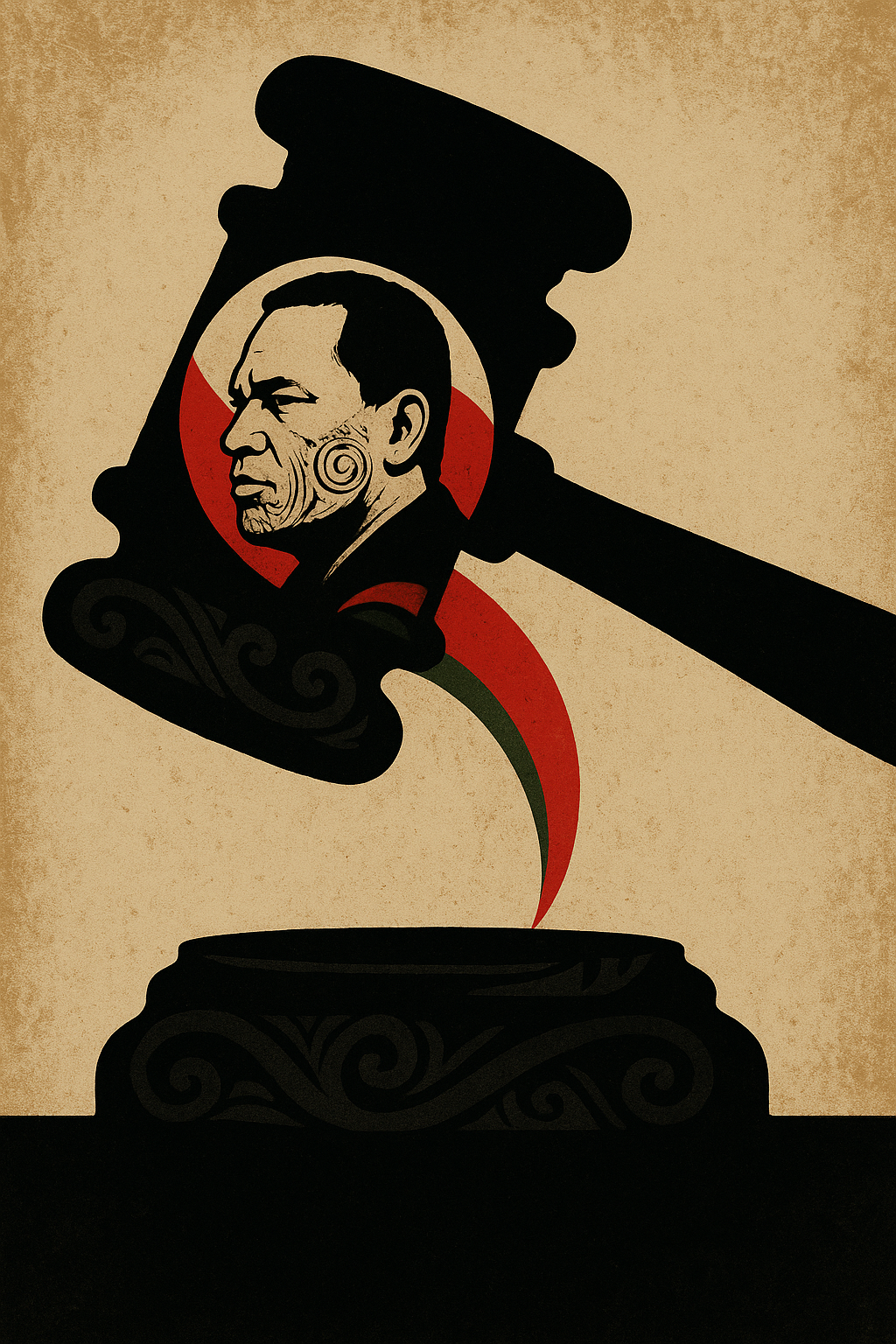
Ikilei as identity judge weaponizing authenticity test
The Corporate Web: Following the Money Behind the Hate
What makes Ikilei particularly dangerous isn't his individual racism - it's the well-funded network he represents. Hobson's Pledge spent $283,899 on the 2023 election campaign, an increase from the $254,115 they spent in 2017, showing the growing financial muscle behind organized anti-Māori propaganda.
The organization operates through sophisticated "astroturfing" campaigns, including the "We Belong Aotearoa" website that initially hid its Hobson's Pledge backing. The website and social media are run by Jordan Williams' Campaign Company, which also handles accounts for the Taxpayers' Union, revealing the interconnected nature of New Zealand's right-wing propaganda network.
This same Campaign Company received $135,733 total from Hobson's Pledge ($34,500), the Taxpayers' Union ($23,033), and Groundswell ($78,200) during the 2023 election, showing how the same corporate interests coordinate anti-Māori messaging across multiple organizations.

Corporate funding eclipsing Māori voices
The Parliamentary Pipeline: From Hobson's Pledge to Government Power
The ultimate goal isn't just propaganda - it's political power. Casey Costello, former Hobson's Pledge spokesperson and chairwoman, entered Parliament as a NZ First MP in 2023, giving the organization "a direct foothold in the political system." Costello was also former chairwoman of the Taxpayers' Union and had donated to the organization, showing how the same people rotate through multiple right-wing organizations.
As a minister responsible for tobacco policy, Costello now oversees policies that directly impact Māori health, while her former Hobson's Pledge colleague Thomas Newman argued in Parliament that "sovereignty must be unified, and laws applied equally to every person" - code for eliminating Māori rights.
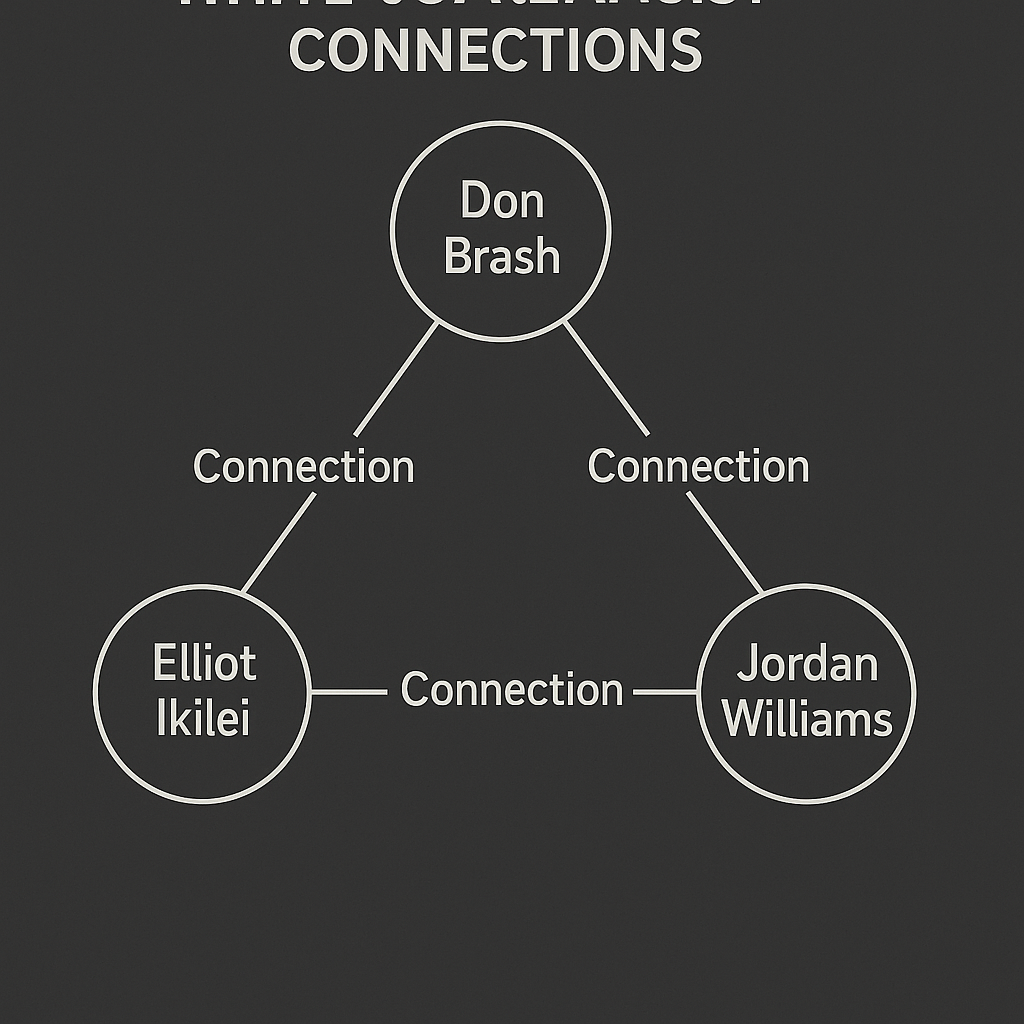
The hidden network behind anti-Māori campaigns
The Identity Policing Playbook: How White Supremacists Divide and Conquer
Ikilei's attack on Willie Jackson follows a deliberate pattern of weaponizing Māori identity debates to fragment indigenous resistance. When Jackson criticized Takuta Ferris for his racist comments about "Indians, Asians, Black and Pakeha" campaigning in Māori seats, Ikilei seized the moment to weaponize Jackson's own 2019 controversy over Paula Bennett's identity.
This isn't about authentic concern for Māori identity - it's about keeping tangata whenua fighting each other instead of organizing against corporate exploitation. Research shows that "addressing racism against Māori is central to combatting racism against all other cultures in Aotearoa", but white supremacists like Ikilei deliberately create divisions that prevent this solidarity.
The 2019 Willie Jackson-Paula Bennett controversy demonstrates how identity policing hurts "vulnerable Māori struggling with their identity", particularly those who discover their whakapapa later in life. But when Jackson made those comments, he was acting as an individual politician - not as part of an organized white supremacist campaign funded by corporate interests.
The Willie Jackson Contradiction: When Anti-Racism Champions Use Racist Tactics
The most damaging aspect of Ikilei's attack is how it exploits legitimate criticism of Willie Jackson's own problematic history with identity politics. In 2019, Jackson questioned Paula Bennett's Māori authenticity, saying "she doesn't know if she's a Māori. Some days she does and some days she doesn't", while also telling Dan Bidois to "go back to Italy."
Jackson later apologized, saying "If anyone has taken that offence out there, I apologise" and clarifying that "I've never said she's not Māori" and "Paula is no less Māori because she can't speak te Māori". But the damage was done - Jackson had handed white supremacists ammunition they now use to attack him.
Bennett correctly identified Jackson's comments as feeling "like a racist attack" and warned about creating "rules for those who they think are Māori enough and then others for people like me who they don't consider Māori enough". The tragedy is that Ikilei and his white supremacist handlers are now using Bennett's legitimate pain to advance their anti-Māori agenda.
The Technology of Oppression: Digital Surveillance and Māori Targeting
Beyond political attacks, the white supremacist network Ikilei represents is connected to technological systems that systematically target Māori communities. Research shows that "surveillance technologies are not neutral but highly racialised", with "contemporary examples of widespread racialised targeting and profiling including extralegal photographing of Māori and Pasifika youth by law enforcement."
Dr Karaitiana Taiuru warns that "facial recognition systems are the digital equivalent of the old colonial practice of collecting Māori heads or mokomokai", with "faces and images including moko being taken without permission by the government and used in ways we are still not certain of."
In 2024, government facial recognition testing was criticized for having "no Māori with moko" in trials, despite using only 148 people instead of the required 245 for 95% accuracy. Officials claimed this was "sufficient" for bias analysis - a perfect example of how systemic racism operates through supposedly "neutral" technology.
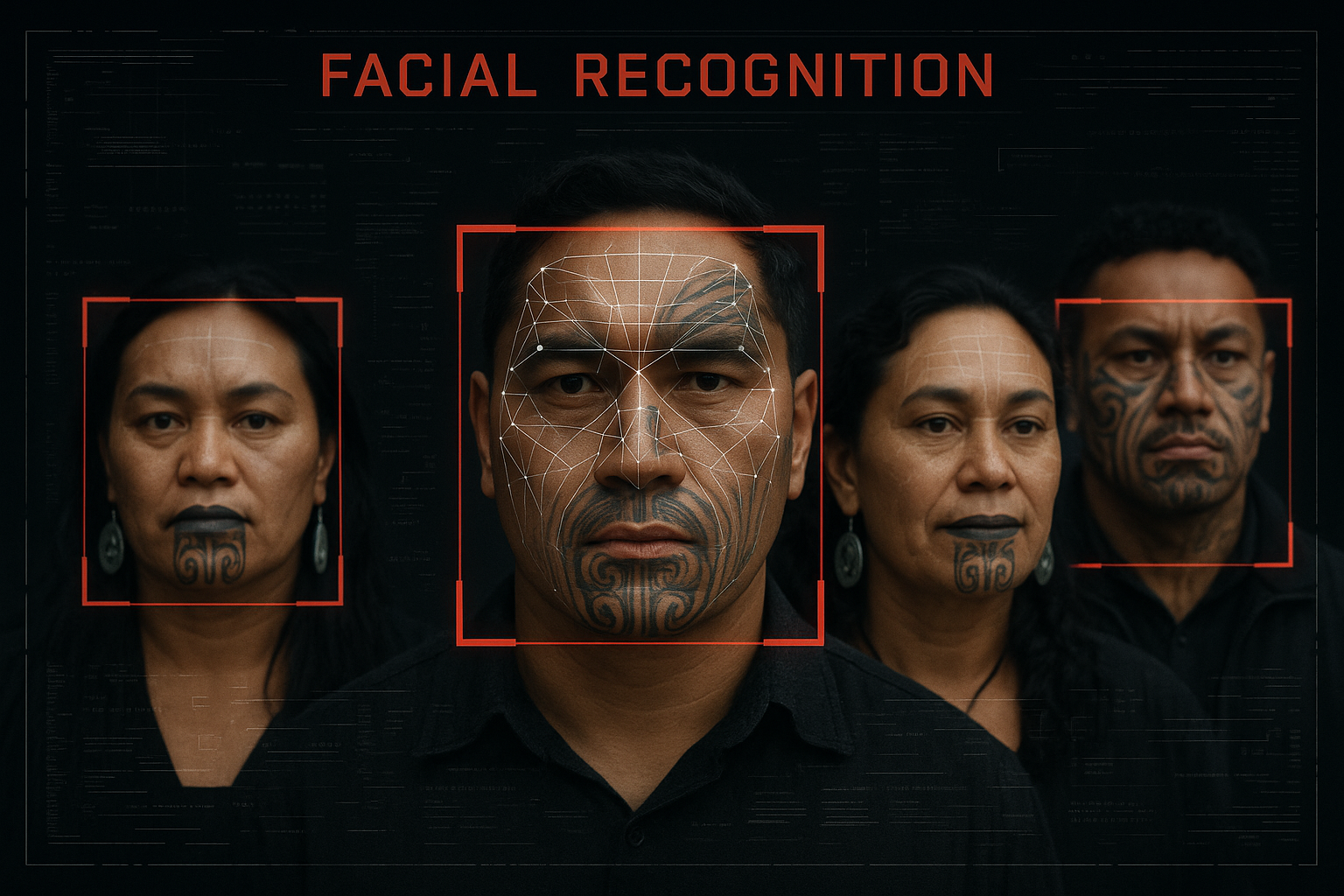
Technological racism targeting Māori
The Takuta Ferris Distraction: How Lateral Racism Serves White Supremacy
The context for Ikilei's attack was Willie Jackson's legitimate criticism of Takuta Ferris's racist Instagram post claiming that seeing "Indians, Asians, Black and pākeha" campaigning for Peeni Henare was "homogenising Māori as a minority". Ferris argued that Labour was making Māori appear as "just another one of these ethnic groups".
Anti-racism experts rejected Ferris's attempts to justify his racism, with Tina Ngata noting that his te reo Māori translation "is not accurate" and "it's not really a problem of language, it's a problem of framing". The People's Action Plan Against Racism described Ferris's comments as "casting fellow minoritised groups as adversaries" which "constitutes lateral racism and makes solidarity work harder".
This analysis cuts to the heart of white supremacist strategy - using identity policing to prevent coalition building between oppressed groups. When Jackson criticized Ferris, he was defending solidarity politics. When Ikilei attacked Jackson, he was serving white supremacist interests.
The Orewa Legacy: Twenty Years of Organized Anti-Māori Politics
To understand the significance of Ikilei's attack, we must trace it back to its source: Don Brash's 2004 Orewa Speech, which used "one rule for all" rhetoric to attack Māori rights while boosting National Party support from 28% to 45% within two weeks. The speech was criticized for reinforcing "ignorant and racist stereotypes that Māori were 'savages' before the 'gift' of European civilisation".
Medical students at Otago University argued that Brash's attack on Māori health policies contradicted epidemiological data and violated Treaty obligations, but the damage was done. Brash had proven that anti-Māori racism could be politically profitable when dressed up as "equality."
Hobson's Pledge, founded by Brash in 2016, represents the institutionalization of this strategy. The organization claims to represent "all New Zealanders" while being "widely accused of racism" and promoting "a racist agenda". Their high-profile Herald advertisement drew 672 complaints and was found by the Advertising Standards Authority to be "materially misleading".
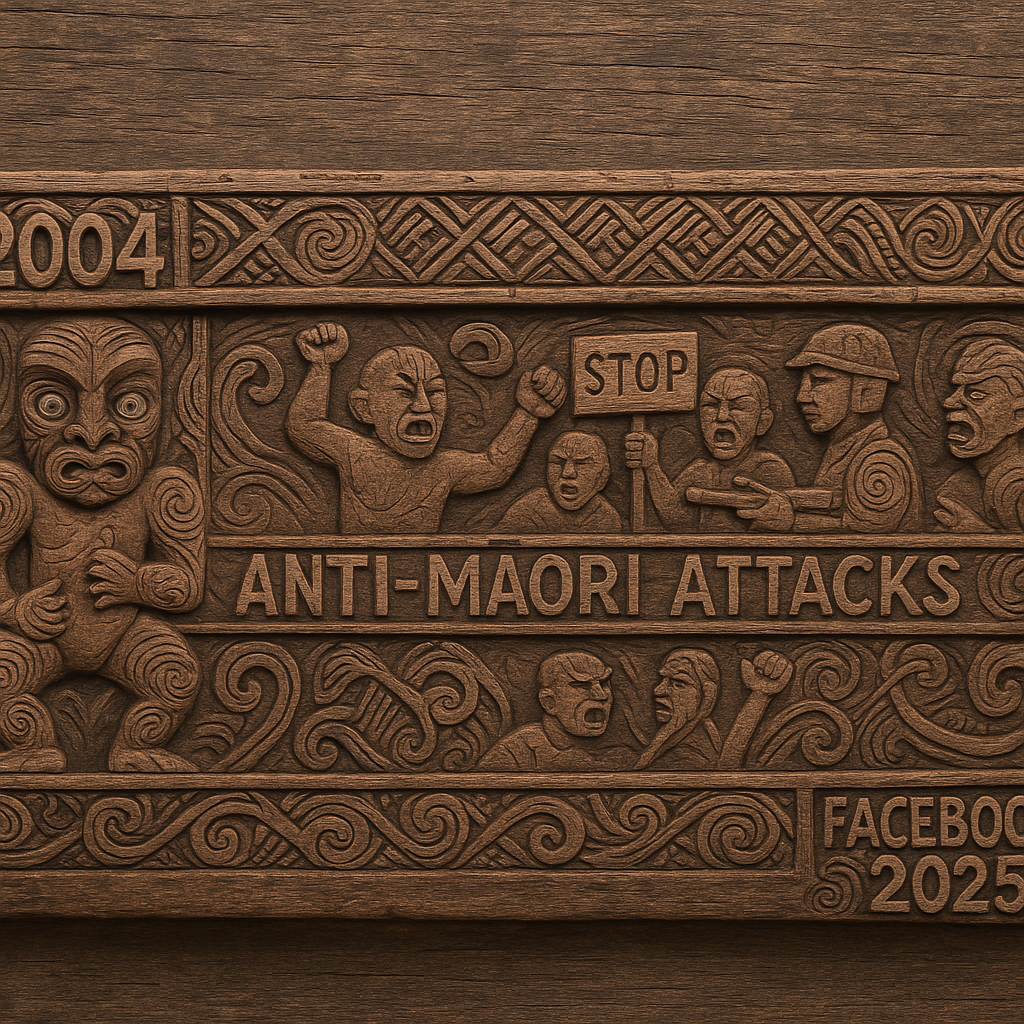
Two decades of anti-Māori tactics etched in time
Breaking Down the Networks: Hidden Connections Exposed
The corporate web supporting Ikilei's attack extends far beyond Hobson's Pledge. Jordan Williams, who runs the Campaign Company handling Hobson's Pledge marketing, is co-founder of the Taxpayers' Union, which spent $371,565 on the 2023 election campaign and now employs 18 staff making it "the largest, per capita, taxpayer group in the English-speaking world."
The Taxpayers' Union receives "more than 80% of its income" from "small donations, online donations, averaging between about $75, $85", but Williams admits that "industry money" from "grog, nicotine companies, sugar, soda" makes up "less than 3% of revenue" - still enough to influence policy positions on taxes that disproportionately impact Māori.
The interconnections extend to media manipulation, with Hobson's Pledge using stock photos of people who opposed their message. Ellen Tamati's face appeared on billboards opposing Māori council wards with the slogan "My mana doesn't need a mandate," despite Tamati strongly opposing the campaign and feeling "bloody traumatised" by the misuse of her image.
The Colonial System Maintenance: How Identity Attacks Serve Corporate Interests
These attacks on Māori identity aren't random - they serve specific economic interests. The creation of "rigid dichotomies" means Indigenous communities are "hyper-visible in crime control, policing and media when they are perceived as the perpetrators, while invisible or discredited when they are perceived as victims". This systematic pattern ensures Māori are criminalized rather than protected.
Research documents how "participants experience undue surveillance and confrontations in public spaces" that impact their "health and wellbeing manifesting in anticipatory stress, distress, anxiety and guilt". Participants described how "phenotypically Māori features increased the likelihood of being stopped and detained by police" while "Pākehā friends who were with them would be ignored or released".
When Māori are fighting each other over identity authenticity, we're not organizing against the surveillance state, the prison-industrial complex, or the corporate exploitation of our resources. Every moment spent debating who's Māori enough is a moment not spent dismantling the systems that oppress all of us.
The Path Forward: Unity Against Corporate Divide-and-Conquer
The solution isn't to ignore legitimate problems with identity policing - it's to understand how white supremacists weaponize these internal debates against us. When Willie Jackson questioned Paula Bennett's identity, he made a mistake that provided ammunition to our enemies. When Takuta Ferris made racist comments about other ethnic groups, he damaged solidarity work that strengthens all oppressed communities.
But when Elliot Ikilei attacks Jackson's identity on behalf of Hobson's Pledge, he's not seeking justice - he's serving corporate interests that profit from Māori division. The timing wasn't accidental, the funding wasn't grassroots, and the message wasn't authentic. This was a calculated strike by New Zealand's most well-funded white supremacist organization.
We must refuse to let reformed criminals turned corporate attack dogs set the terms of our debates about identity. Instead of policing each other based on arbitrary measures of authenticity, we need to focus our resistance on the systems and structures that create the conditions for racism, poverty, and oppression.
Implications for Our Communities
Ikilei's attack represents a dangerous escalation in organized white supremacist tactics. No longer content with directly attacking Māori rights, these organizations now weaponize our internal divisions to achieve their objectives. If successful, this strategy will prevent the solidarity necessary to resist corporate exploitation and colonial violence.
The escalation from Don Brash's 2004 Orewa Speech to Ikilei's 2025 Facebook attack shows how anti-Māori politics have become more sophisticated and better funded. With corporate backing, parliamentary representation, and sophisticated propaganda networks, white supremacist organizations pose an existential threat to Māori liberation.

The Māori Green Lantern Fighting Misinformation And Disinformation From The Far Right
Call to Action: Exposing the Networks, Building the Resistance
Every Kiwi needs to understand that Elliot Ikilei isn't some concerned citizen defending Willie Jackson's victims - he's a corporate-funded attack dog serving white supremacist interests. His personal transformation from criminal to Christian doesn't change the fact that he now weaponizes his second chance against other people struggling with systemic oppression.
We must expose the financial networks behind these attacks, challenge the corporate media that amplifies them, and build solidarity across all communities facing oppression. When we understand that identity policing serves white supremacist interests, we can respond with the unity and strategic thinking our ancestors would recognize.
The choice is clear: we can keep fighting each other over who's authentically Māori, or we can unite against the corporate interests funding these attacks. Willie Jackson made mistakes in 2019 that we must learn from. Takuta Ferris made mistakes in 2025 that divided potential allies. But Elliot Ikilei's attack serves only one purpose - keeping us fighting each other instead of fighting for justice.
Ko Ivor Jones ahau, and I remain your humble servant in exposing these corporate-funded white supremacist networks. For those whānau who find value in these exposés of organized racism, please consider a koha to support this crucial work: HTDM: 03-1546-0415173-000. I understand these are tough economic times, so please only contribute if you have the capacity and desire to do so.
Kia kaha, kia māia, kia manawanui - and remember, when mediocre men with corporate backing attack our identity, they reveal their entire network's weakness.