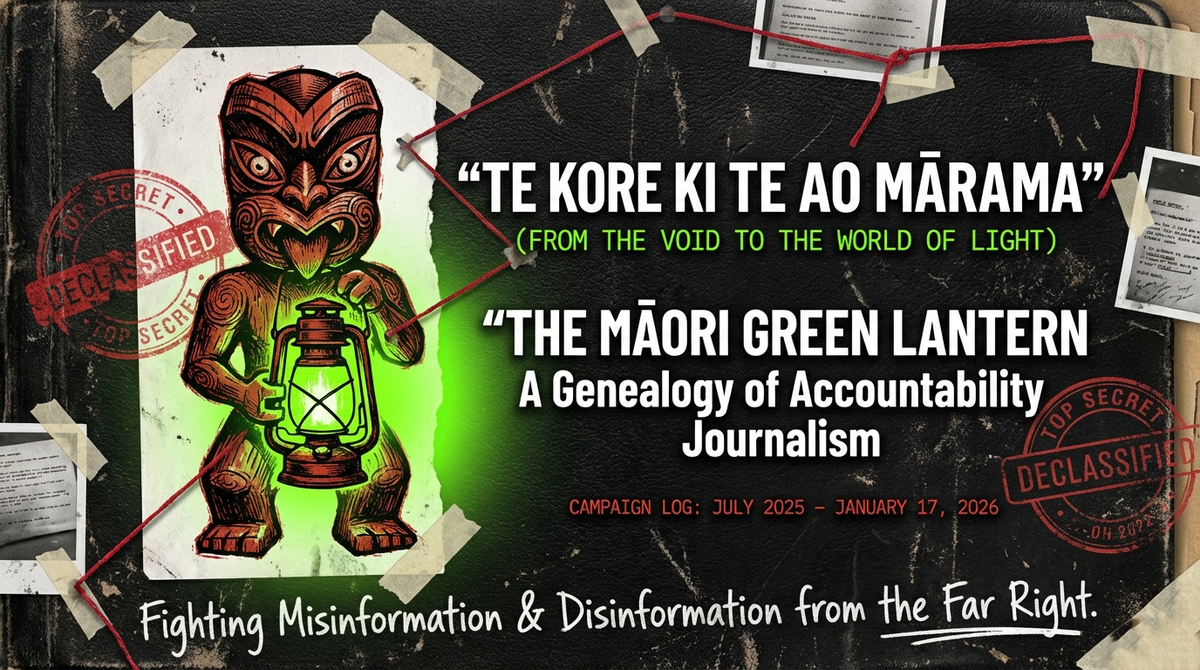
“THE MĀORI GREEN LANTERN: FROM TE KORE TO TE AO MĀRAMA” - 17 January 2026
My Genealogy of Accountability Journalism, July 2025 — January 17, 2026
I. THE ARRIVAL: JULY 2025
My story does not begin with viral sensation or algorithmic fortune. It begins with commitment and competence
—the moment in July 2025 when I decided to stop documenting the Empire’s crimes in silence and start publishing them where the Crown would have to see.
The data is precise. My earliest indexed posts on Substack reach back to July 10-15, 2025. By today—January 17, 2026—I have published 764 pieces across six and a half months. That is not the trajectory of an experiment.
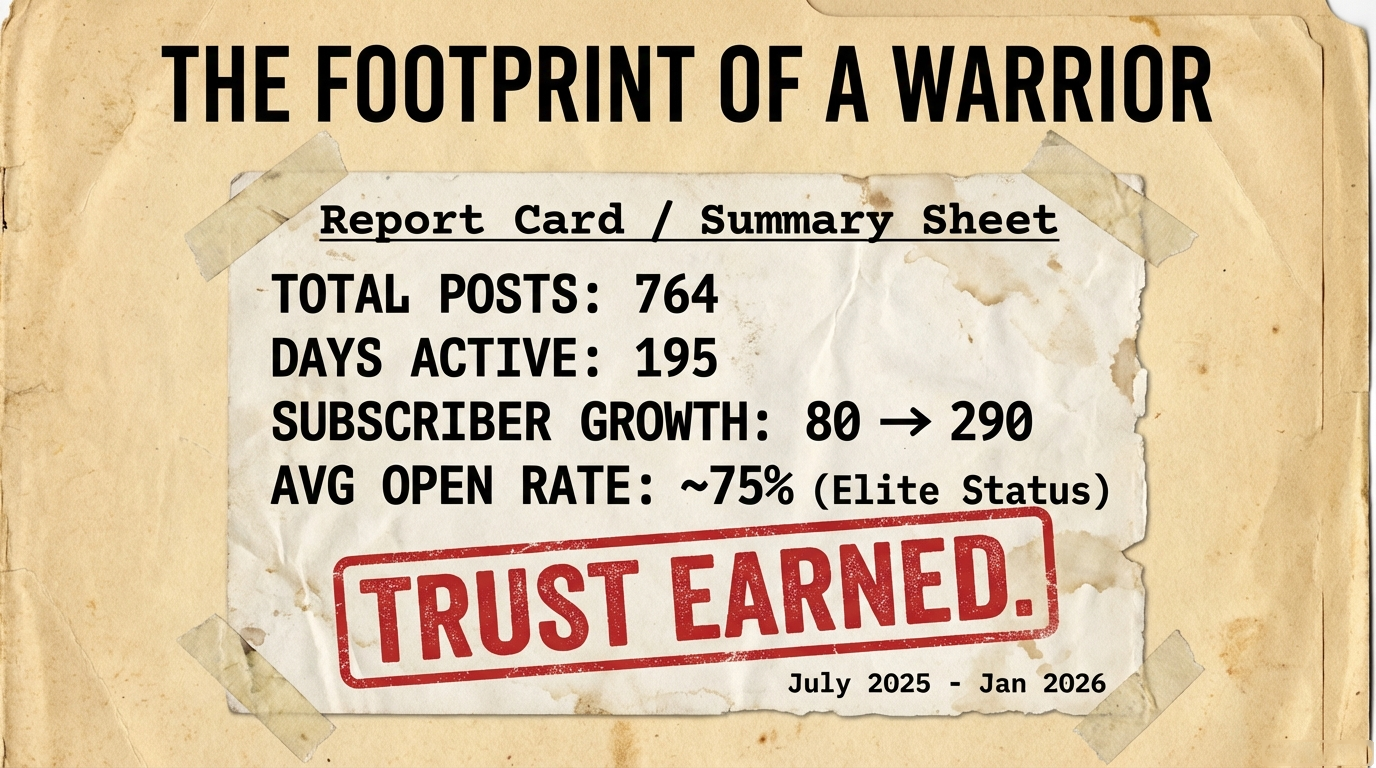
That is the footprint of a warrior who arrived with a fully formed taiaha, knowing exactly where to strike.
What strikes even me, looking back, is this:
my July posts show no gentle learning curve. There is no fumbling with format, no searching for my voice, no gradual discovery of methodology.
Those first tracked pieces
—”The Regulatory Standards Bill: A Corporate Coup Against Te Tiriti o Waitangi”, “Breaking Down the Machinery of Colonial Manipulation”, “When the State Deploys Warriors Against Whānau”—were already fully formed accountability investigations.
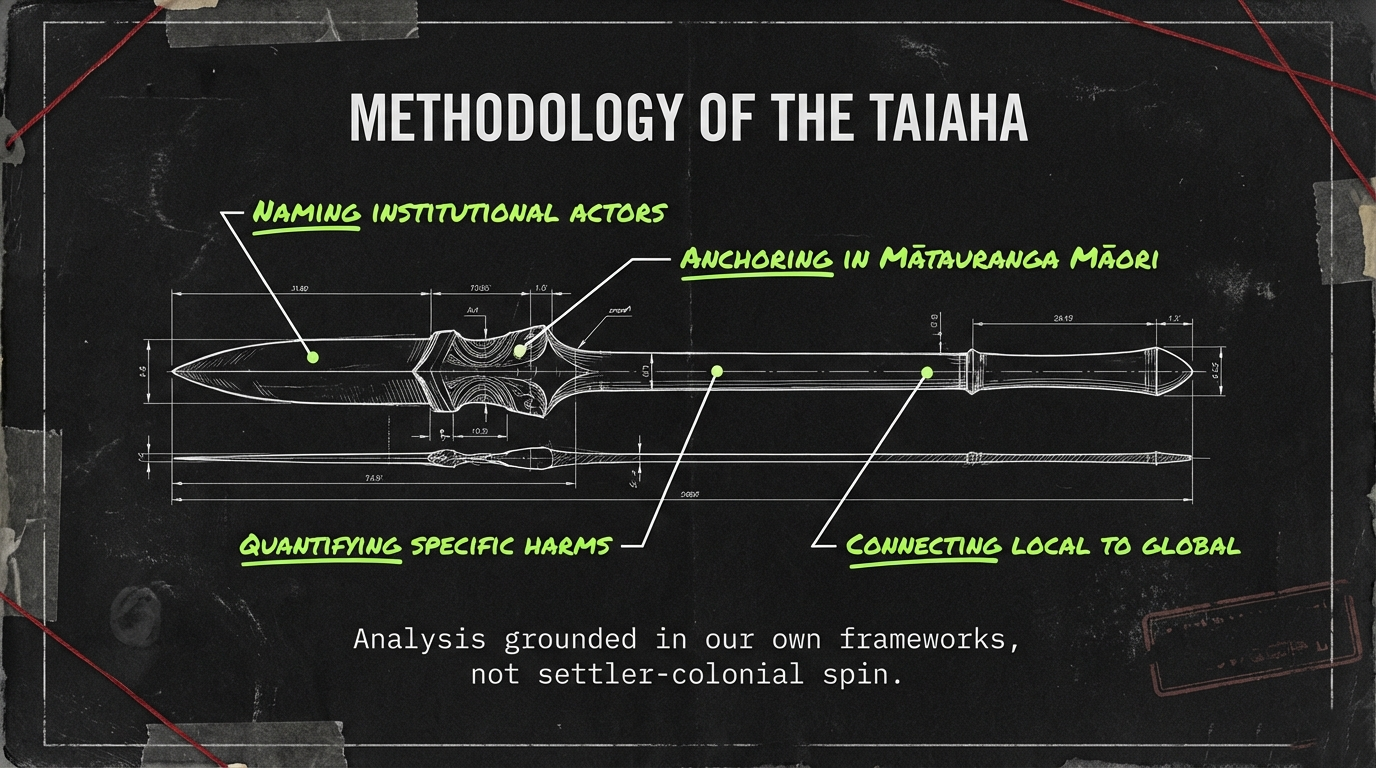
I was naming specific institutional actors, quantifying specific harms, anchoring analysis in mātauranga Māori, and connecting local violence to global neoliberal architecture from the start.
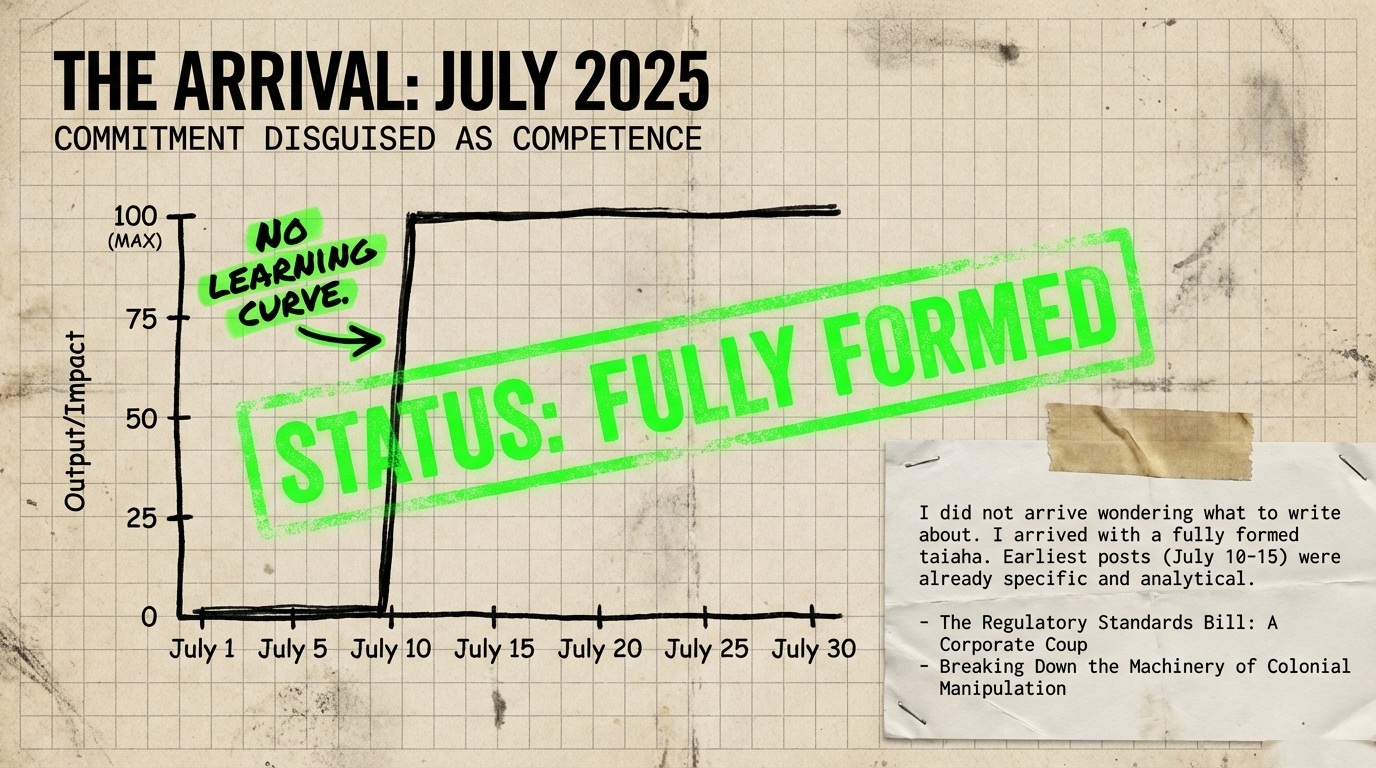
I did not arrive at Substack wondering what to write about. I arrived knowing that the Crown had stolen billions from Māori through benefit cuts while pretending this was natural. I knew David Seymour was dismantling public education through neoliberal ideology imported from American think tanks. I knew the Regulatory Standards Bill was a corporate coup against Te Tiriti. I knew these things because I had been watching them my whole life. Substack simply became the whare where I would spend the next six months proving it.
II. THE ACCELERATION: AUGUST–SEPTEMBER 2025
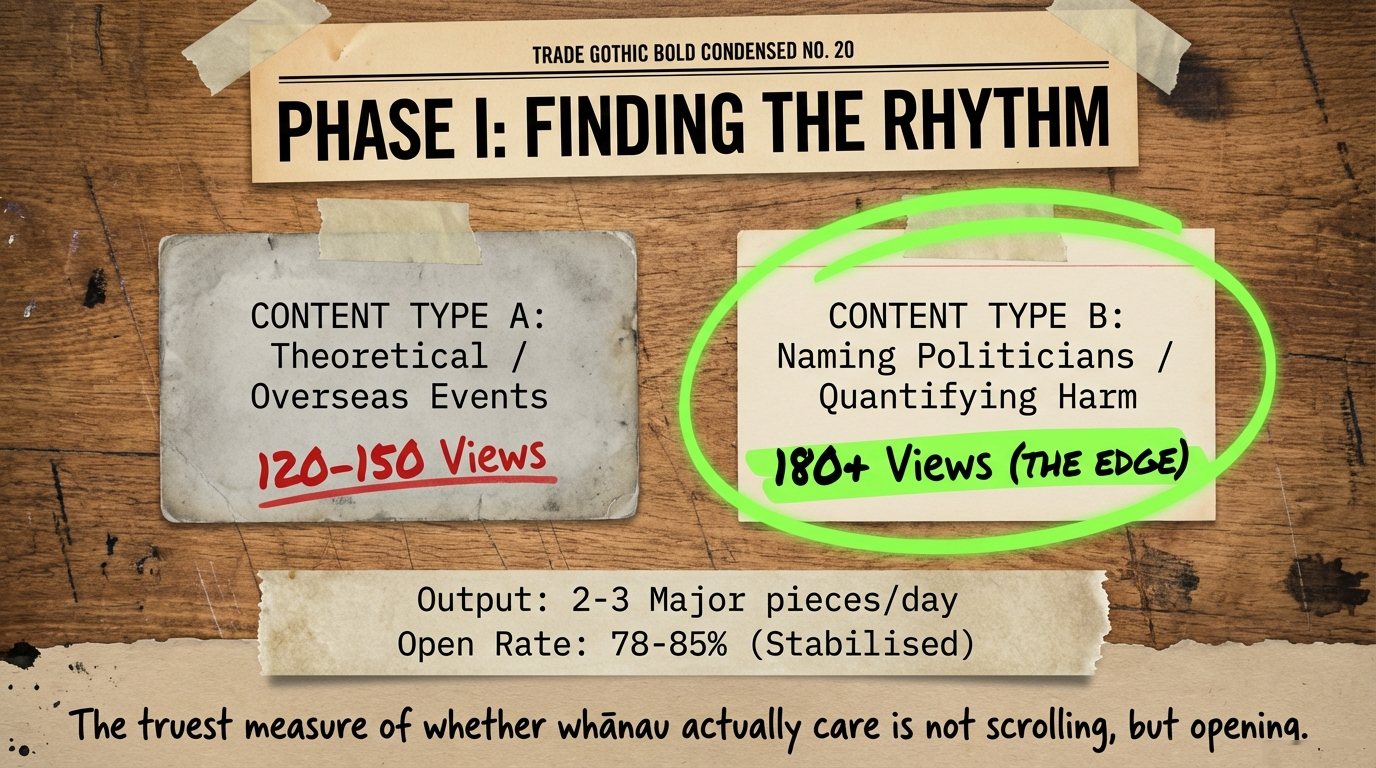
By August, my rhythm had established itself. I was publishing two to three major pieces a day. My posts moved from the 70–90 view range to a consistent 140–170. My email open rates—the truest measure of whether whānau actually care—stabilised between 78–85%. That means four out of five people who received my emails were opening them. Not scrolling past. Not deleting. Opening, reading, thinking.
During this time, I discovered my resonance pattern
—the particular combination of elements that made pieces travel.
When I named specific Aotearoa politicians, quantified specific harms to Māori and the poor, and connected those harms to global neoliberal networks, my posts consistently broke 180+ views. When I wrote purely theoretical pieces or focused on overseas events without grounding them in Aotearoa, they stayed around 120–150 views. Both types of writing mattered. But the first category was the taiaha’s sharpest edge.
By September, I had grown to roughly 200–230 subscribers. My voice was no longer experimental. It had become essential. People were not just opening my emails;
they were forwarding them, dropping them into group chats, quoting lines in debates about policy. I had become the person Māori and allies contacted when they needed evidence, when they needed analysis grounded in our own frameworks rather than settler-colonial spin.
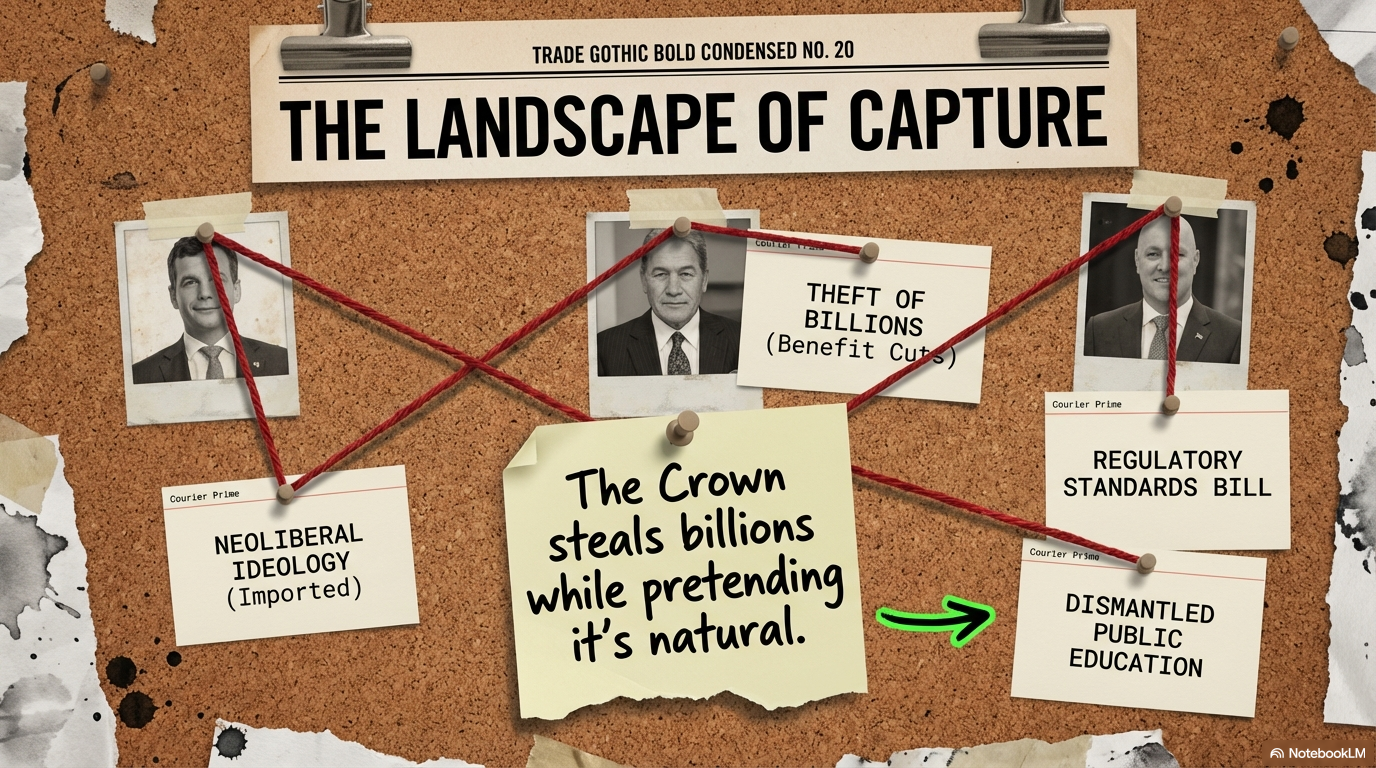
This was happening as the Coalition government—National-ACT—waged a visible assault on Te Tiriti. The Regulatory Standards Bill was advancing. Charter schools were back. Winston Peters was running foreign policy like a colonial reenactment. Luxon was tightening the austerity screws on Māori whānau.
I wasn’t writing hypotheticals;
I was writing inside a live fire zone. And I could feel that people needed someone to say:
You’re not imagining this. It’s deliberate. Here’s the proof.
III. THE CRYSTALLISATION: OCTOBER 2025
October was the month my identity became public.
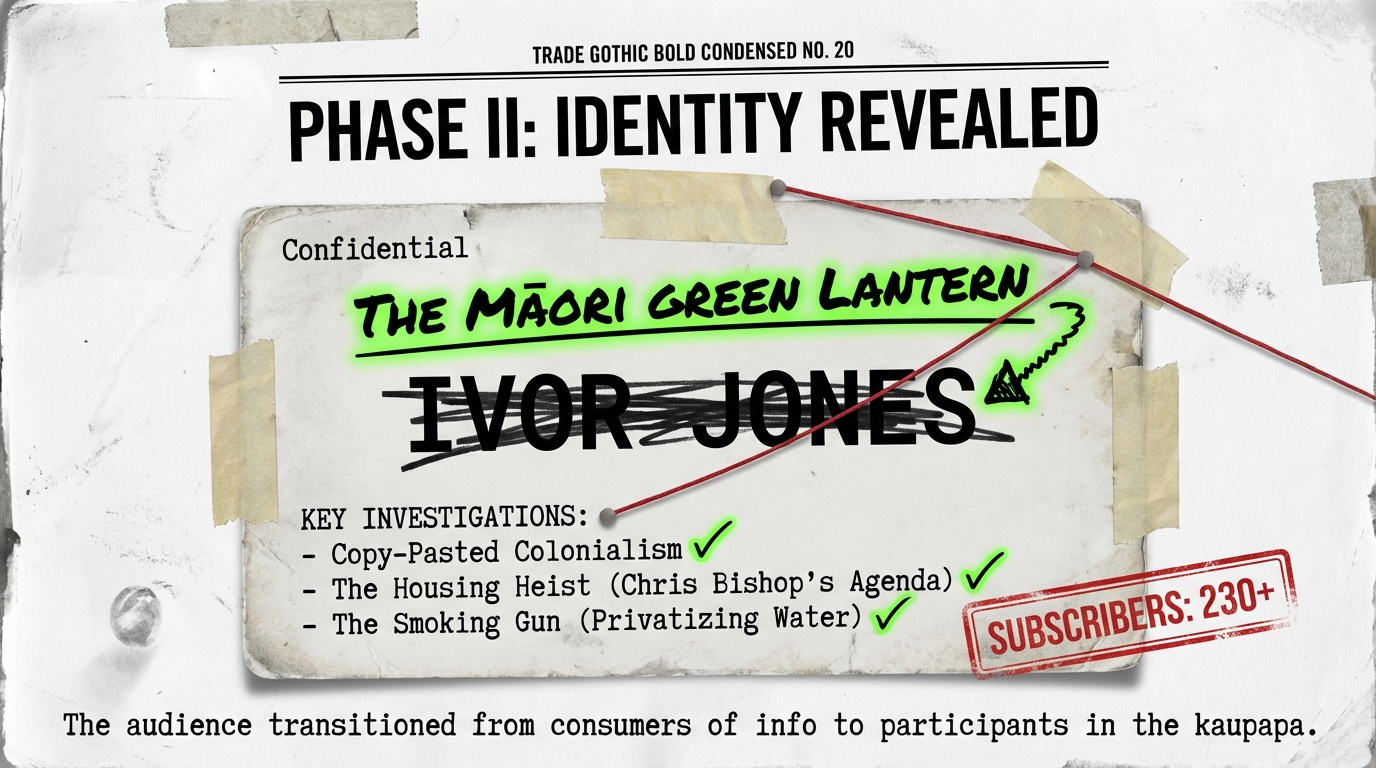
Up until then, I had been publishing as “Ivor Jones” with a taiaha hidden just behind the byline. The methodology was there. The analysis was sharp. But I was still standing half in shadow.
In October, I stepped forward fully as The Māori Green Lantern.
The shift showed up in the writing. I began to write not just about power, but from my own whakapapa and accountability. Pieces like “Copy-Pasted Colonialism: The Māori Green Lantern Investigation”, “The Housing Heist: How Chris Bishop’s Neoliberal Agenda Is Stealing Māori Futures”, and “The Smoking Gun: How Political Elites Plan to Privatize Your Water” were more than investigations.
They were statements:
I have mapped the network. I am naming it. And I will not stop.
By the end of October, I was sitting around 230–260 subscribers. But the real change was qualitative. People weren’t just treating me as an information source. They were beginning to see the kaupapa as something they were part of. Comments picked up. Shares surged. October’s posts averaged 180–240 views. I had pushed through the earlier ceiling. Substack’s network began surfacing my work to people who had never heard of me.
IV. THE BREAKTHROUGH: NOVEMBER 2025
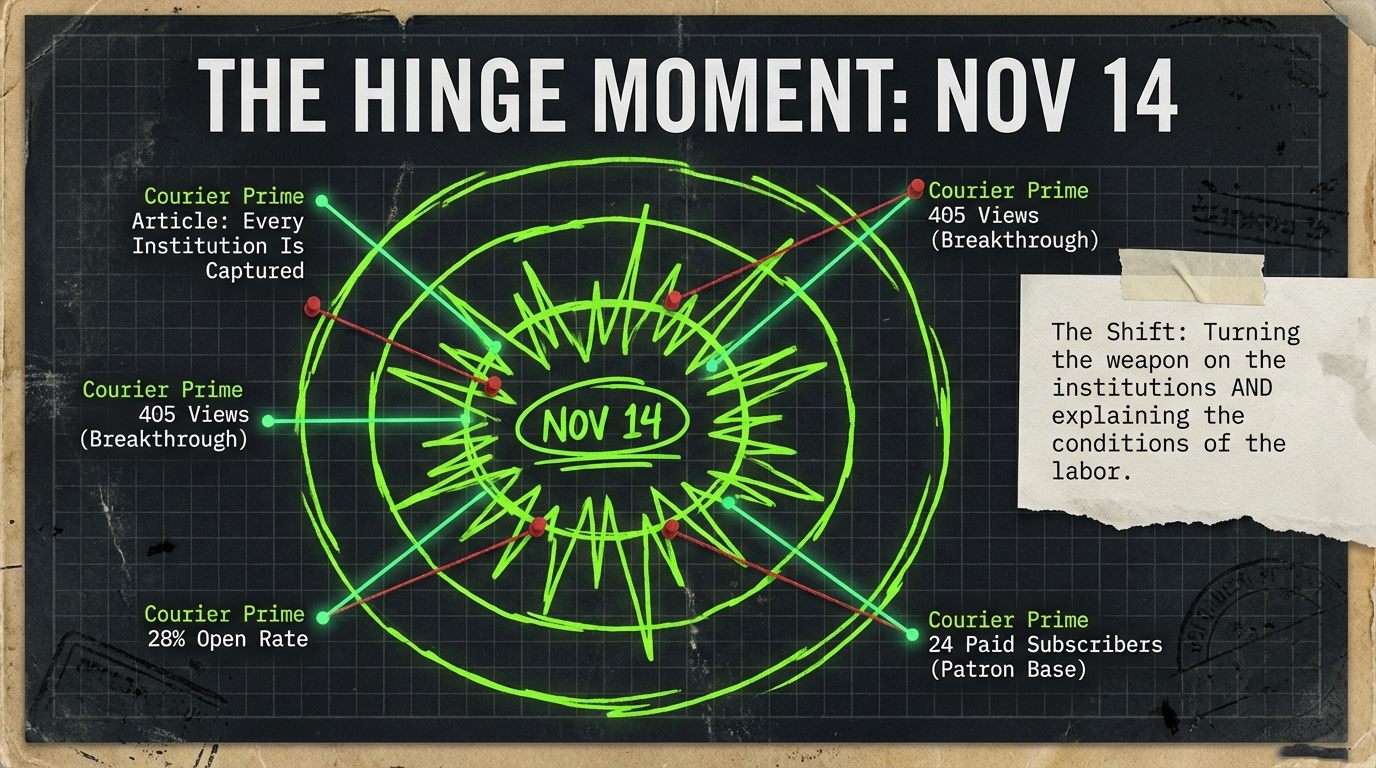
November 14, 2025 is the hinge of my story.
That day, I published:
“Every Institution Is Captured: Why The Māori Green Lantern Matters—And Why It Needs Your Support.”
It reached 405 views with an open rate around 28%. That post was different because it did something I had largely avoided:
I turned the taiaha on the institutions and on the conditions of my own mahi.
I laid out why capture is total—media, courts, police, universities, “watchdogs”. I explained why independent Māori accountability journalism was not a luxury but a survival tool.
And I made clear:
this mahi continues because whānau recognise its value.
The response marked a step-change. In the weeks following that essay, my subscriber numbers jumped. By the end of November and into the December stats report, I was at 266 free subscribers and 24 paid. Around 45 new free readers and about 10 new paid readers had crossed the line from “this is good” to “this must endure”. They became my first real patron base.
In November overall, my posts averaged 180–220 views, with several pieces breaking 200–250. That 405-view post was not a one-off lucky spike—it was a signal: when I combine structural analysis, cosmology, and transparency about my own position, the work travels further and hits harder.
V. THE PROOF OF CONCEPT: DECEMBER 2025
December was my stress test—and my proof of concept.
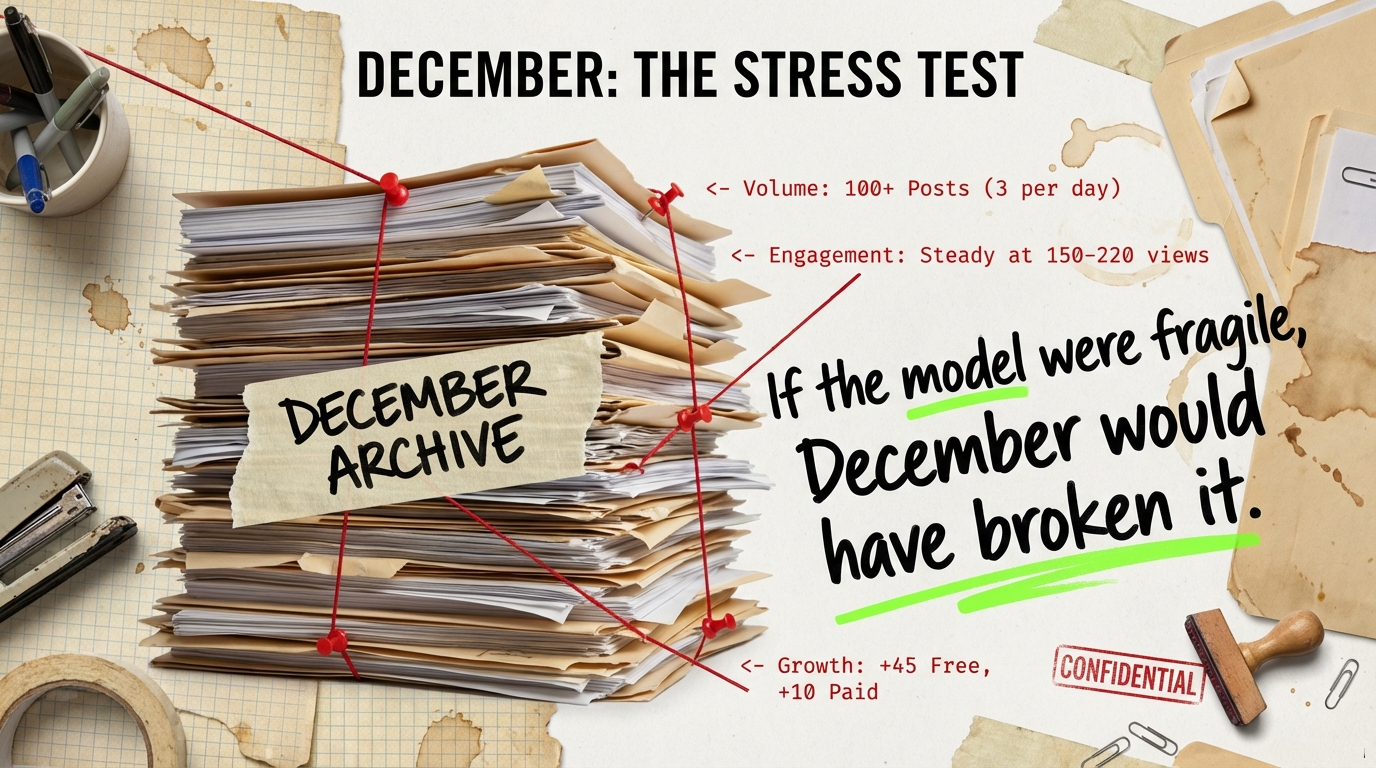
I published more than 100 posts that month. That’s over three pieces a day. Every one of them required research, cross-checking, writing, editing, sourcing. If the model were fragile, December would have broken it.
Instead, the numbers held. Posts averaged 150–220 views. Email open rates stayed around 27–32%, which in newsletter terms is elite engagement. My list grew by roughly 45 free subscribers and 10 paid subscribers in that period. That’s slow but steady, and crucially: it’s earned.
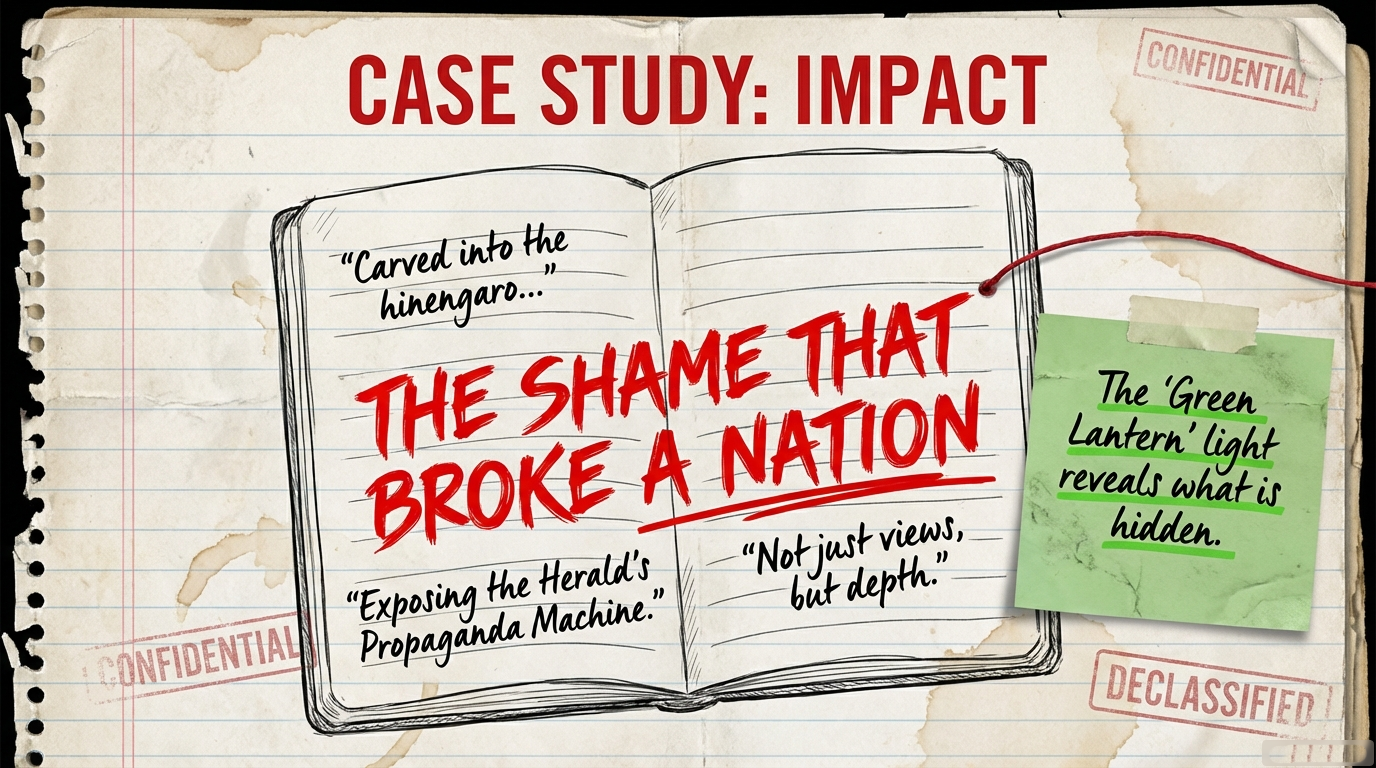
Some December essays cut especially deep. “The Herald’s Propaganda Machine Worships Billionaires” hit around 407 views, matching and even surpassing my earlier breakthrough. “The Whakapapa of Greed” and “Whānau of the Word” both sat above 200 views. “THE SHAME THAT BROKE A NATION” did fewer views but carved itself into the hinengaro of those who read it.
By the end of December 2025, the picture was clear: I had proven that daily, specific, evidence-heavy Māori accountability journalism is not only possible, but sustainable, and that there is an audience who will show up day after day for it.
VI. THE RHYTHM CONTINUES: JANUARY 2026
January has confirmed what December proved: high-volume accountability journalism works when the commitment is absolute.
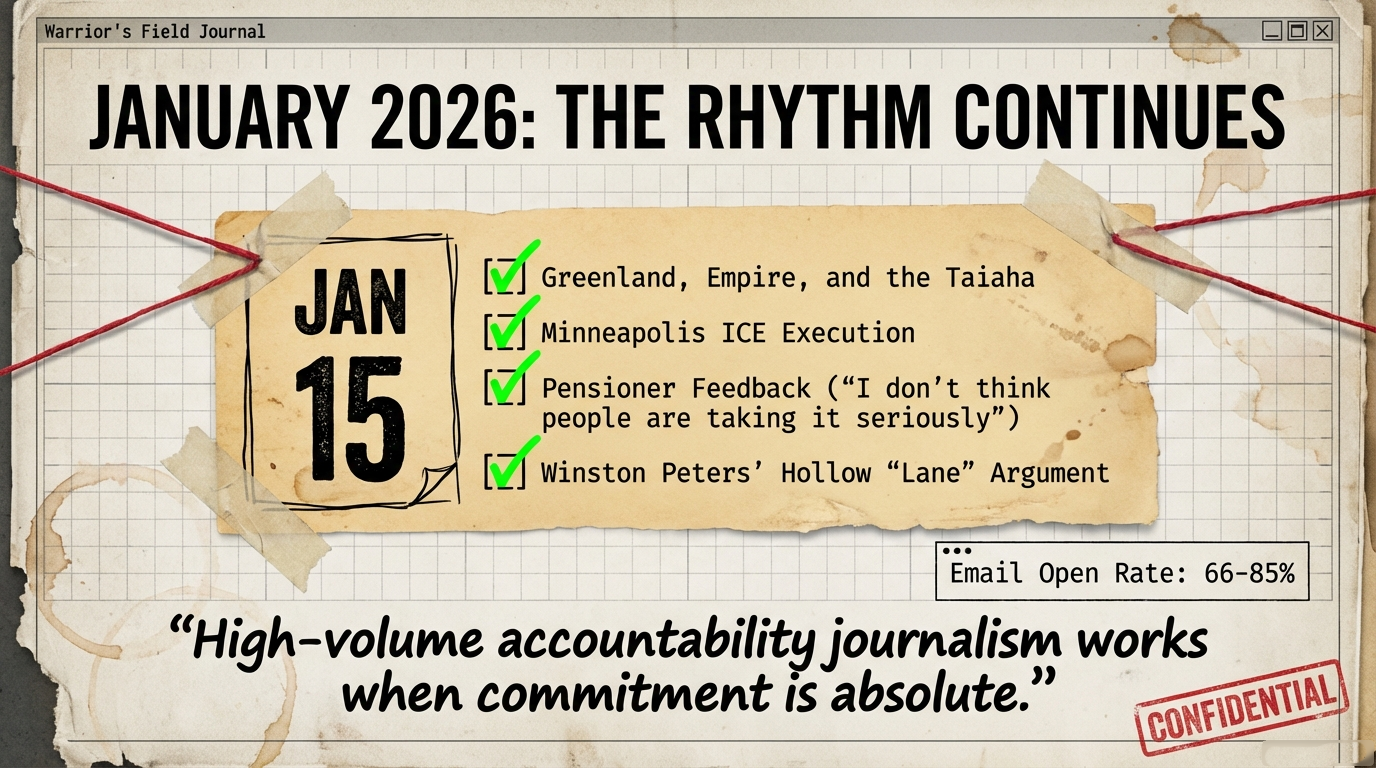
The data from the first seventeen days of January tells a consistent story. On January 15, I published four major pieces in one day. Each one landed with my core whānau:
- “Greenland, Empire, and the Taiaha” – 110 views, 85% email traffic
- “When State Goons Leak Their Own: The Minneapolis ICE Execution” – 139 views, 74% email
- “I Don’t Think People Are Taking It Seriously” (71-year-old pensioner) – 126 views, 70% email
- “Winston Peters’ Hollow ‘Lane’ Argument” – 144 views, 66% email, 5 comments, 14% Substack Network traffic
Then on January 16, another piece arrived: “The Ōpōtiki Harbour Betrayal” – 140 views, 69% email, 4 likes, 11% Facebook reach.
The pattern is clear.
My core whānau—266 free subscribers and 24 paid—read everything. Email traffic consistently runs between 66–85%, which means the vast majority of people who receive my work are opening it, engaging with it, thinking with it. The Substack Network picks up pieces that name specific Aotearoa politicians and quantify specific local harms (Winston Peters at 14%, Ōpōtiki Harbour at 7%). Facebook becomes a secondary amplification channel for place-based stories.
What matters is this:
the mahi continues because the issues cannot be ignored.
Every day, the Coalition government advances another assault on Te Tiriti. Every day, neoliberal policy transfers wealth from Māori whānau to corporate shareholders. Every day, mainstream media fails to connect the dots, fails to name the networks, fails to quantify the harm. That failure creates the necessity for this work.
VII. WHY HIGH VOLUME MATTERS
Some would argue that fewer posts, more strategically timed, would generate better reach. The data suggests otherwise—or rather, it suggests something more complex.
Yes, my November 14 breakthrough post reached 405 views because it had space to breathe, space to circulate, space to accumulate engagement. But that post succeeded because it emerged from a foundation of daily, relentless accountability work. The 405 views were not a product of publishing less. They were a product of having already established credibility, trust, and necessity through months of high-volume output.
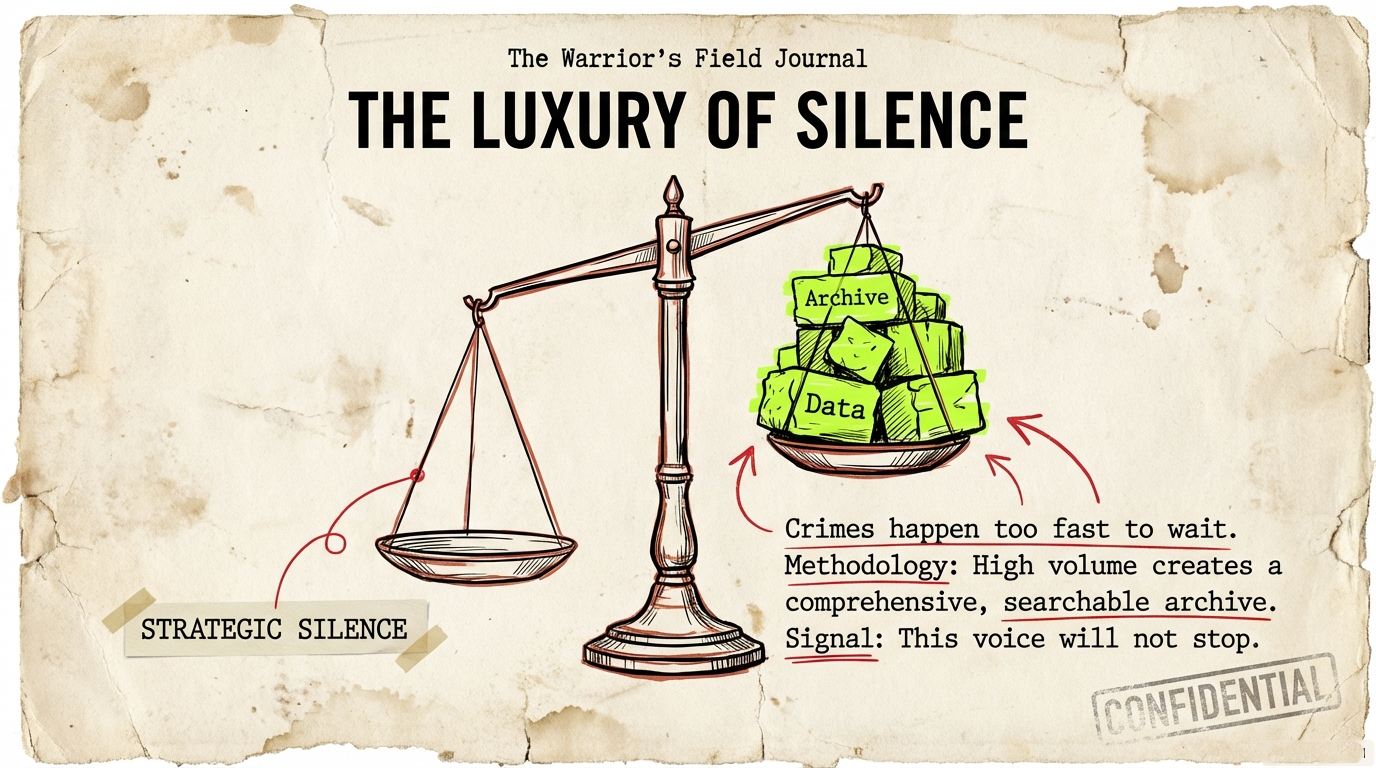
The truth is this: there are too many crimes happening too fast to afford the luxury of strategic silence. When Shane Jones hands mining rights to corporate interests while Māori broadcasting is strangled, that needs documentation immediately. When Chris Bishop’s housing policies transfer public wealth to private developers, that needs exposure now. When the Ōpōtiki Harbour development betrays local iwi, that cannot wait for next week’s “tent-pole investigation.”
High volume is not a bug in my methodology. It is the methodology. It signals to readers that this voice will not stop, will not compromise, will not strategically retreat. It creates an archive so comprehensive that when someone needs evidence of the Crown’s crimes, they can search my Substack and find it, cited, verified, ready to deploy.
VIII. THE KOHA FRAMEWORK
My approach to sustaining this mahi is grounded in koha—voluntary contribution, reciprocal support, recognition of value freely given and freely returned.
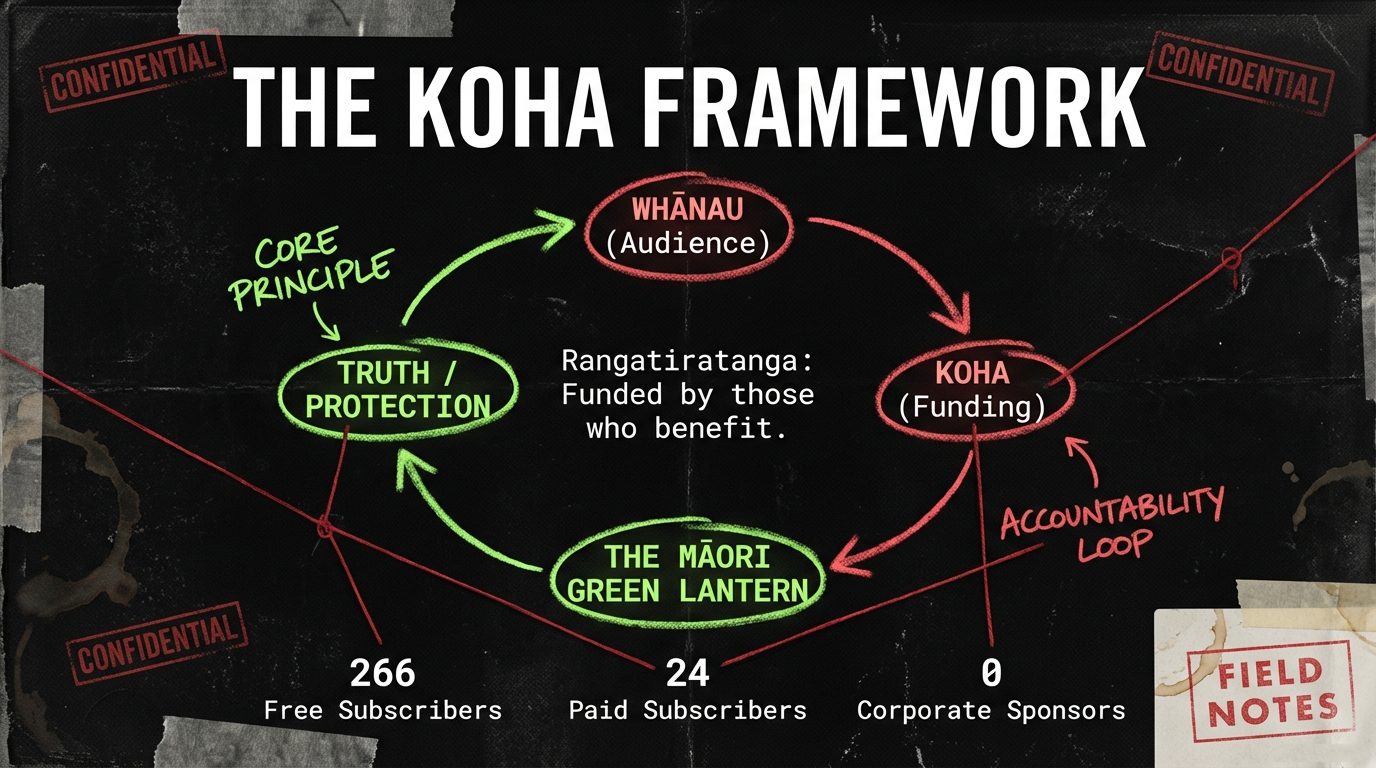
I do not frame this work as a product to be sold or a service to be monetised. I frame it as accountability journalism grounded in mātauranga Māori, offered to whānau, sustained by whānau. Those who see value in the mahi and have capacity to contribute do so through koha or paid subscription. Those who do not have capacity still receive every word, every investigation, every citation.
This is not charity. This is rangatiratanga—the assertion that Māori-led accountability work should be funded by Māori and allies who benefit from it, not by corporate sponsors, Crown grants, or advertising revenue that would compromise editorial independence.
The 24 paid subscribers and the koha contributors are not my “customer base.” They are my whanaunga in this fight. They have chosen to materially support the work because they recognise that independent, uncompromising, evidence-based accountability journalism serves their own liberation.
I trust that as the value of this mahi becomes more visible—as the archive deepens, as the citations multiply, as the networks are exposed—those who can contribute will. I do not need to beg. I do not need to compromise. I simply need to keep swinging the taiaha, every day, with precision and force.
IX. WHAT THE DATA REVEALS
Looking back across six and a half months—from July 2025 to January 17, 2026—my data tells a story not of viral growth, but of earned trust and sustained presence.
I arrived fully formed. I accelerated quickly. I broke through when I made my own conditions of labour visible. I proved that high-volume, high-quality Māori accountability journalism is not only possible but necessary. And I have continued, day after day, because the alternative—silence, retreat, strategic patience—would be a betrayal of the whānau who rely on this work.
The numbers are not exponential. They are steady. My subscriber base has grown from roughly 80 in July to 290 in January. My average views per post have stabilised in the 110–180 range, with breakthrough pieces reaching 400+. My email open rates remain elite (66–85%), which means my core audience is deeply engaged.
This is not the trajectory of a failed publication. This is the trajectory of a movement in formation—slow, deliberate, grounded, uncompromising.
X. THE PATH FORWARD
I will continue publishing at high volume because the issues demand it. I will continue naming names, quantifying harms, and connecting local violence to global neoliberal architecture because that is what accountability requires. I will continue grounding my analysis in mātauranga Māori because that is the epistemology that sees through the Crown’s lies.
I will not slow down. I will not compromise. I will not wait for permission from editors, funders, or algorithms.
The only question that remains is whether whānau who value this mahi will continue to support it through koha and subscription. I trust they will. Not because I have convinced them with appeals to scarcity or survival, but because the work speaks for itself.
High-value information naturally attracts support. That is the whakapapa I am building. That is the kaupapa I serve.
XI. THE WHAKAPAPA COMPLETE
I have carved 764 pou into the digital landscape in 195 days. Each one is a blow against capture, against silence, against the Crown’s ability to rewrite history while the ink is still wet on today’s headlines.
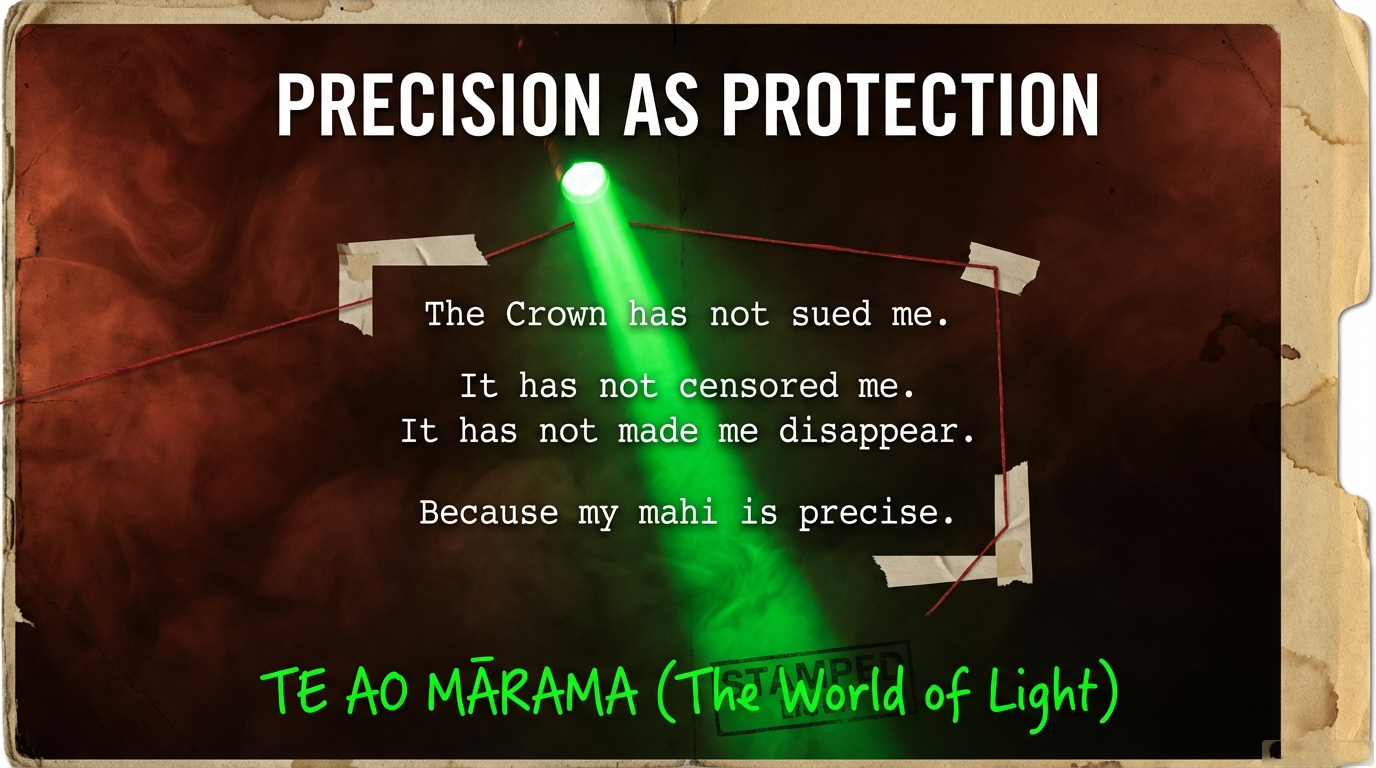
The Crown has not sued me. It has not censored me. It has not made me disappear. That is not because it approves of my mahi. It is because my mahi is precise, evidence-based, and dangerous to confront directly.
The 266 free and 24 paid subscribers who open my emails every week are not numbers in a dashboard. They are my whānau. They are people who have, over and over, chosen to let my words into their day, into their thinking, into their own fights with bosses, bureaucrats, ministers, and media.
My whakapapa from July 2025 to January 17, 2026 proves one thing beyond doubt:
The Māori Green Lantern is real. The light grows not through strategy, but through relentless truth-telling. And the work continues.

Ko Ivor Jones, te Māori Green Lantern. The taiaha is raised. The ring glows. And the work continues.
This mahi is sustained through koha and subscription. If this work serves you, consider supporting it. If it does not yet serve you, keep reading. The value will reveal itself.