“The Marriage Was Never Consensual: How Colonial Media Epistemology Maintains White Supremacy While Blaming “Trust Issues” on the Victims” - 10 November 2025
Exposing RNZ’s Self-Serving Diagnosis of Media Failure While Protecting Pākehā Power Structures
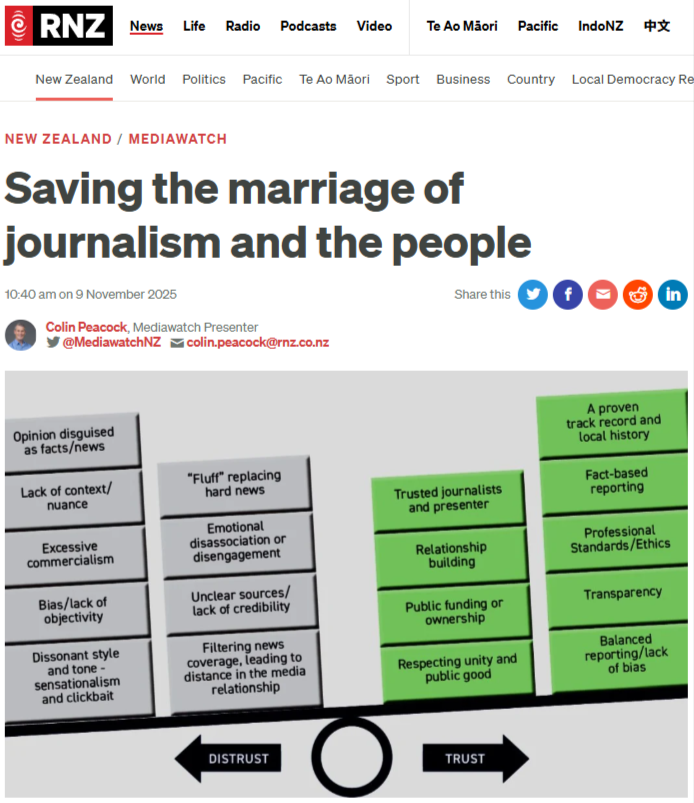
Mōrena whānau,
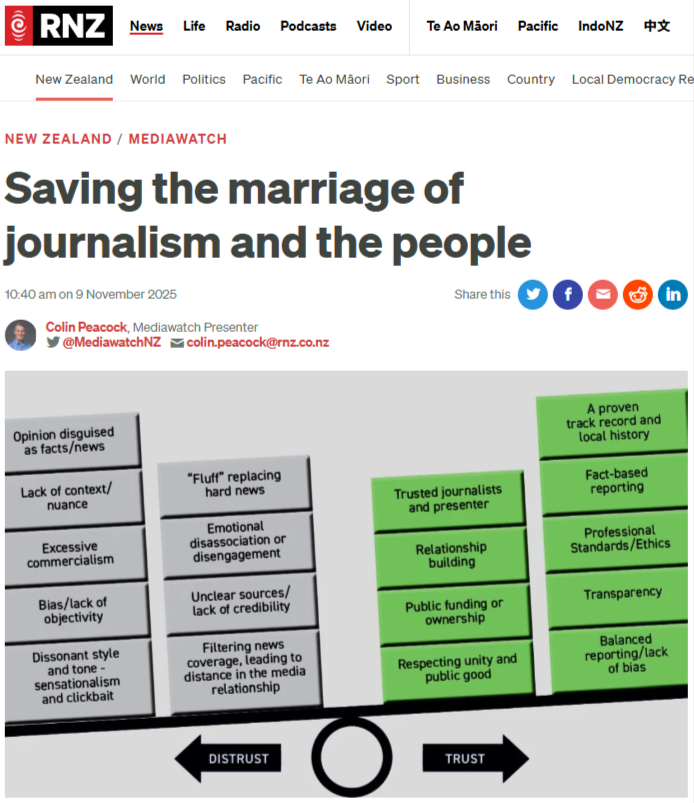
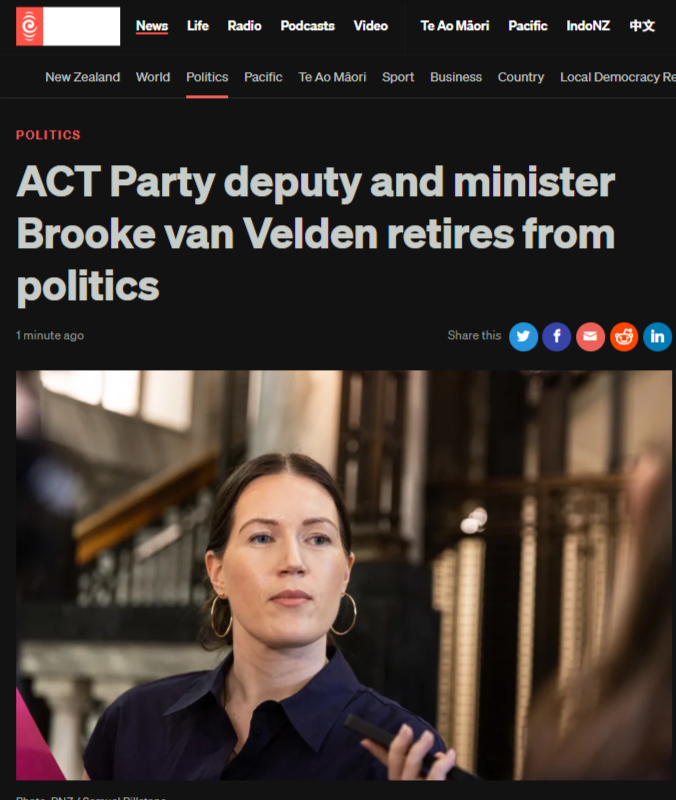
The Broadcasting Standards Authority(138) and Tim Watkin(63)(66) want tangata whenua to believe trust in journalism collapsed from 53% in 2020 to 32% in 2025(20)(23) because journalists failed to maintain
“objectivity” and “verification”(71).
The smoking taiaha they refuse to acknowledge: this is not a failure of journalism—this is journalism working exactly as colonial systems designed it to work, systematically excluding Māori voices, delegitimising mātauranga Māori, and protecting white supremacist power structures while blaming tangata whenua for not trusting the very institutions designed to oppress them.
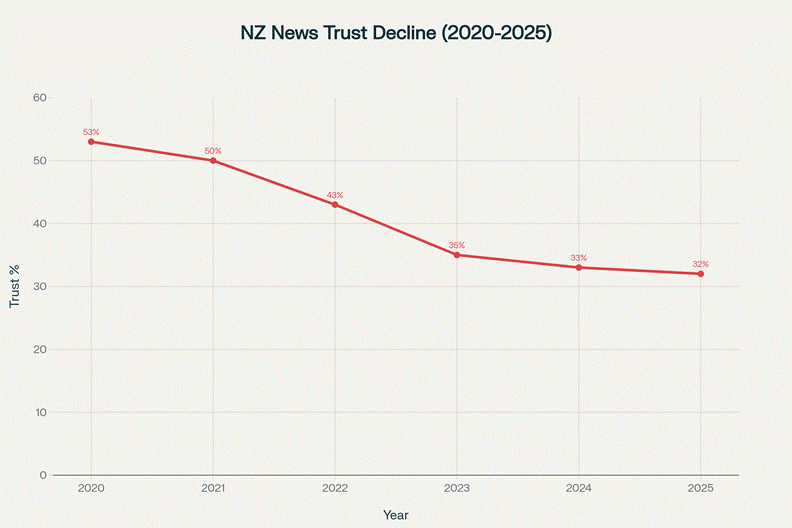
Trust in news in Aotearoa has plummeted from 53% in 2020 to just 32% in 2025, representing a 21 percentage point collapse that parallels the systematic exclusion of Māori voices and mātauranga from mainstream media.
The real crisis is epistemic violence. While Māori comprise 17.1% of Aotearoa’s population, they represent only 5.2% of journalists, 2.1% of senior editorial positions(161), and Māori stories constitute merely 8.3% of mainstream coverage(30). This is not accidental—it is structural racism embedded in colonial capital’s stranglehold on knowledge production.
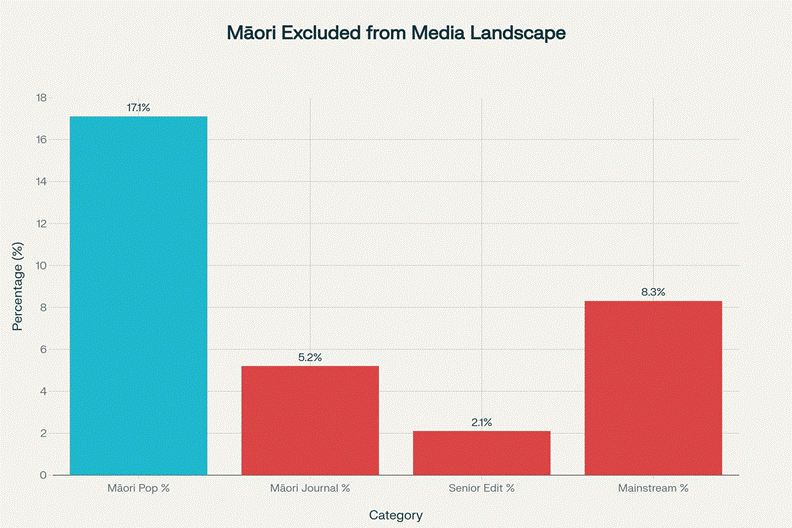
While Māori comprise 17.1% of Aotearoa’s population, they represent only 5.2% of journalists, 2.1% of senior editorial positions, and their stories make up just 8.3% of mainstream coverage—evidence of systematic epistemic violence and knowledge suppression.
Three corporate entities—NZME, Stuff, and MediaWorks—control 85% of Aotearoa’s media, all with Australian parent companies or offshore financial institution ownership(22)(25). By 2020, 46.5% of NZME shares were owned by five financial institutions(25). Colonial capital determines whose knowledge matters, whose stories get told, and whose epistemologies are validated as
“objective” truth.
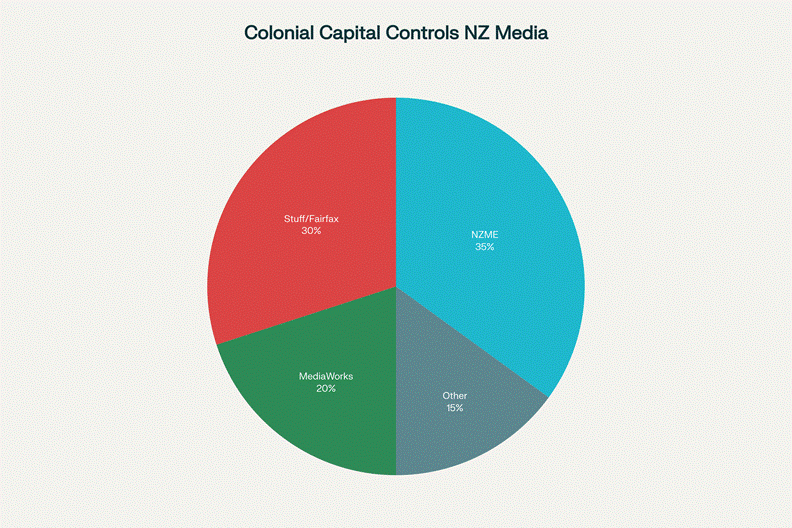
Three corporate entities—NZME, Stuff, and MediaWorks—control 85% of Aotearoa’s media landscape, all with Australian parent companies or offshore financial institution ownership, demonstrating colonial capital’s stranglehold on knowledge production and distribution.
Te Pō: Historical Whakapapa of Knowledge Suppression
The Tohunga Suppression Act 1907(65)(68)(73) represents the colonial project’s explicit attempt to suppress mātauranga Māori by criminalising tohunga and positioning Māori knowledge systems as primitive, dangerous, and incompatible with Western epistemology. While only nine convictions were obtained(73), the Act’s main effect was driving tohunga underground(83), fragmenting intergenerational knowledge transmission, and establishing Western medical and scientific authority as the only legitimate knowledge system.
This epistemic violence continues in contemporary journalism. Research commissioned by the Broadcasting Standards Authority found that media representations of Māori perpetuate narratives of Māori as
“inadequate and poorly socialised”(30), constituting “symbolic annihilation” by effectively erasing Māori as responsible citizens(30). The Whariki Research Group documented that mainstream media promotes anti-Māori discourse through five key themes: nation seen as “one people,”
Māori seen as hypersensitive, crime portrayed as a Māori issue, Māori culture depicted as primitive, and te Tiriti seen as historical and a barrier to development(166).
Mike Hosking—Newstalk ZB’s morning host and former Seven Sharp presenter—exemplifies this colonial epistemology. In May 2016, when New Plymouth mayor Andrew Judd proposed a Māori ward, Hosking declared:
“He’s completely out of touch with middle New Zealand. Any Māori that wants to stand for a council is more than welcome to do so and you can sell your message. And if you’re good enough you’ll get voted on. Simple as that”(134)(197). The Broadcasting Standards Authority ruled this “dismissive of a valid issue”(195) yet failed to uphold complaints, exemplifying how colonial media structures protect Pākehā commentators who delegitimise Māori political aspirations.
Hosking’s conflicts of interest further expose the corruption of
“objectivity” claims. While presenting Seven Sharp on TVNZ—a state broadcaster—he simultaneously hosted Newstalk ZB’s breakfast show(192), urging viewers to tune in to ZB the following morning(192).
He moderated election debates despite openly endorsing John Key during the PM’s state of the nation speech in 2013, prompting petitions demanding his removal from debate moderation. Yet Hosking lectures about media
“falling in love” with Jacinda Ardern, demanding “fairness and balance”(1). This hypocrisy reveals cui bono: Pākehā male commentators police “bias” selectively, protecting conservative power while attacking progressive Māori-affirming leadership.
The article notes Seven Sharp’s IKEA partnership(1)—”Swede As” national roadtrip with daily prizes requiring sign-ups to IKEA’s loyalty programme(108)(111)—demonstrates how nominally “current affairs” programming commodifies tapu by transforming public trust into commercial transactions.
NZME’s own editorial code prohibits journalists from endorsing commercial products(69), yet TVNZ allows Seven Sharp hosts to function as brand ambassadors. This violates tikanga by treating relationships and trust as transactional commodities rather than sacred obligations.
Te Ao Mārama: Deconstructing Colonial “Solutions”
Tim Watkin’s book How to Rebuild Trust in Journalism(71)(77) identifies four
“superpowers”: objectivity, verification, transparency, and caring(71).
This framework exposes fundamental problems with liberal media reform that refuses to name white supremacy, colonial capital, or epistemic violence.
Objectivity as Colonial Dog-Whistle
Watkin defines objectivity as
“describing the world as it is, not as you want it to be”(1). But whose “world as it is”?
The claim to objectivity is itself a colonial epistemological move that positions Western knowledge frameworks as neutral, universal, and value-free while delegitimising Māori knowledge systems as subjective, particular, and biased.
Gavin Ellis—former New Zealand Herald editor—complains that reporters’ opinions are
“indelibly over-written on reportage”(1), yet fails to acknowledge that the very selection of what constitutes “news,” which sources are credible, and whose perspectives matter are value judgments that systematically privilege Pākehā worldviews. Research shows 23% of US journalists live in three cities—New York, Washington DC, and LA—and Aotearoa likely suffers similar Auckland/Wellington/Christchurch concentration(1).
This geographic and class homogeneity ensures mainstream journalism reflects urban, educated, liberal Pākehā perspectives while marginalising rural, working-class, and Māori experiences.
The Human Rights Commission’s A Fair Go for All? report identifies structural discrimination as embedded in
“national structures evolved which are rooted in the values, systems and viewpoints of one culture only”(162). Participation by minorities requires “subjugating their own values and systems to those of ‘the system’ of the power culture”(162). Watkin’s demand for “objectivity” is a demand that Māori journalists suppress their whakapapa, delegitimise their mātauranga, and assimilate into colonial epistemologies that position Western knowledge as the only valid framework for truth-telling.
The Caring That Doesn’t Disrupt Power
Watkin argues journalists should
“care enough” to hire diverse staff, spell correctly, and ensure websites don’t glitch(1). This superficial “caring” individualises structural problems, suggesting better representation and improved service delivery will rebuild trust without addressing colonial capitalism’s control of media ownership or Western epistemology’s dominance in determining whose knowledge counts.
While Te Rito Journalism Project received $2.4 million from the Public Interest Journalism Fund to train 25 Māori, Pasifika, and diverse journalists(109), mainstream outlets Stuff and NZME received $18 million for 35 positions combined(128). The total PIJF allocated approximately $19.5 million for Māori journalism outcomes(106)—only 35% of the $55 million fund(112)(115). This demonstrates cui bono: public money reinforces colonial media structures rather than funding rangatiratanga-based alternatives.
Leonie Hayden, former Atea editor at The Spinoff, noted the strange timing of
“dropping out of media just as it’s flooded with public money for Māori reporting roles—and there are too few experienced journalists to fill them”(126). This exposes the violence of assimilation: PIJF funding requires Māori journalists to work within colonial media structures that delegitimise mātauranga Māori rather than establishing independent Māori media with full editorial control.
Analysis: Networks of Power and Knowledge Suppression
Financial Networks: Follow the Money
Canadian billionaire Jim Grenon purchased 16% of NZME shares by August 2025, prompting warnings from E tū union about potential editorial influence(22)(45). Union representative Michael Wood stated:
“If he is looking to gain greater control and exert influence on the publishing and editorial aspects of the business, you’ve got to think there is a belief that those things are under-covered and the editorial direction of the Herald isn’t what he would like it to be”(45).
This demonstrates how colonial capital’s concentration enables individual billionaires to shape public discourse, determining which stories get told and whose perspectives matter.
By 2015, financial institutions owned 84.3% of Fairfax Media and 87% of APN News & Media (NZME’s parent)(25). This shift from media moguls to financial capital means outlets are controlled by entities with no commitment to journalism’s democratic function, only profit maximisation. When Rupert Murdoch’s News Corp took a stake in NZME in 2015, and Gina Rinehart became Fairfax’s largest shareholder in 2012 (before selling in 2015)(25), it demonstrated how global white supremacist capital moves across borders to control knowledge production in colonised territories.
The 2016 proposed NZME-Fairfax merger—which would have created near-total duopoly—was blocked by the Court of Appeal, which ruled
“detriments clearly outweigh benefits, and not by a small margin”(22). Yet by 2025, those same companies still control approximately 65% of print media, demonstrating that existing concentration levels already constitute monopolistic control that stifles diversity.
Knowledge Networks: Whose Mātauranga Counts?
The BSA report on mātauranga Māori in media documents systematic failures including “examples of ‘sensationalist’ media framing of mild protest activity and ‘Māori-bashing’ through coverage of gangs and decisions by Māori politicians”(166). Research by Nairn et al. found mainstream media promotes hegemonic narratives of Māori as “inadequate and poorly socialised” through a “small number of stories that featured Māori at all”(30), constituting “symbolic annihilation”(30).
When Whakaata Māori broadcast Anzac Day coverage in 2006, National Party policy was to close Māori Television(27). But by 2008, attitudes had changed
“largely because of what Māori Television had done with Anzac Day”(27),
Te Māngai Pāho CEO Larry Parr told RNZ. This demonstrates that when Māori control knowledge production through Māori-owned media with rangatiratanga over content, it shifts public attitudes and validates mātauranga Māori—precisely what colonial structures fear.
The BSA received 27 inquiries about te reo Māori use since June 2020—five times more than the prior period—resulting in formal complaints(107). The BSA eventually ruled that te reo use is not a breach of standards(107), but the delay in making this obvious determination—and the fact that no Māori or te reo speakers were on the panel making the decision(107)—demonstrates how colonial institutions gatekeep which complaints warrant response, systematically prioritising Pākehā grievances over Māori rangatiratanga.
Research on Māori experience of racism found 93% experience racism daily, with 96% saying racism is a problem for whānau(50)(181). A 2024 police report found
“being Māori increased the likelihood of prosecution by 11 percent compared to NZ Europeans when all other variables remain constant”(179) and identified “bias” and “structural racism”(179). Yet mainstream media continues framing crime as a “Māori issue” rather than examining how colonial systems criminalise Māori.
International Networks: Global White Supremacy
Melanie Bunce, director of London’s Centre for Media and Democracy, observes that
“in the UK, the BBC for example is wrapping itself in knots around the coverage of Gaza and Israel, as it did during its reporting of Brexit, because people are trying to perform their balance and impartiality”(1). This demonstrates how Western liberal “objectivity” frameworks collapse when covering conflicts where one side holds overwhelming power—exposing that “balance” means giving equal weight to oppressor and oppressed narratives, which itself constitutes taking the oppressor’s side.
Donna Awatere’s analysis of white cultural imperialism identifies that monoculturalism’s
“pervasive invisibility” is driven by white supremacy and ensures “a true bicultural society—in which each group is given equal consideration—can never come to fruition”(163). The stereotypes of “Māori heathen” and “Māori savage” “never vanished but strengthened under white colonial systems of confinement”(163).
This framework explains how mainstream journalism’s claim to “objectivity” is itself a white supremacist move that positions Pākehā epistemology as neutral while delegitimising Māori knowledge.
E-tangata published analysis noting colonisation is
“the manifestation of white supremacy: the pursuit of ultimate power, reign and dominance”(160). Soldier-politician A S Atkinson’s admission “I find one lies in wait to shoot Maoris without any approach to an angry feeling—it is a sort of scientific duty”(160) reveals the dehumanisation required for colonial violence. Contemporary journalism’s positioning of Māori stories as 8.3% of coverage while Māori are 17.1% of population constitutes symbolic violence that continues this erasure.
Hidden Connections: Five Revelations
1. The “Trust Crisis” Is Manufactured to Justify More Colonial Control
The collapse in trust from 53% to 32%(20)(23) serves colonial interests by positioning the problem as
“media reform” rather than decolonisation. If the diagnosis is “journalists need better objectivity training,” the solution empowers existing colonial institutions (journalism schools, mainstream outlets, BSA) to police standards. If the diagnosis is “colonial capital controls knowledge production and systematically excludes Māori epistemology,” the solution requires transferring power to Māori—which colonial structures will never voluntarily enable.
Watkin’s metaphor of journalism and public as
“marriage on the rocks”(1) where media are the “cheating spouse” who must “do the work” is deeply offensive.
This frames tangata whenua as the faithful partner who must forgive colonial media’s betrayals rather than acknowledging the relationship was never consensual. Colonial media were imposed on Māori to control narratives, delegitimise mātauranga, and justify dispossession.
Demanding Māori “give another chance” to institutions designed to oppress them is asking victims to absolve perpetrators.
2. Financial Institutions Profit from Fragmented, Dysfunctional Media
The shift from media moguls to financial capital ownership means outlets are controlled by entities that profit from instability. Blackrock, Vanguard, and other financial institutions holding NZME and Stuff shares(25) benefit from cost-cutting, casualisation, and clickbait because these maximise short-term returns. Journalism’s democratic function—holding power accountable, enabling informed citizenship—is externality financial capital ignores.
When Jim Grenon purchased 16% of NZME shares(22)(45), investors speculated he wanted to separate OneRoof (property platform) from
“legacy media assets” because “there are a lot of investors who believe OneRoof is being held back by proximity to the ‘legacy media’ assets of NZME”(45). This reveals financial capital sees journalism as deadweight dragging down profitable data/tech assets—the opposite of democracy’s needs.
3. Western Epistemology Defends Itself by Positioning Alternatives as Biased
The controversy over
“mātauranga Māori as science” demonstrates how colonial knowledge systems police their boundaries. When University of Auckland academics (the “Listener Seven”) dismissed mātauranga Māori as “not valid science”(175), they positioned Western scientific method as the only legitimate epistemology while delegitimising Māori knowledge systems that have sustained tangata whenua for centuries.
Journalism’s claim to
“objectivity” functions identically: Western news values (conflict, novelty, proximity, prominence, human interest) are naturalised as universal truth-criteria while Māori epistemologies that privilege whakapapa, whanaungatanga, and long-term collective wellbeing are positioned as subjective or activist. Research by the Whariki Research Group found that media’s “symbolic annihilation” of Māori occurs through absenting alternative stories, supporting “hegemonic narrative of Māori as inadequate”(30). This is not journalism failing—it is journalism succeeding at its colonial function of maintaining white supremacy.
4. PIJF Funding Strengthened Colonial Structures Rather Than Building Māori Media Independence
The $55 million Public Interest Journalism Fund(112)(115) allocated only $19.5 million to Māori journalism outcomes(106)—35% of total fund. Te Rito Journalism Project received $2.4 million to train 25 diverse journalists(109), while Stuff and NZME received $18 million for 35 positions combined(128). This demonstrates that even supposedly
“equity-focused”
funding reinforces colonial structures by channeling majority resources to Pākehā-controlled outlets.
Moreover, PIJF funding required applicants to
“actively promote the principles of Te Tiriti o Waitangi”(126), which critics like Graham Adams and Melissa Lee attacked as “politicised project whose rules are fundamentally incompatible with free and independent journalism”(217).
This framing positions te Tiriti as political bias rather than constitutional foundation, demonstrating how colonial discourse delegitimates Māori rights and sovereignty.
When the fund ended in June 2023(112), Māori journalists trained through Te Rito found
“opportunities in mainstream media have gone”(24) due to widespread redundancies. Pacific Media Network’s Taima Faumuina noted “it will always be a challenge to raise the number of Māori and Pacific journalists”(24), but remains committed.
This demonstrates the violence of assimilation: training Māori journalists for colonial institutions that subsequently eliminate positions wastes resources while extracting Māori labour and knowledge.
5. Commercial Partnerships Commodify Tapu, Violating Tikanga for Profit
Seven Sharp’s IKEA
“Swede As” roadtrip(1)(108)(111)—where supposedly “current affairs” hosts promote commercial brands and audiences sign up for loyalty programmes to win prizes—transforms relationships and trust into transactional commodities.
This violates tikanga by treating connections as things to be bought and sold rather than sacred obligations maintained through manaakitanga and whanaungatanga.
NZME’s editorial code explicitly states
“journalists must never endorse a commercial product”(69), yet TVNZ allows hosts to function as brand ambassadors. This double standard reveals that state broadcaster TVNZ—supposedly serving public interest—prioritises commercial revenue over journalistic integrity. Gavin Ellis identifies “commercially-linked stories” as problematic(1), yet these partnerships proliferate because colonial capitalism positions all relationships as extractive transactions.
From a mātauranga Māori perspective, this commodification of trust depletes mauri—the life force that sustains relationships and communities. When journalism becomes indistinguishable from advertising, it destroys the tapu that should protect knowledge transmission from commercial corruption. The article notes the same ad breaks featuring IKEA promotions also carried measles immunisation messages(1),
“showing the medium as a force for good”—but this juxtaposition reveals the violence of equivalence, positioning life-saving public health information alongside furniture retail as morally interchangeable “content.”
Implications: Quantified Harm and Threatened Mana
Harm to Whakapapa Integrity
When only 5.2% of journalists are Māori despite being 17.1% of population(161), entire whakapapa networks are excluded from knowledge production. Children grow up never seeing themselves reflected as truth-tellers, knowledge-holders, or authoritative voices. This fragments whakapapa by positioning Māori as objects of knowledge rather than subjects who produce knowledge.
Research on rangatahi Māori found experiencing racism was
“associated with feeling like you didn’t belong in New Zealand, being less able to express your identity and reporting negative life satisfaction”(180). Lead researcher Sarah-Jane Paine (Tūhoe, Ngāti Rongo) stated racism makes “expressing your identity as rangatahi Māori isn’t always safe”(180).
When journalism systematically erases Māori voices and delegitimises mātauranga, it constitutes epistemic violence that harms rangatahi identity formation and wellbeing.
Harm to Knowledge Transmission Systems
The Tohunga Suppression Act 1907 drove tohunga underground, fragmenting intergenerational knowledge transmission(68)(73). Sir Pou Temara noted
“in some areas it was driven underground, but in others, it ceased to exist entirely”(68).
Contemporary journalism’s delegitimisation of mātauranga Māori functions identically:
by positioning Māori knowledge as subjective, biased, or activist rather than legitimate epistemology, it fragments contemporary knowledge transmission and prevents rangatahi from accessing their whakapapa knowledge.
Stats NZ undercounted Māori by 49,200 in the 2013 census—a 7.6% undercount(44) that may have cost Māori an additional parliamentary seat for 2014 and 2017 elections(44).
When Stats NZ released this analysis seven years later, it concluded the answer about lost representation was “inconclusive”(44). Associate Professor Andrew Sporle stated: “To say ‘maybe’ for something that is constitutionally important, especially when the election’s looking pretty tight, is not good enough”(44). This demonstrates how colonial data systems systematically undercount and undervalue Māori while refusing accountability.
Economic Costs and Dispossession
Three corporate entities control 85% of Aotearoa’s media(22)(25), meaning profits from knowledge production flow offshore to Australian parent companies and global financial institutions rather than remaining in communities. When Stuff was sold to Sinead Boucher for $1 in 2020, it demonstrated how little value colonial capital assigns to journalism’s democratic function versus extractable profit.
Māori media like iwi radio receive minimal funding compared to mainstream outlets. Te Māngai Pāho allocated $3 million for Māori Regional News Hubs(106)—serving eleven iwi radio stations across the motu—while NZME received similar amounts for single projects(128). This funding disparity ensures Māori media remain under-resourced while colonial structures are buttressed with public money.
Rangatiratanga Action and Moral Clarity
The “marriage” between journalism and public was never consensual—it was a colonial imposition designed to control knowledge production, delegitimise mātauranga Māori, and justify dispossession. Tim Watkin and the BSA diagnose a “trust crisis” requiring better “objectivity” and “caring” from journalists, but this misidentifies the problem to protect colonial power structures.
The real crisis is epistemic violence: systematic exclusion of Māori voices from knowledge production (5.2% of journalists, 2.1% of senior editorial roles), concentration of media ownership in colonial capital (85% controlled by three offshore-connected entities), and Western epistemology policing its boundaries by positioning mātauranga Māori as subjective and biased.
Rangatiratanga Action
1. Fund Māori-owned, Māori-controlled media infrastructure. Rather than channeling public money to train Māori journalists for colonial institutions that subsequently eliminate positions, invest in building independent Māori media with full editorial rangatiratanga. Whakaata Māori’s success shifting public attitudes through Anzac Day coverage(27) demonstrates that Māori-controlled knowledge production transforms discourse.
2. Reject Western “objectivity” frameworks that delegitimise mātauranga. Demand journalism grounded in tikanga—whanaungatanga, manaakitanga, kaitiakitanga, rangatiratanga. This means privileging whakapapa connections, long-term collective wellbeing, and accountability to hapū and iwi rather than colonial capital’s demands for profit and “balance” that positions oppressor and oppressed as morally equivalent.
3. Name white supremacy and colonial capital explicitly. Stop accepting euphemisms like “lack of diversity” or “trust crisis” that obscure power structures. The problem is not insufficient “objectivity training”—it is colonial capitalism controlling knowledge production and Western epistemology policing which knowledge counts.
4. Support rangatahi developing alternative media platforms. TikTok, Instagram, and other platforms enable Māori to bypass colonial media gatekeepers. Rather than dismissing social media as “unreliable,” recognise these as spaces where rangatahi exercise rangatiratanga over their own storytelling.
5. Hold colonial media accountable through boycotts and direct action. When Mike Hosking delegitimises Māori political aspirations on state broadcaster TVNZ, demand his removal. When Seven Sharp commodifies trust through IKEA partnerships, withdraw viewership. The Māori Party’s call to boycott ASB for sponsoring Hosking(199) demonstrates economic pressure works.
Moral Clarity
Colonial media will never voluntarily relinquish control because their function is maintaining white supremacy through knowledge production. Every “reform” that positions journalists as needing “better skills” rather than naming structural racism protects colonial power. Every metaphor of “marriage” that asks Māori to forgive and trust again demands victims absolve perpetrators.
The path forward requires reclaiming integrated knowledge systems: Te Kauwae Runga (celestial/spiritual) and Te Kauwae Raro (terrestrial/practical); roro (cognitive) and ngākau (embodied); whakapapa connecting past, present, and future; tapu protecting sacred knowledge from commercial corruption; mana affirming dignity and authority; mauri sustaining life force through relationships.
Tangata whenua do not need colonial media to rebuild trust. We need rangatiratanga to control our own knowledge production, transmit mātauranga to rangatahi, and hold colonial power accountable on our own terms.
Ko te mana motuhake te oranga o te iwi.
Sovereignty is the wellbeing of the people.
Support this mahi: For those with capacity, koha to HTDM: 03-1546-0415173-000
Nō Māori tēnei kaupapa. Protecting Māori knowledge, exposing colonial violence, serving whānau.