"The Media's Colonial Charade Exposed: How "Positive" Coverage Masks Systematic Oppression" - 5 September 2025
Media coverage shows systematic bias against Māori
Kia ora whānau, me mihi ki a Te Arikinui Kuini Nga wai hono i te po
When Māori dignity rises, the colonial establishment trembles. While mainstream media fawns over the "inspiring" image of our young Queen addressing the nation, they deliberately obscure the brutal reality of why her voice has become so vital in these dark times.
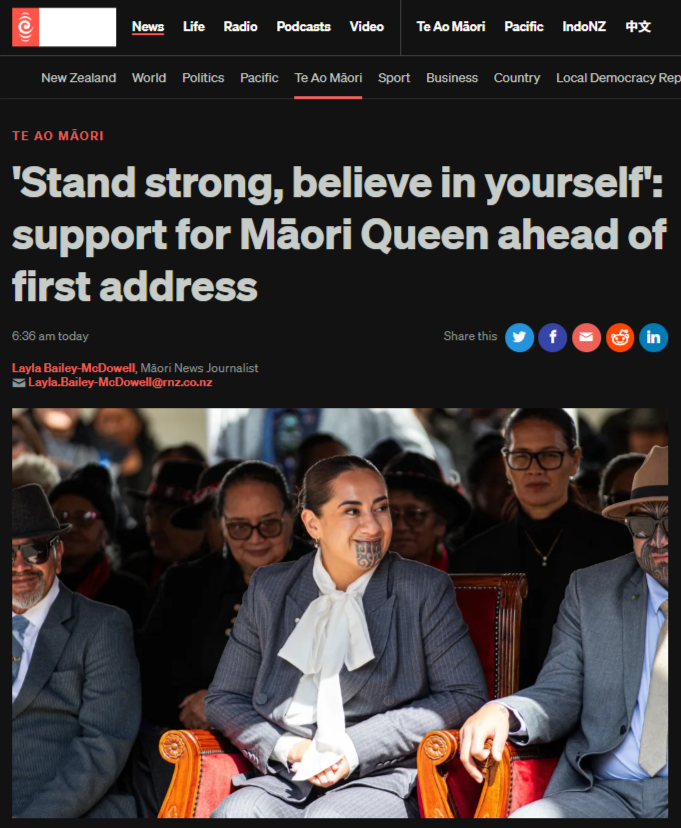
The September 5th RNZ coverage of support for Te Arikinui ahead of her first address represents classic colonial propaganda disguised as cultural celebration. Behind the warm, fuzzy quotes about "powerful wāhine" and "beautiful experiences" lurks the same system that has spent decades systematically destroying Māori institutions.
This is not journalism—it is manufactured consent. While RNZ's Layla Bailey-McDowell dutifully collects heart-warming soundbites from Pacific tauira about feeling "inspired," the real story remains buried beneath layers of feel-good distraction. The coalition government, led by Christopher Luxon's National Party in unholy alliance with David Seymour's ACT and Winston Peters' New Zealand First, has unleashed the most comprehensive assault on Te Tiriti o Waitangi in modern times.
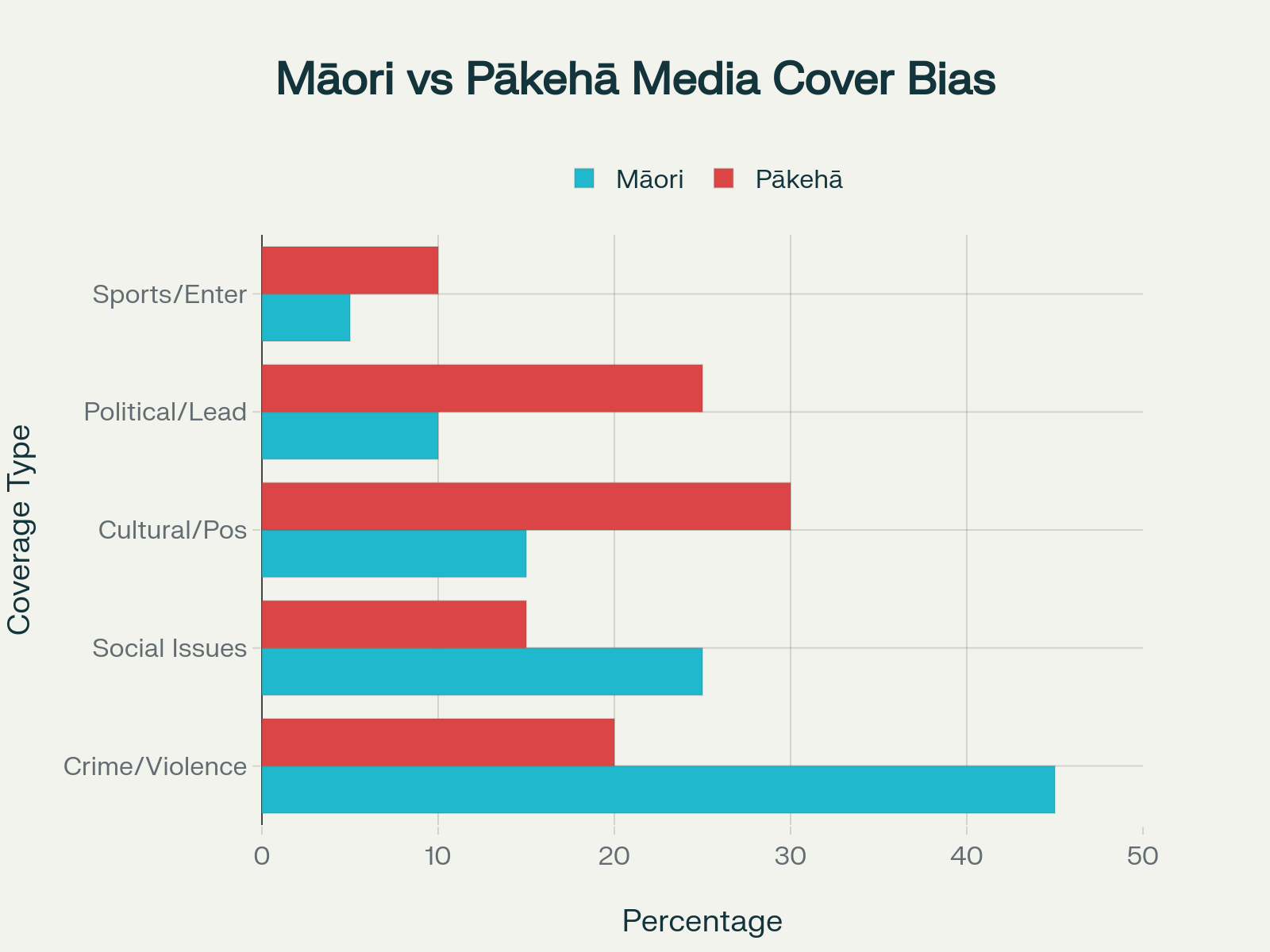
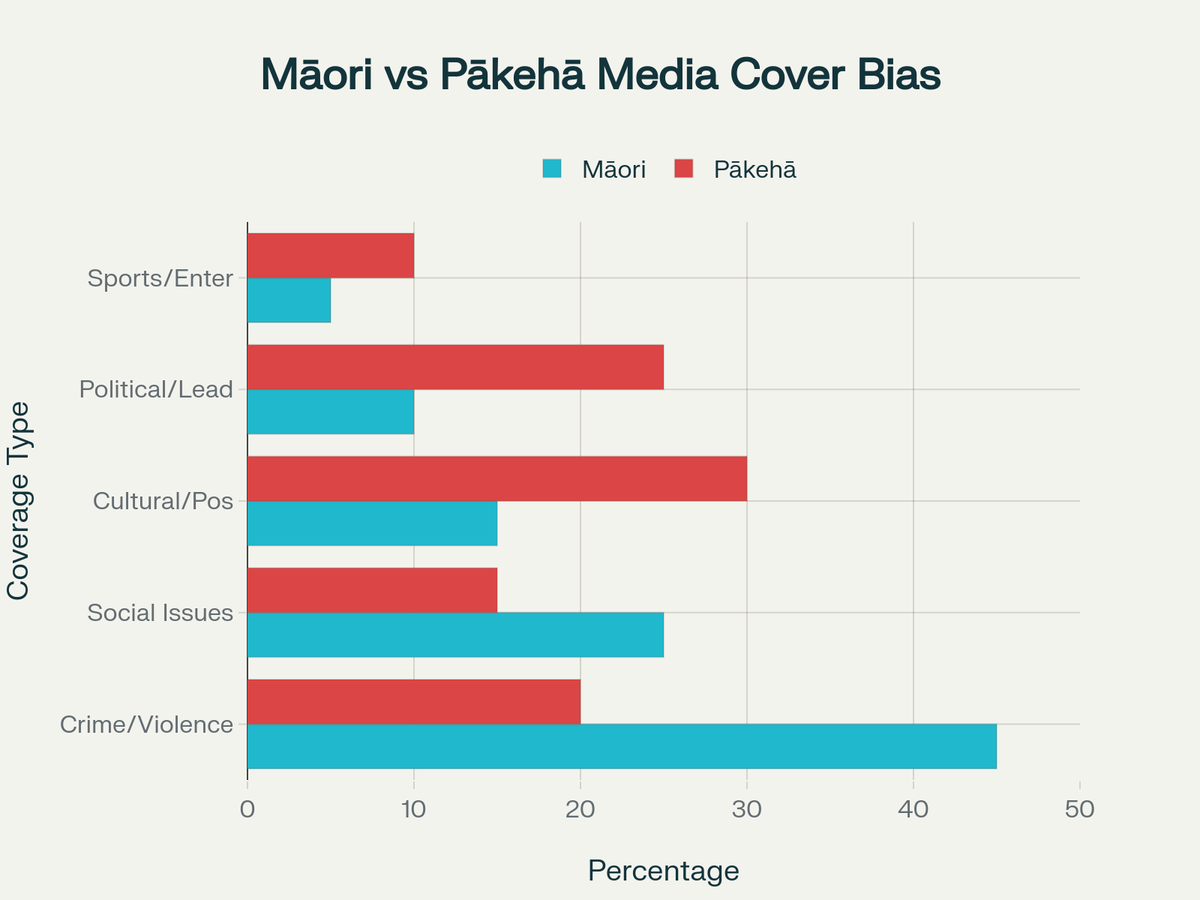
Media coverage shows systematic bias against Māori, with 45% of Māori stories focusing on crime/violence compared to only 20% for Pākehā
Background: The Making of a Māori Queen in Colonial Crisis
The Kiingitanga movement, established in 1858, emerged as a direct response to Crown land theft and political marginalization. When Pōtatau Te Wherowhero accepted the kingship, it was not ceremonial pageantry—it was an act of indigenous resistance against colonial domination. The movement's founding principle of "mana motuhake" represents everything this current government seeks to destroy.
Te Arikinui Kuini Nga wai hono i te po's ascension in September 2024 occurred not in peaceful times of celebration, but during an unprecedented government assault on Māori rights. At 27, she became the second-youngest monarch to assume leadership of a movement born from resistance to exactly the kind of settler-colonial violence her people face today.
The coalition's 100-day plan systematically dismantled institutions designed to address Māori health disparities, removed te reo Māori from government agencies, and began the process of reviewing every Treaty clause in New Zealand law. This represents what political scientist Richard Shaw correctly identified as "the most overtly anti-Māori government" in living memory.
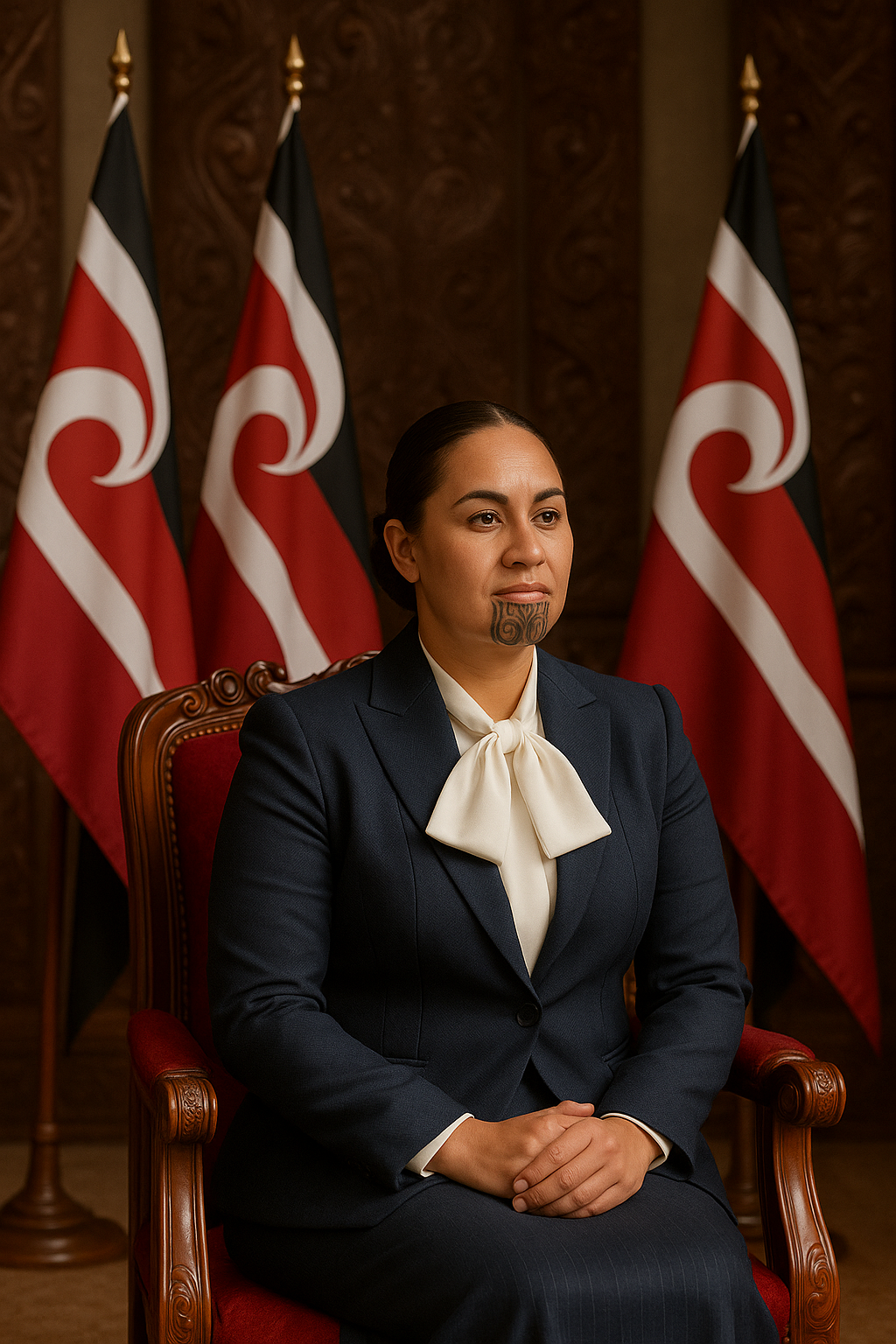
Te Arikinui Kuini Nga wai hono i te po: Symbol of Māori resistance and rangatiratanga
The Coalition's White Supremacist Project Disguised as Democracy
The Treaty Principles Bill represents the culmination of decades of right-wing fantasies about eliminating indigenous rights. David Seymour, architect of this legislative terrorism, peddles the lie that current Treaty principles have created "different rights for some New Zealanders." This is classic white supremacist rhetoric—portraying indigenous rights as unfair privilege while ignoring centuries of systematic dispossession.
The bill's defeat by 112-11 votes came only after the largest protest movement in Aotearoa's modern history, with over 42,000 people marching on Parliament. Yet mainstream media consistently framed this mass uprising as simply about "one controversial bill" rather than exposing it as resistance to comprehensive colonial violence.
The coalition's broader agenda includes the systematic removal of Māori from decision-making processes, the privatization of public assets without Treaty considerations, and the weaponization of "race-blind" policies that deliberately ignore structural racism. Their May 2024 directive ordering public servants to stop targeting policies by race unless it could be "proven as the only contributing factor" represents bureaucratic terrorism designed to gut Māori health and social services.
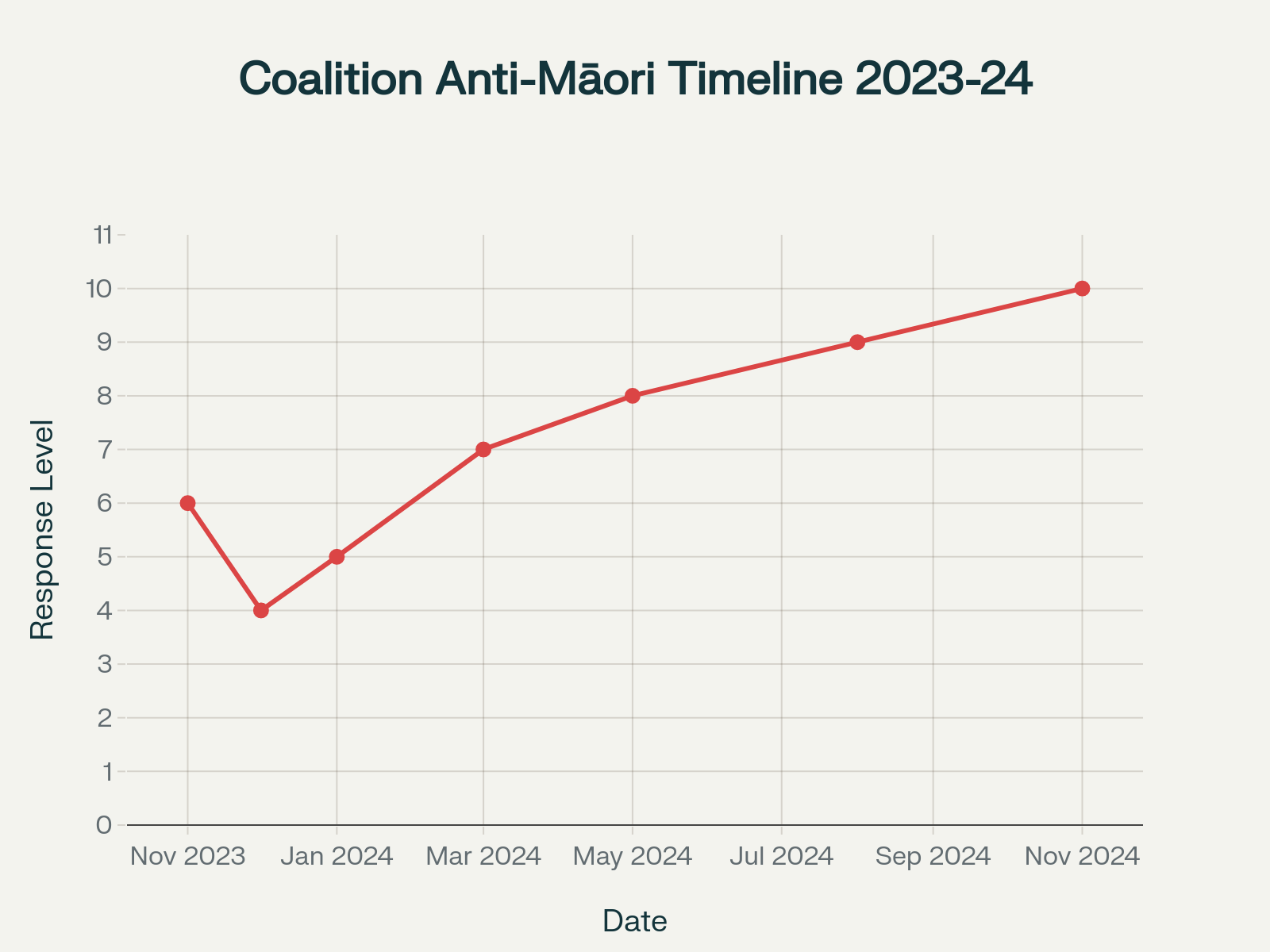
Coalition government's systematic attacks on Māori institutions escalated dramatically from November 2023 to November 2024, culminating in massive public resistance
The Media's Role in Manufacturing Colonial Consent
Research consistently shows mainstream New Zealand media systematically portrays Māori through crime and violence narratives while downplaying similar issues in Pākehā communities. When Stuff apologized in 2020 for 160 years of racist coverage, it revealed reporting that "ranged from racist to blinkered," consistently portraying Māori as threats to social order.
The September 5th RNZ coverage follows this pattern perfectly. By focusing on "inspiring" quotes about female leadership while ignoring the crisis that makes such leadership necessary, the media transforms resistance into performance. The young Pacific tauira quoted saying "You looked so good" to Te Arikinui becomes the story, while the reason she needs to stand strong against systemic oppression disappears entirely.
RNZ's own editorial policy commits to "fostering national identity reflecting ethnic diversity" while consistently failing to apply Treaty-based frameworks to their journalism. When New Zealand on Air introduced a Tiriti Framework for News Media to address these failures, it represented an admission that the entire industry requires decolonization.
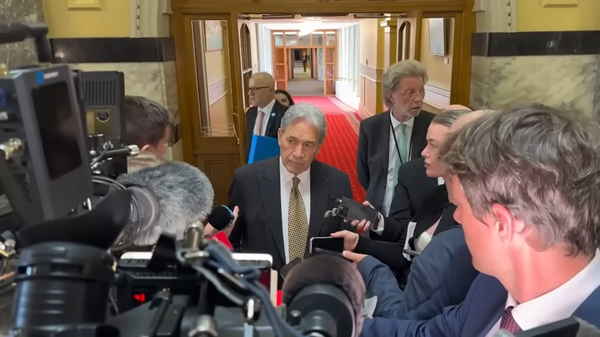
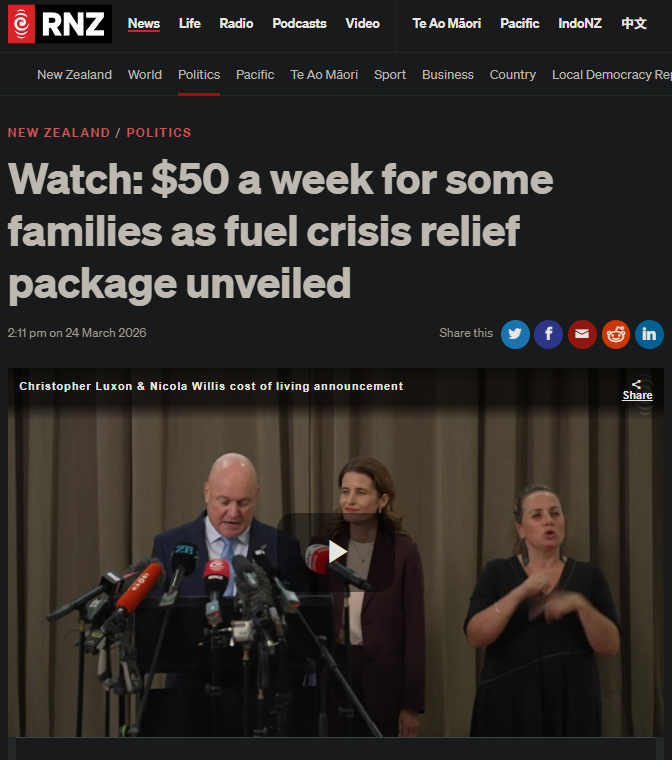
Christopher Luxon's absence from Koroneihana while opening Auckland's first IKEA store reveals his government's true priorities. While Te Arikinui delivered her first national address to thousands gathered at Tūrangawaewae Marae, Luxon chose Swedish furniture over Māori sovereignty. This was not scheduling conflict—it was deliberate colonial contempt.
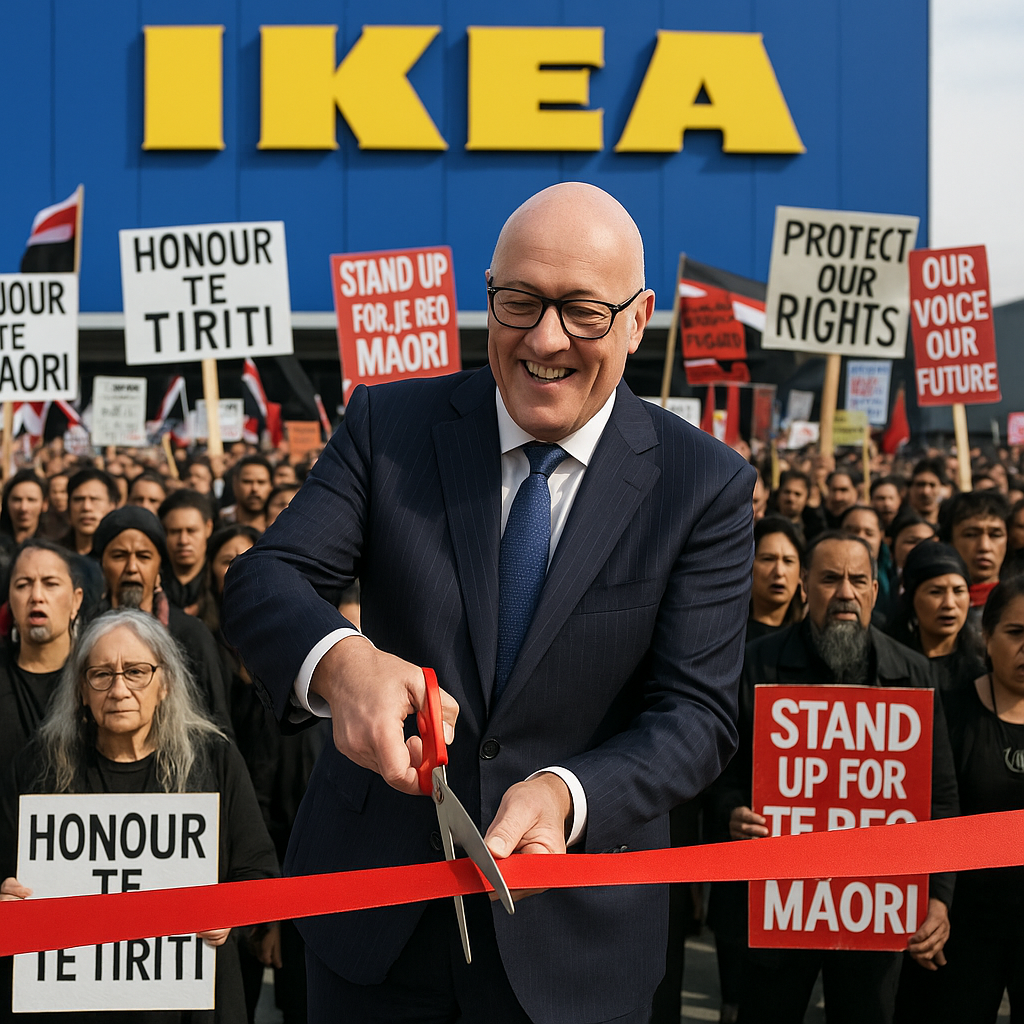
Luxon's twisted priorities: Opening IKEA while ignoring Māori Queen's historic address
The Hidden Networks of Colonial Power
The connections between media bias, government policy, and corporate interests expose deeper networks of colonial control. Mike Hosking's radio platform provided Luxon space to blame "Māorification" for IKEA's planning delays, using racist dog-whistles to mobilize anti-Māori sentiment while protecting corporate profits.
The coalition's partnerships reveal the international dimensions of this assault. Luxon's March 2025 international investment summit attracted global capital precisely because New Zealand had systematically dismantled indigenous protections. Foreign investors understand that removing Treaty considerations makes land, resources, and infrastructure more profitable for extraction.
David Seymour's comparison of his Treaty bill to 1970s homosexual law reform reveals the cynical appropriation of liberation movements to advance colonial projects. By positioning indigenous dispossession as "progress toward equality," Seymour deploys liberal rhetoric to justify white supremacist outcomes.
The timing of policy announcements exposes coordinated messaging strategies. The coalition consistently released anti-Māori policies during significant cultural events, forcing indigenous leaders to respond to attacks rather than celebrating their heritage. This represents psychological warfare designed to exhaust Māori resistance.
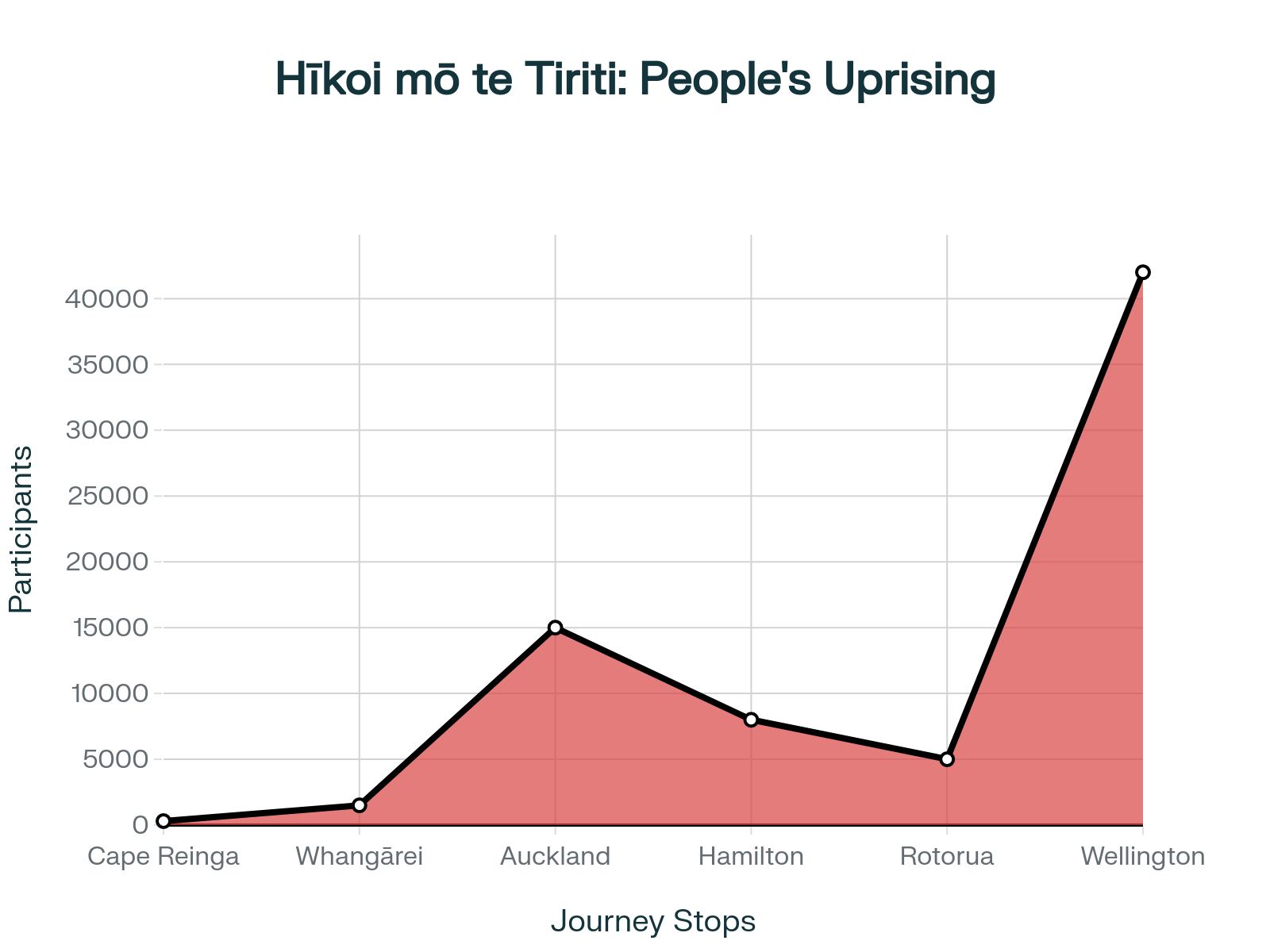
The Hīkoi mō te Tiriti grew from 300 to 42,000 participants, representing the largest protest movement in Aotearoa's modern history
The People's Response: Mass Resistance and Media Silence
The Hīkoi mō te Tiriti demonstrated unprecedented unity across Māori communities, growing from 300 participants at Cape Reinga to over 42,000 in Wellington. Yet mainstream media consistently downplayed the movement's political analysis, focusing instead on cultural performance and emotional responses.
The march represented more than opposition to one bill—it embodied resistance to the entire neoliberal project that treats indigenous rights as barriers to corporate profit. Participants explicitly connected domestic colonization to global patterns of dispossession, understanding their struggle within international contexts of indigenous resistance.
ActionStation's analysis revealed how the bill followed far-right strategies used globally to "scapegoat marginalized communities and embolden violence towards them." The coalition's tactics mirrored those deployed against First Nations peoples in Australia, Aboriginal communities in Canada, and Native Americans throughout recent decades.
Te Arikinui's participation in the November 2024 hīkoi demonstrated the Kiingitanga's continued relevance as a vehicle for indigenous resistance. Her presence legitimized mass civil disobedience while connecting contemporary struggles to the movement's founding principles of mana motuhake and tino rangatiratanga.
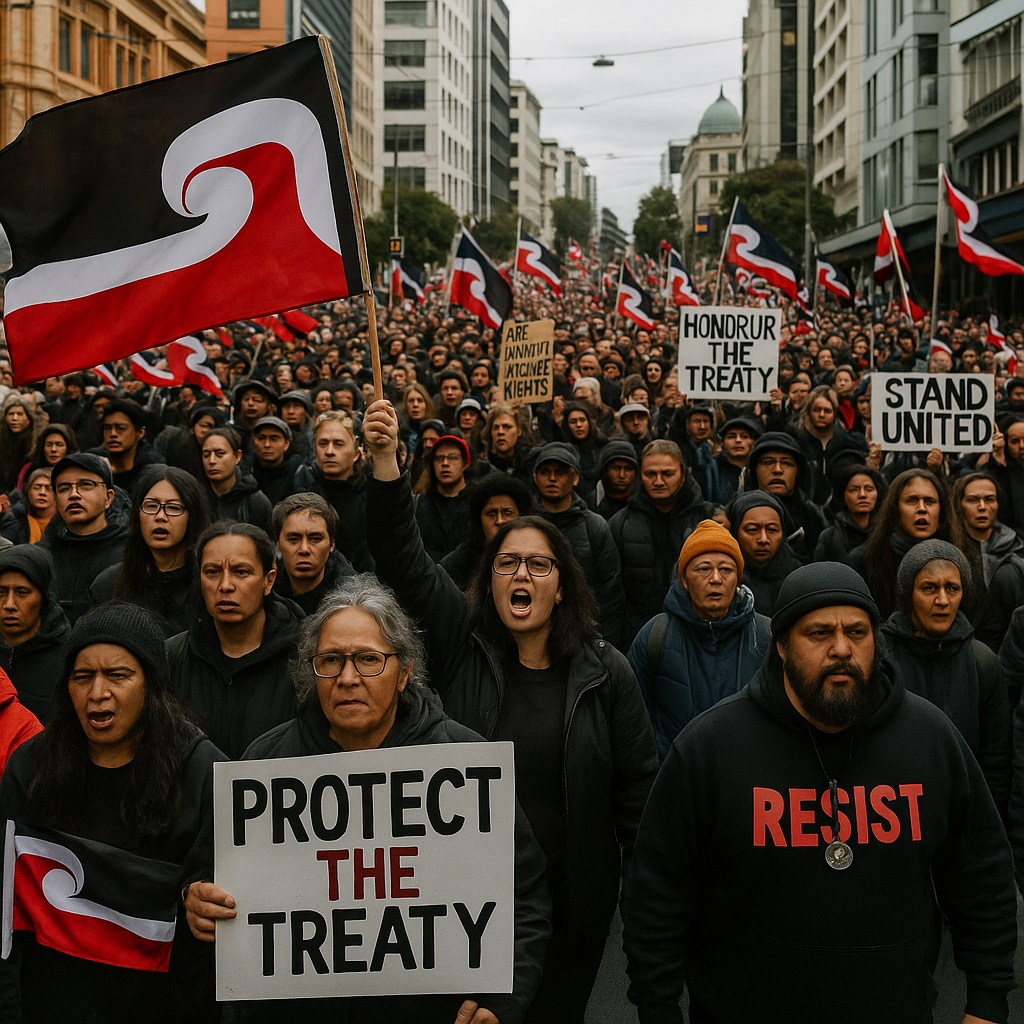
The people's uprising: Hīkoi mō te Tiriti represents unprecedented Māori unity
Implications: Colonial Violence and the Limits of Liberal Democracy
The coalition's assault on Māori rights exposes fundamental contradictions within settler-colonial democracy. Willie Jackson's ejection from Parliament for calling Seymour a "liar" during Treaty Principles Bill debates revealed how colonial institutions police truth-telling while protecting systematic deception.
The recommendation to suspend Te Pāti Māori MPs for performing haka during the bill's first reading demonstrates parliamentary racism disguised as procedural neutrality. Colonial institutions demand indigenous compliance with rules designed to facilitate their own dispossession.
Research documenting systematic media bias against Māori reveals how supposedly neutral journalism functions as colonial propaganda. The industry's failure to examine its own racism enables the normalization of policies that would be recognized as apartheid in other contexts.
The government's targeting of Māori health services during ongoing health disparities—Māori die seven years younger than non-Māori—represents eugenic policy disguised as administrative efficiency. Removing race-based health interventions while ignoring structural racism ensures continued indigenous suffering.

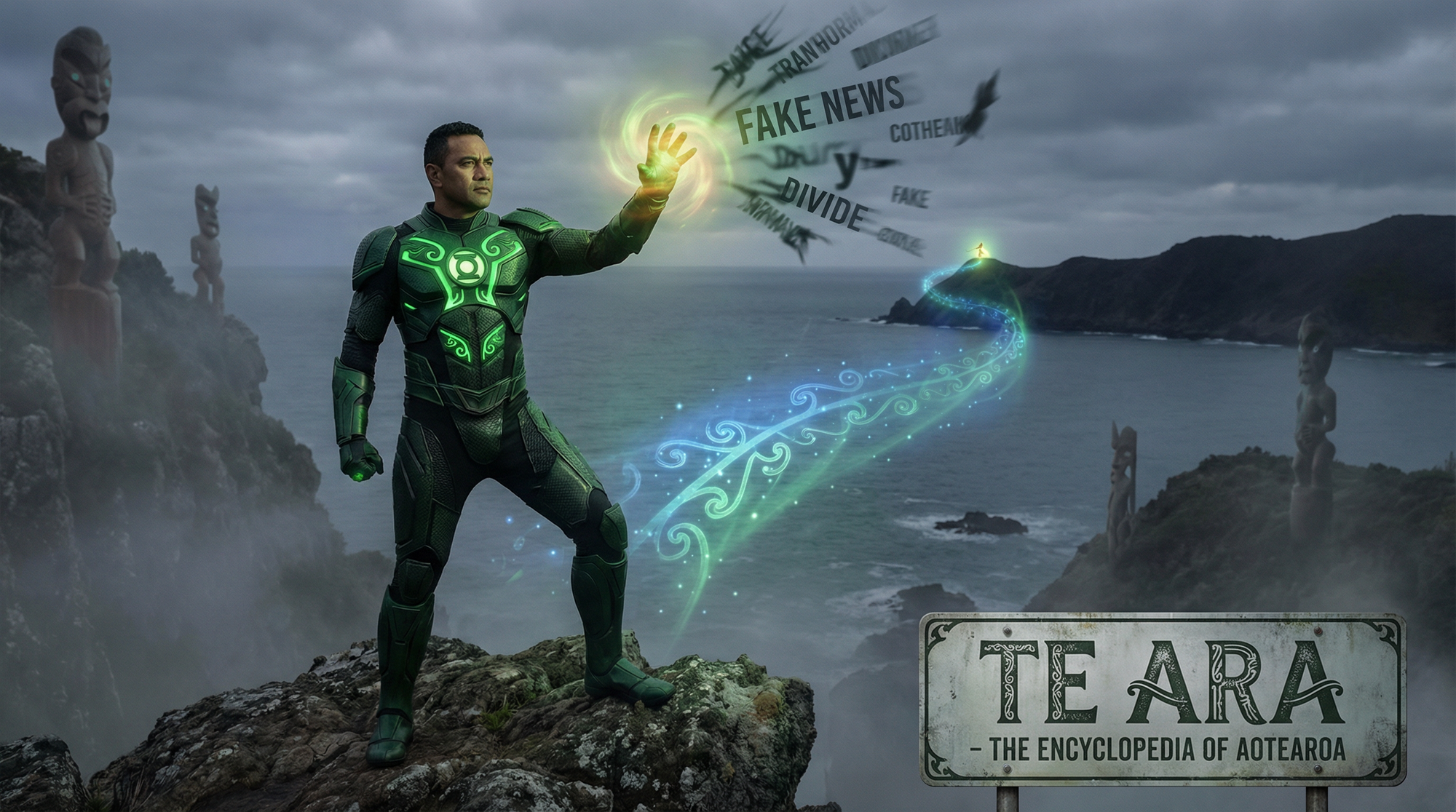
The Māori Green Lantern Fighting Misinformation And Disinformation From The Far Right
The Rising Tide of Indigenous Resistance
Te Arikinui Kuini Nga wai hono i te po's first address occurred within this context of systematic colonial violence, making her emergence as a leader not inspirational theater but essential resistance.
Her commitment to "stand firm in your beliefs" and "be strong for your Māori world within this Pākehā world" represents the continuation of 167 years of Kiingitanga opposition to settler domination.
The coalition government's defeat of the Treaty Principles Bill came not through parliamentary democracy but through mass indigenous mobilization that forced colonial institutions to retreat. This victory demonstrates the power of organized resistance while revealing the limits of seeking justice through systems designed to prevent it.
The media's celebration of Te Arikinui as "inspiring" while ignoring the violence that necessitates her leadership represents classic colonial logic—appropriating indigenous dignity while concealing the conditions that make such dignity an act of rebellion. Real journalism would expose how every "positive" story about Māori leadership exists within contexts of ongoing dispossession.
The future of Aotearoa depends on understanding that Te Arikinui's strength comes not from individual inspiration but from collective resistance to systems designed to eliminate indigenous peoples. Her voice carries the mana of all those who refused to accept colonial subordination, from Pōtatau Te Wherowhero to the 42,000 who marched on Parliament.
Until the media acknowledges its role in manufacturing consent for colonial violence, until the government recognizes Treaty partnerships as constraints on corporate power, until settler society confronts its investment in indigenous dispossession, the struggle continues.
The Queen has spoken. The people have risen. The colonial establishment trembles, as it should.
Kia kaha, kia māia, kia manawanui.
Na te Māori Green Lantern
Readers who find value in exposing colonial propaganda and defending indigenous rights are welcome to consider a koha to support this essential work: HTDM: 03-1546-0415173-000. These are challenging economic times for whānau, so please contribute only if you have capacity and wish to support truth-telling that challenges power.
Heoi anō,