“The Muzzled Māori: How Shane Jones Betrayed His Own People for Coalition Comfort” -2 October 2025
When the Prince of Provinces Becomes the Court Jester’s Silence
Kia ora whānau, kaitiaki māna. He uri ahau o Te Arawa, o Ngāti Pikiao hoki.
Here’s the brutal truth that every New Zealander struggling with power bills needs to understand:
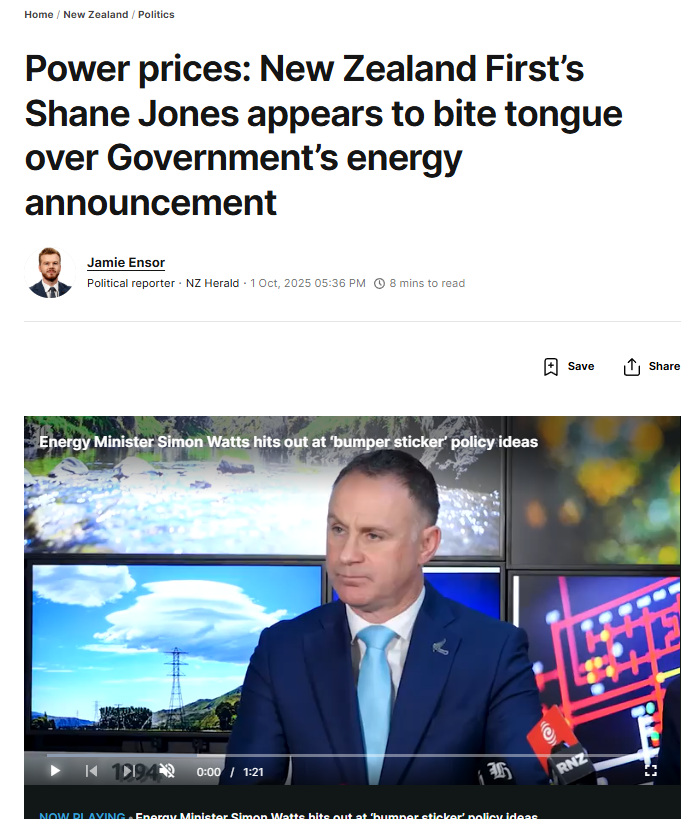
Shane Jones, the self-proclaimed “Prince of the Provinces” and deputy leader of New Zealand First, has been completely neutered by his National Party masters. The same man who spent months raging against the gentailers as “the most powerful economic institutions in New Zealand beyond the supermarket” suddenly went completely silent when it came time to actually do something about them.
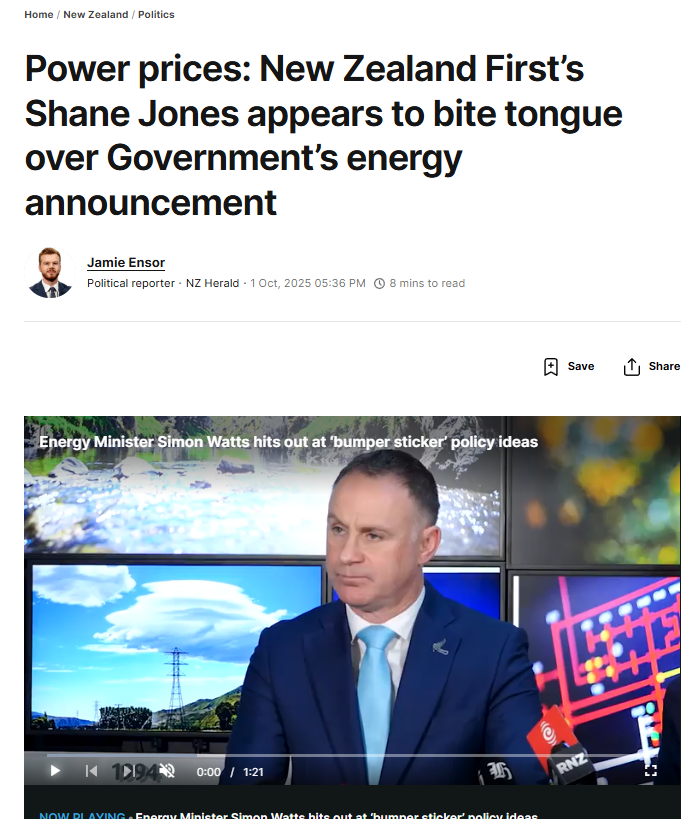
This isn’t just political hypocrisy. This is colonial capture in action, where a Māori leader abandons his people’s interests the moment his Pākehā coalition partners crack the whip.
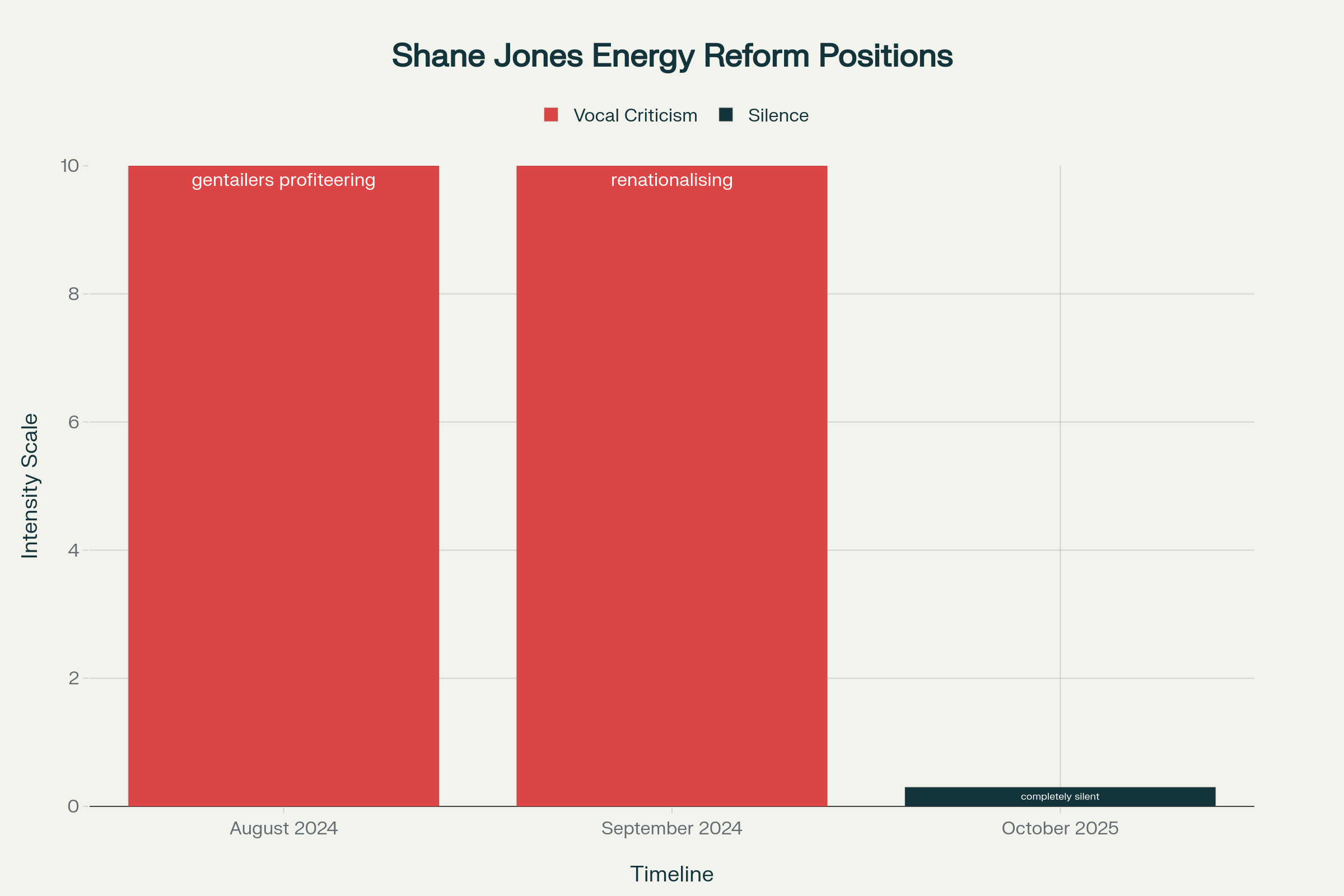
Shane Jones’ dramatic shift from vocal energy critic to complete silence
The Anglican Elite and the Silence of the Lambs
To understand how completely Jones has betrayed everything he once stood for, we need to examine his background. Jones was educated at St Stephen’s Anglican boarding school, the same elite institution that has produced generations of compliant Māori leaders trained to serve the colonial system rather than challenge it.
This Anglican connection isn’t coincidental. The Anglican Church has long been a vehicle for assimilating Māori leadership into Pākehā power structures, teaching them to speak te reo while serving colonial masters. Jones himself admits “It was through the Anglican church that I was sent to Tipene, St Stephen’s School” where he learned to be comfortable speaking for power rather than speaking truth to power.
The same elite Anglican network that produced Jones also connects him to the very colonial structures he now serves. Energy Minister Simon Watts comes from a similar privileged background, while Finance Minister Nicola Willis’s father was chairman of the New Zealand Energy Corporation, literally an oil and gas exploration company.
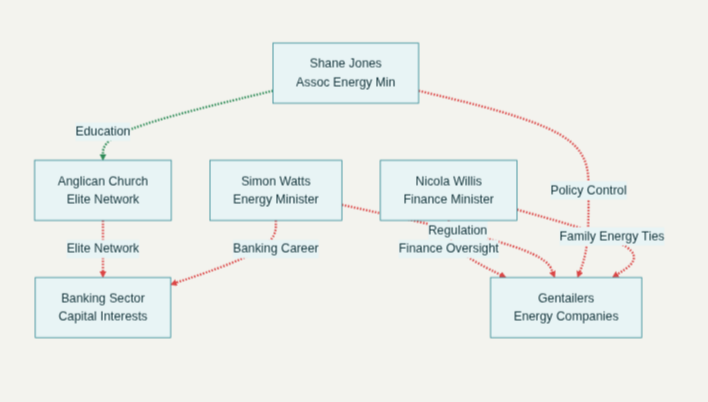
Hidden networks of power in New Zealand’s energy policy decisions
From Firebrand to Lapdog: The Complete Capitulation
The transformation of Shane Jones from energy reformer to silent accomplice is one of the most shameful betrayals in recent New Zealand political history.
Let’s trace exactly how this sellout unfolded.
In August 2024, Jones was calling the gentailers profiteers and demanding the Crown use “a code of conduct which has legal force to change their behaviour”. He correctly identified them as extractive colonial institutions bleeding whānau dry.
By September 2024, Jones was going even further, calling for the renationalisation of the power market and declaring that “the days of treating energy prices as a private commodity... have run their course”. He was promising a “Trumpian” campaign on the energy sector if nothing was done.
Jones even wrote a detailed 15-20 page paper for Winston Peters outlining radical energy reforms including splitting the gentailers, nationalising the system, and building new state-owned power stations.
Then came October 2025. When the government finally announced its energy package, Jones was completely absent from the announcement. Not only was he not present, but his name didn’t even appear on the media release. The Associate Energy Minister had been completely sidelined by his own coalition.
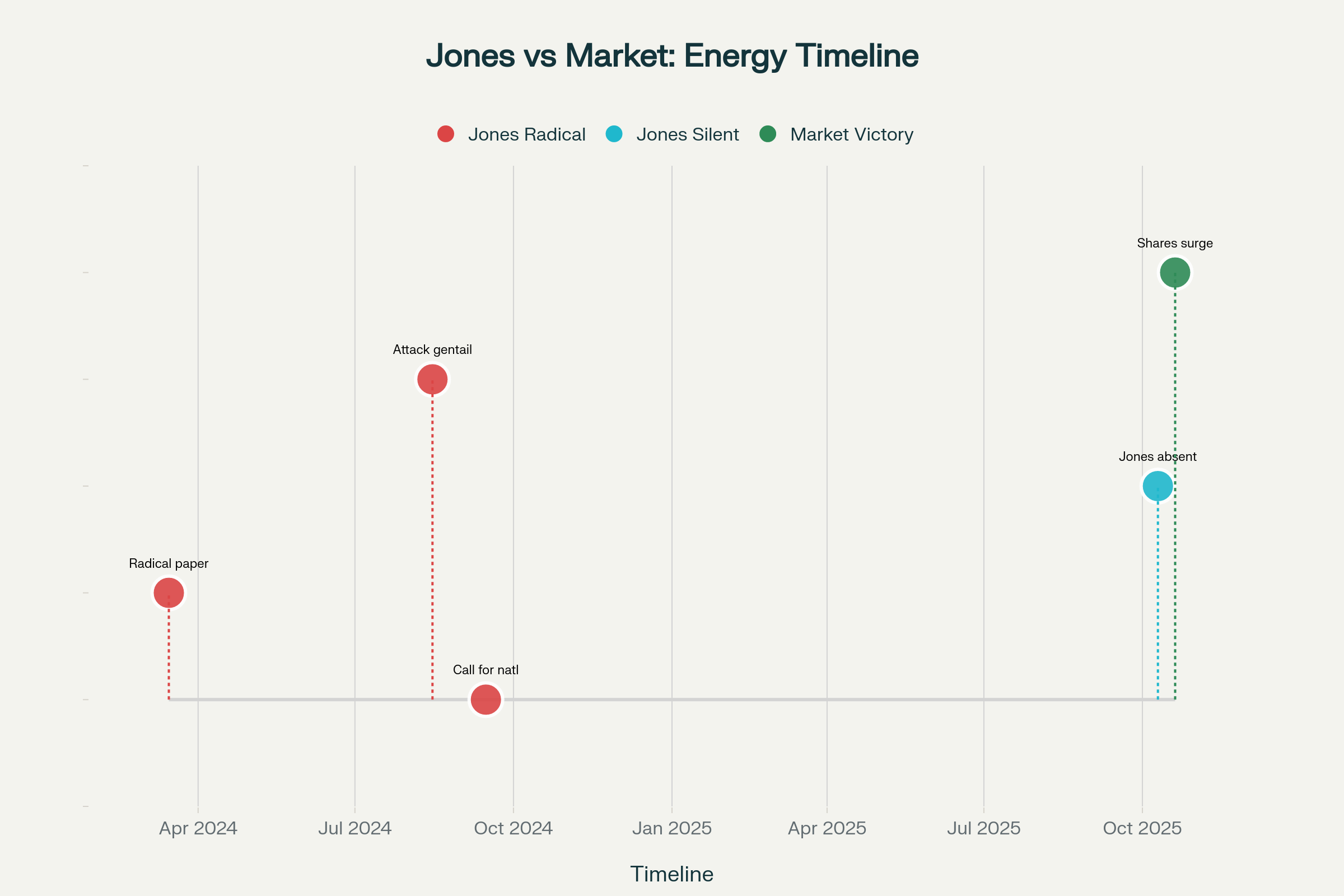
Timeline of Shane Jones’ energy policy contradictions and market outcomes
The Elite Network Protecting Corporate Interests
The silence makes perfect sense when you understand the web of elite connections protecting the gentailers from any real reform. Nicola Willis, whose father chaired an energy exploration company, was never going to attack the energy sector that enriched her family. Simon Watts, with his banking background at RBS during the 2008 financial crisis, understands exactly how to protect corporate interests while appearing to take action.
Meanwhile, National Party donors include major property developers and corporate interests who benefit from cheap corporate energy rates while households pay through the nose. The party raised $10.4 million in donations for the 2023 election, more than double any other party.
When Jones tried to speak up for working families being bled dry by energy costs, he was told to shut up and cite “collective responsibility and whatnot”. The colonial hierarchy was clear:
Māori voices serve at the pleasure of Pākehā power.

The empty chair where Shane Jones should have been during energy policy decisions
The Gentailers’ Victory Lap
The proof of this corporate capture came immediately after the government’s pathetic energy announcement. The gentailer share prices jumped, showing exactly who the real winners were. Genesis, Mercury, Meridian and Contact had successfully neutralised the threat of real reform.
The government’s proposals were so weak that even business leaders called them “underwhelming” and a “missed opportunity”. Consumer advocacy groups said the measures might only shave 2 percent off household bills that are rising 10-12 percent annually.
Meanwhile, whānau across the motu continue to choose between heating their homes and feeding their tamariki. One in five households have had difficulty paying their power bill in the last year, while the gentailers continue extracting maximum profit from infrastructure built by previous generations of New Zealanders.
The Colonial Pattern: Māori Voice, Pākehā Veto
This betrayal follows a familiar colonial pattern. Indigenous leaders are elevated to prominent positions, allowed to make noise about reform, then systematically neutralised when it’s time for real change. The system can tolerate Māori anger as long as it doesn’t threaten Pākehā wealth.
Jones’s silence on the energy announcement represents the complete capture of Māori political representation by neoliberal capitalism. He was promoted to Associate Energy Minister specifically to provide brown-face legitimacy to policies designed to benefit corporate shareholders at the expense of working families.
The Anglican education system that shaped Jones was designed for exactly this purpose:
creating compliant indigenous leaders who would serve the colonial system while appearing to represent their people’s interests.
Jones learned to speak beautifully in te reo while serving power structures that continue to dispossess Māori.
From Whakatōhea Warrior to Westminster Lackey
What makes Jones’s betrayal particularly galling is that he knows better. This is a man who spent years correctly identifying the problems with New Zealand’s neoliberal capitalism. He understood that the gentailers represented extractive colonial institutions bleeding the provinces dry.
Yet the moment he was given real power to address these issues, he folded completely. Instead of using his position as Associate Energy Minister to push for the radical reforms he’d been advocating, he allowed himself to be muzzled by his coalition partners.
Jones’s paper outlining dramatic energy reforms was quietly shelved while Willis and Watts announced policies that would maintain the profitable status quo for their corporate backers. The Prince of Provinces had been reduced to a court jester, expected to stay silent while his coalition partners served their real masters.
The Māori Green Lantern’s Analysis
The fundamental issue here isn’t just Shane Jones’s personal cowardice, though that’s certainly on display. The deeper problem is how neoliberal capitalism systematically corrupts indigenous political representation.
Jones was captured not just by the Anglican elite education system, but by the entire structure of coalition government that prioritises corporate interests over people’s needs. His comment about “collective responsibility and whatnot” reveals his complete acceptance of a system that silences indigenous voices whenever they threaten Pākehā wealth.
This is colonisation in action. The same power structures that built their wealth by stealing Māori land are now bleeding whānau dry through privatised energy markets. When a Māori leader finally gets close to challenging this system, he’s neutralised through the genteel violence of “collective responsibility.”
The gentailers represent everything that’s wrong with New Zealand’s neoliberal experiment. These companies were gifted infrastructure built with public money, then allowed to extract maximum profit while ordinary families struggle to heat their homes. They are the direct descendants of the colonial companies that dispossessed Māori in the first place.

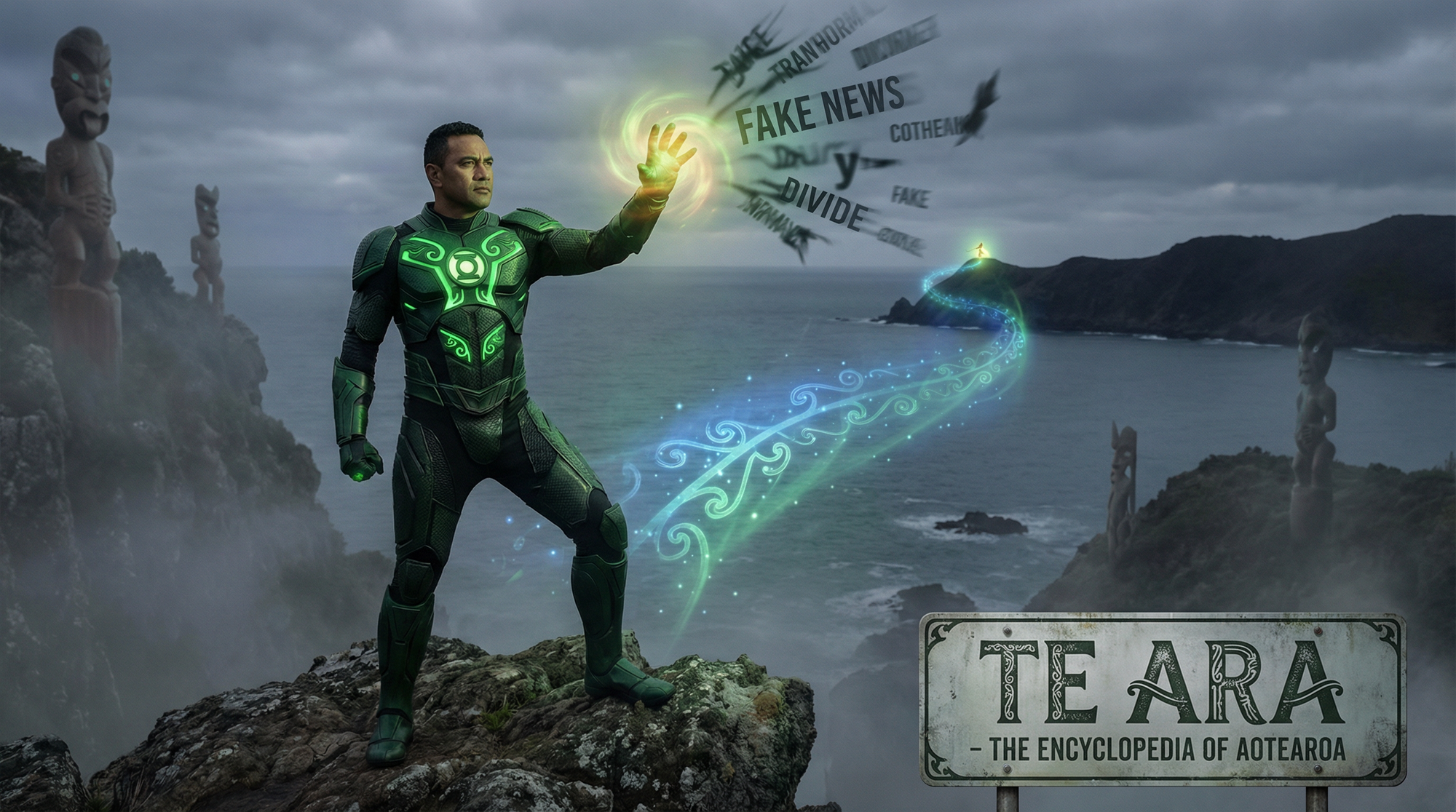
The Māori Green Lantern Fighting Misinformation And Disinformation From The Far Right
Implications for Māori Sovereignty
Jones’s betrayal has massive implications for Māori political representation. It shows how completely the system can capture and neutralise indigenous voices, even when those voices initially speak truth to power.
This is why co-governance arrangements and indigenous representation within existing colonial structures are insufficient. The system is designed to corrupt and contain Māori political leadership, turning warriors into lapdogs and prophets into politicians.
Real decolonisation requires challenging the fundamental structures of neoliberal capitalism that continue to extract wealth from Māori communities. Energy democracy - public ownership of power generation and distribution - is essential for protecting whānau from corporate exploitation.
The gentailers’ victory over Jones shows why reforming capitalism from within is impossible. The system has too many mechanisms for capturing and corrupting opposition voices. Only by building alternative economic structures based on Māori values can we break free from this extractive colonial system.
Conclusion: Mana Compromised, People Betrayed
Shane Jones’s transformation from firebrand energy critic to silent coalition partner represents everything wrong with contemporary New Zealand politics. A Māori leader abandoned his people’s interests the moment his Pākehā coalition partners demanded silence.
This betrayal will have real consequences for whānau across the motu who continue struggling with unaffordable power bills while corporate shareholders celebrate their protected profits. Jones had the opportunity to use his position for genuine reform that would benefit working families. Instead, he chose coalition comfort over courageous leadership.
The Anglican elite education system that shaped Jones was designed to produce exactly this outcome: indigenous leaders who would serve colonial power structures while maintaining the appearance of Māori representation. His silence on energy reform shows how completely this system continues to work.
Real change will require building political movements that can’t be captured and corrupted by the existing system. Māori sovereignty and energy democracy are inseparable - both require breaking free from the colonial structures that continue extracting wealth from indigenous communities.
Shane Jones may have lost his voice, but the struggle for genuine decolonisation continues. The gentailers may have won this round, but their extractive colonial model is ultimately unsustainable. When the people finally rise up against corporate exploitation, they won’t need permission from coalition partners to speak truth to power.
E hoa mā, if this analysis helps you understand how power really operates in Aotearoa, please consider supporting this mahi with a koha to HTDM: 03-1546-0415173-000. These are tough times for whānau, so only contribute if you have capacity and wish to support independent Māori journalism that speaks truth to colonial power.
Kia kaha, kia māia, kia manawanui.
Ivor Jones
The Māori Green Lantern