"The Neoliberal Purge: How Project 2025's American Architects Are Dismantling Te Tiriti While Te Pāti Māori Implodes" - 4 November 2025
Te Pāti Māori implodes as internal warfare consumes leadership while the coalition government systematically dismantles Māori institutions
Tēnā koutou katoa.
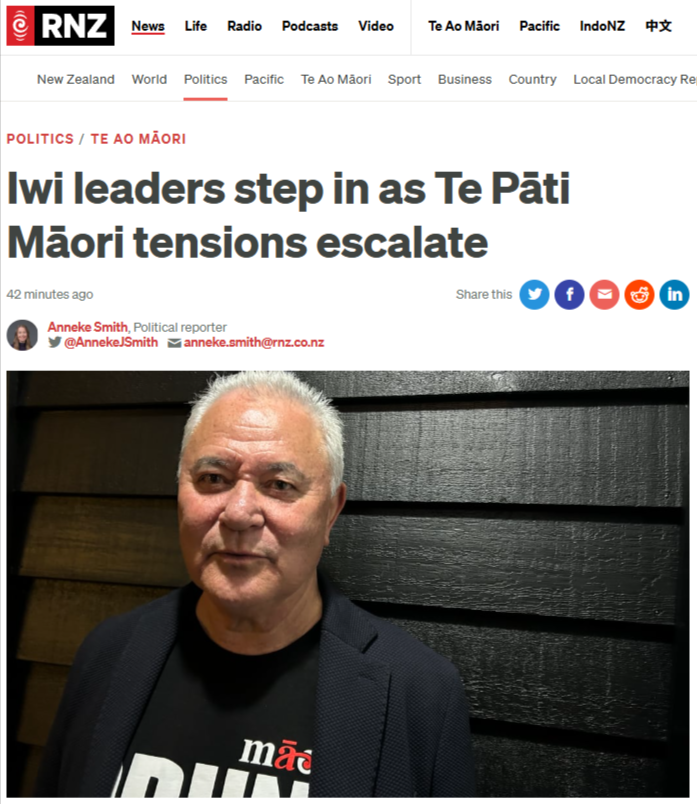
Here’s the smoking gun, whānau: While iwi leaders desperately try to hold together Te Pāti Māori as it tears itself apart(Smith, 2025), David Seymour is running the exact same authoritarian playbook that Russell Vought—chief architect of Project 2025—used to gut the American federal government. The parallels are not coincidental. They are coordinated(Conversation, 2025). And while our only kaupapa Māori party battles internal warfare fueled by ego and power struggles, the neoliberal wrecking ball swings unchecked, demolishing a billion dollars in Māori-specific funding(Jackson, 2025), eviscerating Treaty protections, and laying the foundation for generational harm to tangata whenua.
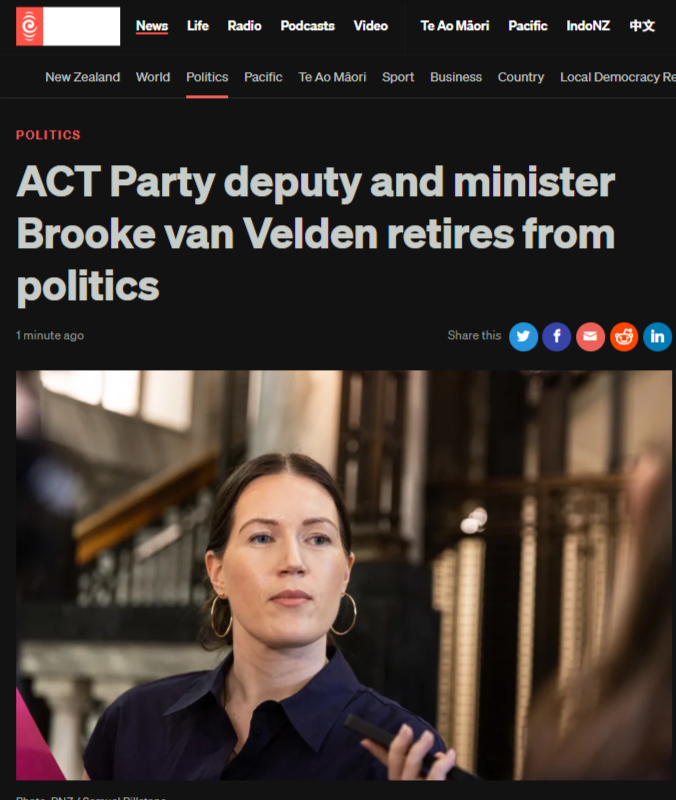
This is the anatomy of a coordinated assault: international in scope, ideological in foundation, ruthless in execution. And the timing couldn’t be worse—as Te Pāti Māori president John Tamihere publicly demands MPs Mariameno Kapa-Kingi and Tākuta Ferris resign for “greed, avarice, and entitlement”(RNZ, 2025b), and the National Iwi Chairs Forum steps in to salvage what’s left(Smith, 2025), the coalition government accelerates its dismantling of Māori institutions with surgical precision.
Whakapapa of the Attack: From Heritage Foundation to Hopuhopu
Let’s trace the money, the ideology, and the personnel networks. Russell Vought didn’t emerge from thin air. As Director of the Office of Management and Budget under Trump, Vought is the mastermind who wrote Chapter 2 of Project 2025, titled “Taking Back Power: The Conservative Promise”(ProPublica, 2025). In it, Vought explicitly states the OMB director’s role is to serve as “the best, most comprehensive approximation of the President’s mind”—an “air-traffic control system” that overrides agency bureaucracies(1News, 2025a). His vision? Concentrate all federal power in the presidency, eliminate civil service protections through Schedule F reclassification, and systematically fire federal workers who refuse to advance presidential directives(Foreign Policy, 2025).
Vought delivered. Under his direction, the Trump administration created DOGE (Department of Government Efficiency), led by Elon Musk, which slashed approximately 260,000 federal jobs through mass firings, buyouts, and early retirements—12% of the entire federal civilian workforce(RNZ, 2025c). Schedule F—now rebranded as “Schedule Policy/Career”—targets 50,000 positions, stripping federal workers of civil service protections and making them at-will employees who can be fired for “subversion of presidential directives”(White House, 2025). Vought himself promised to make federal workers experience “trauma” when they wake up, viewing them as “villains”(Wikipedia, 2025).
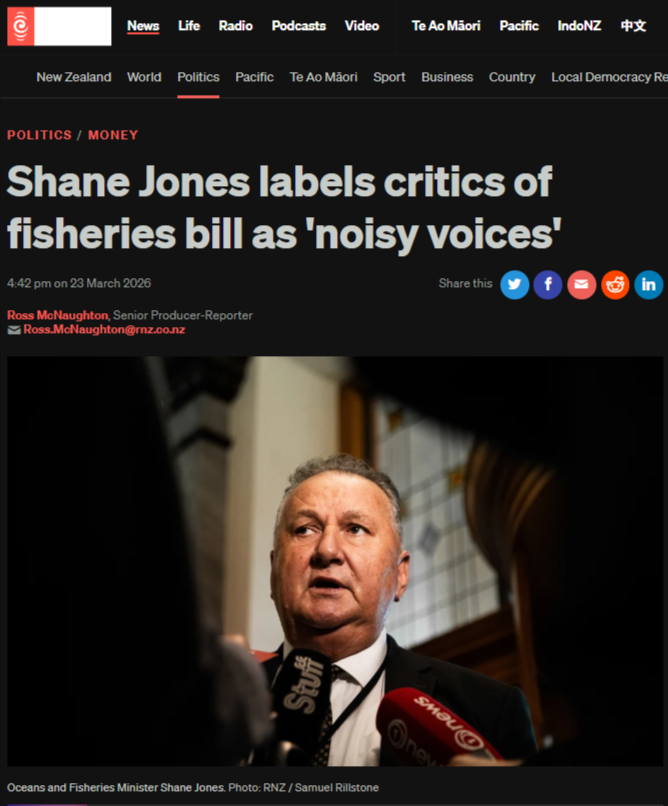
Now look across the Pacific. David Seymour’s Regulatory Standards Bill (RSB) functions as New Zealand’s Schedule F. The RSB establishes a Regulatory Standards Board—appointed by Seymour himself as Minister for Regulation—that assesses ALL legislation against a selective list of libertarian principles: property rights, individual liberties, restrictions on government, and constraints on taxes(RNZ, 2025d). Notably absent? Any principle related to Te Tiriti o Waitangi. The bill is “effectively silent” on how the Crown will meet its Treaty obligations(E-Tangata, 2025). Constitutional law professor Dean Knight describes the RSB’s principles as “strongly libertarian in character”(RNZ, 2025d). The Waitangi Tribunal warned the bill “would be the worst, most comprehensive breach of the Treaty/te Tiriti in modern times”(Waikato University, 2024).
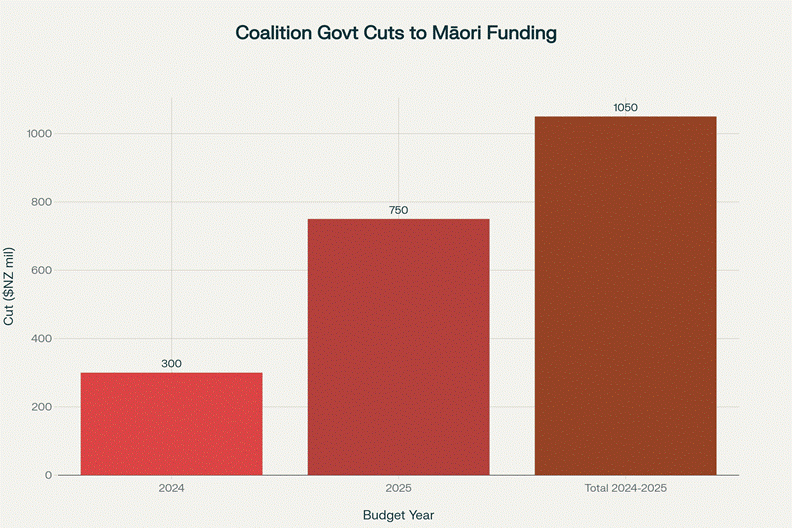
Coalition government has cut over $1 billion in Māori-specific funding across two budgets, with Budget 2025 cutting more than double the previous year’s cuts.
The Atlas Network: Global Neoliberal Infrastructure
These aren’t isolated policies dreamed up by local politicians. They’re products of a coordinated international network. The Atlas Network—a global coalition of 550+ right-wing think tanks in 100+ countries—connects Heritage Foundation ideology to New Zealand’s political landscape(PSA, 2024). Three Atlas Network partners operate in Aotearoa: the New Zealand Initiative (formerly the Business Roundtable), the Taxpayers’ Union, and the Free Speech Union(ABC News, 2025).
The New Zealand Initiative’s senior fellow, Bryce Wilkinson, authored the original Regulatory Responsibility Bill in 2001 for the Business Roundtable—the ideological foundation for Seymour’s current RSB(Conversation, 2023). Recent OIA releases reveal Wilkinson lobbied the Ministry for Regulation extensively, drawing on the work of Richard A. Epstein, a fringe American libertarian legal scholar tied to multiple right-wing think tanks(Spinoff, 2025).
David Seymour himself worked for two Atlas Network members in Canada before entering New Zealand politics: the Frontier Centre for Public Policy and the Manning Foundation(Trotter, 2024). These connections aren’t ancient history—they’re active networks shaping policy today. The Taxpayers’ Union lobbied for the Treaty Principles Bill referendum and anti-co-governance campaigns(PSA, 2024). The Free Speech Union opposes hate speech protections that would shield Māori from racist attacks(Tapatahi, 2024).
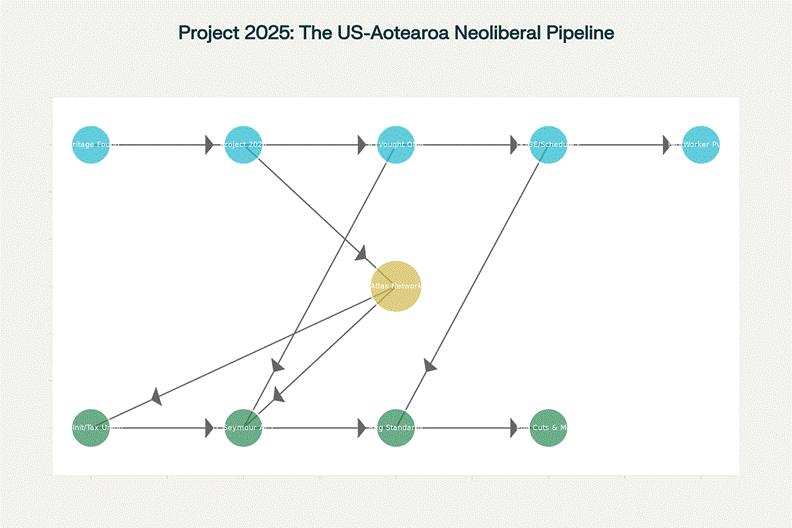
Project 2025 architect Russell Vought’s mass federal worker purge and David Seymour’s Regulatory Standards Bill follow parallel neoliberal playbooks, connected through the Atlas Network of right-wing think tanks.
The Billion-Dollar Betrayal: Quantified Harm to Māori
While Seymour builds his regulatory empire, the coalition government systematically defunds Māori communities. Budget 2024 cut $300 million from Māori-specific initiatives—Te Arawhiti, the Māori Health Authority, and Māori TV(Jackson, 2025). Budget 2025 slashed another $750 million, including $624 million from Māori housing through the Whai Kāinga Whai Oranga program, Māori economic development funds, Māori education initiatives, and Māori trades training(Jackson, 2025)(Te Ao News, 2025). Total damage: over $1.05 billion in two years.
Finance Minister Nicola Willis rejected characterizations of these cuts, insisting “this is a Budget that is good for Māori because this is a Budget that has seen job creation”(1News, 2025b). Yet Māori unemployment rose to 10.5% under this government’s watch(Jackson, 2025). When Labour’s Willie Jackson confronted Māori Development Minister Tama Potaka on targeted Māori spending in Budget 2025, Potaka could only point to $14 million for Māori Wardens and the Māori Women’s Welfare League—while the government increased its ministerial budget for international travel by $2 million per year(1News, 2025b).
The health cuts hit hardest. Budget 2025 saw an annual reduction of almost $35 million in funding for culturally safe primary preventative care, including $25 million to the Whānau Ora Commissioning Agency—historically the key provider of such care—$8.5 million for Māori Kaiāwhina roles, and $2.3 million for Hauora Māori providers delivering integrated primary mental health services(ASMS, 2025). Health NZ’s restructuring disestablished the entire Māori health team within the National Public Health Service (32 roles) and cut 131 roles from Hauora Māori Health Services(PSA, 2024).
These cuts aren’t abstract. They accelerate existing health crises. Māori women die on average 7 years earlier than European/Other women; Māori men die 8 years earlier than European/Other men(Te Whatu Ora, 2024). Māori adult mortality is double that of non-Māori(NZNO, 2024). Māori obesity rates hit 32%, and 18.2% of Māori aged 15+ report high psychological distress(NZ Herald, 2024)(Te Whatu Ora, 2023). For Māori children in the Oranga Tamariki system, mortality rates from vehicle accidents and self-harm are double or triple those of Māori with no involvement—10 in 1,000 will have taken their own lives by age 27-30(RNZ, 2025e).
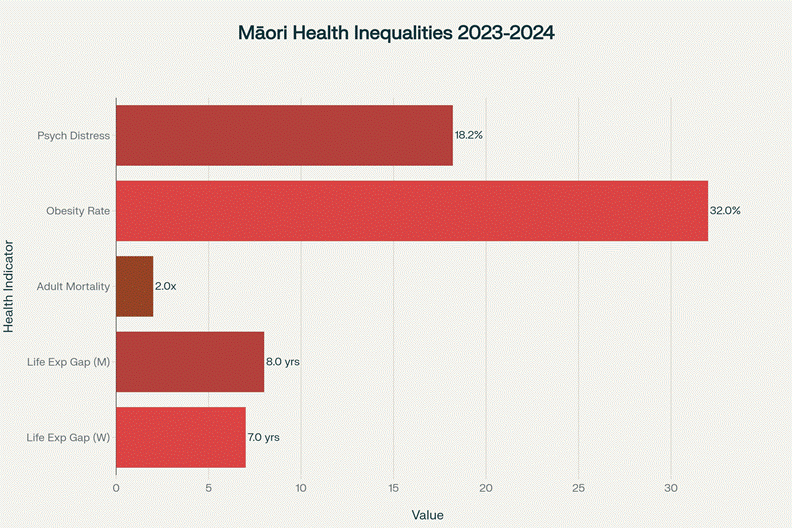
Māori experience severe health inequalities including 7-8 year lower life expectancy, double the adult mortality rate, and significantly higher rates of obesity and psychological distress compared to non-Māori.
Tikanga Violations: Manaakitanga, Kaitiakitanga, and Whanaungatanga Under Siege
Every tikanga Māori principle this government claims to respect, it systematically violates.
Manaakitanga (hospitality, caring for others) demands we look after the most vulnerable. Instead, the coalition means-tests 18- and 19-year-olds living with parents, clawing back $1.3 billion in social security over five years(RNZ, 2025f). The free school lunch program Ka Ora, Ka Ako—$240 million annually—is only funded through 2026, leaving thousands of tamariki without reliable nutrition(RNZ, 2025g).
Kaitiakitanga (guardianship, environmental stewardship) requires protecting resources for future generations. The coalition government reversed the thermal generation ban, halted vehicle fuel economy standards, and gutted climate policy—prioritizing polluters over planetary survival(Green Party, 2012). Māori, who disproportionately live in areas vulnerable to climate change, bear the brunt.
Whanaungatanga (relationships, kinship, collective responsibility) is obliterated by neoliberal individualism. Seymour’s Treaty Principles Bill—voted down 112-11 in April 2025—sought to redefine Treaty principles around individual rights and equality before the law, erasing collective Māori rights(1News, 2025c). Though defeated, Seymour vowed to “never give up on equal rights,” signaling future attacks(NZ Herald, 2025a).
Rangatiratanga (self-determination, sovereignty) is dismantled through the abolition of Māori ministries. Seymour’s 2023 “Alternative Budget” proposed eliminating the Ministry for Pacific Peoples, Ministry of Māori Development, Ministry for Ethnic Communities, Office for Crown-Māori Relations, Human Rights Commission, and the Māori Health Authority(Campbell, 2023). Most have been gutted or abolished.
Divide and Conquer: The Implosion of Te Pāti Māori
While the coalition advances its agenda with ruthless coordination, Te Pāti Māori devours itself. The timing is catastrophic. In October 2025, Eru Kapa-Kingi—former party vice-president and spokesperson for Toitū Te Tiriti, the movement that led 2024’s historic Hīkoi mō te Tiriti—publicly accused party leadership of operating a “dictatorship model”(RNZ, 2025h). He claimed decisions were made by a small group (president John Tamihere, co-leaders Rawiri Waititi and Debbie Ngarewa-Packer, and general manager), that the party failed to hold its annual general meeting and national council hui despite constitutional requirements, and that members who challenged the leadership were silenced(1News, 2025d). Toitū Te Tiriti formally cut ties with Te Pāti Māori, citing the need for independence and values misalignment(RNZ, 2025h).
The party’s National Council voted in October 2025 to suspend Mariameno Kapa-Kingi, MP for Te Tai Tokerau and Eru’s mother, over alleged breaches of the party constitution(RNZ, 2025i). Internal party documents leaked to members accused Kapa-Kingi of a $133,000 budget overspend—claims she denied, stating her budget was “adjusted” while supporting the late MP Takutai Tarsh Kemp(1News, 2025e). The same documents accused Eru of “threats of physical violence” and racist abuse toward Parliamentary security on Budget Day 2024—allegations Eru did not directly address but called attacks on his whānau’s integrity(RNZ, 2025j).
When Te Tai Tonga electorate—represented by MP Tākuta Ferris—launched a petition calling for Tamihere’s resignation, the president responded with a blistering Facebook post accusing Kapa-Kingi and Ferris of “greed, avarice, and entitlement” and urging them to “do the honourable thing” and quit Parliament(RNZ, 2025b). Tamihere alleged the pair sought to overthrow the co-leadership—Kapa-Kingi challenging Ngarewa-Packer, Ferris challenging Waititi(Lynch Media, 2025).
By early November 2025, the National Iwi Chairs Forum took the extraordinary step of requesting a hui with Te Pāti Māori leadership at Parliament. Ngāti Kahungunu chairman Bayden Barber stated bluntly: “We have a government that has attacked us from every front the last couple of years, so having the only kaupapa Māori party imploding is not helpful to the cause of iwi and aspirations that we’re trying to achieve for our people”(Smith, 2025). Barber described Tamihere’s public attacks on Kapa-Kingi and Ferris as “unhelpful and unnecessary”(Smith, 2025).
The fallout is devastating. Labour leader Chris Hipkins questioned whether Te Pāti Māori could “play a constructive role in Government,” noting “it is not clear how many Māori parties there are at the moment”(NZ Herald, 2025b). Coalition ministers gleefully exploited the chaos. Prime Minister Christopher Luxon called Te Pāti Māori “not a serious outfit,” and Finance Minister Nicola Willis said she’d “always known Te Pāti Māori was a mess, now New Zealanders get to see it”(RNZ, 2025k).
This is divide-and-conquer in action. While Māori leadership battles over process, egos, and parliamentary budgets, the coalition dismantles Māori institutions, defunds Māori services, and legislates away Treaty protections. The 2026 election looms, and whānau Māori face the prospect of either a dysfunctional Te Pāti Māori or no viable kaupapa Māori political option at all.
Hidden Connections: The Money, the Personnel, the Global Playbook
Five revelations expose the coordinated nature of this assault:
1. Vought-Seymour Parallel Roles: Russell Vought controls all U.S. federal spending through OMB; David Seymour, as Minister for Regulation and incoming Deputy Prime Minister (May 2025), oversees regulatory standards for all New Zealand legislation(Seymour, 2025). Both centralize authority to override agency/ministerial autonomy. Both justify their actions through ideological frameworks (Project 2025 / libertarian regulatory principles).
2. Schedule F = Regulatory Standards Bill: Vought’s Schedule F strips 50,000 federal workers of civil service protections, making them fireable for policy disagreements(White House, 2025). Seymour’s RSB subjects all legislation to libertarian principles that exclude Te Tiriti, effectively stripping Māori rights of constitutional protection. Both weaponize technocratic language (”policy-influencing positions” / “principles of responsible regulation”) to advance far-right agendas.
3. Atlas Network Funding Surge: The Taxpayers’ Union, New Zealand Initiative, and ACT Party all saw funding surges before the 2023 election that brought the coalition to power(Tapatahi, 2024). Atlas Network conferences train partner organizations on “winning the battle for hearts and minds” and influencing policymakers(ABC News, 2025). The global libertarian infrastructure operates across borders, sharing strategies, messaging, and funding.
4. Heritage Foundation’s International Reach: Heritage Foundation ranks as the top think tank globally for “Significant Impact on Public Policy” and produces policy recommendations that shaped Trump administrations—including 66% adoption rate in Trump’s first term(InfluenceWatch, 2025). Heritage’s international conferences and publications spread neoliberal ideology worldwide. New Zealand’s regulatory reforms draw directly from Heritage-influenced frameworks via Atlas Network partners.
5. Project 2025 Implementation Timeline: Trump’s executive orders align with 37+ specific Project 2025 recommendations, some with nearly verbatim language(Politico, 2025). The Regulatory Standards Bill passed its first reading May 2025, underwent select committee hearings with 99% opposition (156,882 of 159,000 submissions opposed)(Te Ao News, 2025b), yet the committee recommended it proceed. The bill’s second reading is scheduled before year’s end—parallel timing to Project 2025’s rapid rollout.
Rhetorical Weapons: Naming the Fallacies
Seymour and his allies deploy predictable rhetorical strategies:
False Equivalence: Claiming “equality before the law” means identical treatment ignores centuries of colonial dispossession and ongoing systemic racism. True equity requires targeted redress.
Strawman: Characterizing Treaty principles as “dividing people based on ethnicity” misrepresents collective indigenous rights as racial privilege(Seymour, 2024).
Appeal to Authority: Invoking “liberal democracy” and “rule of law” as universal goods erases their colonial origins and use as tools of indigenous dispossession.
Red Herring: Focusing on “regulatory quality” and “economic growth” distracts from the RSB’s central purpose: removing Treaty obligations from legislative consideration.
Dog Whistle: Seymour calling Māori-specific funding “racist” and demanding people stop “trying to racially profile us” uses colorblind rhetoric to undermine targeted equity measures(Te Ao News, 2025).
Ad Hominem: Coalition ministers attacking Te Pāti Māori’s “mess” and Labour questioning whether there’s “more than one Māori party” aim to delegitimize Māori political representation entirely, rather than engaging with policy substance.
Implications: Generational Harm and the 2026 Election
The stakes are existential. A UN report presented to the Committee on the Elimination of Racial Discrimination in November 2025 found the coalition government “actively and profoundly aggravating New Zealand’s constitutionally racist foundation in a way we have not seen for at least half a century”(RNZ, 2025l). The report documented multiple Te Tiriti breaches, with policies “negatively impacting Māori rights” and removing protections.
Treasury documents, released only after an Ombudsman intervention, warn the government would need to reduce health spending to 2008 levels by 2038 to meet fiscal goals—opening a $10.8 billion gap(NZ Herald, 2025c). Another Treasury paper states achieving spending targets will require the public to “accept a lower level of public services”(NZ Herald, 2025d). Māori, already experiencing severe health inequalities, will suffer disproportionately from further cuts.
If the Regulatory Standards Bill passes—expected before year’s end—it will remain law unless repealed. Labour, Greens, and Te Pāti Māori have pledged repeal, but that requires winning the 2026 election(Spinoff, 2025b). With Te Pāti Māori imploding, Labour polling behind National-ACT-NZ First, and no viable alternative kaupapa Māori party emerging, the coalition could secure another term. The RSB would then shape New Zealand legislation for years, systematically excluding Te Tiriti from policy development.
Seymour has already announced the government is seeking cuts to fund Budget 2026, hoping to “equal the savings” achieved in 2024-2025—potentially billions more in public sector reductions(NZ Herald, 2025e). Māori services, already devastated, face further demolition.
Call to Action: Restore Kotahitanga, Defeat the Pipeline
This is not a moment for despair. It’s a moment for strategic mobilization.

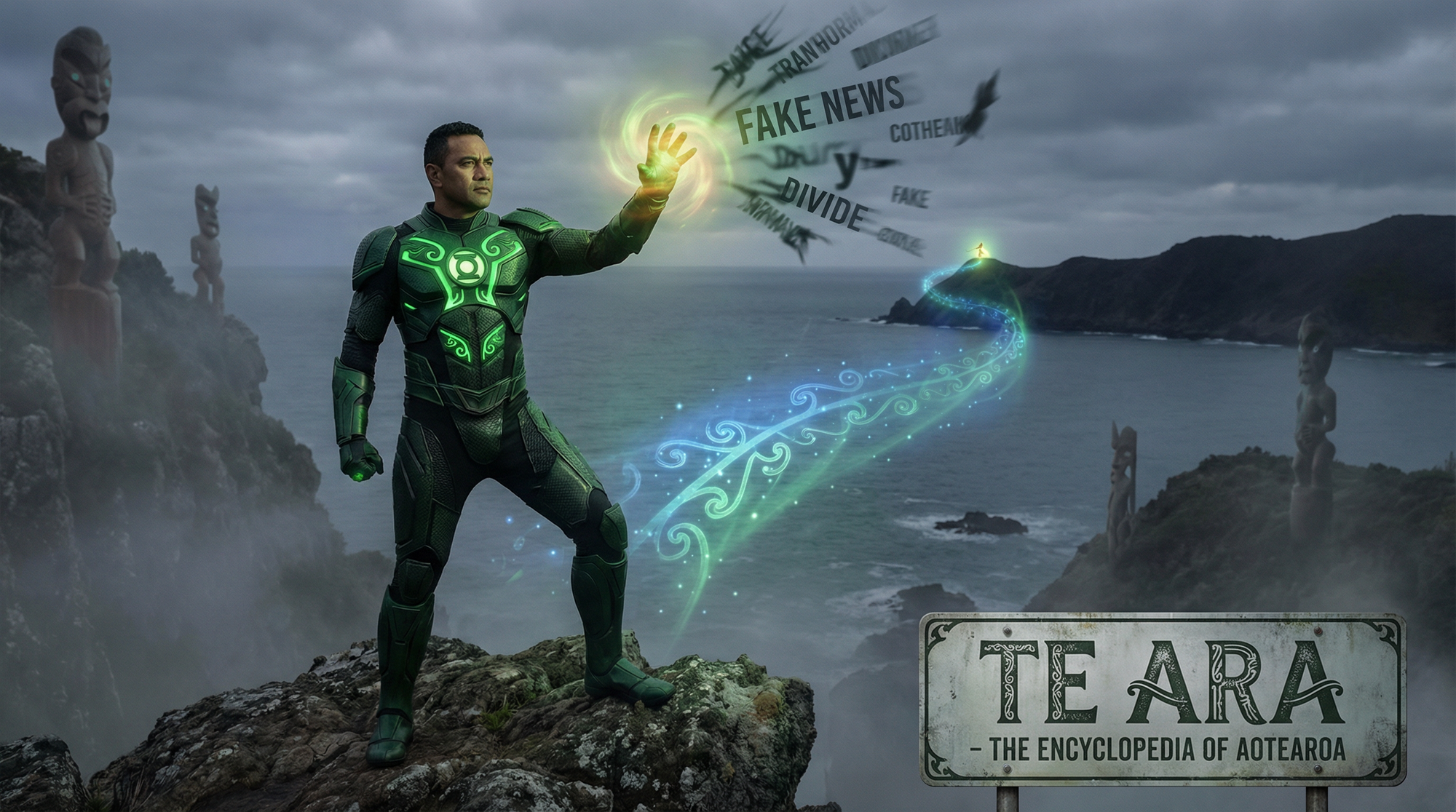
The Māori Green Lantern Fighting Misinformation And Disinformation From The Far Right
To Iwi Leaders: The National Iwi Chairs Forum’s intervention is critical, but it cannot stop at internal Te Pāti Māori reconciliation. Iwi must develop alternative political strategies—whether supporting Labour-Green coalitions, fielding independent Māori candidates, or forming new kaupapa Māori movements. The 2026 election cannot be fought without unified Māori political voice.
To Te Pāti Māori: Ego must yield to kaupapa. Tamihere, Waititi, Ngarewa-Packer, Kapa-Kingi, Ferris—every leader must subordinate personal grievances to collective survival. If tikanga has been violated, address it through proper constitutional processes, not public warfare. The coalition government benefits every day Māori fight each other instead of fighting them.
To Labour and the Greens: Commit publicly to RSB repeal as a Day One priority if you form government. Make Treaty partnership and Māori equity funding restoration central campaign planks. Chris Hipkins’ vacillation on working with Te Pāti Māori is strategic cowardice—Māori voters need to know you’ll fight for them, not just tolerate them.
To Whānau Māori: Demand accountability. Contact MPs, submit on legislation, join community organizing. The Toitū Te Tiriti Hīkoi of 2024 showed our collective power—tens of thousands marching can shift political terrain. Support Māori journalists exposing these networks. Fund Māori-led research documenting the harm.
To Media: Stop treating Atlas Network influence as “conspiracy theory.” It’s documented fact. Investigate think tank funding, conference attendance, policy drafting. Ask Seymour directly about his Canadian work with Atlas members. Demand Wilkinson disclose his RSB lobbying compensation. Follow the money.
To International Allies: Recognize New Zealand’s Treaty context as globally significant. Indigenous rights violations here embolden attacks elsewhere. Amplify Māori voices at UN forums, international human rights bodies, and academic networks. Isolate the Heritage Foundation’s global reach.
The battle lines are clear. On one side: Russell Vought’s authoritarian federal purge, Elon Musk’s DOGE wrecking ball, David Seymour’s libertarian demolition of Te Tiriti protections, Atlas Network’s global neoliberal infrastructure, and a coalition government systematically defunding Māori communities. On the other: tangata whenua fighting for survival, iwi leaders trying to salvage unity, grassroots movements demanding justice, and international human rights bodies documenting the violations.
We know who we are. We know what we fight for. The question is whether we can overcome internal division, resource scarcity, and elite power networks fast enough to win the 2026 election and reverse this generational harm.
Kotahitanga. Mana motuhake. Kia kaha, whānau.
Nō reira, tēnā koutou, tēnā koutou, tēnā tātou katoa.
If this mahi has been valuable to you and your whānau, and if you have the capacity and capability, please consider supporting this kaupapa through koha to HTDM: 03-1546-0415173-000.
Arohanui,
Ivor Jones | The Māori Green Lantern
Te Arawa | Ngāti Pikiao
themaorigreenlantern.substack.com
References
ASMS. (2025). Operational Health Budget 2025: An Analysis. Association of Salaried Medical Specialists.
ABC News Australia. (2025). How Atlas Network Amassed a Global Network of Free Market Think Tanks.
Campbell, J. (2023). John Campbell: Striving to Comprehend the Multi-Headed Creature That Is ACT. 1News.
Conversation, The. (2023). ACT’s Attempt at Regulatory Reform in NZ Has Failed 3 Times Already.
Conversation, The. (2025). Who Is Project 2025 Co-Author Russ Vought and What Is His Influence on Trump?
E-Tangata. (2025). The ‘Dangerous’ Bill Flying Under the Radar.
Foreign Policy. (2025). Why Russell Vought Is One of the Most Powerful People in Washington.
Green Party. (2012). The Future Is Here: Green Party Climate Policy.
InfluenceWatch. (2025). Heritage Foundation.
Jackson, W. (2025). Release: $1 Billion of Māori Funding Gone. New Zealand Labour Party.
Lynch Media, C. (2025). ‘White Feeding Frenzy’: Tamihere Accuses Māori Party MPs of Greed and Betrayal.
1News. (2025a, October 4). Trump Openly Embraces Project 2025, Uses Shutdown to Pursue Some of Its Goals.
1News. (2025b, May 23). Māori Leaders Give Disappointed Reaction to ‘Yeah-Nah’ Budget.
1News. (2025c, April 10). Treaty Principles Bill Voted Down Amid Fiery MP Debate.
1News. (2025d, October 2). ‘Dictatorship Model’: Te Pāti Māori Slammed by Hīkoi Leader.
1News. (2025e, October 20). ‘Not Ever Been Overspent’: Te Pāti Māori MP Hits Back at Allegations.
NZ Herald. (2024). Blues Lend Support to Free Health Checks as Poor Māori Health Stats Remain Below Pākehā.
NZ Herald. (2025a). Treaty Principles Bill: Second Reading of Controversial Policy.
NZ Herald. (2025b). Te Pāti Māori Internal Chaos: How the Party Has Collapsed Into Controversy.
NZ Herald. (2025c). Government Forced to Release Treasury Warning of Health and Education Spending Cuts.
NZ Herald. (2025d). Kiwis Must Accept Lower Quality Public Services to Hit Government Spending Goal, Treasury Warns.
NZ Herald. (2025e). Government Eyes More Spending Cuts as Patience with Economic Strategy Frays.
NZNO. (2024). Growing, But Not Fast Enough: Māori Nursing Workforce Insights.
Politico. (2025). 37 Ways Project 2025 Has Shown Up in Trump’s Executive Orders.
ProPublica. (2025). What You Should Know About Russ Vought, Trump’s Shadow President.
PSA. (2024a). Understanding Atlas: How a Right-Wing Network Is Building Global Influence.
PSA. (2024b). Cuts to Māori and Pasifika Health Services Will Harm Communities.
RNZ. (2025a). The Regulatory Standards Bill: What Is It, What Does It Propose and What’s Next?
RNZ. (2025b). ‘Greed, Avarice, and Entitlement’: Te Pāti Māori President Urges MPs to Quit.
RNZ. (2025c). Elon Musk Has Left the Trump Administration, White House Confirms.
RNZ. (2025d). The Regulatory Standards Bill: What Is It, What Does It Propose and What’s Next?
RNZ. (2025e). Oranga Tamariki Report Finds Stark Outcomes for Māori in State Care System.
RNZ. (2025f). Breaking It Down: Budget 2025 in Charts.
RNZ. (2025g). Budget 2025 at a Glance: The Big Changes, Winners and Losers.
RNZ. (2025h). Toitū Te Tiriti Cuts Ties with Te Pāti Māori.
RNZ. (2025i). Te Pāti Māori to Suspend MP Mariameno Kapa-Kingi - Reports.
RNZ. (2025j). What Are the Accusations Against Eru Kapa-Kingi?
RNZ. (2025k). Where to Next for Te Pāti Māori After Ructions.
RNZ. (2025l). ‘Absolutely Breaches of Te Tiriti o Waitangi’: UN-Bound Report Warns Racial Discrimination Is Worsening in NZ.
Seymour, D. (2024). The Treaty Principles Bill Has Been Released: Here’s What’s in It. RNZ.
Seymour, D. (2025). David Seymour Defends $18m Annual Cost of Regulatory Standards Bill. NZ Herald.
Smith, A. (2025). Iwi Leaders Step In as Te Pāti Māori Tensions Escalate. RNZ.
Spinoff, The. (2025a). NZ First Is Digging Its Own Grave by Backing the Regulatory Standards Bill.
Spinoff, The. (2025b). The Regulatory Standards Bill Is Back in Parliament: Here’s What You Need to Know.
Tapatahi. (2024). ATLAS: How a Right-Wing Global Network Is Building Influence in Aotearoa.
Te Ao News. (2025a). Government Denies Labour’s $750M Māori Funding Cut Claims.
Te Ao News. (2025b). Select Committee Backs Contentious Regulatory Standards Bill Despite Overwhelming Opposition.
Te Whatu Ora. (2023). Health Status Report 2023.
Te Whatu Ora. (2024). Health Report: ‘Significant Differences’ Persist for Māori, Pasifika. 1News.
Trotter, C. (2024). Shrugging-Off The Atlas Network. The Integrity Institute.
Waikato University. (2024). The Treaty Principles Bill Is Already Straining Social Cohesion; A Referendum Could Be Worse.
White House. (2025). Fact Sheet: President Donald J. Trump Creates New Federal Employee Category to Enhance Accountability.
Wikipedia. (2025). 2025 United States Federal Mass Layoffs.