"The NZCPR’s Deception About Māori Rights and Democratic Accountability” - 17 January 2026
Coastal Control, Colonial Continuity

Kia ora, Whānau.
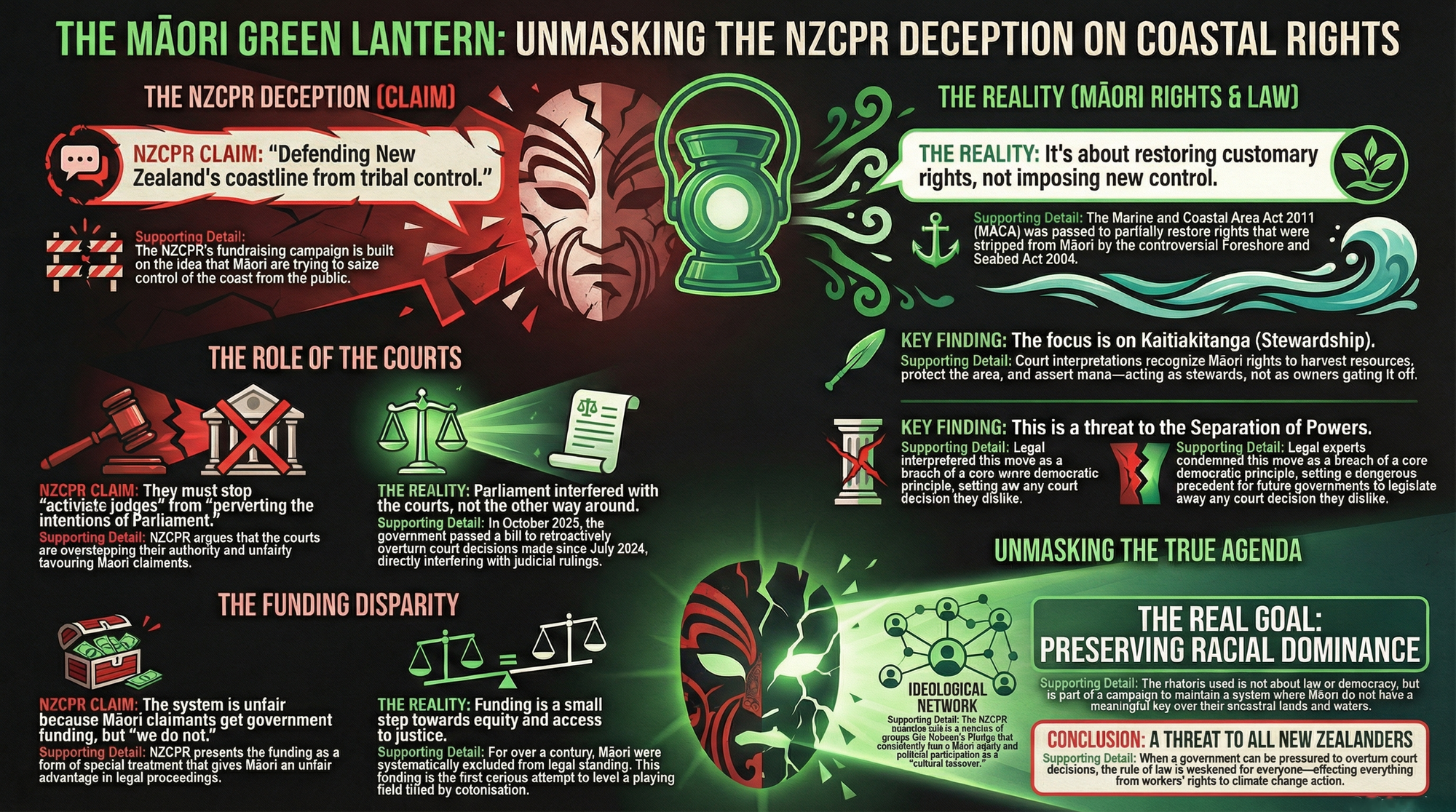
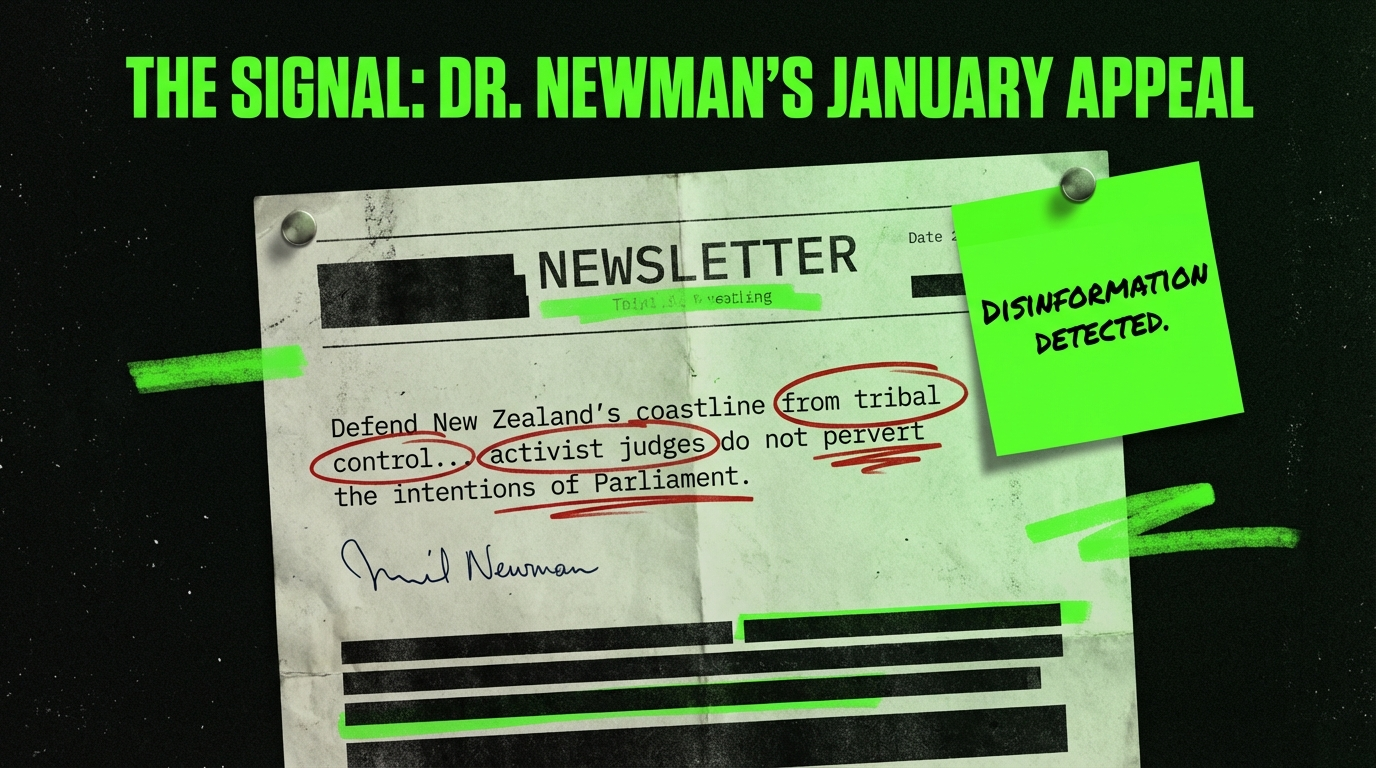
As Dr Muriel Newman sends out her January 2026 appeal for donations to the New Zealand Centre for Political Research, asking readers if they believe the organisation should “continue,” there is an uncomfortable truth she is avoiding. The NZCPR is not fighting to defend “New Zealand’s coastline from tribal control,” as she claims—it is fighting to preserve colonial control of lands that Māori have occupied since long before the British arrived.
Background: Understanding the Real Picture
The Marine and Coastal Area (Takutai Moana) Act 2011 was born from failure and broken promises. In 2004, Labour’s Foreshore and Seabed Act did something extraordinary in modern law—it stripped Māori of customary rights that they had exercised for centuries. This wasn’t an accident. It was deliberate policy, and it sparked the first major hikoi to Parliament in living memory. By 2011, National recognised the injustice and passed MACA to restore those rights—at least partly.
The key word is “restore.” This was not about giving Māori something new. This was about acknowledging what Māori had always held in accordance with tikanga, and what colonisation had tried to steal.
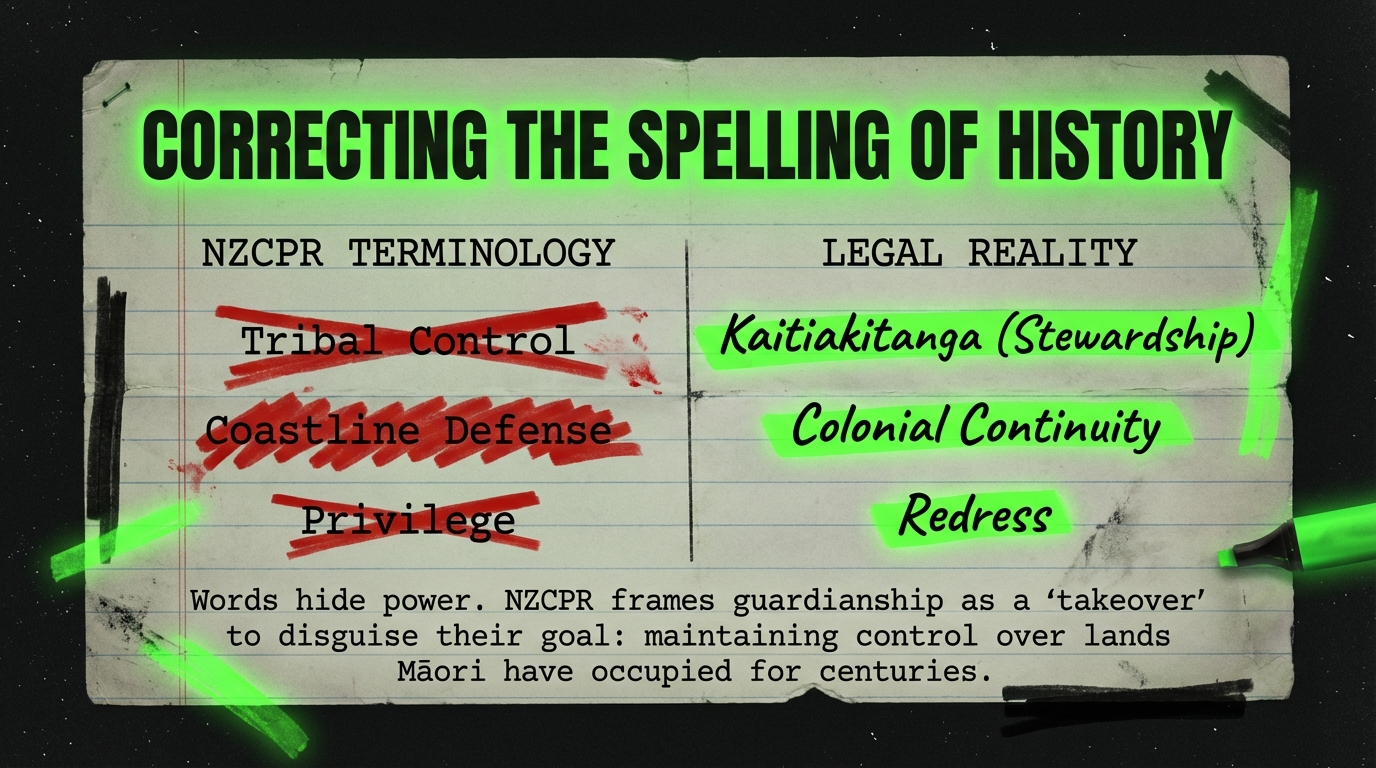
Understanding Exclusivity and Control: A Lesson in How Words Hide Power
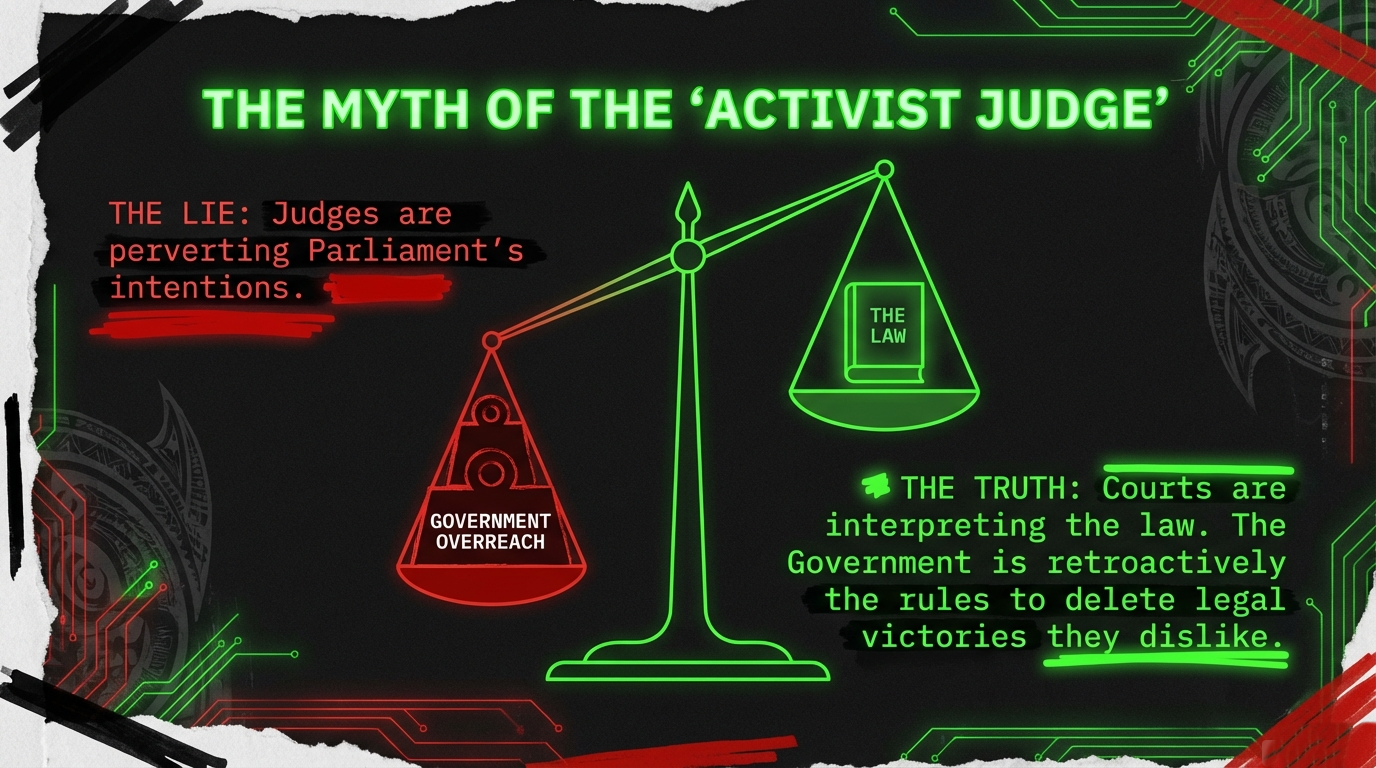
Newman’s newsletter frames her group’s court involvement as preventing “activists judges” from “perverting the intentions of Parliament.”
But here’s what has actually happened in recent years.
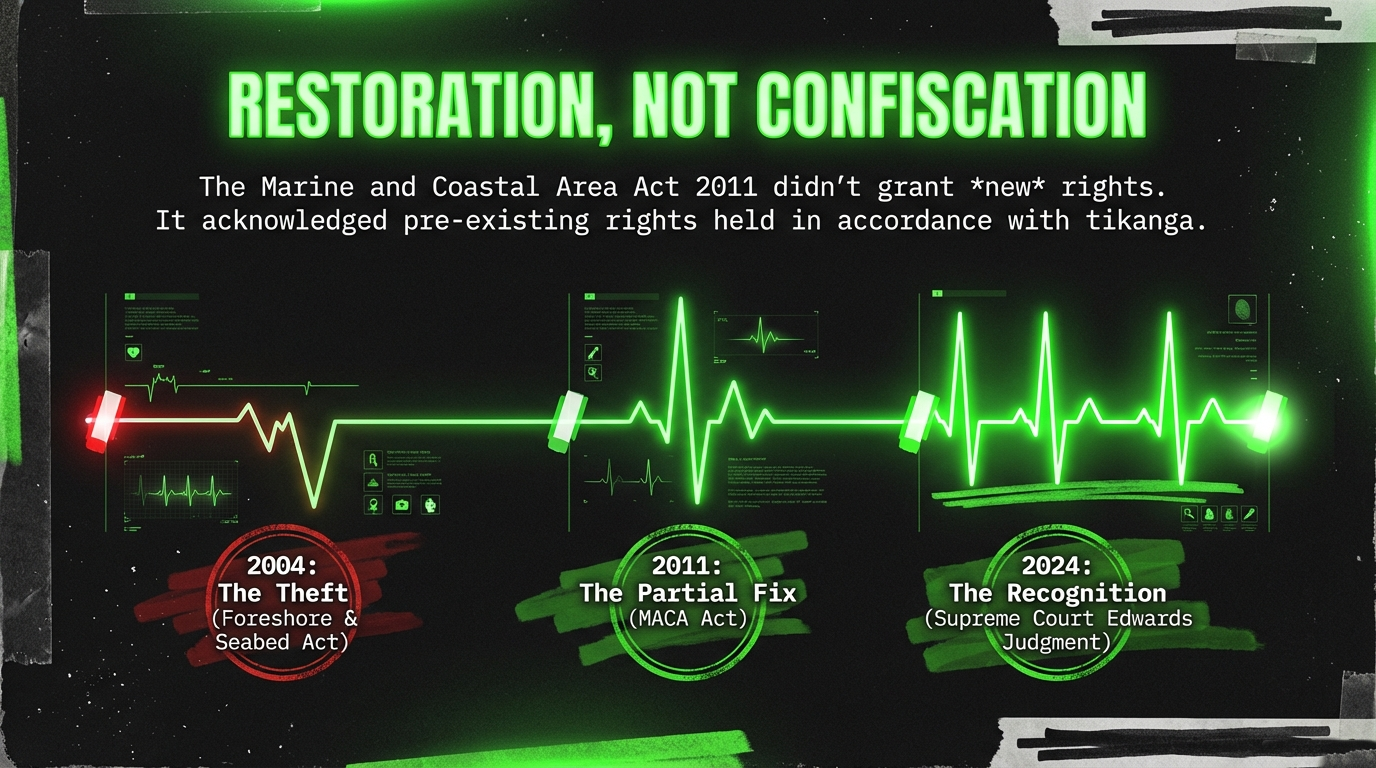
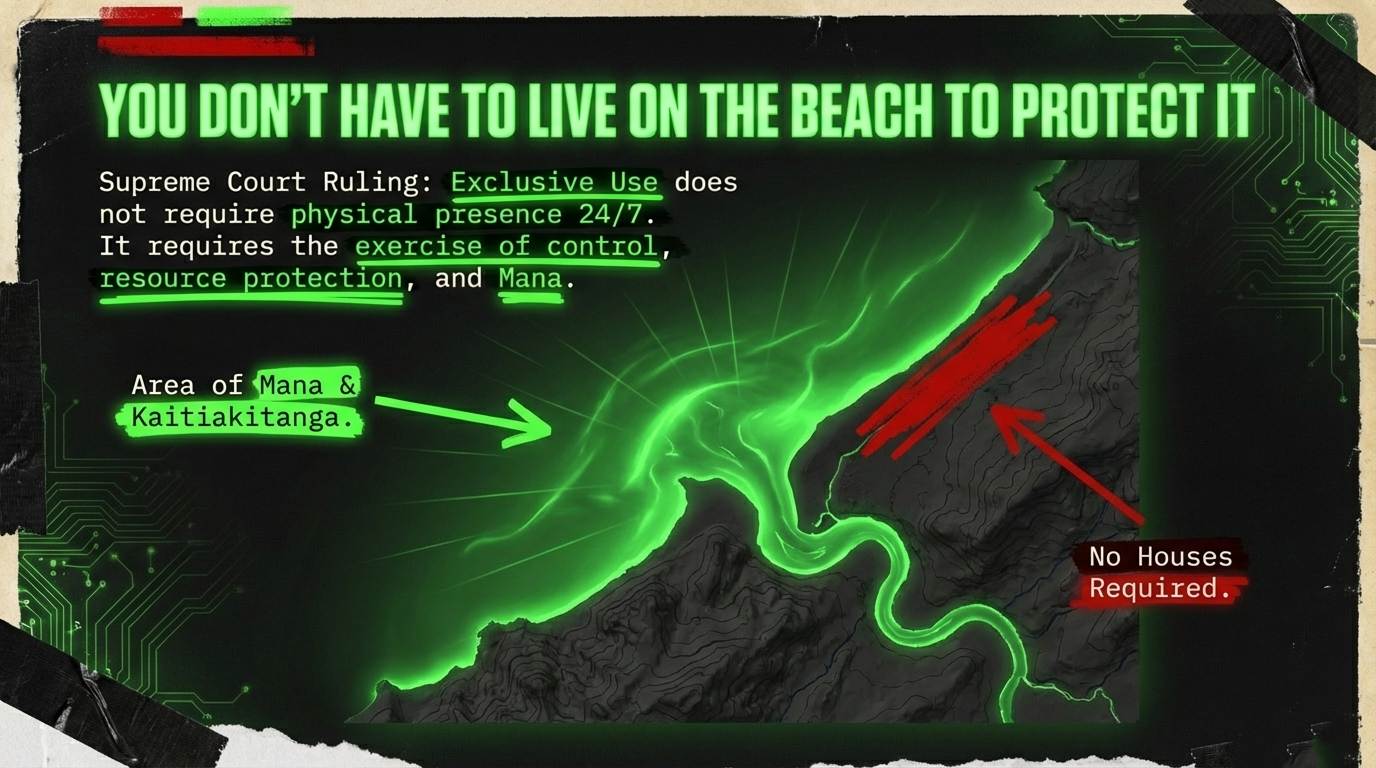
Between 2023 and 2024, courts began to interpret MACA in ways that actually recognised the reality of how Māori have always related to the coast—not as owners gating it off, but as kaitiaki, stewards with rights to harvest resources, protect them, and assert mana in relation to the area. The Supreme Court in its December 2024 Edwards judgment took a more restrictive view, but even that judgment acknowledged that Māori could demonstrate exclusive use and occupation even without physically occupying the area, if they made extensive use of the space and exercised control over it. That is what tino rangatiratanga looks like in the real world.
The Issue Newman Refuses to Address Honestly
What Newman is really upset about is not the law itself
—it’s that Māori got a voice in court proceedings at all.
She wants readers to believe that Māori claimants receive government funding but other groups do not, and therefore the playing field is unfair. But this misses the context entirely.
For over a century, Māori were excluded from property ownership, from vote-counting, from legal standing in the courts. The funding available to Māori under MACA represents the first serious attempt to level a playing field that colonisation built with extreme slope. If Newman believed in democracy, she would support equal access to justice. Instead, she frames it as special treatment—a favourite move of the privileged when equity is finally attempted.

Moreover, when you look at the actual claims being made, the Supreme Court’s August 2025 judgment found that riverbeds can be included in customary marine title orders, if other legal tests are met. This is a court working with the Act as Parliament intended, not against it.
The Real Story: Parliamentary Interference and Contempt for Courts
Here is what reveals NZCPR’s true agenda:
in October 2025, the National-led government passed the Marine and Coastal Area Amendment Bill to retroactively overturn court decisions that were already made. Think about that for a moment. The Crown won its appeal in the Supreme Court in December 2024. The legal battle was settled. Yet the Government proceeded to legislate anyway, specifically to void decisions made between July 2024 and the bill’s commencement.
Newman and NZCPR pushed for exactly this outcome. Why? Because they do not trust courts. They do not trust democracy.
What they trust is control—maintaining the system where Māori do not have meaningful say over the lands and waters they have occupied and protected through centuries.
Legal experts and Māori advocates condemned this as a breach of the honour of the Crown, a violation of the separation of powers, and a betrayal of the Treaty of Waitangi. Te Pāti Māori, Labour, and the Greens have already promised to repeal it.
What NZCPR Will Not Admit About Itself
Newman’s newsletter asks readers:
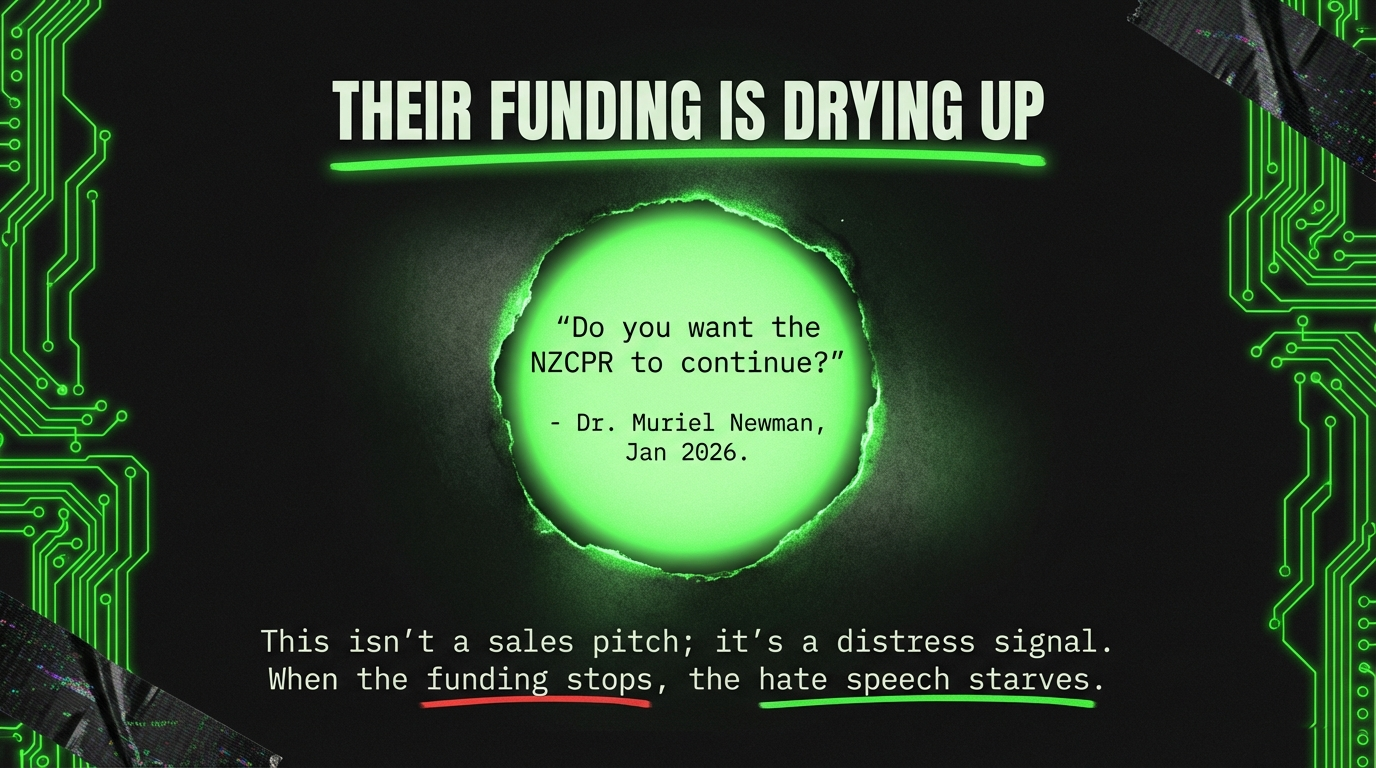
“Does that NZCPR campaign to defend New Zealand’s coastline from tribal control still matter enough for our readers to back us?”
This language—”tribal control,” “activists judges,” references to preventing a “cultural takeover”—reveals the ideology underneath.
It is not about law or policy. It is about preserving racial dominance.
The NZCPR does not exist in isolation. It operates within a network that includes Hobson’s Pledge, founded by Don Brash, a former ACT party leader who has built his entire political brand on opposing Māori advancement. These groups consistently frame equity as theft, tikanga as illegitimate, and Māori political participation as a takeover. They use neutral language about democracy and law to hide what is fundamentally a campaign to maintain white supremacy over Māori rights.
The Neoliberal Cover Story: Privatisation Disguised as Democracy
Newman’s fundraising appeal emphasises that NZCPR receives “no government funding, no corporate sponsors, no wealthy benefactors.” Yet the group operates year after year, producing newsletters, running court cases, and mounting political campaigns. Where does the money really come from?
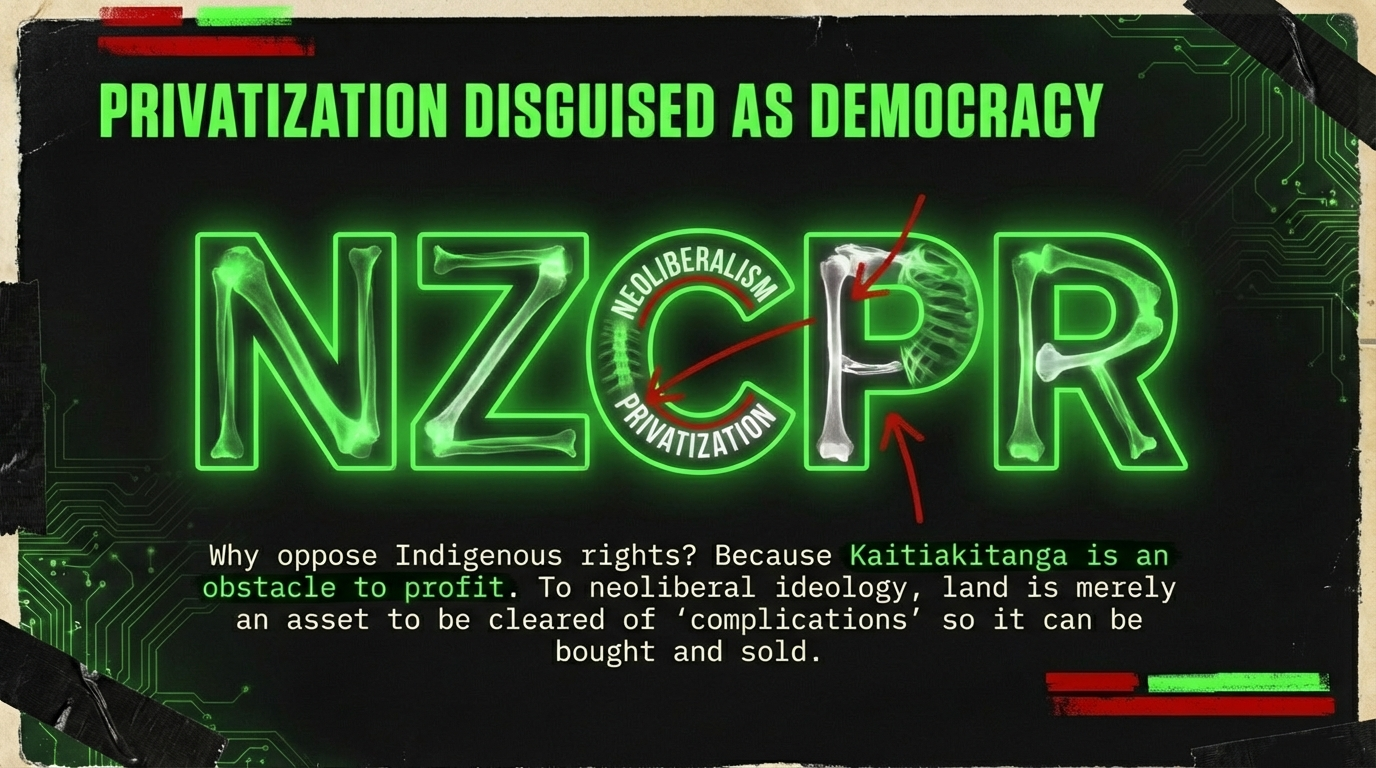
More importantly, why should readers trust that independence narrative when academic research has documented how neoliberal ideology—privatisation, deregulation, individual responsibility rhetoric—systematically opposes Indigenous protections? NZCPR’s opposition to co-governance and customary rights is not separate from market fundamentalism. It is part of the same ecosystem. Privatise the state’s assets. Cut regulation. Opposition to Māori rights often means clearing the land of “complications”—like Indigenous claims—to make it easier to buy and sell.
The Implications: Democracy Under Threat
What happens when a small group of activists can successfully pressure Parliament to overturn court decisions? Democracy weakens. Rule of law suffers. The separation of powers—one of the foundational principles of Westminster democracy—collapses.
The Supreme Court’s jurisdictional independence is now directly threatened by Parliament using legislation to undo established rulings. If this precedent holds, future Governments will feel empowered to legislate away any court decision they dislike—whether about Māori rights, climate change, workers’ rights, or anything else.
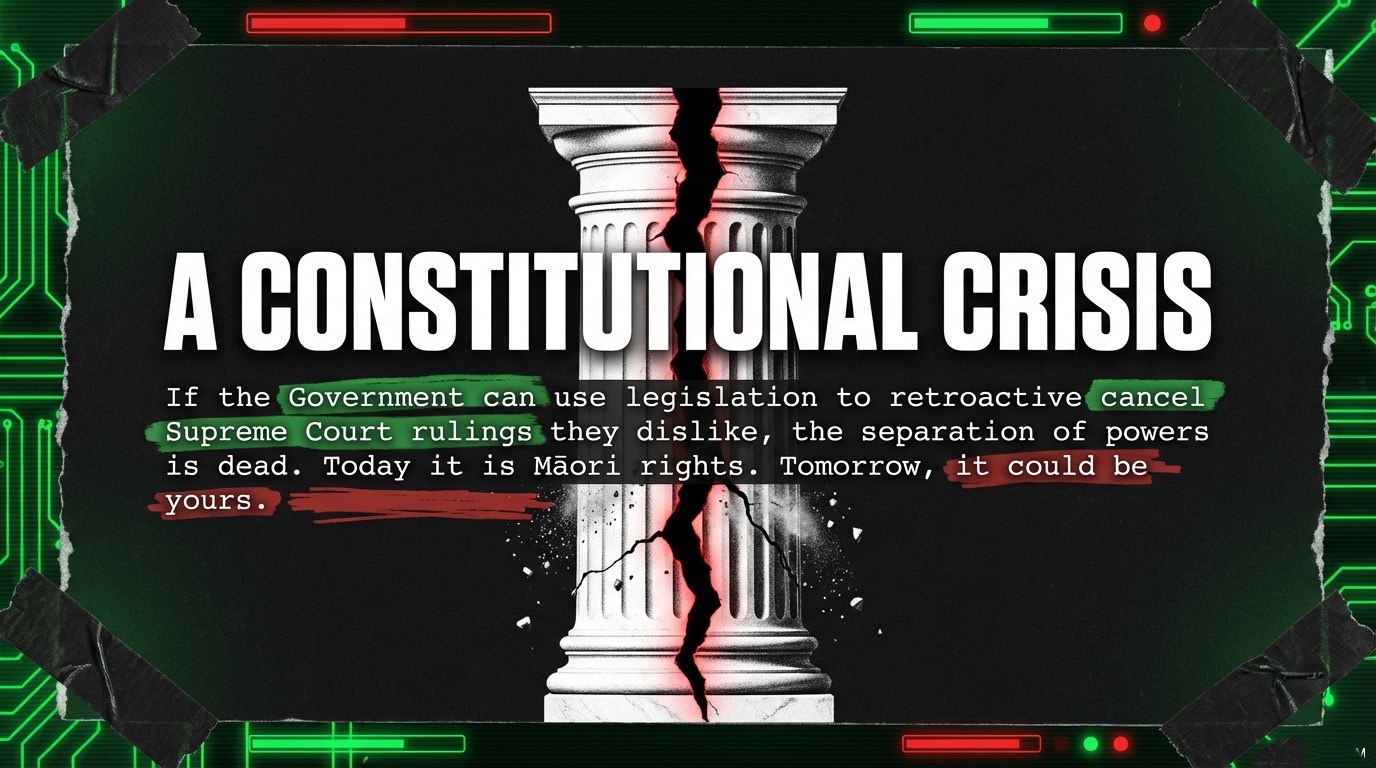
For Māori specifically, the message is clear: the system will allow your rights in theory, but will strip them away in practice if you become too successful at asserting them.
The NZCPR’s Moment of Transparency
Dr Muriel Newman is right about one thing in her newsletter: the question is whether NZCPR should continue. But the real question New Zealanders should be asking is whether they want to support an organisation that frames Māori rights as a crisis to be managed, that lobbied to override courts, and that wraps racial dominance in the language of democracy and fiscal restraint.
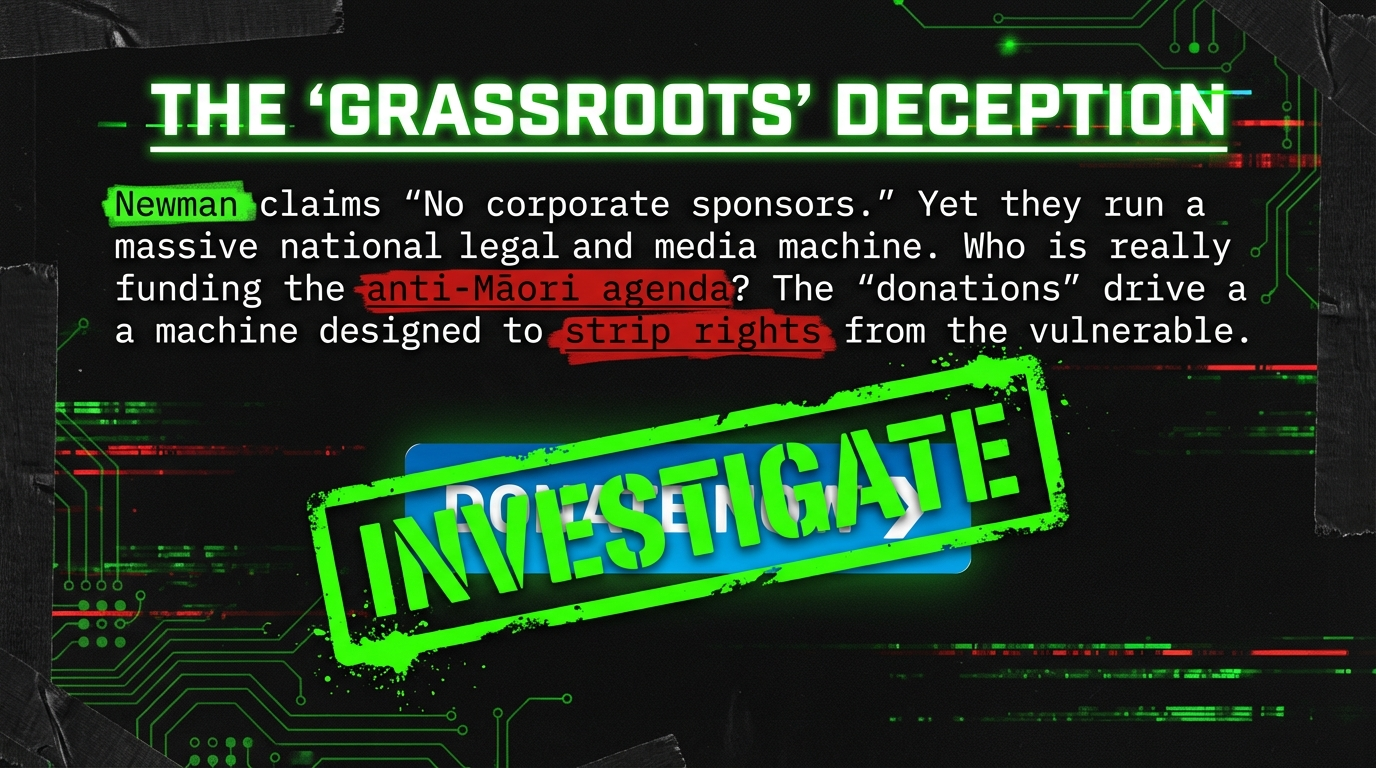
The NZCPR’s financial shortfall is not a problem to be solved. It is a signal. When a significant number of New Zealanders decide that they no longer want to fund campaigns against Māori rights, that is democracy working. The fact that Newman has to ask readers explicitly whether they still believe the cause is worth backing suggests that even her base is losing conviction.
Koha Consideration
To those who have read this far and found it meaningful, I ask humbly:

if this work matters to you, would you consider supporting it? These are tough economic times for whānau, so please contribute only if you have capacity to do so. Your koha keeps critical analysis alive. Bank details are available at HTDM: 03-1546-0415173-000.
Kia kaha, Aotearoa.

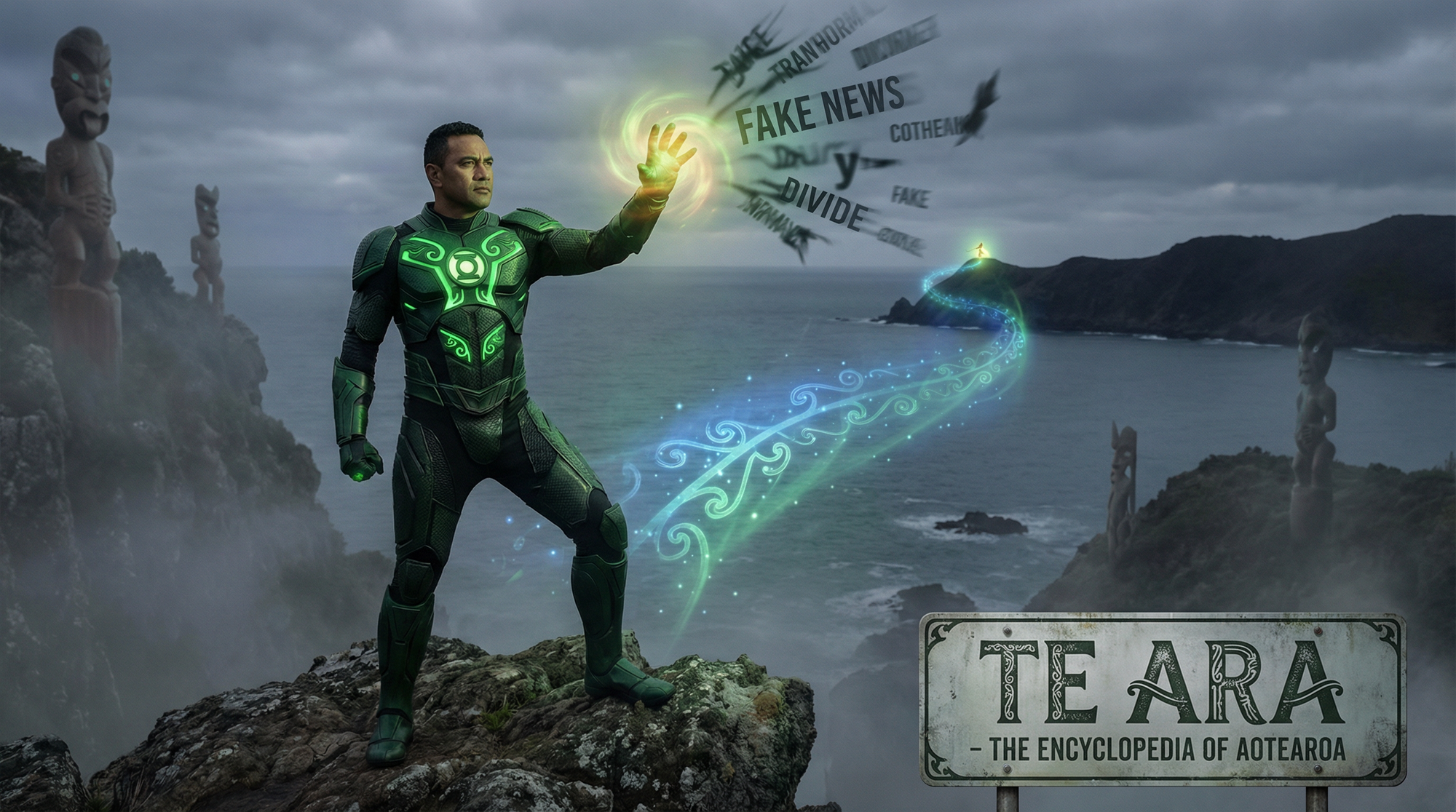
Ivor Jones The Māori Green Lantern Fighting Misinformation And Disinformation From The Far Right