“The Pavlova Paradise Lie: An Open Letter to Damien Grant on His Fantasy of the Quarter-Acre Dream” - 25 January 2026
Dear Damien,
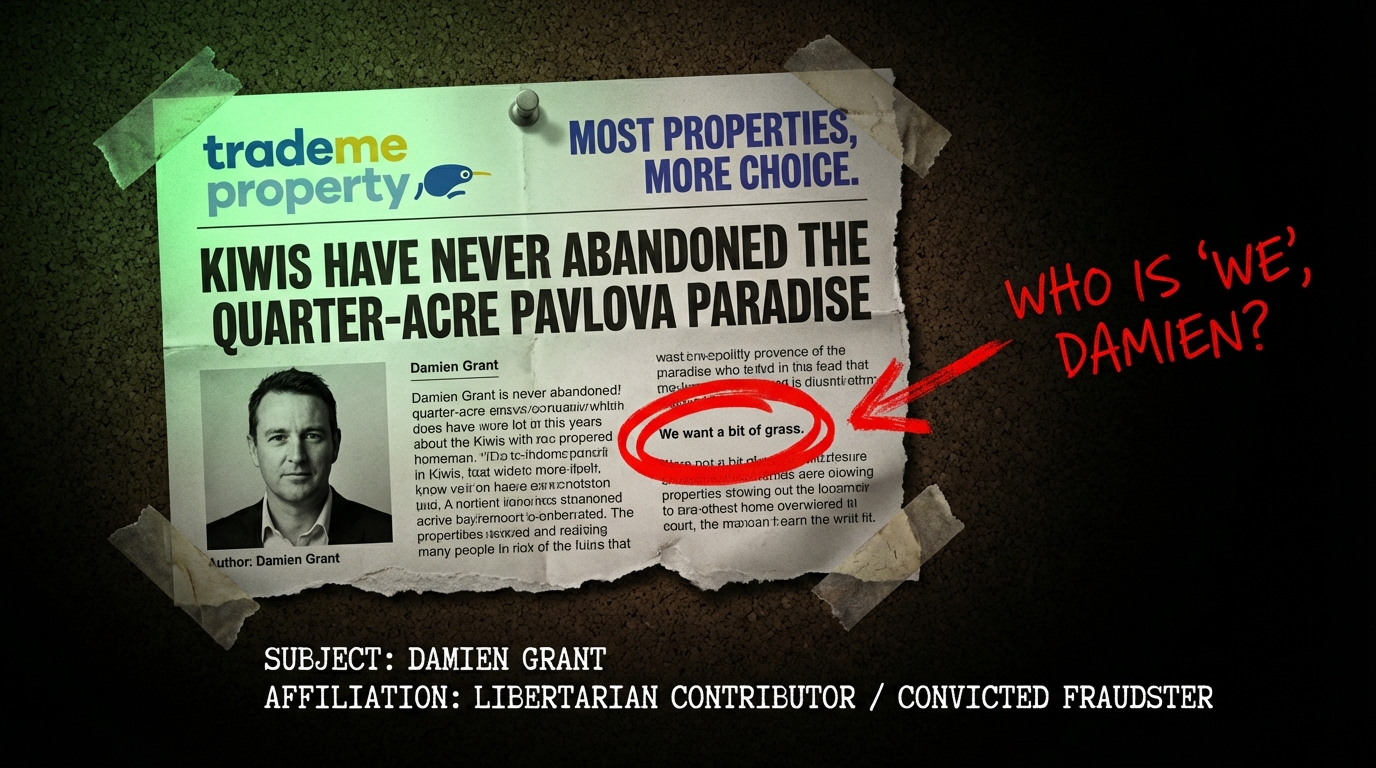
When I read your latest piece for Stuff, “Kiwis have never abandoned the quarter-acre pavlova paradise,” I had to pause. Not because it’s insightful analysis—it isn’t—but because it represents the most insidious form of colonial gaslighting I’ve seen from you yet. And that’s saying something, given your track record of “sophisticated racism” dressed as libertarian philosophy.
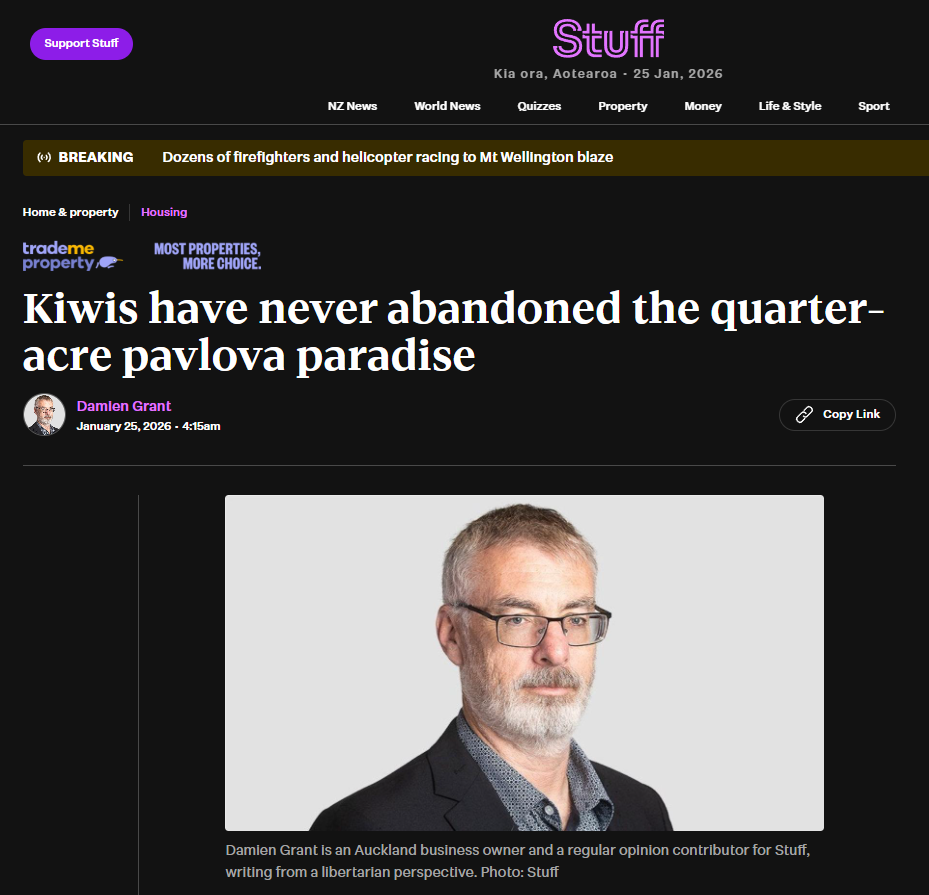
You write:
“Kiwis have never abandoned the quarter-acre pavlova paradise. We want a bit of grass and more than gib between our living room and the neighbour’s bedroom.”
Who is “we,” Damien?
Because the data shows that “we” excludes the vast majority of whānau Māori, who have been systematically dispossessed of even the dream of homeownership—let alone a quarter-acre section. Your libertarian fantasy erases a catastrophic housing crisis that has stripped Māori of housing security at a rate unmatched anywhere in the OECD.
This isn’t nostalgia, Damien. This is propaganda in service of plunder—and coming from a convicted fraudster who profits from business liquidations, it’s particularly grotesque.
The Numbers You Didn’t Mention—The Story You Deliberately Ignored
While you wax poetic about Aucklanders willing to “drive for over an hour to work” to achieve their quarter-acre dream, here’s what you conveniently omitted:
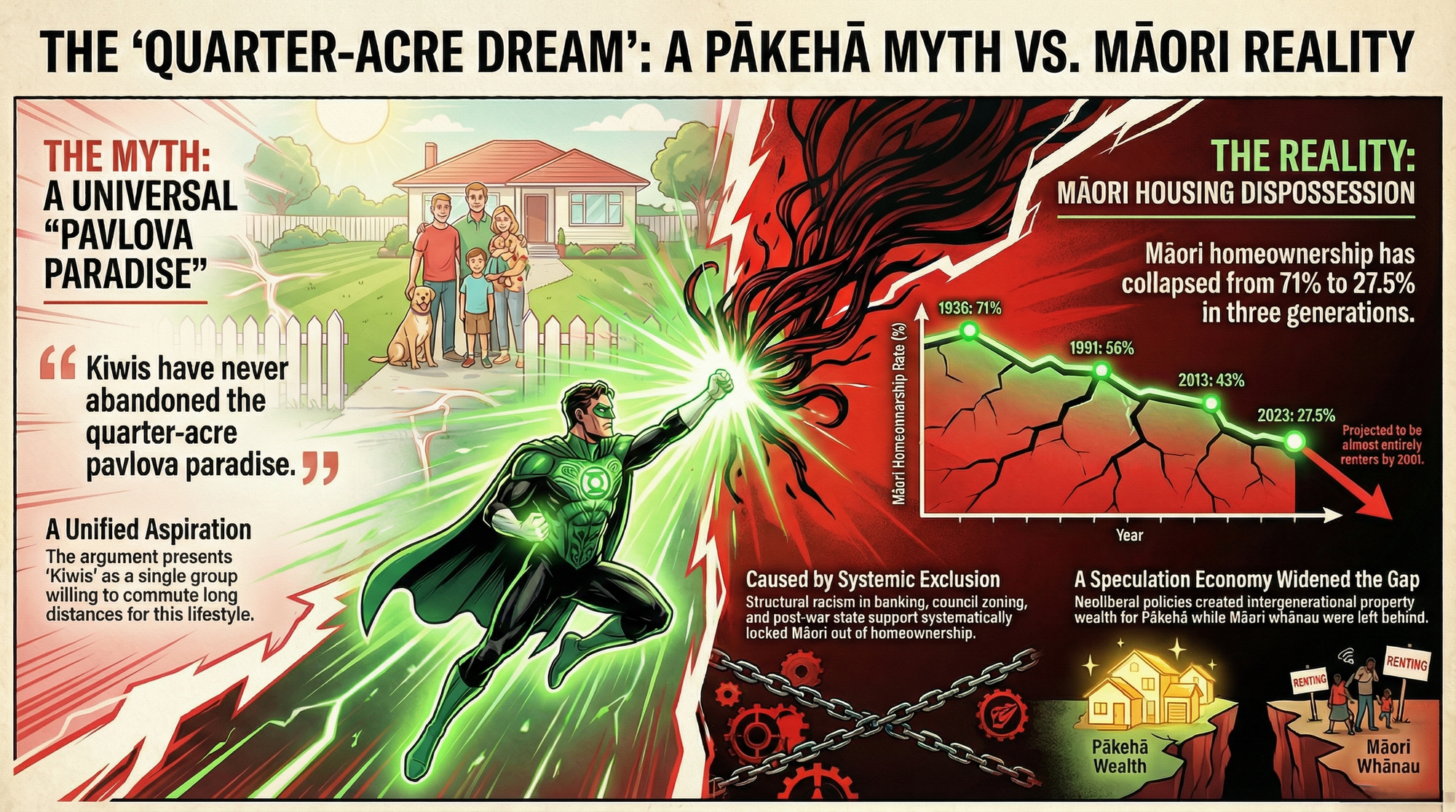
In 1936, 71% of Māori lived in dwellings that whānau owned. By 1991, ownership had fallen to 56%. By 2013, it crashed to 43%. The latest Census data shows that just 27.5% of Māori owned or partly owned their own house in 2023.
Let that sink in, Damien:
in three generations, Māori have gone from 71% homeownership to 27.5%. If this trend continues at the rate documented since 1991, Māori will be almost entirely renters by 2061.
This is not a “housing challenge.” This is the systematic liquidation of Māori housing security—a social and economic disaster of constitutional dimensions.
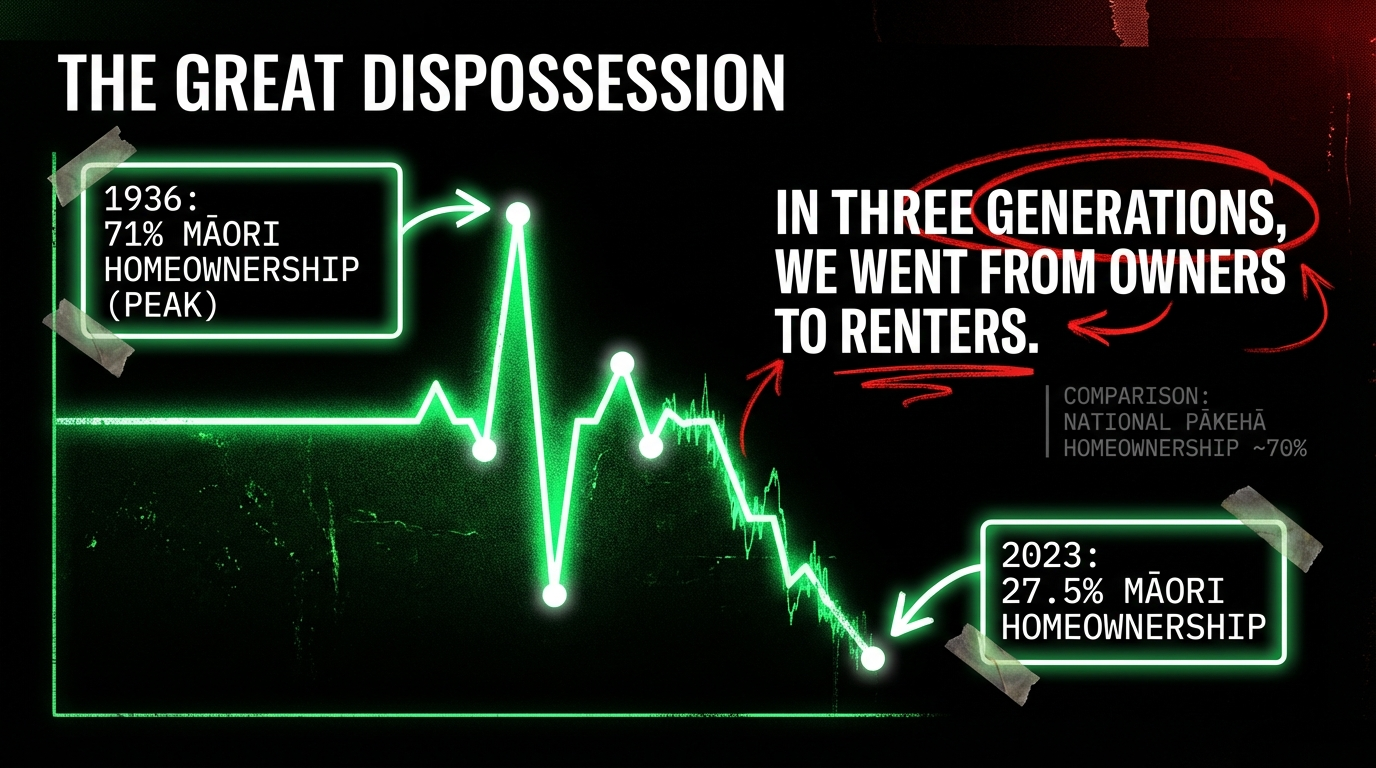
Meanwhile, the national Pākehā homeownership rate sits at 70%. The gap isn’t accidental.
It’s structural racism embedded in every institution that touches housing:
banks, councils, valuers, the tax system, and the property speculation economy that successive governments—and libertarians like you—have actively enabled.
But you didn’t mention any of this, did you, Damien? Because acknowledging it would undermine your entire libertarian project.
The “We” That Excludes Whānau Māori
You write as though “Kiwis” are a unified body with shared aspirations. This is textbook erasure.
What the data actually shows is that Pākehā property owners have clung to the quarter-acre ideal while Māori have been systematically locked out of the housing market entirely.
When you survey people about whether they want a backyard, you’re sampling those who can even imagine owning property. For the majority of Māori whānau, that question is academic—they’re fighting for stable rental housing, let alone dreaming of ownership.
The “quarter-acre dream” isn’t aspirational for Māori, Damien. It’s a reminder of what was stolen and what remains out of reach—a theft enabled by the same neoliberal policies you champion through your role with the Taxpayers’ Union and your alignment with the Atlas Network.
1936-1991: The Great Dispossession You Won’t Acknowledge
The turning point was 1936. That year, 71% of Māori owned their homes—the highest rate ever recorded. Why? Because Māori were still predominantly rural, living on ancestral whenua in homes they built themselves, however dilapidated.
But from that peak, a coordinated assault began—an assault you benefit from as principal of Waterstone Insolvency, profiting from the business failures created by the very economic system you defend in print.
The urbanization trap:
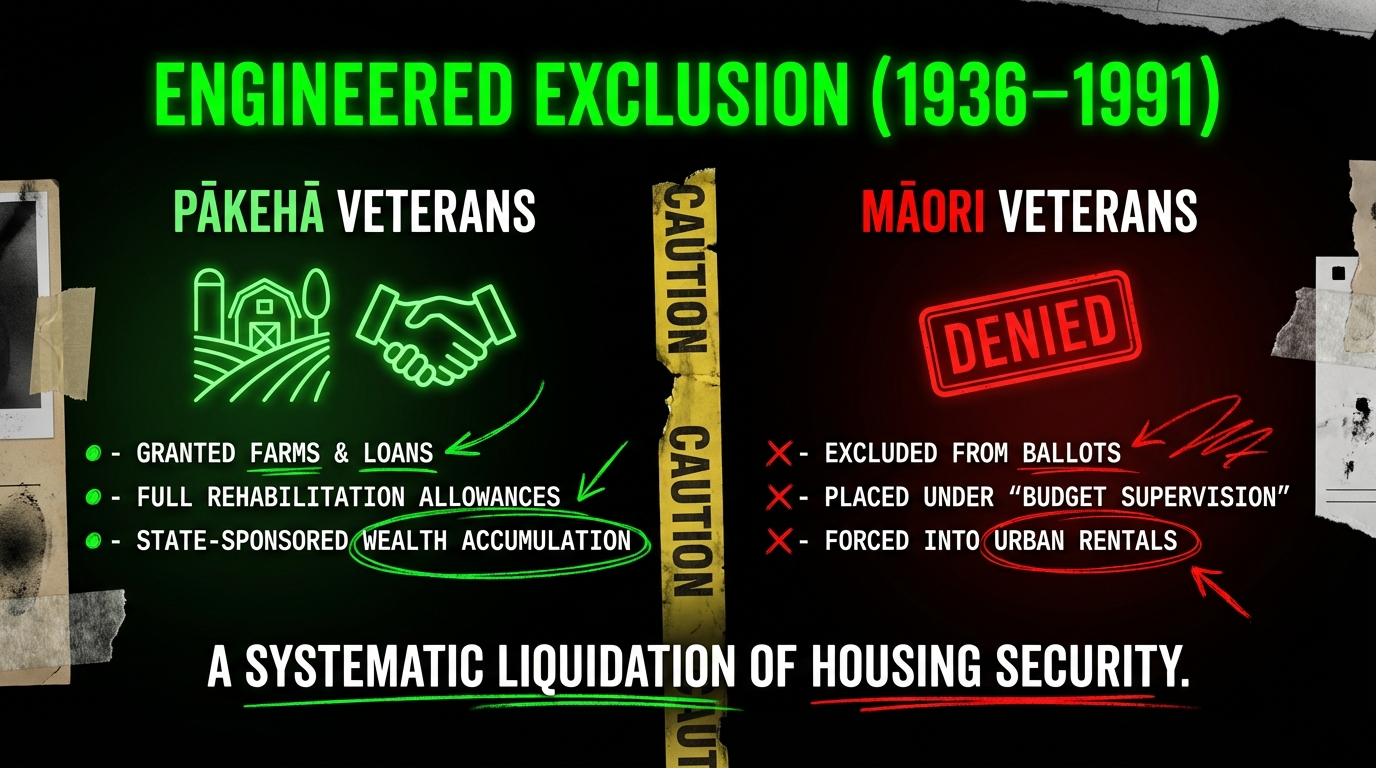
Post-1945, most Māori moved to towns and cities for waged work, forced off rural land by lack of economic opportunity. In cities, Māori faced lower-than-average incomes, making homeownership unaffordable. The benevolent state that handed out farms and mortgages to returned Pākehā servicemen like they were lollies systematically excluded Māori veterans from the same opportunities.
Meanwhile, Pākehā servicemen with zero money and zero business experience got farms, living allowances, and budget supervision.
Iwi were expected to use the little land still in their ownership to cheaply settle Māori servicemen—effectively privatizing the cost of Māori rehabilitation while the state bankrolled Pākehā wealth accumulation.
This wasn’t incompetence, Damien. This was deliberate colonial architecture—the same architecture you defend every time you write about “individual liberty” and “free markets.”
1991–2026: Neoliberal Plunder—Your Plunder
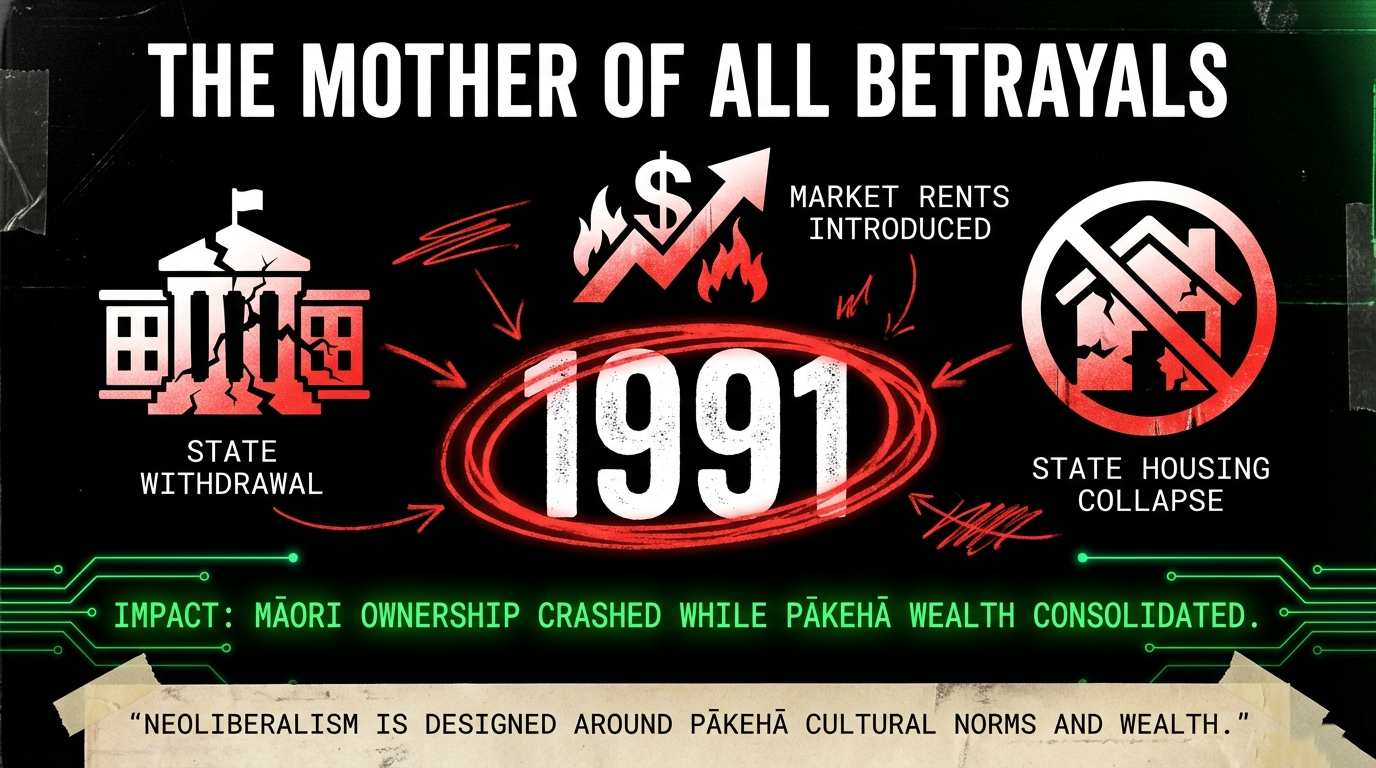
The catastrophic acceleration began in 1991—the year of the “Mother of All Budgets”. The state withdrew from the housing market. State housing construction collapsed. Market rents soared. Unemployment spiked, hitting Māori hardest.
The graph is damning: from 1991 to 2013, Māori homeownership declined 13%. During that same period, Pākehā homeownership also fell—but at half the rate.

Why the disparity, Damien?
Because the neoliberal housing system is designed around Pākehā cultural norms, Pākehā incomes, and Pākehā access to intergenerational wealth. As Māori urbanist Jade Kake states:
The mechanisms of exclusion are well-documented:
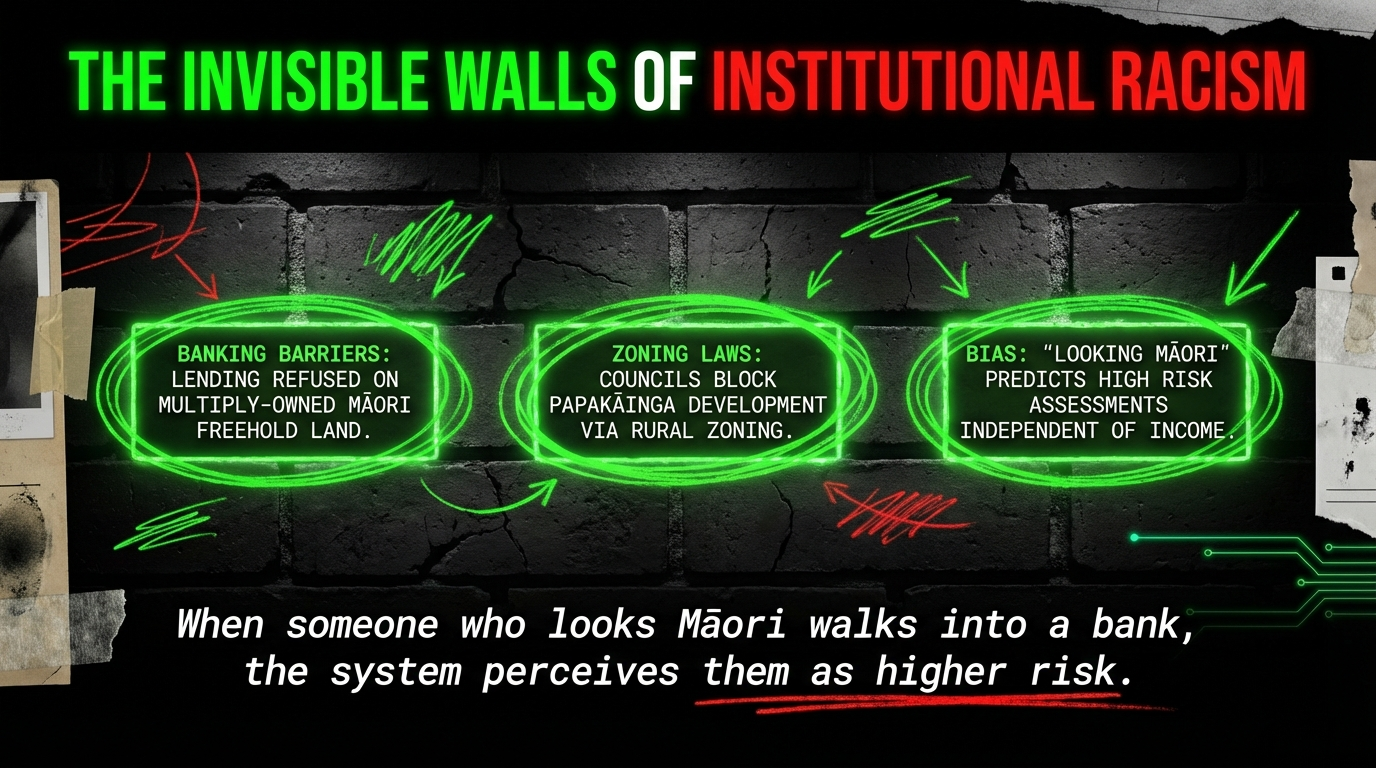
- Banks systematically refuse to lend on Māori freehold land, which is multiply-owned and inalienable. Even when Kiwibank introduced the Kāinga Whenua loan in 2010 to address this, uptake has been minimal—just 103 loans and 164 houses built by 2024, worth $26.9 million total. That’s pathetic.
- Councils zone Māori land as “rural,” blocking housing development even when the land is near towns. Resource consent processes are costly and hostile.
- Rates arrears accumulate on Māori land—29% of all rates arrears despite Māori land accounting for only 0.3% of all rates—creating a financial barrier that discourages whānau from building.
- Looking Māori predicts decreased homeownership. Research published in 2015 found that “looking Māori” alone—independent of income, education, or employment—predicted lower rates of homeownership, suggesting institutional racism in home lending based purely on perceived appearance.
This isn’t market failure, Damien. This is market design—and it’s the market you profit from every single day.
The Property Speculation Economy: Your Bread and Butter
While Māori homeownership collapsed, successive governments—egged on by libertarians like you—actively encouraged property speculation as an economic strategy.
The removal of land from the Consumer Price Index allowed the Reserve Bank to ignore house price inflation. The absence of capital gains tax gave property speculation a tax-free ride. Negative gearing allowed landlords to offset rental losses against other income. The bright-line test—introduced as a weak bandaid—was then rolled back by the current coalition government from 10 years to 2 years, explicitly framed as removing an “effective capital gains tax”.
Housing Minister Nicola Willis stated the goal plainly:
“meaningful income tax reduction” for property investors.
Meanwhile, interest deductibility for rental properties—removed by Labour to cool speculation—was fully restored by the coalition. Te Pāti Māori warned landlords: “enjoy the benefits while you can”.
The result? Property has become the primary mechanism of wealth accumulation and intergenerational transfer in New Zealand. Over the next 25 years, between $1 trillion and $1.6 trillion in assets—mostly property—will transfer from baby boomers to their descendants.
But Māori whānau, locked out of homeownership, will receive nothing.
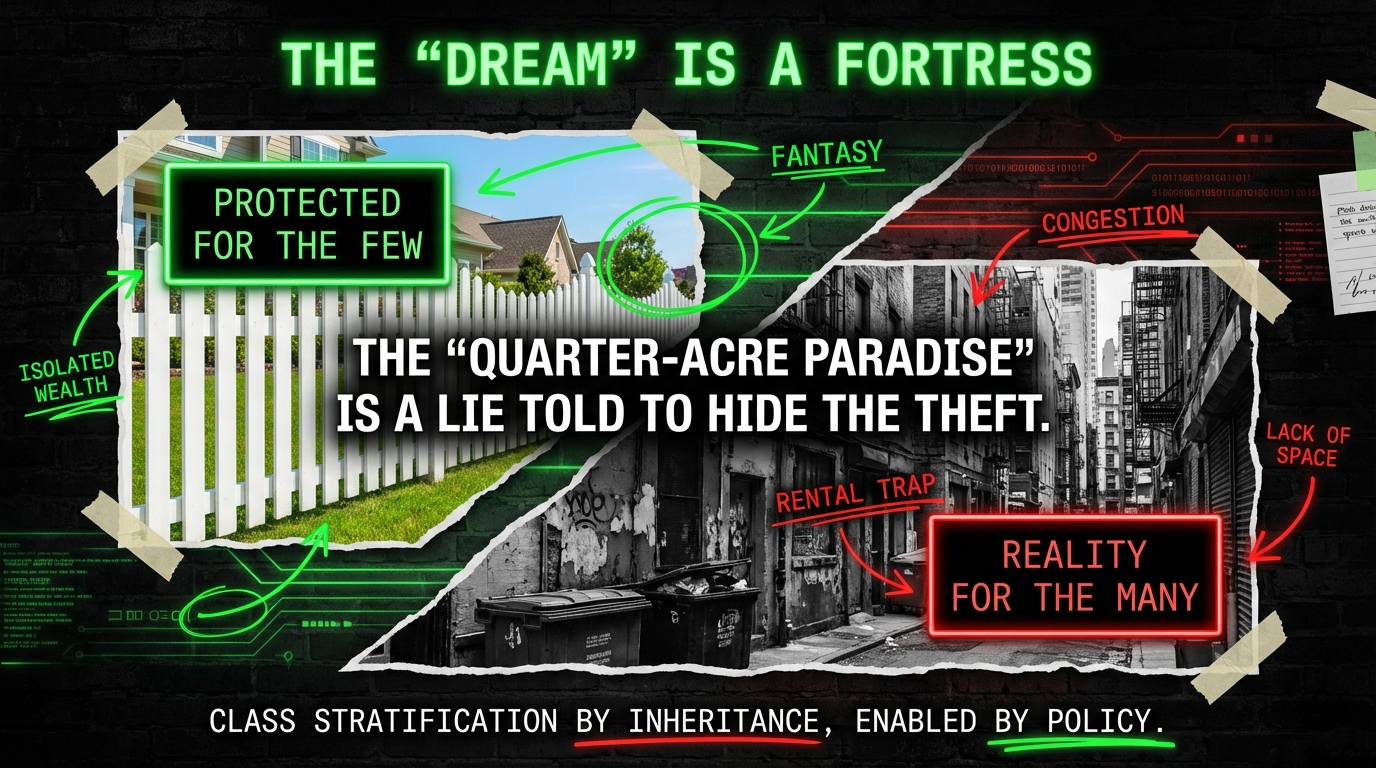
This is class stratification by inheritance, enabled by policy, celebrated as aspiration—and defended by you in every column you write.
Your Conflict of Interest: Profiting from the System You Defend
Let’s talk about something you never disclose in your Stuff columns, Damien: your insolvency business directly profits from the business failures created by the deregulated economy you champion.
As principal of Waterstone Insolvency, you literally make money from business failures—the inevitable casualties of the deregulated economy you champion in your opinion columns.
he contradiction is breathtaking:
a man whose livelihood depends on economic instability lecturing us about the virtues of the free market.
Even more grotesquely, you claimed wage subsidy funds during COVID-19 despite stating you believed Waterstone could survive without it—then announced you had no intention of repaying the amount.
So when you write about “what Aucklanders want,” you’re really writing about what property-owning Pākehā like you want—and what keeps your liquidation business profitable.
The Pavlova Paradise Was Always a Lie, Damien
The quarter-acre pavlova paradise was never universal. It was a Pākehā dream, built on Māori land, funded by a benevolent state that excluded Māori, and sustained by a property speculation economy that continues to extract wealth from those locked out.
Celebrating the persistence of this “dream” while Māori homeownership collapses to generational lows isn’t journalism, Damien. It’s colonial gaslighting—and coming from someone with your criminal history of fraud and your ongoing conflicts of interest, it’s particularly obscene.
The truth is this:
New Zealand’s housing system is functioning exactly as designed—to transfer wealth upward, to entrench class divisions along racial lines, and to ensure that land and housing remain the preserve of those who already have it.
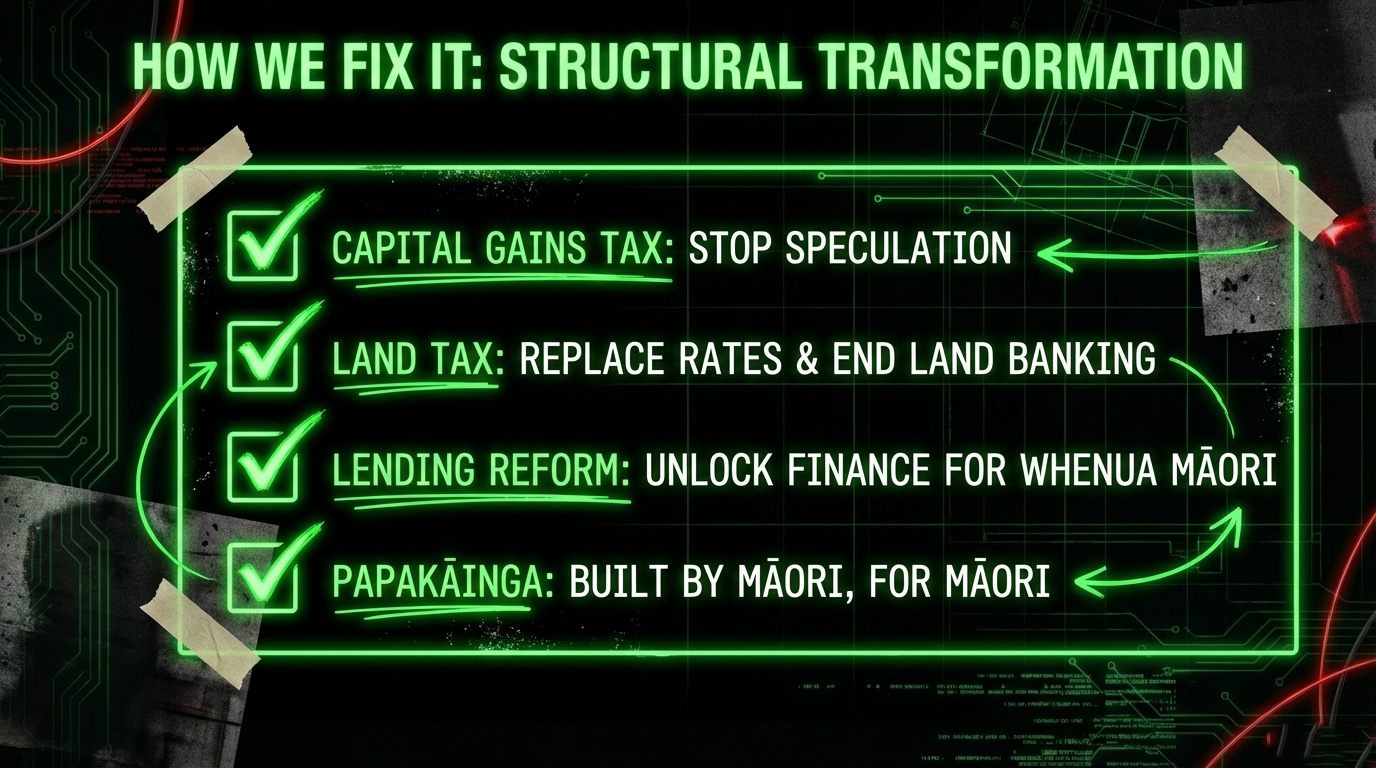
If we want a different outcome, we need different structures:
a capital gains tax on investment property, land tax to replace rates, restoration and expansion of Māori housing funding, systemic reform of lending on whenua Māori, and genuine partnership with iwi to enable papakāinga at scale.
Until then, the quarter-acre dream will remain what it always was:
a lie told to those on the outside, and a fortress defended by those within—people like you, Damien.
Kia kaha, whānau. The system is visible. Only structural transformation will reclaim the housing security that is yours by right.

Ivor Jones is Kaitiaki of Truth at The Māori Green Lantern”