“The Prison Industrial Complex is Exploding While Our People Suffer” - 2 October 2025
How National’s Racist Agenda Creates Chaos for Corporate Profit
Kia ora whānau, Ko Ivor Jones ahau, The Māori Green Lantern. Greetings, my whānau. I am Ivor Jones, The Māori Green Lantern.
This government’s prison policies aren’t just failing - they’re designed to fail our people while enriching their corporate mates. While record prison violence erupts across the country and Māori comprise 53% of prisoners despite being just 17% of the population, Mark Mitchell and his National cronies are systematically dismantling support services while ramming through legislation that will see prison populations explode by 40% by 2035.
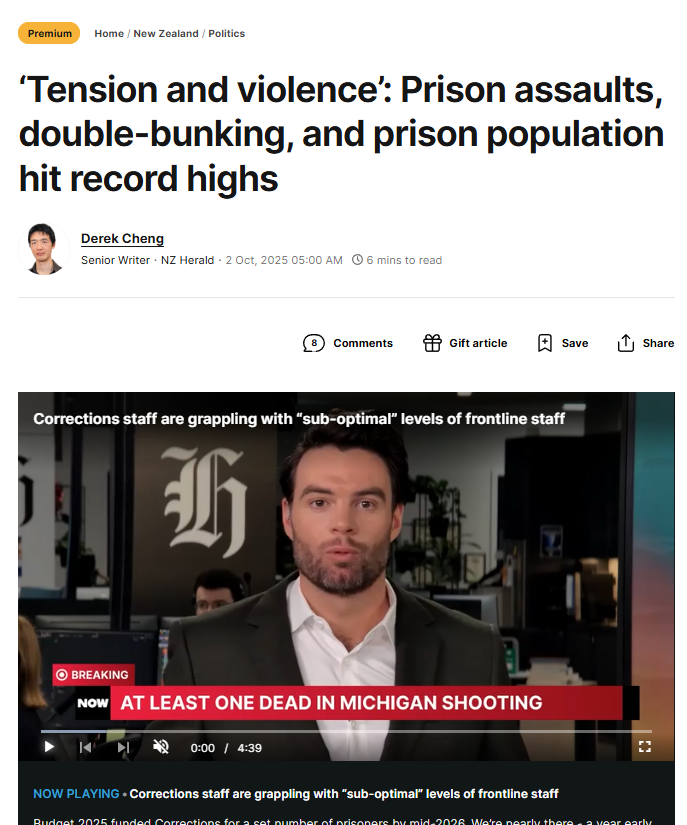
Background
The colonial prison system in Aotearoa has always been a tool of white supremacist control.
Pre-colonial Māori society had no prisons - instead, we operated through whakapapa, restorative justice, and community accountability. The first prisons here were built to contain Pākehā criminals. Today, that system has been weaponised against tangata whenua.
Mark Mitchell, the current Corrections Minister, exemplifies everything wrong with National’s approach. A former cop who worked as a private security contractor in Iraq, Mitchell believes the majority of prisoners have committed violent or sexual offending - a classic tough-on-crime narrative that ignores the systemic racism driving Māori overrepresentation.
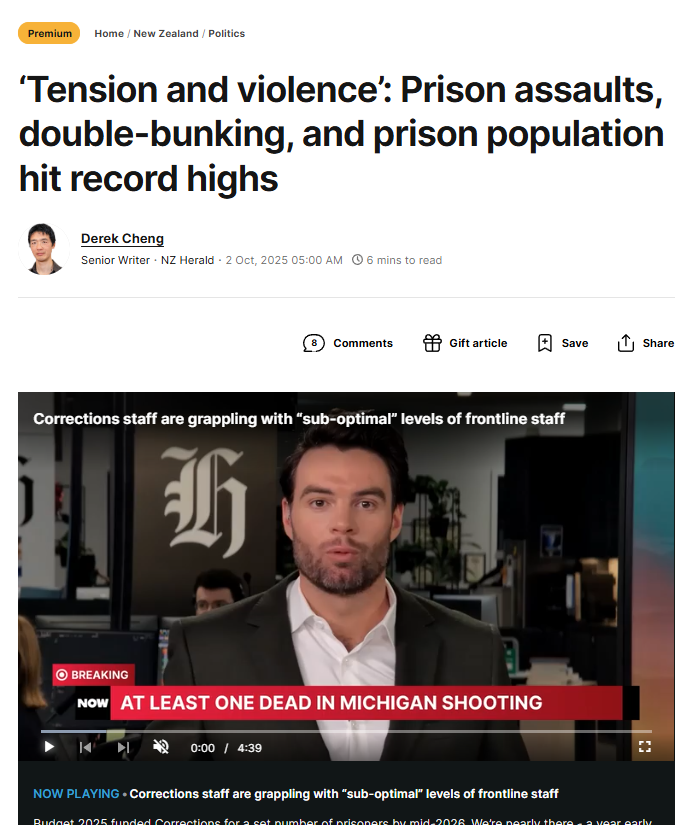
The current prison population sits at 10,680 as of March 2025, with violence reaching unprecedented levels. Prison assaults have doubled, while double bunking - forcing two people into cells designed for one - is at record highs.
What The Fuck Is Going On?
The crisis gripping New Zealand’s prisons isn’t accidental - it’s the predictable outcome of National’s ideological war against Māori and the working class.
Here’s what’s really happening:
The Violence Epidemic: Violent incidents in prisons are now commonplace, with assaults in shared cells increasing from 7 in 2022/23 to 34 in 2024/25. The Spring Hill riot in August 2025 was just the latest in an escalating pattern of unrest.
Double Bunking Disaster: National is cramming people into cells as small as 5.7 square metres - spaces the Chief Ombudsman described as “about the size of an average horse float.” This practice, condemned internationally, directly contributes to increased tension and violence.
Māori Targeting: The statistics are damning - Māori make up 81% of imprisoned youth, 67% of female prisoners, and 53% of the total prison population. Meanwhile, Māori are twice as likely to be imprisoned as Pākehā for the same crimes.
This isn’t about justice - it’s about maintaining colonial control while creating massive profits for private prison operators and security companies.
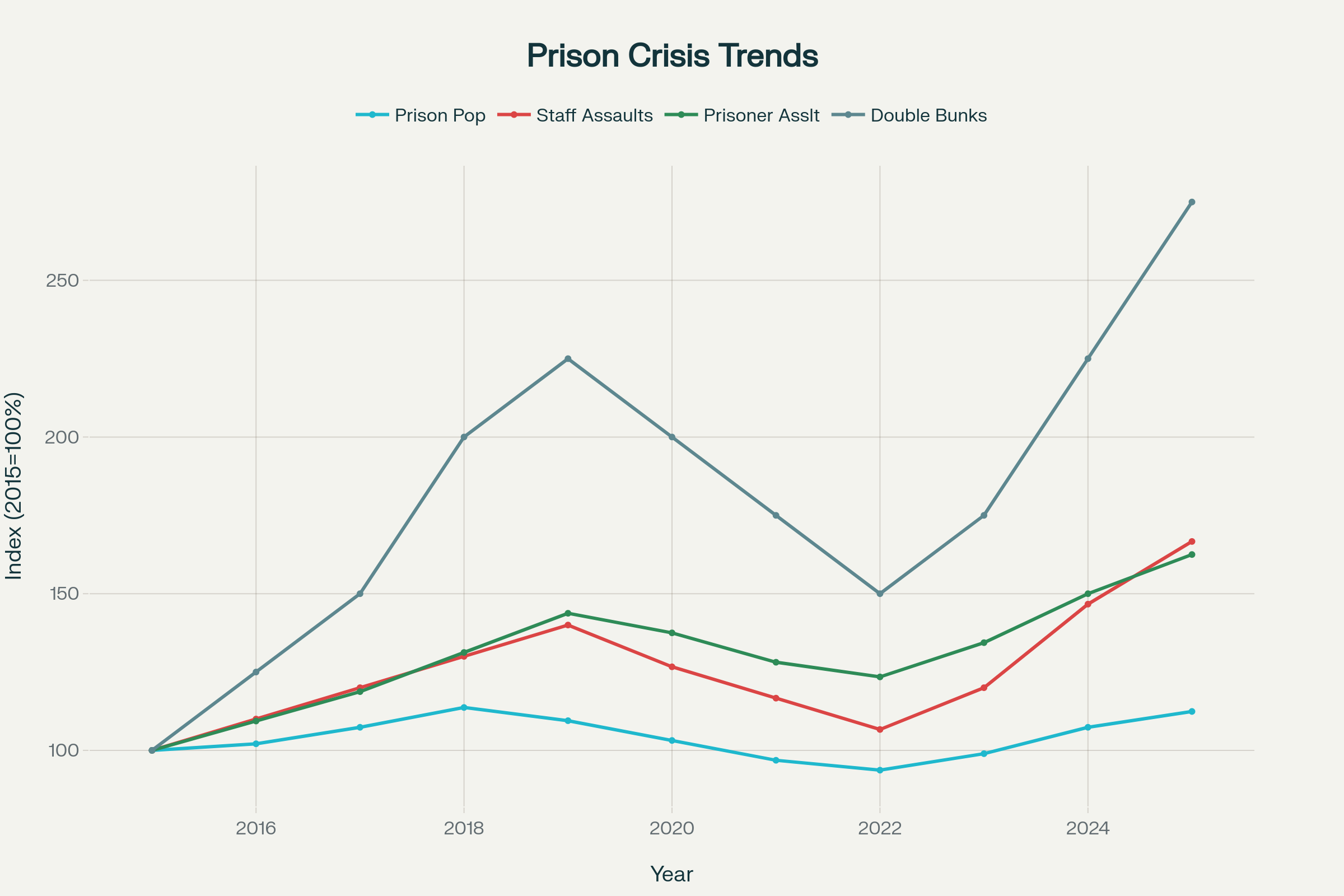
Prison Violence Escalation Under National’s Watch 2015-2025
The Real Agenda Behind the Chaos
Corporate Prison Profits: National has a long history of privatising prisons to benefit their corporate donors.
Serco, the private operator of Auckland South prison, has received $6 million in bonuses despite the system’s overall failure. The Waikeria expansion will cost $890 million through public-private partnerships - classic neoliberal wealth transfer from taxpayers to corporations.
Austerity While Prisons Explode: While prison populations soar, National is gutting the very services that could prevent crime. They’ve cut 49 support roles from Corrections, 375 back-office police roles, and slashed funding for social services. This isn’t fiscal responsibility - it’s deliberate sabotage designed to create more prisoners for their corporate mates to manage.
The Christian Right Agenda: Mitchell’s policies align perfectly with the white evangelical “law and order” movement that sees punishment as divine justice. Research shows how white evangelicals became “keystone supporters” of punitive criminal justice policies, viewing mass incarceration through a Biblical lens of righteous punishment. This theological justification for racism provides moral cover for policies that devastate Māori communities.
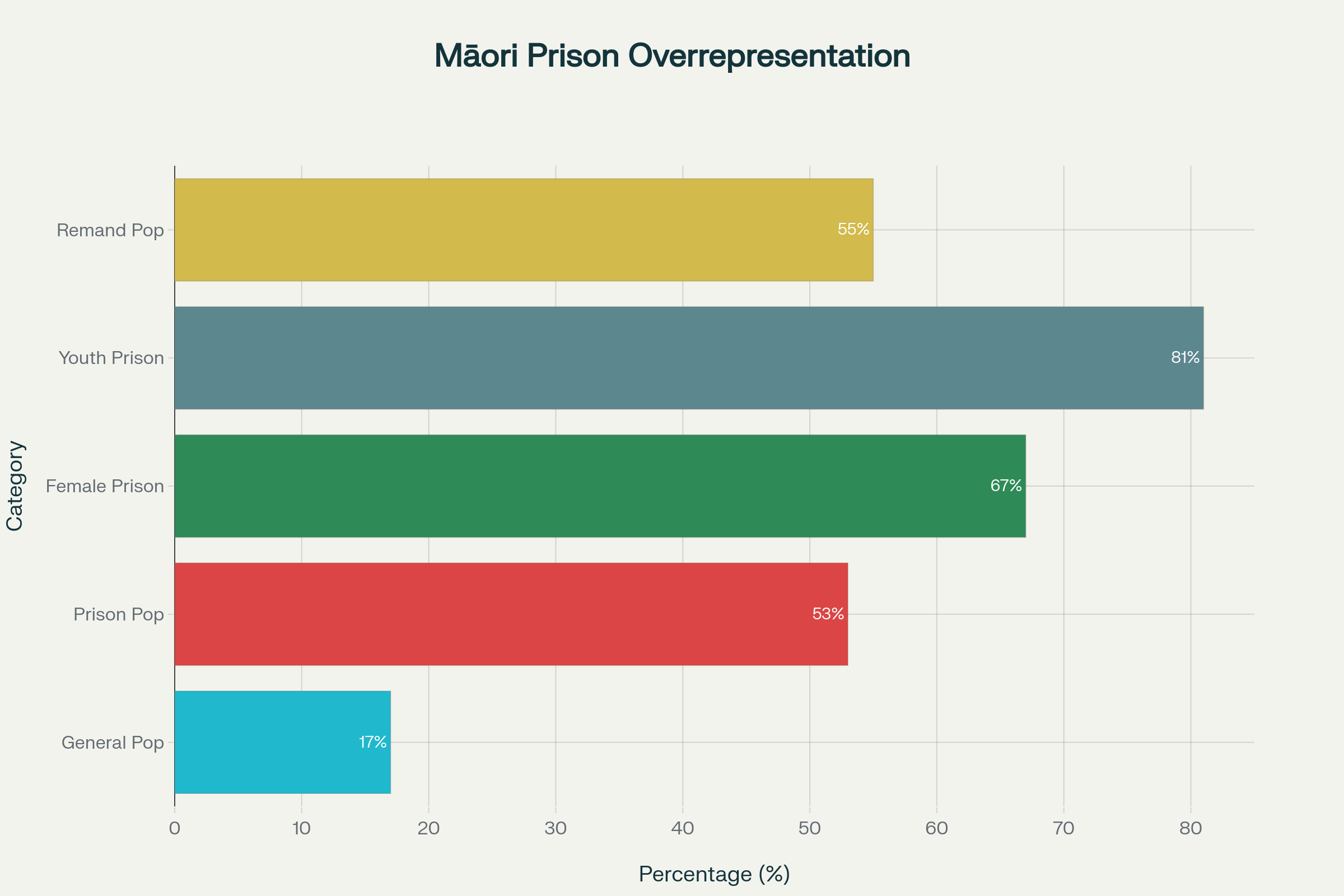
Māori Overrepresentation Across Justice System
Legislation as Racial Weaponry: National’s Sentencing Reform Amendment Bill will add 1,350 more people to prison, disproportionately targeting Māori. Combined with their gang legislation and three strikes laws, these measures are designed to criminalise Māori culture and resistance while feeding the prison industrial complex.
The Remand Racket: Perhaps the most insidious aspect is the explosion in remand prisoners - people who haven’t been convicted of anything. Remand populations have doubled over the past decade, with 89% of youth in prison on remand. This creates a captive labour force and guaranteed revenue streams for private operators while destroying whānau and communities.
The Budget 2025 funding was designed for prison populations reaching certain levels by mid-2026, but we’re already there a year early. This “budget blowout” isn’t incompetence - it’s the planned result of policies designed to maximise incarceration rates.
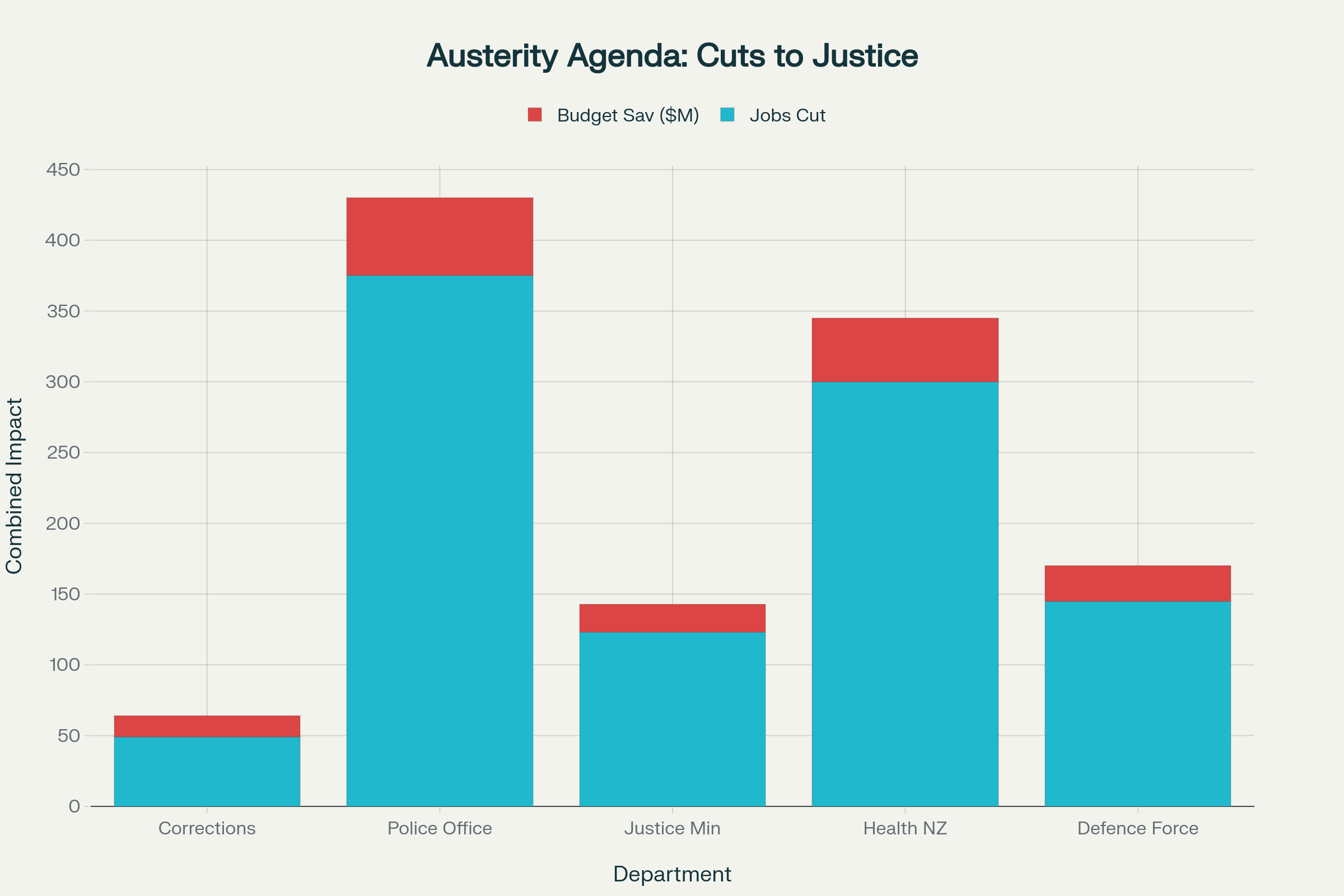
Government Austerity Cuts to Public Services
Hidden Connections and White Supremacist Networks
The links between National’s prison policies and white supremacist ideology run deep. Mitchell’s background as a private security contractor in Iraq connects him to the military-industrial complex that views certain populations as inherently criminal. His refusal to confirm whether he killed anyone in Iraq while working for private military contractors reveals a mindset comfortable with violence against racialised others.
National’s historical embrace of Colin Craig’s Conservative Party shows their willingness to court Christian nationalist votes. While Craig’s party eventually failed, the ideology persisted within National’s ranks. The recent revelation that National MP Hamish Campbell belongs to a secretive Christian sect under FBI investigation demonstrates how these extremist networks maintain influence within the party.
The prison system serves multiple functions for white supremacist capitalism: it removes Māori men from their communities during their most productive years, with over 30% of Māori men aged 20-29 having Corrections records. It creates intergenerational trauma that weakens whānau structures. And it generates massive profits for corporations while positioning the state as the protector of white property and privilege.
Silhouette of a prisoner behind bars reflecting the harsh reality of incarceration and the human toll of prison conditions
The timing of these policies isn’t coincidental. As climate change and economic inequality create social instability, the ruling class is preparing for mass unrest. The prison system being constructed today will be used to contain future resistance movements, particularly from Māori asserting tino rangatiratanga and climate activists challenging corporate power.
The Impact on Whānau Māori
The human cost of these policies is devastating for our communities. Research shows Māori imprisonment affects 10,000 Māori children, creating cycles of trauma and disconnection from culture. With Māori reoffending rates at 41.3% compared to 30.5% for non-Māori, the system clearly isn’t designed to rehabilitate - it’s designed to recycle.
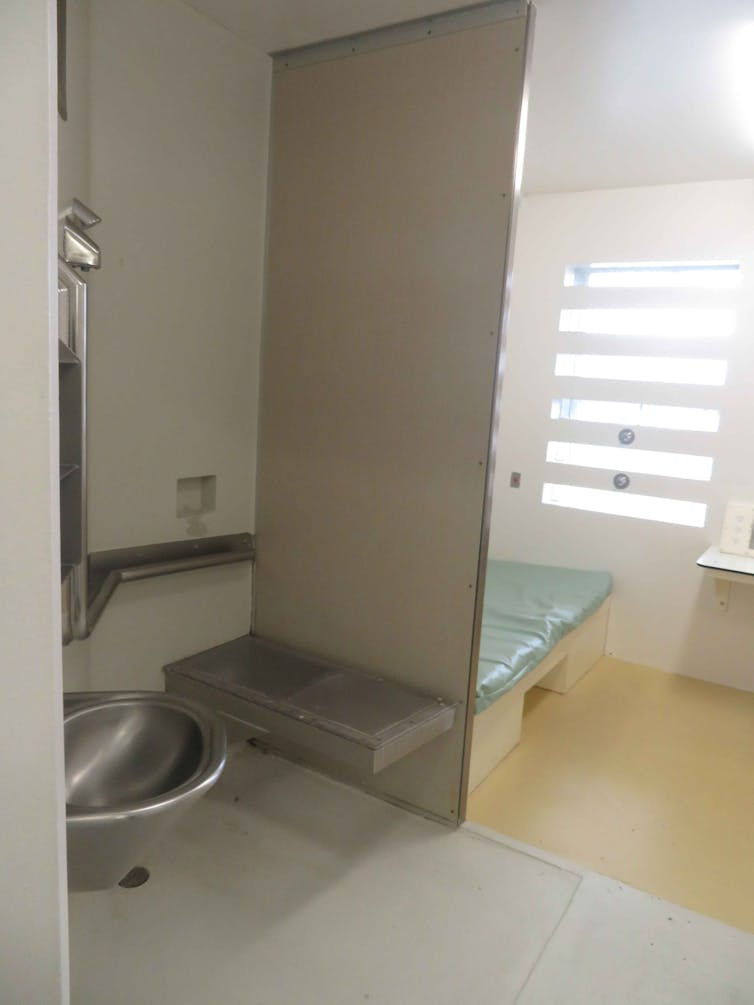
A basic, cramped New Zealand prison cell with minimal facilities reflecting overcrowded conditions
The Waitangi Tribunal found that Corrections has failed Māori by not reducing reoffending rates and breached Treaty obligations. Yet instead of addressing this systematic racism, National has scrapped Labour’s target of reducing the prison population and instead invests billions in expansion.
The violence now endemic in prisons disproportionately affects Māori prisoners. Gang members make up 30% of the prison population, with Māori comprising 70% of gang members. This creates a situation where Māori men are forced into gang structures for protection, then further criminalised for that association.
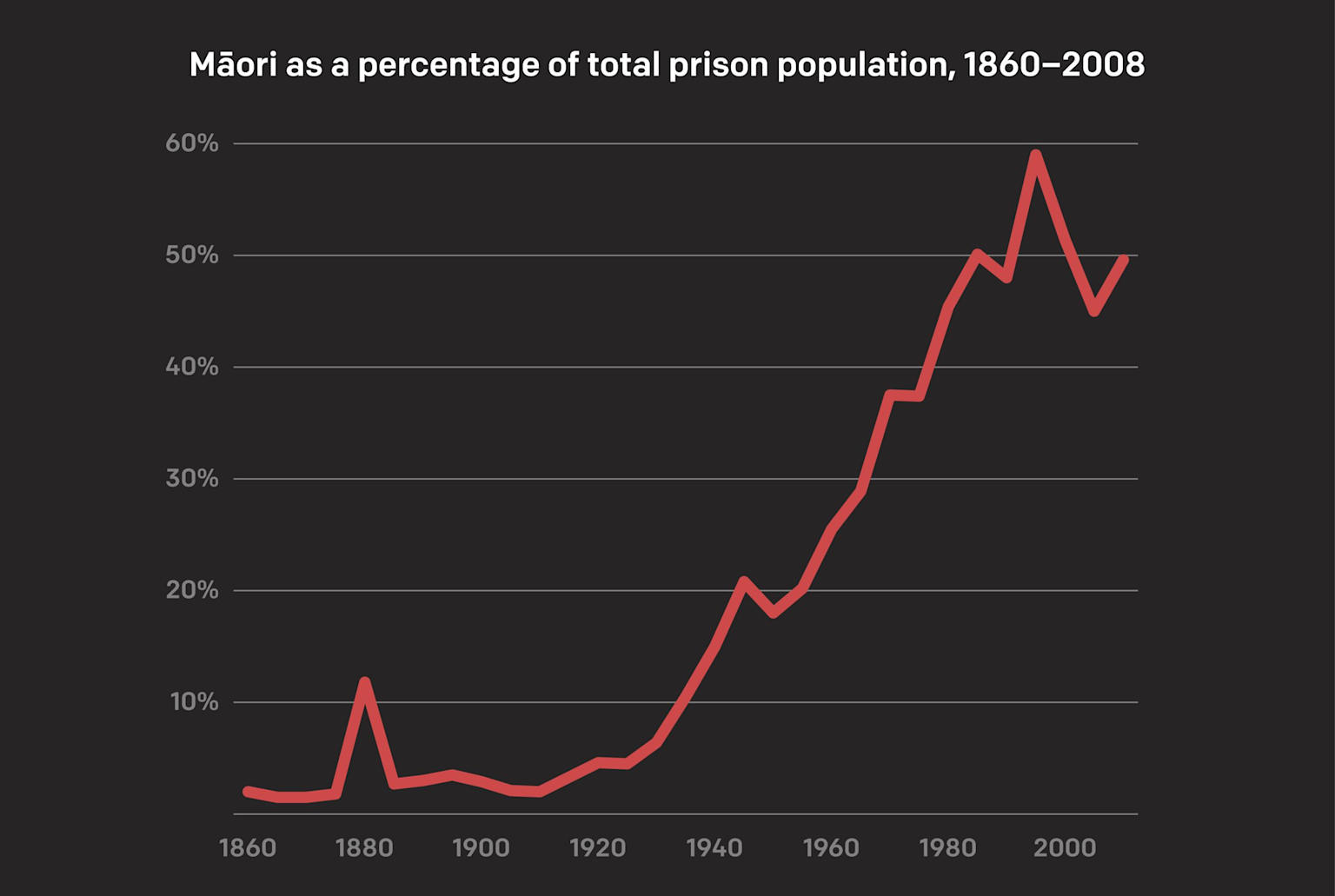
Māori overrepresentation in New Zealand prisons increased dramatically from 1860 to 2008, peaking near 60% in the early 1990s
The double bunking crisis hits Māori hardest, as overcrowding is known to increase violence and poor mental health outcomes. With cells at some women’s prisons just 5.7 square metres, Māori women face conditions that violate international human rights standards.
Corporate Beneficiaries and Profit Motives
Follow the money and the racist agenda becomes clear. Serco’s success at Auckland South prison with artificially low recidivism rates proves that when corporations have financial incentives, they can achieve better outcomes. But rather than applying these lessons to publicly-run prisons, National uses them to justify further privatisation.
The Waikeria expansion involves public-private partnerships, a model that guarantees profits for construction companies and ongoing revenue for operators. When Cornerstone claimed $430 million against Corrections in 2022 for Covid-related costs, taxpayers footed the bill while shareholders maintained their profits.
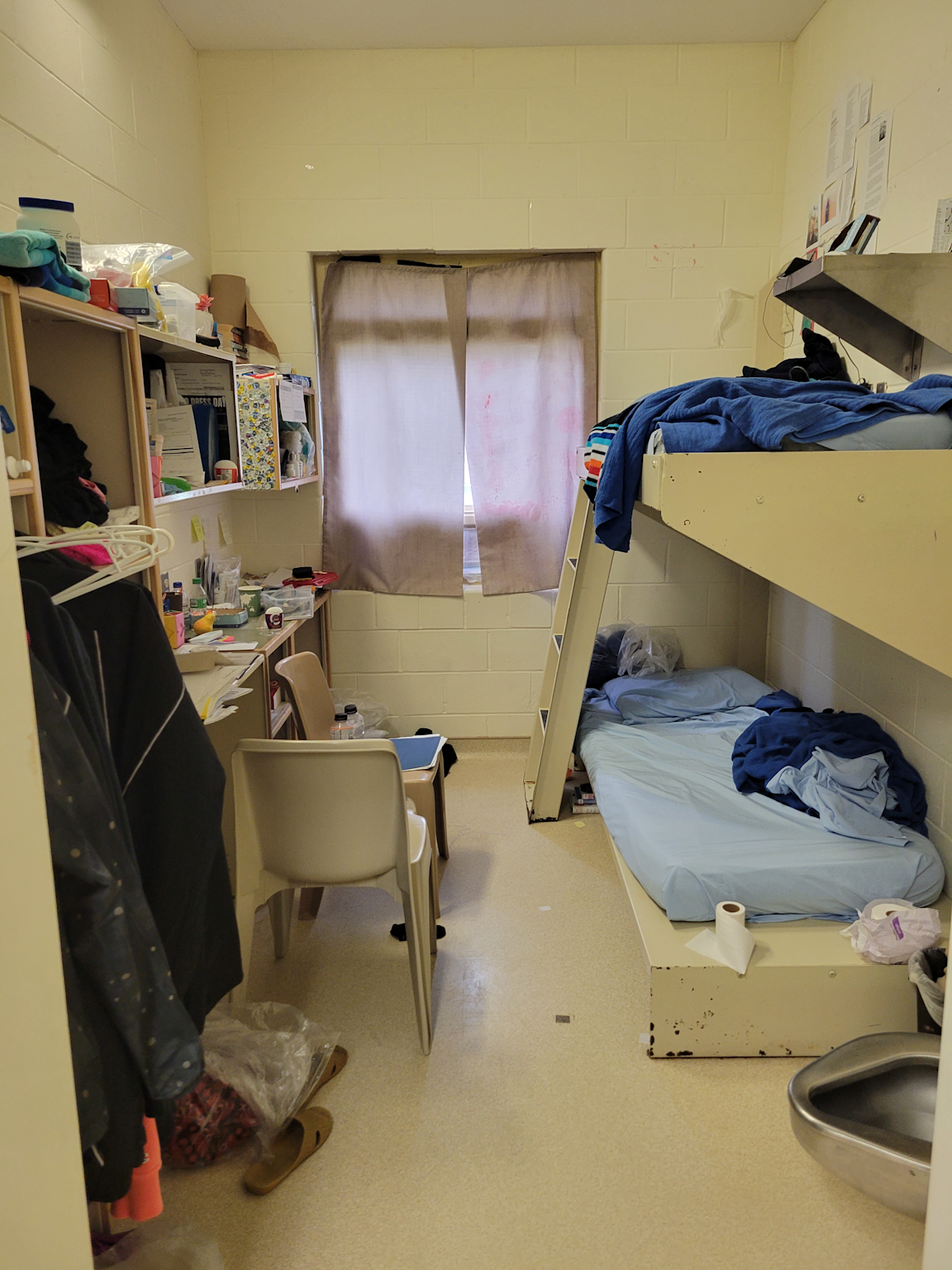
A cramped New Zealand prison cell with double bunk beds, illustrating overcrowding and limited living space conditions
The security industry - where Mitchell built his career - benefits massively from prison expansion. Companies providing surveillance technology, transport services, and facility management all profit from higher incarceration rates. Mitchell’s connections to this industry create obvious conflicts of interest that are never acknowledged in mainstream media coverage.
Implications
National’s prison policies represent a fundamental assault on tino rangatiratanga and social justice.
By criminalising poverty, mental illness, and cultural resistance while enriching corporate cronies, they’re constructing a police state designed to maintain white supremacist capitalism.
The projected 40% increase in prison populations by 2035 will cement New Zealand’s position among the world’s most punitive societies. With an imprisonment rate already at 187 per 100,000 - double Canada’s rate - we’re rapidly approaching US-style mass incarceration.
The violence epidemic in prisons today will spread to communities as traumatised individuals are released without support into the same conditions that led to their imprisonment. Meanwhile, billions that could address poverty, housing, mental health, and education are diverted to punishment and corporate profits.
Most insidiously, these policies normalise the incarceration of Māori as natural and inevitable rather than the result of deliberate policy choices. This racist narrative provides political cover for further attacks on Treaty rights and tino rangatiratanga.

The Māori Green Lantern Fighting Misinformation And Disinformation From The Far Right
The prison violence crisis isn’t a failure of National’s tough-on-crime policies - it’s exactly what they’re designed to achieve. By creating chaos in prisons while cutting support services, they justify further expansion and privatisation while traumatising Māori communities.
We must recognise this crisis for what it is:
a racist, colonial project designed to enrich corporations while maintaining white supremacist control. The solution isn’t more prisons or better management - it’s dismantling the entire system and building alternatives based on Māori justice principles.
Our tūpuna knew that true justice comes through healing, not punishment. It’s time to reclaim those values and fight for a future where our rangatahi aren’t fed into the prison industrial complex to satisfy white supremacist fear and corporate greed.
The time for polite protest is over. This government is waging war on our people while making their mates rich. We need to organise, resist, and build the alternative systems our communities deserve.
Kia kaha, kia maia, kia manawanui.
He mihi nui ki a koutou katoa who find value in this mahi.
If you have capacity and wish to support this kaupapa, please consider a koha: HTDM: 03-1546-0415173-000. The MGL understands these tough economic times for whānau, so please only contribute if you’re able to do so.
Noho ora mai,
Ivor Jones - The Māori Green Lantern