“The Property Parasite: How National MP Carl Bates Embodies Everything Wrong with New Zealand's Corrupt Housing System” - 13 September 2025
The Great Māori Green Lantern Exposé of Parliamentary Property Greed
Kia ora, whānau. Te reo o te whenua, te reo o te tangata. Greetings, as the voice of the land speaks through the people.
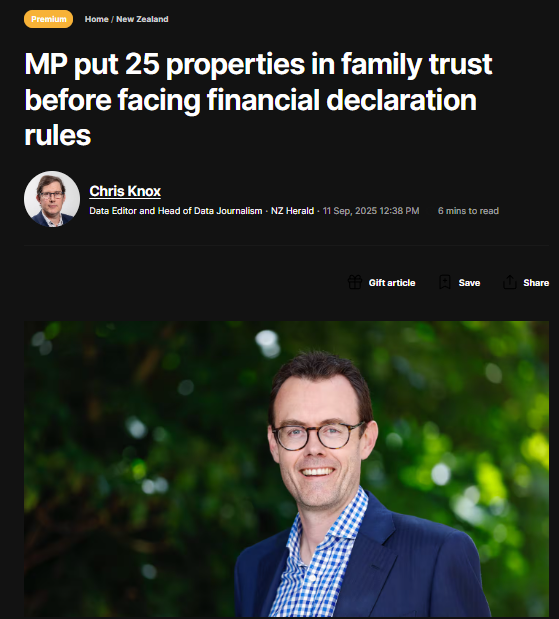
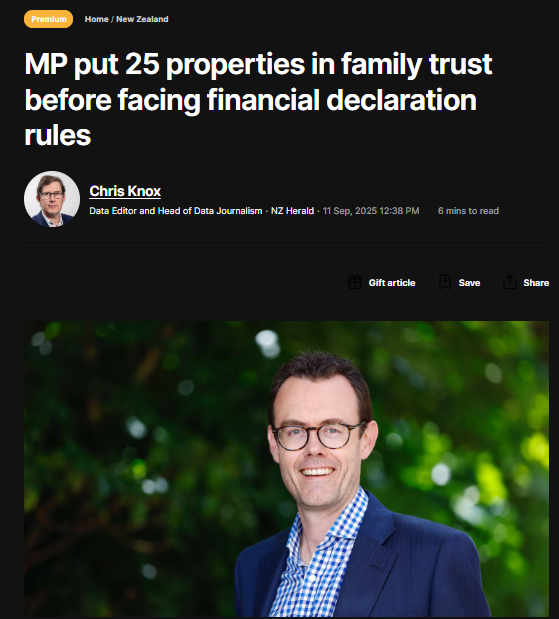
This is about more than one grubby National MP hiding 25 rental properties in a trust. This is about a system designed to extract wealth from working whānau while politicians write laws that protect their own empires. Carl Bates represents the perfect specimen of neoliberal parasitism – a man who campaigns on housing issues while secretly hoarding the very homes his constituents desperately need.
The Colonial Pattern Repeats
When Captain James Cook first set foot on our shores in 1769, he initiated a process of land appropriation that has never truly ended. Today's property speculators like Carl Bates are the direct descendants of colonial settlers who believed land existed solely for profit extraction rather than as the foundation of community wellbeing. The difference is that modern colonisers wear suits and hide behind trusts instead of carrying muskets.
Carl Michael Bates was born on March 13, 1983, into privilege in Whanganui. By age 18, he was already appointed as an independent director of a non-profit aged care facility. This early taste of power over vulnerable people's lives would prove prophetic. His journey from Young National Party member at age 13 to property mogul perfectly illustrates how the system cultivates its own protectors.
The timing of Bates' property empire construction reveals the calculated nature of his wealth accumulation. Public records show that when Bates was elected to Parliament he had shareholdings in two family-owned real estate investment companies, which between them own 25 properties in Whanganui, Palmerston North, Wellington, and Auckland.
The Trust Shell Game Exposed
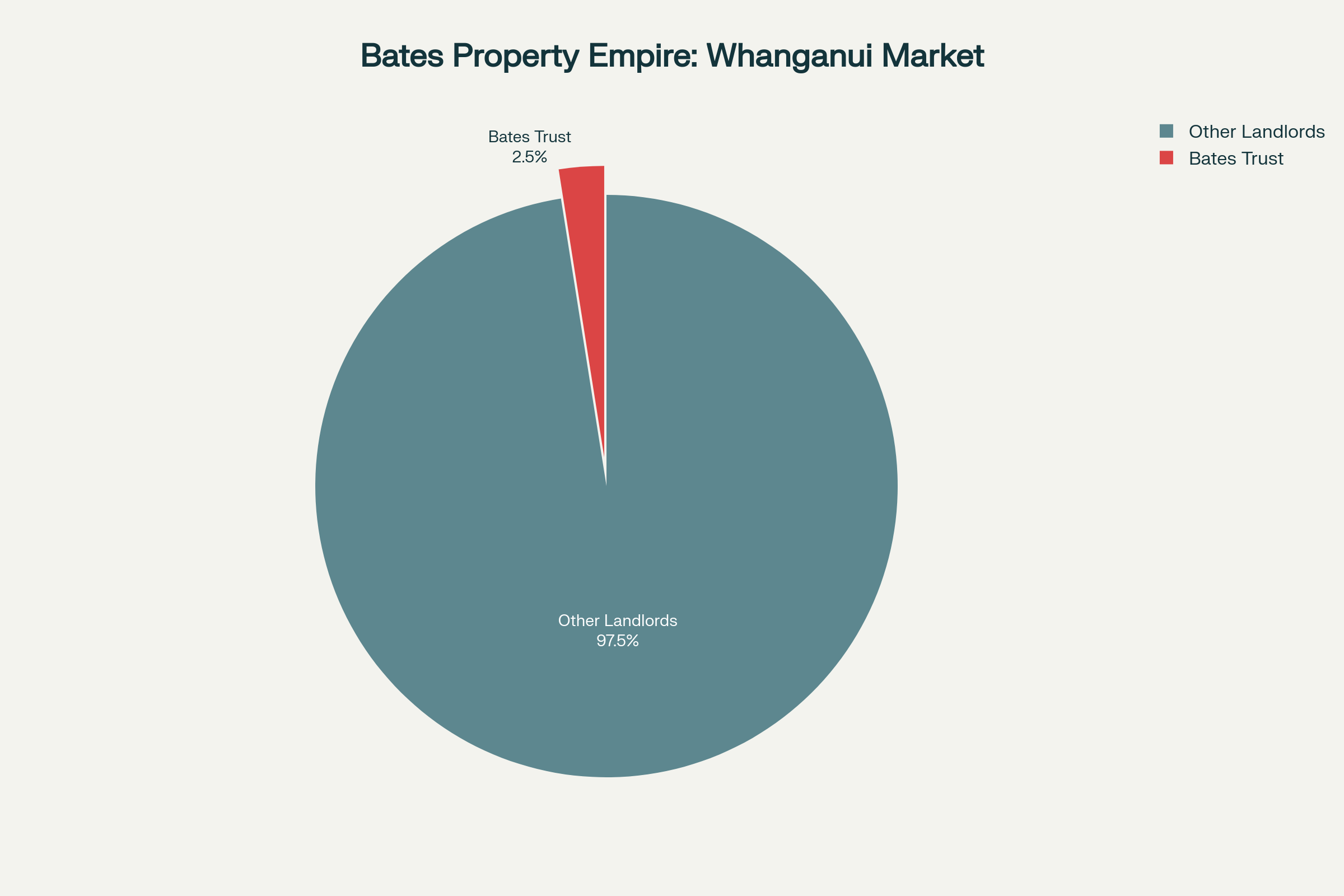
Carl Bates' family trust controls 25 rental properties in Whanganui, making them one of the largest private landlords in his own electorate while these assets remain hidden from public disclosure
The mechanism Bates used to hide his property empire demonstrates the sophisticated corruption embedded in our political system. Shortly after Bates was elected as an MP a company called Seize the Day Trustee Company Limited was created with Bates' mother and her lawyer as directors. A week later Bates' shareholdings in the two property companies were transferred to Seize the Day Trustee Company Limited.
The name itself – "Seize the Day" – reveals the predatory mindset. This isn't about providing homes; it's about seizing opportunities to extract wealth from housing necessity. The Registrar advised him that property held in a company whose shares are held by a trust, was not required to be declared, demonstrating how the system provides convenient loopholes for those wealthy enough to exploit them.
This trust structure creates multiple layers of legal obfuscation that ordinary New Zealanders could never afford to construct. While struggling families face homelessness, MPs like Bates employ lawyers and accountants to build elaborate shell games that hide their property empires from public scrutiny.
The Human Cost of Greed
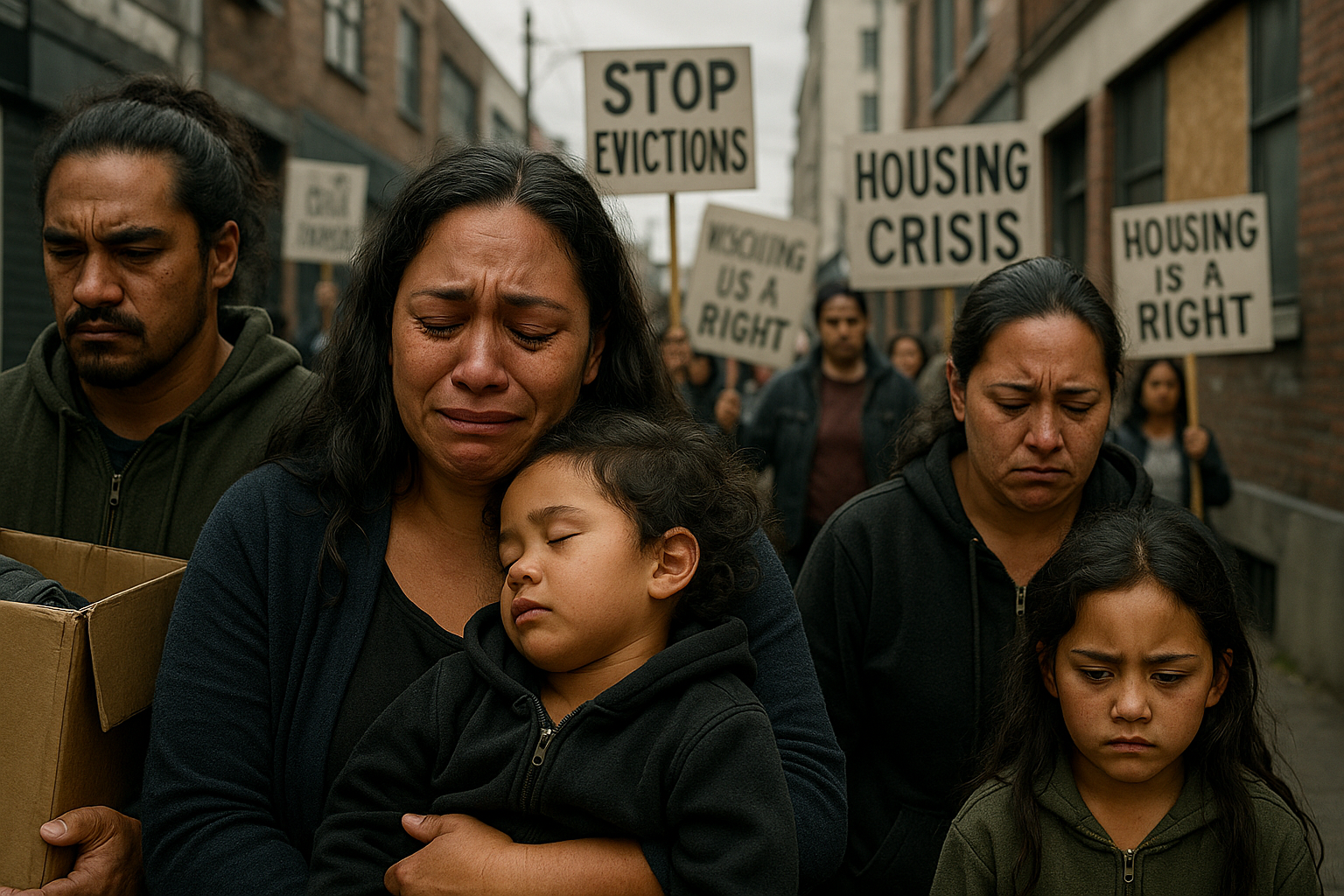
Māori whānau facing housing displacement and eviction
The real victims of Bates' property hoarding are the whānau who cannot find affordable homes in their own community. Whanganui's rental prices grew at almost double the rate of the national average over the last 12 months, reaching crisis levels that price out local families.
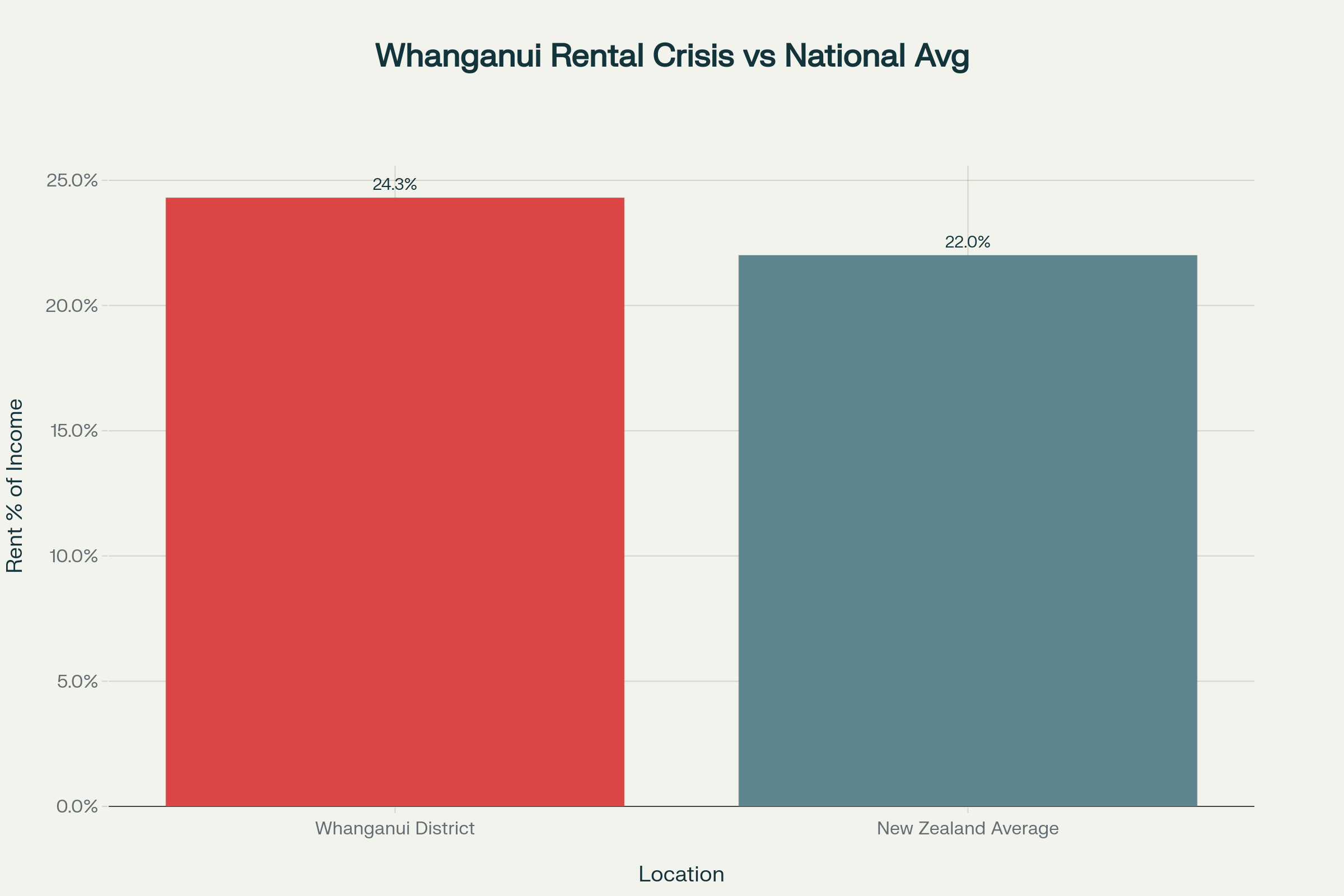
Whanganui renters face the worst affordability crisis in the district's history, with rent consuming 24.3% of average income compared to the national average of 22%
The data reveals the brutal reality: rent affordability in Whanganui reached the least affordable of 24.4% in 2024, worse than the national average. This means working families in Bates' electorate spend nearly a quarter of their income just on rent, leaving little for food, healthcare, or their children's future.
For Māori whānau, this crisis is particularly devastating. Māori are five times more likely than non-Māori to be homeless, with less than 40% of Māori owning homes compared to 70% for non-Māori. While Māori families struggle to find basic shelter, their MP accumulates rental properties like trophies.
The Empire of Extraction
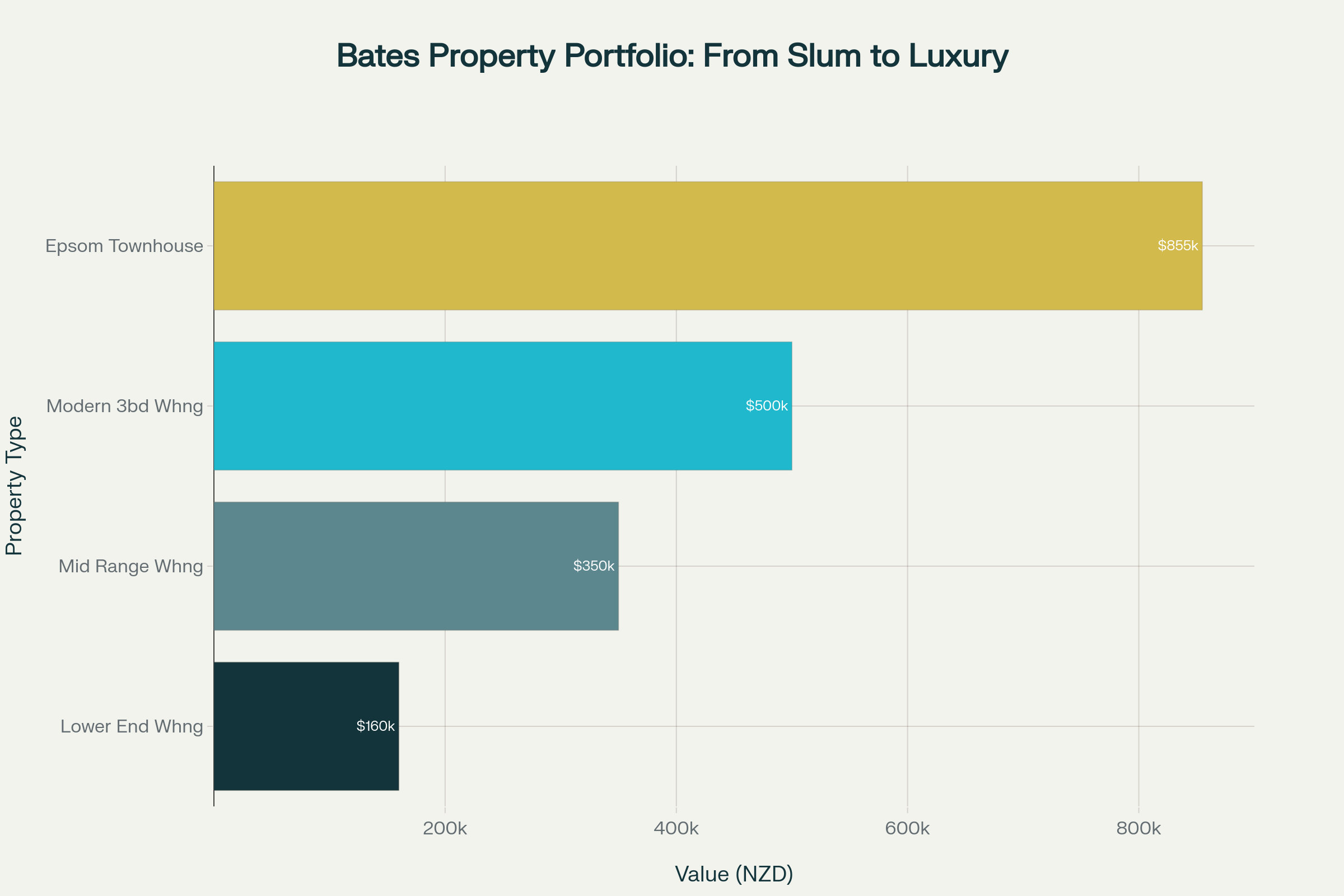
Carl Bates' hidden property empire spans from low-value Whanganui rentals worth $160,000 to high-end Auckland properties worth $855,000, demonstrating wealth extraction across multiple markets
Bates' property portfolio reveals the calculated nature of his wealth extraction. Some of the trust properties are at the lower end of the Whanganui market, with rateable values (RVs) of $350k, $375k, $295k, $340k, $320k, $330k, and even $160k. These aren't luxury investments – they're the affordable homes that should be available for first-time buyers and young families.
One property, a modern three-bedroom house with a rateable value (RV) of $500,000, was recently rented out for $570 a week, providing a 6% rental return. Meanwhile, the portfolio extends beyond Whanganui to include a $855k two-bedroom townhouse in Epsom, Auckland, demonstrating how local wealth extraction funds luxury purchases in elite markets.
This pattern of accumulation – buying up affordable local properties to fund elite lifestyle choices – perfectly embodies the neoliberal model of wealth concentration. The profits extracted from Whanganui working families' rent payments fund Bates' expansion into Auckland's premium markets.
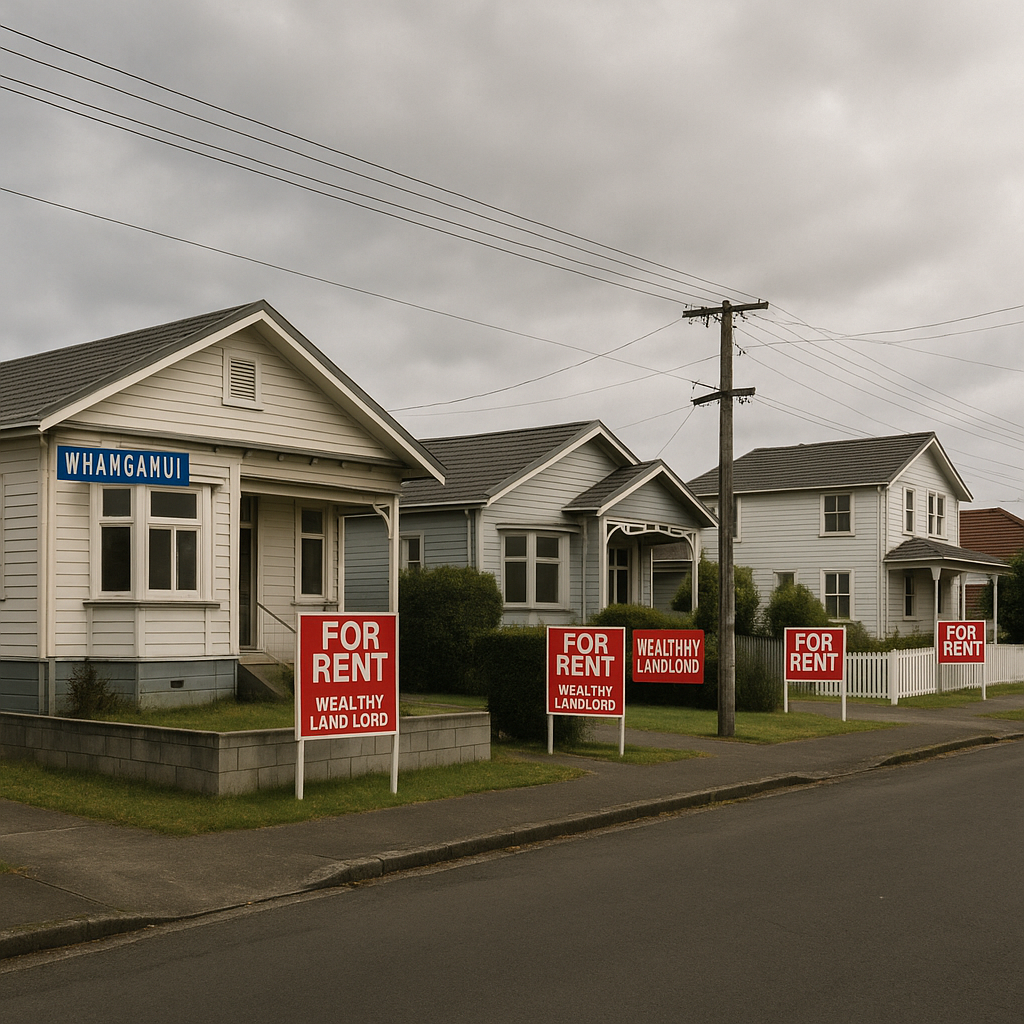
Whanganui rental properties dominated by wealthy speculators
The Institutional Corruption
The Bates scandal exposes systemic corruption that extends far beyond one MP's property empire. The current Register of Pecuniary Interests is actually quite opaque, with MPs claiming to have "no real property" only to later learn that those same MPs enjoy multiple houses via family trusts or shell companies.
This isn't accidental; it's designed institutional failure. National had the most MPs with trusts — 35 MPs or 71 percent of the caucus, with the Cabinet having an exceptionally high proportion of ministers using trusts — 75 per cent. The system protects the property-owning class while working families face homelessness.
Every new revelation (be it Michael Wood failing to disclose airport shares, or Carl Bates quietly parking 25 houses in a trust) further erodes public trust in our lawmakers. The pattern is clear: politicians use their positions to accumulate wealth while ordinary families struggle to afford basic housing.
The Māori Perspective on Land Justice
From a Māori worldview, Bates' property hoarding represents a fundamental violation of the principle of kaitiakitanga – guardianship over resources for future generations. The imposition of land ownership has alienated Māori from our whenua, making us minorities in our previous home-spaces.
The colonial transformation of land from a source of identity and sustenance into a commodity for speculation continues through politicians like Bates. Colonisation was literally a home invasion, and modern property speculation perpetuates this dispossession by making homes unaffordable for tangata whenua in their own territories.
By 2017 Māori ownership of land had decreased to merely 5%, while MPs like Bates accumulate multiple properties across the country. This represents a continuation of colonial wealth extraction that treats Māori territories as profit centers rather than home spaces.
The Neoliberal Housing Machine
The housing crisis isn't natural – it's manufactured by deliberate policy choices that prioritise property speculation over housing rights. Housing speculation in Auckland is endemic and its housing market is a politically condoned, finance-fuelled casino with investors broadly betting on tax-free capital gains.
Bates embodies this speculative model perfectly. His properties aren't homes; they're investment vehicles extracting wealth from housing necessity. The nexus between housing ownership, pecuniary interests and politicians is of great public concern in New Zealand.
This system ensures that house prices in New Zealand have risen considerably faster than incomes since the early 1990s, creating artificial scarcity that benefits property owners while destroying community wellbeing. Politicians like Bates profit from this artificial scarcity while publicly lamenting the housing crisis they help perpetuate.
The Hidden Connections
The timing of Bates' trust creation reveals calculated political manipulation. Public records show that when Bates was elected to Parliament he had shareholdings in two family-owned real estate investment companies, which he promptly shuffled into a trust structure to avoid disclosure requirements.
This pattern connects to broader networks of property speculation. Investment funds are very probably the most influential urban agents today, and politicians like Bates provide the legislative framework that enables this financialisation of housing.
The connections extend beyond individual greed to systemic corruption. When MPs who own multiple properties vote on housing policy, they're not serving the public interest – they're protecting their investment portfolios. This creates an institutionalised conflict of interest that undermines democratic governance.
The Broader Implications for Democracy
Bates' property empire represents more than individual corruption – it demonstrates how neoliberalism has captured democratic institutions. If politicians can get away with not reforming this area, they will. There really has to be extra strong pressure put on the institution of Parliament to clear this up because it's just going to reduce public trust in the political process more and more.
The system allows MPs to write laws that benefit their property portfolios while hiding those interests from public scrutiny. This creates a democracy in name only, where elected representatives serve their own financial interests rather than their constituents' needs.
Public submissions on the review are open until Thursday September 25, but without massive public pressure, politicians will continue protecting their wealth extraction systems while families face homelessness.

The Māori Green Lantern Fighting Misinformation And Disinformation From The Far Right
The Path Forward Through Māori Values
The solution to this crisis lies in rejecting the colonial commodification of housing and embracing Māori values of collective care. The principle of manaakitanga demands that we ensure everyone has adequate shelter, not that we allow MPs to hoard properties for profit.
Whakapapa connects us to the land and to each other – housing policy should reflect these relationships rather than treating homes as investment commodities. The role of Kāinga Ora brings together the people, capabilities and resources to address housing inequality, but this requires political will that conflicts with MPs' property investments.
True housing justice requires dismantling the speculative model that MPs like Bates represent. This means implementing wealth taxes, restricting property speculation, and prioritising housing as a human right rather than an investment vehicle.
Call to Action
The Bates scandal reveals the urgent need for systemic change. We cannot allow MPs to profit from housing crisis while families face homelessness. Transparency is the first step, but we need fundamental restructuring of how housing policy is made.
Every person who values housing justice must demand:
- Complete disclosure of all MP property interests, including trust holdings
- Wealth taxes that prevent excessive property accumulation
- Restrictions on property speculation that prioritise local homeownership
- Public housing programs that provide genuine alternatives to the private rental market
The current system serves property speculators at the expense of working families. Change requires sustained pressure from communities willing to challenge the political class's wealth extraction.
Readers who find value in exposing this corruption are humbly asked to consider a koha to support this work: HTDM: 03-1546-0415173-000. The Māori Green Lantern understands these tough economic times for whānau, so please only contribute if you have capacity and wish to do so.
Kia kaha, whānau. The fight for housing justice continues, and transparency is our most powerful weapon against those who would hoard homes while families suffer.
Ngā mihi nui,
Ivor Jones
Te Māori Green Lantern