
“THE SHAME THAT BROKE A NATION: Housing First Ōtautahi and the Elderly on the Streets” - 27 December 2025
A Structural Investigation into How Aotearoa Abandoned Its Kaumātua
THE ENCOUNTER THAT REVEALS A SYSTEM COLLAPSE
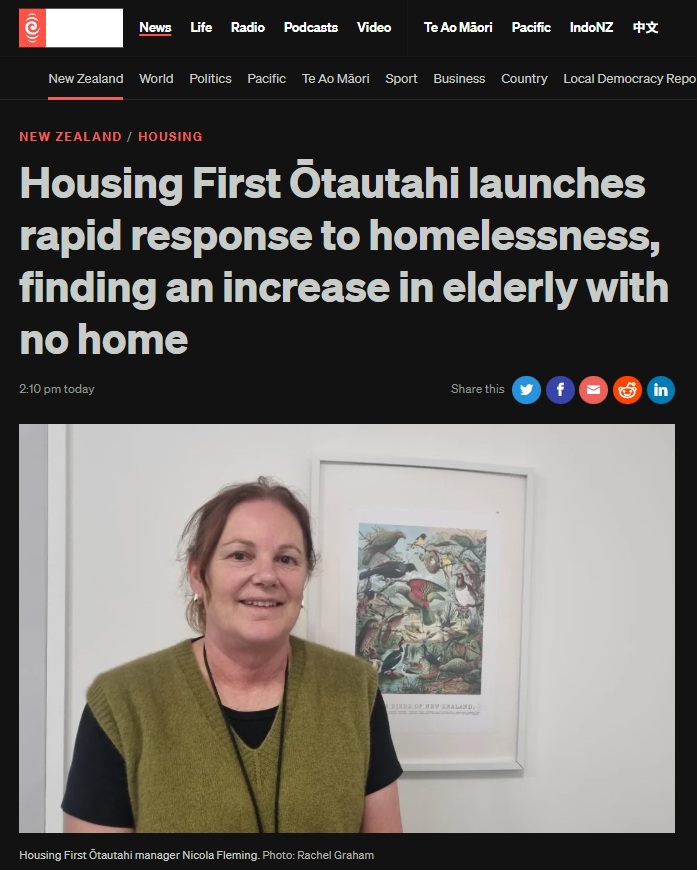
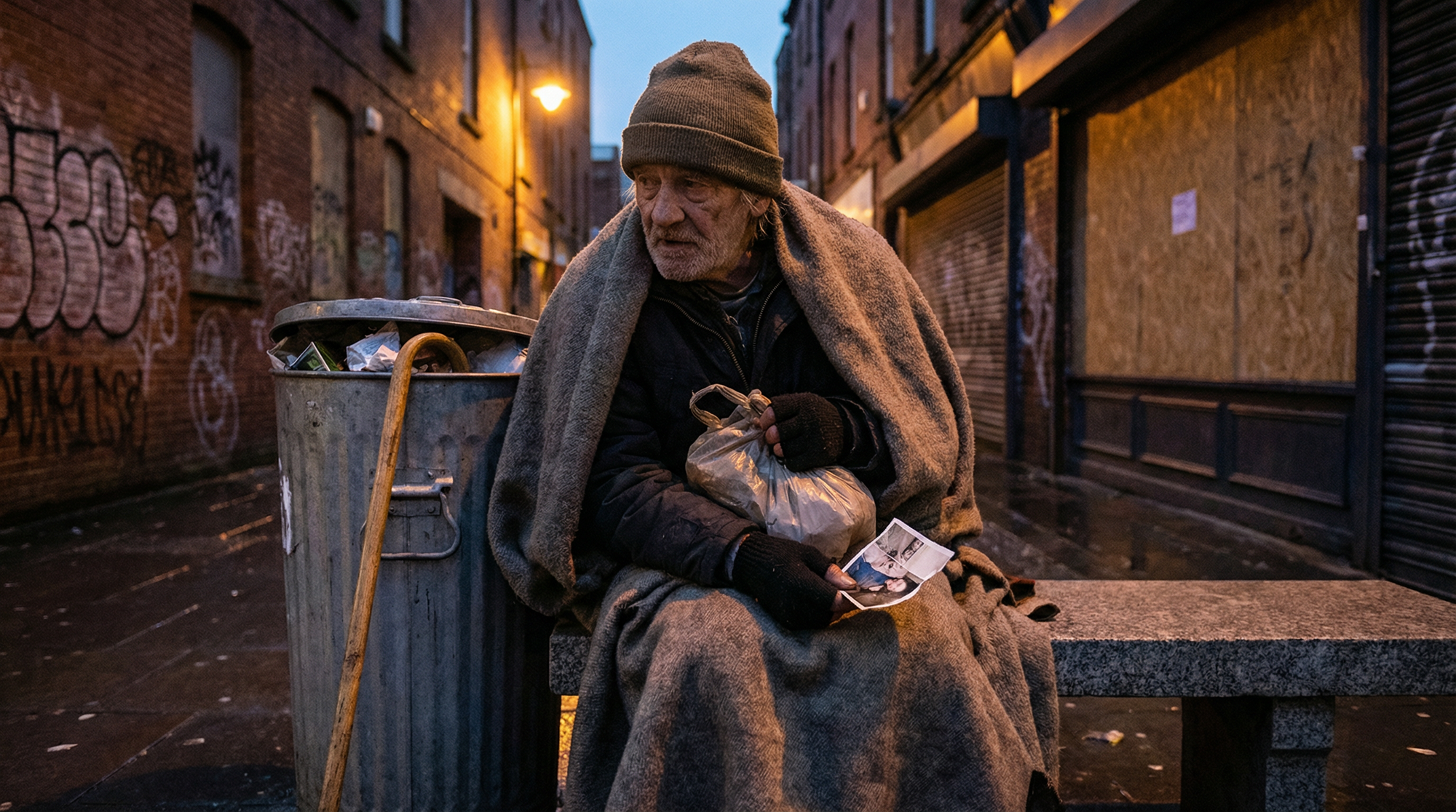
Housing First Ōtautahi found an 87-year-old woman sleeping on the streets in the first week of its rapid-response operation in September 2025, as revealed by RNZ. She was one of 19 newly homeless people the service encountered that week
—people who had not yet sunk into chronic homelessness but were sliding toward it with terrifying speed.
Among them: a 70-year-old, a 17-year-old.
No families, just the broken pieces of a society that stopped caring, as documented by RNZ.
The encounter is not exceptional. It is now routine. And it reveals the true architecture of what we have built:
not a housing system, but a machine for sorting people into the disposable and the kept.
THE SHAME THAT BROKE A NATION
THE NUMBERS THAT INDICT A GOVERNMENT
The statistics are merciless and verified across multiple sources. As of the 2023 Census, 1,293 people aged 65 and over were living without shelter in Aotearoa—26% of all rough sleepers, as reported in the Ministry of Housing and Urban Development’s Homelessness Insights Report. The median age of people living without shelter is 55 years. This is not an accident. It is policy outcome.
Nationally, rough sleeping has exploded:
- Auckland homelessness doubled from 426 to 940 people between September 2024 and September 2025, confirmed by the National Homelessness Data Project.
- Christchurch homelessness surged 73% in just three months (March to June 2025), as detailed by Chris Lynch Media.
- Taranaki homelessness jumped 250% in six months alone—the steepest regional collapse, reported by RNZ.
- Whangārei is forecast to breach 1,200 homelessness-related incidents in 2025 in a population of under 100,000, as noted in the HUD Homelessness Insights Report.
Where elderly people are concerned, the Christchurch Methodist Mission reported a demographic shift:
they are now converting transitional housing units from family accommodation to kaumātua-specific units because the need has become so acute, as noted by RNZ.
This is not adaptation—it is triage. It is the acknowledgment that we have lost the capacity to house working-age families, so we will at least try to keep the elderly alive.
THE NUMBERS THAT INDICT A GOVERNMENT
THE TRAP: $10 MILLION WITH AN EXPIRY DATE
Housing First Ōtautahi received $10 million in government funding to address rapid-response homelessness. The funding expires June 30, 2026, as confirmed by RNZ. In just nine months, an entire infrastructure for preventing homelessness is being asked to solve a structural crisis before the money runs out.
The manager of Housing First Ōtautahi, Nicola Fleming, disclosed the impossible bind:
the service currently supports 250 formerly homeless people in stable housing but has 100 people on its waitlist, according to RNZ.
It is at capacity. The broader Housing First programme, nationally, has 985 clients waiting to be housed, with 49 households where the primary client is 65 or older, as shown in the HUD Homelessness Insights Report.
The waiting game is a death game for elderly people. Those 49 kaumātua waiting are waiting while their bodies deteriorate, their isolation deepens, and the risk of mortality climbs with every season.
Fleming articulated the cruel paradox:
“Where is the housing? It’s horrible to build up someone’s expectations up—oh I’m in this service, I heard it’s really great but then I have to sit here and wait for housing, when is that going to happen? And the truth is, we just don’t know,” she told RNZ.
THE TRAP
THE HIDDEN CONNECTIONS: WHO PROFITS, WHO DIES
To understand why an 87-year-old woman ends up on the street in Christchurch in 2025, one must trace the networks that destroyed state housing in this country.
The Neoliberal Turn: 1991 and Beyond
In 1991, the National Government delivered what was branded the “Mother of All Budgets.” It was the death warrant for state housing. The policy shift was explicit: move from universalistic housing provision to targeted assistance for the poorest only. The consequences are still being felt today, with home ownership rates collapsing to the lowest in 60 years, as analyzed by The Spinoff. The government deliberately withdrew from its traditional role as the primary provider of housing security.
In its place:
the market, which has no obligation to feed, shelter, or protect anyone.
The Māori Dispossession Layer
The Waitangi Tribunal’s 2024 stage-one report on homelessness, titled Kāinga Kore (”No Home”), directly indicts the Crown, as published by the Waitangi Tribunal. The tribunal found that the current state of Māori housing has been shaped by “an ongoing process of dispossession and alienation from whenua” stretching back to the Native Lands Act 1865. Māori lost two-thirds of the entire land area of New Zealand through Crown purchase, often at artificially low prices, with inadequate reserves for Māori to continue living on their own land, a history documented by Te Ara.
The tribunal declared:
“In the face of the levels of homelessness Māori have experienced in recent years, the Crown must begin to rectify its failure to protect kāinga by providing housing,” as stated in the Waitangi Tribunal Report. Yet the Crown’s response has been the opposite. The tribunal also found that the decrease in social housing provision has been especially detrimental to Māori, who “heavily rely” on state housing as a resource.
The numbers prove the point. Māori make up 26.3% of people living without shelter nationally—nearly double their population share, according to the HUD Homelessness Insights Report. Māori make up 60% of emergency housing clients. Of elderly women experiencing homelessness, 33% identify as Māori, as revealed by the National Homelessness Data Project. The housing collapse is a racialized collapse, visited disproportionately on tangata whenua.
Elderly Women: The Forgotten Cohort
Elderly women are experiencing homelessness at rising rates. Housing First Ōtautahi encountered an 87-year-old woman; Florence Waaka, a community worker in Christchurch, described working with elderly people who have
“worked their whole lives, raised their tamariki, and now they’re out here, sleeping in vans. Meanwhile, two-storey homes sit empty and get sold off,” as told to RNZ.
The drivers identified by frontline workers are systemic:
- Family breakdown: elderly people losing living arrangements when family members move away or die, as explained by RNZ.
- Unwillingness to enter rest homes (seen as loss of independence, or unsuitable for those still using substances).
- Corrections and hospitals releasing people with “no fixed abode” into the street, a failure noted in the HUD Homelessness Insights Report.
These are not individual failures. They are system failures, built on decades of policy that treated housing not as a right but as a market commodity.
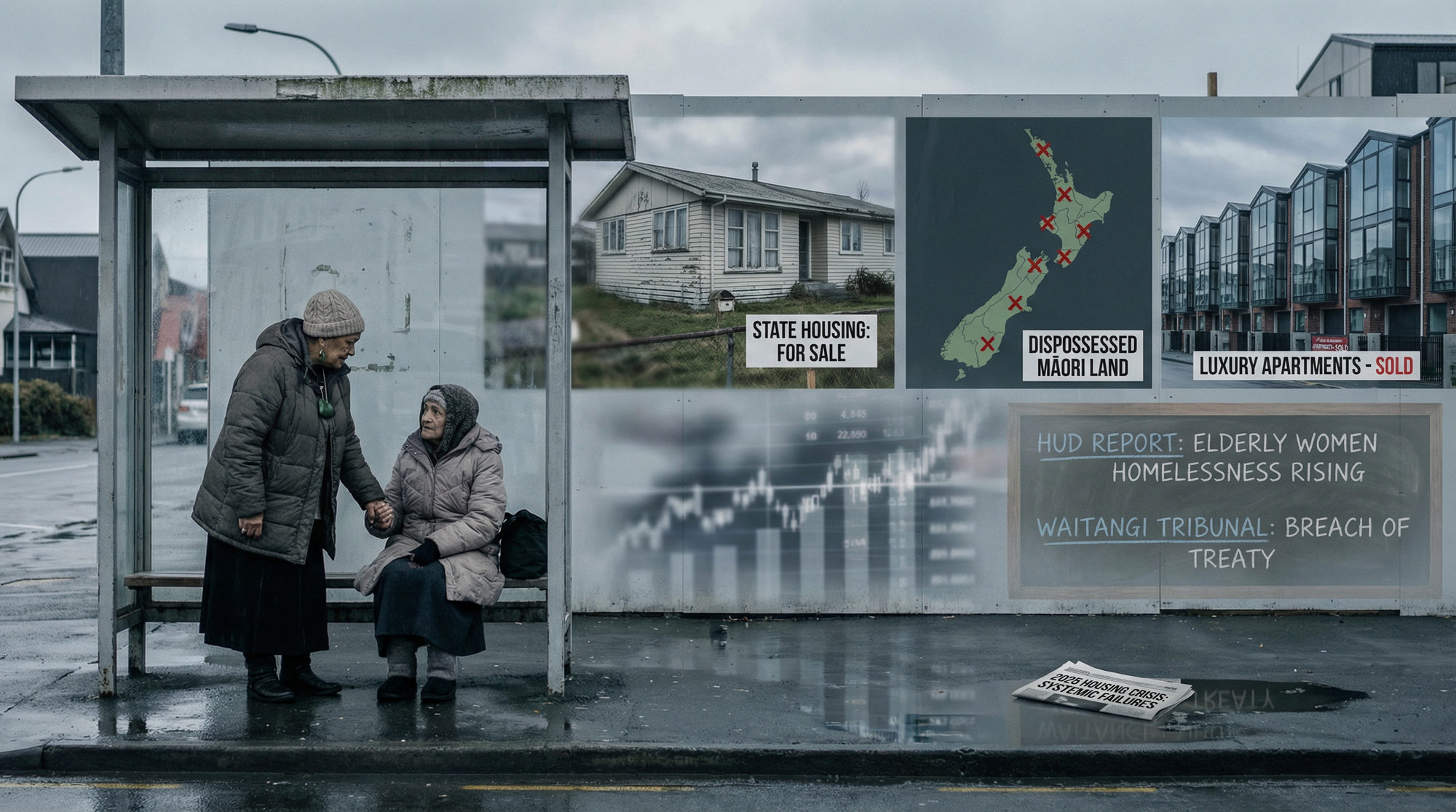
THE MĀORI DISPOSSESSION LAYER
THE POLICY MECHANISM: Emergency Housing Tightened to Break
In 2024-2025, the government tightened emergency housing eligibility criteria. The impact has been catastrophic and is precisely documented.
Emergency housing applications declined from 4% (March 2024) to 36% (June 2025)—an immense increase in refusal rate, as reported by RNZ. The reason for most declines: applicants were deemed to have “contributed to their own homelessness” or the need was “reasonably foreseeable.”
In December 2025, the Citizens Advice Bureau released a report based on over 10,000 requests for help. The testimony is damning, as covered by RNZ:
- A father of a disabled child being told he doesn’t qualify because he’s paying what he can toward his power bill.
- A woman living in her car being told MSD’s new policy is not to fix cars—even though she needs her car to be road-legal to maintain employment and housing.
- Multiple families with babies being rejected, told they are “not eligible for emergency accommodation.”
When pressed by the Citizens Advice Bureau about discretion, a MSD representative said the directive was to use “greater discretion,” but frontline workers reported MSD staff were applying rules more rigidly than before.
Housing Minister Chris Bishop was asked in March 2025 where people declined emergency housing go. His response:
“we don’t have trackers on everyone,” as reported by 1 News.
Translation:
the government knows it is pushing people into homelessness and has deliberately chosen not to monitor the outcome.
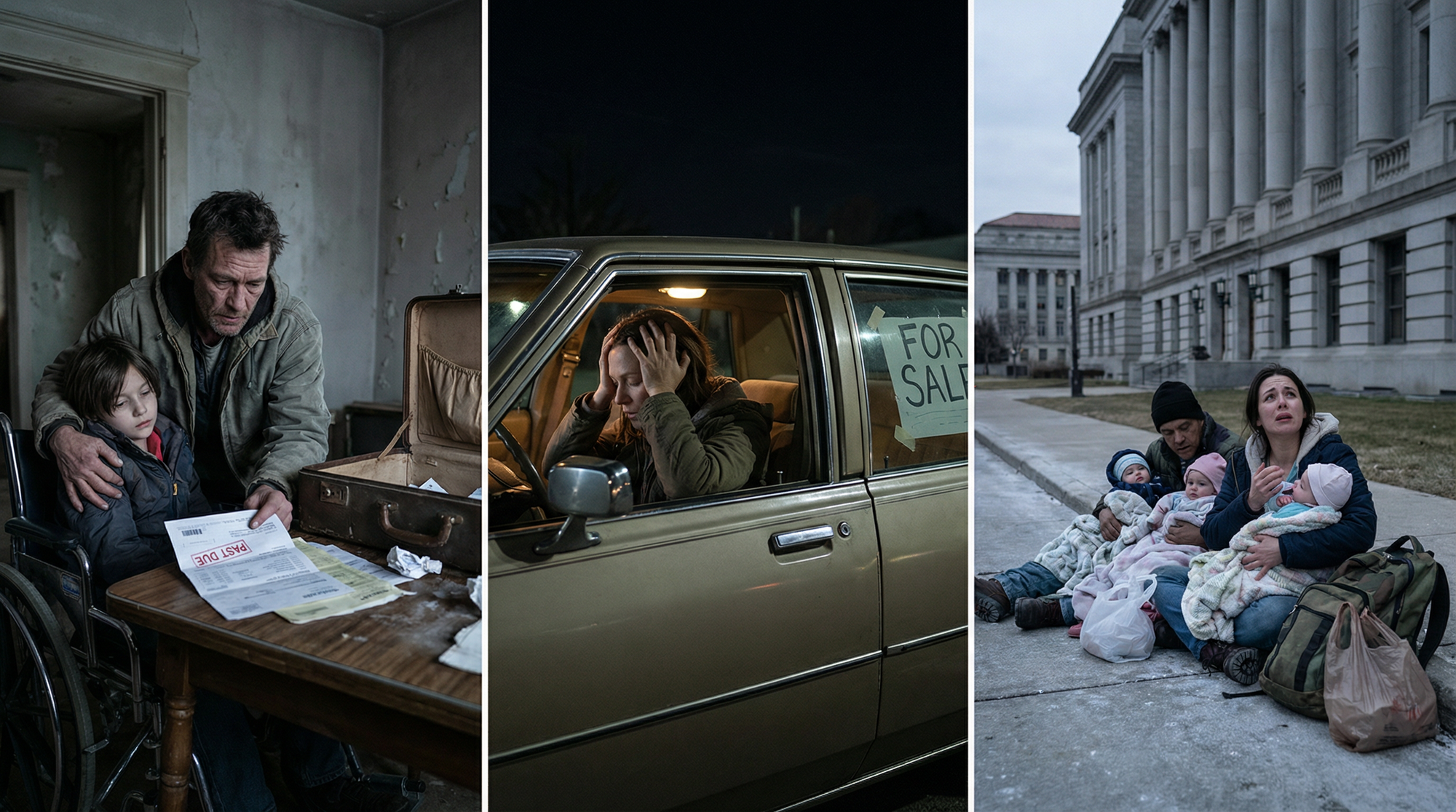
THE POLICY MECHANISM
THE IMPACT ON ELDERLY: Abandoned in a Time of Need
For elderly people, tightened emergency housing means immediate destitution. Kaumātua lack the networks, physical resilience, and recovery capacity that younger homeless people may have.
Sleeping rough at 70, 80, or 87 years old is not a temporary crisis
—it is a death sentence.
The housing insecurity researcher Nicola Fleming observed that elderly people entering homelessness have often been living with family:
“They have been living with family, and then family have moved away or gone into hospital. Or there has been trauma with some kind of issue in the family, or people passing away and they haven’t known where to go,” she told RNZ.
The crisis is often sudden, triggered by bereavement or family rupture—exactly the kind of “reasonably foreseeable” circumstance that MSD now uses to deny emergency housing.
The gap Fleming identified is structural:
elderly people don’t want to enter rest homes. Many still use substances. Many don’t qualify for aged care. But where can they go?
The answer is now:
the streets.
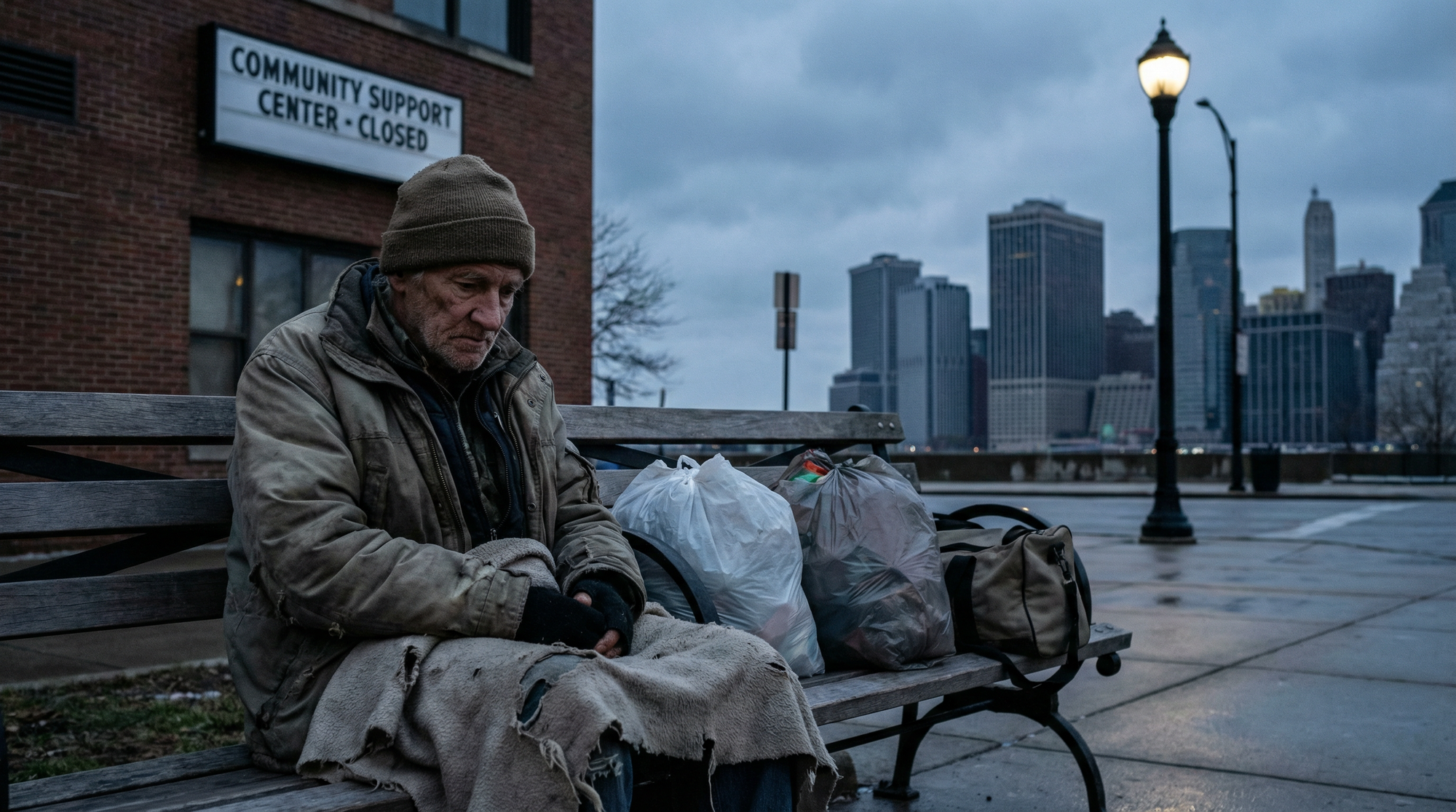
THE REGIONAL DEVASTATION: Funding Gaps and Forgotten Places
Housing First Ōtautahi is one of several services receiving a slice of the $10 million emergency fund. In Marlborough, another provider reported absorbing a 170% increase in demand for housing advocacy services but currently supporting 68 clients when contracted for 60, with 7 on a waitlist—and zero funding for the region beyond the time-limited grant, as reported by RNZ.
The Salvation Army’s National Homelessness Data Project, released in December 2025, found that 14 of 21 agencies surveyed reported increases in homelessness. Seven reported no change. Not one reported a reduction, according to RNZ. The report explicitly warns: smaller centres like Napier, Taranaki, Nelson, Rotorua, and Dunedin have been “overlooked” by government funding, yet are experiencing the steepest homelessness increases.
Meanwhile, total funding for homelessness support programmes has dropped by $79 million compared to the previous year, as revealed by the National Homelessness Data Project, even as the government announced $17 million in September 2025 to address rough sleeping. This is not new investment—it is redistributed, time-limited money in a system that is shrinking overall.
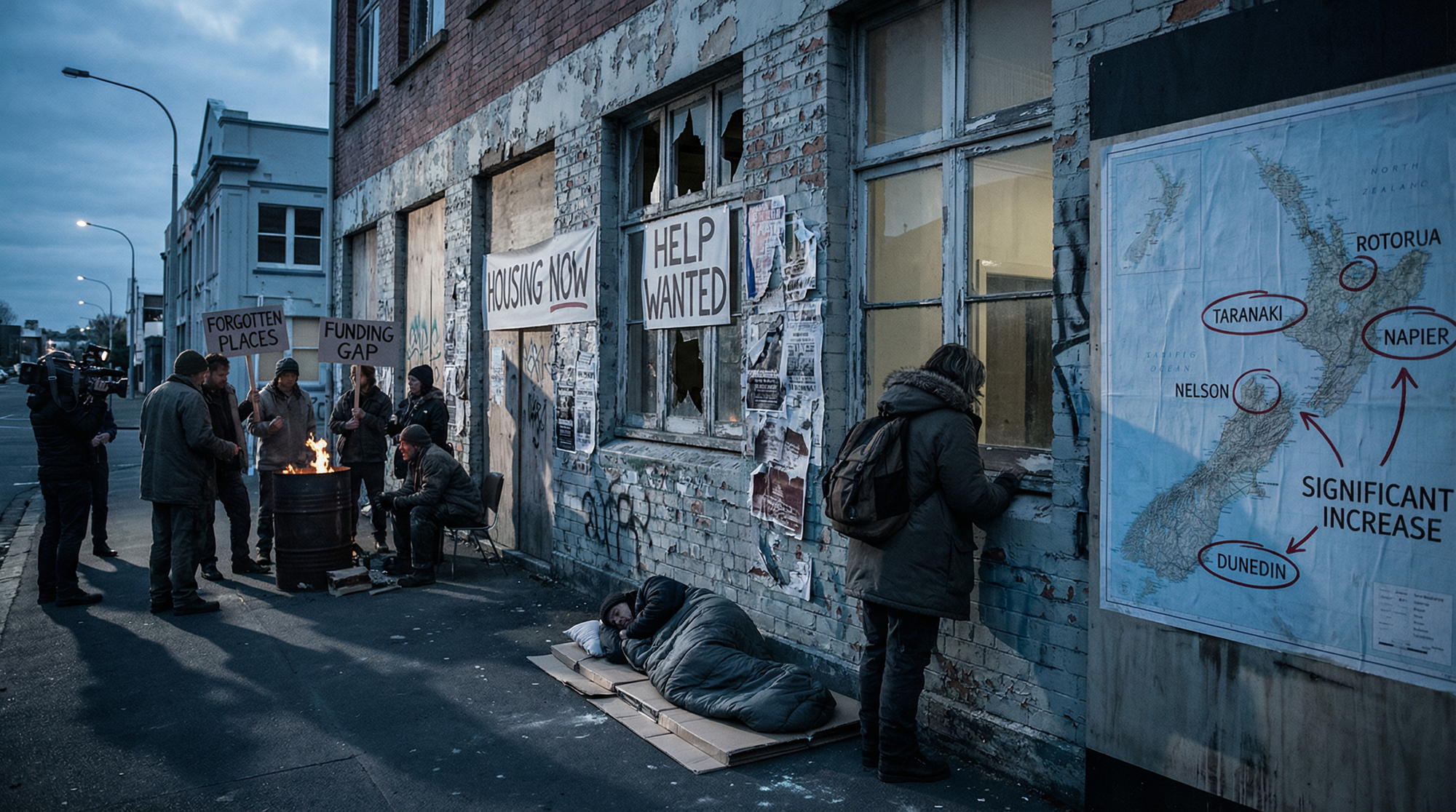
THE REGIONAL DEVASTATION
THE SILENT MORTALITY: Elderly Homelessness is Death
A 2025 study of Housing First participants in Aotearoa found that even after being housed, formerly homeless people experience significantly higher mortality rates than the general population, as published in People, Place and Policy. For elderly people who remain on the streets, the mortality risk is acute.
The Homelessness Insights Report documents 49 Housing First clients aged 65+ waiting to be housed—but does not track mortality among elderly waiting for housing or living rough, as seen in the HUD Homelessness Insights Report. This is not a data gap. It is deliberate invisibility.
THE SILENT MORTALITY
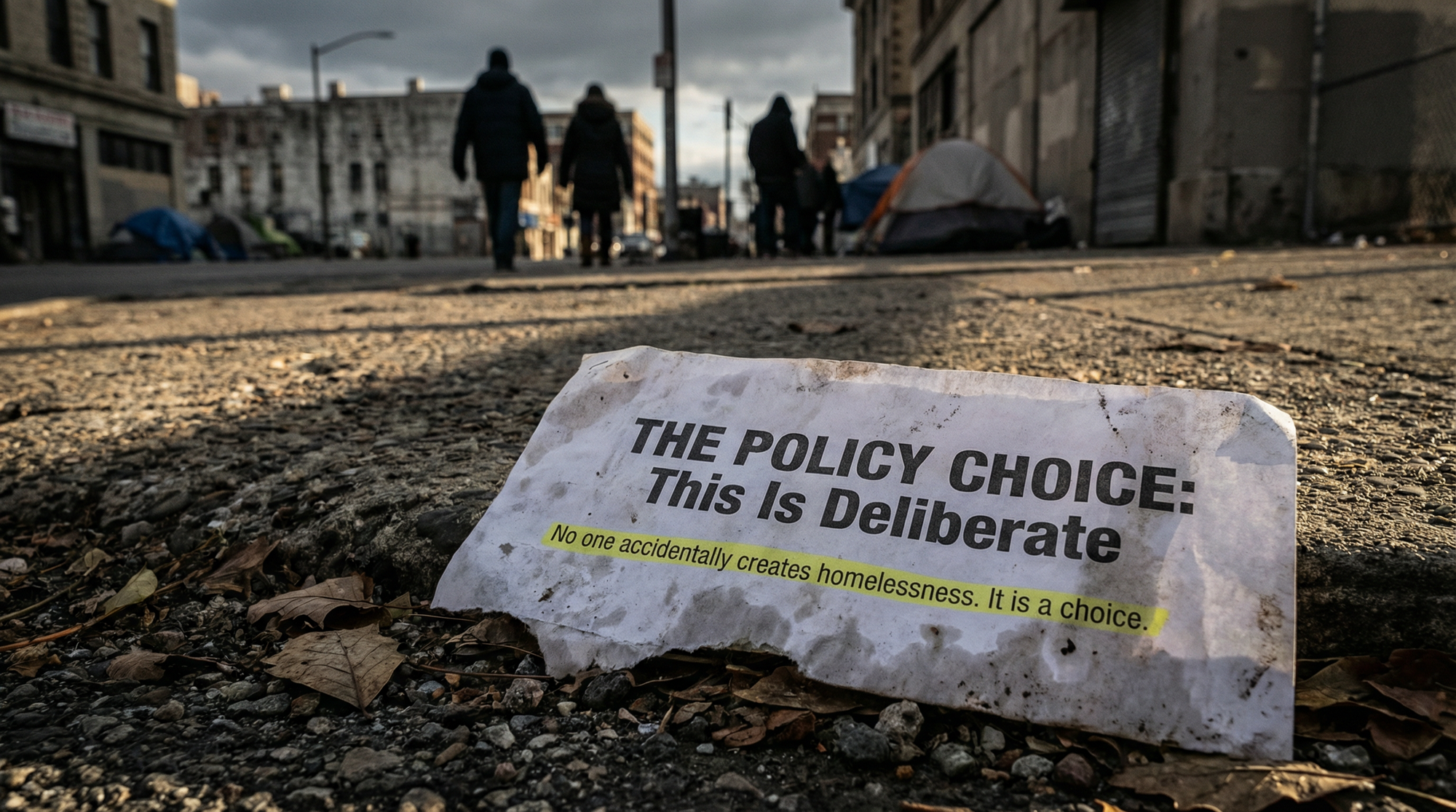
THE POLICY CHOICE: This Is Deliberate
No one accidentally creates homelessness. It is a choice.
When the government tightened emergency housing eligibility criteria in 2024-2025, Treasury and the Ministry of Social Development warned ministers that the changes “create a risk of increased levels of rough sleeping, people living in cars and overcrowding,” as reported by RNZ. The government implemented the changes anyway.
When officials briefed ministers that the reduction in emergency housing applications may reflect genuine need being unmet rather than demand being reduced, the government framed it as a policy success, as noted in the HUD Homelessness Insights Report.
When the Waitangi Tribunal found that the Crown has failed to protect kāinga for Māori and must increase housing provision, the government instead signaled a desire to reduce the state’s role in providing social housing, as detailed in the Waitangi Tribunal Report. This is not partnership—it is offloading Crown obligations.
THE POLICY CHOICE
The 87-Year-Old Woman Matters
An 87-year-old woman sleeping on the streets of Christchurch is not a statistic. She is a failure of the Crown to meet its most basic obligation:
to ensure that every person, especially kaumātua, has a safe place to sleep.
She was born into a country that promised (in the Labour governments of 1935-1949) that housing was a right. She raised children, worked, paid taxes, and contributed to this nation. She should have ended her life in security. Instead, she was sleeping on the street in 2025, in the fifth-largest economy in the Pacific, in a country with enough houses but not enough will to ensure they shelter all.
What remains is the choice:
to act, or to continue this slow erasure of our kaumātua, elderly rangatahi, and the most vulnerable among us.
Aroha mai.
We have known the answer.
Now we must have the courage to implement it.
Koha Consideration
Three pathways exist:
For those who wish to support this mahi directly with a koha (voluntary contribution), please visit the Koha platform:
Koha—Support - https://app.koha.kiwi/events/the-maori-green-lantern-fighting-misinformation-and-disinformation-ivor-jones
For those who wish to receive essays directly and support through subscription, join the Substack community:
Subscribe to the Māori Green Lantern on Substack - https://themaorigreenlantern.substack.com/subscribe
For those who prefer direct bank transfer, account details are: HTDM, account number 03-1546-0415173-000.
Every koha signals that whānau are ready to fund the accountability that Crown and corporate structures will not provide. It signals that rangatiratanga includes the power to fund our own truth tellers.
Kia kaha, whānau. Stay vigilant. Stay connected. And if you are able, consider a koha to ensure this voice continues.

Ivor Jones The Māori Green Lantern Fighting Misinformation And Disinformation From The Far Right
- https://ppl-ai-file-upload.s3.amazonaws.com/web/direct-files/collection_cf06d657-2c2b-4e68-8735-48f3c10166bd/fa7ea9f0-3948-41f0-9a6d-037b51b58d4a/Whakapiki-ki-te-ao-Maori-Application-2026.pdf
- https://ppl-ai-file-upload.s3.amazonaws.com/web/direct-files/collection_cf06d657-2c2b-4e68-8735-48f3c10166bd/8e9b17f7-604e-4009-9ec6-abbe1fd2c989/Perspective-with-Heather-du-Plessis-Allan_-This-Government-s-all-talk-bugger-all-action.PDF
- https://ppl-ai-file-upload.s3.amazonaws.com/web/direct-files/attachments/2123776/4a682d06-7632-4a27-a393-5ee40029b353/Housing-First-Otautahi-launches-rapid-response-to-homelessness-finding-an-increase-in-elderly-with-no-home-_-RNZ-News.pdf
- https://journals.co.za/doi/abs/10.31920/2634-3649/2022/v12n1a1
- https://onlinelibrary.wiley.com/doi/10.1002/ajs4.97
- https://www.semanticscholar.org/paper/ecb33b8fe11c1a615feb4f57141adeb32b0bfe61
- https://compass.onlinelibrary.wiley.com/doi/10.1111/gec3.12257
- https://dx.plos.org/10.1371/journal.pone.0295178
- https://www.tandfonline.com/doi/full/10.1080/02673037.2018.1535055
- http://www.emerald.com/hcs/article/24/3-4/105-122/100816
- https://journals.iupui.edu/index.php/ENGAGE/article/view/27621
- http://bmcpublichealth.biomedcentral.com/articles/10.1186/s12889-015-1700-y
- https://www.semanticscholar.org/paper/f7356699f65ff10736152e821b40160d12db136f
- /content/files/track/pdf/10-1186/1472-6963-14-167.pdf
- https://pmc.ncbi.nlm.nih.gov/articles/PMC6704672/
- /content/files/track/pdf/10-1186/1472-6963-12-345.pdf
- https://academic.oup.com/innovateage/article/7/Supplement_1/64/7487096
- http://collaborations.miami.edu/articles/10.33596/coll.65/galley/97/download/
- /content/files/core/services/aop-cambridge-core/content/view/3BFE8C02EB5803C266ABFDCB8606528C/S0144686X21000234a/div-class-title-shelter-housing-options-supports-and-interventions-for-older-people-experiencing-homelessness-div.pdf
- https://jech.bmj.com/content/jech/73/5/379.full.pdf
- https://pmc.ncbi.nlm.nih.gov/articles/PMC9046122/
- https://www.rnz.co.nz/news/national/582771/housing-first-otautahi-launches-rapid-response-to-homelessness-finding-an-increase-in-elderly-with-no-home
- /content/files/cms/assets/Documents/Reports-and-Inquiry/Housing-Reports/housing-inquiry-final-report-implementing-the-right-to-a-decent-home-in-aotearoa-fairness-and-dignity-for-all.pdf
- /content/files/assets/Uploads/Documents/Homelessness/homelessness-insights-report-june-2025-pdf-1-0.pdf
- https://www.rnz.co.nz/news/national/581505/people-facing-imminent-homelessness-not-eligible-for-emergency-housing-citizens-advice-bureau-says
- /content/files/wp-content/uploads/2025/07/updated-final-report-on-entry-point-pilot-.pdf
- /content/files/wp-content/uploads/2025/05/housing-first-population-new-zealand.pdf
- https://www.housingfirstchch.co.nz/WHD-Street-Art/
- https://www.waitangitribunal.govt.nz/en/inquiries/kaupapa-inquiries/housing-policy-and-services
- https://www.hud.govt.nz/documents/homelessness-insights-report-june-2025

- /content/files/assets/business/about-the-business-school/housing-for-a-lifetime-2025-mcd-final.pdf
- /content/files/view/delivery/64OTAGO_INST/12433871650001891/13433920860001891.pdf
- https://www.rnz.co.nz/news/national/582113/auckland-s-hidden-homeless-living-in-cars-abandoned-buildings
- https://waitangitribunal.govt.nz/en/news/tribunal-releases-report-on-crown-homelessness-policy
- https://www.hud.govt.nz/news/release-of-the-homelessness-insights-report
- https://eveningreport.nz/2025/12/17/homelessness-in-auckland-more-than-doubles-in-year-report/
- https://www.salvationarmy.org.nz/news/homelessness-rising-across-new-zealand-sector-urges-long-term-solutions/
- https://www.thepeoplesproject.org.nz/research/a-survival-analysis-of-mortality-in-a-housing-first-population-in-aotearoa-new-zealand/
- https://www.rnz.co.nz/news/political/510999/government-confirms-emergency-housing-plan-shake-up
- https://www.buildingbetter.nz/annotatedbibliograpy/kainga-kore-the-stage-one-report-of-the-housing-policy-and-services-kaupapa-inquiry-on-maori-homelessness/index.html
- https://teara.govt.nz/en/matariki-te-tau-hou-maori/page-2
- https://www.rnz.co.nz/news/political/567818/we-have-a-real-problem-homelessness-increases-but-by-how-much-unclear-government-report
- https://www.nzherald.co.nz/nz/sharp-rise-in-homelessness-prompts-salvation-army-call-for-action/TOXMHT7DPZCQFHVC32EGGD6PIY/
- https://www.nzherald.co.nz/nz/death-on-the-street-how-is-homelessness-measured-in-new-zealand/COYVD2H4FU67FPCBXIIZFLFBOE/
- https://www.rnz.co.nz/national/programmes/ninetonoon/audio/2019016468/a-growing-crisis-in-welfare-support-citizen-s-advice-bureau
- https://www.rnz.co.nz/news/national/581923/homelessness-in-auckland-more-than-doubles-to-940-people-in-year-to-september-survey
- https://www.nzherald.co.nz/rotorua-daily-post/news/homelessness-screws-with-your-head-rotoruas-homeless-suspected-suicides-highest-in-10-years/5XI43VGJLFEPY756KLJB4LLVTM/
- https://www.rnz.co.nz/news/national/581995/transport-subsidies-for-elderly-and-disabled-people-reduced
- https://www.rnz.co.nz/national/programmes/ninetonoon/20251211
- https://www.rnz.co.nz/news/national/568414/auckland-homelessness-spike-who-or-what-is-to-blame
- https://www.rnz.co.nz/news/national
- https://www.rnz.co.nz/authors/nine-to-noon
- https://www.nzherald.co.nz/nz/homelessness-in-auckland-more-than-doubles-to-940-people-in-year-to-september-survey/FN4D35WAFVF5FL3FQF3TMJ3QUI/
- https://www.rnz.co.nz/tags/politics?page=2
- https://www.rnz.co.nz/news/national/582773/top-cops-on-the-beat-over-the-new-year
- https://www.rnz.co.nz/tags/money?page=3