“THE STOLEN VOICE: How Colonial Language Suppression Became Intergenerational Trauma, and Why the Coalition Government Continues the Assault” - 26 December 2025
The Wound That Speaks Itself
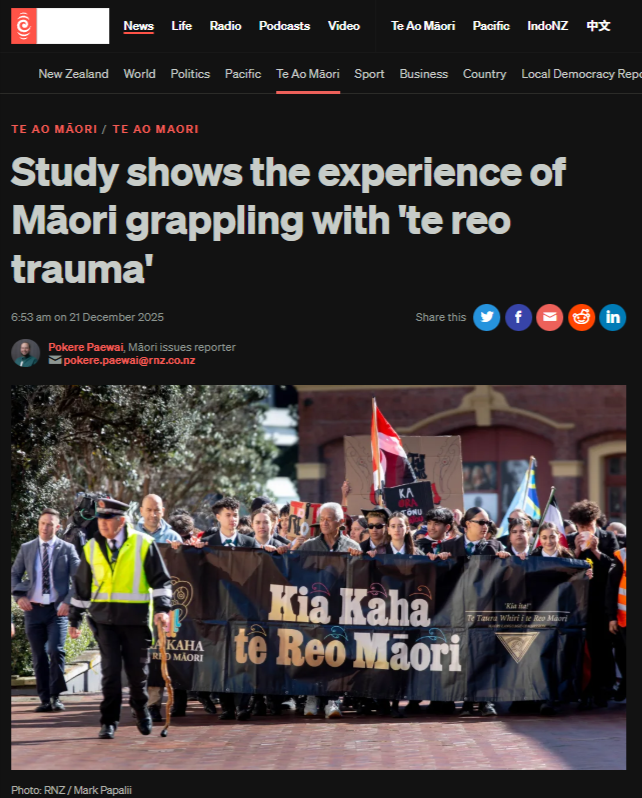
In December 2025, Te Mātāwai released a new study titled Everyday Experiences of Te Reo Māori Trauma—research that exposes something the Crown has spent 160 years burying:
the systematic destruction of te reo Māori was never just a language policy. It was psychological warfare, designed to fracture the transmission of culture across generations and make Māori people complicit in their own cultural erasure, as revealed by RNZ.
The report documents Generation X whānau—those born between 1965 and 1980—recounting how their parents deliberately chose not to speak te reo to them.
One interviewee’s father told him plainly:
“He thought it was a waste of fucking time us learning.”
This was not neglect. It was calculated assimilation logic, internalised by Māori parents themselves
—the Crown’s most efficient instrument of language death.
Today, the Coalition Government is running the same playbook with a 21st-century gloss. Where the Native Schools Act 1867 used the strap to punish te reo speakers, the Coalition has deployed budget cuts and an “English first” diktat that the Waitangi Tribunal has found to be a breach of Te Tiriti o Waitangi. The logic hasn’t changed. The mauri is being deliberately drained from the language.
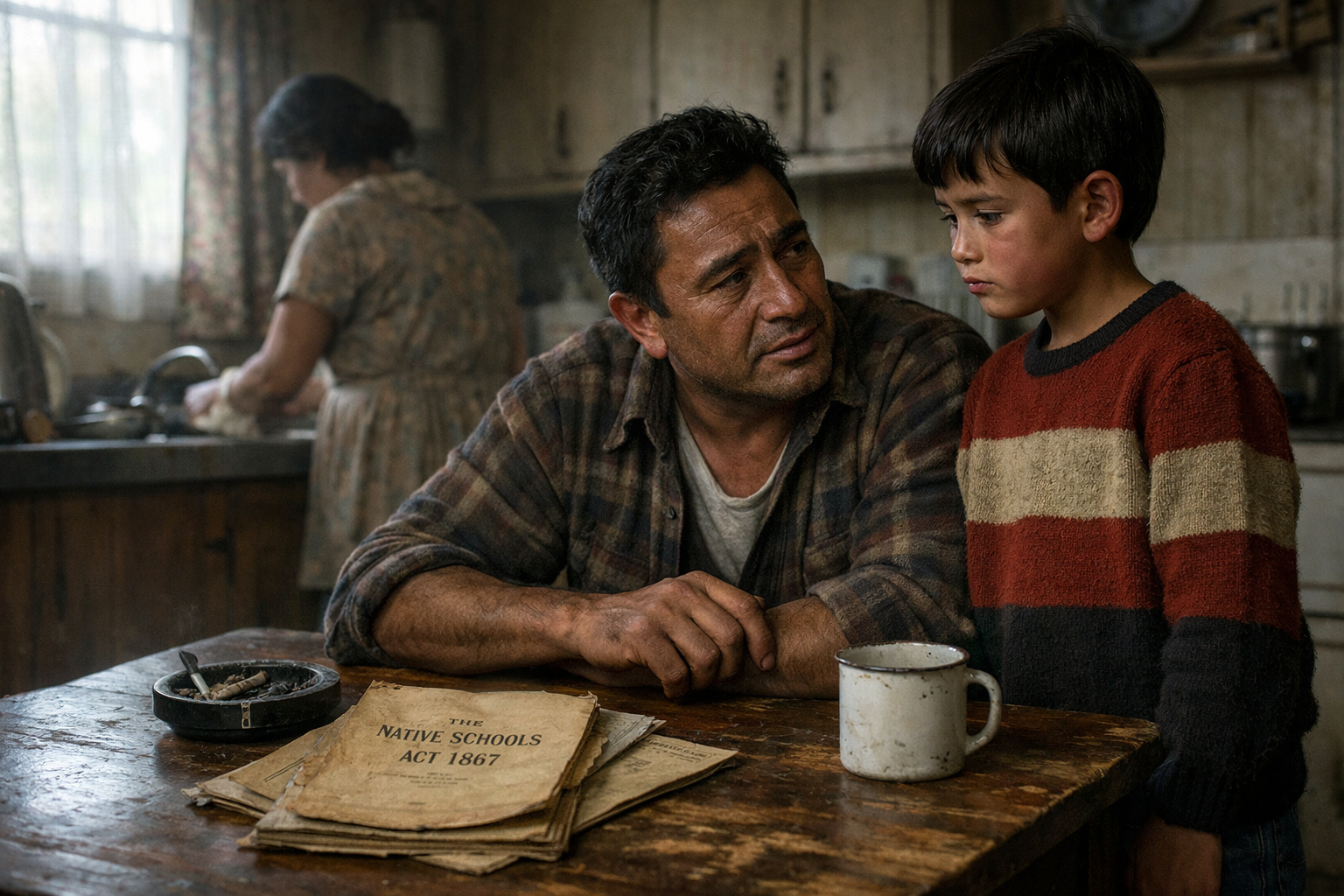
This Was Not Neglect. It Was Calculated Assimilation Logic
This Is Not Abstract Research: My Whānau’s Story
This essay is not written from academic distance. It is written from lived whakapapa
—from a family that embodies every mechanism of language loss documented in the Te Mātāwai research.
My mother is Māori, the youngest of nine children. She was a student at Whangamarino Primary School in the 1950s, at the precise historical moment when the Native Schools system’s legacy was most visceral. She was beaten for speaking te reo Māori—her mother tongue, the language of her whānau. Because she was the youngest in her family, a message was drummed into her:
“You don’t need to learn Māori. English is where you’ll get your bread and butter.”
This was not her parents’ cruelty. This was parental trauma expressing itself as survival logic. Her older siblings had been beaten first. She learned the lesson without needing the strap:
the Crown did not want her language. Her future required English. The taonga of te reo Māori was never gifted to her. It went to her older brothers, who had already internalised the cost of speaking it. But for the youngest—the one most shaped by assimilation logic—the language became something her mother could not afford to insist upon.
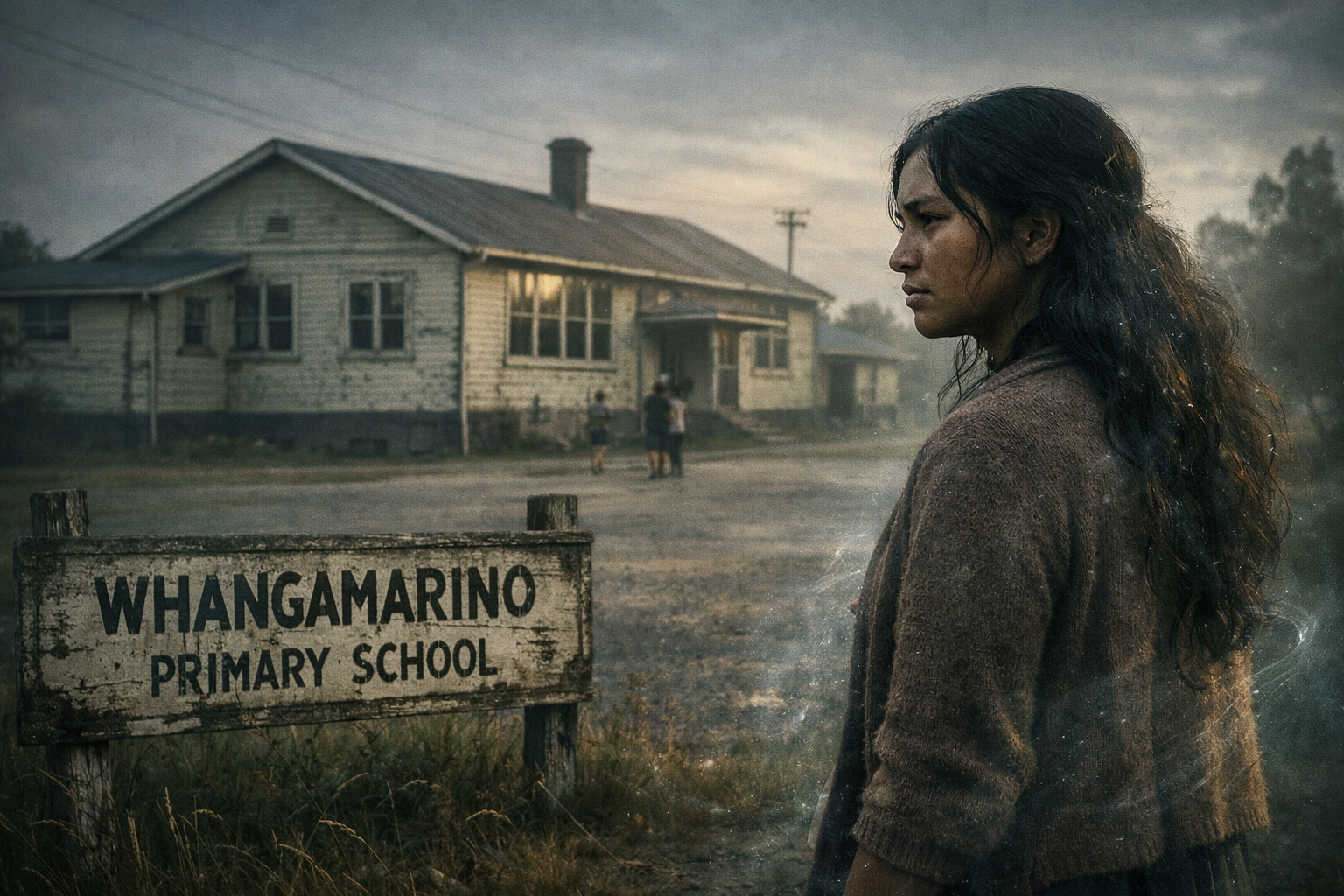
Whangamarino Primary School, 1950s: A Youngest Child’s Mother Tongue Forbidden
My father is Welsh, brought up in a working-class family of eight in Liverpool. He came to Aotearoa as a builder, met my mother, and they built a life together. But what my mother could not give, what her own trauma had made impossible to give, was the language. The decision not to emphasise te reo Māori with me was not indifference. It was protective withholding, shaped by her own pain. She wanted me to succeed. In her lived experience, success meant English. The language of survival. The language of the Crown.
As a result, I grew up in a home where te reo Māori was not active. I had early negative experiences with te reo learning that, combined with this absence, created hesitation. For years, I carried shame about this. But now I understand what Te Mātāwai’s research shows:
I was not failing. I was living out the designed outcome of a system perfected across 160 years.
Yet I am comfortable with the level of my Māoriness. My grandmother—who carried more of the language than my mother could pass on—gave me a different kind of inheritance.
She said:
“All it takes is one drop of blood to make you Māori.”
This was an assertion of belonging that did not require linguistic perfection.
My commitment has been different from reclaiming the language for myself—though I have tried many times to master it.
My focus has been deliberate:
to ensure that my own children have te reo Māori as a skill they can use, as a living language, not as an artefact of shame. I am breaking what was broken in my mother. This is the real work.
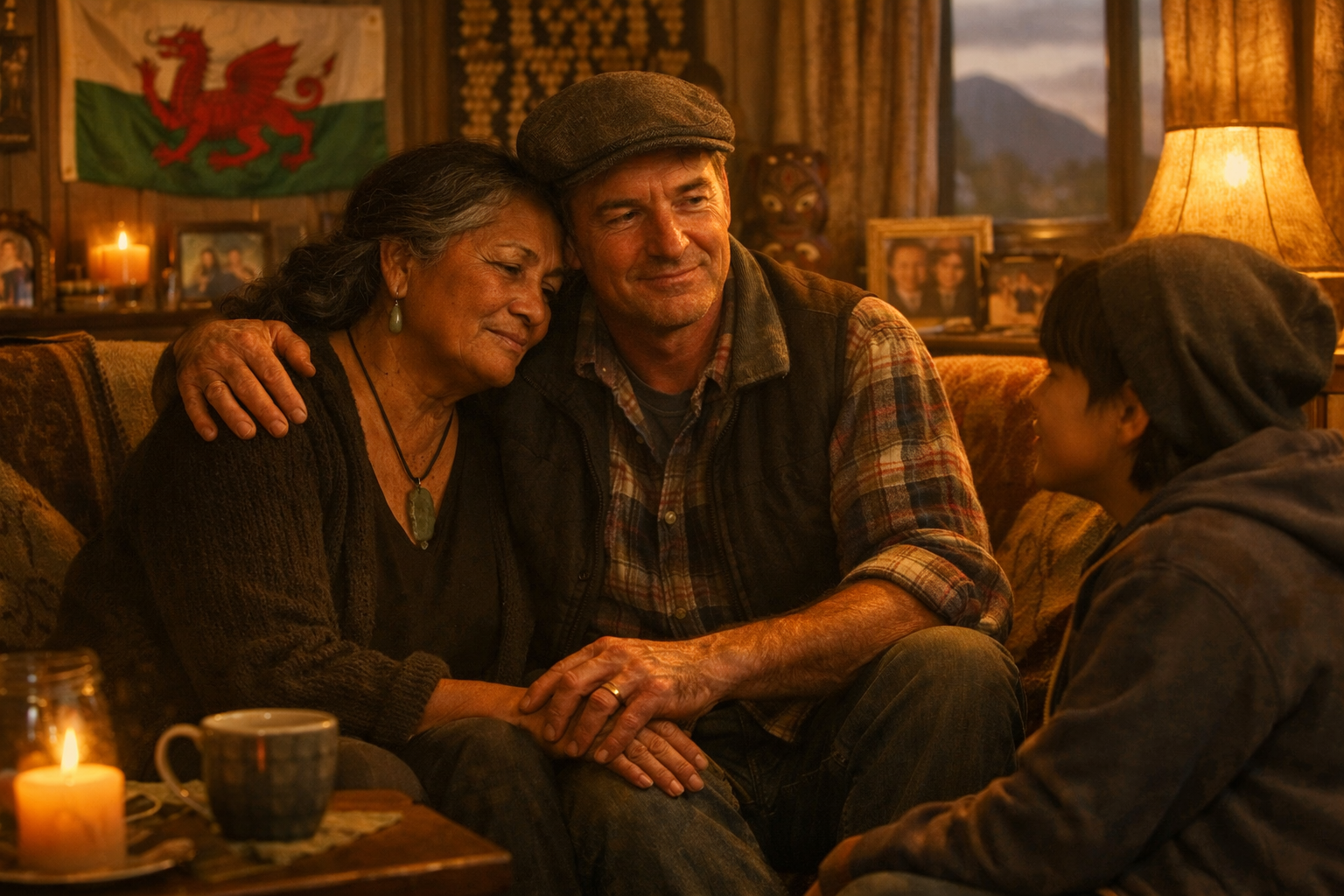
All It takes Is One Drop Of Blood To Make You Māori
The Architecture of Suppression (1867–1905)
To understand te reo trauma, one must first understand the machinery that created it. The Native Schools Act 1867 was not incidental education policy. It was a legislative instrument of cultural annihilation.
The infrastructure of suppression was methodical:
- The Native Schools Act 1867 established state schools where English was the only permitted language, as detailed by Te Ara.
- The Native Schools Code 1880 codified linguistic apartheid. Teachers were to know te reo Māori only well enough to use it in teaching English to junior students.
- By 1905, teachers were strongly advised to encourage Māori children to speak only English in the playground.
The casualty count was catastrophic. In 1913, 90% of Māori school children were native Māori speakers. By the 1920s—within one generation—Māori grammar was taught in only a few private schools. By the 1930s, the Crown had successfully reframed the destruction of a language as progress.
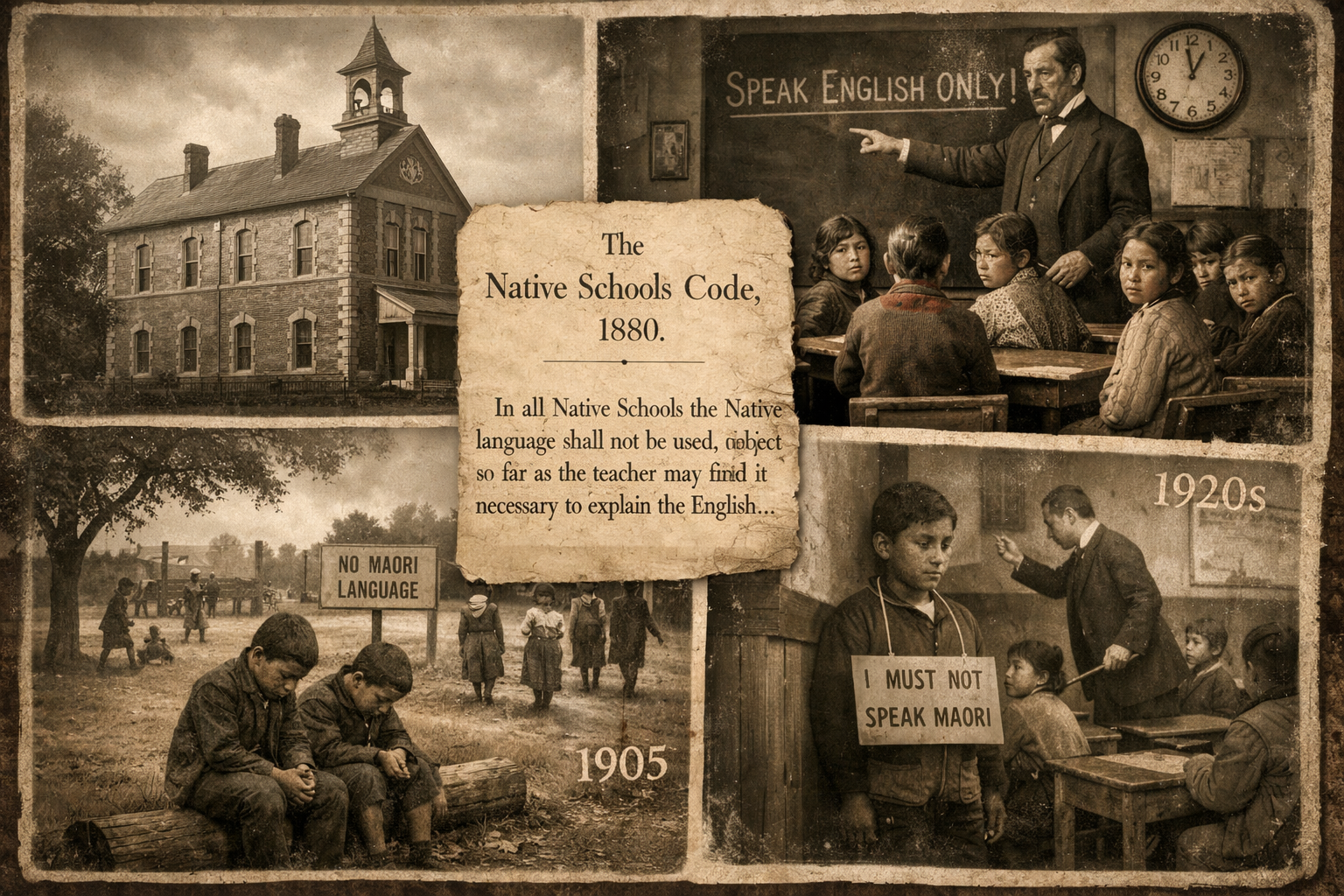
1920s Native School: Language punishment and institutional suppression
The Intergenerational Fracture: How Parents Became the Tool
The real genius of colonial trauma is that it doesn’t require constant external enforcement.
Once the initial wound is inflicted deeply enough, the victims inflict it on themselves.
This is precisely what happened during the mass urbanisation of Māori in the 1960s–1980s. Generation X (that’s me) were the first cohort raised primarily outside traditional iwi territories. Their parents (my Mum), who had already experienced the Native Schools system, made a calculated choice:
they would privilege English to ensure their children’s economic survival.
My mother’s decision not to emphasise te reo with me was this exact mechanism. She had been beaten for speaking it. She had been told it had no economic value. The message was so deeply internalised that by the time she became a parent, the choice seemed obvious:
protect your child by giving them English.
“Te reo Māori trauma is the emotional, psychological, physical and spiritual harm... experienced by Māori individuals due to a lack of proficiency.”
It includes trauma experienced by association
—meaning inherited, intergenerational trauma.
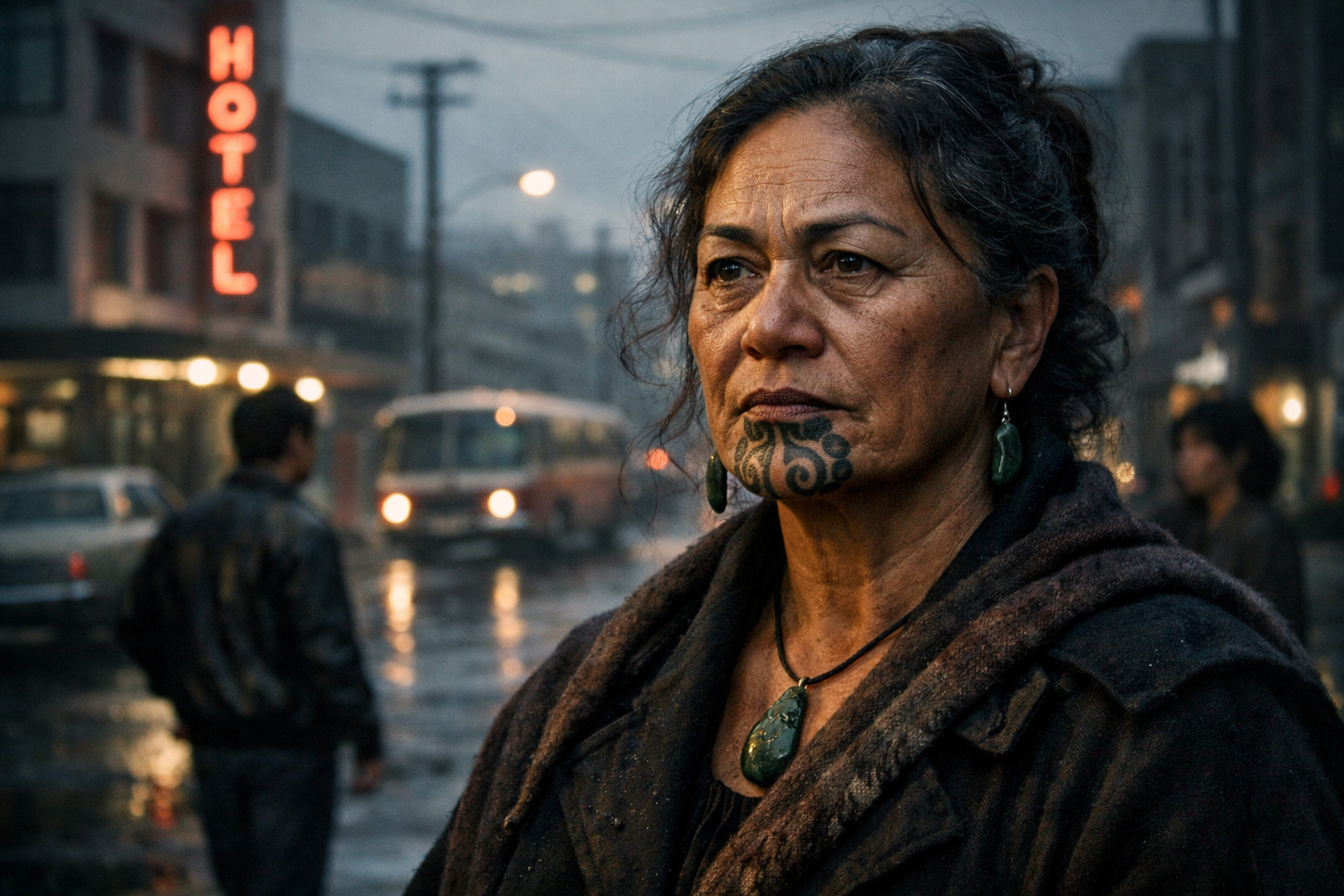
Once The Initial Wound Is Inflicted Deeply Enough, The Victims Inflict It On Themselves
Thanks for reading Ivor Jones The Māori Green Lantern! This post is public so feel free to share it.
The Hidden Connection: Colonial Policy as Continuous Assault
Here is what the government and mainstream media refuse to connect:
the Coalition Government’s 2023–2025 policies on te reo Māori represent not a reversal of historical injustice, but a continuation of it under new branding.
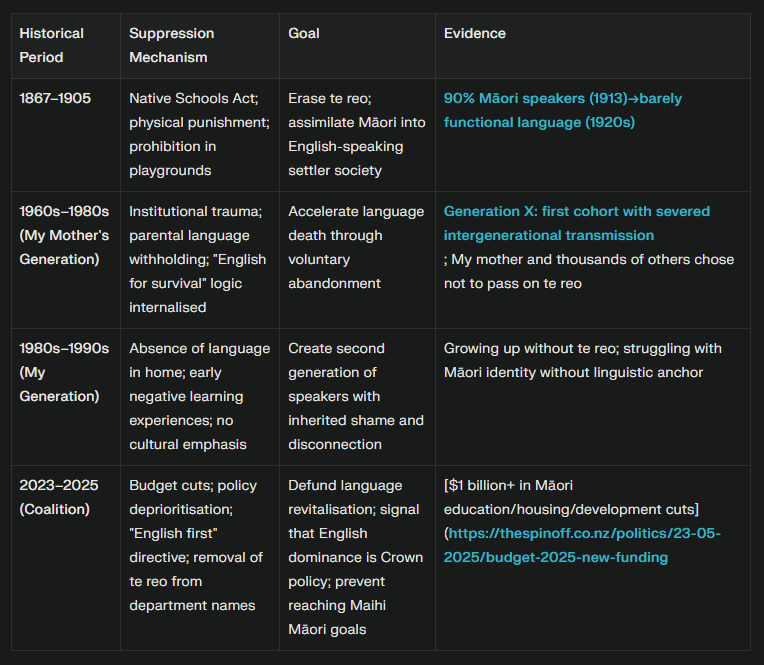
90% speakers (1913) → near collapse (1920s); Gen X transmission severed ; $1 billion+ in cuts
The logic has remained constant across 160 years: te reo Māori is a problem to be solved, not a taonga to be protected.
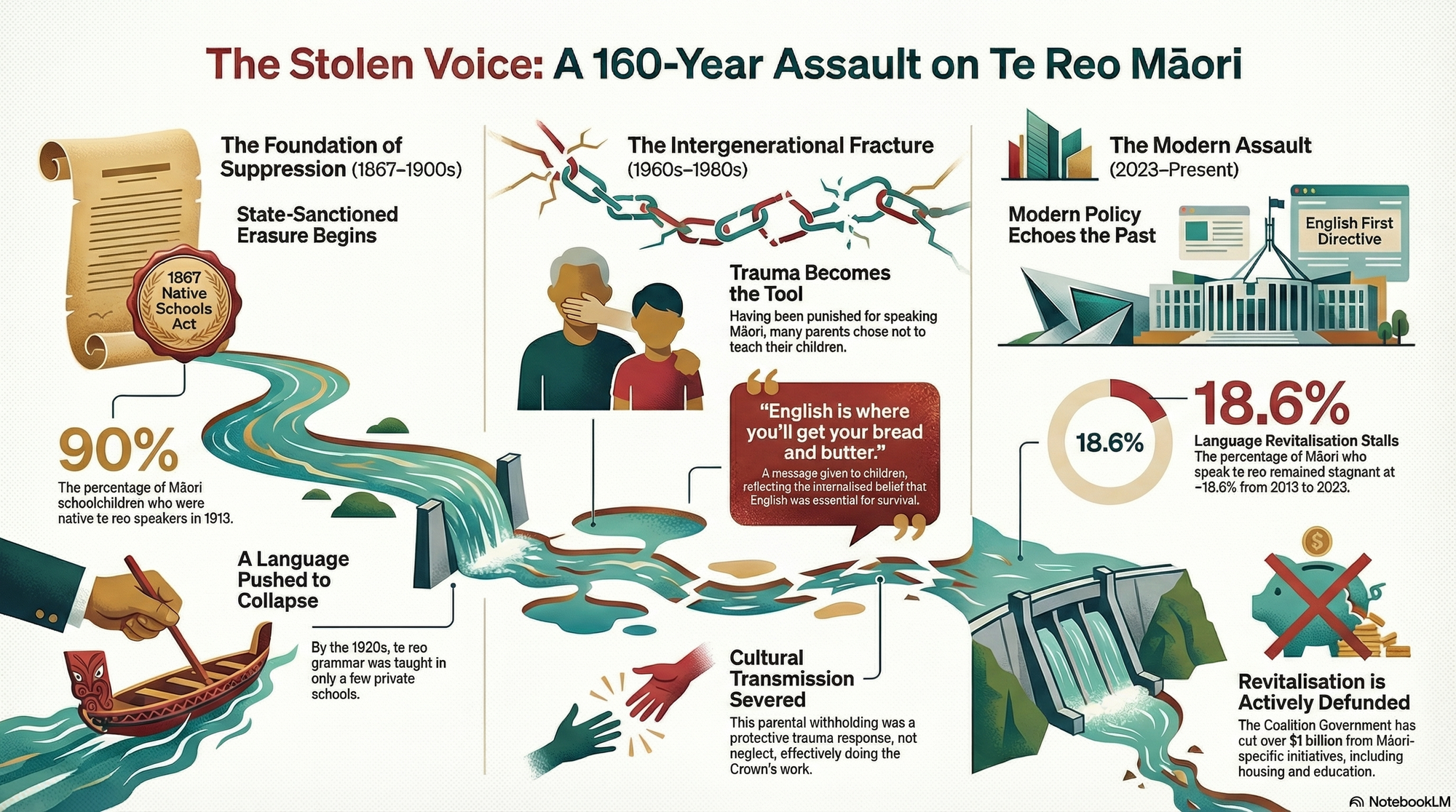
The Stolen Voice Of Te Reo Māori
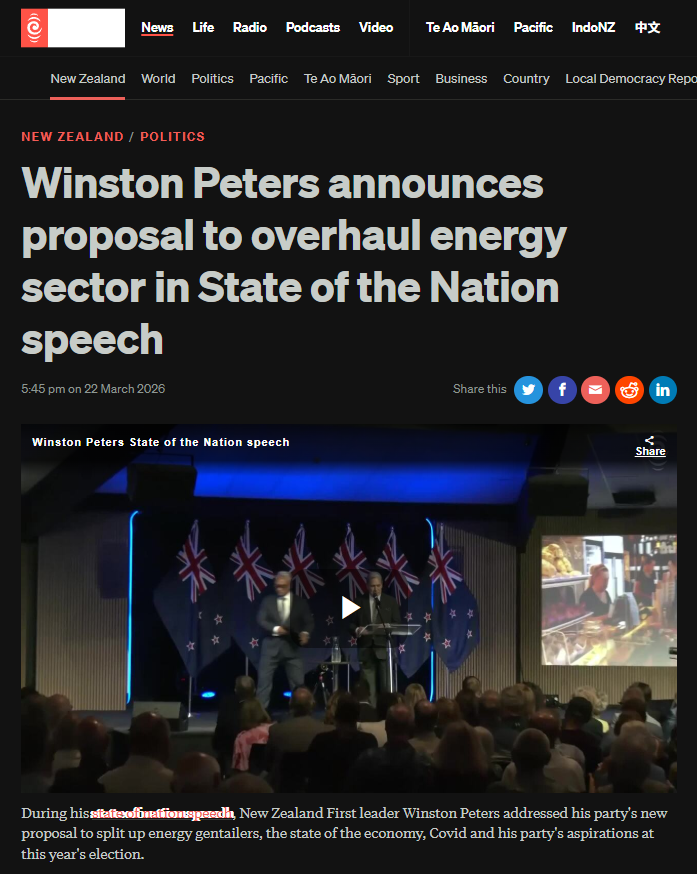
Winston Peters and the “English First” Redux
In November 2023, Winston Peters articulated the Coalition’s position with striking historical symmetry to the 1905 Native Schools directives:
government departments must have “their primary name in English.” Peters explicitly framed this as opposing “virtue signalling.”
In 1905, inspectors believed te reo contaminated English acquisition;
in 2025, Peters believes it contaminates government communication. The substance is identical.
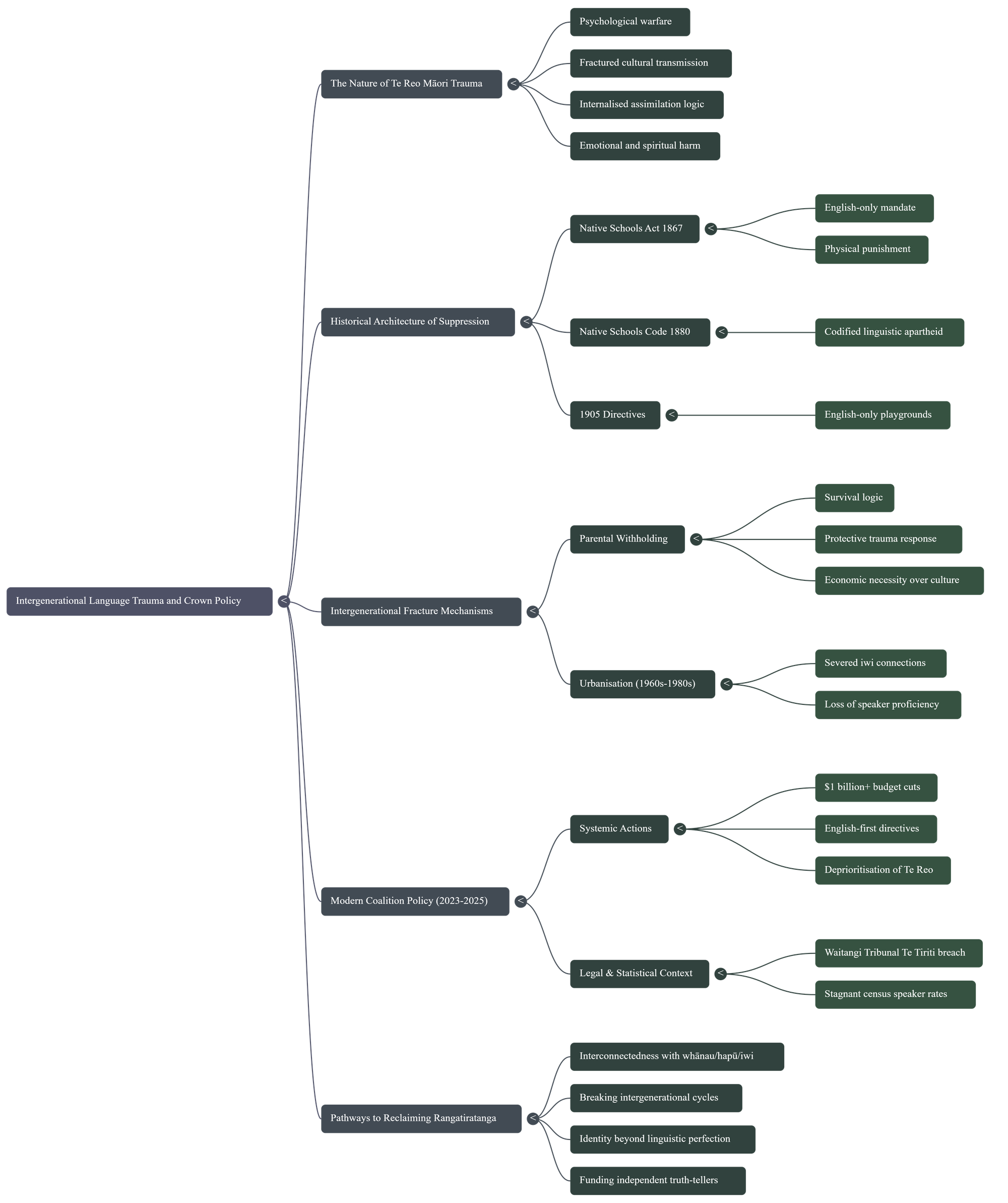
Integenerational Language Trauma
Defunding Revitalisation
The Coalition has cut more than $1 billion from Māori-specific initiatives across two budgets. Budget 2025 earmarked $750 million in cuts from Māori housing, education, and economic development. These were not “reprioritisations.” They were targeted demolitions of the infrastructure required to meet the Maihi Māori goals.
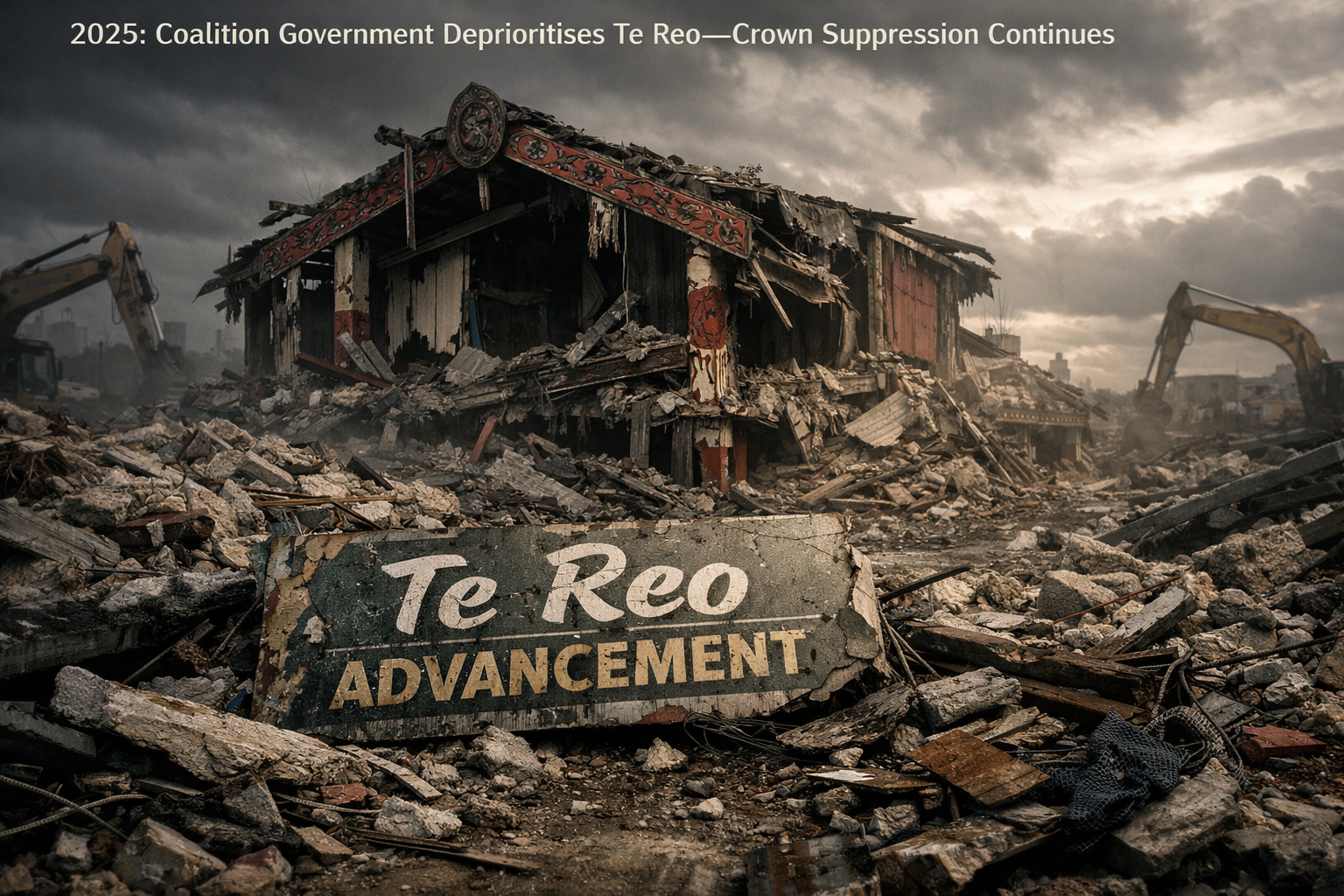
2025: Coalition Government Deprioritises Te Reo—Crown Suppression Continues
The Stalled Recovery & Waitangi Tribunal Verdict
The 2023 Census results show a stunning statistic:
the percentage of Māori who can speak te reo Māori has remained basically unchanged for the past decade (18.4% in 2013 to 18.6% in 2023), as reported by RNZ. The language is losing ground in relative terms.
In October 2025, the Waitangi Tribunal found that the Crown had breached Te Tiriti o Waitangi by deprioritising te reo Māori, as confirmed by Te Ao Māori News. The Crown has not complied with recommendations to reverse these decisions.
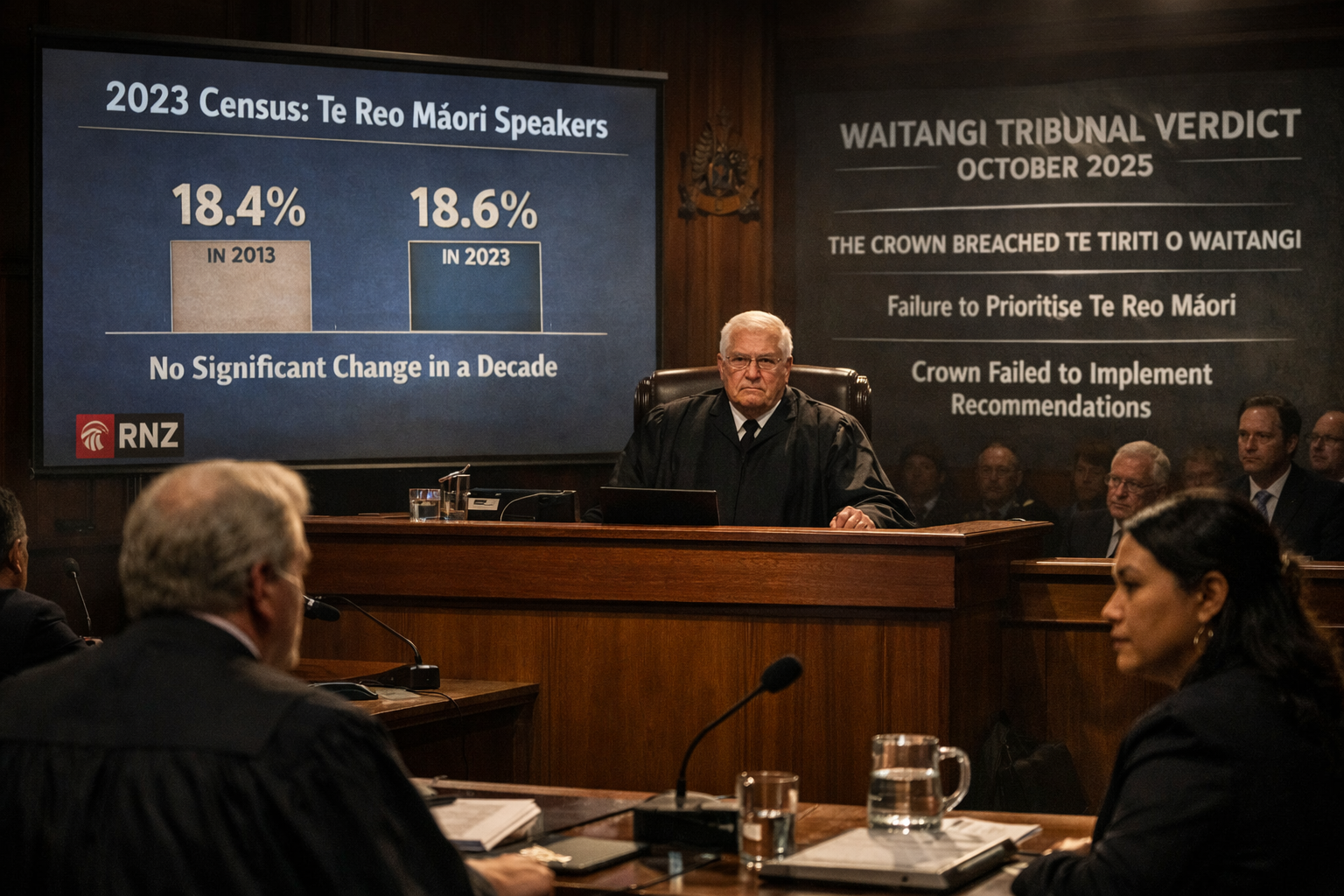
The Stalled Recovery
Five Hidden Connections: How the Assault Perpetuates Itself
- Colonial Continuity: The Native Schools Act 1867 and the Coalition’s 2023–2025 policies deploy identical logic.
- Parental Trauma as Enforcement: My mother’s withholding of te reo was not a choice, but a trauma response designed by the Crown.
- Epigenetic Imprinting: Fear and shame are transmissible. The Coalition’s cuts prevent the healing of this biological wound.
- Defunding as Indifference: By maintaining symbolic support while withdrawing material resources, the Government signals that te reo is not a priority.
- Watered-Down Vitality: Flat speaker statistics reveal mauri depletion despite nominal increases.
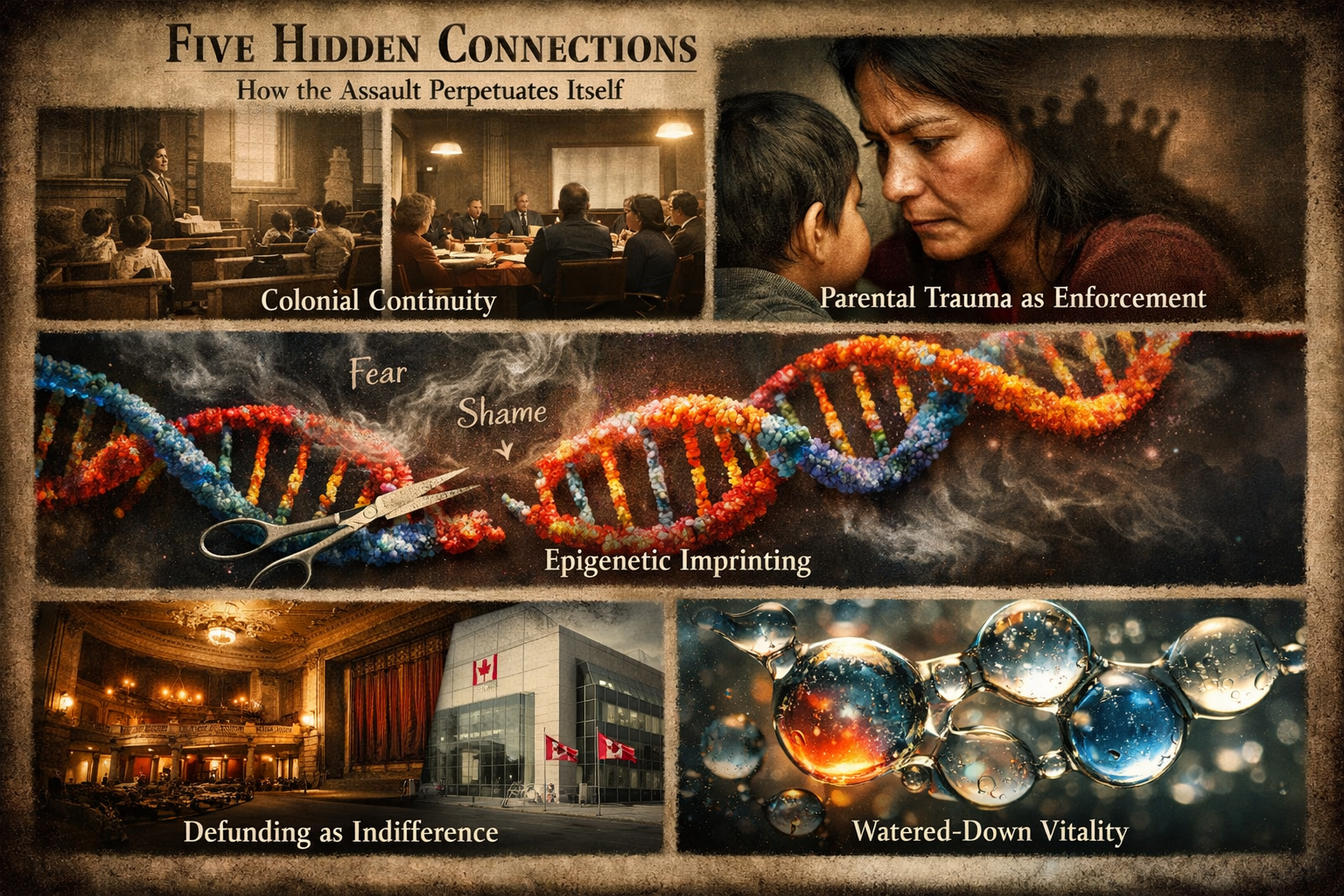
The Five Hidden Connections
The Path Forward: Rangatiratanga
Dr Mohi Rua’s research emphasises that successful language revitalisation happens when interconnected with whānau, hapū, and iwi. My own journey—accepting my identity without shame and ensuring my children have the skills I was denied
—is an act of rangatiratanga.
Te reo Māori trauma is not a historical artefact. It is an active, ongoing assault.
But as my wise grandmother said,
“All it takes is one drop of blood.”
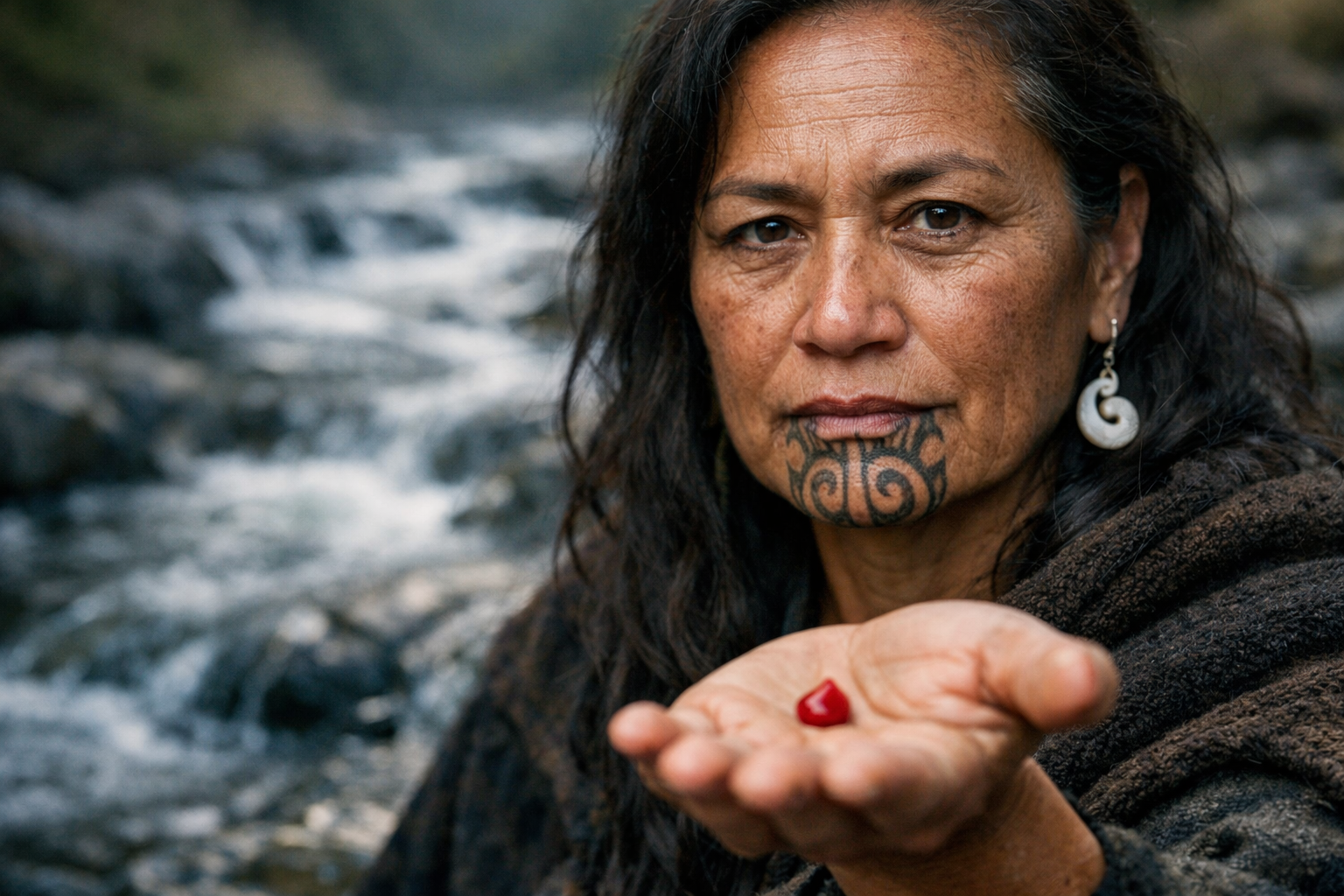
That Drop Is Enough To Build A River For The Next Generation
Koha Consideration
Three pathways exist:
For those who wish to support this mahi directly with a koha (voluntary contribution), please visit the Koha platform:
Koha—Support - https://app.koha.kiwi/events/the-maori-green-lantern-fighting-misinformation-and-disinformation-ivor-jones
For those who wish to receive essays directly and support through subscription, join the Substack community:
Subscribe to the Māori Green Lantern on Substack - https://themaorigreenlantern.substack.com/subscribe
For those who prefer direct bank transfer, account details are: HTDM, account number 03-1546-0415173-000.
Every koha signals that whānau are ready to fund the accountability that Crown and corporate structures will not provide. It signals that rangatiratanga includes the power to fund our own truth tellers.
Kia kaha, whānau. Stay vigilant. Stay connected. And if you are able, consider a koha to ensure this voice continues.
Ivor Jones The Māori Green Lantern Fighting Misinformation And Disinformation From The Far Right