“The Two-Faced Finance Minister: How Nicola Willis Praises Māori Success While Systematically Destroying It” - 24 September 2025
When your government spends two years dismantling everything Māori then has the audacity to claim credit for Māori economic success - that’s not leadership, that’s colonisation with a smile
Kia ora koutou katoa,
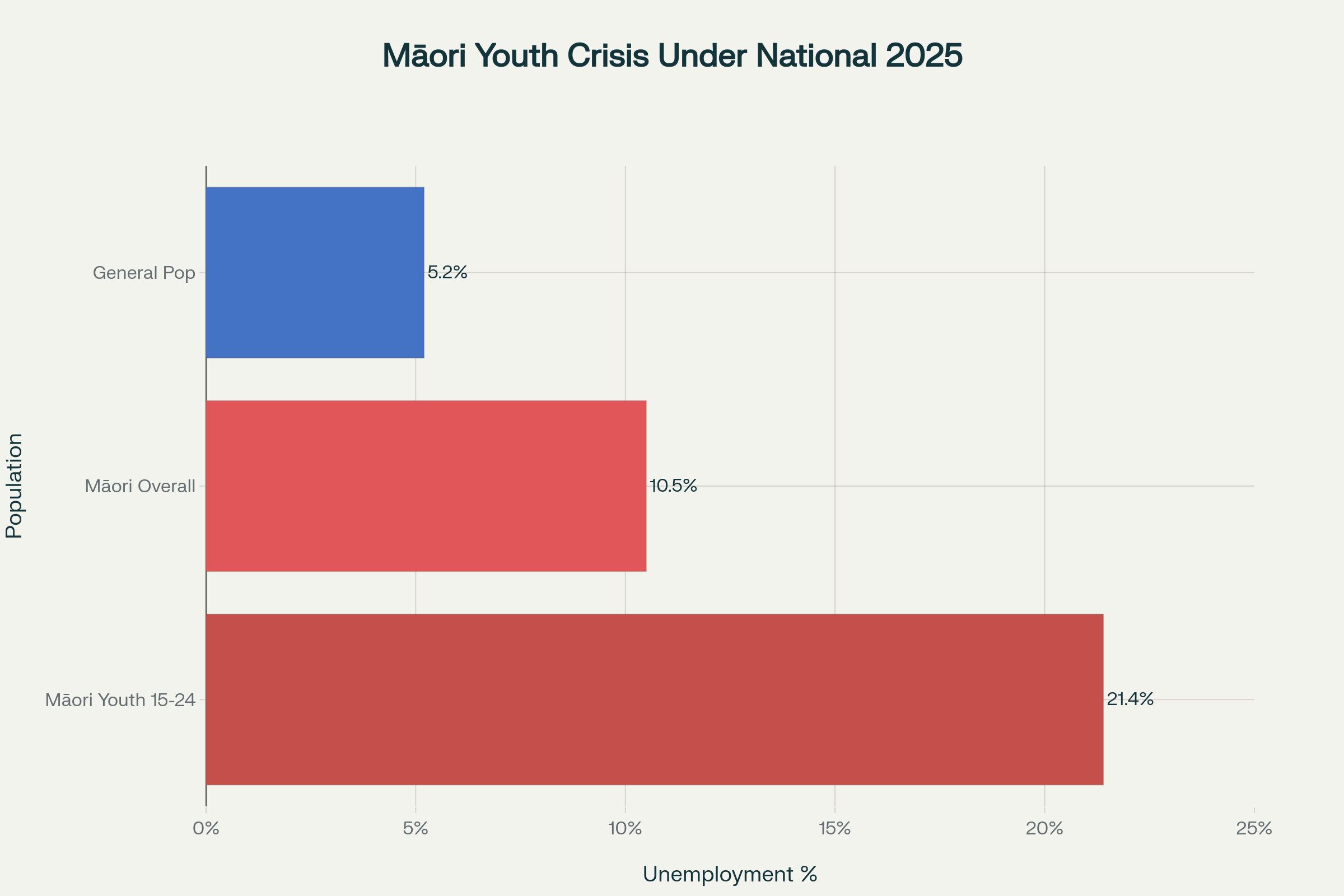
Unemployment rates show devastating impact on Māori rangatahi under the National-led coalition government
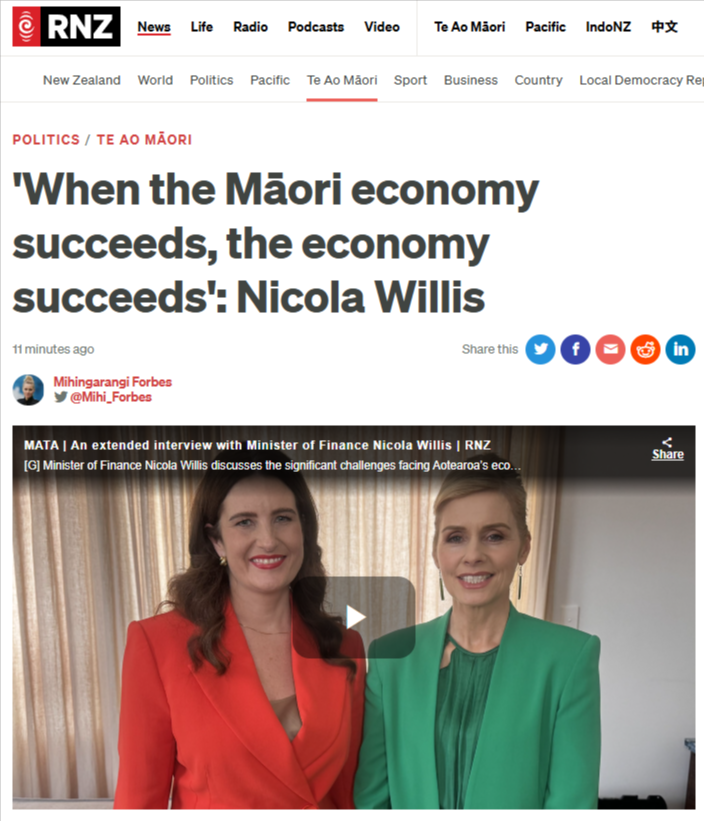
This is about hypocrisy so brazen it would make a used car salesman blush. Finance Minister Nicola Willis just spent 20 minutes on RNZ gushing about the Māori economy’s “huge success” and how “when the Māori economy succeeds, the economy succeeds.” Meanwhile, her government has spent the last two years systematically stripping $1 billion from Māori-specific programmes, dismantling the Māori Health Authority, and axing everything from te reo teacher training to Māori housing programmes. The sheer brass neck of this woman praising Māori economic achievement while actively sabotaging the infrastructure that enabled it represents everything wrong with this coalition government.
Background: The Systematic Attack on Tangata Whenua
To understand how disgraceful Willis’s recent comments are, we need to map the coalition’s relentless assault on Māori rights and economic development since taking power in December 2023.
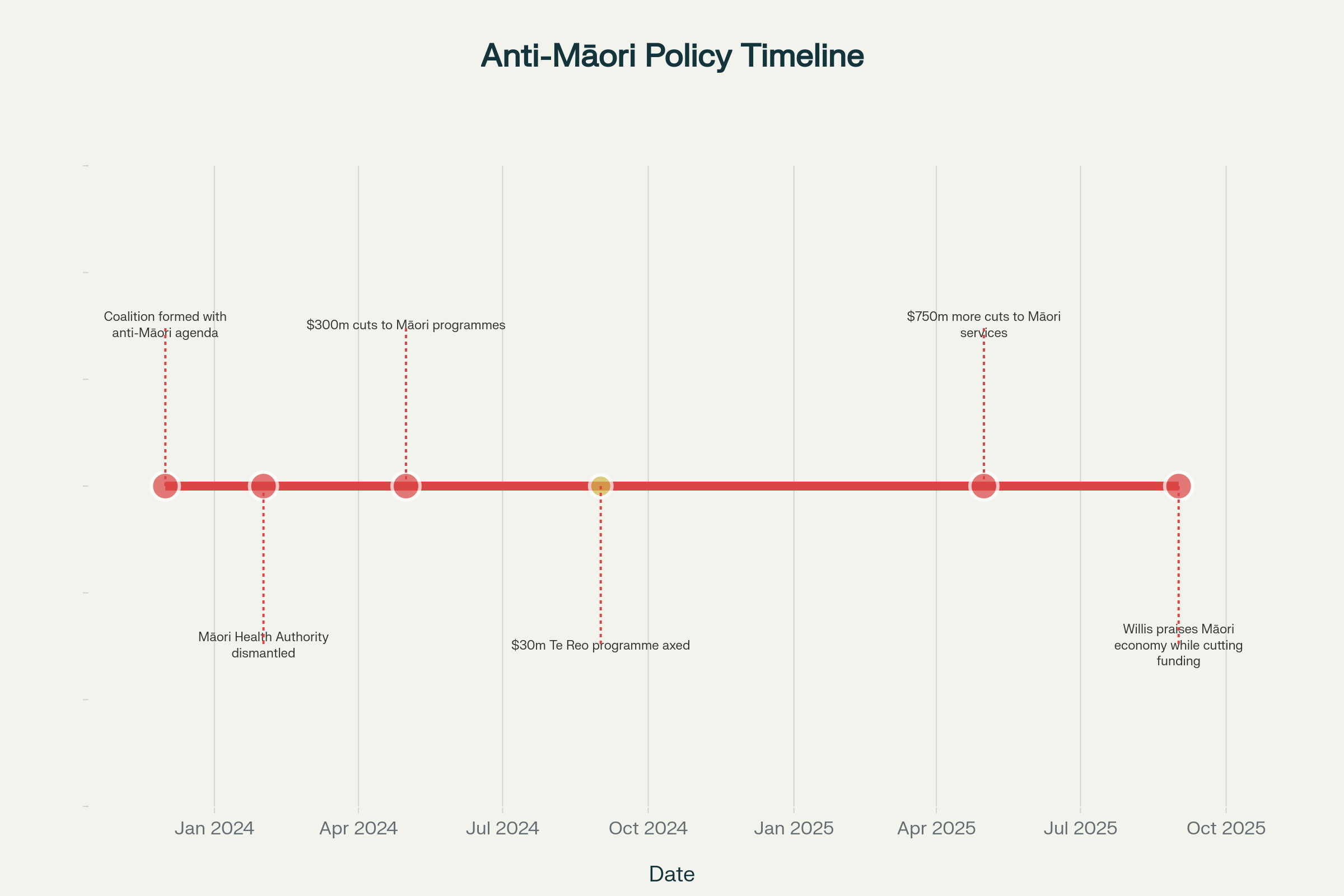
Timeline of systematic attacks on Māori rights and services by the National-led coalition
Christopher Luxon’s National Party made its anti-Māori intentions crystal clear during the campaign, ruling out any cooperation with Te Pāti Māori and describing them as having a “separatist agenda.” This wasn’t just political posturing - it was a declaration of war on partnership, collaboration, and the very concept of tino rangatiratanga.
The coalition agreement with ACT’s David Seymour brought explicit commitments to dismantle co-governance and rewrite Treaty principles. Winston Peters’ New Zealand First added fuel to this fire with demands to remove Māori language from government departments and roll back what they pejoratively termed the “Māorification” of Aotearoa.
The Hypocrisy Exposed: Praising Success While Ensuring Failure
Willis’s recent interview represents peak political cynicism. While celebrating that the Māori asset base has grown from $69 billion in 2018 to $126 billion in 2023 - an achievement built entirely under Labour’s policies - she conveniently ignores that her government has been systematically destroying the very programmes that enabled this growth.
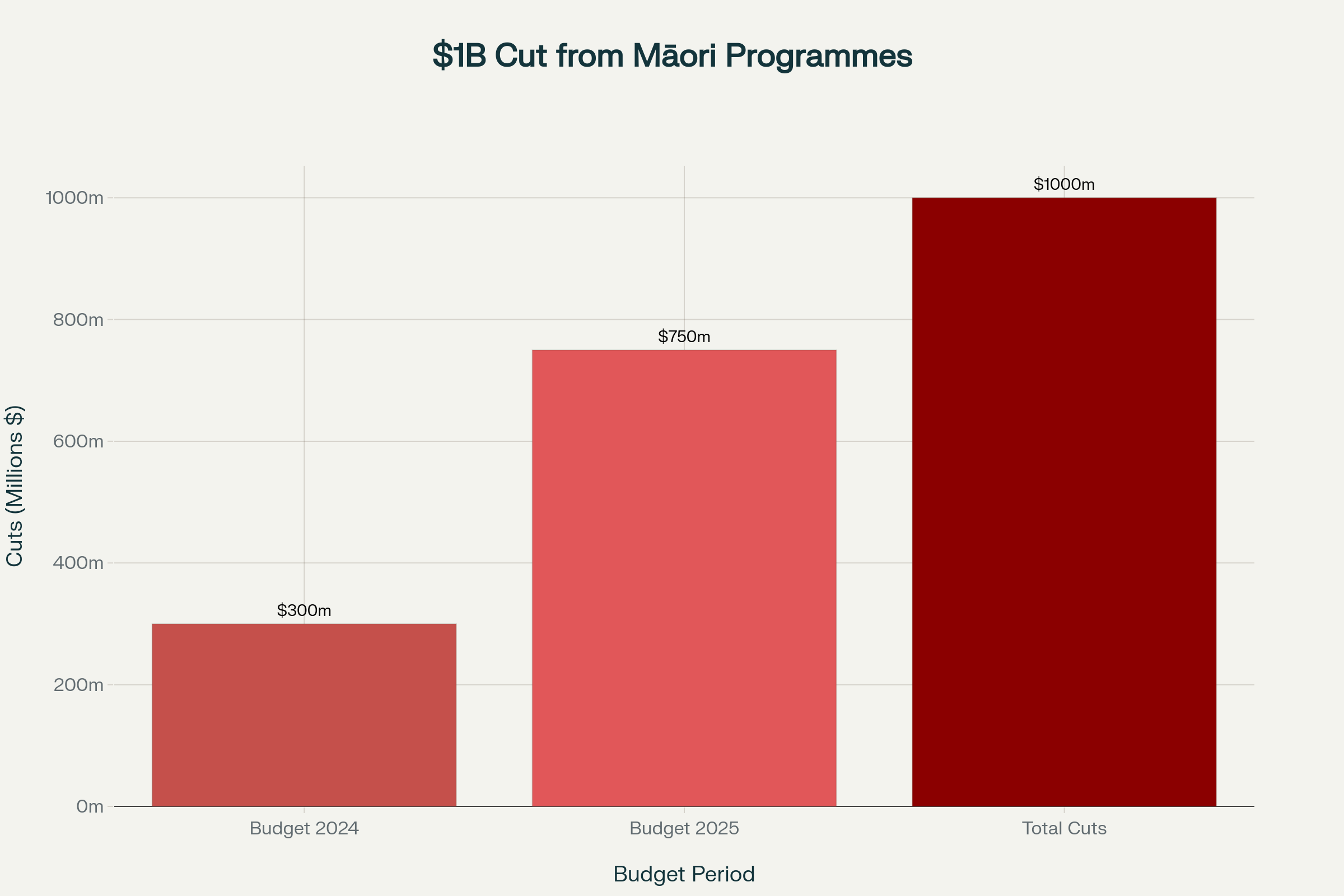
Systematic dismantling of Māori services shows the coalition government’s true priorities
Let’s break down what this government has actually done while Willis talks about supporting Māori economic success:
The Māori Health Authority Massacre
In February 2024, the government rushed through legislation to dismantle Te Aka Whai Ora - the Māori Health Authority that had been delivering targeted health services to address decades of health inequities. Health Minister Shane Reti claimed this would bring services “closer to home and hapū,” but the reality was staff were simply transferred to other agencies while dedicated Māori health expertise was diluted into the general health system.
Education Funding Axed
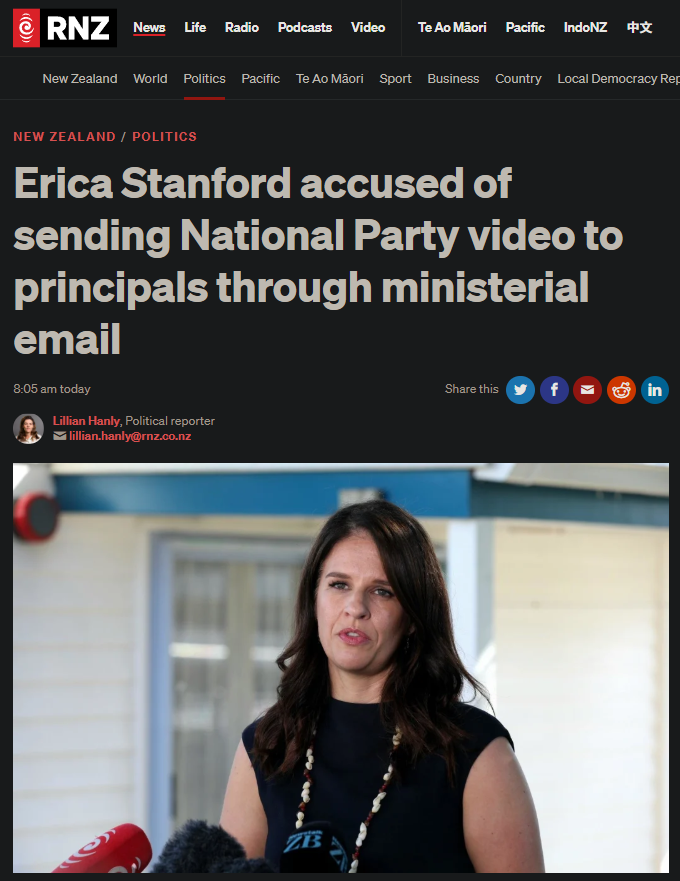
In September 2024, Education Minister Erica Stanford cut $30 million from Te Ahu o Te Reo Māori, a programme that helped teachers develop competency in te reo Māori. Stanford justified this by claiming the programme “lacked accreditation” and was “costly” - code for “we don’t value Māori language education.” This happened just days after Māori Language Week, showing contempt for our taonga that would make colonial administrators proud.
Housing Programmes Destroyed
The coalition has completely scrapped the $600 million Whai Kainga Whai Oranga programme, which was specifically designed to address Māori housing needs through Māori-led solutions. Instead, this funding has been thrown into a “flexible housing fund” where Māori providers will have to compete with everyone else for resources - a classic neoliberal move that destroys targeted solutions under the guise of “fairness.”
Vocational Training Cuts
Louise Upston has axed Māori trade training programmes at the exact time when Māori unemployment has risen to 10.5 percent. This isn’t just economic vandalism - it’s actively sabotaging pathways for rangatahi into meaningful employment while claiming to care about their futures.
The Unemployment Crisis Hidden in Plain Sight
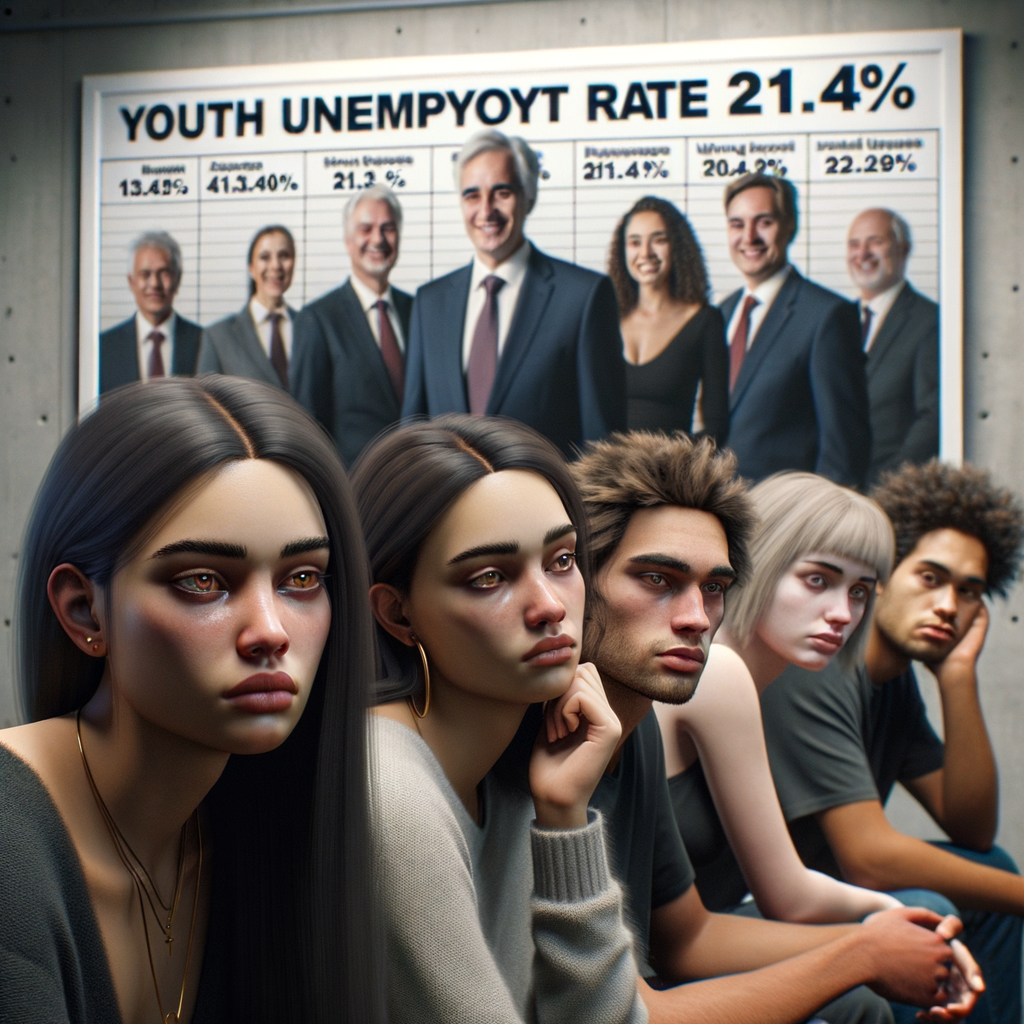
The stark reality of coalition policies: Māori youth unemployment soars while the wealthy benefit
Willis talks about ensuring “young Māori have good skills to find work” while Māori youth unemployment sits at a devastating 21.4 percent - four times the general rate. This isn’t a natural phenomenon or a skills mismatch - it’s the direct result of deliberate policy choices by this government.
The coalition’s tax cuts, meanwhile, have been specifically designed to benefit wealthy Pākehā over Māori families. A tax calculator from Budget 2024 showed that couples earning the median Pākehā income received significantly more in tax relief than those earning median Māori incomes. This isn’t accidental - it’s the inevitable result of a tax system that advantages those who are already well-off.
The Treaty Principles Bill: The Legal Framework for Economic Destruction
The context for Willis’s hypocrisy becomes even clearer when we consider the coalition’s broader constitutional attack through David Seymour’s Treaty Principles Bill. While this bill was ultimately defeated in April 2025, it represented the ideological framework driving all coalition policies toward Māori.

Coalition leaders systematically dismantling Treaty protections
The bill sought to redefine tino rangatiratanga as merely “property rights” rather than self-determination, effectively reducing Māori political and economic aspirations to individual ownership rights within a colonial legal framework. This wasn’t about clarifying Treaty principles - it was about legally enshrining the subordination of Māori economic and political rights to Pākehā majority interests.
Legal expert Carwyn Jones exposed the fundamental dishonesty of Seymour’s approach, noting that Seymour refused to acknowledge what the Treaty actually said, preferring to focus on what he thought it should say. This reveals the colonial mindset driving coalition policy - the Treaty is fine as long as it doesn’t actually protect Māori rights or enable Māori economic development.
The Neoliberal Playbook: Destroy Then Claim Credit
Willis’s strategy follows classic neoliberal orthodoxy: systematically dismantle public programmes that work, then claim credit when the private sector or iwi organisations step in to fill the gaps. The growth in Māori economic assets that Willis celebrates happened despite government policy, not because of it.
The $57 billion increase in Māori economic assets between 2018 and 2023 was built on Treaty settlements, iwi investment strategies, and targeted government programmes that supported Māori economic development. Labour’s policies created the environment where iwi could leverage their settlements into broader economic growth, supported by programmes that understood the intersection between cultural identity and economic success.
Now Willis wants to take credit for this success while systematically destroying the policy infrastructure that enabled it. She praises iwi for their “long-term investments” and “sustainable business approaches” while cutting the very programmes that support Māori businesses and economic development.
The True Face of Colonial Economics
What Willis represents is the modern face of colonial economics - smooth, professional, and utterly destructive. She tells Mihingarangi Forbes that she wants to “listen” to what Māori business leaders want at the upcoming economic summit, while her government actively works to undermine Māori economic autonomy through funding cuts and policy reversals.
This isn’t partnership - it’s colonisation with better PR. The coalition government maintains the rhetoric of supporting Māori economic development while systematically removing the tools that enable it. They want Māori economic success, but only within parameters that don’t challenge Pākehā economic dominance or require genuine power-sharing.
The government’s approach to statistics reveals this clearly. Statistics New Zealand has proposed axing its Tangata Tiriti Learning Capability Team, the very group responsible for ensuring government agencies can properly measure and understand Māori economic outcomes. How can you claim to support Māori economic success while destroying your ability to measure it?
Implications: The Broader Pattern of Destruction
Willis’s hypocrisy isn’t an isolated incident - it’s part of a systematic pattern of what Christopher Luxon himself has proudly called “clamping down on Māorification”. This government doesn’t just want to cut Māori programmes - it wants to eliminate the very concept that Māori might have distinct economic needs or approaches that differ from the Pākehā majority.
The coalition’s economic vision is fundamentally colonial: Māori can succeed economically, but only by conforming to Pākehā economic structures and abandoning claims to distinct political or economic rights. The removal of co-governance from service delivery ensures that economic programmes can never be designed with genuine Māori partnership or control.
This connects to broader global trends where neoliberal governments maintain the rhetoric of indigenous economic empowerment while systematically removing the political and institutional frameworks that enable genuine indigenous economic development. It’s the same playbook used across settler colonial states - celebrate indigenous economic success while ensuring it remains subordinated to colonial economic structures.
Calling Out the Lies

The Māori Green Lantern Fighting Misinformation And Disinformation From The Far Right
Nicola Willis’s praise for Māori economic success while systematically cutting Māori economic programmes represents everything dishonest about this coalition government. She wants credit for achievements her government had no role in creating while actively undermining the conditions that enabled those achievements.
This isn’t incompetence or mixed messaging - it’s deliberate political strategy designed to have it both ways. The coalition can claim to support Māori economic development for mainstream audiences while cutting the funding and programmes their base opposes.
But we see through this charade. When Willis praises iwi for their “long-term thinking” and “sustainable approaches,” she’s describing exactly the kind of indigenous economic philosophy her government is trying to eliminate through its systematic attack on co-governance and Treaty-based partnerships.
The truth is simple: this government wants Māori economic success, but only on Pākehā terms. They want iwi to generate wealth and create jobs, but without any genuine political power or distinct economic rights. They want the benefits of Māori economic growth without acknowledging the political and cultural frameworks that enabled it.
Willis can keep talking about how “when the Māori economy succeeds, the economy succeeds,” but her actions tell the real story. This is a government that measures success by how effectively it can dismantle Māori political and economic autonomy while maintaining the appearance of support.
We won’t be fooled by the smooth talk and professional presentations. This coalition’s true legacy will be measured not in press releases and interviews, but in the billion dollars stripped from Māori communities and the rangatahi facing unemployment while wealthy Pākehā celebrate their tax cuts.
The Māori Green Lantern understands these are tough economic times for whānau, so please only contribute a koha if you have capacity and wish to do so: HTDM: 03-1546-0415173-000.
Noho ora mai
Ivor Jones - Te Māori Green Lantern
Ngāti Pikiao, Te Arawa