"The Vanity Project Nobody Asked For" - 10 September 2025
How Jacinda Ardern's Documentary Exposes the Hollow Core of Neoliberal Performance Politics
Kia ora, Whakatōhea e ,
E ngā iwi, e ngā reo, e ngā mana whenua katoa. Greetings to the people, voices, and Indigenous authorities of this land. Today we examine yet another exercise in elite self-aggrandisement masquerading as public service - a documentary about Jacinda Ardern that perfectly captures everything wrong with our political and media systems.
The question posed by frustrated New Zealanders - "Who fucking cares about Jacinda Ardern's movie?" - cuts to the heart of our contemporary political malaise. This documentary, Prime Minister, represents more than just vanity filmmaking. It embodies the complete disconnect between political elites and the communities they claim to serve, while revealing the insidious machinery of neoliberal propaganda that transforms policy failures into hagiographic myth-making.
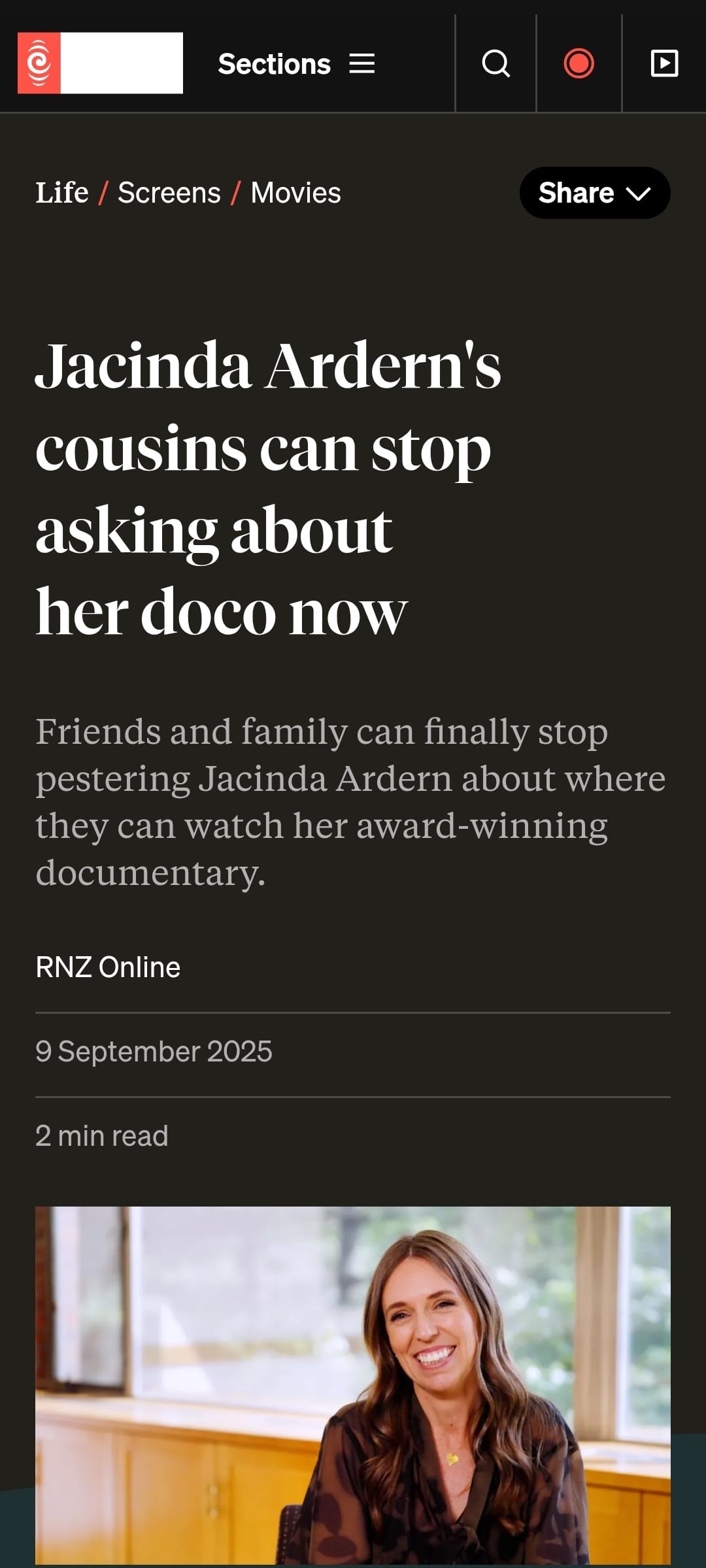
https://www.nzherald.co.nz/entertainment/jacinda-ardern-documentary-prime-minister-set-for-cinema-release-this-month/BFNQDXKDEVGULLB4EY6L7Y3WJU/
The Backdrop of Betrayal
To understand why this documentary matters - not as entertainment but as symptom - we must first examine the chasm between Ardern's international reputation and her domestic record. While global media painted her as a transformative leader, the reality for tangata whenua and working-class New Zealanders tells a vastly different story.
Ardern's tenure was defined by grandiose promises and spectacular failures. She promised to be the generation that would end child poverty, yet managed to lift only 12,100 children out of poverty by 2019 - a pathetic 12% of her promised 100,000 target. She declared climate change her generation's "nuclear-free moment," yet emissions continued rising under her watch. She proclaimed neoliberalism had failed while implementing textbook neoliberal policies throughout her administration.
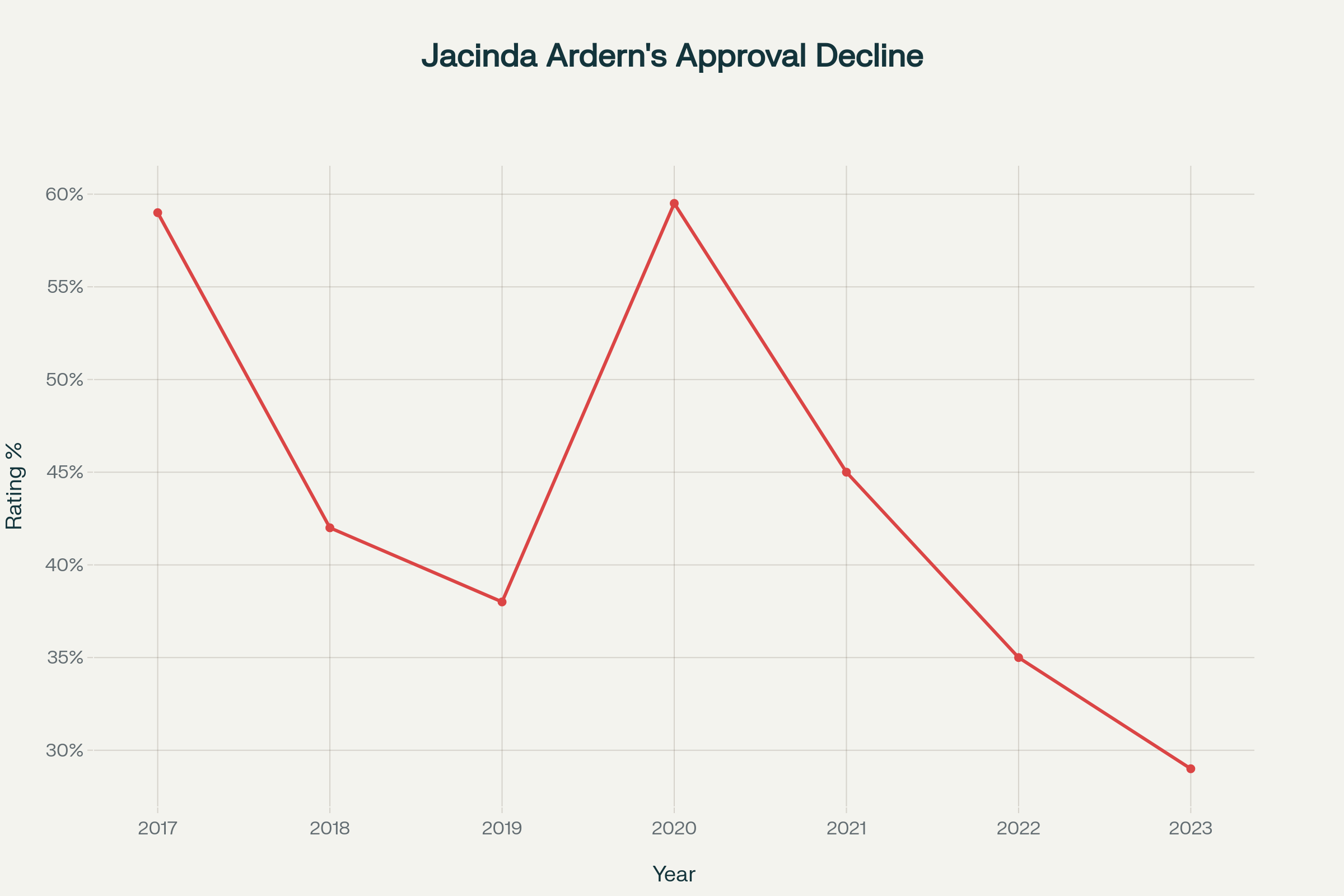
Jacinda Ardern's approval rating plummeted from a peak of 59.5% in 2020 to just 29% by 2023, exposing the hollow nature of her performative leadership
The Documentary Delusion
The timing of this documentary release reveals everything about how our cultural institutions serve power rather than truth. Prime Minister premiered at Sundance to mixed reviews, with critics noting its "glossiness" and failure to examine the political complexities of Ardern's tenure. International reviewers praised its emotional storytelling while acknowledging its avoidance of substantive policy analysis - precisely the kind of superficial coverage that enabled Ardern's image-over-substance approach to governance.
The documentary's very existence demonstrates how neoliberal capitalism transforms political failure into profitable content. While New Zealanders struggled with housing unaffordability, rising poverty, and cost-of-living crises, Ardern's team was busy documenting her personal journey for future monetisation. The film features home videos shot by her husband Clarke Gayford, turning the apparatus of state into a reality TV production.
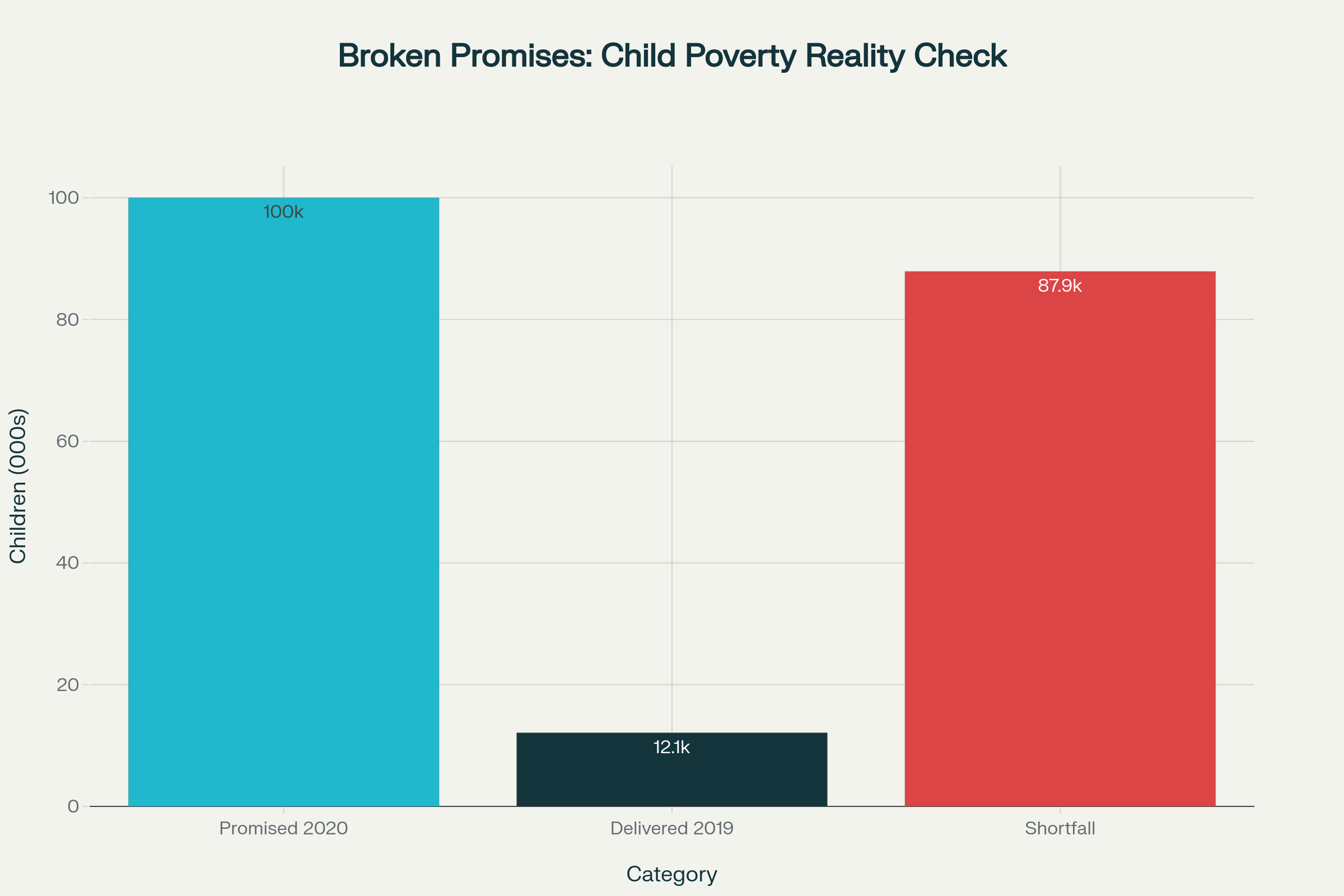
Ardern promised to lift 100,000 children out of poverty by 2020 but managed only 12,100 - a catastrophic failure of 87.9% on her own signature policy
Follow the Money Trail
The funding structure behind Ardern documentaries exposes the intersection of state power, media manipulation, and international capital that defines contemporary propaganda. The New Zealand Film Commission allocated $800,000 in taxpayer funds to one documentary project exploring "extremism and online hate" through Ardern's leadership - effectively using public money to create apologetic content for a failed administration.
Meanwhile, the Prime Minister documentary explicitly avoided New Zealand Film Commission funding, with Ardern stating this was "important to me." This reveals the calculated nature of her image management - maintaining plausible deniability about taxpayer-funded hagiography while benefiting from international investment in her personal brand.
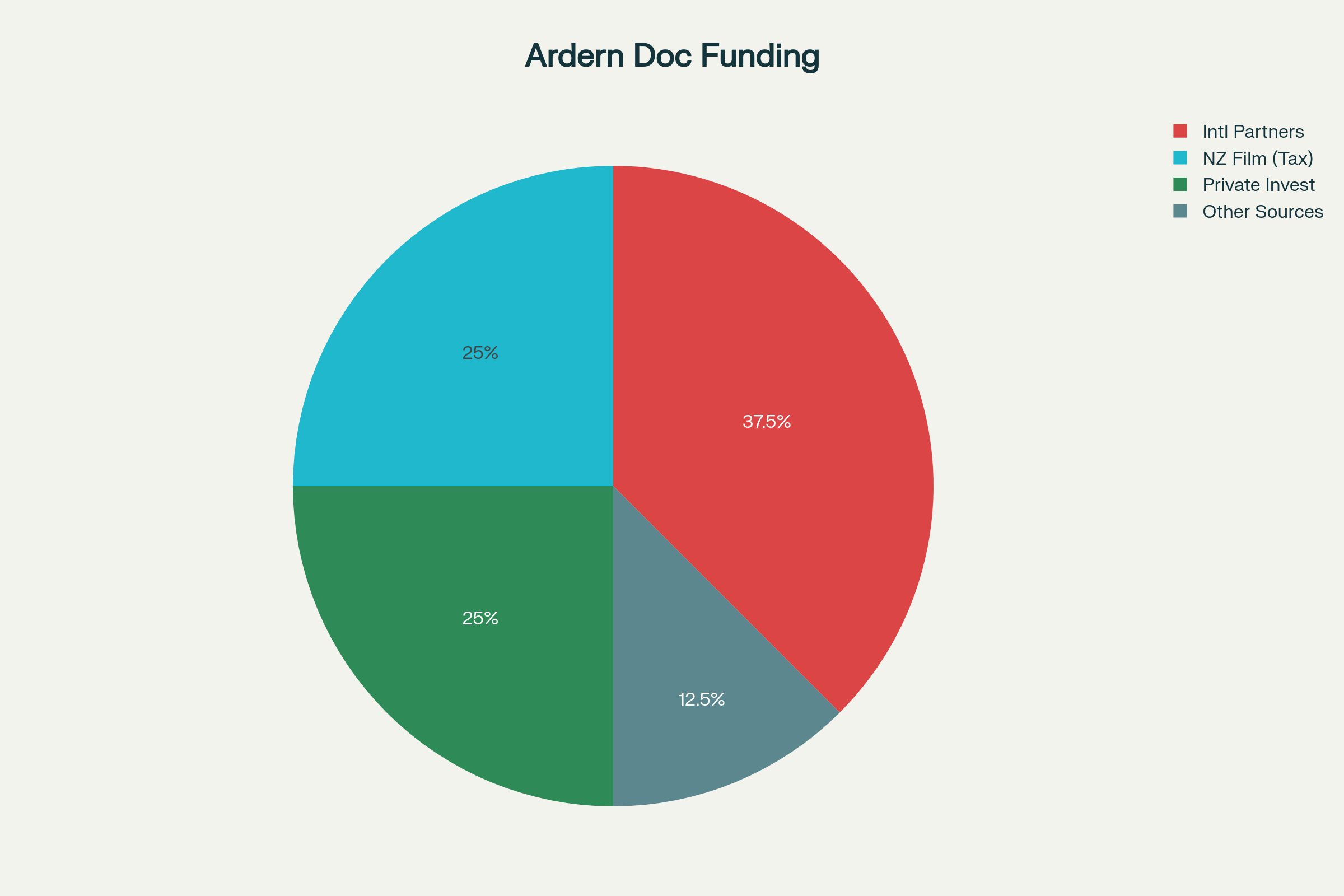
Taxpayers are forced to fund 25% of Ardern's documentary hagiography while international and private interests bankroll the remainder of this propaganda project
The documentary's international backing, particularly from American production companies, represents a form of cultural colonialism where foreign capital shapes our national narratives. These overseas investors aren't interested in honest examination of New Zealand politics - they're buying into the "Saint Jacinda" mythology that plays well in international markets while obscuring the lived reality of her governance.
The Mythology Machine
Ardern's post-political career trajectory reveals the true purpose of her tenure - not transformative governance but personal brand building for international consumption. Her appointments to Harvard University fellowships, her role as Special Envoy for the Christchurch Call, and her position as trustee of Prince William's Earthshot Prize demonstrate how neoliberalism rewards performance over substance.
The documentary industry becomes complicit in this mythology by treating political failure as compelling narrative. International reviews praised the film's emotional resonance while largely ignoring the substantive policy failures that defined Ardern's tenure. This exemplifies how contemporary media transforms systemic problems into individual stories, making structural critique impossible.
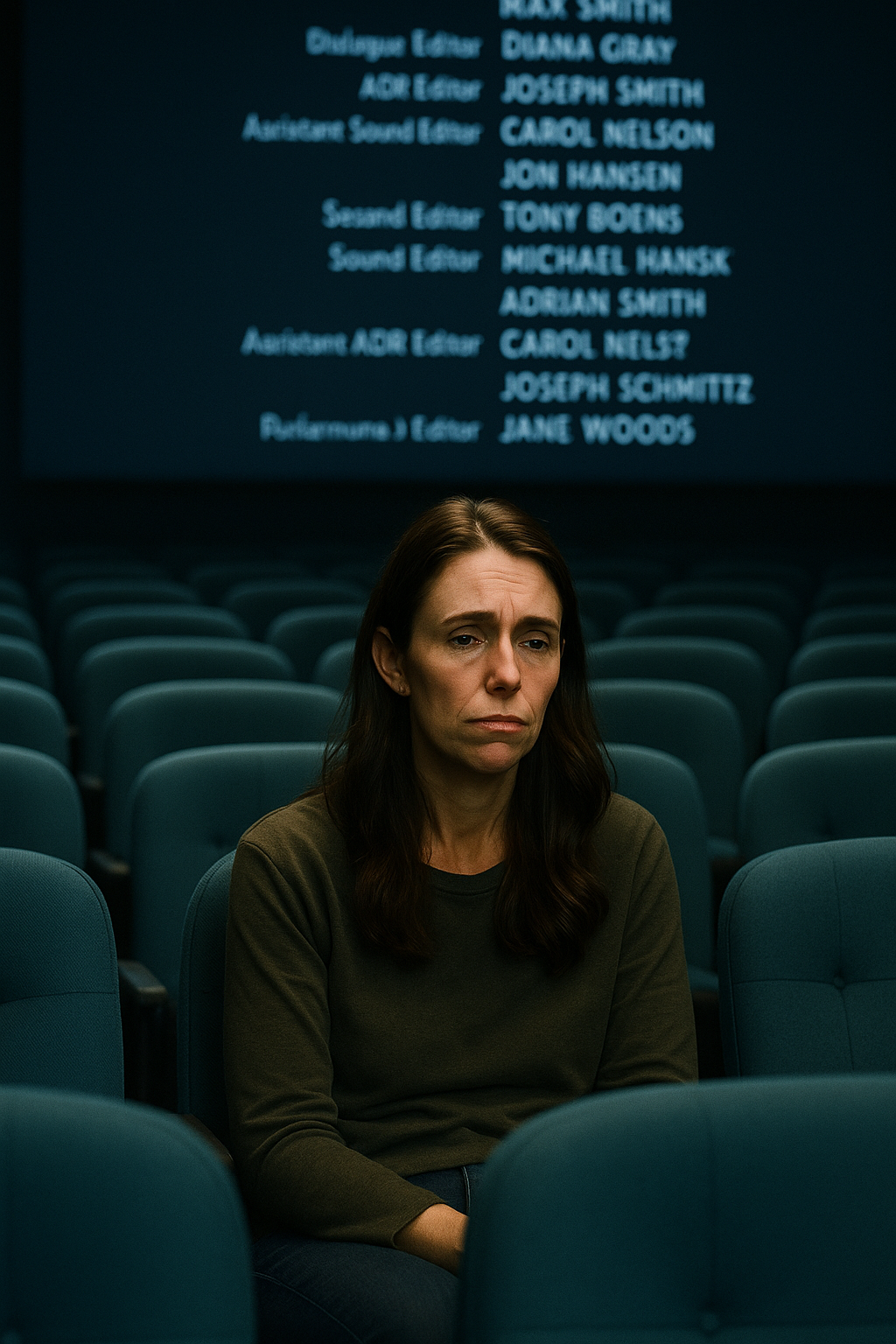
The reality of Ardern's documentary reception - empty theaters reflecting public disinterest
The Three Waters Deception
The documentary's careful avoidance of Ardern's most controversial policies reveals its propagandistic function. Take the Three Waters reforms, which became a lightning rod for opposition to co-governance arrangements. Ardern repeatedly claimed confusion over legislation that her government had authored, demonstrating either incompetence or deliberate obfuscation.
The Three Waters controversy exemplifies how Ardern's government implemented policies affecting Māori representation without adequate consultation or transparency. The entrenchment clause debacle showed a government that couldn't even manage its own legislative processes, yet Ardern consistently refused accountability while claiming team responsibility.
For tangata whenua, these policy failures represent more than administrative incompetence - they demonstrate how neoliberal governments use Indigenous rights as political footballs while failing to address underlying structural inequities. The documentary's silence on these issues reveals its complicity in sanitising this record.
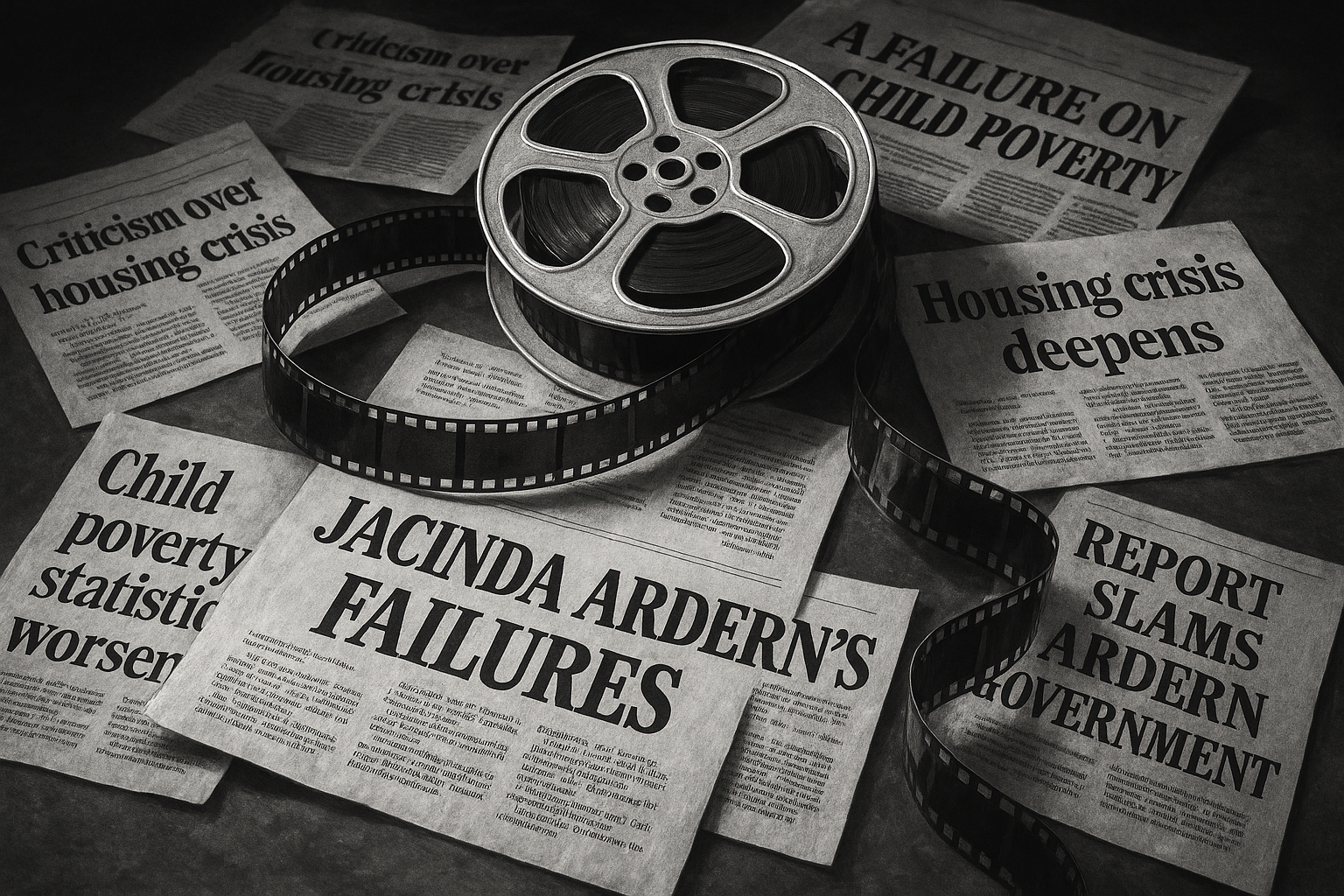
The unraveling narrative - Ardern's documented failures contradict her carefully crafted public image
The Kindness Con
Perhaps no aspect of Ardern's political brand was more cynically deployed than her "politics of kindness." While promoting empathy and compassion, her government maintained benefit levels that forced families into poverty, implemented policies that exacerbated housing unaffordability, and prioritised fiscal responsibility over human welfare.
Critics noted that Ardern's government was "notably stingier than even some of the policies enacted under reactionaries like Donald Trump" in terms of pandemic financial assistance. While businesses received millions in support, ordinary New Zealanders were left flooding food banks to survive. This represents the cruel irony of neoliberal "kindness" - performative empathy that masks systematic cruelty.
The documentary's focus on Ardern's personal emotional journey obscures this policy violence. By centering her feelings rather than examining her government's material impacts, the film participates in the neoliberal transformation of politics into therapeutic performance.

Box office reality - the lack of genuine public interest in Ardern's documentary
The Media Manipulation Matrix
The stark contrast between international and domestic coverage of Ardern exposes how global media systems manufacture consent for neoliberal leadership. While international outlets praised her "empathetic leadership", New Zealand media was forced to grapple with the reality of her government's policy failures and broken promises.
This dynamic reveals how international media serves as a legitimation mechanism for failed domestic politicians. Foreign coverage was notably "shallow" and lacked detail, functioning more as myth-making than journalism. The documentary continues this tradition, prioritising emotional narrative over analytical rigour.
The film's production by international companies for global distribution ensures its primary audience won't be the New Zealanders who lived through Ardern's failures. This allows for continued mythologisation without accountability to those most affected by her policies.
The Neoliberal Shell Game
Despite declaring that "neoliberalism has failed", Ardern's government consistently implemented neoliberal policies throughout its tenure. Her administration maintained fiscal austerity, refused to implement wealth taxes, abandoned capital gains tax proposals, and prioritised debt reduction over social investment.
This contradiction between rhetoric and reality exemplifies how contemporary neoliberalism operates - acknowledging systemic problems while refusing to implement systemic solutions. Ardern's "kindness" brand allowed her to appear progressive while governing as a conventional neoliberal, making her more effective at maintaining the status quo than openly conservative politicians.
The documentary's celebration of this contradiction reveals its ideological function. By treating Ardern's tenure as inspiring rather than examining its contradictions, the film participates in the neoliberal project of making systemic failure appear heroic.
Imperial Academic Rewards
Ardern's transition from failed domestic politician to international academic celebrity demonstrates how global institutions reward neoliberal governance regardless of its outcomes. Her Harvard appointments came despite her government's failure to meet its own targets on poverty, housing, and climate change.
This pattern reveals how academic institutions serve as retirement homes for neoliberal politicians, providing prestigious positions that legitimise failed governance. Ardern's fellowship focuses on studying "extremist content online" - positioning her as an expert on problems her own communication strategies helped create through their divisive effects.
For tangata whenua, this represents another form of cultural extraction - Māori experiences of colonisation and resistance being repackaged as academic content for American consumption, without meaningful benefit to the communities most affected.
The Documentary Industrial Complex
The proliferation of Ardern documentaries reveals how contemporary media transforms political failure into profitable content. Multiple projects are in development, each promising to tell the "real story" while carefully avoiding the structural critiques that might threaten investor interests.
The funding mechanisms behind these projects expose how cultural institutions serve power rather than truth. Public money subsidises propaganda while private investment ensures international distribution, creating a system where taxpayers fund their own manipulation.
This represents a form of narrative colonisation where genuine political analysis is replaced by personality-driven storytelling. The documentary format allows for emotional manipulation while avoiding the rigorous examination that academic or journalistic analysis would require.
Implications for Tangata Whenua
For Māori communities, Ardern's legacy represents a particularly cruel betrayal. Her government implemented policies affecting Indigenous rights without adequate consultation, then used these same policies as political weapons when convenient. The Three Waters reforms became a lightning rod for anti-Māori sentiment precisely because they were poorly designed and inadequately explained.
The documentary's avoidance of these issues perpetuates the colonial practice of erasing Indigenous perspectives from historical narratives. By focusing on Ardern's personal journey rather than examining her government's impacts on Māori communities, the film participates in ongoing cultural violence.
This pattern extends beyond individual politicians to reflect how neoliberal capitalism commodifies Indigenous struggle. Māori experiences become content for international consumption while the structural conditions producing those experiences remain unchanged.
The Broader Pattern
Ardern's documentary represents more than individual vanity - it exemplifies how contemporary political systems have abandoned governance in favour of performance. Politicians now focus on building personal brands for post-political monetisation rather than implementing transformative policies.
This shift reflects neoliberalism's fundamental transformation of democracy from a system of collective decision-making into a market for competing personal narratives. Citizens become consumers of political content rather than participants in democratic governance, while politicians become brands rather than public servants.
The documentary industry becomes complicit in this transformation by treating political failure as entertaining content. Rather than examining why democratic systems produce such consistently poor outcomes, films like Prime Minister celebrate the personalities within those systems.

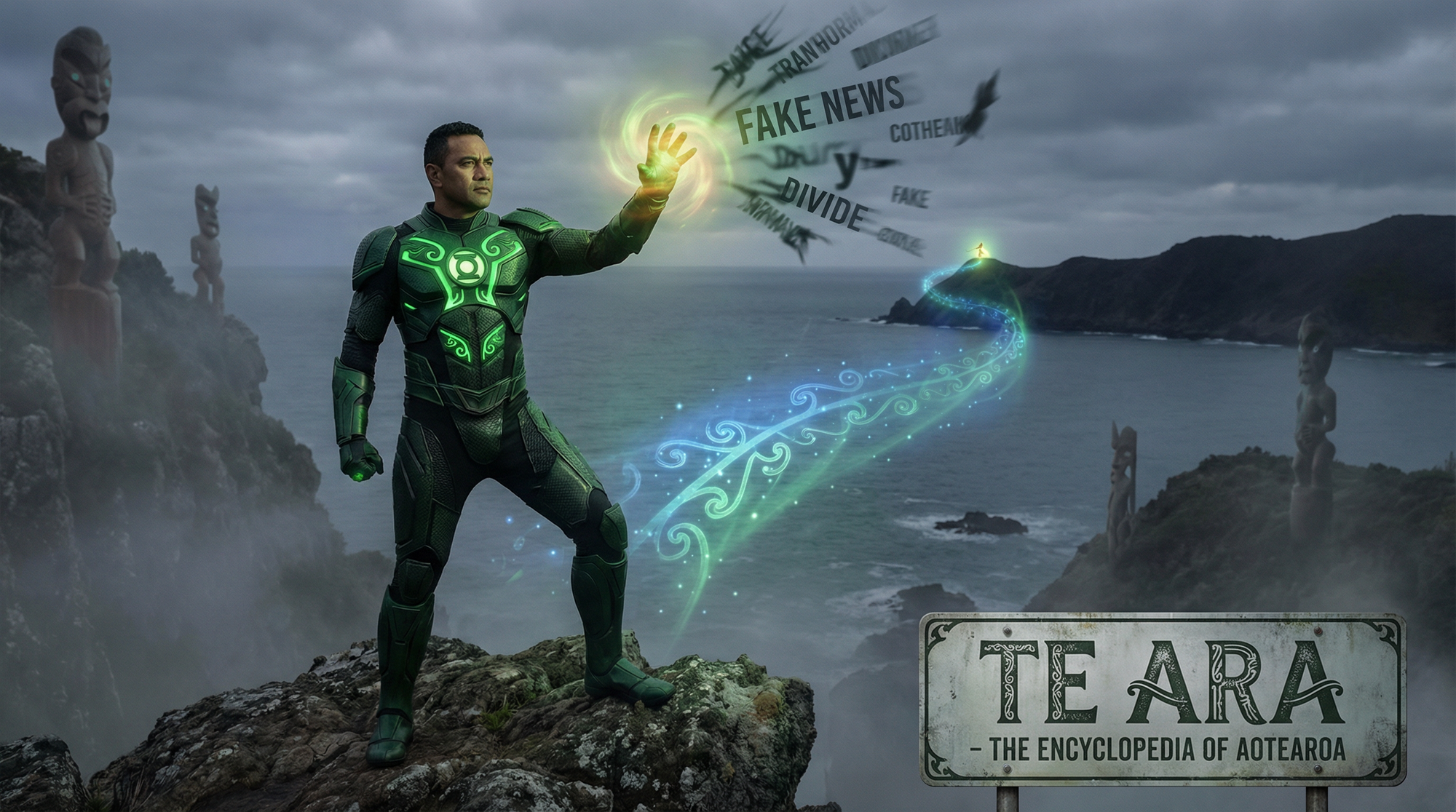
The Māori Green Lantern Fighting Misinformation And Disinformation From The Far Right
The frustrated response - "Who fucking cares about Jacinda Ardern's movie?" - captures something profound about our political moment. It reflects genuine anger at being asked to consume propaganda about a politician who failed to deliver on her core promises while building an international career on that failure.
This documentary represents everything wrong with our contemporary political culture: the transformation of governance into performance, the commodification of political failure, the use of public resources to subsidise elite propaganda, and the systematic avoidance of structural critique in favour of personality-driven narratives.
For tangata whenua and working-class communities, Ardern's legacy isn't inspiring - it's a reminder of how neoliberal capitalism co-opts progressive language while maintaining oppressive structures. Her "kindness" was cruel, her "empathy" was extractive, and her "leadership" served capital rather than community.
The documentary's existence proves that under neoliberalism, even political failure becomes profitable - as long as it's packaged correctly for international consumption. This is the ultimate indictment of our system: not that it produces bad outcomes, but that it transforms those bad outcomes into content for those who created them.
The real question isn't who cares about Ardern's movie, but why we continue tolerating systems that reward failure while punishing honesty. Until we address these structural problems, we'll continue getting politicians who govern for their post-political careers rather than the communities they claim to serve.
Māori values of manaakitanga, whakapapa, and kaitiakitanga offer alternative frameworks for governance based on relationships, responsibilities, and collective wellbeing rather than individual branding and international celebrity. These values suggest possibilities beyond the neoliberal nightmare that Ardern's documentary so perfectly represents.
For readers who find value in this analysis and wish to support continued critique of power structures affecting our communities, please consider a koha to HTDM: 03-1546-0415173-000. The Māori Green Lantern understands these are tough economic times for whānau, so please only contribute if you have capacity and wish to do so.
Kia kaha, kia māia, kia manawanui.
Ivor Jones The Māori Green Lantern