“The Whakatāne Mayoral Hustle: When Environmental Rhetoric Meets Financial Reality” - 25 September 2025
Exposing the Elite Networks Behind Eastern Bay’s Power Brokers

Kia ora whānau - The Māori Green Lantern calling out the convenient contradictions plaguing our local politics.
In the lead-up to the 2025 local body elections, the Eastern Bay of Plenty faces a stark choice between authentic community leadership and the same old boys’ network dressed up in fresh rhetoric. The question isn’t who talks the best game - it’s who has the track record of putting whānau and whenua ahead of elite interests.

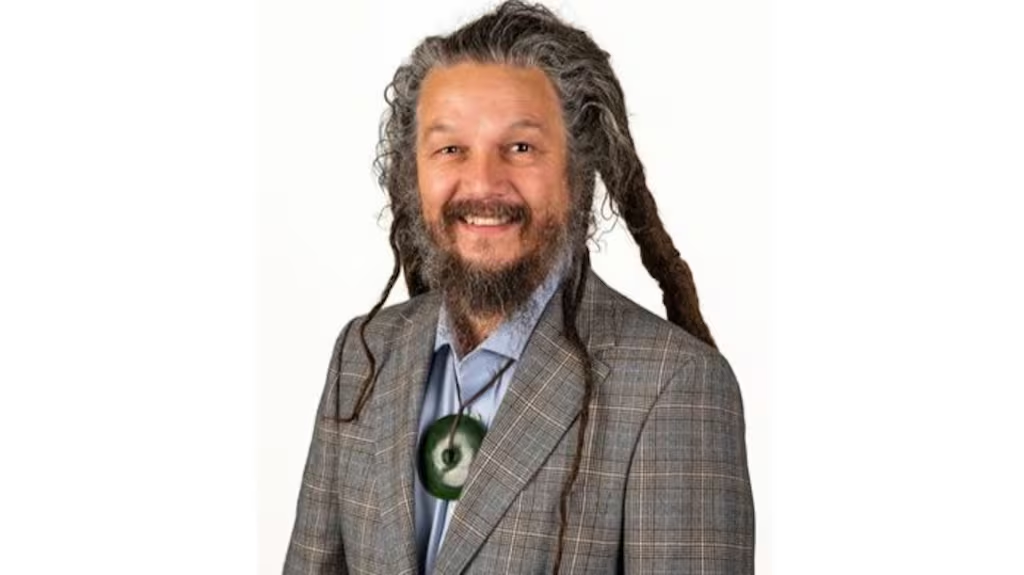
Nandor Tanczos is the Mayor for Whakatane
Background: The Colonial Playbook in Local Politics
The Eastern Bay’s local government landscape perfectly illustrates how colonial power structures persist through seemingly progressive political movements. While Māori comprise 46% of the Bay of Plenty population, authentic Indigenous representation remains marginalised through systemic exclusion tactics disguised as “administrative errors.”
The traditional colonial approach to local governance operates through three key mechanisms: financial manipulation through debt-driven development, environmental greenwashing that prioritises profit over protection, and tokenistic consultation that creates the appearance of participation while maintaining elite control. Understanding these dynamics is crucial for recognising genuine leadership versus performative politics.
The creation of Māori wards across the region represents a hard-won victory against decades of resistance. Yet recent “printing errors” that systematically excluded all three Ōpōtiki Māori ward candidates from election booklets reveal how supposedly neutral administrative processes continue to undermine Māori political participation.

Curley Keno the Mayor for Ōpōtiki
The Elite Convergence Problem
The fundamental issue plaguing Eastern Bay politics is the convergence of elite interests masquerading as community representation. Victor Luca’s incumbency has overseen an 11.7% rates increase while maintaining a $14 million operating deficit, demonstrating the financial mismanagement that inevitably results when technocratic approaches ignore community needs.
Meanwhile, David Moore’s background in real estate development creates obvious conflicts of interest when making planning decisions that directly impact property values. His victory in 2022 represented not community choice but the triumph of established networks over grassroots representation.
The scope of this analysis extends beyond individual candidates to examine the structural forces that enable elite capture of local democracy. From Whakatāne’s housing crisis requiring 522 additional homes by 2026 to Ōpōtiki’s 80% Māori population struggling for authentic representation, these challenges demand leadership grounded in community accountability rather than boardroom expertise.
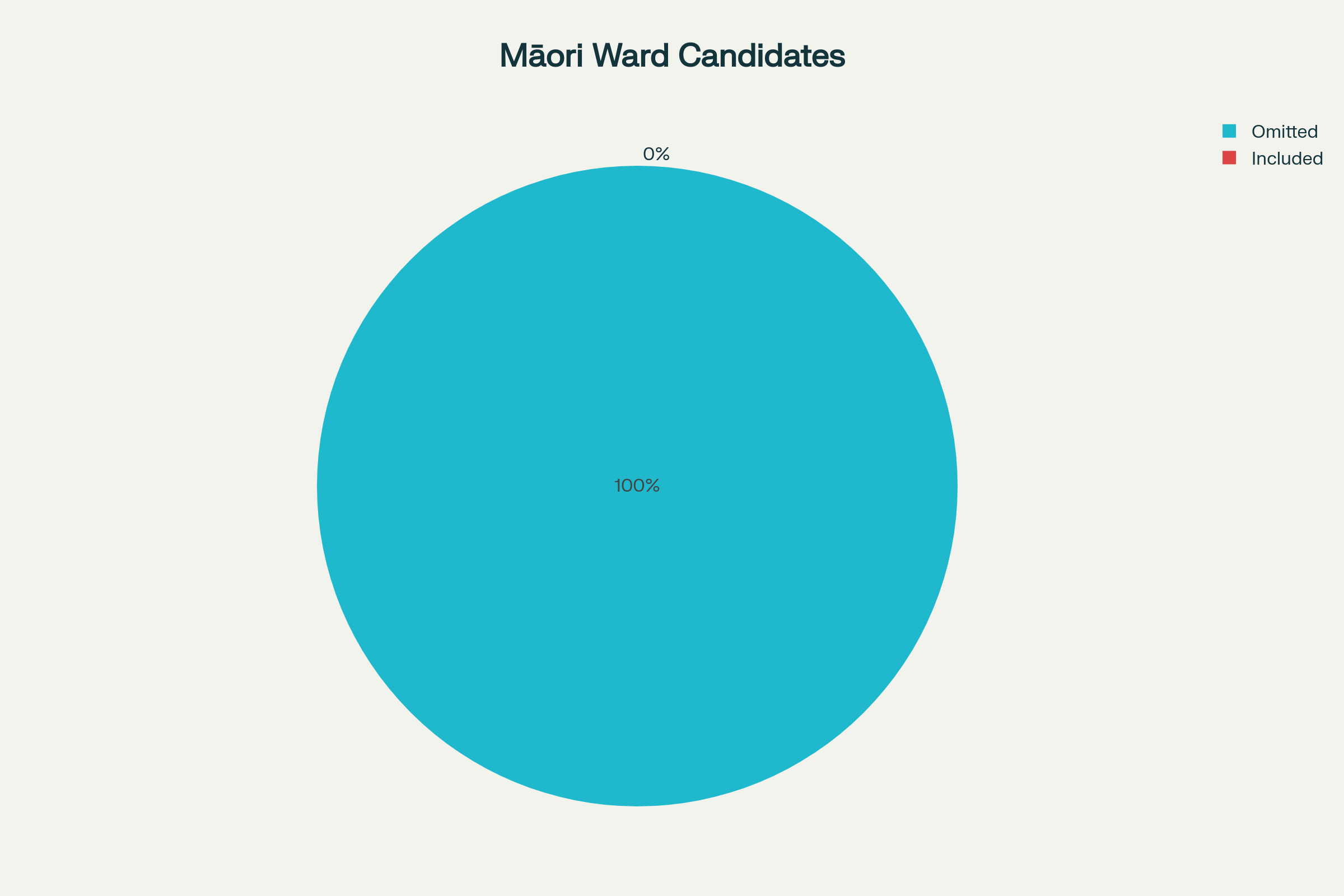
Ōpōtiki Māori Ward Candidate Profile Omission
Financial Facade: Victor Luca’s Technocratic Failure
When Whakatāne District Council increased rates by 11.7% while running a $14 million operating deficit, ratepayers witnessed the predictable outcome of technocratic governance divorced from community needs.
Dr Victor Luca’s chemistry background may impress in academic circles, but his mayoralty has delivered financial catastrophe. The council’s debt has increased by 156.3% from 2009 to 2018 while mean annual earnings rose just 29.6%. This represents a textbook case of neoliberal infrastructure financialisation - socialising costs while privatising benefits.
Luca’s defence of “compromise” and “balance” reveals the hollow centre of technocratic politics. His own admission that the council “cannot borrow our way out of this” comes after years of exactly that approach. The Whakatāne Action Group’s scathing analysis identifies “lack of spending control” as the fundamental cause of operating deficits.
The environmental costs of this financial mismanagement extend beyond mere numbers. Luca’s approach prioritises infrastructure spending that enables further development pressure on culturally significant sites while failing to address the housing shortage affecting 522 families by 2026. This pattern reflects the classic neoliberal contradiction: spending billions on growth-enabling infrastructure while communities struggle with basic needs.
David Moore: Real Estate Development and Conflicts of Interest
David Moore’s victory in Ōpōtiki represents the capture of local democracy by development interests masquerading as community leadership.
Moore’s background as a real estate agent and property developer creates immediate conflicts when making planning decisions that directly impact land values. His overwhelming victory in 2022 with 1,245 votes against Māori candidate Louis Rapihana’s 555 votes demonstrates how establishment networks mobilise against authentic Indigenous representation.
The timing of Moore’s electoral success coincides with accelerated development pressure across the Eastern Bay. While presenting himself as a community-focused leader, his professional interests align perfectly with the fast-track consent processes that threaten sites of cultural significance to whānau and hapū.
Moore’s emphasis on “economic development” consistently translates to development-friendly planning decisions that increase land values while displacing existing communities. His beekeeping background provides environmental credibility while his real estate interests drive actual policy outcomes. This represents the classic pattern of elite capture - using authentic community connections to legitimise policies that benefit elite networks.
Nandor Tanczos: Authentic Environmental Leadership
Nandor Tanczos represents the rare combination of environmental credentials, community accountability, and proven track record in both national and local politics.
His extensive board positions across community organisations - from Know Your Stuff NZ to Awatapu Ōtamakaokao Kaitiaki Trust - demonstrate genuine commitment to rangatahi welfare and environmental restoration. Unlike technocratic politicians who parachute into communities, Tanczos has spent years building relationships through substantive community development work.
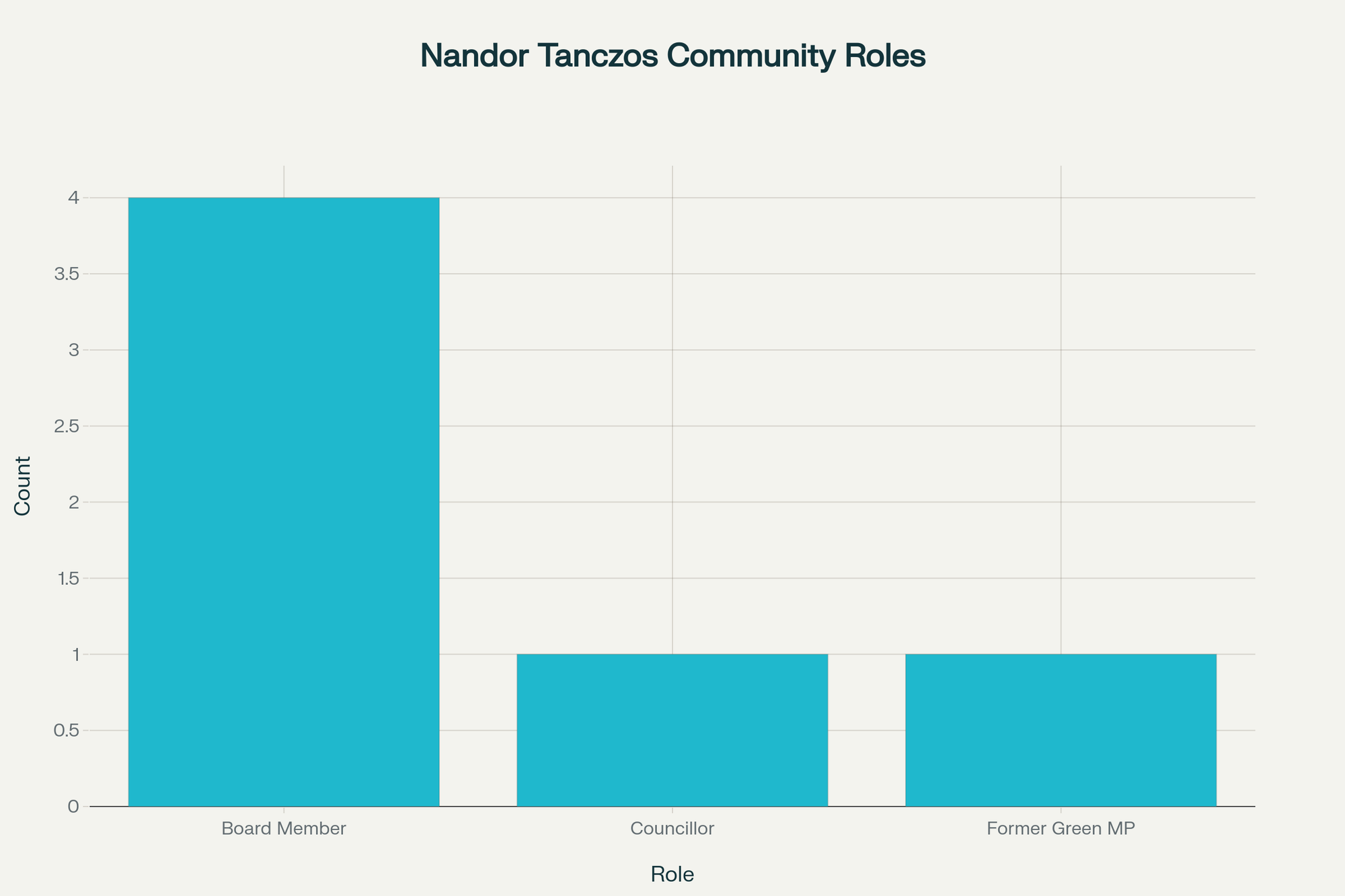
Community Roles Held by Nandor Tanczos
His climate change leadership as Chair of Strategy and Policy Committee delivered concrete environmental outcomes rather than empty rhetoric. The development of organisational strategic vision and climate action plans occurred under his political leadership. This represents authentic environmental governance - using political power to achieve measurable ecological outcomes.
Tanczos’ commitment to addressing the operating deficit “with urgency” demonstrates understanding that financial sustainability enables environmental protection. His proposal to reduce external consultants and increase in-house capacity challenges the consultocracy that extracts resources from communities.
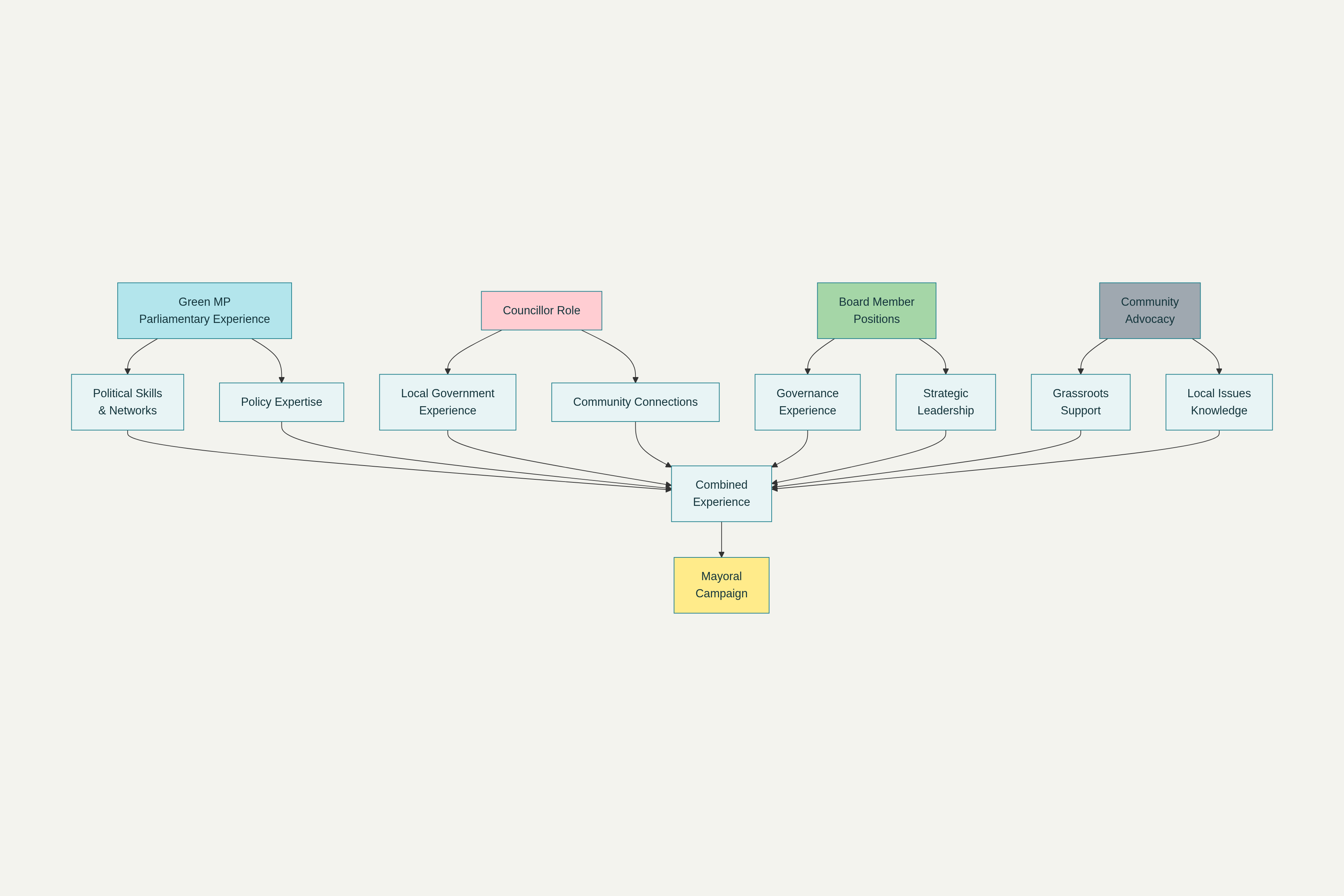
Flowchart of Nandor Tanczos’s community roles
Curley Keno: Community-Centred Leadership
Curley Keno’s emphasis on community connection over professional credentials represents the leadership model that Eastern Bay communities desperately need.
Her response to the systematic exclusion from election booklets demonstrates both the ongoing challenges facing Māori candidates and her determination to overcome institutional barriers. Her immediate action to alert council about the “printing error” shows the vigilance required to protect democratic participation.
Keno’s connection to Te Rūnanga o Ngāti Awa through the Reo Hapori group provides authentic accountability to mana whenua rather than performative consultation. Her community focus on fixing practical issues like “the roof of Te Umu Tao Noa a Tairongo wharekai” demonstrates understanding that effective governance addresses immediate community needs.
The contrast between Keno’s grassroots approach and Moore’s establishment connections illustrates fundamentally different models of political representation. While Moore leverages professional networks to maintain elite control, Keno builds power through community relationships and shared accountability to place-based values.

Booklet missing Māori ward profiles
Implications: Elite Networks Versus Community Democracy
The broader implications of these electoral choices extend far beyond individual personalities to the fundamental question of who local government serves. Victor Luca’s technical credentials and David Moore’s business experience represent the professional-managerial class approach that has delivered financial crisis and environmental degradation across Aotearoa.
The housing crisis requiring 522 additional homes in Whakatāne by 2026 directly results from decades of technocratic planning that prioritises infrastructure spending over community needs. The systematic exclusion of Māori candidates from election materials reveals how “neutral” administrative processes maintain colonial power structures.
These patterns connect to larger national trends where local government increasingly serves as a vehicle for elite wealth accumulation rather than community empowerment. The convergence of property development interests, consultancy networks, and technocratic governance creates self-reinforcing cycles that extract resources from communities while claiming to represent their interests.
For Māori communities specifically, these electoral choices determine whether local government becomes a tool for tino rangatiratanga or remains a mechanism for continued colonisation. The choice between authentic representation and elite capture will shape resource allocation, environmental protection, and cultural recognition for decades to come.

The Māori Green Lantern Fighting Misinformation And Disinformation From The Far Right
The Path Forward for Community Democracy
The choice facing Eastern Bay voters is stark: continue with elite capture disguised as professional competence, or choose leaders accountable to community needs over boardroom interests.
Nandor Tanczos and Curley Keno offer voters the opportunity to reject the failed technocratic model that has delivered financial crisis and environmental degradation. Their shared commitment to community accountability, environmental protection, and authentic representation provides a pathway beyond the elite networks that have captured local democracy.
The evidence is overwhelming: Victor Luca’s incumbency has produced unsustainable debt and rates increases while failing to address housing needs. David Moore’s development interests create obvious conflicts with community welfare. The systematic exclusion of Māori candidates from election materials demonstrates the ongoing institutional bias against authentic Indigenous representation.
Voting for change requires understanding that effective governance emerges from community relationships rather than professional credentials. Tanczos’ environmental leadership and Keno’s grassroots accountability offer Eastern Bay communities the chance to build local government that serves people and place over profit and property.
The choice is yours, whānau. Will you continue enabling elite capture of our communities, or will you vote for leaders who understand that true democracy requires community accountability over professional credentials?
For those who find value in this analysis and wish to support continued exposure of elite power networks, please consider a koha to HTDM: 03-1546-0415173-000. The MGL understands these are tough economic times for whānau, so please only contribute if you have capacity and wish to do so.
Kia kaha, kia maia, kia manawanui.
Ivor Jones
Te Māori Green Lantern
Ngāti Pikiao, Te Arawa