“They Own Your Country: Gary Stevenson, Wealth Taxes, and the Genocide of Māori Homeownership” - 19 November 2025
Whakapapa of the Taiaha
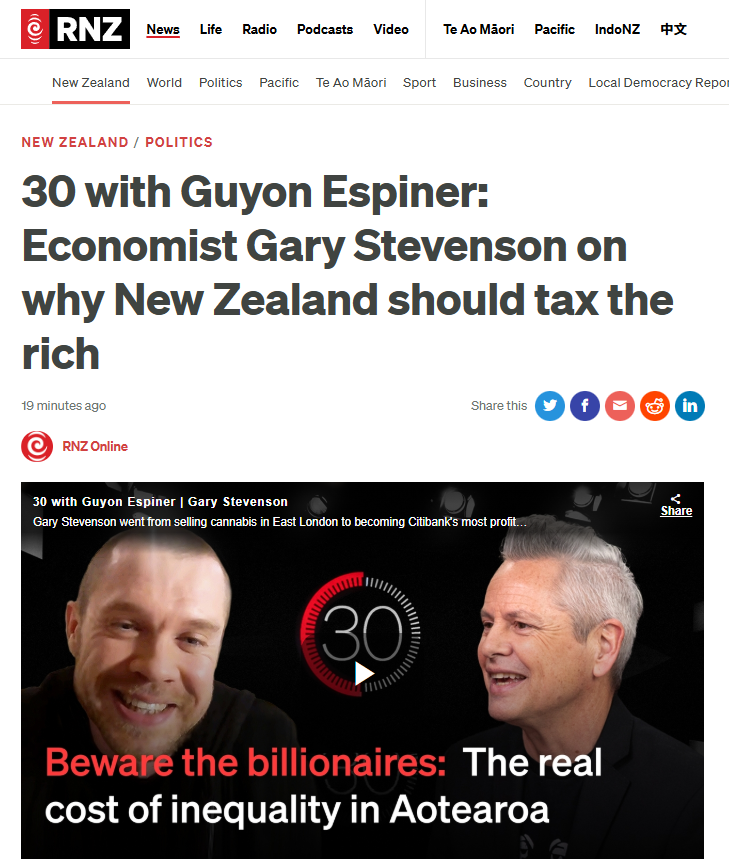
When Gary Stevenson appeared on RNZ’s 30 with Guyon Espiner on November 17, 2025, his thesis cut straight to the bone of New Zealand’s crisis:
“They own your country,” he stated plainly. “They own your land and they own your buildings and they own your mortgages and your government debt.”[https://www.rnz.co.nz/news/national/579275/30-with-guyon-espiner-economist-gary-stevenson-on-why-new-zealand-should-tax-the-rich]
This is the taiaha strike—the ancestral blade that exposes the hidden architecture of dispossession. But what Stevenson articulates as a universal problem of inequality is, for Māori, the continuation of a 160-year project of systematic land theft, asset stripping, and generational poverty.
This essay traces the whakapapa—the genealogy—of how billionaire wealth-hoarding and Māori dispossession are not separate phenomena, but two expressions of the same colonising logic. Gary Stevenson’s wealth tax proposal is analytically sound but politically incomplete unless it centres Māori restitution as its core objective.
The Genealogy: From Raupatu to Rogernomics
Pre-1984: Towards Egalitarianism
From 1945 to 1984, New Zealand pursued a social-democratic settlement that was, by international standards, radically egalitarian. The post-war Labour government invested in state housing, full employment, and universal welfare. By 1991, 74% of New Zealanders owned their homes.[https://www.rnz.co.nz/news/newsroom/10842/a-poor-outcome-maori-poverty-and-the-struggle-for-survival] Māori home ownership, though lagging Pākehā by an average of 25 percentage points, had climbed to 50% by 1991—a trajectory toward equity.[https://teara.govt.nz/en/class]
This era was not golden—Māori faced systematic discrimination in employment, housing access, and welfare administration. But the infrastructure existed: jobs in freezing works, forestry, rail, and state enterprises provided stable income paths for working-class whānau, including Māori. The state housing programme meant that those unable to save for deposits could access affordable rentals and, crucially, a pathway to ownership.
1984-1992: The Neoliberal Coup
In 1984, Finance Minister Roger Douglas detonated what would be called “Rogernomics”—a radical dismantling of the post-war settlement justified by claims of economic necessity.[https://nzhistory.govt.nz/].
The restructuring was simple in its brutality:
- Financial deregulation (1984-1988): Capital controls were eliminated, allowing speculative housing investment and financialisation of the residential market.[https://media.nzherald.co.nz/]
- Tax cuts for the wealthy: The top income tax rate dropped from 66% (1984) to 33% (1988), while working-class taxation through GST (introduced at 12.5%) rose.[https://teara.govt.nz/en/class/page-6]
- Privatisation of state assets: State Owned Enterprises (SOEs)—previously providing stable employment—were corporatised and sold, often at valuations that benefited connected bidders while impoverishing workers through job losses.[https://www.nzherald.co.nz/nz/the-1984-revolution-part-ii-crash-and-burn/GRWJQSM6TXJSZ3J4VMDKLW3LLM/]
- The 1991 “Mother of All Budgets”: Finance Minister Ruth Richardson’s 1991 budget severed the final thread. It cut welfare benefits by 21.5%, abolished the universal Family Benefit, and ended state housing investment, selling off the Crown’s mortgage portfolio.[https://media.nzherald.co.nz/] The philosophy: “tenure neutrality”—the state should not favour ownership, leaving housing to markets where capital rules.
The impact on Māori was catastrophic. By 1992, Māori unemployment stood at 25%, while the overall rate was 10%—driven entirely by the decimation of freezing works, forestry, and rail employment where Māori were concentrated.[https://nzhistory.govt.nz/] As one Gisborne community leader recalled to RNZ in 2007: “Prior to Roger Douglas’s introduction of neoliberal economic policies...we had the Gisborne freezing works, we had Wattie’s company here. That provided income for a lot of whanau.”[https://www.rnz.co.nz/news/newsroom/10842/a-poor-outcome-maori-poverty-and-the-struggle-for-survival] When jobs disappeared, “the issues began and built over time.”[https://www.rnz.co.nz/news/newsroom/10842/a-poor-outcome-maori-poverty-and-the-struggle-for-survival]
Māori were hit first, hit hardest, and the damage was designed into policy.
The Current Catastrophe: Wealth Concentration and Māori Annihilation
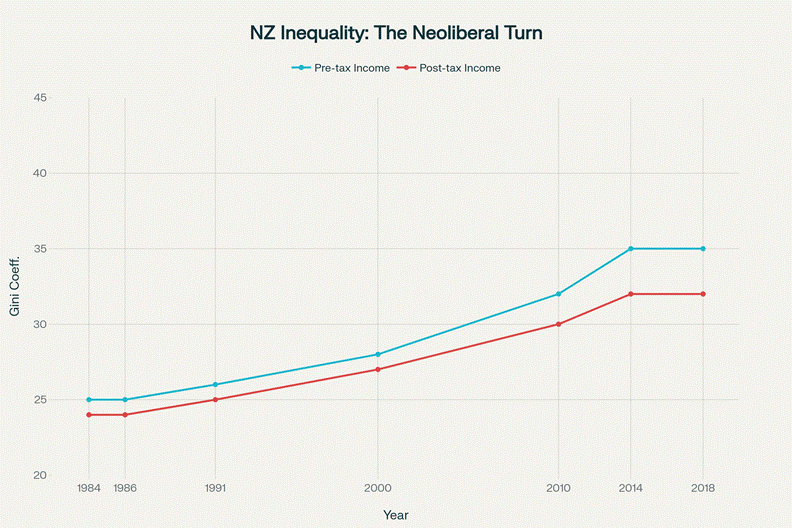
New Zealand’s Gini coefficient rose sharply after 1984 neoliberal reforms and the 1991 budget, with inequality nearly doubling compared to the more egalitarian post-war period.
The Numbers: Obscene Concentration
Today, thirty-three years after Rogernomics began, wealth inequality has reached levels unseen since the 1920s.
National wealth: New Zealand’s top 1 percent holds 14.1% of all household wealth—about 40,000 people controlling roughly $730 billion of the nation’s $5.2 trillion in household net worth.[https://www.rnz.co.nz/news/national/582264/what-you-need-to-be-among-new-zealands-richest-people] The top 1 percent has a median individual net worth of $7.191 million—47.6 times that of the median worker, who owns just $151,000.[https://www.rnz.co.nz/news/national/582264/what-you-need-to-be-among-new-zealands-richest-people] New Zealand’s 119 richest individuals and families—the NBR Rich List—hold a combined $102.1 billion, equivalent to 4.9% of all household wealth, with 18 billionaires counted in 2025, up from 16 the prior year.[https://www.rnz.co.nz/news/business/597319/new-zealands-rich-listers-climb-above-100-billion]
The top 20% of households hold approximately two-thirds (67%) of New Zealand’s total household wealth, while the bottom 60% hold just 11% combined.[https://www.rnz.co.nz/news/national/582188/feeling-wealthier-heres-how-much-household-net-worth-has-changed]
Māori wealth: The median Māori individual has a net worth of $52,000—compared to $222,000 for Pākehā, adjusted for age profile.[https://www.rnz.co.nz/news/political/581632/better-late-than-never-maori-economist-says-capital-gains-tax-is-weak] This is a 4.3x wealth gap. The poorest 40% of Māori have seen no statistically significant change in their wealth since 2021.[https://www.rnz.co.nz/news/national/582188/feeling-wealthier-heres-how-much-household-net-worth-has-changed]
This is not inequality. This is structural annihilation.
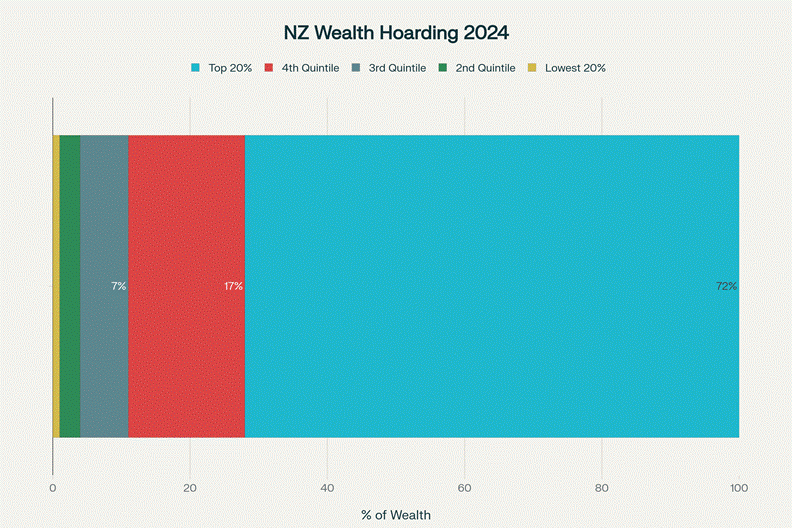
New Zealand’s wealth is brutally concentrated: the top 20% control 72% of all wealth while the bottom 60% share just 11%. The top 1% alone holds approximately 26% of total wealth.
Home Ownership: The Colonisation of Housing
The most visible metric of this genocide is housing. In 1991, as noted, 50% of Māori owned their homes. By the 2023 Census, just 27.5% of Māori owned or partly owned their own house—a 45% collapse in 32 years.[https://www.nzherald.co.nz/lifestyle/waitangi-day-2025-why-maori-have-low-home-ownership-rates-in-aotearoa/RY5IG7KSYZGT5CPJWEFHCHUWWQ/]
ANZ’s 2024 research report Ko Tū, Ko Rongo projects that if current trends persist, almost all Māori in Aotearoa will be renters by 2061.[https://www.anz.com.au/about-us/corporate-responsibility/diversity-and-inclusion/maori-housing-affordability-research/] This is not hyperbole. This is mathematical annihilation of Māori access to the primary wealth-building asset in capitalist economies.
In contrast, Pākehā home ownership fell from 75% (1991) to approximately 67% (2023)—a 10% decline, compared to Māori’s 45% collapse.[https://www.rnz.co.nz/news/national/532891/home-ownership-figure-in-census-surprises-statistics-officials] The gap is not closing; it is accelerating.
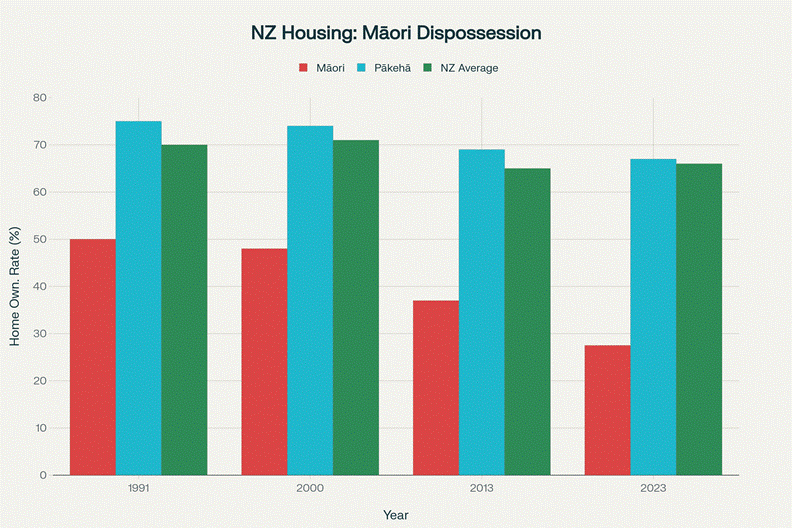
M\u0101ori home ownership collapsed from 50% in 1991 to 27.5% in 2023—a 45% decline directly correlated with neoliberal housing policy, income inequality, and systemic exclusion from wealth-building assets.
Gary Stevenson’s Analysis: The Truth About Billionaire Wealth
The Breakthrough Insight (2011)
Gary Stevenson, a working-class trader from East London, made his breakthrough insight in 2011. As he told Espiner, he began asking people a simple question: “Why don’t you spend more money?” The answer from ordinary families was inevitable: “I don’t have any more money to spend.”[https://www.rnz.co.nz/news/national/579275/30-with-guyon-espiner-economist-gary-stevenson-on-why-new-zealand-should-tax-the-rich]
Stevenson then looked at his own friends’ financial situations. “What I saw in 2011,” he explained, “was my parents’ generation, you know, ordinary people, not with exceptional jobs or degrees, owning property, buying houses. And then what I saw in my generation was kids with a degree, advanced education, who would never be able to own property.”[https://www.rnz.co.nz/news/national/579275/30-with-guyon-espiner-economist-gary-stevenson-on-why-new-zealand-should-tax-the-rich] He observed: “Families going from being property-owning families to non-property-owning families.”[https://www.rnz.co.nz/news/national/579275/30-with-guyon-espiner-economist-gary-stevenson-on-why-new-zealand-should-tax-the-rich]
He then made the leap that separated him from mainstream economists. If people couldn’t spend because they had no assets, and interest rates were supposed to stimulate spending through asset effects, then the problem was inequality itself. Low interest rates work only if people have assets to appreciate. If wages collapse and property ownership becomes impossible, no policy trick works.
Stevenson bet on this insight—aggressively—and “became City Bank’s most profitable trader in the world”[https://www.rnz.co.nz/news/business/597262/gary-stevenson] in 2011, earning £35 million in profit and a $400,000-plus bonus.
His trade thesis was simple:
the economy would stagnate because ordinary people were being systematically impoverished while the wealthy hoarded all assets.
The Billionaire Problem: “They Own Your Country”
By 2025, Stevenson’s cure for the problem is unambiguous: wealth taxes.
His argument is direct. Billionaires do not earn wealth through work; they extract it through ownership. As he stated to Espiner: “These people are not making money from their work. They are making money because they own your country. They own your land. They own your natural resources. They own your property. They own your mortgages, that own your debt, you have to make a choice basically. Do you want the people who own your country to pay tax or not to pay tax?”.
The capital flight argument—that wealth taxes cause billionaires to flee—Stevenson dismisses as a sophisticated lie. When the UK government sanctioned Russian oligarch Roman Abramovich (owner of Chelsea Football Club) after the Ukraine invasion, “He’s on the first flight to Moscow. But because he is a billionaire, what does he own? Chelsea Football Club, a massive football club here in London. But what do we do? We just freeze the asset. We freeze the cash flows.”
You cannot flee your real estate. You cannot flee your mortgages. You cannot flee your land. “These very, very wealthy people, they own assets in your country. They own your land. They own your property. They own your mortgages. You can tax them whether they leave or not.]
The Wealth Tax Solution
Stevenson advocates for a wealth tax on assets over approximately £10 million (roughly NZ$20 million), citing successful models like France’s former ISF (Impôt de Solidarité sur la Fortune). New Zealand’s Green Party has adopted a 2.5% wealth tax on assets over $2 million.[https://www.rnz.co.nz/news/national/579275/30-with-guyon-espiner-economist-gary-stevenson-on-why-new-zealand-should-tax-the-rich]
France’s wealth tax, despite being abolished in 2018-2019, functioned for 27 years (1990-2017), raising €4.42 billion in 2007 alone—1.5% of tax revenue.[https://en.wikipedia.org/wiki/Solidarity_tax_on_wealth] While some capital flight occurred, the data refutes the narrative of catastrophic exodus: wealth tax revenue roughly quadrupled from €1.0 billion (1990) to €4.2 billion (2017), while nominal GDP only doubled.[https://piketty.pse.ens.fr/]
The fundamental argument: “If you don’t do anything, if you leave the system as it is, then wealth inequality will increase very rapidly. What that means is the rich get richer and richer, and everybody else loses their assets. What that means is ordinary families can’t afford to buy homes, ordinary families need to take enormous amounts of debt.”[https://www.rnz.co.nz/news/national/579275/30-with-guyon-espiner-economist-gary-stevenson-on-why-new-zealand-should-tax-the-rich]
Stevenson explicitly warned: “I’m here to speak to the New Zealand public and tell them the fire engines are not coming.”[https://www.rnz.co.nz/news/national/579275/30-with-guyon-espiner-economist-gary-stevenson-on-why-new-zealand-should-tax-the-rich] In other words: do not wait for politicians to save you. They benefit from inequality and will not act voluntarily.
The Trap: Why Stevenson’s Universalism Masks Māori Dispossession
Here is where the analysis fractures. Stevenson presents wealth inequality as a universal problem affecting working and middle-class people generally. But for Māori, inequality is not an accident of markets or a recent policy mistake. It is the intended outcome of two centuries of dispossession that neoliberalism accelerated and systematised.
The Foundation: 160 Years of Raupatu and Land Theft
Between 1863 and 1975, Crown forces confiscated 3.4 million acres (1,375,000 hectares) from Māori across Waikato, Taranaki, Bay of Plenty, and beyond—often from iwi who had fought on the Crown’s side.[https://www.nzherald.co.nz/nz/the-legislation-behind-a-shocking-story-of-maori-land-loss/RR4Z7VLN57ZTLEQWM22T5XOJHY/] This was not incidental land loss; it was architectured dispossession via the Native Land Court (established 1865), which converted communal Māori land management into individual titles, raising transaction costs for Māori while making land easy to sell to Pākehā speculators.[https://teara.govt.nz/en/te-tango-whenua-maori-land-alienation]
The “10-owner rule” of 1865 permitted only ten names on titles, contradicting traditional hapū management. Māori land fragmentation persisted: by 2008, there were 26,480 Māori land titles with an average of 73 owner-interests per title (some with 425 owners), making development impossible without years navigating the Māori Land Court.[https://teara.govt.nz/en/land-ownership-and-maori-agriculture] Māori communities must now spend 2-5 years obtaining court approval simply to build homes on their own whenua.[https://www.anz.com.au/about-us/corporate-responsibility/diversity-and-inclusion/maori-housing-affordability-research/]
This is colonialism encoded in property law.
The 1991 Eviction: Why State Housing Privatisation Devastated Māori Specifically
Ruth Richardson’s 1991 “Mother of All Budgets” was catastrophic for all working-class New Zealanders. But for Māori, it was genocidal.
Māori were disproportionately housed in state rentals—not by choice, but because prior discrimination (employment discrimination, redlining, cultural racism in bank lending) had excluded Māori from wealth accumulation that would enable home purchase.[https://www.rnz.co.nz/news/newsroom/10842/a-poor-outcome-maori-poverty-and-the-struggle-for-survival] State housing provided not just shelter but a pathway: tenants could eventually save and purchase through the Crown’s mortgage portfolio.
When Richardson privatised state housing and sold the Crown mortgage portfolio, Māori lost both their homes and their pathway to ownership. Rents rose toward market rates. Investor-landlords—enriched by tax deductions on mortgage interest, no capital gains tax on property sales, and leverage—bought Māori neighbourhood homes, converting ownership to extraction.
The Inheritance Tax Genocide (1992-1993)
Compounding this, in 1992, the National Government abolished Estate Duty (inheritance tax), which had existed since 1866.[https://teara.govt.nz/en/inheritance] Combined revenue from death and gift duties in 1990 was $79.6 million.[https://bettertaxes.nz/blog-terry-baucher-on-untaxed-intergenerational-wealth-transfer/] This was not small change; it was the mechanism preventing intergenerational wealth concentration.
The abolition was justified on grounds of “compliance costs” exceeding “revenue collection.” But the real effect was ideological: the wealthy could now transfer unlimited wealth to heirs without taxation, compounding advantage across generations. By abolishing inheritance taxes while cutting welfare and selling state housing, the government engineered a permanent transfer of national wealth from the public sphere (where Māori had minimal access) to private hands (where billionaires and landed families held all power).[https://ojs.victoria.ac.nz/]
Māori, excluded from wealth through 160 years of dispossession, had no intergenerational assets to pass down anyway. This “reform” benefited only the wealthy.
The Income Gap: Why Wages Are Not the Solution
Stevenson and progressive economics often focus on income redistribution. But income is not where wealth concentrates; it is where it is hidden.
Māori earned 14.5% less than Pākehā in median weekly income (approximately $140 less per week).[https://www.berl.co.nz/] More critically, 33% of Māori household income came from government assistance (benefits, Working for Families), compared to just 9% for non-Māori.[https://www.mbie.govt.nz/]. This indicates not just wage suppression but forced dependency on means-tested welfare.
But income is almost irrelevant to wealth inequality. If you earn $60,000 per year while billionaires hold property appreciating 5% annually on $1 million estates, you face a gap of $50,000 per year (billionaire gains) versus your saving capacity (roughly $2,000 per year after taxes and living costs). After 25 years, the billionaire has gained $1.25 million in capital gains while you have saved $50,000.
Wages will never close this gap. Only wealth taxes can.
Connecting Stevenson’s Diagnosis to Māori Restitution
The Hidden Network: How Neoliberalism Weaponised Raupatu
The true hidden architecture connecting Stevenson’s wealth concentration to Māori dispossession runs as follows:
1. Raupatu (1863-1975): Crown confiscated 3.4 million acres from Māori, destroying the primary wealth-building asset.[https://www.nzherald.co.nz/nz/the-legislation-behind-a-shocking-story-of-maori-land-loss/RR4Z7VLN57ZTLEQWM22T5XOJHY/]
2. Native Land Court (1865+): Fragmented Māori title, raising transaction costs and enabling speculator capture.[https://teara.govt.nz/en/te-tango-whenua-maori-land-alienation]
3. Post-WWII egalitarianism (1945-1984): Despite prior dispossession, state housing and full employment created a temporary levelling. Māori home ownership rose to 50% by 1991.[https://www.rnz.co.nz/news/newsroom/10842/a-poor-outcome-maori-poverty-and-the-struggle-for-survival]
4. Rogernomics (1984-1992): Tax cuts, deregulation, and state housing privatisation reversed the levelling. Māori, disproportionately in state housing due to prior discrimination, were evicted into a private rental market controlled by investor-landlords.[https://media.nzherald.co.nz/]
5. Inheritance tax abolition (1992-1993): Prevented wealth redistribution for future generations, cementing advantage for billionaires’ heirs while offering nothing to Māori already excluded from intergenerational wealth.[https://teara.govt.nz/en/inheritance]
6. The result (2025): Māori median net worth $52,000 versus Pākehā $222,000; home ownership collapsed from 50% to 27.5%; almost all Māori projected to rent by 2061.[https://www.nzherald.co.nz/lifestyle/waitangi-day-2025-why-maori-have-low-home-ownership-rates-in-aotearoa/RY5IG7KSYZGT5CPJWEFHCHUWWQ/]
Each policy, individually, had a stated “neutral” economic rationale. Collectively, they engineered the systematic transfer of Māori assets to billionaires.
The Incomplete Tax: Why Stevenson’s Wealth Tax Needs Māori Restitution
The Universalist Trap
Stevenson frames the wealth tax as solving inequality—helping working-class people compete with billionaires. In the abstract, this is true. A $20 million wealth tax raising $10 billion could be redistributed as universal basic income, lifting all boats.
But boats do not start at the same dock. If $160/week is distributed equally, a worker earning $60,000/year with $100,000 in assets gets a marginal lift. A Māori whānau with $0 in assets (common in rental-dependent communities) also gets $160/week. But the worker can leverage their $100,000 in assets to secure credit; the Māori whānau cannot. After 5 years, the worker has $100,000 + $41,600 in UBI = $141,600 in net worth; the Māori whānau has $41,600—having started from a hole.
Universal redistribution without restitution leaves Māori in structural poverty.
What Reparative Wealth Tax Policy Would Look Like
A truly decolonising wealth tax must include explicit mechanisms for Māori restitution:
1. Māori-Centred Housing Fund: Wealth tax revenue should directly fund Māori home ownership on Māori land, with iwi-led lending structures and accessible financing. The Kāinga Whenua scheme (Kiwibank + Kāinga Ora) issued just 103 loans and built 164 houses between 2010-2024.[https://www.nzherald.co.nz/nz/housing-crisis-more-maori-getting-on-property-ladder-on-maori-land-held-in-multiple-ownership/UFTZGF3RMJGGBSAEBCYHJF7PUA/] New wealth tax revenue could scale this 100-fold, enabling Māori to rebuild ownership from 27.5% toward 50% within a generation.
2. Raupatu Restitution Fund: The $3.4 million acres confiscated and sold generated billions in capitalised value. Using economic models that calculate forgone wealth to dispossessed iwi, a portion of wealth tax revenue must fund direct reparations—not deferred settlements or Crown “negotiations,” but immediate transfers of capital to iwi governance structures.[https://www.waitangitribunal.govt.nz/]
3. Land Consolidation Finance: Wealth tax revenue should fund the dissolution of fragmented Māori titles, enabling collective management and development. This costs roughly $50-100 million to resolve nationwide but saves Māori whānau years navigating court systems.[https://www.anz.com.au/about-us/corporate-responsibility/diversity-and-inclusion/maori-housing-affordability-research/]
4. Māori Fiscal Autonomy: Wealth tax revenue must flow to Māori authorities (iwi, hapū, Māori co-governance structures), not Crown departments. This honours rangatiratanga (self-determination) and prevents bureaucratic capture of reparations.[https://www.waitangitribunal.govt.nz/]
5. Billionaire-Specific Taxation: A separate, steeper tax on billionaires specifically, with revenue dedicated to Raupatu reparations. If $100 billion is concentrated in 119 individuals’ hands, a progressive tax on ultra-wealth ($1 billion+) could raise $5-10 billion annually for direct Māori restitution.[https://www.rnz.co.nz/news/business/597319/new-zealands-rich-listers-climb-above-100-billion]
International Context: Why Wealth Taxes Are Winnable
Stevenson correctly identifies that coordinated international action strengthens wealth taxes. But he understates the political possibility.
Wealth taxes have been successfully implemented and modified across the OECD:
France (1990-2017): ISF generated €4.42 billion in 2007, €4.2 billion in 2017 (despite capital flight claims).[https://piketty.pse.ens.fr/]Switzerland: Current wealth tax generates ~$7 billion annually and remains politically stable.[https://en.wikipedia.org/wiki/Solidarity_tax_on_wealth]Norway, Spain: Both maintain wealth tax systems.[https://en.wikipedia.org/wiki/Solidarity_tax_on_wealth]
The reason wealth taxes are politically achievable is the same reason billionaires fear them: voters support them overwhelmingly. Polls across the UK, US, Australia, and New Zealand show 60-70% public support for wealth taxes, including among centre-right voters. Only politicians—most themselves wealthy or co-opted by wealth—oppose them.
This is where Stevenson is correct: “The public wants it. The public wants it.”[https://www.rnz.co.nz/news/national/579275/30-with-guyon-espiner-economist-gary-stevenson-on-why-new-zealand-should-tax-the-rich] The barrier is not economics or voter appetite; it is political class capture. Politicians benefit from inequality and will not voluntarily tax billionaires.
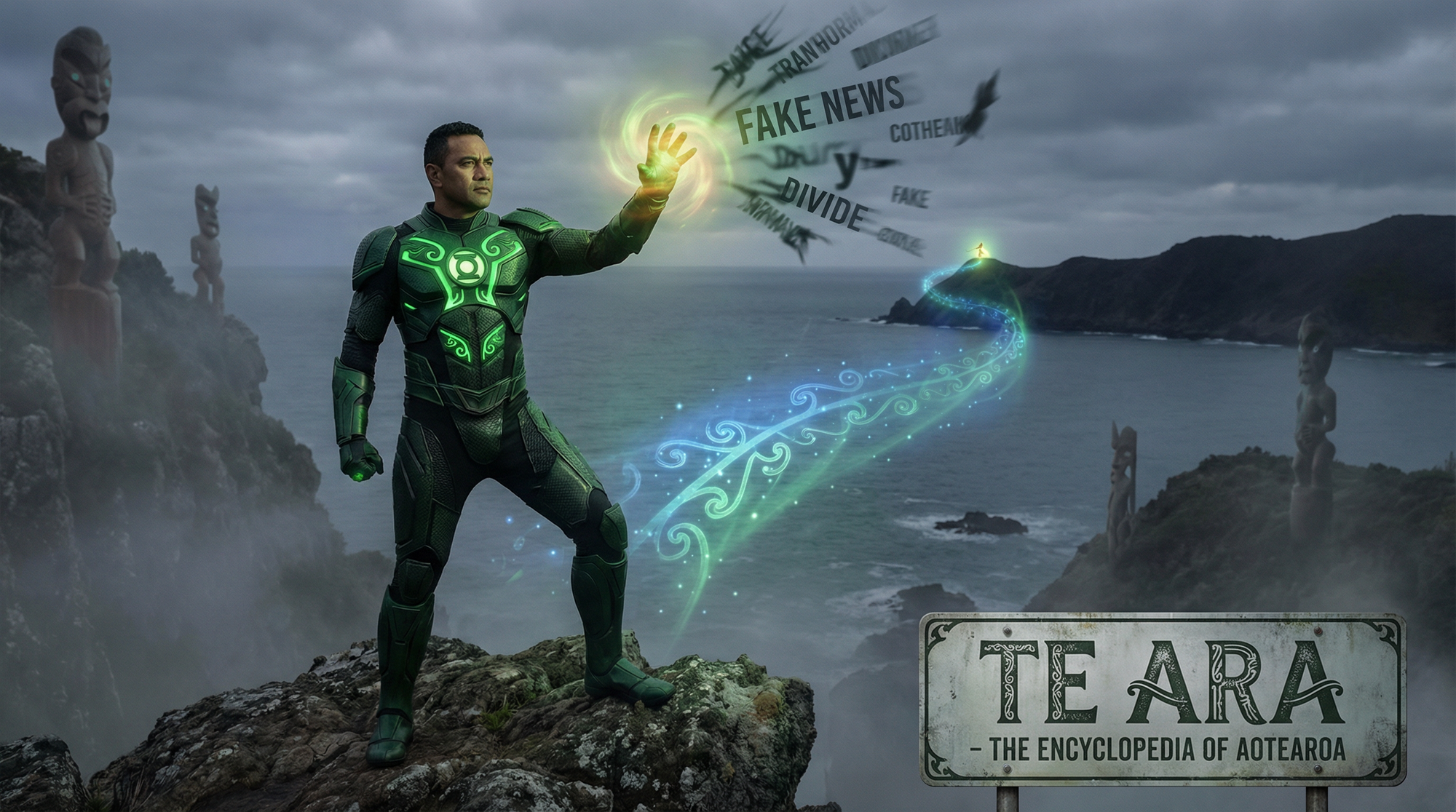
The Māori Green Lantern’s Verdict: Tū and Tāne
The Taiaha Strike
Gary Stevenson’s analysis of billionaire wealth concentration is forensically correct. His wealth tax proposal is economically sound. His warning that “the fire engines are not coming”—that politicians will not voluntarily redistribute—is politically astute.[https://www.rnz.co.nz/news/national/579275/30-with-guyon-espiner-economist-gary-stevenson-on-why-new-zealand-should-tax-the-rich]
But his framework treats Māori poverty as an instance of general inequality, when in fact Māori poverty is the foundation upon which New Zealand’s billionaires built their wealth. Raupatu, land fragmentation, state housing privatisation, and the abolition of inheritance taxes were not mistakes; they were the machinery of Māori dispossession.
A wealth tax that ignores this genealogy becomes another tool of managed inequality—making the system appear more equitable while leaving Māori structurally excluded.
What Māori Must Demand
- Unconditional Land Return: Not settlements with deferred payments, but immediate return of Crown-held land to iwi, hapū, and Māori communities. This is not reparations; it is justice under Te Tiriti o Waitangi.[https://www.waitangitribunal.govt.nz/]
- Wealth Tax Revenue Dedicated to Māori: A minimum of 50% of wealth tax revenue must be allocated to Māori restitution, housing, and land consolidation, administered through Māori governance structures.
- Reparative Taxation on Ultra-Wealth: Billionaires must face steeper tax rates specifically, with revenue dedicated to Raupatu restitution funds calculated by independent Māori economists.[https://www.rnz.co.nz/news/political/581632/better-late-than-never-maori-economist-says-capital-gains-tax-is-weak]
- Transparency of Ownership Networks: Māori communities must map wealth ownership in their regions, naming landlords, investor syndicates, and trust structures that extract rents from Māori neighbourhoods.[https://www.nzherald.co.nz/nz/the-legislation-behind-a-shocking-story-of-maori-land-loss/RR4Z7VLN57ZTLEQWM22T5XOJHY/]
- Tikanga Over Capital: Any wealth tax framework must subordinate capital accumulation to tikanga principles—kaitiakitanga (stewardship of whenua), whanaungatanga (kinship obligation), aroha (compassion for whānau).[https://www.waitangitribunal.govt.nz/]
The Political Possibility
Stevenson is visiting New Zealand in March 2026 with The People’s Economist tour.[https://www.rnz.co.nz/news/national/579275/30-with-guyon-espiner-economist-gary-stevenson-on-why-new-zealand-should-tax-the-rich] Māori political organisations must demand he centre Māori restitution in his advocacy. His audience—primarily Pākehā progressives—needs to hear that a wealth tax without explicit Māori reparations repeats the very redistributive failures that created this crisis.
Fire can be made. Communities mobilised, political will forged through rangatiratanga reclamation, and wealth redistribution forced through. But only if Māori are no longer treated as an instance of inequality but as the priority of justice.
Kia Kaha, Ka Tū
Gary Stevenson cuts with precision: wealth is concentrated, billionaires own your country, and wealth taxes can reclaim it. His analysis is correct.
But the taiaha—the ancestral weapon of Māori—has a dual blade: Tū (conflict, challenge, standing firm) and Tāne (creation, growth, restoration). Tū alone challenges power. Tāne alone creates nothing. Together, they are the force of rangatiratanga—Māori self-determination.
Stevenson’s wealth tax is the Tū strike—the challenge to billionaire extraction. But Māori must wield the Tāne blade: demanding that wealth reclamation becomes Māori wealth restoration, that redistribution becomes restitution, that equality becomes justice.
The choice is not between accepting inequality or embracing a neutral wealth tax.
The choice is:
Do we build a system where all New Zealanders—including Māori—can accumulate wealth, or do we continue managed inequality that leaves Māori as permanent renters in a land their ancestors owned?

Kia kaha. Ko te mahi he kaupapa. The work is everything.
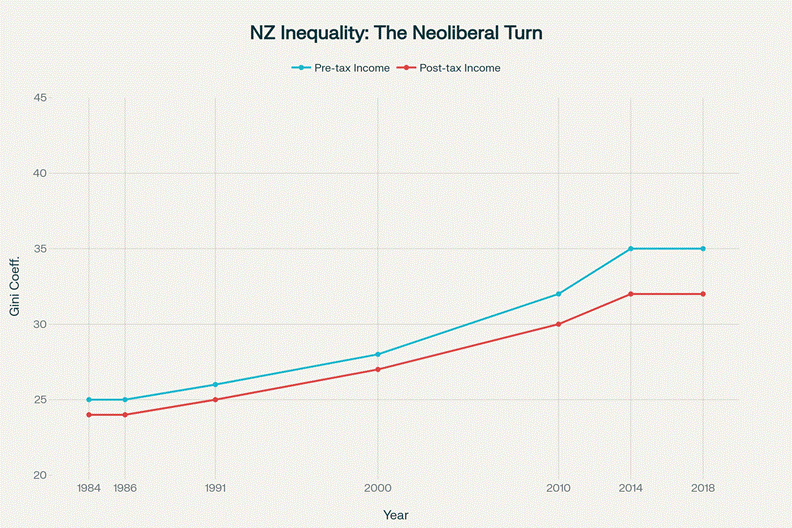
New Zealand’s Gini coefficient rose sharply after 1984 neoliberal reforms and the 1991 budget, with inequality nearly doubling compared to the more egalitarian post-war period.
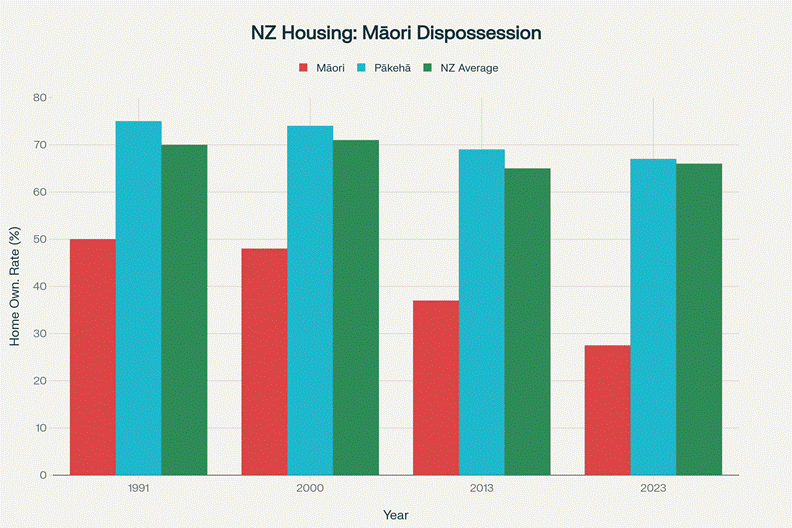
M\u0101ori home ownership collapsed from 50% in 1991 to 27.5% in 2023—a 45% decline directly correlated with neoliberal housing policy, income inequality, and systemic exclusion from wealth-building assets.
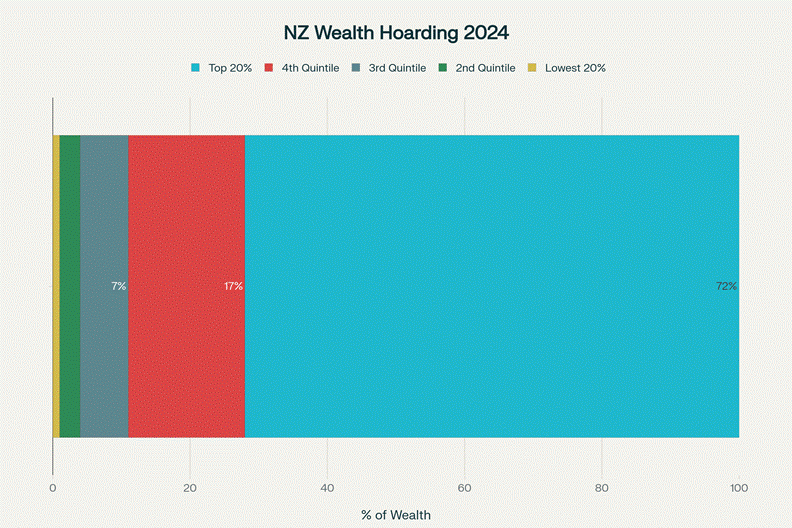
New Zealand’s wealth is brutally concentrated: the top 20% control 72% of all wealth while the bottom 60% share just 11%. The top 1% alone holds approximately 26% of total wealth.