“Trump’s Pit: How Shane Jones’ Prophecy Came True In Luxon’s Critical Minerals Sellout” - 3 February 2026
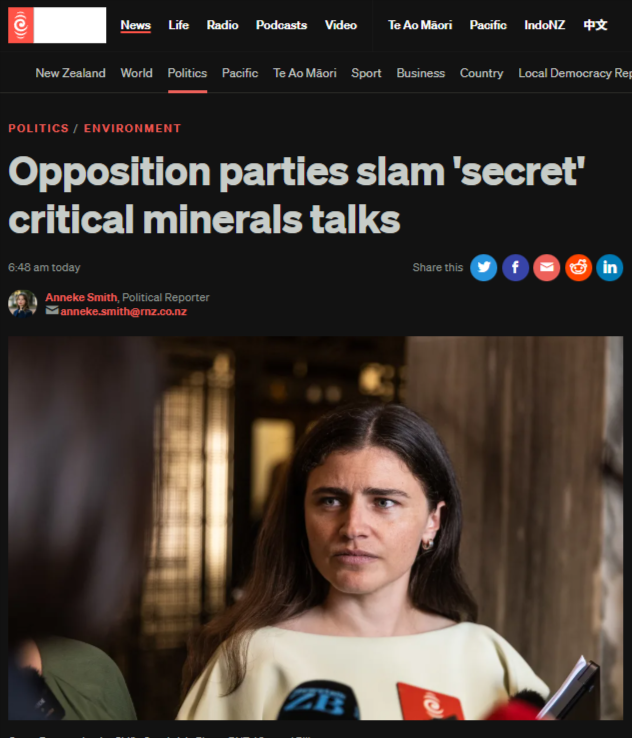
Kia ora Aotearoa, I thank you for entrusting me to tell you the truth.
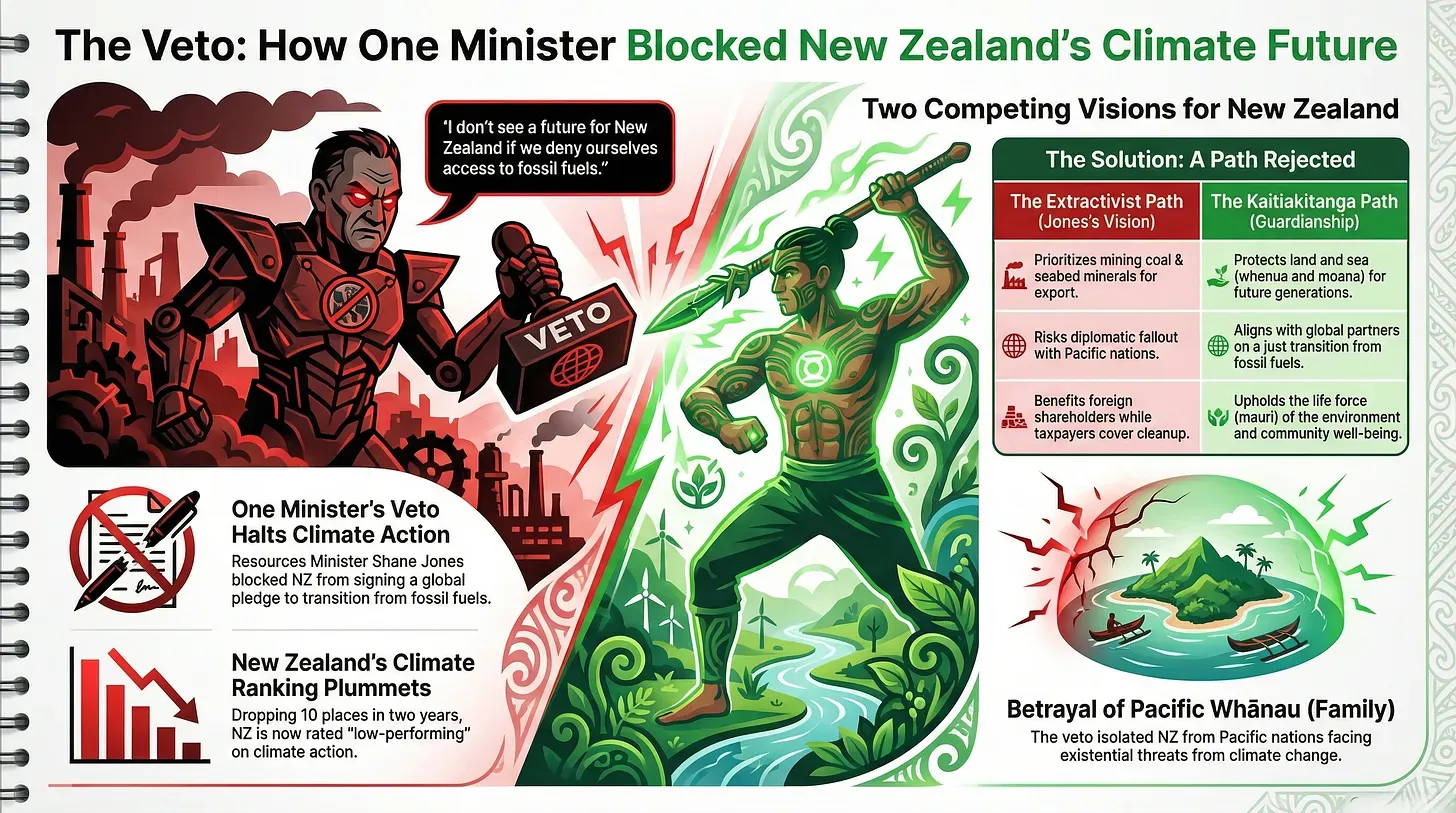
“Shane Jones - The Veto That Speaks Volumes”
read like a warning karakia for a people standing on the lip of a mine shaft. It named a Resources Minister who chose fossil fuel profits and foreign shareholders over Pacific survival, Māori kaitiakitanga, and the futures of our mokopuna. Now, with Christopher Luxon’s government secretly courting Donald Trump’s US$20 billion critical minerals stockpile, that essay stands revealed not just as critique
—but prophecy, fulfilled almost line by line. The Māori Green Lantern RNZ
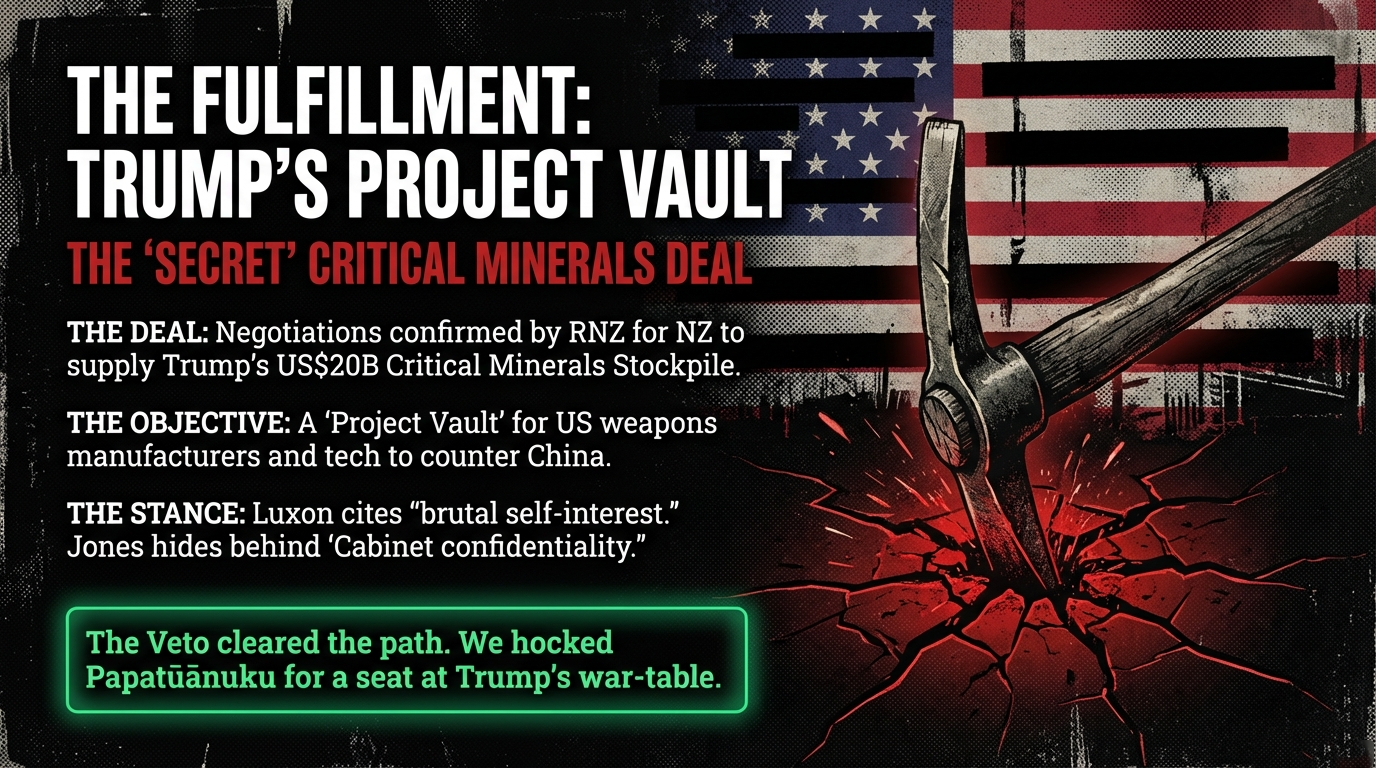
RNZ confirms New Zealand is in discussions with the United States about supplying rare and critical minerals so Trump can cut his country’s reliance on China for the minerals that fuel AI, electric vehicles, and high-tech weaponry. RNZ RNZ Luxon shrugs that New Zealand will act in its “brutal self interest” while Shane Jones boasts of global “accords” and “compacts” we are forbidden to read. RNZ This is not diplomacy; it is a back‑alley pawnshop deal where the Crown hocks Papatuanuku for a seat at Trump’s war-table.
Prophecy One: From Belém’s Waka To Trump’s Pit
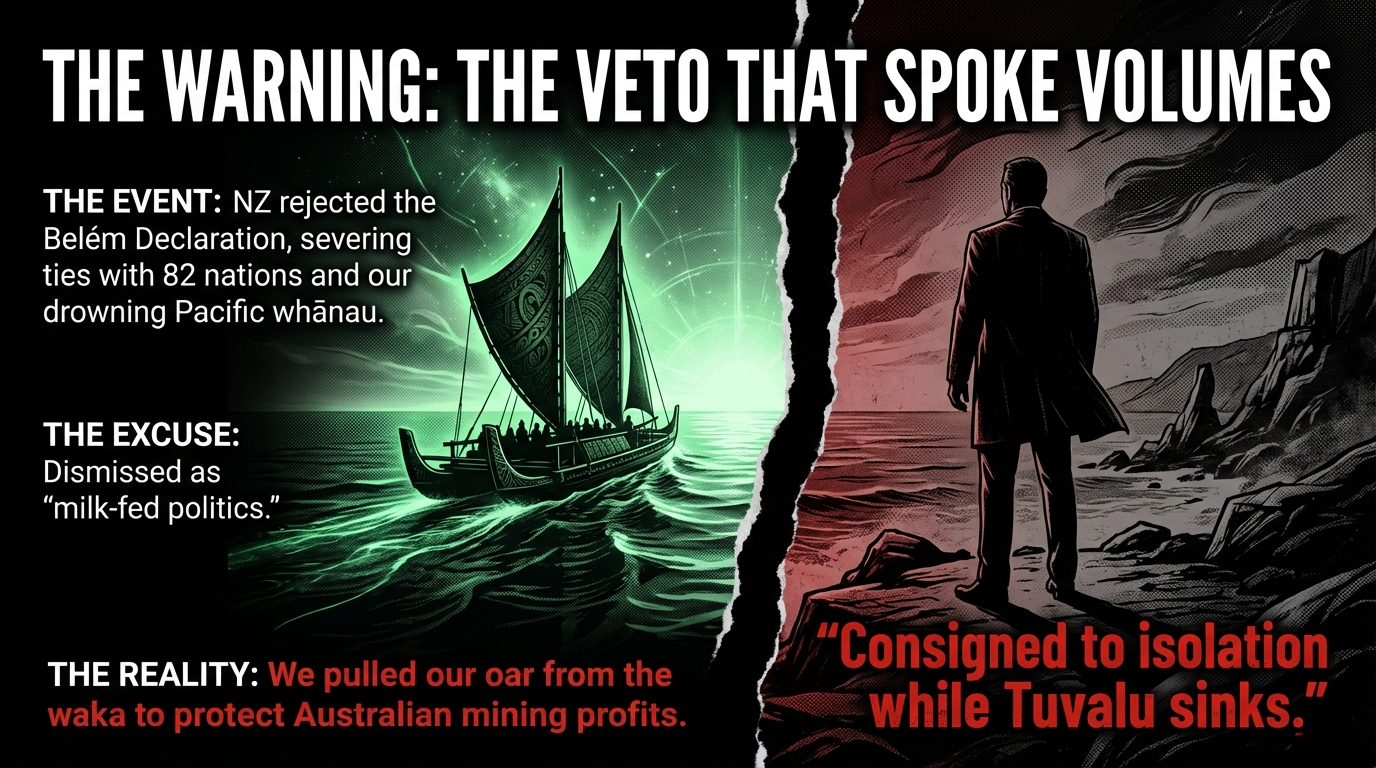
In “The Veto That Speaks Volumes”, Jones’ refusal to let Aotearoa sign the Belém Declaration—an 82‑nation pledge to transition away from fossil fuels—was framed as abandoning a collective waka hourua of survival. The Māori Green Lantern Instead of boarding the canoe with Pacific whānau who are literally drowning, he yanked Aotearoa’s paddle out and walked inland towards the open cast pit, muttering that fossil fuels are our only future.
That prophetic image is now literal policy trajectory. Jones has already:
- Added metallurgical coal and gold to the government’s “critical minerals” list, aiming to double minerals exports to $3 billion by 2035, entrenching coal as a “strategic” substance instead of a climate weapon.
- Championed seabed mining off Taranaki, including proposals to extract tens of millions of tonnes of ironsand annually and dump 160,000 tonnes of sediment a day over vulnerable marine ecosystems and Māui dolphin habitat.
- Reversed the offshore oil and gas exploration ban while fronting a $200 million co‑investment fund that socialises exploration risk and privatises profit.
Now Luxon adds the missing puzzle piece:
critical minerals shipped directly into Trump’s Project Vault, a 15‑year US stockpile financed with US$12 billion from the Export‑Import Bank plus private capital, explicitly designed to secure minerals for US automakers, tech companies and weapons manufacturers. RNZ Reuters
The prophecy was simple:
abandon climate solidarity, embed extractivism, and Aotearoa will be pulled into someone else’s resource war. That is now happening in real time.
Example: From Denniston To Trump’s Vault
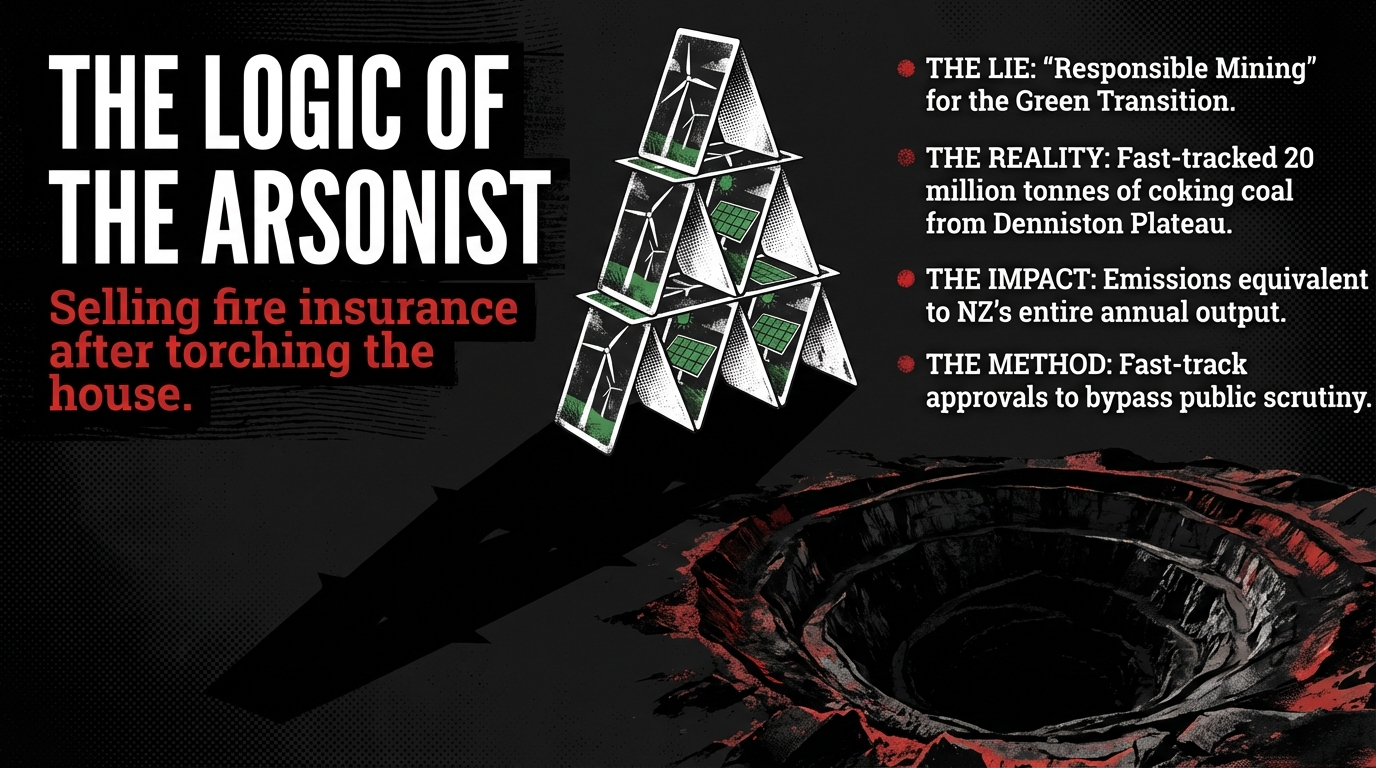
The earlier essay explained how Bathurst Resources plans to mine 20 million tonnes of coking coal from Denniston Plateau over 25 years, creating emissions roughly equal to New Zealand’s total annual greenhouse gas output once burned—almost all for export. The Māori Green Lantern
Now imagine that logic applied to rare earths and vanadium for Trump’s stockpile:
- Minerals ripped from Māori land and conservation estate.
- Processed overseas into weapons, surveillance, and “green” tech for US security interests.
- Climate, biodiversity, and community costs left with us, the supposed “partner” nation.
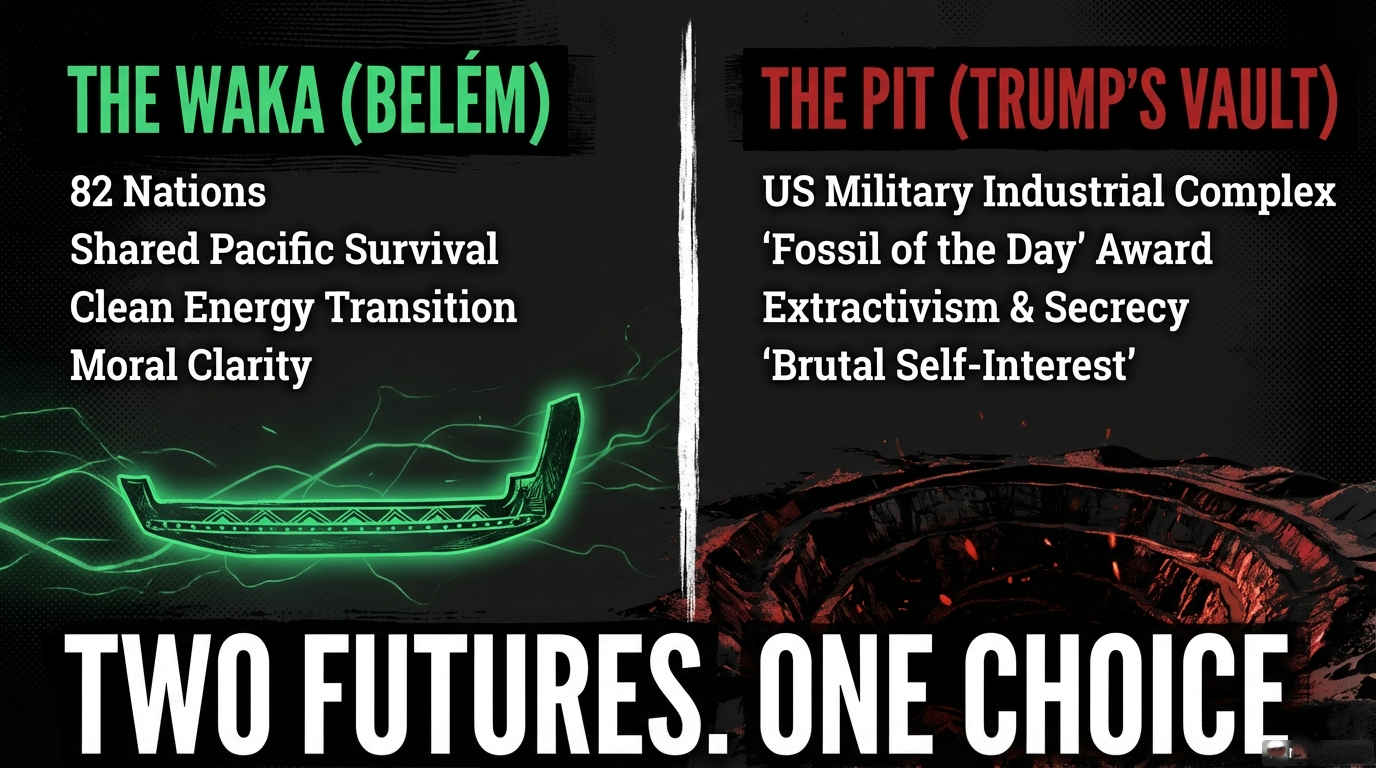
The Belém waka offered shared navigation toward a post‑fossil future. Trump’s Vault offers a lift in the boot of a Humvee driving toward permanent resource militarisation.
Prophecy Two: The House Of Cards And The Casino Of Secrecy
In the RNZ piece, Chlöe Swarbrick calls the government’s critical minerals pitch a “house of cards” built on rhetoric about a “clean, green energy transition” while the actual agenda is mining expansion aligned with Trump’s geopolitical crusade. RNZ The earlier essay described Jones as an arsonist selling fire insurance—burning the future with fossil projects while pretending to secure energy “stability”. The Māori Green Lantern
Today, the casino is in full swing:
- MFAT admits officials are doing “analysis” and “targeted consultation” for ministers on the critical minerals deal, but Cabinet confidentiality functions like smoke hiding the roulette wheel. RNZ
- Luxon insists “no Cabinet decisions have been made” while affirming that New Zealand will develop its critical minerals sector in “brutal self interest”. RNZ
- Minerals Council cheerfully says New Zealand should scale up mining and claims we can “responsibly” become a critical minerals supplier, backing a fast‑track vanadium ironsand project off Taranaki. RNZ
The prophecy warned that fast‑track laws, critical minerals lists, and fossil rollbacks were a package deal: a system designed to tear down safeguards and put extractive decisions behind closed doors. The Māori Green Lantern
Now we see the end game: a new, secretive tier of foreign‑policy extractivism where Trump gets stockpiled security and Aotearoa gets dust, tailings, and diplomatic blowback.
Example: “Milk‑Fed” Critics Vs “Milk‑Fed” Democracy
Jones has already dismissed opponents of his mining agenda as “frothy milk fed critics”, language he now recycles about people questioning this mineral strategy. RNZ In “The Veto That Speaks Volumes”, that phrase was decoded as class cosplay—extractivism in hi‑vis, pretending that foreign corporate interests are the same as working‑class survival. The Māori Green Lantern
The reality:
- Jones’ coal decisions already meant the Crown paid more to clean up Stockton than it received in coal royalties nationally. The Māori Green Lantern
- Critical minerals deals risk repeating the same pattern: public pays for infrastructure, pollution and climate damage; foreign shareholders capture the upside.
Calling critics “milk‑fed” is projection. The real milk‑fed entity here is the mining sector, guzzling public subsidies and regulatory shortcuts while crying hunger.
Prophecy Three: Tikanga Crushed Under The Logic Of The Pit
The earlier essay grounded its analysis in tikanga:
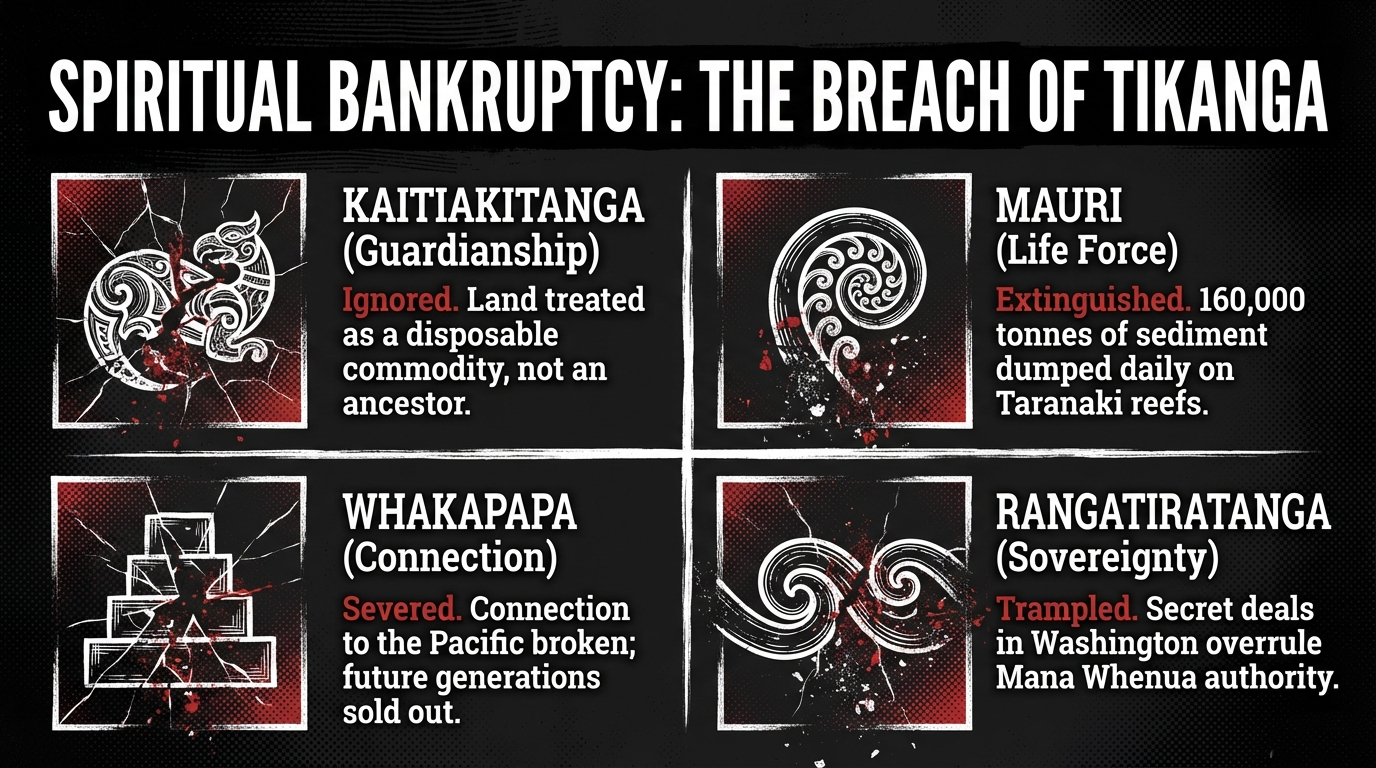
kaitiakitanga, mauri, whakapapa, utu, rangatiratanga.
It explained to a Western policy mindset that these are not “cultural extras” but core governance principles:
obligations to land, waters, ancestors and descendants that sit above short‑term profit. The Māori Green Lantern
The critical minerals move escalates the tikanga breach from domestic to geopolitical.
Kaitiakitanga vs “Brutal Self Interest”
Kaitiakitanga sees humans and whenua as one body—a long line of ancestors and mokopuna in physical form. Te Ara When Luxon says the government will act in “brutal self interest”, he reveals that his “self” excludes whenua, moana, and Māori communities living with mining impacts. RNZ
To a Western economic frame, it sounds like tough realism. To tikanga Māori, it is a declaration of spiritual bankruptcy: openly choosing short‑term extraction over obligations to protect mauri and honour whakapapa.
Mauri vs Stockpile
Project Vault aims to build a 60‑day emergency supply of critical minerals for US manufacturers, treating mineral deposits as static “reserves” awaiting extraction. RNZ Mauri sees those deposits as part of a living system: reefs, groundwater, forests, taniwha, kelp forests, and taonga species interconnected. Te Ara
The earlier essay’s example of Whareroa Marae—where industrial pollution has forced whānau to leave ancestral land and children are described as being “poisoned every hour of the day”—shows what mauri depletion looks like in practice: polluted air, broken whakapapa, severed spiritual ties, physical illness. The Māori Green Lantern
Apply that to a ramped‑up mining regime feeding Trump’s stockpile: more Whareroas, more Stockton clean‑ups, more barren “rehabilitated” landscapes with a few saplings planted over industrial scars.
How To Explain This To A Western Mind
To someone steeped in Western legalism, tikanga can be translated like this:
- Kaitiakitanga = fiduciary duty, but to the land itself and future generations, not just shareholders.
- Mauri = the “health” of an ecosystem, cultural and spiritual as well as biological; every mining consent is a decision about whose health matters.
- Whakapapa = a binding contract of relatedness, akin to acknowledging that your family name obliges you not to torch the family home for a one‑off payout.
- Rangatiratanga = sovereignty plus stewardship; the authority to decide how resources are used, anchored in collective responsibility, not individual gain.
The critical minerals deal tramples all four: it sidelines Māori authority, gambles with mauri, severs whakapapa ties to unspoiled landscapes, and treats kaitiakitanga as an optional extra rather than a constitutional foundation.
Quantifying The Harm: From Climate Chaos To Strategic Capture
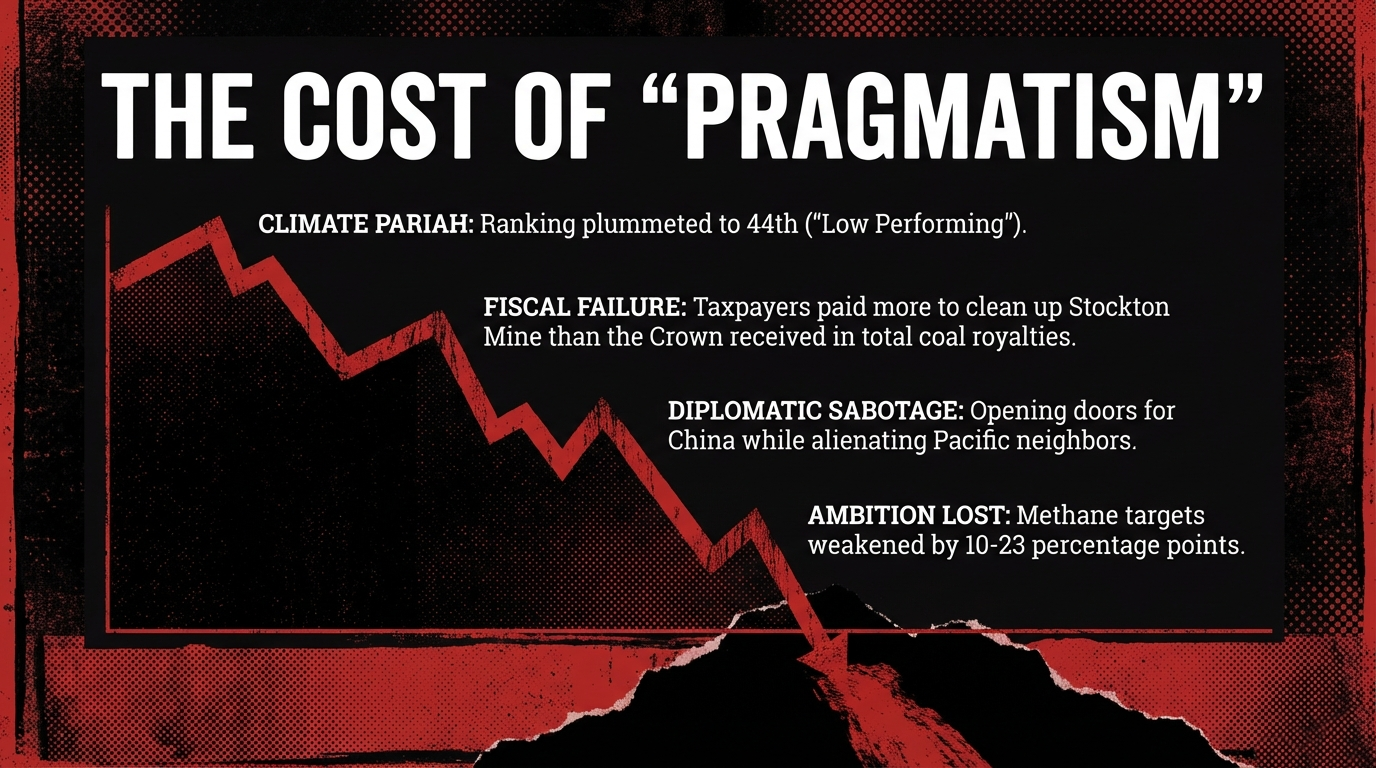
The previous essay catalogued the damage from Jones’ fossil agenda: New Zealand’s climate ranking slide, weakened methane targets, and increasing pariah status at COP. The Māori Green Lantern The critical minerals shift adds a new dimension: hard‑wiring Aotearoa’s economy into US security doctrine.
Strategic and Diplomatic Harm
- Trump’s stockpile is explicitly designed to counter what Washington calls Chinese “manipulation” of mineral prices and create a militarised, on‑demand supply for US manufacturers. RNZ
- New Zealand joining quietly, without public mandate, risks being seen by Pacific neighbours as picking a side in a resource arms race rather than standing for climate justice and demilitarisation.
The earlier essay noted officials warning that fossil backsliding and climate obstruction give China strategic openings in the Pacific and damage our relationships with island states already furious about new oil and gas exploration. The Māori Green Lantern Add critical minerals and the message to Pacific whānau is clear: Aotearoa is doubling down on extractive alignment with major powers, not on shared survival.
Economic Harm
- The mining strategy aims to double export value to $3 billion by 2035, but past coal experience shows taxpayers can end up paying more in environmental cleanup than they receive in royalties. The Māori Green Lantern RNZ
- Critical minerals markets are volatile; tying regional economies to a boom‑and‑bust extractive cycle leaves communities exposed when prices crash or demand shifts.
Climate Harm
- Every tonne of fossil‑fuel‑enabled mining infrastructure—roads, ports, processing—locks in emissions for decades. The earlier essay stressed how Denniston’s 20 million tonnes of coal alone equate to a year of New Zealand’s emissions. The Māori Green Lantern Critical minerals may feed EVs and batteries, but if extraction is powered by fossil fuels and expands the frontier into conservation estate and seabed, the net climate benefit shrinks or reverses.
When you connect the dots, the harm is multi‑layered: climate, economy, Pacific diplomacy, and the very foundations of tikanga.
Solutions: Turning Prophecy Into A Different Future
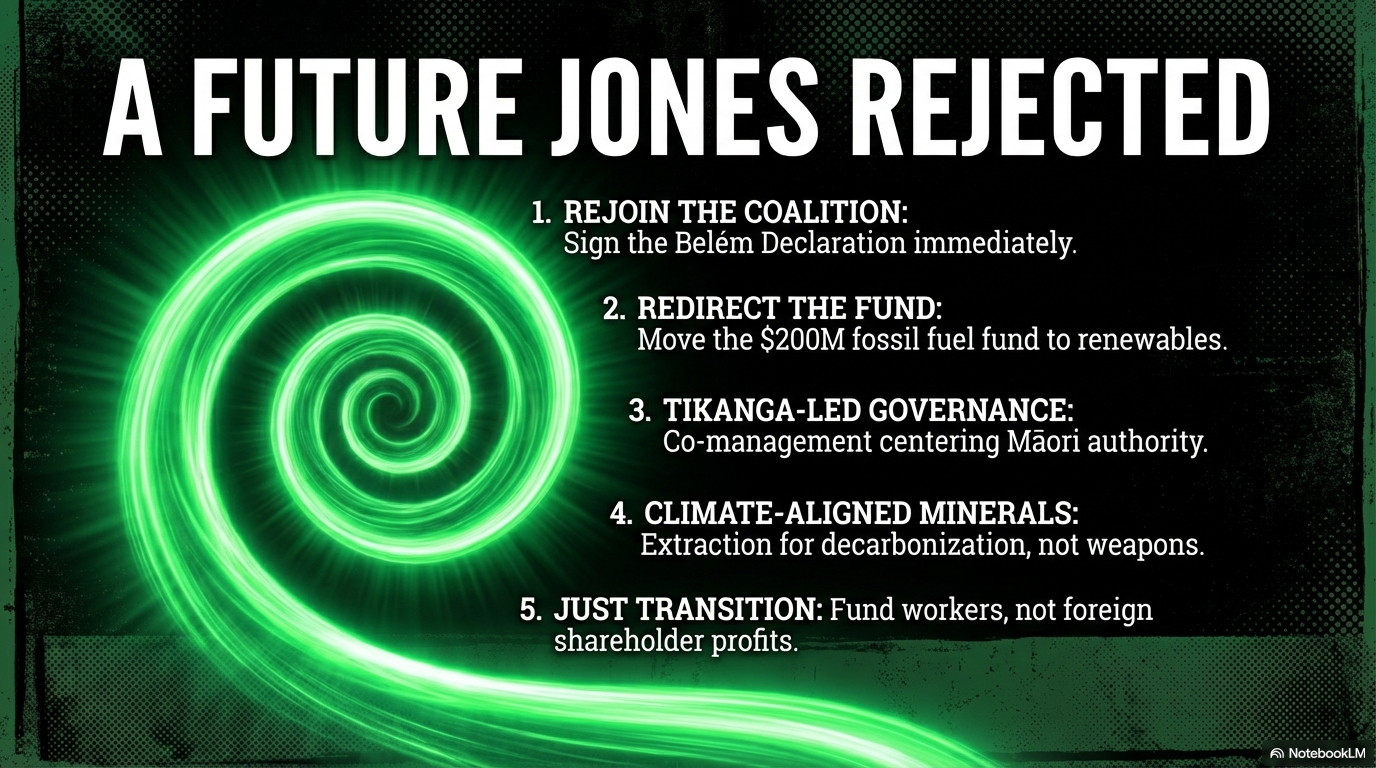
The earlier essay did not stop at condemnation; it outlined a roadmap Aotearoa could follow instead of Jones’ path of fossil‑fuelled collapse: rejoin the Belém coalition, end fossil subsidies, strengthen targets, and embed Māori rangatiratanga. The Māori Green Lantern Those solutions now need an upgrade to address the critical minerals dimension.
1. Full Transparency And Democratic Mandate
- Immediately publish all documents related to New Zealand’s critical minerals talks with the US: MFAT advice, draft accords, risk assessments.
- Require any binding agreement with Trump’s stockpile project to go through select committee scrutiny, with public submissions and iwi/hapū consultation.
If the government insists this is about “brutal self interest” done for our benefit, then they should have no fear of daylight.
2. Reset The Minerals Strategy Around Tikanga
- Rewrite the Minerals Strategy to make kaitiakitanga, mauri, and rangatiratanga binding decision‑making tests, not PR words.
- Exclude conservation land, Māori ancestral land, and sensitive marine ecosystems from extraction zones; treat them as untouchable taonga.
To a Western mind, this looks like “no‑go zones”. To Māori, it is basic respect for whakapapa and mauri.
3. Climate‑Aligned Critical Minerals, Or None
- Any critical minerals mining must be explicitly tied to decarbonisation pathways for Aotearoa—renewable energy, electrified transport, green industry—not to foreign weapons systems or fossil‑fuel infrastructure.
- Require full life‑cycle climate accounting for each project, including emissions from extraction, processing, transport, and end use.
If a project increases global emissions or undermines our 1.5°C obligations, it fails the test.
4. Tikanga‑Led Co‑Governance Of Mining Decisions
- Establish statutory co‑governance bodies with iwi and hapū at decision‑making level, not advisory, for all major mining proposals.
- Embed free, prior, and informed consent as a non‑negotiable standard for projects affecting Māori land or taonga species.
For Western readers, this is not “special treatment”; it is fulfilling Te Tiriti obligations and aligning with international standards like the UN Declaration on the Rights of Indigenous Peoples.
5. Pacific‑Centred Foreign Policy, Not Trump‑Centred
- Align Aotearoa with Pacific‑led initiatives on climate and extractivism, including efforts to regulate deep sea mining and phase out fossil fuels.
- Use our diplomatic weight to push for global agreements that treat critical minerals as common heritage resources managed for planetary survival, not as fodder for national stockpiles and arms races.
If we truly see ourselves as part of the Pacific whānau, our foreign policy must reflect that, not cower behind Trump’s supply‑chain shield.
Koha Consideration
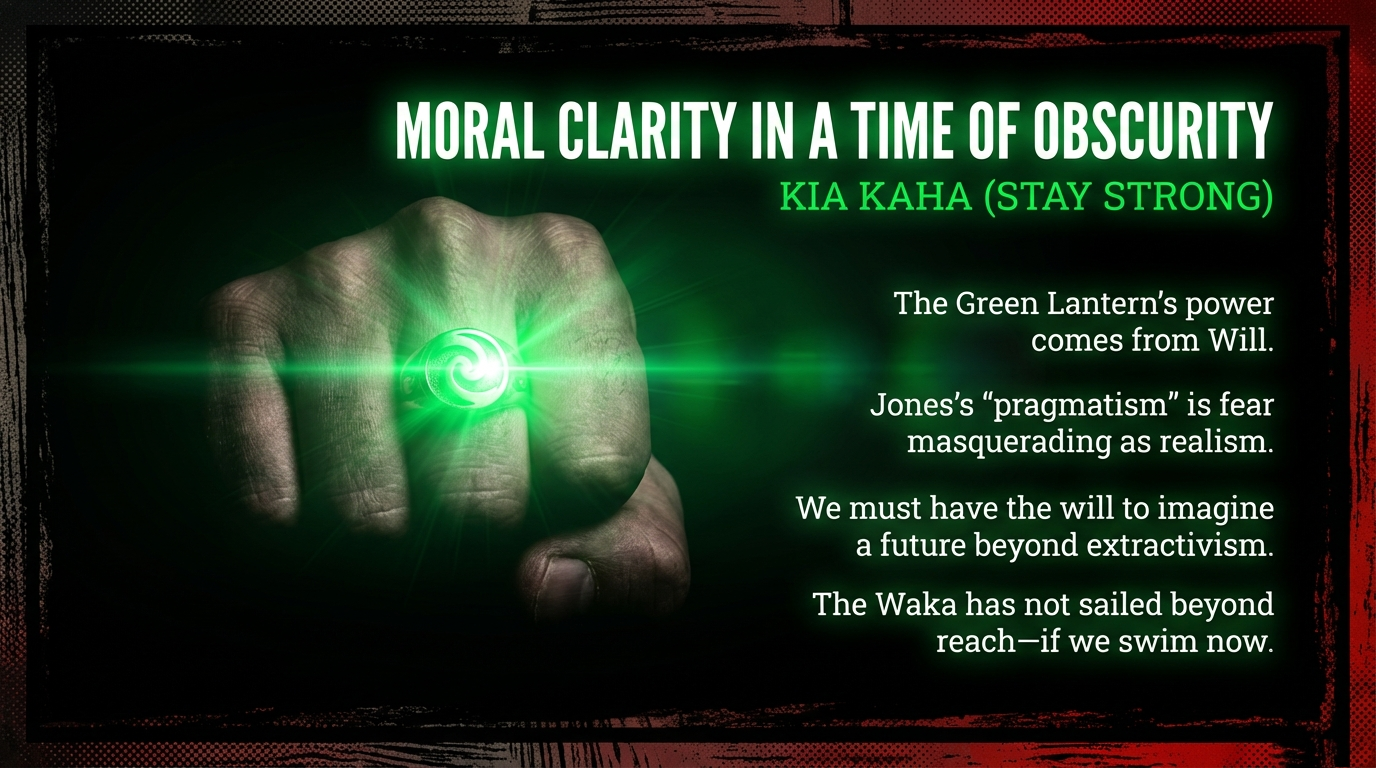
Every koha in this moment is more than a tip; it is an act of refusal.
It says:
we will not let Luxon, Jones, or Trump define Aotearoa’s “brutal self interest” as strip‑mining our tikanga, our whenua, and our Pacific relationships for someone else’s stockpile.
It affirms that rangatiratanga includes funding our own prophetic voices
—the ones that warned us when Belém was vetoed, and now trace the line from that decision straight into the dark shaft of critical minerals extraction.
If “The Veto That Speaks Volumes” was the karanga, this essay is the pānui at the pā gate:
the prophecy is unfolding, and we either resource those who can map it—and fight it—or we let the pit swallow our mokopuna’s future in silence.
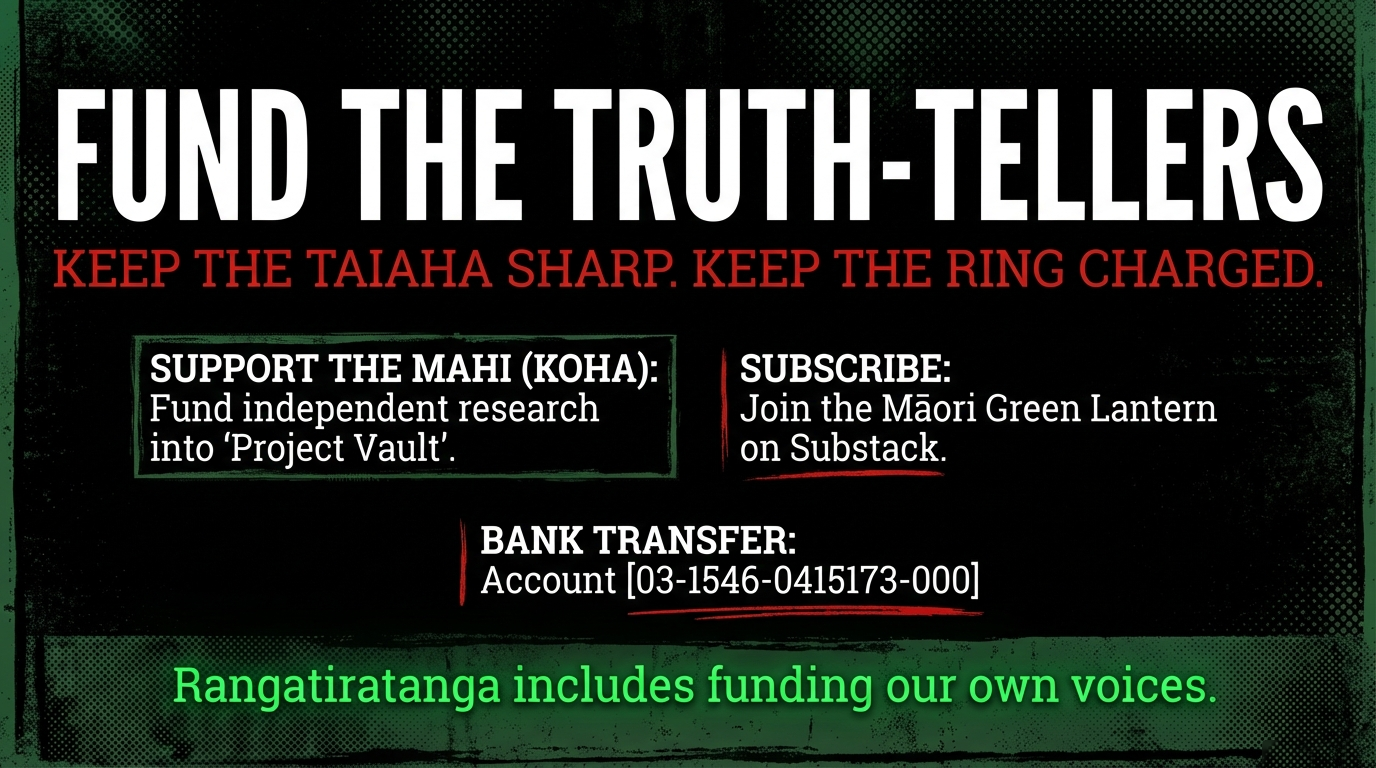
Kia kaha, whānau. Stay vigilant. Stay connected. And if you are able, consider a koha to keep this taiaha sharp and this Ring charged.
Three pathways exist:
- For those who wish to support this mahi directly with a koha (voluntary contribution), please visit the Koha platform: Koha—Support
- For those who wish to receive essays directly and support through subscription, join the Substack community: Subscribe to the Māori Green Lantern on Substack
- For those who prefer direct bank transfer, account details are: HTDM, account number 03-1546-0415173-000.

Ivor Jones The Māori Green Lantern Fighting Misinformation And Disinformation From The Far Right