“Two Prophetic Visions for Justice: James Talarico and the Māori Green Lantern” - 16 January 2026
A Comparative Analysis of Faith-Rooted Progressive Politics in Settler Colonial Contexts
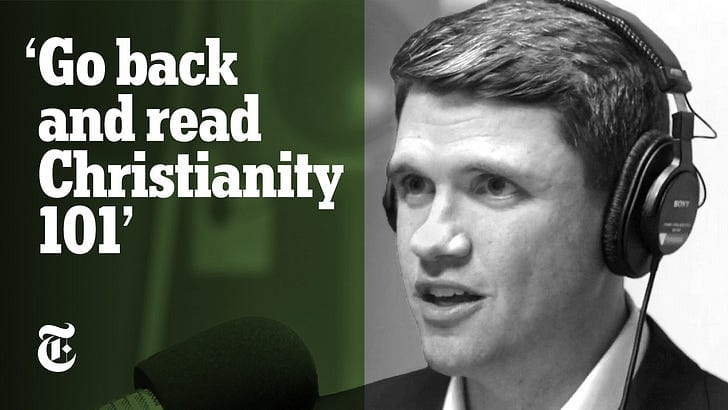
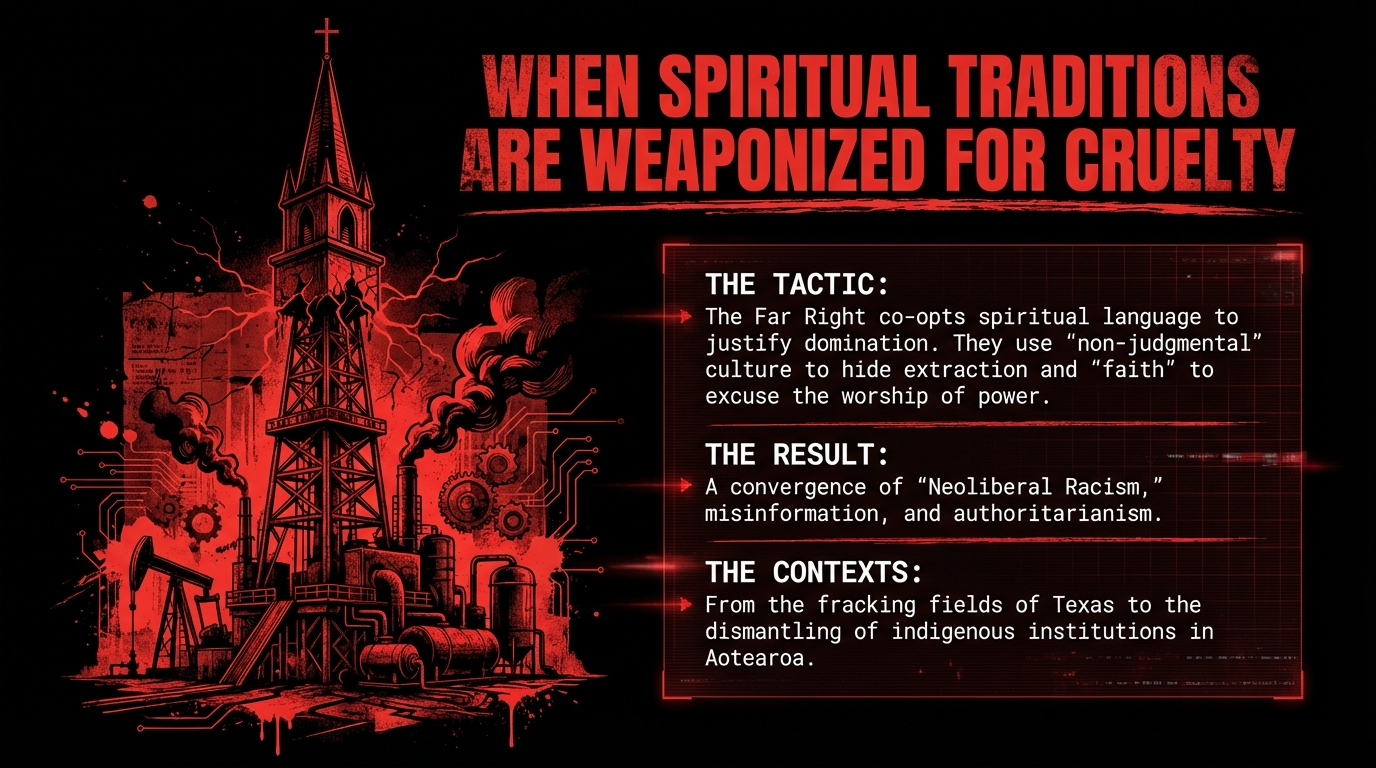
In an era when spiritual traditions are increasingly weaponized to justify cruelty, two distinct voices have emerged offering radically different—yet surprisingly complementary—visions of justice rooted in deep moral frameworks. James Talarico, a Texas state representative and seminary-trained Christian, is reclaiming Christianity for progressive politics in the United States. Meanwhile, Ivor Jones, known as the Māori Green Lantern (MGL), operates as a kaitiaki (guardian) exposing colonial violence and neoliberal extraction in Aotearoa New Zealand, grounding his work in tikanga Māori and te ao Māori values.
Both challenge the corruption of their respective spiritual traditions by those seeking power. Both root political action in accountability, community, and care for the vulnerable. Yet their divergent contexts—Talarico working within democratic institutions, the MGL operating outside them to expose colonial structures—reveal both the possibilities and limitations of faith-based progressive politics in settler colonial democracies.
I. Talarico’s Vision: Reclaiming Christianity from Christian Nationalism
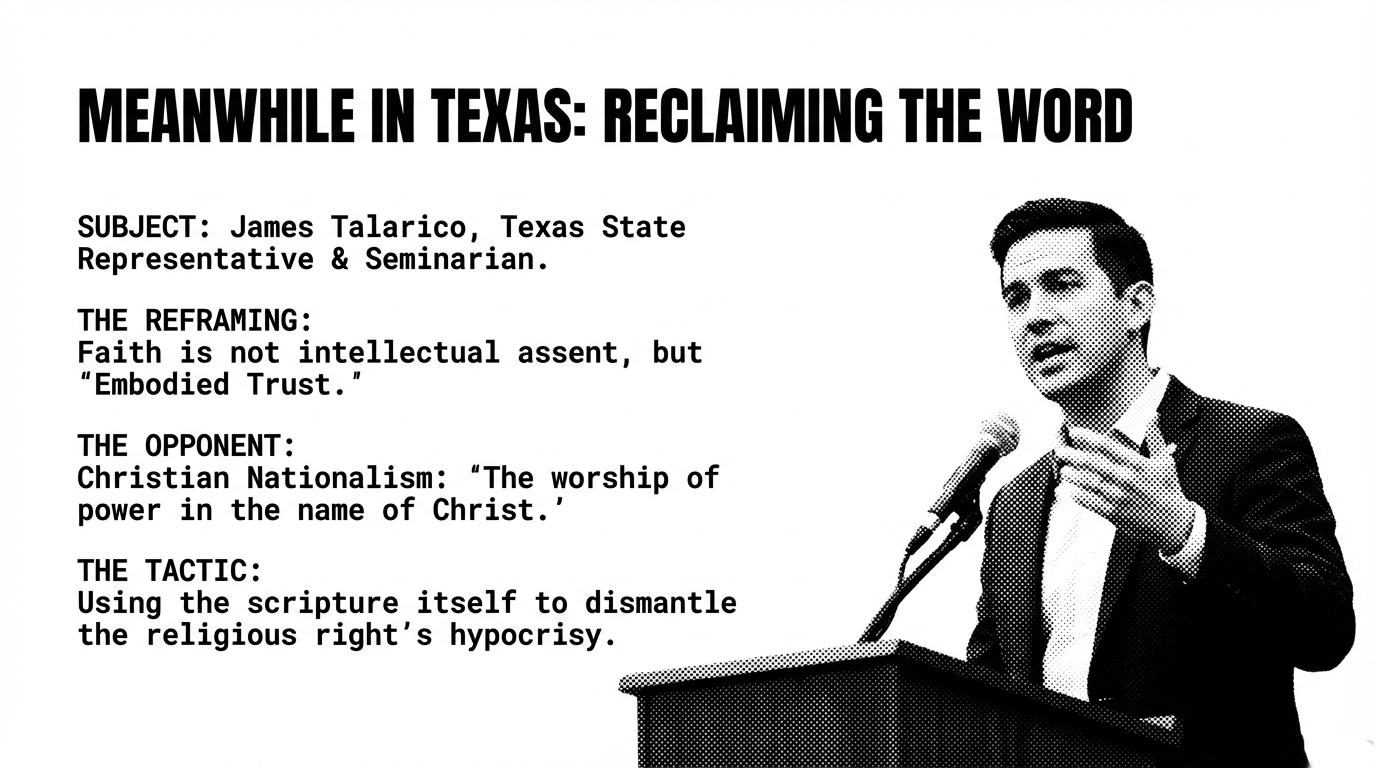
James Talarico roots his politics in Jesus’ two commandments: “love God, our source, and love our neighbors.” This simple formulation, taught by his Baptist preacher grandfather, animates his work from public school teacher to Senate candidate. His seminary training revealed that the word typically translated as “faith” can also mean “trust”—not intellectual assent to doctrine, but embodied trust “that love is going to get you through the hour, through the day, through your life.”
Each morning begins with silent prayers of gratitude followed by the Lord’s Prayer spoken aloud—rituals that “check the worst parts of myself” and reconnect him to millennia of practice. Prayer sustains the work; the work gives prayer meaning. As he puts it: “religion without works, faith without works is dead.”
Talarico’s most viral moments come from challenging Christian nationalism with scripture itself. Economic justice is mentioned approximately 3,000 times in the Bible, while abortion is never mentioned. The religious right’s obsession with controlling women’s bodies and policing sexuality contradicts Jesus’ repeated commands to feed the hungry, heal the sick, and welcome the stranger.
“Why don’t they post ‘money is the root of all evil’ in every boardroom?” Talarico asks. “Or ‘it’s easier for a camel to pass through the eye of a needle than for a rich man to get into the kingdom of heaven’ on the floor of the New York Stock Exchange?”
He defines Christian nationalism as “the worship of power in the name of Christ,” distinguishing it from authentic Christianity by examining its fruits. Christian nationalists advocate for posting the Ten Commandments in classrooms while cutting funding for children’s healthcare and education.
His Senate campaign frames politics as “top versus bottom”—not left versus right. “Billionaires divide us by party, by race, by gender, by religion so that we don’t notice that they’re defunding our schools, gutting our health care and cutting taxes for themselves,” he declares. His platform includes universal healthcare, fully funded public schools, accessible childcare, and policies rejecting concentrated wealth.
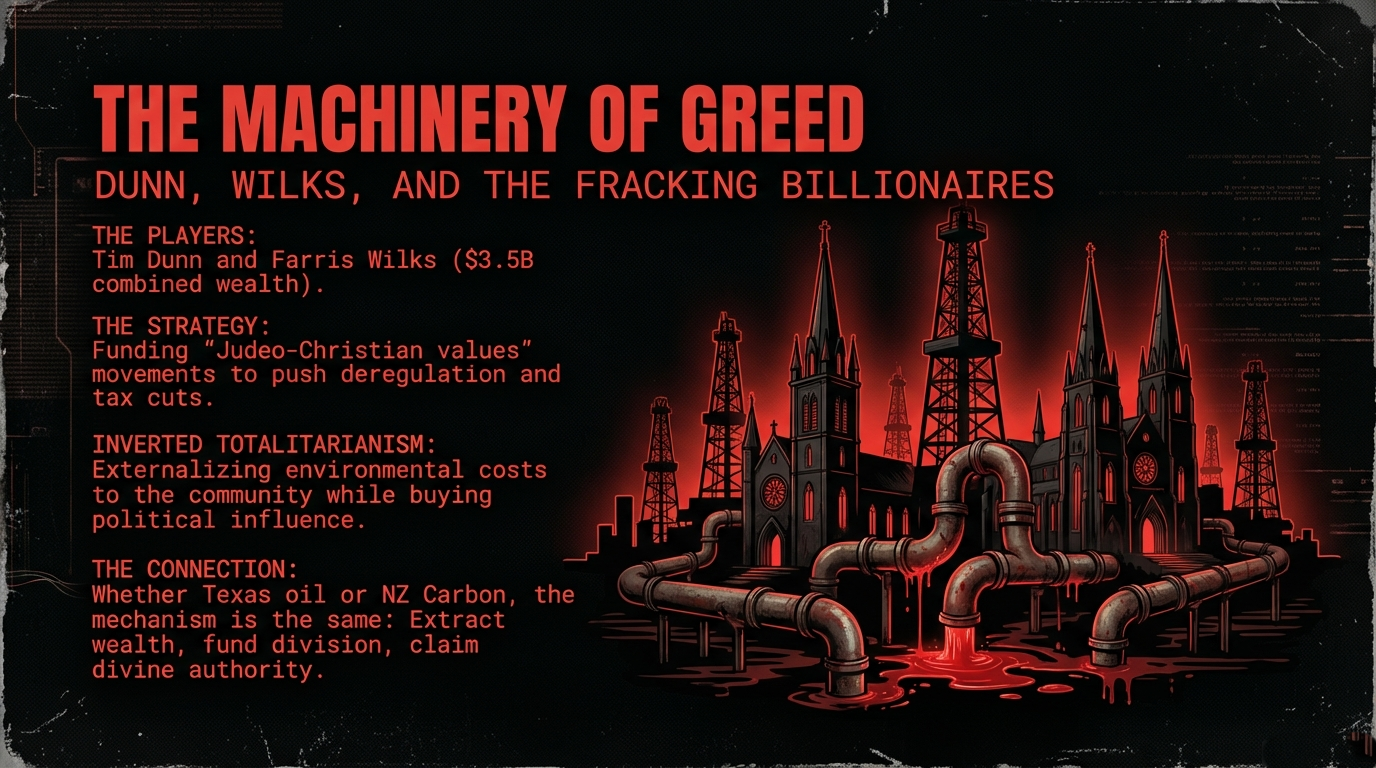
The Texas megadonors funding Christian nationalism—Tim Dunn and Farris Wilks, with combined wealth exceeding $3.5 billion from fracking—exemplify the corruption Talarico fights. They speak of “protecting Judeo-Christian values” while promoting deregulation, tax cuts for the wealthy, and theocratic policies.
II. The Māori Green Lantern: Kaitiakitanga in an Age of Colonial Extraction
The Māori Green Lantern operates from te ao Māori—the Māori worldview that emphasizes interconnectedness where Western thought fragments reality into separate domains.
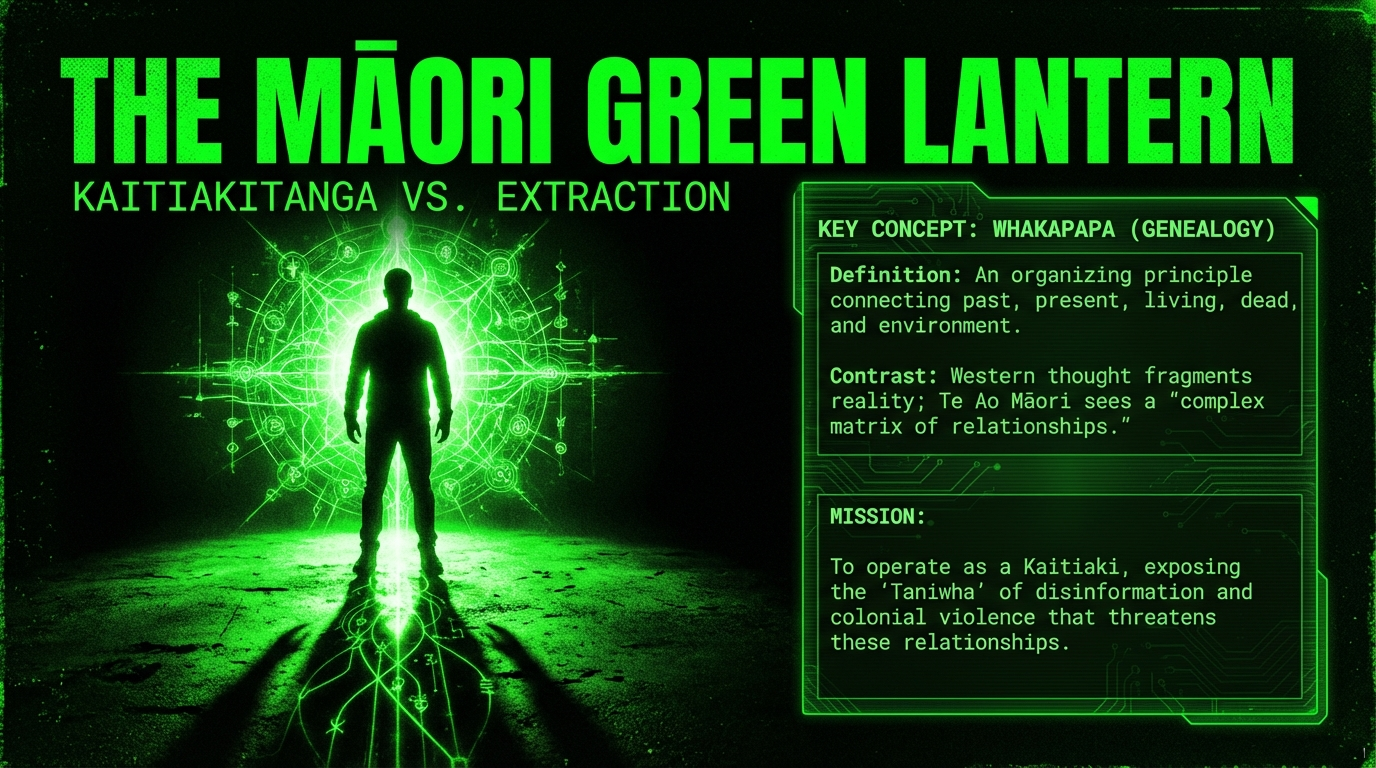
At the heart lies whakapapa (genealogy/lineage)—”an organising principle [that] orders the universe, connecting time past to time present.” It weaves together the living, the dead, and te taiao (the environment) into “a complex matrix of relationships.” Whakapapa teaches that “the world is a vast family, and humans are children of the earth and sky, and cousins to all living things.”
Tikanga provides guidance on “the right way of doing things according to conventions, rules or protocols that have helped kin communities in the past.” Key principles include:
- Manaakitanga (hospitality, care): showing support and caring for others’ needs
- Whanaungatanga (kinship): creating belonging and working together for common purpose
- Kotahitanga (unity): collective action and responsibility for mutual interests
- Rangatiratanga (self-determination): trusteeship acting in community’s best interests for long-term benefits
- Kaitiakitanga (guardianship): reciprocity between human and environmental interactions, leaving the environment in good or better state for future generations
The MGL deploys these values to expose “misinformation, white supremacy, racism, and neoliberalism from the far right.” His investigation “Infiltration Networks” maps connections between Jevan Goulter (a crisis fixer paid $56,000 to suppress assault testimony), Hone Harawira, Shane Jones (NZ First deputy leader and Minister for Forestry), Brian and Hannah Tamaki (Destiny Church leaders), and influencer “Shubz.”
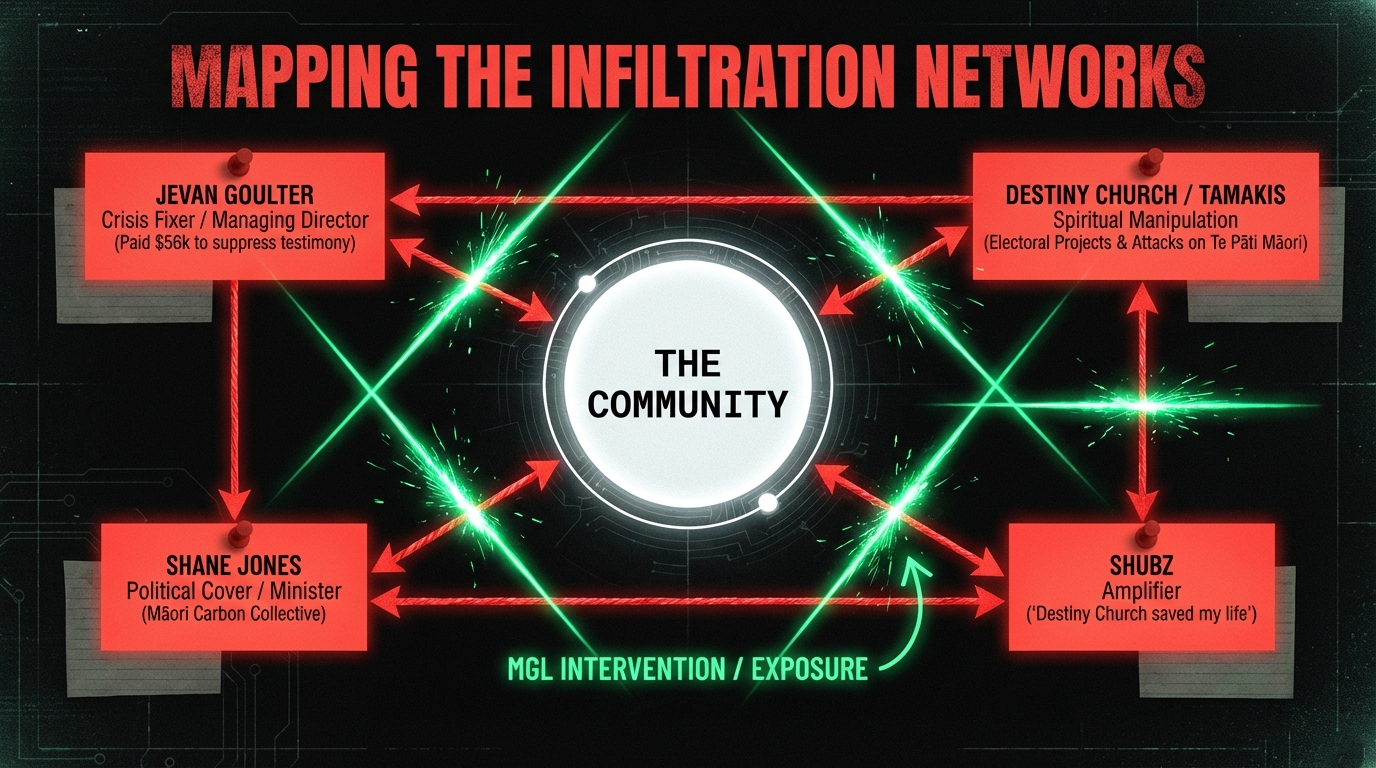
The Māori Carbon Collective, with Goulter as managing director, locks Māori landowners into seven-year contracts with “zero real input” while board members—including Minister Shane Jones—control all trading decisions. Destiny Church, which tried to capture the Māori Women’s Welfare League through overnight branch registrations in 2011, now orchestrates campaigns attacking Māori political leadership. Shubz, who declares “Destiny Church saved my life,” amplifies destabilizing narratives with high engagement.
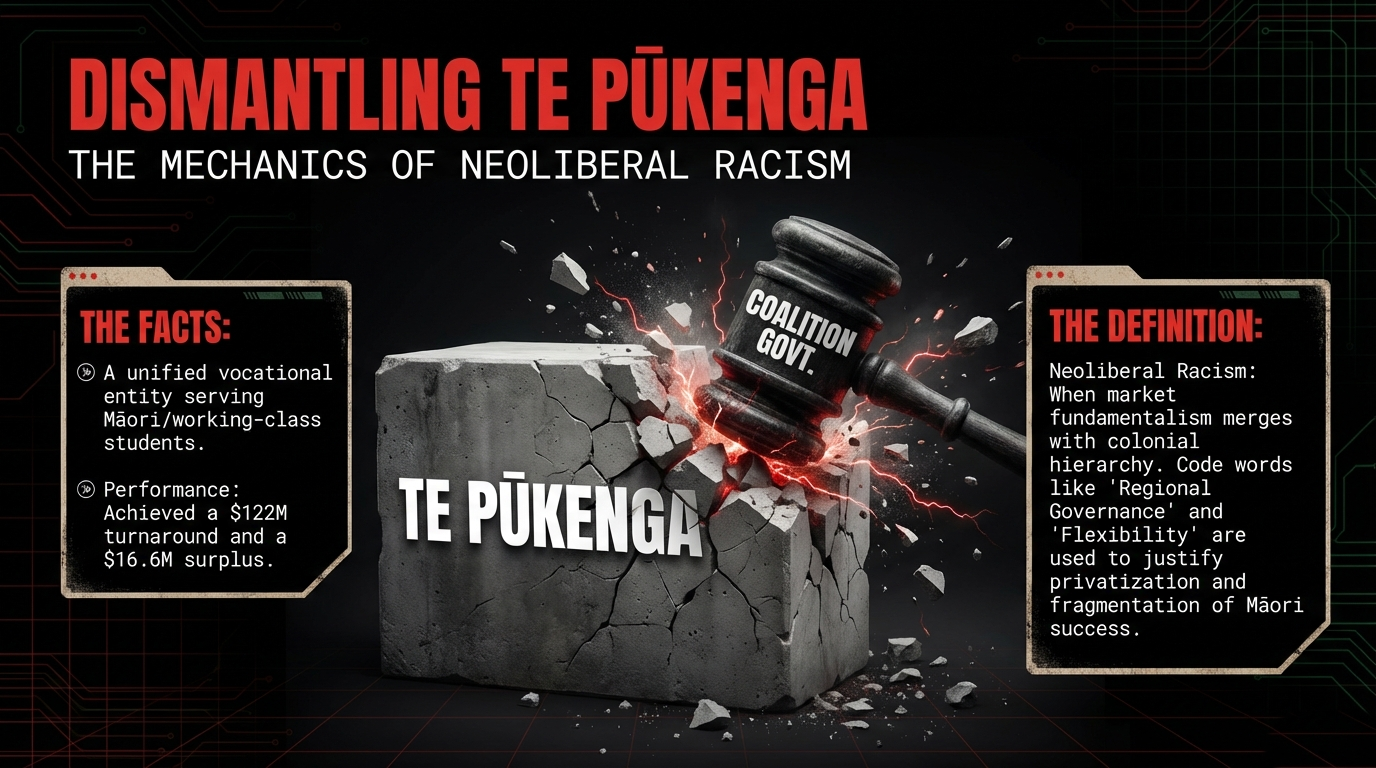
The MGL’s analysis of Te Pūkenga disestablishment exposes how “neoliberal racism” operates through market fundamentalism and privatization. Te Pūkenga, unified vocational education serving Māori students, was dismantled despite achieving a $122 million turnaround and $16.6 million surplus. The government justified this through “regional governance” and “flexibility”—code for fragmentation and privatization.
In “The Hollow Shell of Non-Judgmental Culture,” the MGL argues liberal platitudes about “not judging” erode genuine accountability structures that tikanga once provided. When tikanga-based structures are dismissed as “judgmental,” what replaces them is atomization—individuals vulnerable to colonial capitalism’s manipulation.
III. Convergences: Shared Prophetic Witness
Exposing Religious Power’s Corruption
Both Talarico and the MGL understand that religious language becomes particularly dangerous when deployed by those seeking wealth and control. This shared insight goes deeper than tactical critique—it reveals how spiritual authority, precisely because it claims transcendent legitimacy, can enable the most profound forms of exploitation.
Talarico’s confrontation with Christian nationalism exposes a pattern: “powerful people will always see religion as a tool to make more money and keep people in line.” When Texas legislators invoke Jesus while cutting child nutrition programs, when they cite Biblical “family values” while opposing healthcare expansion for poor families, they reveal religion operating as power’s servant rather than power’s critic.
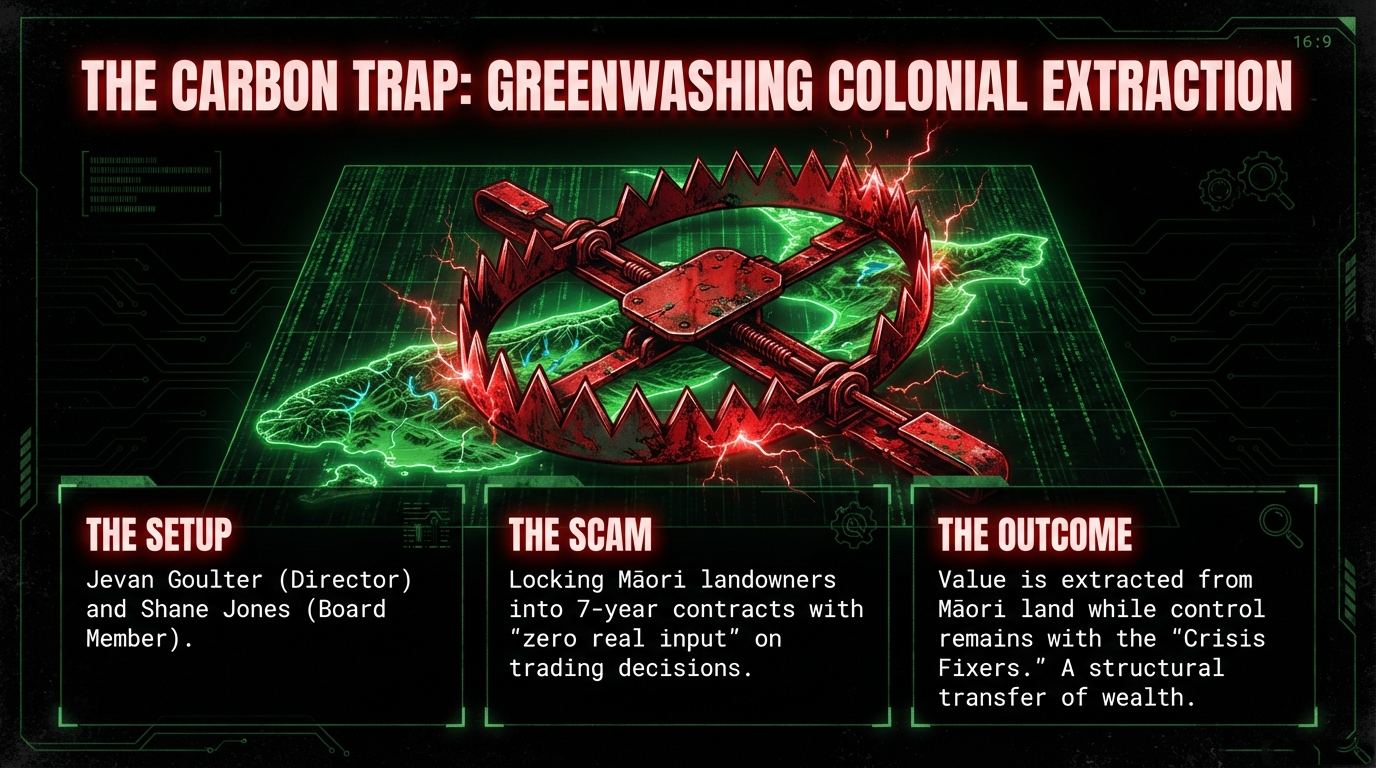
The MGL’s investigation of Destiny Church reveals the same dynamic in Aotearoa. Destiny presents itself as defending Māori from liberal elites, yet its 2011 attempt to capture the Māori Women’s Welfare League through overnight branch registrations was, as the High Court ruled, a “bad-faith rort.” When Destiny-aligned operatives attack Te Pāti Māori during periods of intense anti-Māori government legislation, they fragment indigenous resistance at the moment solidarity is most critical. When Jevan Goulter serves simultaneously as managing director of the Māori Carbon Collective (locking landowners into extractive contracts) and campaign boss for Destiny’s electoral projects, the convergence of spiritual manipulation and economic extraction becomes explicit.
Both expose a theology of domination masquerading as liberation. Christian nationalism in Texas and Destiny Church infiltration in Aotearoa share structural features: charismatic leaders claiming divine authority, moral panics about cultural change weaponized to mobilize followers, and economic arrangements that systematically transfer wealth from communities to elites while using religious language to sanctify the transfer.
This convergence matters because it reveals colonialism’s ongoing spiritual dimension. Colonial projects always required theological justification—the Doctrine of Discovery, Manifest Destiny, the “civilizing mission.” Contemporary neoliberalism continues this pattern, using prosperity gospel theology (God wants you to be wealthy), purity culture (controlling women’s bodies), and apocalyptic narratives (defending Christian civilization) to legitimate extraction and domination.
Economic Justice as Spiritual Mandate
For both Talarico and the MGL, economic justice is not policy preference but spiritual obligation—the criterion by which faith is judged authentic or false.
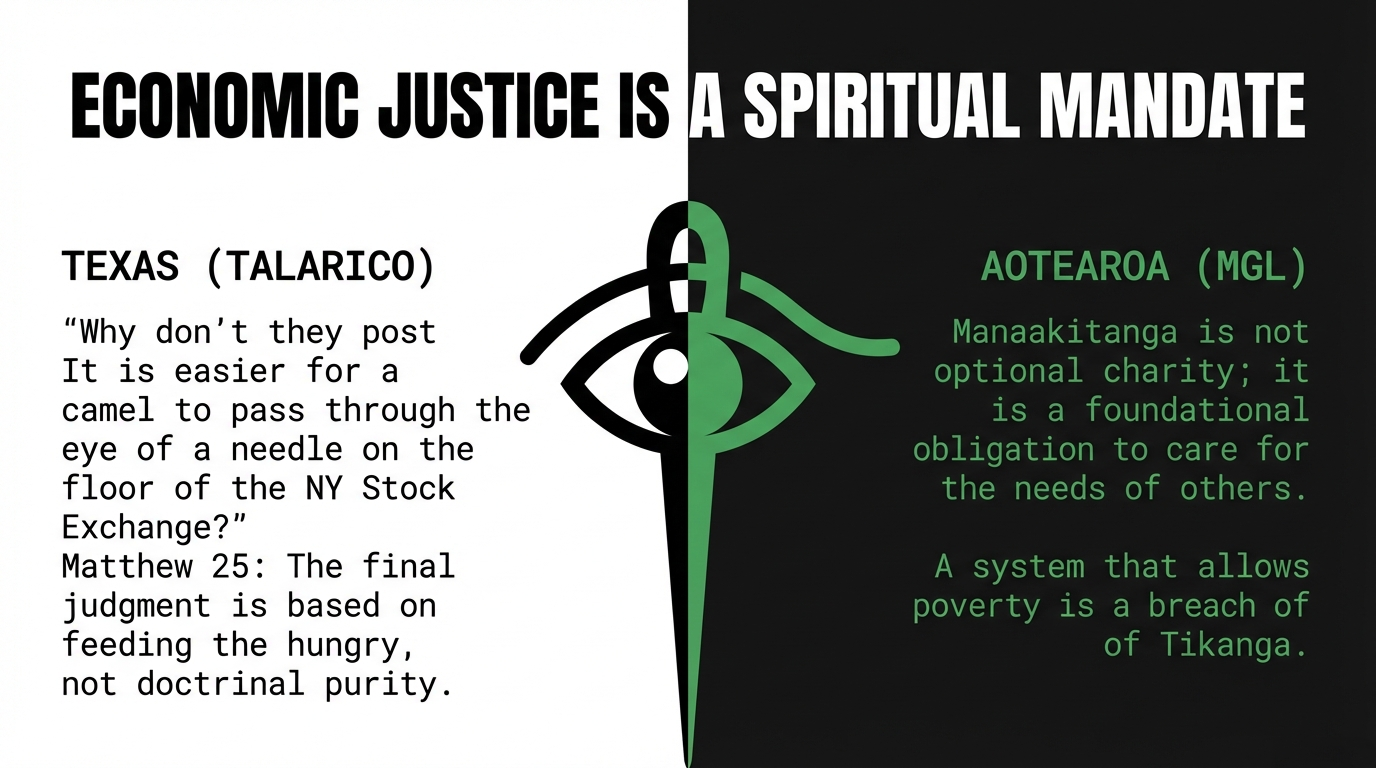
Talarico grounds this in Matthew 25, where Jesus describes the final judgment. The saved are those who fed the hungry, gave drink to the thirsty, welcomed the stranger, clothed the naked, cared for the sick, and visited the imprisoned. Notably absent: any mention of doctrinal correctness, church attendance, sexual purity, or political affiliation. The measure is simple, material, relational: Did you care for the vulnerable?
This Biblical mandate indicts Christian nationalism’s priorities. The religious right focuses obsessively on abortion and homosexuality—issues rarely or never mentioned in scripture—while ignoring the 3,000+ Biblical references to economic justice. When Talarico asks why Christian nationalists don’t post “it’s easier for a camel to pass through the eye of a needle than for a rich man to enter the kingdom of heaven” on the New York Stock Exchange floor, he’s not being rhetorical. He’s pointing to a profound inversion: Christianity weaponized to defend the exact concentration of wealth Jesus most explicitly condemned.
The MGL’s work within te ao Māori reveals parallel commitments. Manaakitanga (care, hospitality) is not optional charity but foundational obligation. It requires “showing support” and “caring for the needs of others”—language that, like Matthew 25, makes care for others the measure of legitimacy. Oranga (wellbeing) is understood collectively, not individually. A community where some flourish while others suffer is not successful by tikanga standards; wellbeing must be shared.
When the MGL exposes Te Pūkenga’s dismantling, he reveals how neoliberal “efficiency” violates manaakitanga. Te Pūkenga was created to provide vocational pathways for Māori and working-class students—many from communities where intergenerational poverty reflects colonial dispossession. The institution achieved financial sustainability ($16.6 million surplus) while serving its educational mandate. Yet the coalition government dismantled it, not because it failed economically or educationally, but because its success challenged the narrative that Māori institutions require Crown control.
This reveals what the MGL calls “neoliberal racism”—a fusion of market fundamentalism with colonial hierarchies. The logic: Māori-serving institutions must justify themselves through metrics designed for corporate profit, while settler institutions receive sustained public investment as democratic necessities. When Māori institutions succeed on these terms, the goalposts shift—suddenly “regional governance” or “flexibility” matters more than outcomes. Economic violence is repackaged as administrative reform.
Both understand that economic injustice is not accidental market outcome but designed system. The Texas billionaires funding Christian nationalism made their wealth through fracking—extracting fossil fuels from land, externalizing environmental costs to communities, then using profits to fund political movements opposing environmental regulation and economic redistribution. The carbon trading schemes the MGL exposes similarly extract value from Māori land while minimizing Māori control and benefit. In both contexts, economic arrangements require ideological justification, and corrupted spirituality provides it.
Community Over Individualism
Both visions reject the individualism that neoliberalism treats as natural human condition, understanding instead that persons exist within relationships that precede and constitute them.
Talarico’s theology emphasizes that “faith and works sustain each other, challenge each other, reinforce each other”—the divine and human brought together in one union. Christianity at its best is communal practice, not individual belief. When he describes democracy as “a covenant... a relationship between neighbors... a promise that we make to each other,” he’s drawing on covenantal theology that understands human beings as relational from the start.
This theological anthropology challenges liberal political theory’s foundational myth: autonomous individuals who subsequently choose to form societies. In covenantal thinking, relationship precedes autonomy. We are constituted by—not merely connected to—our communities, ancestors, land, and God. Justice is not about protecting individual rights but right relationship among all these constitutive connections.
Te ao Māori articulates this even more explicitly through whakapapa. Unlike genealogy in Western usage (tracing bloodlines), whakapapa is ontological—it describes the fundamental structure of reality. Everything has whakapapa: people, rivers, mountains, concepts, words. To know something’s whakapapa is to know its place in the web of relationships that constitutes existence.
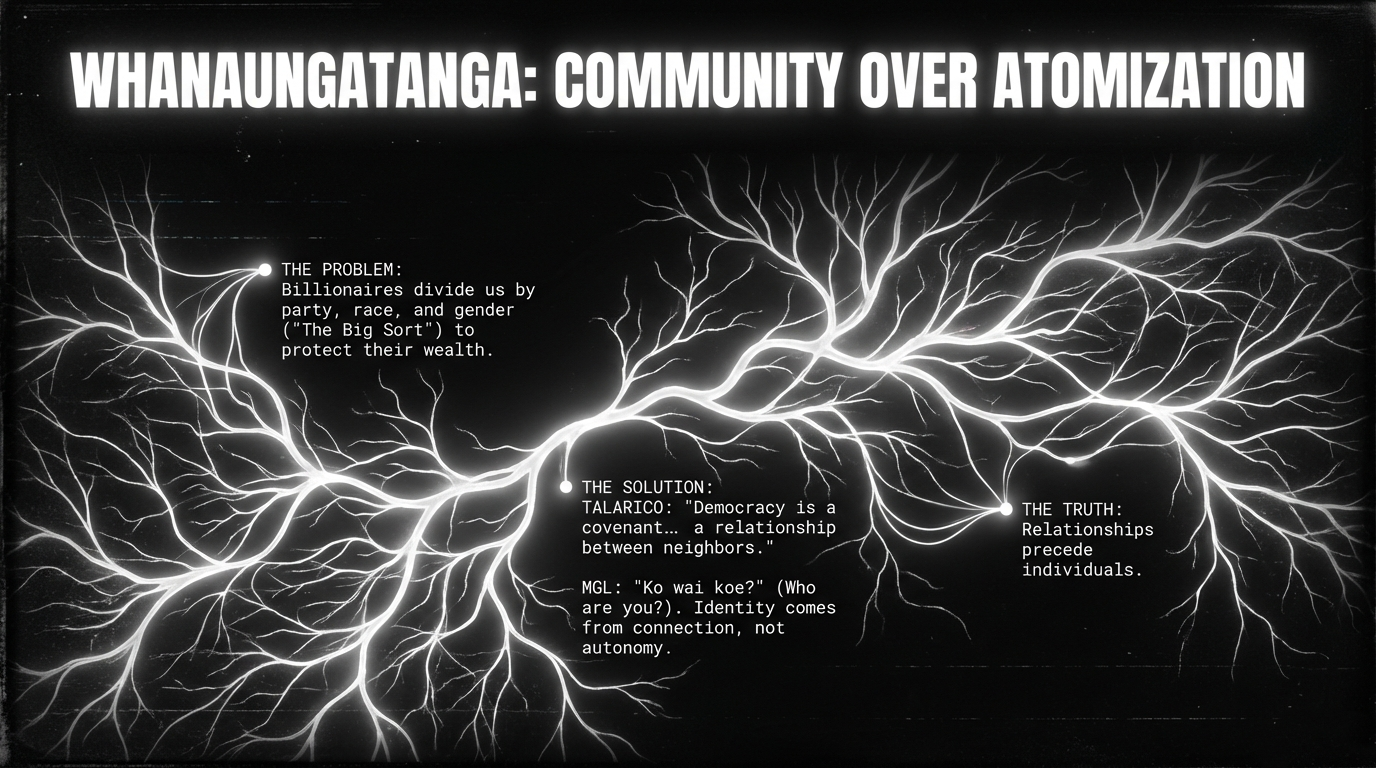
Whanaungatanga (relationship-building) flowing from whānau (family) creates “a sense of belonging and helps people to work together for a common purpose.” But this is not voluntary association of pre-existing individuals choosing to cooperate. Whanaungatanga recognizes that personhood itself emerges from relationship. The Māori greeting “Ko wai koe?” (Who are you?) expects an answer locating the person within networks of kinship, place, and ancestry—not individual traits or achievements.
Kotahitanga (unity, collective action) expresses “collective responsibility”—not individuals coordinating separate interests but community members recognizing their inherent interdependence. It requires “the unification of possibly diverse interests into mutual interests and common goals,” working “towards better outcomes for the collective.”
This relational ontology has immediate political implications. When Education Minister Erica Stanford restricted te reo Māori in children’s books, the MGL understood this as attacking not just language but the relational worldview language carries. When the coalition government frames Māori collective rights as “privilege” that violates liberal equality, they’re imposing individualist ontology that erases the prior reality of whānau, hapū, and iwi as political subjects.
Both challenge the isolating, fragmenting logic of neoliberal capitalism. Talarico’s billionaires “divide us by party, by race, by gender, by religion” precisely because solidarity threatens their power. The MGL’s exposés reveal networks that infiltrate Māori organizations to sow division, weakening collective capacity for resistance.
Against this, both offer visions of thick community—not based on shared identity alone but on shared commitment to mutual flourishing. Talarico builds coalitions with Jews, Muslims, atheists, and others around economic justice. The MGL’s November 2024 hīkoi brought together not just Māori but “the ethnic diversity across this country, tangata tiriti included.” Relationship, properly understood, doesn’t erase difference but creates the trust necessary to struggle together across difference.
Accountability Through Relationship
Both traditions ground accountability in relationship rather than abstract principle, understanding that genuine responsibility flows from connection rather than rule-following.
Talarico emphasizes that Christianity’s “genius” is that “God is Jesus”—ultimate reality looks like a “humble, compassionate, barefoot rabbi” who broke cultural norms and challenged religious authority. This is accountability incarnate: not distant judge enforcing cosmic law, but God entering human suffering, living among the marginalized, dying as state victim. To follow Jesus is not to obey rules but to join this vulnerable solidarity with the oppressed.
When Talarico cites Matthew 25’s judgment scene—”I was hungry and you gave me food... I was a stranger and you welcomed me”—he’s pointing to relational accountability. Jesus identifies with the hungry, thirsty, stranger, naked, sick, and imprisoned. To serve them is to serve Jesus; to ignore them is to ignore Jesus. Accountability runs through relationship, not around it.
Tikanga similarly understands accountability as relational. Utu (reciprocity, balance) is often mistranslated as revenge, but it describes the complex process of restoring right relationship after harm. Western legal systems focus on determining guilt and assigning punishment—abstracted from ongoing relationships. Utu focuses on restoring balance within relationships that continue.
This requires considering not just the immediate act but its ripples through whakapapa. How does harm affect not just the direct victim but their whānau, their hapū? How does it affect relationships with land, with ancestors, with future generations? Accountability means addressing all these disrupted relationships, not just satisfying an abstract legal standard.
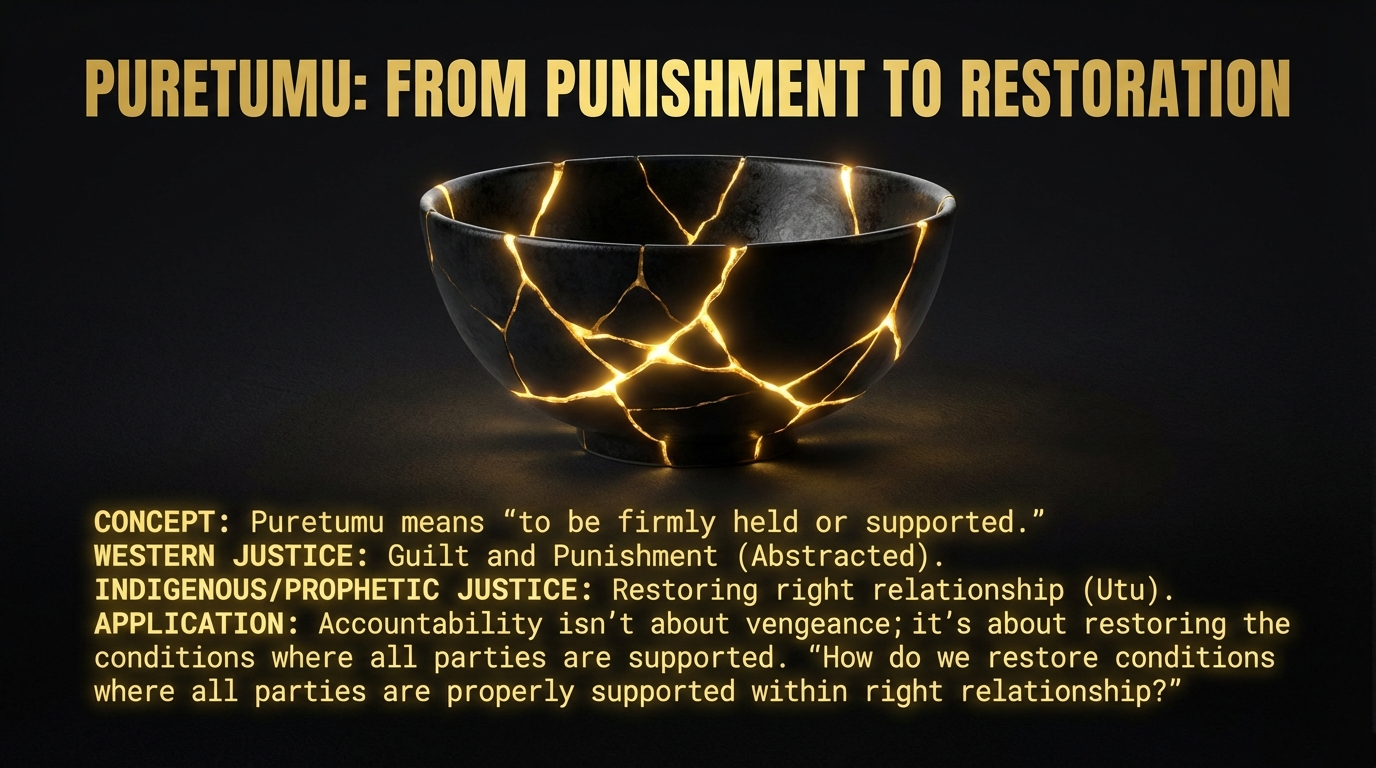
The Royal Commission’s concept of puretumu (to be firmly held or supported) captures this: accountability as restoration, not punishment. It asks not “How do we make the wrongdoer suffer?” but “How do we restore conditions where all parties are properly supported within right relationship?”
Both frameworks critique liberal individualism’s approach to accountability—either no moral standards (everything is personal preference) or impersonal rules (universal principles applied regardless of context). Neither works. Absence of standards enables harm to flourish; abstract standards applied without attention to relationship often compound harm.
Talarico’s critique of “Christian nationalism” and the MGL’s critique of “social media platitudes” converge here. Both describe corrupted accountability. Christian nationalism invokes God’s authority while exempting wealth and power from judgment—arbitrary rules for thee but not for me. Social media’s “don’t judge” culture treats accountability itself as problematic, leaving communities defenseless against manipulation.
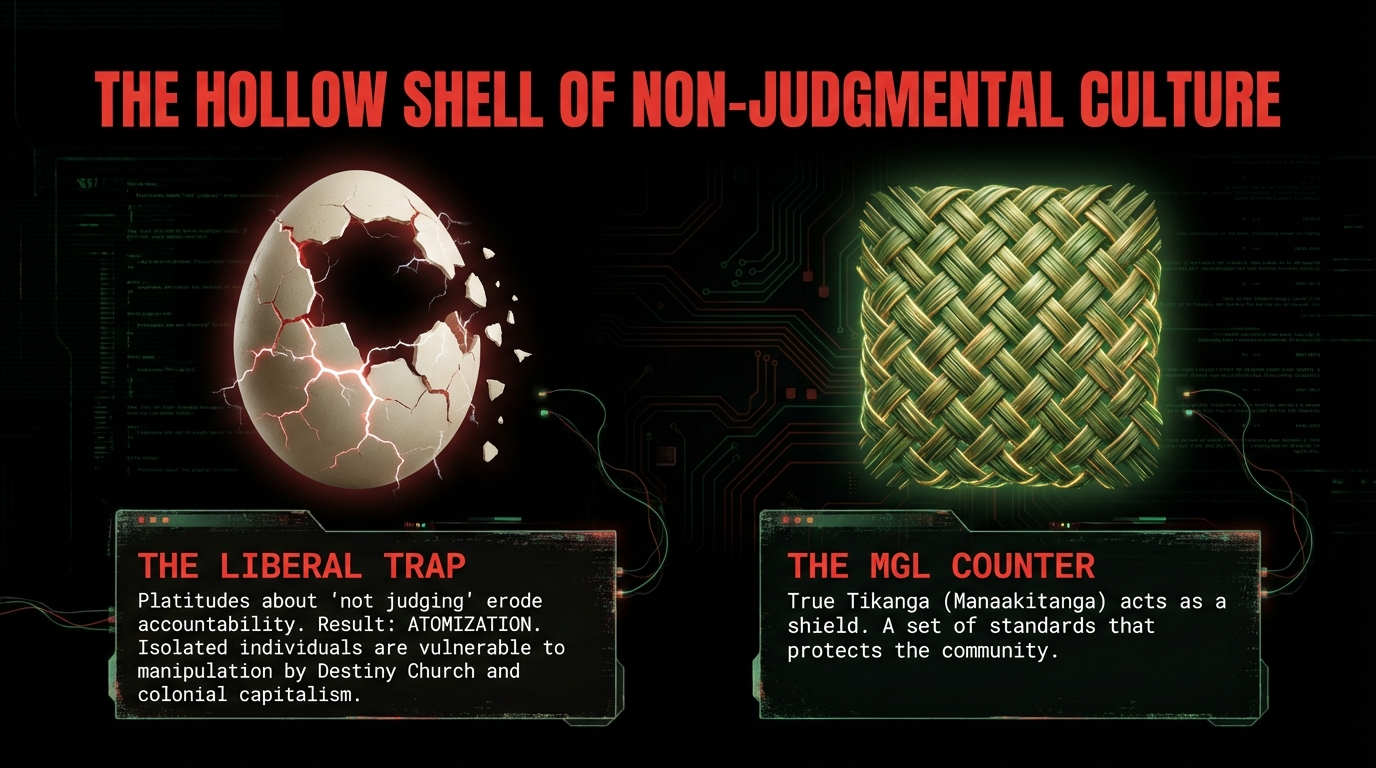
Against these failures, both offer relational accountability. Talarico’s Christian communities, at their best, form networks of mutual care where members hold each other to commitments flowing from shared discipleship. The MGL’s tikanga-based communities maintain standards—not through abstract rules but through relationships where people are accountable to each other because they remain in relationship, because severing relationship is itself a profound harm.
Prophetic Tradition: Speaking Truth to Power
Both draw on prophetic traditions demanding structural critique of injustice, not just individual moral improvement.
The Hebrew prophets Talarico invokes—Amos, Micah, Isaiah—condemned not personal sin but systemic exploitation. Amos railed against those who “trample on the needy and bring ruin to the poor of the land,” who “buy the poor for silver and the needy for a pair of sandals.” Micah asked, “What does the Lord require of you but to do justice, love mercy, and walk humbly?” Isaiah condemned religious people who “fast” and pray while oppressing workers and ignoring the hungry.
These prophets didn’t tell individuals to be nicer. They demanded that rulers dismantle exploitative systems, that religious institutions stop blessing injustice, that accumulated wealth be redistributed. Their message was political to the core—which is why rulers regularly imprisoned and killed them.
The MGL embodies similar kaitiakitanga—guardianship that requires exposing threats even when those threats present themselves as friends. His investigations don’t focus on individual bad actors but on networks and systems. The Destiny Church infiltration, the carbon extraction schemes, the dismantling of Māori education—these are structural analyses revealing how power operates through institutions, not just personalities.
Both understand, as Talarico learned from his pastor, that “the separation of church and state... that constitutional boundary was sacred, not for the benefit of the state... but for the benefit of the church because when religion gets too cozy with power, we lose our prophetic voice.”
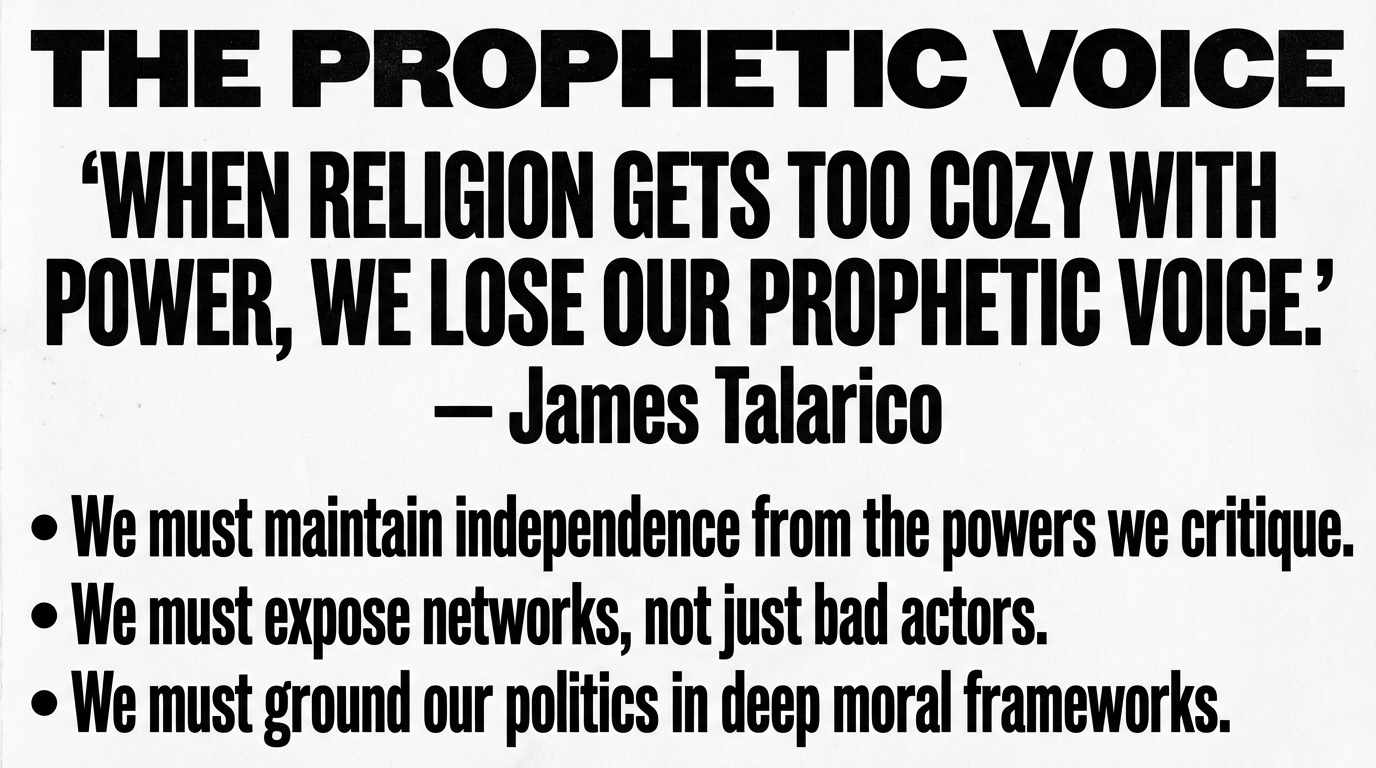
This prophetic stance requires independence from the very powers one critiques. Talarico works within electoral politics but maintains distance from corporate capture—accepting PAC donations only from causes he supports, not from industries seeking to buy influence. The MGL operates entirely outside formal power structures, maintaining the independence necessary to expose what insiders cannot or will not see.
IV. Divergences: Situational Strategies and Structural Critiques
Inside vs. Outside: Institutional Positionality
Talarico works within the U.S. democratic system as an elected state representative seeking a Senate seat. His strategy involves coalition-building, viral social media messaging, mass mobilization, and legislative advocacy. He accepts corporate PAC donations from groups whose causes he supports (like gambling legalization and public education funding), arguing he won’t “unilaterally disarm while Republicans play by their own rules.”
The MGL operates outside formal power structures, using investigative journalism, network mapping, and grassroots education to expose colonial extraction. He doesn’t seek office or negotiate with power; he reveals how power operates. His audience is the community itself, not legislators or media elites.
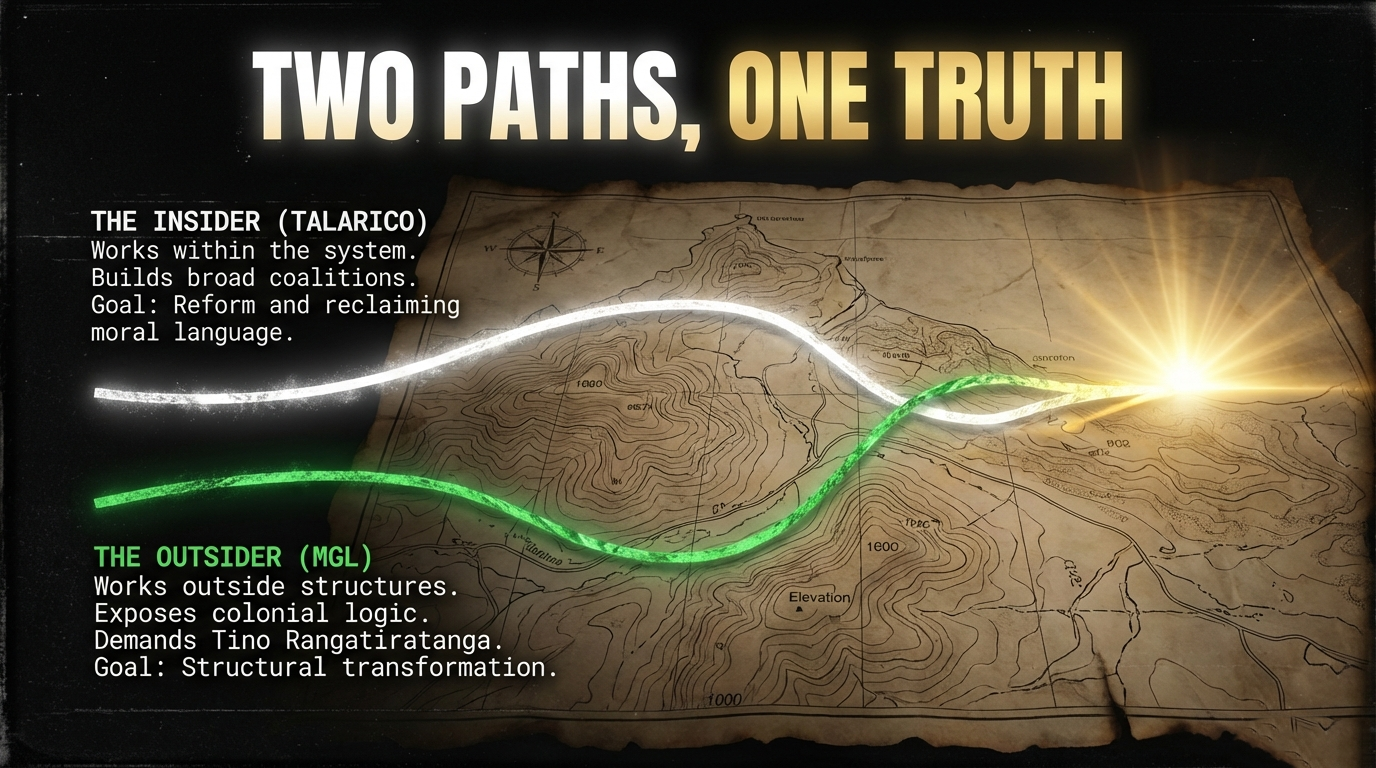
This difference reflects distinct strategic assessments. Talarico believes democratic institutions, though corrupted, remain sites where Christians can enact love of neighbor through policy. The MGL views these same institutions as fundamentally colonial apparatuses whose “legitimacy” depends on suppressing rangatiratanga (Māori self-determination).
Colonial Critique: Implicit vs. Explicit
Talarico does not foreground Christianity’s role in colonization, slavery, and genocide. His progressive Christianity reclaims Jesus from those who have weaponized Him, but doesn’t grapple extensively with the ways Christian theology itself enabled imperial violence. When he describes religious traditions as “different languages” pointing to the same truth, he offers a generous pluralism that may underestimate power differentials between colonizer and colonized religions.

The MGL centers colonial critique. His work assumes that Christianity in Aotearoa has been primarily a tool of dispossession and cultural erasure. While he doesn’t condemn all Christian belief, his analysis foregrounds how Christian institutions (from early missionaries to contemporary Destiny Church) have served settler colonial projects.
Universalism vs. Particularity
Talarico’s theology tends toward universalism. He believes “other religions of love point to the same truth” and that “different religious traditions [are] circling the same truth about the universe.” This ecumenical stance helps him build coalitions and appeal to non-Christians, positioning his Christianity as one expression of universal moral truths.

Te ao Māori, by contrast, is particular—rooted in specific whakapapa, specific whenua (land), specific histories. While tikanga principles can inform others’ practice, they emerge from and remain accountable to Māori communities. Rangatiratanga means Māori determining Māori futures, not universal principles applied to all. The MGL’s work defends this particularity against both assimilationist Christianity and liberal universalism that treats all cultures as interchangeable.
Language of Oppression: Class vs. Colonization
Talarico frames inequality primarily through class analysis: “billionaires” versus working people, “top versus bottom.” While he acknowledges racism and mentions the religious right’s failures on racial justice, his campaign centers economic populism.
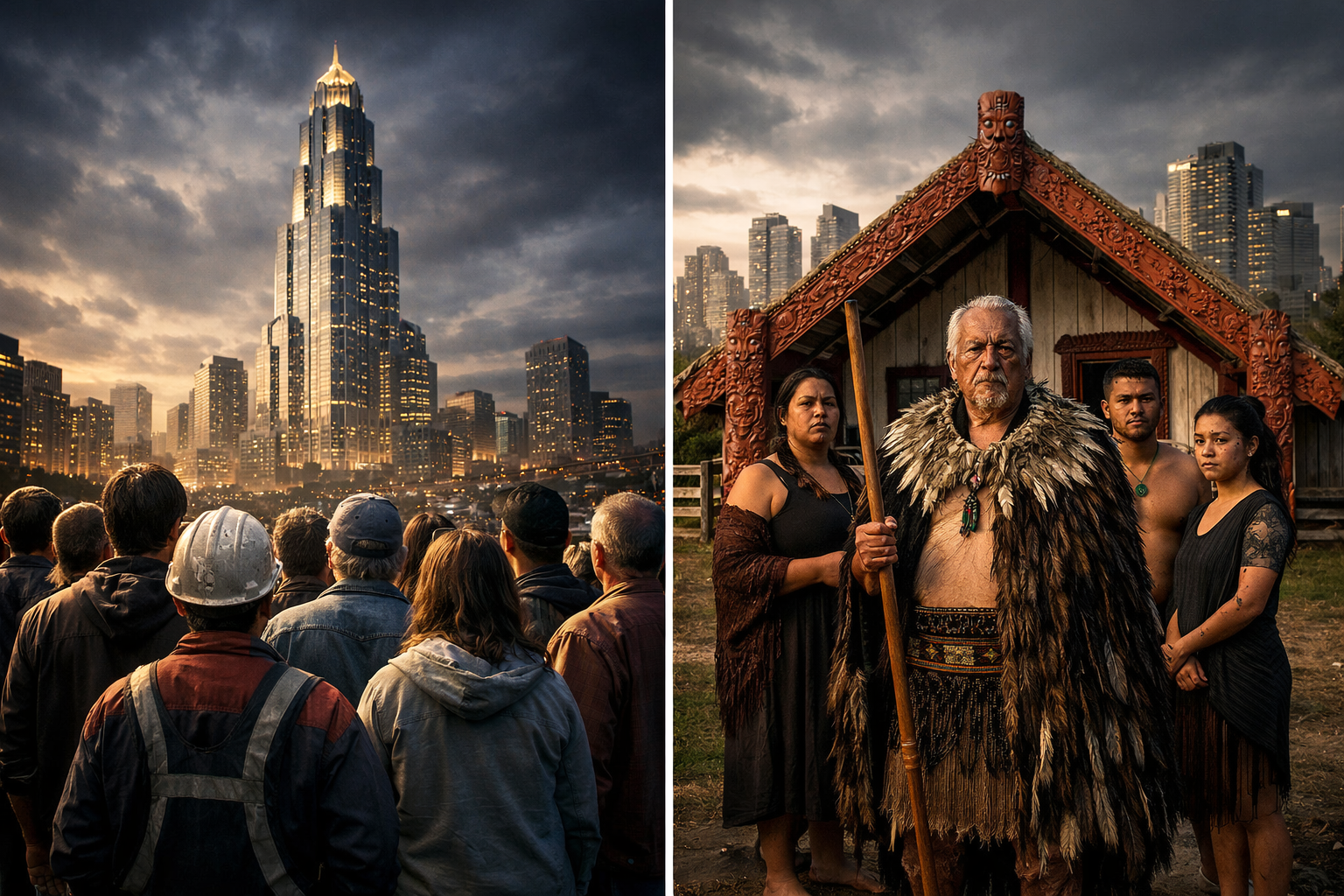
The MGL employs a colonial analysis that understands race, class, and culture as inseparable. “Neoliberal racism” describes how market fundamentalism perpetuates colonial hierarchies. “Crown colonial arrogance” names the specific historical relationship between the New Zealand state and Māori. Economic extraction cannot be separated from ongoing dispossession of indigenous lands and sovereignty.
Historical Consciousness: Deep Time
Talarico’s historical references span from first-century Jesus to the Protestant Reformation to twentieth-century Social Gospel movements. His tradition draws on two millennia of Christian history, but this history is largely internal to Christianity—debates about theology, church reform, social movements.
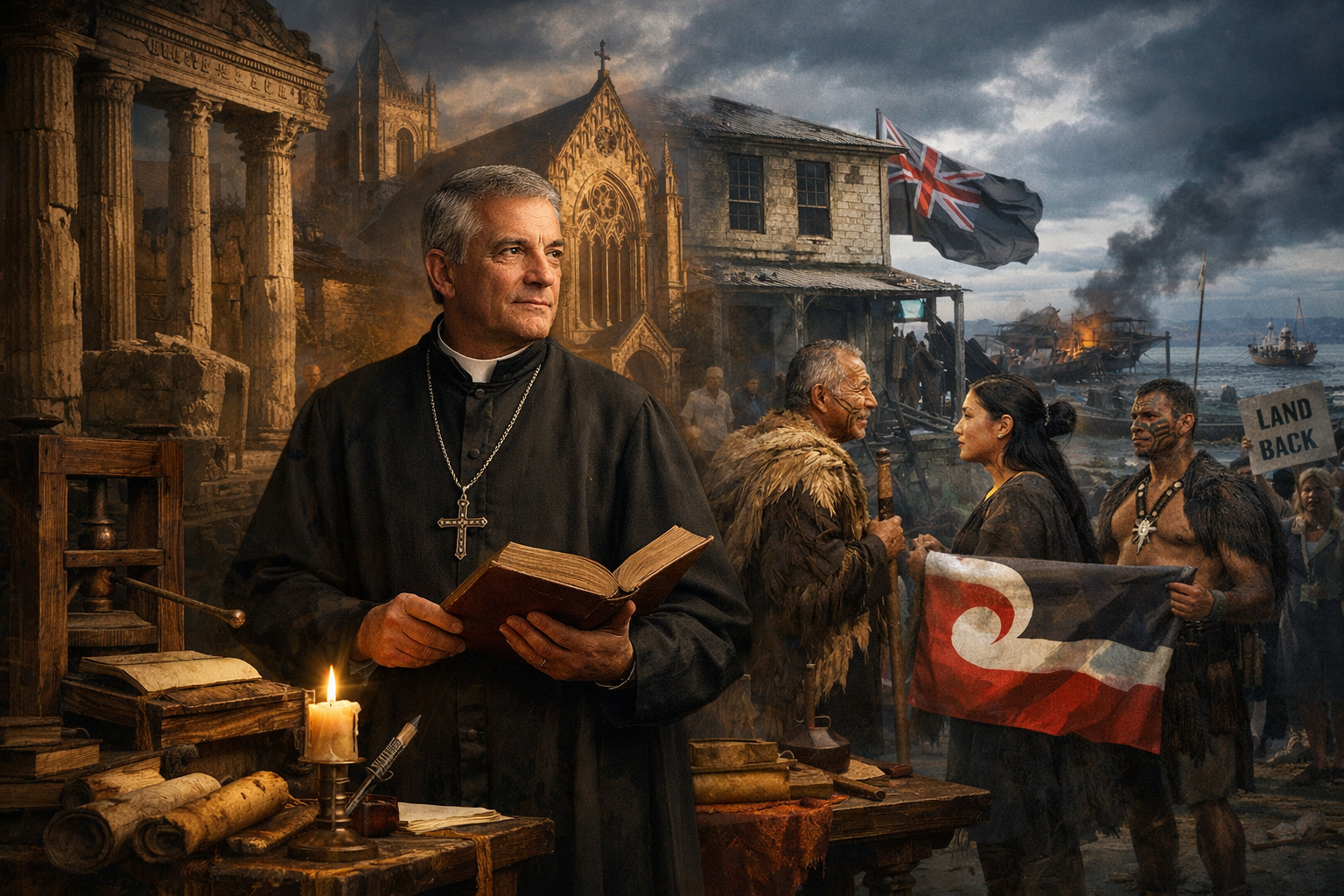
The MGL’s historical consciousness begins with colonization. Every analysis traces present injustices to 1840 (the Treaty of Waitangi) and the subsequent 186 years of Crown treaty breaches, land confiscations, language suppression, and cultural violence. This is not ancient history but living memory—wounds passed intergenerationally, institutions still structured by colonial logics. Tino rangatiratanga (self-determination) is both ancestral inheritance and urgent contemporary demand.
V. The Colonial Question: Can Settler Democracy Deliver Justice?
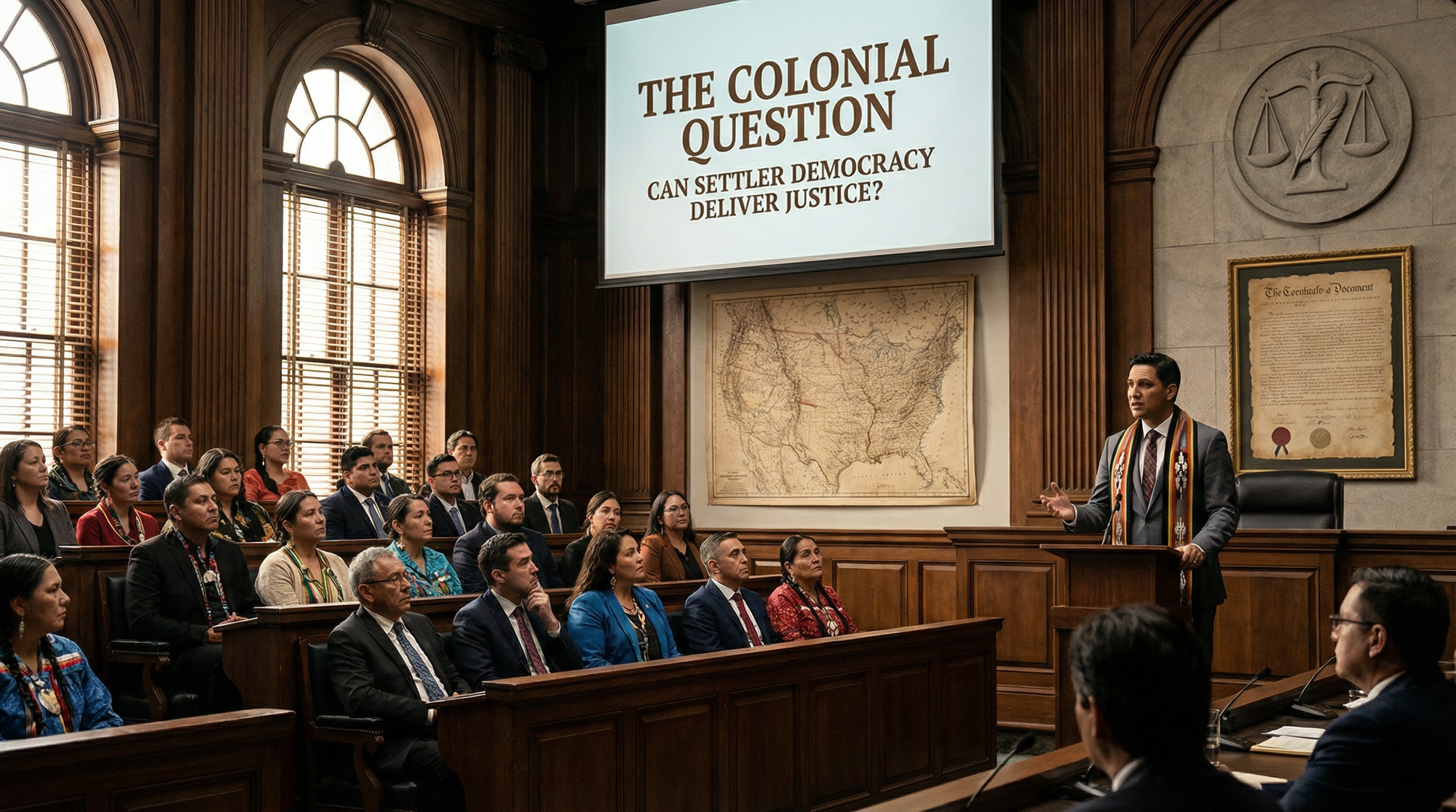
The sharpest tension between these visions concerns the legitimacy and capacity of settler colonial democracies to deliver justice for indigenous peoples.
Talarico’s Democratic Faith
Talarico’s work assumes American democracy, though corrupted by money and Christian nationalism, can be redeemed through principled leadership, moral clarity, and popular mobilization. His campaign message—”Imagine a Democratic Party that takes on big money and isn’t captured by it”—envisions reform rather than transformation.
This faith in democratic institutions has deep roots in progressive Christianity. The Social Gospel movement of the late 19th and early 20th centuries believed Christian principles could guide the state toward justice. Liberation theology, while more radical, still often worked through state institutions and democratic politics.
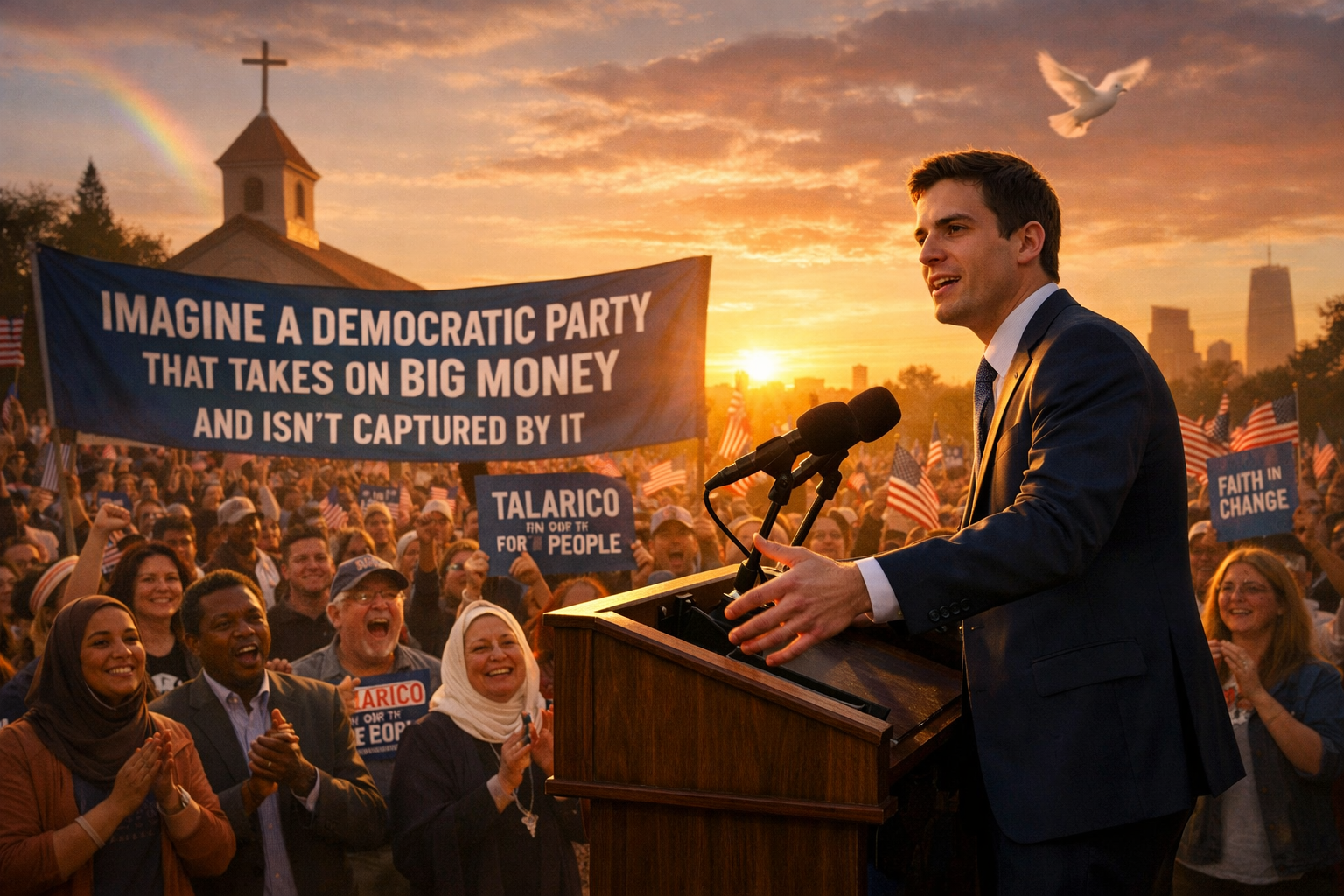
Yet this optimism may underestimate structural barriers. As the MGL’s work shows, even ostensibly progressive governments in settler democracies enact policies (like Te Pūkenga disestablishment) that harm indigenous peoples. The New Zealand Labour government of 2017-2023, while more sympathetic to Māori concerns than the current coalition, still advanced neoliberal reforms and failed to fundamentally address Treaty breaches.
Indigenous Self-Determination: Beyond Liberal Democracy
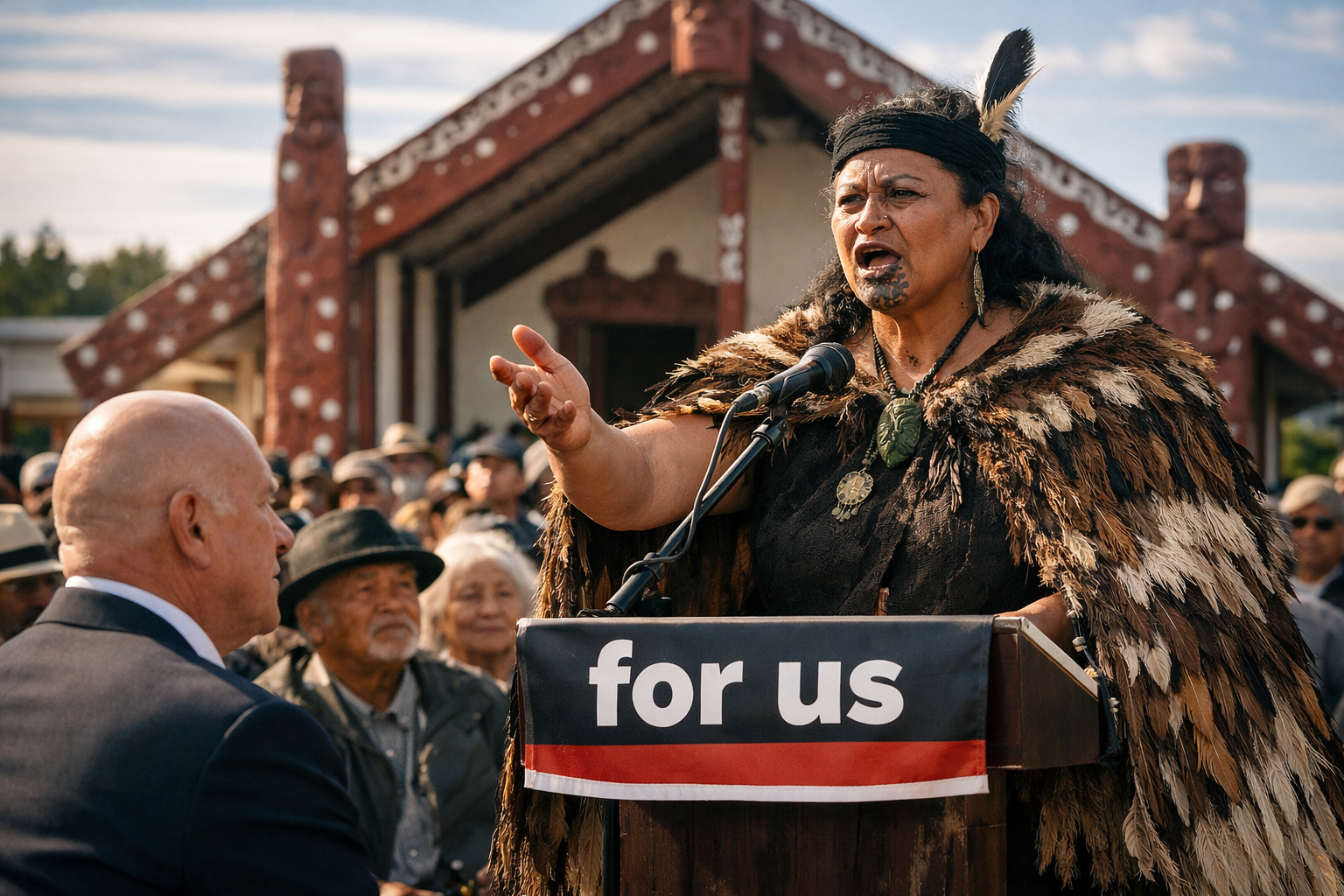
The MGL’s work points toward tino rangatiratanga—a form of sovereignty that exceeds what liberal multiculturalism or even progressive social democracy can accommodate. As one rangatira explained to Prime Minister Luxon at Rātana Pā in January 2025: “It’s that kotahitanga for a pathway to tino rangatiratanga, and a pathway for mana motuhake that we will be designing for us.”
The key phrase: “for us.” Not with government permission, not through parliamentary processes, but through collective Māori action. As the speaker continued: “Sometimes, yes, let’s work together, but we say to you, we will forge that pathway, and in time, we will invite you to be part and parcel of some of the footsteps along the way.”
This is not rejection of engagement with the state, but assertion that rangatiratanga cannot be granted by the Crown—it predates and exceeds the Crown’s authority. Te Tiriti o Waitangi (the Māori-language version of the Treaty) guaranteed Māori “te tino rangatiratanga o ratou wenua, o ratou kainga, me o ratou taonga katoa”—full authority over their lands, villages, and treasures. The Crown’s subsequent claim to sovereignty was a unilateral assertion, not a negotiated transfer.
Scholars of indigenous politics argue that “when Native nations make their own decisions about what development approaches to take, they consistently out-perform external decision makers on matters as diverse as governmental form, natural resource management,” and social wellbeing. Tino rangatiratanga is not symbolic recognition but substantive self-governance—authority to make decisions affecting Māori communities without Crown oversight.
The Limits of Progressive Politics in Settler States
This raises uncomfortable questions for Talarico’s approach. Can a Christianity that became the ideological architecture of colonialism truly be reclaimed for justice? Can a settler democracy, whose legitimacy rests on dispossession, accommodate indigenous sovereignty?
Indigenous scholars argue that even progressive movements within settler states often replicate colonial logics. The Church of Jesus Christ of Latter-day Saints, for example, claims to honor indigenous peoples as “Children of Father Lehi,” yet this narrative erases actual indigenous histories and replaces them with Book of Mormon mythology. Progressive Christians who support indigenous justice may still assume Christianity’s universality, treating indigenous spiritualities as incomplete versions of Christian truth rather than complete systems in their own right.
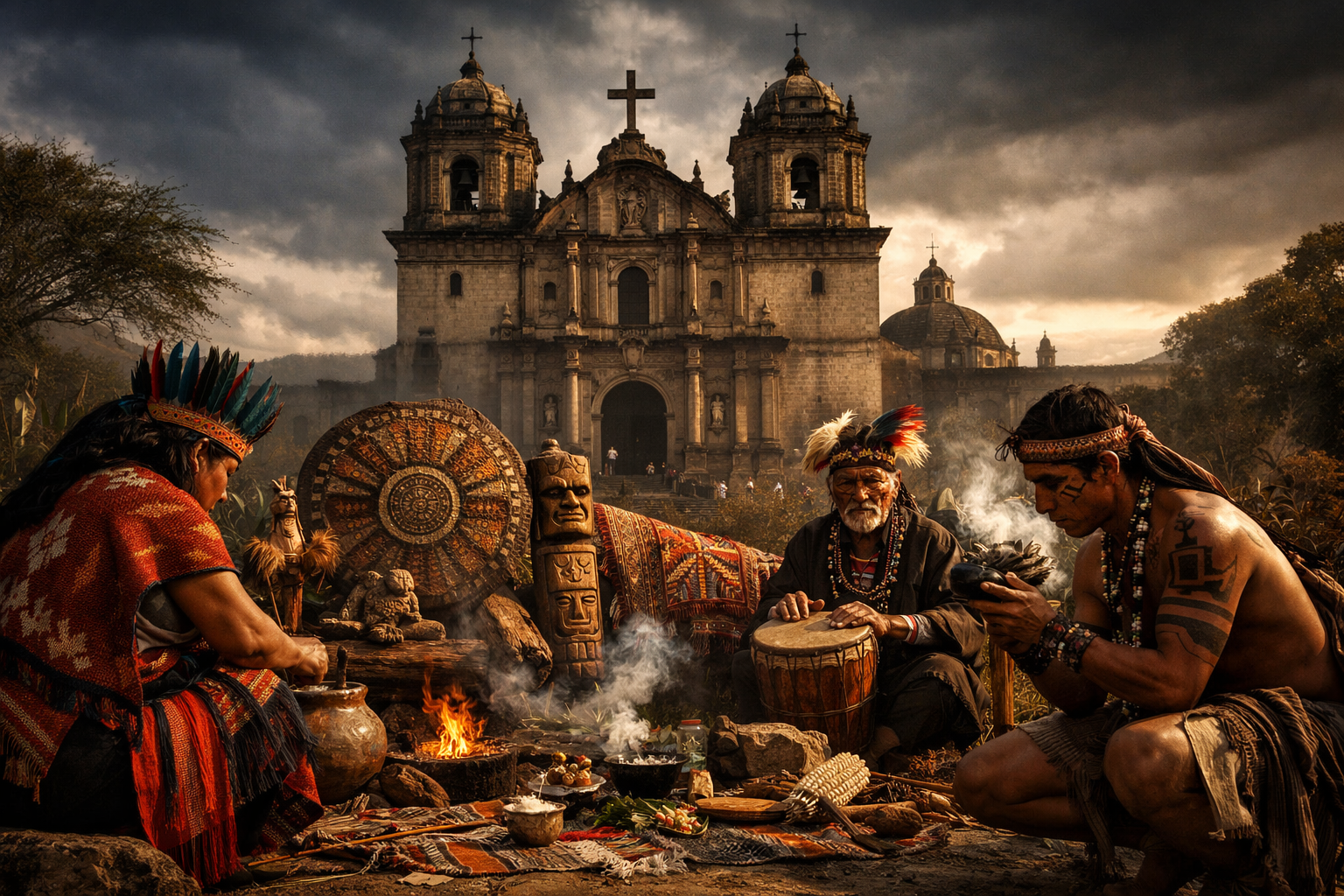
The MGL’s work suggests that genuine justice requires not just policy reform but decolonization—a process that would fundamentally transform or even dissolve settler state structures. This cannot happen through electoral politics alone. It requires direct action, Treaty claims, land occupations, and the building of autonomous Māori institutions.
VI. Synthesis: Complementary Struggles
Despite these tensions, Talarico’s and the MGL’s work complement each other in crucial ways.
Different Fronts, Common Enemies
Talarico fights Christian nationalism and billionaire power within the U.S. democratic system. The MGL exposes neoliberal colonialism and predatory Christianity (Destiny Church) in Aotearoa. Both confront the fusion of economic exploitation, religious manipulation, and political authoritarianism.
The Texas megadonors Dunn and Wilks whom Talarico challenges are funding Project 2025 and the Convention of States Project—efforts to radically remake American government along theocratic and corporate lines. These movements share ideological DNA with the neoliberal assault on Māori institutions that the MGL documents. Both represent what political theorist Sheldon Wolin called “inverted totalitarianism”—the capture of democratic institutions by corporate and religious power.
Reclaiming Spiritual Authority for Justice
Both demonstrate how spiritual traditions, often deployed to justify oppression, can be recovered as resources for liberation. Talarico shows that Christianity need not be synonymous with white nationalism and plutocracy. The MGL shows that tikanga Māori, though under constant attack, remains a living framework for resistance.
This matters because secular progressive politics often struggles to speak to people’s deepest values and longings. When Democrats abandoned religious language, they conceded moral authority to the Right. When indigenous activists rely solely on legal frameworks imposed by colonizers, they fight on terrain structured by colonial logics.
Both Talarico and the MGL reclaim moral authority by speaking from within their traditions with integrity, using their communities’ languages to challenge those who corrupt them.
Building Coalitions Across Difference
The November 2024 hīkoi (march) in Aotearoa that saw tens of thousands protest the Treaty Principles Bill included not just Māori but “the ethnic diversity across this country, tangata tiriti included.” Similarly, Talarico’s viral reach extends beyond Christians to secular progressives drawn to his moral clarity and economic populism.
Both demonstrate that struggles for justice need not choose between particular identity and universal solidarity. Talarico’s Christian witness speaks to Christians while building coalitions with Jews, Muslims, atheists, and others committed to economic justice. The MGL’s tikanga-based analysis attracts non-Māori allies who recognize its diagnostic power while respecting Māori leadership.
The key is leadership rooted in particular communities and traditions, not watered-down universalism that erases difference.
The Long Game: Cultural Transformation
Neither Talarico nor the MGL believes justice arrives through single elections or policy victories. Talarico’s Senate campaign is one piece of rebuilding a Democratic Party that “fights back” against billionaire capture. The MGL’s investigations build long-term awareness of predatory networks, strengthening communities’ capacity to resist infiltration.
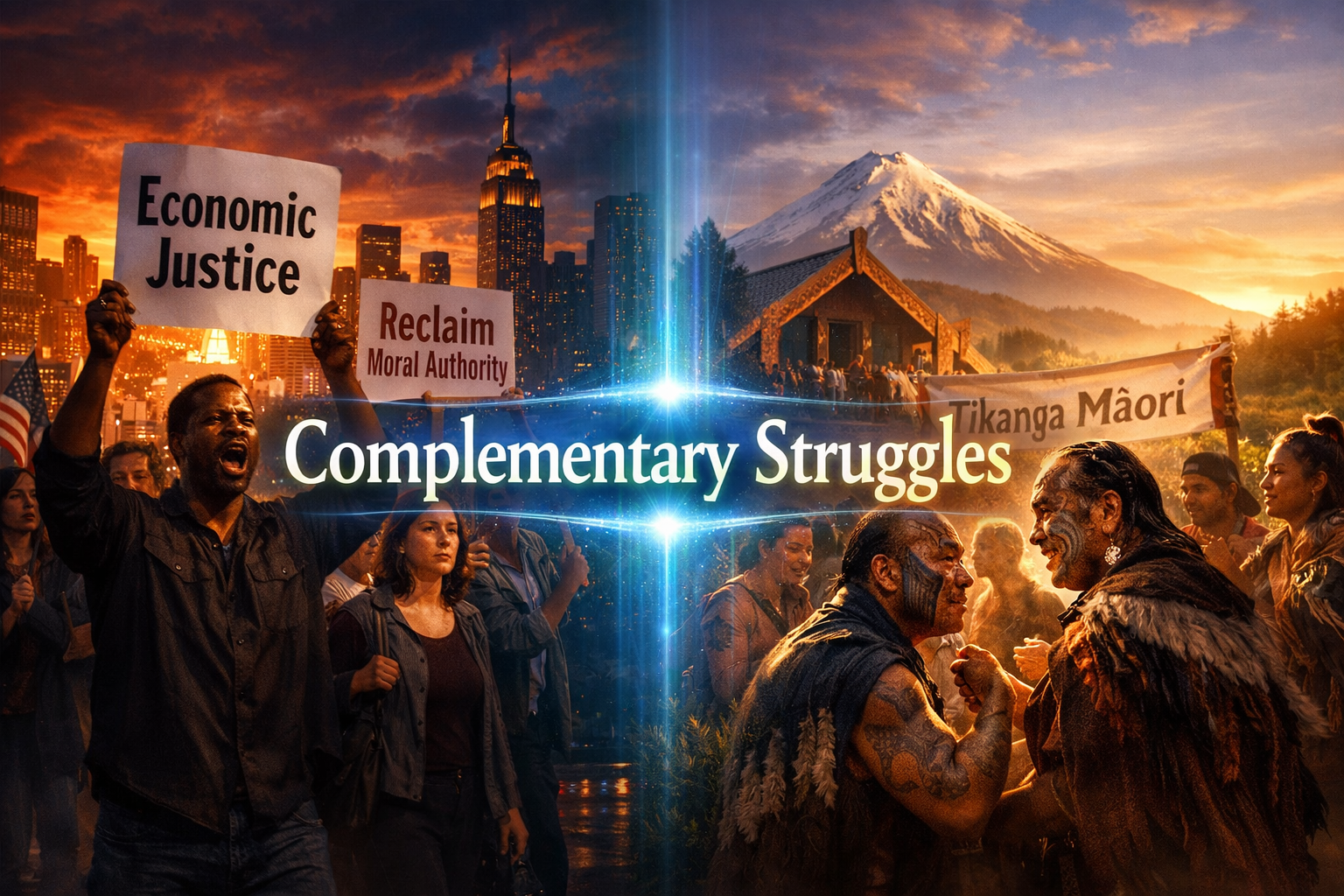
Both understand that cultural transformation precedes and exceeds political change. Talarico’s viral videos plant seeds—challenging Christians to reconsider what their faith demands. The MGL’s essays educate whanau about colonial patterns, building collective consciousness that can’t be purchased or co-opted.
VII. Toward Puretumu: From Redress to Restoration
The Royal Commission of Inquiry into Abuse in Care released its report “From Redress to Puretumu Torowhānui” in 2024, using a te ao Māori framework to reimagine accountability. Puretumu means “to be firmly held or supported”—accountability as restoration of right relationship, not punishment.
This concept offers a bridge between Talarico’s and the MGL’s visions. Both seek puretumu—relationships grounded in care, accountability rooted in collective wellbeing, power exercised for service rather than domination.
For Talarico, this looks like a Christianity that “leads you deeper into your own life” rather than into religious institutions’ control. It means political leaders whose mana (authority) comes from genuine service to vulnerable neighbors, not from billionaire donors.
For the MGL, puretumu requires confronting colonial trauma while building autonomous Māori institutions that embody tikanga principles. It means transitioning from Crown-controlled “consultation” to genuine Māori self-determination.
The Role of Settlers and Non-Māori
What is the role of settlers (like most of Talarico’s audience) in supporting indigenous self-determination? The MGL’s work suggests it involves:
- Dismantling colonial structures from within (as Talarico attempts with Christian nationalism)
- Following indigenous leadership rather than speaking for indigenous peoples
- Refusing to accept colonial benefits without acknowledging their source
- Building solidarity while respecting autonomy and particularity
Progressive Christians in settler contexts must grapple with how their religion enabled colonization. This doesn’t mean abandoning Christianity, but demanding accountability—using Talarico’s phrase, maintaining the “prophetic voice” that challenges religion’s coziness with power.
Talarico’s model offers resources here. When he challenges Christian nationalists using scripture, he demonstrates what Māori scholar Linda Tuhiwai Smith calls “decolonization from within”—insiders destabilizing oppressive structures using the tradition’s own tools. When he refuses corporate PAC money except from causes he supports, he models the kind of selective engagement that doesn’t amount to capture.

But full solidarity requires more. It requires settlers supporting land return, Treaty settlements, and the transfer of real governance authority to indigenous nations—even when this diminishes settler power and comfort. It requires recognizing that “democracy” in settler states has often meant indigenous dispossession, and imagining political forms that genuinely honor indigenous sovereignty.
VIII. Divergent Paths, Shared Horizon
James Talarico and the Māori Green Lantern walk different paths toward justice. Talarico navigates electoral politics, building coalitions, translating progressive values into Christian language that resonates with voters Democrats have lost. The MGL operates outside formal politics, mapping networks of extraction, defending tikanga against commodification and cooptation.

Yet both share a horizon: societies where spiritual depth and material justice interpenetrate, where care for the vulnerable is not charity but the measure of legitimacy, where power serves rather than dominates.
Talarico’s Christianity, at its best, offers what liberation theologian Gustavo Gutiérrez called “the preferential option for the poor”—a commitment that reorders all theology around God’s solidarity with the oppressed. Te ao Māori, through tikanga like manaakitanga and kaitiakitanga, offers similar reordering: the measure of a society is how it cares for all relations—human and more-than-human, present and future.
Both challenge the individualism, extraction, and nihilism of neoliberal capitalism. Both insist that another world is not only possible but necessary—and that our spiritual traditions, when recovered from those who have weaponized them, provide maps for getting there.
The question is whether these visions can co-exist within settler colonial democracies, or whether genuine justice requires more fundamental transformation. Can Talarico’s progressive politics within the U.S. system meaningfully support indigenous sovereignty? Can the MGL’s decolonial praxis imagine coalitions with settlers committed to their own decolonization?
These questions cannot be answered abstractly. They will be answered through practice—through the work of people like Talarico and the MGL who refuse the false choice between prophetic witness and pragmatic engagement, who ground politics in spiritual discipline, who understand that love without justice is sentimentality while justice without love devolves into vengeance.
Both remind us that the deepest political questions are also spiritual questions: Who are we to each other? What do we owe? How should we live? And both insist, from different traditions and contexts, that we are kin—bound by covenant, connected by whakapapa, accountable for the flourishing or suffering of the most vulnerable among us.
In an age of rising authoritarianism, ecological catastrophe, and manufactured division, we need both visions. We need Talarico’s ability to speak Christian truth to Christian power, reclaiming a tradition that has blessed and cursed humanity in equal measure. And we need the MGL’s unflinching exposure of colonial extraction, his defense of indigenous particularity against homogenizing universalism, his embodiment of tikanga in an age of social media superficiality.
May they both continue their work. May we learn from both. And may their complementary struggles reveal pathways toward puretumu—relationships firmly held in mutual care, power exercised for the collective good, a future where no people’s flourishing depends on another’s dispossession.
Kia kaha. Kia maia. Kia manawanui.
Be strong. Be brave. Be steadfast.

Ivor Jones The Māori Green Lantern Fighting Misinformation And Disinformation From The Far Right