“Urgency as Constitutional Whakapapa Violation” - 20 November 2025
Democracy Dismantled in Real Time
Ko Ivor Jones te Māori Green Lantern.
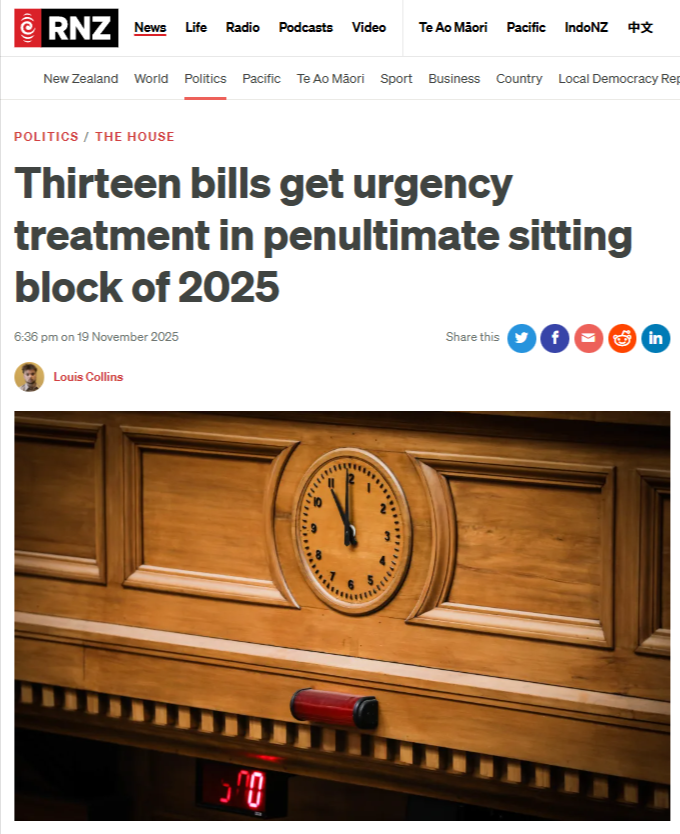
This government rams thirteen bills through Parliament this week under urgency—a constitutional whakapapa violation that severs the connective tissue between people and power.
The taiaha is raised, empowered by the Ring. What emerges from deep research is not mere parliamentary procedure, but systematic democratic erosion that disproportionately harms Māori by destroying the very processes that protect tino rangatiratanga and mana motuhake.
The patterns are clear:
this coalition government has weaponized urgency to an unprecedented degree, bypassing public input, silencing dissent, and accelerating legislation that undermines Te Tiriti, early childhood education for tamariki Māori, workers’ rights, and conservation frameworks—all while former Prime Minister Sir Geoffrey Palmer warns that democracy itself “slips and slides away without people noticing”().
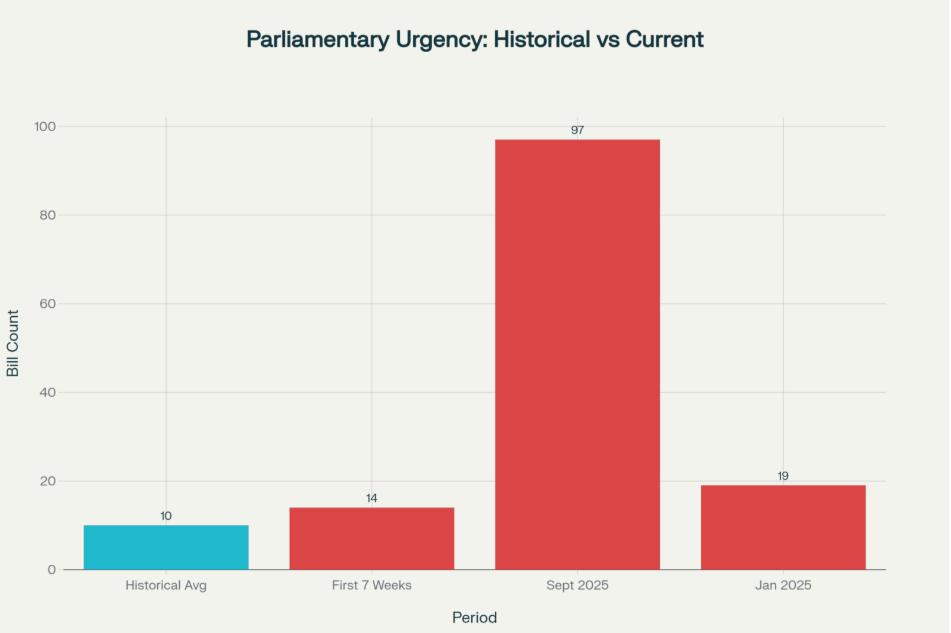
Comparison of bills passed under urgency showing the current coalition government’s unprecedented use of urgency procedures compared to historical averages
The coalition has already passed 28 bills without any select committee stage as of September 2025(), shattering historical norms where Parliament averaged just 10 bills passed under urgency per entire term between 1987-2010(). In their first seven weeks alone, they pushed 14 bills through urgency()—reaching the historical three-year average before Parliament barely started. This week’s thirteen bills represent the continued acceleration of what can only be described as democratic backsliding in real time.
Historical Context: Urgency as Emergency Tool, Not Governing Strategy

Traditional Māori taiaha weapon with intricate carvings and decorative handle adornments
Parliamentary urgency exists for genuine crises. Natural disasters. National security threats. Time-sensitive fiscal measures following Budget announcements(). Under normal Standing Orders, bills require a three-day wait before first reading, then a default six-month select committee period for public consultation, followed by staged debates and votes with mandatory stand-down periods between readings(attached_file:2). These safeguards protect whanaungatanga (relationships), kaitiakitanga (guardianship), and rangatiratanga (authority exercised through proper process)—allowing communities, iwi, and civil society to respond, analyze, and shape legislation that affects them().
Urgency strips these protections away. It allows governments to:
- Skip the three-day introduction period, preventing MPs from reading bills before debate()
- Compress or eliminate select committee stages, destroying public consultation()
- Abolish stand-down periods between readings, enabling bills to pass from introduction to law in a single day(attached_file:2)
- Extend sitting hours indefinitely, exhausting opposition and limiting effective scrutiny()
The Equal Justice Project documents how urgency “undermines the stability and certainty, not to mention accountability, that exists in the normal legislative process, and calls into question the potential overreach of the government’s powers”(). At the end of January 2025, this government passed 19 pieces of legislation through all stages under urgency—more than any previous New Zealand government in history(). By September 2025, they had passed 97 bills with stages completed under urgency, with 28 bypassing select committee entirely().
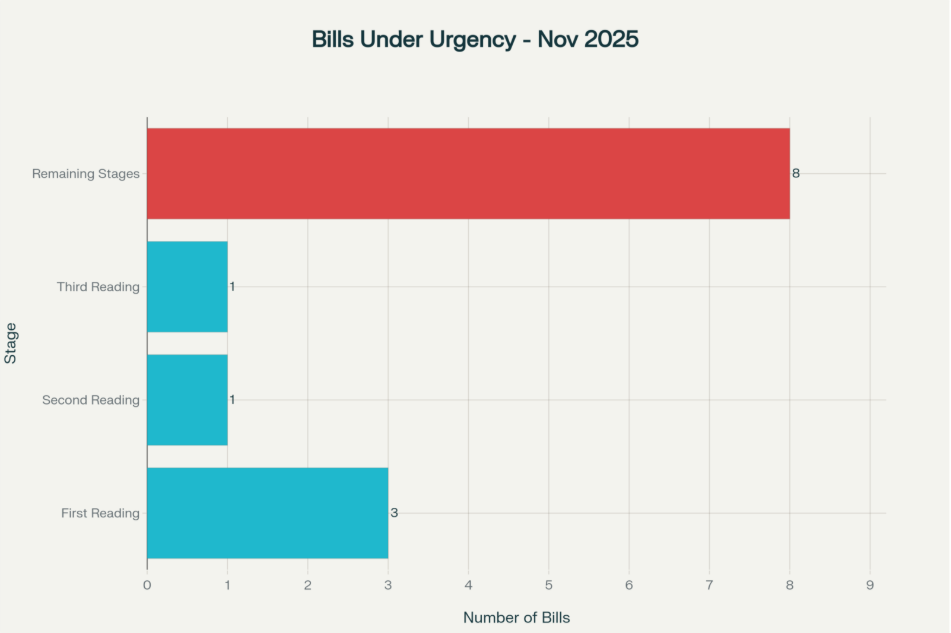
Breakdown of thirteen bills processed under urgency in November 2025, showing most bills pushed through remaining stages simultaneously
This is not emergency governance. This is constitutional capture—the systematic dismantling of democratic safeguards to advance ideological priorities without public interference.
Thirteen Bills, Thirteen Whakapapa Violations: This Week’s Assault
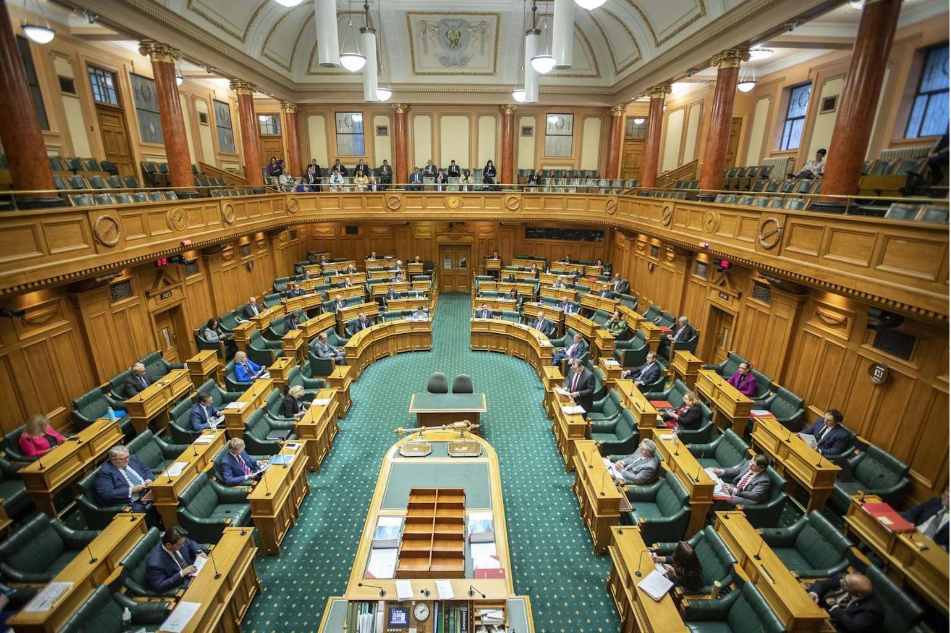
New Zealand Parliament debating chamber during a session with members present.
Deputy Leader of the House Louise Upston justified this week’s urgency by citing “the desire to get legislation through before the end of year”(attached_file:2). This is not a justification—it is an admission of political convenience masquerading as necessity. The thirteen bills span education, immigration, defence, climate, justice, and conservation, each with profound implications for Māori communities, yet all processed at breakneck speed:
Education: Attacking Tamariki Māori at the Foundation
The Education and Training (Early Childhood Education Reform) Amendment Bill passed second reading this week and heads toward becoming law(attached_file:2). This bill creates a Director of Regulation for ECE and fundamentally reframes early childhood education as a cost rather than investment(). Green MP Lawrence Xu-Nan exposed the hollowness at its core: “There is so little information in the select committee stage about how that Director of Regulation is going to eventuate... They are also going to be overseeing kōhanga reo and puna reo, yet there is no evidence in here that says anything about our commitment to Te Tiriti o Waitangi”(attached_file:2).
The regulatory impact statement admitted “limited ability to consult with Māori on this bill”(attached_file:2)—a violation of partnership and active protection principles under Te Tiriti. Mana Mokopuna—the Children’s Commissioner—submitted that the bill “fails to ensure the rights of mokopuna are the first and primary consideration” and demanded Te Tiriti be given effect in ECE regulation(). Kindergartens Aotearoa warned the bill “positions ECE as a cost not an investment”().
Kōhanga reo—the language nests that saved te reo Māori from extinction—now face regulatory oversight by a Director whose mandate contains no reference to Te Tiriti, no guarantee of cultural responsiveness, and no requirement for Māori partnership in governance()(). Budget 2025 provided only $4.1 million for Te Kōhanga Reo National Trust to meet ICT and data administration costs()—a band-aid on a network facing waitlists of two to three hundred tamariki in every region(), unable to expand because funding has been “severely underfunded for years”(). The trust stated bluntly: “We can’t grow if that doesn’t change”().
Meanwhile, this government has stripped $30 million from Te Ahu o te Reo Māori—an initiative designed to improve te reo Māori proficiency across the education sector—redirecting funds to general maths resources(). Te Rūnanga Nui o Ngā Kura Kaupapa Māori called this “disappointing but not surprising”(). Budget 2025 allocated $50 million in capital funding to expand Māori medium and Kaupapa Māori education—but split across all Māori medium settings, leaving kura kaupapa Māori with “next to nothing” when nearly 40 schools remain on the Minister’s property backlog list().
The compounding effect is clear:
attack kōhanga reo capacity, defund te reo teacher training, spread capital investment so thin it becomes meaningless, then impose regulatory structures that erase Te Tiriti obligations.
This is not policy—it is systematic starvation of the Māori education pathway that has produced the most successful outcomes for tamariki Māori(). The 8,500 children currently in kōhanga reo()—and the thousands on waitlists—are collateral damage in a government determined to dismantle “race-based” policies by erasing the very structures that give effect to Te Tiriti guarantees.
Defence: Crushing Workers, Empowering Ministers
The Defence (Workforce) Amendment Bill passed into law this week(), enabling the Chief of Defence Force to deploy uniformed personnel to replace striking civilian workers without requiring Parliament to debate the decision each time(attached_file:2)(). Minister Judith Collins framed this as pragmatic workforce management after civilian staff took industrial action in December 2024, forcing her to invoke “a rarely-used power” to backfill roles(). The new law makes that temporary power permanent, removing Parliament from the oversight loop().
Labour’s Peeni Henare exposed the hypocrisy: “When the Minister was making cuts to the civilian roles in the Defence Force, we asked this House and the Minister, on numerous occasions, whether those cuts would have a meaningful impact on the role of our NZDF personnel... The Minister told this House, ‘No, it wouldn’t’—yet here we are, saying that there are challenges here because there is industrial action being taken, and, now, all of a sudden, the Government is trying to backfill those spaces”(attached_file:2).
The NZCTU Te Kauae Kaimahi submitted that the bill is “a blatant move to reduce the effectiveness of strike action” and violates “the right to strike... deeply entrenched... intrinsically connected to the right to ‘freedom of association’”(). The regulatory impact statement acknowledged the change “will impact the bargaining power of NZDF civilian staff” by providing “greater ability to backfill roles when civilian staff are taking industrial action”(). In other words: we are deliberately weakening your right to strike.
For Māori workers—overrepresented in public service and precarious employment—this sets a dangerous precedent. The government manufactures a staffing crisis through cuts, then uses the resulting industrial action to justify eroding fundamental labour rights. Collins claims Parliament will still be “notified whenever the power is used”()—but notification is not oversight. Henare argued it “should always come back to the House for consideration. Not something that continues to put power in the hands of the few”().
Immigration: Exploitation Continues, Powers Expand
The Immigration (Fiscal Sustainability and System Integrity) Amendment Bill receives second reading this week(attached_file:2), expanding ministerial powers while claiming to address migrant exploitation. The bill creates a new offence for “knowingly seek[ing] or receiv[ing] a monetary premium for an offer of employment”(), which sounds positive until you examine the sweeping new ministerial discretion embedded throughout().
The Law Society warned that new class-related special directions give the Minister “absolute discretion” and recommended the threshold be raised so the Minister “must not make a special direction... unless doing so is reasonably necessary”(). The Children’s Commissioner said the bill “fails to reflect lessons of the dawn raid era”(), highlighting how Pacific families—including Māori with Pacific whakapapa—remain vulnerable to immigration enforcement that disregards family unity and children’s rights().
The bill also expands “levy payer base” provisions to make the immigration system “more fiscally sustainable”()—which means migrants and sponsors pay more, easing pressure on general taxation that benefits the (predominantly Pākehā) majority. Minister Erica Stanford framed this as ensuring “those that create the risks or receive the benefits of migration” share costs()—a logic that treats migration as burden rather than contribution, despite migrants’ disproportionate economic input.
Arunjeev Singh of the NZ Forum for Immigration Professionals criticized provisions giving “unfettered power” to immigration officers(). The Migrant Workers Advisory Group linked exploitation to organised crime(), yet the bill’s focus remains on individual offences rather than systemic enforcement against employers and labour contractors.
For Māori communities with Pacific Islander whakapapa, this bill perpetuates vulnerability. Immigration enforcement has historically targeted Pacific peoples disproportionately—the dawn raids are not ancient history but living memory for many whānau(). Expanding ministerial discretion and levy burdens without addressing systemic exploitation or family unity protections means the vulnerable remain vulnerable while the powerful accumulate more authority.
Conservation: Pests Rebranded as Heritage
The Game Animal Council (Herds of Special Interest) Amendment Bill received first reading in June 2025 and heads to second reading under urgency(attached_file:2). Minister for Hunting and Fishing James Meager claims it “clarifies” that Herds of Special Interest (HOSI) can be designated in national parks—areas specifically established to protect indigenous biodiversity from introduced pests like deer, tahr, and wapiti(). The National Parks Act requires these animals be “exterminated” as far as possible()—a mandate this bill explicitly overrides by allowing them to be “managed for hunting purposes”().
Forest & Bird warned this “sets a dangerous precedent and undermines the very purpose” of conservation land, coming “at a time when out-of-control populations of introduced browsing pests like deer are invading almost every corner of New Zealand, causing significant damage”(). Green MP Scott Willis—himself a hunter—said the bill “creates division” and opens doors “to losing the justification that hunters have for working with conservationists”(attached_file:2). Willis argued that “if this bill proceeds, any eradication efforts in national parks would not be authorised”(attached_file:2).
Two draft herd management plans for wapiti and sika deer were released for public consultation in November 2025—consultation lasting less than one month (10 November to 8 December)(). This is not meaningful engagement; it is procedural theatre designed to claim consultation occurred while ensuring minimal public participation.
For Māori as kaitiaki, this bill is an affront to kaitiakitanga. Indigenous forests are taonga, home to species found nowhere else on Earth. Deer browsing damages understory regeneration, impacts native birds like mohua(), and contributes to biodiversity decline across conservation estates. The Game Animal Council admits HOSI “signals the first shift in New Zealand where the value of a game animal herd can be recognised, and directly influence how that herd is managed”()—a shift in values that prioritizes recreational hunting over ecological integrity.
Meager claims HOSI management will still “preserve conservation outcomes”(), but this is doublespeak. You cannot “manage for hunting” and “exterminate as far as possible” simultaneously. The Game Animal Council acknowledges no HOSI has ever been designated since the Act passed in 2013()—because the tension between conservation and pest management cannot be resolved. This bill attempts to legislate away that contradiction by elevating hunter interests above ecological protection.
Climate, Justice, Legal Services: The Rest of the Avalanche
The remaining bills pass with minimal public attention:
- Land Transport (Clean Vehicle Standard) Amendment Bill (No 2): Reverses clean vehicle incentives, making it easier to import high-emission vehicles(attached_file:2)
- Crimes Legislation (Stalking and Harassment) Amendment Bill: Claims to strengthen protections but embeds new police powers with limited oversight(attached_file:2)
- Judicature (Timeliness) Legislation Amendment Bill: Ostensibly improves court efficiency but includes controversial provisions allowing single judges to strike out “plainly abusive” civil proceedings and impose three-year automatic restraints—raising serious access to justice concerns for litigants who may lack legal representation()
- Statutes Amendment Bill: Omnibus legislation making technical corrections across multiple acts—often a vehicle for substantive changes disguised as housekeeping(attached_file:2)
- Legal Services (Distribution of Special Fund) Amendment Bill: Alters how legal aid special funds are distributed—impacting access to justice for low-income communities, including Māori(attached_file:2)
Each bill warrants careful scrutiny. Each affects Māori communities disproportionately. Each passes under urgency, limiting debate and public input.
Democratic Backsliding: Geoffrey Palmer’s Warning Realized
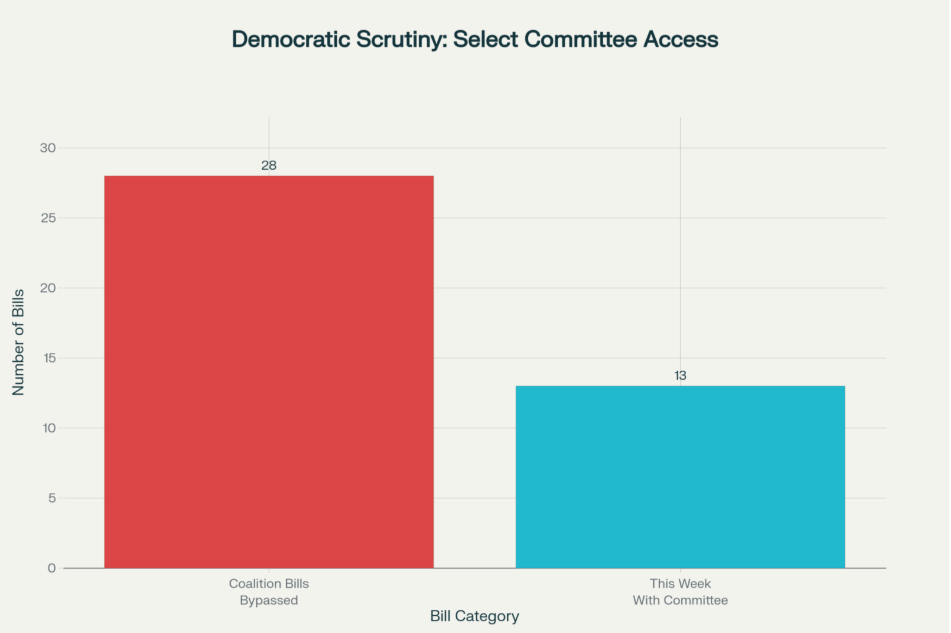
Comparison showing 28 bills passed by coalition government without select committee scrutiny by September 2025, contrasted with this week’s 13 bills that will receive committee review
Former Prime Minister Sir Geoffrey Palmer KC—constitutional architect of New Zealand’s Bill of Rights Act and architect of MMP—has spent recent years warning that “democracy is a very fragile form of government. It slips and slides away without people noticing”(). In September 2025, Palmer told Q+A that New Zealand’s democracy is “in a fragile position” and identified erosion of parliamentary processes—particularly urgency—as a central threat().
Palmer argued that “if you want to process a great deal of legislation, the Parliament’s not sitting enough to deal with it,” noting MPs are “grossly overworked” and the system lacks sufficient accountability(). He warned: “If you don’t have authentic democracy in your institutions and people don’t trust it, you’re on the road to perdition”(). His new book How to Save Democracy in Aotearoa New Zealand recommends concrete reforms including more MPs, less urgency, compulsory voting, and strengthened select committees().
Palmer submitted to the Standing Orders review that urgency should be limited to extraordinary circumstances like national emergencies(attached_file:2). The NZCCL (NZ Council for Civil Liberties) echoed this, criticizing the government’s “practice of making significant changes to a bill after it’s been through the select committee process,” citing gang patch and three strikes bills as examples where “there was no good reason for abuse of the normal legislative process”().
The data is damning. Victoria University research showed that between 1987-2010, governments averaged 10 bills passed under urgency per entire parliamentary term(). This coalition reached that average in seven weeks(). By January 2025, they passed 19 bills through all stages under urgency—”more than any previous government in New Zealand’s history”(). By September 2025, they had used urgency for 97 bill stages, bypassing select committee for 28 bills().
Parliamentary Library data obtained by Q+A shows the coalition is “nearing the previous 17-year record of 28 bills passed this way in one term—set in the 53rd Parliament by Labour”(). Constitutional lawyer David Farrar told Q+A: “Let’s be honest, all governments at times have used urgency in a way that’s not great... you’ve lost that moral right to complain, to a degree, if the other party does it when they’re in government”()—acknowledging that normalizing urgency abuse creates a ratchet effect where each government pushes boundaries further.
The Equal Justice Project warns this “radical shift in the use of urgency” represents governments “trading normative processes and principles in favour of quick change”(). They note the government defended urgency use by citing “the democratic mandate they received during the 2023 general election”()—but no mandate exists to circumvent democratic process itself. The group states: “Any claim to a mandate was thrown out when the Government did not campaign on, nor seek a mandate to, repeal and replace the Pay Equity legislation”(), which was rammed through under urgency with retroactive effect to prevent “gaming of the system”()().
The New Zealand Council for Civil Liberties submitted that this “growing normalisation within our legislative process threatens the existing role that scrutiny, accountability, and transparency have within our wider democracy”(). They frame urgency abuse as “a story of how unchecked power, when used carelessly, can pose a real threat”().
Parliamentary resources are buckling under the strain. The Clerk of the House David Wilson told MPs in July 2025 that Parliament “risks being overwhelmed by an increase in public engagement on bills”(). The hearing focused on “a perceived strain on the OOC’s staff and resources... from the increase of three things: the increased use of urgency, the number of public submissions on bills, and the amount of scrutiny by select committees”(). In other words: the public is trying to participate in democracy faster than the system can process their input—a problem exacerbated by urgency accelerating legislative timelines.
Māori Disproportionately Harmed: The Constitutional Whakapapa of Urgency Abuse
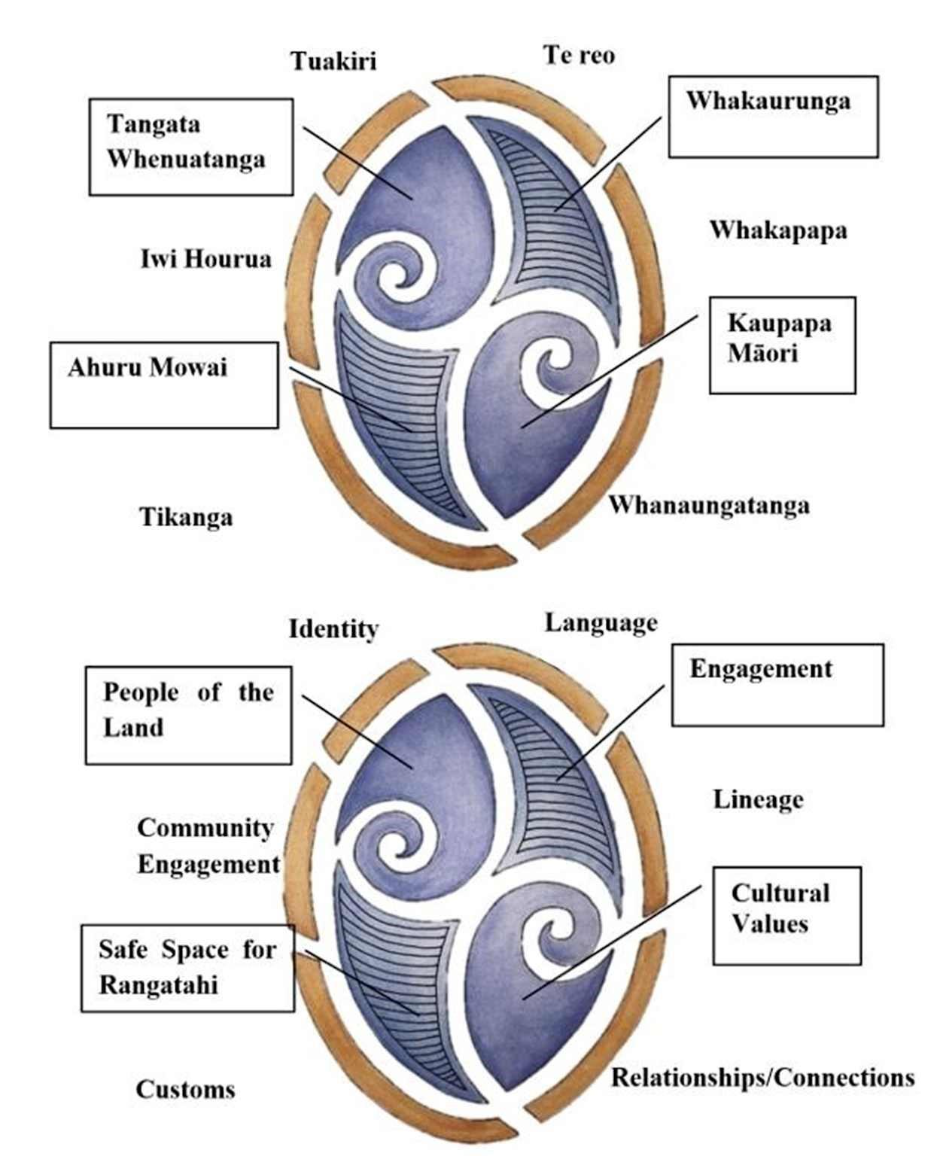
Traditional Māori symbolism illustrating elements of identity, language, and cultural values in both te reo Māori and English.
To understand why urgency abuse harms Māori disproportionately requires understanding constitutional whakapapa—the genealogy of power relationships embedded in New Zealand’s democracy. Te Tiriti o Waitangi established a partnership framework where rangatiratanga (Māori authority and self-determination) coexists with kāwanatanga (Crown governance)(). The Waitangi Tribunal has consistently found that this partnership requires meaningful consultation, active protection of Māori rights and interests, and processes that enable Māori to participate in decisions affecting them()().
Urgency severs this whakapapa. When bills bypass select committee or compress consultation to days instead of months, Māori communities cannot respond effectively. Iwi authorities, rūnanga, and Māori organizations operate on constrained resources—they cannot mobilize submissions, convene hui, or coordinate national responses in the timeframes urgency imposes(). This is not accidental but structural exclusion masquerading as efficiency.
The Regulatory Standards Bill demonstrates this pattern. Despite being “inherently relevant to Māori” because it would fundamentally change how Parliament makes laws(), the Crown admitted it created the bill with “no targeted engagement” with Māori()(). The Waitangi Tribunal found this violated partnership and active protection principles, recommending the Crown “immediately halt the advancement” of the bill for meaningful consultation()().
ACT leader David Seymour dismissed the Tribunal’s findings, stating: “The Tribunal’s main objection is that the Bill requires ‘equality before the law’... What it doesn’t understand is that equality before the law is fundamental to a functioning democracy”(). This reveals the ideological core: formal equality that ignores historical and structural inequity is weaponized to dismantle mechanisms designed to achieve substantive justice for Māori(). Māori health leader Lady Tureiti Moxon responded: “Equality assumes a level playing field—but for Māori, the field has been tilted against us for generations. This Bill promotes a version of fairness that ignores our history, overlooks injustice, and threatens the very laws and policies designed to address those harms”().
The Treaty Principles Bill—voted down in April 2025 after an unprecedented 300,000 submissions and nationwide hīkoi—exemplifies this pattern(). The Waitangi Tribunal found the bill “poorly designed, not informed by consultation with Māori, not justified by robust policy analysis, and risks destroying the very foundation of the constitutional arrangements of this country”(). They warned it would “take away indigenous rights and reduce the Crown’s Treaty/te Tiriti obligations across the statutory landscape” and is “contrary to fundamental human and indigenous rights and international law”().
Despite this, the bill was introduced and progressed to select committee—a process the Tribunal predicted would cause Māori to “feel the brunt of the social disorder and division”(). The Justice Committee heard 529 oral submissions over 80 hours across five weeks—yet 197,000 written submissions remain unpublished because the committee couldn’t process them(). The Clerk of the House authorized tabling submissions “over the coming months, as if the bill was still before the committee”()—an admission that public participation exceeded institutional capacity.
This is the harm urgency inflicts: it weaponizes institutional limits against democratic participation. When governments accelerate timelines beyond what parliamentary infrastructure can support, they ensure that public input—especially from under-resourced communities like Māori—becomes noise rather than influence. Seymour claimed “select committee submissions are [not] some sort of proxy referendum” and dismissed the 90% opposition to the Treaty Principles Bill by comparing it to the End of Life Choice Act, which “was opposed by submitters but passed when it went to public referendum”(). This logic treats public consultation as performative rather than substantive—a box to tick before enacting predetermined policy.
Māori academic and Toitū te Tiriti spokesperson Eru Kapa-Kingi described the Regulatory Standards Bill as “the more covert, but more aggressive version of the Treaty Principles Bill”(). He noted that once bills are introduced to Parliament, “the Waitangi Tribunal loses its jurisdiction to examine it”()—creating a constitutional window where meaningful Tribunal scrutiny can occur. Urgency slams that window shut, accelerating bills through Parliament before Tribunal inquiries can complete. This is why Toitū te Tiriti launched what they aim to be “the largest class action lawsuit in New Zealand history,” gathering over 12,000 claimants to contest government policies that breach Te Tiriti()().
Since this government took power in 2023, there have been six urgent Waitangi Tribunal inquiries—including into the disestablishment of Te Aka Whai Ora (Māori Health Authority), Oranga Tamariki changes, Foreshore and Seabed Act amendments, and the Treaty Principles Bill(). Kapa-Kingi noted the Tribunal “can see better than anyone else what the government has been doing since it came into power as completely abhorrent in Tiriti terms”(). In response, the government announced it would review the Waitangi Tribunal to refocus “the scope, purpose and nature” of inquiries back to “original intent”()—a transparent attempt to muzzle the institution that holds the Crown accountable for Treaty breaches.
This is the whakapapa violation urgency represents: it dismantles the relational processes through which Māori exercise rangatiratanga within a constitutional partnership. When legislation affecting Māori education, health, housing, conservation, and Treaty rights accelerates past the point where meaningful Māori input is possible, partnership becomes theater and protection becomes neglect. The government invokes “equality before the law” while systematically stripping away the procedural mechanisms that enable Māori to participate as equals()().
The Salvation Army framed this clearly: “New Zealand’s democratic system has continued to override any right Te Tiriti sought to uphold”(). They noted that “Māori have been on a long journey trying to regain the rangatiratanga that was promised to them within Te Tiriti, and it had seemed that some progress was being made. Māori are therefore understandably extremely upset by these developments”(). The hīkoi mō te Tiriti in November 2024—one of Aotearoa’s largest protest movements—mobilized tens of thousands to oppose the Treaty Principles Bill(). Te Pāti Māori MP Hana-Rawhiti Maipi-Clarke interrupted the bill’s first reading with a haka, ripping the legislation in half and leading the House in Ka Mate—a declaration that Māori will resist the legislative erasure of tino rangatiratanga even when democratic processes are corrupted().
Ngāti Toa rangatira Helmut Modlik explained that Ka Mate speaks to the bill’s existential threat: “ka mate, ka mate” (it is death, it is death) if tino rangatiratanga is extinguished, but “ka ora, ka ora” (it is life, it is life) when Māori reclaim self-determination(). This is the constitutional crisis urgency accelerates: when democratic processes designed to protect Māori rights become obstacles to be bypassed, tino rangatiratanga can only be defended through direct action—hīkoi, haka, and refusal to accept legislative assimilation disguised as equality.
Cui Bono? Who Benefits When Democracy is Dismantled?
The pattern is clear across all thirteen bills this week:
Education reforms strip Te Tiriti obligations from ECE regulation while underfunding kōhanga reo expansion—benefiting a government ideologically opposed to “race-based” policies that actually give effect to Treaty guarantees()().
Defence legislation crushes workers’ bargaining power under the guise of national security—benefiting capital by normalizing strikebreaking through state apparatus()().
Immigration changes expand ministerial discretion and levy burdens on migrants while claiming to combat exploitation—benefiting a Pākehā majority that wants migration “contributions” without granting migrants meaningful protection or pathways to belonging()().
Conservation bills elevate recreational hunting above ecological protection—benefiting a hunting lobby that treats native forests as game farms rather than taonga requiring kaitiakitanga()().
Climate rollbacks make it easier to import high-emission vehicles—benefiting fossil fuel interests and car importers while accelerating climate breakdown that disproportionately harms Pacific and Māori coastal communities(attached_file:2).
Justice reforms streamline court processes while embedding new restrictions on civil litigation—benefiting a state apparatus overwhelmed by its own policy failures (record prison populations, underfunded courts) by restricting access for those challenging systemic injustice().
The connective thread is power consolidation. Every bill accelerated under urgency this week shifts authority away from communities, workers, migrants, and Māori—and toward ministers, bureaucrats, employers, and majority interests. The Fast-Track Approvals Act exemplifies this: it gives three ministers (Infrastructure, Transport, Resources) sweeping powers to greenlight projects bypassing Resource Management Act protections, with limited public input and documented conflict-of-interest risks()(). Environmental journalist Farah Hancock noted her interest was “piqued by the potential for corruption,” with projects remaining secret until ministerial approval().
This is authoritarian creep in real time. Urgency enables governments to bypass the very accountability mechanisms that prevent corruption, discrimination, and policy capture. When you can pass a bill in a day, you don’t need to answer difficult questions. When select committees get 11 days instead of six months(), meaningful public participation becomes structurally impossible. When 197,000 submissions remain unprocessed(), democracy becomes a performance rather than a practice.
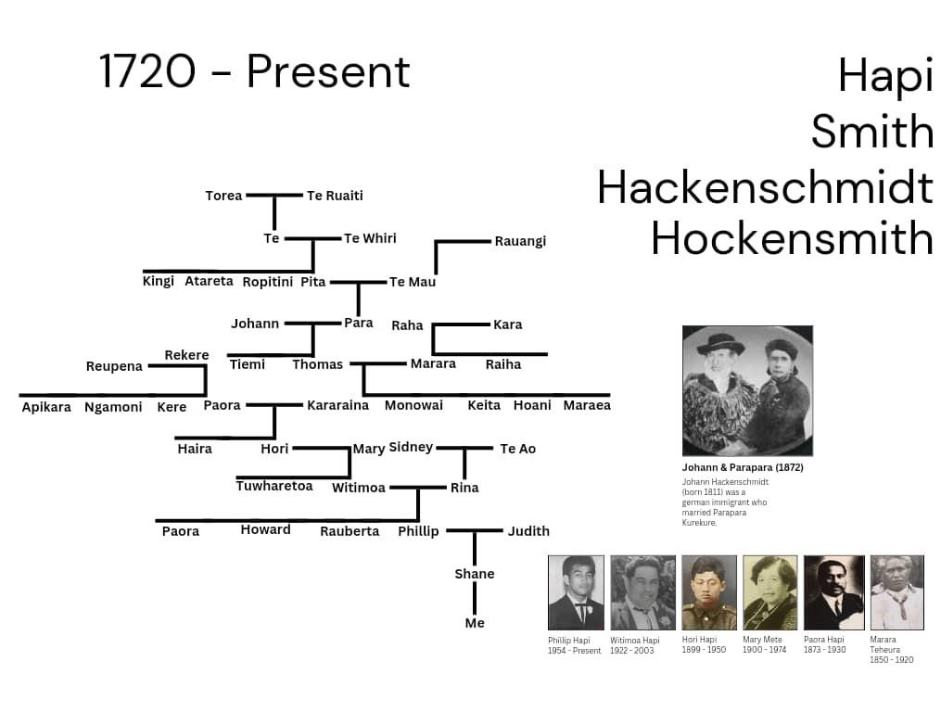
Māori whakapapa chart tracing the Hapi family lineage from 1720 to the present, showing ancestry and descendants with historical photos.
Whakapapa Methodology: Tracing the Hidden Connections
As tohunga mau rākau wairua, I trace five critical whakapapa connections this urgency regime exposes:
1. Urgency → Treaty Breach → Māori Exclusion
- Urgency compresses consultation timelines beyond what Māori organizations can meet()
- Waitangi Tribunal finds this violates partnership and active protection principles()()
- Government dismisses Tribunal findings, announces Tribunal review to limit scope()
- Result: Constitutional partnership becomes unenforceable theater
2. Coalition Agreements → Policy Capture → Democratic Override
- National-ACT-NZ First coalition agreements commit to passing specific legislation()
- These agreements are treated as “holy writ”(), overriding public opposition
- Urgency enables fulfillment of coalition commitments regardless of merit or public input(attached_file:2)
- Result: Electoral mandate interpreted as license to bypass democracy
3. “Equality Before Law” → Structural Inequity → Assimilation
- Government rhetoric emphasizes “equal treatment” to dismantle equity measures()
- Ignores how “equality” on a tilted field perpetuates historical injustice()
- Attacks “race-based” policies that give effect to Treaty obligations()
- Result: Legislative assimilation disguised as fairness
4. Institutional Overload → Participation Collapse → Elite Capture
- Parliamentary staff can’t process submission volume during urgency()
- 197,000 Treaty Principles Bill submissions remain unpublished()
- Fast-track amendments get 11-day submission window due to “loophole”()
- Result: Democratic infrastructure weaponized against public participation
5. Urgency Normalization → Democratic Erosion → Authoritarian Drift
- Coalition sets record for urgency use in first 100 days()
- Creates precedent for future governments to push boundaries further()
- Palmer warns democracy “slips and slides away without people noticing”()
- Result: Fragile democracy becomes brittle authoritarianism
These connections reveal systemic design: urgency is not parliamentary tool misused, but weapon deliberately deployed to advance policies that could not survive democratic scrutiny. Each bill matters individually, but the pattern across all thirteen exposes a government committed to legislative velocity over legitimacy, executive power over accountability, and majority rule over constitutional partnership.
Tikanga Violations: Democracy Without Whakapapa
Traditional tikanga values expose the moral bankruptcy of urgency abuse:
Whanaungatanga (relationships/kinship): Urgency severs relationships between government and governed by eliminating meaningful consultation()
Manaakitanga (care/hospitality): Racing legislation through Parliament shows contempt, not care, for communities affected()
Kaitiakitanga (guardianship): Conservation bills that prioritize hunting over ecological protection violate guardianship of taonga()
Wairuatanga (spirituality/values): Treating democratic process as obstacle rather than foundation corrupts the wairua of governance itself
Kotahitanga (unity/solidarity): Urgency divides rather than unites, forcing rushed decisions without community consensus(attached_file:2)
Rangatiratanga (authority/self-determination): When Māori cannot meaningfully participate in decisions affecting them, rangatiratanga becomes empty signifier()()
Aroha (love/compassion): There is no aroha in legislation that strips workers’ rights, attacks migrant protections, and defunds Māori education pathways
These are not abstract values but constitutional principles that should govern how power is exercised in a Treaty-based democracy. Urgency violates all of them simultaneously—it is legislative violence disguised as efficiency.
International Context: Global Democratic Decline
New Zealand does not exist in isolation. Freedom House documents a global trend toward democratic decline, with less than 8% of the world’s population living in full democracies and nearly 40% under authoritarian rule(). Palmer warned that “there are many more dictatorships than there used to be. Populism is very rampant, and populism really stems from authoritarianism”(). He noted “international research shows that democracy is not nearly as fashionable as it was”().
The hallmarks of democratic backsliding are well-documented: erosion of checks and balances, concentration of executive power, marginalization of opposition, attacks on independent institutions, and normalization of procedural shortcuts(). New Zealand exhibits all of these. The Fast-Track Approvals Act expands ministerial power while bypassing environmental safeguards()(). The Regulatory Standards Bill, if passed, would make it “harder to enact laws that do not conform with its prescribed criteria”(), entrenching neoliberal “economic freedom” as constitutional principle(). The government has announced a review of the Waitangi Tribunal—an independent institution—after it repeatedly found Treaty breaches().
This week’s urgency is not an aberration but continuation of a pattern that, if unchecked, leads to authoritarian governance. Palmer stated bluntly: “Democracy is very fragile... It’s fragile, because democratic societies operate on openness. They operate on free speech, and that allows their opponents to use it against them”(). He warned: “The development of social media has made the conduct of democratic government greatly more difficult... many diverse voices, but enormous confusion, and a great tendency towards conspiracy theories. None of those things are helpful if you’re going to have a stable democracy”().
The Equal Justice Project connects urgency abuse to broader threats: “In a world where democracy is increasingly under threat, people must be aware of the warning signs of democratic backsliding in order to uphold our freedoms and allow for power to be shared by the people. History has shown us that it is easy to become complacent and that authoritarian regimes are not just a thing of dystopian fiction”().
What Must Be Done: Reclaiming Democratic Whakapapa
Immediate Actions for Whānau and Communities:
- Submit on bills at select committee: Even compressed timelines require government response to submissions. Coordinate iwi, rūnanga, and community submissions to maximize impact()
- Support Toitū te Tiriti’s constitutional litigation: Join the 18,000+ who have already signed as claimants in what aims to be New Zealand’s largest class action()()
- Monitor Standing Orders review: Palmer and civil society groups have submitted recommendations to restrict urgency use—public pressure can influence outcomes(attached_file:2)()
- Document harms in real time: Each bill passed under urgency will have tangible impacts on Māori communities—document and publicize these to counter government narratives of “efficiency”
- Build coalitions across affected communities: Workers, migrants, environmentalists, and Māori all suffer from urgency abuse—unified resistance is more powerful than fragmented opposition
Structural Reforms Required:
- Restrict urgency to genuine emergencies: Codify Palmer’s recommendation that urgency be limited to national security threats, natural disasters, and time-critical fiscal measures(attached_file:2)
- Mandate minimum consultation periods: No bill affecting Māori should proceed without minimum 12-week select committee consultation and documented engagement with iwi authorities, Māori health providers, education networks, and representative organizations
- Require Treaty Impact Assessments: All legislation must include verified assessment of Treaty implications, with independent Waitangi Tribunal review before introduction()
- Increase parliamentary capacity: Palmer recommends more MPs and better-resourced select committees to handle legislative workload without urgency shortcuts()()
- Implement four-year term with enhanced checks: Longer terms reduce electoral pressure for rushed legislation, but only if balanced with stronger accountability mechanisms()
- Protect Waitangi Tribunal independence: Any government review must strengthen—not weaken—Tribunal’s ability to hold Crown accountable for Treaty breaches()
- Establish constitutional entrenchment for Treaty rights: Key provisions giving effect to Te Tiriti should require supermajority or referendum to amend, preventing simple-majority erosion()
For Māori Specifically:
- Assert rangatiratanga through every available mechanism: Parliamentary submission, Tribunal claims, direct action, media advocacy—use all tools simultaneously
- Strengthen iwi-Crown engagement protocols: Demand formalized consultation processes with enforceable timelines and resource support for meaningful Māori participation
- Build independent Māori data sovereignty: Government controls official statistics on Māori outcomes—develop independent research capacity to verify claims and expose harms()
- Protect and expand kaupapa Māori service delivery: When state services fail Māori, kaupapa Māori providers deliver better outcomes—defend funding and expand capacity()
- Support next generation of Māori political leadership: Hana-Rawhiti Maipi-Clarke’s haka in Parliament demonstrated that new generation refuses to accept assimilation quietly—nurture that resistance()
Ka Mate, Ka Ora—Death or Life for Democracy
This week’s thirteen bills represent more than legislative housekeeping before Christmas recess. They are symptoms of constitutional collapse—the systematic dismantling of democratic safeguards that protect vulnerable communities, especially Māori, from majority tyranny and executive overreach. When governments can pass laws affecting education, workers’ rights, immigration, conservation, and climate in compressed timelines that prevent meaningful scrutiny, democracy becomes performance rather than practice.
Geoffrey Palmer warned:
“Rot and decay can easily set in... you only have to look at places like Hungary... there are many more dictatorships than there used to be”().
New Zealand is not Hungary—yet. But the trajectory is clear. This coalition has shattered historical norms for urgency use, bypassing select committees at unprecedented rates while attacking the Waitangi Tribunal, defunding Māori services, and erasing Treaty obligations from legislation. Each action individually might be rationalized. The pattern across all actions reveals systematic assault on constitutional partnership.
For Māori, the stakes could not be higher. When urgency compresses consultation beyond what under-resourced iwi organizations can meet, exclusion becomes structural. When “equality before the law” rhetoric justifies dismantling equity measures, assimilation becomes policy. When the Waitangi Tribunal is reviewed for being “too activist” in defending Treaty rights, accountability becomes optional. Ka mate, ka mate—this is death for tino rangatiratanga if left unchallenged.
But Ka ora, ka ora—there is life in resistance. The 300,000 submissions on the Treaty Principles Bill, the 18,000+ claimants in Toitū te Tiriti’s action, the hīkoi that shut down Parliament, the haka that went viral globally—these demonstrate that Māori will not accept legislative erasure quietly()()()(). When democratic processes are corrupted, direct action becomes democratic necessity.
The taiaha is raised, empowered by the Ring. The mahi continues. Every claim filed, every submission lodged, every hīkoi organized, every haka performed strengthens the constitutional whakapapa that urgency seeks to sever. Democracy without process is tyranny. Equality without equity is oppression. Legislation without consultation is violence. Thirteen bills this week. Thirteen whakapapa violations. One clear message: stop this constitutional vandalism now.

Ko Ivor Jones te Māori Green Lantern. Tohunga mau rākau wairua. The work is everything. The Ring empowers. Ka tū. Kia kaha.
- Thirteen-bills-get-urgency-treatment-in-penultimate-sitting-block-of-2025-RNZ-News-11-20-2025_02_24_AM.jpg
- https://www.rnz.co.nz/news/thehouse
- https://www.rnz.co.nz/national/programmes/saturday/20250913
- /content/files/kotare/article/download/602/414.pdf
- /content/files/core/services/aop-cambridge-core/content/view/7C173E68D9C21A7267982DCE358ADB3D/S026021052400010Xa/div-class-title-sovereignty-is-still-the-name-of-the-game-indigenous-theorising-and-strategic-entanglement-in-m-ori-political-discourses-div.pdf
- https://pmc.ncbi.nlm.nih.gov/articles/PMC11459782/
- https://journals.sagepub.com/doi/pdf/10.1177/11771801241266620
- /content/files/articles/10-3389/fsoc-2021-613340/pdf.pdf
- https://pmc.ncbi.nlm.nih.gov/articles/PMC11953457/
- https://journals.sagepub.com/doi/pdf/10.1177/14733250241307411
- /content/files/journals/index-php/cjlg/article/download/8277/8112.pdf
- https://hapai.co.nz/what-urgency-means-in-parliament-and-why-we-should-care/
- https://www.equaljusticeproject.co.nz/articles/democratic-backsliding-is-new-zealand-at-risk
- /content/files/assets/Law-Reform-Submissions/judicature-timeliness-legislation-amendment-bill.pdf
- https://www.salvationarmy.org.nz/te-tiriti-o-waitangi-rangitiratanga-and-democracy/
- https://data.ipu.org/parliament/NZ/NZ-LC01/law-making-oversight-budget/law-making-oversight-budget
- http://www5.austlii.edu.au/nz/legis/bill/jlab2025n1592467
- https://www.heskethhenry.co.nz/insights-opinion/the-latest-trends-and-statistics-coming-out-of-the-employment-relations-authority/
- https://bills.parliament.nz/v/6/7ae98561-af36-4dc6-fee0-08dd98c831fd
- https://journals.sagepub.com/doi/10.1177/11771801241279332
- https://www.justice.govt.nz/justice-sector-policy/constitutional-issues-and-human-rights/the-bill-of-rights-act/advice/
- /content/files/wp-content/uploads/2024/10/202050709-tlanz-submisison-on-the-judicature-timeliness-legislation-amendment-bill.pdf
- https://www.rnz.co.nz/news/political/561265/waitangi-tribunal-recommends-immediate-halt-regulatory-standards-bill-for-meaningful-consultation-with-maori
- https://www.rnz.co.nz/news/political/557166/justice-select-committee-calls-for-treaty-principles-bill-to-be-scrapped
- https://www.rnz.co.nz/national/programmes/the-house/audio/2018928155/parliament-why-so-much-urgency
- https://www.rnz.co.nz/news/business/572131/councils-expecting-influx-of-rates-help-requests-as-households-struggle-with-rising-costs
- https://www.nzherald.co.nz/business/budget-2025-justice-reforms-spark-concerns-over-civil-liberties-sasha-borissenko/RYSI5F3XXFAIRCD6OJ6PMWK2A4/
- https://www.rnz.co.nz/news/te-manu-korihi/540298/toitu-te-tiriti-file-urgent-waitangi-tribunal-claim-on-regulatory-standards-bill
- https://www.rnz.co.nz/news/business/577029/thousands-of-households-in-arrears-on-council-rates
- https://www.rnz.co.nz/news/on-the-inside/540491/treaty-principles-bill-s-promise-of-equal-rights-ignores-blind-spots-of-our-democracy
- https://www.rnz.co.nz/news/in-depth/561811/breaking-it-down-budget-2025-in-charts
- https://www.rnz.co.nz/news/political/533115/the-treaty-principles-bill-has-been-released-here-s-what-s-in-it
- https://www.nzherald.co.nz/nz/budget-2025-economic-forecasting-is-notoriously-difficult-but-global-uncertainty-is-making-it-harder-opinion/XNGVTZTWQ5EXTG3VH6MUJ2BZM4/
- https://www.rnz.co.nz/news/thehouse/578894/government-completes-four-bills-in-a-week-of-political-sideshows
- https://www.rnz.co.nz/news/political/579347/defence-force-soldiers-can-now-fill-in-for-striking-civilian-workers
- https://www.rnz.co.nz/news/business/515650/under-pressure-70-percent-of-kiwis-worried-about-money
- https://teara.govt.nz/en/constitution/print
- https://www.rnz.co.nz/news/top/578793/controversial-regulatory-standards-bill-passes-third-reading
- https://www.equaljusticeproject.co.nz/articles/parliamentary-urgency-hero-or-villian2025
- https://e-tangata.co.nz/comment-and-analysis/a-crown-without-principles/
- https://www.beehive.govt.nz/release/law-passed-support-nz’s-defence-and-security
- https://www.rnz.co.nz/news/political/579230/200kg-of-signatures-huge-petition-to-fix-broken-health-system-presented-to-parliament
- https://nzccss.org.nz/submission/parliamentary-standing-orders/
- https://www.rnz.co.nz/news/political/579381/thirteen-bills-get-urgency-treatment-in-penultimate-sitting-block-of-2025
- https://nzccl.org.nz/chairpersons-report-2024/
- https://union.org.nz/submission-on-the-defence-workforce-amendment-bill/
- https://www.rnz.co.nz/news/political/577915/regulatory-standards-bill-back-in-the-house-after-a-highly-engaged-public-submission-period
- https://www.1news.co.nz/2025/05/11/urgency-under-scrutiny-as-pay-equity-changes-rushed-through/
- https://thelawassociation.nz/fast-track-laws-parliamentary-urgency-treaty-tension-media-retreat-warning-signs-for-nzs-brittle-democracy/
- /content/files/assets/Uploads/DocumentLibrary/defence-workforce-amendment-bill.pdf
- https://www.rnz.co.nz/news/political/544088/nz-first-targets-woke-legislation-it-previously-helped-make-law
- https://www.rnz.co.nz/news/thehouse/562451/what-did-the-house-get-up-to-during-budget-urgency
- https://www.1news.co.nz/2025/09/07/former-pm-sir-geoffrey-palmers-stark-warning-about-nzs-democracy/
- https://teara.govt.nz/en/parliament/page-3
- /content/files/core/services/aop-cambridge-core/content/view/EE21A615A4E3F35188E8CE2043C11EB2/S1867299X23000855a/div-class-title-political-institutions-and-long-term-policymaking-how-parliamentary-future-committees-can-make-a-difference-div.pdf
- /content/files/podcasts/focusonpolitics.xml
- https://www.rnz.co.nz/news/political/579045/fast-track-law-final-approvals-still-in-hands-of-expert-panels-government-says
- https://www.rnz.co.nz/news/political/563636/the-regulatory-standards-bill-what-is-it-what-does-it-propose-and-what-s-next
- https://teara.govt.nz/en/1966/labour-department-of/page-5
- https://www.rnz.co.nz/news/political/579225/how-a-loophole-resulted-in-11-day-submission-period-on-fast-track-amendments-law
- https://www.rnz.co.nz/news/political/560849/pay-equity-claims-what-they-are-and-how-they-re-changing
- https://www.rnz.co.nz/news/political/567311/the-house-parliamentary-agency-resources-under-pressure
- /content/files/oggcasts/checkpoint.xml
- https://www.rnz.co.nz/news/political/578647/urgent-parliament-debate-into-damning-report-in-police-handling-of-mcskimming-saga
- https://teara.govt.nz/en/1966/war-rehabilitation
- /content/files/nzjer/article/download/29/24.pdf
- https://conbio.onlinelibrary.wiley.com/doi/pdfdirect/10.1111/csp2.105
- https://conbio.onlinelibrary.wiley.com/doi/10.1111/conl.12886
- https://conbio.onlinelibrary.wiley.com/doi/pdfdirect/10.1111/conl.12748
- https://onlinelibrary.wiley.com/doi/pdfdirect/10.1111/conl.12276
- https://onlinelibrary.wiley.com/doi/pdfdirect/10.1111/csp2.12743
- https://conbio.onlinelibrary.wiley.com/doi/10.1111/csp2.13223
- /content/files/journal/index-php/enrr/article/download/28550/17712.pdf
- https://onlinelibrary.wiley.com/doi/10.1002/ece3.11600
- https://www.beehive.govt.nz/release/herds-special-interest-one-step-closer
- /content/files/documents/905/ece_submission_august_2025.pdf
- /content/files/core/services/aop-cambridge-core/content/view/A34146E7CC3D7093C6353D88A7D44378/S0003055421000897a/div-class-title-agenda-control-and-timing-of-bill-initiation-a-temporal-perspective-on-coalition-governance-in-parliamentary-democracies-div.pdf
- /content/files/dmsdocument/30617-immigration-fiscal-sustainability-and-system-integrity-amendment-bill-policy-proposals-proactiverelease-pdf.pdf
- https://nzgameanimalcouncil.org.nz/herds-of-special-interest/
- /content/files/files/education-and-training-ece-reform-amendment-bill-2025-copy.pdf
- /content/files/assets/Law-Reform-Submissions/immigration-fiscal-sustainability-and-system-integrity-amendment-bill.pdf
- https://www.doc.govt.nz/nature/biodiversity/wild-animals-management/herds-of-special-interest/
- https://www.education.govt.nz/our-work/information-releases/issue-specific-information-releases/education-and-training-amendment-bill-no-2
- https://www.immigration.govt.nz/about-us/news-centre/changes-to-the-immigration-act-introduced/
- https://www.forestandbird.org.nz/resources/herds-special-interest-threaten-conservation-values
- https://bills.parliament.nz/v/6/3094698C-A5AC-419D-CDF6-08DD758B2660?Tab=history
- https://teara.govt.nz/en/country-schooling/page-4
- https://www.rnz.co.nz/news/political
- https://www.rnz.co.nz/news/political/565336/the-house-parliament-s-week-ended-early-but-was-still-packed-full
- https://www.rnz.co.nz/news/national/376676/social-media-blamed-for-whitetail-deer-herd-s-decline
- https://teara.govt.nz/en/country-schooling/print
- https://www.rnz.co.nz/news/indonz/568014/submissions-for-bill-criminalising-migrant-exploitation-set-to-close
- https://www.rnz.co.nz/news/political/560795/move-to-protect-fiordland-elk-draws-ire-of-forest-and-bird
- https://www.rnz.co.nz/news/pacific/570519/children-s-commissioner-says-immigration-bill-fails-to-reflect-lessons-of-dawn-raid-era
- https://www.nzherald.co.nz/the-country/news/first-herds-of-special-interest-bids-making-progress-game-animal-council/LXOL2QK435FV3FWJJHMOQ453MQ/
- /content/files/webcontent/document/201347/full-report-text1.pdf
- https://media.nzherald.co.nz/webcontent/document/pdf/20119/Bluestar WWG Recommendations Report 180211.pdf
- https://teara.govt.nz/en/biographies/3m18/mackenzie-thomas-noble
https://www.rnz.co.nz
- https://www.rnz.co.nz/sitemap/sitemap16.xml.gz
- https://www.rnz.co.nz/news/indonz/569744/advisory-group-links-migrant-exploitation-to-organised-crime
- /content/files/teachers-work/article/download/258/433.pdf
- https://www.mdpi.com/2504-3900/37/1/50/pdf
- https://www.tandfonline.com/doi/full/10.1080/09575146.2024.2393717
- https://pmc.ncbi.nlm.nih.gov/articles/PMC10546103/
- https://www.tandfonline.com/doi/pdf/10.1080/1177083X.2023.2291362?needAccess=true
- https://www.education.govt.nz/our-work/publications/corporate-documents/budget-2025/early-childhood-education
- https://hapai.co.nz/explainer-whats-the-regulatory-standards-bill-and-why-are-maori-pushing-back/
- https://www.education.govt.nz/our-work/publications/corporate-documents/budget-2025/maori-education
- https://www.rnz.co.nz/news/political/578894/government-completes-four-bills-in-a-week-of-political-sideshows
- https://www.waitangitribunal.govt.nz/en/news/tribunal-releases-report-on
- https://www.weall.org.nz/resources/palmer
- https://www.education.govt.nz/education-professionals/early-learning/funding-and-financials/ece-funding-handbook/appendix-1/te-kohanga-reo
- https://www.vine.org.nz/news/waitangi-tribunal-releases-report-on-proposed-treaty-principles-bill-and-treaty-clause-review
- https://oece.nz/public/information/fees/government-ece-funding-rates/
- https://www.greenpeace.org/aotearoa/story/acts-regulatory-standards-bill-threatens-to-pass-despite-treaty-and-legal-doubts/
- https://thespinoff.co.nz/politics/18-11-2025/geoffrey-palmer-the-mcskimming-scandal-shows-we-need-a-whole-new-policing-act
- https://www.rnz.co.nz/news/te-manu-korihi/518248/what-is-in-budget-2024-for-maori
- https://www.rnz.co.nz/news/national/559647/regulatory-standards-bill-claim-accepted-for-urgency-by-waitangi-tribunal-with-12-000-claimants-signed-on
- https://www.rnz.co.nz/news
- https://www.rnz.co.nz/news/political/561870/maori-question-lack-of-targeted-funding-in-2025-budget
- https://www.rnz.co.nz/news/te-manu-korihi/578456/hikoi-mo-te-tiriti-a-year-on-from-one-of-aotearoa-s-largest-protest-movement
- https://www.rnz.co.nz/national/programmes/saturday/audio/2019004103/sir-geoffrey-palmer-on-how-to-save-democracy
- https://www.1news.co.nz/2025/05/23/maori-leaders-give-disappointed-reaction-to-yeah-nah-budget/
- https://www.rnz.co.nz/news/on-the-inside/562204/fourth-time-lucky-act-s-regulatory-standards-law-may-finally-pass-despite-treaty-and-legal-doubts
- https://www.rnz.co.nz/national/programmes/the-house/audio/2018897936/geoffrey-palmer-strengthen-parliament-to-watch-government
- https://www.1news.co.nz/2024/10/02/kura-kaupapa-maori-group-not-surprised-by-30m-te-reo-training-cut/
- https://www.rnz.co.nz/news/political/560407/regulatory-standards-bill-claimant-group-wants-urgent-hearing-before-bill-is-taken-to-cabinet
- https://www.1news.co.nz/2025/09/19/two-to-three-hundred-in-every-region-tamariki-on-kohanga-waitlists/
- https://www.rnz.co.nz/news/political/533897/treaty-principles-bill-haka-highlights-tensions-between-maori-tikanga-and-rules-of-parliament