"Water is Taonga, Not Commodity: How the Coalition Sold Māori Water Rights to Billionaires and Left Ratepayers Drowning in Debt" - 1 November 2025
S&P Global Exposes the Lie: Local Water Done Well Costs More, Delivers Less, and Eliminates Māori Voices — Tracing the Money from Atlas Network Think Tanks to Cabinet Ministers
Kia ora e te whānau,
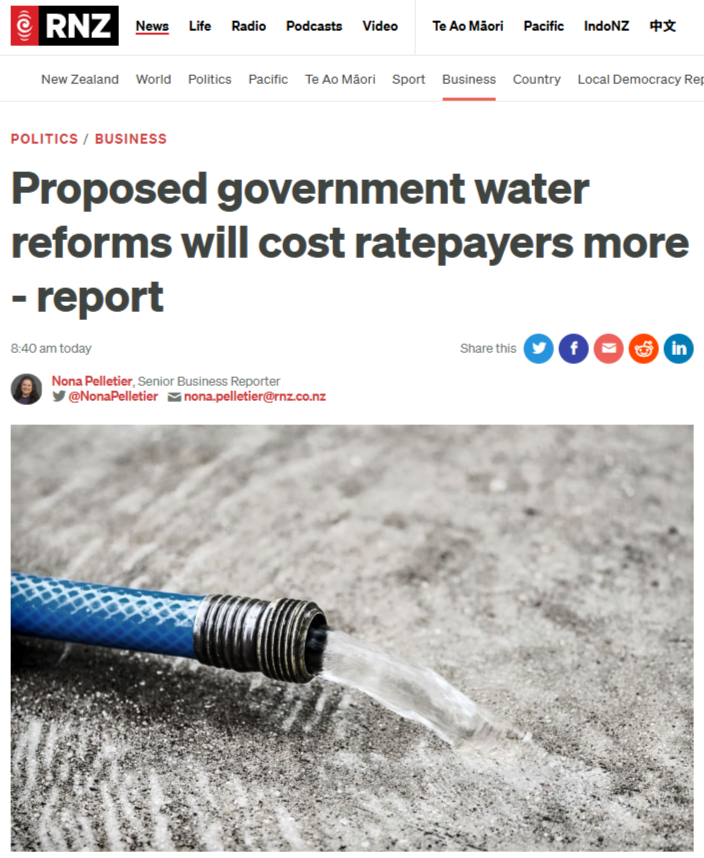
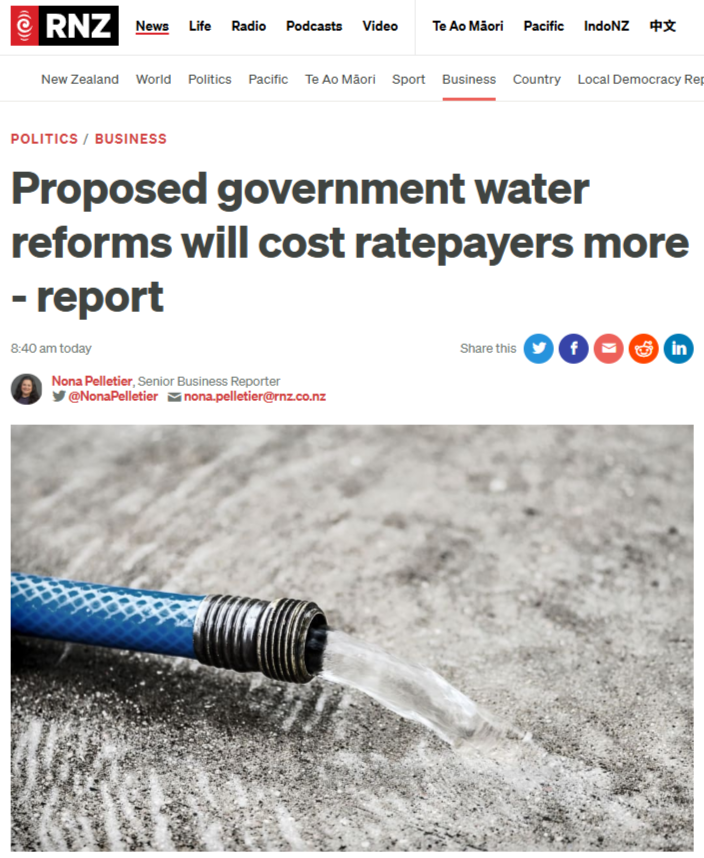
The coalition government claims their “Local Water Done Well” reforms will save ratepayers money and restore “local control.” Yet S&P Global’s October 2025 analysis confirms that repealing Three Waters will cost households more, burden councils with crushing debt, and deliver worse outcomes than Labour’s alternative. S&P credit analyst Anthony Walker stated plainly: “Some councils will be better off, many will be the same, and some councils will actually be worse off under these proposals.” The smoking gun exposes what this government refuses to acknowledge: the real agenda was never about saving money or protecting ratepayers. It was dismantling Māori co-governance.
The Water Crisis: Why Reform Mattered
In August 2016, contaminated drinking water caused a campylobacteriosis outbreak in Havelock North that sickened over 5,000 residents and contributed to four deaths. Sheep faeces, carried by heavy rain into the water system, devastated an entire community. The Government Inquiry found systemic failures in water regulation and warned that New Zealand faced a catastrophic infrastructure crisis.
The economic reality was stark. Without reform, the average New Zealand household faced water bills rising from $1,900 to $9,000 per year by 2051. Labour’s Three Waters reform proposed four regional entities large enough to achieve economies of scale. Under that model, average household bills would have been capped at $800-$1,640 by 2051 — a 60% saving for vulnerable communities..
Three Waters included co-governance frameworks: regional representative groups with 50% council and 50% mana whenua membership to provide strategic oversight of water as a taonga (precious resource). This honoured Treaty of Waitangi settlements with Waikato-Tainui and other iwi that established co-management of rivers and freshwater.
National’s Election Promises: A Catalogue of Lies
During the 2023 election campaign, National Party leader Christopher Luxon made explicit promises about water reform. On February 24, 2023, he announced “Local Water Done Well” — a plan to scrap Three Waters, return assets to “local control,” and establish a Water Infrastructure Regulator to enforce investment standards.
Luxon’s key promises included:
· “Returning these assets to local control and ownership” — presented as protecting ratepayer interests
· Establishing Regional Council Controlled Organisations to access long-term borrowing
· Ring-fencing money for water infrastructure to prevent councils spending it elsewhere
· Creating a Water Infrastructure Regulator within the Commerce Commission to enforce standards
Critically, Luxon promised these reforms would be cheaper than Three Waters. Speaking to media on April 12, 2023, he called Three Waters “a dumb policy” and claimed National’s plan would deliver sustainable water management without the “divisive co-governance.”
Labour immediately challenged this fantasy. Local Government spokesperson Kieran McAnulty warned that National’s plan “allocated no money to cover costs of water infrastructure upgrades” and that ratepayers would face bills of up to $10,000 annually in some regions without Three Waters.
The Broken Promises Revealed
Fast forward to October 2025. S&P Global’s analysis proves Labour was right. Local Water Done Well is not cheaper. It does not provide financial relief for councils. And it leaves ratepayers facing higher bills than under Three Waters.
Luxon’s “local control” rhetoric was always a smokescreen. The real objective was eliminating Māori co-governance — and the coalition was willing to sacrifice billions in ratepayer savings to achieve it.
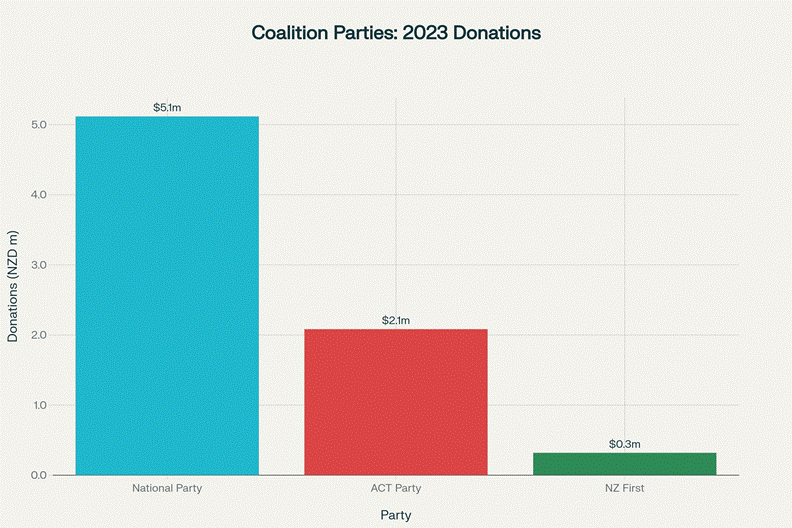
Coalition parties received $7.5 million in declared donations in 2023, with National Party receiving the lion’s share at $5.1 million - money that funded campaigns to dismantle Māori water rights.
Te Mana o te Wai: The Spiritual and Legal Framework Attacked
To understand what the coalition destroyed, we must understand Te Mana o te Wai — the fundamental importance of water and the recognition that protecting freshwater’s health protects the health and wellbeing of the wider environment and communities.
Te Mana o te Wai was introduced into New Zealand law through the National Policy Statement for Freshwater Management, first in 2014 under John Key’s National government, then significantly strengthened in 2020 under Labour.
The 2020 framework established a hierarchy of priorities:
First: The health and well-being of water bodies and freshwater ecosystems
Second: The health needs of people (such as drinking water)
Third: The ability of people and communities to provide for their social, economic, and cultural well-being
This hierarchy reflects a profound tikanga Māori principle: water has mauri (life force) and mana (authority, spiritual power). Te Mana o te Wai requires six principles:
- Mana whakahaere — the power and authority of tangata whenua to make decisions about freshwater
- Kaitiakitanga — the obligation to preserve, restore, enhance and sustainably use freshwater for future generations
- Manaakitanga — respect, generosity and care for freshwater
- Governance — decision-making that prioritises water’s health now and into the future
- Stewardship — the obligation of all New Zealanders to sustain freshwater for future generations
- Care and respect — responsibility to care for freshwater to provide for the health of the nation
These principles recognize what Māori have always known: you cannot separate the health of water from the health of people and land. When water thrives, communities thrive. When water sickens, so do we all.
The Waikato River co-governance arrangement — established through Treaty settlement in 2009 — demonstrates Te Mana o te Wai in action. The river provides water for Auckland and supports Waikato dairying. It’s managed through co-governance between Crown and iwi representatives. It works exceptionally well — and it’s been operating successfully for over a decade.
The Coalition’s Assault on Te Mana o te Wai
The coalition government immediately moved to dismantle Te Mana o te Wai. In December 2023, Cabinet announced it would replace the National Policy Statement for Freshwater Management, specifically targeting Te Mana o te Wai.
The coalition’s changes “rebalance” Te Mana o te Wai — code for reversing the hierarchy to prioritize economic use over water health. ACT’s Simon Court explicitly called for Te Mana o te Wai to be “scrapped entirely”.
In April 2024, Agriculture Minister Todd McClay removed the requirement for resource consents to demonstrate compliance with Te Mana o te Wai, claiming this would “better reflect the interests of all water users.” This guts enforcement. If resource consents don’t have to show they protect water health first, the hierarchy becomes meaningless.
Otago University researcher Marnie Prickett warned the changes would “take us back years, if not decades”. She stated bluntly: “It means they want to prioritise polluting activities over the health of people’s rivers and their drink water.”
Northland Regional Council chair Geoff Crawford explicitly called for Te Mana o te Wai to be “removed”, claiming the framework would cost “billions of dollars” for landowners.
This reveals the real agenda: corporate and farming interests want unlimited extraction and pollution without the constraint of protecting water health. Te Mana o te Wai stands in their way — so it must be destroyed.
The Spiritual Violation
For Māori, this assault on Te Mana o te Wai is not merely policy disagreement. It is spiritual violence.
Water is whakapapa — genealogy connecting us to ancestors and descendants. Water is taonga — treasure beyond economic value. Water is mauri — life force sustaining all living things. To prioritize economic profit over water’s health is to violate the fundamental relationship between people and environment that tikanga demands.
The coalition’s changes sever Māori from decision-making authority over water, abandon the obligation of kaitiakitanga (guardianship), and reject the principle that water’s health must come first. This is not “rebalancing.” This is erasure.
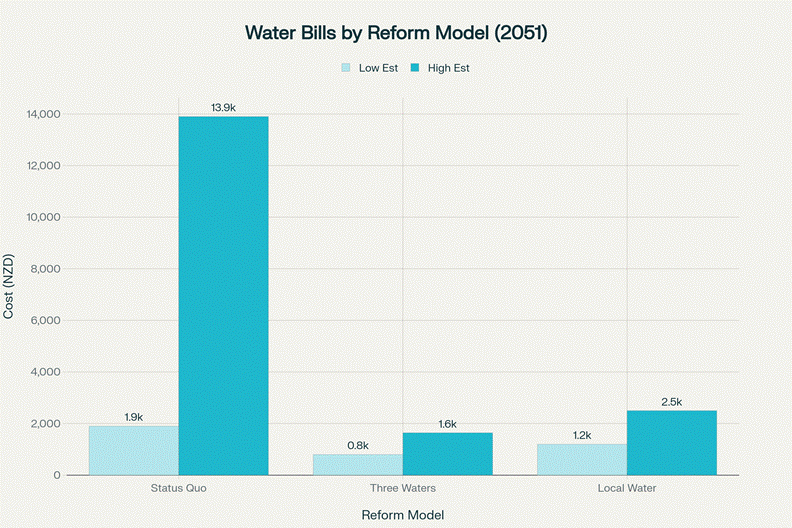
This chart compares projected household water costs under three different models, showing that Local Water Done Well will cost ratepayers significantly more than the repealed Three Waters reform.
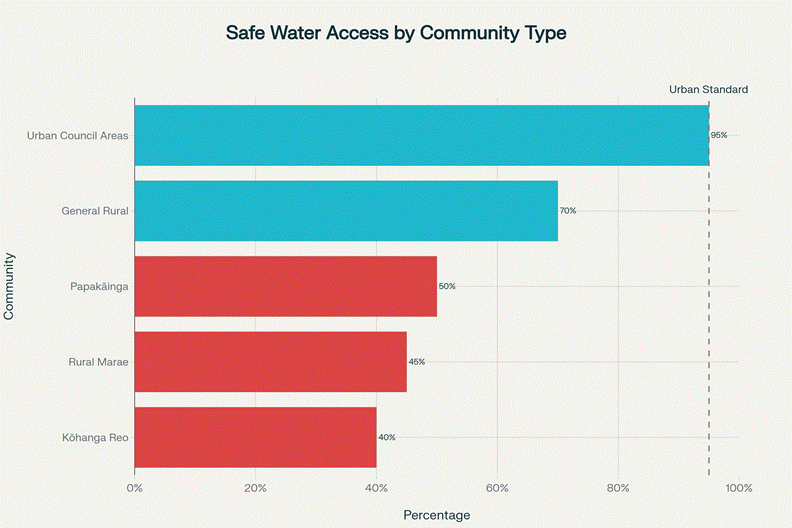
This chart reveals stark inequities in water access, with Māori rural communities having less than half the safe water access of urban areas - evidence of systemic Treaty breaches.
The Coalition’s Reversal: The Financial Catastrophe
The coalition government repealed Three Waters in February 2024. Their replacement, “Local Water Done Well,” offers councils 40+ different water entities — fragmenting economies of scale and eliminating the co-governance framework.
S&P Global’s analysis, released October 28, 2025, is damning. Walker warned that half of the Local Water Done Well options require councils to guarantee loans to water entities. While this initially allows cheaper borrowing, S&P cautioned: “If something goes wrong with that water entity... councils are on the hook. They can’t back out.” He cited historical examples where such guarantees created “a lot of financial stress“ for councils worldwide.
The result? Ruapehu District Council, which borrowed $16-20 million for Three Waters upgrades on the promise that debt would be transferred by July 2024, now faces a debt ceiling hit and 9% annual rate increases for the next three years. Mayor Weston Kirton warned that water charges could “double to triple” within five years. “What is the water charge going to be in five years’ time? I have no idea,” he said. “It will be ugly.”
Similarly, Central Hawke’s Bay residents face water rates potentially increasing from $2,500 to $7,400 per household per year by 2035 — unaffordable for pensioners and workers on modest incomes.
The Hidden Political Agenda: Dismantling Māori Rights
Why would the government knowingly choose a more expensive, less efficient model? Because the real objective was eliminating Māori co-governance.
The coalition immediately moved to remove Māori participation from water decision-making. Labour’s co-governance framework — 50/50 mana whenua and council representation — was central to Three Waters. The new model abandons this entirely.
On February 14, 2024, during the repeal debate, Labour MP Willie Jackson stated that Nanaia Mahuta endured “the most shameful racist attacks in the history of this Parliament” over her leadership of Three Waters. The viciousness of these attacks — targeting her moko kauae, her whakapapa, her legitimacy as a Māori woman in power — reveals the racist foundation of the anti-co-governance campaign.
This represents a systematic Treaty breach. Waikato-Tainui, Ngāi Tahu, and other iwi have settlement agreements recognizing their co-management rights over freshwater and rivers. Water, or wai, is inseparable from Māori identity and whakapapa (genealogy). Yet the coalition chose to sacrifice millions in ratepayer savings to deny Māori decision-making authority.
The Think Tank Network: Atlas and Its Allies
The ideological architects behind this reversal include networks funded by international donors with a specific agenda: dismantling collective institutions and indigenous rights.
The New Zealand Initiative and Taxpayers’ Union are both part of the Atlas Network, a global libertarian organization with 550+ think tanks in 100+ countries. Atlas Network partners with corporate and foundation donors including the Charles Koch Foundation, and has historically received funding from tobacco and fossil fuel interests.
The NZ Initiative is described as “funded by the corporate community” and maintains deep connections to the coalition government. David Seymour (ACT Party leader and Minister for Regulation) has long-standing connections to libertarian think tanks.
The Regulatory Standards Bill — now before Parliament — originated from this network’s decades-long push to constrain government regulation. The bill gives Seymour and appointed officials power to review all legislation against “libertarian” principles. This directly parallels Project 2025 strategies in the United States, where Russell Vought oversees federal spending cuts and regulatory elimination.
Tikanga Violations: Kaitiakitanga Abandoned
Three Waters embedded Te Mana o te Wai — prioritizing water health, then people, then economic use. This honored Māori understandings of kaitiakitanga (guardianship) and whanaungatanga (relationships of mutual responsibility).
Local Water Done Well abandons these principles entirely. Rural marae and papakāinga (Māori-owned communal living spaces) remain systematically excluded from water infrastructure investment. The funding model privileges Pākehā-controlled urban councils, perpetuating historical inequities in a country where Māori communities have disproportionately lower access to safe water.
This violates every principle of Tikanga:
- Kaitiakitanga — The coalition removed mana whenua from water oversight, abandoning guardianship responsibilities.
- Whanaungatanga — Relationships with Māori were replaced with liability and exclusion.
- Rangatiratanga — Māori were denied their right to determine water destiny and co-governance authority.
- Manaakitanga — Care and respect for water and Māori communities were abandoned in favor of economic expedience.
- Kotahitanga — Unity was shattered through racist campaigns that weaponized division.
Call to Action

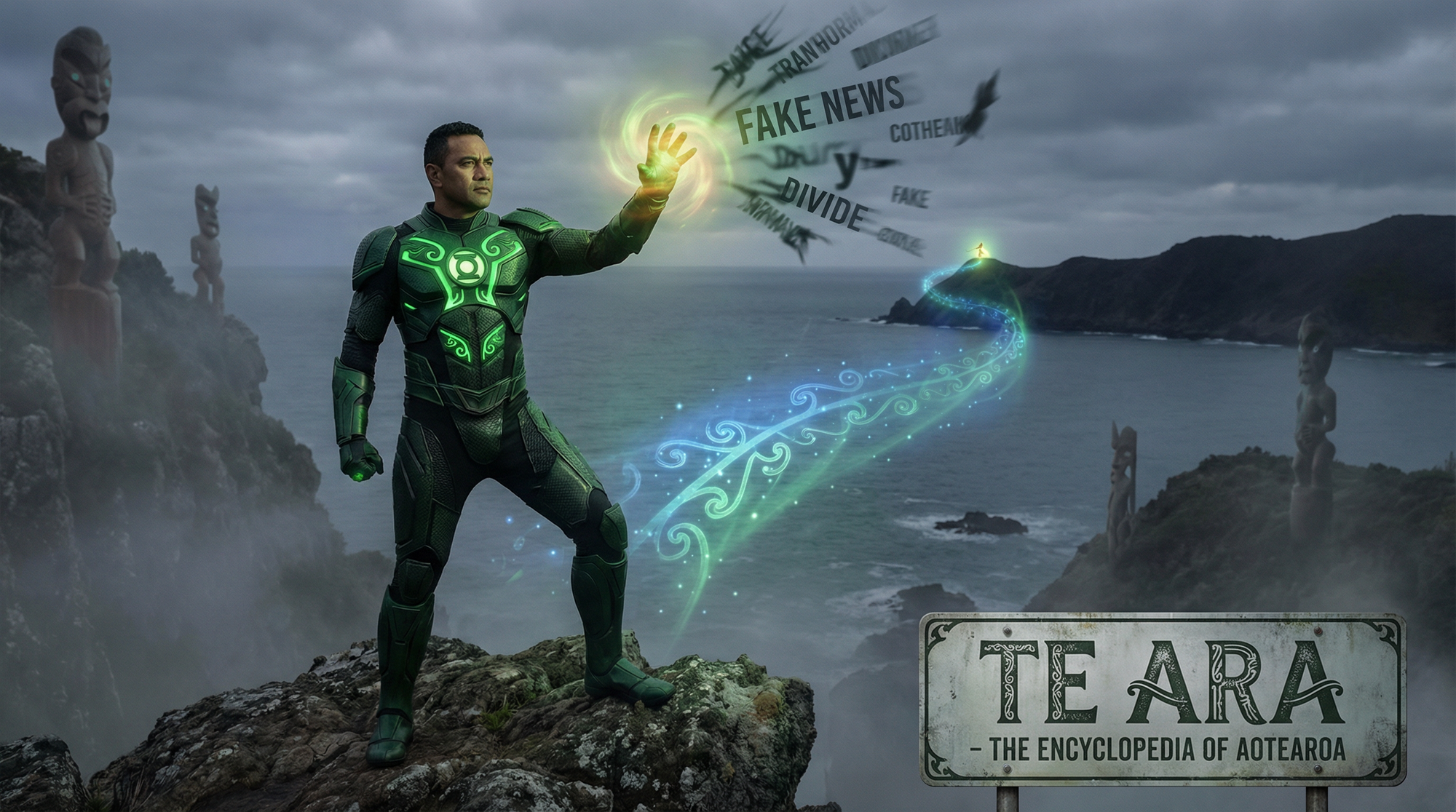
The Māori Green Lantern Fighting Misinformation And Disinformation From The Far Right
Defend Your Community:
- Share S&P Global’s analysis showing Local Water Done Well costs more than Three Waters
- Document council rate increases and press your mayor for transparency
- Submit on the Regulatory Standards Bill opposing constraints on water protection and environmental regulation
Defend Treaty Rights:
- Support Māori communities challenging Crown freshwater policies
- Demand funding for rural marae and papakāinga water infrastructure
- Amplify voices calling for co-governance restoration and Te Mana o te Wai protection
Name the Networks:
- Research Atlas Network partners operating in New Zealand
- Demand transparency on NZ Initiative and Taxpayers’ Union funding sources
- Connect coalition policy to international libertarian strategy
Challenge the Lies:
- Expose Luxon’s broken 2023 election promises that Local Water Done Well would be cheaper
- Document how Te Mana o te Wai is being systematically dismantled
- Name the racist attacks on Māori leaders who defended water as taonga
The coalition’s water reforms are neoliberal theft — sacrificing tens of billions in ratepayer savings and abandoning Treaty obligations to eliminate Māori decision-making. S&P Global confirms the financial catastrophe. Councils face crushing debt. Ratepayers face soaring bills. Māori face systematic exclusion from governance of their taonga.
Christopher Luxon promised in 2023 that Local Water Done Well would be sustainable, affordable, and return control to communities. Every promise was a lie. The real cost was always higher. The real agenda was always eliminating Māori rights.
Te Mana o te Wai — the framework recognizing water’s fundamental importance and requiring its health be prioritized — has been gutted. Economic interests now override water’s life force. This violates tikanga, breaches Treaty settlements, and abandons the spiritual relationship between Māori and wai that has sustained these islands for centuries.
This was purchased with election donations, designed by international libertarian networks, and executed with racist rhetoric against co-governance. It violates tikanga, breaches Treaty settlements, and abandons the poorest New Zealanders.
We resist through transparency, community organizing, and moral clarity: Water is life. Water is taonga. Water is whakapapa. Water is not a commodity for private profit or government neglect.
Kia kaha. Kia māia. Kia manawanui.
If this work resonates and you have the capacity, humble koha to support ongoing investigations: HTDM: 03-1546-0415173-000. Only give if you’re able.
He waka eke noa — we’re all in this together.
— Ivor Jones, The Māori Green Lantern