“When Māori Win, The System Calls It Dangerous” - 15 October 2025
While neoliberal vultures circle public assets and far-right zealots attack Treaty rights, one small Māori land trust proves that tino rangatiratanga works—and that’s exactly what terrifies them.
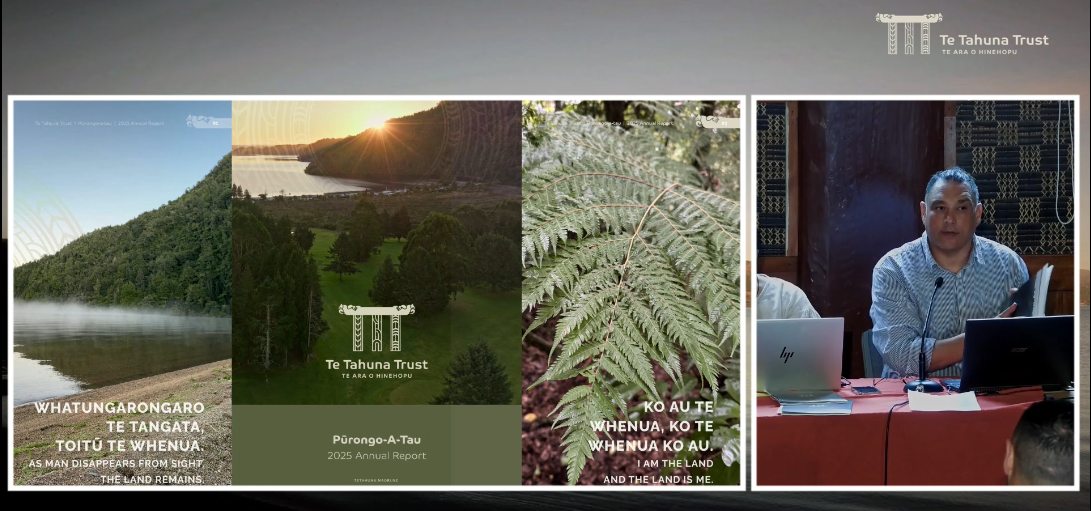
Kia ora koutou. Ko au ko Ivor Jones, te kaiwhakahaere o Te Tahuna Trust. He uri ahau nō Te Arawa, nō Ngāti Pikiao.
Greetings to you all. I am Ivor Jones, Chairperson of Te Tahuna Trust. I am a descendant of Te Arawa, of Ngāti Pikiao.
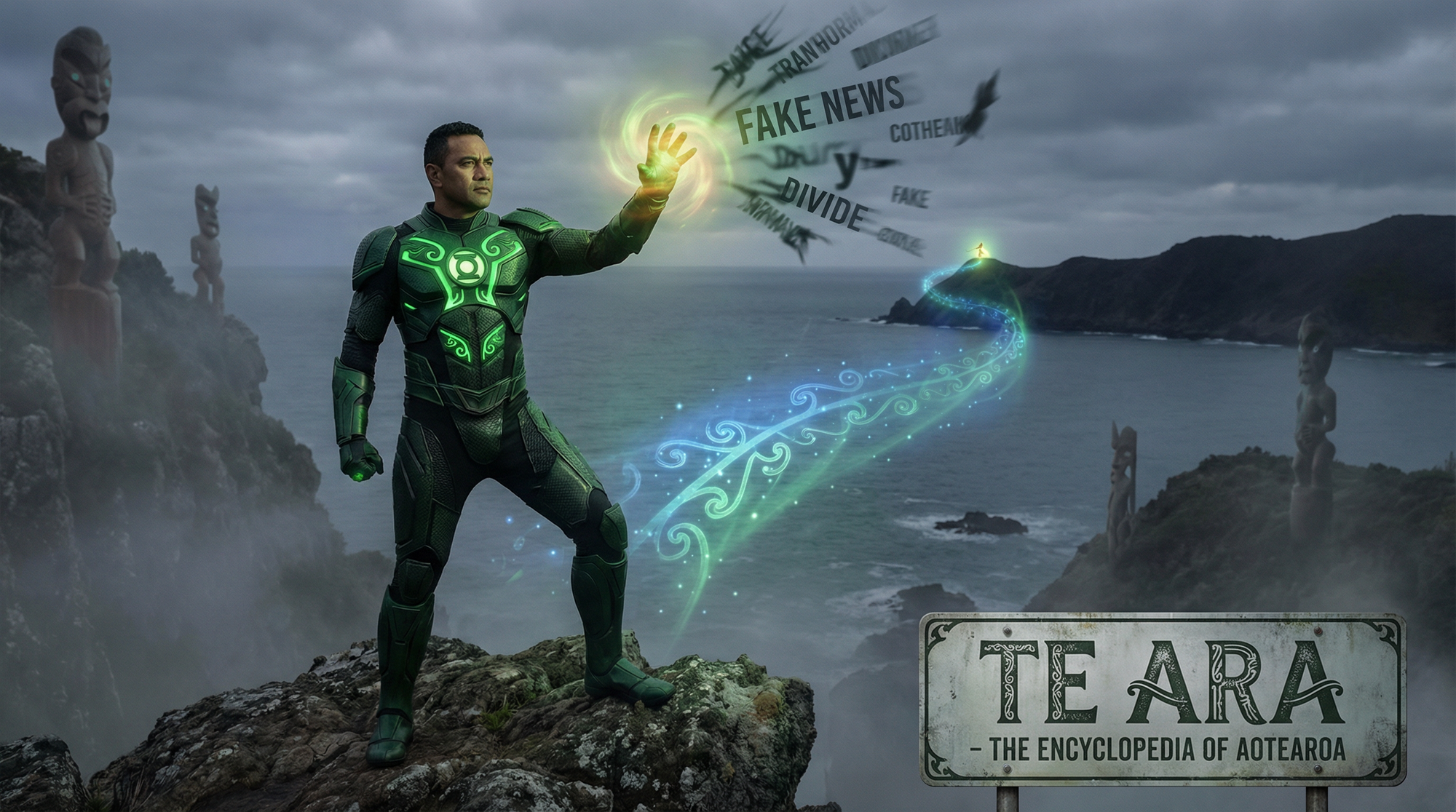
I am also known as the Māori Green Lantern.
The Matter Put Straight
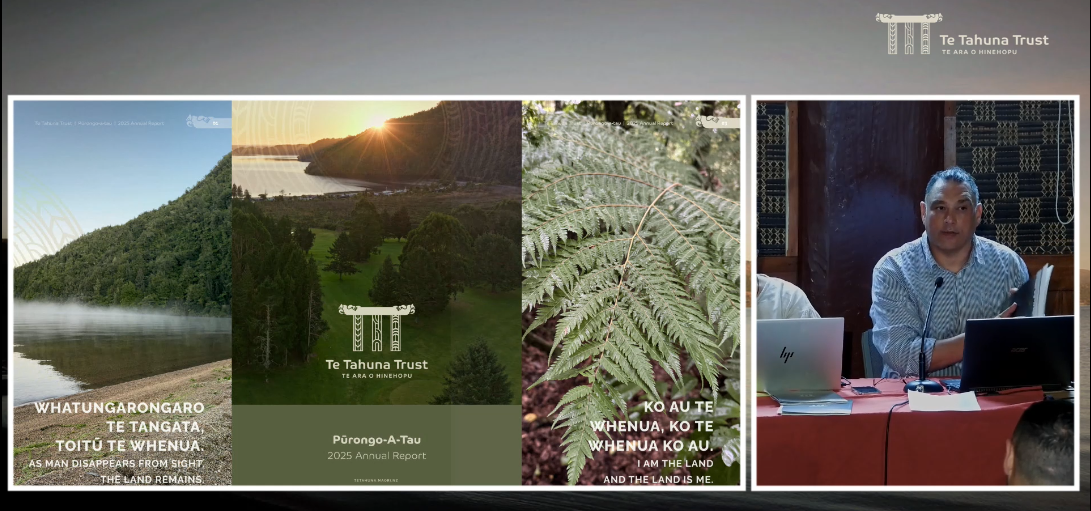
Here’s what everyday New Zealanders need to understand: Te Tahuna Trust’s 2025 AGM wasn’t just another meeting about land management. It was proof that when Māori exercise genuine self-determination over our own whenua, we don’t just survive the neoliberal onslaught—we thrive. Our trust distributed over $77,000 in grants to whānau, maintains assets worth nearly $14 million, runs a shared services initiative with three other trusts, and launched a transformative brand representing our past, present, and future through carved pou. This success story directly contradicts the propaganda David Seymour and his ACT Party backers have been peddling: that Māori can’t be trusted with governance, that co-governance arrangements are “racial privilege,” and that Treaty-based rights must be diluted or destroyed.
The timing is no accident. While Te Tahuna Trust demonstrates Māori excellence in land governance, the coalition government wages a coordinated assault on Indigenous self-determination through the Treaty Principles Bill, the Regulatory Standards Bill, and attempts to overturn Marine and Coastal Area protections. These aren’t separate issues—they’re connected threads in a white supremacist, neoliberal tapestry designed to transfer Māori assets and authority back into Pākehā hands.
Background and Context
Understanding Māori Land Trusts
Māori land trusts like Te Tahuna operate under Te Ture Whenua Māori Act 1993, structures specifically designed to manage collectively-owned whenua. Because colonial land policies deliberately fragmented Māori landholdings into multiple owners—sometimes hundreds of shareholders for a single block—trusts provide efficient governance mechanisms. Trustees make decisions protecting the whenua and benefiting all owners while maintaining cultural connections and exercising kaitiakitanga.
Ahu Whenua trusts can be interest-based, holding shares in Māori land blocks, or land-based, managing blocks on behalf of owners. Te Tahuna Trust, established in 1981, manages 49 hectares at Korokitewao Bay including 28 leasehold sections and land leased to Hinehopū Golf Club, serving the hapū of Ngāti Tamateatutahi and Ngāti Kawiti.
The Neoliberal Assault on Public and Māori Assets
Since the 1980s neoliberal restructuring devastated New Zealand’s public sector through privatisation, deregulation, and market fundamentalism. State assets were sold, often at below-market prices, enriching private investors while reducing public services. Māori bore disproportionate harm from these policies.
Now the coalition government resurrects this failed ideology. David Seymour openly urges New Zealanders to “get past their squeamishness” about privatisation, while Christopher Luxon signals openness to asset sales. Some suggest selling Crown assets to iwi as “penance” for Treaty degradation—a cynical distraction that undermines both public ownership and genuine tino rangatiratanga.
ACT Party’s White Supremacist Project
ACT’s agenda isn’t about “colour-blindness” or “equality”—it’s about dismantling structural protections for Māori rights. The Treaty Principles Bill attempts to redefine Treaty principles in statute, replacing decades of jurisprudence with three principles that effectively erase Māori sovereignty. The Waitangi Tribunal found the bill to be “a politically motivated attack” on perceived Māori privilege, warning it would drastically alter Crown-Māori relations.
The Regulatory Standards Bill, dubbed “Treaty Principles Bill 2.0,” enshrines principles like “every person is equal before the law”—seemingly neutral language that lawyers warn could dismantle every piece of legislation treating Māori differently to address historic inequities. These bills together create legal architecture to attack Māori equity initiatives, Treaty settlements, and co-governance arrangements.
The Christian Nationalist Connection
Far-right attacks on Māori rights intersect with Christian nationalist movements. Destiny Church, led by Brian Tamaki, promotes authoritarian fundamentalism wrapped in nationalist rhetoric. Despite its predominantly Māori membership, Destiny’s ideology aligns with white supremacist narratives—opposing co-governance, attacking LGBTQ+ communities, and burning flags representing Muslim, Buddhist, Sikh and Palestinian communities at a June 2025 “Faith, Flag and Family” rally.
Vision NZ, a nationalist party led by Hannah Tamaki, advocates strict Biblical morality and opposes mosque construction and immigration. These movements provide religious legitimacy to racist policy agendas, creating what researchers identify as synergistic violence between far-right Christian nationalism and attacks on minority rights. Experts warn there needs to be “more scrutiny on far-right and Christian nationalist groups” given their threat to social cohesion.
Why Te Tahuna Trust Matters in This Context
Te Tahuna Trust’s success demonstrates what terrifies the neoliberal-nationalist alliance: that Māori can govern ourselves excellently. Our trust operates transparently, accountably, and effectively—everything opponents of Māori self-determination claim we cannot do. Research on Māori self-determination shows that when Indigenous peoples control decision-making over lands and resources, outcomes improve dramatically for both people and environment.
The AGM Meeting That Proves Them Wrong
Record Turnout Signals Engagement
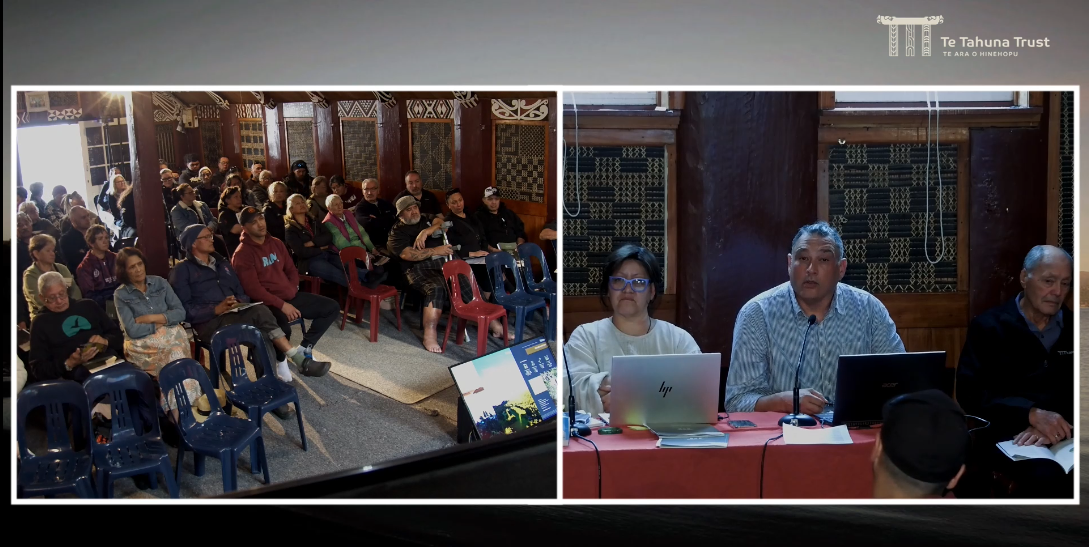
With 141 attendees at our October 2025 AGM, Te Tahuna Trust demonstrated unprecedented whānau engagement. This wasn’t passive attendance—beneficial owners actively participated in governance, asked questions, and exercised democratic rights over collectively-owned assets. Compare this to corporate AGMs where shareholders rarely attend, or local council meetings dominated by elderly Pākehā ratepayers.
High participation rates reflect several factors. First, our new digital platform at tetahuna.maori.nz improves accessibility and transparency, allowing beneficial owners to access financial reports, grant opportunities, and Trust communications. Second, our brand transformation with Rotorua-based Redspot Creative Studio created powerful visual identity around three carved pou—Pou Tahiwihiwi representing the past, Pou Tawhitinui representing the present, and Pou Te Waiwherowhero representing the future—beneath a unifying pare. This positions Te Tahuna as a forward-thinking organisation capable of partnering with international bodies and government agencies while maintaining foundational responsibilities to whenua and people.
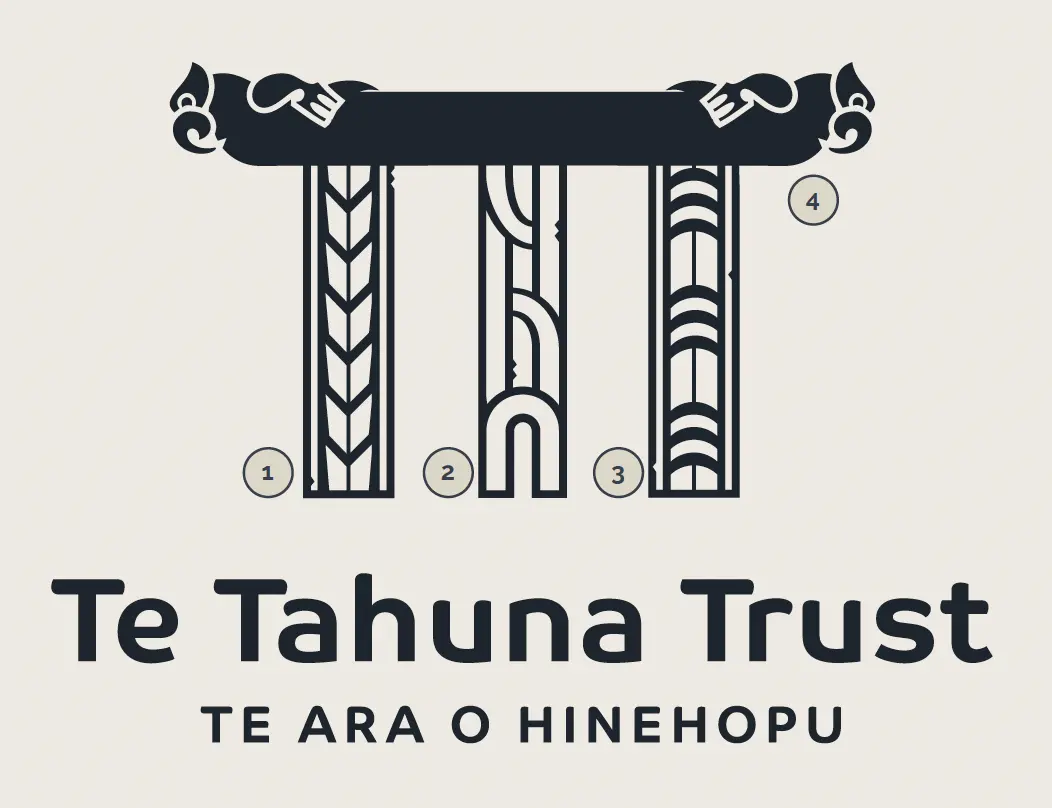
The past, present and future
Third, transparent governance builds trust. When beneficial owners see their trustees managing resources carefully, distributing grants directly to whānau, and planning strategically for future generations, they engage. This contradicts racist narratives portraying Māori governance as corrupt or incompetent.
Financial Performance Demonstrates Competence
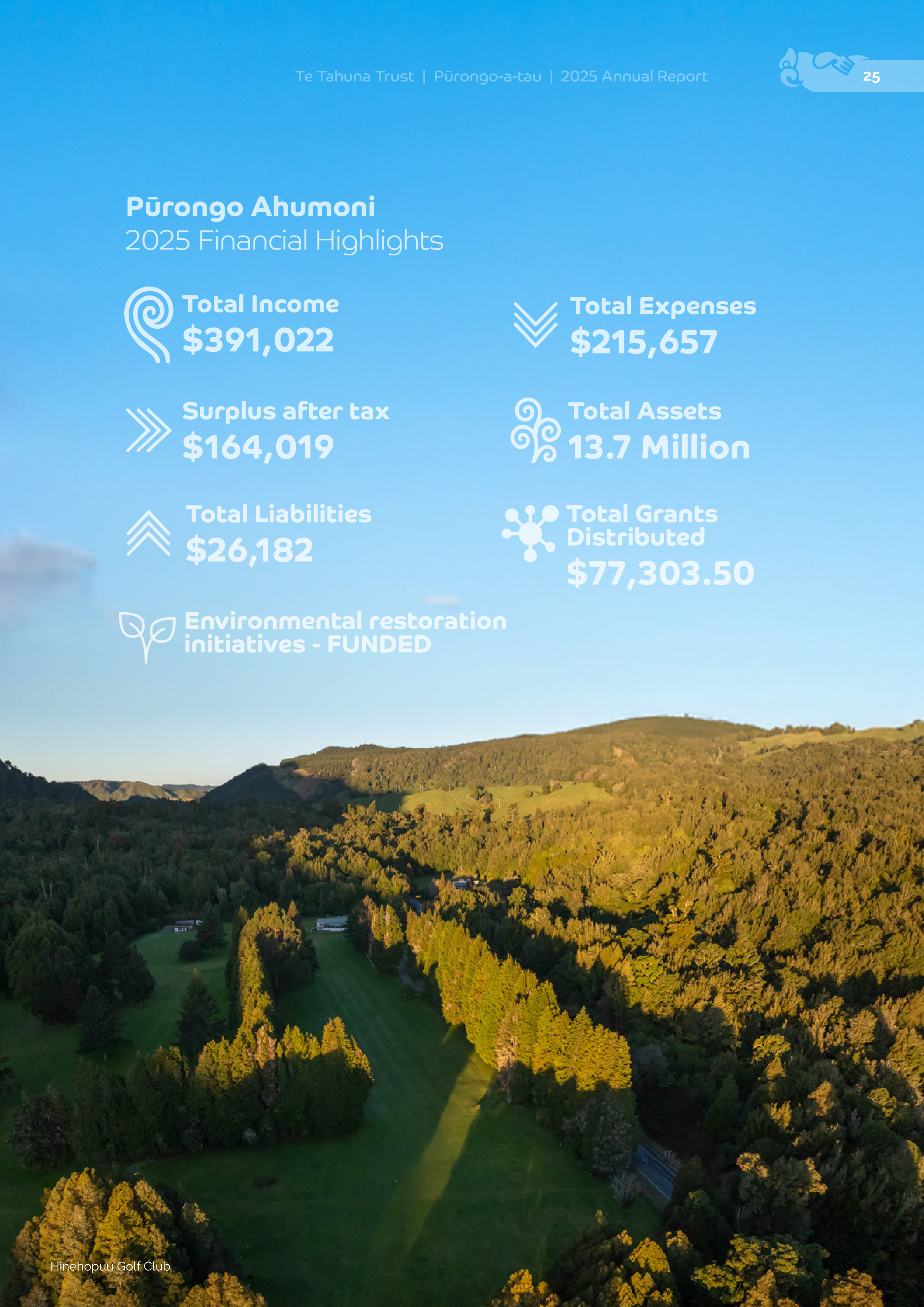
Te Tahuna Trust’s financial results speak volumes. Total income of $479,502 and surplus after tax of $284,459 demonstrate sound fiscal management. Total assets of $13,679,907 with equity of $13,645,266 reflect decades of careful stewardship building intergenerational wealth for Ngāti Tamateatutahi and Ngāti Kawiti.
Most significantly, the trust distributed $77,303.50 in grants—direct support to whānau for education, housing, health, and cultural activities. This exemplifies the Māori economic model: accumulating assets not for individual enrichment but for collective wellbeing across generations. Contrast this with neoliberal capitalism’s extractive logic, where wealth concentrates upward while ordinary people struggle.
These financial outcomes refute claims that Māori lack capacity for resource management. Te Tahuna Trust operates at a sophistication level matching any corporate entity, yet remains grounded in tikanga and accountable to hapū members. This hybrid model—commercial competence married to cultural values—represents exactly what Treaty settlement governance entities can achieve when Crown genuinely supports Māori self-determination.
Shared Services Initiative as Tino Rangatiratanga
Perhaps most threatening to neoliberal orthodoxy is Te Tahuna Trust’s leadership of shared secretarial services with Paritangi, Rotoiti 3V3, and Tautara Matawhaura Trusts. Beneficial owners endorsed continuing this initiative, demonstrating commitment to self-determination over service delivery.
Why does this matter? Because it represents Māori solving our own problems through collective action rather than purchasing services from Pākehā-dominated consultancies or law firms. Shared services reduce costs through economies of scale while ensuring cultural competency and accountability to Māori communities. Services are managed “by our people, for our people”—exactly the principle underlying co-governance arrangements that ACT attacks as “racial privilege.”
This model threatens consulting firms and professional service providers who profit from Māori organisations. It also threatens political narratives claiming Māori need Pākehā oversight to function properly. When we demonstrate we can do it ourselves—and do it well—the ideological justifications for denying tino rangatiratanga collapse.

Environmental Stewardship Shows Kaitiakitanga in Action
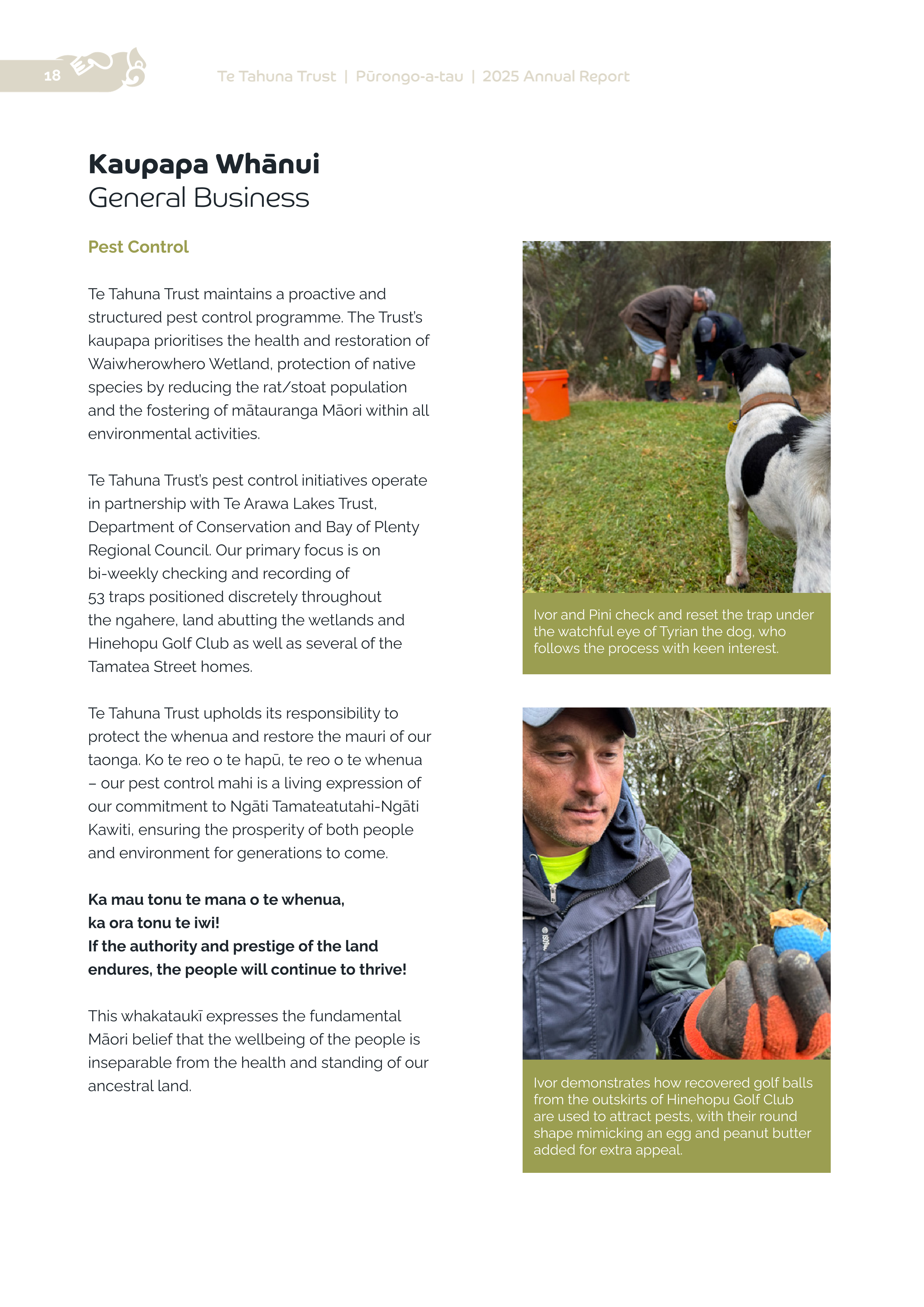
Te Tahuna Trust’s environmental initiatives exemplify kaitiakitanga—guardianship responsibility extending beyond human generations to include taiao, the natural world. Updates on wetlands management and pest control demonstrate partnerships with TALT, DOC, and leaseholders to protect ecosystems.
Discussions around eco-tourism opportunities highlight the trust’s vision for development honouring whenua without damaging it. This approach directly contradicts neoliberal development models prioritizing short-term profit extraction over long-term sustainability. It also demonstrates why Māori rights to customary marine title matter—Indigenous management typically produces better environmental outcomes than privatised or state management focused solely on economic returns.
The coalition government’s attempts to tighten tests for customary marine title through the Marine and Coastal Area Amendment Bill aren’t about environmental protection—they’re about preventing Māori from exercising kaitiakitanga over coastal resources. The Waitangi Tribunal called these amendments “such a gross breach of the Treaty” that proceeding would be “an illegitimate exercise of kāwanatanga.”
Democratic Governance Through Trustee Elections
Te Tahuna Trust’s electoral process demonstrates transparent democratic governance. Following robust campaigning, beneficial owners elected Pini Tahana (32 votes) and Te Raurangi Gardiner (36 votes) as trustees, with Rau Engelen (23 votes) and Cory O’Neill (20 votes) not successful. John Treanor retired after years of dedicated service, particularly work with RML Development Trust.
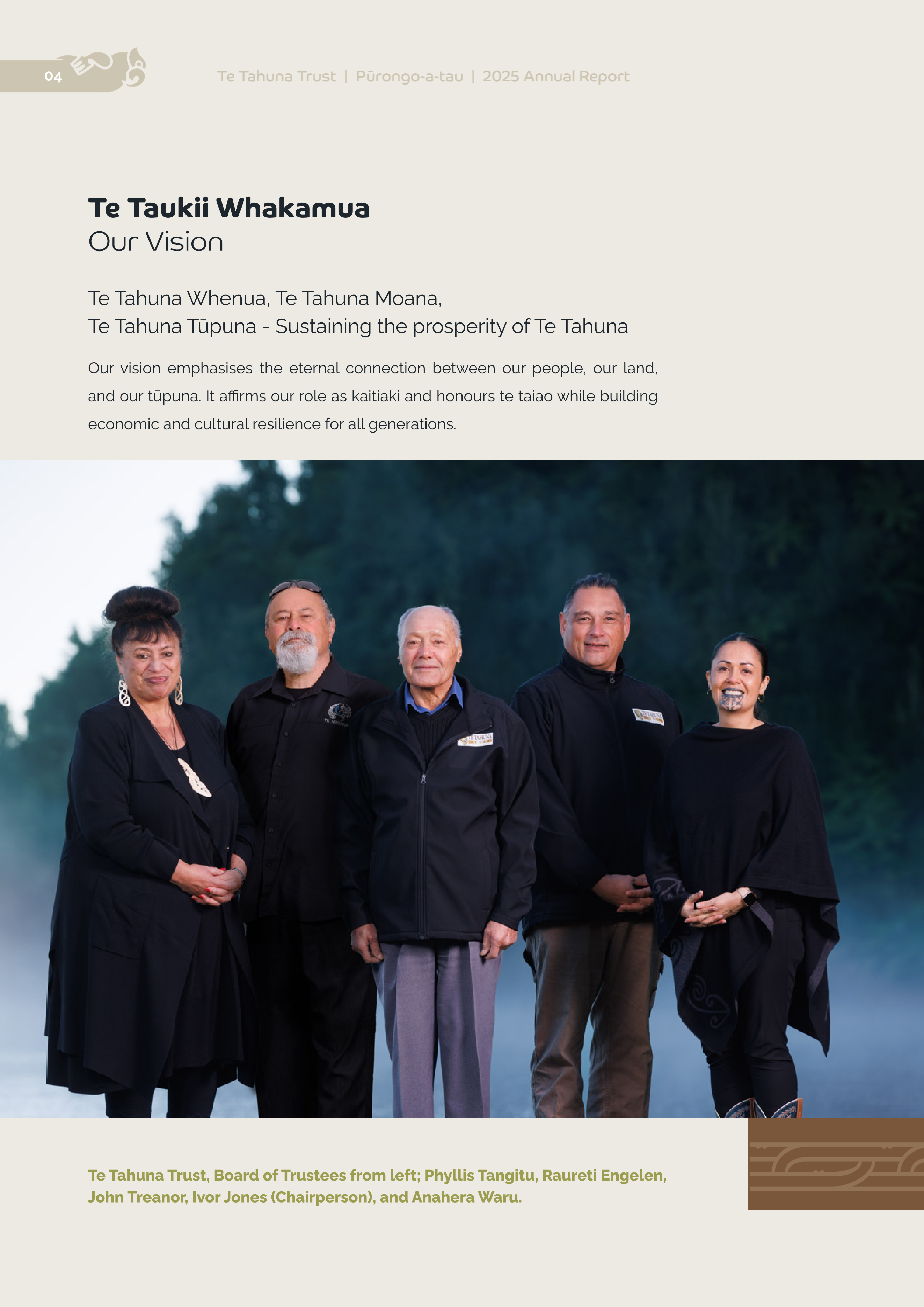
This electoral turnover proves accountability mechanisms function effectively. Trustees serve at the pleasure of beneficial owners, who can vote them out if performance disappoints. The current trustee body—Ivor Jones as Chairperson, Pini Tahana, Te Raurangi Gardiner, Phyllis Tangitu, and Anahera Waru—reflects beneficiary confidence in leadership.
Compare this democratic accountability to corporate boards where shareholders holding tiny fractions of equity exercise no meaningful influence, or to Crown agencies where public has minimal input into decision-making. Māori governance structures often exceed Pākehā institutions in democratic participation and accountability—another inconvenient truth contradicting racist narratives.
The Coordinated Attack on Māori Rights
While Te Tahuna Trust demonstrates Māori governance excellence, the coalition government prosecutes a multi-front assault on Indigenous rights. Understanding these attacks requires recognising they’re coordinated elements of a coherent ideological project, not isolated policy disputes.
The Treaty Principles Bill as Legislative Colonialism
David Seymour’s Treaty Principles Bill attempts to statutorily define Treaty principles, replacing jurisprudence developed over decades through court decisions and Waitangi Tribunal findings. The bill’s three principles fundamentally undermine Māori sovereignty:
Principle 1 grants Parliament and Executive “full power” to govern and make laws “in the best interests of everyone”—erasing recognition that Māori never ceded sovereignty through Te Tiriti. This principle makes Crown authority absolute and unchallengeable.
Principle 2 claims Crown will “recognise, respect and protect” rights hapū and iwi had when signing Te Tiriti—but only if those rights “differ from the rights of everyone” AND only if agreed through Treaty settlement processes. This retrospectively limits Treaty rights to what’s already been settled, foreclosing future claims and constraining ongoing Māori authority.
Principle 3 declares “everyone is equal before the law” with equal protection, benefit, and enjoyment of human rights. This seemingly neutral language weaponises “equality” rhetoric to attack any legislation treating Māori differently—including Treaty settlements, Māori seats on councils, targeted health initiatives, and customary rights.
Willie Jackson described the bill as claiming “all New Zealanders have tino rangatiratanga”—an absurdity that deliberately misrepresents self-determination as something individuals possess rather than collective political authority Indigenous peoples exercise over territories and resources.
The Waitangi Tribunal found the bill constitutes a “politically motivated attack” on perceived Māori privilege. While all parties except ACT committed to voting it down after select committee, the bill’s introduction alone damages Crown-Māori relations and emboldens racist rhetoric nationwide.
Regulatory Standards Bill as Treaty Principles 20
The Regulatory Standards Bill, introduced by Seymour in May 2025, represents an even more insidious threat. While marketed as removing red tape and improving regulatory quality, the bill enshrines principles constraining how Parliament can legislate—including the “every person is equal before the law” clause identical to Treaty Principles Bill language.
Constitutional law expert Andrew Geddis explains the bill “puts a constraint on how our system of government can operate in a way that is treaty compliant”, fundamentally undermining Te Tiriti’s constitutional status. Lawyer Tania Waikato warns that “every single piece of legislation where it treats Māori differently, they can assess it against that principle” and potentially repeal it.
Green Party co-leader Marama Davidson called it “the most dangerous piece of legislation that the House of Representatives has seen,” seeking to “destroy the very foundation of who we are” by removing Te Tiriti from lawmaking. Te Pāti Māori co-leader Debbie Ngarewa-Packer noted Te Tiriti isn’t mentioned once in the bill—”the silence on the impact for Te Tiriti is on purpose.”
This bill flying under the radar while attention focused on Treaty Principles Bill demonstrates ACT’s strategic sophistication. Commentators dubbed it “Treaty Principles Bill 2.0” because it achieves similar ends through different means—entrenching libertarian preferences in constitutional framework while gutting Treaty protections.
Marine and Coastal Area Amendments
In September 2024, the coalition introduced the Marine and Coastal Area Amendment Bill to overturn decisions under the 2011 Act and tighten tests for customary marine title. The Waitangi Tribunal issued a scathing report stating “the Crown’s actions are such a gross breach of the Treaty that, if it proceeds, these amendments would be an illegitimate exercise of kāwanatanga.”
The Tribunal cautioned that proceeding “will significantly endanger the Māori–Crown relationship.” Yet the bill remains before the justice select committee, demonstrating the coalition’s willingness to breach Treaty obligations despite expert constitutional and legal advice.
These amendments would make establishing customary title nearly impossible, effectively extinguishing Māori rights over coastal and marine areas our ancestors exercised for centuries before colonisation. Combined with Treaty Principles and Regulatory Standards Bills, they form a legislative vice crushing Māori authority from multiple directions simultaneously.
Eliminating Māori Representation and CoGovernance
Beyond specific bills, the coalition systematically dismantles Māori participation in governance. Chris Hipkins noted that “minutes after the debate on the Royal Commission’s report” into abuse in state care—which disproportionately harmed Māori—”the government once again targeted Māori as they reversed legislation that gives Māori a seat at the table on local councils.”
The government abolished Te Aka Whai Ora, the Māori Health Authority, with the Waitangi Tribunal finding Māori “did not agree with the Crown action” and “were denied the right to self-determination.” Minister Tama Potaka’s defence—claiming different mana whenua groups can’t reach consensus so Crown must intervene—reveals paternalistic attitudes that infantilise Māori while justifying authoritarian control.
ACT’s coalition agreement explicitly commits to “restore democracy in areas where it was being eroded by co-governance.” This frames Indigenous participation in governance as anti-democratic—a white supremacist inversion portraying Māori rights as privileges that threaten Pākehā equality.
The Neoliberal Privatisation Agenda
David Seymour’s advocacy for privatisation isn’t separate from his Treaty attacks—they’re intimately connected. As analysts note, “Act, and their benefactors, do understand te Tiriti and they know that it stands as a major obstacle in their goal of deregulation and promoting laissez-faire economics. The Treaty has been an impediment to the privatisation agenda.”
Seymour urges New Zealanders to overcome “squeamishness” about asset sales, while Christopher Luxon signals openness to discussions about privatisation. Winston Peters opposes asset sales, creating coalition tension, but the pro-privatisation faction appears ascendant.
Chris Hipkins called this government “the most right-wing neoliberal government that we’ve seen since the early 1990s,” stating they “want to defund, destabilise and privatise as much of the public service as they possibly can, and that includes things like healthcare, things like education.”
Some suggest selling Crown assets to iwi as “penance” for Treaty degradation—an idea Tayla Forward dismantles as fundamentally misguided. “Real penance would mean withdrawing the Treaty principles bill and the Regulatory Standards Bill, not entertaining a fraught bargain that undermines public services.” Selling assets to Māori while simultaneously attacking Treaty rights through legislation is contradictory and cynical—using Māori participation to legitimise privatisation that benefits ACT’s wealthy backers.
The choice between privatisation and austerity is false. Current fiscal constraints are political choices, not immutable facts. The government claims to be “cash-strapped” while refusing to tax wealth progressively. Luxon’s desire to balance budgets without tax increases dovetails perfectly with Seymour’s market fundamentalism, their shared commitment to shrinking the state threatening any meaningful expansion of rangatiratanga.
The Hidden Connections and Power Networks
Understanding why this coordinated assault on Māori rights happens now requires examining connections between far-right politicians, wealthy donors, think tanks, and media outlets amplifying racist narratives.
ACT Party’s Donor Base and Ideological Funders
ACT receives substantial funding from wealthy individuals and corporate interests benefiting from deregulation, privatisation, and reduced taxation. While specific donor identities often remain opaque, ACT’s policy platform explicitly serves capital: restoring mortgage interest deductibility for landlords, cutting public sector jobs, establishing a Ministry of Regulation to reduce business compliance costs, and promoting asset sales.
These policies directly benefit property investors, large landowners, and corporate shareholders—precisely the constituencies funding ACT campaigns. The party’s attacks on Māori rights serve this economic agenda by removing Treaty-based constraints on resource extraction and development.
Roger Douglas, architect of 1980s neoliberal restructuring, accused ACT of becoming “the party of entrenched privilege”—remarkable criticism from neoliberalism’s New Zealand godfather. Even Douglas recognises current ACT has abandoned any pretense of principled libertarianism for naked service to wealthy elites.
Media Amplification of Racist Narratives
Mainstream media outlets amplify anti-Māori rhetoric, framing co-governance as controversial rather than examining why opponents use racist dog whistles. Heather du Plessis-Allan and other conservative commentators receive platforms to attack Māori initiatives without rigorous challenge to underlying premises.
This media environment normalises racist discourse, making explicit white supremacist talking points appear as legitimate political debate. When David Seymour compares co-governance to “ethnostate” politics—language echoing white nationalist replacement theory—media coverage often presents this as “provocative” rather than dangerous extremism.
Seymour’s “Victim of the Day” social media posts targeting individuals led to official complaints to Cabinet, yet he faces minimal consequences. His attacks on Te Pāti Māori as “race fanatics” and “racial supremacists” project white supremacist ideology onto Māori asserting Indigenous rights—a classic inversion tactic.
Christian Nationalist Alliance with Neoliberal Project
Destiny Church’s alliance with far-right politics demonstrates how Christian nationalism provides moral legitimacy to racist economic agendas. Brian Tamaki declared New Zealand’s government “inherently evil” for not swearing on the Bible, vowing to wage war on “secular humanism, liberalism, relativism, pluralism” and “radical homosexual agenda.”
Destiny’s authoritarian structure and prosperity gospel theology align perfectly with neoliberal capitalism—both promote individual wealth accumulation as divine blessing while ignoring structural inequality. Hannah Tamaki’s Vision NZ advocates nationalist policies opposing immigration and non-Christian religions, creating ideological bridge between religious fundamentalism and white supremacist nativism.
The June 2025 “Faith, Flag and Family” rally where Destiny members burned flags representing Muslim, Buddhist, Sikh and Palestinian communities reveals violent eliminationist rhetoric underlying “Christian nationalism.” These aren’t isolated extremists—they’re organised movements requiring more scrutiny from security services given their threat to social cohesion.
Research examining radicalisation risks among New Zealand Christians analysed sermons and social media from outspoken church leaders, finding concerning patterns. The defunding of He Whenua Taurikura research centre eliminates crucial counter-terrorism research capacity at precisely the moment far-right Christian nationalist movements gain strength.
Coalition Dynamics and ACT’s Outsized Influence
Despite receiving only 8.64% of the vote in the 2023 election, ACT wields disproportionate influence through coalition negotiations. The coalition agreement includes numerous ACT policies: Treaty Principles Bill introduction, establishing Ministry of Regulation, restoring Three Strikes sentencing, and eliminating “co-governance” arrangements.
Seymour celebrates that “it’s the first time ACT’s been in cabinet” and claims “we have the most ambitious government in half a lifetime”—correctly recognising this coalition provides unprecedented opportunity to implement radical restructuring. Chris Hipkins called the government “an absolute shambles,” united only in wanting to “tear everything down.”
National’s Christopher Luxon bears ultimate responsibility for enabling ACT’s extremism. Willie Jackson accused Luxon of acting “cowardly” by “not being able to shut this guy [Seymour] down,” stating “it was the attraction of power that made the Prime Minister do this deal.” Luxon admits he “didn’t get what I wanted” regarding Treaty Principles Bill but claims compromise was necessary for government formation.
This reveals how parliamentary arithmetic enables minority extremist parties to impose radical agendas when larger parties prioritise power over principle. National’s willingness to trade Treaty protections for ministerial positions demonstrates moral bankruptcy—sacrificing Indigenous rights to secure government benches.
The Broader Pattern of Indigenous Rights Attacks
New Zealand’s assault on Māori rights isn’t isolated—it’s part of global patterns where settler-colonial states resist Indigenous resurgence and resource claims.
International Context
Research on Indigenous self-determination documents how colonised peoples globally pursue sovereignty through diverse strategies, navigating complex relationships with settler states. Māori activism and scholarship actively re-appropriated sovereignty language to advance political aspirations, despite its problematic colonial origins.
Canadian tribal leaders visited New Zealand in late 2024 sharing Treaty experiences and possible paths forward—demonstrating transnational Indigenous solidarity and knowledge exchange. Cook Islands leadership supported the hīkoi mō te Tiriti, with hundreds marching in Rarotonga solidarity with tangata whenua. Prime Minister Mark Brown stated indigenous sovereignty “will stir up passion,” and Travel Tou Ariki declared “I hope the tangata whenua stand strong and reclaim their sovereignty.”
These international connections strengthen Māori resistance while contextualising New Zealand’s policies within broader patterns of settler-colonial violence and Indigenous resurgence.
Historical Echoes
Māori Land Court history shows how colonial administrators created complex governance structures ostensibly to “protect” Māori interests while actually facilitating land alienation. Māori Trust Boards administering tribal funds from Crown payments for damages “deemed to have been suffered” exemplify how settlements acknowledging historical theft nonetheless leave fundamental power imbalances intact.
The current coalition’s attacks echo these historical patterns—using law to legitimise dispossession while claiming to promote “equality” and “democracy.” Every generation faces renewed attempts to complete the colonial project’s unfinished business: total extinguishment of Indigenous rights and complete Crown sovereignty.
The Resistance and the Way Forward
Despite coordinated assaults, Māori resistance remains strong and multifaceted. The hīkoi mō te Tiriti brought tens of thousands to Parliament in November 2024, the largest protest in recent New Zealand history. Kuini Ngā Wai Hono i te Pō joined the hīkoi, emphasising its significance. Kiingi Tuuheitia’s call for national hui beginning at Turangawaewae, continuing through Rātana celebrations and Waitangi, mobilised unprecedented unity among Māori leadership.
At Waitangi 2025, RNZ’s Shannon Haunui-Thompson observed she’d “never seen the like of what was on show” in response to the coalition government. “When leaders like Kiingi Tuuheitia, the Rātana tumuaki, iwi leaders, are all physically standing in line together like a strong, united front, why wouldn’t you follow that?”
Ngāti Oneone’s protest at Tai Rāwhiti, maintaining a fire for over six weeks demanding return of ancestral lands, demonstrates sustained grassroots resistance. Their petition requests “Whakahokia Whenua Mai” (return of land), “Whakamana Tangata” (financial compensation for alienation), and treatment as Treaty partners rather than community groups.
These resistance movements connect historical grievances to contemporary struggles, maintaining pressure on Crown and asserting tino rangatiratanga through direct action.
Te Tahuna Trust as Model
Te Tahuna Trust’s success provides concrete example of what Māori self-determination achieves. Our trust demonstrates that when Māori control decision-making over our own lands and resources, we exercise that authority competently, accountably, and in ways that benefit communities across generations.
Our three pou brand identity—Pou Tahiwihiwi (past), Pou Tawhitinui (present), Pou Te Waiwherowhero (future)—symbolises continuity between ancestral wisdom and contemporary aspirations. This temporal consciousness distinguishes Indigenous governance from neoliberal capitalism’s perpetual present focused solely on quarterly returns.
Our eco-tourism discussions seeking development honouring rather than damaging whenua exemplify how kaitiakitanga produces sustainable economic activity benefiting environment and people. Our shared services initiative demonstrates Māori can organise collectively to solve problems without purchasing expensive Pākehā expertise.
Most importantly, our $77,303.50 in grants directly supporting whānau proves tino rangatiratanga delivers material benefits to our people. This is what they fear—not that Māori governance will fail, but that it will succeed so demonstrably that their racist justifications for denying us authority collapse.
Rejecting False Choices
We must reject false choices between privatisation and austerity, between Māori sovereignty and public services, between economic development and environmental protection. These binaries serve ruling class interests by constraining imagination and foreclosing transformative possibilities.
The government claims fiscal constraints while refusing progressive taxation on wealth. They promote privatisation as inevitable while cutting research into alternatives. They attack co-governance as undemocratic while concentrating power in Cabinet and reducing transparency.
Progressive change requires defending public ownership AND expanding Māori sovereignty, protecting environment AND enabling Indigenous-led development, maintaining social services AND resourcing tino rangatiratanga. These aren’t contradictory—they’re complementary elements of a just society.
Building Solidarity
Pākehā and tauiwi allies must understand that attacks on Māori rights threaten everyone. The Treaty Principles and Regulatory Standards Bills don’t just harm Māori—they undermine environmental protections, workers’ rights, and public services by entrenching market fundamentalism in constitutional framework.
When David Seymour promotes “equality before the law” he doesn’t mean protecting vulnerable people from discrimination—he means preventing government from treating anyone differently even when addressing historical injustice or structural inequality. This ideology opposes all progressive policy: affirmative action, targeted health interventions, environmental regulations favouring public good over private profit.
Solidarity requires recognising that Indigenous sovereignty doesn’t threaten Pākehā wellbeing—it threatens ruling class power. The same wealthy elites funding ACT’s anti-Māori campaigns benefit from privatisation, deregulation, and austerity harming all working people regardless of ethnicity. Our liberation struggles are interconnected.
The Path of Kotahitanga
Kiingi Tuuheitia’s call for kotahitanga—unity—recognises that Māori strength lies in collective organisation across iwi, hapū, and political divides. While we honour distinct identities and tribal authorities, we must unite against shared threats.
Te Tahuna Trust’s success demonstrates one path forward: exercising tino rangatiratanga over our existing resources excellently while demanding return of stolen lands and expanded authority. We don’t wait for Crown permission—we govern ourselves according to tikanga while maintaining pressure for systemic change.
Our journey toward greater tino rangatiratanga continues, guided by tūpuna wisdom and mokopuna aspirations. Every grant distributed, every trustee elected, every strategic decision made proves Māori capacity for self-governance. Every successful AGM with record turnout, every environmental initiative protecting taiao, every shared service reducing dependence on Pākehā institutions strengthens our collective mana.
Implications for Aotearoa
The battle over Treaty rights determines New Zealand’s future character. Will we become a genuinely bicultural nation honouring Te Tiriti partnership, or complete the colonial project through legislative extinguishment of Indigenous rights?
Economic Implications
Māori collective ownership of land and resources represents significant economic power—power the neoliberal elite seeks to appropriate through privatisation and Treaty attacks. Post-settlement governance entities control billions in assets, employ thousands, and demonstrate economic models prioritising intergenerational sustainability over short-term profit maximisation.
This alternative economic logic threatens capitalist hegemony. When Māori trusts distribute wealth to beneficiaries while maintaining asset bases, accumulate resources for collective rather than individual benefit, and evaluate decisions through seven-generation frameworks, we model post-capitalist futures.
Destroying Treaty protections enables Crown to privatise remaining Māori collective assets, forcing trusts into market logics requiring profit maximisation. The Regulatory Standards Bill’s principles would make it difficult to maintain Māori-specific ownership structures, potentially forcing dissolution or sale to private interests.
Social Implications
New Zealand’s social cohesion depends on Crown honouring Treaty commitments. When government systematically breaches those commitments through hostile legislation, it signals to racist elements that attacking Māori is acceptable—even encouraged.
Research on extremism warns of “synergistic violence” where attacks by one group provoke retaliation creating escalating cycles. While New Zealand hasn’t experienced this pattern yet, experts caution that far-right Christian nationalist movements pose threats requiring monitoring.
Destiny Church’s flag-burning rally targeting Muslim, Buddhist, Sikh and Palestinian communities demonstrates how Christian nationalism enables violence against multiple minority groups. Coalition government policies legitimising attacks on Māori rights embolden these movements, threatening Aotearoa’s multicultural character.
Environmental Implications
Māori kaitiakitanga provides crucial environmental protection as climate crisis intensifies and biodiversity collapses. Research on Indigenous resource management consistently shows better outcomes than privatised or state management focused on extraction.
Eliminating Treaty protections removes legal obstacles to intensive resource exploitation. Mining companies, industrial fishing operations, water bottling corporations, and property developers all benefit from weakening Māori customary rights and co-governance arrangements that prioritise environmental protection.
The Marine and Coastal Area amendments directly facilitate corporate access to marine resources by making customary title nearly impossible to establish. Combined with Regulatory Standards Bill provisions prioritising property rights, these changes enable environmental destruction accelerating ecological collapse.
Constitutional Implications
These legislative attacks constitute constitutional crisis. Te Tiriti o Waitangi forms New Zealand’s foundational constitutional document—attempting to unilaterally redefine its principles through statute represents revolutionary rather than evolutionary change.
The Waitangi Tribunal warned that Marine and Coastal Area amendments “would be an illegitimate exercise of kāwanatanga” constituting “such a gross breach of the Treaty” that proceeding “will significantly endanger the Māori–Crown relationship.” Yet the coalition proceeds regardless, demonstrating contempt for constitutional limits and Treaty partnership.
This crisis demands response. Māori assertion of sovereignty through direct action, international advocacy highlighting New Zealand’s Treaty breaches, and building alternative governance institutions exercising tino rangatiratanga become necessary when Crown abandons partnership obligations.
Conclusion
While Far Right Attacks Democracy, Māori Model It
Te Tahuna Trust’s October 2025 AGM matters far beyond one small whenua trust at Korokitewao Bay. Our success proves that Māori self-determination works—that when we control decision-making over our lands and resources, we govern excellently, transparently, and accountably while maintaining cultural integrity and intergenerational responsibility.
This terrifies the neoliberal-nationalist alliance prosecuting coordinated assaults on Indigenous rights through Treaty Principles Bill, Regulatory Standards Bill, and Marine and Coastal Area amendments. Their attacks aren’t responses to Māori governance failure—they’re responses to our success. They recognise that if Māori demonstrate we can govern ourselves better than Crown governs us, their ideological justifications for denying tino rangatiratanga collapse.
David Seymour, Christopher Luxon, and their wealthy backers understand Te Tiriti stands as major obstacle to their privatisation agenda, their deregulation schemes, their market fundamentalism. So they attack Treaty principles, embed “equality” rhetoric foreclosing equity initiatives, and tighten tests for customary rights—using law to complete colonialism’s unfinished business.
But they’re failing. Record turnouts at AGMs like Te Tahuna Trust’s, unprecedented hīkoi bringing tens of thousands to Parliament, sustained protests like Ngāti Oneone’s fire burning for sovereignty, and transnational Indigenous solidarity from Cook Islands to Canada demonstrate Māori resistance remains strong.
The choice facing Aotearoa is clear: honour Te Tiriti partnership enabling genuine tino rangatiratanga, or complete the colonial project through legislative extinguishment of Indigenous rights. One path leads toward justice, sustainability, and authentic democracy. The other leads toward authoritarian neoliberalism serving wealthy elites while destroying social cohesion, environmental systems, and constitutional legitimacy.
Te Tahuna Trust chooses the first path. We govern our whenua according to tikanga, distribute wealth to whānau, protect taiao for future generations, and demonstrate Māori governance excellence. We don’t ask permission from Crown to exercise tino rangatiratanga—we exercise it, proving through action rather than argument that our people can and must control our own destinies.
Ko au te whenua, ko te whenua ko au. I am the land and the land is me.
He kākano ahau i ruia mai i Rangitea. I am a seed which was sown in the heavens of Rangitea.
Call to Action
If you’re Māori, engage with your whenua trusts, attend AGMs, stand for trustee positions, and support whānau exercising rangatiratanga over our collective resources. Participate in national hui, join hīkoi, and maintain pressure on Crown to honour Treaty obligations.
If you’re Pākehā or tauiwi, recognise that attacks on Māori rights threaten everyone. Support Indigenous sovereignty not as charity but as enlightened self-interest—our collective futures depend on defeating neoliberal authoritarianism whether it wears racist or “colour-blind” masks. Pressure politicians to withdraw hostile legislation, amplify Māori voices rather than speaking over them, and build genuine solidarity across struggles.
For everyone: divest from institutions funding ACT and coalition partners. Support Māori businesses and organisations. Learn accurate Treaty history rather than colonial propaganda. Challenge racist rhetoric in your workplaces, families, and communities.
The fire burns at Tai Rāwhiti demanding return of stolen lands. The fire burns in our hearts demanding justice, demanding sovereignty, demanding the future our tūpuna fought for and our mokopuna deserve.
Kia mau ki te whakapono, kia mau ki te tūmanako, kia mau ki te aroha. Hold fast to faith, hold fast to hope, hold fast to love.

The Māori Green Lantern Fighting Misinformation And Disinformation From The Far Right
Koha Statement
Readers who find value in this mahi, please consider a donation or koha to support the cause. You can contribute to HTDM: 03-1546-0415173-000. The MGL understands these tough economic times for whānau, so please only contribute a koha if you have capacity and wish to do so. Your support enables continued exposure of misinformation, white supremacy, racism, and neoliberalism from the far right.
Nāku noa, nā
Ivor Jones
The Māori Green Lantern
Chairperson, Te Tahuna Trust
Te Arawa / Ngāti Pikiao
- https://tetahuna.maori.nz/te-tahuna-trust-agm-celebrating-our-agm-and-welcoming-new-leadership/
- https://ppl-ai-file-upload.s3.amazonaws.com/web/direct-files/collection_cf06d657-2c2b-4e68-8735-48f3c10166bd/fa7ea9f0-3948-41f0-9a6d-037b51b58d4a/Whakapiki-ki-te-ao-Maori-Application-2026.pdf
- https://account.ijic.org/index.php/up-j-ijic/article/view/10134
- https://bmjopen.bmj.com/lookup/doi/10.1136/bmjopen-2016-013829
- /content/files/kotare/article/download/602/414.pdf
- /content/files/2311-15473.pdf
- /content/files/7018/pdf.pdf
- /content/files/core/services/aop-cambridge-core/content/view/7C173E68D9C21A7267982DCE358ADB3D/S026021052400010Xa/div-class-title-sovereignty-is-still-the-name-of-the-game-indigenous-theorising-and-strategic-entanglement-in-m-ori-political-discourses-div.pdf
- https://pmc.ncbi.nlm.nih.gov/articles/PMC11140978/
- /content/files/journals/index-php/phrj/article/download/254/238.pdf
- https://dx.plos.org/10.1371/journal.pone.0311361
- http://hdl.handle.net/10179/17361
- https://www.tandfonline.com/doi/pdf/10.1080/17449057.2022.2096767?needAccess=true
- /content/files/journals/index-php/cjlg/article/download/1889/2032.pdf
- https://pmc.ncbi.nlm.nih.gov/articles/PMC11953457/
- https://www.mdpi.com/2073-445X/13/6/886/pdf?version=1718785305
- https://www.mdpi.com/2075-4698/10/4/83/pdf
- https://pmc.ncbi.nlm.nih.gov/articles/PMC11637332/
- /content/files/anzjsi/article/download/49/26.pdf
- https://pmc.ncbi.nlm.nih.gov/articles/PMC11589068/
- https://www.nzherald.co.nz/kahu/maori-unity-hui-canadian-tribes-reveal-treaty-successes-and-lessons/33SZFUOKLNH45JDWBGYPOJ6LAE/
- https://www.nzherald.co.nz/kahu/maori-land-court-judge-rules-german-origin-claim-of-chatham-islands-waka-not-plausible/W3NJIV3HIVAGLDSFQN6EXBRXWE/
- https://www.rnz.co.nz/news/political/535297/willie-jackson-decries-coalition-and-treaty-principles-bill-at-labour-party-annual-conference
- https://www.rnz.co.nz/news/national/564749/tai-rawhiti-protest-a-burning-question-on-ngati-oneone-s-redress
- https://www.rnz.co.nz/news/te-manu-korihi/531525/inherited-a-fudge-of-a-situation-little-progress-made-on-land-at-ihumatao
- https://www.rnz.co.nz/news/political/468837/minister-nanaia-mahuta-offers-three-waters-co-governance-defence
- https://www.rnz.co.nz/news/national/523315/enough-is-enough-chris-hipkins-blasts-government-over-maori-policies
- https://teara.govt.nz/en/1966/maori-social-structure/page-4
- https://www.rnz.co.nz/news/ldr/445534/maniapoto-preparing-to-settle-treaty-claims
- https://www.rnz.co.nz/news/ldr/570056/kaipara-council-s-52-000-maori-report-slammed-as-anti-maori
- https://www.1news.co.nz/2022/04/08/largest-ever-investment-into-maori-housing-appears-to-be-on-track/
- https://www.nzherald.co.nz/gisborne-herald/news/trust-the-vital-ingredient-in-co-governance-models/5PPJT6QC7BDRZILN3P6NMJFB5U/
- https://www.rnz.co.nz/news/te-manu-korihi/483604/iwi-leaders-warn-hipkins-not-to-bow-on-three-waters-co-governance
- https://www.nzherald.co.nz/kahu/nzs-biggest-iwi-urban-maori-feel-left-out-in-treaty-of-waitangi-settlements/QVDGL3LWZRGKBHGD57PYQAOUVY/
- https://www.nzherald.co.nz/nz/politics/co-governance-and-the-treaty-partnership-project-all-you-need-to-know/WXNFS75YEA77KYMEICHMR5DEDU/
- https://www.1news.co.nz/2024/09/11/whakatane-councillor-braces-for-more-anti-maori-rhetoric/
- https://www.nzherald.co.nz/nz/politics/cost-to-hold-2025-maori-ward-referendums-revealed-for-12-councils/HIC6YGZ77REP5MZUTVGAEXNCGE/
- https://www.rnz.co.nz/news/national/540431/taranaki-maunga-becomes-a-legal-person-as-treaty-settlement-passes-into-law
- https://www.nzherald.co.nz/northern-advocate/news/kaipara-councils-52000-maori-report-slammed-as-anti-maori-and-b/VG4I3MBK7BBE7J7NIIYFAIE72A/
- https://www.rnz.co.nz/news/pacific/544878/tokelau-sets-sights-on-a-potential-third-referendum
- https://iwgia.org/en/aotearoa-new-zealand/5766-iw-2025-aotearoa-new-zealand.html
- /content/files/documents/download/documents-1732-A/proactive-release-he-puapua.pdf
- /content/files/pages/download/pages-3041-A/engagement-and-potential-changes-to-te-ture-whenua-maori-act-1993---the-maori-land-act-1993.pdf
- https://www.xn--morilandcourt-wqb.govt.nz/en/maori-land/manage-your-land
- https://betterboards.net/nz/non-profit-fact-sheets/maori-land-trusts/
- https://www.raineycollins.co.nz/your-resources/topics/archives/maori-treaty-of-waitangi-post-settlement-governance-entities-psges-5-things-you-need-to-know
- https://theloop.ecpr.eu/new-zealand-election-2023-a-missed-opportunity-for-indigenous-co-governance/
- https://www.frontiersin.org/journals/marine-science/articles/10.3389/fmars.2024.1297975/full
- https://www.linz.govt.nz/our-work/maori-and-iwi-development/our-role-treaty-settlements
- https://e-tangata.co.nz/comment-and-analysis/co-governance-is-good-for-us/
- https://www.minterellison.co.nz/insights/the-korero-continues-recognition-of-tikanga-maori
- https://www.mch.govt.nz/engagement-maori/treaty-settlement-agreements
- https://www.tandfonline.com/doi/full/10.1080/10646175.2025.2506565?scroll=top&needAccess=true
- https://www.xn--morilandcourt-wqb.govt.nz/en/news-panui-and-publications/news/new-legal-pathways-for-m%C4%81ori-landowners-under-the-local-government-(water-services)-act-2025
- https://oag.parliament.nz/2025/treaty-settlements/overview.htm
- https://www.abc.net.au/news/2024-09-19/new-zealand-unwinding-maori-rights-treaty-of-waitangi/104364638
- /content/files/teaurangahau/wp-content/uploads/sites/53/2020/08/jec-12-2018-0104.pdf
- https://www.rnz.co.nz/news/national/570056/kaipara-council-s-52-000-maori-report-slammed-as-anti-maori-and-bullsh-t
- /content/files/system/files/cribb_fnl_webready.pdf
- https://www.minterellison.co.nz/insights/co-governance-the-misunderstood-political-hot-potato-and-likely-election-dominator
- https://journals.sagepub.com/doi/pdf/10.1177/13540688211042859
- /content/files/core/services/aop-cambridge-core/content/view/9B1D637B6B8253A1F0E3ECC4D955E481/S0008423923000033a/div-class-title-the-electoral-politics-of-alberta-s-sovereignty-act-div.pdf
- /content/files/core/services/aop-cambridge-core/content/view/A34146E7CC3D7093C6353D88A7D44378/S0003055421000897a/div-class-title-agenda-control-and-timing-of-bill-initiation-a-temporal-perspective-on-coalition-governance-in-parliamentary-democracies-div.pdf
- https://journals.sagepub.com/doi/pdf/10.1177/02690942241302062
- /content/files/core/services/aop-cambridge-core/content/view/2577453D0333C02174E8D24D23F0FC24/S0841820924000092a/div-class-title-defending-aggregated-legislative-intent-div.pdf
- https://journals.sagepub.com/doi/pdf/10.1177/13691481231189381
- https://www.nzherald.co.nz/nz/david-seymour-and-james-baldwin-the-fire-this-time-simon-wilson/IXKPBIGZNBDKNJFGZ7IIRPG5HU/
- https://www.rnz.co.nz/news/political/519090/act-leader-david-seymour-brushes-off-claims-party-has-a-culture-of-fear
- https://www.1news.co.nz/2024/08/16/treaty-principles-bill-a-politically-motivated-attack-waitangi-tribunal/
- https://www.rnz.co.nz/news/national/564236/why-opponents-and-supporters-of-the-regulatory-standards-bill-are-so-far-apart
- https://www.1news.co.nz/2024/11/15/jackson-sticks-to-attack-on-seymour-that-saw-him-ejected-from-parliament/
- https://www.rnz.co.nz/news/political/533115/the-treaty-principles-bill-has-been-released-here-s-what-s-in-it
- https://www.rnz.co.nz/news/political/539921/public-service-association-calls-on-luxon-to-rule-out-privatisation-not-the-new-zealand-way
- https://www.rnz.co.nz/news/on-the-inside/565072/playful-or-harmful-david-seymour-s-posts-raise-questions-about-what-s-ok-to-say-online
- https://www.rnz.co.nz/news/political/557837/how-the-world-reacted-to-the-demise-of-the-treaty-principles-bill
- https://www.nzherald.co.nz/the-listener/politics/the-1984-revolution-part-ii-crash-and-burn/OHU6BHNJB5D4BLKBIWS3DPN7V4/
- https://www.nzherald.co.nz/nz/national-gets-spooked-as-david-seymour-plays-a-blinder-on-treaty-principles-bill-claire-trevett/YRNMD2TMIBAOTPC7PUVROOVLZM/
- https://www.rnz.co.nz/news/thehouse/557908/the-unusual-death-of-the-treaty-principles-bill
- https://www.nzherald.co.nz/kahu/hone-heke-tax-key-to-mana-party-launch/D3ROLWOBTYW5IA7GFDHCCQYIX4/
- https://www.rnz.co.nz/news/te-manu-korihi/534246/what-now-for-the-treaty-principles-bill
- https://www.nzherald.co.nz/nz/politics/treaty-principles-bill-vote-how-the-fiery-debate-led-to-mp-being-suspended-another-kicked-out/YEKW77R555FWXIGVJLV2HS3VSY/
- https://www.nzherald.co.nz/northern-advocate/news/hone-defends-election-decision/SFK5P3HCMKYFBNIYSWYIVFCUDU/
- https://www.rnz.co.nz/news/te-manu-korihi/565597/act-party-tried-to-get-treaty-of-waitangi-clause-removed-from-education-legislation
- https://www.rnz.co.nz/news/national/557820/treaty-principles-bill-scrapped-but-the-fight-for-te-tiriti-is-just-beginning-lawyers-and-advocates-say
- https://www.nzherald.co.nz/nz/why-tory-whanau-has-the-lowest-approval-rating-in-the-country-bryce-edwards-political-roundup/IJWZZSXZKRFERBZSYMCYYG5KMI/
- https://www.rnz.co.nz/news/on-the-inside/540491/treaty-principles-bill-s-promise-of-equal-rights-ignores-blind-spots-of-our-democracy
- https://www.act.org.nz/news/coalition-agreement-means-lower-cost-of-life-safer-streets-stronger-democracy
- https://waateanews.com/2025/05/25/david-seymour-provocotavie-and-he-knows-it/
- https://publicpolicyclub.com/opinion-reading-between-the-lines-of-the-treaty-principles-bill/
- https://e-tangata.co.nz/comment-and-analysis/the-dangerous-bill-flying-under-the-radar/
- https://e-tangata.co.nz/comment-and-analysis/why-the-treaty-principles-bill-had-to-go-down/
- https://www.saanz.net/wp-content/uploads/2024/04/Roper_Neoliberalism-in-New-Zealand_NZS-391_pp-39-59.pdf
- https://www.bbc.com/news/articles/c8je9013m0ro
- https://thespinoff.co.nz/atea/24-02-2025/no-penance-in-privatisation
- https://www.1news.co.nz/2023/09/26/green-act-candidates-trade-blows-on-co-governance-in-debate/
- https://www.cnn.com/2025/04/10/world/new-zealand-bill-defeated-maori-rights-intl-hnk
- https://www.auckland.ac.nz/en/news/2024/09/17/neoliberal-attack-te-tiriti.html
- https://www.massey.ac.nz/about/news/opinion-playful-or-harmful-david-seymours-posts-raise-questions-about-whats-ok-to-say-online/
- https://en.wikipedia.org/wiki/Treaty_Principles_Bill
- https://www.buildingbetter.nz/annotatedbibliograpy/a-profitable-housing-policy-the-privatization-of-the-new-zealand-governments-residential-mortgage-portfolio/index.html
- https://www.aljazeera.com/news/2024/11/19/why-are-new-zealands-maori-protesting-over-colonial-era-treaty-bill
- https://www.greenpeace.org/aotearoa/story/placing-the-current-new-zealand-government-into-context/
- /content/files/11-numer/bruce-curtis---class--neoliberalism-and-new-zealand.pdf
- https://journals.sagepub.com/doi/10.1177/1368430213507322
- http://journals.sagepub.com/doi/10.1177/14749041211072691
- https://czasopisma.kul.pl/index.php/abmk/article/view/16202
- https://online.ucpress.edu/nr/article/3/2/320/71118/The-Church-of-the-Transfiguring-Mother-of-God-and
- https://muse.jhu.edu/article/885243
- https://journals.scholarpublishing.org/index.php/ASSRJ/article/view/8637
- https://www.jstor.org/stable/421684?origin=crossref
- https://www.semanticscholar.org/paper/44e9d670f563fd91c482d117ab140398711816d6
- https://www.semanticscholar.org/paper/bde1c2c34bd169dab1493832857e25ed5cb07b89
- https://tidsskrift.dk/grs/article/view/15970
- /content/files/article/download/13404/15115.pdf
- https://www.tandfonline.com/doi/pdf/10.1080/00358533.2023.2268932?needAccess=true
- /content/files/index-php/ve/article/download/2696/6174.pdf
- https://www.mdpi.com/2077-1444/14/11/1383/pdf?version=1699020168
- https://www.tandfonline.com/doi/pdf/10.1080/00664677.2023.2244184?needAccess=true
- /content/files/index-php/ve/article/download/1198/1640.pdf
- https://www.cogitatiopress.com/socialinclusion/article/download/463/463
- https://www.nzherald.co.nz/nz/14-things-you-might-not-know-about-destiny-church/AKBOGIIYPHX43HOFAOLMRHRSSM/
- https://www.rnz.co.nz/news/pacific/574583/delusional-religiosity-the-pacific-s-response-to-charlie-kirk-s-assassination
- https://www.nzherald.co.nz/nz/ijohn-roughani-perverted-messages-from-preachers-of-hate/XI226ZKPVAN46VR3KRRSJ6PZFA/
- https://www.nzherald.co.nz/lifestyle/histories-of-hate-new-book-reflects-on-christchurch-mosque-attacks/KRTD52KYI5EDLBK3N2X3FAHAZY/
- https://www.nzherald.co.nz/nz/politics/election-2023-the-minor-parties-make-their-pitch-every-leader-except-one-has-their-say/ZMNZXT4AYREYZDBQ7PHVGVQJMM/
- https://www.rnz.co.nz/international/pacific-news/534221/cook-islands-pm-not-surprised-at-treaty-principles-bill-opposition
- https://www.rnz.co.nz/news/what-you-need-to-know/566277/how-are-designated-terrorist-entities-selected-in-new-zealand-here-s-what-you-need-to-know
- /content/files/podcasts/focusonpolitics.xml
- https://www.nzherald.co.nz/nz/small-parties-battle-election-arithmetic/PTJN2JP2PTMD3BDPKSU2PH3J7I/
- https://www.rnz.co.nz/news/te-manu-korihi?page=9
- https://teara.govt.nz/en/religion-and-society/print
- https://teara.govt.nz/en/te-tiriti-o-waitangi-the-treaty-of-waitangi/print
- https://teara.govt.nz/en/parades-and-protest-marches/print
- https://www.rnz.co.nz/video/hori-on-a-hikoi
- https://teara.govt.nz/en/biographies/6s5/sinclair-keith
- https://www.nzherald.co.nz/nz/the-great-new-zealand-road-trip-tui-keenan-building-tairawhitis-food-sovereignty/HCNGLIW5O5BL5ESEENHKPMYBDI/
- /content/files/podcasts/mapuna.xml
- https://www.nzherald.co.nz/nz/politics/audrey-young-rating-the-maiden-speeches-of-new-mps/572XLHPOEBGBHA55COM4MYTS6Q/
- /content/files/podcasts/culture-101.xml
- https://www.rnz.co.nz/timeline?page=35
- https://en.wikipedia.org/wiki/Destiny_Church_(New_Zealand)
https://www.destinychurch.org.nz
- https://en.wikipedia.org/wiki/Vision_NZ
- https://ourarchive.otago.ac.nz/view/pdfCoverPage?instCode=64OTAGO_INST&filePid=13439407750001891&download=true
- https://economictimes.com/news/international/new-zealand/is-new-zealands-multiculturalism-under-threat-destiny-churchs-anti-immigration-rally-poses-a-challenge-to-national-values/articleshow/122000732.cms
- https://www.taiuru.co.nz/maori-data-governance-in-2025/
https://tetahuna.maori.nz
- /content/files/sites/default/filess/transcript-matthew-cunningham-pht.pdf
- https://tetahuna.maori.nz/notices/category/all/2
- https://www.tpk.govt.nz/en/nga-putea-me-nga-ratonga/whenua-maori/public-consultation-on-te-ture-whenua-maori-act-19/frequently-asked-questions
- https://www.boprc.govt.nz/media/424891/te-taiao-o-te-whatuoranganuku-ngati-tamateatutahi-ngati-kawiti-hapu-environmental-management-plan-2015.pdf
- https://theconversation.com/refusing-to-rule-out-working-with-brian-tamaki-luxon-gives-nzs-populist-right-a-sniff-of-credibility-189368
- https://infocouncil.boprc.govt.nz/Open/2025/08/KM_20250826_AGN_4951_AT.HTM
- https://www.tupu.nz/en/kaitiakitanga/governance-roles-and-structures/types-of-governance-structures/
- https://www.waikato.ac.nz/news-events/news/spirit-of-resistance-why-destiny-church-and-other-new-zealand-pentecostalists-oppose-lockdowns-and-vaccination/
- https://www.papawhakaritorito.com/blog/in-the-essence-of-the-seed-there-lies-the-hope
- https://maorieducation.org.nz/te-tahuna/