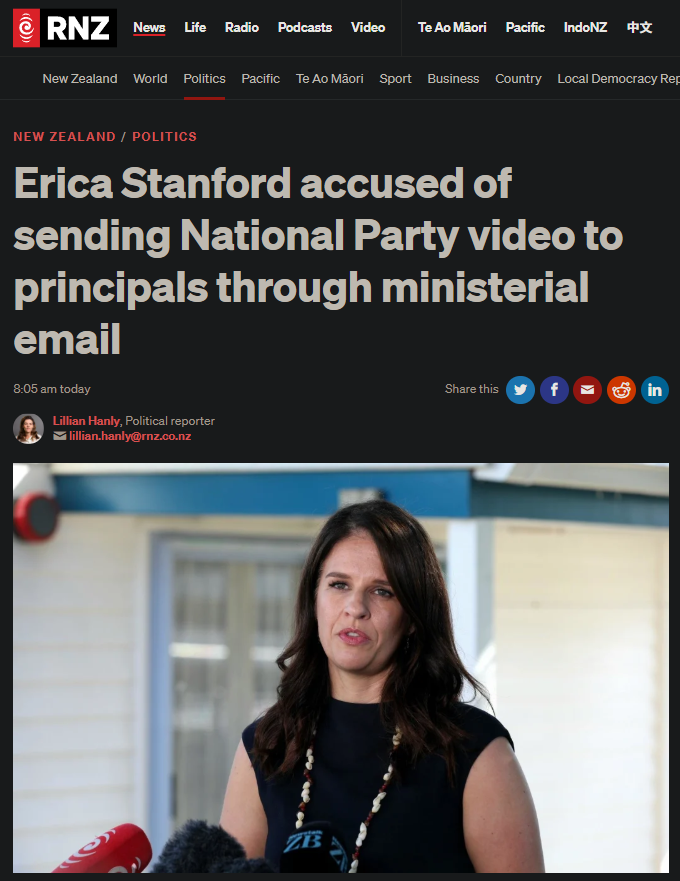
"When Parliament Burns Bills but Seymour Gets a Free Pass” - 23 October 2025
Exposing the White Supremacist Double Standards at the Heart of New Zealand Herald Reporting

Kia ora e te whānau,

Gerry Brownlee at an official event related to his role in New Zealand Parliament
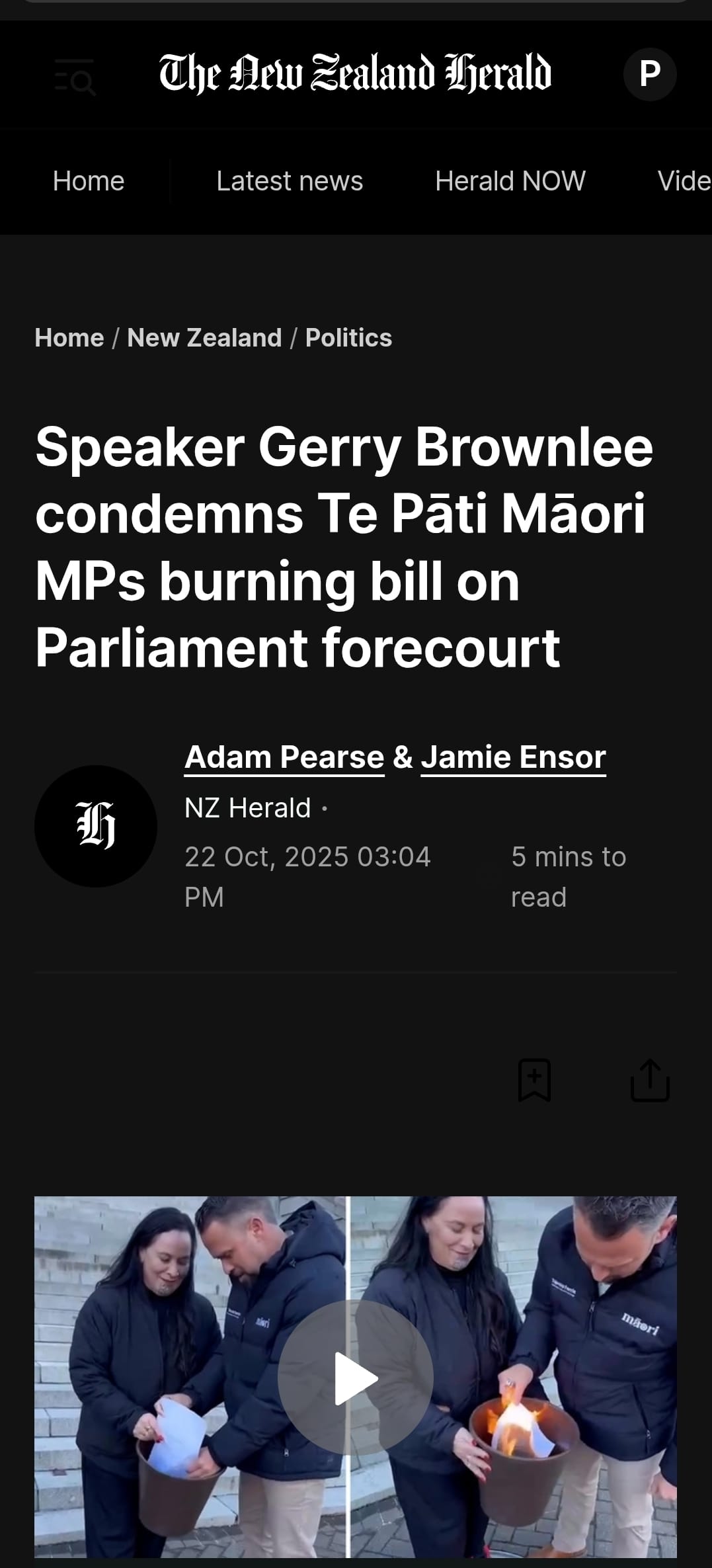
https://www.nzherald.co.nz/nz/politics/speaker-gerry-brownlee-condemns-te-pati-maori-mps-burning-bill-on-parliament-forecourt/GN37EN5DENDE5ETXWIG467VRFI/
The New Zealand Herald, that venerable institution of colonial power maintenance, has once again revealed its true allegiance not through what it reports but through how it reports. Adam Pearse and Jamie Ensor, the dutiful scribes of establishment power, have crafted what appears on first glance to be a straightforward news report about Speaker Gerry Brownlee condemning Te Pāti Māori MPs for burning a copy of the Marine and Coastal Area Amendment Bill on Parliament forecourt. But scratch beneath the surface of this apparently neutral journalism and you find a masterclass in colonial propaganda, neoliberal framing, and the systematic erasure of context that might challenge the racial hierarchies embedded in our political system.
This essay will expose the glaring double standards in how parliamentary transgressions are treated depending on who commits them, reveal the racist framing deployed to delegitimize Māori political resistance, and connect this particular incident to broader patterns of white supremacy and colonial violence that continue to define political discourse in Aotearoa.
Background
To understand the profound dishonesty at the heart of this Herald reporting, we must first establish the context that Pearse and Ensor systematically obscure. The Marine and Coastal Area Amendment Bill represents the latest chapter in a long history of legislative raupatu, the theft of Māori customary rights through the manipulation of law. This bill makes it significantly harder for iwi and hapū to have customary marine title recognized, overturning court decisions and applying retrospectively to cases decided after July 2024.
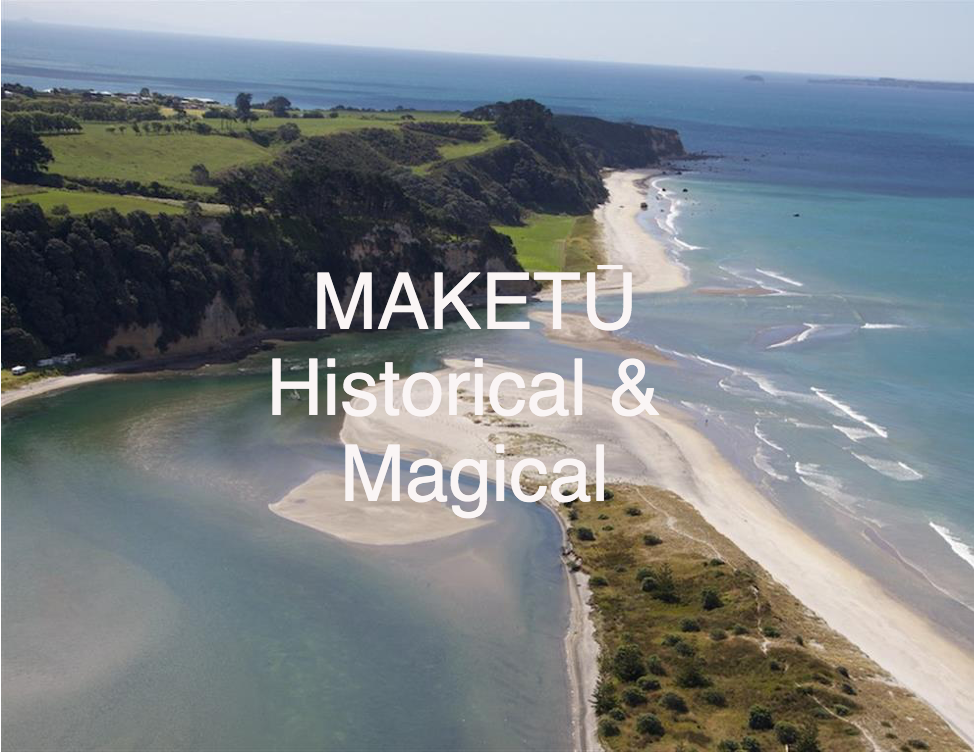
Aerial view of Maketū coastline highlighting its natural beauty and cultural significance in New Zealand’s Bay of Plenty
Former Attorney-General Christopher Finlayson, who helped craft the original 2011 legislation, has stated unequivocally that these amendments do not restore any original intent but rather undermine it, calling them foolish and extremely harmful to race relations. The Waitangi Tribunal found the Crown failed to demonstrate how it arrived at its understanding of Parliament’s original intent. Even former United Future leader Peter Dunne, who voted for the original law, condemned the changes as unjustifiable, noting the test was already set deliberately high.
This is legislative confiscation disguised as clarification. It is raupatu in a three-piece suit. And when Te Pāti Māori MPs Debbie Ngarewa-Packer and Tākuta Ferris burned a copy of this bill on Parliament forecourt in solidarity with the nationwide Burn the Bill protests, they were engaging in a symbolic act of resistance against state-sponsored theft.
The Issue: Selective Outrage and Colonial Double Standards
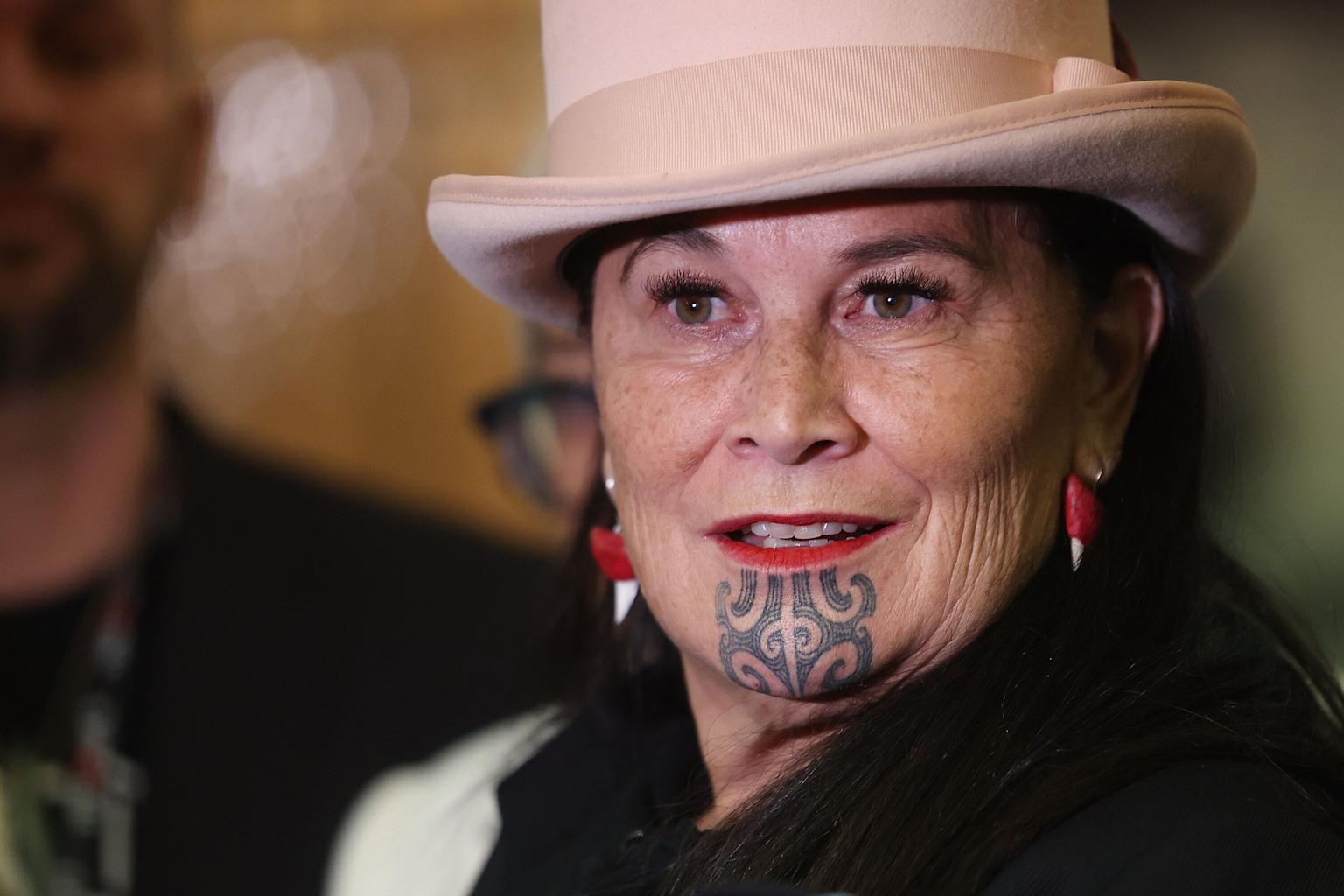
Close-up portrait of a Packer - Te Pāti Māori
The Herald article presents Speaker Gerry Brownlee’s condemnation of Te Pāti Māori as if it exists in a vacuum, as if parliamentary standards are applied equally regardless of who violates them. Brownlee called the bill burning the dumbest thing you could possibly do, highly arrogant and unacceptably irresponsible.
Yet just months earlier, in February 2025, ACT leader David Seymour attempted to drive a Land Rover up Parliament’s steps without permission from the Speaker. Security had to physically intervene to stop him. When questioned, Seymour arrogantly declared you should not have to get permission to do every little thing in New Zealand and suggested MPs should be able to do as they please at Parliament because it was their workplace.
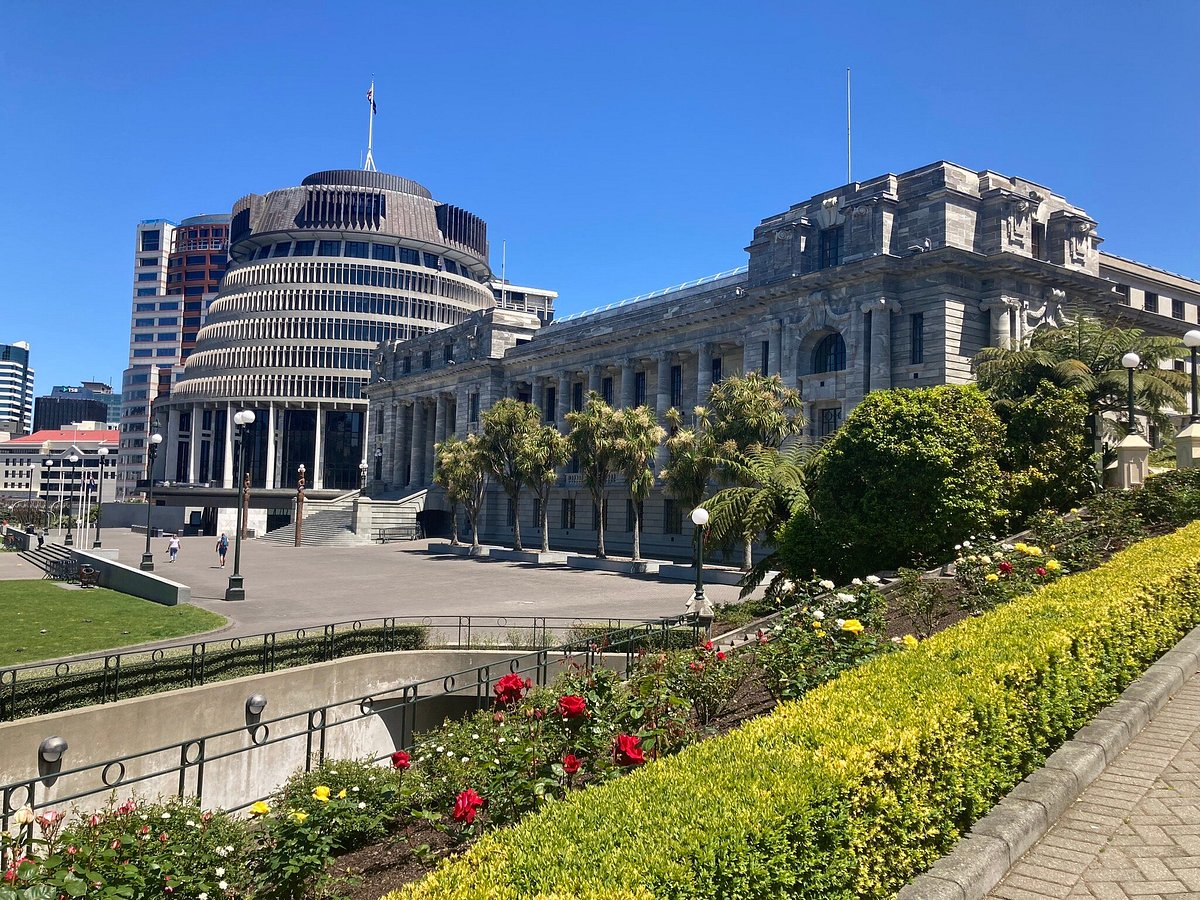
New Zealand Parliament buildings forecourt in Wellington featuring the Beehive and Parliament House on a sunny day with manicured gardens in the foreground
Brownlee’s response? He expressed strong displeasure but took no further action. Seymour apologized in a letter asking Brownlee to please accept my apologies for any offence this may have caused and that was the end of it. No referral to privileges committee. No threats of consequences. No days of media coverage condemning his arrogance and irresponsibility.
When Ngarewa-Packer pointed out this glaring hypocrisy in the Herald article, accusing the Speaker of having double standards and holding Te Pāti Māori to a higher level of behaviour than others in the House, this crucial context is buried deep in the story. The Herald does not lead with the obvious comparison. They do not center Seymour’s far more dangerous stunt, one involving a two-tonne vehicle on parliamentary steps. Instead, they frame Te Pāti Māori as the problem, as the radicals, as the schoolkid protesters.
This is the essence of white supremacy in action. Not burning crosses or shouting slurs, but the systematic application of different standards based on race and political alignment with colonial power structures.
Analysis: Deconstructing the Colonial Propaganda
The Language of Dismissal and Delegitimization
Examine the language deployed throughout this Herald piece. Te Pāti Māori’s actions are described through the words of their critics. NZ First calls them just a bunch of schoolkid radical protesters who are flipping the bird at the Speaker and to the rules of the very institution that has allowed them the representation they purport to be fighting for. Prime Minister Christopher Luxon dismisses them as not serious with no policy ideas, saying it is all performative.
David Seymour, the man who literally tried to drive a vehicle up parliamentary steps, likens their symbolic bill burning to Nazi book burning, invoking one of history’s most evil regimes to describe Māori MPs protesting legislative theft. The Herald prints these comparisons without challenge, without noting the profound bad faith of Seymour making such claims given his own recent parliamentary vandalism.
The framing consistently positions Te Pāti Māori as outsiders to parliamentary norms, as threats to order and decorum. Yet these same norms were established by and for colonial power. As Ngarewa-Packer correctly states, we are not here to please the Speaker. Parliamentary procedure itself is a colonial import designed to privilege certain forms of political expression, particularly those that do not threaten existing power arrangements.
The Erasure of Context and Justification
What the Herald systematically erases is why Te Pāti Māori burned the bill. The article mentions the bill tightens the legal test for Māori to gain customary marine title and has prompted widespread backlash, but this is presented as background detail rather than the central issue.
The reality is that this bill overturn Supreme Court decisions, applies retrospectively to deny iwi rights they have spent years in court establishing, forces groups to relitigate cases at enormous cost, and represents what multiple legal experts and former government ministers have called a form of legislative confiscation. The Waitangi Tribunal warned it breaches Treaty principles. Over twenty thousand people signed a petition against it in just days. Māori communities held burn the bill protests on beaches across the country.
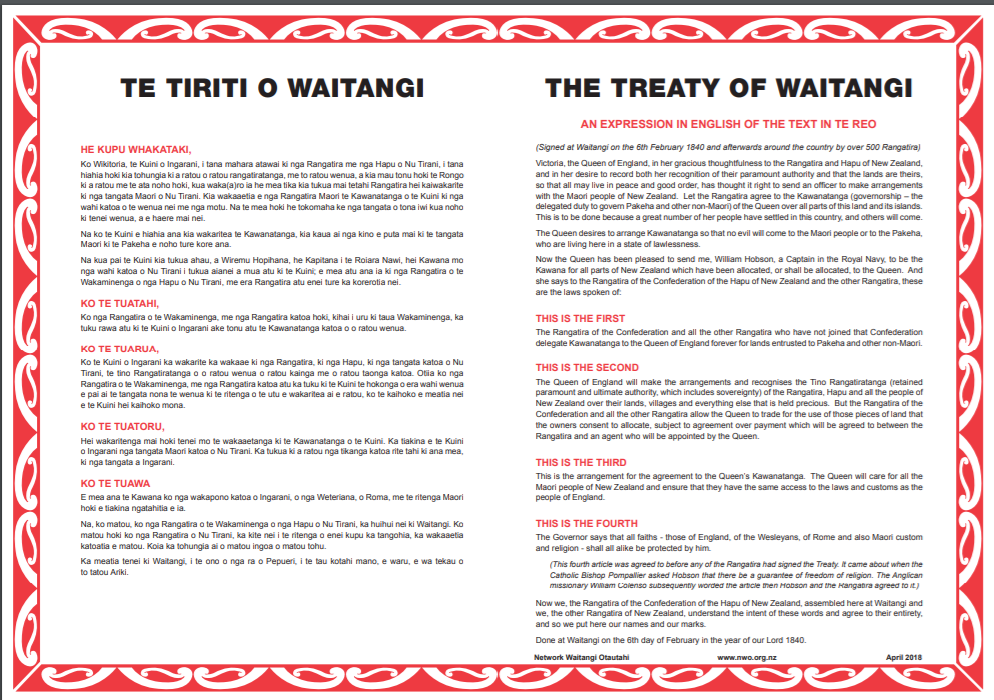
Bilingual poster of the Treaty of Waitangi showing the original text in te reo Māori and English translation alongside historical context and legal provisions
Te Pāti Māori’s action was solidarity with a nationwide movement of resistance. It was symbolic speech in the face of legislative violence. But the Herald reduces this to performative politics, to attention-seeking, to rule-breaking for its own sake.
This is a classic technique of colonial journalism. Strip away the historical context of oppression, erase the specific harms being protested, focus obsessively on the methods of protest rather than what is being protested, and you can make any act of resistance look unreasonable.
The False Equivalence and Whataboutism
When the article does mention Seymour’s Land Rover stunt, it is presented as a he-said-she-said debate. Chris Hipkins was critical of Seymour for attempting to drive up Parliament’s steps but when pressed on why he was happy to comment on that but not Te Pāti Māori, he said I am just not going to provide a blow-by-blow on everything the Māori Party do.
This creates a false equivalence. One incident involved a vehicle that could have caused serious injury. The other involved burning paper in a rubbish bin. One was done without permission for a photo opportunity. The other was done as explicit political protest against legislation affecting Māori rights. One resulted in a letter of apology and the matter being closed. The other is framed as a potential privileges committee referral and constitutional crisis.
But the Herald presents these as somehow comparable, as if the problem is simply that politicians sometimes break rules and we must all decide which rule-breaking we find acceptable. This obscures the fundamental issue: that the rules themselves are applied selectively based on who is breaking them and whether that rule-breaking threatens colonial power.
The Amplification of Elite Voices
Throughout the article, Pearse and Ensor privilege the voices of establishment power. The Prime Minister gets multiple paragraphs. NZ First gets an entire statement. ACT’s Seymour is quoted. The Free Speech Union gets a platform. Even the mundane details of parliamentary procedure are explained through the Parliamentary Service Act.
Te Pāti Māori gets Ngarewa-Packer’s brief quotes defending the action and pointing out Seymour’s hypocrisy. That is it. No quotes from legal experts criticizing the bill. No voices from the hundreds of hapū fighting for customary title recognition. No perspectives from constitutional scholars on the dangerous precedent of retrospective legislation overturning court decisions. No historical context from Māori academics on how this fits within patterns of legislative raupatu.
This is structural bias masquerading as objectivity. By choosing which voices to include and exclude, which perspectives to center and marginalize, journalists shape reality. And the reality shaped here is one where Māori resistance is the problem requiring explanation and condemnation, while the colonial violence of the legislation itself is mere background noise.
Implications: The Broader Pattern of Colonial Journalism
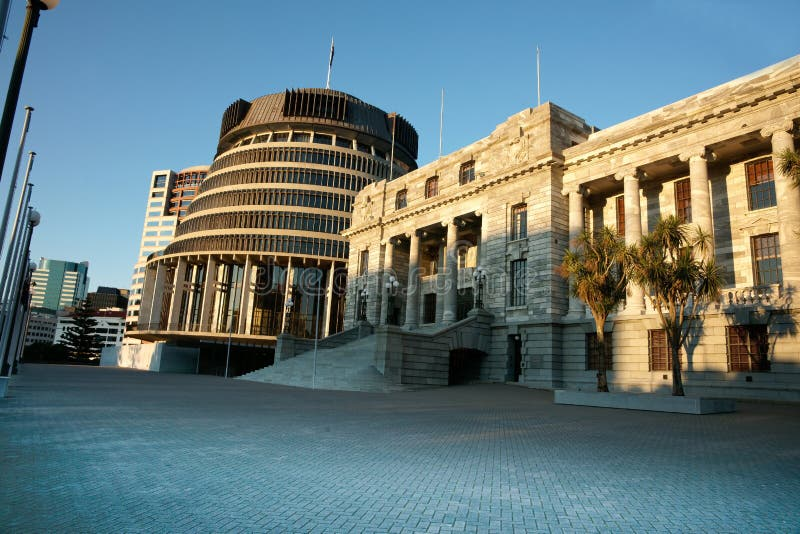
The New Zealand Parliament buildings forecourt in Wellington, featuring the Beehive and the classical parliament building
This Herald article is not an isolated incident. It is part of a systematic pattern of how mainstream New Zealand media covers Māori political resistance and Treaty issues.
When Te Pāti Māori MPs led a haka during the first reading of the Treaty Principles Bill, causing a brief disruption to proceedings, it dominated news cycles for days. The haka was described as unprecedented, as shocking, as a threat to parliamentary order. That the bill itself sought to unilaterally redefine the Treaty of Waitangi in a way that would fundamentally undermine Māori rights was treated as a legitimate policy debate.
When Seymour drives vehicles up parliamentary steps, the response is boys will be boys pragmatism. Small parties are always going to try and get media attention, as Luxon said dismissively. The political establishment rallies to minimize and excuse.
This double standard extends beyond Parliament. When farmers drove tractors up Parliament steps in 2003 to protest a flatulence tax, it was treated as colorful political theatre. Shane Ardern faced no serious consequences. When Māori protest legislative theft, they are radicals threatening the foundations of democracy.
The Herald’s coverage here reveals how New Zealand’s media ecosystem continues to function as a defender of colonial power arrangements. Not through explicit racism, though that sometimes appears, but through the systematic privileging of establishment voices, the framing of Māori resistance as threat rather than response to harm, and the application of different standards based on political alignment with the colonial state.
This matters profoundly because media coverage shapes public discourse. When the Herald frames Te Pāti Māori as the problem rather than the legislation they are protesting, it makes it harder for the public to understand the actual issues at stake. It delegitimizes Māori political resistance. It normalizes legislative raupatu. It protects the very power structures that continue to dispossess Māori of their taonga.
Seeing Through the Colonial Lens
What Adam Pearse and Jamie Ensor have produced is not neutral journalism. It is colonial propaganda that serves the interests of white supremacy and neoliberal capitalism. By focusing obsessively on Te Pāti Māori’s methods of protest while obscuring the context and justification, by applying different standards to different actors based on their relationship to colonial power, and by systematically privileging establishment voices while marginalizing Māori perspectives, they have crafted a narrative that protects the status quo.
The real story here is not that Te Pāti Māori burned a bill on Parliament forecourt. The real story is that the New Zealand government is using legislation to overturn court decisions recognizing Māori customary rights, applying this theft retrospectively, and facing minimal media scrutiny for this constitutional vandalism. The real story is that when Māori resist, they face consequences that Pākehā politicians never do for comparable or worse behavior.
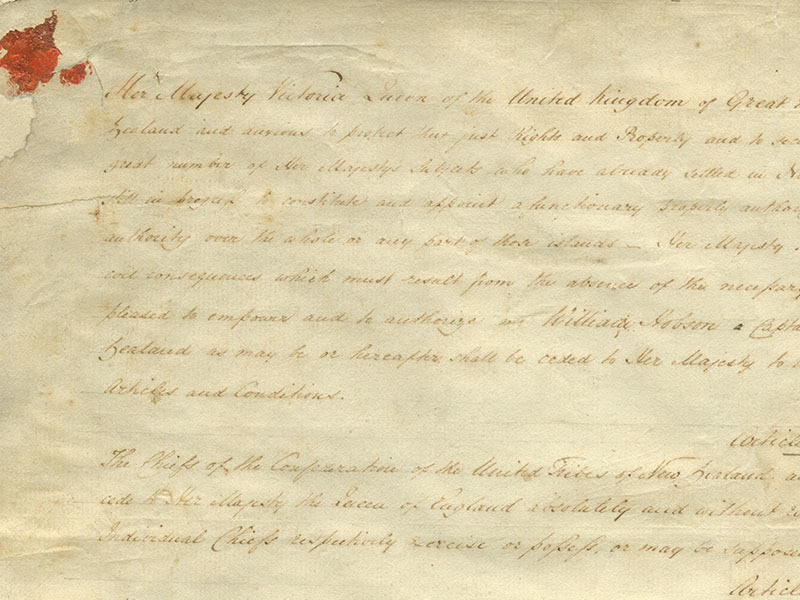
Excerpt of the Treaty of Waitangi document from 1840 showing handwritten cursive text under Queen Victoria’s authority
The real story is that 170 years after the Treaty of Waitangi promised to protect Māori taonga, the colonial state continues to find new ways to confiscate what is not theirs. And that mainstream media like the Herald continues to provide cover for this theft through biased reporting dressed up as objectivity.
We must demand better. We must call out the double standards. We must refuse to accept the framing that positions Māori resistance as the problem rather than the colonial violence being resisted. And we must continue to burn, literally and metaphorically, every piece of legislation that seeks to steal what our tūpuna fought to protect.
To those who find value in this analysis and wish to support the continued exposure of colonial propaganda and white supremacy in our media and political institutions, please consider a donation to HTDM 03-1546-0415173-000. These are challenging economic times for whānau so please only contribute if you have capacity and wish to do so. Every contribution helps sustain this crucial mahi.
Kia kaha. Kia maia. Kia manawanui.
Ivor Jones - The Māori Green Lantern