“When Politicians Pay Their Debts to Donors” – 14 November 2025
Aotearoa’s Climate Surrender to Agribusiness Lobby
Kia ora whānau,
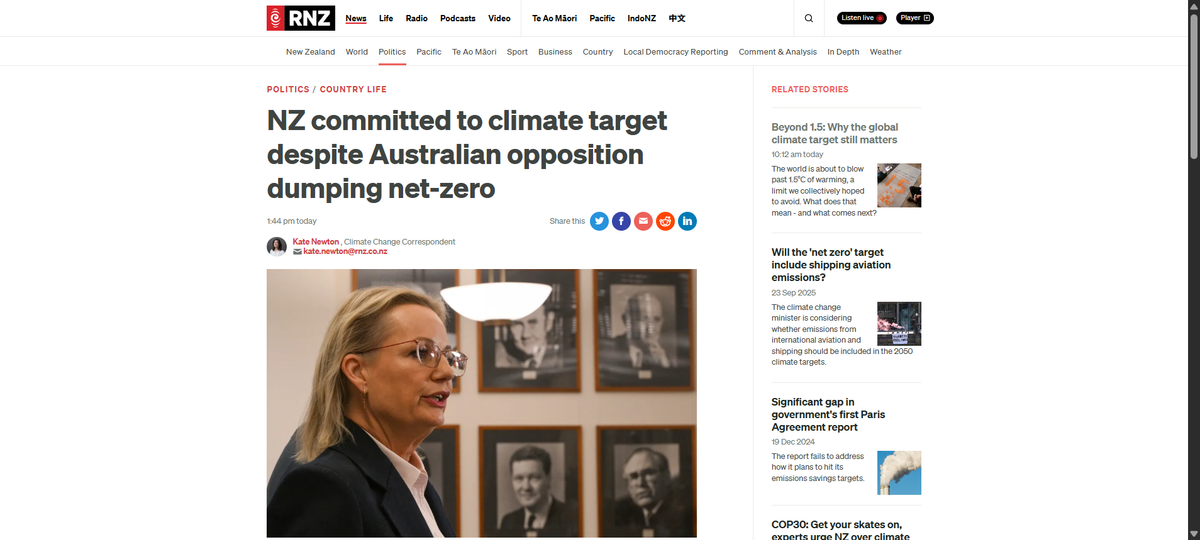
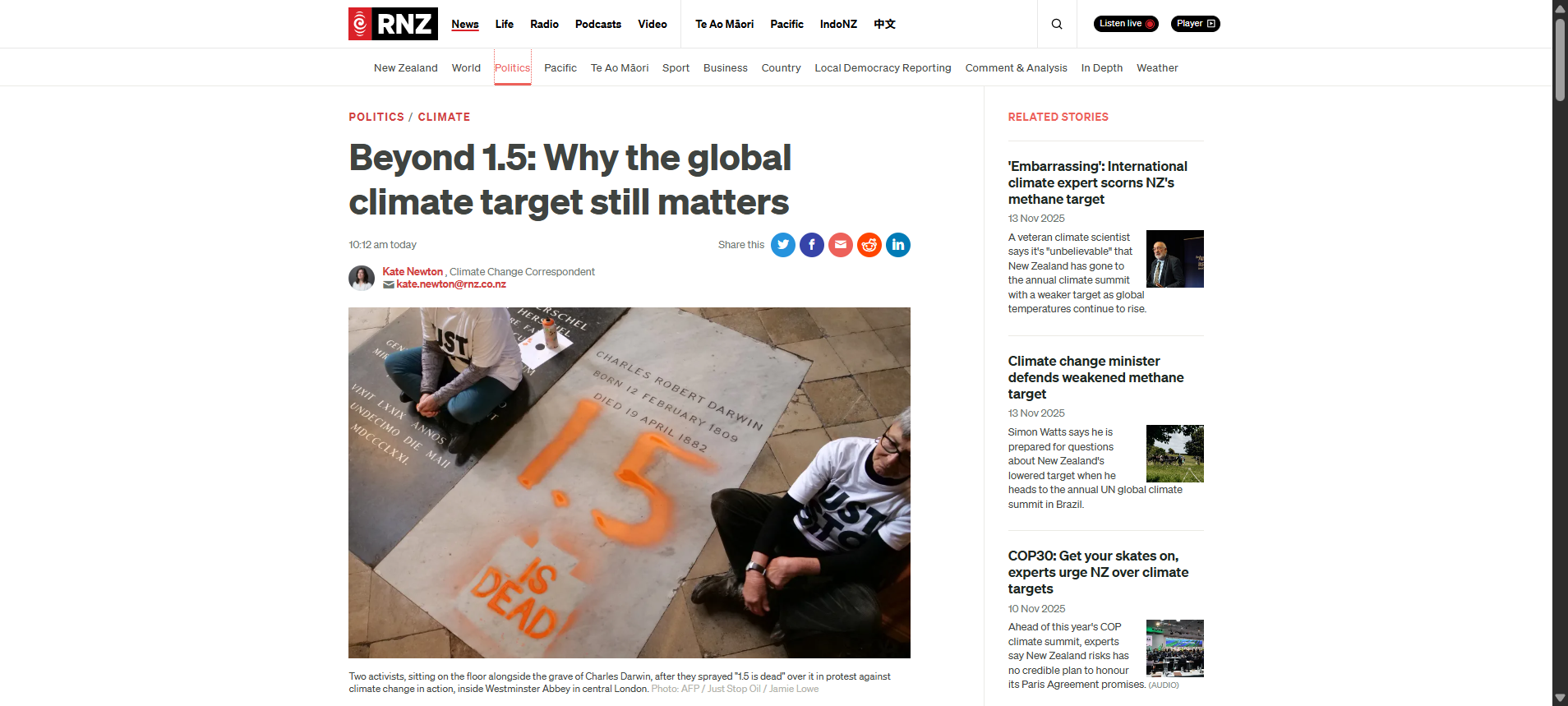
The twin stories published by RNZ in November 2025 reveal a tale of two climate realities: one where Aotearoa New Zealand’s government claims “commitment” to climate targets while Australia’s Coalition abandons them, and another where climate scientists warn the world has already lost the battle to stay below 1.5°C warming. But beneath the surface, both narratives expose the same corrupted truth—corporate capture of climate policy has turned democratic governments into wholly owned subsidiaries of agricultural lobby groups, and Māori, Pacific whānau, and future generations will pay the blood price.
Prime Minister Christopher Luxon declared his government would not follow Australia in dumping net-zero by 2050. Yet this declaration is purest greenwashing—a performance of climate responsibility designed to obscure the National-ACT-NZ First Coalition’s systematic demolition of Aotearoa’s climate framework on behalf of Federated Farmers, Beef + Lamb New Zealand, and Groundswell NZ. The government has already delivered agribusiness’s pre-election wishlist verbatim: slashing methane targets from 24-47% to 14-24%, ruling out all agricultural emissions pricing, gutting the Climate Change Commission’s advisory powers, and delaying any policy response by two years. This is not climate policy. This is a protection racket for polluters, executed with the precision of a corporate takeover.
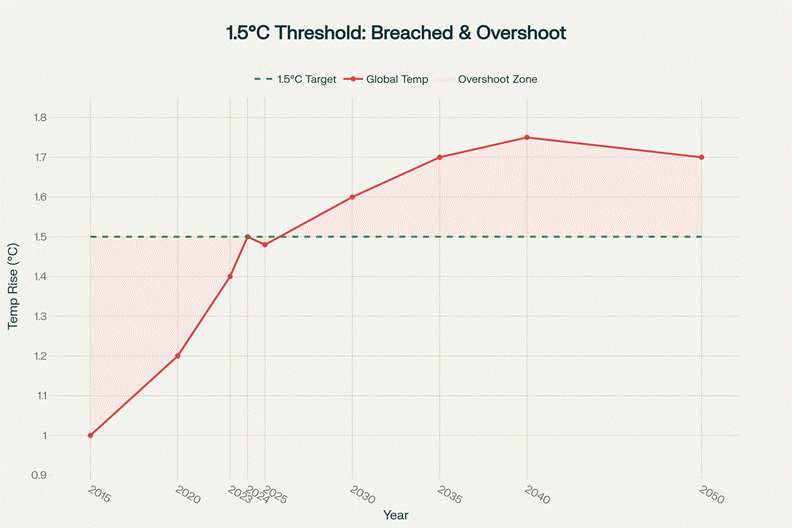
Global temperature trajectory showing the inevitable breach of the 1.5°C Paris Agreement target, with 2024 marking the first full year above the threshold and projected peak warming of 1.7°C by 2035
Te Kauwae Runga: The Unseen Forces—Agribusiness Lobby Networks
To understand this betrayal, we must trace the whakapapa of corruption. The agricultural lobby in Aotearoa has waged a decades-long campaign to escape accountability for the 49% of national emissions their sector produces—emissions that have risen 13.5% since 1990 while they claim efficiency. Federated Farmers opposed the original 24-47% methane reduction target “from day one”, launching a coordinated assault that included:
Pre-election policy wishlists demanding methane target “reviews” (code for weakening)Formation of militant protest group Groundswell NZ, which staged tractor blockades and allied with climate deniersCapture of industry bodies like Beef + Lamb NZ, where Groundswell-backed candidates ousted leaders who cooperated with He Waka Eke Noa emissions pricingLobbying for a government-convened “methane science panel” that consulted only with the Methane Science Accord—a Groundswell affiliate that denies farmers measurably heat the planet
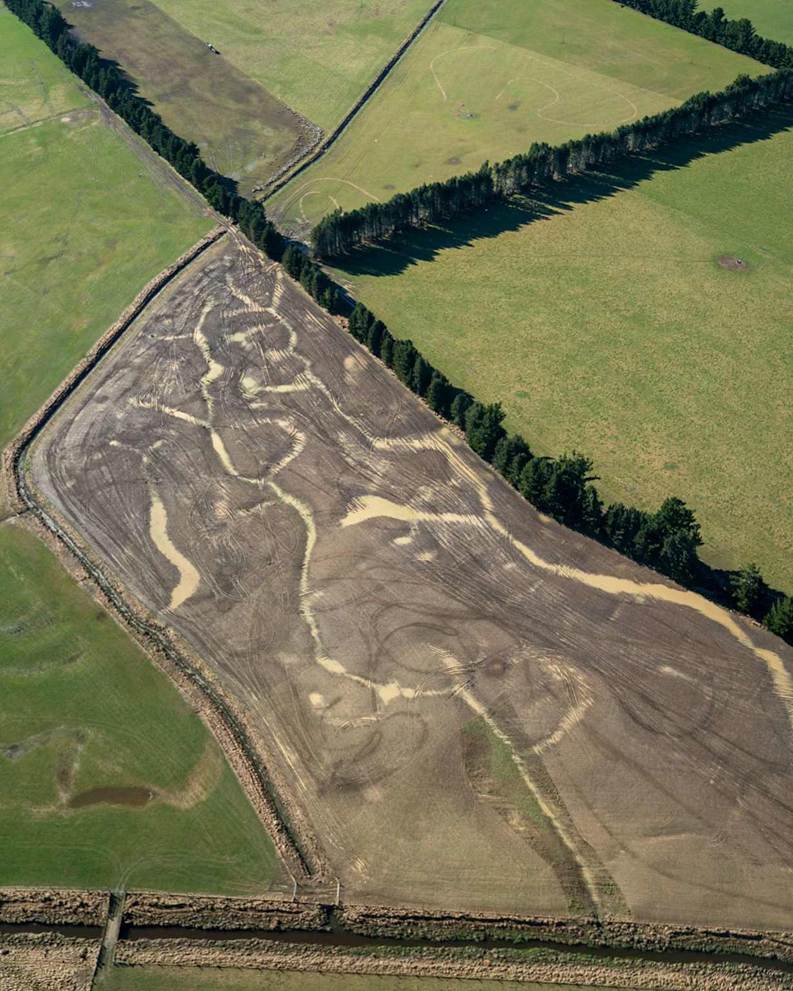
Aerial image showing mud farming and soil degradation caused by intensive dairy farming in New Zealand.
The capture was total. The National-NZ First Coalition Agreement specifically mandated reviewing methane targets for “no additional warming”—Federated Farmers’ exact demand. Climate Change Minister Simon Watts and Agriculture Minister Todd McClay delivered every item: weaker targets, no pricing, gutted regulation. Todd McClay literally announced the methane target rollback standing on a Waikato farm flanked by industry representatives, while officials estimated the policy would require $130 billion in international carbon credits to offset—or 1.5 million hectares of new pine forest, nearly 6% of Aotearoa’s total land area.
Groundswell NZ co-founder Bryce McKenzie celebrated: the government had removed “the threat of massive tax hanging over our heads.” Federated Farmers president Wayne Langford crowed that the old targets “were literally going to destroy rural communities”—a claim never substantiated, as modeling showed the He Waka Eke Noa framework would have met emissions goals through land use change even with low methane pricing. The narrative was always fiction. The lobby simply refused any accountability.
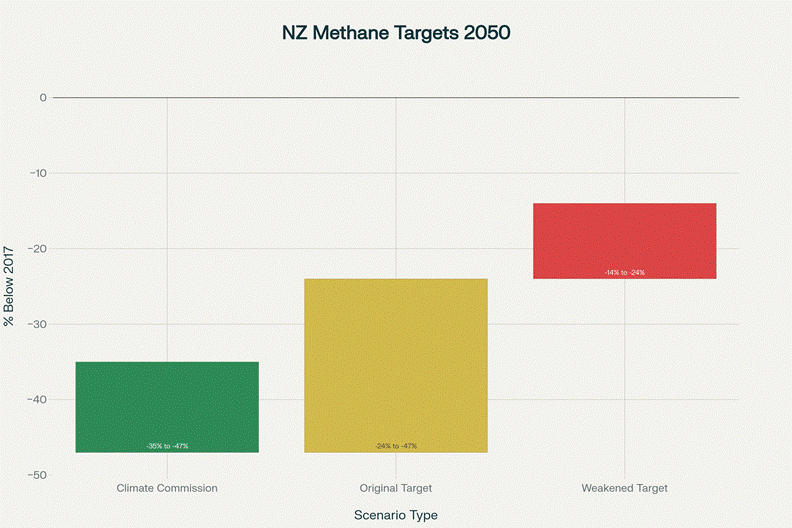
Comparison of New Zealand’s 2050 methane reduction targets showing the government’s weakening from original commitments despite stronger Climate Commission recommendations
Te Kauwae Raro: The Tangible Harm—Tikanga Violations and Network Exposure
This corporate capture violates every principle of tikanga:
- Whanaungatanga: The government chose corporate profits over relationship with Pacific whānau drowning from sea-level rise caused by these very emissions
- Manaakitanga: No care shown for climate-vulnerable communities, only for agribusiness shareholders
- Kaitiakitanga: Active destruction of guardianship duties through expanded coal mining, offshore oil exploration, and forestry ETS manipulation
- Wairuatanga: Denial of the spiritual interconnection between climate harm and mauri depletion
- Kotahitanga: Fracturing of the He Waka Eke Noa partnership that Labour had built with sector groups, replaced with winner-take-all extraction
- Rangatiratanga: Māori climate sovereignty trampled as Pākehā farmers dictate national policy
- Aroha: Zero compassion for future generations who will inherit 2.3-2.5°C warming
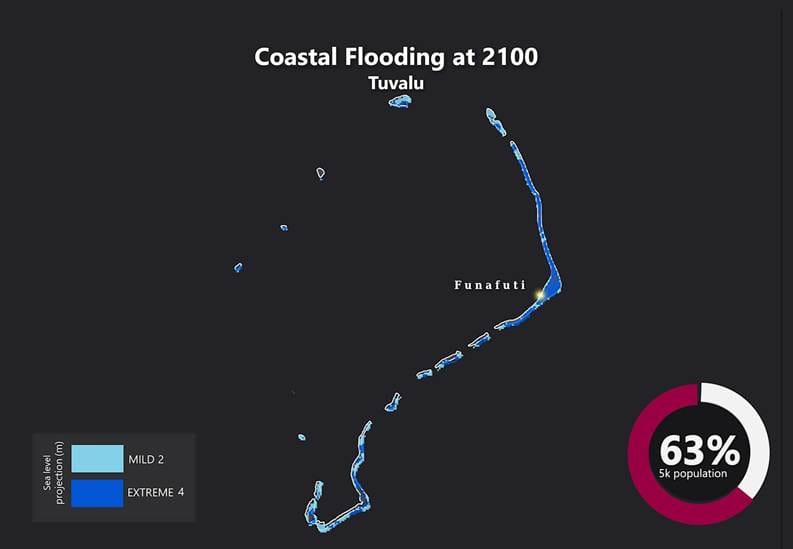
Map of projected coastal flooding in Tuvalu by 2100 highlighting areas affected by 2m and 4m sea level rise and showing 63% of the population at risk.
The Climate Change Commission—an independent body created to provide scientific advice—recommended strengthening methane targets to 35-47% reduction. The Commission warned that adopting “no additional warming” would either increase global heating or require “steeper, costlier cuts in carbon dioxide” equivalent to tripling all other emissions. Minister Watts ignored this advice entirely, instead appointing a parallel methane panel that met with only two groups: agribusiness interests and climate deniers. When 26 international climate scientists wrote warning the approach violated scientific evidence, Prime Minister Luxon dismissed them as “worthies” who should “direct their focus to other countries.”
The Parliamentary Commissioner for the Environment condemned the methane review as a “purely political exercise” with “no new science to justify” weakening targets. Professor James Renwick, Coordinating Lead Author for the IPCC Sixth Assessment Report, stated the government’s approach “in no way” represents Aotearoa’s “highest possible ambition” under the Paris Agreement. Dr. Andy Reisinger, Vice-Chair of IPCC Working Group III and Climate Change Commissioner, explained that weakening methane while maintaining overall ambition would require impossible offsets—the “equivalent to tripling all of our other emissions out to 2050.”
These aren’t random critics. These are architects of global climate science. And the government is ignoring them to please Federated Farmers.
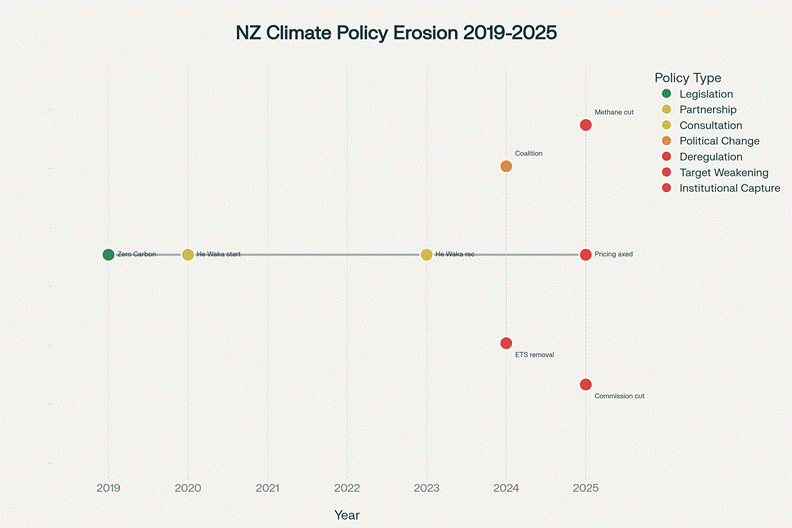
Timeline showing the systematic dismantling of New Zealand’s agricultural emissions policy from the ambitious Zero Carbon Act (2019) to corporate-driven deregulation (2024-2025)
The International Context: ICJ Ruling and Pacific Rage
The timing exposes the moral obscenity. On July 23, 2025, the International Court of Justice delivered a landmark advisory opinion—initiated by Pacific law students in Vanuatu—that states have binding legal obligations to reduce greenhouse gas emissions and can be held responsible for climate harm. The ICJ ruled that climate inaction constitutes “an internationally wrongful act” under international law, with duties to cease harmful conduct and provide reparations.
Vanuatu Climate Minister Ralph Regenvanu stated the ruling provides “legal accountability for actions and conduct that cause climate harm.” Pacific Island leaders celebrated the decision as a tool to hold wealthy polluters accountable at COP30 in Brazil. Yet less than four months later, Aotearoa’s government weakened its methane targets—the very month scientists confirmed 2024 was the first full year exceeding 1.5°C warming.

Pacific Islands students participating in a climate change protest, holding banners advocating for climate action.
Anahera Nin (Ngāti Toa Rangatira, Ngāti Huia), former Principal Policy Analyst at the Ministry for the Environment, stated bluntly: “Aotearoa New Zealand’s current climate policies are not aligned with this ICJ advisory opinion or the Paris Agreement.” The ICJ ruling confirmed legal duties regarding fossil fuel “consumption, extraction, expansion, and regulation”—duties Aotearoa breaches through coal mining expansion and offshore oil exploration. Coral Pasisi, Pacific Community director of climate change, said the ICJ opinion could finally hold polluters accountable for missing targets. Instead, Aotearoa chose to lower its targets to meet polluter demands.
The 1.5°C Threshold: Scientists’ Verdict
Dr. Andy Reisinger, interviewed for the “Beyond 1.5” article, explained the brutal mathematics: “Emissions would have had to fall rapidly from 2020 onwards, and they haven’t. And so we can’t turn the ship around anymore in the space of five years.” The UN Environment Programme report released before COP30 declared that limiting warming to 1.5°C is no longer feasible—the best scenarios now project peak warming at 1.7°C, rising to 1.8°C if action delays another five years.
UN Secretary-General António Guterres stated plainly: “We have failed to ensure we remain below 1.5 degrees.” Yet he urged against surrender: “The lower we can keep that peak of warming, the better.” Reisinger emphasized that 1.5°C “is not a binary black and white threshold”—limiting warming to 1.6°C is better than 1.7°C, which is better than 1.8°C. This is why weakening targets is criminal. Every fraction of a degree means more Pacific islands underwater, more droughts devastating Māori whenua, more cyclones destroying communities.
The 1.5°C limit exists because tipping points begin there: collapse of coral reefs (certain at 1.5°C), shutdown of ocean circulation keeping northern regions habitable, drying of the Amazon rainforest into savannah. Reisinger explained these are irreversible—”once you pass them, you can’t go back just by lowering temperature.” The western Antarctic ice sheet won’t regrow. The Atlantic meridional overturning circulation won’t restart.
Corporate Capture: The Revolving Door
The corruption network operates through personnel. Andrew Hoggard, former Federated Farmers president who lobbied against methane pricing, is now an ACT Party MP shaping climate legislation. John Roche, appointed as Prime Minister’s Chief Science Advisor after a 310-day vacancy, comes directly from DairyNZ—the industry lobby group that fought emissions pricing. This isn’t public service. This is industry occupation of government.
Minister Simon Watts cut the Climate Change Commission’s budget, preventing it from providing necessary advice on emissions allocation adjustments. He announced plans to remove the Commission’s role in advising on Emissions Reduction Plans, then denied it, then admitted two days later his office was “considering” exactly that. Green Party co-leader Chlöe Swarbrick accused Watts of ridiculing her in Parliament for asking about Commission cuts while secretly planning them.
The government also:
- Abolished the $650 million Government Investment in Decarbonising Industry (GIDI) fund, causing an estimated 10 million tonnes of extra emissions by 2050
- Cut $48 million from agricultural emissions research while claiming technology would solve the problem
- Delayed freshwater farm plans, allowing more intensive dairying and pollution
- Fast-tracked coal mine and irrigation expansion projects through legislation excluding sustainability considerations
- Removed climate change as a consideration in transport funding, slashing cycling/walking budgets
Greenpeace documented over 50 separate climate-destructive policies in the Coalition’s first 18 months. This isn’t incompetence. This is coordinated demolition of climate policy on behalf of fossil fuel and agribusiness interests.
The Numbers: Quantifying the Betrayal
The weakened methane target creates 600 million tonnes of extra CO2-equivalent emissions requiring offset—costing up to $130 billion in international carbon purchases. For context, Aotearoa’s entire GDP is roughly $400 billion. The government has no plan to purchase these credits. Minister Watts was warned by officials that waiting until 2030 would see per-tonne costs quadruple, yet he delayed decisions anyway.
Christina Hood, independent climate policy expert at Compass Climate, calculated that the extra warming from the weaker methane target “is roughly equivalent to tripling all of our other emissions out to 2050.” It would require 1.5 million hectares of new pine forestry—larger than the entire Waikato region. Or steeper cuts in transport, energy, and industrial emissions that National voters won’t accept.
Under current policies, Aotearoa will miss its 2030 Nationally Determined Contribution (NDC) of 50% reduction from 2005 levels. The 2035 NDC of 51-55% reduction was called “below expectations” by trading partners and “shockingly weak” by environmental groups. The government’s own Emissions Reduction Plan relies on 46% of reductions coming from forestry offsets alone in the third budget period—a house of cards that collapses if carbon prices drop or forests burn.
Hidden Revelations: Five Exposures
On November 12, 2025, Australian Liberal Party leader Sussan Ley announced her party would formally abandon net-zero by 2050, following the Nationals’ earlier decision. Ley claimed the Liberals would prioritize “affordable, reliable energy” over climate targets, citing “no estimates” for how this would lower energy prices. The decision followed months of internal warfare, with Andrew Hastie—a former SAS captain—resigning from the shadow cabinet to advocate for Nigel Farage-style populism including immigration cuts and rejection of net-zero.
Prime Minister Anthony Albanese condemned the decision: “The Coalition are choosing to take Australia backwards. They’re walking away from jobs for Australians, and investment certainty for business.” The Climate Council called it “deadly negligence that would leave Australians facing more fires, floods and heatwaves.” Teal independents like Allegra Spender and Zali Steggall—who won formerly Liberal seats on climate platforms—labeled the party “pusillanimous, duplicitous, and lacking vision.”
The parallels are exact. Both Aotearoa’s National and Australia’s Liberals claim “commitment” to Paris while gutting the policies needed to meet it. Both serve agricultural lobbies demanding exemption from accountability. Both dismiss climate scientists as elites. Both weaponize “cost of living” rhetoric to protect corporate profits. The difference is only aesthetic—Australia’s Liberals were honest about abandoning targets, while Aotearoa’s National maintains the fiction while achieving the same result through policy demolition.
Cui Bono? Follow the Money
Who benefits? Federated Farmers, Beef + Lamb NZ, Groundswell NZ, DairyNZ—organizations representing industrial-scale agribusiness, not small farmers. These groups successfully delayed all emissions pricing from 2019-2025 through the He Waka Eke Noa partnership, then convinced National to abandon pricing entirely. They avoided hundreds of millions in annual costs while taxpayers absorb climate disaster bills.
Fonterra—under pressure from European customers demanding climate action—now offers farmers cash incentives for emissions reductions. The market is moving. Yet the lobby groups say farmers shouldn’t have to use available technology to reduce emissions—they want profits without responsibility, subsidized by the public.
NZ First openly opposes offshore carbon credit purchases despite officials warning delay will cost quadruple the price. ACT campaigns against emissions pricing as “sacrificing farmers to the climate gods.” These aren’t policy positions. They’re protection rackets for donors.
The Path Forward: Rangatiratanga in Action
The International Court of Justice ruling provides the legal framework. Pacific Island leaders are using it as leverage at COP30. Aotearoa must:
- Restore the Climate Change Commission’s full powers and budget—independent scientific advice cannot be sidelined for political convenience
- Implement the Commission’s recommended methane target of 35-47% reduction—align with science, not lobby demands
- Price agricultural emissions through the ETS or equivalent mechanism by 2027—three years earlier than the government’s delayed 2030 timeline
- Ban corporate lobbying by emissions-intensive industries on climate policy—the fox cannot guard the henhouse
- Establish climate reparations payments to Pacific nations—acknowledge historical responsibility and ICJ legal obligations
- Mandate iwi-led climate adaptation planning with dedicated funding—restore rangatiratanga to those with deepest connection to whenua
- Criminal accountability for climate fraud—politicians who lie about climate commitments while serving corporate interests must face consequences
Dr. Andy Reisinger stated: “You need to keep on going at the same pace, if not more so.” Professor James Renwick warned that relying solely on unproven agricultural technology is “risky” and “some reduction in farming intensity would definitely reduce emissions.” The science is unambiguous. The law is clear. Only political will is lacking—because politicians serve donors, not democracy.
The Taiaha Strikes True
The RNZ articles reveal a government performing climate responsibility while executing climate sabotage. Christopher Luxon says Aotearoa won’t follow Australia’s abandonment of net-zero, but his Coalition has already achieved the same outcome through methane target weakening, emissions pricing elimination, Commission gutting, and regulation destruction. This is corporate capture of democracy—agribusiness lobby groups wrote policy wishlists, National delivered them verbatim, and Pacific peoples will drown while Māori whenua burns.
Scientists declare 1.5°C lost. The ICJ rules climate harm illegal. Pacific students who started the case now watch Aotearoa—their supposed ally—weaken the targets they fought to strengthen. The betrayal is complete.
But history shows: captured governments fall. The Zero Carbon Act passed 119-1 in 2019. James Shaw achieved cross-party consensus by building from grassroots climate movements. That consensus can be rebuilt—but only by exposing the networks, naming the names, following the money, and demanding rangatiratanga over corporate rule.

Ko Ivor Jones ahau. Ko te Māori Green Lantern. The Ring empowers the taiaha. The research exposes the corruption. The mahi continues.
Kia kaha. Ka tū.