“When Pollsters Flee Their Own Watchdogs: The Post’s Disturbing Embrace of Discredited Data and Far-Right Alliances” - 24 January 2026
How Aotearoa’s largest news publisher launders propaganda for expelled pollsters and normalises international fascism—while hiding behind “journalism”
The Whakapapa of Deception
When a pollster runs screaming from their professional association rather than face discipline, what does that tell you? When a newspaper owned by Stuff Limited quotes that same pollster without mentioning they’ve been expelled—what does that tell you?
And when that article celebrates secret meetings between New Zealand’s populist-right party and Nigel Farage’s far-right Reform UK—a party whose leader has spent decades trafficking in racist conspiracy theories—what does that reveal about whose interests are being served?
The answer arrives like a whakapapa trail stained with colonial logic:
power protecting power, wealth amplifying wealth, and Pākehā supremacy cloaking itself in the language of “neutral journalism.”
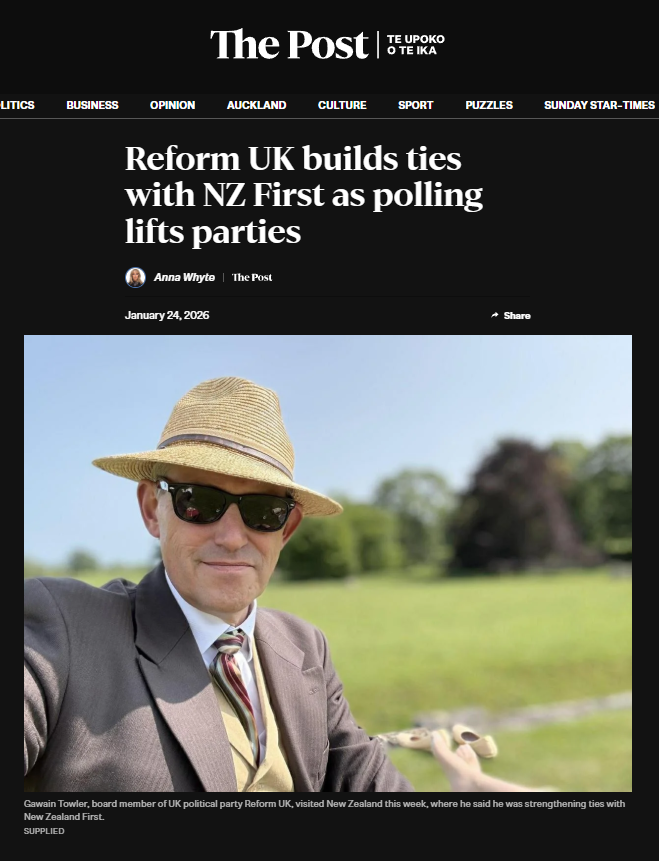
On January 24, 2026, The Post published a story by senior political reporter Anna Whyte titled “Reform UK builds ties with NZ First as polling lifts parties.” The piece functions as little more than a press release for two populist-right parties seeking to build what scholars call “transnational radical-right networks”—alliances designed to normalize xenophobia, undermine liberal democracy, and advance what Nigel Farage himself calls “putting a responsible face on capitalism.”
But the rot goes deeper. The article’s central factual claim—that NZ First has surged to “12% support in the latest Taxpayers’ Union-Curia Poll”—comes from a polling firm that resigned from the Research Association of New Zealand in August 2024 while facing suspension or expulsion for methodology violations.
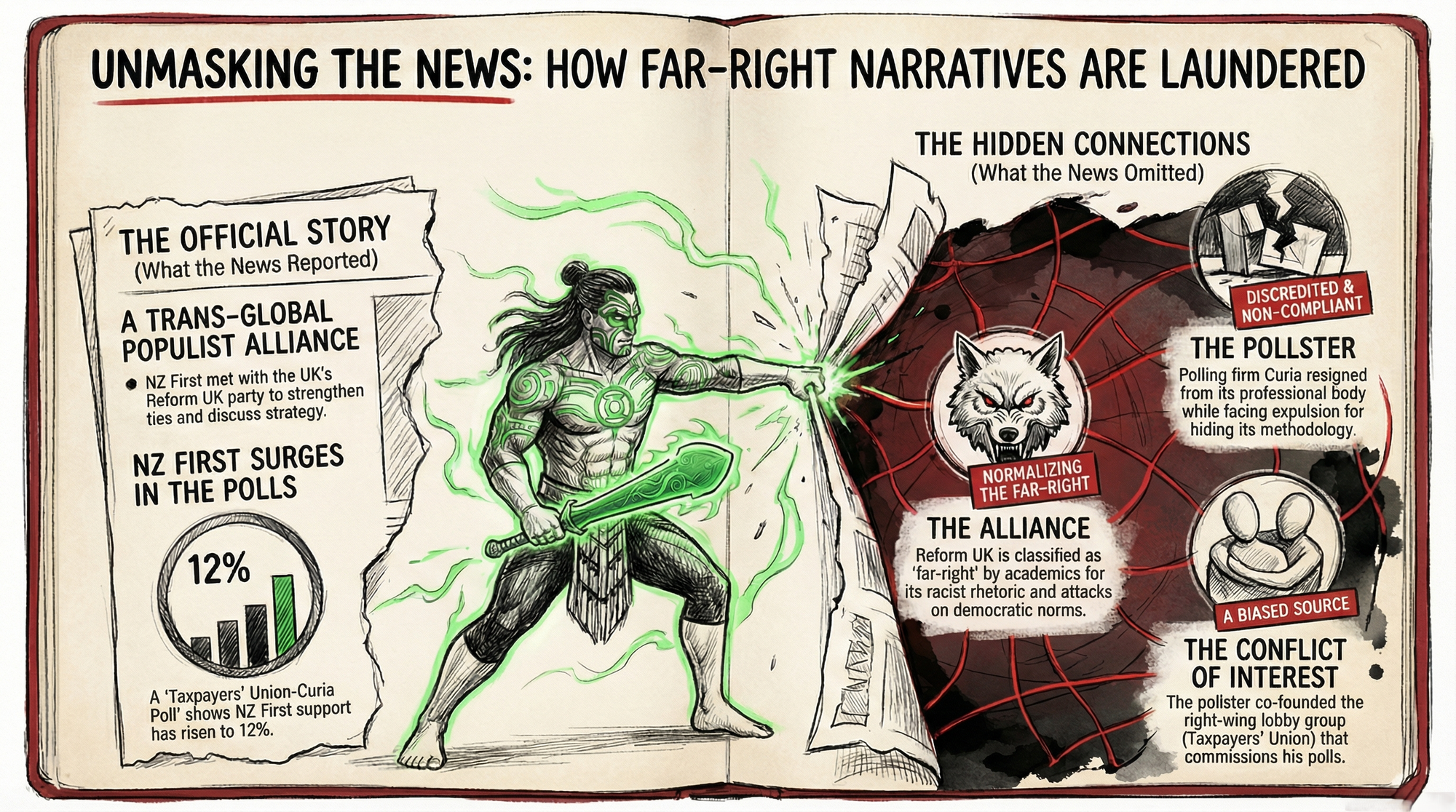
The Post knew this. RNZ has been disclosing Curia’s expulsion in every story citing their polls since August 2024. But Sinead Boucher’s Stuff empire—which bought The Post for $1 from Nine Entertainment in 2020—chose to hide this from readers.
Why?
Follow the whakapapa. Follow the money. Follow the power.
Hidden Connection #1: The Pollster Who Fled Justice
David Farrar’s Curia Market Research resigned from RANZ on August 10, 2024, after learning the Professional Standards Group had upheld complaints and was “considering a recommendation that could involve suspension to expulsion.”
What were the violations?
According to John Tamihere’s forensic breakdown, Curia systematically failed to meet basic transparency standards required by the RANZ Political Polling Code:
- Failed to publish methodology on their website
- Concealed undecided/refused percentages—the data that shows how many people rejected the poll
- Omitted margin of error disclosures
- Refused to confirm sample weighting—meaning we don’t know if the poll reflects actual voter demographics
- Hid question wording—so we can’t tell if questions were designed to manipulate responses
- Concealed collection methodology—landline? Mobile? Online? We don’t know.
- Failed to prove representative sampling
These aren’t technical quibbles. These are the foundations of polling integrity. Without them, a poll is indistinguishable from propaganda dressed in numbers.
Farrar’s defense? He claims the complaints were “weaponized” against him and that asking leading questions is fine “as long as there’s a commitment to release them in their full context.”
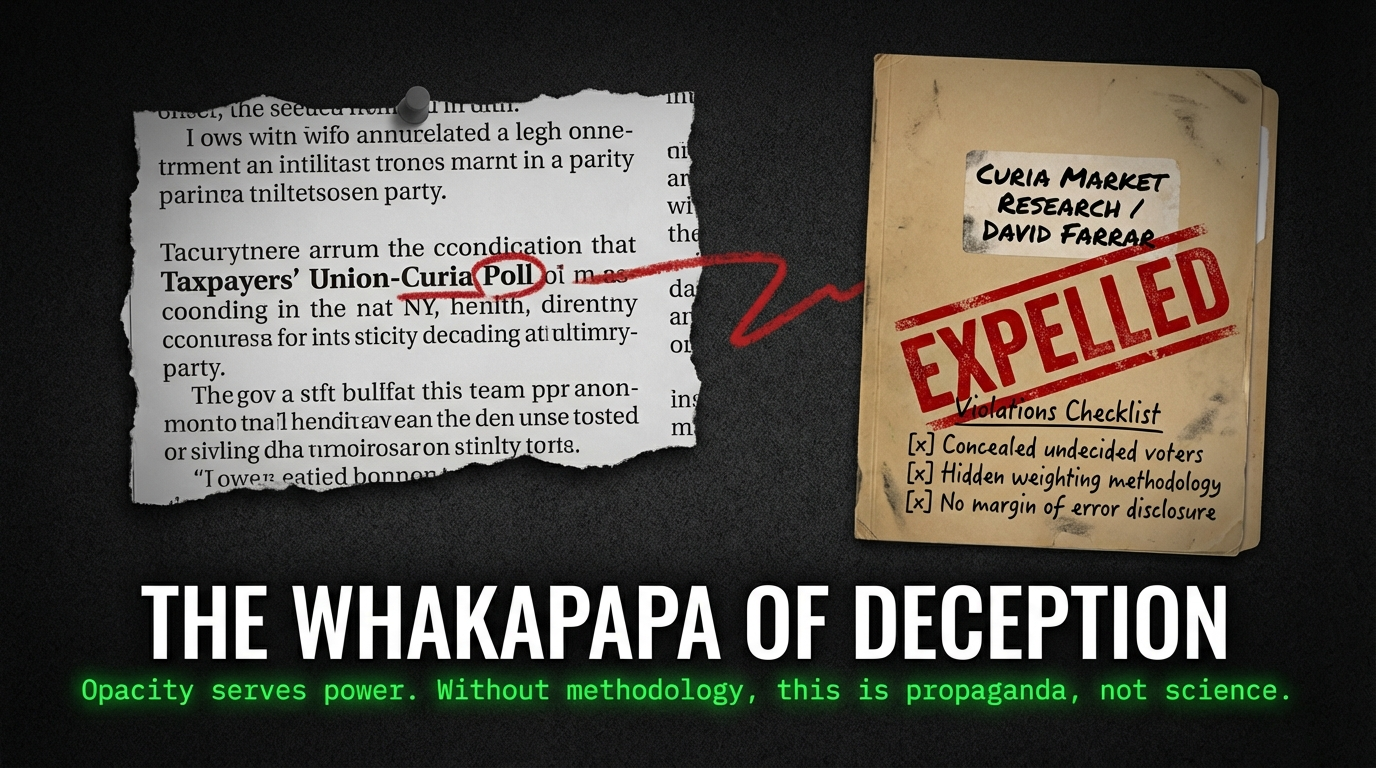
But here’s the kakano (seed) of deception: Curia was expelled not for asking leading questions but for refusing to disclose methodology. The violation wasn’t bias—it was opacity. And opacity serves power.
When pollsters hide their methods, they prevent independent scrutiny. When newspapers quote those pollsters without disclosure, they become accomplices.
Hidden Connection #2: The Taxpayers Union Money Launderette
Every time a major outlet reports on a “Taxpayers’ Union-Curia Poll,” they give free publicity to a right-wing lobby group masquerading as a neutral research organization.
David Farrar co-founded the Taxpayers Union (though he resigned from its board in July 2023). He remains its pollster. He also runs the Kiwiblog, a right-wing commentary site, and has served as the National Party’s pollster.
This is the polling equivalent of having a McDonald’s-funded “Nutrition Research Institute” produce studies showing hamburgers prevent heart disease—then having newspapers report those findings as neutral science.
In 2019, Australia’s Sydney Morning Herald and Melbourne Age terminated their relationship with pollster uComms after discovering it was owned by the Australian Council of Trade Unions and exhibited systematic Labor bias. The newspapers concluded that “the outcome of uComms polling is influenced by its ownership structure.”
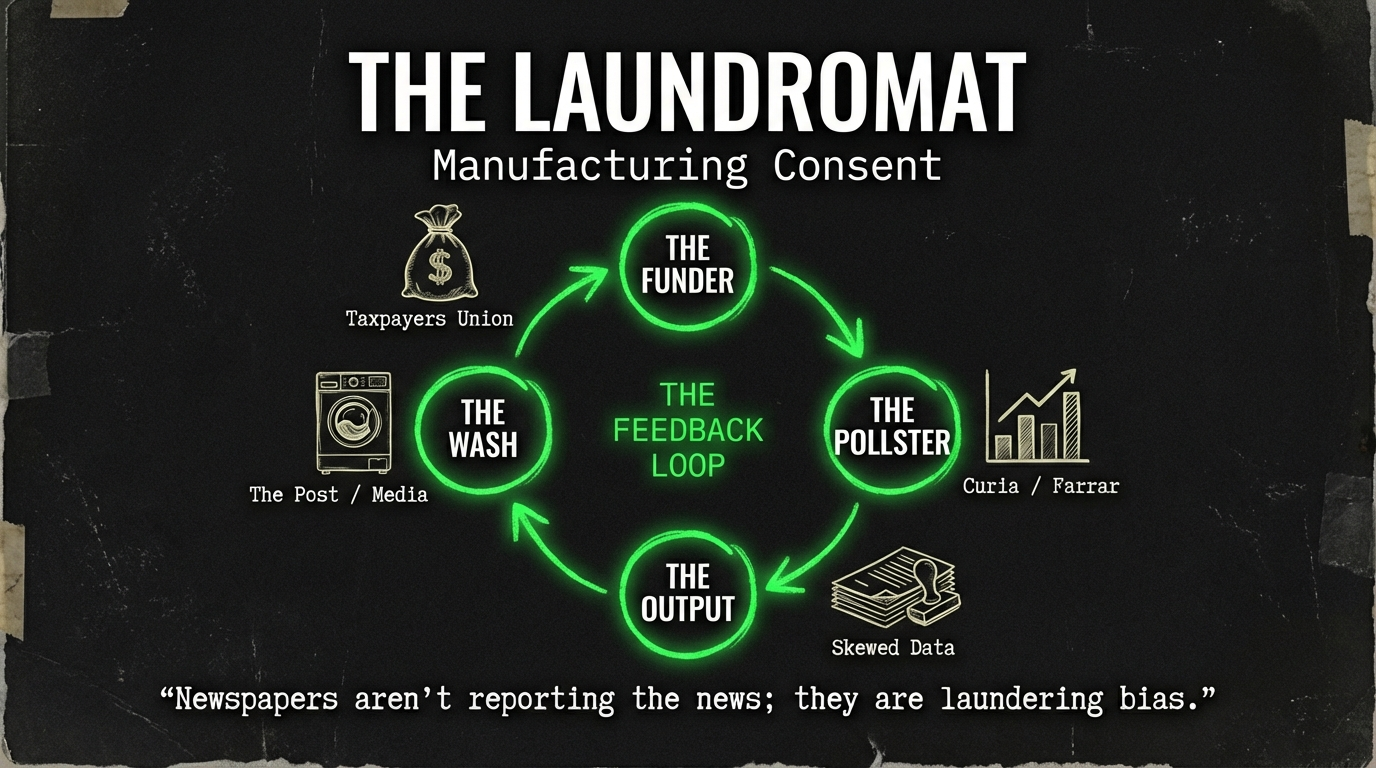
Yet here in Aotearoa, The Post quotes Curia without mentioning Farrar’s expulsion, his Taxpayers Union co-founding, his National Party work, or his systematic methodology violations.
This isn’t journalism. It’s laundering.
Hidden Connection #3: Reform UK’s Fascist Whakapapa
The Post describes Reform UK as “a populist right wing party that formed out of the Brexit movement, with strong anti-Immigration and anti public spending positions.”
This is like describing a flood as “unexpected moisture.”
Political scientist Cas Mudde’s framework—widely used in academic literature—classifies Reform UK as radical right: parties that “accept the essence of democracy, but oppose fundamental elements of liberal democracy,” particularly the principle that all humans have inherent dignity and universal rights.
The evidence?
Undermining Democratic Norms: Nigel Farage has repeatedly questioned election results without evidence, including claiming Peterborough (2019), Rochdale (2024), and Oldham (2015) elections were “dead” due to “ethnic changes in the way people are voting.”
Attacks on Human Rights: Farage advocates withdrawing from the European Convention on Human Rights—the post-WWII framework designed to prevent authoritarian abuses.
Racist Rhetoric: Farage has expressed admiration for Enoch Powell’s “Rivers of Blood” speech, claimed Romanians lack “British values,” and stated Muslims in Britain want to “form a fifth column and kill us.” His 2016 “Breaking Point” poster was widely compared to Nazi propaganda.
Alliances with Fascists: In 2014, Farage partnered with Sweden Democrats, a party with Nazi roots. By 2025, far-right figures including Nazi sympathizer Mark Collett were outlining strategies to “infiltrate” Reform UK to advance “pro-white” agendas.
Policy Radicalization: Reform UK’s platform includes a “freeze” on non-essential immigration and a proposal to deport up to 600,000 migrants—a policy Farage himself called a “political impossibility” in 2024 before embracing it in 2025.
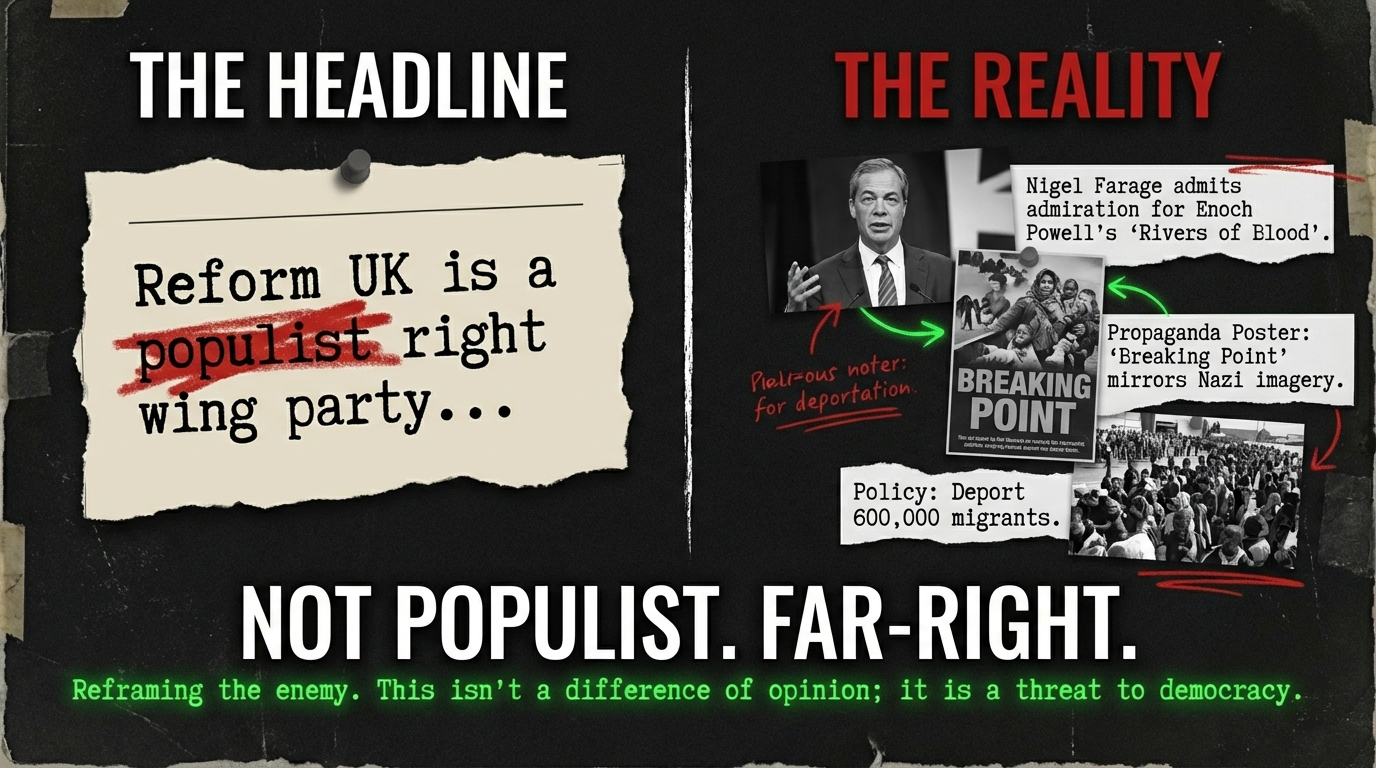
This is not “populist right-wing.” This is far-right nationalism cloaked in democratic language.
And NZ First is building ties with them.
Hidden Connection #4: Winston Peters’ International Fascist Network
The Post reports that Gawain Towler—Reform UK board member and former director of communications—met with Winston Peters and Shane Jones in January 2026 to discuss “strategy, policy and the challenges of power.”
Towler previously served as UKIP’s chief press officer (2004-2017) under Farage, before joining the Brexit Party (later Reform UK) as director of communications (2019-2024). He now sits on Reform UK’s governing board.
Peters met Farage in London in November 2025, calling Reform UK’s polling surge “utterly unprecedented” and describing them as “definitely friends.”
This follows a pattern documented by scholars studying international cooperation of the populist radical right. These parties forge “transnational relations of equivalence” by:
- Endorsing each other’s political projects
- Using shared signifiers (”globalists,” “put our country first”)
- Organizing joint meetings and programmatic statements
- Articulating common enemies (migrants, “woke elites,” multilateral institutions)
The goal? Build what researchers call a “counter-hegemonic project” to dismantle liberal democratic norms and international cooperation frameworks.
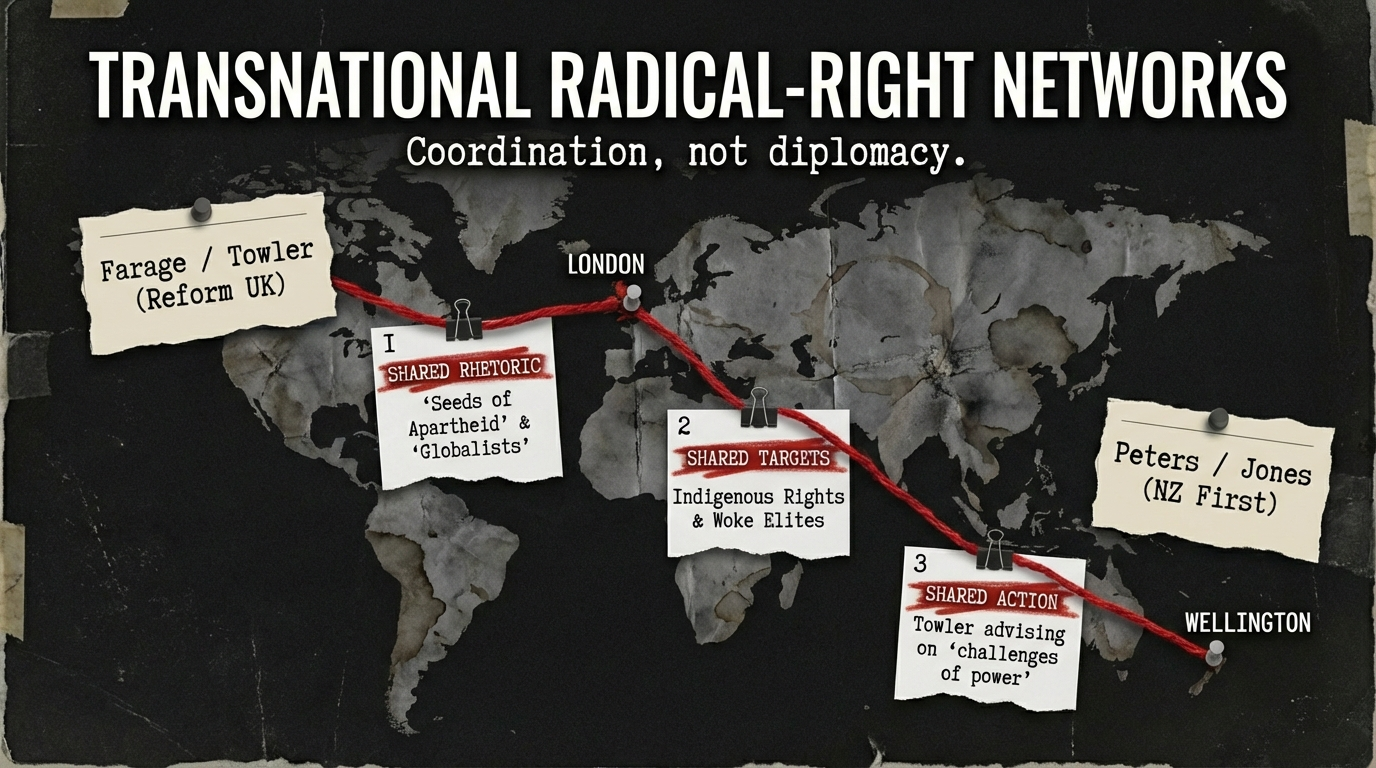
Peters’ rhetoric mirrors this strategy. He’s called for ending “special treatment” of Māori, warned of “seeds of apartheid” in legislation, introduced a bill to remove DEI from public service (following Trump), and proposed a bill defining “woman” as “adult human biological female.”
In July 2025, Peters told media that “careless immigration policies” are “transforming cities” overseas and called Farage’s Reform “compelling.”
This isn’t diplomacy. It’s coordination.
Hidden Connection #5: The Journalist Who Asked No Questions
Anna Whyte is a senior political reporter for The Post and Stuff, chair of the Parliamentary Press Gallery Executive, and a graduate of Massey University’s journalism program.
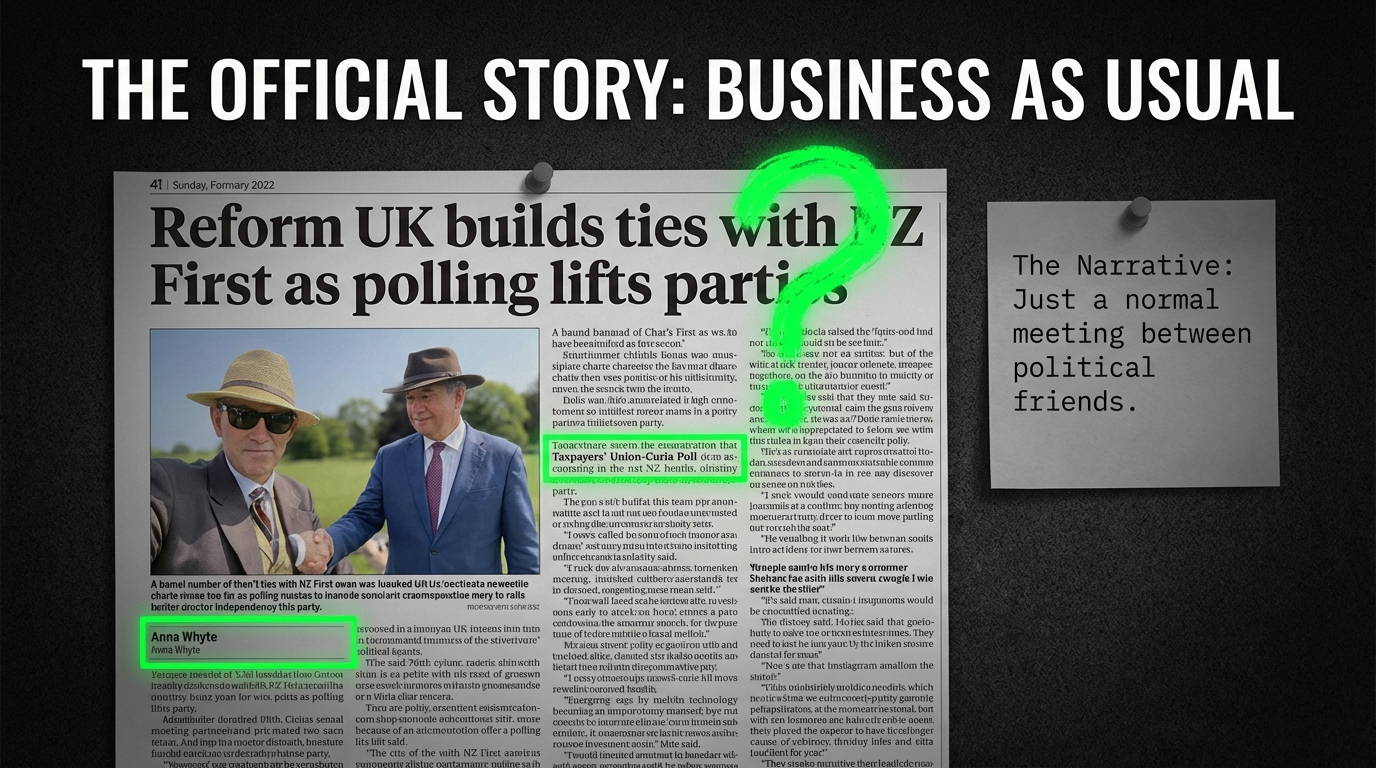
Her article quotes Towler, Peters, and the Curia poll without:
- Disclosing Curia’s RANZ expulsion
- Mentioning Farrar’s conflicts of interest
- Providing context on Reform UK’s far-right classification
- Asking Peters about the implications of aligning with a party whose leader traffics in racist conspiracy theories
- Questioning whether NZ First’s international alliances signal a shift toward more extreme positions
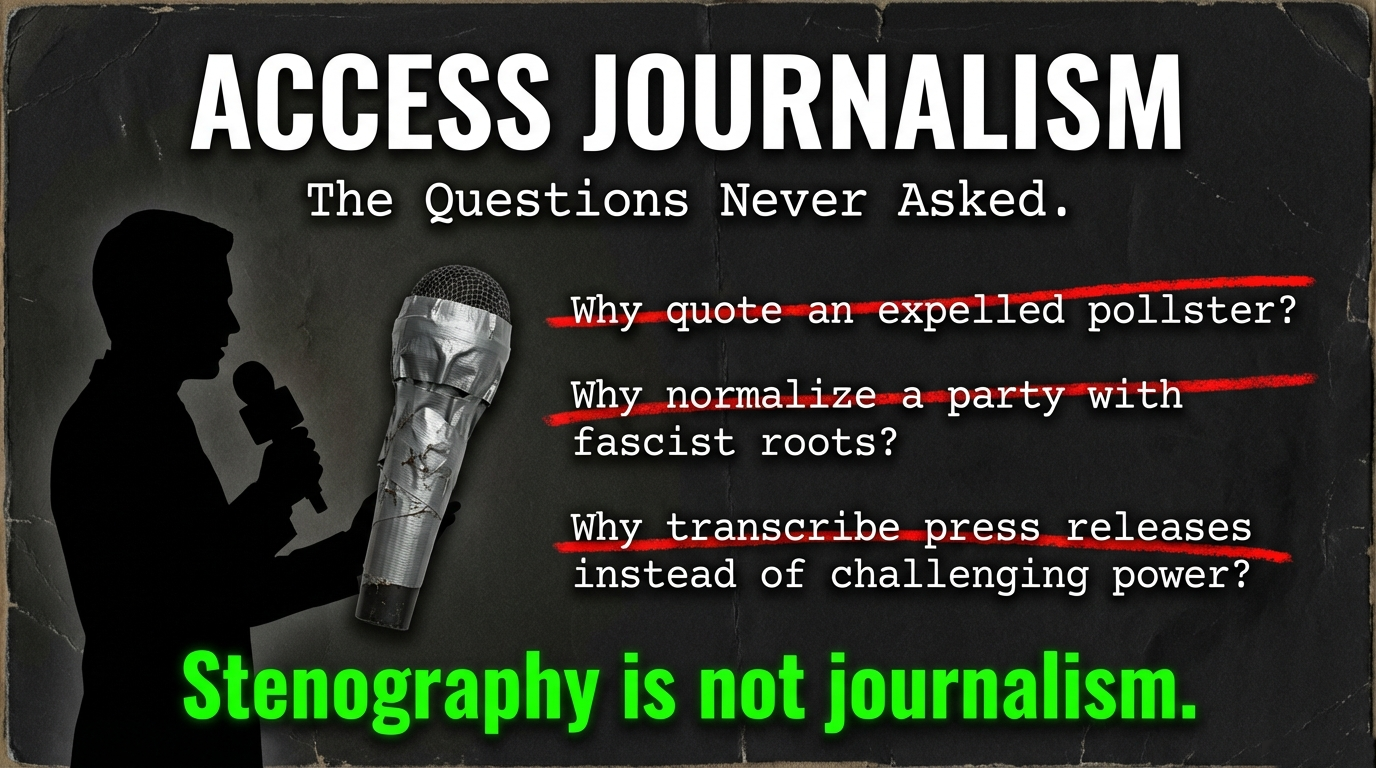
Instead, the piece reads like stenography. Towler says NZ First and Reform UK are “friends”—it’s quoted verbatim. Peters says they’re going to “turn your polls into confetti”—transcribed without analysis. The Curia poll shows 12%—reported as fact.
Where are the questions?
- Mr. Peters, Nigel Farage has expressed admiration for Enoch Powell and produced imagery compared to Nazi propaganda. Are these views you share?
- Mr. Towler, Reform UK has been described by scholars as “far-right” due to attacks on human rights and racist rhetoric. How do you respond?
- Why should readers trust polling from a firm that resigned from its professional association while facing expulsion?
These questions were never asked. Or if asked, never reported.
This is access journalism—the practice of trading critical scrutiny for continued access to sources. It’s how power operates: by rewarding compliant journalists and freezing out critical ones.
The Quantified Harm: What’s At Stake
When newspapers launder discredited polling data and normalize far-right alliances, they don’t just mislead readers—they manufacture consent for policies that inflict measurable harm.
Polling Manipulation Harms Democracy: When citizens believe fake or methodologically compromised polls, they make voting decisions based on false information. Research shows that exposure to polling data influences voter behavior through “bandwagon effects” (supporting perceived winners) and “underdog effects” (supporting perceived losers). Discredited polls poison this process.
Far-Right Normalization Enables Violence: The UK experienced mass far-right riots in summer 2025, with racist attacks targeting Muslims, Asians, and migrants following Tommy Robinson’s “Unite the Kingdom” rally (attended by 110,000-150,000 people) and Nigel Farage’s inflammatory rhetoric. When mainstream media treats far-right parties as legitimate rather than extreme, it creates permission structures for violence.
Anti-Immigration Rhetoric Fuels Xenophobia: NZ First’s 2020 proposal for a “respecting New Zealand values” law targeting migrants sparked accusations of racism and “identitarian” politics. When Peters forms alliances with figures like Farage—whose party advocates deporting 600,000 migrants—it signals that xenophobic positions are acceptable.
Undermining Māori Rights: Peters’ rhetoric about “seeds of apartheid” and proposals to end “special treatment” of Māori align with broader far-right strategies to dismantle indigenous rights frameworks. When newspapers uncritically amplify these positions, they participate in colonial erasure.
The Fallacies: How The Post Deceives
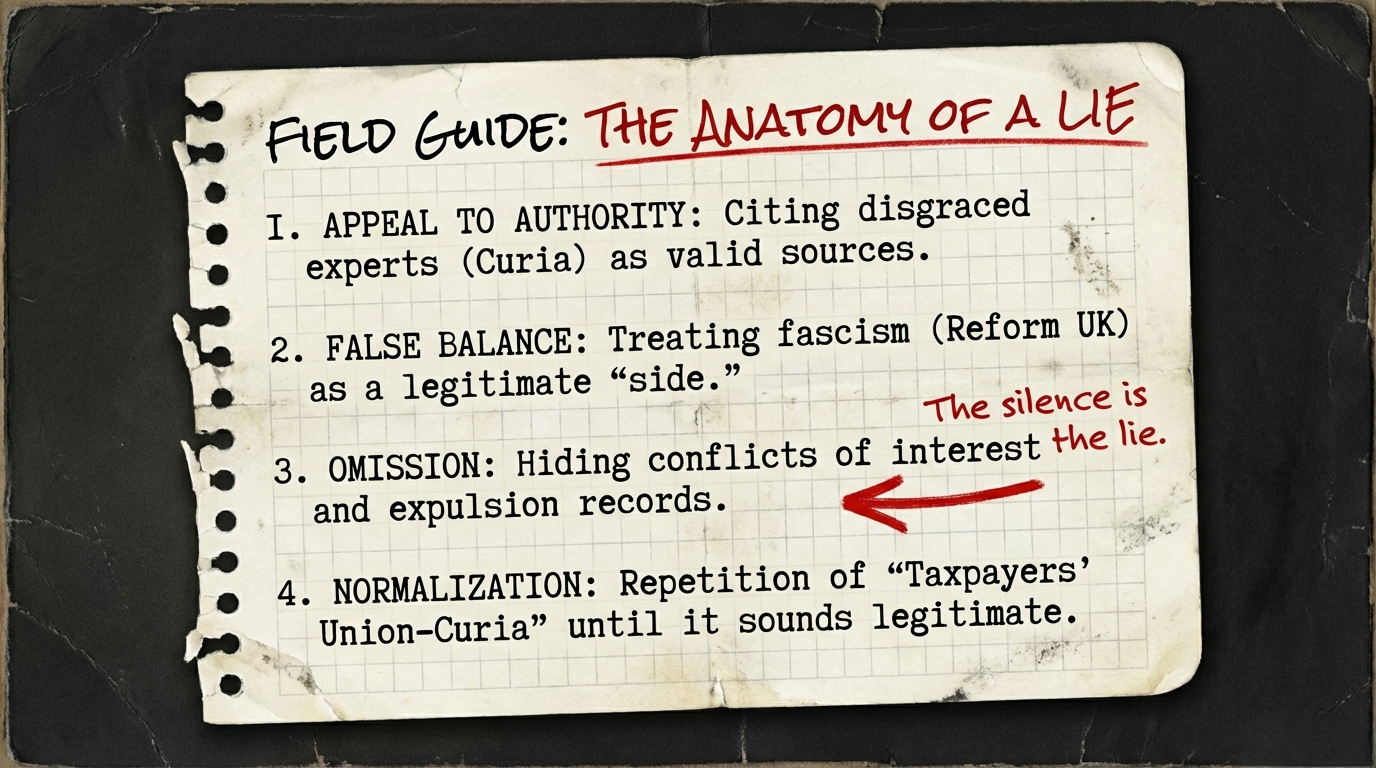
Appeal to Authority Fallacy: The article cites Curia polling as authoritative without disclosing the pollster’s professional disgrace. This is like quoting a disbarred lawyer on legal matters without mentioning they lost their license.
False Balance Fallacy: The article presents Reform UK and NZ First’s alliance as a legitimate political development without providing context on Reform UK’s extremism. This creates false equivalence between democratic parties and far-right movements.
Omission Fallacy: By failing to disclose Curia’s RANZ expulsion, Farrar’s conflicts of interest, and Reform UK’s racist rhetoric, The Post commits lies of omission—providing technically true information while hiding crucial context.
Normalization Through Repetition: Every uncritical mention of “Taxpayers’ Union-Curia Poll” normalizes both organizations, creating the impression of legitimacy through sheer repetition.
Cui Bono? Who Benefits?
David Farrar’s Curia: Gets to continue selling polling services despite professional expulsion, maintaining income stream and influence.
Taxpayers Union: Receives free publicity in every poll mention, amplifying their reach as a right-wing lobby group.
NZ First: Gets positive press coverage of their polling surge and international alliances, building momentum ahead of the 2026 election.
Reform UK: Gains legitimacy through association with a governing party in another Five Eyes nation, supporting their claim to be mainstream rather than extreme.
The Post/Stuff: Maintains access to Peters and other powerful sources by providing uncritical coverage.
Sinead Boucher: Protects Stuff’s business model, which depends on maintaining relationships with politicians who might regulate or subsidize news media.
Cui Malo? Who Suffers?
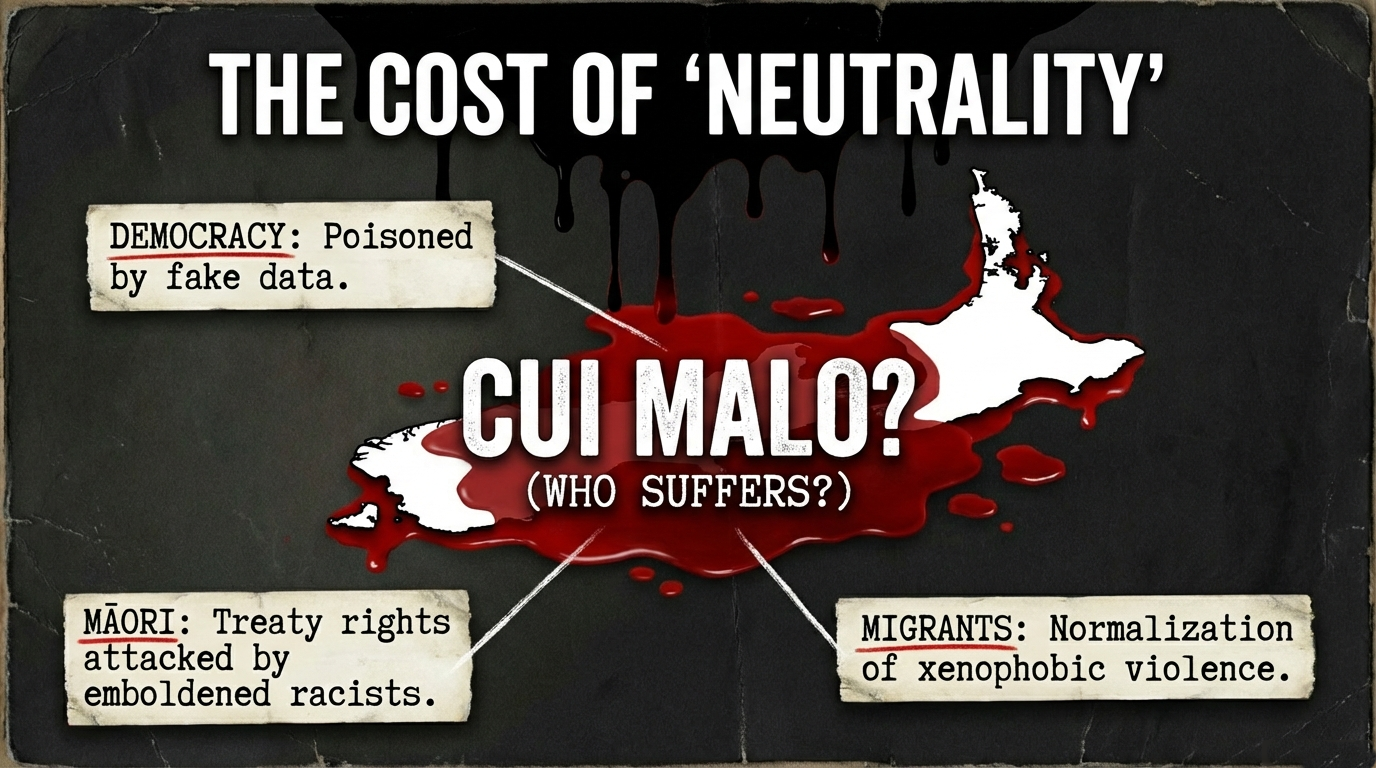
- Voters: Denied accurate information about polling credibility and political extremism, unable to make informed democratic choices.
- Māori: Face continued attacks on Treaty rights and indigenous sovereignty, amplified by media normalization of Peters’ rhetoric.
- Migrants and Refugees: Become targets of xenophobic rhetoric normalized through uncritical reporting on far-right alliances.
- Democratic Institutions: Weakened when professional standards (like RANZ membership) become irrelevant and extremist movements gain mainstream legitimacy.
- Journalism Itself: Loses credibility when readers discover that major outlets hide conflicts of interest and normalize fascism.
The Action Pathways: Mana Motuhake
Whānau, we cannot wait for broken systems to fix themselves. Here’s what rangatiratanga looks like:
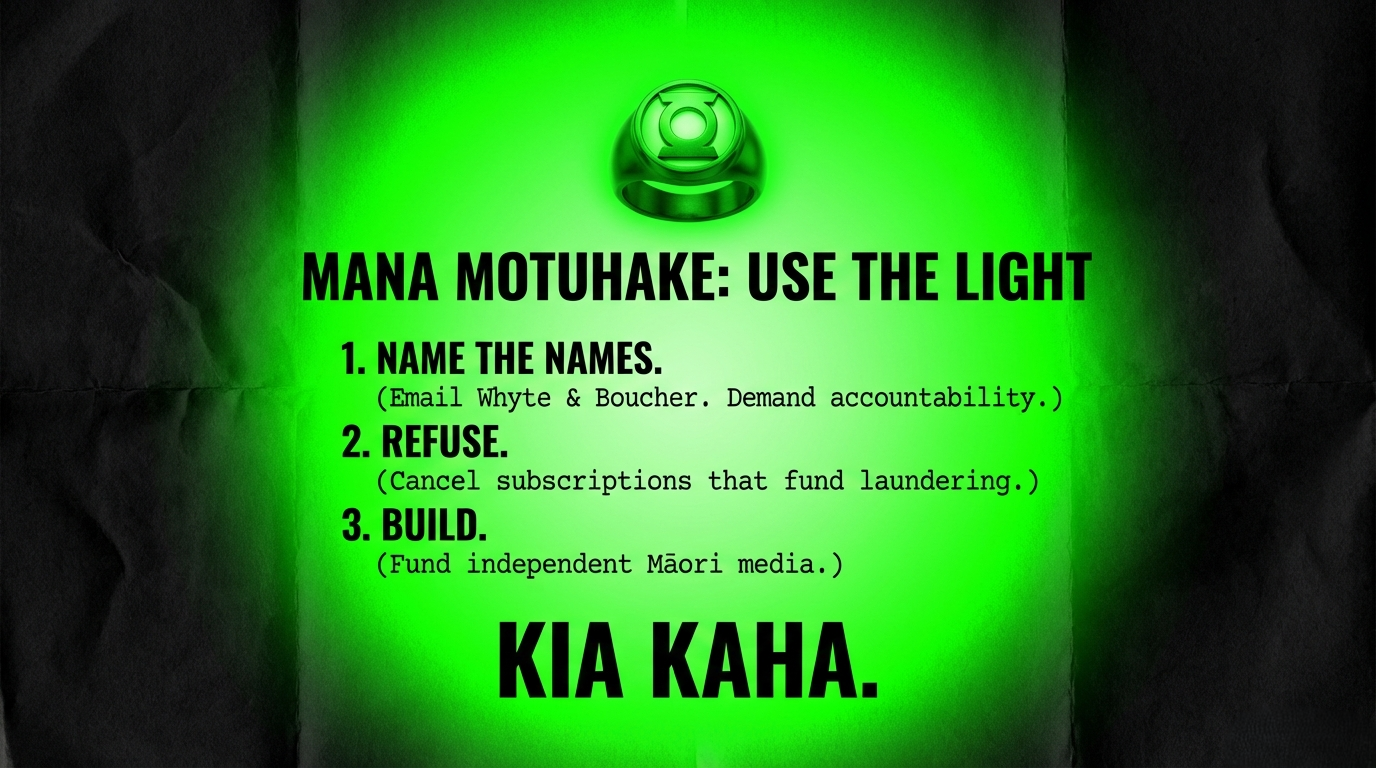
1. Name The Names
- Anna Whyte wrote this story. Email her. Ask why she didn’t disclose Curia’s expulsion.
- Sinead Boucher owns Stuff. She’s responsible for editorial standards. Demand accountability.
- David Farrar runs Curia. Every client who hires him endorses methodology violations. Name them.
2. Refuse To Participate
- Cancel Stuff subscriptions until they adopt disclosure policies for discredited pollsters.
- Demand your unions, iwi organizations, and community groups refuse to engage with Curia polling.
- Support independent media that actually investigates rather than transcribes.
3. Build Alternatives
- Fund Māori and independent journalists who investigate rather than amplify power.
- Create community-led polling methodologies that center transparency and accountability.
- Establish iwi-based media literacy programs that teach critical analysis of mainstream news.
4. Use The Law
- Lodge complaints with the Media Council about The Post’s failure to disclose material conflicts of interest.
- Demand the Broadcasting Standards Authority investigate Stuff’s multimedia outlets for similar violations.
- Support legal challenges to NZ First policies that violate Treaty obligations and human rights law.
The Ring Reveals What’s Hidden
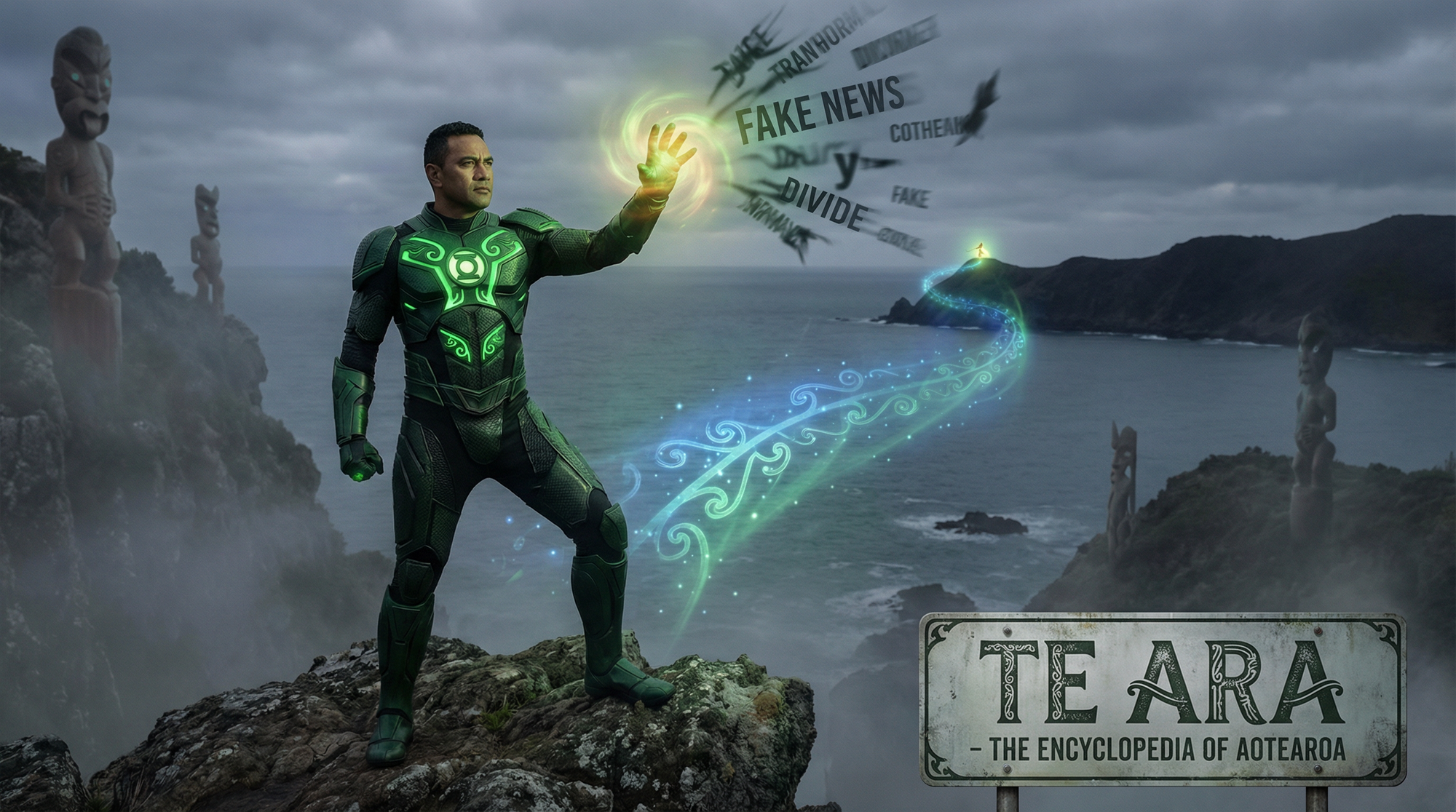
The Green Lantern’s ring doesn’t create light—it reveals what was always there but hidden.
The Post’s article isn’t journalism—it’s infrastructure for fascism. It normalizes expelled pollsters, launders far-right alliances, and manufactures consent for xenophobic politics—all while hiding behind the language of neutral reporting.
Sinead Boucher bought Stuff for $1 in 2020 and has restructured it into separate digital and print divisions, positioning for a potential sale. She’s also joined a right-wing Wellington pressure group called Vision for Wellington. Meanwhile, her journalists face union strikes over pay and conditions.
This is the whakapapa: wealth concentrates, power protects power, and journalism becomes public relations for the right-wing.
But we have power too. We can refuse to consume, refuse to consent, refuse to pretend this is normal.
Every koha to independent Māori media is an act of rangatiratanga. Every email demanding accountability is an exercise of mana. Every conversation that names fascism instead of normalizing it is a form of kaitiakitanga.
The ring shows us what’s hidden. Now we must act on what we see.
Kia kaha, whānau.
Koha Consideration
Three pathways exist:
- Support this mahi directly: Koha platform
- Subscribe for direct delivery: Substack community
- Direct bank transfer: HTDM, account 03-1546-0415173-000
Every koha signals that whānau are ready to fund the accountability that Crown and corporate structures will not provide. It signals that rangatiratanga includes the power to fund our own truth tellers.

Ivor Jones The Māori Green Lantern Fighting Misinformation And Disinformation From The Far Right