“When Power Gets Scared It Gets Dangerous, Kaipara Edition” - 18 October 2025
The Fascist Playbook Unfolds in Real Time as Outgoing Mayor Tries to Overturn an Election He Might Lose
Tēnā koutou katoa, e te whānau. Ko Ivor Jones tōku ingoa, ko The Māori Green Lantern tōku toa. Nō Te Arawa, Ngāti Pikiao ahau. I stand today as kaitiaki against the forces of white supremacy, neoliberalism, and anti-democratic fascism that are eating away at our democracy like rot in the pou of a whare.
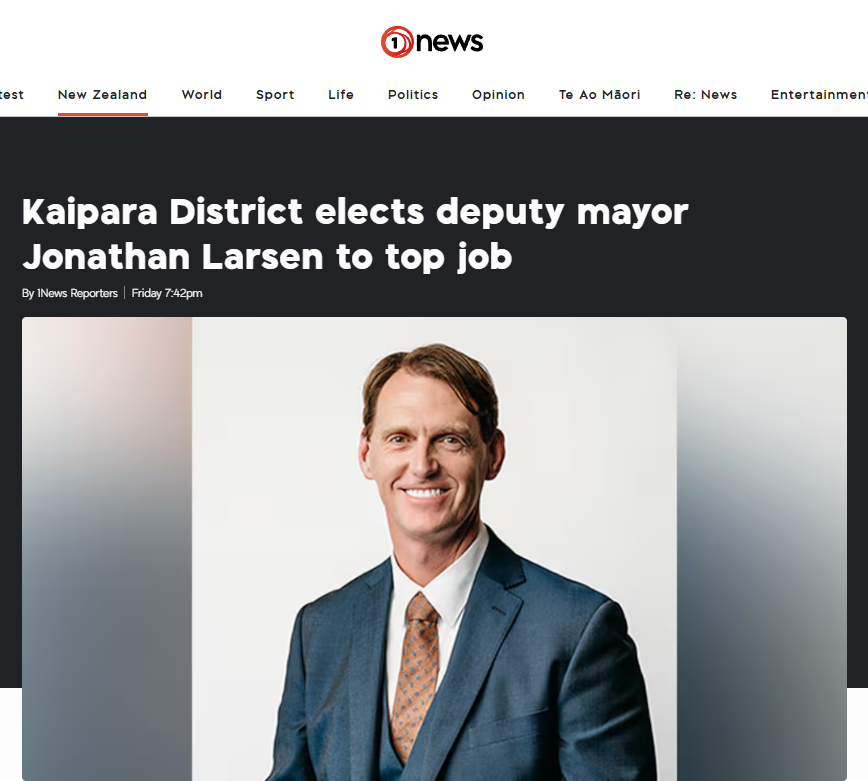
Let me say this plainly from the jump because every New Zealander needs to understand what just happened in Kaipara: A mayor who calls himself the Trump of the North just tried to overturn an election because his chosen successor was losing to an iwi leader by five votes. That is not democracy. That is fascism wearing a hi-vis vest and a concrete truck logo.
Background: How We Got Here and Why It Matters to All of Us
Kaipara District Council established its Te Moananui o Kaipara Māori Ward in October 2020 under Labour’s legislative changes that removed the ability for Pākehā majorities to veto Māori representation through binding referendums. This was progress. This was democracy actually working to include people who had been structurally excluded since colonization.
Enter Craig Jepson, a concrete businessman from Mangawhai who ran for mayor in 2022 on a platform that included opposing the Māori ward, fighting climate change policy, and rejecting co-governance. Jepson proudly calls himself the Trump of the North, which should tell you everything about his democratic credentials and his relationship to truth.
Jepson is a founding member and spokesperson for Democracy Northland, a political organization that campaigned against the Māori ward by presenting a petition to council calling for a binding poll. This is the same rhetoric you hear from the ACT Party and its one law for all propaganda, the same colonial narrative that Māori representation is somehow undemocratic special treatment rather than correcting centuries of structural exclusion.
In August 2024, after the National-ACT-NZ First coalition government passed legislation forcing councils to either abolish their Māori wards or hold binding referendums, Kaipara became the first council in the country to vote to disestablish its Māori ward. Jepson led that charge. His deputy mayor Jonathan Larsen voted with him. The vote was 6-3. Te Moananui o Kaipara Māori Ward councillor Pera Paniora twice opened the chamber doors during the meeting to let waiata and karanga from over 150 protesters flow inside.
Ngāti Whātua filed a judicial review challenging the council’s failure to consult with iwi and hapū before abolishing the ward, but the High Court ruled in December 2024 that the council had met its minimal legal obligations despite the rushed one-week timeline. The law was on the council’s side because the law itself is designed to dismantle Māori representation.
This is the background. A council led by a self-declared Trump supporter systematically dismantled Māori representation, faced no real consequences, and then entered an election in 2025 where that decision would be tested at the ballot box.
The Issue: An Election, Five Votes, and a Manufactured Crisis
The preliminary results released on October 11, 2025 showed deputy mayor Jonathan Larsen, Jepson’s endorsed successor, ahead by just five votes over Snow Tane, the general manager of Te Roroa Development Group and a prominent iwi leader. Former mayor Jason Smith was third, 31 votes behind Larsen. With about 500 special votes yet to be counted, the race was wide open.
Special votes in New Zealand elections typically favor progressive candidates and Māori representation because they include voters who are more mobile, younger, or who face barriers to enrolling on time. Councillor Pera Paniora said she was confident the special votes would swing the result away from Larsen.
This is when Craig Jepson made his move.
On October 15, 2025, less than 24 hours before the final results were due, Jepson called an emergency council meeting using rarely-used provisions of the Local Government Act that allow mayors to bypass the normal three-day notice requirement. The stated purpose was to approve a complaint and request an investigation into the conduct of the 2025 Kaipara District Council election and the Northland Regional Council Māori constituency referendum.
Read that again. The outgoing mayor called an emergency meeting to lodge a complaint about an election that had not even been finalized yet, with no evidence of wrongdoing presented to the public, and with his endorsed candidate clinging to a five-vote lead that was about to evaporate.
The meeting was scheduled for October 16 at 6pm in Mangawhai, to be held behind closed doors. Jepson wanted the complaint to be backed by a majority of council members because of what he called the improprieties that have occurred throughout the district with this whole election.
What were these improprieties? Jepson claimed there had been a huge number of irregularities in the election process, though he provided no specifics at the time. He wanted to lodge the complaint with the Department of Internal Affairs, even though DIA has no jurisdiction over elections.
The council’s own lawyer, speaking at the meeting, said in my view there is no immediate time requirement that needs to be met, directly contradicting Jepson’s rationale for calling an emergency meeting. Electoral officer Dale Ofsoske, who runs Independent Election Services and was contracted to run Kaipara’s elections, said the vote-counting process would continue and the final result would be released late on Friday as planned. He also noted that any candidate or any 10 voters who had concerns could challenge the result within 21 days of a winner being declared, following established legal processes.
In other words, there was no emergency. There was no legal basis for an emergency meeting. The only emergency was that Craig Jepson’s chosen successor was about to lose to an iwi leader, and Jepson needed to manufacture doubt and chaos before the final count.
I put it on today because he put his life on the line for democracy, Linnell said.
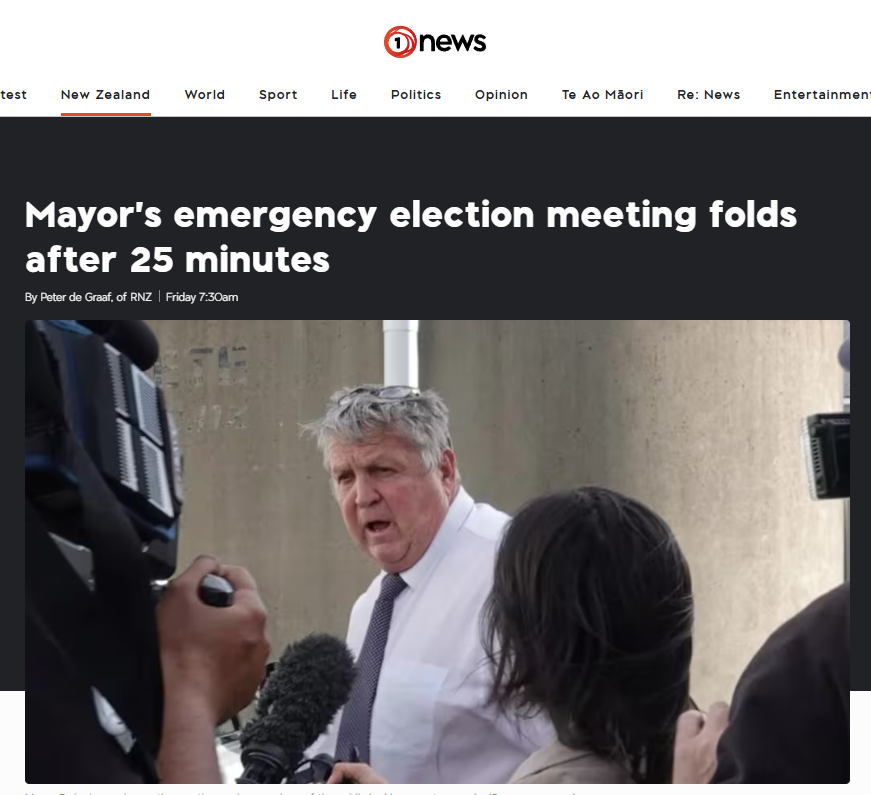
Linnell approached the council table and refused to sit down. Jepson adjourned the meeting after just 25 minutes, calling the behavior unruly. The meeting would resume the next morning at 9am.
Councillor Pera Paniora asked Jepson why he did not make a complaint in his personal capacity instead of dragging our council through the mud. That is the question at the heart of this whole manufactured crisis.
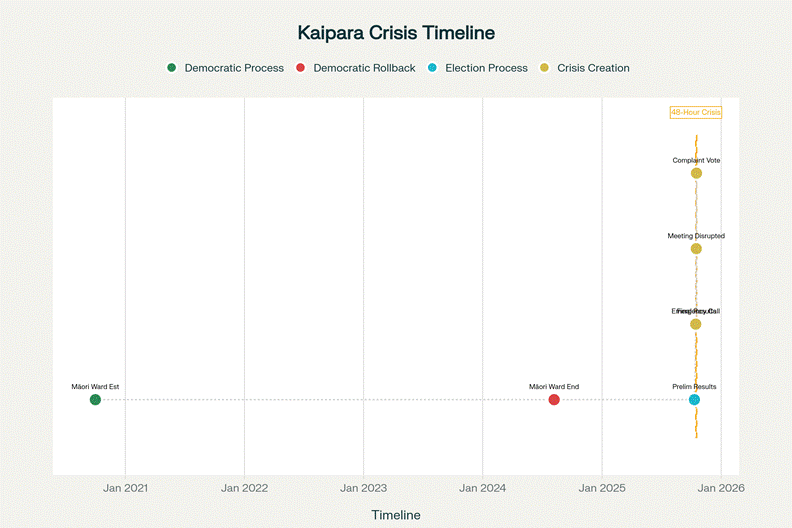
Timeline of Kaipara’s Democratic Crisis: From Māori Ward Establishment to Emergency Meeting Chaos
The Coup Continues: Secret Vote, Attempted Election Delay, and the Results Released Anyway
On Friday morning October 17, the meeting resumed with four police officers and three security guards present. This time Jepson provided some details of his concerns: allegations that some election officers were related to candidates, questions about the 21 chosen locations of mobile voting places, and whether voters had been influenced at some of those voting places.
These are the irregularities that justified an emergency meeting to try to stop an election result? Chief executive Jason Marris said he was confident the council had run a robust and proper process, and that small issues had been raised and addressed. One complaint had been referred to Dale Ofsoske, the electoral officer, who had referred it to police.
Then came the most brazen part of the attempted coup. Deputy mayor Jonathan Larsen, Jepson’s endorsed candidate who was still leading by five votes, raised the prospect of delaying the release of the final result until the complaint had been resolved. That was met by a chorus of loud booing from the public.
It will be proceeding. Not to do so would be breaking the law, Ofsoske said, prompting cheers from the public gallery.
Let that sink in. Larsen, the candidate who stood to benefit from delaying the count, asked whether the election could be paused. He was asking whether democracy itself could be suspended because he and his patron Jepson were afraid of losing.
It also emerged that Jepson had requested a list of all electoral officers involved in the Kaipara election, but Ofsoske had refused, citing safety reasons. Think about what that means. The outgoing mayor wanted the names of election workers so badly that the electoral officer feared for their safety if he provided them. That is intimidation. That is authoritarian behavior designed to chill democratic participation.
The meeting was held behind closed doors. Four councillors unsuccessfully fought for the decision about the complaint to be made in public. Councillor and mayoral candidate Ash Nayyar, along with Pera Paniora, Mark Vincent and Eryn Wilson-Collins voted against the decision being made in secret.
Councillors voted 5-3 to back Jepson’s complaint letter to the Department of Internal Affairs. Wilson-Collins said the decision was made in spite of the senior electoral officer Dale Ofsoske and council lawyer Warren Bagma advising the intent of the election process challenge could not be achieved.
That night, the final results were released showing Jonathan Larsen had won with 3138 votes to Snow Tane’s 3117 votes, a margin of just 21 votes. Jason Smith finished with 3081 votes.
Democracy proceeded despite Jepson and Larsen’s best efforts to stop it. But the damage was done.
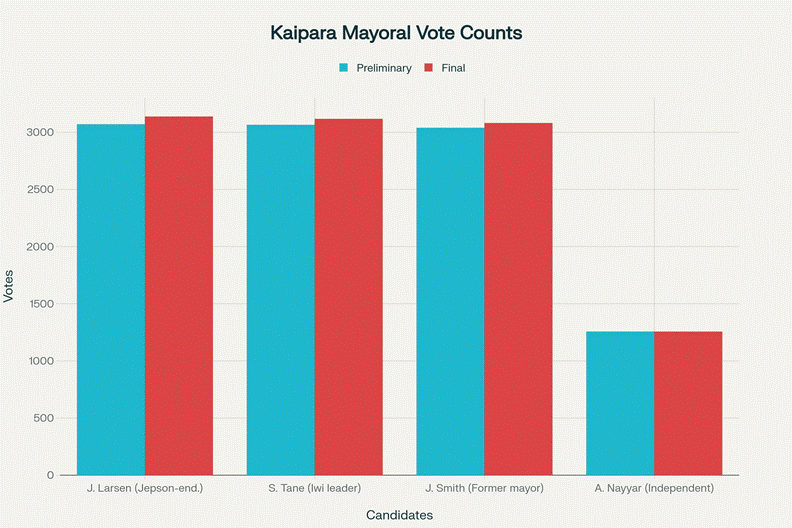
Kaipara Mayoral Race: A 21-Vote Margin That Triggered a Democratic Crisis
Unpacking the Fascist Playbook, the White Supremacy, and the Neoliberal Rot
This is not complicated. Let me walk you through exactly what happened here using the analytical framework we need to understand authoritarianism in Aotearoa.
Tactic One: Preemptive Delegitimization
Jepson called his emergency meeting before the final results were even released, claiming irregularities without evidence. This is straight from the authoritarian playbook: you do not wait to see if you lose, you preemptively claim the election is rigged so that when you do lose, your supporters believe the system is corrupt rather than accepting democratic defeat.
Donald Trump did this in 2020. He spent months before the election claiming mail-in ballots were fraudulent, then when he lost, millions of his supporters believed the Big Lie because he had primed them to reject any result that did not favor him. Craig Jepson is running the exact same play in Kaipara, and media outlets are letting him do it by treating his allegations as if they have merit worthy of investigation rather than recognizing them as an attempted coup.
Tactic Two: Invoking Emergency Powers to Bypass Democratic Norms
Jepson used the emergency meeting provision to bypass the normal three-day notice requirement, which meant councillors and the public had less than 24 hours to prepare and respond. The council’s own lawyer said there was no immediate time requirement that justified an emergency meeting. The electoral officer said the normal legal processes for challenging election results were available within 21 days.
So why the emergency? Because Jepson wanted to create the appearance of crisis before anyone could stop him, to manufacture legitimacy for his baseless complaints, and to cast doubt on the democratic process before the final results proved his candidate might lose.
This is how authoritarians operate. They invoke emergency powers not because there is a real emergency but because emergency powers let them bypass the democratic guardrails that would otherwise constrain their actions.
Tactic Three: The Vote Harvesting Dog Whistle
Here is where the white supremacy gets loud. Jepson said when you have entities who are busy enrolling people, and not just enrolling them but telling them how to vote, to me that is harvesting. He also said it has been infiltrated by activists who have made the most of the opportunity to harvest votes and abuse the process.
Let me translate this for you. Vote harvesting is a term imported from American far-right rhetoric where it is used almost exclusively to describe Black and Latino voter mobilization efforts. The allegation is never proven. The real agenda is to delegitimize the democratic participation of communities of color by framing their organizing as fraudulent rather than as legitimate civic engagement.
In Aotearoa, the same playbook targets Māori. When iwi organizations help their communities enroll to vote and provide information about candidates and referendums, that is not vote harvesting. That is democracy. That is civic participation. That is exactly what democracy is supposed to look like when marginalized communities organize to make their voices heard.
Jepson also questioned the need for postal votes and suggested the integrity of the voting process has deteriorated since the last election. He said I think we need to have a national election day for local government where everybody turns up, presents their ID and votes.
This is voter suppression rhetoric dressed up as election integrity. Eliminating postal voting and requiring in-person ID disproportionately disenfranchises Māori, Pasifika, low-income New Zealanders, people with disabilities, and rural communities who face barriers to accessing polling places. It is a solution in search of a problem because there is no evidence of widespread fraud in New Zealand’s postal voting system.
What there is evidence of is that special votes, which include people who enroll late or vote at places outside their home electorate, tend to favor progressive candidates and Māori representation. Jepson knows this. That is why he wants to eliminate postal voting. Not to protect democracy but to rig it in favor of his reactionary white supremacist base.
Tactic Four: The Secrecy and the Coercion
The Friday morning meeting where councillors voted to back Jepson’s complaint was held behind closed doors. Why? What legitimate reason exists to vote in secret on whether to support a complaint about a public election?
The answer is that secrecy allows coercion. Councillors unsuccessfully fought for the decision about the complaint to be made in public. When the vote is secret, councillors face pressure from the mayor and from their colleagues without the accountability that comes from the public knowing how they voted. Secret votes in public bodies are almost always anti-democratic because they shield elected officials from the consequences of their choices.
Tactic Five: The Big Lie Infrastructure
This is textbook authoritarianism. You take your local manufactured crisis and you scale it up into a national conspiracy theory. You claim without evidence that the entire electoral system is compromised. You say people with vested interests are controlling the process, which is a classic anti-Semitic and white supremacist trope that always means some shadowy cabal of elites rather than acknowledging that democracy means everyone gets a say.
This is how fascists operate. They do not just contest one election. They contest the legitimacy of all elections so that when they lose, they can claim the system itself is rigged and justify anti-democratic seizures of power.
Tactic Six: Attempting to Stop the Count
Larsen asking whether the election could be paused is perhaps the most brazen part of this attempted coup. He directly asked the electoral officer whether the DIA had the power to halt the release of results. This is not a theoretical question. This is a candidate who is leading by five votes asking whether democracy can be suspended to prevent him from potentially losing.
Stop the count is what Trump supporters chanted in Detroit and Philadelphia in 2020. It is what happens when authoritarians realize they might lose: they try to stop democracy in its tracks.
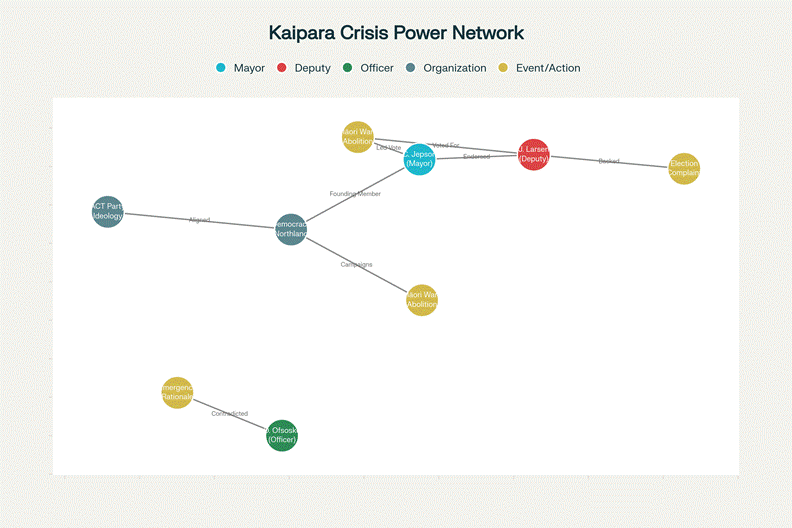
The Power Network Behind Kaipara’s Anti-Democratic Crisis: Following the Money, Ideology, and Connections
The Hidden Connections: Following the Money, Power, and Ideology
Now let me expose the networks that make this all possible, because this is not just one racist mayor having a tantrum. This is part of a coordinated national assault on Māori rights and democratic norms.
Craig Jepson is a founding member of Democracy Northland, which campaigned against the Māori ward by petitioning for a binding referendum. Democracy Northland is not a grassroots community group. It is a political organization aligned with the one law for all movement that has been pushing anti-Māori policies for decades.
The one law for all rhetoric has a long history in Aotearoa. It was a key platform of the ACT Party under Don Brash, who gave his infamous Orewa speech in 2004 arguing that Māori should not have any special legal status or representation. The 1Law4All Party was registered in 2013 specifically to oppose the Treaty of Waitangi, Māori electorates, and indigenous rights, though it never contested an election and was deregistered in 2015.
The ACT Party in the current coalition government has made attacking Māori representation a centerpiece of its agenda, with the Local Government Electoral Legislation and Māori Wards and Māori Constituencies Amendment Act 2024 that forced councils to either abolish Māori wards or hold binding referendums. ACT leader David Seymour has consistently argued that Māori wards are divisive and undemocratic, using the language of equality and non-discrimination to dismantle indigenous representation.
Legal researcher Andrew Erueti of Auckland Law School has documented how human rights language designed to protect against discrimination is now being weaponized to block Māori authority and governance, with politicians increasingly claiming that Māori measures are discriminatory against non-Māori. This is exactly what Jepson did when he said Māori wards rely on a false narrative that Māori are unfairly disadvantaged and suffer from systemic racism.
This is white supremacy hiding behind the language of equality. It is the same tactic used to oppose affirmative action in the United States, to oppose indigenous land rights in Australia and Canada, and to oppose every single attempt to correct centuries of structural oppression. The people who benefit from systemic inequality always claim that correcting that inequality is itself a form of discrimination against them.
The neoliberal dimension is equally important. Jepson ran a concrete business for over 40 years and has consistently opposed climate change policy, government regulation, and public investment in infrastructure. He withdrew Kaipara District Council from Local Government New Zealand, the national representative body for councils, arguing it was a waste of ratepayer money. He also got rid of the council’s climate change policy in 2023, with Larsen bringing the motion to the table.
This is neoliberal nihilism at its core. The belief that collective action is pointless, that government should do nothing, that individual property rights and business interests always trump community needs or environmental protection. It is the same ideology that opposes Te Tiriti obligations because honoring the Treaty requires the state to act, to redistribute resources, to constrain private property rights in favor of collective indigenous rights.
Dale Ofsoske, the electoral officer whose company Independent Election Services was contracted to run Kaipara’s elections, has been running elections in New Zealand for over 40 years. The privatization of election administration is itself a neoliberal project that turns a core democratic function into a profit-making enterprise. While Ofsoske acted with integrity by refusing to halt the count and refusing to provide the list of election workers to Jepson, the structure creates a conflict of interest where electoral officers are accountable to the councils that hire them rather than to an independent public body.
Implications: What This Means for Democracy in Aotearoa
If you think this is just a Kaipara problem, you are dangerously naive. This is a test case. Jepson and his allies are testing how far they can push the authoritarian playbook before someone stops them.
They successfully abolished the Māori ward in August 2024 and faced a judicial review that upheld their decision because the law itself was designed to dismantle Māori representation. That judicial review cost Kaipara ratepayers over 180,000 dollars to defend.
They then ran an election where the deputy mayor who voted to abolish the Māori ward was endorsed by the outgoing mayor and won despite facing an iwi leader who represented the communities that had been disenfranchised. When the result was too close to call, they manufactured an election integrity crisis to delegitimize the process regardless of the outcome.
The message to Māori communities is clear: even when you organize, even when you mobilize, even when you nearly win despite systemic disenfranchisement, we will question your legitimacy and paint your participation as fraudulent.
The message to other councils is equally clear: you can dismantle Māori representation, face minimal consequences, and when challenged, you can simply ignore democratic norms and manufacture crises to maintain power.
Forty-two councils around New Zealand held binding referendums on Māori wards at the 2025 elections as a result of the coalition government’s legislation. At Northland Regional Council, where Kaipara voters also had a say, the referendum showed 30,967 votes to remove the Te Raki Māori constituency versus 29,589 votes to keep it, a margin of just 1,378 votes. History shows these referendums almost always result in Māori wards being abolished because referendums put minority rights up to majority vote, which is the definition of tyranny of the majority.
Kaipara’s voter turnout was 57.4 percent in the preliminary count and 58.4 percent final, one of the highest in the country. That high turnout happened despite Jepson’s attempts to cast doubt on the election. It happened because people like Peter Linnell put on their father’s WWII uniform and stood up for democracy. It happened because councillors like Pera Paniora, Eryn Wilson-Collins, Mark Vincent and Ash Nayyar refused to go along with the manufactured crisis.
But how many times can democracy withstand these attacks before it breaks?
The Legal Reality: Jepson’s Complaint Is Meaningless and He Knows It
That is the key point. Jepson knows his complaint to DIA is legally meaningless. His own council lawyer and electoral officer told him the complaint would not achieve anything. He did it anyway because the point was never to actually investigate anything. The point was to manufacture doubt, to delegitimize the election, to poison the well so that Larsen’s narrow victory would always be tainted by questions about integrity.
This is the Big Lie strategy. You do not need to prove fraud. You just need to create enough doubt that people stop believing in the legitimacy of democratic institutions.
Democracy Held, Barely, But the Threat Remains
Democracy survived in Kaipara by the slimmest of margins. Not just the 21-vote margin that separated Larsen from Tane, but the margin between Dale Ofsoske saying the count would proceed regardless and Larsen asking if it could be stopped. The margin between Peter Linnell standing up in his father’s uniform and everyone else staying silent. The margin between four councillors demanding a public vote and the other five voting in secret.

The Māori Green Lantern Fighting Misinformation And Disinformation From The Far Right
Craig Jepson called himself the Trump of the North and then proved it by running the exact same playbook Trump ran in 2020. Preemptive delegitimization. Emergency powers. Vote harvesting conspiracy theories. Demanding lists of election workers. Attempting to stop the count. Manufacturing a national crisis narrative from a local dispute.
The only difference is that in Kaipara, democracy held. The electoral officer refused to be intimidated. The final results were released on time. A 76-year-old man in a WWII uniform reminded us what we are fighting for.
But we cannot count on getting lucky every time. The forces arrayed against Māori representation and democratic participation are coordinated, well-funded, and increasingly brazen. They control the levers of government through the coalition. They have rewritten the laws to make Māori wards vulnerable. They have mainstreamed white supremacist rhetoric as concerns about election integrity.
Next time, the Peter Linnells might not be there. Next time, the Dale Ofsoskes might be replaced with contractors more willing to do what the mayor wants. Next time, the margin might be even smaller and the pressure even greater.
This is why we must name what happened in Kaipara for what it was: an attempted coup. A fascist mayor and his chosen successor trying to overturn an election because they were afraid of losing to an iwi leader. They failed this time, but they will try again, and the consequences of their failure were minimal while the precedent they set is dangerous.
To the whānau in Kaipara and across Aotearoa: democracy is not something we have, it is something we do. Every time we stand up like Peter Linnell did. Every time we vote despite attempts to suppress us. Every time we refuse to accept the Big Lie. Every time we name white supremacy and authoritarianism for what they are.
Kia kaha. Kia maia. Kia manawanui.
The fight continues.
For readers who find value in this work and wish to support the cause, please consider a koha to HTDM: 03-1546-0415173-000. These are tough economic times for whānau, so please only contribute if you have capacity and wish to do so. The fight for truth and justice requires resources, but it requires solidarity more.
Nāku noa, nā
Ivor Jones
The Māori Green Lantern
Kaitiaki o te Tika
⁂

1. https://www.1news.co.nz/2025/10/17/kaipara-district-council-elects-deputy-mayor-jonathan-larsen-to-top-job/
2. /content/files/2412-13098.pdf
3. https://www.kaipara.govt.nz/news/post/905-Declaration-of-official-local-elections-results
4. https://www.1news.co.nz/2025/10/17/kaipara-council-backs-craig-jepsons-election-complaint-in-secret-vote/
5. https://www.nzherald.co.nz/northern-advocate/news/jonathan-larsen-wins-razors-edge-race-for-kaipara-mayoralty-recount-possible/QSPZMJ6VMJGQNFOBZZMYLL66VQ/
6. https://www.kaipara.govt.nz/elections
7. https://www.rnz.co.nz/news/national/576201/kaipara-councillors-to-lodge-complaint-over-mayor-s-vote-irregularity-claim
8. https://www.kaipara.govt.nz/news/post/902-Progress-results-for-local-elections
9. https://www.nzherald.co.nz/northern-advocate/news/local-body-election-2025-jonathan-larsen-wins-kaipara-mayoralty-by-21-votes-in-final-count/BL2VASNA5JAP5DOSFGT4GBKKEU/
10. https://www.1news.co.nz/2025/10/17/councillors-to-lodge-complaint-after-mayors-vote-irregularity-claim/
11. https://www.facebook.com/newstalkzb/posts/kaiparas-outgoing-mayor-has-called-an-emergency-meeting-to-question-the-integrit/1206252371525938/
12. /content/files/2403-13275.pdf
13. https://www.nzherald.co.nz/northern-advocate/news/local-body-elections-2025-whangarei-and-kaipara-final-election-results-confirm-new-mayors/7PXDISRVQZDN5DUDD3YJBIHBZ4/
14. https://www.facebook.com/TeAoMaoriNews/posts/outgoing-kaipara-mayor-craig-jepson-has-succeeded-in-forcing-a-council-vote-to-a/1127290012870563/
15. https://www.facebook.com/tekareremaorinews/videos/kaipara-councillors-push-to-complain-over-alleged-irregular-election-results/1157973102942960/
16. https://www.facebook.com/KaiparaDistrictCouncil/posts/the-progress-results-for-the-2025-kaipara-district-council-local-government-elec/1246140364222949/
17. https://www.nzherald.co.nz/nz/mayors-emergency-meeting-questioned-by-council-lawyer-local-electoral-officer/LMBOLGQW3ZAVHITPNKTXVVSKYI/
18. https://www.lgnz.co.nz/local-government-in-nz/2025-local-election-results/
19. https://www.facebook.com/1NewsNZ/posts/jepson-had-sought-council-backing-for-an-election-process-complaint-he-wanted-to/1270786925091496/
20. https://www.nrc.govt.nz/your-council/elected-members/elections/2025-local-elections/results-2025/
21. https://www.nzherald.co.nz/northern-advocate/news/kaipara-mayor-craig-jepson-calls-emergency-meeting-over-election-complaint/ZCOZSABKANDYPAWMSOEMDVFGBI/
22. https://www.rnz.co.nz/news/political/576201/kaipara-councillors-to-lodge-complaint-over-mayor-s-vote-irregularity-claim
23. https://arxiv.org/html/2409.11627v1
24. https://www.1news.co.nz/2025/09/10/election-blunder-maori-ward-candidate-profiles-left-out-of-voting-packs/
25. https://www.rnz.co.nz/news/alert-nat/576201/kaipara-councillors-to-lodge-complaint-over-mayor-s-vote-irregularity-claim
26. https://www.nzherald.co.nz/nz/politics/local-election-results-new-mayors-confirmed-after-razorthin-vote-margins/ACTFKX2QU5DCHBC7BPMF2TBUYA/
27. https://www.rnz.co.nz/news/top/576073/outgoing-kaipara-mayor-calls-emergency-meeting-into-election-conduct
28. https://www.1news.co.nz/2025/10/16/what-to-do-when-someone-at-work-is-annoying-and-is-it-bullying/
29. https://www.nzherald.co.nz/nz/kaipara-district-council-backs-craig-jepson-election-complaint-in-secret-vote/YGS3QWCZYRHEBCICHOEAUB7M6M/
30. https://www.rnz.co.nz/news/alert-nat/576143/mayor-s-emergency-meeting-questioned-by-council-lawyer-local-electoral-officer
31. https://www.1news.co.nz/2025/10/17/democrats-say-trump-needs-to-be-in-shutdown-talks-shown-little-interest/
32. https://www.1news.co.nz/2025/10/17/mayors-emergency-election-meeting-folds-after-25-minutes/
33. https://www.1news.co.nz/2025/10/16/outgoing-kaipara-mayor-calls-emergency-meeting-into-election-conduct/
34. https://pmc.ncbi.nlm.nih.gov/articles/PMC9633829/
35. https://www.nzherald.co.nz/nz/local-elections-2025-find-mayoral-and-election-results-on-our-interactive-tool/B73LL7FUMJBKXE6NHL2LVUYDXM/
36. https://dl.acm.org/doi/pdf/10.1145/3613904.3642329
37. /content/files/2401-05065.pdf
38. https://zenodo.org/record/3603020/files/JSP0487 samrit .pdf
39. https://arxiv.org/html/2308.04100v2
40. /content/files/2205-14634.pdf