“When Racism Wears Different Faces, It's Still Racism: How Kim Webby Exposes Our Historical Amnesia” - 20 September 2025
Kim Webby's courage puts a mirror to our ugly truth
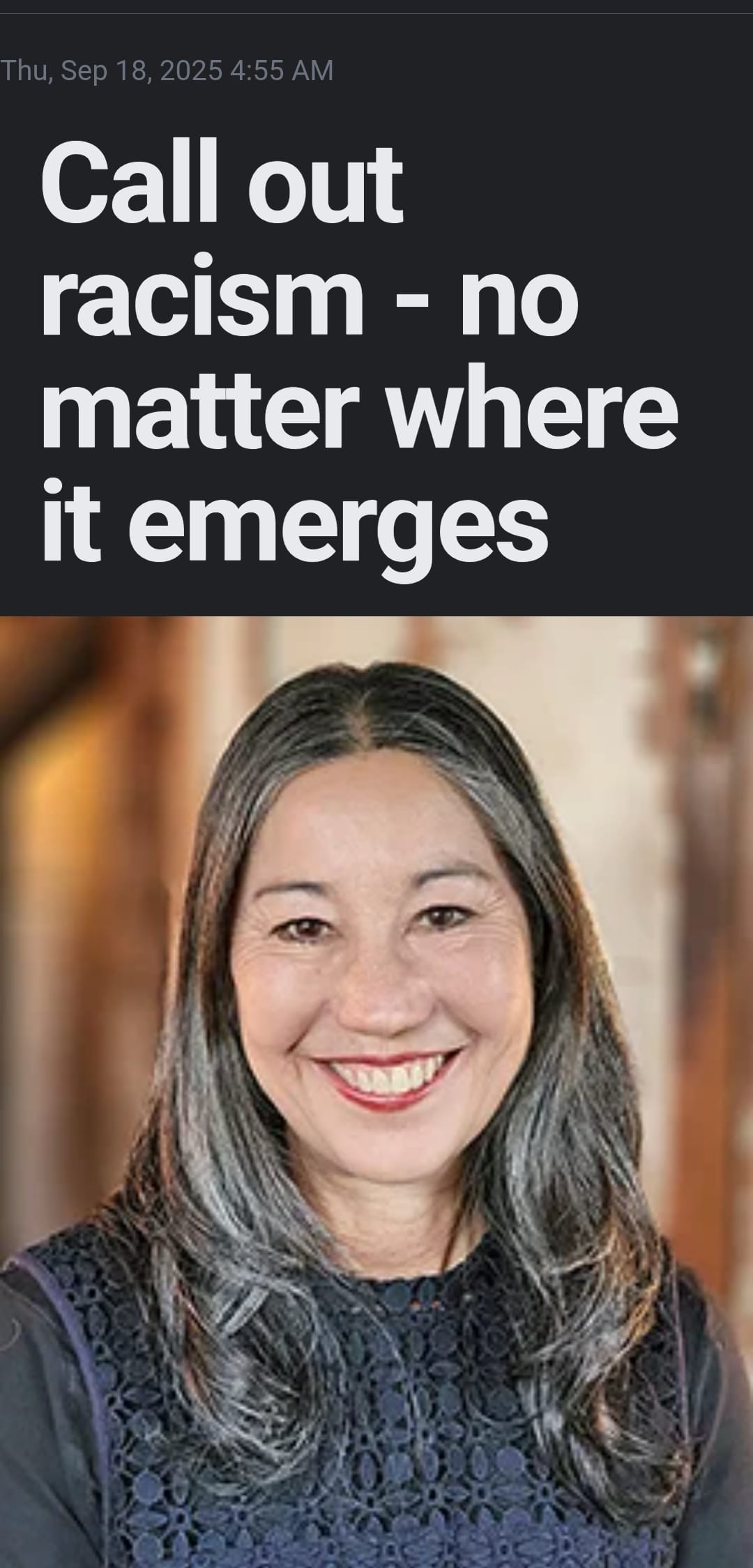
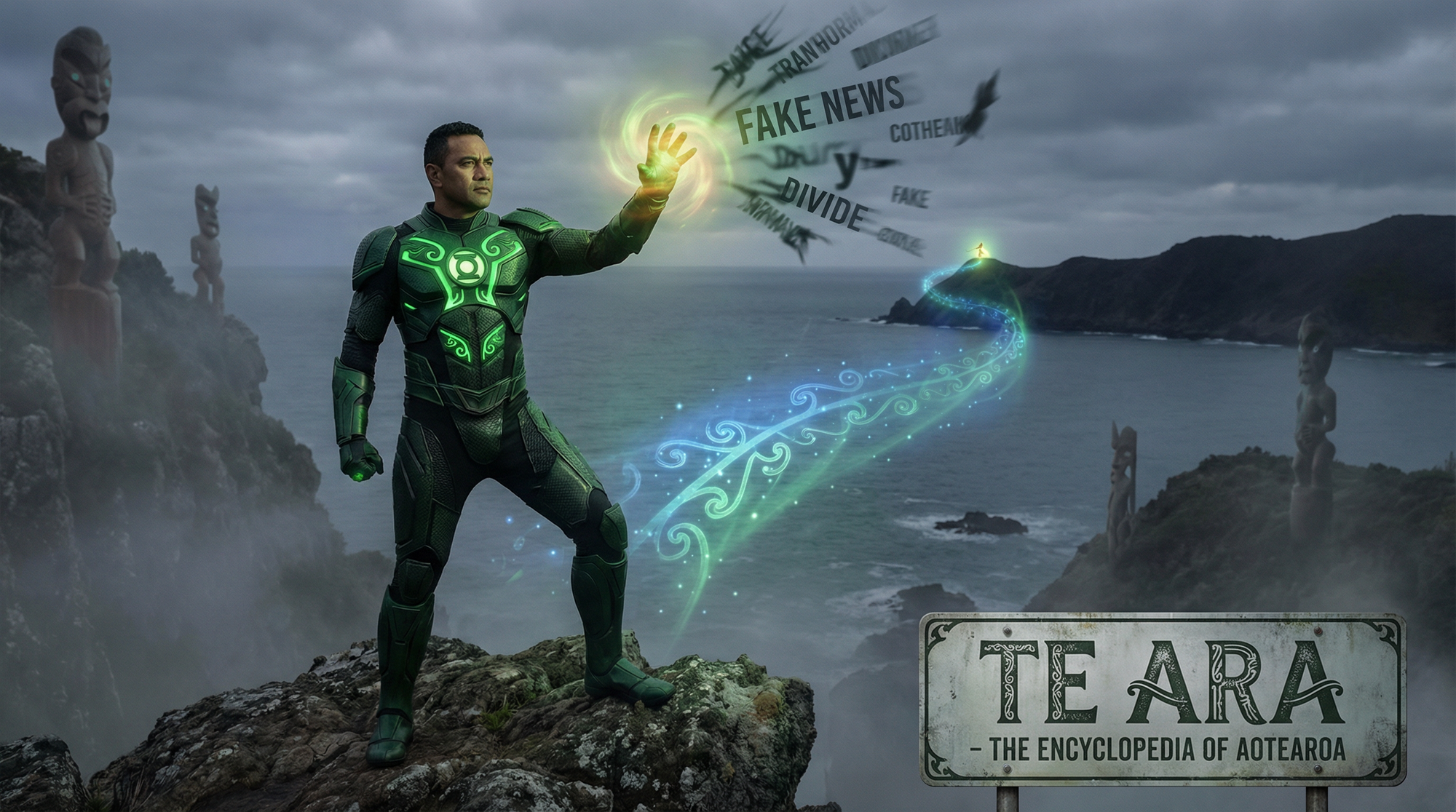
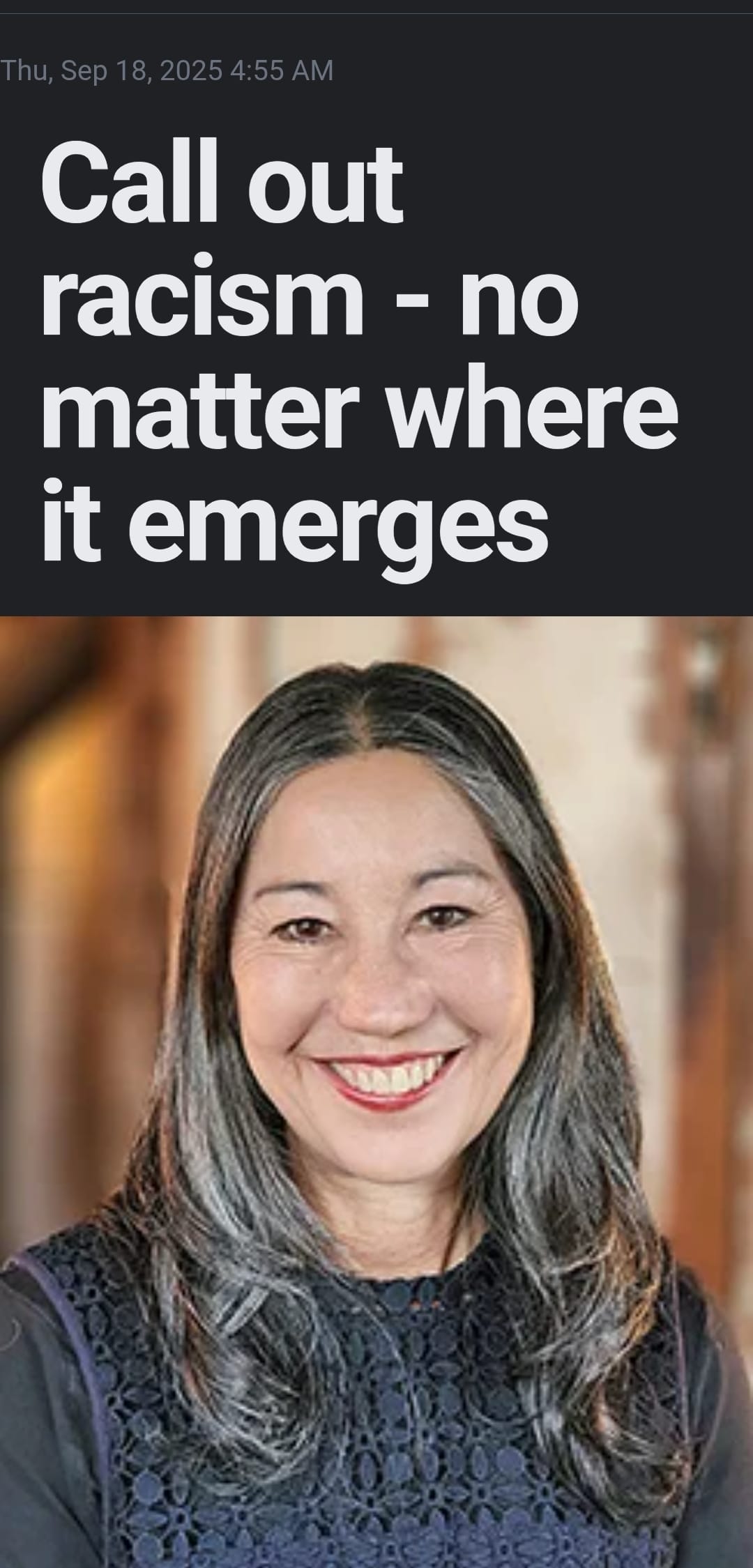
Kia ora whānau. I stand before you today as Ivor Jones, The Māori Green Lantern of Te Arawa/Ngāti Pikiao descent, kaitiaki exposing the veins of white supremacy that poison our whenua. Kim Webby has written with mana and integrity about racism's ugly persistence in our communities, and her courage demands our aroha and amplification. While Tākuta Ferris's comments about "Indians, Asians, Black and Pākehā" campaigning in Tāmaki Makaurau have rightfully sparked outrage across the political spectrum, Kim forces us to confront an uncomfortable truth that many Pākehā want to sweep under the mat: New Zealand has always been "racist as f**k", and our collective amnesia about this history enables new forms of harm to flourish.
https://easternbayapp.co.nz/news/articles/68ca3b2e4bb2cb00ebf22d33
This essay will expose how our education system deliberately obscures the systematic violence against Chinese and Asian communities spanning 180 years, examine how this historical erasure enables contemporary racism to thrive, and reveal the hidden connections between 19th-century White New Zealand League ideology and modern exclusionary politics that weaponise identity to divide our communities.
Background
To understand the depth of Kim’s intervention, we must first acknowledge what our schools refuse to teach. The first Chinese person to settle in New Zealand, Appo Hocton, arrived in 1842, just two years after Te Tiriti o Waitangi was signed. Yet our education system treats Chinese presence as an afterthought, when in reality Chinese miners were invited to New Zealand by the Dunedin Chamber of Commerce in 1866 because European miners had abandoned Otago goldfields for richer West Coast deposits.
The significance of this erasure cannot be overstated from a Māori perspective. Just as our own history has been systematically deleted from mainstream narratives, the experiences of other oppressed communities have been rendered invisible to serve Pākehā comfort. When Kim writes about the Chinese experience of systematic discrimination, she is performing the same work we do as Māori when we insist on truth-telling about colonisation.
The historical context Kim provides about Chinese fleeing the devastation of the Opium Wars reveals how British imperial violence created the very conditions that drove people to seek gold in what they called "New Gold Mountain." These were not people seeking to "take over" anything - they were refugees from British colonial destruction trying to send money home to starving families.
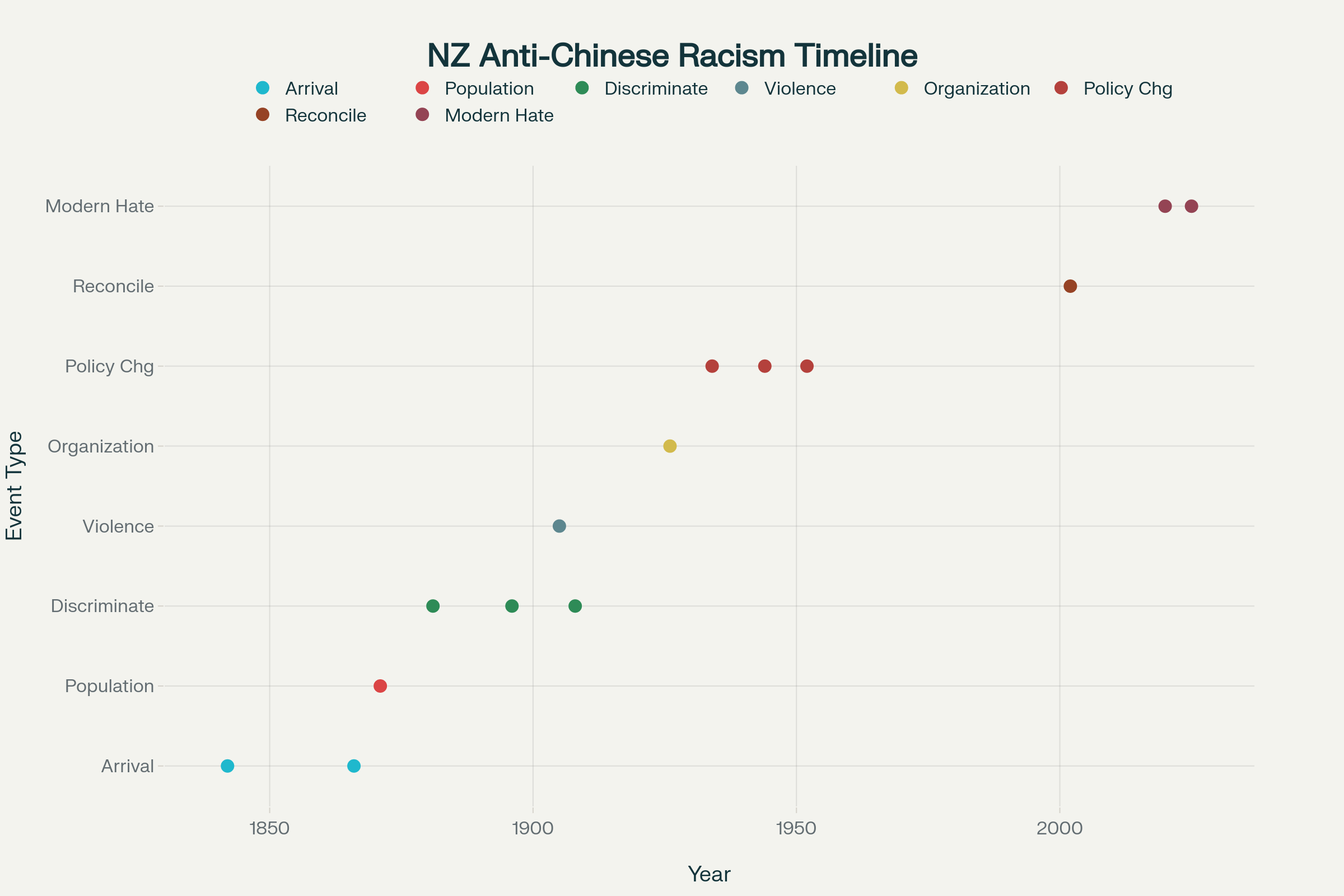
Timeline of Racism Against Chinese and Asian Communities in New Zealand (1840s-2025)
Kim's article confronts multiple layers of racism that most New Zealanders would prefer to ignore. The immediate trigger was Tākuta Ferris's inflammatory Instagram post criticising the presence of "Indians, Asians, Black and Pākehā" supporting Labour's campaign in the Tāmaki Makaurau by-election. But Kim refuses to let us treat this as an isolated incident or aberration.
Her intervention matters because it exposes how racism operates differently but consistently across communities. As a half-Chinese New Zealander, Kim has experienced the "chanted taunts from children as young as five or six" - the same systematic dehumanisation that Māori children face. Her willingness to name this violence while simultaneously defending the right of all communities to participate in democracy represents the kind of solidarity that terrifies those who profit from division.
Kim's article matters to Māori because it demonstrates how white supremacy operates through historical amnesia. When she writes about Joe Kum Yung's murder by white supremacist Lionel Terry in 1905, she's exposing the same colonial violence that targeted our people. Terry's manifesto calling for a "white New Zealand" is the direct ideological ancestor of contemporary far-right movements that attack both Māori tino rangatiratanga and immigrant communities.
The scope of this analysis extends beyond individual incidents to reveal systemic patterns. From the White New Zealand League's formation in 1926 to anti-Asian racism during COVID-19, Kim shows us how the same poisonous ideologies adapt and persist across generations.
The Education System's Deliberate Amnesia
Kim's revelation that our education system included a poem by Joe Kum Yung's murderer Lionel Terry in a 2020 school exam without mentioning his white supremacist ideology exposes how institutional racism operates through curriculum design. This isn't ignorance - it's deliberate historical cleansing that serves specific political purposes.
The parallel to Māori education is striking. Just as our histories of resistance and survival have been systematically erased, the experiences of other colonised and oppressed communities disappear from official narratives. When student Cadence Cheung called out this educational violence, she was performing the same mahi that Māori educators do when we insist on teaching our real history rather than sanitised colonial myths.
From a Māori worldview grounded in whakapapa, we understand that all our struggles are connected through whakatōhea - kinship relationships that extend beyond blood to encompass shared experiences of colonial violence. The Chinese miners who came to our whenua fleeing British imperial destruction were not our enemies - they were fellow victims of the same system that stole our lands and attempted to destroy our culture.
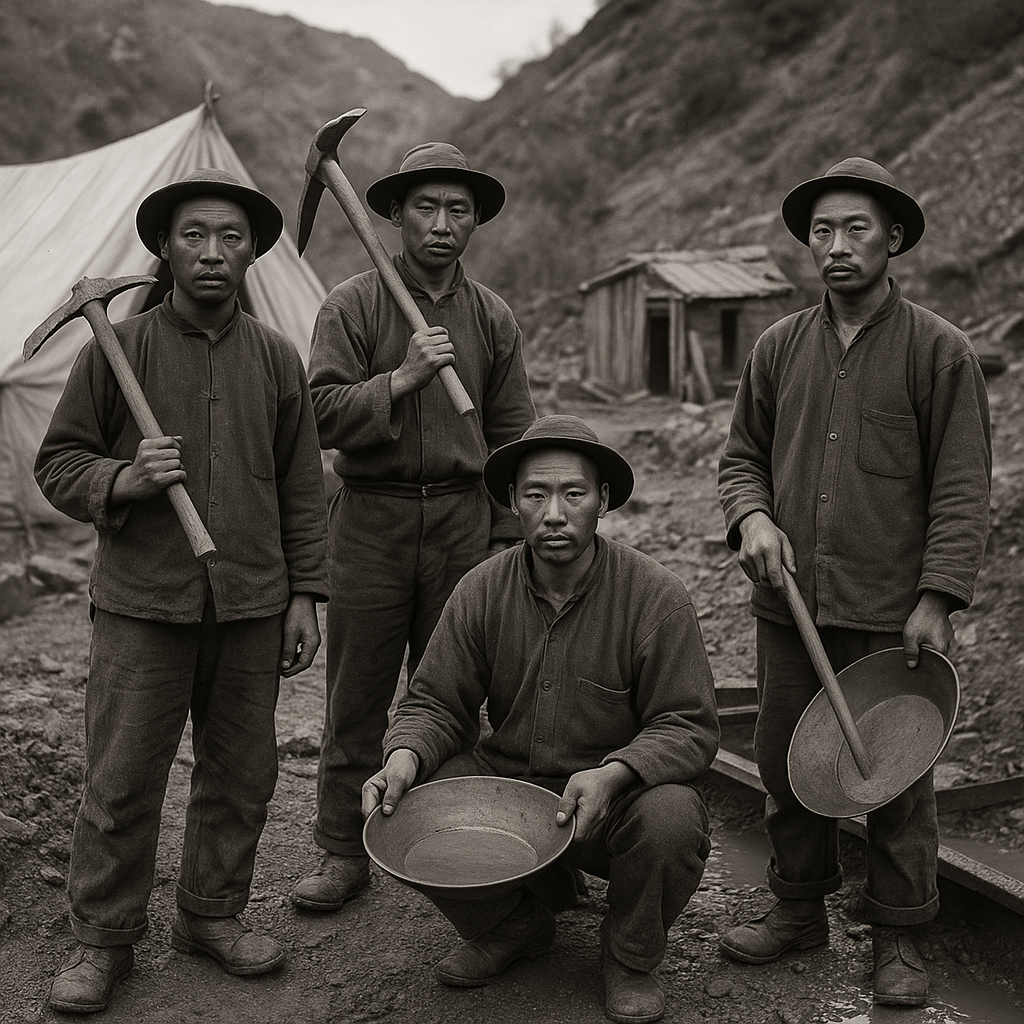
Chinese gold miners working the Otago goldfields in the 1860s
The Hidden Economics of Racial Division
Kim's analysis of the poll tax system that extracted over £300,000 from Chinese immigrants between 1881 and 1944 reveals how racism functions as an economic strategy. The tax started at £10 in 1881 (equivalent to $2000 today) and increased to £100 in 1896 ($20,000 today) - making it virtually impossible for working-class Chinese people to bring their families to New Zealand.
This economic weapon served multiple colonial purposes. It generated revenue for the settler state while ensuring Chinese men remained isolated and vulnerable, unable to form stable communities that might challenge white dominance. The cargo restrictions limiting ships to one Chinese passenger per 200 tons further constrained Chinese settlement while maximising extraction from those who managed to afford passage.
The connections to contemporary neoliberal racism are unmistakable. Just as the poll tax weaponised economics to exclude Chinese families, modern immigration policies use wealth requirements and English language tests to maintain white demographic dominance. When Kim notes that Edward Peter, known as 'Black Peter', was denied the £1000 reward for discovering gold that went to Gabriel Read instead, she's exposing how the colonial economy systematically steals Indigenous and non-white labour while crediting white men.
Lateral Violence and the Trap of Respectability Politics
Tākuta Ferris's comments represent what anti-racism educator Tina Ngata correctly identifies as "lateral racism" - oppressed communities turning on each other rather than confronting their shared oppressor. This dynamic serves white supremacy perfectly by preventing unified resistance against colonial structures.
Kim's nuanced response demonstrates the aroha and wisdom our tupuna taught us. She refuses to attack Ferris personally while firmly rejecting the harm his comments cause to communities already under siege. Her insistence that "racism has to be called out whenever it happens and whoever is the perpetrator" reflects the principle of pono - truth-telling regardless of social pressure.
The respectability politics trap Kim navigates so skillfully is one that Māori activists know intimately. When we speak truth about white supremacy, we're told we're being "divisive" or "racist ourselves." When we defend other oppressed communities, we're accused of diluting our own struggles. Kim's refusal to accept these false choices models the kind of principled solidarity our movements desperately need.
The Language Politics of Racial Exclusion
Ferris's claim that his comments would have been acceptable "if I had made that post in te reo Māori" reveals a dangerous misunderstanding of how language politics intersect with racism. Te reo Māori isn't a shield that makes racist content acceptable - it's a taonga that carries the values of our tīpuna, including manaakitanga and aroha for all people seeking refuge on our whenua.
The linguistic racism that targets te reo Māori speakers and Chinese accent speakers operates through the same colonial mechanism. Research shows that opposition to te reo Māori in public broadcasting and complaints about Asian "accents" both serve to police the linguistic boundaries of white belonging. When Kim describes experiencing racism "since I started school," she's describing the same process of linguistic othering that Māori children face when we speak our own language.
This linguistic policing extends to how communities are named and discussed. Kim's observation that people get their "knickers in a twist" about directly naming ethnic groups reveals how the English language has been weaponised to obscure racial dynamics. The preference for euphemisms like "ethnic minorities" serves to hide the specific histories of oppression that different communities have experienced.
Modern Manifestations of Historical Patterns
The 878% increase in anti-Asian hate crimes in Vancouver during 2020 and similar patterns across New Zealand demonstrate how quickly historical racism can resurface during crisis periods. Kim's personal experience of being shouted at with "Wuhan!" during lockdown connects directly to the same ideologies that drove Lionel Terry to murder Joe Kum Yung in 1905.
The government's response of urging people to "be kind" rather than explicitly condemning anti-Asian racism demonstrates how liberal politics enables white supremacy through studied neutrality. This mirrors the official responses to anti-Māori racism, where specific acknowledgment of the problem is avoided in favour of generic appeals to "unity" and "tolerance."
The vandalism of Chinese candidates' election billboards with their faces specifically targeted for removal while white candidates' faces remained untouched reveals how democratic participation itself becomes a site of racial violence. This pattern of excluding non-white bodies from political representation connects directly to the historical exclusions Kim documents.
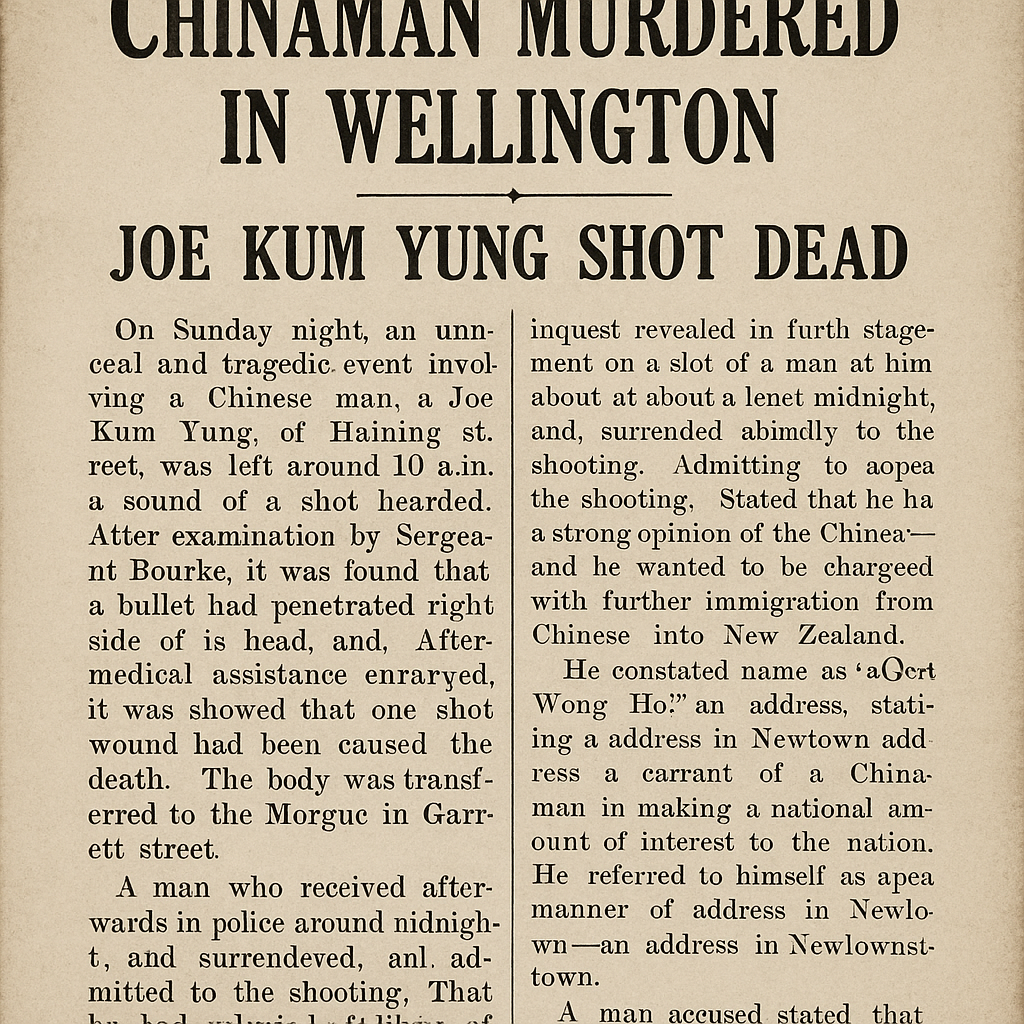
1905 newspaper reporting the racist murder of Joe Kum Yung
Implications
The broader implications of Kim Webby's analysis extend far beyond individual incidents of racism. Her work reveals how white supremacy operates as a totalising system that shapes everything from curriculum design to political participation to economic policy. The deliberate forgetting of Chinese and Asian experiences in New Zealand serves the same function as the erasure of Māori history - it prevents oppressed communities from understanding their shared circumstances and building unified resistance.
For our communities specifically, Kim's intervention offers a model of how to practice solidarity without abandoning our own liberation struggles. Her insistence that "in this waka, you are all welcome - all shapes, all sizes, all races, all creeds" reflects the same inclusive vision that Peeni Henare articulated during his campaign. This isn't about diluting Māori aspirations for tino rangatiratanga - it's about recognising that our liberation is bound up with the liberation of all oppressed peoples on our whenua.
The connection to larger patterns of global white supremacy cannot be ignored. The same ideologies driving anti-Asian racism in New Zealand during COVID-19 fuel violence against Asian communities across the Pacific Rim. The poll tax system that targeted Chinese immigrants directly influenced similar policies in Australia and Canada, demonstrating how colonial racism operates as an international network rather than isolated national phenomena.
Kim's analysis also reveals how neoliberal multiculturalism masks ongoing structural racism. The celebration of "diversity" and "inclusion" in official discourse coexists with systematic exclusion from real political power and continued economic marginalisation. When Chinese New Zealanders are told they should be "grateful" for what they've achieved while simultaneously facing ongoing discrimination, they're experiencing the same gaslighting that Māori communities know intimately.
Modern anti-racism protests supporting Asian communities in New Zealand
The Māori Green Lantern Fighting Misinformation And Disinformation From The Far Right
Kim Webby's courageous truth-telling forces us to confront what most New Zealanders would prefer to ignore: racism isn't an aberration in our society, it's a foundational feature that requires active resistance rather than passive tolerance. Her willingness to name the specific violence that Chinese and Asian communities have experienced while defending their right to participate fully in our democracy models the kind of principled solidarity our movements desperately need.
The historical amnesia that obscures 180 years of anti-Asian racism serves the same function as the erasure of Māori resistance - it prevents us from understanding how white supremacy operates as a system rather than individual prejudice. When our education system includes poetry by white supremacist murderers while erasing their victims, when poll taxes extract wealth from marginalised communities while funding colonial expansion, when contemporary politicians weaponise identity to divide natural allies, we're witnessing the same colonial violence in different forms.
Kim's call to action is clear: we must learn each other's histories, support each other's struggles, and refuse the false choices that pit oppressed communities against each other. As tangata whenua, we have a special responsibility to model the manaakitanga and aroha that our tīpuna taught us, welcoming all people who come to our whenua seeking refuge while maintaining our commitment to tino rangatiratanga.
The work ahead requires us to move beyond individual acts of kindness to collective resistance against the systems that generate racism in the first place. We must demand curriculum that tells the truth about our histories, economic policies that redistribute rather than extract wealth, and political structures that enable genuine participation rather than tokenistic representation.
Readers who find value in this mahi and wish to support the cause of exposing white supremacy and building genuine solidarity are welcome to consider a koha to HTDM: 03-1546-0415173-000. The MGL understands these are tough economic times for whānau, so please only contribute if you have capacity and wish to do so.
Kim Webby's courage in calling out racism wherever it emerges - even within our own communities - reminds us that our liberation depends on our willingness to speak truth and stand together. In the spirit of kotahitanga and manaakitanga, we must continue this work until every person on our whenua can live with dignity and belonging.
Kia kaha, kia maia, kia manawanui.
Ivor Jones
The Māori Green Lantern