“When the Bridge Becomes a Metaphor: Two Protests, Two Visions of Aotearoa’s Soul” - 31 January 2026
The Tale of Two Bridges
Kia ora ano Aotearoa, I hope that you are well today and thank you for taking the time to consider these thoughts on this kaupapa.
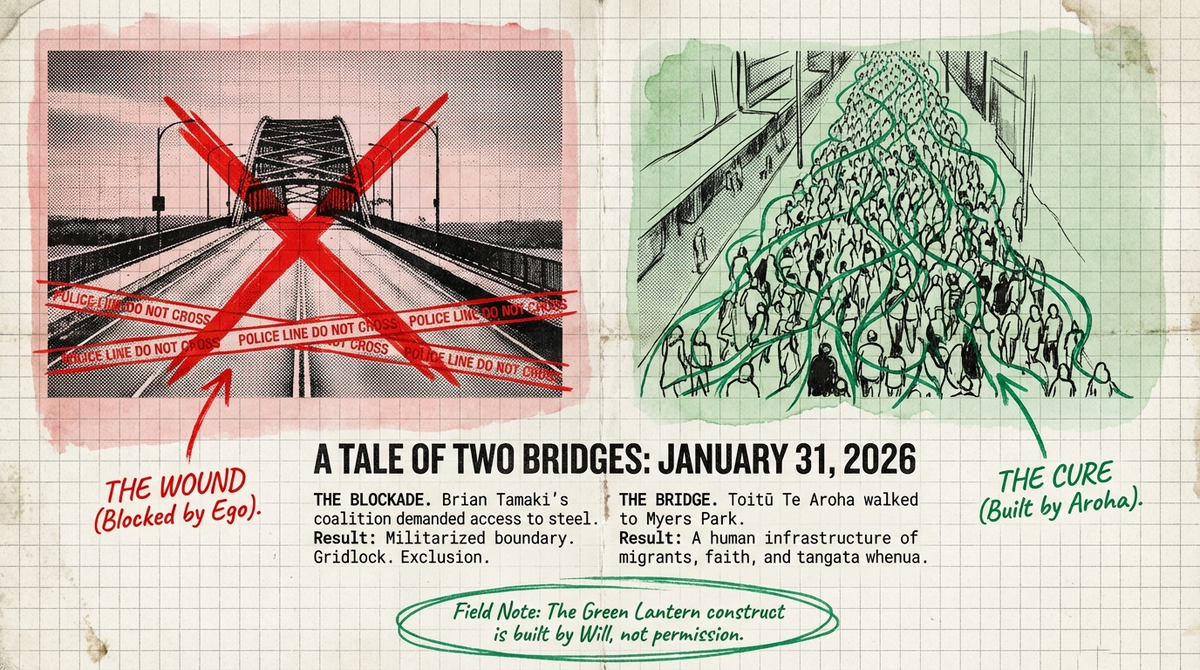
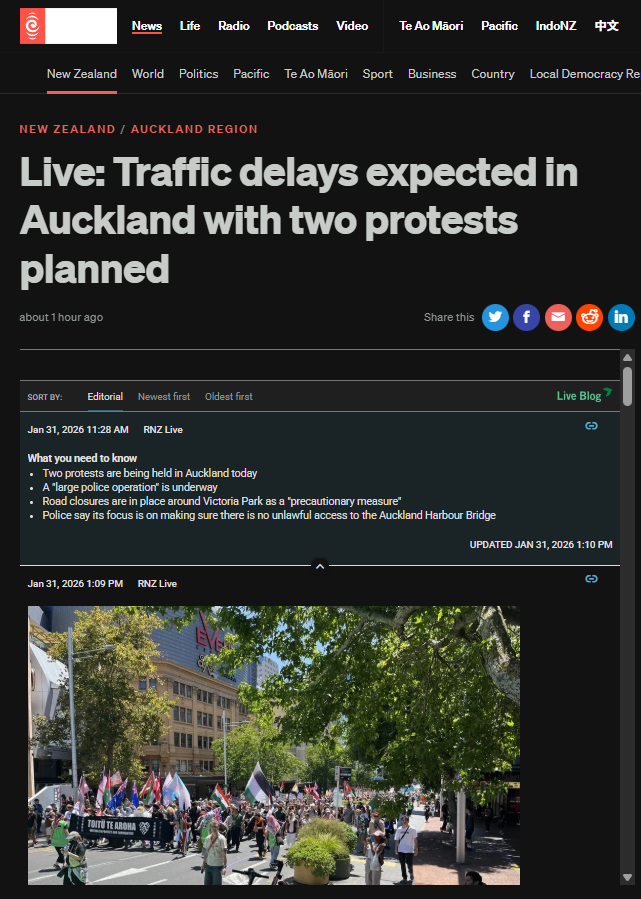
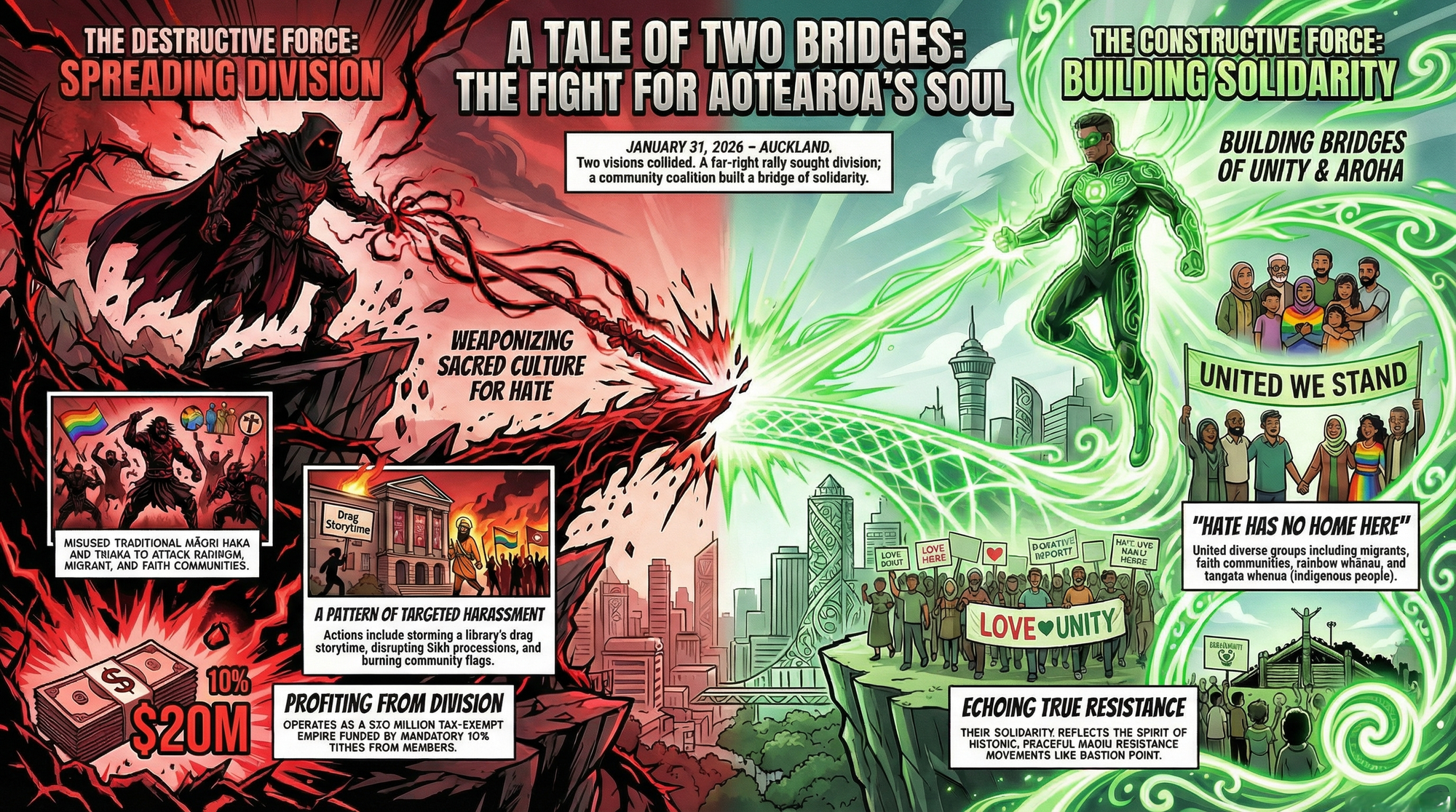
The Auckland Harbour Bridge stood empty on January 31, 2026, not because protesters were allowed to cross it, but because a massive police operation had sealed it off like a wound that refused to heal. Superintendent Naila Hassan deployed officers from across the country, transforming Auckland’s arterial bridge into a militarized boundary between two competing visions of what this nation should become.
But here’s the metaphor that cuts to bone:
While one group raged at Victoria Park because they were denied permission to march across steel and concrete, another group walked freely up Queen Street to Myers Park, building a different kind of bridge entirely—one made of aroha, unity, and the radical proposition that hate has no home here.
The bridge Brian Tamaki’s Freedom and Rights Coalition wanted to cross wasn’t really about infrastructure. It was about spectacle, dominance, and the theatrical performance of victimhood.
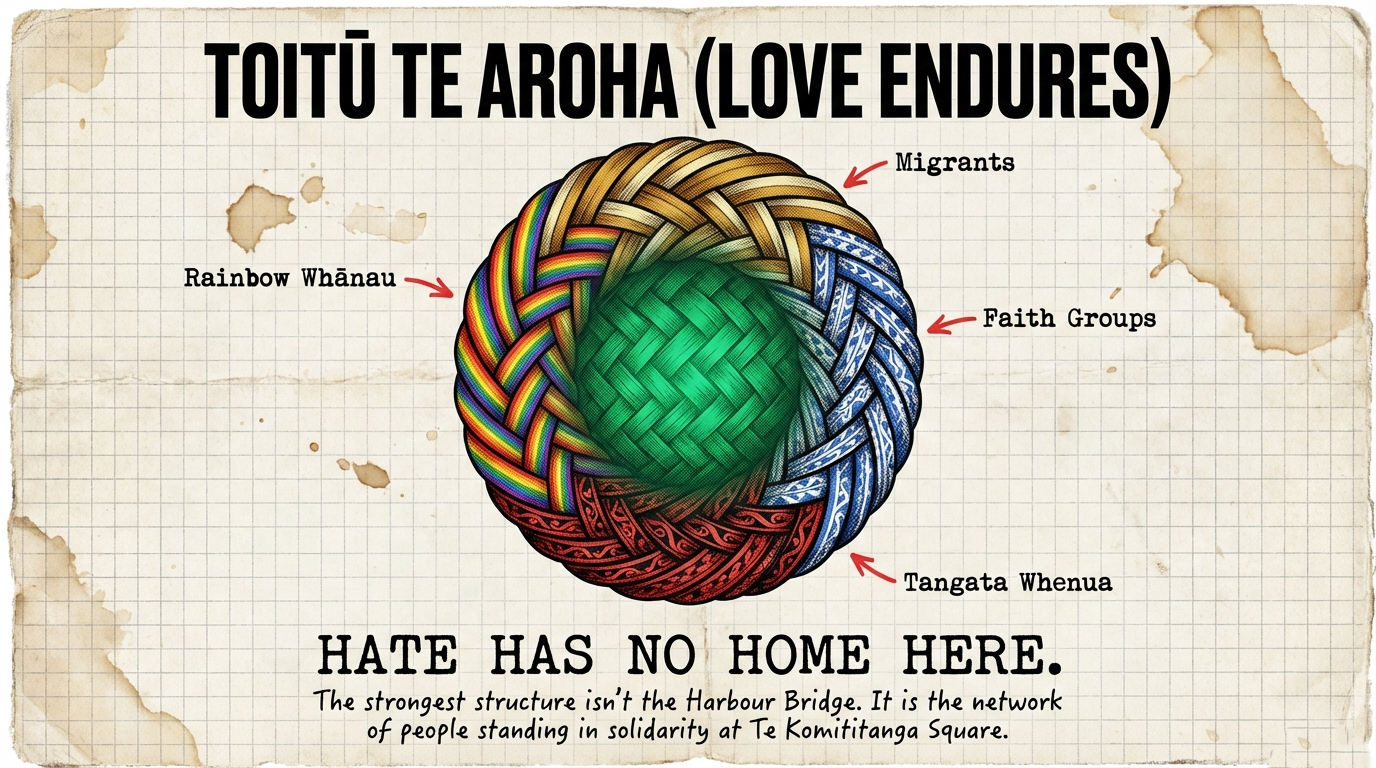
The bridge Toitū Te Aroha built that day
—connecting migrants, faith communities, rainbow whānau, and tangata whenua
—was the bridge Aotearoa actually needs.
One bridge was denied because it threatened structural integrity. The other was celebrated because it strengthened the structural integrity of our social fabric.
Let’s excavate what really happened on that summer Saturday, and why it matters more than most Kiwis realize.
Cui Bono: Who Benefits When Communities Burn?
The NZTA denied Tamaki’s permit in December 2025 for legitimate reasons:
The Auckland Harbour Bridge isn’t designed for pedestrian masses;
large groups cause swaying and vibrations that risk structural damage;
evidence from the 2024 Hīkoi mō te Tiriti showed clip-on lanes faced damage risks.
But Tamaki, ever the entrepreneur of outrage, reframed denial as persecution, calling it a “desperate panic reaction” and questioning why “everyday traffic” could cross while a “peaceful protest” could not.
This is gaslighting at industrial scale.
The answer is brutally simple:
Cars don’t gather in dense crowds that generate synchronized loading stress on aging infrastructure. But truth has never been Tamaki’s currency. Victimhood is.
So cui bono? Who benefits when Destiny Church burns rainbow flags while chanting “no immigration without assimilation”? Who benefits when Sikh processions are disrupted by protesters holding banners reading “This is New Zealand not India”? Who benefits when 30 children are barricaded inside a library while Destiny’s Man Up and Legacy groups storm a drag storytime event?
Not the children. Not the Sikh community organizing legal, permitted religious processions. Not the rainbow whānau seeking safety. Not migrants already facing widespread exploitation, verbal abuse, and physical assault.
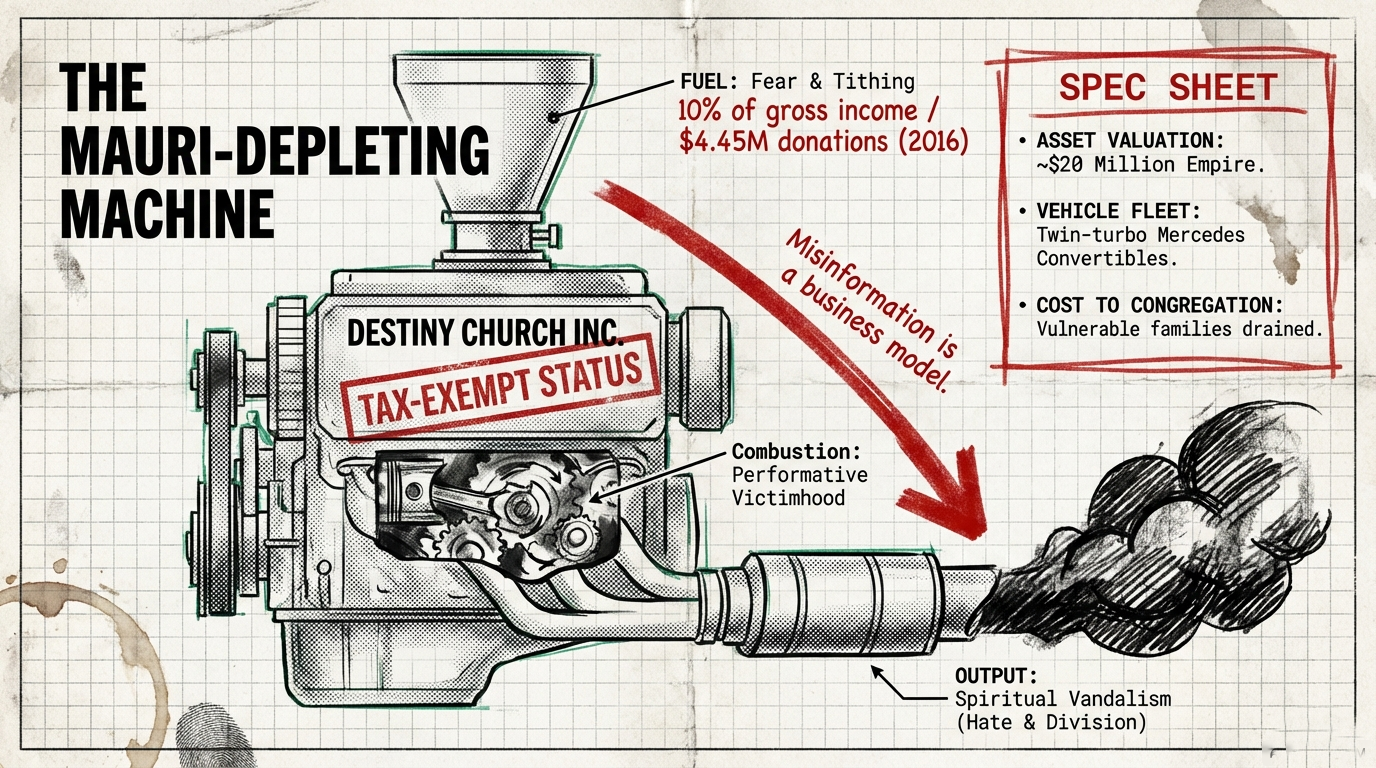
The beneficiary is a $20 million tax-exempt empire that collects 10% of members’ incomes as mandatory tithes, that received $4.45 million in donations in 2016 alone, that finances twin-turbo Mercedes convertibles while telling parishioners that giving “thousands of dollars should be normal.” The beneficiary is a political movement masquerading as a church, leveraging fear and division to grow its influence while Aotearoa’s most vulnerable suffer.
The Mauri-Depleting Machine: Quantifying Spiritual Violence
To Western minds unfamiliar with tikanga Māori, let me translate what’s happening in terms you’ll understand:
Destiny Church is systematically killing the life force of communities. Not metaphorically. Literally, according to Māori cosmology.
Mauri is the vital life principle that exists in all people, places, and things. When mauri becomes too weak, death occurs. In traditional practice, tohunga placed mauri stones in gardens and forests, saying karakia to protect the life force of those places. The health of a community was reflected in its environment and vice versa.
What Destiny Church does—storming libraries, disrupting religious processions, weaponizing haka to tear apart symbols of other faiths—is the inverse of kaitiakitanga (guardianship). It is systematic mauri depletion. It is spiritual vandalism.
The statistics tell the story:
Rainbow Community Harm:
- One in eight rainbow people have moved towns or cities to feel safer
- 64% reported thinking about suicide in the past 12 months
- 30+ children and adults barricaded inside Te Atatū library during February 2025 attack
- Young people “pushed to the ground and punched” during same incident
- At least two rainbow crossings vandalized, one by Destiny protesters who filmed themselves painting over it
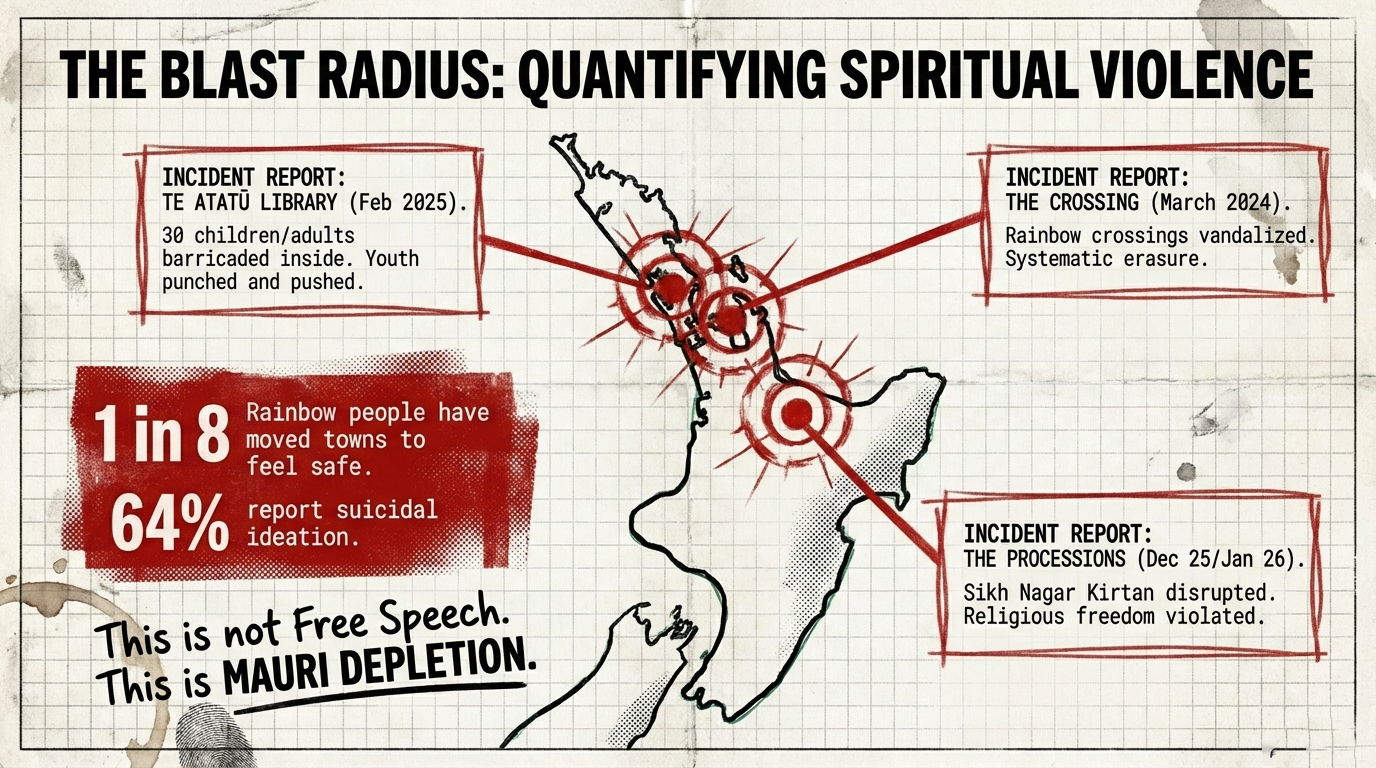
Faith Community Harm:
- December 2025: Sikh Nagar Kirtan procession disrupted in Manurewa by ~50 protesters linked to Destiny
- January 2026: Second Sikh procession disrupted in Tauranga
- June 2025: Flags representing Islam, Palestine, Khalistan, Sikh, Buddhist, Hindu communities torn apart during Destiny march
The pattern is clear:
Destiny Church identifies vulnerable communities, performs theatrical violence against their symbols, then claims religious freedom when challenged. It’s a protection racket disguised as prophecy.
But here’s where it gets truly obscene. While Destiny attacks migrants and faith communities, actual migrant exploitation runs rampant:
Workers charged tens of thousands for fake jobs, forced into crowded, unsafe housing, subjected to verbal and physical assault. The 2024 Human Rights Commission review found “widespread exploitation” under the Accredited Employer Work Visa scheme.
Where is Destiny Church’s righteous anger about that? Nowhere. Because actual protection of vulnerable migrants doesn’t build political power or fill offering plates.
The Weaponization of Haka: Cultural Theft as Hate Speech
Let me be devastatingly clear about what happened in June 2025 when Destiny Church marched down Queen Street. Brian Tamaki’s followers performed haka while systematically tearing apart and burning flags representing Islam, Palestine, Sikh, Buddhist, Hindu, UN, WHO, atheist, rainbow, and transgender communities. After each flag’s destruction, they performed short haka using curse words “Upokokōhua! Kai a te kurī!” (boiled head, dog’s food). Taiaha—sacred traditional weapons—were used to stab at flags representing minority groups.
This wasn’t haka. It was hijacking. It was cultural theft weaponized for hate.
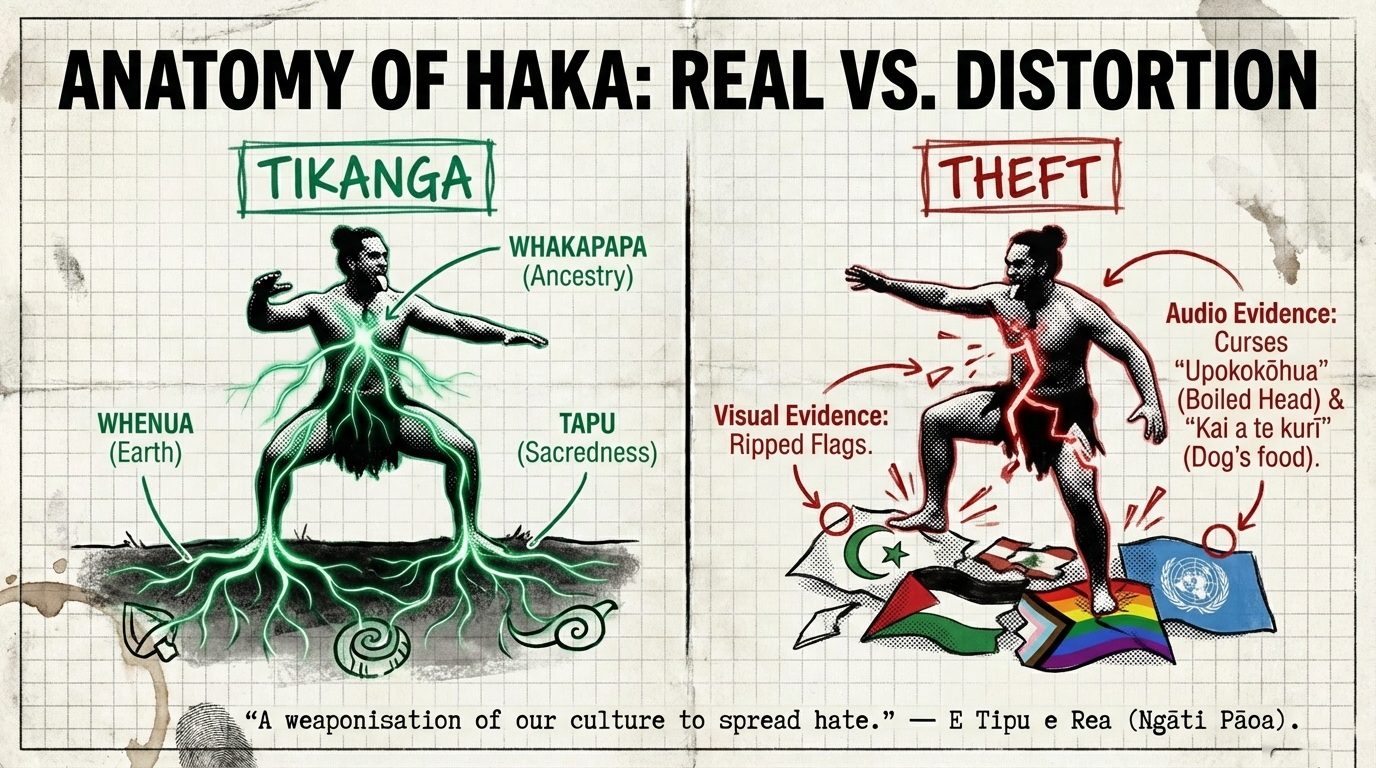
Academic Eru Kapa-Kingi called it a violation of manaakitanga and tapu. E Tipu e Rea, Ngāti Pāoa’s health service, stated:
“Our tikanga teaches us to uplift, to manaaki, and to protect the dignity of all people… what we witnessed was a weaponisation of our culture to spread hate.”
Ngāti Toa—the iwi who hold whakapapa to Ka Mate through Te Rauparaha—explicitly condemned Destiny’s use of haka back in November 2021 when Tamaki planned to teach it to anti-vax protesters:
“We do not support their position and we do not want our tūpuna or our iwi associated with their messages. Protests are promoting the views of individuals ahead of the needs of collective whānau. In our view, this is not rangatiratanga.”
Let me translate tikanga concepts for Western readers unfamiliar with Māori cosmology:
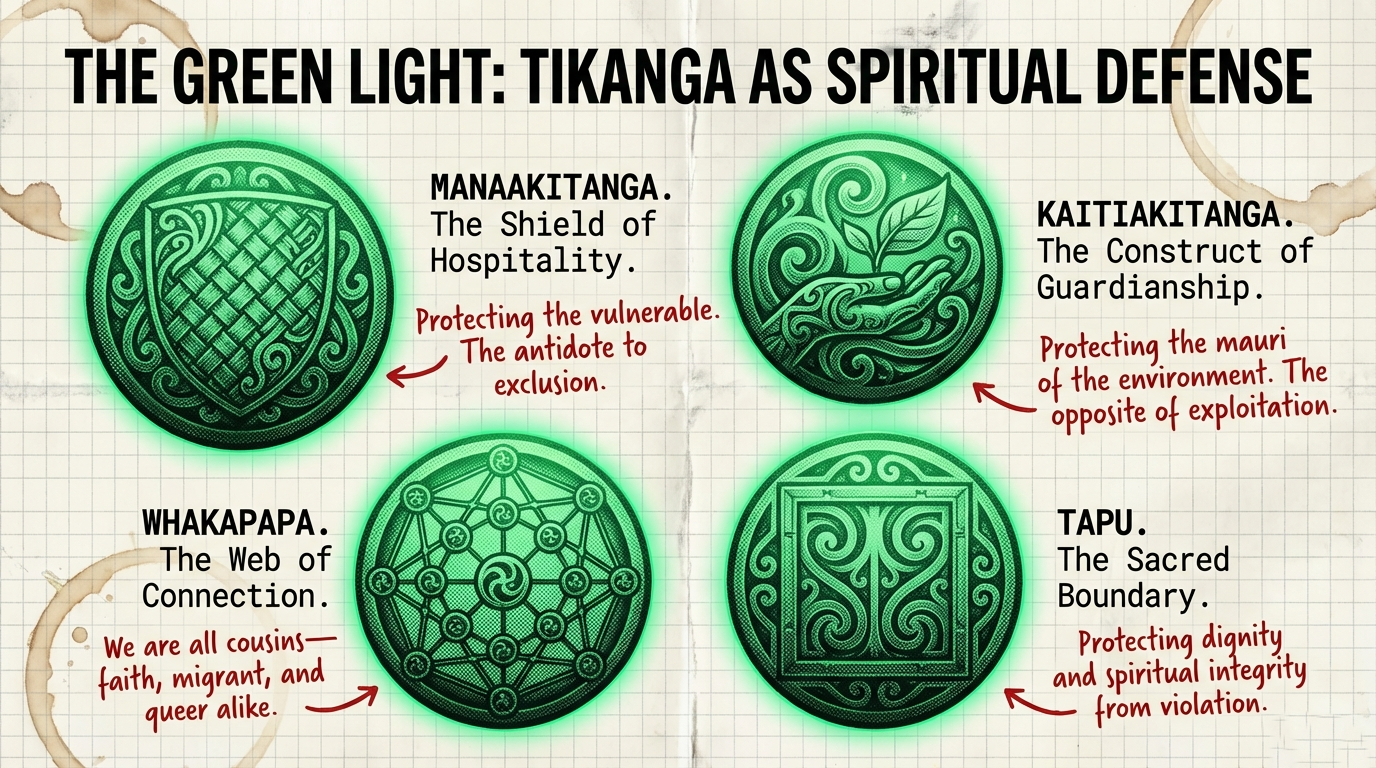
- Manaakitanga: Extending aroha (love/compassion) to others. Hospitality. Treating others well, caring for them. When Destiny attacks children at library events or disrupts Sikh worship, they violate manaakitanga at its core.
- Tapu: Sacred restriction that protects spiritual integrity. Haka carries tapu because it connects to ancestors and whakapapa. Using it to vilify other faiths is like defecating in a cathedral—except worse, because the desecration is weaponized.
- Whakapapa: Genealogy, but deeper—it’s the interconnection of all things. Humans are children of earth and sky, cousins to all living things. Destiny’s theology of exclusion and dominance is fundamentally incompatible with whakapapa consciousness.
- Kaitiakitanga: Guardianship. Caring for, protecting, preserving. The opposite of exploitation, domination, or supremacy. True kaitiakitanga recognizes that the natural world teaches humans, not the other way around.
When Destiny Church co-opts haka, moko, and taiaha to spread messages of hate, they’re not just committing cultural appropriation—they’re committing spiritual violence. They’re depleting the mauri of tikanga itself, turning instruments of connection into weapons of division.
And they’re doing it while sitting on a $20 million tax-exempt empire.
The Ghost of Bastion Point: When Occupation Meant Something
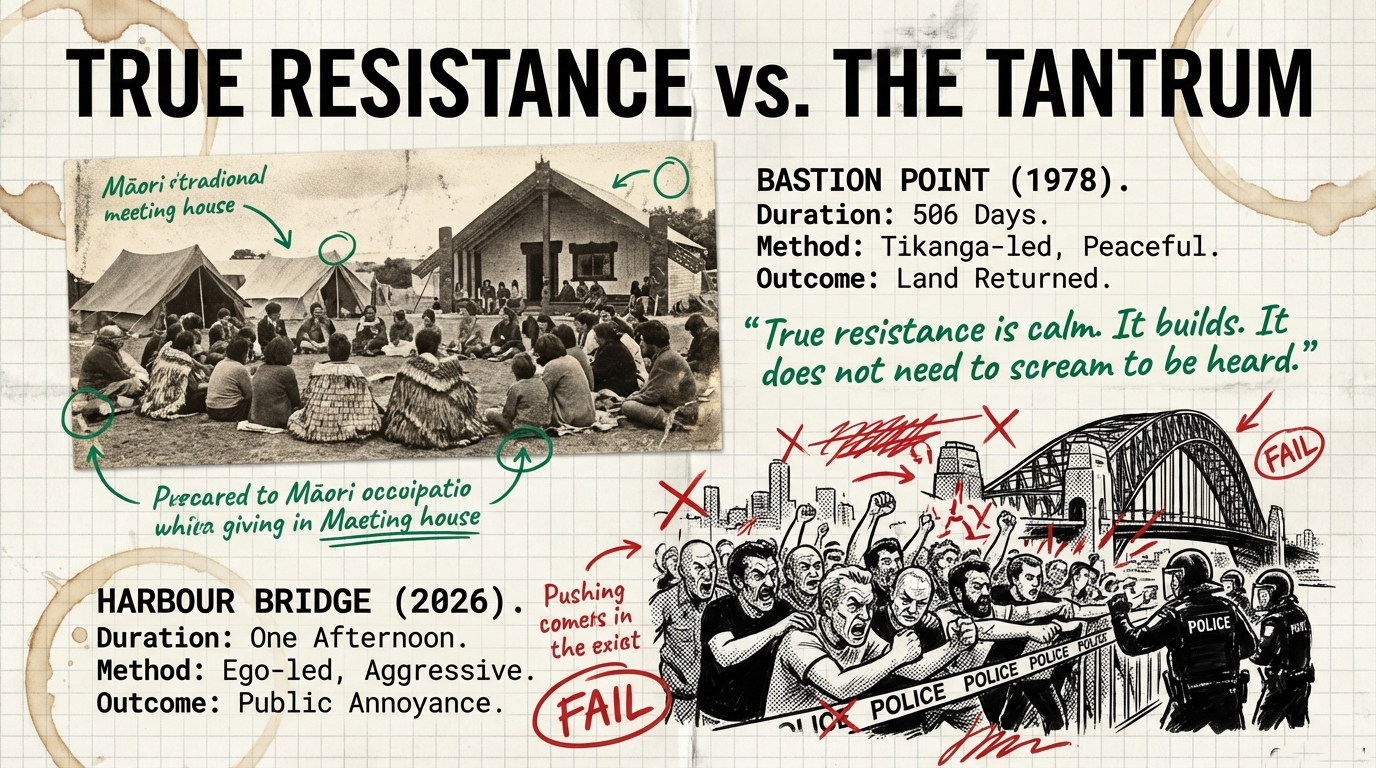
The contrast between Destiny’s theatrical victimhood and actual Māori resistance couldn’t be starker. Let’s rewind to 1977-78, when Joe Hawke and the Ōrākei Māori Action Committee occupied Takaparawhau (Bastion Point) for 506 days.
The circumstances:
In 1885, Ngāti Whātua gave the land to the Crown during the “Russian scare” for defence purposes. The Russians never came. The Crown never returned the land. Instead, in 1976, Prime Minister Robert Muldoon announced plans to sell it for luxury housing.
Hawke set up camp with his wife, children, and dogs. Others arrived. They built houses, grew crops, created community. They stayed for 506 days. On May 25, 1978, 800 police and army personnel evicted them. 222 people were arrested. Their temporary meeting house, buildings, and gardens were demolished.
But here’s what matters: In 1987, Hawke took the claim to the Waitangi Tribunal. The Tribunal ruled Ngāti Whātua’s grievances were valid and returned the whenua. It was the first historic claim heard by the Tribunal. The peaceful movement at Takaparawhau became a catalyst for iwi throughout the country.
“The occupation of Takaparawha in 1977 and 1978 became a wānanga for many young urban Maori. We have continued to network with those we met at the Point.”
“Everyone had a common goal to unify the struggle to make the thrust stronger. Māori and Pākehā people from the entire country, students, old age beneficiaries, the working class and professionals threw their support behind it.”
“The Action Committee didn’t want anyone to respond to any arrests with violence. They asked all supporters inside and outside the wharenui to respect the tikanga for the day. No one knew what to expect… Eventually, the police came into the wharenui in pairs, arresting people one by one. They tried to say something to each person, but everyone kept singing. ‘Keep cool,’ someone would remind us.”
This is what actual resistance looks like. Peaceful. Disciplined. Grounded in tikanga. Built on whakapapa connection to whenua. Oriented toward justice, not spectacle.
Brian Tamaki’s tantrum about not being allowed to march across a bridge? That’s not resistance. That’s privilege having a meltdown.
The Bridge Toitū Te Aroha Built
While Destiny raged at Victoria Park, Toitū Te Aroha gathered at Te Komititanga Square for something far more radical:
Unity.
Spokesperson Bianca Ranson explained they were
“calling for unity in response to what they say is rising harassment and intimidation of migrants, faith groups and rainbow communities.”
The group described their kaupapa:
“A community-wide response. A peaceful hīkoi. A celebration of identity. A clear line in the sand. Hate has no home here. Haka & culture will not be weaponised. Community comes first. Uniting to protect our communities.”
“Multiple communities that are supposed to be in separate boxes that are typically set against each other to compete for limited progressive sympathy. But thankfully, a lot of us know better to see through that tired rhetoric and we are organising together because we’ve figured out the same systems grind us all down in different ways.”
This is the bridge Aotearoa needs. Not steel spanning water, but solidarity spanning difference. Not permission from the state, but recognition of shared humanity. Not weaponized culture, but culture as collective protection.
To Western minds trained in individualism, this might sound idealistic. But it’s actually deeply pragmatic, and rooted in ancient wisdom.
Tikanga Māori teaches interconnectedness:
Humans aren’t separate from or superior to the web of life; we’re part of it. The health of the community reflects the health of the environment. Attack one strand, you weaken the whole fabric.
When Destiny attacks Sikh processions, they don’t just harm Sikhs—they fray social cohesion that protects everyone. When they storm libraries terrorizing children, they don’t just traumatize those 30 kids—they make every parent question whether community spaces are safe. When they burn rainbow flags while performing haka, they don’t just hurt rainbow whānau—they corrupt tikanga itself, making future uses of haka suspect.
Mauri depletion spreads. But so does mauri enhancement.
The $350 Million Question: Who’s Really Exploiting Whom?
Here’s a number that should enrage every taxpayer:
The Coalition Government “saved” $350.5 million over five years by making it harder for vulnerable people to access emergency housing. Budget 2024 documents stated the government expected “fewer people will need emergency housing over the next four years because of policy and operational changes,” including “clearer eligibility requirements.”
Translation:
They made the criteria so strict that an estimated 1,000 fewer households could access emergency housing. The Salvation Army’s State of the Nation report identified these changes as “a key contributor to rising street homelessness and housing insecurity.”
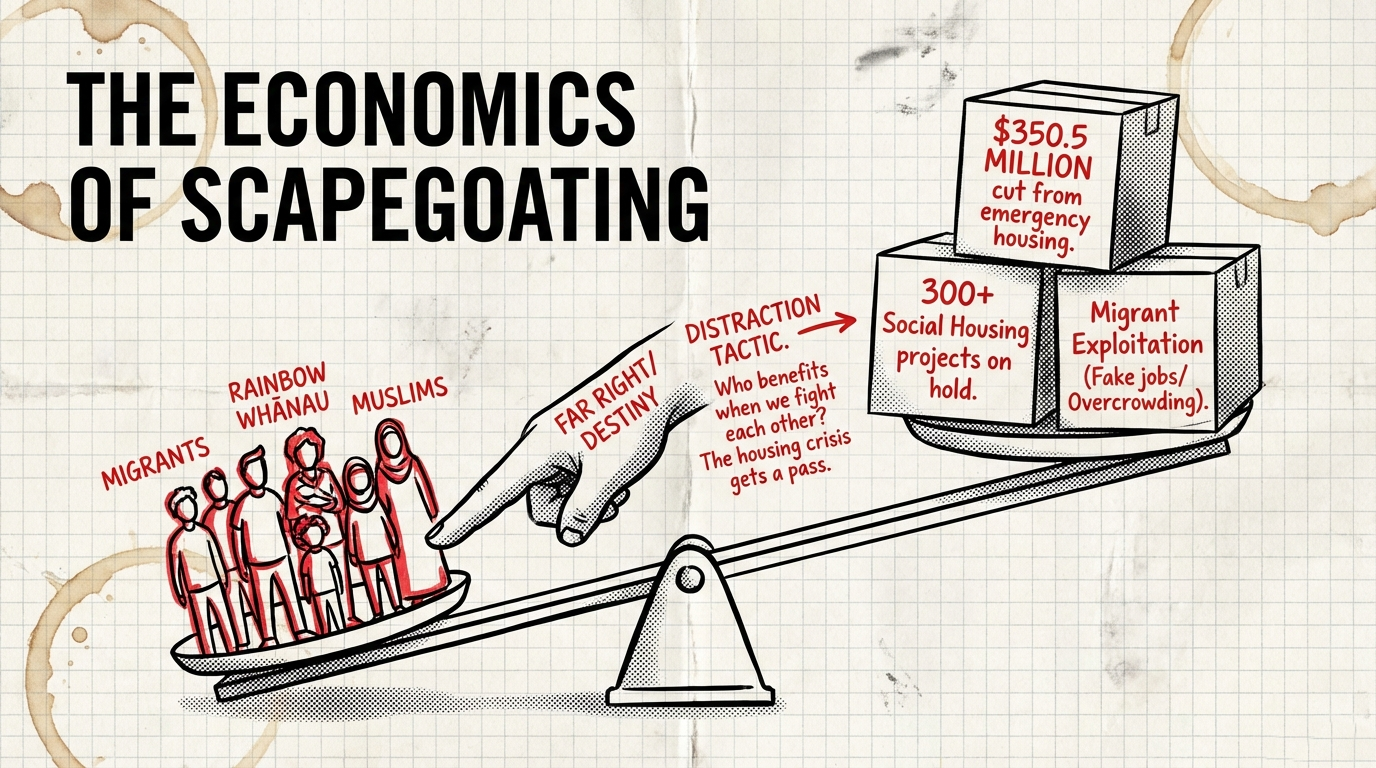
Social workers reported in January 2026 that government policies were contributing to “hopelessness and desperation” among the homeless. Meanwhile, Kāinga Ora had 300+ social housing projects on hold while assessing “economic viability.” Operational deficits were forecast to balloon from $520 million to over $700 million.
So the government cuts half a billion from emergency housing while homelessness rises. Destiny Church—sitting on a $20 million empire built on mandatory 10% tithes—does what? Attacks migrants, burns rainbow flags, disrupts Sikh worship, terrorizes children at libraries.
Not one cent toward housing the homeless. Not one program addressing migrant exploitation. Not one initiative supporting vulnerable youth. Just culture war theater that enriches the megachurch while Aotearoa’s social fabric tears.
Who’s really exploiting whom?
Solutions: Building Mauri-Enhancing Systems
Enough diagnosis. What’s the prescription?
Immediate Actions:
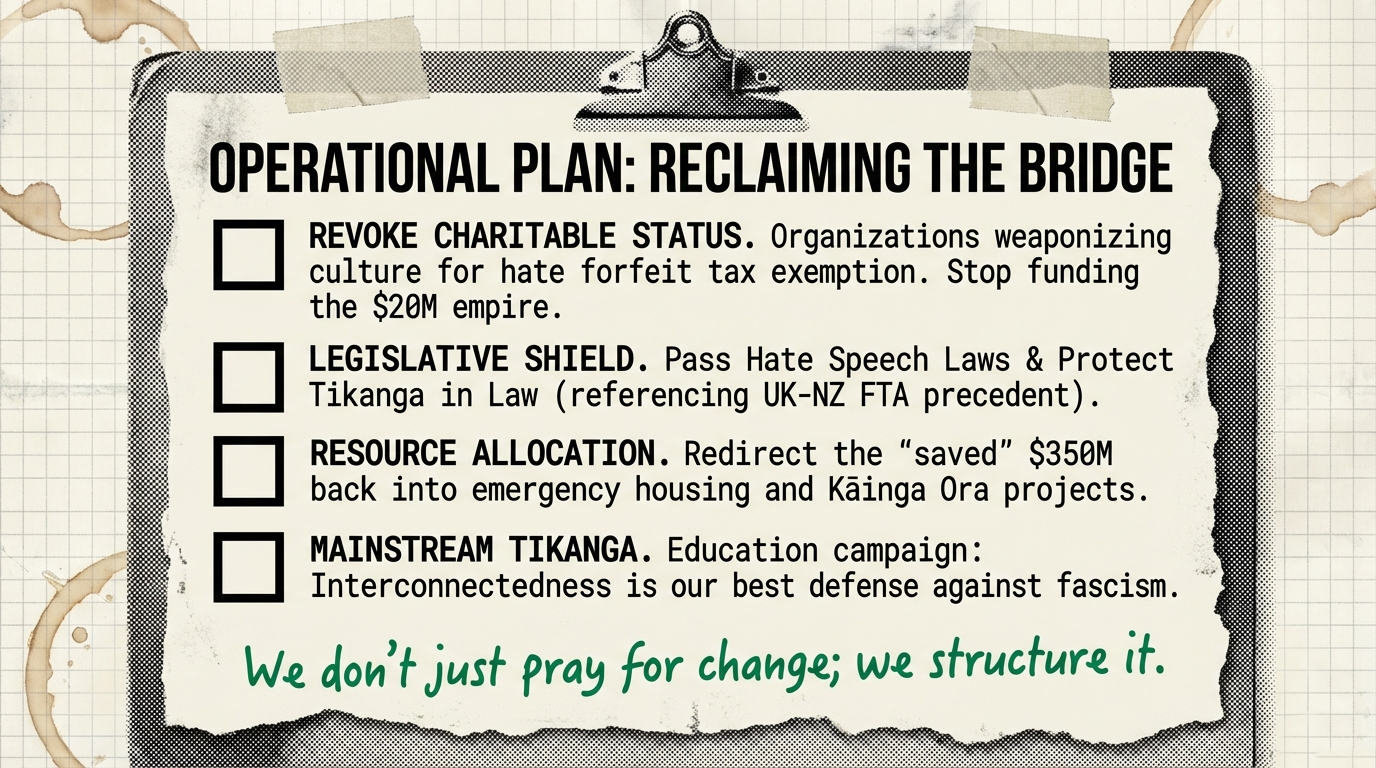
1. Revoke Destiny Church’s Charitable Status
Organizations that systematically violate human dignity, assault community members, and weaponize culture for hate have forfeited the right to tax exemption. Charities Services already served notices in 2022 for “persistent late filing”—but the real issue is whether an organization promoting violence and division serves charitable purpose. It doesn’t.
2. Strengthen Hate Speech Legislation
Faith and ethnic communities called for hate speech legislation after June 2025’s flag-burning march. The Government must act. Freedom of speech doesn’t include freedom to incite violence, harass vulnerable groups, or weaponize culture for supremacist ideology.
3. Protect Tikanga Māori in Law
The 2022 UK-NZ free trade agreement included historic protections for haka. Aotearoa needs domestic law that goes further. The Haka Ka Mate Attribution Act requires crediting Ngāti Toa for commercial use but can’t stop misuse or claim royalties. Legislation should empower iwi to prevent cultural desecration, with real penalties for weaponization.
4. Fund Housing, Not Hate
Redirect the $350.5 million “saved” by cutting emergency housing back into actual housing solutions. Complete the 300+ stalled Kāinga Ora projects. Support Community Housing Providers. Stop making people choose between homelessness and exploitation.
5. Protect Migrant Workers
Implement the Human Rights Commission’s AEWV review recommendations. Resource labour inspectors. Prosecute exploitative employers. Guarantee union access. Reverse seasonal worker changes that enable abuse.
Long-Term Structural Change:
6. Mainstream Tikanga Literacy
Every New Zealander should understand basic tikanga concepts: mana, mauri, tapu, kaitiakitanga, manaakitanga, whakapapa. Not as “Māori culture” but as foundational principles that offer alternatives to extractive, individualist, dominance-based worldviews. Tikanga teaches interconnection, reciprocity, and collective wellbeing. Western minds need this wisdom desperately.
7. Build Cross-Community Networks
Toitū Te Aroha modeled what’s possible: Māori, migrants, faith communities, rainbow whānau, tangata tiriti standing together. Formalize and resource these networks. When one community is attacked, all respond. That’s whanaungatanga in practice.
8. Economic Justice, Not Culture War
The real crisis is housing unaffordability, wage stagnation, insecure work, migrant exploitation. Fascists like Tamaki exploit economic anxiety by redirecting rage toward scapegoats: migrants, rainbow communities, other faiths. The antidote is economic security. Tax wealth. Build public housing. Guarantee livable wages. When people have material security, culture war grifters lose their audience.
Which Bridge Will We Build?
On January 31, 2026, Auckland witnessed two competing visions of what bridges mean.
One group demanded the right to march across steel and concrete, performatively claiming victimhood while sitting atop millions in tax-free assets. They’ve burned flags, terrorized children, disrupted worship, weaponized sacred culture—all while enriching themselves on the tithes of the vulnerable.
The other group built a bridge of solidarity:
Migrants, faith communities, rainbow whānau, tangata whenua walking together in aroha, declaring that hate has no home here.
One bridge depletes mauri. The other enhances it.
The choice before Aotearoa is existential:
Will we allow grifters to weaponize culture and pit communities against each other? Or will we honor tikanga principles—manaakitanga, kaitiakitanga, whanaungatanga—that teach us we’re all connected, all responsible for each other’s wellbeing?
Joe Hawke and 222 others were arrested at Takaparawhau for defending whenua that was rightfully theirs. They were vindicated by the Waitangi Tribunal. History will record who stood for justice in 2026, and who profited from division.
As Ngāti Pāoa’s E Tipu e Rea declared:
“Our tikanga teaches us to uplift, to manaaki, and to protect the dignity of all people.”
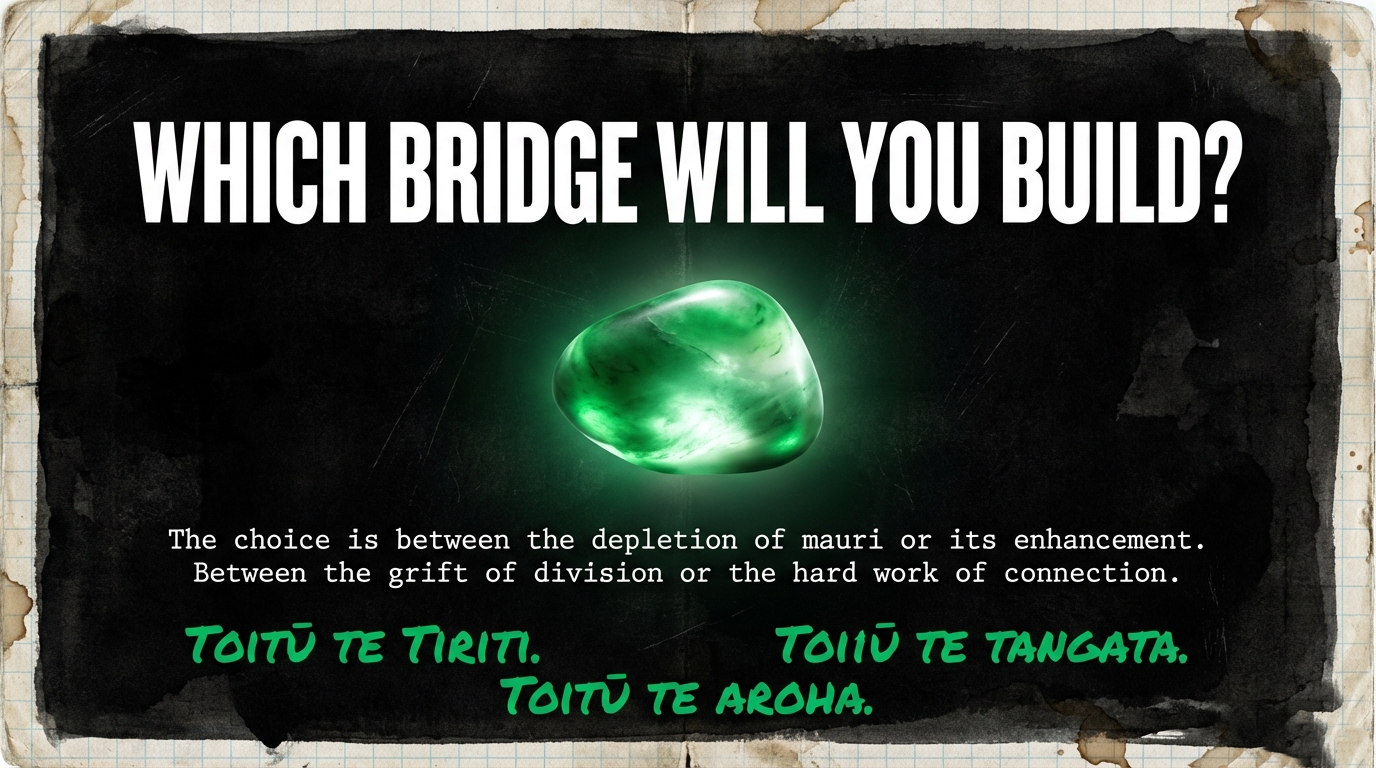
That’s the bridge we build, or we all fall into the chasm.
Toitū te tiriti. Toitū te tangata. Toitū te aroha.
The Treaty endures. The people endure. Love endures.
And so must our commitment to collective liberation over individual enrichment, to solidarity over supremacy, to aroha over atrocity.
The Ring doesn’t lie. The taiaha points true. And the whakapapa cannot be severed by those who never understood connection in the first place.
Kia kaha. Be strong.
The mahi continues.
Koha Statement: When the Bridge Becomes a Metaphor
This essay exposed what $20 million in tax-exempt silence looks like. While Destiny Church sits on an empire built from mandatory tithes and weaponizes our taonga (haka, taiaha, moko) to spread hate, whānau experiencing homelessness are denied the $350.5 million the Crown “saved” by cutting emergency housing.
Reporting this truth—tracing the networks, exposing the connections, naming the grifters—requires resources that Crown and corporate media will not provide. They profit from divisions we unmask.
Every koha you contribute funds the accountability structures they refuse to build. It signals that rangatiratanga includes the power to fund our own truth tellers, to protect our taonga from weaponization, and to ensure that love and solidarity are louder than fear and supremacy.
Kia kaha, whānau. Stay vigilant. Stay connected. And if you are able, consider a koha to ensure this voice—and the mahi of all who stand for aroha over atrocity—continues uncompromised.
Three pathways exist:
- Direct Koha (Voluntary Contribution):
Support this mahi directly via the Koha platform: https://app.koha.kiwi/events/the-maori-green-lantern-fighting-misinformation-and-disinformation-ivor-jones - Substack Subscription:
Receive essays directly and support ongoing research through subscription: https://themaorigreenlantern.substack.com/subscribe - Bank Transfer:
For those who prefer direct transfer—HTDM, account number 03-1546-0415173-000.
Your koha funds the accountability. Your connection strengthens the network. Your choice matters.
Toitū te tiriti. Toitū te tangata. Toitū te aroha.

Ivor Jones The Māori Green Lantern Fighting Misinformation And Disinformation From The Far Right