“When Wounds of War Meet Wounds of Racism: How Aotearoa Betrayed Its Māori Heroes” - 20 October 2025
The Lie They Called Equal Treatment
Kia ora e te whānau,
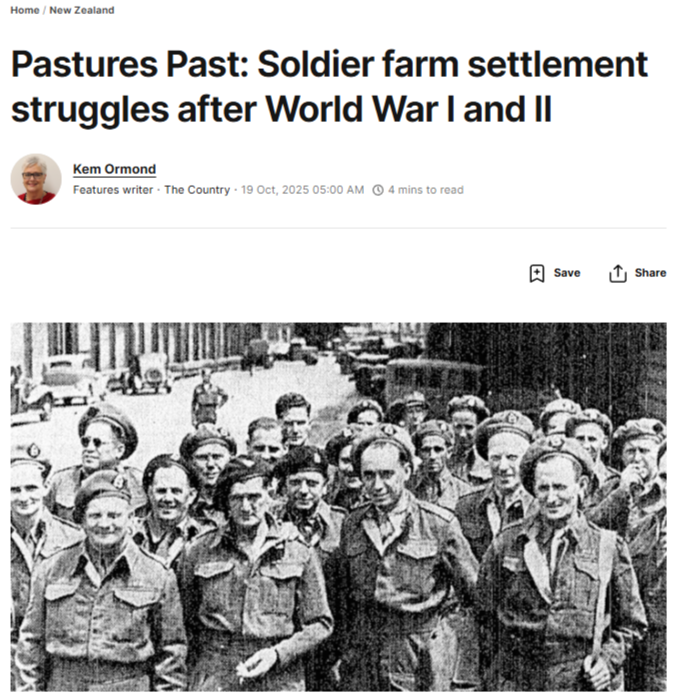
The brutal truth carved into the heart of this nation is this: Māori soldiers who bled on foreign battlefields for the Crown came home to find the land they thought they were fighting for had been systematically stolen from them, while their Pākehā comrades were gifted farms on Māori whenua. This is not ancient history. This is the calculated, deliberate racism of our grandfathers’ generation, dressed up in the respectable language of government policy and bureaucratic procedure. Let me make this crystal clear for every New Zealander who thinks our nation has clean hands: we sent Māori men to die in wars, then came home and denied them the very thing we promised their Pākehā brothers-in-arms.
Background: The Lie They Called Equal Treatment
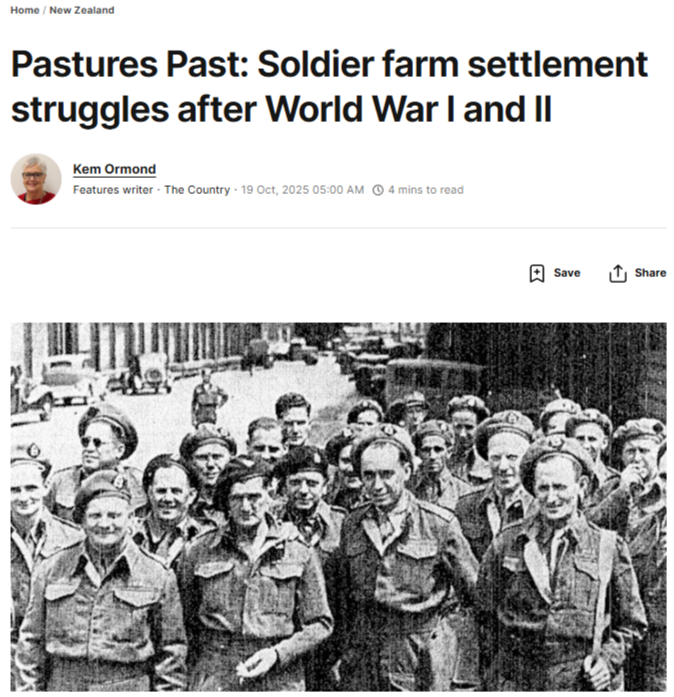
The Discharged Soldiers Settlement Act 1915 promised returned servicemen from World War I access to farmland. On paper, it made no distinction between Māori and Pākehā veterans. The government of the day proudly declared that under the law, both had “equal access” to rehabilitation programs. But as historian Dr Terry Hearn revealed in his groundbreaking research for the Waitangi Tribunal’s Wai 2500 Military Veterans Kaupapa Inquiry, this equality existed only in the racist fantasies of politicians and their eugenicist advisors.
Here is what “equal treatment” actually meant: Government officials assumed Māori had communal tribal land already available to them, so they did not need Crown land. Never mind that much of that tribal land had been systematically confiscated under the New Zealand Settlements Act 1863, which stole 3.2 million acres from iwi deemed to be in “rebellion” against the Crown. Never mind that the Native Land Court had spent decades converting communal Māori land into individual titles specifically to make it easier for Pākehā to buy. By 1939, Māori retained only 3.5 million acres of the original 66.4 million acres they had possessed at the signing of Te Tiriti.
The soldier settlement scheme was the final insult: taking more Māori land and giving it to Pākehā soldiers, including land in places like Rotorua, Waikato, and the central North Island, where Māori communities watched as the government carved up their ancestral estates into neat little farms for tauiwi.
The Issue: A System Designed to Exclude
Let us examine exactly how this betrayal worked. After World War I, more than 10,500 Pākehā soldiers were settled on farmland by 1924. Of the 2,227 Māori who served in the New Zealand (Māori) Pioneer Battalion, only approximately 61 received any rehabilitation benefits including farm land. That is a settlement rate of 2.7 percent for Māori compared to 10.5 percent for Pākehā.
After World War II, the numbers grew even more obscene. By 1953, the government had purchased just over 1 million acres to resettle approximately 14,000 returned servicemen. Of the 3,600 men who served in the 28th Māori Battalion, the number who actually received farms remains shamefully small and poorly documented, with some estimates suggesting fewer than 1 percent.
Consider the case of Abe Whata, a rangatira of Ngāti Pikiao and veteran of the legendary 28th Māori Battalion’s B Company, one of the most decorated units in New Zealand military history. Whata was among the rare few Māori who actually received a farm in the Rotorua district. His story is held up as proof the system worked. But his exceptionalism proves the opposite: he was one of a tiny handful who penetrated a system specifically designed to keep Māori out.
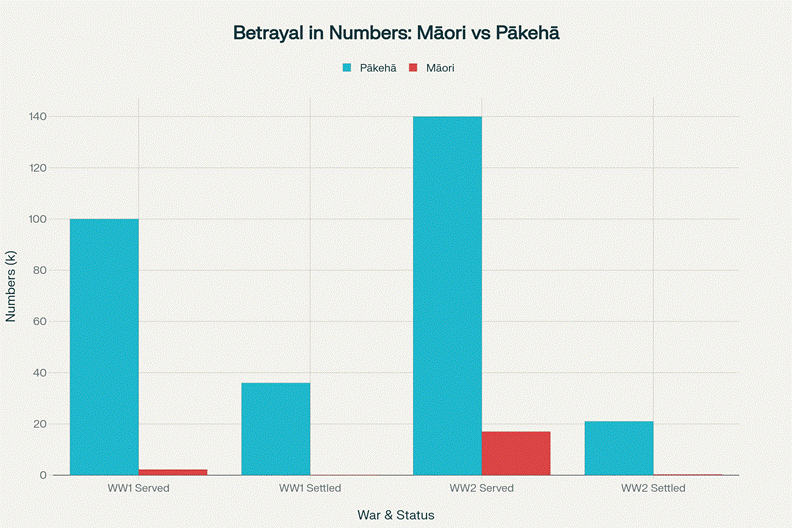
Comparison of soldier settlement outcomes showing the dramatic disparity between Pākehā and Māori veterans after both World Wars.
The Hidden Architecture of Exclusion
The mechanisms of discrimination were multiple, intersecting, and devastatingly effective. Research into the Omana Settlement in Wairoa shows how local Māori who had served in World War I watched as the Crown allocated land in their own rohe to discharged British soldiers, not to them. Although Māori were not explicitly excluded from land ballots, the fact that no Māori were successful in the ballot for land at Omana reveals how “equality of opportunity” was a fiction.
Generations of politicians and officials saw Māori as both poor at managing money and accustomed to a lower standard of living than other New Zealanders. This racist ideology justified giving Māori veterans inferior treatment. As one Treasury official stated in 1937 regarding pension payments: “The living standard of the Māori is lower – and after all, the object of these pensions is to maintain standards rather than to raise them.”
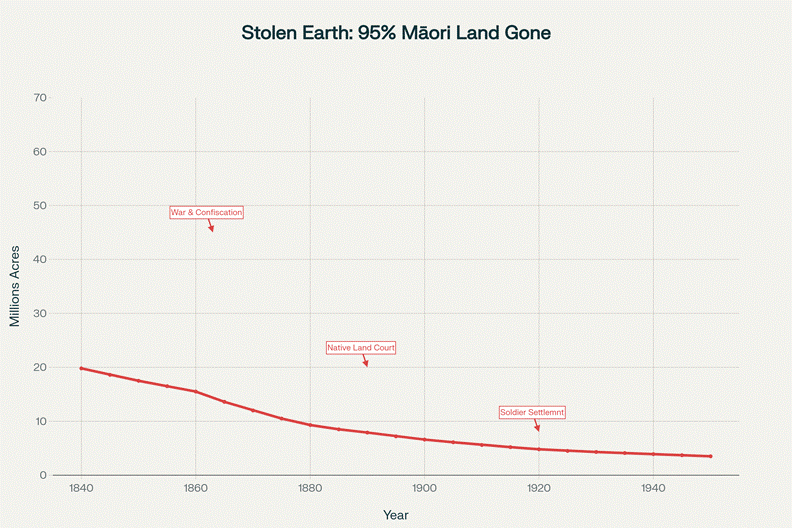
The catastrophic decline of Māori land ownership from 1840-1950, showing how colonization systematically stripped tangata whenua of their whenua.
The schemes were not adequately advertised in Māori communities. Available Crown land was located far from traditional iwi territories, forcing Māori to choose between their whānau and their economic futures. The ballot system required farming experience and personal capital, which many Māori lacked after generations of dispossession. Housing materials and fencing wire were mysteriously unavailable when Māori applicants came calling, though Pākehā settlers seemed to have no such problems.
The Christian Nationalist Underpinnings
We must name what powered this system: Christian nationalism wedded to white supremacy. The Church Missionary Society and other Christian organizations that dominated New Zealand’s early colonial period promoted a vision of civilization that placed European Christian settlers at its apex. They saw themselves as bringing light to darkness, order to chaos, civilization to savagery.
Missionary Samuel Marsden looked at Aotearoa in 1814 and declared his hope that the British flag would never be removed “till the Natives of that island enjoyed all the happiness of British Subjects.” But what kind of subjects? Military settlers were placed on confiscated Māori land to act as a buffer between Māori and European communities, consolidating territorial gains through armed occupation.
This was not simple land distribution. This was settler colonialism’s deliberate strategy: use veterans of imperial wars to garrison stolen land, reward them with property seized from Indigenous peoples, and create a permanent class of armed settlers with a vested interest in maintaining the colonial project. The same template had been used in Ireland, where British land seizures created a “brooding sense of wrong” that persisted for generations.
The neoliberal economic ideology that shaped land policy from the 1890s onwards promoted the myth of the “small, independent farmer” as the backbone of the nation. But this farmer was always imagined as white, Christian, and male. Māori were positioned as communal, traditional, and incapable of the “honest industry” required for modern agriculture. Never mind that Māori agriculture had been flourishing in the Waikato and other regions before the Crown invaded and confiscated the land.
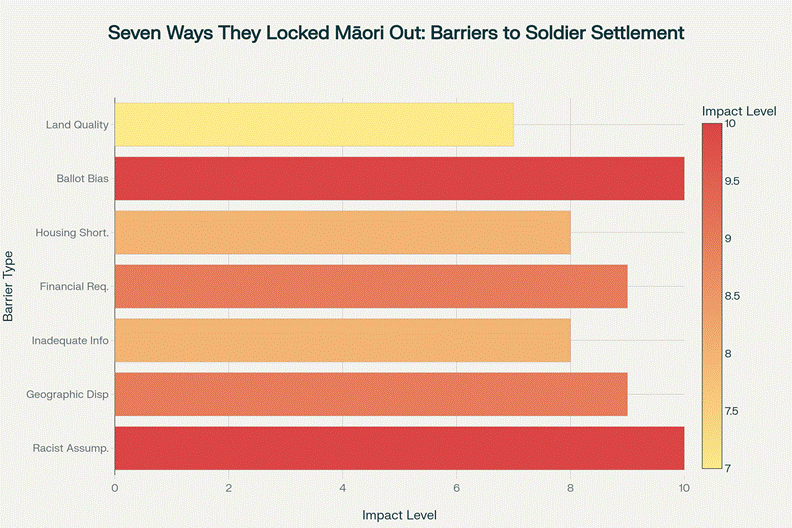
The multiple systemic barriers that prevented Māori veterans from accessing the soldier settlement schemes they had earned through their service.
The Voices They Tried to Silence
Sir Robert ‘Bom’ Gillies, the last surviving member of the 28th Māori Battalion who passed away in 2024 at age 99, spoke truth that should shame this nation. He told an interviewer in 2022: “We were all volunteers for six years, six long years. Our battalion was all volunteers. We weren’t conscripted. And not only that, the Māori war effort was second to none at home. And you know, it was all for nothing, all for nothing. We came back and things were much the same as for our forefathers.”
Gillies stated in his evidence to the Waitangi Tribunal in 2016 that if he had his time again, he would have been a conscientious objector. Why? Because Māori veterans returned to racial discrimination and inequities that were unchanged by their service: exclusion from swimming pools and theatres, hotels and bars, inability to buy alcohol to take home, and systematic denial of the rehabilitation benefits promised to them.
In 1948, an ex-serviceman in Waipawa told his RSA meeting: “If I was waiting for a farm, I would rather go and get a job on the wharves.” That was how bad it had become: the promise of land ownership, the supposed reward for military service, had become a cruel joke.
The Stolen Lands, The Broken Promises
We need to understand the scale of the theft that preceded and enabled soldier settlement. Between 1840 and 1939, Māori lost 95 percent of their land. Some of this loss came through Crown purchases that Māori later challenged as fraudulent. Some came through the Native Land Court, which became known as “te kōti tango whenua” – the land-taking court.
But the most brutal dispossession came through military confiscation under the 1863 New Zealand Settlements Act. This legislation allowed the Crown to seize land from Māori tribes deemed to be in rebellion, supposedly to achieve “permanent protection and security.” In reality, as academic Dr Ranginui Walker noted, it provided the ultimate irony: Māori who were fighting to defend their own land were forced to pay for its settlement and development through its confiscation.
The Crown seized more than 3.2 million acres across Waikato, Taranaki, Tauranga, eastern Bay of Plenty and Mohaka-Waikare. Much of this land went to military settlers enlisted from gold miners in Otago and Victoria, Australia. Between December 1863 and February 1864, four ships arrived in New Plymouth carrying 489 volunteers to occupy Taranaki land. Former soldiers were granted portions of confiscated land in return for their military service.
This is the land that later became available for soldier settlement after World War I and II. When the government purchased over 1 million acres by 1953 for returned servicemen, where do you think that land came from? It came from Māori, either through earlier confiscation, Crown purchase, or acquisition through the rigged Native Land Court system.
The Echoes Across the British Empire
New Zealand was not unique in this betrayal. In Australia, approximately 1,000 Aboriginal veterans from both world wars would have been eligible for the Soldier Settlement Scheme, but only two are known to have benefited. The Victorian Government had acquired about one million hectares of land by 1930, distributed to thousands of returned servicemen, but Aboriginal soldiers were systematically excluded through the same racist assumptions that operated in Aotearoa.
Across the Tasman, Aboriginal leaders have called for recognition of this historic injustice. Ngarra Murray of the First Peoples’ Assembly of Victoria said: “Having volunteered to serve a nation that barely recognised our peoples’ existence, Aboriginal soldiers, like my grandfather, risked their lives fighting for Australia. But when they got home they faced the same old racism and discrimination. They were denied equal opportunity in their own country and the disadvantage that caused has trickled down generations.”
This pattern reveals the systemic nature of British imperial racism. Indigenous peoples across the empire were deemed worthy of serving, fighting and dying for the Crown, but not worthy of receiving the same benefits as white settlers when they returned home.
The Wai 2500 Inquiry: Truth Finally Told
The Waitangi Tribunal’s Wai 2500 Military Veterans Kaupapa Inquiry, initiated in September 2014, has been the first comprehensive investigation into how the Crown treated Māori military veterans. The inquiry has heard devastating testimony about discrimination, lack of recognition, disproportionate risk of harm, and inadequate care and rehabilitation.
In March 2025, the New Zealand Defence Force finally fronted up at hearings held at Rongomaraeroa-o-ngā-hau-e-whā Marae in Waiouru. Senior Defence Force personnel, including the Chief of Army, shed tears during their testimonies as they acknowledged that for decades, tikanga Māori was misunderstood or ignored. From 1949 until the 1990s, there was little recognition of Māori cultural needs.
Dr Terry Hearn’s research for the inquiry found that Māori were “at worst, deliberately excluded from the rehabilitation scheme and, at best, inadequately provided for compared to Pākehā.” His work demolished the government’s claim that Māori and Pākehā had equal access to rehabilitation programs.
The Implications: Stolen Wealth, Stolen Futures
The soldier settlement scheme did not just deny Māori veterans individual farms. It robbed entire whānau and iwi of intergenerational wealth accumulation that Pākehā families enjoyed. While Pākehā soldiers and their descendants built equity in farms that they could pass on to their children, Māori veterans returned to poverty, landlessness, and ongoing dispossession.
Journalist Rebecca Macfie wrote about her own father, a Pākehā veteran who received a farm through soldier settlement in 1951. He was 26 years old, with zero money and zero business experience. But the State Advances Corporation provided him with a mortgage, a living allowance and budget supervision. Her family farm was among about 1.4 million acres acquired by the state for rehabilitation of returned servicemen, surrounded by neighbours who got their places the same way.
Macfie acknowledges what she only recently learned: “This benevolence didn’t extend to everyone.” As Hearn’s research showed, access to land for Māori veterans was “significantly constrained.” Many gave up waiting for that sweet promise of equality.
The wealth gap we see today between Māori and Pākehā has its roots in this systematic exclusion. When Pākehā families could accumulate assets through subsidized farmland while Māori families were denied the same opportunities, we created an economic apartheid that persists three generations later.
The Contemporary Relevance
This history matters now because the far right in Aotearoa is pushing Treaty denialism and “one law for all” rhetoric that pretends historical injustices are ancient history with no bearing on contemporary inequities. They claim that any policy designed to address Māori disadvantage is “special treatment” or “race-based preference.”
But how can there be equality when one group was systematically enriched through government policy while another was systematically dispossessed? How can we talk about “one law for all” when the law itself was used as a weapon of colonization?
The soldier settlement scheme reveals the lie at the heart of New Zealand’s claimed racial harmony. We sent Māori men to die in Europe and North Africa, praised their courage and sacrifice, celebrated them as heroes, and then came home and denied them the economic rehabilitation their Pākehā comrades received as a matter of course.
Warrior values like manaakitanga, whanaungatanga, and kaitiakitanga meant nothing to government officials who assumed Māori were financially incompetent and accustomed to lower living standards. The rangatiratanga guaranteed under Te Tiriti meant nothing when it came time to allocate Crown land.
The Debt That Remains Unpaid
Sir Āpirana Ngata argued that Māori participation in World War I was “the price of citizenship.” After World War II, his son Henare Ngata reflected: “I doubt if Maori people can point to any specific benefit and advantage which can be attributed to the participation of their men in World War Two.”
The truth is even harsher. Māori paid the price of citizenship in blood and sacrifice. Then they came home to find the Crown had pocketed their payment and given them nothing in return. Worse, the Crown took more of their land and gave it to Pākehā soldiers as a reward for military service.
Every farm in Rotorua, Waikato, Bay of Plenty, Waikare and elsewhere that went to a Pākehā soldier under the settlement scheme sits on land that was stolen from Māori through confiscation, purchase, or the corrupt Native Land Court system. Every Pākehā family that built wealth through soldier settlement did so on the backs of Māori dispossession.

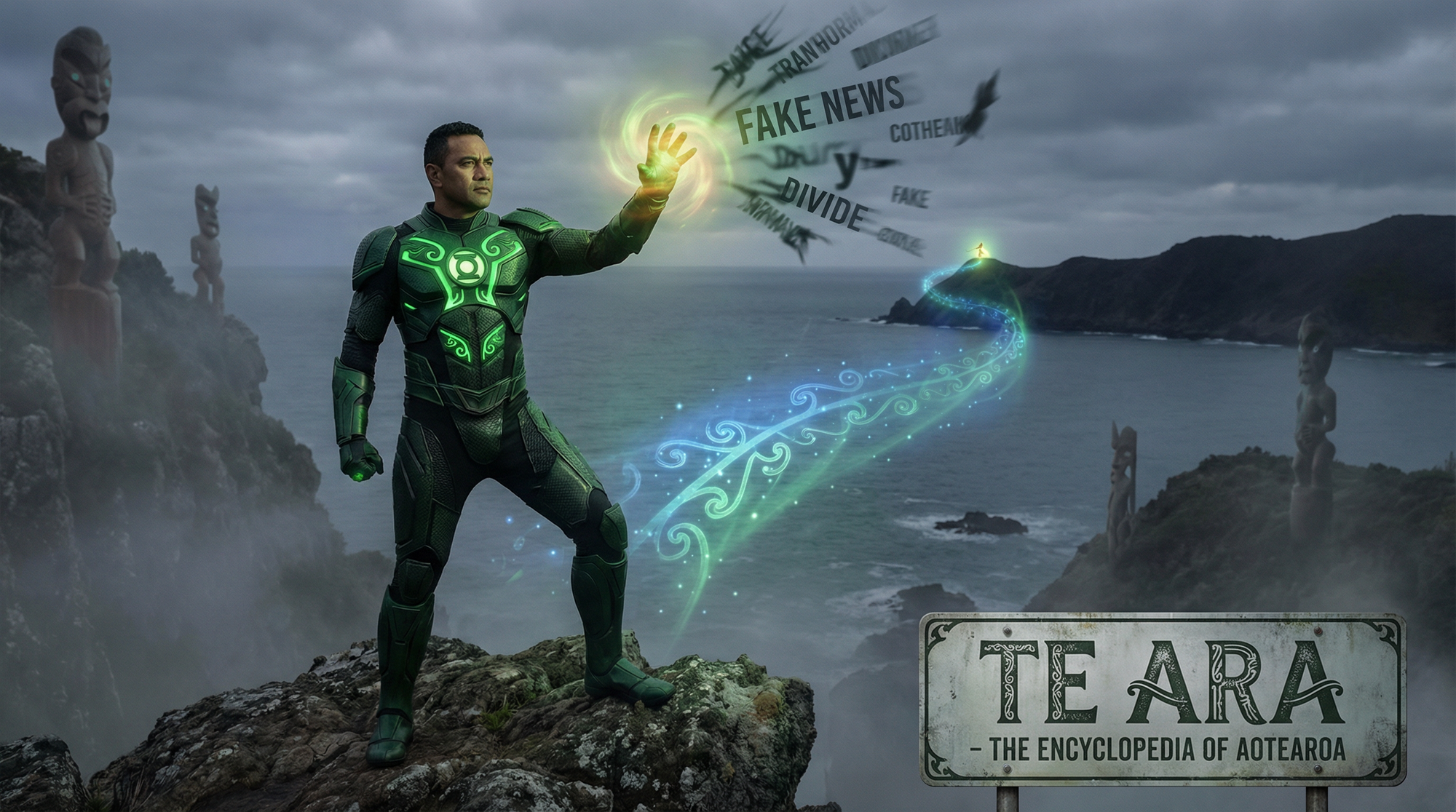
The Māori Green Lantern Fighting Misinformation And Disinformation From The Far Right
The Wai 2500 inquiry has exposed this truth. Now the question is whether this nation has the courage to face it. Will we finally acknowledge that the so-called “price of citizenship” that Māori paid entitled them to the same rehabilitation benefits as Pākehā? Will we recognize that denying them those benefits was theft?
The descendants of Abe Whata, of Bom Gillies, of the 3,600 men who served in the 28th Māori Battalion and the 2,227 who served in the Māori Pioneer Battalion deserve more than acknowledgement. They deserve restitution. They deserve the accumulated wealth their whānau would have gained if their tūpuna had received the farms they were promised.
This is not ancient history. This is the foundation of contemporary inequality. Until we face this truth, all talk of racial harmony in Aotearoa is just another lie we tell ourselves to sleep at night.
E hara taku toa i te toa takitahi, engari he toa takitini. My strength is not mine alone, but that of many. The strength of those Māori soldiers who fought for this country deserves to be honored not with empty words, but with justice.
If whānau find value in this mahi exposing the truth, please consider a koha to support this kaupapa: HTDM: 03-1546-0415173-000. Only give if you have capacity in these tough economic times.
Kia kaha, kia māia, kia manawanui
The Māori Green Lantern
1. Pastures-Past-Soldier-farm-settlement-struggles-after-World-War-I-and-II-NZ-Herald-10-20-2025_06_47_AM-1.jpg
2. https://journals.lww.com/10.4103/0972-4923.132134
3. https://paperspast.natlib.govt.nz/periodicals/NZJAG19490215.2.28
4. https://www.armymuseum.co.nz/soldier-settlements/
5. https://en.wikipedia.org/wiki/Christian_politics_in_New_Zealand
6. https://teara.govt.nz/en/land-ownership/page-6
7. https://www.iwm.org.uk/history/how-maori-battled-to-fight-together-in-the-first-world-war
8. https://www.armymuseum.co.nz/wp-content/uploads/2021/06/PDF_TRB_Religion_Gary_EDIT.pdf
9. https://www.nzlii.org/nz/legis/hist_act/dssa19156gv1915n45377.pdf
10. https://nzhistory.govt.nz/page/history-new-zealand-1769-1914
11. https://nzhistory.govt.nz/page/repatriation-returned-servicemen
12. https://teara.govt.nz/en/religion-and-society/print
13. https://en.wikipedia.org/wiki/Māori_Battalion
14. https://teara.govt.nz/en/biographies/1m55/morgan-john
15. https://teara.govt.nz/en/biographies/4s9/savage-michael-joseph
16. https://teara.govt.nz/en/1966/missions/page-2
17. https://www.nzherald.co.nz/bay-of-plenty-times/news/a-tale-of-two-cities-just-how-do-tauranga-and-rotorua-compare/HS7U6NQK3I5NRNTDU25YCLDUEY/
18. https://teara.govt.nz/en/english/print
19. https://teara.govt.nz/en/1966/maori-wars
20. https://www.nzherald.co.nz/rotorua-daily-post/news/carver-again-shapes-landmark-pouwhenua/6MLV4UQNUDRPVLXHIPJHDHSH2Q/
21. https://teara.govt.nz/en/suicide/page-6
22. https://teara.govt.nz/en/history/print
23. https://www.nzherald.co.nz/the-country/news/waikato-farms-wetland-project-sets-standard-for-environmental-rules/6YGUWC7ZCZH4JFJYBXDNSPXJZI/
24. https://encyclopedia.1914-1918-online.net/article/indigenous-experience-of-war-british-dominions/
25. https://teara.govt.nz/en/suicide/print
26. https://teara.govt.nz/en/european-ideas-about-maori/print
27. https://teara.govt.nz/en/conscription-conscientious-objection-and-pacifism/print
28. https://teara.govt.nz/en/1966/all/print?page=335
29. https://teara.govt.nz/en/missions-and-missionaries
30. https://www.mdpi.com/2071-1050/14/22/14672/pdf?version=1667900635
31. /content/files/core/services/aop-cambridge-core/content/view/76794C82212CAFB61AE0C1456B30D895/S0008938923000390a/div-class-title-racial-colonists-in-the-nazi-east-disabled-veterans-and-the-malleable-boundaries-of-race-masculinity-and-disability-div.pdf
32. /content/files/article/download/120/120.pdf
33. https://www.mdpi.com/2071-1050/14/18/11127/pdf?version=1663238130
34. /content/files/core/services/aop-cambridge-core/content/view/D65BCD385FCF44F24A70800090BC9B55/S0021853723000014a/div-class-title-caught-between-the-union-jack-and-the-nazi-swastika-african-protests-over-ambiguous-status-under-british-imperialism-and-potential-transfer-to-nazi-colonialism-div.pdf
35. /content/files/nqfdocs/ncea-resource/exams/2024/91231-res-2024.pdf
36. https://journals.sagepub.com/doi/pdf/10.1177/09670106241283275
37. /content/files/ajie/article/download/34/562.pdf
38. https://pmc.ncbi.nlm.nih.gov/articles/PMC7348423/
39. https://www.tandfonline.com/doi/pdf/10.1080/13642987.2022.2131771?needAccess=true
40. http://journals.sagepub.com/doi/pdf/10.1177/2158244013499143
41. https://journals.sagepub.com/doi/pdf/10.1177/11771801231206209
42. https://e-tangata.co.nz/history/if-i-had-the-choice-again-i-would-not-fight-in-that-war/
43. https://www.facebook.com/groups/hetangata/posts/1110977744284189/
44. https://www.facebook.com/tekareremaorinews/posts/for-the-first-time-the-crown-will-respond-to-decades-of-claims-of-racism-and-une/1038532068307398/
45. https://taranaki.iwi.nz/our-history/new-zealand-settlements-act/
46. https://www.rotoruamuseum.co.nz/media-releases/2022/11/11/rotorua-museum-gathering-untold-stories-of-b-company-28th-maori-battlion-soldiers/
47. https://nzhistory.govt.nz/culture/dawn-raids
48. https://www.sbs.com.au/nitv/article/servicemen-returning-from-war-were-promised-land-only-two-aboriginal-veterans-received-any/io79g74zy
49.
https://www.soldiersclaim.co.nz
50. https://teara.govt.nz/en/nga-pakanga-ki-tawahi-maori-and-overseas-wars/page-5
51. https://firstpeoplesvic.org/news/call-for-recognition-of-aboriginal-soldiers-who-missed-out-on-land-packages/
52. /content/files/wp-content/uploads/2021/08/issue-9-gifting-of-land-for-soldier-settlement-wai-2180-3-3-79.pdf
53. https://www.nzherald.co.nz/nz/pastures-past-soldier-farm-settlement-struggles-after-world-war-i-and-ii/WHMON6JSA5HM5LEK4W34W6R6OU/
54. https://nzhistory.govt.nz/keyword/rotorua
55. https://www.teaonews.co.nz/2022/05/03/it-was-all-for-nothing-maori-battalion-soldier-says-they-came-home-to-unchanged-racism/
56. https://www.tandfonline.com/doi/pdf/10.1179/072924709793054679
57. https://www.28maoribattalion.org.nz/photo/map-showing-battalion-company-boundaries
58. https://e-tangata.co.nz/history/equality-on-the-battlefield-but-not-at-home/
59. https://teara.govt.nz/en/veterans-assistance/print
60. https://sites.google.com/site/treaty4dummies/home/farms-for-returned-servicemen---the-facts
61. https://www.facebook.com/groups/214258676050153/posts/1900771327398871/
62. https://core.ac.uk/download/148637754.pdf
63.
https://28maoribattalion.org.nz
64. Pastures-Past_-Soldier-farm-settlement-struggles-after-World-War-I-and-II-NZ-Herald.pdf
65. https://www.abc.net.au/news/2019-04-14/land-withheld-from-indigenous-anzacs/10993680
66. /content/files/oggcasts/the-weekend.xml
67. https://teara.govt.nz/en/first-world-war/print
68. /content/files/arc/outboundfeeds/sitemap3/2023-10-19.xml
69. https://teara.govt.nz/en/history-of-immigration/print
70. /content/files/arc/outboundfeeds/sitemap3/2023-12-14.xml
71. https://teara.govt.nz/en/veterans-assistance/page-1
72. https://teara.govt.nz/en/land-ownership/print
73. https://teara.govt.nz/en/turanganui-a-kiwa-tribes/page-4
74. https://teara.govt.nz/en/history-of-immigration/page-12
75. https://www.mdpi.com/2313-5778/4/2/46/pdf
76. https://teara.govt.nz/en/government-and-agriculture/print
77. https://teara.govt.nz/en/dutch/page-2
78. https://teara.govt.nz/en/te-tai/raukawa-chapter-2
79. https://28maoribattalion.org.nz/roll
80. https://www.facebook.com/groups/aotearoanzhistory/posts/949115546910808/
81. https://www.torquayhistory.com/brief-history-of-torquay/first-austsralians/aboriginal-soldiers/
82. https://www.awm.gov.au/articles/indigenous-service/report-executive-summary
83. https://www.mdpi.com/2409-9279/4/2/37/pdf
84. https://pmc.ncbi.nlm.nih.gov/articles/PMC10640749/
85. https://www.mdpi.com/1660-4601/21/4/445/pdf?version=1712308942
86. https://www.tandfonline.com/doi/pdf/10.1080/20780389.2019.1581058?needAccess=true
87. https://www.tandfonline.com/doi/pdf/10.1080/09638288.2024.2374494?needAccess=true
88. /content/files/nzjer/article/download/22/28.pdf
89. https://pmc.ncbi.nlm.nih.gov/articles/PMC8163162/
90. https://pmc.ncbi.nlm.nih.gov/articles/PMC11520692/
91. https://www.mdpi.com/1660-4601/20/18/6797/pdf?version=1695294861
92. /content/files/kotare/article/download/602/414.pdf
93. https://www.mdpi.com/1660-4601/19/20/13558/pdf?version=1666187208
94. https://www.mdpi.com/2313-5778/6/4/83/pdf?version=1665407928
95. /content/files/nqfdocs/ncea-resource/exams/2024/91231-mre-2024.pdf
96. https://thespinoff.co.nz/atea/01-04-2025/what-i-learned-from-40-hours-of-the-military-veterans-kaupapa-inquiry
97. https://www.tandfonline.com/doi/pdf/10.1080/17449057.2022.2096767?needAccess=true
98. https://e-tangata.co.nz/history/forever-brave/
99. https://www.ngatiawa.iwi.nz/news-updates/wai-2500-wairaka-marae
100. https://www.nzherald.co.nz/the-listener/new-zealand/home-truths-what-an-nz-journalist-had-to-learn-to-write-about-poverty/XUZLQJ6C75BGPM72GDF4XXJMM4/
101. https://www.teaonews.co.nz/2024/02/27/maori-veterans-to-tell-tribunal-how-badly-they-were-treated-in-the-military/
102. /content/files/assets/Uploads/Documents/Wai-2750/historical-maori-housing-wai-2750-a009.pdf
103. https://www.veteransaffairs.mil.nz/news-events/articles/wai2500-an-interview-with-lieutenant-colonel-martin-dransfield-onzm/
104. /content/files/assets/Uploads/Documents/Wai-2750/wai-2750-6-v2-2-002.pdf
105. https://www.nzherald.co.nz/northern-advocate/news/unclaimed-medals-of-northland-members-of-the-legendary-28th-maori-battalion-can-be-given-to-their-whanau/TCQ2E27DDND6ZKANGFPL6JVHRI/
106. https://www.nzdf.mil.nz/media-centre/story-collections/wai-2500-military-veterans-kaupapa-inquiry/
107. https://e-tangata.co.nz/reflections/rebecca-macfie-what-do-i-know-of-hardship/
108. https://www.mdpi.com/2313-5778/6/1/10/pdf
109. https://www.facebook.com/NZDefenceForce/posts/this-week-marks-the-third-crown-hearing-week-of-the-wai-2500-military-veterans-w/1170127211818725/
110. https://www.facebook.com/story.php?story_fbid=1074092458097319&id=100064897232260
111. https://www.abebooks.com/book-search/title/28-maori-battalion/first-edition/
112.https://teara.govt.nz/en/biographies/1t58/te-puni-kokopu-honiana
113. https://www.nzherald.co.nz/sport/chris-rattue-the-memorable-sports-quotes-of-2021/EE4OBY7MJOCMKBUJ63OZFLHJ4E/
114.https://teara.govt.nz/en/biographies/2t7/taonui-aperahama
115. https://teara.govt.nz/en/biographies/1a2/abraham-charles-john
116.https://teara.govt.nz/en/manawatu-and-horowhenua-places/page-5
117. https://teara.govt.nz/en/1966/hadfield-octavius
118. https://teara.govt.nz/en/european-discovery-of-new-zealand/page-9
119.https://pmc.ncbi.nlm.nih.gov/articles/PMC2735534/
120. https://teara.govt.nz/en/biographies/1s5/selwyn-george-augustus
121.https://teara.govt.nz/en/jews/page-1
122. https://teara.govt.nz/en/biographies/1b16/bell-francis-dillon
123. https://teara.govt.nz/en/interdenominational-christianity/page-1
124. http://www.tandfonline.com/doi/full/10.1179/072924709793054679
125. https://www.semanticscholar.org/paper/30218c2148036c28d16cf8f930d792a5a23d5438
126. /content/files/vol19/iss1/art28/es-2013-6262.pdf
127. https://www.tandfonline.com/doi/pdf/10.1080/15358593.2024.2313238?needAccess=true
128. /content/files/document_file/c26cdc28-7dff-4618-aa45-ab79da0c981c/ScienceOpen/amps-25-1.pdf
129. /content/files/7018/pdf.pdf
130. https://ojs.aut.ac.nz/rangahau-aranga/article/download/199/177
131. /content/files/core/services/aop-cambridge-core/content/view/68CCD0A373277830C2BC9C3614132C6B/S2071832223000810a/div-class-title-minimum-legal-standards-in-reparation-processes-for-colonial-crimes-the-case-of-namibia-and-germany-div.pdf
132. https://pmc.ncbi.nlm.nih.gov/articles/PMC10161976/
133. http://journal-veterans-studies.org/articles/10.21061/jvs.v6i1.154/galley/153/download/
134. https://storage.googleapis.com/jnl-au-j-jiss-files/journals/1/articles/217/64c242fab2448.pdf
135. https://www.tandfonline.com/doi/full/10.1080/2201473X.2023.2195062
136. https://28maoribattalion.org.nz/story-of-the-28th/after-the-war
137. /content/files/assets/Files-PDF-Word/stimulus-vol-21-is-2_lange.pdf
138. https://teara.govt.nz/en/photograph/17939/access-road-for-returned-servicemens-farms
139. https://baptist.nz/pondering-myths-about-our-history/
140. https://openaccess.wgtn.ac.nz/ndownloader/files/31555352