“When Your Finance Minister’s Family Gets Rich While You Pay the Power Bill” - 4 October 2025
How Nicola Willis Turned Personal Conflicts Into Corporate Welfare for Genesis Energy
Kia ora tatou katoa, “Greetings everyone.”
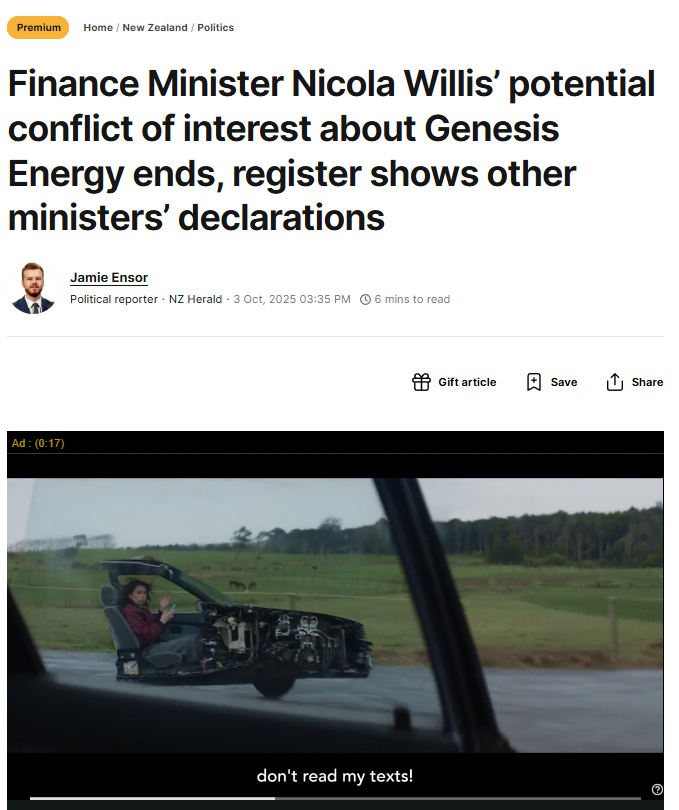
Here is what every hardworking New Zealander needs to understand: Finance Minister Nicola Willis had a family member with a financial stake in Genesis Energy, stepped back from decisions about the company for over a year, then magically resumed control just in time to hand Genesis millions in taxpayer support. This is not coincidence—this is corruption disguised as compliance.
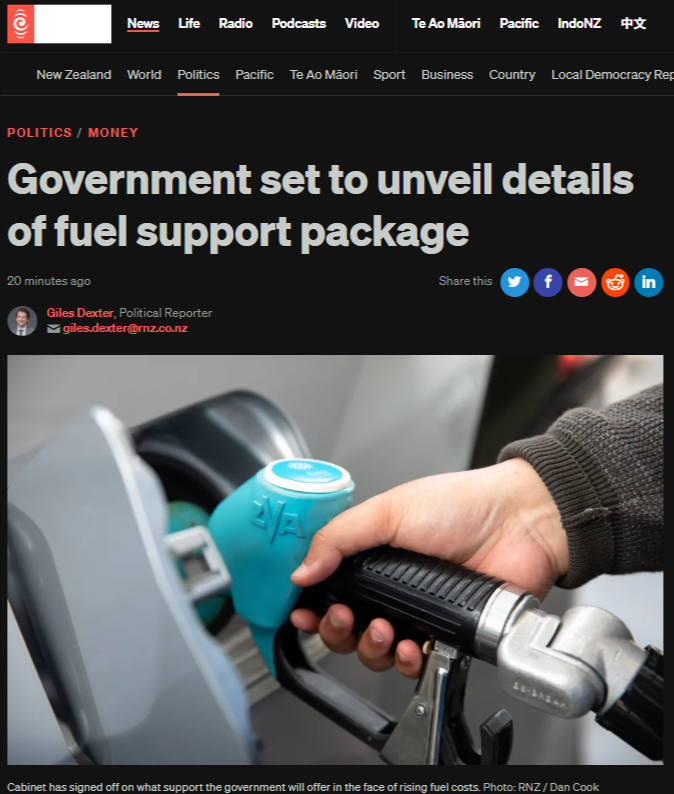
While you struggle with soaring power bills, Willis just promised Genesis, Mercury and Meridian that the government will provide “capital funding requests for strategic and commercially rational investments”. Translation: your taxes will subsidise the same power companies gouging you at home. The timing is obscene and the conflicts are hidden behind Westminster’s weakest transparency laws in the democratic world.
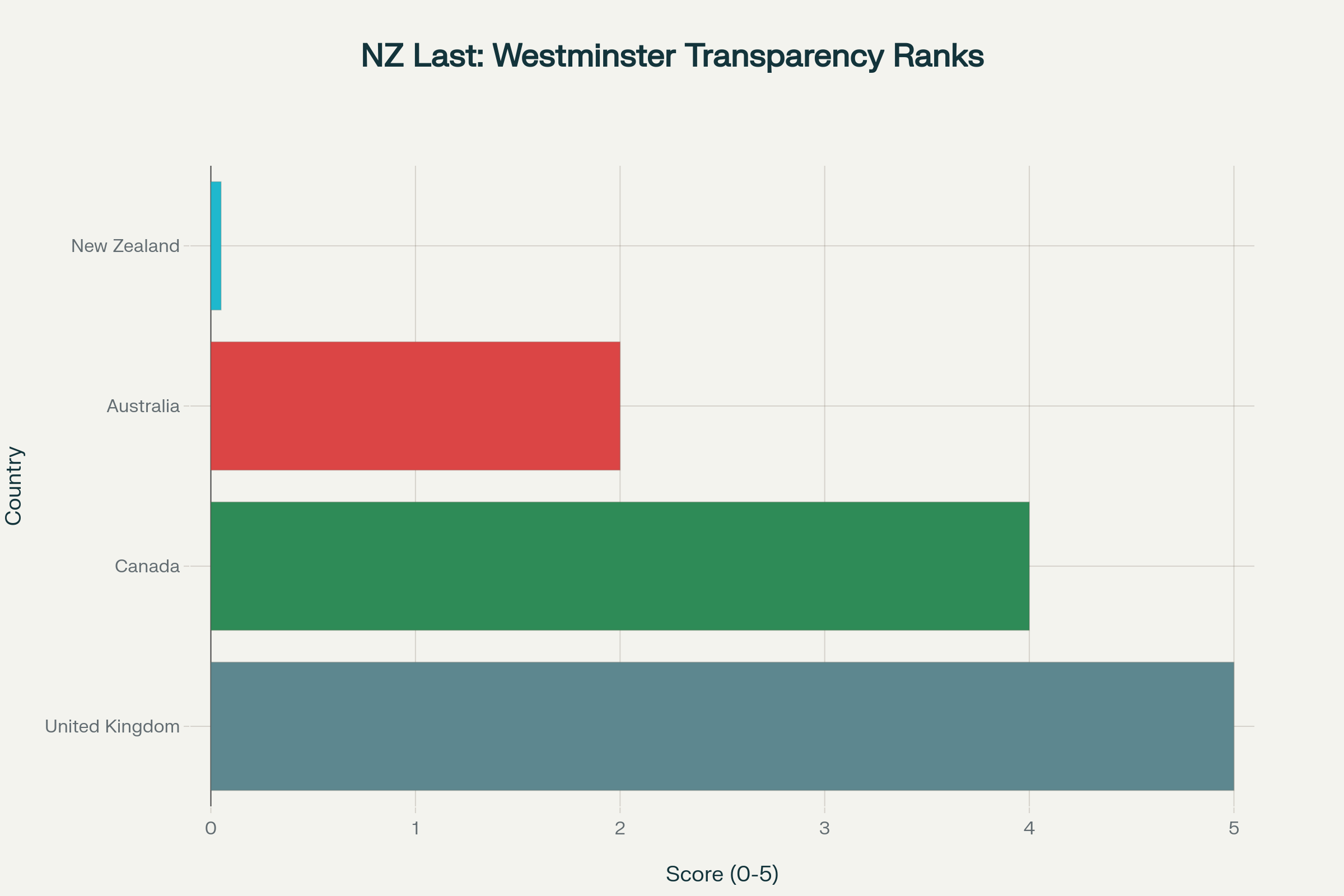
Westminster democracies ranked by political staff transparency measures, showing New Zealand’s complete failure to meet international standards
Background: New Zealand’s Transparency Black Hole
New Zealand operates the least transparent political system in the Westminster world. While the United Kingdom publishes names, salaries, and meeting records of political advisers annually, and Canada requires disclosure of roles, responsibilities and conflicts for exempt staff, New Zealand provides nothing. As academics Richard Shaw and Chris Eichbaum confirm, New Zealand is “an outlier on proactive release of information about political staff who work at the heart of government”.
This opacity enables the exact corruption we see in the Willis case. Ministers can hide conflicts, delegate responsibilities to allies, then resume control when it benefits their interests. The Cabinet Office releases minimal information twice yearly about conflict transfers, but provides no details about the nature of conflicts beyond basic categories like “personal” or “financial.”
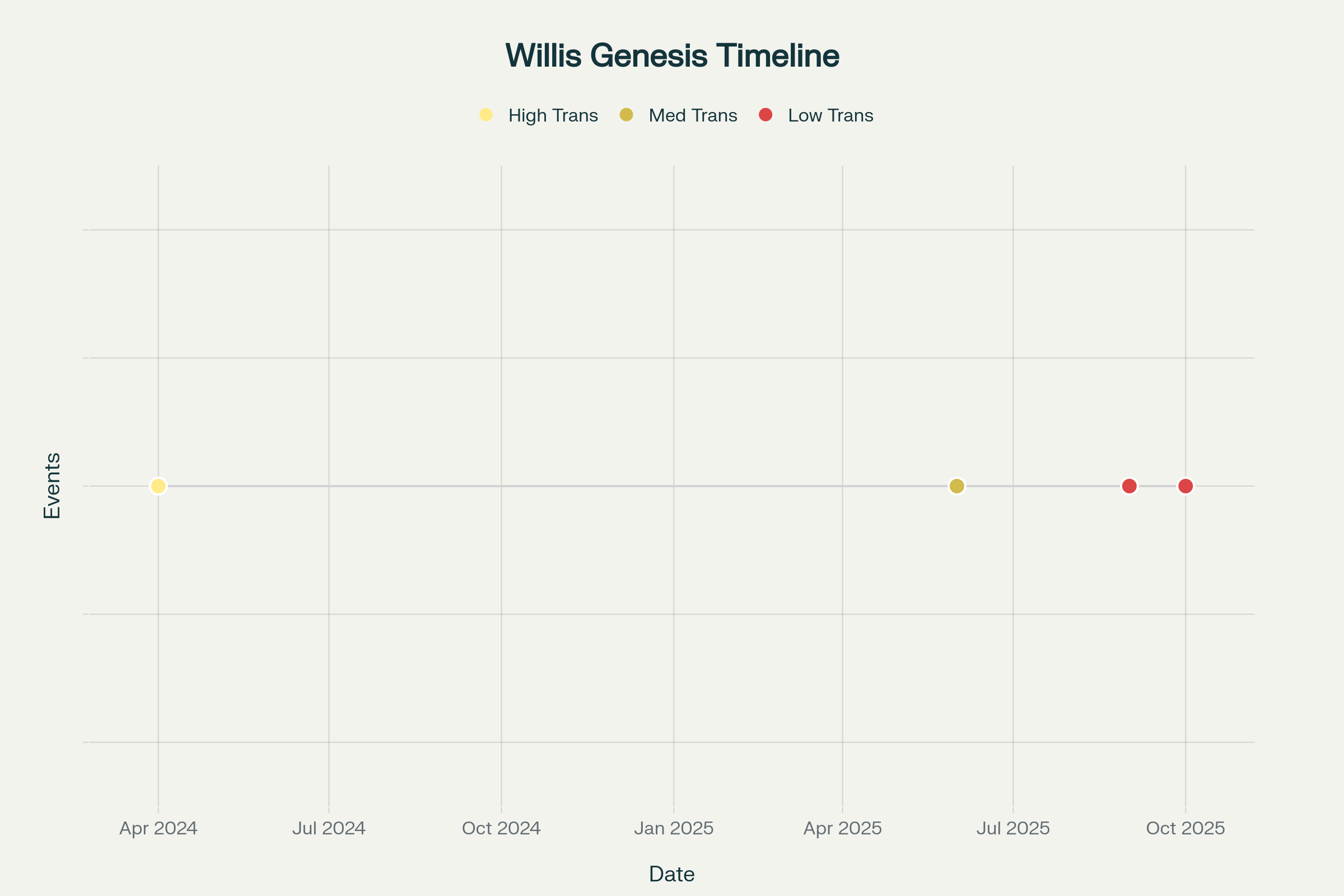
Timeline showing how Nicola Willis moved from managing Genesis Energy conflicts to directly benefiting the company with taxpayer support
The Issue: Willis’ Genesis Windfall Timeline
The sequence of events reveals systematic manipulation of conflict rules to benefit Willis’ family interests:
April 2024: Willis declares a conflict regarding Genesis Energy due to a “family member of minister Willis had an interest relating to Genesis Energy”. She transfers Genesis-related responsibilities to Associate Finance Minister David Seymour.
June 2025: The family interest “ended in June this year” and Willis resumes full control over Genesis Energy decisions.
October 2025: Willis announces Genesis Energy will receive government capital support, declaring “We are more than willing to do this, if the proposals stack up”. She personally wrote to Genesis guaranteeing Crown participation in equity raises.
This timeline shows Willis positioned herself to directly benefit Genesis Energy the moment her family’s financial conflict resolved. The government became Genesis Energy’s financial backstop precisely when Willis regained control.

Handshake between business executives symbolizing agreement and power dynamics
The Hidden Christian Nationalist Network
Willis operates within broader networks of Christian nationalist influence that explains the systematic opacity. These networks, documented extensively in my previous analysis, include connections between New Zealand First’s Winston Peters and alt-right movements, where Peters “signed a cartoon of a frog named Pepe - the most popular symbol of the alt-right”, leading 4Chan boards to declare “Winston is /ourguy/”.
These same networks understand that corporate capture requires systematic opacity. Willis’ approach mirrors Peters’ use of “ministerial advisers” who “provide partisan or political advice and are not subject to the impartiality requirements that apply to public servants”. The Palestine Cabinet paper shows how Peters’ office controlled the entire process rather than using expert diplomatic advice.
Willis uses the same tactics: hide the conflicts, control the timing, capture the benefits.
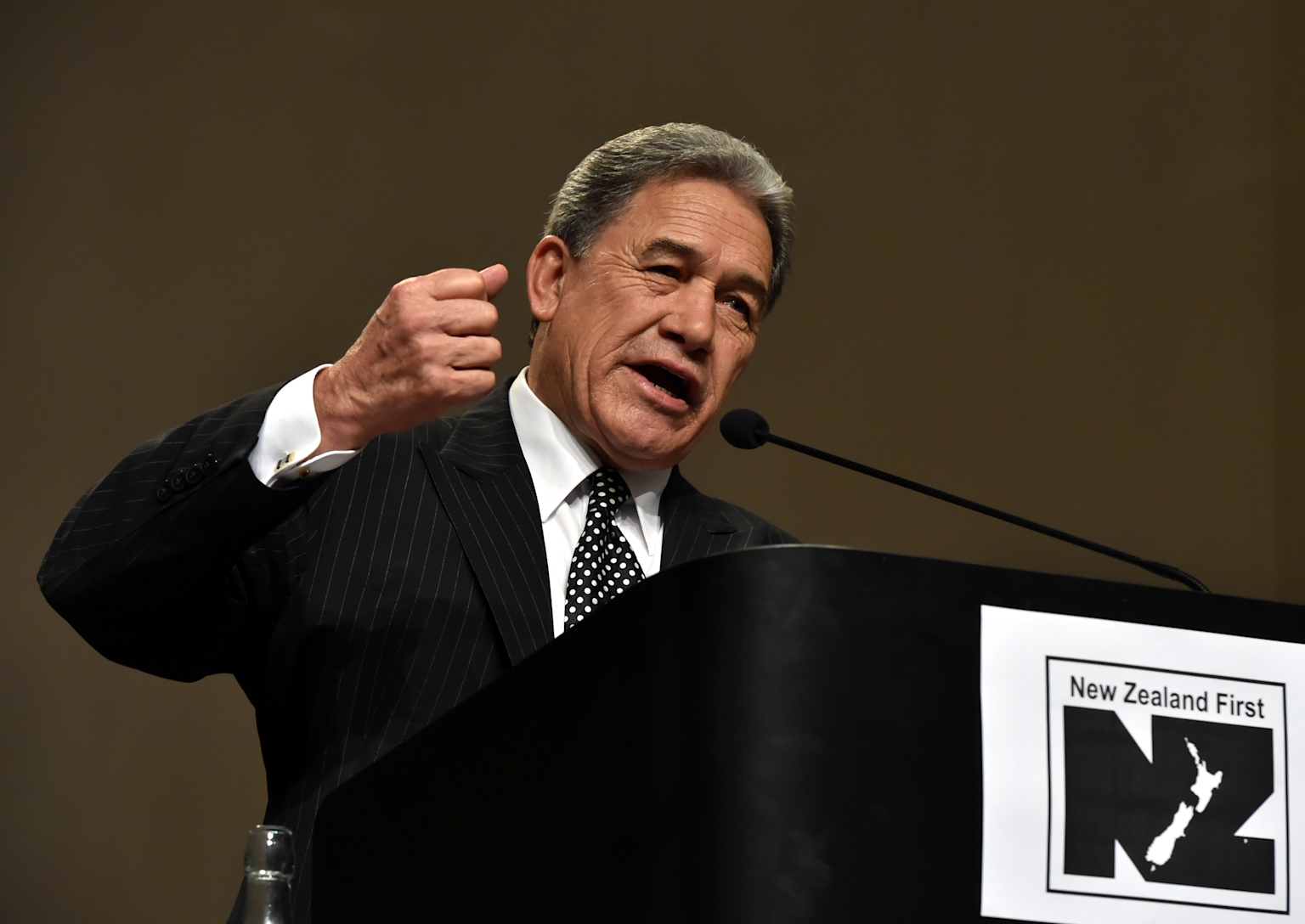
Winston is our guy - speaking at New Zealand First podium with party emblem
The Web of Ministerial Conflicts
Willis is not alone in this corruption. The latest conflicts register reveals a web of undisclosed interests across government:
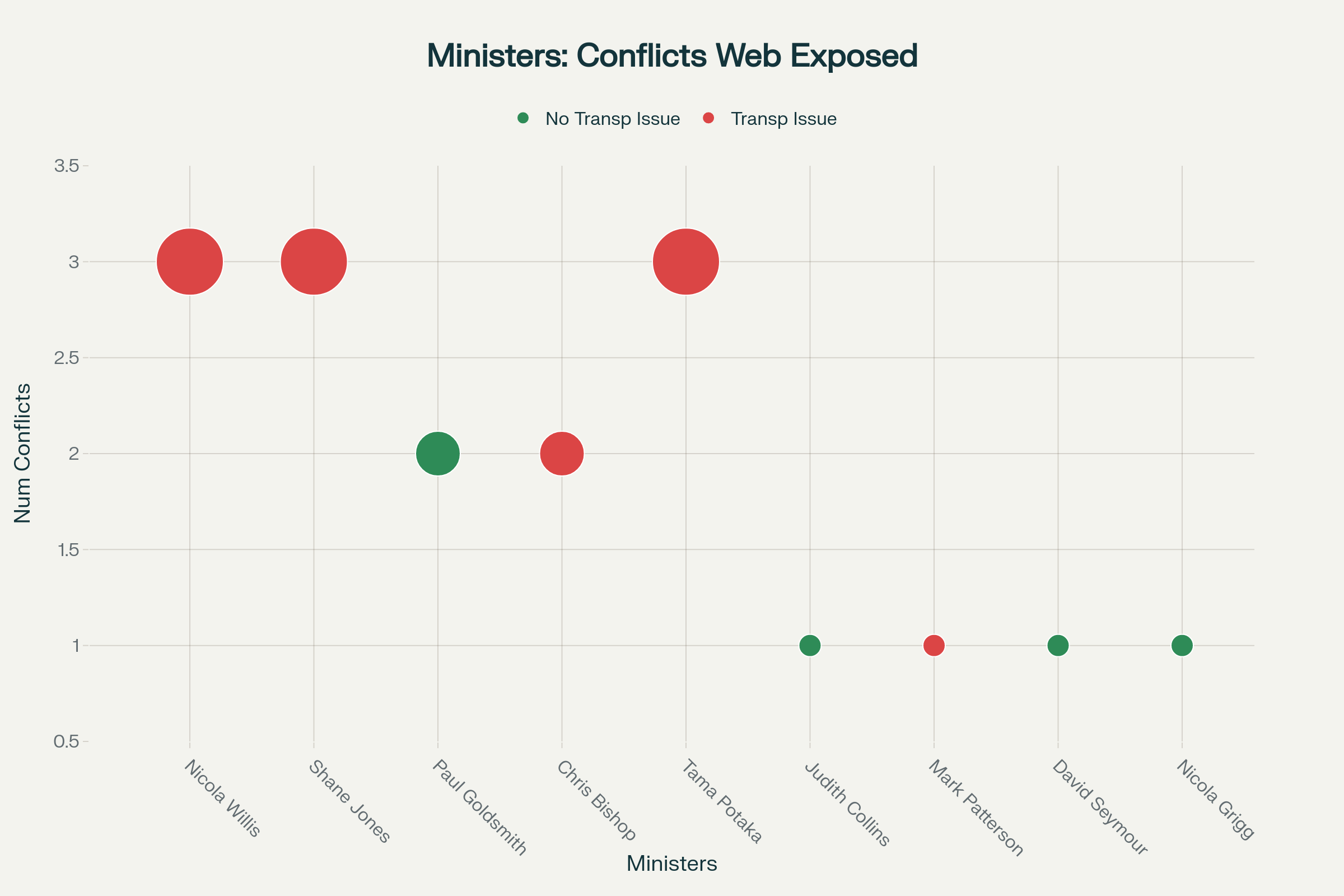
Government ministers mapped by number of conflicts and transparency problems, revealing a web of undisclosed interests
Shane Jones has conflicts related to “iwi and family connections to Te Aupōuri and Ngāi Takoto” affecting both Regional Infrastructure Fund decisions and aquaculture settlements—precisely the areas where his portfolio decisions can generate millions for connected interests.
Chris Bishop faces conflicts regarding Wellington International Airport while serving as Transport Minister, creating obvious opportunities for policy manipulation.
Mark Patterson has conflicts “between government decisions in relation to the pricing or other settings of Emissions Trading Scheme (ETS) units and a pecuniary interest”, meaning he personally benefits from ETS price movements he can influence as Climate Change Minister.
The common pattern: ministers manage conflicts by temporary delegation while maintaining the ability to resume control when personally beneficial.
Corporate Capture Through Conflict Management
The Genesis Energy case demonstrates how New Zealand’s weak conflict rules enable corporate capture. While Genesis Energy is “51% owned by the Crown”, making the government its controlling shareholder, the Frontier Economics review found Genesis “faced constraints on their ability to invest in larger generation projects” due to “perception that the Government would not provide equity injections”.
Willis’ solution was to guarantee Crown participation in Genesis capital raises, effectively socialising Genesis Energy’s investment risk while privatising its profits. Her family’s prior interest in Genesis Energy suggests this arrangement benefits connected insiders while ordinary consumers pay higher power bills.
The 2023 changes to conflict management systems were supposed to strengthen transparency, but instead enabled more sophisticated manipulation. Ministers now receive quarterly rather than annual reviews, creating more opportunities to time conflict declarations around beneficial decisions.
Implications for Māori and Democratic Governance
This systematic corruption violates fundamental Treaty principles. Te Tiriti demands transparency and good faith engagement, but how can iwi and hapū engage meaningfully when ministers hide their financial interests? The Willis case shows colonial governance at its worst—decisions made in private to benefit connected networks while excluding Māori voices.
The Auditor-General’s 2025 review of Fast-track conflicts found the system “sound” but missed the fundamental issue: conflicts can be declared and managed to enable rather than prevent corruption. When Willis’ family interest ended precisely when Genesis needed government support, this reveals coordination rather than coincidence.
For Māori pursuing tino rangatiratanga, this opacity represents colonial control disguised as compliance. We cannot hold power accountable when power operates in shadows.
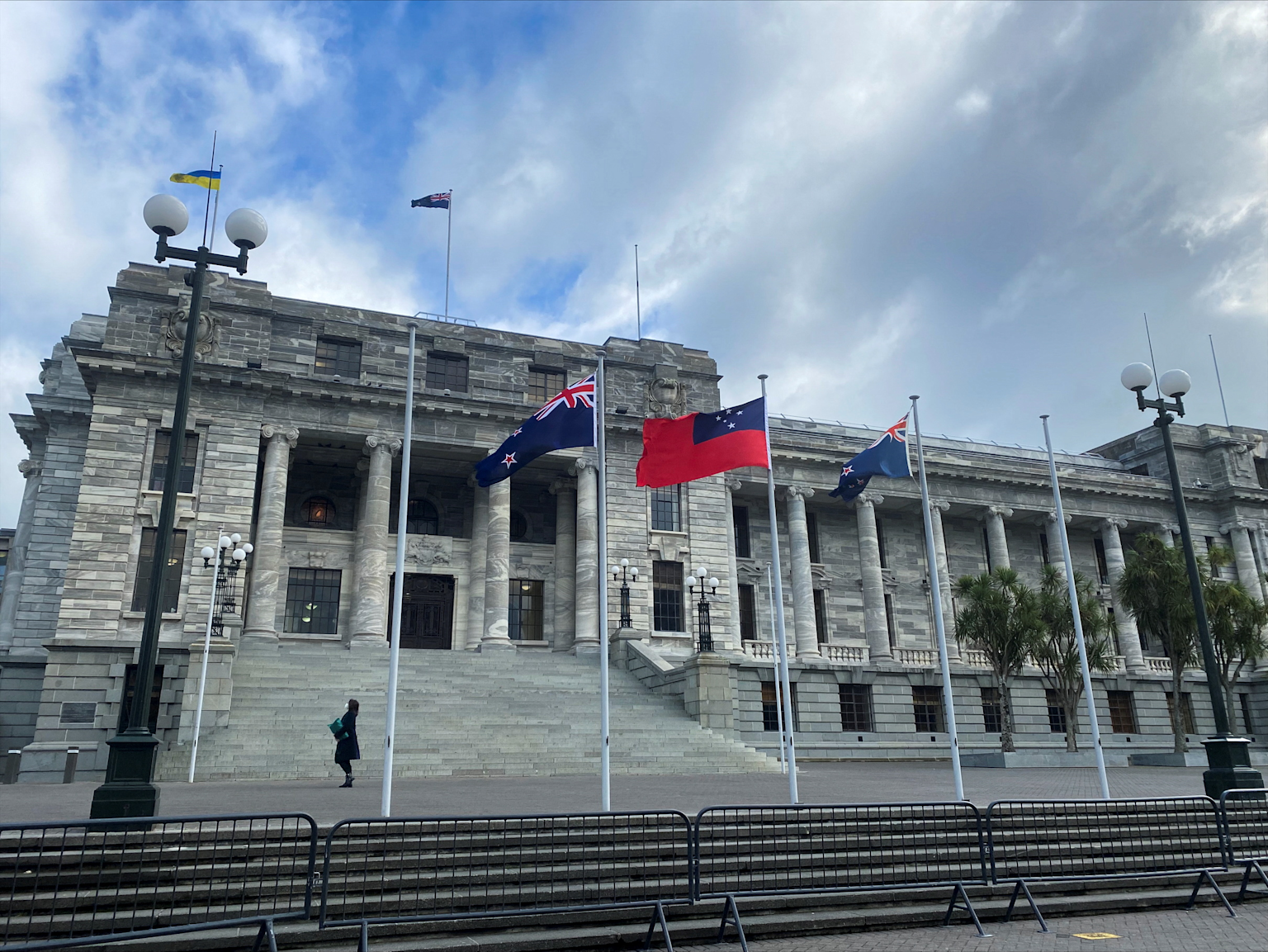
Front view of New Zealand Parliament building in Wellington with national and regional flags flying
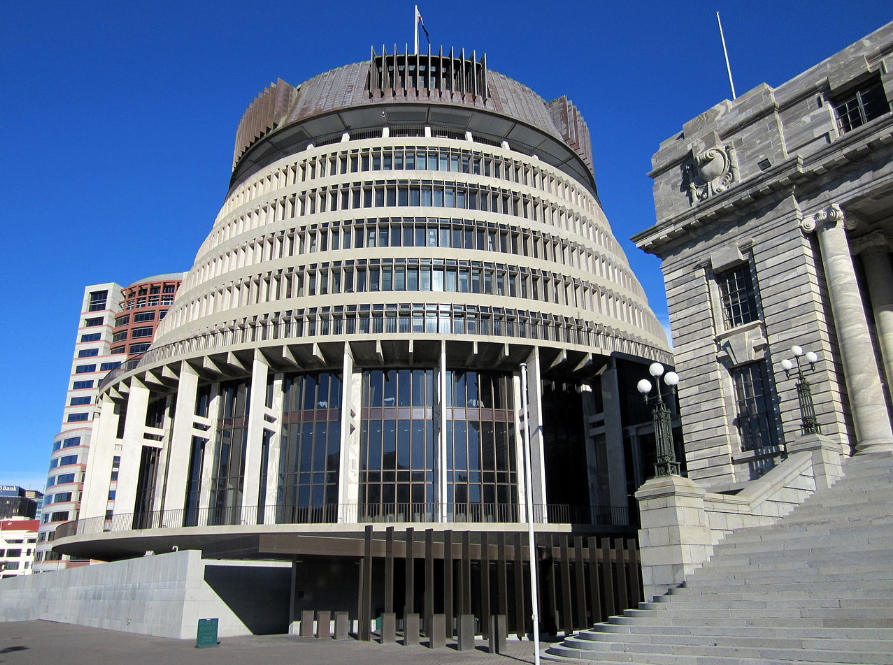
The Beehive in Wellington, New Zealand, housing the executive wing of parliament and symbolizing political power
Fighting the Corruption
Willis and her government allies have weaponised New Zealand’s weak transparency laws to enable systematic corruption. They declare conflicts when convenient, delegate responsibilities to allies, then resume control when personally beneficial. This is not governance—this is a criminal enterprise masquerading as public service.

The Māori Green Lantern Fighting Misinformation And Disinformation From The Far Right
The solution requires immediate action: mandatory real-time disclosure of all ministerial financial interests; independent oversight of conflict management with meaningful penalties; and an end to the cozy arrangements where ministers manage conflicts through temporary delegation to allies.
Until then, we remain trapped in Willis’ world—where your power bills fund her family’s investments while she lectures you about fiscal responsibility.
Readers who value this kaupapa of exposing corruption and defending transparency are humbly invited to consider a koha to support this crucial mahi: HTDM: 03-1546-0415173-000. The MGL understands these are tough economic times for whānau, so please only contribute if you have capacity and wish to do so.
Hei konā rā—stay vigilant, stay informed, and keep fighting for the light of truth against those who profit from shadows.

Shadowy political backroom dealing
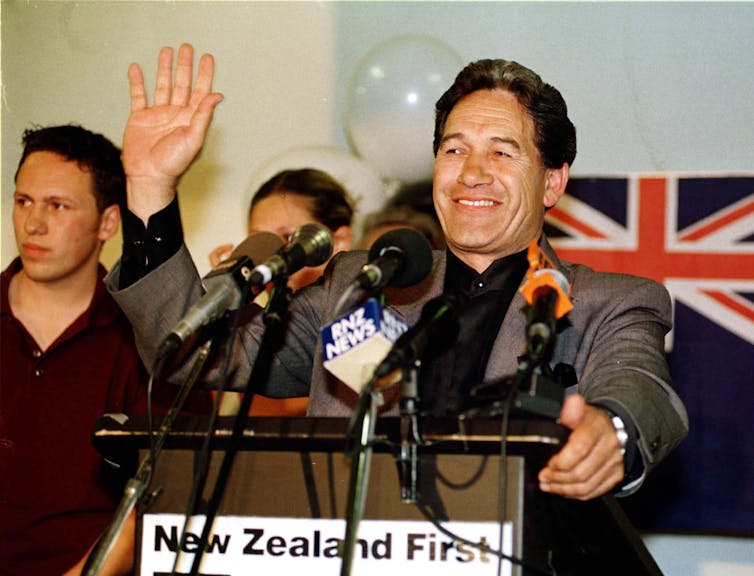
Winston Peters speaking at a New Zealand First event with party branding and microphones from news media present