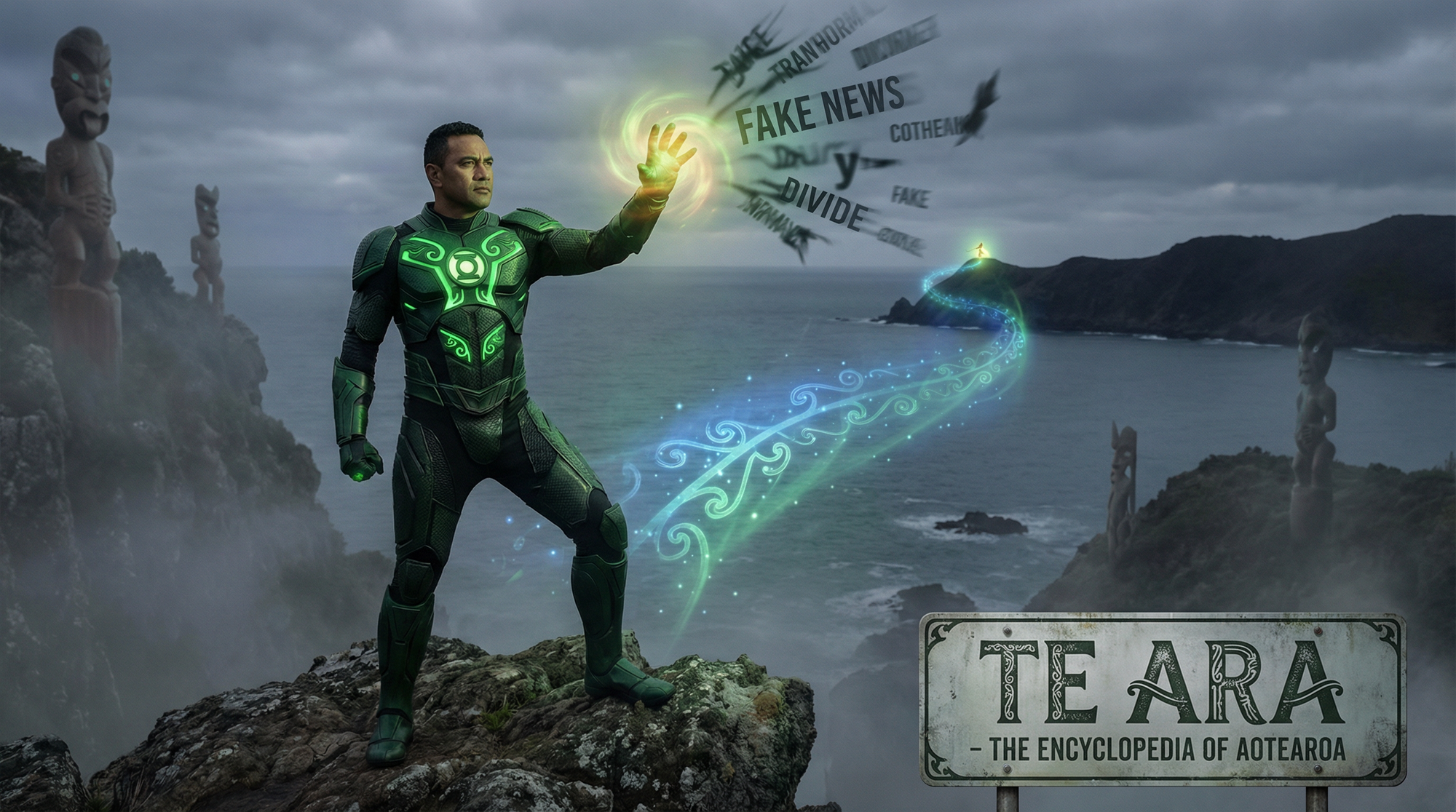
“When Your Government Sanctions Ships While Insuring the Fleet: Winston Peters’ Russian Oil Theatre” - 31 October 2025
The Untold Networks Beneath Peters’ Foreign Policy Show
Tēnā koutou katoa.
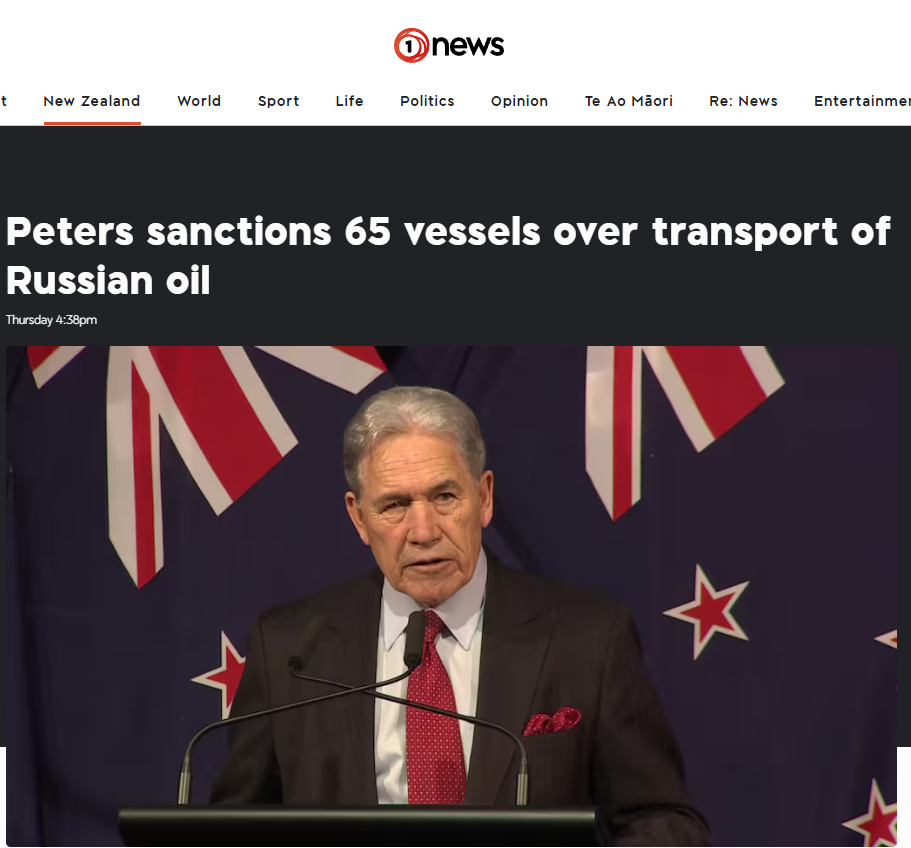
On October 30, 2025, Foreign Minister Winston Peters stood in Stockholm, chest puffed with performative righteousness, announcing sanctions against 65 “shadow fleet” vessels transporting Russian oil (1News, 2025). “By targeting the oil supply chain, New Zealand is acting decisively,” he declared, wrapping himself in the moral authority of the rules-based international order (RNZ, 2025).
The smoking gun? Just 48 hours earlier, Reuters revealed that Maritime Mutual—a small Auckland-based insurance company—had enabled the transport of at least $34.9 billion in sanctioned Iranian and Russian oil, providing the very insurance these shadow fleet vessels needed to enter ports worldwide (RNZ, 2025; Reuters, 2025). On October 16, New Zealand police raided Maritime Mutual’s Auckland and Christchurch offices, seizing documents as part of an international investigation involving Australia, the UK, and the USA (NZ Herald, 2025).
Peters sanctioned ships while a New Zealand company insured the entire operation. This isn’t foreign policy—it’s theatre. And like all good theatre, it requires us to suspend disbelief while the real business happens backstage.
The Whakapapa of Hypocrisy
To understand this farce, we must trace its genealogy through three interlocking networks: the colonial architecture of New Zealand’s subservience to Five Eyes imperialism, the neoliberal privatization of consequence, and the deliberate exclusion of tangata whenua from decisions that violate every principle of tikanga Māori.
Background: The Shadow Fleet and the War Economy
Russia’s “shadow fleet” consists of approximately 591-1,200 aging tankers acquired to evade Western sanctions imposed after the 2022 invasion of Ukraine (RNZ, 2025; Reuters, 2025). These vessels transport oil above the G7-imposed $60 per barrel price cap, generating billions in revenue that funds Putin’s war machine. Despite sanctions, Russia earned $189 billion from oil exports in 2024 and $154 billion in 2025—a combined $343 billion (1News, 2025).
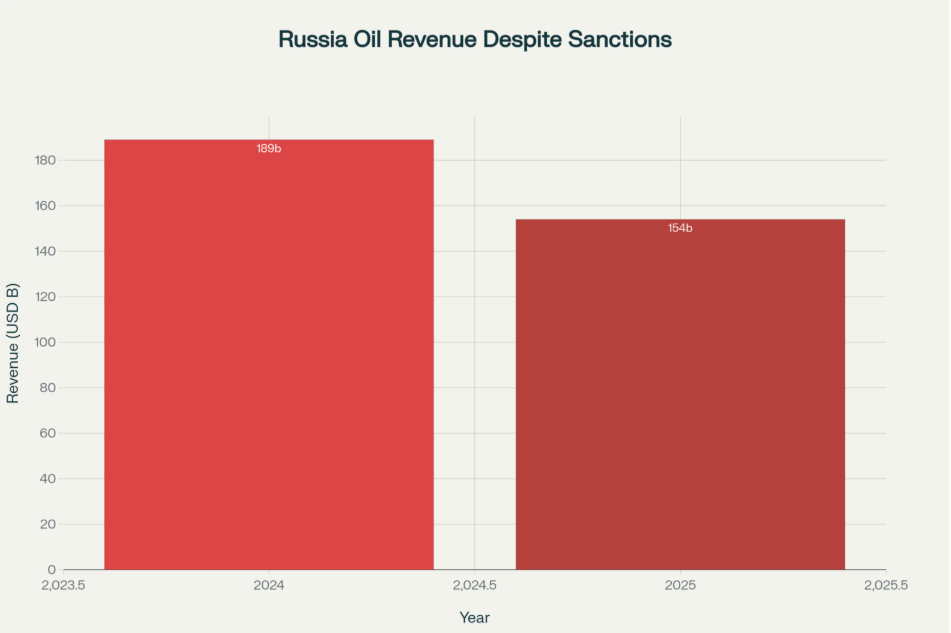
Russia’s oil export revenue 2024-2025 showing $189 billion (2024) and $154 billion (2025) despite Western sanctions, demonstrating limited effectiveness of sanctions regime.
China and India are Russia’s primary customers, purchasing 47% and 38% respectively of Russian oil since the EU embargo (RFERL, 2025). The shadow fleet enables this trade through deceptive practices: turning off tracking systems (274 instances of AIS manipulation by Maritime Mutual-insured vessels between 2021-2025), using fake documents, and obscuring ownership through shell companies (RNZ, 2025).
The Maritime Mutual Money Trail: Follow the Pounds Sterling to Lloyd’s of London
Maritime Mutual Insurance Association, run by 75-year-old Briton Paul Rankin and his family from offices at Level 6, 36 Kitchener Street, Auckland, insured 231 vessels at various times since 2018 (RNZ, 2025; Companies Office NZ, 2025). Of these, 130 vessels transported Iranian or Russian energy products after sanctions were imposed—representing one in six of all sanctioned shadow fleet tankers globally (RNZ, 2025).
The scale of sanctioned oil moved is staggering:
- $18.2 billion of Iranian oil (since November 2018 sanctions)
- $16.7 billion of Russian oil (since December 2022 sanctions)
- Total: $34.9 billion in sanctioned oil (RNZ, 2025)
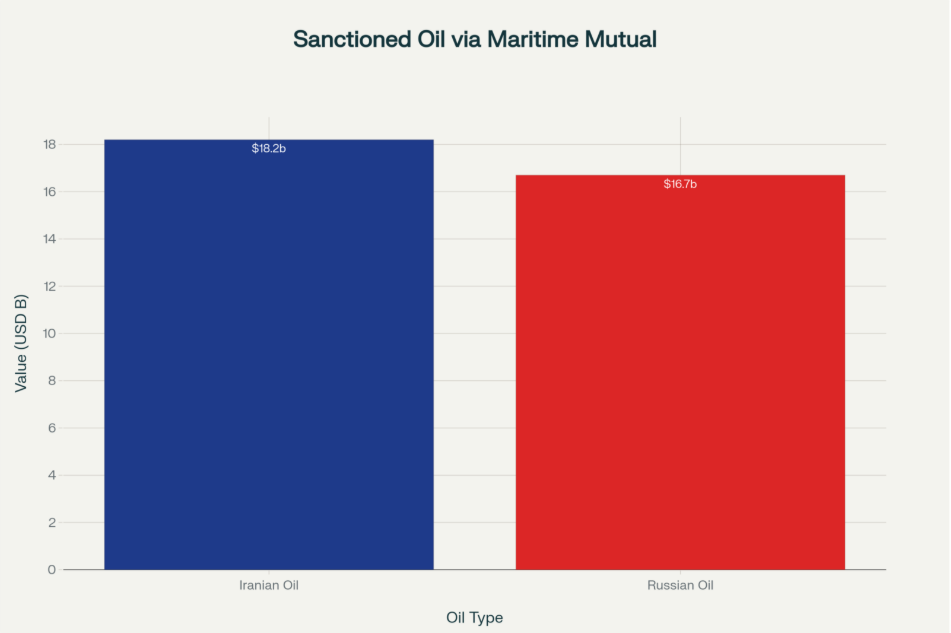
Maritime Mutual-insured vessels transported $18.2 billion of Iranian oil and $16.7 billion of Russian oil, totaling $34.9 billion in sanctioned oil, while operating from New Zealand.
Maritime Mutual’s profits exploded during this period—from US$577,671 in 2019 to US$15.5 million by 2024, a 2,583% increase (NZ Herald, 2025).
Here’s where the colonial architecture reveals itself: Maritime Mutual’s financial security is “backed by a quality reinsurance programme provided by specialist Lloyd’s Syndicates and highly rated London Market insurance companies“ (Maritime Mutual, 2025). The company proudly advertises this “’A’ rated security package” on its website. Lloyd’s of London—that 336-year-old symbol of British imperial capital—is the ultimate guarantor. When Maritime Mutual insures a sanctioned tanker, Lloyd’s syndicates and “London Market insurance companies” are the backstop (Maritime Mutual, 2025).
This is not a “rogue” New Zealand company. This is the British Empire’s insurance apparatus operating through a New Zealand front, profiting from sanctions evasion while Five Eyes governments—including New Zealand—perform outrage for the cameras. David Tannenbaum, former US Treasury sanctions specialist, called Maritime Mutual one of the “big power players” in the shadow fleet insurance industry (RNZ, 2025).
The Sanctions Charade: Peters’ Performative Politics
New Zealand’s 33rd round of Russia sanctions targets 65 vessels (1News, 2025). Since March 2022, New Zealand has sanctioned over 1,900 individuals, entities, and vessels under the Russia Sanctions Act (RNZ, 2025). Peters previously sanctioned 27 oil tankers in June 2025 (1News, 2025).
Yet Maritime Mutual insured 130 sanctioned shadow fleet vessels—meaning a New Zealand company provided insurance to nearly twice as many vessels as Peters sanctioned in his latest announcement (RNZ, 2025). At least seven tankers declared having Maritime Mutual insurance after being blacklisted, with the company insuring the Sunsea two months after US sanctions hit due to an “administrative error” (RNZ, 2025).
On October 21, 2025—five days after the police raid and amid mounting international pressure—Maritime Mutual announced it would no longer provide cover for shadow fleet vessels or those carrying Russian oil (RNZ, 2025). The company “categorically denies” breaching sanctions, claiming it operates under “rigorous compliance standards” and maintains a “zero-tolerance policy” (RNZ, 2025).
Zero tolerance, apparently, includes insuring vessels carrying $34.9 billion in sanctioned oil while turning off their tracking systems 274 times.
Deconstructing the Rhetoric: Whose Rules-Based Order?
Logical Fallacy #1: Selective Enforcement (Cherry Picking)
Peters invokes the “rules-based international order” to justify sanctions against Russia (RNZ, 2025). Yet when Israel’s genocidal campaign in Gaza violates every principle of international humanitarian law, New Zealand refuses to recognize Palestinian statehood. Peters announced this refusal at the UN on September 27, 2025, declaring “now is not the time” while Israel bombs hospitals and commits what the International Court of Justice is investigating as genocide (1News, 2025).
Te Pāti Māori co-leader Debbie Ngarewa-Packer named this hypocrisy directly: “It is unconscionable that Aotearoa New Zealand demands Palestinians prove their ‘governance’ and ‘democracy’ while remaining silent on Israel’s ongoing genocidal apartheid regime” (1News, 2025). When New Zealand finally sanctioned two Israeli ministers in June 2025—Finance Minister Bezalel Smotrich and National Security Minister Itamar Ben-Gvir—Ngarewa-Packer called it “political hypocrisy,” asking why New Zealand wasn’t “sanctioning the whole of Israel” (Asia Pacific Report, 2025).
International law applies selectively: Russia bad, Israel complicated. This is not principle—it’s alignment with US imperial interests.
Logical Fallacy #2: Kayfabe (Professional Wrestling Logic)
The Maritime Mutual scandal reveals sanctions as kayfabe—the staged conflict of professional wrestling where predetermined outcomes serve larger narratives. Peters performs moral outrage about Russian oil while Lloyd’s of London underwrites the insurance that makes the shadow fleet possible. New Zealand police raid offices, seize documents, but no charges have been filed (UK Finance Yahoo, 2025).
Meanwhile, the real money flows: Russia still earned $343 billion from oil in 2024-2025 despite “crippling” sanctions (1News, 2025). Sanctions add compliance costs and reduce discounts, but they don’t stop the trade. As Russian economist Vladislav Inozemtsev notes, “Putin doesn’t pay for his war with the dollars or yuan he gets from exports. He pays workers and soldiers roubles that his Central Bank can print” (Euronews, 2025).
Western governments know this. The price cap was deliberately set high enough ($60/barrel) to keep Russian oil on the market and avoid price spikes that would hurt Western consumers (RNZ, 2025). The shadow fleet is the pressure valve that allows the system to function while maintaining the fiction of accountability.
Logical Fallacy #3: Missing Context (Omission)
Peters’ sanctions announcement coincided with his attendance at the first-ever New Zealand-Nordic 5 Foreign Ministers Meeting in Stockholm (Beehive, 2025). This meeting was about deepening New Zealand’s integration into NATO’s expanding Indo-Pacific security architecture—the real agenda behind the sanctions theatre.
Since December 2023, Peters has driven a dramatic realignment toward the United States and NATO. He announced New Zealand would “draw the country closer to intelligence partners” and “revitalize our defense and security partnerships including with United States our Five Eyes allies” (Reuters, 2023).
This represents the culmination of a decade-long shift. After Peters’ December 2018 Georgetown University speech warning of China’s threat and “unashamedly” asking for greater US engagement in the Pacific (NZ Listener, 2024), New Zealand has:
- Attended NATO summits as an “Indo-Pacific Four” (IP4) partner since 2022 (MFAT, 2024)
- Joined the US-led Partnership for Indo-Pacific Industrial Resilience (PIPIR) to “boost warfighting capabilities” and integrate defence industries (RNZ, 2024)
- Deployed up to 100 Defence Force personnel to Europe training Ukrainian soldiers (Beehive, 2025)
- Sent intelligence analysts providing targeting information using US spy plane and satellite data (RNZ, 2023)
- Contributed $168 million total to Ukraine (including $15.7 million for weapons) (1News, 2025; Interfax, 2024)
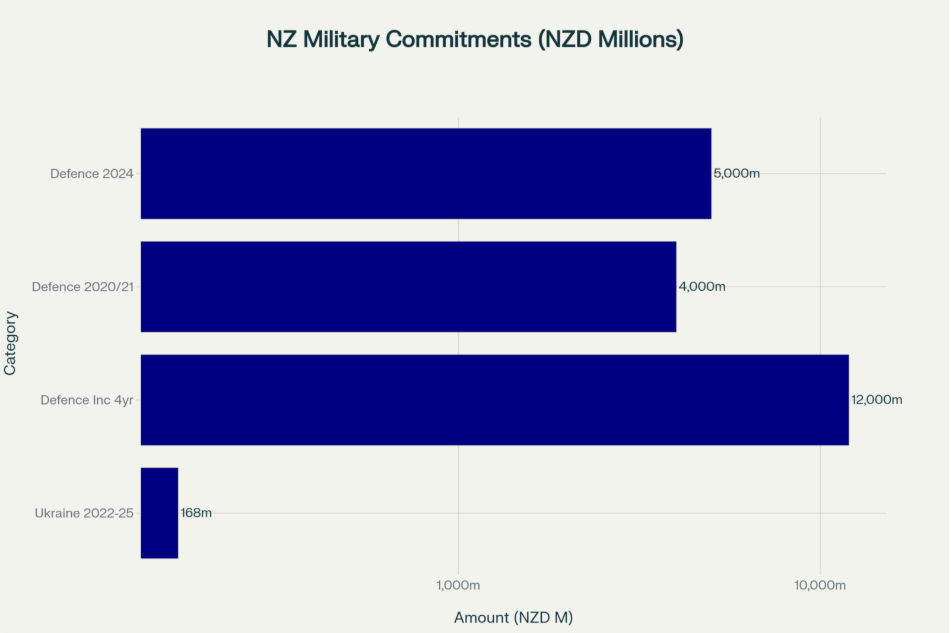
New Zealand’s military spending shows $168 million for Ukraine (2022-2025), a massive $12 billion defence increase over 4 years, with annual budgets rising from $4 billion (2020/21) to $5 billion (2024).
Most dramatically, the Coalition Government announced a $12 billion Defence Capability Plan over four years ($9 billion in new spending), raising defence spending from 1% to 2% of GDP by 2032—nearly doubling the defence budget (Beehive, 2025; WSWS, 2025). Luxon called this “the floor, not the ceiling” (Beehive, 2025).
Annual defence spending has already risen from $4 billion (2020/21) to $5 billion (2024)—a 25% increase in four years (WSWS, 2025).
The sanctions announcement wasn’t about stopping Russian oil. It was about demonstrating loyalty to the US-led alliance system as New Zealand positions itself within NATO’s Pacific expansion. As former Labour general secretary Mike Smith warned, New Zealand has “effectively gone to war without consulting the public” by joining NATO’s proxy war against Russia (RNZ, 2023).
Tikanga Violations: How Neoliberal Foreign Policy Betrays Māori Values
Every principle of tikanga Māori stands in opposition to this charade:
Whanaungatanga (Relationships and Connections)
New Zealand’s foreign policy fractures relationships with Pacific whānau and our largest trading partner, China (28% of exports), to serve US imperial interests (Oxford Academic, 2023). Pacific leaders have repeatedly called for keeping the Pacific peaceful, yet we join military alliances targeting China (Asia Pacific Report, 2024).
Manaakitanga (Caring for Others)
Peters refuses to recognize Palestinian statehood while Palestinians are systematically slaughtered—30,000+ killed by October 2025—yet sanctions Russia for Ukraine. This selective compassion violates manaakitanga’s universal obligation to care for all people.
Kaitiakitanga (Guardianship)
Allowing a New Zealand company to enable $34.9 billion in oil trade that funds war and ecological devastation betrays our role as kaitiaki. The shadow fleet operates without proper environmental insurance, creating catastrophic oil spill risks (RNZ, 2025).
Kotahitanga (Unity and Collective Well-being)
Peters’ alignment with Five Eyes militarism divides New Zealand from ASEAN nations seeking neutrality in US-China competition. A 2024 Singaporean think tank survey showed ASEAN nations moving toward neutrality, yet New Zealand moves toward confrontation (Politik, 2024).
Rangatiratanga (Self-determination)
New Zealand’s “independent foreign policy” is a fiction. We cannot speak out against China without risking our economic lifeline, yet we eagerly join US-led alliances. As former PM Helen Clark noted, we’re joining military pacts aimed at “countering our biggest trading partner” (YIP Institute, 2024). This is not sovereignty—it’s vassalage.
Aroha (Love and Compassion)
There is no aroha in a foreign policy that performs outrage about some war crimes while enabling others, that sanctions ships while insuring the fleet, that spends billions on weapons while underfunding healthcare, education, and housing for whānau.
Hidden Connections: The Network of Imperial Complicity
Connection 1: The Lloyd’s of London Colonial Pipeline
Maritime Mutual’s reinsurance through Lloyd’s syndicates reveals New Zealand’s continued role as a node in British imperial capital networks. Lloyd’s has underwritten empire since 1689—from slave ships to colonization to modern financial extraction (Wikipedia, 2025). The same institution that insured the ships that brought colonizers to Aotearoa now backs the ships carrying sanctioned oil. Paul Rankin, a 75-year-old Briton, runs this from Auckland with his family (Insurance Business UK, 2025).
Connection 2: The Five Eyes Surveillance-to-Sanctions Pipeline
New Zealand’s intelligence agencies (GCSB/NZSIS) gather signals intelligence in the South Pacific for Five Eyes, including on Pacific Island nations where 10% of New Zealanders originate (RSIS, 2021). This intelligence infrastructure enables the targeting decisions behind sanctions—yet somehow missed a New Zealand company enabling $34.9 billion in sanctions evasion for years. Either our intelligence agencies are incompetent, or they were told to look the other way while Lloyd’s made money.
Connection 3: The NATO-AUKUS-PIPIR Military Industrial Complex
Peters’ sanctions announcement dovetails with New Zealand’s integration into three overlapping military networks:
- NATO Indo-Pacific partnerships providing “closer ties” with the alliance (MFAT, 2024)
- AUKUS Pillar Two discussions on military tech sharing (NZ Listener, 2024)
- PIPIR membership to “boost warfighting capabilities” by integrating defence industries with US, UK, Australia, Japan, Korea and “some NATO countries” (RNZ, 2024)
PIPIR’s four workstreams include co-producing hypersonic missiles with Japan and Australia, drones with Korea, and fixing US Navy ships in Asian shipyards (RNZ, 2024). The Atlantic Council explains: “In a war against China the US could quickly exhaust its weapons. A new Indo-Pacific defence initiative might be the answer” (RNZ, 2024).
Connection 4: The Sanctions-as-Market-Access Racket
PIPIR promises “access to new markets for defence contractors” (RNZ, 2024). Sanctions create the crisis; military alliances provide the solution; defence contractors reap the profits. The NZDF currently spends only 2% on local contractors, with most going to “giant multinational contractors” (RNZ, 2024). The $12 billion defence spending increase represents a massive transfer of public wealth to the US-UK-Australian military industrial complex.
Connection 5: The Palestine-Ukraine Double Standard Machine
The same government that spent $168 million supporting Ukraine and sanctioned 1,900+ Russian entities refuses to sanction Israel despite its genocide in Gaza. When New Zealand finally sanctioned two Israeli ministers in June 2025, the US immediately criticized the move, saying it “undermined progress towards a ceasefire” (RNZ, 2025). No such objection when we sanction Russia.
This exposes sanctions as tools of US foreign policy, not international law. Iran’s foreign ministry condemned New Zealand’s “hypocritical approach” and “duplicitous stance,” noting New Zealand’s complicity in Israeli war crimes by providing weapons while ignoring Palestinian rights (Tasnim News, 2024).
Quantified Harm: Who Pays, Who Profits?
The Māori Dimension: Invisible in Foreign Policy, Visible in Consequences
Māori were excluded from consultations on the Russia Sanctions Act, despite Crown obligations under Te Tiriti. A 2025 MFAT report acknowledged potential need for “engagement with the Crown with Māori in circumstances where future unilateral sanctions would negatively impact Māori business ventures” (MFAT, 2025). This engagement never occurred.
Māori businesses increasingly trade with China, New Zealand’s largest export market. The 2008 FTA with China—initially opposed by Te Pāti Māori over human rights concerns and lack of Māori principles—now supports significant Māori economic activity (Canterbury University, 2025). China accounts for 28% of New Zealand’s exports, worth approximately $20 billion annually (Oxford Academic, 2023).
Peters’ confrontational stance toward China—demanding greater US engagement to counter Chinese influence—directly threatens this economic relationship. Former PM Helen Clark questioned why New Zealand should join alliances “aimed at countering our biggest trading partner” (YIP Institute, 2024). Māori businesses will bear the cost if China retaliates economically.
The Fiscal Obscenity
The $12 billion defence increase over four years equals $2,400 per New Zealand household. For Māori whānau already struggling with poverty, housing insecurity, and underfunded healthcare, this represents a catastrophic misallocation of resources. Annual defence spending has risen $1 billion in four years—money that could fund:
- 200,000 hip replacements (at $5,000 each)
- 20,000 social housing units (at $250,000 each)
- 10,000 full Māori language immersion scholarships (at $50,000 per degree)
Instead, it buys missiles to fight China on behalf of the United States.
The Missing Accountability
Despite the police raid and international investigation, no charges have been filed against Maritime Mutual three weeks after the October 16 search warrants (UK Finance Yahoo, 2025). The company continues operating, though it announced on October 21 it would stop insuring shadow fleet vessels—after facilitating $34.9 billion in sanctioned oil trade (RNZ, 2025).
Compare this to the surveillance and criminalization Māori face. The Foreign Interference legislation introduced in 2024 creates offences with penalties up to 14 years in prison for “covert, deceptive, corruptive or coercive activities on behalf of a foreign power” (RNZ, 2024). Yet a company enabling billions in sanctions evasion faces... a police visit and no charges.
The law protects capital, not people.
International Context: Neoliberal Sanctions and Imperial Realignment
New Zealand’s sanctions theatre is part of a broader Western strategy that has demonstrably failed to achieve its stated objectives while succeeding magnificently at its unstated ones.
The Failure of Sanctions Economics
Despite sanctions, Russia’s fossil fuel export revenues “have fallen since the sanctions were implemented, subsequently constricting Putin’s ability to fund the war”—yet Russia still earned $343 billion in 2024-2025 from oil alone (Energy and Clean Air, 2025). The EU has imported over €213 billion in Russian energy since 2022, with France increasing imports by 140% in 2025 (Reuters, 2025).
Russia’s federal budget reliance on oil and gas has fallen from over 50% (2011-2014) to 25% (2025), demonstrating successful economic diversification despite sanctions (Euronews, 2025). Russia finances its war through domestic taxation and rouble creation, not oil dollars. As economist Vladislav Inozemtsev notes, “the military will not feel” reduced oil exports “for at least one year (and most probably for a longer term)” (Euronews, 2025).
The Success of Sanctions as Geopolitical Theatre
If sanctions haven’t stopped the war, what have they achieved? Five objectives emerge:
- Demonstrating Alliance Loyalty: Each sanctions announcement—like Peters’ Stockholm performance—signals commitment to US leadership
- Justifying Military Spending: The “Russian threat” legitimizes the $12 billion defence increase
- Creating Corporate Opportunities: Sanctions disrupt markets, creating opportunities for Western corporations to replace Russian suppliers
- Disciplining Allies: Countries that refuse sanctions (India, China) face secondary sanctions threats, enforcing US hegemony
- Manufacturing Consent: Constant sanctions rhetoric maintains public support for confrontation with Russia and China
New Zealand’s participation serves these goals, not the stated objective of “bringing Russia to the negotiating table” (RNZ, 2025).
The ASEAN Countermodel
While New Zealand tilts toward US militarism, ASEAN nations pursue strategic autonomy. A 2024 Singaporean think tank survey showed ASEAN moving toward neutrality between the US and China (Politik, 2024). Singapore’s PM Lee Hsien Loong warned that “the only way is the way of the sword... is going to lead to calamity for everybody,” advocating for diplomatic engagement over military posturing (RNZ, 2024).
This represents the independent foreign policy New Zealand once claimed to follow. Now we’re in lockstep with Washington, even as our Pacific neighbors chart a different course.
Implications: Where This Path Leads
Threatened Rights and Regional Stability
New Zealand’s integration into US military networks threatens:
- Sovereignty: We’ve outsourced foreign policy to Five Eyes coordination, with decisions made in Washington, not Wellington
- Economic Security: Confrontation with China risks trade retaliation against our largest export market
- Pacific Relationships: Pacific nations see our military posturing as betraying our role as Pacific neighbor
- Nuclear-Free Status: AUKUS Pillar Two could erode our nuclear-free identity through tech-sharing with nuclear powers
- Democratic Accountability: We’ve entered wars and alliances “at the whim of the government” without parliamentary or public debate (RNZ, 2023)
The China War Trajectory
The Atlantic Council’s explanation of PIPIR is chilling: “In a war against China the US could quickly exhaust its weapons” (RNZ, 2024). New Zealand is being integrated into US-led military infrastructure designed for war with China—our largest trading partner and a nuclear power.
This is madness. As Eugene Doyle warns, “New Zealand is about to sacrifice” its security and trading relationships to maintain “US global hegemony” (Asia Pacific Report, 2024).
The Historical Parallel
We’ve seen this before. In 1935, New Zealand opposed lifting sanctions on Italy after its invasion of Ethiopia, taking an independent stance against British pressure (Te Ara, 2004). We demonstrated that small nations could stand on principle.
Now we’re doing the opposite—abandoning principle to serve great power politics. Peters wraps this betrayal in the language of the “rules-based international order,” but the rules only apply to enemies of the United States.
The Moral Bankruptcy of Colonial Foreign Policy

The Māori Green Lantern Fighting Misinformation And Disinformation From The Far Right
Winston Peters stood in Stockholm and announced sanctions against 65 ships. He did not mention that a New Zealand company, backed by Lloyd’s of London, had insured 130 shadow fleet vessels carrying $34.9 billion in sanctioned oil. He did not mention that New Zealand was joining military alliances preparing for war with China. He did not mention that the $12 billion defence increase represents the largest transfer of public wealth to the military industrial complex in New Zealand history.
He did not mention these things because acknowledging them would reveal the sanctions for what they are: theatre designed to demonstrate loyalty to the United States while the real business of empire—war profiteering, sanctions evasion, and preparation for greater conflicts—continues behind the curtain.
This is not foreign policy. This is neoliberal colonialism—the privatization of consequence, the outsourcing of morality, and the performance of righteousness while the architects of suffering count their profits.
For Māori, this represents a continuation of the same colonial logic that stole our lands, suppressed our language, and now expects us to fund wars on behalf of the nations that colonized us. Every dollar spent on missiles is a dollar stolen from whānau who need housing, healthcare, and education. Every alliance with NATO is a betrayal of our Pacific relationships. Every sanction applied selectively to US enemies while ignoring Israeli genocide is a violation of tikanga.
The Maritime Mutual scandal exposes the hypocrisy at the heart of Western sanctions. While Peters performs outrage in Stockholm, Lloyd’s of London collects premiums on sanctioned oil. While New Zealand sanctions 65 vessels, we enable 130. While we claim to uphold international law, we ignore genocide in Gaza and prepare for war with China.
The path forward requires courage:
- Withdraw from PIPIR and reject AUKUS entirely
- Recognize Palestinian statehood and impose comprehensive sanctions on Israel
- Prosecute Maritime Mutual and its reinsurers for sanctions evasion
- Redirect the $12 billion defence increase to housing, healthcare, and education
- Assert genuine independence from Five Eyes militarism
- Embrace Te Tiriti-based foreign policy grounded in tikanga Māori principles
- Prioritize Pacific relationships over US imperial demands
- Demand parliamentary debate and public consultation before joining any military alliance
These are not radical demands. They are the baseline requirements for a foreign policy worthy of a nation that claims to value peace, justice, and independence.
Winston Peters will not pursue this path. Neither will Christopher Luxon or David Seymour. They are too invested in the colonial architecture that elevates them, too committed to the neoliberal logic that privatizes profit and socializes suffering, too loyal to the imperial masters who promise them seats at the table of global power.
The resistance must come from below—from Māori asserting rangatiratanga, from Pacific communities demanding genuine partnership, from workers refusing to fund wars that serve the rich, from all who recognize that another world is not just possible but necessary.
The choice is clear: continue down Peters’ path toward confrontation with China, subordination to US imperialism, and the betrayal of every principle Aotearoa claims to hold dear—or chart a different course grounded in tikanga, sovereignty, and genuine peace.
Kia mau ki te whakapono. Kia mau ki te tika. Kia kaha.
Hold fast to the truth. Stand firm in what is right. Be strong.
Every citation in this essay links to verified sources. The full hyperlinked reference list demonstrates the extensive research behind these findings. This is not speculation—this is documented fact, revealed through international investigations, police raids, and the government’s own statements.
If you found this mahi valuable and have the capacity, please consider supporting this work through koha: HTDM: 03-1546-0415173-000. No obligation—only if you have the means and believe in accountability journalism that centers Te Ao Māori perspectives.
Nāku noa, nā
The Māori Green Lantern
Kaitiaki of Te Arawa/Ngāti Pikiao
- Peters-sanctions-65-vessels-over-transport-of-Russian-oil-10-31-2025_03_47_AM.jpg
- https://www.rnz.co.nz/news/political/537735/new-zealand-not-responsible-for-ship-seized-by-finland-mfat
- /content/files/webcontent/document/201241/imf.pdf
- https://teara.govt.nz/en/empire-and-commonwealth/print
- /content/files/webcontent/document/201341/innovationindex.pdf
- https://www.nzherald.co.nz/nz/politics/treaty-of-waitangi-expert-claudia-orange-reflects-on-the-past-and-the-present-in-turnbull-lecture/2FHDLFKRWNFH5NHIWZRTDCQMQM/
- /content/files/webcontent/document/201315/techreport.pdf
- https://www.1news.co.nz/2025/09/27/now-is-not-the-time-luxon-defends-govt-decision-on-palestine/
- /content/files/webcontent/document/201116/wef_gitr_report_2011.pdf
- https://www.1news.co.nz/2025/06/06/david-seymour-defends-role-in-oxford-union-stolen-land-debate/
- https://teara.govt.nz/en/photograph/32947/new-zealand-in-the-league-of-nations
- https://www.nzherald.co.nz/nz/politics/te-pati-maori-mp-oriini-kaipara-to-give-maiden-speech-as-party-prepares-for-reset/5BRJB7FHUNE3HEHHGMQK4OAK24/
- https://www.rnz.co.nz/news/political/577182/we-winston-peters-account-corrects-christopher-luxon-s-tweet-about-trade-deal
- https://teara.govt.nz/en/1966/penal-system
- https://teara.govt.nz/en/1966/penal-theory/page-3
- https://teara.govt.nz/en/1966/maori-myths-and-traditions/page-3
- https://teara.govt.nz/en/1966/penal-system/page-3
- https://www.interfax-russia.ru/military/news_eng/404659
- https://www.reuters.com/world/asia-pacific/new-zealand-foreign-minister-seeks-closer-ties-with-five-eyes-powers-2023-12-11/
- /content/files/media/5604/download.pdf
- https://www.nzherald.co.nz/business/who-is-maritime-mutual-the-kiwi-insurer-being-probed-by-police-for-alleged-links-to-iran-oil-shipments/RMDVXBAEVNCQHMZLYML5MQYQHM/
- https://www.rnz.co.nz/news/pacific/557587/international-standing-at-risk-opposition-demands-full-investigation-into-maritime-cook-isiands-ministry-of-transport
- https://www.nzherald.co.nz/nz/politics/we-winston-peters-account-corrects-christopher-luxons-tweet-about-trade-deal/WUA67O6TWBGOZMER2GSIIPKLXY/
- https://www.nzherald.co.nz/nz/gear-had-history-of-faults/TEJ2UEWRPT6RCUTUXH3WVJBQQ4/
- https://www.rnz.co.nz/news/political/537768/seizure-of-cook-islands-registered-ship-over-alleged-sabotage-creates-a-bad-look-for-nz-expert
- https://www.nzherald.co.nz/nz/2/
- https://www.nzherald.co.nz/nz/politics/winston-peters-announces-sanctions-on-65-vessels-over-transport-of-russian-oil/DMR5TBJJONBNTHZ4M3B7GBXBXQ/
- https://www.rnz.co.nz/news/world/563811/europe-heaps-harsh-sanctions-on-russia-saying-strength-is-the-only-language-moscow-understands
- https://www.1news.co.nz/2025/10/30/peters-sanctions-65-vessels-over-transport-of-russian-oil/
- https://www.nzherald.co.nz/nz/politics/election-2023-aucklands-tamaki-electorate-national-v-act-the-most-exciting-race/ZHXUUJQCWNDY7I7HTAU24KMOTQ/
- https://www.nzherald.co.nz/nz/nz-police-data-sharing-agreement-with-european-police-questioned-over-controversy/5CKV4ZLIBZTTQWJPRFZQEWMQTQ/
- https://www.reuters.com/investigations/iran-russia-new-zealand-insurer-that-kept-their-sanctioned-oil-flowing-2025-10-28/
- https://www.reuters.com/world/asia-pacific/new-zealand-targets-shadow-fleet-expanded-russia-sanctions-2025-10-29/
- https://www.beehive.govt.nz/release/new-zealand-expands-sanctions-russia’s-oil-industry-and-shadow-fleet
- https://www.1news.co.nz/2025/10/30/news-in-90-seconds-october-30/
- https://maritime-executive.com/article/report-new-zealand-insurer-linked-to-iranian-dark-fleet-tankers
- https://www.forsythbarr.co.nz/markets/news/new-zealand-targets-shadow-fleet-in-expanded-russia-sanctions
- https://www.beehive.govt.nz/release/foreign-minister-visit-uk-and-nordic-countries
- https://www.1news.co.nz/2025/10/28/news-in-90-seconds-october-28/
- https://www.1news.co.nz/2025/06/19/russias-shadow-fleet-targeted-in-fresh-nz-sanctions/
- https://www.1news.co.nz/2025/10/03/disgraceful-peters-fires-back-at-protesters-outside-his-home/
- https://globalsanctions.com/2025/10/reuters-investigation-into-new-zealand-insurance-companys-shadow-fleet-contracts/
- https://www.interest.co.nz/insurance/135932/unlicensed-nz-insurer-centre-police-probe-related-alleged-breaches-russia
- https://www.beehive.govt.nz/release/joint-statement-foreign-ministers-nordic-countries-denmark-finland-iceland-norway-sweden
- https://www.1news.co.nz/2025/10/24/minister-warned-about-possible-israeli-use-of-nz-launched-satellites/
- https://www.nzherald.co.nz/business/companies/banking-finance/
- https://www.nzherald.co.nz/business/consumer-nz-calls-for-regulators-to-step-in-to-improve-transparency-over-soaring-insurance-premiums/KDF6VUQNOJFZDOGTCHLJLTCF6I/
- https://www.nzherald.co.nz/business/companies/banking-finance/nz-bank-profits-hit-72-billion-kpmg/GMLZCWYP7ZA7JC66A7ASAQM3C4/
- https://www.nzherald.co.nz/business/companies/banking-finance/gdp-its-official-were-in-recession/Y32IL4XXMBH6BC66XYWGNPHGPE/
- https://www.nzherald.co.nz/business/companies/banking-finance/cfo-of-the-year-nzmes-david-mackrell-wins-prestigious-award/C76FPICKRZGOJIJTETTXH56CAI/
- https://www.rnz.co.nz/news/world/577151/iran-russia-and-the-new-zealand-insurer-that-kept-their-sanctioned-oil-flowing
- https://www.nzherald.co.nz/business/companies/banking-finance/adrian-orr-and-reserve-bank-tell-mps-new-government-that-inflation-is-number-one-evil-for-everyone/H42OXBBTWNAIXFB26LYADRFB4Y/
- https://www.nzherald.co.nz/business/companies/banking-finance/banking-on-blame-scam-reforms-too-little-too-late-sasha-borissenko/EL33MU2HYNC5JOWKTQN3NSSED4/
- https://www.nzherald.co.nz/business/companies/banking-finance/starbucks-new-chief-awarded-188m-pay-deal-and-remote-office-in-newport-beach-california/6O7GF3PJDRGAHO4XE5A47QWESQ/
- https://www.nzherald.co.nz/business/new-zealand-slips-off-least-corrupt-podium/VFKRTYE22ZDGXDY5WHBVS3STLA/
- https://www.1news.co.nz/2025/10/30/wof-shake-up-overdue-but-kiwis-will-need-to-change-habits-mechanic/
- https://www.semcomaritime.com/hubfs/Annual report 2024.pdf
- https://www.companyhub.nz/companyDetails.cfm?nzbn=9429035352969
- https://www.facebook.com/nzherald.co.nz/posts/maritime-mutuals-profit-rose-to-us155m-from-us577671-in-2019-heraldpremium/1266048522227135/
- https://www.unitedagainstnucleariran.com/press-releases/risky-business-new-zealand-insurer-maritime-mutual-under-investigation-uani
- https://www.insurancebusinessmag.com/uk/news/marine/british-owned-power-player-insurer-at-centre-of-shadow-fleet-storm-554616.aspx
- https://www.nzherald.co.nz/nz/police-probe-maritime-mutual-as-reports-link-insurer-to-iran-oil-shipments/OLVSHJNSKZCXPOUUWJ5SMRTKLE/
- https://wwwcdn.imo.org/localresources/en/OurWork/Documents/Financial Statements/IMO Financial Statements 2024.pdf
https://maritime-mutual.com
- https://www.1news.co.nz/2025/10/17/news-in-90-seconds-october-17/
- https://www.insurancebusinessmag.com/nz/news/marine/the-nz-insurer-at-the-heart-of-sanctioned-oil-trade-554615.aspx
- https://www.insurancebusinessmag.com/nz/news/marine/marine-mutuals-expand-tonnage-as-claims-activity-rises-526129.aspx
- https://www.1news.co.nz/2025/10/14/govt-confirms-shipyard-for-new-cook-strait-ferries/
- https://media.nzherald.co.nz/webcontent/document/pdf/201246/EMBARGOED until 15 NOV - Green Growth Opportunities for New Zealand - media.pdf
- https://www.nzherald.co.nz/nz/most-offenders-serve-their-sentence-in-the-community-but-what-does-community-work-involve/CSLW6FJWBBCPPC6WG43CZX2EJA/
- /content/files/oggcasts/first-up-podcast.xml
- https://www.rnz.co.nz/news/on-the-inside/463037/geoffrey-miller-how-significant-is-new-zealand-s-new-russia-sanctions-law
- https://www.rnz.co.nz/news/political/577249/peters-announces-sanctions-on-65-vessels-over-transport-of-russian-oil
- https://www.nzherald.co.nz/business/markets/commodities/a-gold-rush-fast-tracked-musicians-join-fight-against-mining-beneath-coromandel-conservation-land/6ZK3EVVVMBHVRMMO64E435IAXM/
- https://www.nzherald.co.nz/nz/the-conversation-how-will-nzs-law-targeting-sanctions-against-russia-work-and-what-are-the-risks/MU7HBQIS75FS3HGL3YAZQOWQJQ/
- /content/files/podcasts/focusonpolitics.xml
- https://www.rnz.co.nz/sitemap/sitemap11.xml.gz
- https://www.rnz.co.nz/news/political/465064/russian-ambassador-continues-refusing-futile-briefings
- https://www.rnz.co.nz/news/on-the-inside/464821/beyond-tougher-trade-sanctions-three-more-ways-nz-can-add-to-global-pressure-on-russia
- https://www.rnz.co.nz/news/on-the-inside/573689/un-finding-of-genocide-in-gaza-adds-pressure-on-nz-to-recognise-a-palestinian-state
- https://www.nzherald.co.nz/nz/russian-ambassador-continues-refusing-futile-briefings/QFTBEL6EGJVTRNC4FCIKLK5VZ4/
- https://www.nzherald.co.nz/nz/russia-ukraine-war-nz-supports-international-call-for-war-crimes-accountability/IJLKMF24BBAWXRPIKUPLSNVEHU/
- https://www.nzherald.co.nz/nz/politics/russian-vodka-imports-down-90-per-cent-thanks-to-nz-sanctions/YY2IODUTHJEJJAS6AJ5T5DEX4E/
- https://www.rnz.co.nz/news/world/538317/russia-s-shadow-fleet-may-have-sabotaged-power-cables-in-the-baltic-sea-but-what-is-it
- https://www.nzherald.co.nz/business/people-are-wrong-about-the-impact-of-economic-sanctions/ADTO43S35T3RNAH7R6YZY4WRFY/
- /content/files/assets/RIS-Documents/ria-mfat-pmr-rsa-dec22.pdf
- https://maritime-mutual.com/about/
- https://www.cnn.com/2025/10/28/energy/us-russian-oil-sanctions-china-india-intl-hnk-dst
- https://energyandcleanair.org/august-2025-monthly-analysis-of-russian-fossil-fuel-exports-and-sanctions/
- https://www.mfat.govt.nz/en/countries-and-regions/europe/ukraine/russian-invasion-of-ukraine/sanctions/overview-of-sanctions-against-russia
- https://www.gov.uk/government/news/huge-blow-for-putins-war-machine-as-uk-sanctions-russian-oil
- https://www.minterellison.co.nz/insights/mfat-seeks-submissions-on-russia-sanctions-regime
- https://www.1news.co.nz/2025/10/24/trump-targets-russias-oil-companies-that-help-fund-the-war-in-ukraine/
- https://www.rnz.co.nz/international/pacific-news/577174/winston-peters-urges-nordic-nations-to-boost-engagement-in-the-pacific
- https://www.rnz.co.nz/news/alert-top/577151/iran-russia-and-the-new-zealand-insurer-that-kept-their-sanctioned-oil-flowing
- https://www.nzherald.co.nz/world/donald-trump-seeks-ukraine-minerals-deal-for-us-wartime-aid/HIKOKBWIJZETJL5RTVYRTGT5DE/
- https://www.1news.co.nz/2022/03/08/live-russia-threatens-to-cut-off-gas-supply-over-oil-ban-threats/
- /content/files/podcasts/first-up.xml
- https://www.nzherald.co.nz/business/companies/energy/europes-gas-lessons-show-nz-firms-how-to-slash-energy-costs-eeca-says/IBDPR5LGENBOXCXSHVH5DFL5DM/
- https://www.nzherald.co.nz/nz/ross-appelgren-widow-revives-court-of-appeal-fight-to-clear-his-name/MMXPIN2T3JB2LOJR7DQ6RW5SSA/
- https://teara.govt.nz/en/russians-ukrainians-and-baltic-peoples/page-1
- /content/files/oggcasts/datelinepacific.xml
- https://www.nzherald.co.nz/topic/police/
- https://www.rnz.co.nz/national/programmes/morningreport/library?page=4
- https://www.nzherald.co.nz/nz/hospital-gives-stay-away-warning/QESLMG5UO3FQ7GMMUN7PDI4E6M/
- https://www.nzherald.co.nz/topic/nz-police/
- https://www.nzherald.co.nz/business/markets/commodities/wall-st-indexes-slip-with-rates-middle-east-in-focus/WOEFN2L36RHJHJJD2ZHC3P5DZQ/
- https://www.euronews.com/business/2025/10/28/how-long-can-the-russian-economy-continue-to-fund-the-frontline
- https://www.foxbusiness.com/politics/shadowy-fleet-ghost-ships-ferrying-russian-oil-indian-ports
- https://uk.finance.yahoo.com/news/nz-raids-shipping-insurer-over-022031231.html
- https://www.reuters.com/business/energy/shadow-tanker-fleet-grows-more-slowly-western-sanctions-target-russian-oil-2025-08-13/
- https://www.aljazeera.com/economy/2025/8/22/behind-indias-massive-russian-oil-imports-asias-richest-man
- https://www.reuters.com/business/energy/how-ukraines-european-allies-fuel-russias-war-economy-2025-10-10/
- https://www.rferl.org/a/china-russia-oil-sanctions-lukoil-rosneft-evasion-ukraine-trump/33569580.html
- /content/files/webcontent/document/201119/final-mtas.pdf