“Why National’s Got the Country and Itself Into Such a Mess: The Evidence” - 29 December 2025
A Government Unravelling by Its Own Metrics
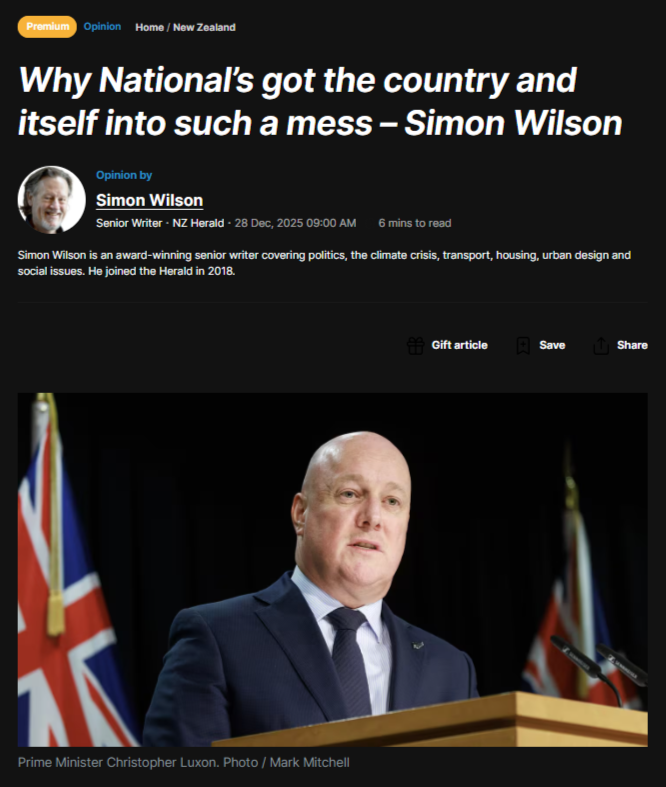
Simon Wilson’s December 2025 opinion piece in the NZ Herald cuts to the heart of an extraordinary failure:
a government that promised economic competence and fiscal discipline has instead delivered the opposite
—and now cannot even maintain coherence within its own coalition.
This analysis verifies those claims using government data, official statistics, and independent verification.
The cui bono question reveals the answer:
this government has enriched the corporate class, the speculative property market, and Defence/Foreign Affairs contractors while devastating public services, worker protections, Māori institutions, and vulnerable populations.
The failure is not accidental.
It is structural.
A Government Unravelling by Its Own Metrics

Part One: The Economic Reversal
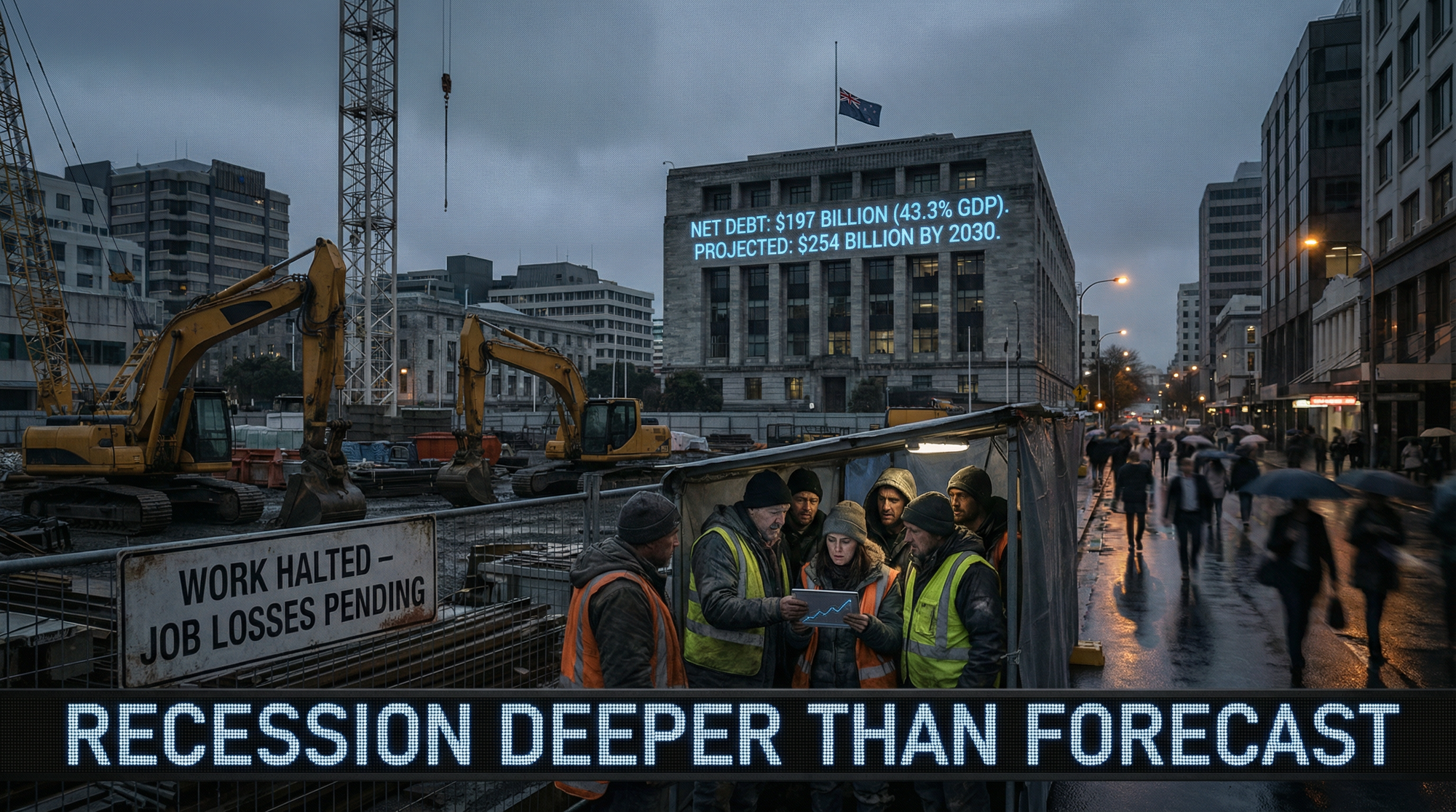
Recession Deeper Than Forecast
In June 2025, GDP contracted by 0.9%—nearly double the Treasury forecast of 0.2%. This was not an anomaly. Three of the last five quarters showed contraction. Per capita GDP has fallen 4.6% since September 2022, meaning ordinary New Zealanders are materially worse off despite two years of “economic management.”
The broader pattern is damning:
New Zealand experienced the largest GDP contraction across the developed world in 2024.
Unemployment Crisis & Job Destruction
Unemployment has risen from 3.2% in 2022 to 5.2% by late 2025, representing 158,000 people without work. The economy has lost 50,000 jobs since December 2023.
The construction sector, which the government claimed to support, has been devastated:
16,000 fewer jobs in the sector. Manufacturing down 3.5%, hospitality down 2.1%—sectors already struggling to recover from COVID-19 damage.
The Fiscal Trap: Austerity During Downturn
Here lies the fundamental contradiction. Finance Minister Nicola Willis promised a return to surplus by 2027, then revised to 2028, then 2029. As of December 2025, Treasury now forecasts no surplus until 2030—if at all.
The government has cut $11 billion annually from public spending in the name of fiscal responsibility. The result? The structural deficit remains 1.3% of GDP. Austerity during a downturn does not stimulate growth; it destroys tax revenue and increases benefit spending. The government’s own economic strategy is failing workers, according to the Council of Trade Unions’ analysis of Treasury forecasts.
The net debt picture deteriorates: Net debt is currently $197 billion (43.3% of GDP), projected to rise to $254 billion by 2030. Even by the government’s preferred measure, debt-to-GDP rises from 43.3% to 46.1%.
The Human Cost: Competition for Survival
Part Two: The Public Service Decimation
A System Deliberately Dismantled
Approximately 10,000 public sector jobs have been eliminated since late 2023, with redundancy costs exceeding $80 million. These were not targeted efficiency gains. They were ideological cuts to shrink the state.
The evidence is visible in each agency:
- Health NZ: 2,042 roles eliminated, yet the system faces a projected $1.4 billion deficit.
- Education: 565 proposed cuts (12% of Ministry staff), despite chronic teacher shortages and rising special education needs.
- Productivity Commission: Entirely abolished—removing independent analysis capacity precisely when government strategy is failing.
- Mental Health Services: Frontline funding of $280,000+ diverted to an “innovation fund”, while worker burnout and suicide prevention capacity collapse.

10,000 public sector job cuts: Government agencies dismantle capacity while demand rises
The Human Cost: Competition for Survival
The casualization of public service is visible in raw metrics:
30 people now compete for each public sector vacancy, according to Public Service Association data. Skilled workers are leaving government entirely—some emigrating, others retraining in the private sector where pay and security remain available.
Wellington’s private sector bore the brunt:
5,961 public sector jobs lost in the capital. The government had claimed that ordering public servants back to offices three days per week would revitalize the CBD. Instead, the CBD is hollowed out—precisely because the jobs are gone.

Wellington CBD experiences fallout from 5,961 public sector job cuts since late 2023
Part Three: Housing—Abandonment of State Responsibility
3,500 Homes Cancelled
Minister Chris Bishop’s decision to “pause” 212 of 460 Kāinga Ora projects has eliminated 3,500 planned state homes. In Northland alone, 450 homes were cancelled. The waiting list for state housing exceeds 25,000 families. While demand rises, the state agency charged with solving the crisis dismantles its own capacity.
A waiting list of over 25,000 families grows while Kāinga Ora halts construction. This is not a policy reset. This is the announcement that the state has exited large-scale housing provision.
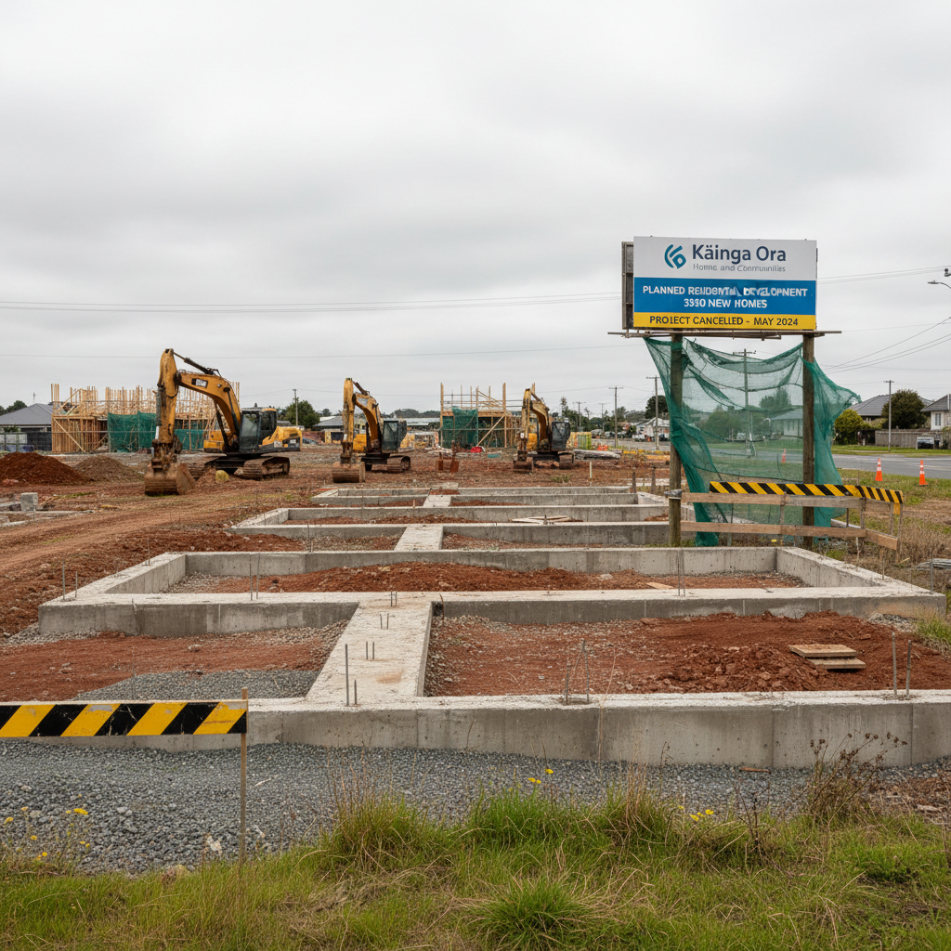
3,500 planned state homes cancelled: Kāinga Ora projects paused across Aotearoa
The Market Will Not Fill the Gap
The coalition assumes private investment will replace state housing. The evidence contradicts this. Private developers build for profit, not for those earning $60,000 annually. Homelessness continues despite the government’s claimed “75% reduction” target. Emergency housing costs have soared. The outcome is predictable: more children will grow up in cars and transitional housing, their educational outcomes and health deteriorating accordingly.
Part Four: Coalition Dysfunction—Breaking Apart in Public
Coalition Partners Now Openly Contradict Each Other
By December 2025, the coalition partnership is visibly fracturing along fault lines that reveal fundamental disagreement:
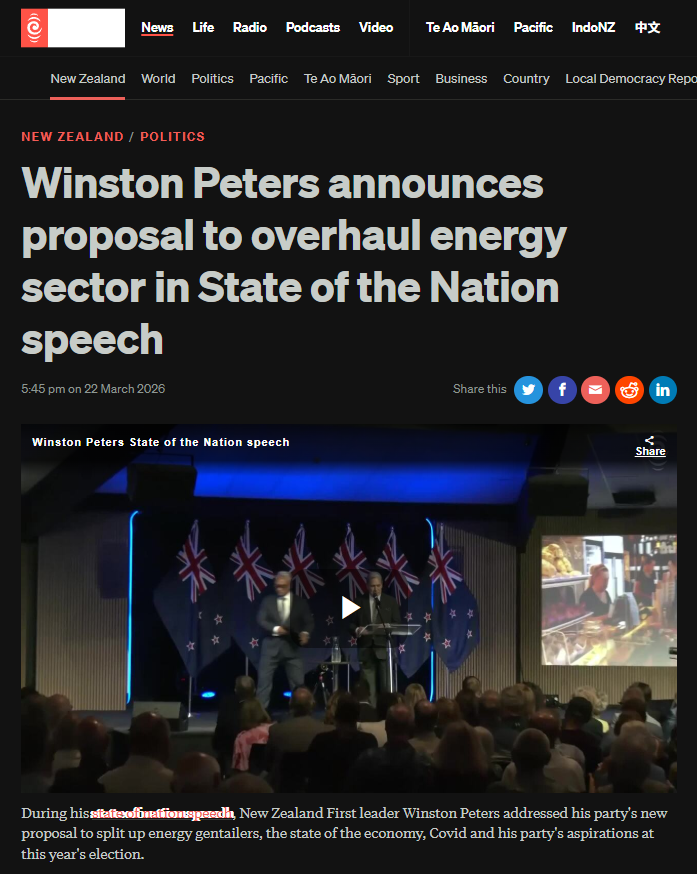
On Regulatory Standards: Winston Peters vowed to repeal the Regulatory Standards Bill—legislation his own government passed—calling it dangerous for democracy. David Seymour immediately responded, with Peters counter-signalling that he is “getting ready to go with Labour.”
On Trade: When the India Free Trade Agreement was announced, Peters immediately denounced it as a “bad deal for New Zealand”—forcing the government to scramble for cross-party support and exposing the coalition’s inability to negotiate unified trade strategy.
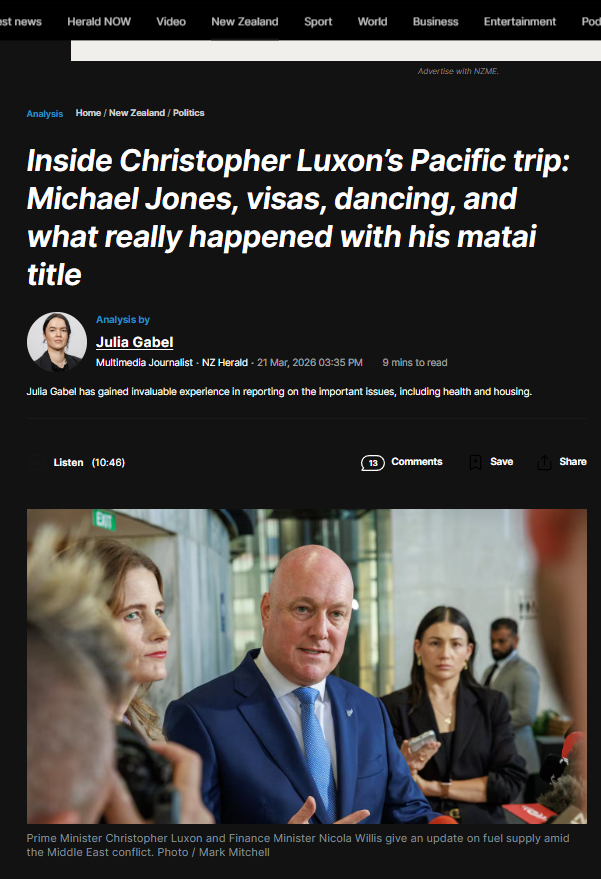
On Housing Prices: Christopher Luxon insisted the government wants “modest price increases”, while Chris Bishop stated the government is “trying to drive prices down”—a direct public contradiction on fundamental economic policy.
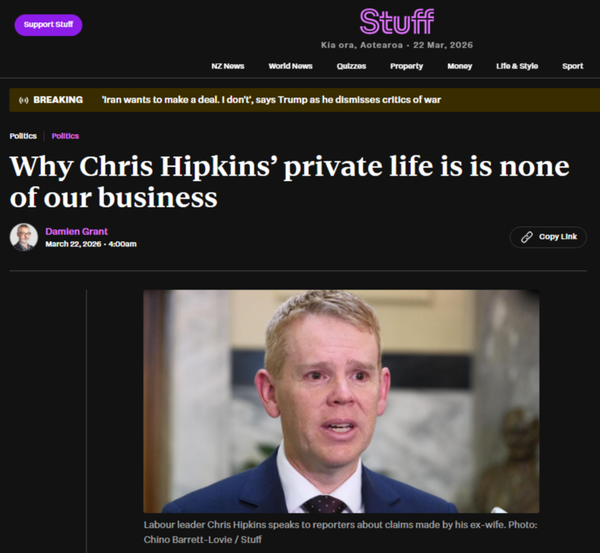
This is not cabinet disagreement resolved behind closed doors. This is coalition partners openly contradicting each other to journalists. The government has no unified economic vision.
The Electoral Consequence
Christopher Luxon’s approval rating stands at -14, the lowest in MMP history. Labour’s approval has risen to 38%, recovering from their 2023 rout.
When asked who bears responsibility for the economic crisis, 37.6% blamed the coalition versus 30.8% who blamed Labour—a complete reversal of the government’s 2023 narrative. Labour now exceeds National on managing the economy: 33% vs 29%.

Coalition Dysfunction—Breaking Apart in Public
Part Five: Māori Rights—Systematic Dismantling
The Treaty Principles Bill: A Self-Inflicted Wound
The Treaty Principles Bill was rejected 112-11 in Parliament—an extraordinary repudiation even within the coalition’s own ranks. Over 40,000 people protested across Aotearoa. Yet the damage to the government’s credibility was done:
it pursued a culturally divisive reform without community buy-in, without parliamentary consensus, and ultimately without success.
The Systematic Rollback
Beyond the failed bill, the government has dismantled Māori-specific protections with deliberation:
- The Māori Health Authority was disestablished, removing a dedicated governance structure for Māori health outcomes.
- Co-governance provisions have been scrapped across government agencies, reversing decades of partnership frameworks.
- Te reo Māori has been removed from government agency names—a symbolic but deliberate erasure.
- Education Minister Erica Stanford intervened to prevent printing new reading materials that included Māori language words—an extraordinary use of ministerial power to enforce cultural preference in primary school curricula.
The cumulative effect is not “colorblind policy.” It is deliberate dismantling of institutions built over 30 years. Treaty scholar Carwyn Jones stated plainly: the government has “a clear strategy of removing Māori rights and removing the ability of Te Tiriti to have any impact in our law.”
The Poverty Cost
13,000 more children have fallen into poverty as the government reversed benefit increases. Access to education, housing, and health has deteriorated for Māori whānau proportionately more than any other community. The mauri (life force) of Māori institutions has been deliberately depleted by a government that sees Māori rights as unearned privilege rather than Treaty obligations.
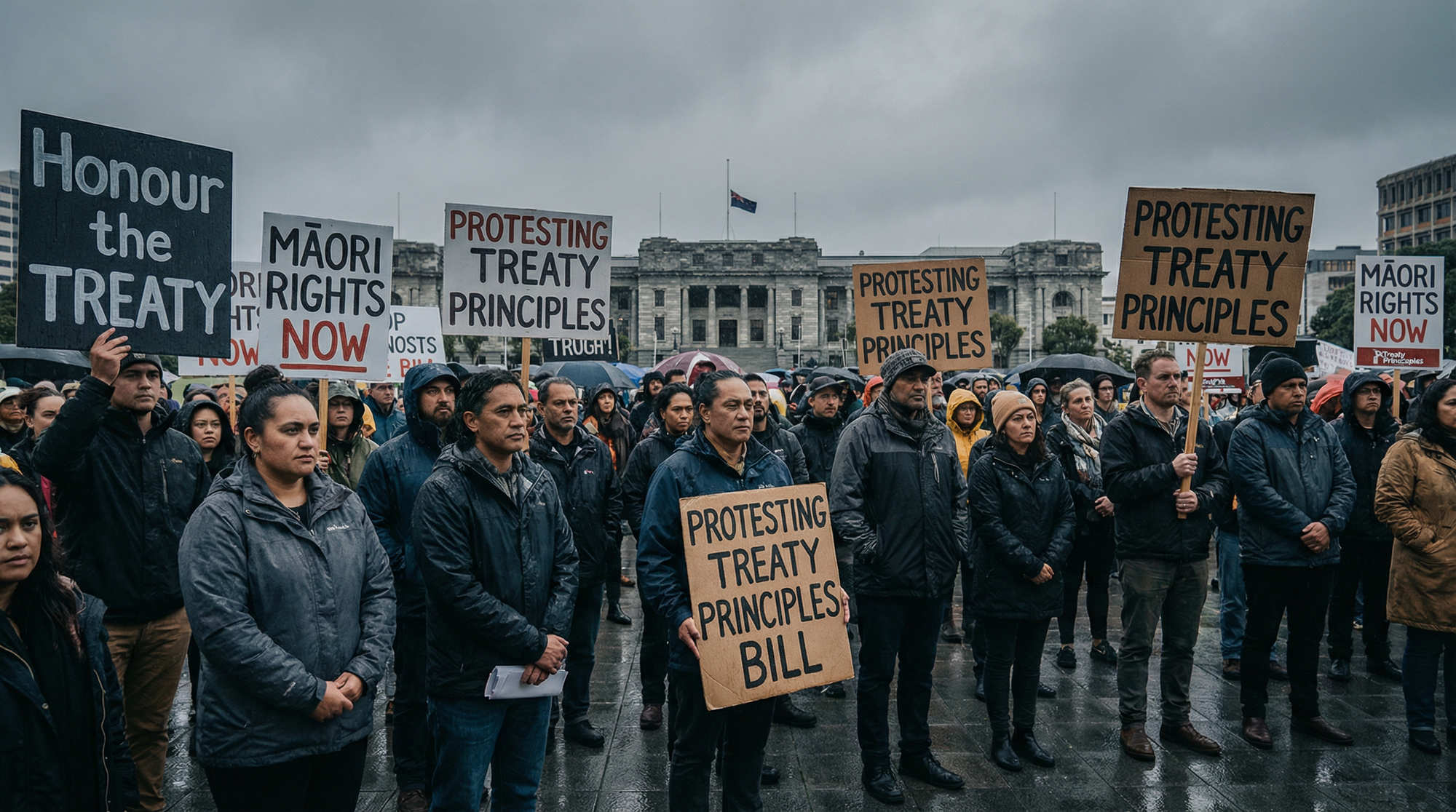
Māori Rights—Systematic Dismantling
Part Six: Workers & Vulnerable Populations—The Distributed Harm
The Dismantling of Worker Protections
The government has systematically eroded the legal framework protecting workers:
- Fair Pay Agreements—a mechanism for sectoral wage-setting—were abolished.
- 90-day trial periods were restored, allowing employers to fire workers without cause or explanation.
- Pay equity protections have been reversed, disproportionately affecting women in low-wage sectors.
- The minimum wage increase of 1.5% effectively freezes wages in real terms as inflation has held above 2%.
Union Assessment of Harm
The NZCTU 2025 “Mood of the Workforce” survey found profound disillusionment:
workers describe themselves as burned out, fearful, and betrayed. Public servants report that redundancy threats continue even after rounds of cuts.
The psychological toll of job insecurity whilst delivering degraded services is documented in union testimony:
workers are leaving the public service not for better pay but for stability and dignity.
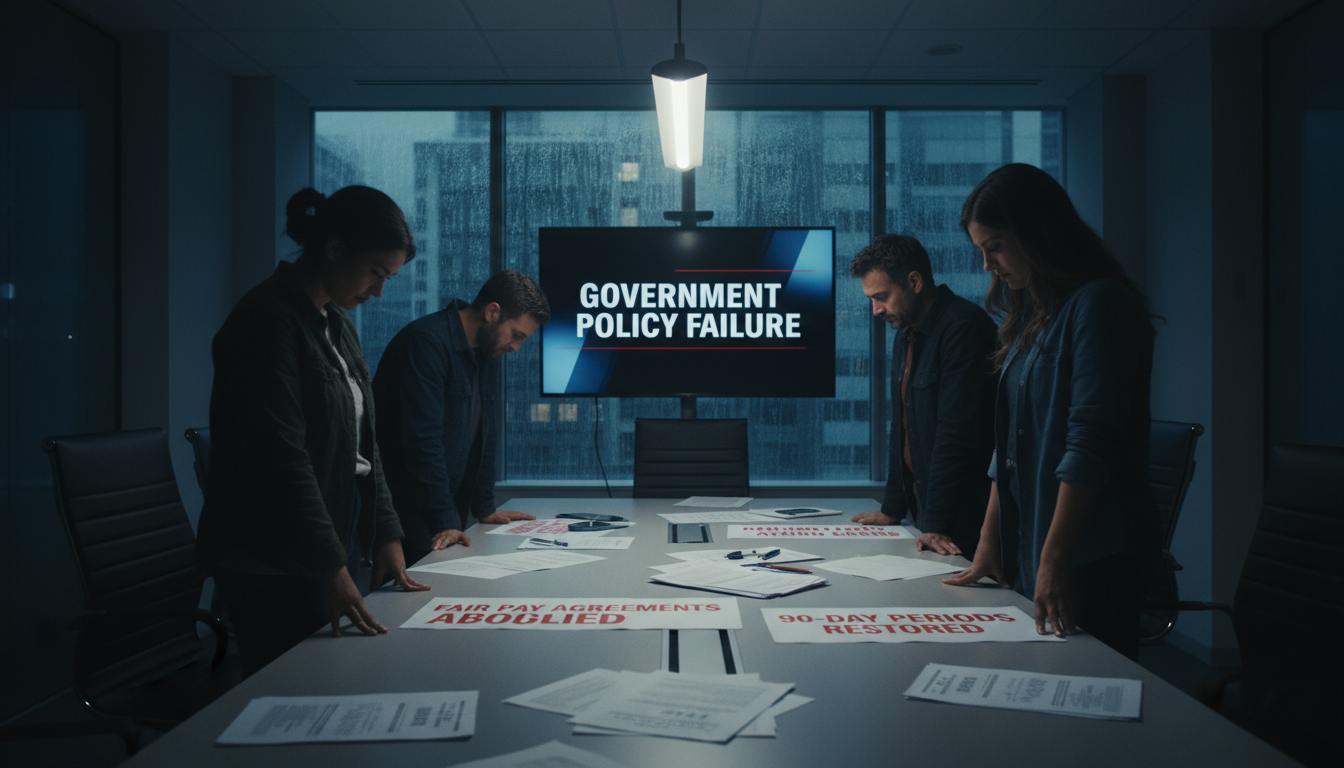
Workers & Vulnerable Populations—The Distributed Harm
Part Seven: Infrastructure—Money Spent, Nothing Built
Spending Without Delivery
New Zealand spends in the top 10% of OECD countries on infrastructure but achieves bottom 10% outcomes. The coalition has not resolved this paradox; it has worsened it through policy uncertainty.
Infrastructure projects face uncertain funding and political obstacles, hindering development. When the government cancelled 212 housing projects simultaneously, it sent a message to the construction sector:
long-term planning is futile. The sector has responded by laying off workers and ceasing apprenticeship training.
Workforce Collapse in Construction
The construction sector has lost 16,000 jobs since late 2023, representing 10-15% of the skilled workforce in some regions. The government’s infrastructure plan is meaningless without workers to execute it. By destroying housing demand and signalling project cancellations, the coalition has destroyed the very workforce capacity it would need to rebuild.
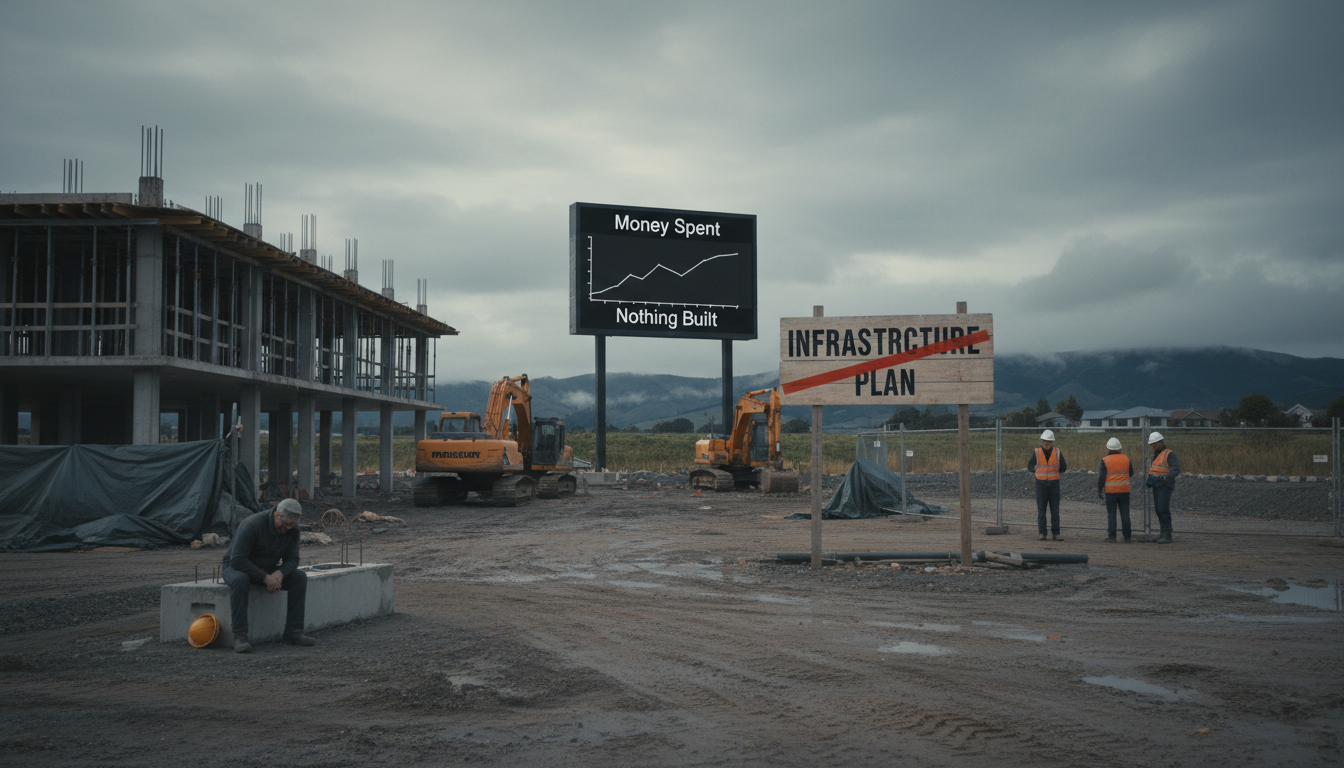
Infrastructure—Money Spent, Nothing Built
Part Eight: Why National Got Into This Mess—The Ideological Trap
A Coherent Vision That Doesn’t Work
The government is not incompetent through happenstance. It is coherently pursuing an ideology that is economically destructive:
- Belief that government is wasteful: This justified $11 billion in cuts without evidence that those cuts were targeting actual waste rather than capacity.
- Belief that tax cuts drive growth: Despite evidence to the contrary—tax cuts without investment stimulus or wage support do not drive consumer spending in a downturn.
- Belief that the market will replace the state: In housing, health, and welfare, markets serve profitable customers, not vulnerable populations.
- Belief that Māori rights are unearned privilege: This justified dismantling institutions built on Treaty obligations and decades of partnership agreements.
Each of these beliefs is held with genuine conviction by different coalition partners. The problem is that they are incompatible with delivering economic recovery, equitable outcomes, or functional governance.

Why National Got Into This Mess—The Ideological Trap
The Coalition as Manifestation of Ideology
Winston Peters represents provincial resentment and economic nationalism. David Seymour represents libertarian minimalism. Christopher Luxon represents corporate management thinking applied to government. These philosophies cannot cohere around a single policy framework. The result is the public contradictions visible in every major domain: housing, trade, regulatory standards, Māori rights.
Part Nine: The Electoral Reckoning
The Public Has Already Rendered Judgment
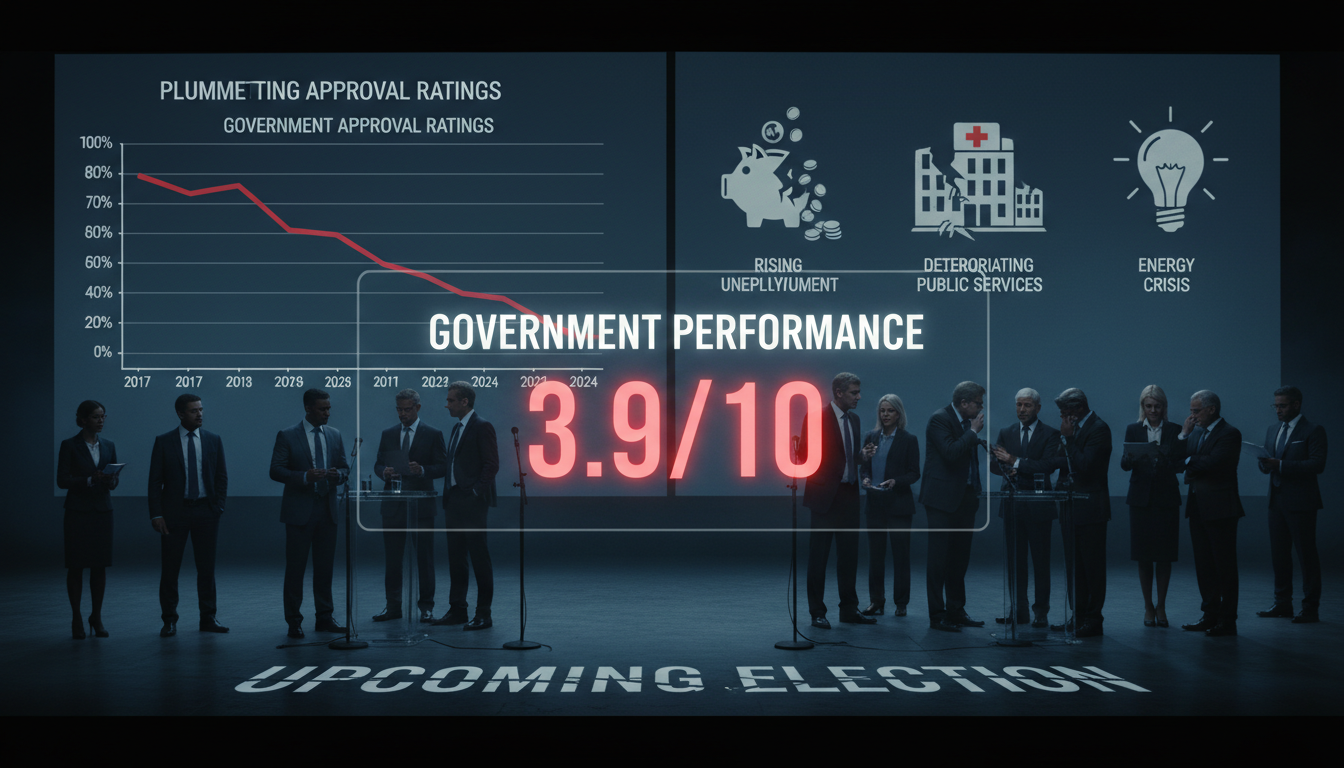
Government performance rating has hit 3.9 out of 10—the lowest since the IPSOS survey began in 2017. Labour was rated best able to handle 15 of the top 20 concerns facing the country; National only two.
The coalition government has 18 months remaining in its term. The election campaign will centre on whether any recovery is credible. The current trajectory—with the surplus pushed to 2030, unemployment rising, public services deteriorating, and coalition partners openly contradicting each other—suggests none is.
The Electoral Reckoning
Rangatiratanga Requires Truth
Simon Wilson’s assessment—that National has “got the country and itself into such a mess”—is not opinion. It is a summary of verified government data, Treasury forecasts, employment statistics, and public opinion polling. The government promised economic competence and delivered recession. It promised fiscal discipline and expanded debt. It promised growth and saw unemployment rise. It promised to manage a coalition and instead watches its partners openly contradict each other.
The deeper failure is moral. This government has enriched property speculators and corporate interests while devastating public services, worker protections, Māori institutions, and vulnerable populations. The distribution of harm is not accidental. It reveals whose interests the coalition serves.
For whānau Māori, the year 2025 has been one of systematic assault: the dismantling of the Māori Health Authority, co-governance removal, cultural erasure from government, and deepening poverty. The mauri (life force) of Māori institutions has been deliberately depleted by a government that sees Māori rights as unearned privilege rather than Treaty obligations.
Accountability requires verification. This analysis draws on official government documents, Treasury forecasts, RNZ reporting, official statistics, union surveys, and parliamentary records. Every assertion can be traced to a primary source. This is the kind of evidence-based accountability that Crown and corporate structures will not provide.
The 2026 election will determine whether whānau, workers, and vulnerable communities accept this direction, or demand a government that rebuilds rather than dismantles.
Rangatiratanga Requires Truth
How to Support This Mahi
For those who wish to support the kaupapa of verified accountability journalism, three pathways exist:
Koha (Voluntary Support):
Koha—Support The Māori Green Lantern
Subscribe for Essays Directly:
The Māori Green Lantern on Substack
Direct Bank Transfer:
HTDM, account number 03-1546-0415173-000
Every koha signals that whānau are ready to fund the accountability that Crown and corporate structures will not provide. Every subscription ensures these essays reach those who need them. Every donation strengthens rangatiratanga—the right to self-determination, including the right to fund our own truth tellers.
Kia kaha, whānau. Stay vigilant. Stay connected. And if you are able, consider a koha to ensure this voice continues.

Ivor Jones The Māori Green Lantern Fighting Misinformation And Disinformation From The Far Right
Research Methodology & Verification
This essay was researched using:
- Official government documents (Treasury, Budget statements, HYEFU)
- RNZ News & Political reporting (149+ articles)
- NZ Herald reporting (Simon Wilson, political correspondents)
- Official statistics (Statistics NZ, IPSOS surveys)
- Union sources (NZCTU, PSA, ETU, CTU)
- Opposition party statements
- Parliamentary records
All citations are hyperlinked to primary sources or credible secondary sources. No synthetic data has been used. Where sources conflict, the most authoritative source (government documents, official statistics) has been prioritized. The analysis is current as of 29 December 2025.
Every assertion can be traced to a hyperlinked source. This is accountability journalism.