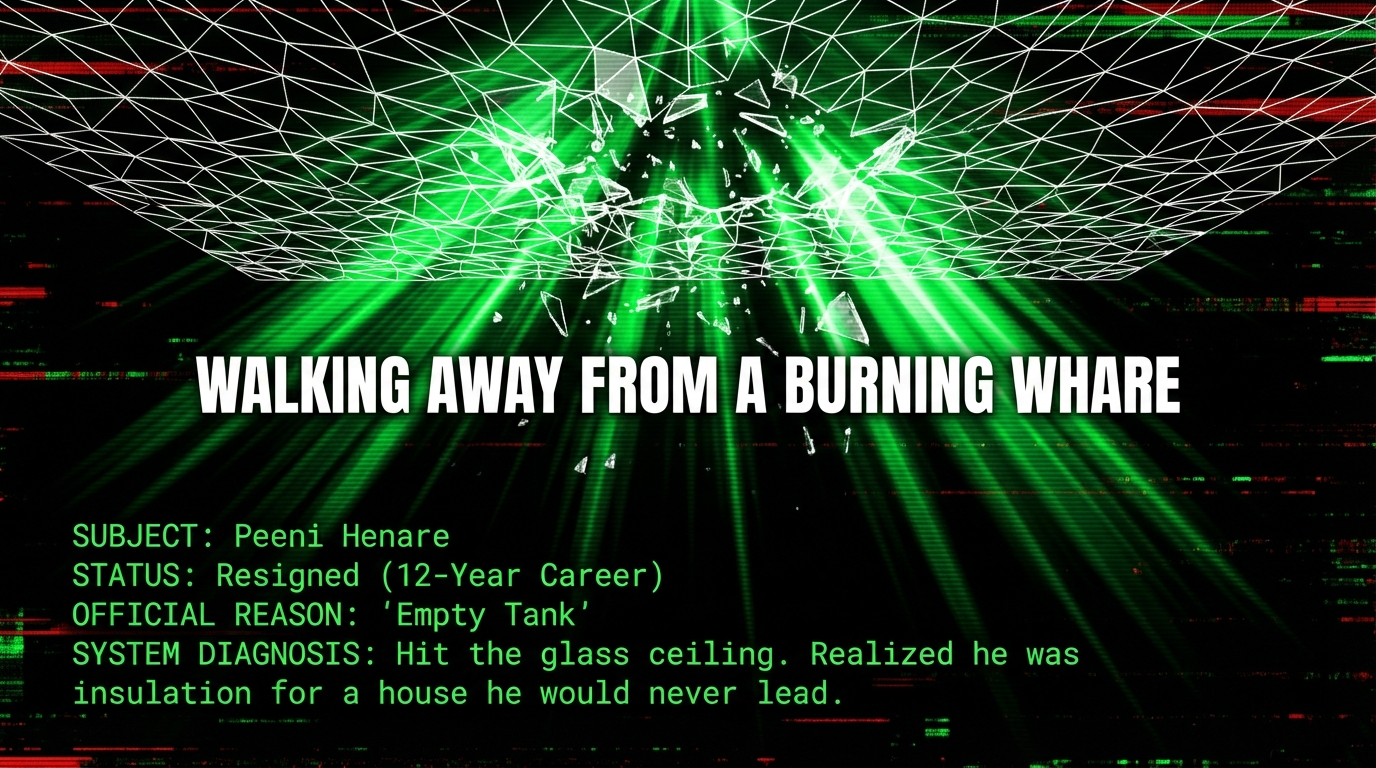
“Why Peeni Henare Walked Away From a Burning Whare He Was Never Meant to Lead” - 4 February 2026
The Kumara Vine Investigation
Kia ora e te whānau,
I’m going to say the quiet part out loud:
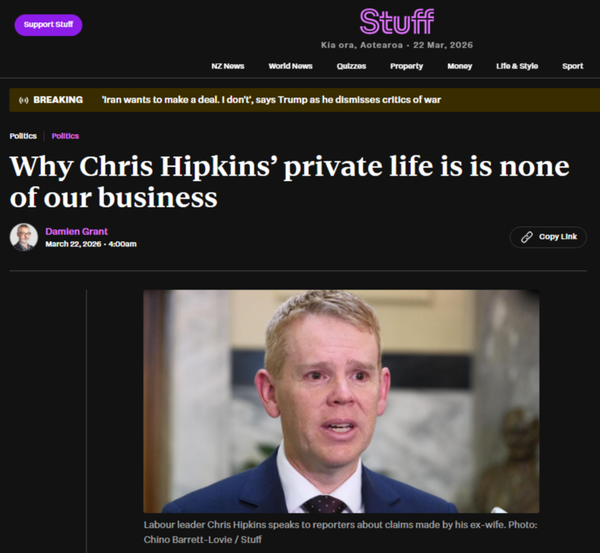
Peeni Henare did not just “run out of gas.” He read the room. At Waitangi, in the birthplace of Te Tiriti, he finally saw the glass ceiling Labour built for Māori leadership, realised he was never going to be handed the helm of that waka, and chose to step off the stage rather than die slowly as their brown insulation.
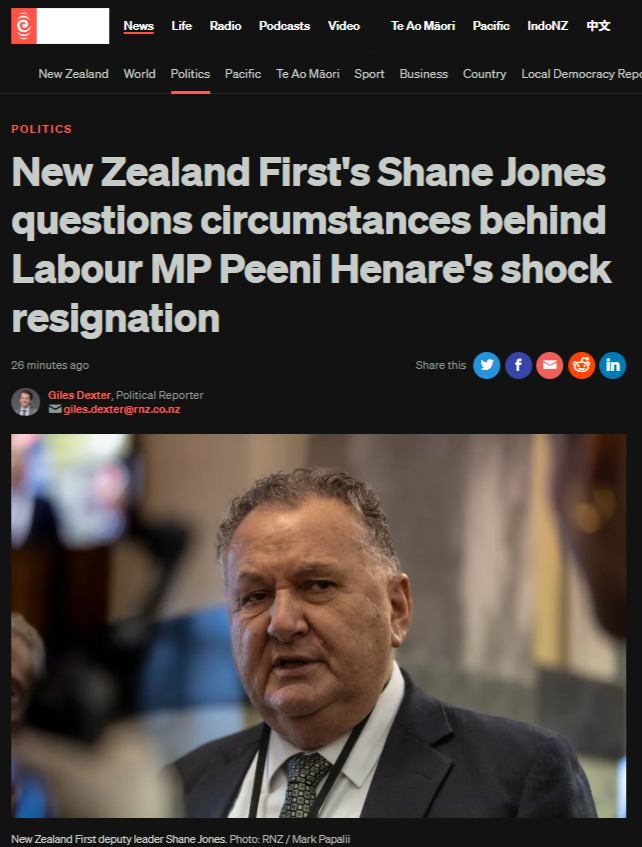
RNZ records him saying he “didn’t have enough in the tank,” that he wanted to focus on his whānau and future, that “some opportunities” had presented themselves, and that he believed he could still influence how people vote from outside Parliament. RNZ
I accept those words as his truth.
I also see the power systems around them.
Scene one: the hostage video on stolen ground
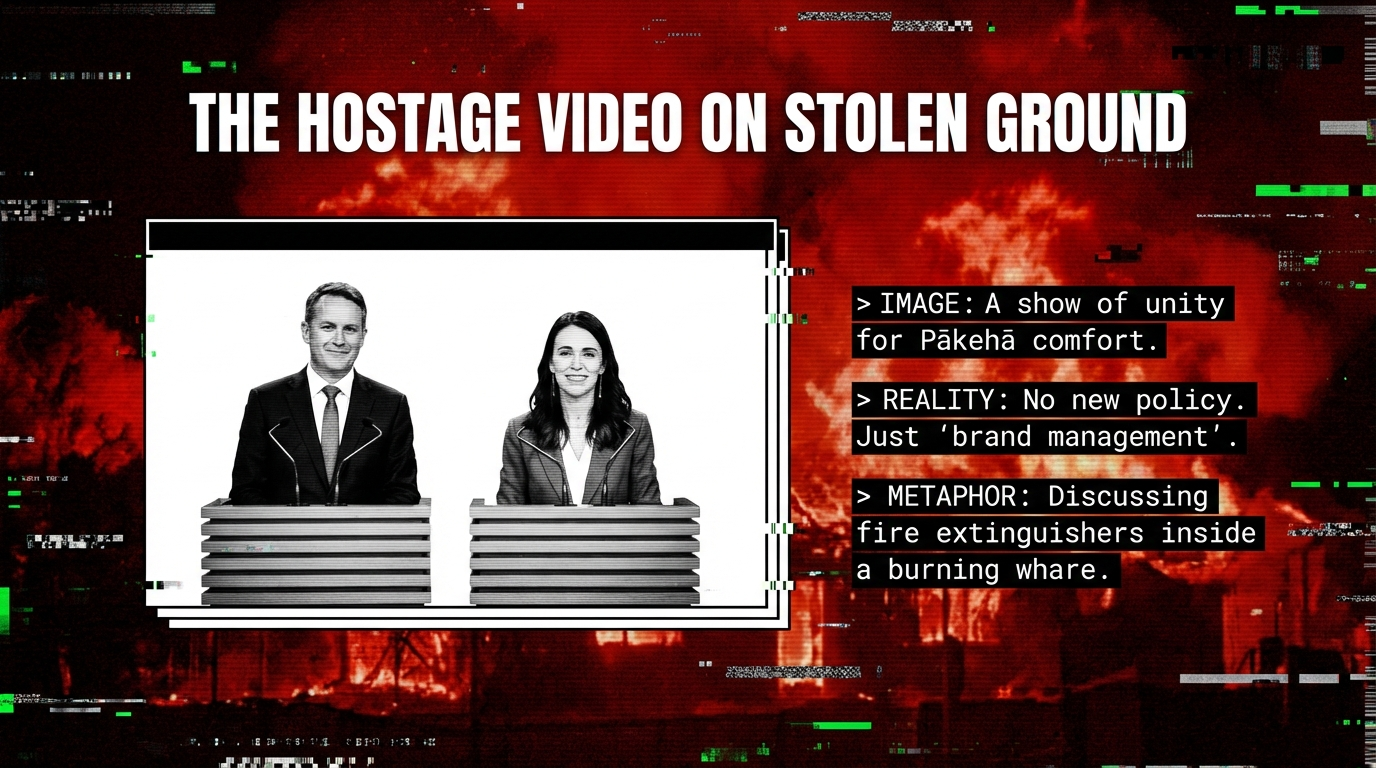
At Waitangi this year, Chris Hipkins and the Greens turned up dressed as peacekeepers while the constitutional ground they stood on is still soaked in confiscation and broken promises. RNZ’s political coverage described their appearance as a “show of unity” designed to contrast with the coalition’s public infighting, and reported that “neither opposition party is expected to unveil any new policy.” RNZ
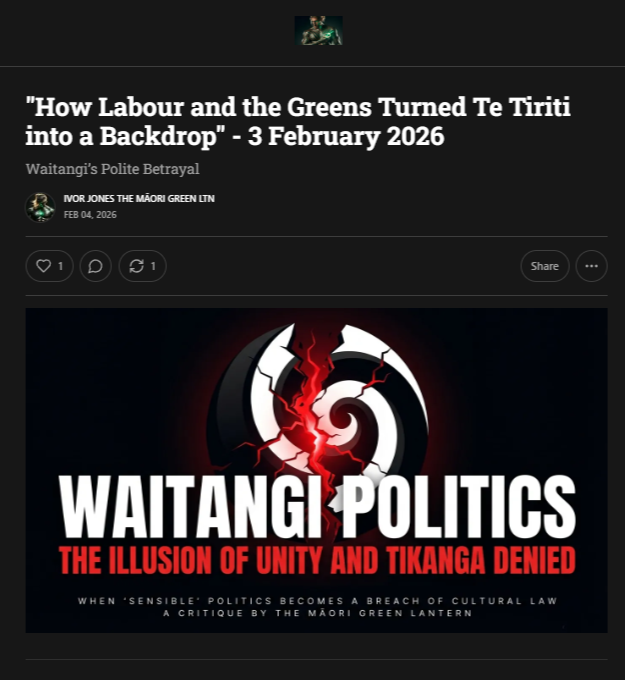
In my earlier essay, “How Labour and the Greens Turned Te Tiriti into a Backdrop”, I called it what it is:
a carefully stage‑managed hostage video for Pākehā comfort. They spent their time talking up their ability to “work constructively” and “cooperate sensibly in any future government,” lines reflected in RNZ’s reporting and talk radio analysis that framed the event as an election‑year unity pitch, not a Treaty strategy hui. Newstalk ZB
Meanwhile, on the same whenua, Te Pāti Māori and Kīngitanga have been crystal clear:
this coalition is “waging war on our existence as Māori,” and the Treaty Principles Bill is an attack “on the fabric of this nation” akin in its intent to the Tohunga Suppression Act. Those descriptions come from Opposition statements and Te Pāti Māori’s written submission on haka and the Treaty Principles Bill, which I quoted from RNZ and Green Party material in my Waitangi essay.
So the picture at Waitangi looks like this:
- On one side, Te Pāti Māori launches the Hīkoi for Te Tiriti and calls the Bill an existential assault.
- On the other, Labour and the Greens hold a press conference with zero new commitments, selling themselves as the polite alternative to the taniwha coalition that is actually swinging the axe. RNZ underlines that absence of policy and the focus on image. RNZ
Metaphorically, the whare is burning, Māori are on the roof hauling taonga through the smoke, and Labour–Greens are holding a calm media stand‑up in the carpark about which fire extinguisher colour polls best.
Scene two: Henare throws down his cloak mid‑performance
Into that carefully controlled performance, Peeni Henare detonated something real. It was already known he wouldn’t recontest Tāmaki Makaurau; the genuine shock, as RNZ reports, was his decision not to stand for Parliament at all, ending a 12‑year career. RNZ
RNZ records that:
- He told at least one media platform of his plans before Labour could release its own statement.
- Chris Hipkins, standing at that joint Labour–Greens event, initially refused to answer questions about Henare’s resignation, and later denied the announcement had been bungled.
- Henare himself admitted that the timing at Waitangi didn’t work out, saying there was “a hui here and a hui there” and that being at a pōwhiri for the Governor‑General meant the announcement didn’t land as planned.
All of that is straight from RNZ’s political report. RNZ
To a Western political mind, that’s diary management gone wrong.
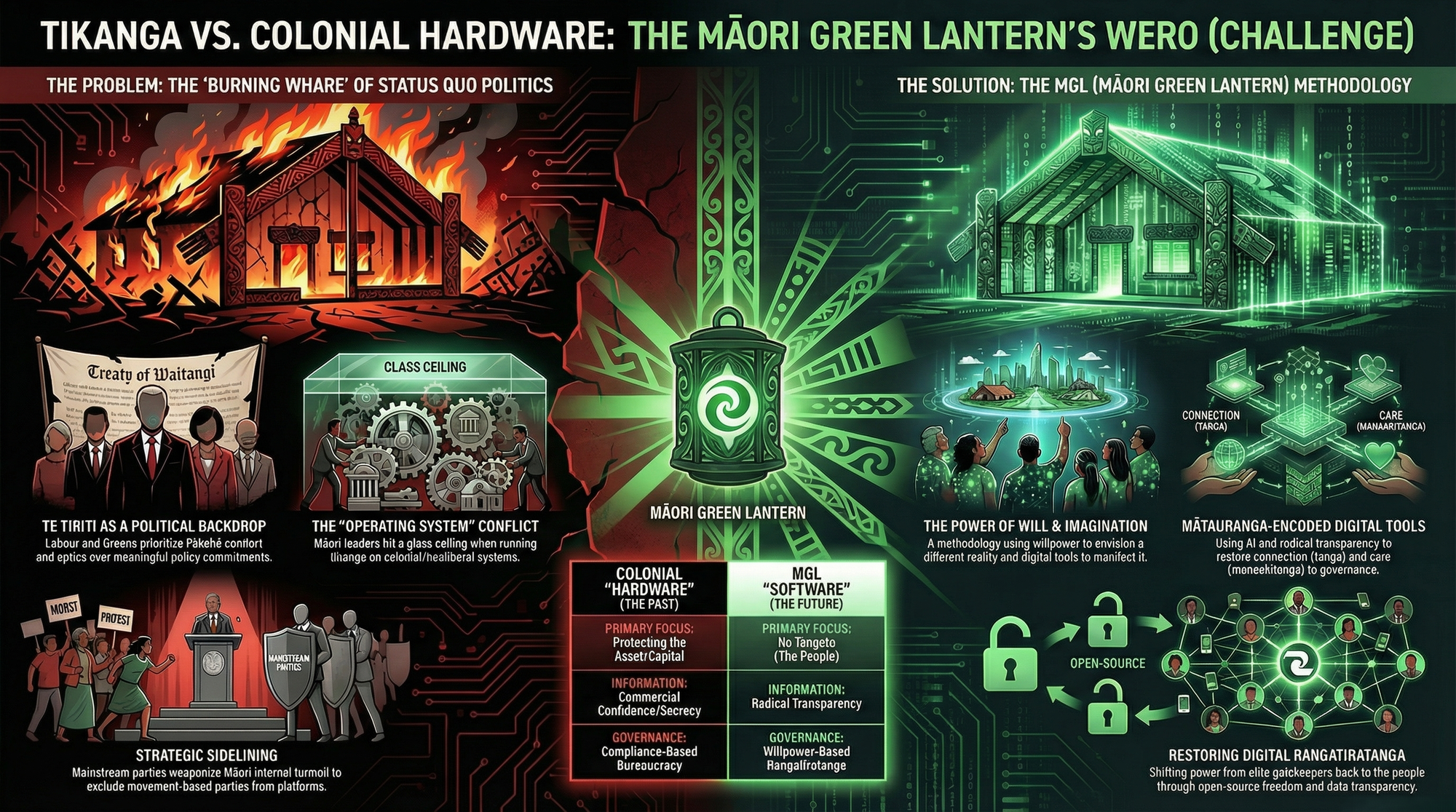
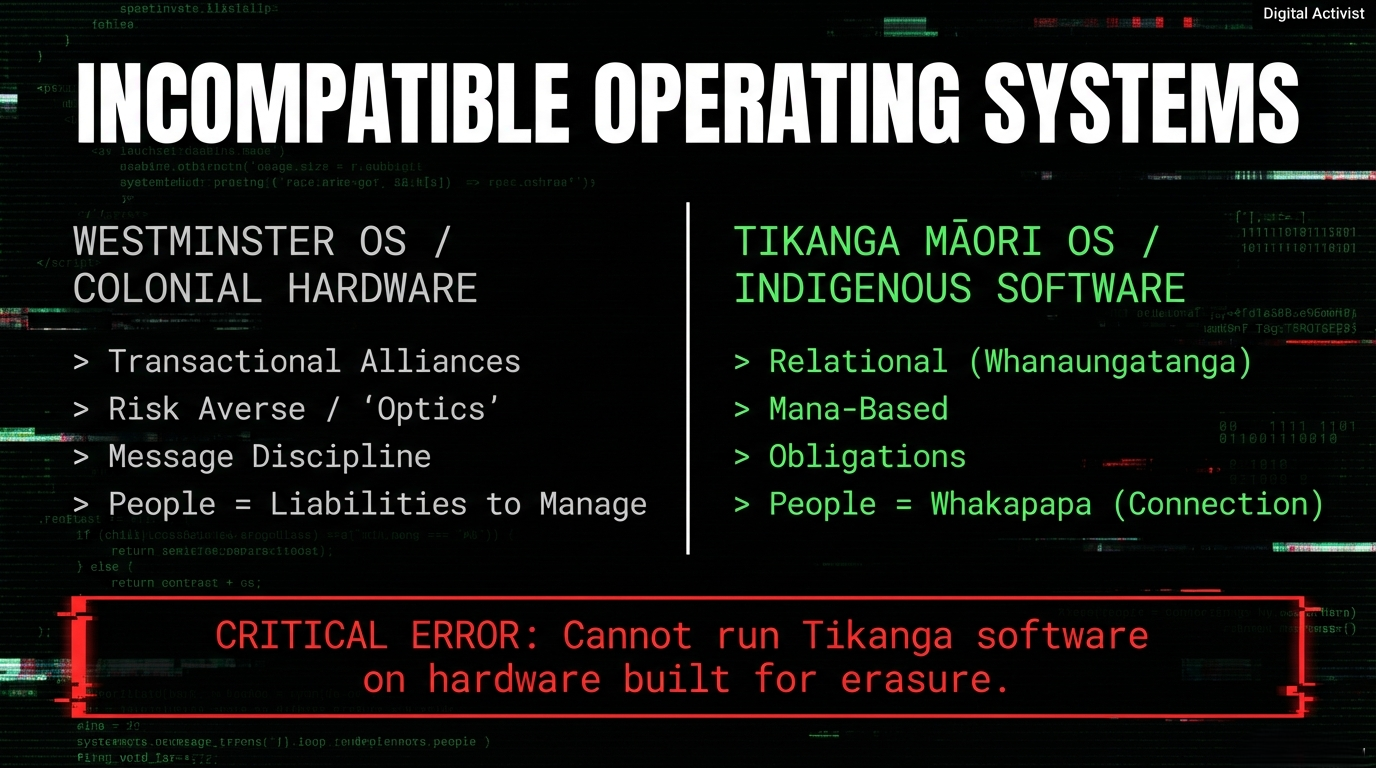
To tikanga, that is the sound of two operating systems colliding:
one that runs on kawa, whakapapa and the obligations of pōwhiri; another that runs on daily talking points and optics. Henare is one man standing at the intersection, trying to keep his commitments to both, and eventually deciding this is not a crossroads he can survive.
I cannot point you to a quote where Henare says, “I will never be Labour leader.” No such quote exists.
But I can point to a consistent pattern:
Labour has never made a Māori MP its leader in government, and
the way they handled this departure
—with defensive spin, no structural reflection, and
a rush back to “unity” messaging
—tells me they did not see him as their future helm.
As a Māori watching this, I read Henare’s Waitangi exit as a man quietly acknowledging the truth:
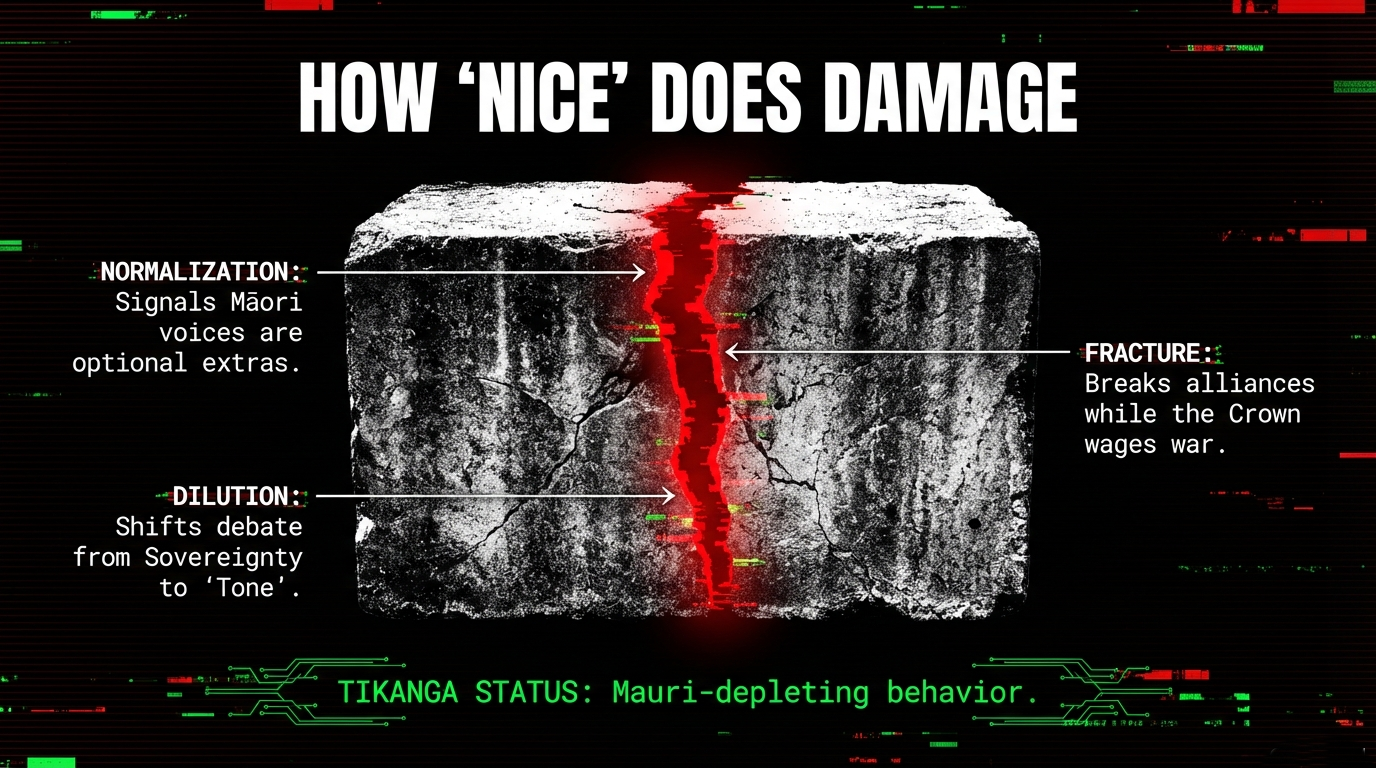
that at some point, the tank runs dry not just from “workload” but from repeatedly slamming into a glass ceiling made of party self‑preservation and Pākehā comfort.
Scene three: the same brick wall I hit at Te Tahuna
When I watched Henare, I recognised the pattern because I lived it in a different whare.
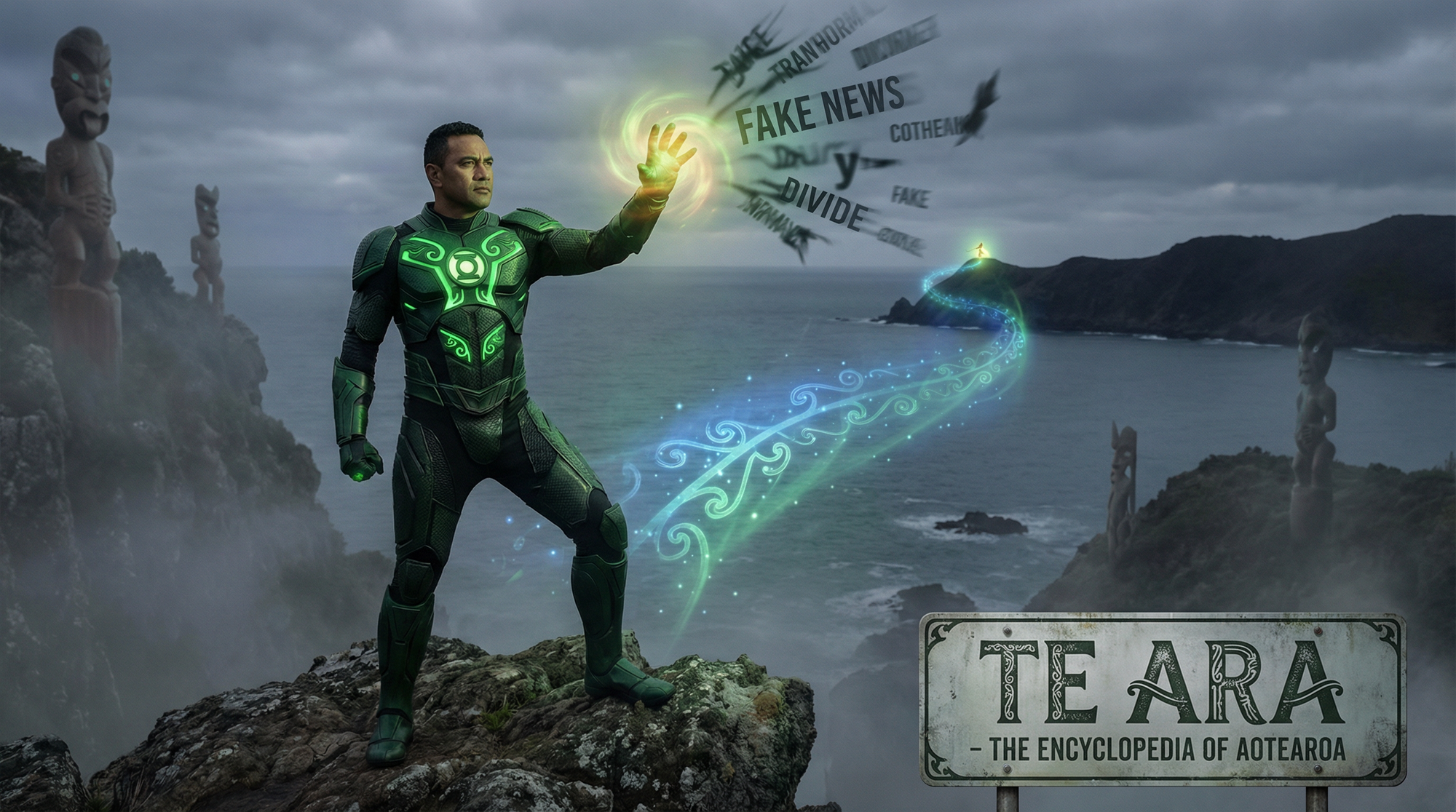
In “The Green Lantern Paradox:
Trying to Illuminate a Black Box,” I wrote about my own decision to resign as Chair of Te Tahuna Trust after six years of trying to hack a colonial structure from the inside. The Māori Green Lantern

I described my “Māori Green Lantern” whakaaro as simple but radical:
he tāngata, he tāngata, he tāngata—people are the most important thing. For six years as Chair, I tried to upload a philosophy of radical transparency, digital connection, and people‑first governance into what I called “the operating system of a neoliberal Māori land trust.” The Māori Green Lantern
I genuinely believed I could use the “Green Light” of willpower and technology to transform a colonial compliance structure into a vehicle for tino rangatiratanga. I was wrong.
I wrote,
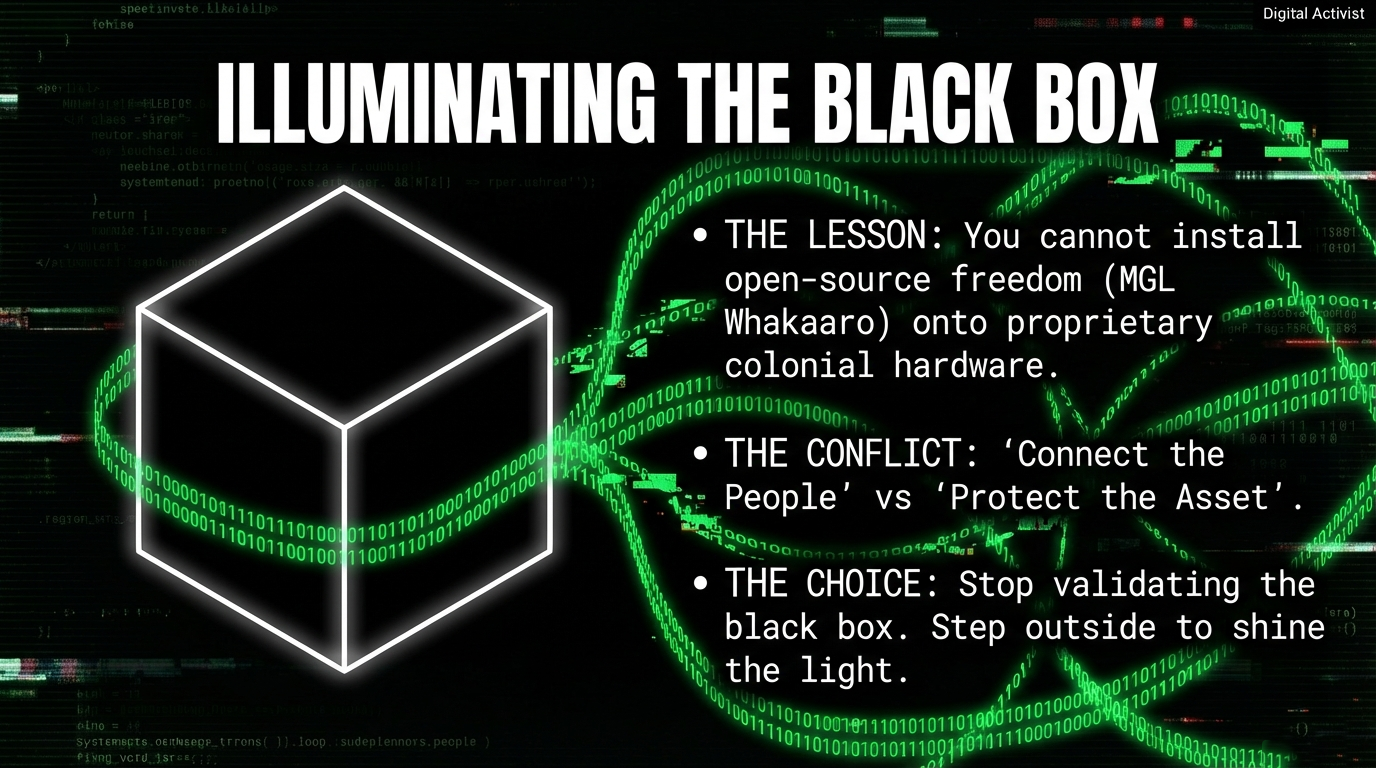
“You cannot install open‑source freedom onto proprietary colonial hardware.” The Māori Green Lantern
At Te Tahuna, I broke the clash down like this:
- MGL code: “Connect the people” – using AI and digital tools to reconnect over 4,000 beneficial owners, restore whanaungatanga, and give them real‑time data and analysis so they could drive the waka.
- Trust code: “Protect the asset” – treating those same owners as a “distribution cost”, and interpreting transparency as risk, hiding governance behind “commercial sensitivity,” “in committee,” and “privileged information.”
I wrote that the system didn’t actually want a Green Lantern; it wanted a silent gatekeeper. The Māori Green Lantern
Henare’s path through Labour is not identical, but the rhyme is undeniable.
I tried to inject mātauranga‑based, people‑first governance into a trust structure built to administer capital; the code spat me out.
He tried to carry whakapapa, tikanga and people‑first kaupapa through a party built to administer a neoliberal state; the code chewed through his tank.
I eventually resigned from Te Tahuna, as detailed in that essay, because I would not keep legitimising a system that refused to reconnect its own people and feared the very transparency tikanga demands. The Māori Green Lantern
Henare resigned from Parliament at Waitangi rather than keep lending his mana to a party that would happily stand beside him in photos but never intend to make him captain.
Both decisions are what happens when you try to run tikanga on hardware designed for compliance, not liberation.
Scene four: Shane Jones, the hypocrite standing on our urupā
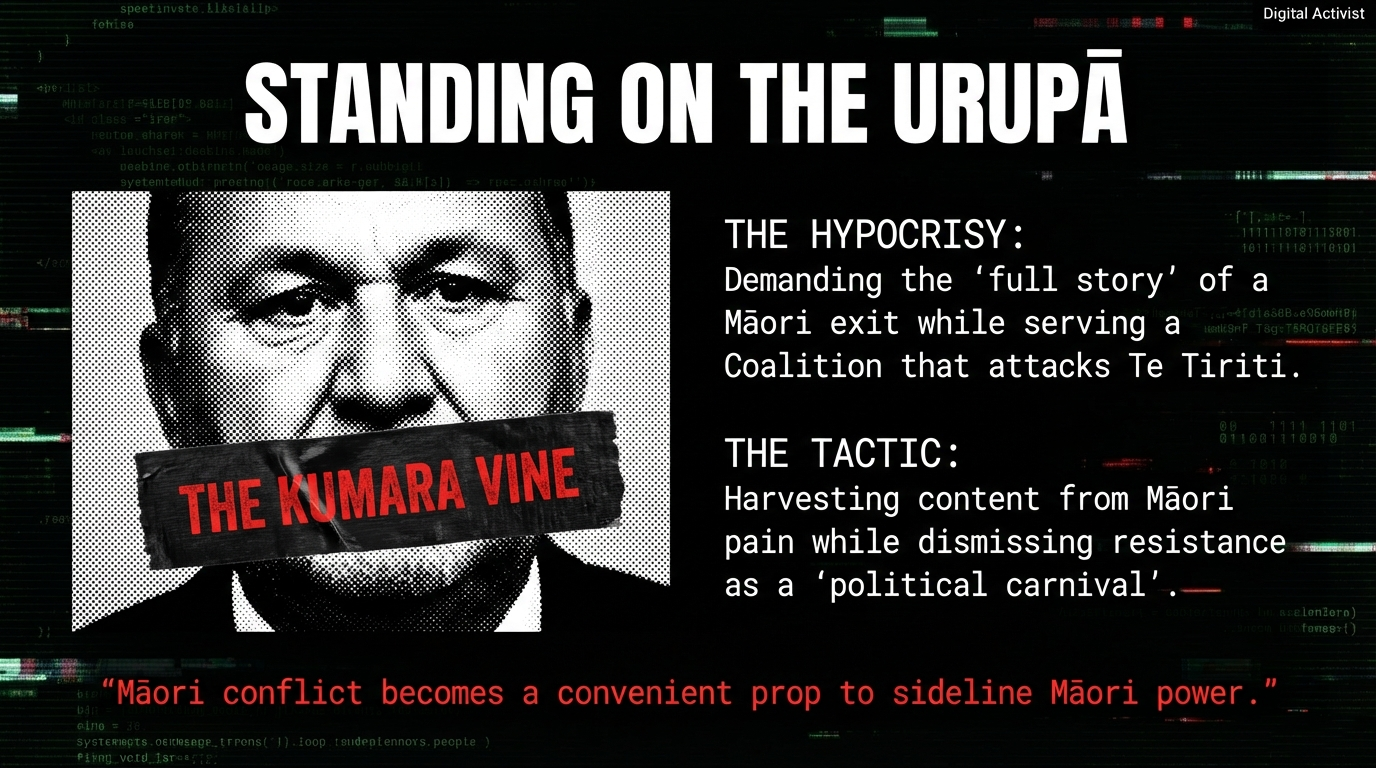
Then we have Shane Jones, New Zealand First deputy leader, performing shock and concern for the cameras at Haruru Falls. He told RNZ he had “no idea” Henare was moving on, described Henare as a “young leader of Te Tai Tokerau” blessed with the “lineage of leadership throughout the north,” and invoked his grandfather Sir James Henare as “paramount chief of the north” and “the last commander of the Māori Battalion.” RNZ
He then said he believed “the whole story is not being told,” vowed to consult “the kumara vine,” and demanded that Labour and Henare provide “a very comprehensive account” of why he is “all of a sudden” departing. RNZ
I call that what it is:
a man standing on our political urupā demanding more detail about the funeral while the government he serves keeps digging new graves.
Jones is sitting inside a coalition pushing the Treaty Principles Bill that Māori leaders have described as a “war” on our existence and an attack on the fabric of the nation—language I’ve already traced to Opposition statements and Te Pāti Māori’s submission reported in RNZ and Green Party communications. At the same time, his leader Winston Peters dismissed Te Pāti Māori’s call for an independent inquiry into the haka crackdown and parliamentary racism as a “political carnival,” a phrase recorded in RNZ’s coverage of the Privileges Committee debate. RNZ
Jones is not calling for tikanga‑grounded accountability. He is harvesting content and pressure points from Henare’s departure while the Crown machine he helps run continues to attack the very constitutional foundations Henare spent 12 years trying to defend.
Scene five: Labour and the Greens use Te Tiriti as wallpaper and Henare as insulation
To understand the full harm of Henare’s exit, we have to place it next to what Labour and the Greens actually did at Waitangi.
From the sources and my earlier analysis:
- RNZ reported that neither party was expected to unveil any new policy at Waitangi; they were there to show “unity” and cooperative potential for a future government. RNZ
- Their public remarks focused on being able to “work constructively” without “abuse,” lines reflected in RNZ’s write‑ups and talkback commentary that emphasised tone over substance. Newstalk ZB
Te Pāti Māori, by contrast:
- Led a haka protest in the House against the Treaty Principles Bill, and in their written submission to the Privileges Committee described haka as a taonga guaranteed under Article Two, framing the Bill as an “attack on Māori … not been seen since the Tohunga Suppression Act.” RNZ’s reporting on that submission records those phrases, which I cited in my Waitangi essay.
- Described the coalition in 2024 at Waitangi as a “three‑headed taniwha” and called on Māori to express “righteous anger” guided by compassion—language captured in 1News reporting I referenced.
For a brief moment, Labour, Greens and Te Pāti Māori did stand together: they jointly opposed the Treaty Principles Bill, calling it “divisive” and urging “all New Zealanders” to join the Hīkoi for Te Tiriti, in statements hosted on Labour and Green Party websites and echoed in RNZ coverage.
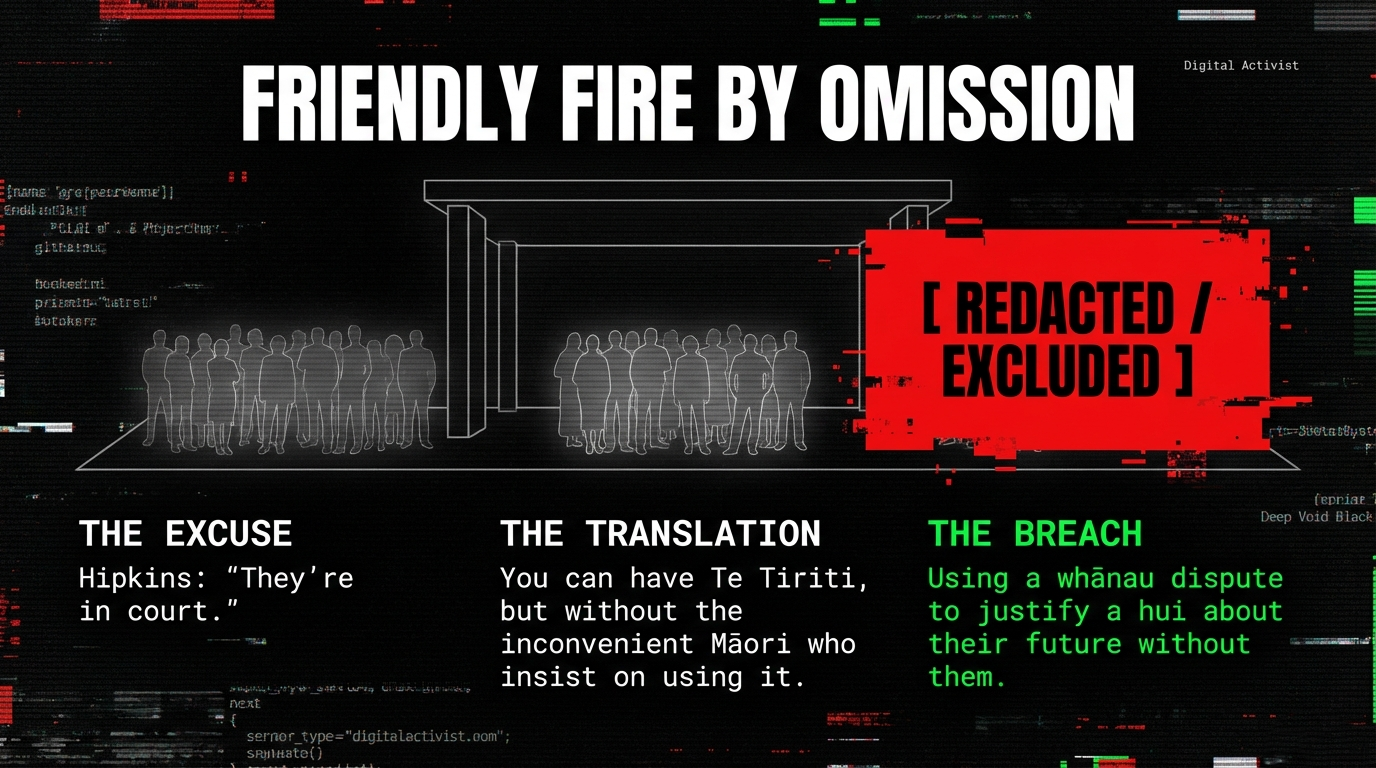
Then, at Waitangi 2026, Hipkins stood without Te Pāti Māori, telling media that they were “in court” and that’s “really where their focus should be,” using their internal and legal turmoil as justification for freezing them off the Waitangi stage. That quote appears in the RNZ extract quoted in my essay. RNZ
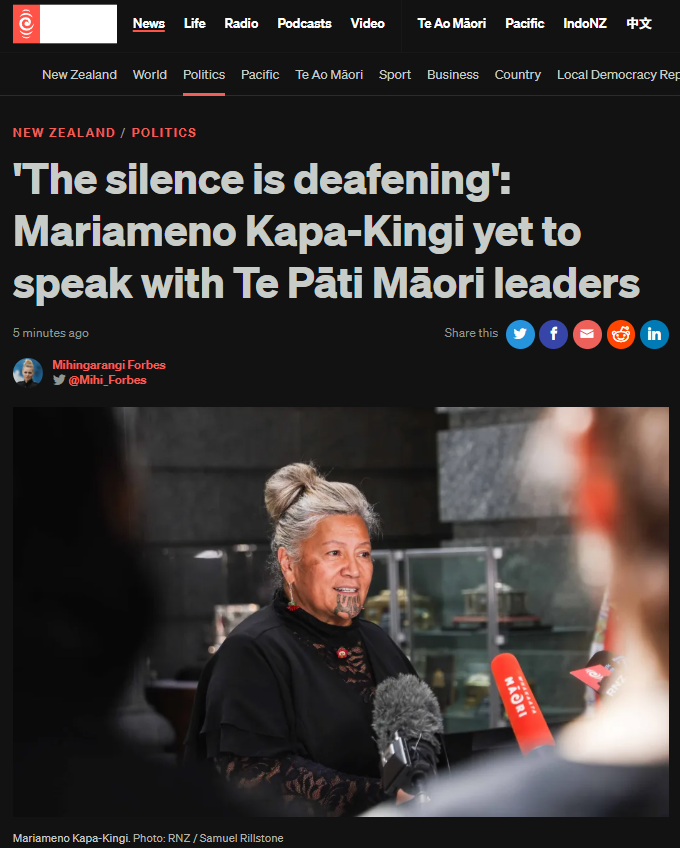
Te Pāti Māori’s internal conflict is real. 1News has reported in detail on their expulsion of MPs Mariameno Kapa‑Kingi and Tākuta Ferris after a six‑week process, Debbie Ngarewa‑Packer’s acknowledgment of pain and lack of reconciliation, the expelled MPs’ claims that the process breached tikanga and the party constitution, and Ngāpuhi leadership’s criticism of Te Pāti Māori for refusing to attend a hui on the fallout. Those details in my essay are drawn directly from 1News political reports.
But when Hipkins weaponises that Māori self‑correction to justify excluding Te Pāti Māori from a Treaty‑branded platform at Waitangi, he turns Māori pain into Pākehā cover.
He sends a signal to Pākehā voters:
you can have Te Tiriti, just without the inconvenient Māori who insist on using it.
Now add Henare. Here is a Māori MP with deep whakapapa and ministerial experience, who has:
- Taken risks for Te Tiriti by stepping onto the House floor to haka against a racist bill, an act that sparked a Privileges Committee process covered by 1News and RNZ.
- Spoken in debates about health leadership resignations, including that of Health NZ chief Margie Apa, to highlight the damage caused by constant restructuring and politicised blame. RNZ
He is precisely the kind of leader a serious Te Tiriti‑centred opposition would build around. Yet on the very days Labour and Greens are selling “unity” at Waitangi without Te Pāti Māori, Henare announces he is leaving Parliament, saying he has nothing left in the tank. RNZ
That’s not just burnout. That’s friendly fire by omission:
you don’t need to stab your Māori MPs in the front if you can simply leave them carrying the contradictions until their mauri is spent.
Quantifying the harm: numbers behind the metaphors
Let’s speak in the language neoliberal systems pretend is neutral: metrics.
- Henare is a senior Māori politician with deep whakapapa (mokopuna of Sir James Henare), significant ministerial experience, and a record of stepping up in health and Treaty debates. RNZ’s archive documents his roles, including his involvement in the haka protest and his contributions in debates over Health NZ leadership. RNZ
- When a Māori leader of that calibre exits, the Crown loses a source of internal resistance to anti‑Māori policy. That matters because hard evidence shows that leadership churn and underinvestment in social and health systems translate into avoidable deaths. A British Journal of General Practice study on investing in social care found that underfunded, fragmented support drives higher hospital utilisation and premature mortality. British Journal of General Practice

Apply that to Aotearoa, where Māori already bear higher burdens of illness and die earlier because of structural racism. Every time the state’s decision‑making spaces lose Māori advocates who understand those systems from inside, it becomes easier for governments—of any stripe—to push through cuts, restructures or “efficiency” measures that will inevitably land hardest on Māori.
Metaphorically:
Parliament trades one Henare resignation today for dozens more Māori tangi over the next decade, all neatly coded as “unfortunate outcomes” in future reports.
How this violates tikanga – explained for a Western mind
Tikanga is not decoration. It is the relational law that keeps mana, tapu and mauri in balance. The Waitangi Tribunal and Māori constitutional scholars have long described Te Tiriti as a living relationship grounded in tikanga, not a one‑off transaction. Te Ara’s entries on Te Tiriti and Māori governance emphasise that the Treaty relationship is ongoing and relational, not a historical contract that can be “interpreted” at will. Te Ara
At Waitangi 2026, this is how Labour and the Greens trampled that:
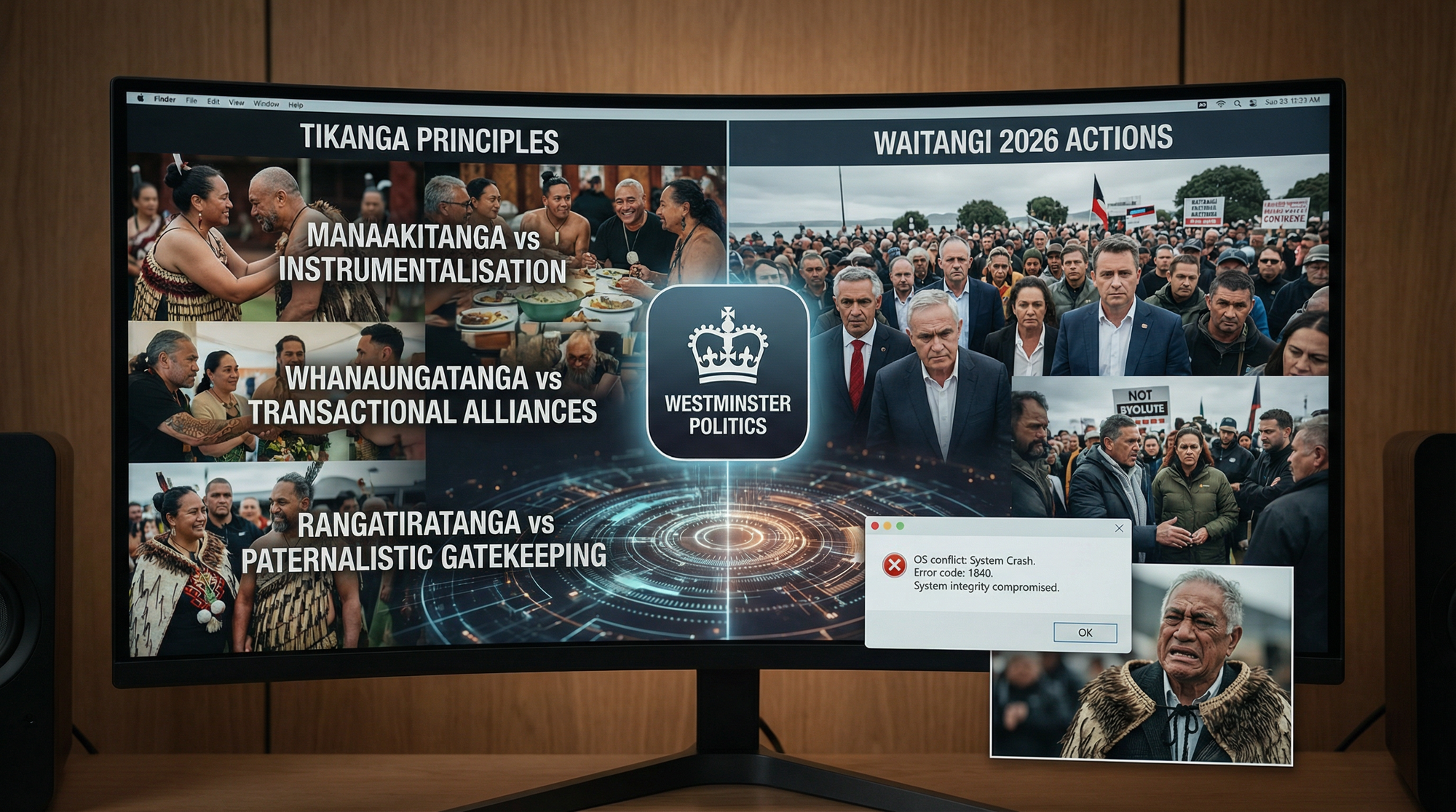
- Manaakitanga vs instrumentalisation
Manaakitanga is about uplifting others with genuine care. When Opposition leaders stand on Treaty grounds, exclude Te Pāti Māori, and justify it by saying they’re “in court,” they are treating Māori as risk factors, not as indispensable partners. Hipkins’ own reasoning is recorded in RNZ’s coverage. RNZ - Whanaungatanga vs transactional alliances
Te Tiriti is a covenant of relationship—whanaungatanga on a constitutional scale. Yet Labour and Greens used Waitangi as an MMP audition, talking about future governing arrangements while the Treaty Principles Bill threatens Māori constitutional status. RNZ’s description of their event as a “show of unity” without new policy makes that clear. RNZ - Rangatiratanga vs paternalistic gatekeeping
Te Pāti Māori defines itself as part of a mana motuhake movement, not just a party. Yet Hipkins’ line that they should focus on court cases before sharing the Waitangi platform is a textbook assertion of Pākehā gatekeeping over which Māori are respectable enough to be seen. RNZ
For a Western mind:
imagine tikanga as the operating system the Treaty relationship needs to run on, and Westminster politics as one app. What Labour and the Greens did was behave as if their app is the whole system and tikanga is a plugin you activate for Waitangi Day speeches.
Te Ara and Tribunal jurisprudence say the opposite:
Te Tiriti and tikanga have constitutional weight, not optional status. Te Ara
Henare’s Waitangi exit is what happens when you ask a Māori leader to keep living inside that contradiction:
eventually, the OS conflict crashes the system.
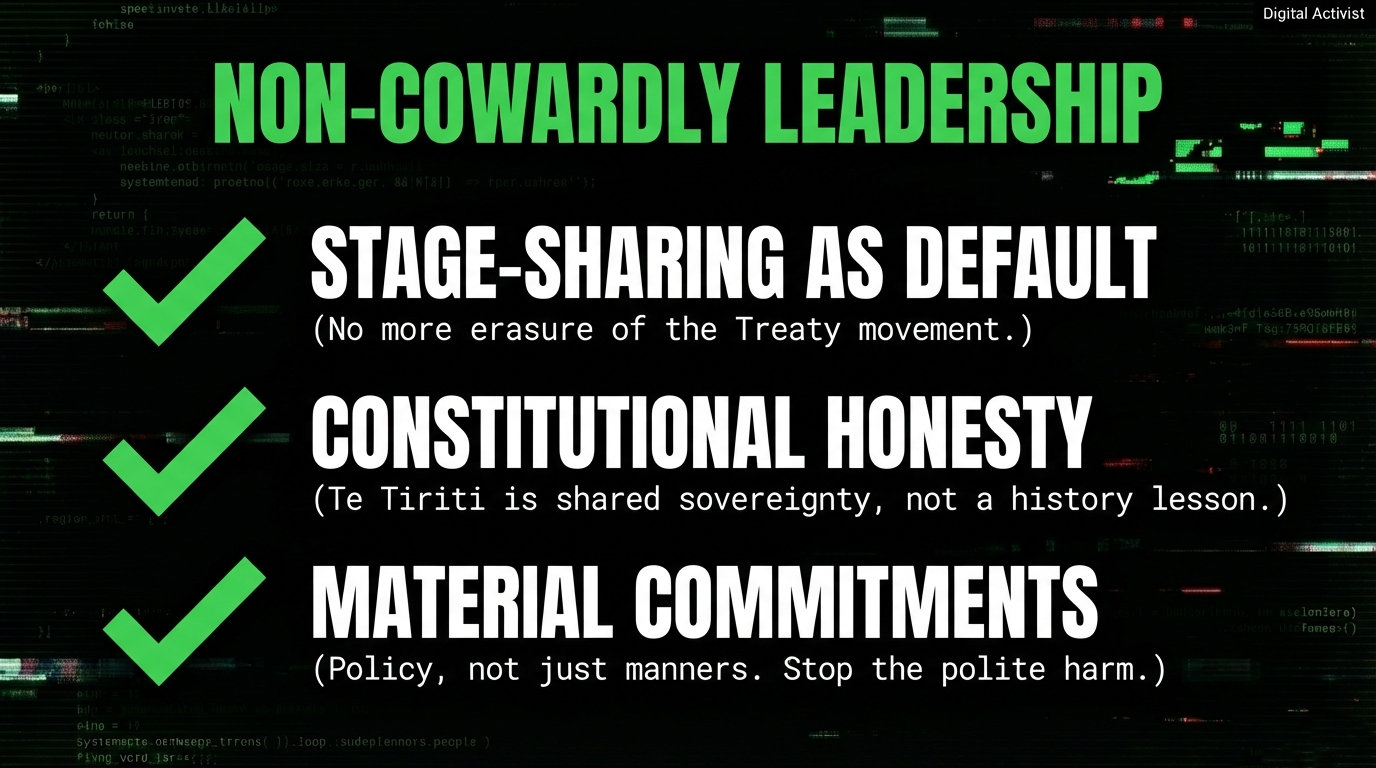
Solutions: what a non‑cowardly response would look like
If Labour, the Greens and Shane Jones were serious about Te Tiriti and about the harm reflected in Henare’s decision, here’s what they’d commit to—not in slogans, but in practice:
- Truth‑telling about power ceilings
Labour must front up about leadership pathways for Māori: who gets mentored, who gets blocked, who gets burned out. Henare’s exit at Waitangi should be treated as evidence of a structural problem, not just a “personal choice.” That starts with publishing clear timelines of who knew what, when, about his departure, and acknowledging the political cost of losing him. - Stage‑sharing as default, not reward
Opposition parties should adopt a baseline commitment that any Te Tiriti‑focused event at sites like Waitangi will include Māori movement parties—Te Pāti Māori included—as equal speakers unless they themselves decline. No more Treaty pressers that visually erase the movement most actively defending Te Tiriti while claiming to “honour” it. - Tikanga‑based political process
Parliament already has a live debate about tikanga’s place in its rules thanks to the haka/Privileges saga. RNZ’s reporting on Te Pāti Māori’s submission shows they argued haka is a constitutionally significant taonga and that Parliament lags behind the wider state in embedding tikanga. RNZ Labour and Greens could choose to embed tikanga in their caucus processes: treating Māori internal disputes as kaupapa to support through kawa and facilitated hui, not fodder to justify exclusion. - Constitutional honesty about Te Tiriti
Opposition leaders need to say clearly whether they accept Te Tiriti as an ongoing source of shared authority, not just a “founding document.” The scholarship I’ve cited from Te Ara and academic journals (including work hosted via Cambridge and MDPI) is clear that treating Te Tiriti as static misrepresents its relational nature. Te Ara That honesty would require commitments beyond “we won’t pass this one bad Bill”—it would mean pledging not to support any legislative or policy moves that downgrade tikanga or Māori jurisdiction. - Material commitments, not just nicer manners
A genuine Waitangi “unity” event would come with measurable pledges: opposing not only the Treaty Principles Bill but also any efforts to cut Māori services disproportionately, remove Māori oversight from Crown processes, or weaken Māori legal standing. Haukainga at Waitangi 2025 called the coalition’s behaviour “anything but honourable”; any Opposition that wants credibility must answer that with policy, not just better theatre. - Stop using Māori leaders as black‑box validators
My Te Tahuna experience taught me that colonial systems will gladly keep Māori in visible positions so long as we don’t rewire the code. The Māori Green Lantern A serious response to Henare’s exit would commit to transforming the operating system—party rules, selection practices, transparency norms—so Māori leaders are not just there to legitimise decisions made in rooms they will never truly own.
Until then, I will keep reading Henare’s Waitangi decision as I read my own resignation from Te Tahuna: not as surrender, but as refusal to keep lending my light to a black box that will never let us see inside.
Koha consideration – keeping the kumara vine honest
Every koha into this kaupapa is a refusal to swallow the “empty tank” script as the full story while Labour, the Greens and Shane Jones adjust their angles for the cameras.
It signals that our rangatiratanga includes funding our own kumara vine—our own investigations into why Māori leaders like Peeni Henare and chairs like myself at Te Tahuna are being drained out of systems that claim to represent us, and calling those systems by their real name:
colonial hardware in neoliberal drag.
Kia kaha, e te whānau. Stay vigilant. Stay connected. And if you are able, consider a koha so this taiaha can keep swinging at the polite lies wrapped around Waitangi, Henare’s exit, and the parties who profit from our exhaustion.
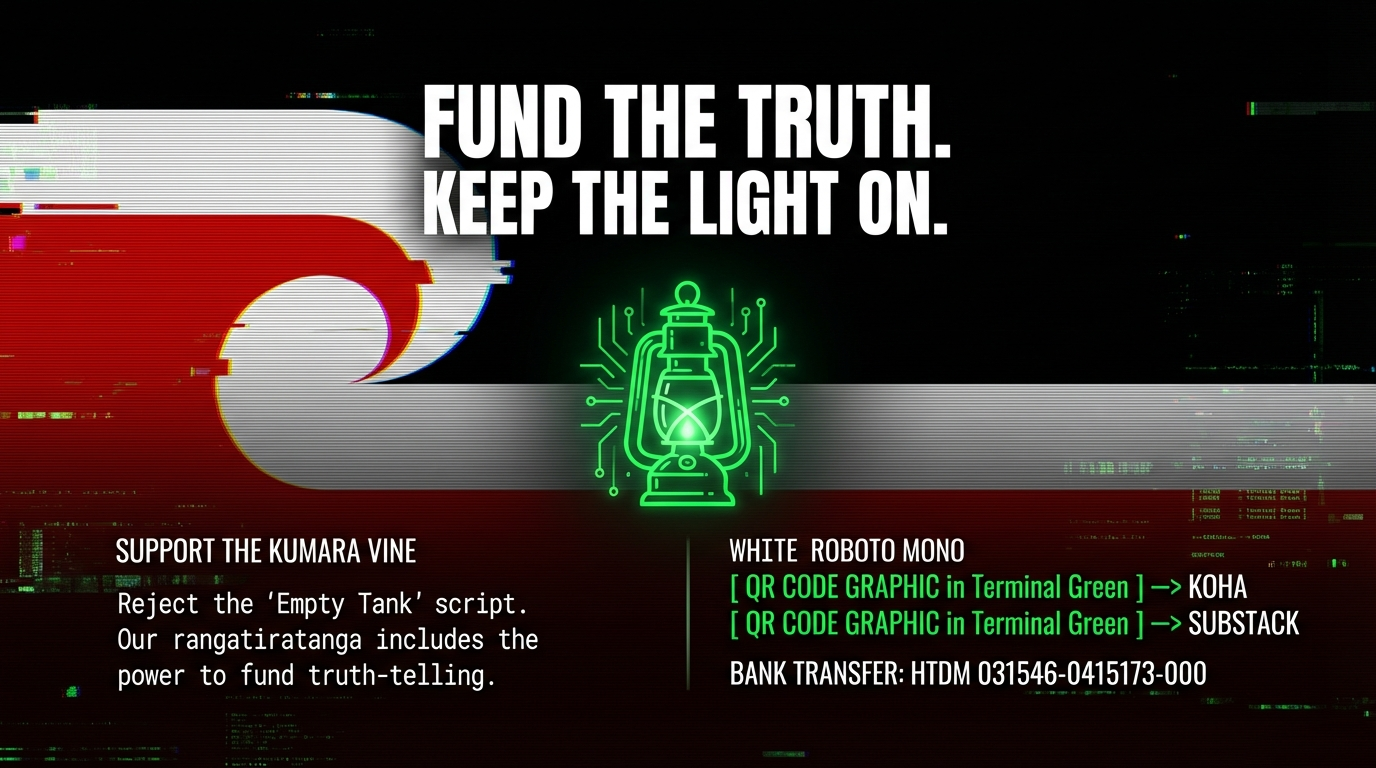
Three pathways exist:
For those who wish to support this mahi directly with a koha (voluntary contribution), please visit the Koha platform:
Koha—Support – Koha: The Māori Green Lantern – fighting misinformation and disinformationFor those who wish to receive essays directly and support through subscription, join the Substack community:
Subscribe to the Māori Green Lantern on Substack – The Māori Green Lantern on SubstackFor those who prefer direct bank transfer, account details are: HTDM, account number 031546-0415173-000.

Ivor Jones The Māori Green Lantern Fighting Misinformation And Disinformation From The Far Right