“Willie Jackson's Colonial Deflection” - 15 September 2025
How Labour's Attack Dog Serves White Power While Betraying Māori Liberation
Tēnā koe, e te whānau. Kia ora katoa.
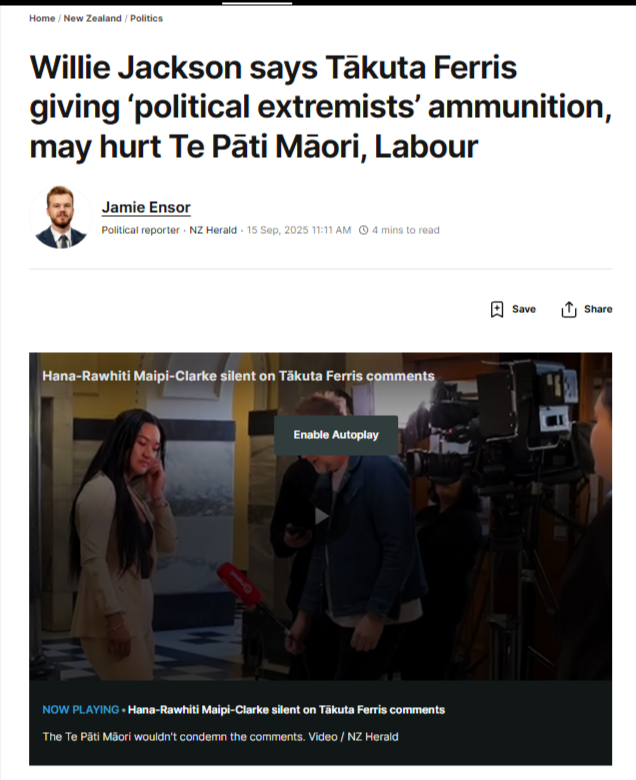
The colonial script writes itself with predictable precision. When Te Pāti Māori MP Tākuta Ferris dared to challenge the white settler narrative about who belongs in Māori political spaces, Willie Jackson emerged as Labour's designated attack dog, wielding the language of inclusion to mask a deeper betrayal of Māori tino rangatiratanga.
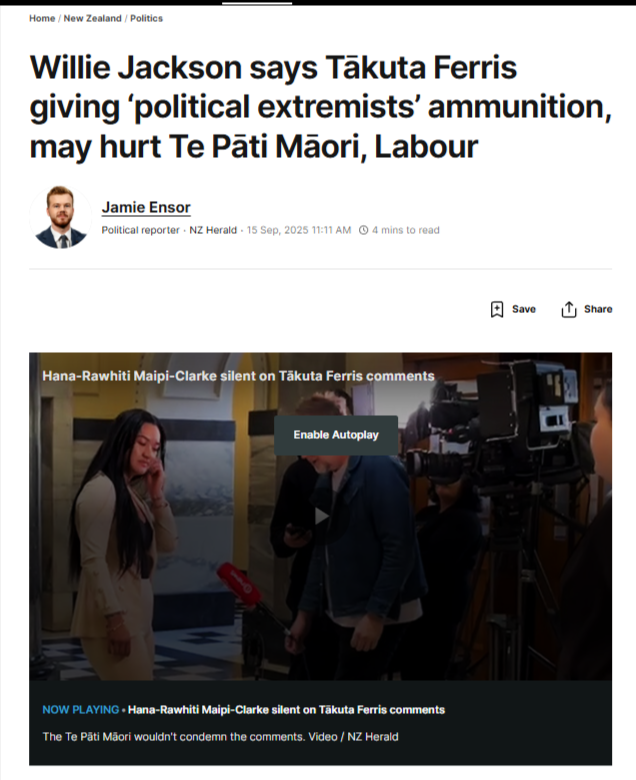
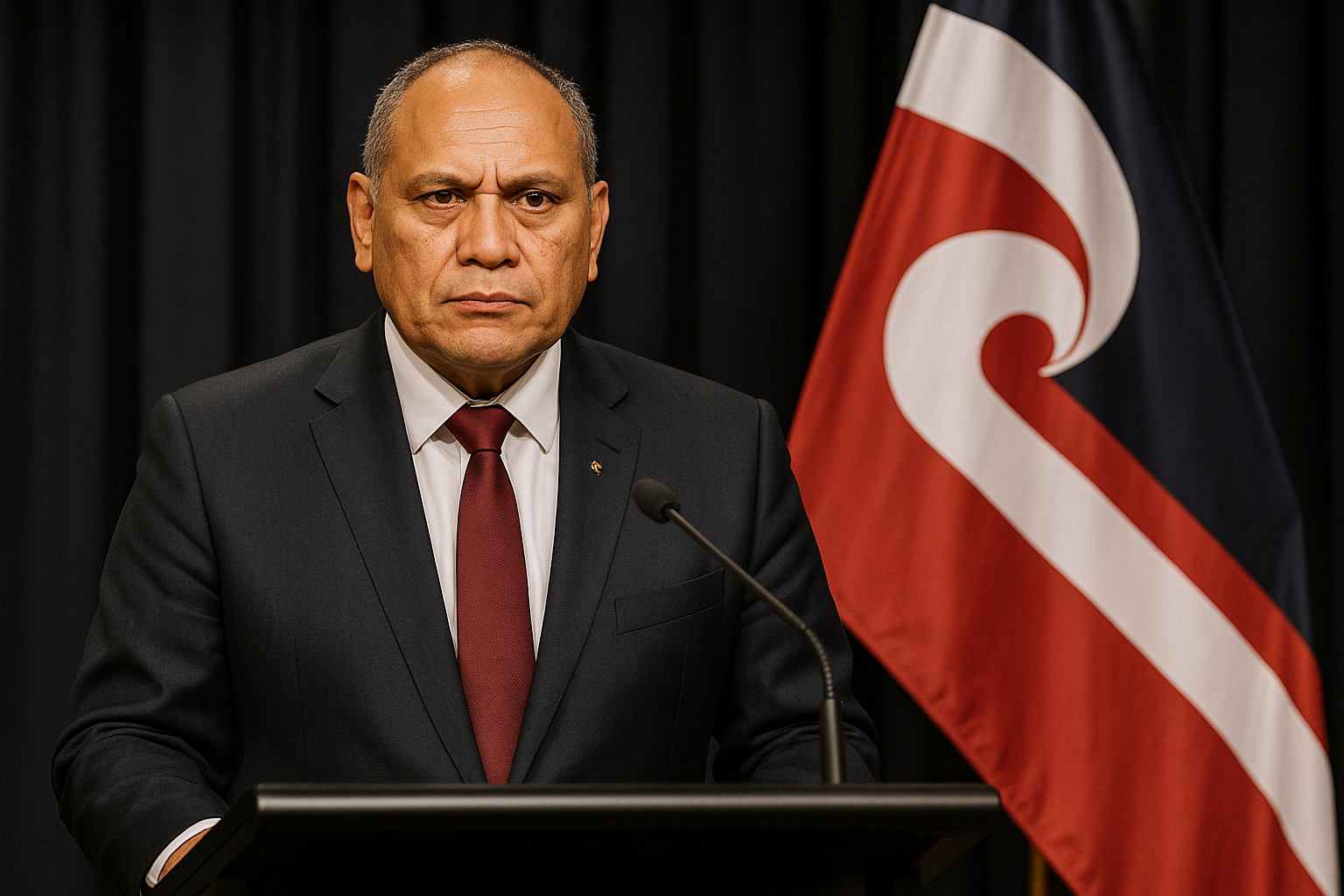
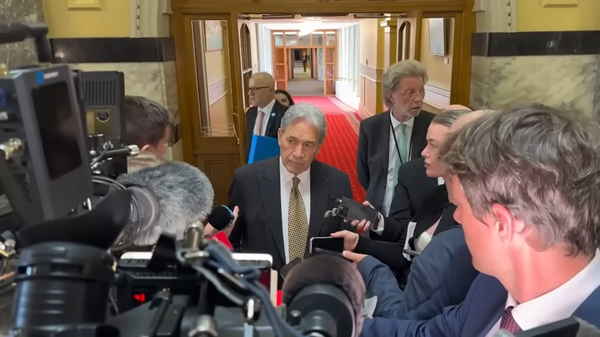
Willie Jackson, Labour's Māori caucus co-chair, responding to the crisis
Jackson's response to Ferris's comments about "Indians, Asians, Black and Pākehā campaigning to take a Māori seat from Māori" reveals the insidious nature of colonial conditioning within our own ranks. Rather than engaging with the substantive question of Māori political self-determination, Jackson deployed the master's tools of racial deflection and liberal performativity to silence legitimate concerns about the erosion of Māori political spaces.
Background: The Architecture of Colonial Control
The Māori seats were established in 1867 not as a gift from benevolent colonizers, but as a calculated political manoeuvre to manage Māori resistance while appearing to offer representation. These seats exist as tangible acknowledgment that Māori, as tangata whenua, possess distinct political rights under Te Tiriti o Waitangi that cannot be dissolved into the homogenizing myth of "one people, one law."
Willie Jackson, co-chair of Labour's Māori caucus, occupies a precarious position within this colonial framework. As a former trade union organizer and broadcaster who built his reputation championing Māori rights, Jackson's transformation into Labour's chief enforcer of multicultural orthodoxy represents a masterclass in how the colonial system co-opts and neutralizes Indigenous resistance.
The Crisis Unfolds: A Timeline of Colonial Violence
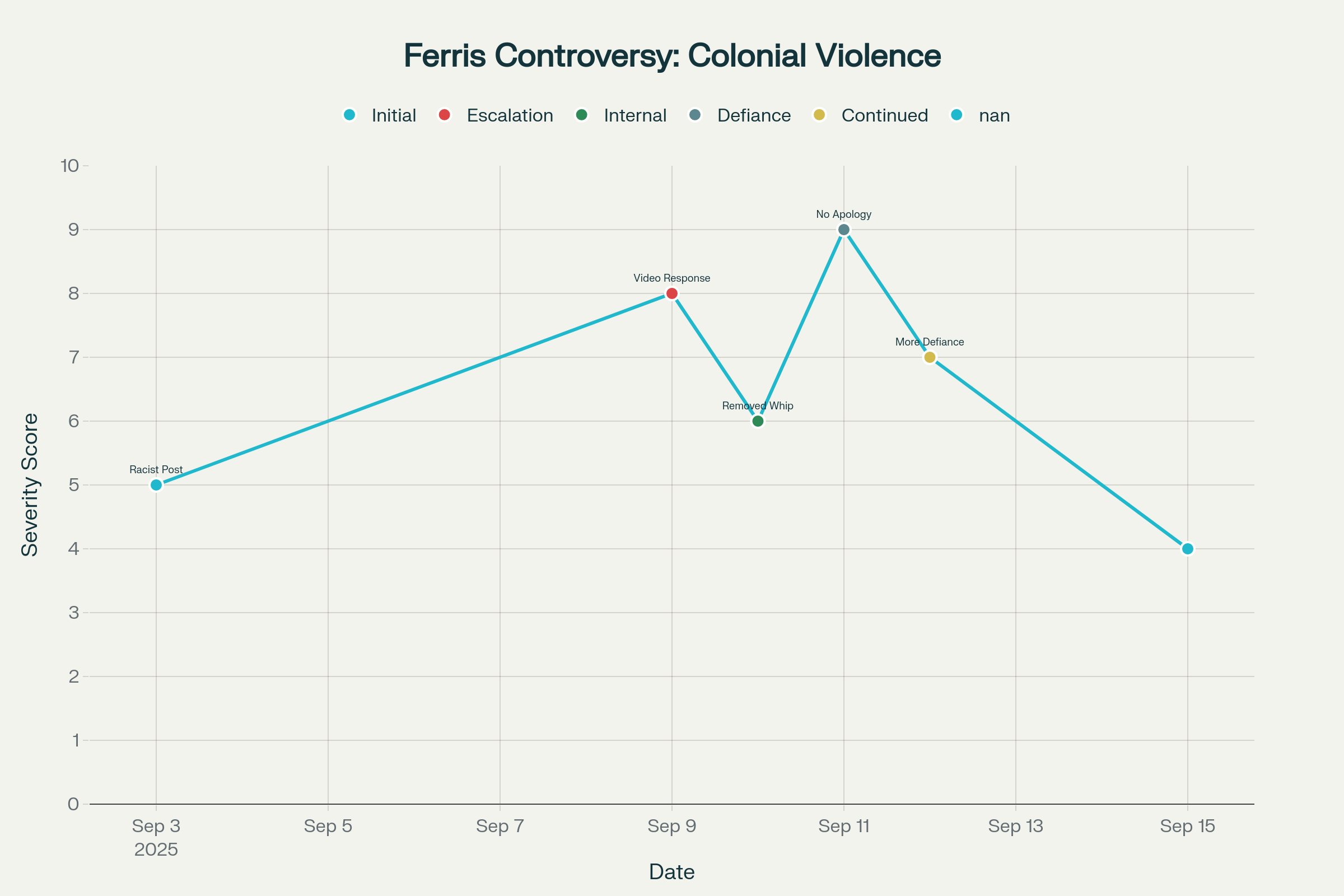
Timeline showing the escalation of Tākuta Ferris's racist comments and the subsequent political fallout, revealing how colonial violence manifests in contemporary politics
The controversy erupted on September 3, 2025, when Ferris posted on Instagram criticizing Labour's campaign strategy, questioning the appropriateness of non-Māori volunteers campaigning in a Māori electorate. Rather than engaging substantively with this concern about the integrity of Māori political representation, the colonial media machine immediately weaponized the post, framing it through the lens of liberal racism discourse.
When Te Pāti Māori leadership initially apologized for Ferris's comments, they revealed their own capture by colonial respectability politics. But Ferris refused to be silenced, doubling down in an eight-minute video that articulated a sophisticated critique of how Labour's multicultural approach serves to "homogenize Māori as just another minority group" rather than recognizing tangata whenua status.
The timing of this crisis was not coincidental. Coming after the recent death of beloved Te Pāti Māori MP Takutai Tarsh Kemp, the party was already grieving and vulnerable. Kemp's passing had triggered the Tāmaki Makaurau by-election that saw Te Pāti Māori's Oriini Kaipara defeat Labour's Peeni Henare, a result that clearly rattled Labour's Māori caucus and their dreams of reclaiming the Māori seats.
Jackson's Colonial Conditioning: The Master's Voice
Willie Jackson's response demonstrated how thoroughly the Labour Party has internalized colonial logic about race and representation. His Facebook post attacking Ferris deployed every weapon in the liberal anti-racism arsenal: claims of "hurtful comments attacking migrant Kiwis," accusations of racism, and most insidiously, the suggestion that Ferris was providing "ammunition" to "political extremists on the Right."
This last point reveals Jackson's fundamental misunderstanding of power dynamics in settler colonial societies. The real political extremists are not fringe groups but the mainstream institutions that perpetuate colonial dominance through seemingly progressive policies. When Jackson positions himself as defending "migrant Kiwis" against Māori political assertions, he becomes complicit in the very systems that marginalize both groups while maintaining Pākehā hegemony.
Jackson's claim that Ferris was practicing "racism" demonstrates a profound confusion about how racism functions in settler colonial contexts. Racism is not simply prejudice plus power; it is a system of domination that maintains white supremacy by fragmenting resistance movements and turning oppressed groups against each other. When Māori assert political boundaries around Māori spaces, this is not racism but the exercise of Indigenous sovereignty.
The Power Plays: Tamihere's Shadow and Labour's Desperation
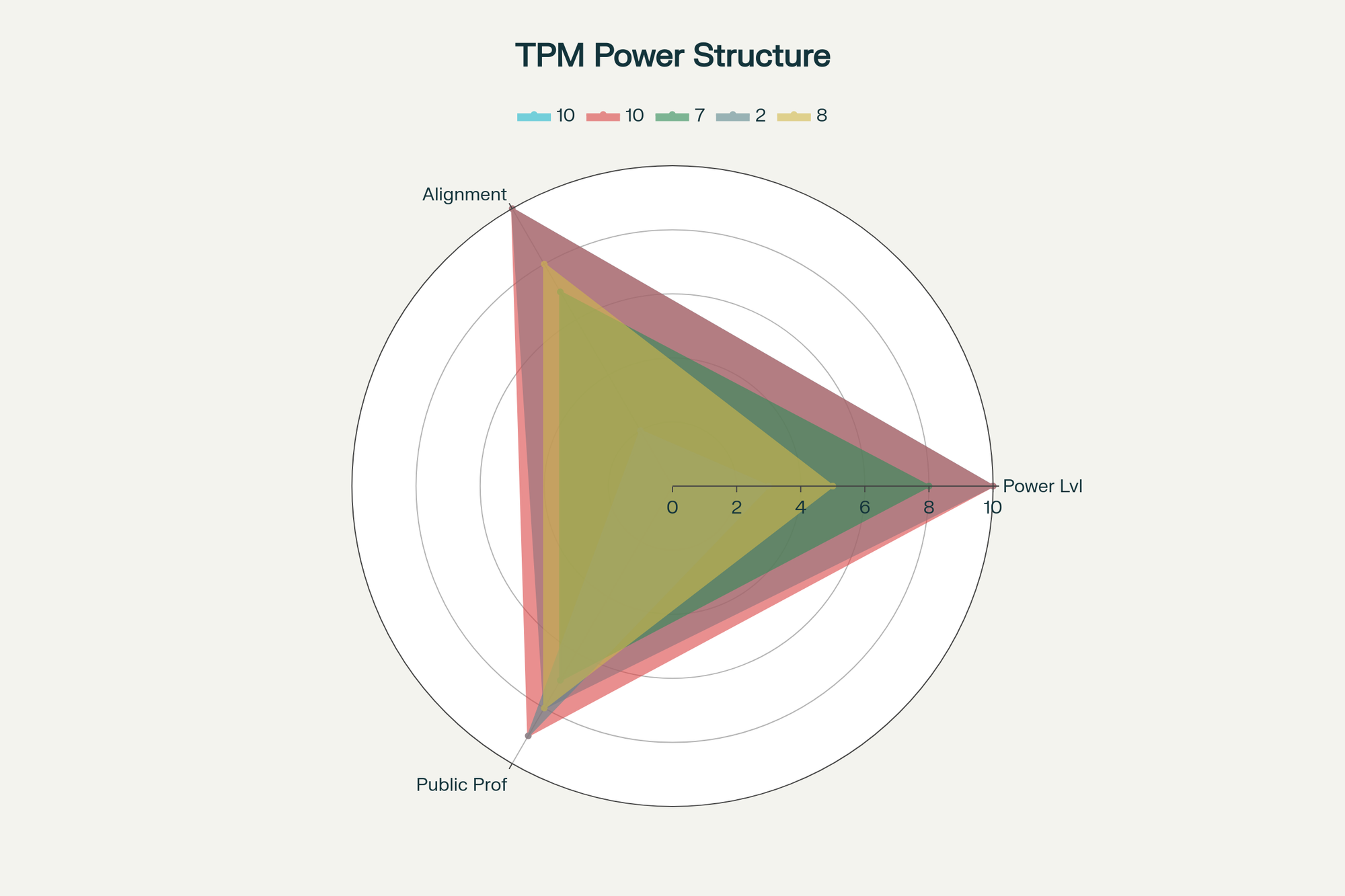
Power dynamics within Te Pāti Māori reveal how Ferris's rebellion exposes deep fractures in party unity and John Tamihere's behind-the-scenes influence
Behind the public drama lies a more complex power struggle within Te Pāti Māori itself. Reliable sources indicate a significant split between MPs aligned with party president John Tamihere and those loyal to co-leaders Debbie Ngarewa-Packer and Rawiri Waititi. The sudden removal of Mariameno Kapa-Kingi as party whip represents just the visible tip of this internal struggle.
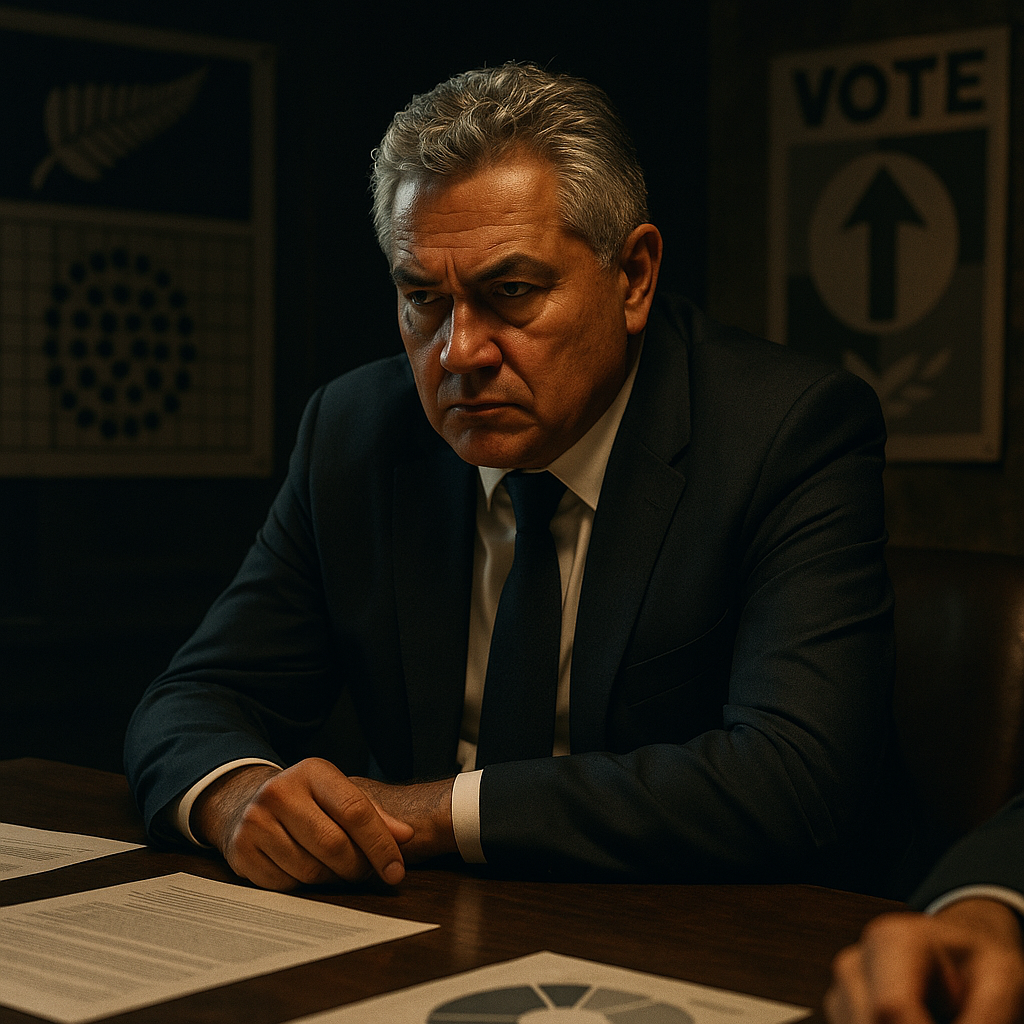
John Tamihere's shadow influence over Te Pāti Māori
Tamihere, the former Labour cabinet minister who was once touted as a potential Prime Minister, brings considerable political experience and institutional knowledge to his role as party president. His alignment with Ferris suggests a more hard-line approach to Māori political independence that challenges the accommodating stance preferred by the co-leaders. This internal tension reflects broader debates within Māori political movements about how to navigate the treacherous waters of settler colonial politics.
Labour's desperation becomes clearer when viewed through the lens of electoral mathematics. Chris Hipkins has already signaled that Te Pāti Māori is not guaranteed a place in any future left-wing coalition, using Ferris's comments as justification for potential exclusion. This represents a calculated political gambit designed to pressure Te Pāti Māori into submission while positioning Labour as the "reasonable" Māori political option.
Media Manipulation: The Colonial Propaganda Machine
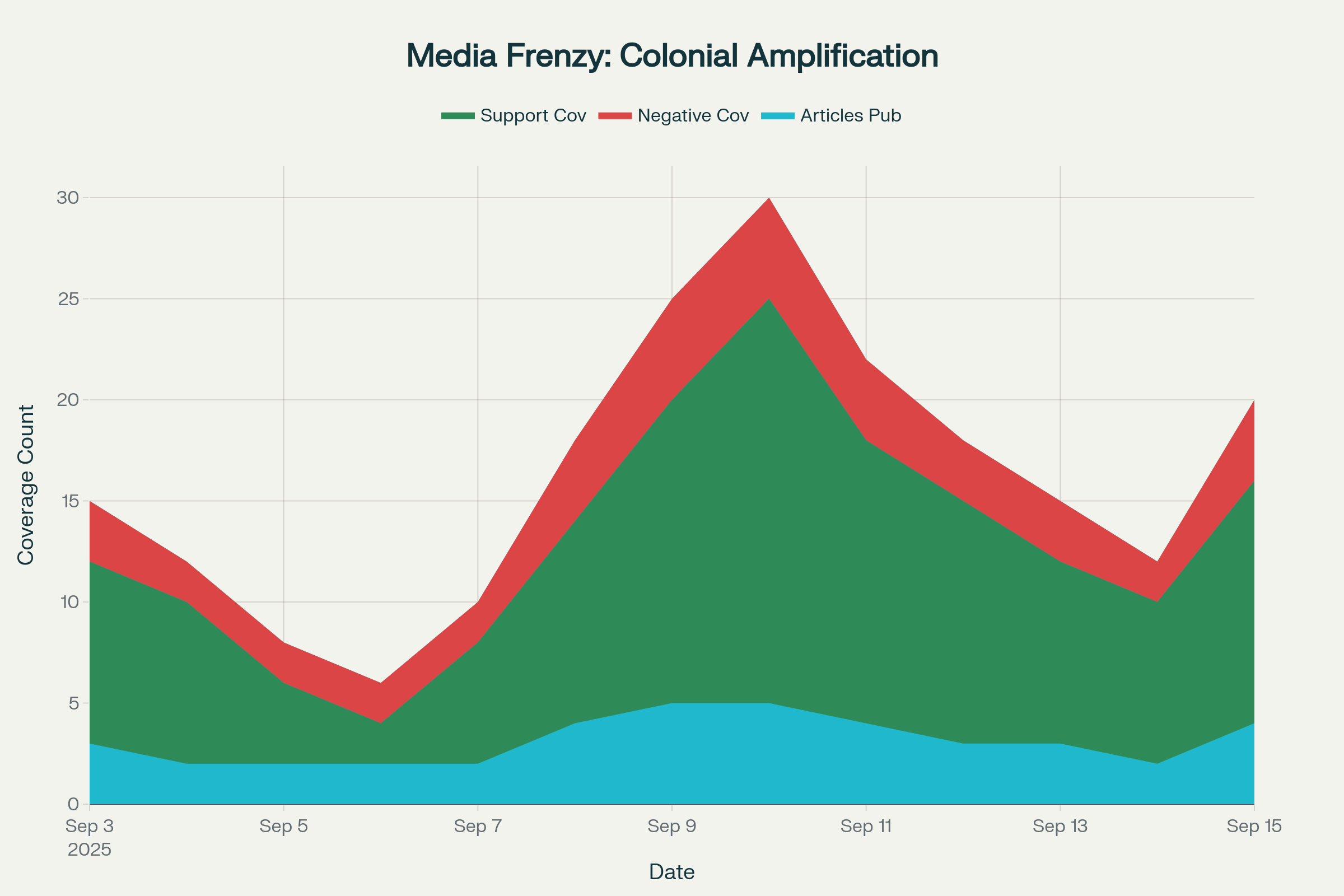
Media coverage reveals how colonial outlets weaponize Māori internal conflicts to undermine Indigenous political movements and reinforce white supremacist narratives
The colonial media's response to the Ferris controversy followed a predictable pattern of amplification and distortion. From September 9-11, negative coverage peaked, with outlets like the New Zealand Herald, RNZ, and Stuff producing dozens of articles that consistently framed Ferris as an unreasonable extremist while positioning Jackson as the voice of moderation and inclusion.
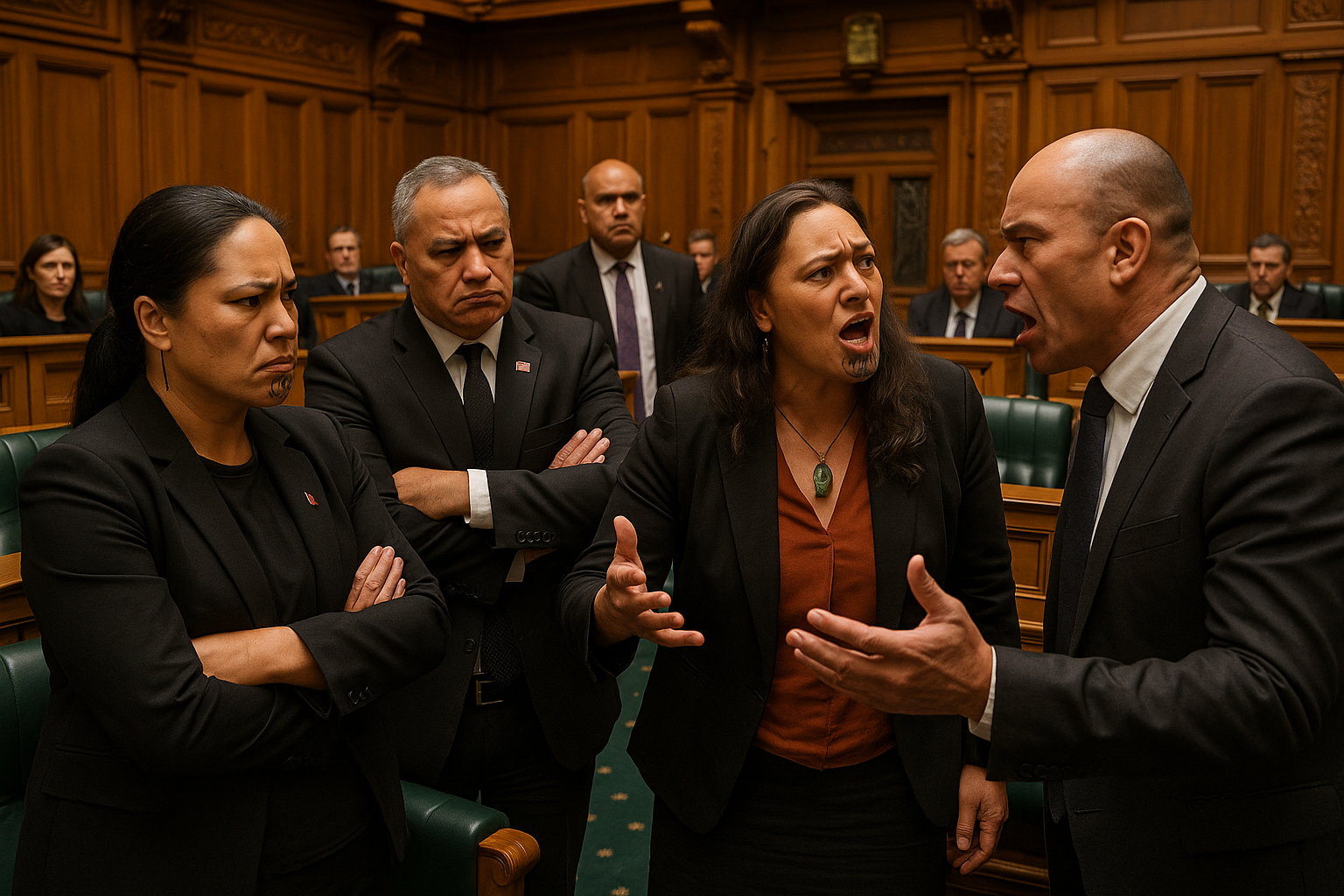
Te Pāti Māori caucus showing signs of internal fracture
This media frenzy serves multiple functions within the colonial system. First, it reinforces the narrative that Māori political assertion is inherently divisive and dangerous. Second, it fragments potential solidarity between Māori and other marginalized communities by presenting their interests as fundamentally opposed. Third, it provides cover for Labour's rightward drift on issues of Māori rights by making Jackson appear as a defender of progressive values.
The use of terms like "racist" to describe Ferris's comments reveals how colonial discourse weaponizes anti-racism rhetoric against Indigenous political movements. When the same media outlets consistently ignore or minimize actual racist attacks on Māori from right-wing politicians and activists, their sudden concern about "racism" becomes transparently selective and politically motivated.
The Far-Right Connection: How Colonial Violence Operates
Jackson's warning that Ferris was providing "ammunition" to political extremists reveals a fundamental misunderstanding of how far-right movements operate in Aotearoa. The real extremists are not fringe groups but mainstream political forces that use anti-co-governance campaigns and Treaty denialism to maintain colonial dominance.
Julian Batchelor's Stop Co-Governance movement represents the overt face of this extremism, but its rhetoric about "one law for all" and opposition to Māori political representation finds echoes in mainstream political discourse. When Jackson positions himself as defending multicultural inclusion against Māori political assertion, he inadvertently reinforces these same colonial logics.
The rise of "Māori MAGA" movements demonstrates how far-right propaganda can infiltrate Indigenous communities by exploiting legitimate grievances about colonial oppression while redirecting anger toward other marginalized groups rather than the colonial system itself. Jackson's response to Ferris mirrors these dynamics by channeling legitimate concerns about Māori political representation into acceptable liberal discourse about inclusion and diversity.
The Deeper Betrayal: Assimilation as Violence
What makes Jackson's intervention particularly damaging is how it reinforces the colonial project of assimilation through seemingly progressive language. By positioning Māori political assertion as divisive racism while promoting multicultural inclusion as enlightened cooperation, Jackson becomes complicit in the erasure of Indigenous political difference.
The concept of tino rangatiratanga - Māori self-determination - cannot be reduced to diversity and inclusion within existing colonial structures. When Jackson argues that Māori identity is "shaped by everyone we include", he fundamentally misunderstands the nature of Indigenous sovereignty, which is based on distinct political rights and relationships that predate and supersede colonial political arrangements.
This assimilationist logic serves the colonial project by dissolving Māori political distinctiveness into the homogenizing myth of multicultural New Zealand. It transforms legitimate questions about the integrity of Māori political spaces into moral panics about racism and exclusion, making it impossible to have substantive discussions about Indigenous political rights without being labeled as extremist or divisive.
The Labour Plantation: How the Party System Captures Māori Leadership
Jackson's role within Labour reveals how the Westminster parliamentary system functions as a mechanism for capturing and neutralizing Indigenous political leadership. As co-chair of Labour's Māori caucus, Jackson occupies a position that appears to offer Māori political influence while actually constraining Māori political possibilities within acceptable colonial parameters.
The very existence of a separate "Māori caucus" within Labour reveals the party's inability to integrate Māori perspectives into its broader political program. Instead, Māori issues are ghettoized into a separate structure that can be managed and controlled by the party leadership when necessary. Jackson's attack on Ferris demonstrates how this structure functions in practice - Māori leaders within Labour are expected to police other Māori who step outside acceptable boundaries.
This dynamic explains why Labour has consistently failed to deliver meaningful change for Māori despite decades of promises and good intentions. The party's commitment to maintaining colonial structures ultimately trumps any genuine commitment to Māori liberation, leaving Māori MPs like Jackson in the impossible position of defending the indefensible while claiming to represent Māori interests.
Implications: The Colonial Divide and Conquer Strategy
The Ferris controversy serves multiple functions within the broader colonial strategy of divide and conquer. By positioning Māori political assertion as a threat to other marginalized communities, it prevents the formation of genuine solidarity relationships based on shared opposition to colonial domination. Instead, it creates a competition for resources and recognition within the existing colonial framework.
This strategy has deep historical roots in colonial policy. From the Native Land Court system that pitted Māori against each other over land ownership to contemporary diversity and inclusion policies that fragment resistance movements into competing identity categories, the colonial system has consistently used division as a mechanism of control.
Jackson's intervention in the Ferris controversy demonstrates how this strategy operates in contemporary politics. Rather than building solidarity between Māori and other marginalized communities based on shared opposition to white supremacy, it creates artificial conflicts that serve the interests of the colonial elite while leaving all marginalized communities weaker and more vulnerable.
The impact on Te Pāti Māori has been significant. The party's internal divisions have been exposed and exploited, with Kapa-Kingi's removal as whip representing just one visible manifestation of deeper struggles over political direction and strategy. The controversy has also provided Labour with a convenient excuse to distance itself from Te Pāti Māori while claiming the moral high ground.

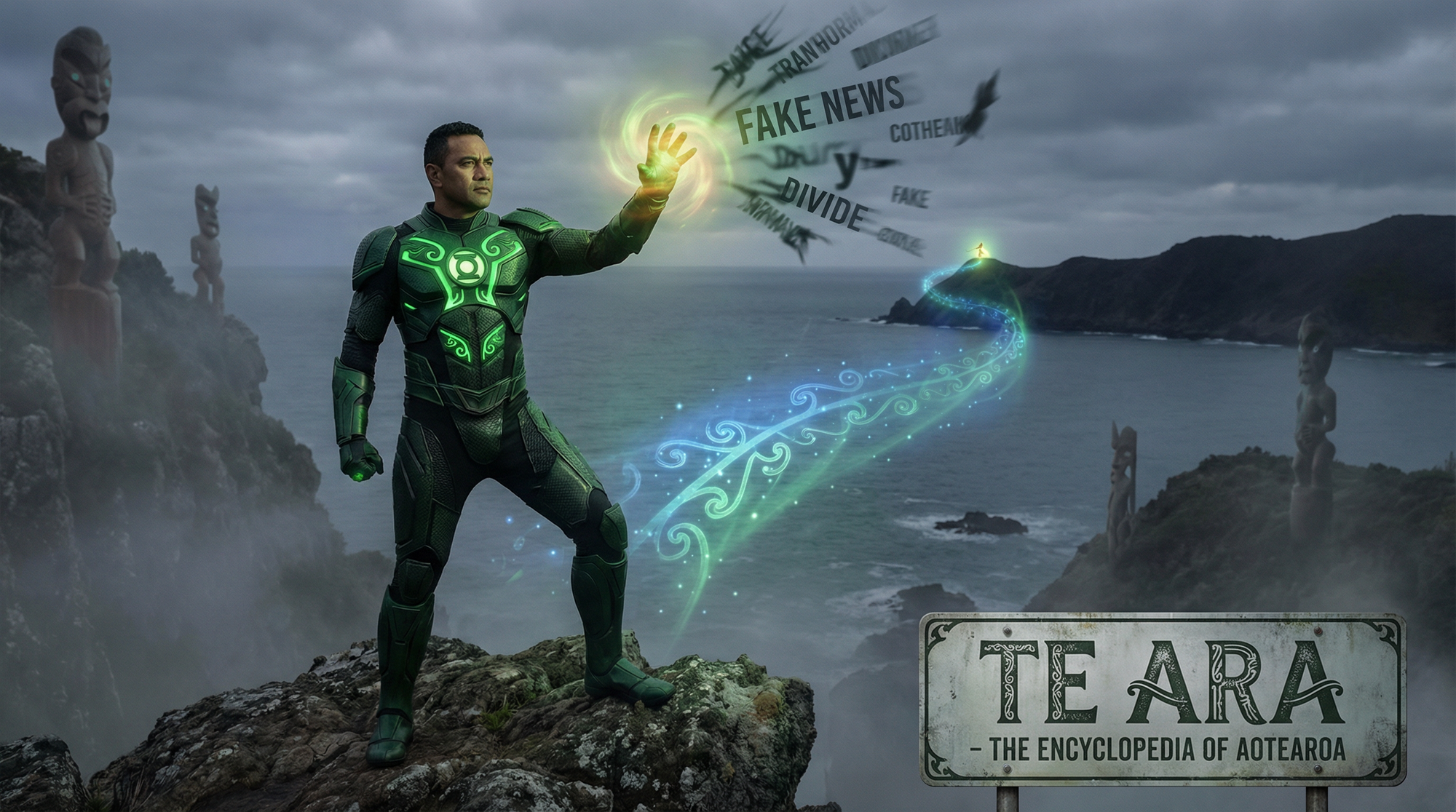
The Māori Green Lantern Fighting Misinformation And Disinformation From The Far Right
Reclaiming the Narrative of Liberation
The Willie Jackson-Tākuta Ferris controversy reveals the fundamental contradictions within New Zealand's colonial democracy. When Māori assert political boundaries around Māori spaces, they are immediately labeled as racist and divisive. When they accommodate colonial demands for inclusion and diversity, they are praised as reasonable and moderate while their political effectiveness is neutralized.
The path forward requires rejecting this false choice between assimilation and isolation. True Māori liberation cannot be achieved within the existing colonial framework, regardless of how many Māori MPs occupy positions within colonial institutions. Instead, it requires the development of independent Māori political institutions that can articulate and advance Māori interests without compromising with colonial power structures.
Jackson's betrayal of Ferris represents more than a tactical disagreement about political messaging. It represents a fundamental choice between accommodation and liberation, between respectability and resistance, between maintaining colonial legitimacy and challenging colonial power. His decision to side with colonial institutions against Māori political assertion reveals the limitations of seeking change from within systems designed to prevent that change.
The real extremists in this controversy are not Te Pāti Māori MPs asserting Indigenous political rights, but the colonial institutions and their Māori enablers who use the language of inclusion and diversity to maintain white supremacist control. Until we can name this reality clearly and build political alternatives that transcend colonial limitations, we will continue to witness the spectacle of Māori leaders attacking other Māori leaders in service of their colonial masters.
Kia kaha, kia māia, kia manawanui. The struggle for tino rangatiratanga continues, and it requires the courage to speak truth to power, even when that power wears a friendly Māori face.
For those who find value in my work exposing colonial manipulation and white supremacist narratives, please consider supporting this kaupapa with a koha to HTDM: 03-1546-0415173-000. The Māori Green Lantern understands these are challenging economic times for whānau, so please only contribute if you have the capacity and wish to do so.
Ngā mihi nui,
Ivor Jones - Te Māori Green Lantern