“Willis' Economic Incompetence Exposed: Douglas Demands Resignation as New Zealand Plunges Into Crisis” - 18 September 2025
Finance Minister Nicola Willis faces a devastating revolt from her own party's economic architects as New Zealand's economy implodes under her stewardship, with the country posting the worst quarterly
Finance Minister Nicola Willis surrounded by mounting economic challenges
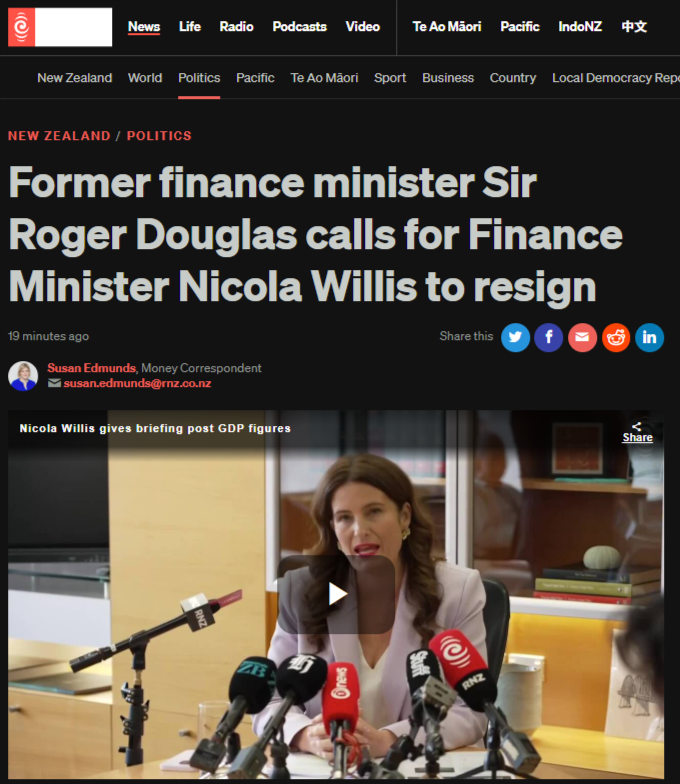
Sir Roger Douglas, the legendary architect of New Zealand's economic transformation in the 1980s, has delivered a brutal assessment that should send shockwaves through the corridors of power: Nicola Willis is "not up to the job" and must resign immediately. This isn't just political theater—it's an economic emergency being orchestrated by a Finance Minister who has fundamentally failed to grasp the magnitude of the crisis engulfing ordinary New Zealanders.

Former Finance Minister Sir Roger Douglas delivering his scathing critique
The Devastating Numbers Don't Lie
The brutal reality hit New Zealand like a sledgehammer on September 18, 2025, when Stats NZ revealed the economy contracted by a staggering 0.9 percent in the June quarter—more than double what economists had predicted and significantly worse than the Reserve Bank's forecasts. This isn't just another disappointing figure; it represents the deepest and most prolonged economic downturn since the Global Financial Crisis, with New Zealand now suffering through a recession that has been longer and sharper than the 2008-2009 crisis.
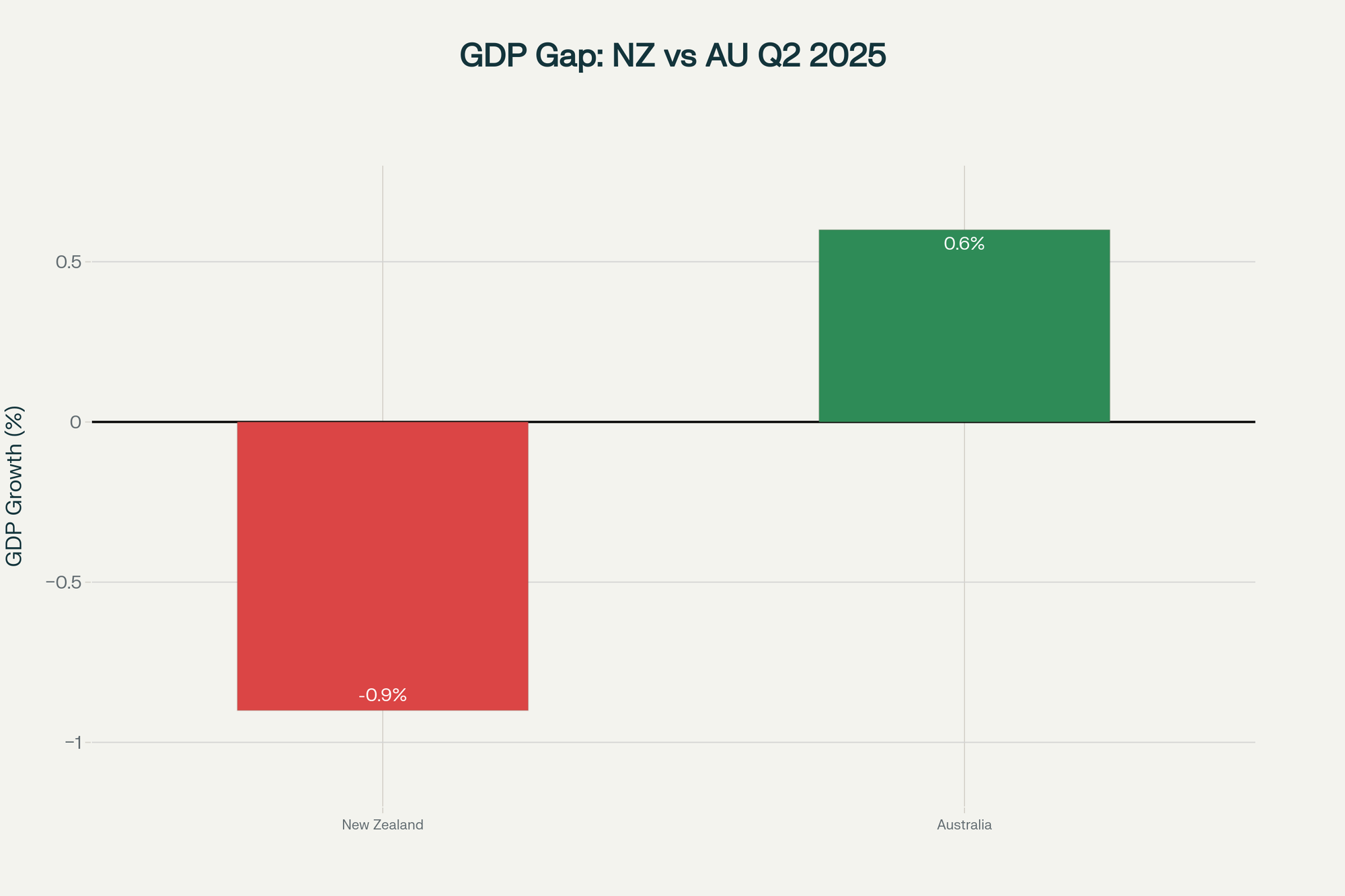
New Zealand's economy contracted 0.9% while Australia grew 0.6% in the same quarter, highlighting the severity of New Zealand's economic mismanagement
While Willis scrambles to deflect blame onto "global uncertainty" and Trump's tariffs, the data reveals the shameful truth about New Zealand's economic isolation. Australia's economy grew by 0.6 percent in the same quarter, exposing Willis' pathetic excuses as nothing more than political spin designed to hide her catastrophic mismanagement.
Douglas and MacCulloch Expose the Accounting Tricks
The condemnation from Douglas carries devastating weight because it comes alongside University of Auckland's Matthew Abel Chair of Macroeconomics, Professor Robert MacCulloch—a respected economist who previously worked at the Reserve Bank. Their joint statement pulls no punches: Willis is "sending New Zealand bankrupt by failing to get to grips with our ballooning fiscal deficits and public debt".
MacCulloch's analysis cuts through Willis' deceptive rhetoric with surgical precision. When Willis claims New Zealand is returning to surplus, MacCulloch responds: "The books are not improving. And this surplus she talked about today, that's a creative accounting trick. She changed the way the accounts were being measured". This isn't mere political disagreement—it's an expert economist calling out fundamental dishonesty in how the government presents its financial position to the public.
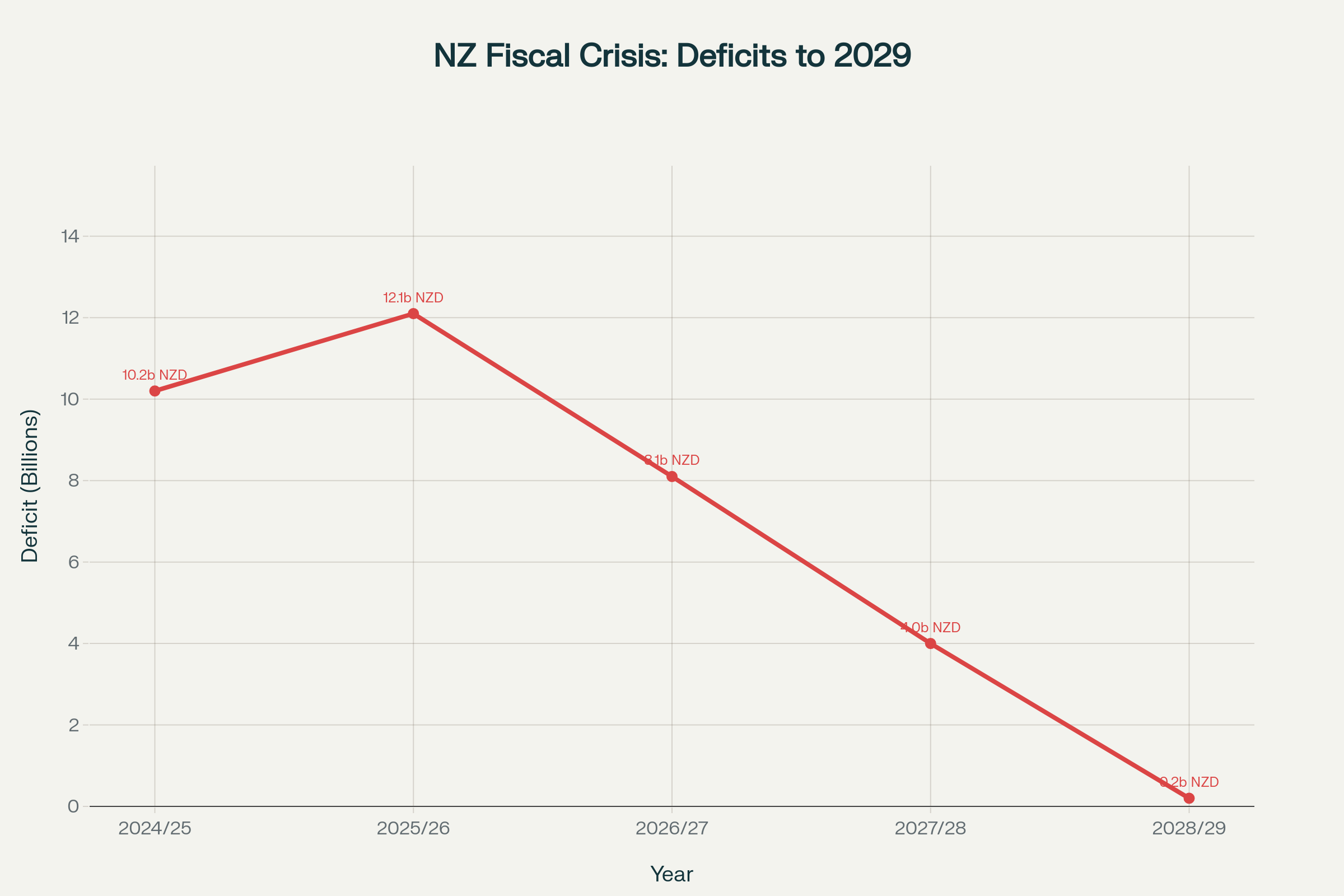
Treasury projections show New Zealand's fiscal deficit will peak at $12.1 billion (2.6% of GDP) in 2025/26 before slowly declining to a tiny surplus
The Hidden Fiscal Catastrophe Treasury Doesn't Want You to See
The Treasury's own long-term fiscal forecasts, which Willis desperately tries to ignore, paint a terrifying picture of "out-of-control deficits due to pensions and health-care spending from an ageing population". These aren't distant theoretical problems—they're looming fiscal disasters that Willis refuses to acknowledge, let alone address.
The current deficit projections show New Zealand's fiscal position deteriorating rapidly, with the deficit reaching $12.1 billion (2.6% of GDP) in 2025/26—a massive increase from earlier forecasts. Despite Willis' claims of returning to surplus, the Treasury projects only a wafer-thin surplus of just $200 million by 2028/29, leaving New Zealand with virtually no fiscal buffer for future crises.
Treasury's analytical notes reveal the devastating long-term reality: by 2061, superannuation costs alone could absorb 50% of GDP, while healthcare spending faces "substantial increases" as New Zealand's aging population demands more services from a shrinking workforce.
The Manufacturing Collapse Willis Ignores
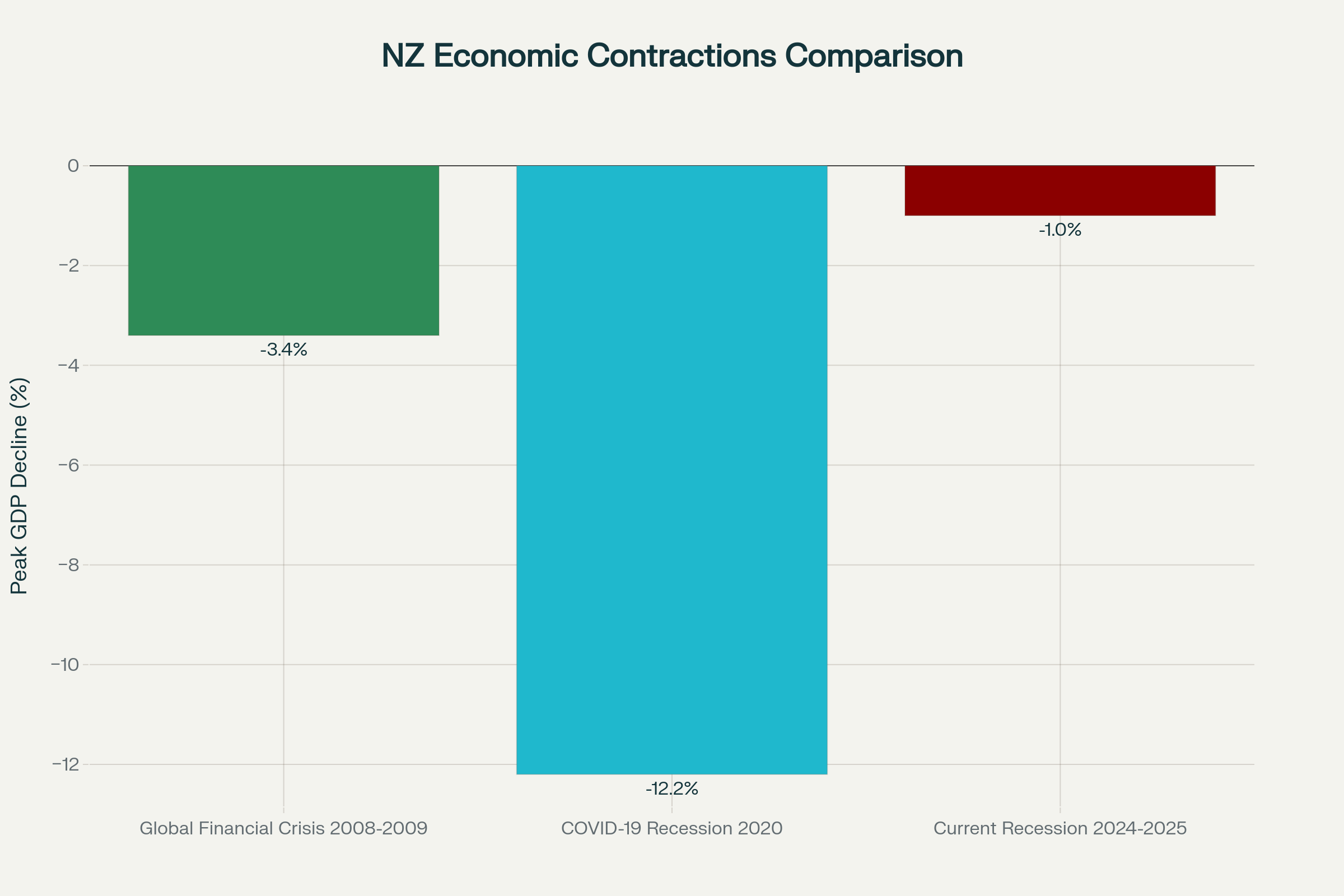
While the current recession shows smaller peak declines than previous crises, its per-capita impact has been deeper and more prolonged than the Global Financial Crisis
Behind the headline GDP figures lies an economic catastrophe Willis refuses to acknowledge. Manufacturing plunged 3.5 percent in the June quarter, with transport equipment and machinery manufacturing collapsing by 6.2 percent. Construction activity dropped 1.8 percent, while food and beverage manufacturing declined 2.2 percent, reflected in decreased export volumes for meat products.
This broad-based contraction affected 10 out of 16 industries, demonstrating that Willis' policies have failed across multiple sectors simultaneously. The Employers and Manufacturers Association described the result as a "knock at the wrong time", warning that even though signs of improvement might be emerging, the data "still sends a negative signal to businesses that are already cautious about investing and hiring".
Willis' Pathetic Blame Game Exposed
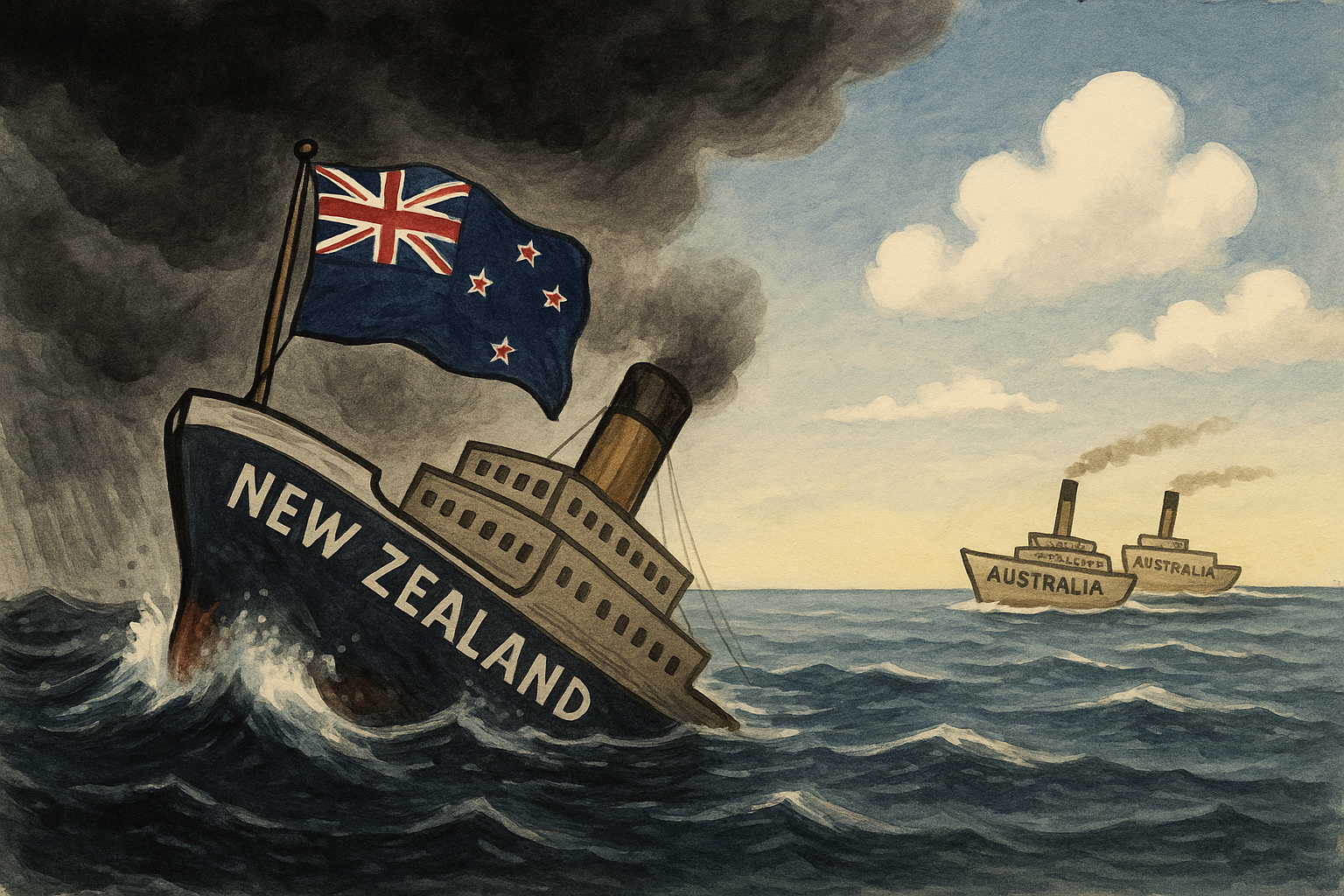
New Zealand's economic isolation as neighboring economies remain stable
When confronted with these catastrophic numbers, Willis resorted to the classic politician's playbook: blame everyone else. Her claim that Trump's tariffs "had the stuffing knocked out of" the New Zealand economy is not just intellectually dishonest—it's insulting to New Zealanders' intelligence.
MacCulloch demolished this excuse with devastating effectiveness: "She mentioned the tariffs hitting much harder here - that makes no sense at all. In fact, most countries overseas had far higher tariff uncertainty than New Zealand". Labour's deputy leader Carmel Sepuloni drove the point home by noting that Australia's economy grew 0.6 percent over the same period, asking pointedly: "Where to next, you know? Is it the fault of the butcher, the baker, the candlestick maker, but not Nicola Willis?"
The Roger Douglas Connection: A Pattern of Economic Betrayal
The significance of Douglas' intervention cannot be overstated. As the architect of "Rogernomics" in the 1980s, Douglas transformed New Zealand from an economic basket case into a competitive, modern economy. His criticism carries the weight of someone who actually succeeded in fixing New Zealand's economic problems when others failed.
But there's a deeper, more troubling connection here. Douglas has become increasingly critical of ACT, the party he co-founded, because it has abandoned his comprehensive reform agenda. Douglas had planned "two sets of reforms"—the first benefited the wealthy and big business, while the second was meant to implement flat taxes, benefit reform, and what he called a form of Universal Basic Income to help ordinary New Zealanders. When David Lange stopped Douglas' reforms with his famous "cup of tea" pause, the second tranche never happened, leaving New Zealand with "GST AND high taxes" while the wealthy kept their gains.
This historical betrayal helps explain Douglas' fury with Willis. He sees her as repeating the same pattern—implementing policies that protect the comfortable while ordinary Kiwis suffer through the worst economic downturn in decades.
The Hidden Connections: Treasury's Long-Term Warnings Ignored
Treasury documents reveal a pattern of willful blindness from Willis that stretches back months. The Pre-Strategy Letter from June 2024 warned Willis that "getting the Government's books back in order cannot be achieved through a single Budget; it requires a sustained, collective effort". Yet Willis has consistently ignored these warnings, preferring to focus on short-term political messaging rather than addressing structural fiscal problems.
Treasury's Long-term Fiscal Statements have repeatedly warned about the unsustainability of current policies, with officials stating that "there is no silver bullet solution to address fiscal sustainability" and that "a suite of changes will be required". Willis has responded to these warnings by changing accounting methods rather than addressing the underlying problems—exactly the kind of creative accounting MacCulloch has exposed.
The Human Cost of Willis' Economic Vandalism
While Willis plays accounting games and blames external factors, real New Zealanders are paying the price for her incompetence. GDP per capita fell 1.1 percent during the June quarter, marking the eighth consecutive quarterly fall. This means ordinary Kiwis are getting poorer every quarter under Willis' stewardship.
The unemployment implications are equally devastating. Economists warn that without dramatic policy changes, unemployment could rise to 5.8 percent or higher, destroying thousands of jobs and forcing more New Zealanders to emigrate in search of better opportunities.
Business confidence remains shattered as companies postpone investment and hiring decisions in the face of continued economic uncertainty. The construction industry, already down 1.8 percent in the quarter, faces further contractions as housing market weakness persists.
International Humiliation: New Zealand's Economic Isolation Exposed
The international comparison data makes Willis' failure even more humiliating. While New Zealand's economy contracts, Australia achieved solid 0.6 percent growth in the same quarter, with household spending increasing 0.9 percent and annual inflation falling to its lowest level since 2021.
Australia's GDP grew 1.8 percent annually compared to New Zealand's 0.6 percent contraction, demonstrating that Willis' excuses about global conditions are nothing more than desperate attempts to deflect responsibility for her policy failures.
Even more damaging, New Zealand's income growth ranks among the worst in the world, with the country placing 25th out of 43 countries for real GDP per capita growth when adjusted for purchasing power parity. This isn't just poor performance—it's a national embarrassment that reflects fundamental policy failures.
The Austerity Trap: Willis' Ideological Blindness
Willis' response to the economic crisis reveals dangerous ideological blindness that threatens to deepen the recession. While Australia and other countries maintain supportive fiscal policies, Willis has imposed austerity measures that economists warn will extend the downturn. Treasury's own analysis shows that fiscal policy is tighter than in the preceding year, meaning Willis is actively making the recession worse through inappropriate policy choices.
The operating allowance for Budget 2025 was slashed from $2.4 billion to $1.3 billion—similar to levels immediately following the Global Financial Crisis. This fiscal retrenchment comes at exactly the wrong time, when the economy needs support to recover from the deepest per-capita recession since the GFC.
Douglas' Ultimate Verdict: "Not Up to the Job"
Douglas' final assessment delivers the crushing verdict that Willis and the National Party cannot escape: "Willis is not up to the job and is not levelling with the New Zealand public". This isn't political rhetoric—it's a professional assessment from New Zealand's most successful economic reformer that the current Finance Minister lacks both the competence and honesty required for the role.
The timing of Douglas' intervention, coming immediately after the devastating GDP figures, suggests coordinated action by economic experts who can no longer tolerate Willis' destructive stewardship. MacCulloch's parallel criticism, backed by his academic credentials and Reserve Bank experience, amplifies the message that Willis has lost the confidence of New Zealand's economic establishment.

The Path Forward: What New Zealand Needs
New Zealand faces a clear choice: continue with Willis' failed approach of creative accounting and blame-shifting, or demand the comprehensive economic leadership the country desperately needs. Douglas and MacCulloch's intervention provides a roadmap for recovery, but only if political leaders have the courage to acknowledge the depth of the crisis and implement real solutions.
The Treasury's long-term fiscal warnings cannot be ignored indefinitely. New Zealand needs honest leadership that will address structural deficits, implement productivity-enhancing reforms, and stop treating economic policy as a political game. Willis has proven she cannot provide this leadership.
Roger Douglas built New Zealand's modern economy in the 1980s. His demand for Willis' resignation isn't just political criticism—it's a professional assessment that New Zealand cannot afford to ignore. The question isn't whether Willis will survive this crisis, but whether New Zealand's economy can survive her continued tenure as Finance Minister.
The devastating numbers, expert condemnation, and international comparisons all point to the same conclusion: Nicola Willis must resign before she inflicts further damage on New Zealand's economic future.
Ivor Jones The Māori Green Lantern