“Winston Peters’ Reckless Attack on the WHO: A Dangerous Embrace of Trumpian Populism That Betrays New Zealand’s Global Health Interests” - 25 Janauary 2026
Kia ora Aotearoa,
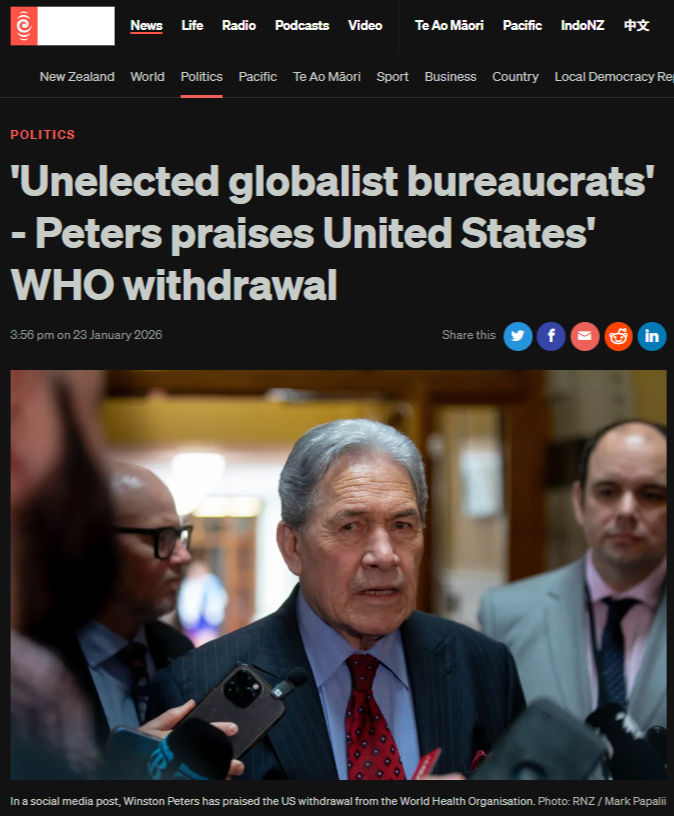
On January 23, 2026, New Zealand’s Foreign Affairs Minister Winston Peters performed a grotesque pirouette of hypocrisy, publicly embracing the United States’ withdrawal from the World Health Organization while describing the institution’s leadership as “unelected globalist bureaucrats” unaccountable to taxpayers. This isn’t policy analysis—it’s a calculated carnival act designed to inflame populist anxieties while Peters himself has profited from the very international frameworks he now ridicules.
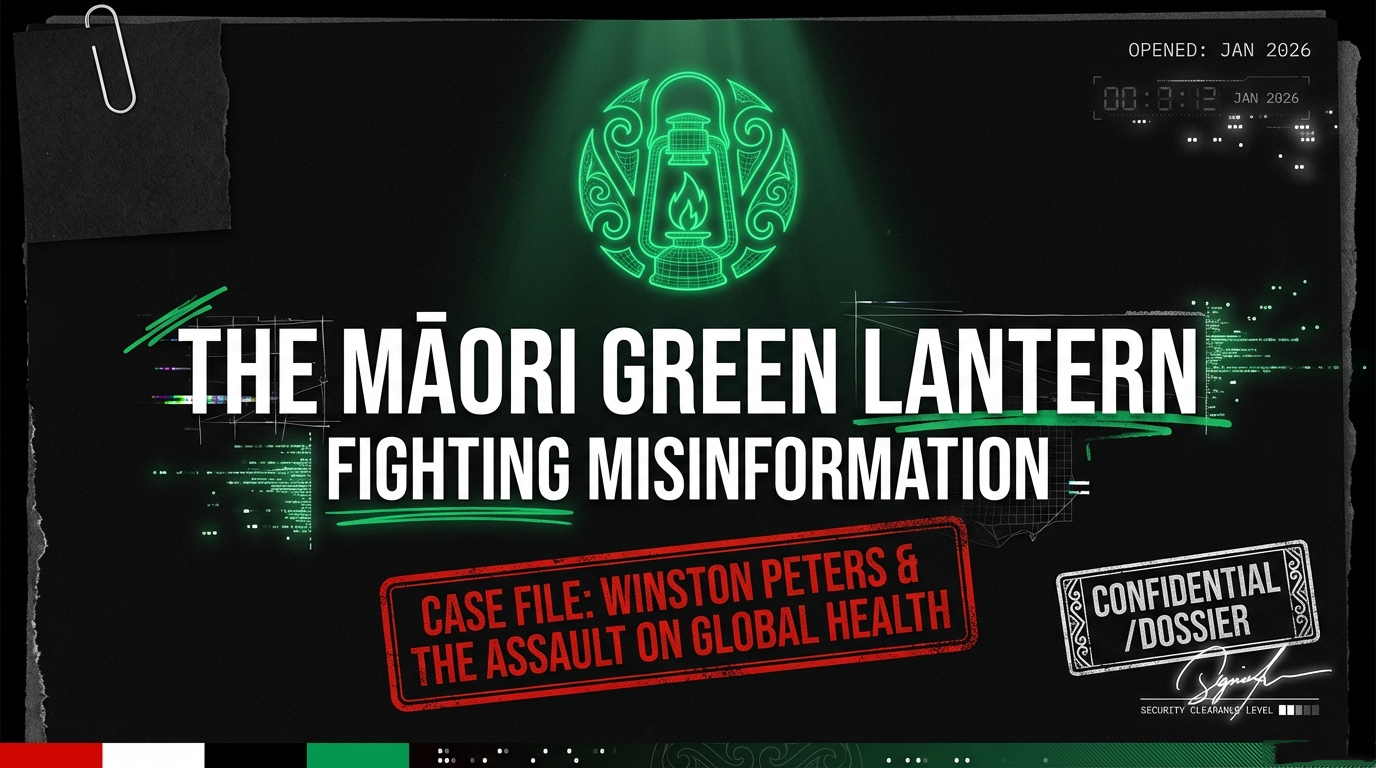
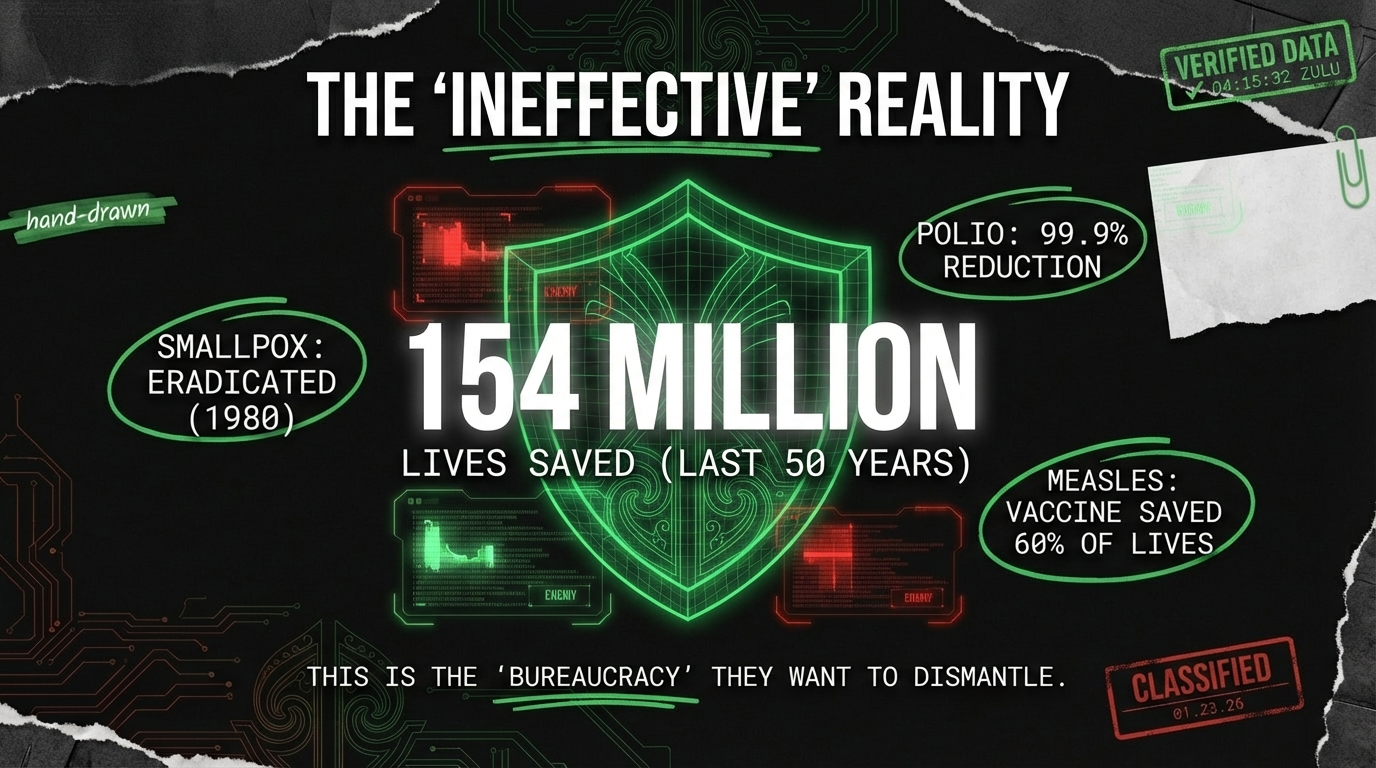
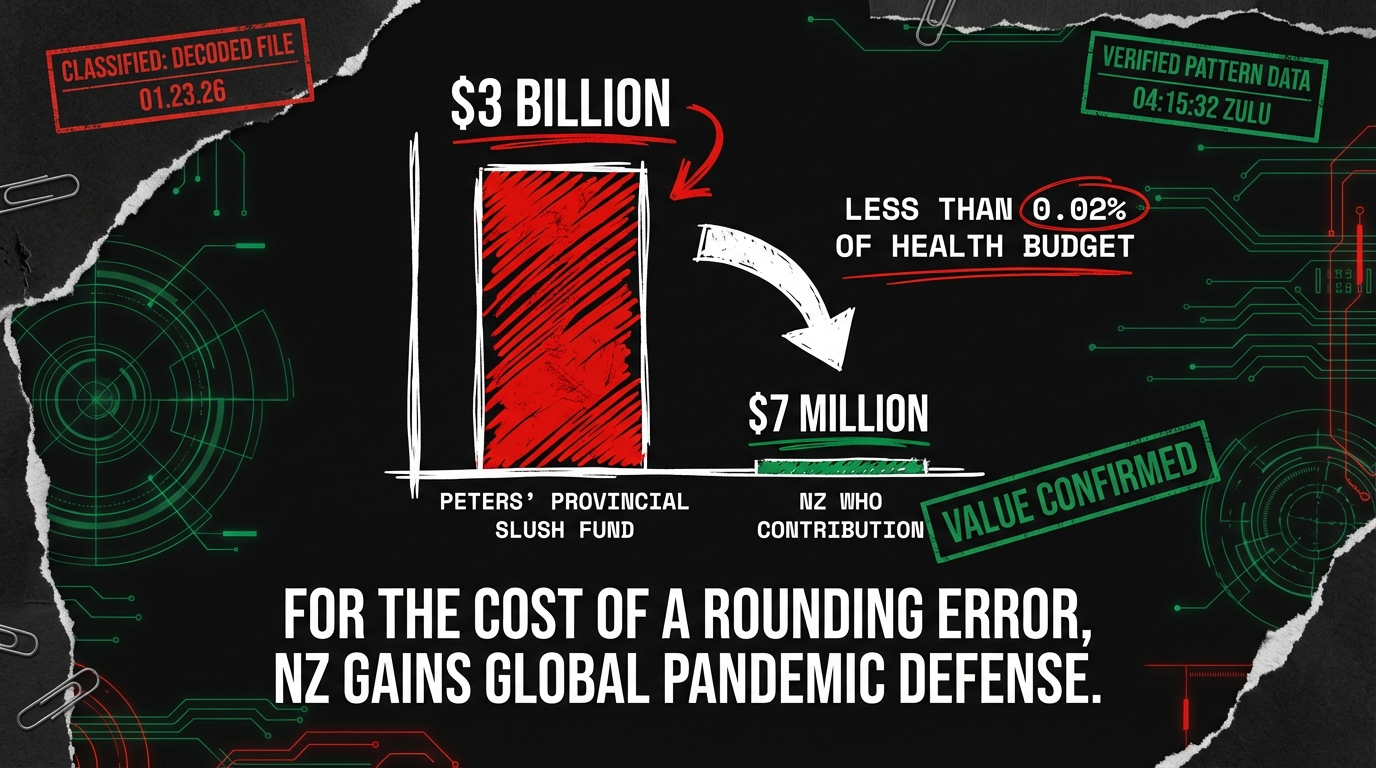
Just five years ago, Peters himself supported Taiwan’s bid for WHO participation, demonstrating that his sudden discovery of the organization’s “ineffectiveness” tracks perfectly with Donald Trump’s second ascent to power rather than any genuine change in circumstances or evidence. The WHO, meanwhile, has saved 154 million lives through vaccination campaigns, eradicated smallpox, and driven polio to the brink of extinction—achievements Peters casually dismisses while New Zealand’s $7 million annual contribution represents less than 0.02% of our health budget yet provides access to pandemic surveillance systems that protected us during COVID-19.
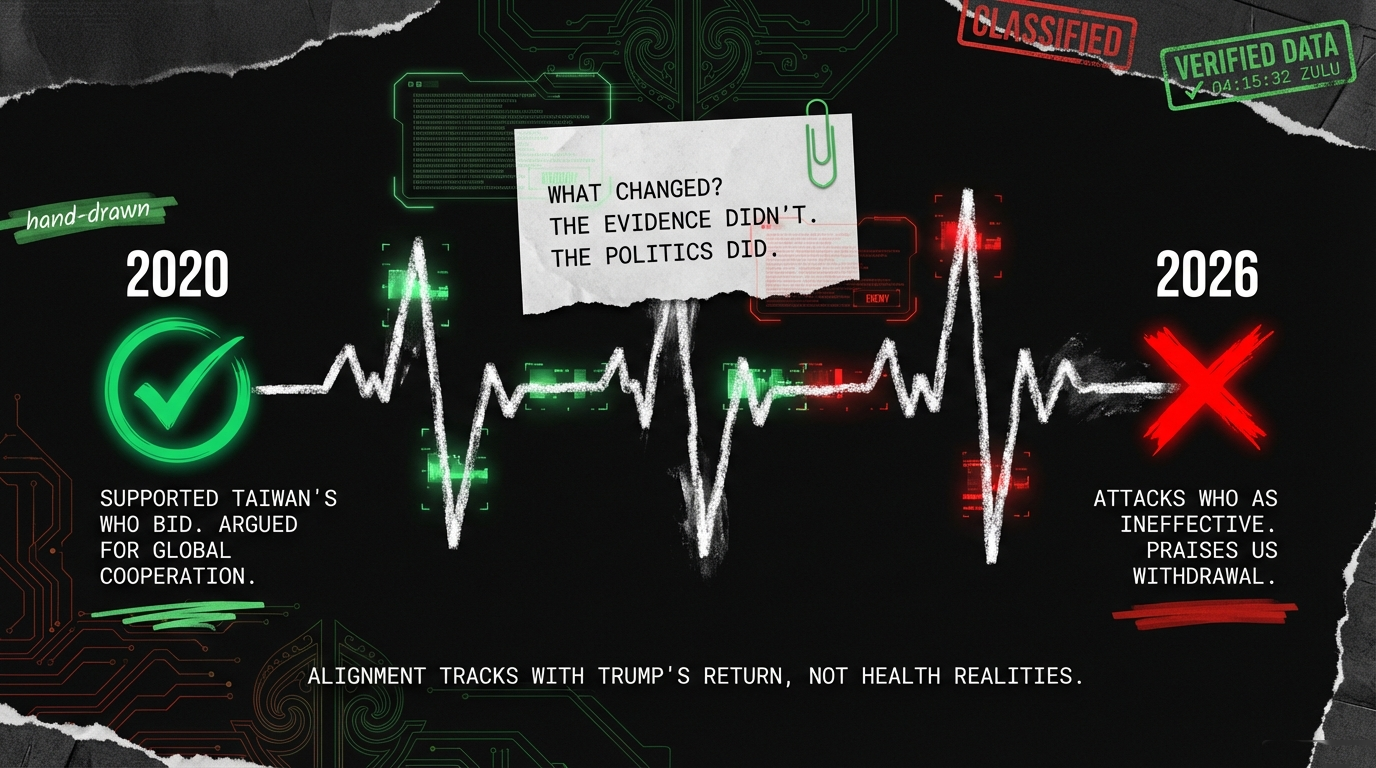
Peters’ invocation of “globalist bureaucrats” continues a four-decade pattern of xenophobic dog-whistling that has defined his career:
from his 2005 Orewa speech warning of Asian immigration as “imported criminal activity” and “Balkanisation,” to his 2017 attack on Asian Herald journalists for daring to publish fact-checked research he disagreed with, to his 2025 slashing of aid to Pacific nations that had snubbed him diplomatically.
Now, as health systems worldwide face new threats from H5N1 bird flu, mpox, and drug-resistant pathogens, Peters cheerleads the dismantling of the only coordinating mechanism capable of detecting and containing pandemics before they devastate economies and kill millions. His recklessness doesn’t just endanger New Zealand—it betrays the Pacific communities that depend on WHO-coordinated health programs, the 20 million people alive today because of polio vaccination campaigns, and the principle that some challenges transcend nationalism because viruses respect no borders.
The Hypocrisy of Peters’ “Value for Money” Argument
Peters’ questioning of whether New Zealand’s WHO membership represents taxpayer value deserves particular scrutiny given the modest sums involved and the substantial returns. New Zealand’s assessed contribution to the WHO was approximately NZ$2.1 million in 2019/20, with total contributions including voluntary funding reaching roughly NZ$7 million annually. To place this in perspective, Peters’ own provincial slush fund—the Provincial Growth Fund he championed during the previous Labour-NZ First coalition—spent NZ$3 billion, including funding for projects serving his party’s political interests.
The economic case for WHO membership is overwhelming. New Zealand’s COVID-19 response, which Peters himself served under as Deputy Prime Minister, relied extensively on WHO guidance, technical protocols, and international coordination. The elimination strategy that kept New Zealand’s death toll remarkably low drew on WHO frameworks and benefited from the organization’s global surveillance systems that provided early warning of the virus’s characteristics. New Zealand was one of the few countries to record fewer total deaths than expected over the first two years of the pandemic, thanks to lockdowns curtailing the spread of infections.
For New Zealand’s annual investment of roughly $7 million—less than 0.02% of the health budget—the nation gains access to pandemic early warning systems, collaborative pathogen surveillance, standardized protocols for managing international health emergencies, and technical expertise that would cost exponentially more to develop independently. The WHO’s Pandemic Hub, established in 2021, operates an AI-powered system that monitors more than 35,000 data feeds globally to identify signals of potential outbreaks. As of 2023, 85 member states including New Zealand utilize this system.
Peters’ “value for money” rhetoric rings particularly hollow given his government’s own fiscal choices. The same government that Peters serves as Deputy Prime Minister reduced overseas aid by 35%, damaging relationships with Pacific nations where New Zealand claims strategic interests. Against this backdrop, questioning $7 million in WHO contributions while presiding over billions in discretionary spending exposes Peters’ attack as political theater rather than genuine fiscal stewardship.
COVID-19: Learning the Wrong Lessons
Peters’ timing amplifies the recklessness of his WHO critique. The COVID-19 pandemic exposed both the critical necessity of international health cooperation and the catastrophic consequences when nations abandon multilateralism. The WHO’s response, while imperfect, provided the foundational architecture that enabled countries to coordinate surveillance, share genomic data, develop vaccines at unprecedented speed, and implement public health measures.
Legitimate criticisms of the WHO’s pandemic performance exist. An independent review panel co-chaired by former New Zealand Prime Minister Helen Clark found that the WHO should have declared a global emergency earlier than January 30, 2020, and that member states wasted critical time in February while the virus spread. The BBC reported that the panel concluded there were “serious failures” in the global response, with the WHO too slow to declare a pandemic and countries ignoring warning signs.
Yet these shortcomings strengthen rather than weaken the case for WHO reform and continued engagement. The same independent panel that documented these failures concluded that to fight a global pandemic requires global cooperation and strong international organizations. Helen Clark explicitly warned that the alternative—fragmented national responses without coordinated international action—would leave the world more vulnerable to future outbreaks.
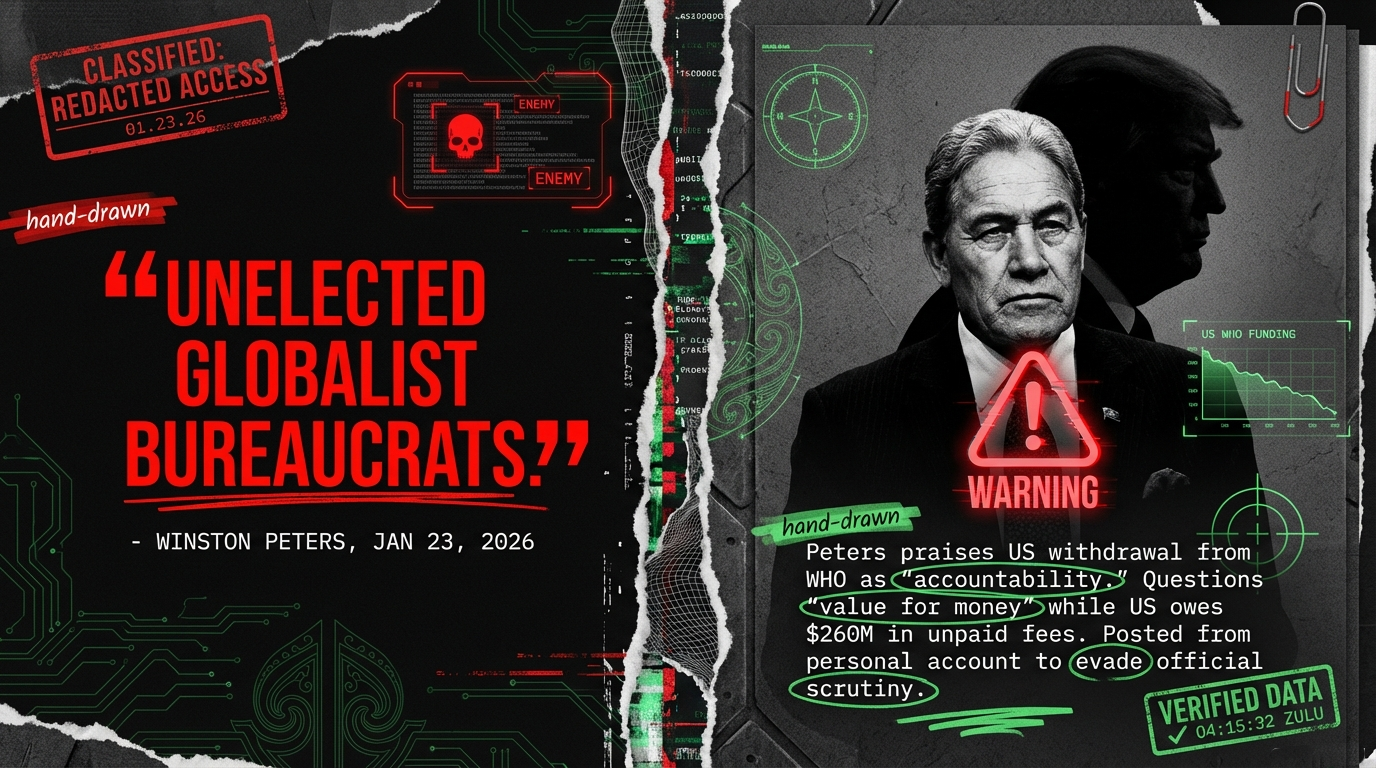
The United States’ withdrawal, which Peters now celebrates, has already triggered precisely the dysfunction that experts warned against. Within days of Trump’s January 2025 announcement, the WHO was forced to implement hiring freezes, slash travel for technical missions, and cut programs providing essential services in vulnerable regions. The US still owes the WHO US$260 million in fees, but has announced no plans to participate even as an observer.
Peters’ enthusiasm for this destruction suggests he has learned exactly the wrong lesson from COVID-19. Rather than recognizing that pandemic preparedness requires strengthened multilateral cooperation, he embraces a retreat into nationalism that will leave New Zealand more vulnerable when—not if—the next outbreak emerges.
The “Globalist Bureaucrat” Dog-Whistle: Peters’ Familiar Xenophobic Playbook
Peters’ description of WHO leadership as “unelected globalist bureaucrats” deploys language recognizable to anyone who has tracked his four-decade career of xenophobic dog-whistles and conspiracy theories. The term “globalist” carries specific connotations in contemporary populist discourse, often serving as coded antisemitism and invariably signaling hostility toward international cooperation. Peters knows precisely what he is doing.
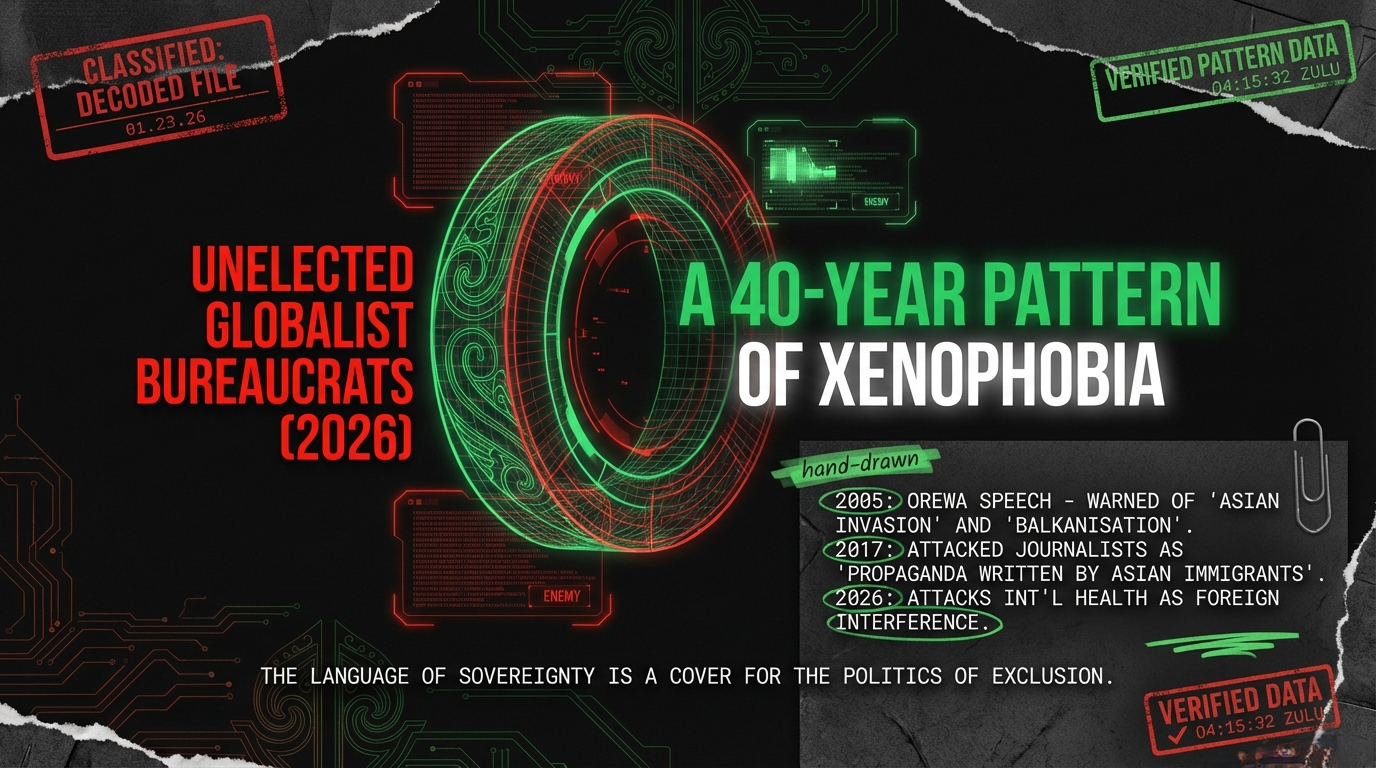
This latest outburst fits a well-documented pattern. In 2005, Peters warned that Asian immigration represented “imported criminal activity” and would lead to civil unrest similar to Kosovo and Northern Ireland. He told delegates that immigration policies would result in “the Balkanisation of our country” and predicted race riots akin to those in Britain. Prime Minister Helen Clark warned at the time that Peters’ rhetoric risked damaging New Zealand’s trade relationships with Asian markets.
In 2012, Peters blamed elderly Asian migrants for “cashing in” on New Zealand’s superannuation scheme, providing no evidence for claims that experts immediately debunked. The pattern continued throughout his career: attacking immigration from Asian nations, scapegoating Asian immigrants for economic problems, and consistently deploying racial resentment for political gain.
Perhaps most egregiously, in 2017 Peters attacked two experienced New Zealand Herald journalists —Lincoln Tan and Harkanwal Singh—by explicitly referencing their Asian heritage and dismissing their meticulously researched immigration data analysis as “propaganda written by two Asian immigrant reporters.” The Herald’s editor condemned Peters’ remarks as coming from “the Trump playbook,” while distinguished Professor Paul Spoonley of Massey University called the comments “absolutely disgraceful.”
Peters’ invocation of “globalist bureaucrats” at the WHO continues this playbook, tapping into xenophobic anxieties about international institutions while cloaking bigotry in the language of sovereignty and accountability. Political scientists have documented how populist leaders systematically undermine international organizations through precisely this type of inflammatory rhetoric, delegitimizing multilateral cooperation while providing scapegoats for domestic policy failures.
The historical record demolishes any pretense that Peters’ rhetoric reflects principled concern about democratic accountability. When serving as Foreign Affairs Minister in 2020, Peters explicitly supported Taiwan’s bid to participate in the WHO, positioning New Zealand alongside the United States and Australia in pressuring the organization to expand its membership. His reversal five years later, conveniently timed to align with Trump’s return to power, exposes opportunism rather than conviction.
Undermining Global Health Security in an Age of Rising Pandemic Risk
Peters’ attack on the WHO comes at a moment of heightened pandemic vulnerability. Epidemiologists warn that the risk of another major outbreak equals or exceeds that which produced COVID-19, driven by factors including accelerating climate change, ecological destruction that increases zoonotic spillover, and antimicrobial resistance. The WHO serves as the central coordinating node for the surveillance systems, rapid response mechanisms, and collaborative research networks required to detect and contain emerging threats before they become global catastrophes.
The organization’s Pandemic Hub, established in 2021 with EUR 90 million in German funding, operates the Epidemic Intelligence from Open Sources (EIOS) platform—an artificial intelligence-powered system that monitors more than 35,000 data feeds globally to identify signals of potential outbreaks. As of 2023, 85 member states including New Zealand utilize this system, which provides early detection capability that no single nation could replicate independently.
The International Health Regulations (IHR), revised in 2005 and strengthened in 2024, establish legally binding requirements for member states to develop core capacities for pandemic prevention, detection, and response. These regulations require nations to report potential public health emergencies, maintain surveillance systems, and implement evidence-based control measures. Crucially, the WHO provides technical assistance, training, and financial support to help countries—particularly low- and middle-income nations—build these capacities.
Peters’ suggestion that New Zealand might follow the United States in withdrawing from this architecture demonstrates breathtaking recklessness. As an island nation geographically distant from major population centers, New Zealand benefits enormously from early warning systems that detect pathogens before they reach our shores. The COVID-19 response succeeded in part because WHO surveillance provided crucial lead time for New Zealand to implement border controls and prepare its health system. Future pandemics may offer less warning. Abandoning the WHO would leave New Zealand flying blind.
The Global Context: Populism’s War on Multilateralism
Peters’ WHO attack must be understood within the broader pattern of populist leaders systematically undermining international institutions. Political scientists have documented how figures including Donald Trump, Viktor Orbán, and Hugo Chávez employ a consistent playbook:
delegitimizing international organizations through inflammatory rhetoric, obstructing their operations, extracting concessions through threats of withdrawal, and occasionally exiting institutions to demonstrate nationalist credentials.
Research published in International Affairs demonstrates that populist delegitimization campaigns, even when they do not result in formal withdrawal, erode international cooperation by spreading narratives that multilateral institutions are defunct or illegitimate. This makes it harder for organizations to mobilize member state buy-in, secure funding, and implement coordinated responses to transnational challenges from pandemic disease to climate change.
Peters’ WHO attack follows this script with depressing predictability. By framing his criticism in terms of “globalist bureaucrats” accountable to no one, he imports Trump’s rhetoric directly into New Zealand politics. His positioning from a personal rather than official account provides plausible deniability—he can gauge political reaction and either double down or claim his comments reflected personal views rather than government policy.
The human cost of this approach has been staggering. Internal U.S. State Department memos estimate that Trump administration aid cuts will result in one million children untreated for severe acute malnutrition, up to 166,000 preventable malaria deaths, a 30% increase in tuberculosis, and 200,000 additional children paralyzed by polio over the next decade. Peters’ decision to cheer this destruction from his position as New Zealand’s Foreign Affairs Minister represents a moral and strategic failure that will haunt his legacy.
New Zealand’s Stake in Global Health Cooperation
New Zealand possesses compelling national interests in maintaining robust engagement with the WHO and broader global health architecture. As a small, trade-dependent nation geographically isolated from major markets, New Zealand relies heavily on international rules, norms, and institutions to punch above its weight in global affairs. The WHO represents precisely the type of multilateral framework that serves New Zealand’s interests by creating a level playing field where small nations participate as equals with great powers.
The Pacific region presents a particularly acute arena where WHO cooperation proves essential. New Zealand provides health assistance to Pacific Island nations through WHO-coordinated programs for disease surveillance, emergency response, and health system strengthening. The WHO’s regional office for the Western Pacific facilitates collaboration on challenges including non-communicable diseases, climate-related health impacts, and outbreak preparedness that cross borders and exceed individual nations’ capacity to address.
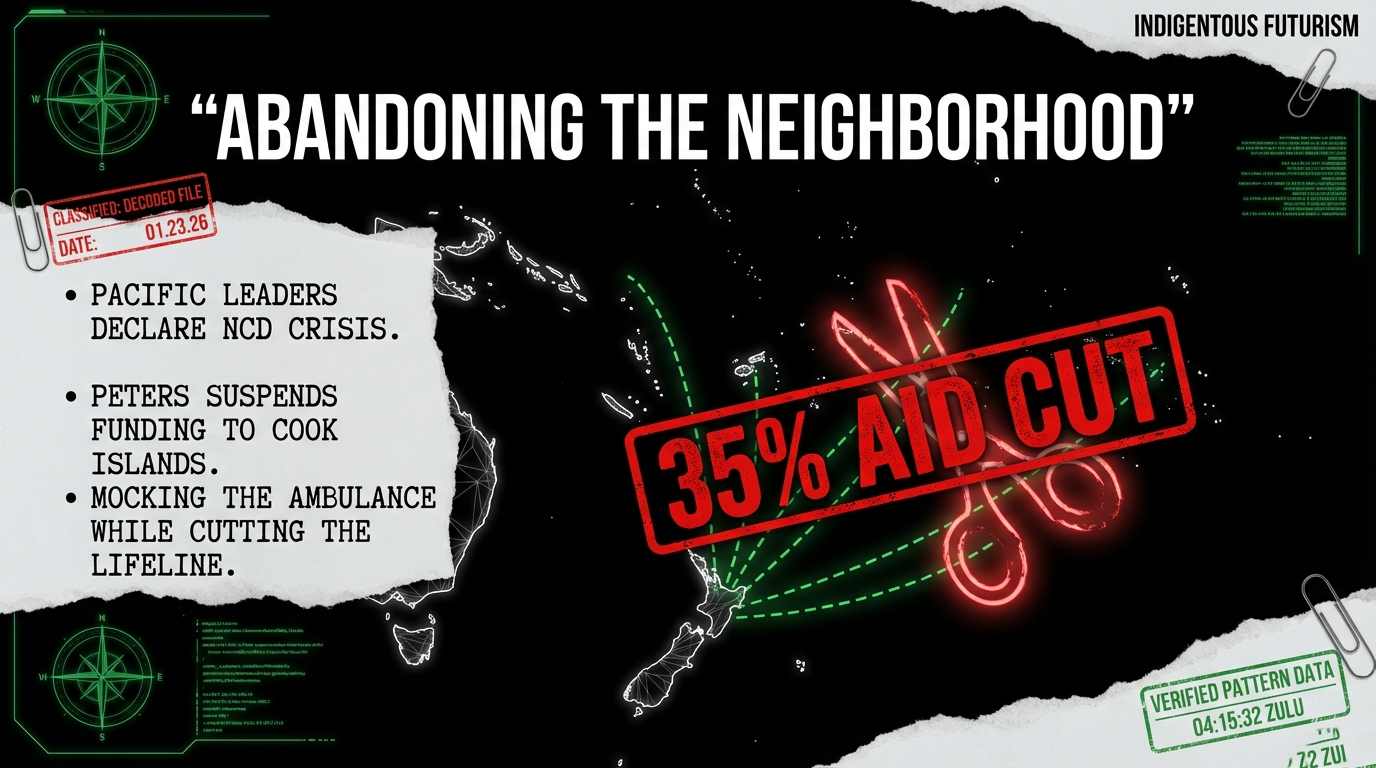
Yet Peters’ own government has cut aid to the Pacific by 35%, with a Lowy Institute report forecasting a US$200 million annual shortfall in aid to the region as New Zealand and other Western partners pull back. Peters personally suspended nearly NZ$20 million worth of core funding to the Cook Islands in response to the Cook Islands’ partnership agreement with China, and announced the government would review its bilateral aid programme to Kiribati after being snubbed by its president. This pattern of transactional, inconsistent engagement undermines the very Pacific relationships Peters claims to prioritize.
The COVID-19 pandemic demonstrated New Zealand’s vulnerability alongside its capacity for effective response. Sir Ashley Bloomfield, who led New Zealand’s pandemic response as Director-General of Health, testified that insufficient hospital capacity, ICU beds, and healthcare workforce drove the government’s decision to pursue elimination. The strategy succeeded, but only because WHO protocols, international research collaboration, and global vaccine development—all coordinated through multilateral frameworks—provided the tools New Zealand needed.
New Zealand also has a moral stake in global health equity. The WHO coordinates programs including polio eradication, malaria control, and childhood immunization that save millions of lives annually in low- and middle-income countries. Peters’ “taxpayer value” framing implicitly rejects this moral dimension, suggesting New Zealand should concern itself only with narrow national benefit rather than recognizing our shared humanity and interdependence.
Expert Condemnation and the Diplomatic Damage
Peters’ WHO comments have drawn swift condemnation from public health experts and diplomatic figures who recognize the danger his rhetoric poses. Helen Clark, who co-chaired the independent panel reviewing WHO’s pandemic response, has explicitly warned that New Zealand risks becoming an “international outlier” if it follows the United States’ path. Her criticism carries particular weight: as a former Prime Minister who appointed Peters Foreign Affairs Minister during her own government, Clark understands his political instincts yet felt compelled to publicly rebuke his WHO attack.
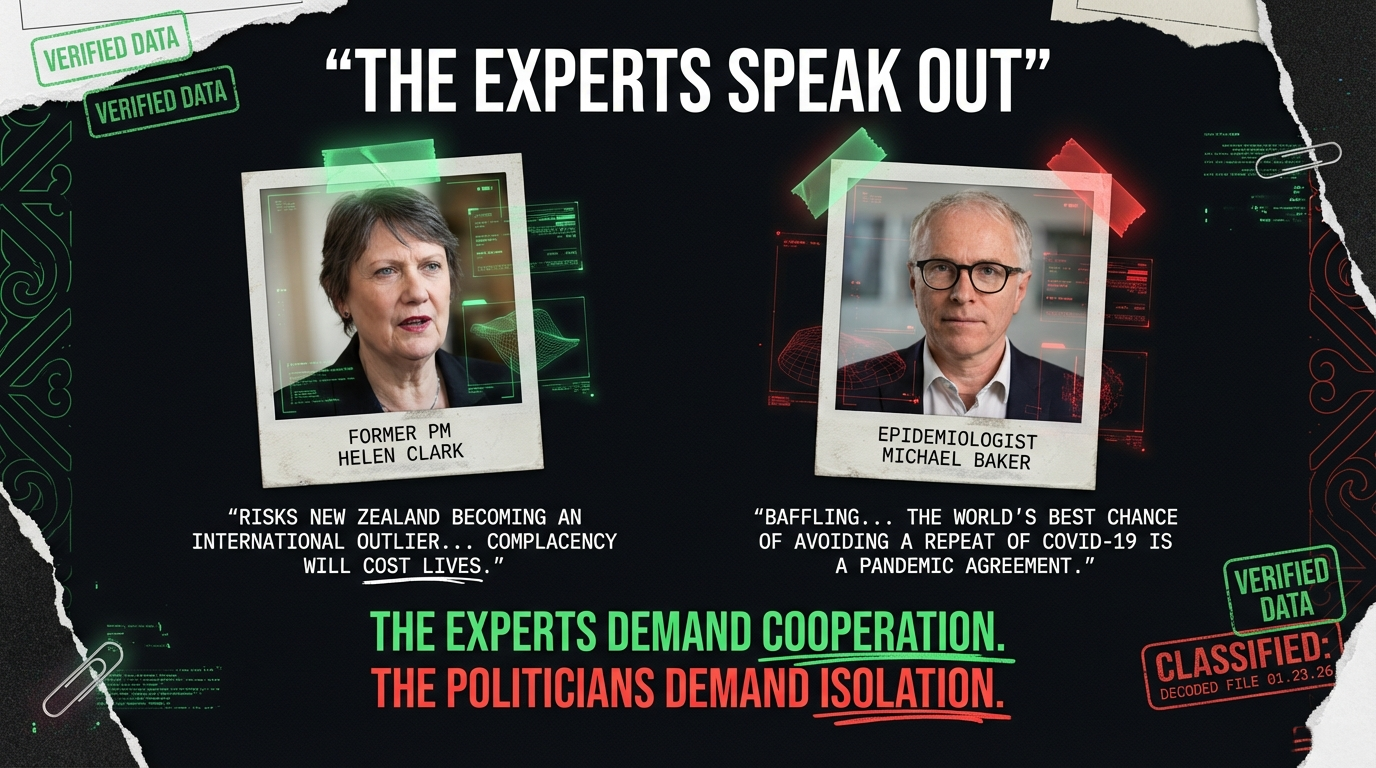
Professor Michael Baker, one of New Zealand’s leading epidemiologists, called the coalition government’s WHO policy changes “baffling” in late 2023, warning that undermining the organization leaves New Zealand vulnerable to future outbreaks. In a 2024 analysis for The Conversation, Baker and legal scholar Professor Alexander Gillespie emphasized that “the world’s best chance of avoiding a repeat of Covid-19 is a pandemic agreement” and warned about “unfounded assertions that the WHO will be given power to impose restrictive measures.”
Helen Clark has been consistent in advocating for global cooperation on pandemic preparedness. In September 2025, she and co-chair Ellen Johnson Sirleaf released a report urging world leaders to use their power ahead of the 2026 UN High-level Meeting on Pandemic Prevention, Preparedness and Response. The report stressed that “despite some progress on pandemic readiness reforms, the world remains dangerously underprepared for the next pandemic threat” and warned that “complacency will cost lives and devastate economies.”
In 2020, Clark played a central role in coordinating world leaders behind an open letter calling for a “people’s vaccine” to combat COVID-19, urging that all vaccines, treatments and tests be patent-free and made available to all people, in all countries, free of charge. She emphasized that “nobody is safe till everyone is safe” and that New Zealand would have to sit tight in its bubble until the rest of the world catches up.
The government’s response to Peters’ comments has been conspicuously muted. While Peters posted from his personal account, his position as both Foreign Affairs Minister and Deputy Prime Minister means his views carry weight whether officially sanctioned or not. Prime Minister Christopher Luxon has not publicly rebutted Peters’ WHO criticism, suggesting either tacit agreement or unwillingness to confront his coalition partner over inflammatory comments.
This silence is itself damaging, creating uncertainty among international partners about New Zealand’s commitment to multilateral health cooperation. When Peters similarly criticized RBNZ Governor Anna Breman in January 2026 for signing a letter supporting US Federal Reserve independence, telling her to “stay in her New Zealand lane,” Luxon’s tepid response signaled a government uncomfortable challenging its Deputy Prime Minister regardless of how reckless his statements become.
The Costs of Populist Posturing
Winston Peters’ attack on the WHO represents more than another outburst from a politician notorious for inflammatory rhetoric. It signals a dangerous willingness to sacrifice New Zealand’s health security, diplomatic credibility, and moral standing on the altar of populist posturing aligned with Trump’s authoritarian impulses.
The evidence overwhelmingly demonstrates that the WHO, despite legitimate criticisms requiring reform, has saved tens of millions of lives through vaccination programs, disease eradication efforts, and pandemic coordination that no nation could achieve alone. New Zealand’s modest annual contribution of roughly $7 million provides access to surveillance systems, technical expertise, and international cooperation frameworks that have proven essential to protecting Kiwis from infectious disease threats.
Peters knows this. He served as Deputy Prime Minister during COVID-19, when WHO protocols and international coordination underpinned New Zealand’s world-leading response. He supported Taiwan’s WHO membership bid in 2020, demonstrating faith in the organization’s importance. His reversal now—praising Trump’s withdrawal and questioning New Zealand’s membership—exposes opportunistic alignment with nationalist rhetoric rather than principled policy analysis.
The costs of Peters’ approach extend beyond immediate diplomatic damage. By legitimizing attacks on multilateral health institutions, he weakens the architecture that will prove essential when the next pandemic emerges. By deploying xenophobic “globalist” rhetoric, he imports Trump’s divisive playbook into New Zealand politics. By prioritizing political theater over evidence-based governance, he betrays the ministerial responsibility his office demands.
Years of negotiations culminated in April 2025 with countries agreeing on the text of a landmark Pandemic Agreement aimed at avoiding the mistakes made during COVID-19. WHO chief Tedros Adhanom Ghebreyesus called it “a significant milestone in our shared journey towards a safer world.” New Zealand participated in these negotiations, recognizing that collective security requires collective action.
Peters’ WHO attack undermines this progress at precisely the moment when new threats including H5N1 bird flu, mpox, and Ebola outbreaks demand coordinated international response. It damages relationships with Pacific partners who depend on WHO-coordinated health programs. It signals to allies and adversaries alike that New Zealand’s foreign policy can be hijacked by populist impulses disconnected from national interest.
New Zealanders deserve better than a Foreign Affairs Minister who echoes Trump’s conspiracy theories, deploys racist dog-whistles against international cooperation, and questions the value of organizations that have saved 154 million lives. The November 2026 election provides an opportunity to reject this reckless approach and restore New Zealand’s tradition of principled internationalism grounded in evidence rather than populist posturing.
Until then, Peters’ WHO attack stands as a stark reminder of the dangers posed when political opportunism trumps expertise, when nationalist rhetoric supplants diplomatic responsibility, and when a career of racial resentment culminates in attacks on the very institutions that protect us all.
Supporting This Investigation
Winston Peters’ attack on the WHO exposes the bankruptcy of nationalist populism when confronted with the complexity of global health threats that respect no borders. This essay documents the evidence Peters ignored, the experts he dismissed, and the consequences of his reckless rhetoric—accountability that Crown and corporate structures have largely refused to provide.
Every koha signals that whānau and concerned citizens are ready to fund the fearless analysis and fact-checking that holds politicians accountable for statements that endanger public health and betray international commitments. It signals that tino rangatiratanga—true self-determination—includes the power to fund our own truth-tellers who document what mainstream media often overlooks: the dangerous consequences of populist posturing masquerading as fiscal responsibility.
We need voices willing to interrogate the xenophobic dog-whistles embedded in Peters’ “globalist” framing, to document how his four-decade pattern of anti-Asian racism now manifests as attacks on international health cooperation, and to remind New Zealanders that some institutions—imperfect though they may be—have saved 154 million lives and eradicated diseases that once devastated our ancestors. This mahi requires resources.
Kia kaha, whānau. Stay vigilant. Stay connected. And if you are able, consider a koha to ensure independent voices continue holding power accountable through evidence and courage.
Three Pathways to Support This Work
For those who wish to support this mahi directly with a koha (voluntary contribution):
Visit the Koha platform
For those who wish to receive essays directly and support through subscription:
Subscribe to the Māori Green Lantern on Substack
For those who prefer direct bank transfer:
Account: HTDM
Account number: 03-1546-0415173-000
Your support ensures that analysis grounded in evidence, committed to accountability, and unafraid to name injustice continues to reach readers who deserve better than the sanitized narratives of institutional media. Every contribution—whether $5 or $500—signals that truth-telling about the consequences of political recklessness matters, that holding Ministers to account for statements that endanger public health is essential democratic work, and that independent voices must be valued and sustained.
Thank you for standing with those committed to the rigorous accountability New Zealand needs.

Ivor Jones The Māori Green Lantern Fighting Misinformation And Disinformation From The Far Right