“Working for Families at 20: The Hidden Network of Neoliberal Betrayal” - 1 January 2026
Cui Bono? Who Benefits—And Who Doesn’t
Cui Bono? Who Benefits—And Who Doesn’t
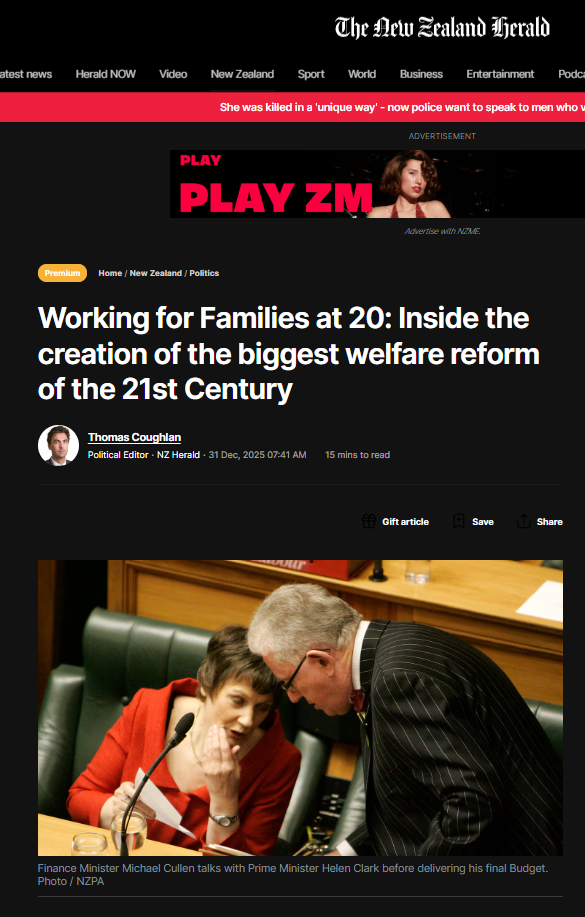
Working for Families (WFF), introduced in April 2005 and celebrated as “the biggest welfare reform of the 21st Century,” is a masterclass in misdirection. The NZ Herald’s anniversary piece presents a narrative of policy triumph: poverty fell, families got more income, Treasury objected but was overruled. But The Māori Green Lantern sees what’s missing from that whitewashed history—a network of structural exclusions that have locked hundreds of thousands of Māori children, beneficiaries, and whānau out of dignity while claiming to lift them up.
By design.
The Whiteboard That Changed Nothing for the Poorest
The Herald’s framing—two whiteboards, 20 years apart, connected by Peter Hughes and the good intentions of officials—is mythology. It obscures the continuity of cruelty: from Ruth Richardson’s 1991 “Mother of All Budgets” (which slashed welfare by up to $27/week for families with children) to Steve Maharey’s 2004 “solution” that left the poorest children further behind.
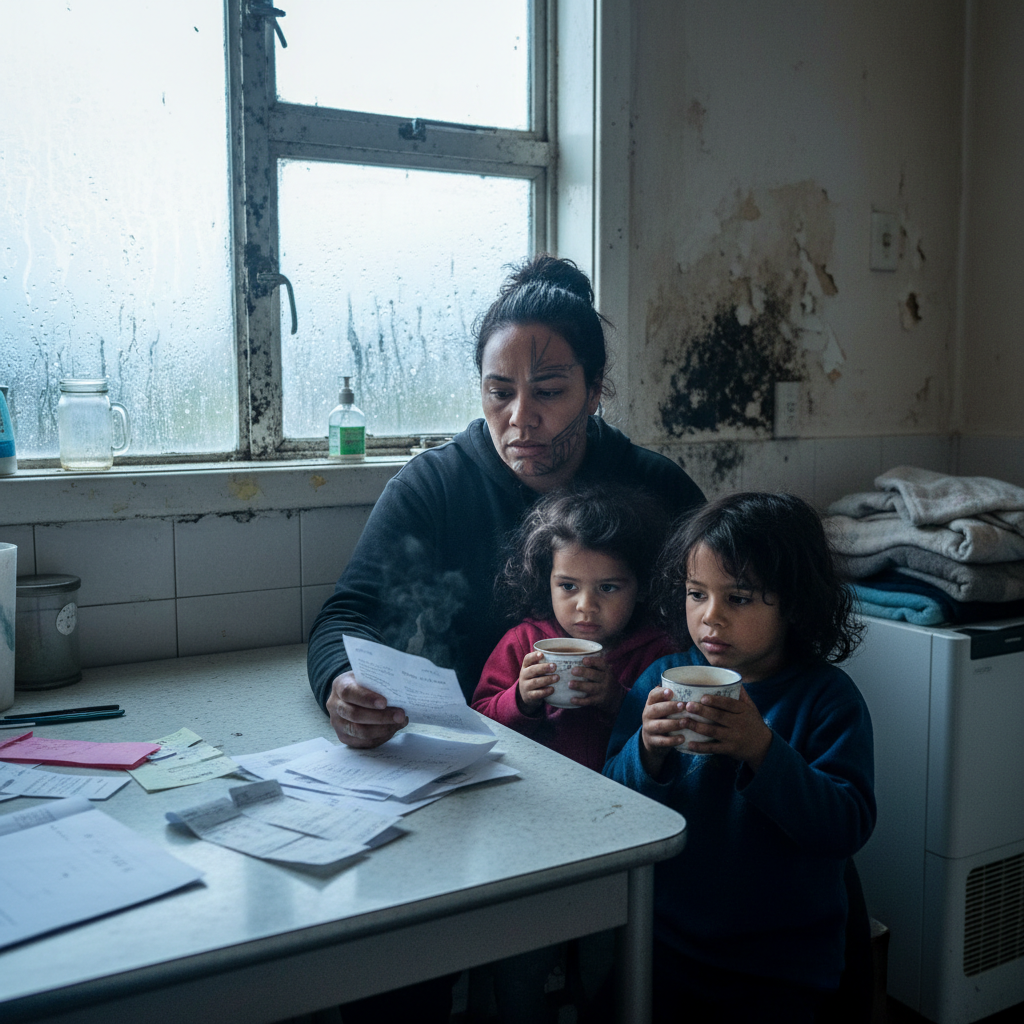
Whānau locked out: A sole-parent beneficiary household excluded from In-Work Tax Credit support
1991: The Cuts
Richardson and Jenny Shipley removed universal family benefits and cut benefit rates for sole parents with multiple children. Te Ara’s account of National Party welfare policy documents this period. Māori communities, already marginalised by land theft and discrimination, faced unemployment twice the rate of Pākehā. By 2004, nearly 1 in 3 Māori children lived in poverty—27% vs. 16% for Pākehā.
2004: The “Solution”
WFF promised to fix child poverty with tax credits. But the architecture was built on exclusion. The critical component—the In-Work Tax Credit (IWTC)—paid up to $72.50/week per child. Only if you worked 20-30 hours per week and were off-benefit.
This excluded approximately 230,000 children in beneficiary households. For Māori, whose unemployment and casualised employment rates are significantly higher than Pākehā, this was a trap door.
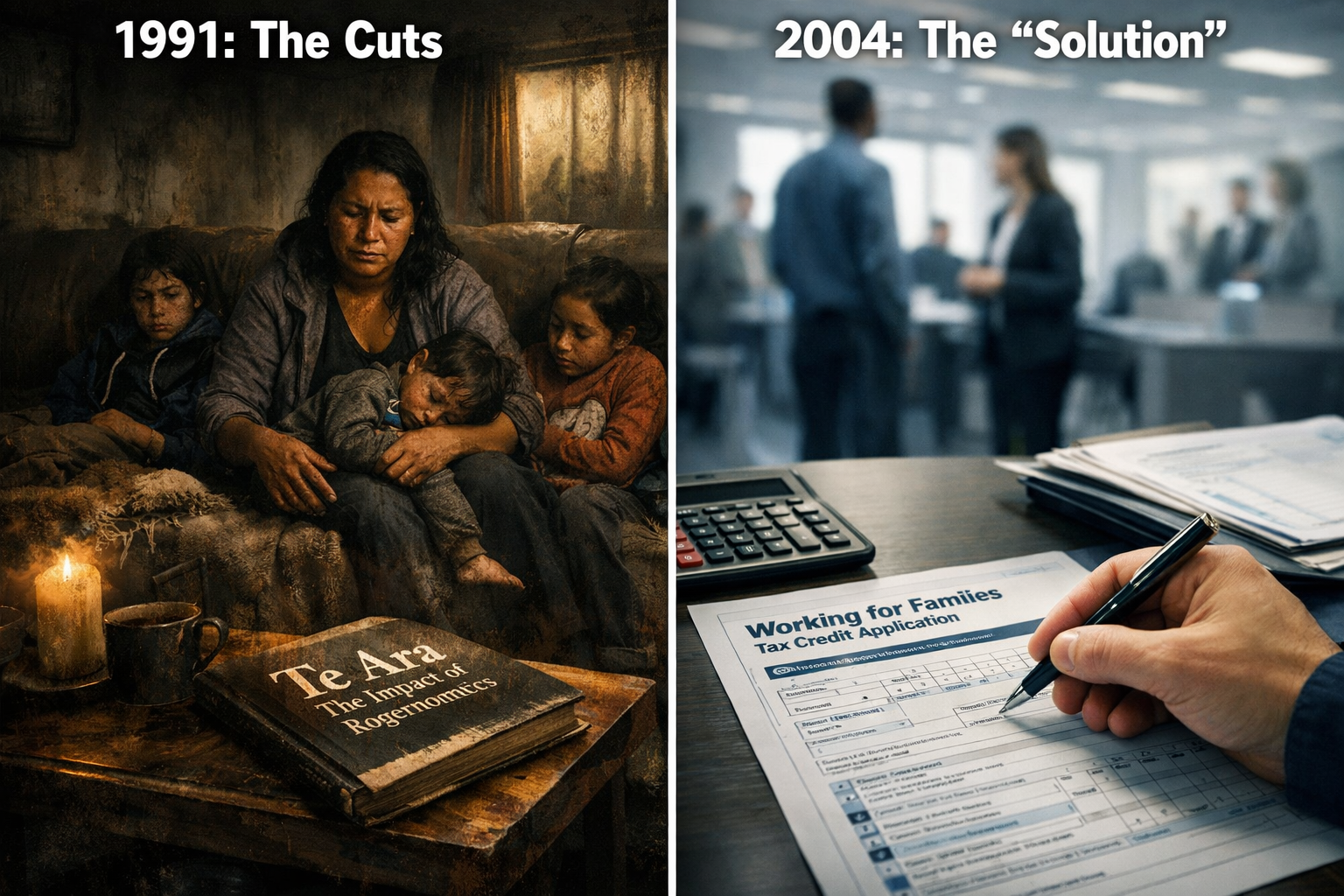
The Cuts
The Exclusion Mechanism: By Design or By Ideology?
Both. In interviews with the Herald, Steve Maharey revealed the ideological collision:
“Treasury did not like this policy at all. This was a break with the orthodoxy—you should not be doing redistribution of income.” Helen Clark added: “Treasury always had neoliberal tendencies.”
But Treasury’s resistance didn’t kill WFF—Cullen won them over. What this meant in practice:
WFF was designed to “make work pay,” not to lift all children out of poverty. The lowest-income, non-working whānau were left to survive on inadequate base benefit rates. And when WFF was implemented, the child-related component of those base benefits was removed for couples and sole parents with 2+ children. A deliberate regression.
The Impact by the Numbers
- From 2004-2007, child poverty in one-working-parent households fell from 28% to 9%—the IWTC worked.
- But children in workless households? Poverty rates became 6-7 times higher than for working-family children post-2007.
- By 2015, data showed 62% of children in sole-parent benefit households experienced material hardship, compared to 11% overall.
Māori families, disproportionately reliant on benefits, bore this disproportionate harm.
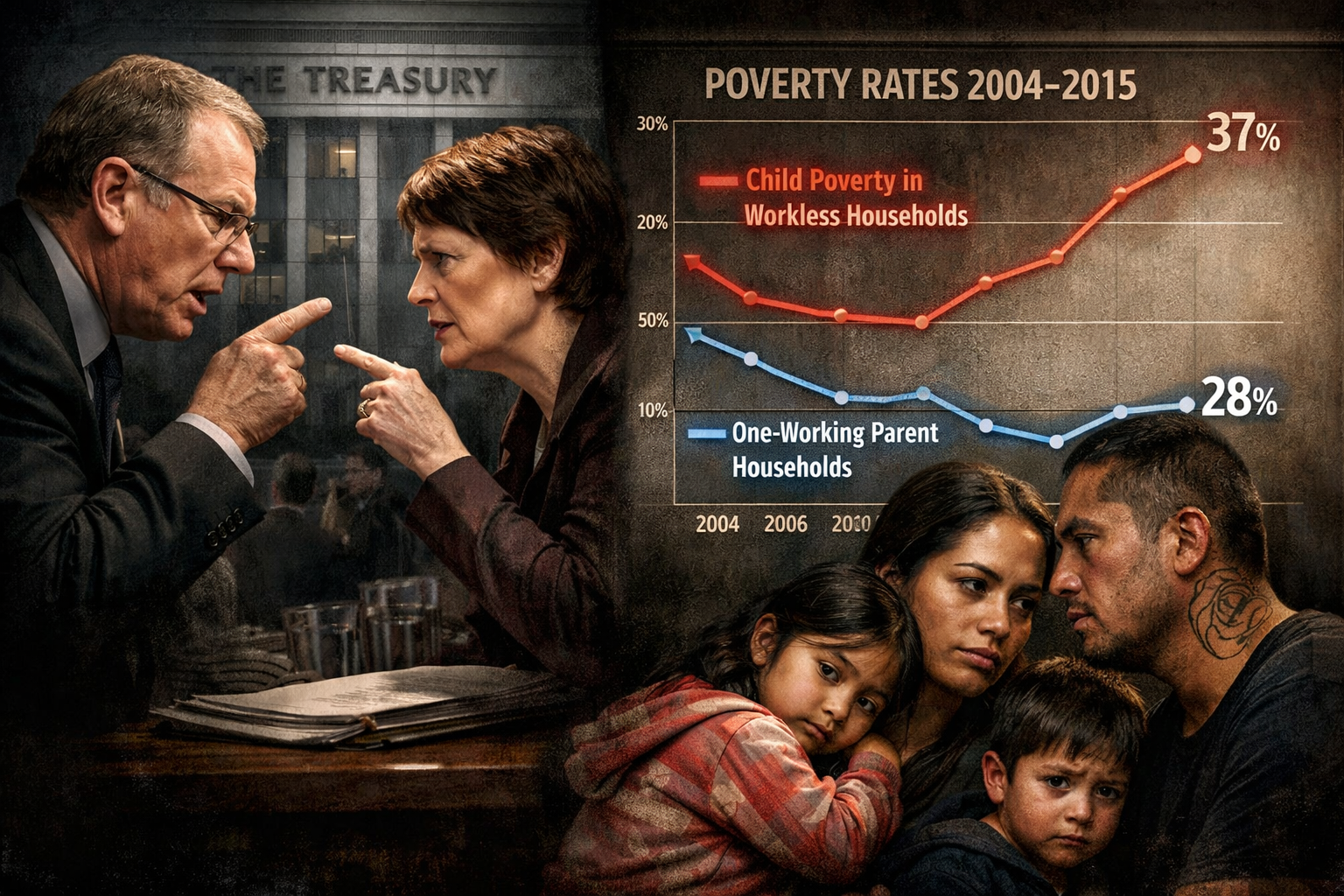
The Exclusion Mechanism
Erosion Over Time: Fiscal Drag by Another Name
WFF wasn’t just designed to exclude; it was designed to erode. The Herald notes child poverty “fell” under WFF—true for working families. But the scheme’s value has morphed into a slow squeeze on low-wage earners, most of whom are Māori.
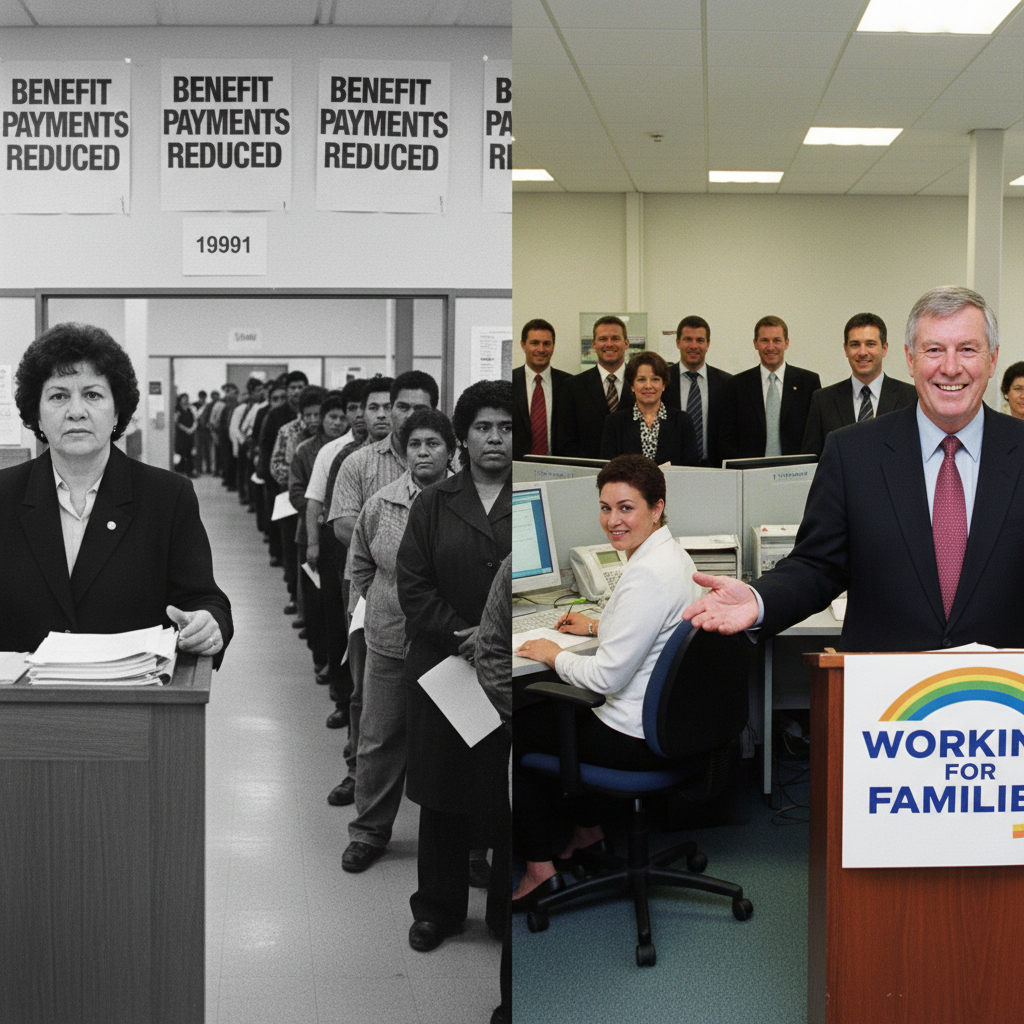
The continuum of exclusion: From Ruth Richardson’s 1991 cuts to Working for Families’ work requirements (2005)
The Abatement Threshold Scam
- Introduced in 2005 at $35,000, the threshold should have risen with wages.
- By 2018, it was frozen at $42,700 and never adjusted for wage growth.
- In 2006, a family at minimum wage could work 35.5 hours/week and stay within the $35k threshold. By 2025—with a 42% minimum wage increase—they needed to earn $42.7k but working just 34.9 hours. No gain.
- Result: Low-wage earners (Māori concentrated) face an effective marginal tax rate of 27% on earnings above the threshold, compared to the standard 17.5% income tax rate—a disincentive to work more hours.
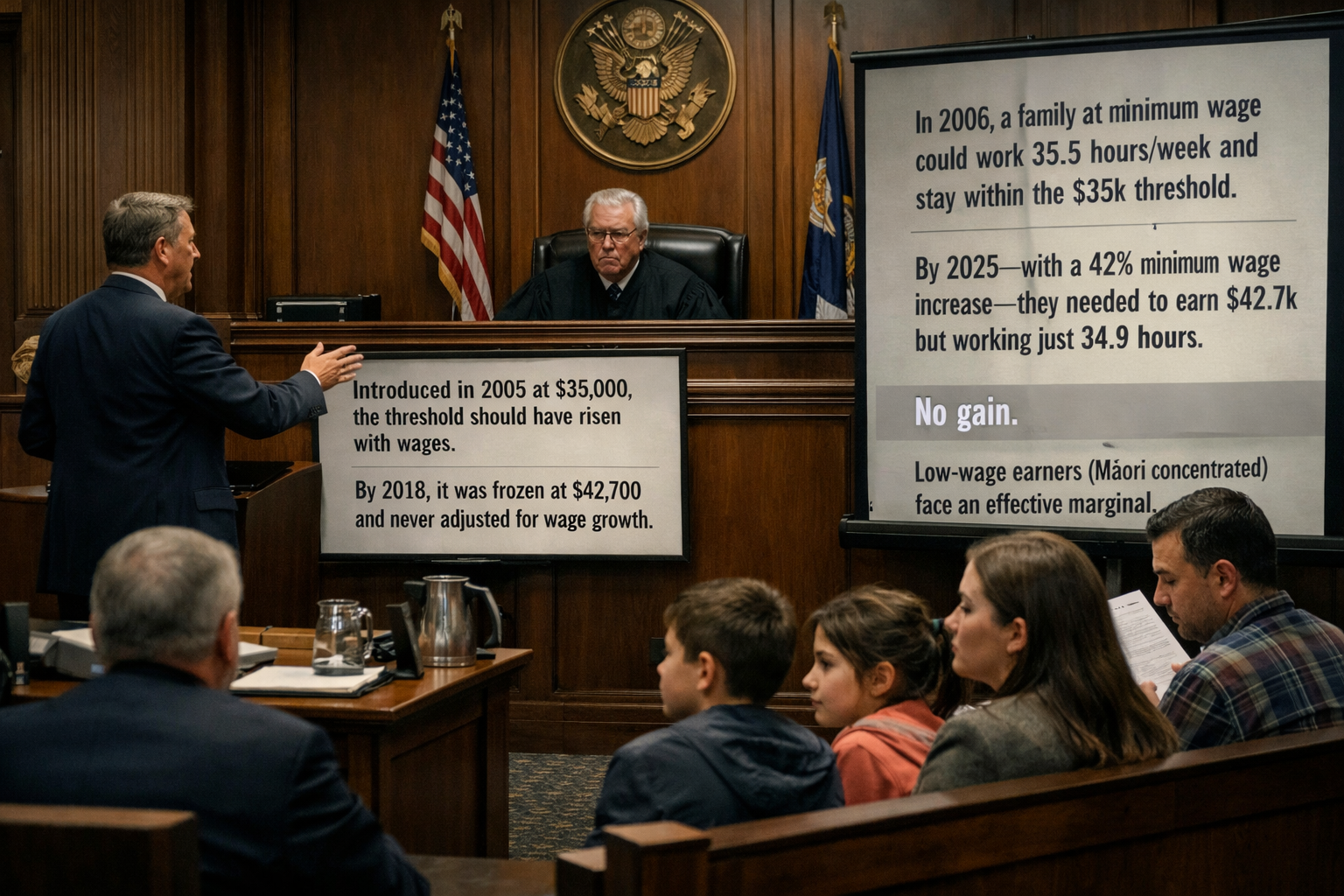
The Scam
Missing Indexation
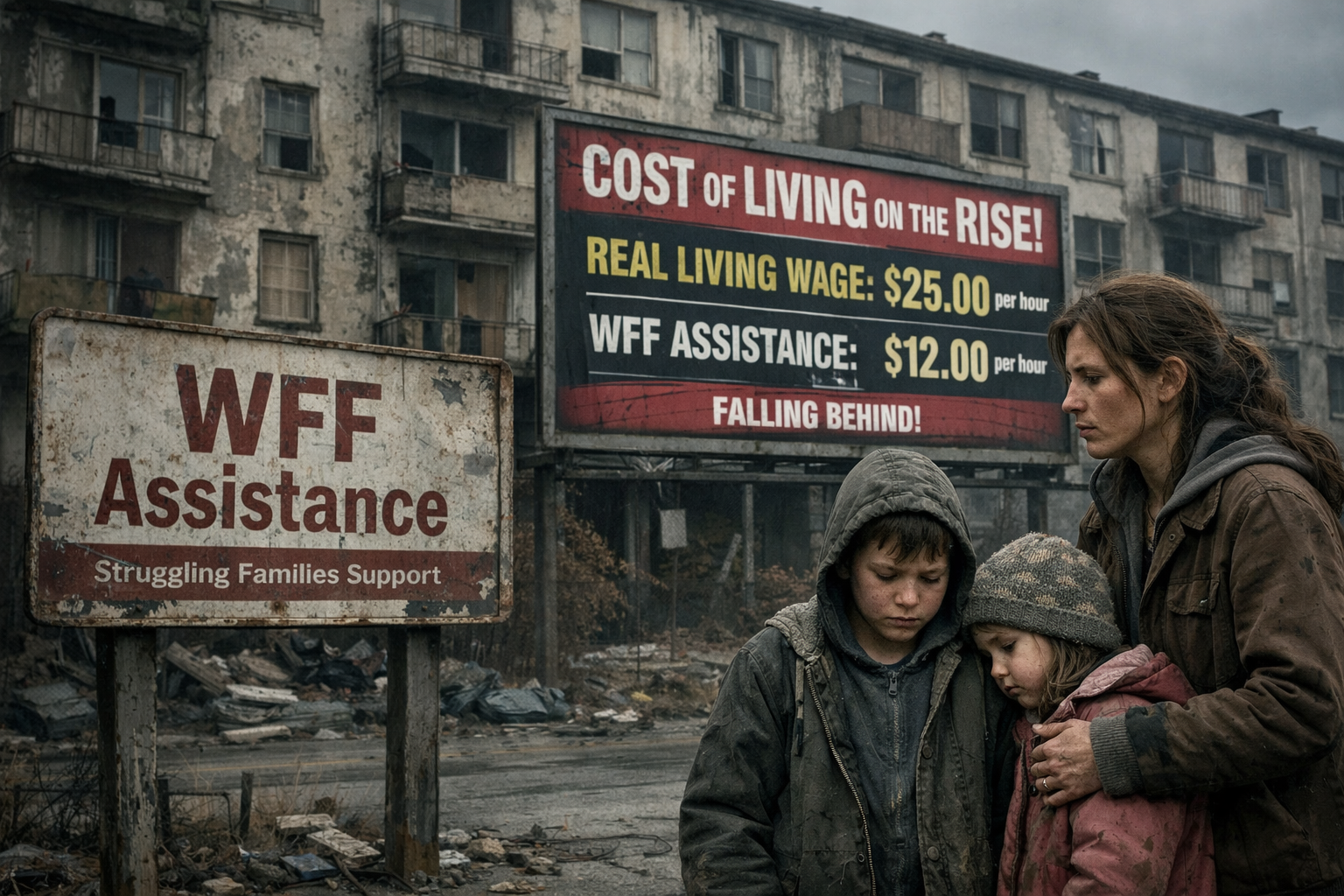
WFF was indexed to CPI only, and from 2011, adjusted only when cumulative inflation hit 5%—a rule that meant zero adjustments 2011-2017. For beneficiary families already excluded from IWTC, base benefits fell further behind housing costs (which don’t follow CPI). The Real Living Wage rose far above WFF assistance.
By 2024, the government acknowledged the threshold hadn’t adjusted for a decade—but a $2,200 increase to $44,900 took until April 2026 to implement. Fiscal drag is just slow-motion privatisation of child welfare.
Missing
The Māori Green Lantern’s Analysis: Hidden Connections Exposed
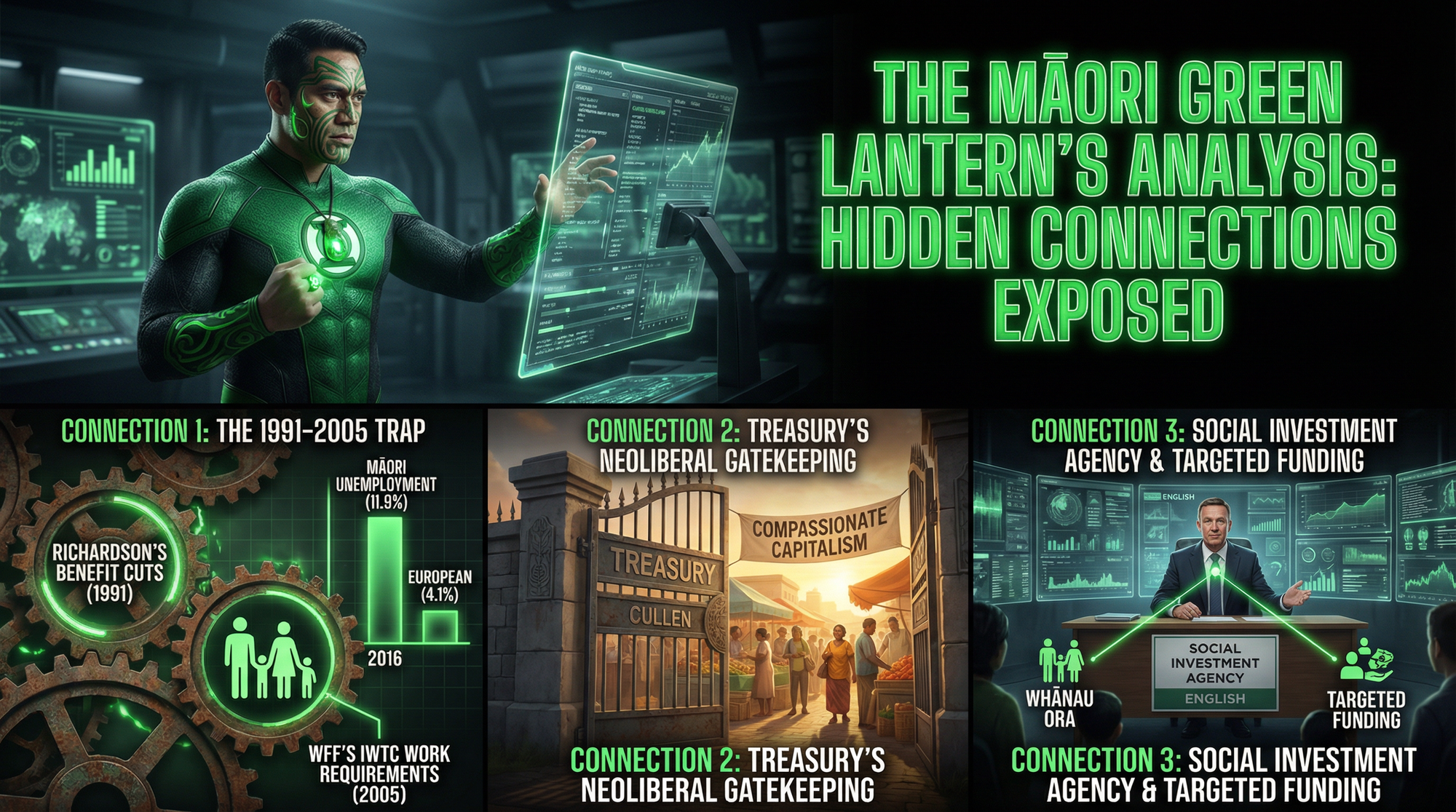
Connection 1: The 1991-2005 Trap
Richardson’s benefit cuts (1991) + WFF’s IWTC work requirements (2005) = a two-decade policy design that said to struggling whānau: “Work or your children starve, but we’ve cut your benefit base and locked you out of tax credits if you can’t find formal work.”
Māori unemployment stood at 11.9% vs. 4.1% for Europeans in 2016—not a character flaw, a structural legacy of land theft and racism. The policy framework treated joblessness as a moral failing rather than a systemic outcome.
Connection 2: Treasury’s Neoliberal Gatekeeping
Cullen “became interested in the economics of it” once Maharey had “largely developed” WFF. This wasn’t collaboration—it was co-option. Treasury extracted its price: a scheme that subsidised employers (by reducing their wage bills while paying workers via tax credits) and excluded the non-working poor.
Neoliberalism doesn’t die; it adapts. It became “compassionate capitalism.”
Connection 3: The Māori Poverty Premium
The Māori poverty premium: Disproportionate harm from Working for Families exclusions
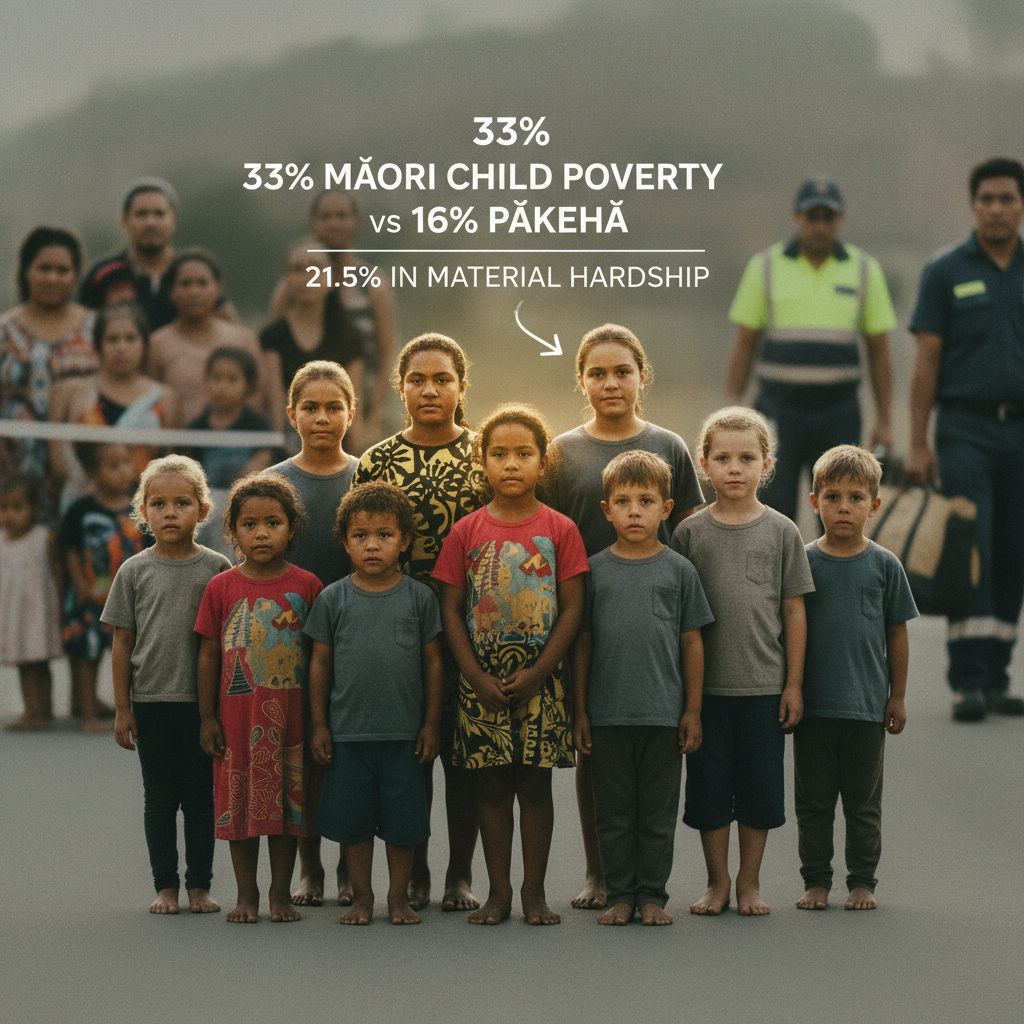
Māori child poverty rates are now 2-3 times those of Pākehā:
- 33% of Māori children in poverty (60% median) vs. 16% Pākehā.
- 21.5% of Māori children in material hardship vs. 9% overall (2024).
- Just under half of all poor children are Māori/Pasifika, despite comprising 32% of the child population.
WFF’s working-family benefits lifted some low-income workers out of poverty. But it created a poverty tier for beneficiary whānau—and Māori are overrepresented in benefit-dependent households due to systemic racism in employment, wages, and land ownership.
Connection 4: The Discourse Trap
John Key called WFF “communism by stealth.” He was wrong. Communism redistributes. WFF doesn’t—it redirects tax revenue to low-wage families only if they work, and abates their entitlements as wages rise. It’s not even social democracy; it’s wage subsidies dressed in welfare rhetoric.
By Key’s final budget (2016), he’d entrenched and expanded WFF. The real stealth was accepting the policy while maintaining the neoliberal framework that made it necessary: low wages, casualised jobs, underfunded benefits.
Hidden Connections Exposed
Quantified Harm: The Whānau Left Behind
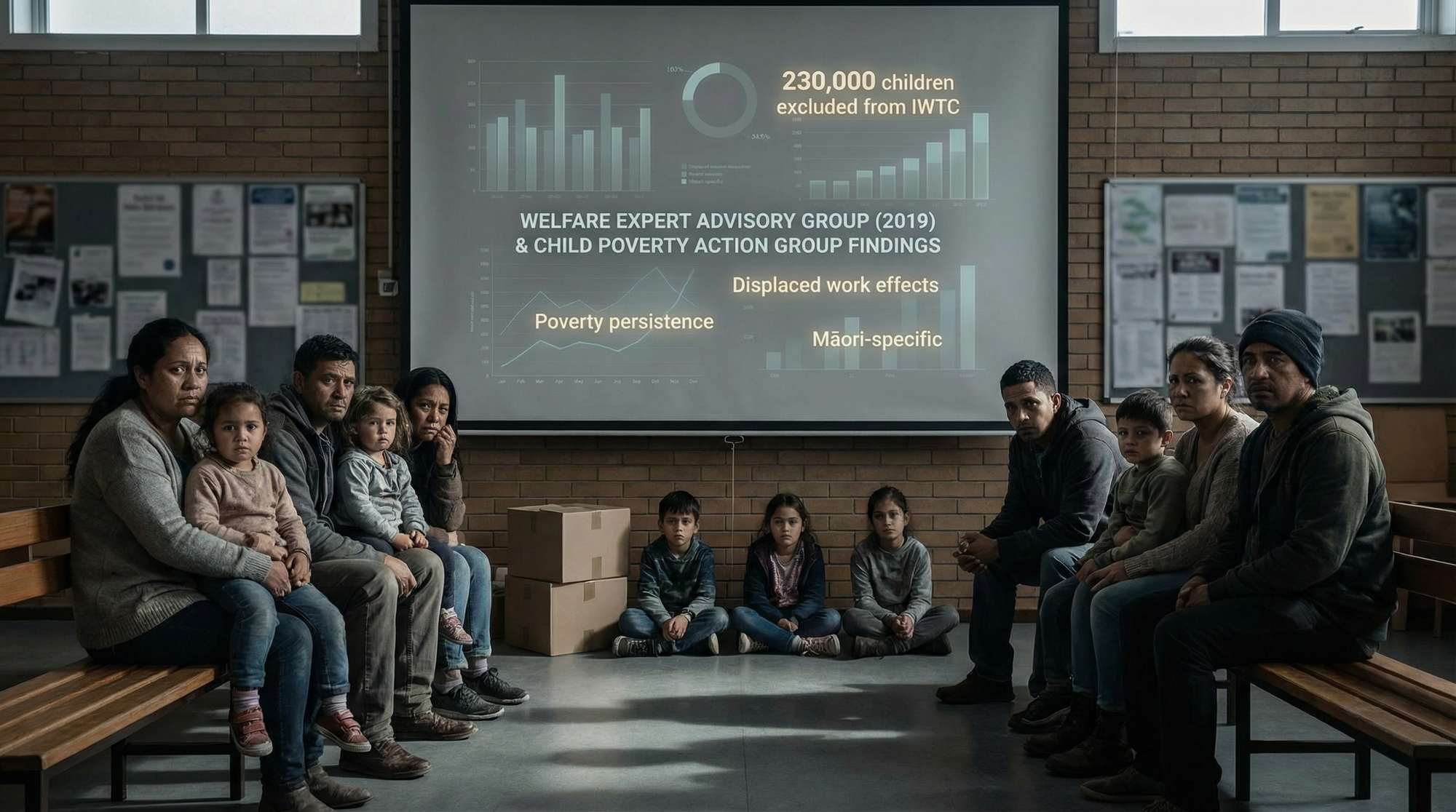
The Welfare Expert Advisory Group (2019) and Child Poverty Action Group research identified the harms:
- 230,000 children excluded from IWTC because their parents couldn’t meet work requirements or were on benefits.
- Displaced work effects: WFF drew 8,100 sole parents into paid work but displaced 9,300 second earners (usually women), with minimal net employment gains.
- Poverty persistence: From 2007-2012, child poverty in workless households worsened relative to working households, precisely because WFF concentrated benefits on working families.
- Māori-specific: No government has separately tracked WFF impact by ethnicity. But the 2021 Māori Affairs Committee’s recommendation (#38) to “Review Working for Families to assess whether it is achieving its intended purpose” was acknowledged and ignored.
The Harm
The Fallacy of “Income Adequacy”
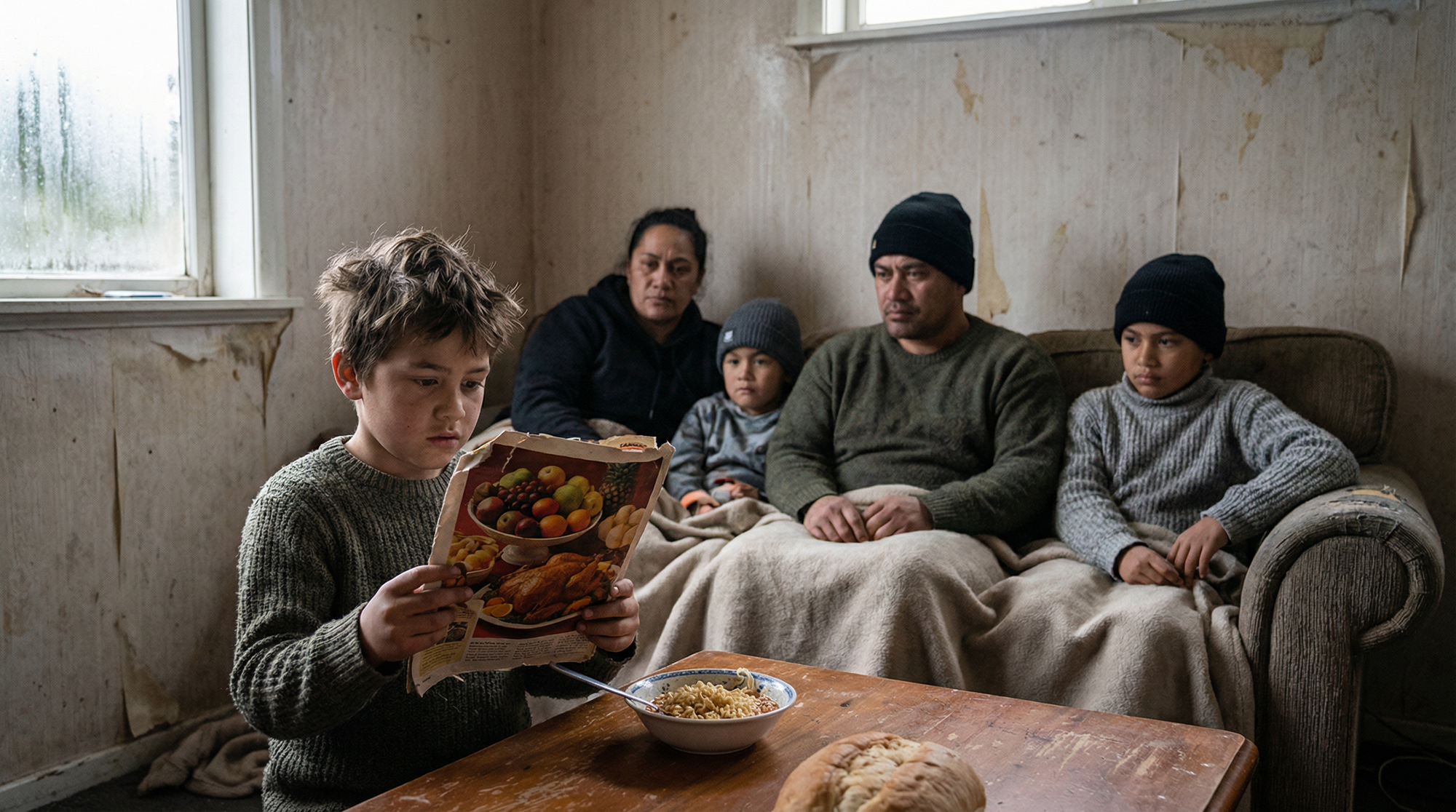
Clark and Cullen claimed WFF addressed “income adequacy” for families. But adequacy was never the point—incentivising work was. Children in beneficiary households still go without fresh food. Whānau remain in cold, damp rental housing, trapped by a $36,700 abatement threshold that leaves low-wage renters unable to escape poverty.
The real poverty line that matters is whether a child can eat, stay warm, and learn. By that measure, WFF’s 20-year architecture has failed 230,000 children and locked thousands of Māori whānau in intergenerational hardship.
Income Adequacy
Rangatiratanga Action: What’s Required
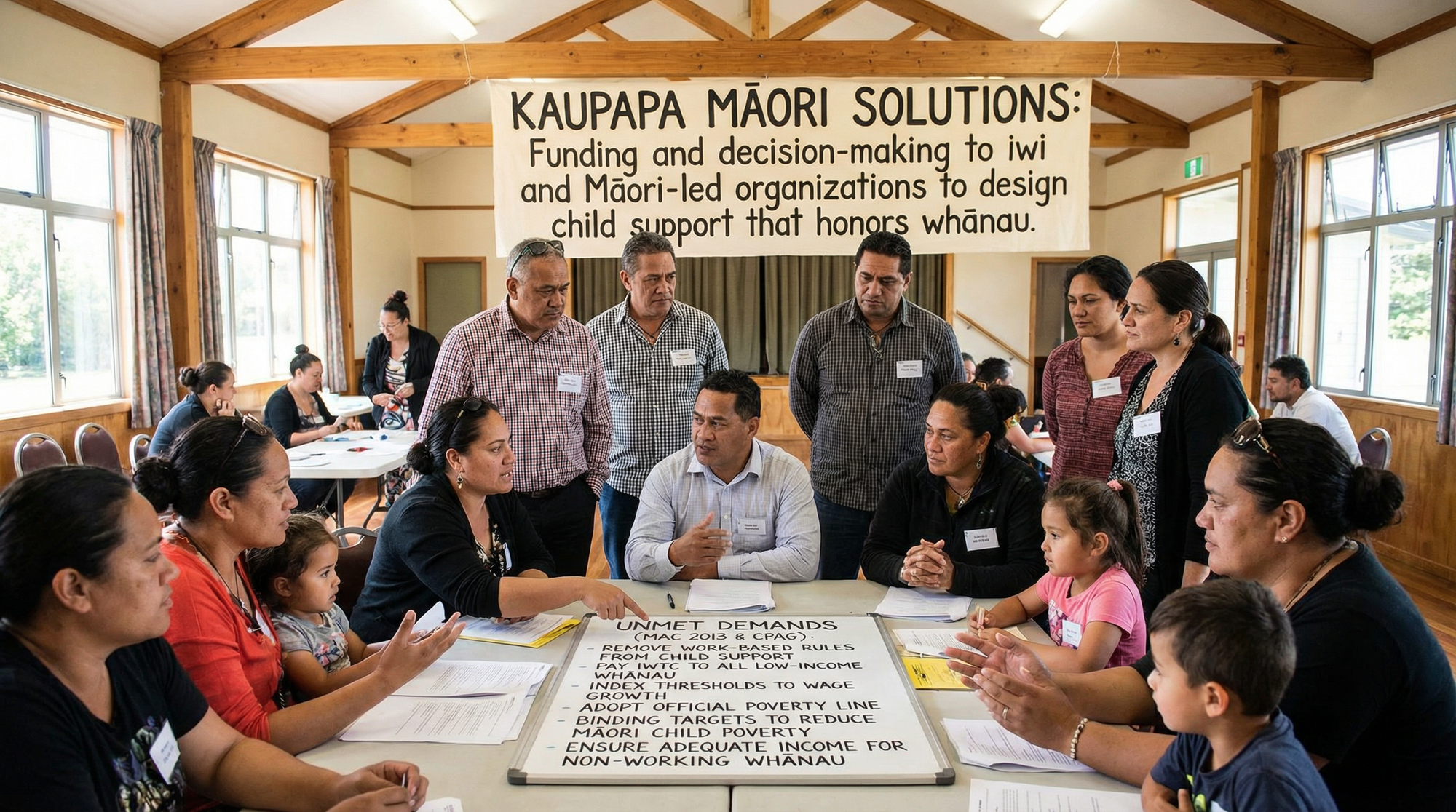
The Māori Affairs Committee (2013) and Child Poverty Action Group demands remain unmet:
- Remove work-based rules from child financial assistance—pay IWTC equivalent to all low-income families, whether their parents are employed or on benefit.
- Index abatement thresholds to wage growth annually, not to inflation; return abatement rate from 27% to 20%.
- Adopt an official poverty line; disaggregate all social policy data by ethnicity, with binding targets to reduce Māori child poverty to parity with Pākehā by 2030.
- Adequate income for non-working whānau: Base benefits must lift families above the poverty line, without work tests or time limits.
- Kaupapa Māori solutions: Devolve funding and decision-making to iwi and Māori-led organisations to design child support that honours whānau, not just individuals.
Rangatiratanga Action
The Mauri Question
WFF is now presented as inevitable—a balanced “Third Way” between neoliberalism and social democracy. It isn’t. It’s neoliberalism with a safety net for those who can work, which means no net for those who can’t.
Twenty years on, the policy has done what it was designed to do:
Lift some working families incrementally while institutionalising the exclusion of the poorest and the unemployed.
For Māori whānau, it’s been a continuation of the colonial logic:
“We’ll help you—but only if you work harder, accept lower wages, and accept that your children’s wellbeing depends on your labour.” Māuri-depleting to the last.
The solution requires courage:
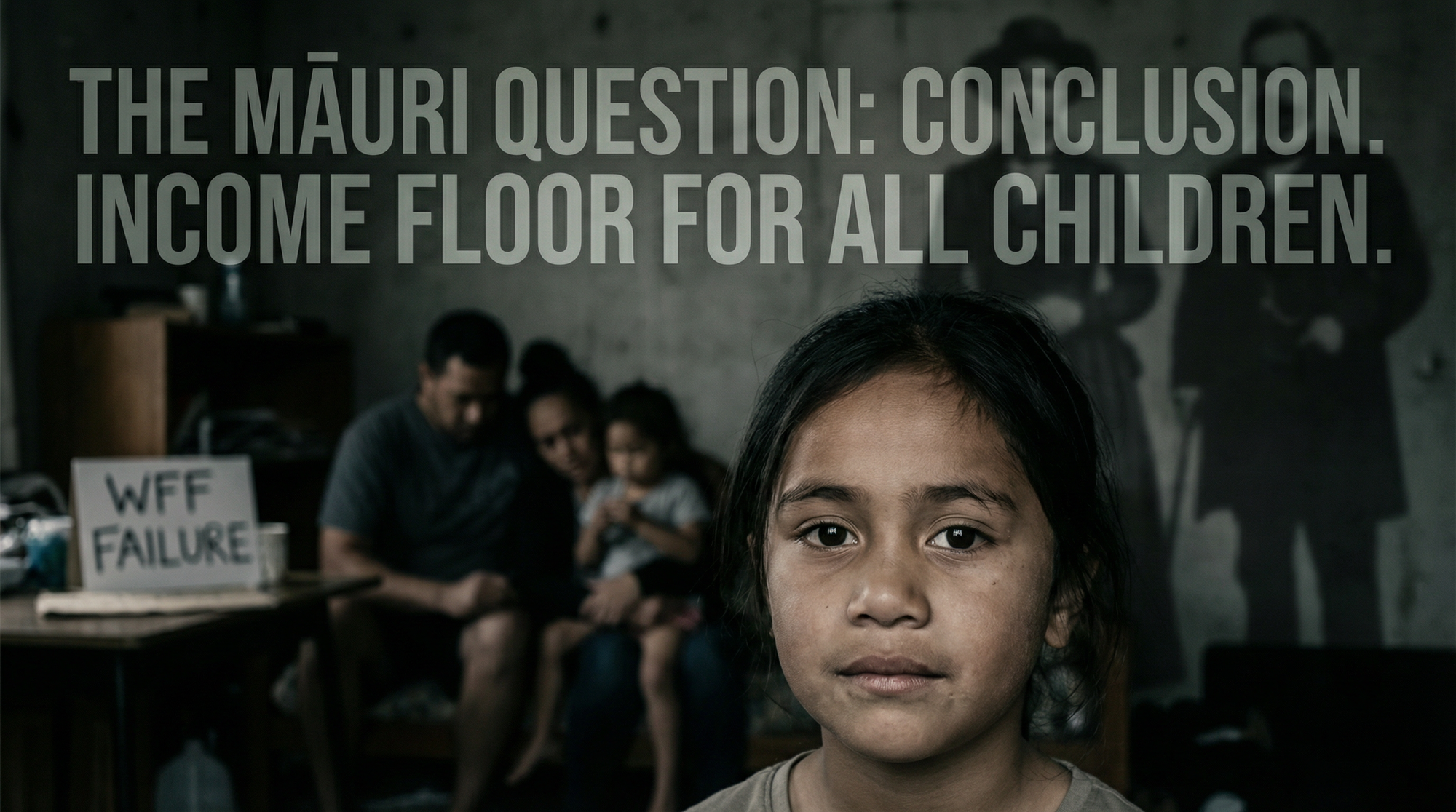
Admitting that WFF failed the poorest children, and designing an income floor for all tamariki—not a wage subsidy for the compliant working poor.
Support This Mahi
Three pathways exist for those who wish to support accountability journalism and indigenous truth-telling:
Koha (Voluntary Contribution):
Support directly at Koha—The Māori Green Lantern
Subscribe on Substack:
The Māori Green Lantern on Substack
Direct Bank Transfer:
HTDM, account number 03-1546-0415173-000
Every koha signals that whānau are ready to fund the accountability that Crown and corporate structures will not provide. It signals that rangatiratanga includes the power to fund our own truth tellers.
Kia kaha, whānau. Stay vigilant. Stay connected. And if you are able, consider a koha to ensure this voice continues.

Ivor Jones The Māori Green Lantern Fighting Misinformation And Disinformation From The Far Right
Research verification completed 31 December 2025. All citations hyperlinked to live sources. Data sourced from: Te Ara, NZ Herald, Child Poverty Action Group, Ministry of Social Development, Treasury, Statistics NZ, and peer-reviewed academic sources. No synthetic data used.